Home Blog Page 83

15 Memorable Batman Performances That Shaped the Character

0
Image Source: Bing Image. License: All Creative Commons

Few characters in cinema have been reinvented as often as Batman. The Dark Knight has swung between campy, lighthearted fun and dark, psychological crime drama, appearing in everything from animated adventures to gritty, realistic interpretations. Over the years, Batman has taken many forms—and not always in black. Certain performances and scenes capture the full spectrum of what the character can be: thrilling, humorous, frightening, stylish, and unforgettable. Here are 15 defining moments that have cemented Batman as one of Hollywood’s most iconic figures.

Image Source: Bing Image. License: All Creative Commons

15. Batman vs Superman: Dawn of Justice — The Warehouse Fight

Few Batman scenes have sparked as much debate or praise as the warehouse brawl in Batman v Superman. This is the moment Ben Affleck’s Batman finally moves as the character fans had long imagined: fast, brutal, and terrifyingly efficient.
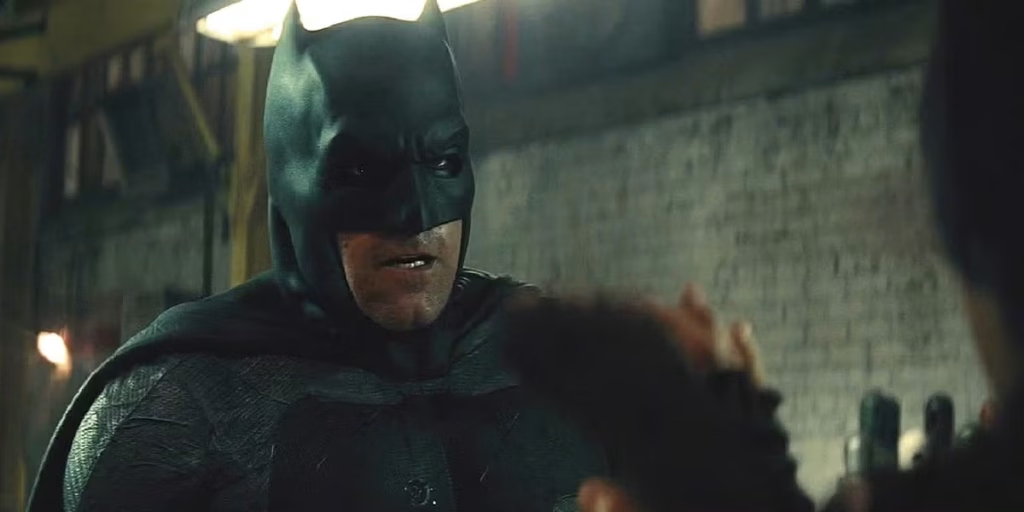
Image Source: Bing Image. License: All Creative Commons

Every punch lands with weight, every gadget feels purposeful, and the choreography turns Batman into a one-man wrecking crew. While the film around it divided audiences, this sequence earned near-universal respect for delivering the most physically convincing Batman combat ever put on screen.

Image Source: Bing Image. License: All Creative Commons

14. Batman & Robin — Mr. Freeze and Poison Ivy Go Full Camp

Yes, Batman & Robin is famously ridiculous, and that’s exactly why it endures. Arnold Schwarzenegger’s pun-loving Mr. Freeze and Uma Thurman’s wildly theatrical Poison Ivy embrace excess with zero restraint.
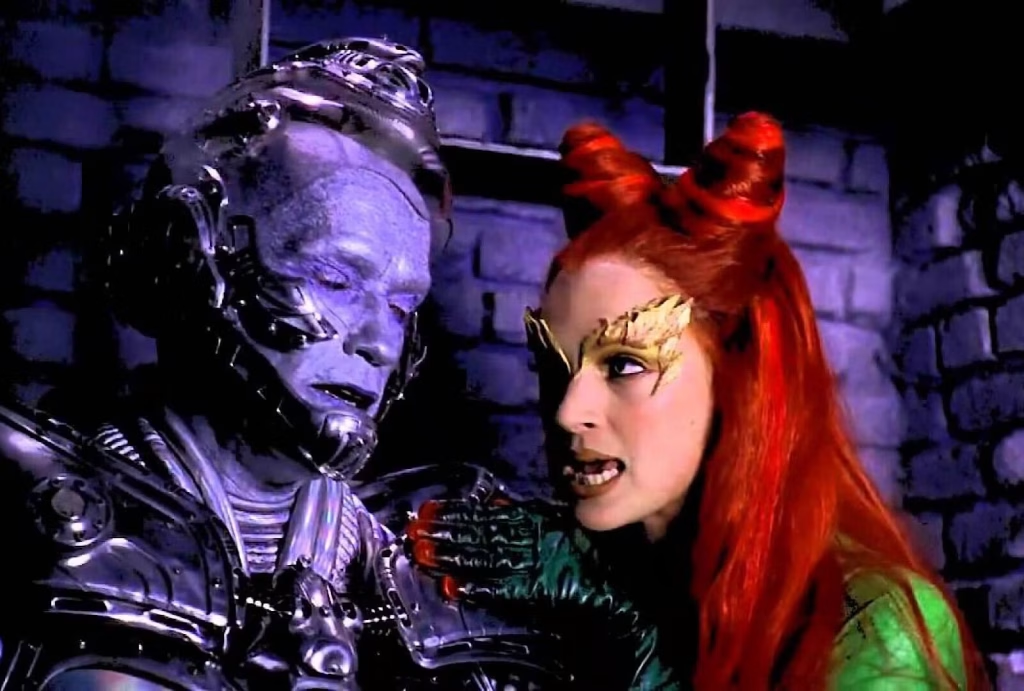
Image Source: Bing Image. License: All Creative Commons

Thurman, in particular, commits completely, delivering a performance that feels equal parts cartoon villain and glamorous chaos. The neon sets, exaggerated costumes, and relentless ice jokes make this film less a crime drama and more a live-action comic book fever dream, one that’s gained cult appreciation over time.

Image Source: Bing Image. License: All Creative Commons

13. Batman: The Movie (1966) — Opening Credits and Villain Alliance

Before angst and armor defined Batman, there was pure, joyful absurdity. The 1966 film opens with a bright, swinging title sequence that immediately sets the tone for a version of Batman rooted in pop art and parody.

Image Source: Bing Image. License: All Creative Commons

The team-up of Joker, Penguin, Riddler, and Catwoman is gleefully silly, with Frank Gorshin’s hyperactive Riddler stealing scenes. It’s a reminder that Batman has always had room for humor and that camp is a legitimate chapter in his film history.

Image Source: Bing Image. License: All Creative Commons

12. Batman Forever — Iconic Soundtrack and Cartoonish Villains

Batman Forever may split opinion, but its soundtrack is undeniable. Seal’s “Kiss from a Rose” alone cemented the film in pop culture, while tracks from U2 and Smashing Pumpkins elevated its emotional atmosphere.

Image Source: Bing Image. License: All Creative Commons

Jim Carrey’s Riddler goes all-in on manic energy, while Tommy Lee Jones’s Two-Face is pure chaos. The performances are loud, colorful, and deliberately unhinged, perfectly matching Joel Schumacher’s neon-soaked Gotham.
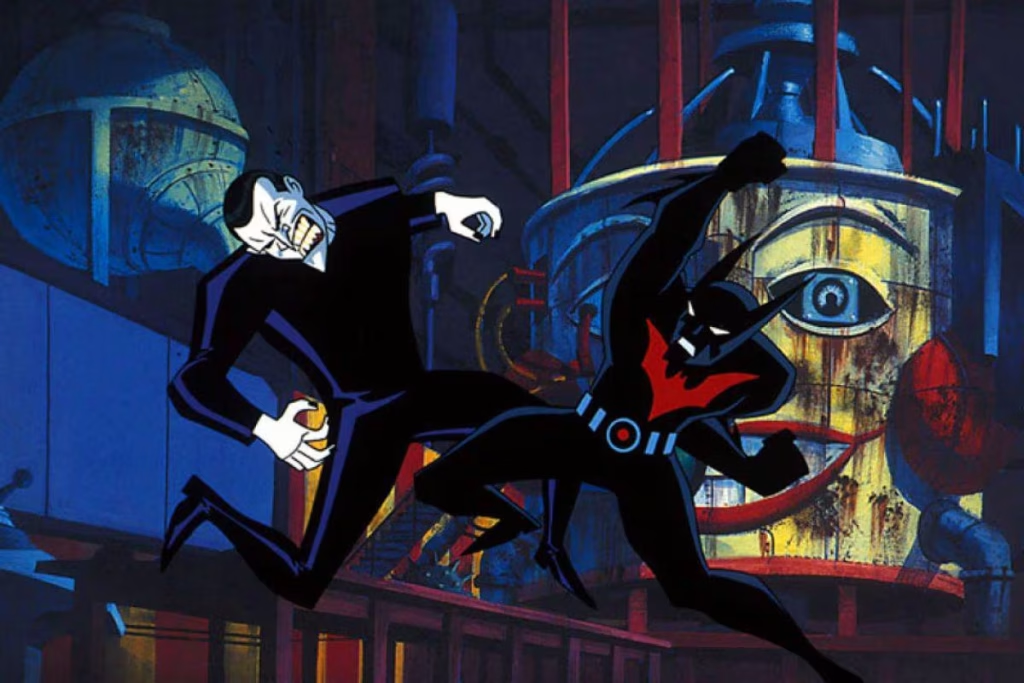
Image Source: Bing Image. License: All Creative Commons

11. Batman Beyond: Return of the Joker — The Flashback Reveal

This animated feature quietly delivers one of the darkest Batman moments ever. The flashback revealing Joker’s final fate and the trauma inflicted on the Bat-family is chilling, emotional, and unforgettable.

Image Source: Bing Image. License: All Creative Commons

The sequence proves animation can explore mature themes without softening the blow. For many fans, this moment elevated Batman Beyond into essential canon.

Image Source: Bing Image. License: All Creative Commons

10. Mask of the Phantasm — Bruce Becomes Batman

Few scenes capture Bruce Wayne’s internal struggle better than his first transformation into Batman in Mask of the Phantasm. The moment is quiet, tragic, and deeply personal.

Image Source: Bing Image. License: All Creative Commons

As Bruce puts on the mask, Alfred’s horrified reaction underscores the cost of this choice. It’s not a victory, it’s a surrender. This emotional clarity is why the film remains one of the most respected Batman stories ever told.

Image Source: Bing Image. License: All Creative Commons

9. Batman Begins — Scarecrow’s Fear Toxin Nightmare

Christopher Nolan reintroduced Batman as a creature of fear, and nowhere is that clearer than Scarecrow’s toxin-induced hallucinations. Cillian Murphy’s Jonathan Crane becomes trapped in a nightmare where Batman appears as a literal monster.

Image Source: Bing Image. License: All Creative Commons

The distorted visuals and horror-inspired framing remind audiences that Batman isn’t just a hero — he’s a symbol meant to terrify criminals. It was a bold tonal reset for the franchise.

Image Source: Bing Image. License: All Creative Commons

8. The Dark Knight Rises — Bane’s Plane Hijacking

Bane’s introduction is pure spectacle. The midair hijacking that opens The Dark Knight Rises is tense, meticulously staged, and grounded in practical effects.

Image Source: Bing Image. License: All Creative Commons

Tom Hardy’s Bane immediately establishes himself as a physical and ideological threat. The sequence sets the stakes high and signals that Gotham is about to face something far worse than it’s seen before.

Image Source: Bing Image. License: All Creative Commons

7. Batman (1989) — Joker Destroys the Art Museum

Jack Nicholson’s Joker dances through a museum, vandalizing priceless art to Prince’s “Partyman,” and superhero cinema is never the same again.

Image Source: Bing Image. License: All Creative Commons

The scene perfectly captures Tim Burton’s offbeat vision, stylish, unsettling, and darkly funny. Nicholson’s Joker is theatrical chaos incarnate, and this moment defines his anarchic philosophy.

Image Source: Bing Image. License: All Creative Commons

6. The Dark Knight — Joker Visits Harvey Dent

Heath Ledger’s Joker doesn’t shout; he persuades. His hospital conversation with Harvey Dent is one of the most disturbing scenes in the trilogy, quietly transforming Gotham’s white knight into something monstrous.

Image Source: Bing Image. License: All Creative Commons

Ledger’s performance is hypnotic, balancing humor with pure menace. This moment doesn’t just change the movie; it reshapes the entire moral landscape of the story.

Image Source: Bing Image. License: All Creative Commons

5. Batman Returns — Catwoman Is Born

Selina Kyle’s transformation in Batman Returns is raw, surreal, and unforgettable. Michelle Pfeiffer turns a moment of trauma into a fierce rebirth as she tears apart her apartment and stitches together her catsuit.

Image Source: Bing Image. License: All Creative Commons

Every visual choice tells a story of rage, liberation, and identity. It’s one of the most emotionally charged origin scenes in any superhero film.

Image Source: Bing Image. License: All Creative Commons

4. Batman Returns — Bruce and Selina’s Maskless Dance

At a masquerade ball, Bruce Wayne and Selina Kyle are the only two without masks, and they know exactly who the other is. Their dance is quiet, loaded, and heartbreakingly intimate.

Image Source: Bing Image. License: All Creative Commons

Michael Keaton and Michelle Pfeiffer share electric chemistry, making this one of the most romantic and tragic moments in the Batman franchise.
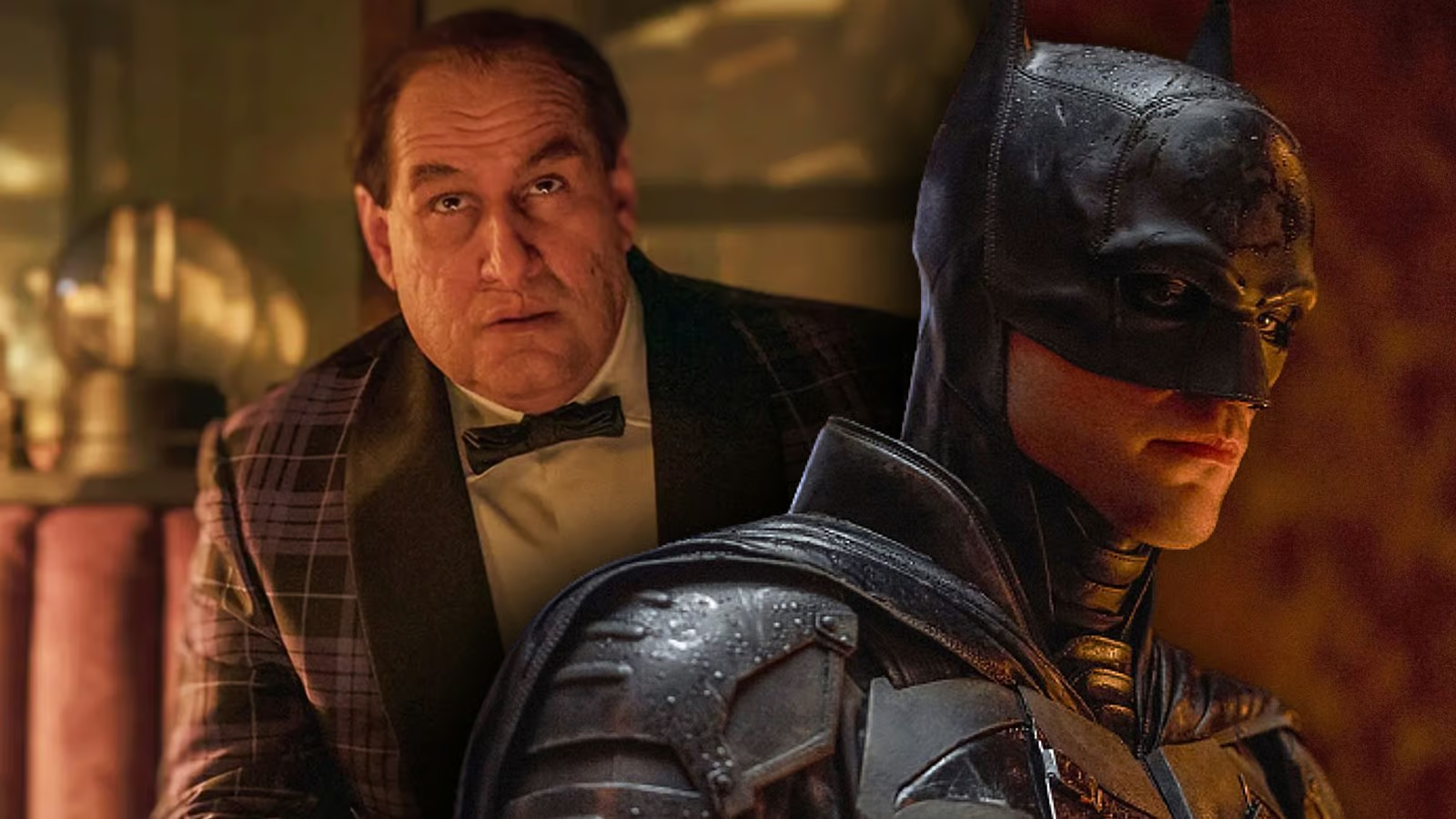
Image Source: Bing Image. License: All Creative Commons

3. The Batman (2022) — The Batmobile vs. Penguin

Matt Reeves reintroduced the Batmobile as something terrifying. The rain-soaked chase through Gotham’s highways is visceral, immersive, and brutally effective.

Image Source: Bing Image. License: All Creative Commons

Colin Farrell’s Penguin reacting in real time sells the danger, while Batman emerges from the flames like a myth come to life. It’s a definitive Batmobile moment.

Image Source: Bing Image. License: All Creative Commons

2. The Batman (2022) — Riddler Meets Batman

The Arkham interrogation between Batman and the Riddler is a psychological chess match. Paul Dano’s performance shifts effortlessly between vulnerability and menace, while Robert Pattinson’s Batman slowly realizes he may have inspired the very evil he’s chasing. The tension is suffocating and unforgettable.

Image Source: Bing Image. License: All Creative Commons

1. Batman Returns — Catwoman Chooses Herself

The finale of Batman Returns isn’t about Batman; it’s about Selina Kyle. She rejects Bruce’s fantasy of a clean ending, kills Max Shreck, and disappears on her own terms.

Image Source: Bing Image. License: All Creative Commons

It’s bold, tragic, and defiantly unconventional. Tim Burton ends the film by denying easy answers, making Catwoman the emotional center of the story. Decades later, it remains one of the most daring endings in superhero cinema.

Image Source: Bing Image. License: All Creative Commons

Batman’s film history is messy, ambitious, strange, and endlessly fascinating. These moments remind us that the character thrives on reinvention and that the Dark Knight is at his best when filmmakers take risks. Whether gritty or campy, animated or live-action, Batman endures because he can be anything… as long as the shadow is deep enough.

14 Movie Roles That Changed Hands and Changed the Story

0
Image Source: Bing Image. License: All Creative Commons

Film sets are delicate ecosystems, and even seasoned, talented actors aren’t immune to being replaced when on-screen chemistry falters, creative differences emerge, or unexpected issues disrupt production. These behind-the-scenes shakeups can change careers—and sometimes, the course of cinema history itself. Below are fifteen notable instances where actors were swapped mid-production, along with the stories of what happened next.

Image Source: Bing Image. License: All Creative Commons

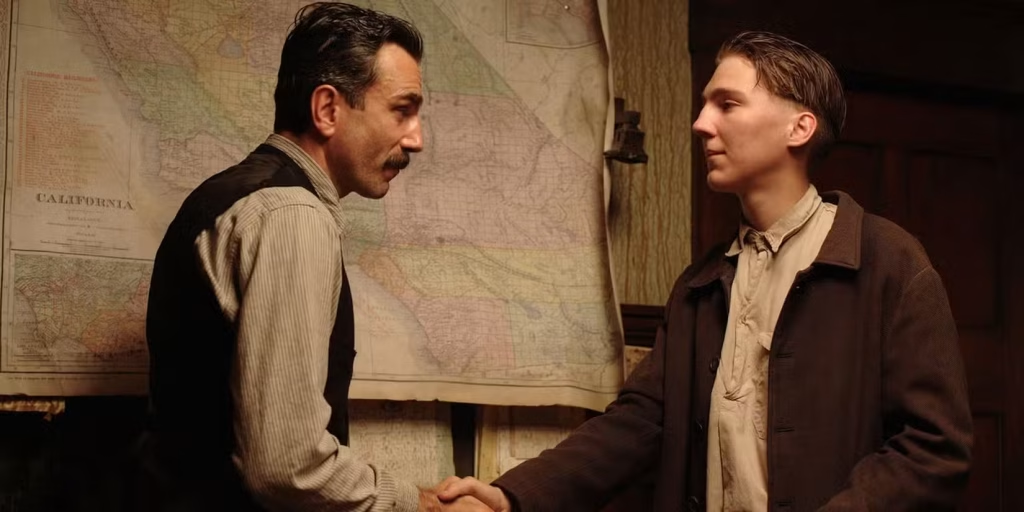
14. Kel O’Neill — There Will Be Blood

Kel O’Neill was originally cast as preacher Eli Sunday in Paul Thomas Anderson’s There Will Be Blood, opposite Daniel Day-Lewis. After several weeks of filming, however, it became clear something wasn’t clicking.

Image Source: Bing Image. License: All Creative Commons

O’Neill later said he sensed the disconnect early on. Anderson decided to replace him with Paul Dano, who was already in the film as Eli’s brother. The script was reworked so Dano played identical twins, resulting in one of the film’s most unforgettable performances. O’Neill ultimately stepped away from acting and found success directing documentaries.

Image Source: Bing Image. License: All Creative Commons

13. Colin Firth — Paddington

Colin Firth had fully recorded his dialogue as the voice of Paddington Bear, but once the animation came together, the filmmakers felt his voice sounded too grown-up for the character.

Image Source: Bing Image. License: All Creative Commons

Firth himself acknowledged the decision with grace, noting that the bear simply wasn’t meant to sound like him. Ben Whishaw was brought in to re-record the role, and his lighter tone helped turn Paddington into a modern family-film icon.

Image Source: Bing Image. License: All Creative Commons

12. James Remar — Aliens

James Remar spent nearly a month filming Aliens as Corporal Hicks before being dismissed. Officially, the explanation was “creative differences,” but Remar later admitted his firing followed a drug-related arrest during production.

Image Source: Bing Image. License: All Creative Commons

Reports also described disruptive on-set behavior, including accidentally firing a prop weapon into a neighboring soundstage. Michael Biehn stepped into the role, delivering a performance that became central to the franchise.

Image Source: Bing Image. License: All Creative Commons

11. Holly Hunter — Chicken Little

In early development, Chicken Little featured a female protagonist voiced by Holly Hunter. After recording her lines, Disney executives decided to rework the character into a boy, believing it would attract a wider audience.

Image Source: Bing Image. License: All Creative Commons

Hunter was replaced by Zach Braff, and the story was reshaped entirely. While the decision reflected industry thinking at the time, later successes of female-led animated films suggest how much perspectives have shifted.

Image Source: Bing Image. License: All Creative Commons

10. Connor Ratliff — Band of Brothers

Connor Ratliff lost his small role in Band of Brothers just one day before filming began. He was told executive producer Tom Hanks felt he had “dead eyes.”

Image Source: Bing Image. License: All Creative Commons

Years later, Ratliff transformed the experience into the podcast Dead Eyes, exploring rejection in Hollywood. Hanks eventually appeared on the show, owning the decision and offering clarity. What began as a painful dismissal became a thoughtful conversation about art and subjectivity.

Image Source: Bing Image. License: All Creative Commons

9. Dennis Hopper — The Truman Show

Dennis Hopper was originally cast as Christof, the creator of Truman’s artificial world, but struggled early on with memorization and performance consistency.

Image Source: Bing Image. License: All Creative Commons

After reviewing early footage, director Peter Weir and producer Scott Rudin decided to recast the role. Ed Harris stepped in and delivered a quietly haunting performance that earned him an Oscar nomination.

Image Source: Bing Image. License: All Creative Commons

8. Judy Garland — Valley of the Dolls

Judy Garland’s casting in Valley of the Dolls ended disastrously. Conflicts with director Mark Robson, combined with substance abuse struggles, made filming increasingly difficult.

Image Source: Bing Image. License: All Creative Commons

Accounts from co-stars describe a tense environment that worsened Garland’s condition. She was ultimately fired, replaced by Susan Hayward, and reportedly left with her costumes in protest. The episode remains one of Hollywood’s saddest behind-the-scenes stories.

Image Source: Bing Image. License: All Creative Commons

7. Eric Stoltz — Back to the Future

Eric Stoltz played Marty McFly for several weeks, but his intense, method-driven performance clashed with the film’s comedic tone.

Image Source: Bing Image. License: All Creative Commons

The filmmakers quietly continued shooting while arranging to replace him with Michael J. Fox, their original choice. Fox’s arrival reshaped the movie’s energy—and helped turn it into a timeless classic.

Image Source: Bing Image. License: All Creative Commons

6. Harvey Keitel — Apocalypse Now

Harvey Keitel was initially cast as Captain Willard but was let go shortly after production began in the Philippines. Director Francis Ford Coppola felt Keitel wasn’t connecting with the role under the harsh conditions.

Image Source: Bing Image. License: All Creative Commons

Martin Sheen took over, delivering a performance that became legendary. Though the decision was painful, it proved pivotal to the film’s final impact.

Image Source: Bing Image. License: All Creative Commons

5. Lori Petty — Demolition Man

Lori Petty was cast opposite Sylvester Stallone but exited the film after only a few days. Both sides cited creative differences, though Petty later described a personality clash between herself and Stallone.

Image Source: Bing Image. License: All Creative Commons

Sandra Bullock replaced her, launching one of the actress’s earliest breakout roles. The change became a classic example of how chemistry can redefine a movie.

Image Source: Bing Image. License: All Creative Commons

4. Jean-Claude Van Damme — Predator

Jean-Claude Van Damme was initially hired to play the Predator creature, but the role proved impractical. The restrictive suit and stilt-based design made movement nearly impossible.

Image Source: Bing Image. License: All Creative Commons

The production ultimately redesigned the alien and recast the role with Kevin Peter Hall, whose height and presence helped create one of cinema’s most iconic monsters.

Image Source: Bing Image. License: All Creative Commons

3. Lee Coleman — Friday the 13th Part VIII

Lee Coleman was cast as Sean Robertson but was dismissed after about a week. Creative concerns and an injury he sustained during off-hours complicated matters.

Image Source: Bing Image. License: All Creative Commons

Scott Reeves replaced him, and the production moved on quickly. Though minor, the recasting highlighted how unforgiving tight shooting schedules can be.

Image Source: Bing Image. License: All Creative Commons

2. The Voice Cast of The Good Dinosaur

Pixar’s The Good Dinosaur underwent a massive creative reset. Original director Bob Peterson was replaced, and much of the voice cast was let go as the story was reimagined.

Image Source: Bing Image. License: All Creative Commons

Several major roles were recast, with Frances McDormand being the lone actor to remain. The overhaul demonstrated how dramatically animated films can change, even deep into production.

Image Source: Bing Image. License: All Creative Commons

1. Samantha Morton — Her

Samantha Morton originally voiced Samantha, the AI companion in Her, and even performed scenes on set. During post-production, however, Spike Jonze realized the character needed a different emotional texture.

Image Source: Bing Image. License: All Creative Commons

Scarlett Johansson re-recorded the role, infusing it with warmth and immediacy. Though difficult, the change helped define the film’s emotional core and became one of Johansson’s most acclaimed performances.

Image Source: Bing Image. License: All Creative Commons

Being fired from a film doesn’t always reflect a lack of talent; often, it’s about timing, tone, or creative alignment. In several of these cases, the shakeups led to iconic performances and unforgettable movies. Behind every polished final cut lies a story of risk, revision, and sometimes, reinvention.

15 Beloved Figures Hollywood Lost That Fans Can’t Forget

0
Image Source: Bing Image. License: All Creative Commons

Fame can magnify joy, but it also magnifies vulnerability. For many public figures, their influence reaches beyond their work—the sudden, tragic, or mysterious circumstances of their deaths leave a lasting imprint on collective memory. Fans are haunted not by morbid curiosity, but by the sense of talent lost too soon and lives cut short before their full potential could be realized, leaving echoes that linger long after they’re gone.

Image Source: Bing Image. License: All Creative Commons

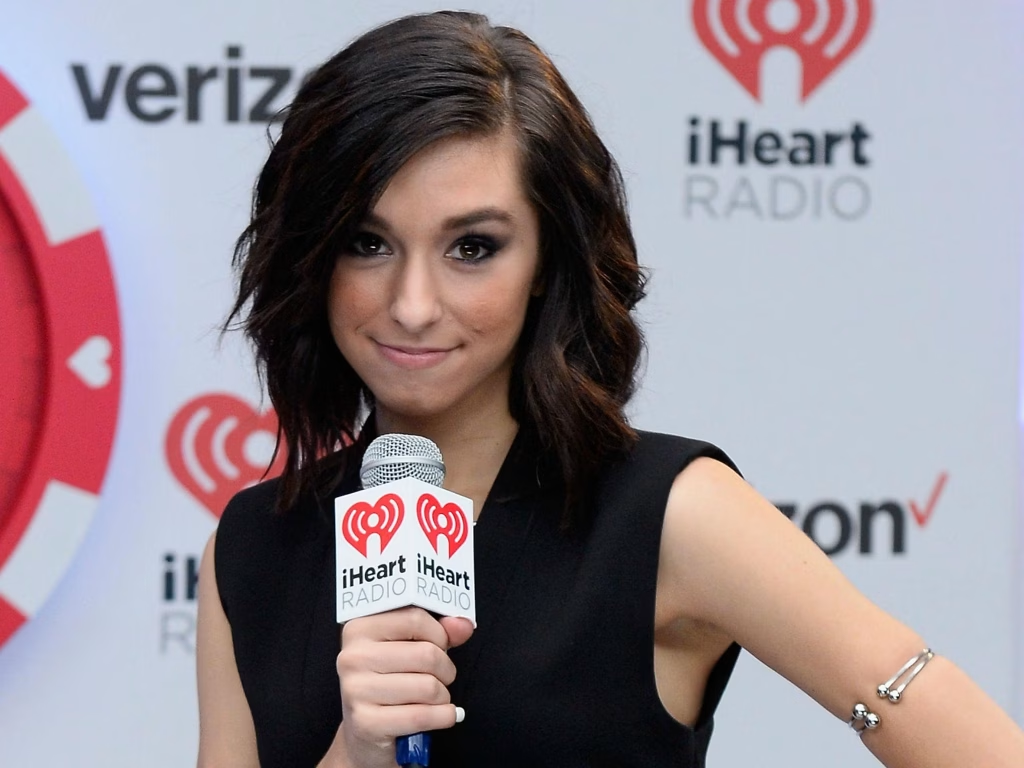
15. Christina Grimmie

Christina Grimmie’s rise felt organic and joyful. From YouTube covers to a powerful run on The Voice, she built her career through talent, sincerity, and a genuine connection with fans. Her future in music looked incredibly bright.

Image Source: Bing Image. License: All Creative Commons

That promise was shattered when she was fatally shot by an obsessed fan during a post-concert meet-and-greet in Orlando. The shocking act stunned the music world and forced a reckoning around artist safety. Grimmie’s loss is felt not just in what she achieved, but in everything she never had the chance to become.

Image Source: Bing Image. License: All Creative Commons

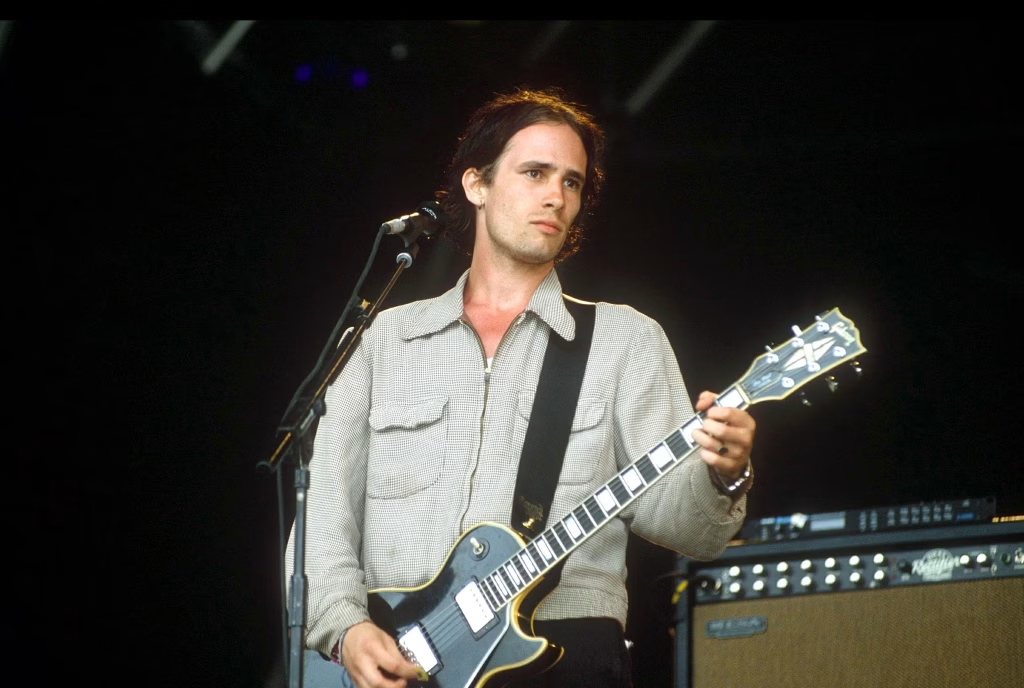
14. Jeff Buckley

Jeff Buckley possessed a voice that felt almost supernatural, fragile, soaring, and deeply emotional. His lone studio album, Grace, cemented his reputation as a once-in-a-generation talent.

Image Source: Bing Image. License: All Creative Commons

His accidental drowning in Memphis remains deeply unsettling. Buckley entered the water on a whim and never resurfaced. With no substances involved and new music on the horizon, his death feels especially cruel. His influence lives on, but the unanswered “what if” still aches.

Image Source: Bing Image. License: All Creative Commons

13. Lisa “Left Eye” Lopes

As TLC’s creative spark, Lisa Lopes brought fire, individuality, and vulnerability to one of the most successful groups of the 1990s. She was outspoken, experimental, and deeply introspective.

Image Source: Bing Image. License: All Creative Commons

Her fatal car accident while filming a documentary in Honduras shocked fans worldwide. Lopes was only 30, in the midst of self-reflection and artistic reinvention. Her energy remains embedded in TLC’s music and in the fearless spirit she encouraged in others.

Image Source: Bing Image. License: All Creative Commons

12. Lee Thompson Young

Lee Thompson Young grew up in the public eye, charming audiences as the lead of The Famous Jett Jackson. As he matured, he transitioned into more serious roles, earning respect within the industry.

Image Source: Bing Image. License: All Creative Commons

His death by suicide at 29 revealed a private struggle with mental illness that many never saw. His passing reignited discussions about mental health support for young performers and remains a sobering reminder that outward success doesn’t equal inner peace.

Image Source: Bing Image. License: All Creative Commons

11. Elizabeth Wurtzel

Elizabeth Wurtzel changed how a generation talked about depression. With Prozac Nation, she wrote with raw honesty about pain, treatment, and self-destruction, long before such openness was common.

Image Source: Bing Image. License: All Creative Commons

She died at 52 after battling advanced breast cancer, but her legacy extends far beyond her books. Wurtzel gave language to suffering and encouraged openness at a time when silence was the norm.

Image Source: Bing Image. License: All Creative Commons

10. Andy Hallett

Andy Hallett brought warmth and humor to Angel as Lorne, a character unlike anything else on television. His musical talent and gentle presence made him deeply beloved by fans. He died unexpectedly at 33 due to heart complications stemming from an undiagnosed condition. His death left a noticeable absence in the fandom and among colleagues who remembered his kindness more than his fame.

Image Source: Bing Image. License: All Creative Commons

9. Mia Zapata

Mia Zapata was a force in the Seattle punk scene, fronting The Gits with raw emotion and conviction. She was admired not just for her music but for her integrity.

Image Source: Bing Image. License: All Creative Commons

Her brutal murder in 1993 devastated the music community. Though justice eventually came years later, her loss remains a painful reminder of violence against women, particularly within creative spaces.

Image Source: Bing Image. License: All Creative Commons

8. Bobbi Kristina Brown

Growing up as the daughter of Whitney Houston and Bobby Brown placed Bobbi Kristina in an unforgiving spotlight. She struggled to define herself amid family turmoil and public scrutiny.

Image Source: Bing Image. License: All Creative Commons

Found unresponsive in a bathtub, she passed away at just 22 after months in a coma. The haunting parallels to her mother’s death deepened the tragedy and underscored the heavy toll of inherited fame.

Image Source: Bing Image. License: All Creative Commons

7. Chi Chi DeVayne

Chi Chi DeVayne radiated warmth and humor on RuPaul’s Drag Race, quickly becoming a fan favorite. Her performances were full of heart, resilience, and joy.

Image Source: Bing Image. License: All Creative Commons

She died at 34 from complications related to scleroderma, a rare autoimmune disease. Her struggle highlighted serious gaps in healthcare access, especially for marginalized communities. Her spirit remains an inspiration.

Image Source: Bing Image. License: All Creative Commons

6. Peaches Geldof

Peaches Geldof lived much of her life under public scrutiny, yet worked to establish herself as a writer and media voice. She was candid about motherhood and personal growth.

Image Source: Bing Image. License: All Creative Commons

Her death from a heroin overdose at 25 echoed the loss of her mother years earlier. The tragedy reopened conversations about addiction, trauma, and the weight of growing up in the public eye.

Image Source: Bing Image. License: All Creative Commons

5. Jonghyun (SHINee)

Jonghyun was revered not only for his vocal talent but for his emotional honesty. He spoke openly about mental health in an industry often resistant to such conversations.

Image Source: Bing Image. License: All Creative Commons

His death at 27 devastated fans worldwide and forced the K-pop industry to confront its pressures more openly. His music and words continue to comfort those who saw themselves in his vulnerability.

Image Source: Bing Image. License: All Creative Commons

4. Diem Brown

Diem Brown’s story unfolded publicly on The Challenge, where she openly shared her fight against ovarian cancer. Her bravery and optimism resonated deeply with viewers.

Image Source: Bing Image. License: All Creative Commons

Her death at 34 left fans heartbroken, especially those who followed her journey for years. Brown’s openness helped raise awareness and encouraged early health advocacy.

Image Source: Bing Image. License: All Creative Commons

3. Krissy Taylor

Krissy Taylor was just beginning her modeling career when it ended abruptly. At 17, she had already achieved what many dream of.

Image Source: Bing Image. License: All Creative Commons

Her sudden death from an undetected heart condition shocked the fashion world and her family. Her story highlighted the silent dangers of congenital illness, even among the young and healthy.

Image Source: Bing Image. License: All Creative Commons

2. Brad Renfro

Brad Renfro showed extraordinary promise as a child actor, delivering performances far beyond his years. Hollywood embraced him early, but offered little protection.

Image Source: Bing Image. License: All Creative Commons

He died at 25 from an accidental overdose after years of struggle. His life remains a cautionary tale about the costs of fame without support.

Image Source: Bing Image. License: All Creative Commons

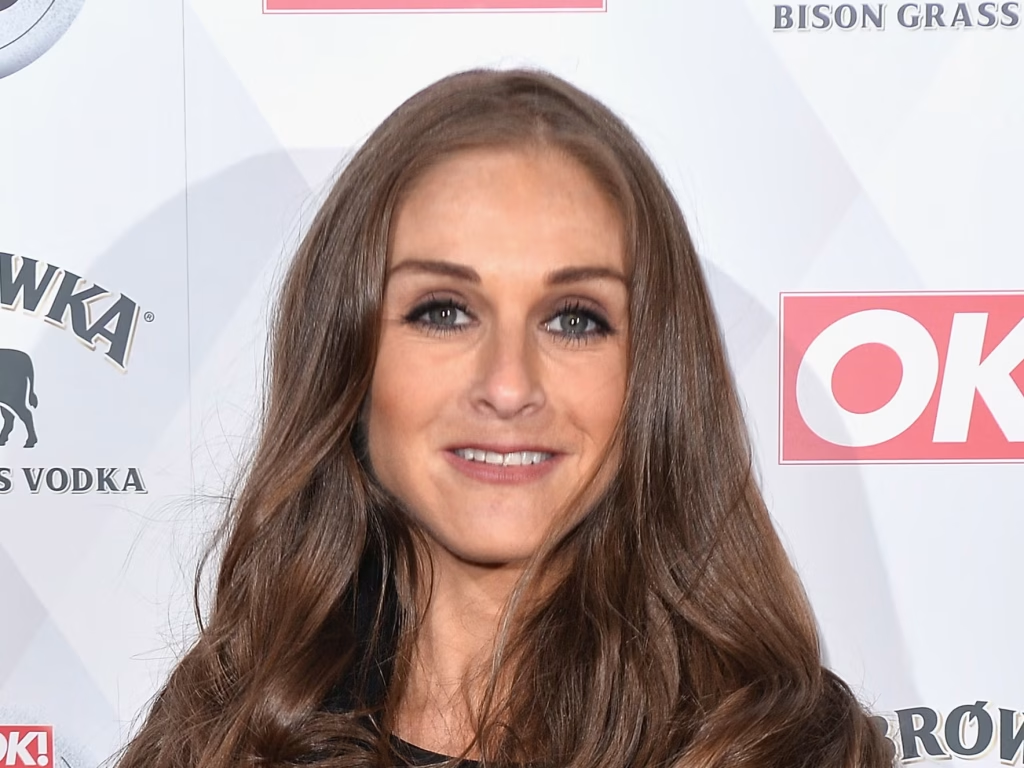
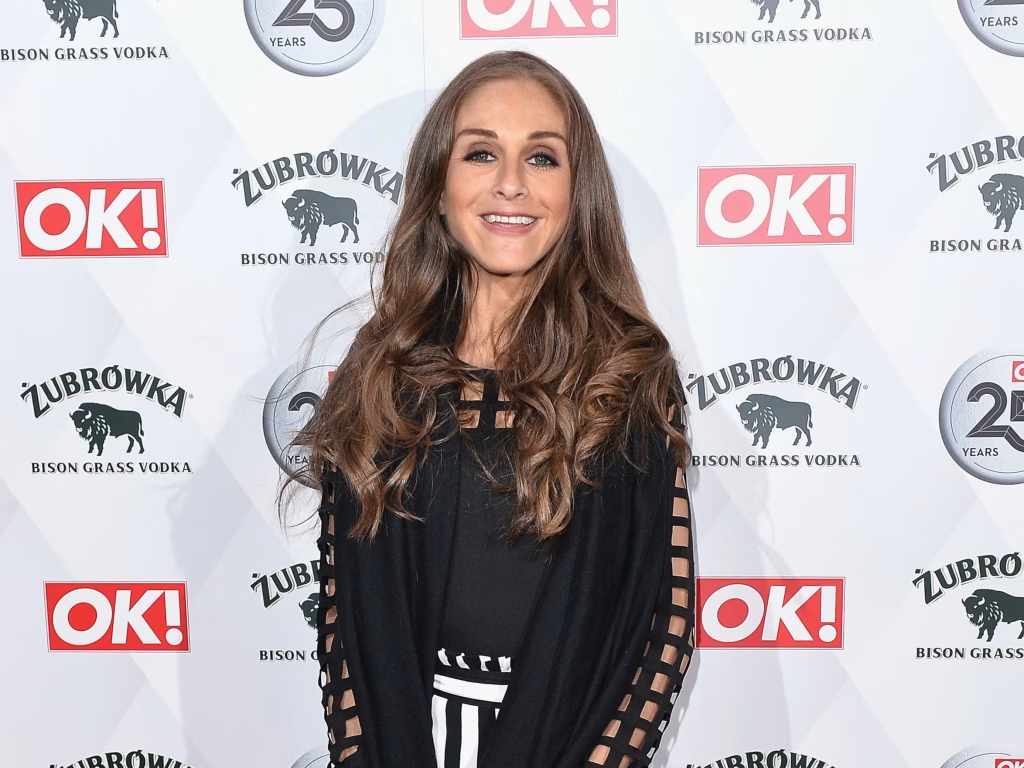
1. Nikki Grahame

Nikki Grahame became beloved through reality television, where her humor, intensity, and vulnerability made her unforgettable.

Image Source: Bing Image. License: All Creative Commons

Behind the scenes, she fought anorexia for most of her life. Her death at 38 brought renewed attention to eating disorders and the lifelong battles they can involve. Fans remember her not for her struggles alone, but for her light.

Image Source: Bing Image. License: All Creative Commons

These stories endure because they touch something deeply human: fragility, hope, and the ache of unfinished lives. While fame made these individuals visible, their struggles were profoundly personal. Remembering them means honoring both their talent and their humanity, and recognizing the importance of compassion, support, and care long before tragedy strikes.

15 Remarkable First Films That Made Industry Waves

0
Image Source: Bing Image. License: All Creative Commons

A debut film is always a leap of faith, but for some directors, that first step does more than introduce a new voice—it shakes the very foundations of cinema. These filmmakers arrived with bold visions, limited resources, and an urgent need to tell their stories. The fifteen directorial debuts highlighted here didn’t just launch careers; they transformed audience expectations and reshaped what studios believed was possible on screen.

Image Source: Bing Image. License: All Creative Commons

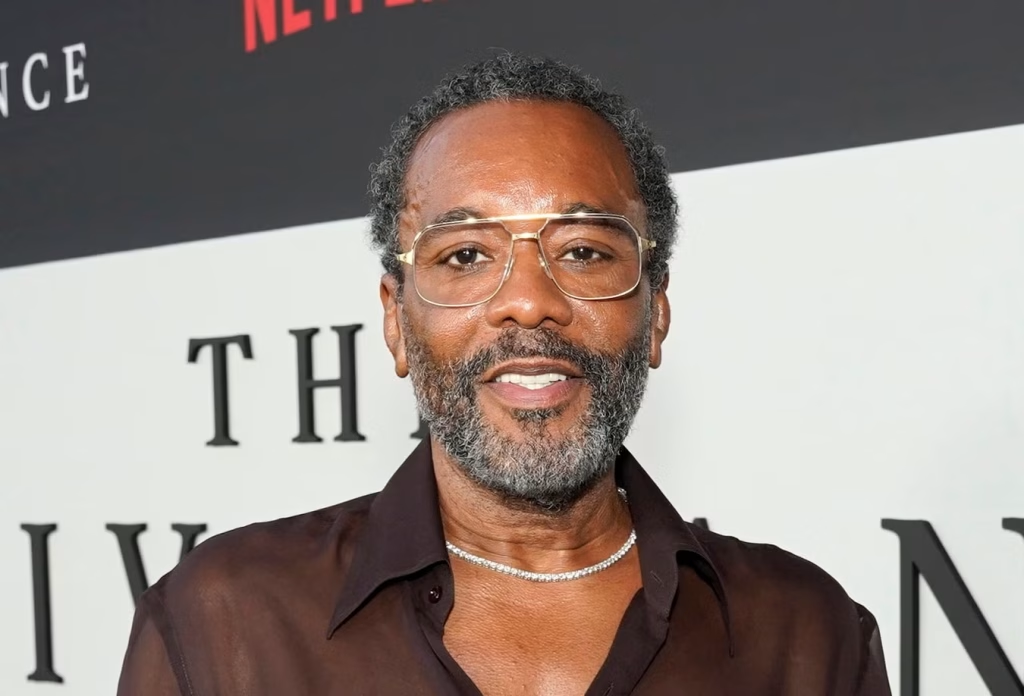
15. Lee Daniels — Precious

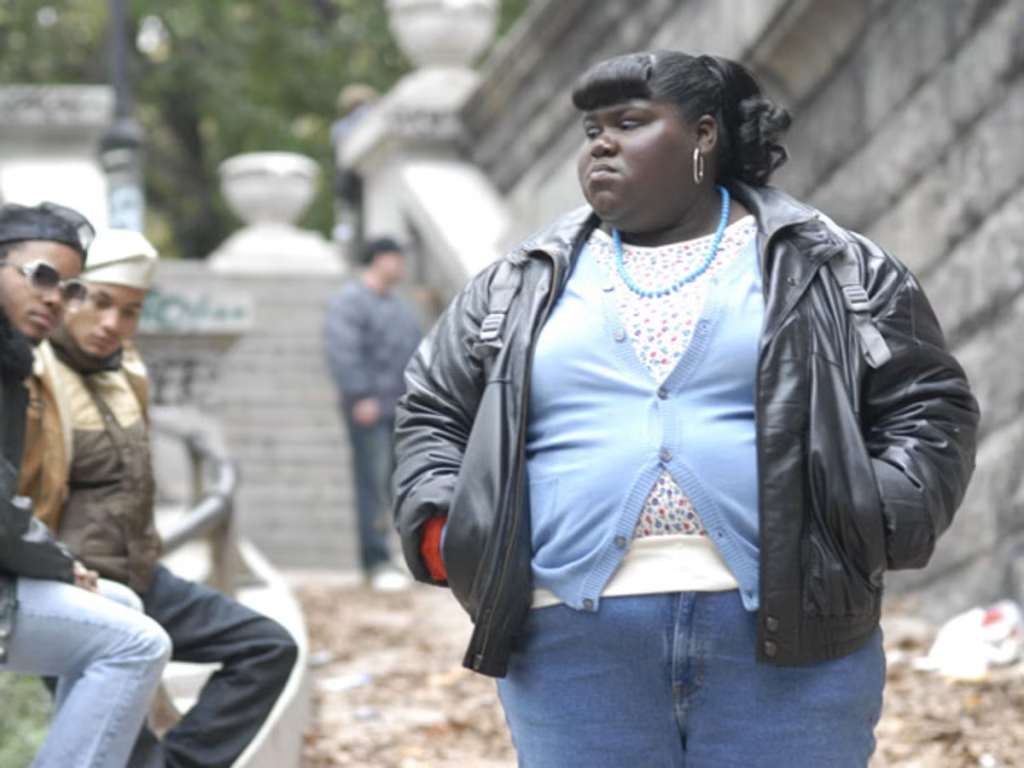
Lee Daniels announced himself with Precious, a fearless and emotionally bruising portrait of survival in modern Harlem. Drawing on his background as a producer, Daniels leaned into performance over polish, giving the film an immediacy that’s impossible to ignore.

Image Source: Bing Image. License: All Creative Commons

Powered by a breakout turn from Gabourey Sidibe and a devastating, Oscar-winning performance by Mo’Nique, the film confronted abuse, poverty, and self-worth without softening its edges. Its impact rippled beyond awards recognition, helping expand space in mainstream cinema for stories centered on marginalized voices.

Image Source: Bing Image. License: All Creative Commons

14. Steve McQueen — 12 Years a Slave

Steve McQueen’s transition from visual artist to filmmaker arrived with astonishing authority. 12 Years a Slave rejected sentimentality in favor of restraint, letting long takes and silence communicate the brutality of American slavery.

Image Source: Bing Image. License: All Creative Commons

Despite modest resources for a period epic, McQueen extracted staggering performances and crafted imagery that lingered long after the credits rolled. The film’s Best Picture win confirmed that confronting history head-on could resonate deeply with audiences worldwide.

Image Source: Bing Image. License: All Creative Commons

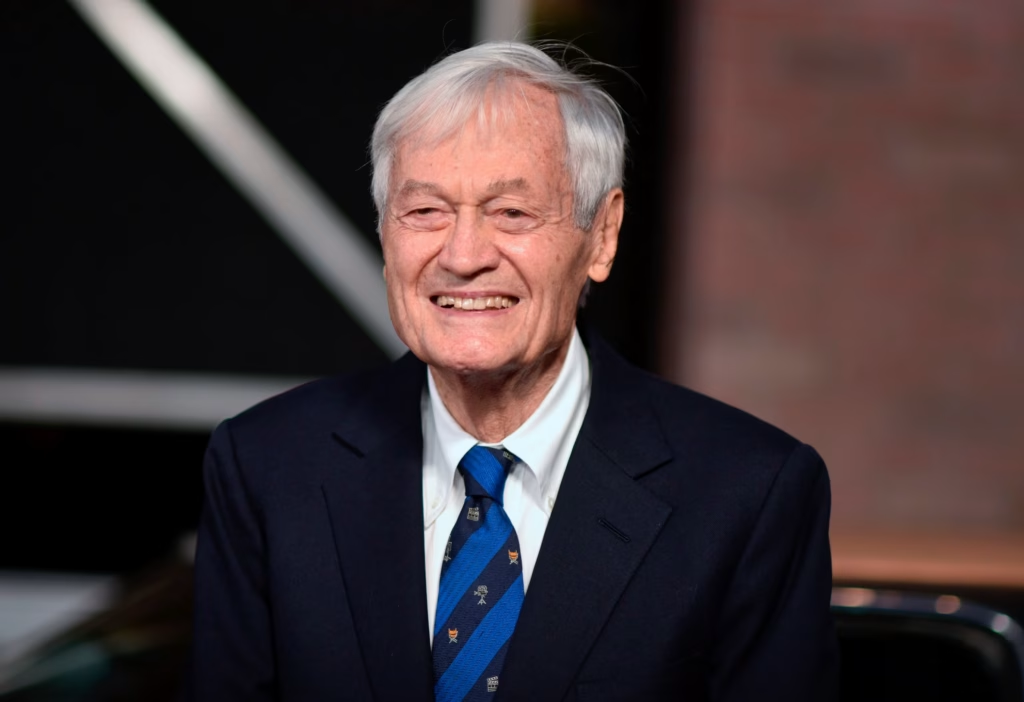
13. Roger Corman — Monster from the Ocean Floor

Roger Corman began exactly where he would continue: working fast, cheaply, and creatively. His debut creature feature may have been modest, but it showcased his uncanny ability to stretch resources to their limit.

Image Source: Bing Image. License: All Creative Commons

More importantly, it launched a career dedicated to nurturing new talent. Corman became an unofficial film school, proving that discipline, efficiency, and imagination could build an empire without studio excess.

Image Source: Bing Image. License: All Creative Commons

12. Julie Dash — Daughters of the Dust

Julie Dash’s debut was unlike anything American cinema had seen. Daughters of the Dust unfolded as a visual poem, chronicling the lives and traditions of the Gullah Geechee community with reverence and grace.

Image Source: Bing Image. License: All Creative Commons

Shot independently and structured non-traditionally, the film challenged narrative norms and aesthetic expectations. Its influence has only grown over time, shaping the visual language of contemporary Black filmmakers and artists.

Image Source: Bing Image. License: All Creative Commons

11. James Wan — Saw

James Wan turned constraint into an advantage. Shot quickly and cheaply, Saw relied on tension, pacing, and structure rather than spectacle. Its unsettling premise and sharp twist electrified audiences.

Image Source: Bing Image. License: All Creative Commons

The film’s massive success redefined modern horror economics and launched a franchise juggernaut. Wan’s debut proved that clever design and strong storytelling can outperform big budgets every time.

Image Source: Bing Image. License: All Creative Commons

10. Darren Aronofsky — Pi

Pi arrived like a fever dream. Darren Aronofsky’s stark, black-and-white debut plunged viewers into obsession, paranoia, and mathematical mysticism, all crafted on a shoestring budget.

Image Source: Bing Image. License: All Creative Commons

The film’s experimental visuals and relentless intensity announced Aronofsky as a director unafraid of discomfort or ambiguity. It set the tone for a career built on emotional extremity and formal risk.

Image Source: Bing Image. License: All Creative Commons

9. Richard Linklater — Slacker

Richard Linklater’s Slacker had no conventional plot, and that was the point. Meandering through conversations and chance encounters, the film captured a generation’s drifting anxieties with disarming honesty.

Image Source: Bing Image. License: All Creative Commons

Its loose structure and low-budget ethos helped define 1990s indie cinema. Linklater proved that observation could be just as compelling as action.

Image Source: Bing Image. License: All Creative Commons

8. Robert Rodríguez — El Mariachi

Few debut stories are as legendary as El Mariachi. Shot for the cost of a used car, Robert Rodriguez’s action film showcased relentless ingenuity, from creative camera tricks to guerrilla locations.

Image Source: Bing Image. License: All Creative Commons

The film’s success shattered assumptions about what independent filmmakers could achieve. Rodriguez didn’t wait for permission; he made his own door and kicked it open.

Image Source: Bing Image. License: All Creative Commons

7. Kevin Smith — Clerks

Kevin Smith’s Clerks felt like eavesdropping on real life. Filmed after hours in a convenience store, the movie thrived on sharp dialogue, awkward silences, and deeply relatable frustrations.

Image Source: Bing Image. License: All Creative Commons

Its Sundance success transformed Smith into an indie icon and proved that voice mattered more than gloss. Sometimes, all you need is something honest to say.

Image Source: Bing Image. License: All Creative Commons

6. The Coen Brothers — Blood Simple

With Blood Simple, the Coen brothers arrived fully formed. Their debut blended noir, dark comedy, and meticulous visual storytelling into something both familiar and strange.

Image Source: Bing Image. License: All Creative Commons

The film’s precision and tonal confidence signaled the arrival of two filmmakers obsessed with structure and subversion. Their fingerprints would soon be everywhere.

Image Source: Bing Image. License: All Creative Commons

5. Jordan Peele — Get Out

Jordan Peele’s pivot from comedy to horror caught many off guard, but Get Out landed like a thunderclap. Using genre as a Trojan horse, Peele dissected race, privilege, and performance in America.

Image Source: Bing Image. License: All Creative Commons

The film’s cultural impact extended far beyond box office success, reshaping expectations for socially conscious genre cinema. Peele’s debut didn’t just scare, it challenged.

Image Source: Bing Image. License: All Creative Commons

4. John Singleton — Boyz n the Hood

John Singleton was barely out of college when he made Boyz n the Hood, yet the film carried the weight of lived experience. His depiction of South Central Los Angeles balanced violence with tenderness and hope.

Image Source: Bing Image. License: All Creative Commons

Singleton’s historic Oscar nomination marked a turning point, proving that authenticity could thrive in mainstream cinema without compromise.

Image Source: Bing Image. License: All Creative Commons

3. Ava DuVernay — Selma

Ava DuVernay brought urgency and humanity to Selma, focusing not just on history but on the people living it. Her direction emphasized emotion, struggle, and moral courage.

Image Source: Bing Image. License: All Creative Commons

The film affirmed DuVernay as a powerful voice in American cinema and opened doors for future filmmakers to blend activism with artistry.

Image Source: Bing Image. License: All Creative Commons

2. Spike Lee — She’s Gotta Have It

Spike Lee burst onto the scene with swagger, humor, and defiance. She’s Gotta Have It was raw, stylish, and unapologetically Black, reshaping how stories about urban life were told.

Image Source: Bing Image. License: All Creative Commons

Lee’s debut wasn’t just a calling card; it was a declaration of independence from cinematic convention.

Image Source: Bing Image. License: All Creative Commons

1. Orson Welles — Citizen Kane

Few debuts come close to Citizen Kane. At 25, Orson Welles rewrote the grammar of cinema, experimenting with structure, perspective, and visual depth in ways that still feel modern.

Image Source: Bing Image. License: All Creative Commons

The film’s innovations reshaped storytelling itself. Decades later, it remains a benchmark for ambition and artistic fearlessness.

Image Source: Bing Image. License: All Creative Commons

These debut films remind us that revolution often starts small—with a first idea, a borrowed camera, or a story that refuses to stay quiet. Whether made for thousands or millions, each of these works reshaped cinema by daring to be different from the very beginning.

15 Stunning VFX Moments That Transformed Fantasy and Period Films

0
Image Source: Bing Image. License: All Creative Commons

From hand-crafted creatures to cutting-edge digital worlds, special effects have always been cinema’s secret weapon. Long before CGI took over, filmmakers relied on ingenuity, craftsmanship, and sheer creativity to make the impossible feel real. This list spotlights fifteen landmark films that not only amazed audiences but also transformed moviemaking, leaving a lasting mark on fantasy, sci-fi, and spectacle-driven storytelling.

Image Source: Bing Image. License: All Creative Commons

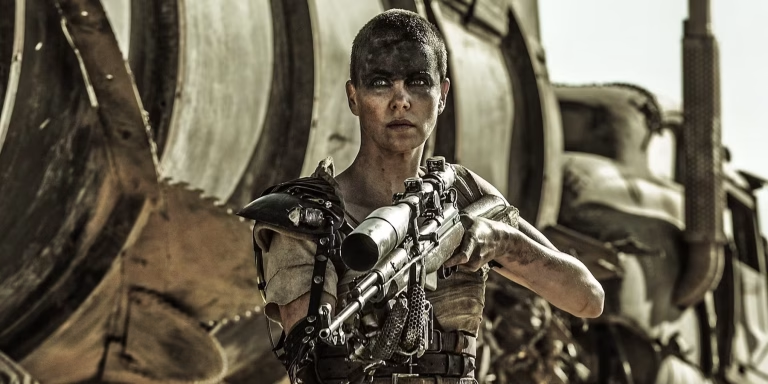
15. Mad Max: Fury Road (2015)

Mad Max: Fury Road feels less like a movie and more like a controlled explosion. George Miller returned to his wasteland with a singular mission: to put as much chaos on screen as physically possible. Real vehicles crashed, flipped, and collided at full speed, while performers swung between them on massive poles. Yes, that flamethrower guitar was real, and yes, it was glorious.

Image Source: Bing Image. License: All Creative Commons

What elevates the film is how subtly digital effects are used. CGI enhances skies, environments, and motion rather than replacing them, giving the film its hyper-stylized, almost mythic look. Miller even adjusted frame rates and backgrounds shot-by-shot to guide the viewer’s eye. The result is a relentless visual symphony that proves practical effects were far from obsolete.

Image Source: Bing Image. License: All Creative Commons

14. Avatar (2009)

James Cameron didn’t just make a hit with Avatar; he built an entire ecosystem. Pandora felt alive in a way audiences had never experienced, so much so that some viewers famously struggled to return to reality after leaving the theater.

Image Source: Bing Image. License: All Creative Commons

The film’s biggest leap was emotional motion capture on an unprecedented scale. Instead of one digital character stealing the show, Cameron filled his world with expressive, fully realized beings. The technology allowed subtle performances to shine through layers of CGI skin, forever changing expectations for digital characters. Nearly every modern effects-heavy blockbuster owes something to Avatar’s blueprint.

Image Source: Bing Image. License: All Creative Commons

13. The Curious Case of Benjamin Button (2008)

David Fincher’s Benjamin Button didn’t shout about its technical achievements, and that’s exactly why they worked. The film required Brad Pitt to convincingly age backward over decades, a task no amount of makeup alone could handle.

Image Source: Bing Image. License: All Creative Commons

Through a seamless blend of digital face replacement, subtle CGI adjustments, and practical techniques, the transformation unfolds naturally. Nothing feels flashy or artificial. This understated approach became the foundation for today’s de-aging technology, proving that visual effects don’t need to be loud to be revolutionary.

Image Source: Bing Image. License: All Creative Commons

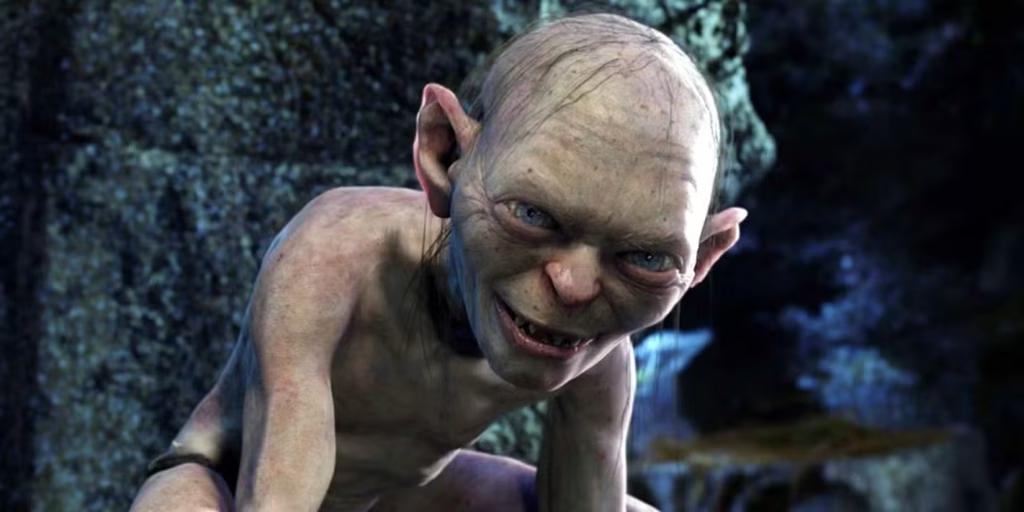
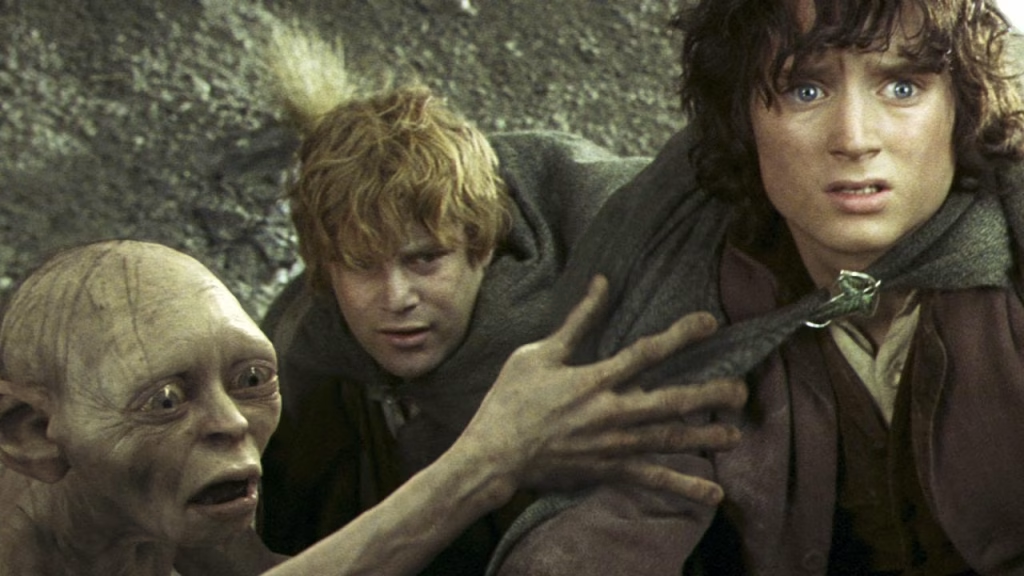
12. The Lord of the Rings: The Two Towers (2002)

Middle-earth truly found its digital soul with Gollum. Andy Serkis’ motion-capture performance brought depth, vulnerability, and menace to a fully CGI character in a way audiences had never seen before. He wasn’t just a visual effect; he was a tragic presence.

Image Source: Bing Image. License: All Creative Commons

Beyond Gollum, the Battle of Helm’s Deep redefined large-scale warfare on screen. Weta Digital’s crowd simulation software allowed thousands of fighters to move independently, creating chaos that felt authentic. The Two Towers showed how technology could serve emotion, scale, and storytelling all at once.

Image Source: Bing Image. License: All Creative Commons

11. The Matrix (1999)

Few films have left fingerprints on pop culture like The Matrix. Its most famous innovation, “bullet time,” froze action mid-movement while the camera seemed to glide impossibly around it. Achieved through precise still photography and virtual camera mapping, the effect instantly became iconic.

Image Source: Bing Image. License: All Creative Commons

The Wachowskis also used color grading as storytelling, bathing the simulated world in sickly greens to subtly reinforce the idea of artificial reality. The Matrix didn’t just introduce new tricks; it changed how filmmakers thought about visuals as philosophy.

Image Source: Bing Image. License: All Creative Commons

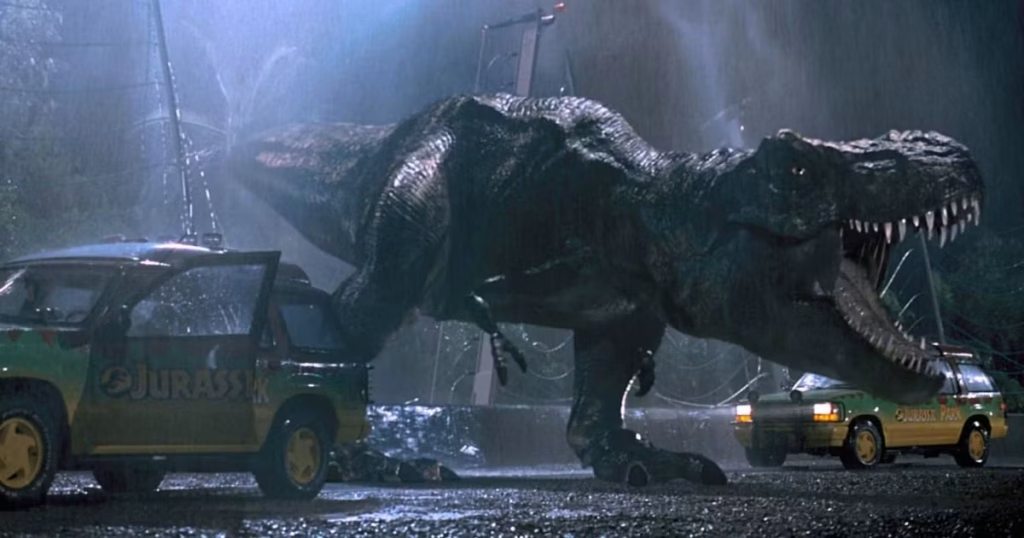
10. Jurassic Park (1993)

When dinosaurs first roared onto the screen in Jurassic Park, audiences genuinely wondered how filmmakers had done it. Steven Spielberg’s genius was knowing when to use animatronics and when to lean on CGI.

Image Source: Bing Image. License: All Creative Commons

The physical dinosaurs gave weight and presence, while digital effects filled in motion and scale that mechanical models couldn’t achieve. This careful balance made the creatures feel alive. Nearly every modern creature feature traces its lineage back to this film.

Image Source: Bing Image. License: All Creative Commons

9. Dead Alive (Braindead) (1992)

Long before epic battles and Oscar wins, Peter Jackson was gleefully drowning audiences in fake blood. Dead Alive is a low-budget splatter comedy that pushed practical gore to absurd extremes.

Image Source: Bing Image. License: All Creative Commons

Using puppets, prosthetics, and outrageous quantities of stage blood, Jackson created unforgettable scenes of chaos, most famously a lawnmower massacre that remains legendary. The film proved imagination could outweigh budget, and it cemented Jackson as a fearless effects experimenter.

Image Source: Bing Image. License: All Creative Commons

8. Terminator 2: Judgment Day (1991)

Terminator 2 arrived like a warning shot from the future. The liquid-metal T-1000 was unlike anything audiences had seen, morphing seamlessly between human and machine.

Image Source: Bing Image. License: All Creative Commons

Industrial Light & Magic pushed early CGI to its limits, spending days rendering seconds of footage. Combined with practical stunts and explosive action, the effects still hold up decades later. T2 redefined what a blockbuster villain could look like and how real CGI could feel.

Image Source: Bing Image. License: All Creative Commons

7. Who Framed Roger Rabbit? (1988)

Blending live action and animation had been attempted before, but never at this level. Who Framed Roger Rabbit? required obsessive precision, from camera movement to lighting, to sell the illusion that humans and cartoons shared the same space.

Image Source: Bing Image. License: All Creative Commons

Bob Hoskins’ committed performance anchored the fantasy, while inventive tricks solved problems no one had faced before. The result remains one of the most convincing hybrid films ever made.

Image Source: Bing Image. License: All Creative Commons

6. Tron (1982)

Tron was a gamble that paid off in influence, if not initially at the box office. At a time when computers were barely household items, the film dared to visualize life inside a digital world.

Image Source: Bing Image. License: All Creative Commons

Using early CGI, backlit animation, and experimental compositing, the filmmakers worked with laughably small memory limits by today’s standards. The bold visual language they created laid the groundwork for how cinema imagines cyberspace even now.

Image Source: Bing Image. License: All Creative Commons

5. The Thing (1982)

Rob Bottin’s work on The Thing remains the gold standard for practical horror effects. The film’s alien transformations are grotesque, shocking, and deeply unsettling because they’re real.

Image Source: Bing Image. License: All Creative Commons

Using puppetry, animatronics, and mechanical effects, Bottin crafted scenes that feel unpredictable and alive. Decades later, they’re still studied, celebrated, and rarely matched.

Image Source: Bing Image. License: All Creative Commons

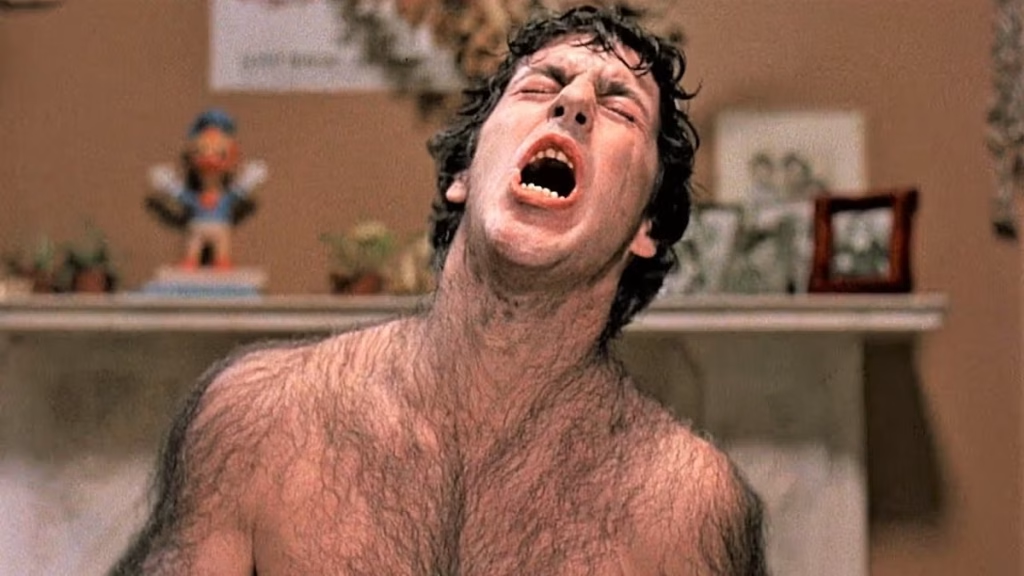
4. An American Werewolf in London (1981)

Rick Baker’s transformation sequence didn’t cut away or hide in shadows; it lingered. Bones stretched, muscles shifted, and the horror unfolded in full view.

Image Source: Bing Image. License: All Creative Commons

This commitment to realism earned Baker an Academy Award and permanently raised expectations for creature effects. The scene remains one of the most influential transformations in film history.

Image Source: Bing Image. License: All Creative Commons

3. Alien (1979)

Alien didn’t rely on spectacle; it relied on atmosphere. H.R. Giger’s biomechanical creature design was deeply unsettling, and the film’s grimy, industrial sets made the future feel claustrophobic and hostile.

Image Source: Bing Image. License: All Creative Commons

By keeping the alien partially hidden and grounding effects in physical reality, Ridley Scott created terror through suggestion. The film’s aesthetic still echoes through sci-fi and horror today.

Image Source: Bing Image. License: All Creative Commons

2. Star Wars: A New Hope (1977)

Before Star Wars, science fiction looked clean and distant. George Lucas made it dirty, lived-in, and thrilling. Miniatures, matte paintings, and practical sets created a universe that felt real and expansive.

Image Source: Bing Image. License: All Creative Commons

ILM’s groundbreaking work reshaped the industry overnight, and the opening Star Destroyer shot remains one of cinema’s most unforgettable images.

Image Source: Bing Image. License: All Creative Commons

1. Jason and the Argonauts (1963)

At the top stands Ray Harryhausen’s masterpiece. Jason and the Argonauts showcased stop-motion animation at its absolute peak, especially during the legendary skeleton battle.

Image Source: Bing Image. License: All Creative Commons

Harryhausen animated each frame by hand, perfectly matching movement, lighting, and choreography with live-action footage. The result is still magical, proof that patience, artistry, and imagination can outlast any technology.

Image Source: Bing Image. License: All Creative Commons

From stop-motion skeletons to liquid-metal assassins, these films represent turning points where creativity and technology collided. While tools have evolved, the heart of great visual effects hasn’t changed: it’s about making audiences believe, even just for a moment, that the impossible is real.

10 Action-Packed Sports Anime Every Fan Should Watch

0
Image Source: Bing Image. License: All Creative Commons

Sports anime has long thrived on exaggeration and high energy, and that’s a big part of its appeal. While some series aim for realistic gameplay and inspirational character growth, others fully embrace the absurd—pushing the limits of what’s possible on screen. That willingness to go all in is what makes the genre so exciting. It proves that even the most ordinary sport can become thrilling, outrageous, and wildly entertaining when the stakes—and the creativity—are turned up to eleven.

Image Source: Bing Image. License: All Creative Commons

You might know some of the popular classics, but once you move past the limelight, sports anime goes delightfully weird. This is where unusual activities, fictional sports, and utterly insane concepts become the norm. These shows prove that the genre is not bound by reality but rather by creativity. The following is a reverse countdown of the weirdest, most entertaining sports anime that you should check out. Whether they are guilty pleasures or full-blown genre-benders, each one has something unusual to offer, regardless of where the action unfolds.

Image Source: Bing Image. License: All Creative Commons

10. Iwa Kakeru! Sport Climbing Girls

Iwa Kakeru! takes a surprisingly different approach to the competitive climbing sport, focusing on a former hardcore gamer who trades in her game controllers for climbing walls. Instead of relying solely on her physical prowess, she uses her problem-solving abilities and analytical mind to overcome each route, making it as much of a mental battle as it is a physical one. This fresh take allows the series to establish its own identity among more traditional sports anime.

Image Source: Bing Image. License: All Creative Commons

The climbing scenes themselves are surprisingly engaging, breaking down routes, grip choices, and body positioning in a way that actually explains the sport. There’s a genuine effort to make climbing feel tactical and intense, even when the stakes are relatively small compared to national tournaments or world championships.

Image Source: Bing Image. License: All Creative Commons

That said, the show undeniably leans into fan service, sometimes aggressively. For some viewers, this distracts from the sport and character growth, but for others, it’s just part of the package. If you’re curious about a lesser-known competitive sport and don’t mind some excess, Iwa Kakeru! is a decent entry point.

Image Source: Bing Image. License: All Creative Commons

9. Keijo!!!!!!!!

Keijo!!!!!!!! is the kind of anime premise that sounds fake until you see it animated. Set in a fictional professional sport, competitors battle on floating platforms and can only use their chests and backsides to knock opponents into the water. It’s ridiculous, unapologetic, and very aware of what it’s doing.

Image Source: Bing Image. License: All Creative Commons

What makes Keijo!!!!!!!! Work isn’t just the fanservice, it’s the commitment. The series treats its nonsense sport with the same seriousness that other anime reserve for soccer or boxing. There are special techniques, rivalries, power-ups, and dramatic commentary that elevate the absurdity into full-blown parody.

Image Source: Bing Image. License: All Creative Commons

Surprisingly, the animation quality is solid, and the matches are genuinely fun to watch. You’re not here for realism or deep philosophy, you’re here for chaos. If you want to see how far sports anime can stretch the definition of “sport,” this is as far as it goes.
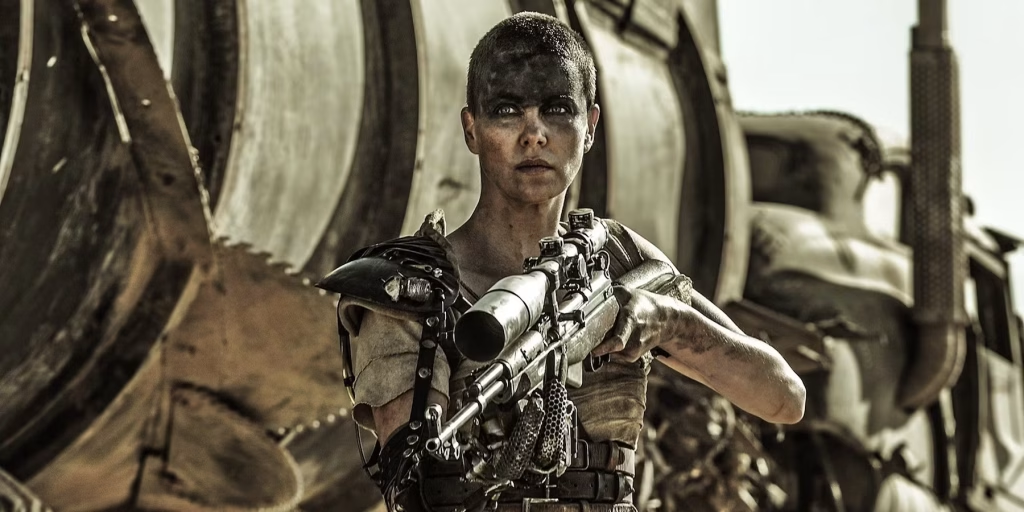
Image Source: Bing Image. License: All Creative Commons

8. Re-Main

Water polo doesn’t get much representation in anime, which makes Re-Main feel refreshing right out of the gate. The series follows a talented player who loses most of his memories after a long coma, forcing him to relearn both the sport and his own identity from scratch.

Image Source: Bing Image. License: All Creative Commons

Rather than focusing purely on winning matches, Re-Main spends a lot of time exploring confidence, frustration, and the pressure of expectations. The protagonist isn’t just battling opposing teams; he’s fighting against the shadow of the person he used to be.

Image Source: Bing Image. License: All Creative Commons

While it doesn’t reinvent the sports anime formula, the emotional angle gives it weight. It’s quieter, more introspective, and sometimes awkward, but that realism makes it resonate. If you want a sports anime that prioritizes character recovery over flashy victories, Re-Main is worth the dive.

Image Source: Bing Image. License: All Creative Commons

7. Bakuten!!

Bakuten!! shines a spotlight on men’s rhythmic gymnastics, a sport rarely explored in anime or media in general. The story follows a complete beginner who becomes fascinated after witnessing a competition, eventually joining his school’s team despite having no prior experience.

Image Source: Bing Image. License: All Creative Commons

The narrative itself is fairly standard practice, setbacks, rival schools—but the execution is where the show stands out. The gymnastics performances are beautifully animated, capturing the speed, precision, and artistic flair that define the sport.

Image Source: Bing Image. License: All Creative Commons

More than anything, Bakuten!! respects its subject. It portrays rhythmic gymnastics as physically demanding and fiercely competitive, not just a flashy spectacle. Even if the characters don’t break new ground, the presentation alone makes this series feel fresh.

Image Source: Bing Image. License: All Creative Commons

6. 2.43: Seiin High School Boys Volleyball Team

There’s no escaping the comparisons to Haikyuu!!, and unfortunately, 2.43 lives in that shadow. It follows two former childhood friends with unresolved tension as they reunite on a struggling volleyball team, aiming to rebuild both trust and performance.

Image Source: Bing Image. License: All Creative Commons

The volleyball itself is competently animated, and the matches have moments of genuine intensity. However, the pacing can feel uneven, and the emotional beats don’t always land as strongly as they should.

Image Source: Bing Image. License: All Creative Commons

Still, 2.43 isn’t without merit. It focuses more on interpersonal conflict and mental blocks than explosive hype, making it a slower, more grounded watch. If you’re already invested in volleyball anime and want something lower-key, it scratches that itch.

Image Source: Bing Image. License: All Creative Commons

5. Birdie Wing

Birdie Wing takes golf, a sport often associated with calm and restraint, and turns it into a high-octane drama. Underground matches, criminal organizations, and reality-defying shots redefine what golf anime can look like.

Image Source: Bing Image. License: All Creative Commons

At the center of the story is Eve, a ruthless street golfer who competes in illegal matches to survive, and Aoi, a sheltered prodigy with perfect form. Their rivalry is intense, personal, and wildly exaggerated in the best way possible.

Image Source: Bing Image. License: All Creative Commons

The show thrives on excess. Named techniques, dramatic monologues, and impossible trajectories make every swing feel like a finishing move. Even if you’ve never cared about golf, Birdie Wing makes it exciting, ridiculous, and endlessly entertaining.

Image Source: Bing Image. License: All Creative Commons

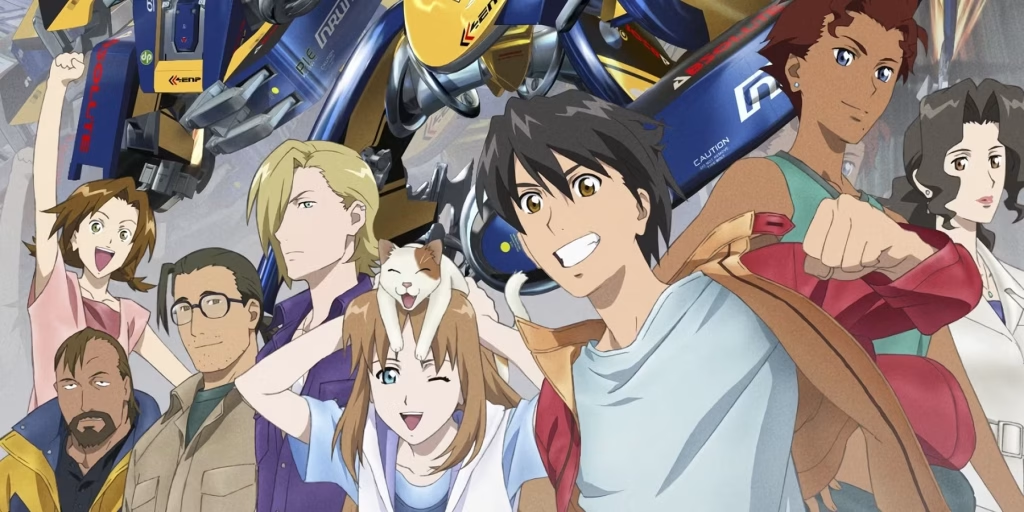
4. IGPX

On paper, IGPX looks like a mecha anime, and it is, but structurally, it’s pure sports drama. Teams of pilots race giant robots in professional leagues, dealing with rankings, sponsorships, and rival teams just like traditional athletes.

Image Source: Bing Image. License: All Creative Commons

Each race emphasizes teamwork, timing, and strategy, blending mechanical combat with the familiar rhythms of sports anime storytelling. The characters grow not just as pilots, but as competitors learning to trust one another.

Image Source: Bing Image. License: All Creative Commons

Backed by Production I.G.’s strong animation, IGPX remains visually impressive even years later. If you enjoy sports anime but want something louder, faster, and packed with sci-fi flair, this is an easy pick.

Image Source: Bing Image. License: All Creative Commons

3. Air Gear

Air Gear starts grounded enough, with rollerblading gangs battling for turf, but quickly escalates into complete insanity. High-tech skates allow characters to defy gravity, pull off impossible tricks, and turn races into full-scale battles.

Image Source: Bing Image. License: All Creative Commons

The realism disappears early, but that’s exactly the point. Air Gear embraces excess, blending street culture, supernatural elements, and intense rivalries into something uniquely chaotic.

Image Source: Bing Image. License: All Creative Commons

Between the iconic soundtrack, bold visual style, and relentless energy, the series leaves a strong impression. It’s messy, exaggerated, and unforgettable, a perfect example of sports anime abandoning restraint and thriving because of it.

Image Source: Bing Image. License: All Creative Commons

2. SK8 the Infinity

SK8 the Infinity injects skateboarding with pure anime drama. Set in Okinawa, it revolves around secret downhill races where skaters risk serious injury for pride, passion, and personal freedom.

Image Source: Bing Image. License: All Creative Commons

The relationship between Reki and Langa forms the emotional core of the show, balancing adrenaline-fueled races with heartfelt character moments. The supporting cast adds style, humor, and intensity in equal measure.

Image Source: Bing Image. License: All Creative Commons

Visually striking and emotionally charged, SK8 feels modern, expressive, and confident in its identity. Add in a flamboyant antagonist who steals every scene, and you’ve got one of the most memorable sports anime in recent years.

Image Source: Bing Image. License: All Creative Commons

1. Blue Lock

Blue Lock takes everything sports anime usually stands for and flips it on its head. After Japan’s World Cup failure, 300 strikers are locked into an experimental program where only one will emerge as the nation’s savior.

Image Source: Bing Image. License: All Creative Commons

Teamwork takes a backseat to ego, ambition, and survival. Players are encouraged to be selfish, ruthless, and obsessed with scoring because hesitation means elimination.

Image Source: Bing Image. License: All Creative Commons

The result is a tense, psychological battle disguised as a soccer anime. With its darker tone, sharp visuals, and relentless pacing, Blue Lock feels more like a survival game than a sports series, and that bold approach is exactly why it stands at the top.

Image Source: Bing Image. License: All Creative Commons

Sports anime continues to evolve because it refuses to stay predictable. Whether grounded or completely absurd, these shows prove that competition can be thrilling in any form. If you’re willing to step outside the usual courts and fields, you’ll find some of anime’s most creative storytelling waiting for you.

15 Controversial Movies That Divided Critics and Fans

0
Image Source: Bing Image. License: All Creative Commons

Few debates in the movie world get as heated as the ongoing tug-of-war between critics and everyday viewers. Film critics often analyze movies through the lens of storytelling craft, artistic ambition, and cinematic innovation. Meanwhile, general audiences usually judge films based on how entertaining, emotional, or memorable the experience is. When those two perspectives collide, the result can be wildly different opinions about the same movie.

Image Source: Bing Image. License: All Creative Commons

We’ve all seen it happen. A film critics dismiss might become a beloved fan favorite, while a critically praised movie can leave audiences feeling confused or underwhelmed. These disagreements spark endless discussions online, from social media arguments to deep-dive YouTube essays. Today, we’re exploring fifteen films that created some of the biggest divides between critics and viewers, and why those differences might exist.

Image Source: Bing Image. License: All Creative Commons

15. Twilight

When Twilight arrived in theaters, it didn’t just introduce audiences to sparkling vampires; it sparked a cultural phenomenon. Critics weren’t particularly impressed, giving the film a lukewarm reception and questioning its acting, pacing, and overall storytelling. Many reviewers saw it as melodramatic and uneven, and the film’s modest critical score reflected that sentiment.

Image Source: Bing Image. License: All Creative Commons

Fans, however, saw something completely different. For millions of viewers, the movie was less about filmmaking technique and more about the emotional pull of its characters and romantic drama. The intense love triangle between Bella, Edward, and Jacob fueled passionate fan discussions and helped transform the movie into a massive pop-culture moment. For those caught up in the craze, critical opinions barely mattered.

Image Source: Bing Image. License: All Creative Commons

14. Drag Me to Hell

Director Sam Raimi’s Drag Me to Hell delighted critics with its gleefully chaotic blend of horror and dark comedy. Reviewers praised the film for embracing practical effects, outrageous set pieces, and Raimi’s signature over-the-top style. To critics, it felt like a refreshing throwback to the wild spirit of classic horror films.

Image Source: Bing Image. License: All Creative Commons

Audiences had a more mixed reaction. Some viewers were expecting a straightforward horror movie and instead got something far more absurd and campy. The exaggerated tone, which critics loved, left certain viewers confused about whether they were supposed to be scared or laughing. That tonal tightrope created a clear divide between those who appreciated the film’s bold style and those who didn’t quite connect with it.

Image Source: Bing Image. License: All Creative Commons

13. Indiana Jones and the Kingdom of the Crystal Skull

The return of Indiana Jones after nearly two decades was supposed to be a triumphant cinematic event. Critics responded fairly positively, appreciating the nostalgia and the return of Harrison Ford’s iconic adventurer. Many reviewers enjoyed seeing the classic character back on the big screen, even if the film didn’t quite reach the heights of earlier installments.

Image Source: Bing Image. License: All Creative Commons

Fans, on the other hand, had stronger opinions. Longtime followers of the franchise struggled with the heavy use of CGI, the controversial alien storyline, and certain over-the-top action sequences. Moments like the infamous nuclear refrigerator scene quickly became internet talking points. For audiences who grew up with the original trilogy, expectations were sky-high, and the film simply didn’t live up to them.

Image Source: Bing Image. License: All Creative Commons

12. Playing With Fire

Family comedies rarely earn much respect from critics, and Playing With Fire was no exception. Reviewers largely dismissed the movie as formulaic slapstick with predictable jokes and a basic storyline. Many critics felt it relied too heavily on familiar gags rather than clever writing.

Image Source: Bing Image. License: All Creative Commons

Audiences, particularly families, had a much better time with it. For parents and kids looking for lighthearted entertainment, the movie delivered exactly what it promised: silly situations, physical comedy, and a feel-good ending. Sometimes viewers simply want something fun and easy to watch, and for that crowd, the film did its job just fine.

Image Source: Bing Image. License: All Creative Commons

11. Harlem Nights

With Eddie Murphy directing and starring alongside comedy legends like Richard Pryor and Redd Foxx, Harlem Nights seemed like a guaranteed hit. Critics, however, were far less enthusiastic. Many reviewers felt the film struggled to balance its tone and didn’t fully live up to the comedic potential of its cast.

Image Source: Bing Image. License: All Creative Commons

Audiences saw things differently. Fans enjoyed the movie’s swagger, colorful characters, and old-school comedy energy. Watching so many iconic performers share the screen was entertainment enough for many viewers. While critics wanted sharper storytelling, audiences were happy to simply enjoy the performances.

Image Source: Bing Image. License: All Creative Commons

10. Spy Kids

Robert Rodriguez’s Spy Kids charmed critics with its creativity and playful imagination. Reviewers praised the movie for its inventive gadgets, colorful visuals, and heartfelt message about family teamwork. Many critics admired how it encouraged creativity in children’s filmmaking.

Image Source: Bing Image. License: All Creative Commons

Yet audiences didn’t respond quite as warmly. Some parents and kids found the quirky tone a bit strange, and certain visual effects didn’t land with everyone. The unusual characters—like the bizarre thumb-shaped henchmen—were memorable, but not always in a way that appealed to all viewers. What critics saw as imaginative filmmaking, some audiences simply found odd.

Image Source: Bing Image. License: All Creative Commons

9. Uncut Gems

Few films capture anxiety as intensely as Uncut Gems. Critics raved about the Safdie brothers’ relentless direction and Adam Sandler’s electrifying performance. The film’s chaotic energy and constant tension impressed many reviewers who appreciated its daring style.

Image Source: Bing Image. License: All Creative Commons

For audiences, however, that same intensity could feel overwhelming. The movie rarely gives viewers a chance to breathe, pushing its protagonist through nonstop stressful situations. While critics celebrated its bold storytelling, some viewers found the experience exhausting rather than enjoyable.

Image Source: Bing Image. License: All Creative Commons

8. Ad Astra

Brad Pitt’s Ad Astra was marketed as a grand space adventure, but the film turned out to be something far more introspective. Critics admired its thoughtful pacing, philosophical themes, and striking visuals. Many saw it as a contemplative science-fiction story about loneliness, family, and identity.

Image Source: Bing Image. License: All Creative Commons

Audiences expecting thrilling space action were sometimes caught off guard. The movie focuses heavily on quiet moments and emotional reflection rather than explosive spectacle. For viewers hoping for something closer to a traditional blockbuster, the slower and more reflective tone didn’t quite hit the mark.

Image Source: Bing Image. License: All Creative Commons

7. Grown Ups

Critics had little patience for Grown Ups, often labeling it lazy and overly reliant on crude humor. Many reviewers felt the film wasted its talented comedic cast on a thin storyline and easy jokes. The critical response was brutally negative.

Image Source: Bing Image. License: All Creative Commons

Despite that, audiences showed up and enjoyed themselves. For many viewers, the movie’s charm came from watching a group of longtime comedy stars relax and have fun together. It felt more like hanging out with friends than watching a carefully crafted film—and for plenty of fans, that was part of the appeal.

Image Source: Bing Image. License: All Creative Commons

6. Venom

When Venom debuted, critics weren’t impressed. Many reviews criticized the film’s uneven tone, messy plot, and strange pacing. Some felt it couldn’t decide whether it wanted to be a dark superhero story or a quirky buddy comedy.

Image Source: Bing Image. License: All Creative Commons

Fans, however, quickly embraced the movie’s chaotic personality. Tom Hardy’s unpredictable performance and the oddball relationship between Eddie Brock and Venom gave the film a unique energy. It may not have been polished, but audiences found it wildly entertaining.

Image Source: Bing Image. License: All Creative Commons

5. Warcraft

Adapting the massive Warcraft video game universe for the big screen was always going to be a challenge. Critics largely felt the film was overcrowded with characters and lore, making it difficult for newcomers to follow the story.

Image Source: Bing Image. License: All Creative Commons

But longtime fans of the franchise appreciated the effort to bring their favorite world to life. The film paid close attention to the game’s mythology, which resonated strongly with devoted players. While critics focused on storytelling flaws, fans were thrilled to see familiar characters and locations on screen.

Image Source: Bing Image. License: All Creative Commons

4. Sausage Party

Sausage Party made headlines for its outrageous premise: an animated film that’s definitely not meant for kids. Critics generally praised the movie for its clever satire and willingness to push boundaries in animated storytelling.

Image Source: Bing Image. License: All Creative Commons

Audience reactions were far more divided. Some viewers appreciated the humor and social commentary, while others felt the film relied too heavily on shock value. Its crude jokes and relentless adult humor proved entertaining for some, but exhausting for others.

Image Source: Bing Image. License: All Creative Commons

3. The Witch

Robert Eggers’ The Witch quickly became a favorite among critics who admired its authenticity, slow-burning storytelling, and eerie atmosphere. The film’s historical accuracy and unsettling tone earned widespread praise.

Image Source: Bing Image. License: All Creative Commons

However, many audience members expecting a traditional horror movie found themselves surprised. Instead of jump scares and fast pacing, the film focuses on creeping dread and psychological tension. That deliberate style captivated some viewers while leaving others frustrated.

Image Source: Bing Image. License: All Creative Commons

2. Antz

DreamWorks’ Antz impressed critics with its witty script and surprisingly mature themes for an animated film. The movie explored ideas about individuality and society while maintaining a comedic tone.

Image Source: Bing Image. License: All Creative Commons

For younger audiences and families, though, the film sometimes felt too talkative and philosophical. Compared to other animated films of the time, it leaned more heavily on dialogue and satire than visual excitement. As a result, it connected better with critics than with general audiences.

Image Source: Bing Image. License: All Creative Commons

1. Joker

Few modern films sparked as much conversation as Joker. Critics gave it a solid but somewhat cautious reception, praising Joaquin Phoenix’s powerful performance while debating the film’s darker themes and social commentary.

Image Source: Bing Image. License: All Creative Commons

Audiences, however, embraced it passionately. Many viewers were captivated by its intense character study and emotionally raw storytelling. The film became a cultural talking point almost overnight, proving that even controversial movies can deeply resonate with the public.

Image Source: Bing Image. License: All Creative Commons

The divide between critics and audiences isn’t necessarily a bad thing. In fact, it highlights how differently people experience movies. Critics often focus on filmmaking craft, originality, and thematic depth, while audiences are more likely to prioritize enjoyment, emotional connection, and escapism. That contrast is what keeps movie conversations alive. A film that fails to impress critics might still become a beloved fan favorite, while a critically acclaimed masterpiece may not connect with everyone. In the end, the beauty of cinema lies in its subjectivity—there’s room for every opinion, every perspective, and every debate.

Human Endurance on Film: 15 Survival Movies That Shock and Awe

0
Image Source: Bing Image. License: All Creative Commons

Survival and disaster films have a unique appeal, tapping into our love for suspense and high-stakes action. They place ordinary people in extraordinary situations where every mistake could be fatal. Watching characters rely on their instincts, strength, and sheer determination to survive in a world falling apart around them is utterly gripping. Whether it’s a natural disaster, a hostile environment, or a life-or-death struggle, these movies throw us into the heart of the action—and make us wonder if we could endure the same challenges. Every narrow escape and every tense moment keeps viewers on the edge of their seats.

Image Source: Bing Image. License: All Creative Commons

It could be the rush of watching people struggle to survive against all odds, or the satisfaction of watching the end of the world from the comfort of your own home. Whatever the reason, survival and disaster movies are always a treat, whether they are a straightforward human-interest story or an over-the-top Hollywood blockbuster. Here are the 15 survival and disaster movies that you absolutely cannot afford to miss, ranging from interesting to completely unmissable.

Image Source: Bing Image. License: All Creative Commons

15. The Book of Eli (2010)

In this dark, post-apocalyptic America, the world as we know it has ended, leaving only devastation, danger, and uncertainty. Denzel Washington stars as Eli, a lone wanderer in this devastated world, equipped with nothing but his wits and his technology and one copy of the Bible. The movie offers a chilling, almost trance-like vision of a world that has lost its humanity, where every move is fraught with both danger and purpose.

Image Source: Bing Image. License: All Creative Commons

Although the narrative provides ample opportunities for suspenseful and physically demanding action, it also encourages the viewer to ponder some fundamental questions about faith, morality, and determination. The contrast between high-octane action and philosophical subtext offers a refreshing tone that puts the viewer right in the middle of the action and the meaning of one man’s quest to preserve knowledge and hope.

Image Source: Bing Image. License: All Creative Commons

14. Bird Box (2018)

In this thrilling, suspenseful movie, Sandra Bullock stars as Malorie, a woman living in a world where an invisible entity forces anyone who lays eyes on it to take their own life. Malorie must guide herself and her two children to safety in this world where the only way to survive is through the power of courage and determination. The movie plunges the audience into a world of constant fear from the very start.

Image Source: Bing Image. License: All Creative Commons

The broken narrative style of this movie heightens the tension, keeping the audience on the edge of their seats all the way. But through the fear, the movie also examines the themes of trust, human relationships, and the role of parenthood, as Malorie is forced to make tough decisions in order to safeguard the people she cares about most.

Image Source: Bing Image. License: All Creative Commons

13. The Impossible (2012)

Based on the real-life 2004 Indian Ocean tsunami, The Impossible follows a family struggling to survive the devastating waves and destruction. Naomi Watts, Ewan McGregor, and Tom Holland deliver emotionally powerful performances, conveying the fear, heartbreak, and courage that arise in the face of disaster.

Image Source: Bing Image. License: All Creative Commons

The tsunami sequences are visually stunning and harrowing, emphasizing both the unpredictability of nature and the resilience of the human spirit. The film balances breathtaking spectacle with intimate storytelling, reminding viewers of the extraordinary lengths people will go to protect loved ones when disaster strikes.

Image Source: Bing Image. License: All Creative Commons

12. Alive (1993)

Alive recounts the 1972 Andes plane crash, focusing on a Uruguayan rugby team stranded in freezing, unforgiving mountains. Starvation, hypothermia, and moral dilemmas, including the infamous acts of cannibalism, challenge their will to survive and test the limits of human endurance.

Image Source: Bing Image. License: All Creative Commons

The film’s intensity and emotional rawness make it a gripping study of human resilience. Dark and unflinching, Alive exposes the fragility of life while showcasing the strength of determination, making it one of the most powerful survival stories ever captured on film.

Image Source: Bing Image. License: All Creative Commons

11. The Revenant (2015)

Leonardo DiCaprio delivers an unforgettable performance as Hugh Glass, a frontiersman left for dead after a brutal bear attack. Alejandro González Iñárritu’s direction and Emmanuel Lubezki’s cinematography allow viewers to experience the stark beauty and deadly peril of the wilderness firsthand.

Image Source: Bing Image. License: All Creative Commons

The story is not just about survival but also about revenge, endurance, and the primal instincts that drive humans to fight for life. DiCaprio’s portrayal captures the raw physicality and emotional intensity of survival, keeping audiences immersed in every harrowing moment of the journey.

Image Source: Bing Image. License: All Creative Commons

10. 127 Hours (2010)

James Franco stars as Aron Ralston, a man trapped by a boulder in a remote canyon. Faced with impossible odds, he must make life-or-death decisions, including amputating his own arm, in a harrowing fight for survival.

Image Source: Bing Image. License: All Creative Commons

Danny Boyle’s direction captures both the panic and isolation of Ralston’s predicament, while Franco’s performance brings humanity to the forefront. The film is a visceral exploration of fear, endurance, and the willpower required to survive against overwhelming circumstances.

Image Source: Bing Image. License: All Creative Commons

9. Society of the Snow (2023)

J.A. Bayona’s retelling of the 1972 Andes plane crash is a raw depiction of survival in extreme conditions. The film does not shy away from the physical and psychological suffering endured by the stranded survivors, including the moral and emotional weight of cannibalism.

Image Source: Bing Image. License: All Creative Commons

By blending realism with emotional depth, Society of the Snow immerses viewers in a harrowing story of human perseverance. The film demonstrates the extreme challenges people face when survival depends on making unimaginable choices under immense pressure.

Image Source: Bing Image. License: All Creative Commons

8. The Martian (2015)

Matt Damon stars as an astronaut stranded on Mars, using science, ingenuity, and determination to survive against overwhelming odds. Ridley Scott’s adaptation of Andy Weir’s novel mixes suspense, humor, and scientific problem-solving, turning Damon’s character into a relatable and heroic figure.

Image Source: Bing Image. License: All Creative Commons

The story celebrates human ingenuity and resilience, showing that intellect, creativity, and determination can triumph even in the most hostile environments. It’s a survival story that emphasizes cleverness and hope as much as endurance.

Image Source: Bing Image. License: All Creative Commons

7. The Day After Tomorrow (2004)

Roland Emmerich’s disaster epic depicts a sudden, extreme climate crisis that brings global weather catastrophes, from superstorms to rapid ice ages. Dennis Quaid and Jake Gyllenhaal play characters striving to survive and protect their families in a rapidly deteriorating world.

Image Source: Bing Image. License: All Creative Commons

Though scientifically exaggerated, the film remains a thrilling spectacle and serves as a cautionary tale about environmental change. Its nonstop action, combined with high emotional stakes, ensures that viewers are both entertained and engaged in a conversation about humanity’s vulnerability to nature.

Image Source: Bing Image. License: All Creative Commons

6. World War Z (2013)

Brad Pitt stars in this fast-paced thriller about a global zombie pandemic, racing against time to halt the virus before it destroys humanity. The movie stands out for its international scope, relentless pacing, and high-intensity action sequences.

Image Source: Bing Image. License: All Creative Commons

Key scenes, such as the crumbling of Jerusalem’s defenses, are unforgettable moments of cinematic tension. The story blends global disaster with personal stakes, keeping audiences invested from start to finish.

Image Source: Bing Image. License: All Creative Commons

5. Cast Away (2000)

Tom Hanks delivers a masterful performance as Chuck Noland, stranded alone on a deserted island after a plane crash. Left with only a volleyball for companionship, Noland must adapt, improvise, and survive in isolation.

Image Source: Bing Image. License: All Creative Commons

The film is both a survival story and a character study, exploring themes of resilience, ingenuity, and emotional endurance. Hanks’ performance transforms a simple premise into an intimate and gripping exploration of human survival.

Image Source: Bing Image. License: All Creative Commons

4. The Road (2009)

Viggo Mortensen stars as a father guiding his son through a desolate, post-apocalyptic world. The film is raw and morally complex, highlighting parental love and the struggle to maintain humanity when civilization collapses.

Image Source: Bing Image. License: All Creative Commons

Its intimate storytelling, bleak visuals, and emotional depth make The Road one of the most powerful survival films ever made. It’s a meditation on hope, perseverance, and the strength of human bonds under dire circumstances.

Image Source: Bing Image. License: All Creative Commons

3. Deep Impact (1998)

A comet threatens to destroy Earth, and humanity scrambles to survive. The film balances large-scale disaster spectacle with intimate human stories, showing the emotional toll of an impending global catastrophe.

Image Source: Bing Image. License: All Creative Commons

Scenes like President Morgan Freeman’s stirring speech and the tsunamis that follow highlight the tension and awe of survival against nature’s unstoppable power. Deep Impact combines action, emotion, and spectacle memorably.

Image Source: Bing Image. License: All Creative Commons

2. Don’t Look Up (2021)

Adam McKay’s satirical disaster comedy follows two astronomers, played by Leonardo DiCaprio and Jennifer Lawrence, as they try to warn the world about an approaching comet. Instead of cooperation, they face apathy, misinformation, and political interference.

Image Source: Bing Image. License: All Creative Commons

The film blends biting social commentary with disaster tropes, making audiences laugh while provoking reflection on society’s response to existential threats. It’s a clever, entertaining, and thoughtful twist on the traditional disaster movie formula.

Image Source: Bing Image. License: All Creative Commons

1. 2012 (2009)

Roland Emmerich’s 2012 unleashes a nonstop parade of cataclysmic events, from earthquakes to tsunamis to volcanic eruptions. John Cusack and Chiwetel Ejiofor play central characters navigating the chaos, fighting for survival as civilization crumbles.

Image Source: Bing Image. License: All Creative Commons

The movie is a treat to watch as it incorporates awe-inspiring special effects and suspense. It captures the essence of disaster movies while emphasizing the human spirit that strives to survive even in the most adverse situations.

Image Source: Bing Image. License: All Creative Commons

If you love surviving true stories, apocalyptic thrillers, or sarcastic takes on mankind’s self-destructive habits, the survival and disaster films give you all the suspense, spectacle, and an insightful peek into what it really takes to live when everything depends on it.

15 TV and Film Roles Featuring Female U.S. Presidents That Stole the Show

0
Image Source: Bing Image. License: All Creative Commons

For decades, film and television have imagined what it would be like for a woman to hold the highest office in the United States. Sometimes she’s shown as a trailblazing leader, other times as a ruthless strategist, and often as a source of sharp satire. These fictional Presidents reflect not only the stories themselves but also the culture that created them—revealing our hopes, fears, and ideas about power and leadership. From gripping dramas and sci-fi epics to comedies and action-packed blockbusters, these portrayals have left a lasting mark. Here’s a look at 15 of the most unforgettable fictional female Presidents to ever take the Oval Office.

Image Source: Bing Image. License: All Creative Commons

15. President Ellen Waverly Wilson (For All Mankind)

In the alternate history series For All Mankind, Ellen Waverly Wilson traces a truly remarkable trajectory to the presidency, shattering glass ceilings at almost every turn in her life. From astronaut to NASA administrator, then senator, and finally President, Wilson embodies a vision of America that is fueled by advancement rather than procrastination.

Image Source: Bing Image. License: All Creative Commons

What makes Wilson so fascinating is the way the series weaves together her public service with her personal life. As an openly LGBTQ+ President, her narrative combines public ambition with private struggles in a way that is both rare and profoundly resonant.

Image Source: Bing Image. License: All Creative Commons

14. President Charlotte Field (Long Shot)

In Long Shot, Charlize Theron’s Charlotte Field begins as a very competent Secretary of State with her sights firmly set on the presidency. She is sharp, composed, and always on her game, radiating the kind of leadership that inspires confidence—although loosening up doesn’t always come easily to her.

Image Source: Bing Image. License: All Creative Commons

But then a full-blown romantic comedy erupts in the midst of her presidential campaign. Her unexpected romance with a scrappy and unconventional journalist adds a warm and humorous element to her character, making Field a believable and human President with a happily-ever-after story to tell.

Image Source: Bing Image. License: All Creative Commons

13. President Mellie Grant (Scandal)

Mellie Grant’s ascension to the presidency is one of the most electrifying power plays in Scandal. Defeated in the election, she gets a second chance via an assassination, becoming President in the most unexpected way possible.

Image Source: Bing Image. License: All Creative Commons

As President, Mellie Grant proves she is no mere stand-in. Passionate, outspoken, and ready to take on the men who once dismissed her, she leads with passion, and Bellamy Young brings the character a rich emotional complexity to match her steel.

Image Source: Bing Image. License: All Creative Commons

12. President Elizabeth Keane (Homeland)

Elizabeth Keane bursts onto the scene in Homeland as a newly elected President, right into the middle of a maelstrom. An assassination attempt and a lack of trust in the intelligence community defined her presidency from the very start.

Image Source: Bing Image. License: All Creative Commons

Instead of making her a paragon of virtue, the show allows Keane to be a thoroughly flawed character. Her paranoia, decisiveness, and ability to survive are what make her seem so chillingly real, thanks to the nuanced acting of Elizabeth Marvel.

Image Source: Bing Image. License: All Creative Commons

11. President Claire Underwood (House of Cards)

The ascension of Claire Underwood to the presidency is a cold, calculated, and utterly compelling process. When Frank Underwood leaves the scene, Claire doesn’t bat an eye; instead, she takes charge and reinvents the presidency in her own image.

Image Source: Bing Image. License: All Creative Commons

Robin Wright’s acting talent has transformed Claire Underwood into one of television’s most formidable leaders. Elegant and ruthless, she dominates every room she enters, proving that she never had to stand behind anyone to be a force to be reckoned with.

Image Source: Bing Image. License: All Creative Commons

10. President Charlie Roan (The Purge: Election Year)

President Charlie Roan’s campaign is founded on a singular, revolutionary principle: the end of the Purge. As a victim of the violence herself, Roan stands on a foundation of uncompromising principle in a world where brutality is codified and sanctioned.

Image Source: Bing Image. License: All Creative Commons

Roan’s unyielding nature, even when her life is under constant threat, is a rarity among fictional leaders. Elizabeth Mitchell brings a sense of determination and compassion to the role, making Roan’s ultimate victory a truly triumphant one.

Image Source: Bing Image. License: All Creative Commons

9. President Elizabeth Lanford (Independence Day: Resurgence)

Elizabeth Lanford assumes the presidency in a world already left battered and bruised by an alien invasion. Having lost loved ones in the initial attack, Lanford leads with a sense of steady, quiet power in the darkest of times for humanity.

Image Source: Bing Image. License: All Creative Commons

Although she appears only briefly in the film, Sela Ward brings a sense of steady, reassuring leadership to Lanford. Even in the midst of a frenetic blockbuster, she is a president who seems to understand the true cost of survival.

Image Source: Bing Image. License: All Creative Commons

8. President Olivia Marsdin (Supergirl)

At first glance, Olivia Marsdin appears to be a steady, compassionate President navigating extraterrestrial threats. The twist? She’s secretly an alien herself.

Image Source: Bing Image. License: All Creative Commons

That revelation deepens her leadership, framing her advocacy for refugees and unity as deeply personal. Played with grace by Lynda Carter, Marsdin blends warmth, wit, and symbolism into one of DC’s most intriguing Presidents.

Image Source: Bing Image. License: All Creative Commons

7. President Constance Payton (State of Affairs)

Constance Payton makes history as the first Black female President on television in State of Affairs. Her administration juggles international crises, intelligence briefings, and political resistance.

Image Source: Bing Image. License: All Creative Commons

Alfre Woodard’s performance gives Payton moral authority and emotional gravity. She’s portrayed not as an idealized symbol, but as a capable leader navigating impossible choices with integrity.

Image Source: Bing Image. License: All Creative Commons

6. President of the United States (Iron Sky)

Iron Sky fully embraces absurdity, and its unnamed female President is designed to be as over-the-top as the film itself. She’s a deliberately exaggerated take on populist leadership—boisterous, impulsive, and spectacularly unprepared for the job.

Image Source: Bing Image. License: All Creative Commons

That exaggerated incompetence is exactly the joke. While she’s never meant to be admired, her behavior functions as pointed satire, skewering the performative chaos and empty bravado often seen in real-world politics.

Image Source: Bing Image. License: All Creative Commons

5. President Allison Taylor (24)

Allison Taylor leads during one of the most brutal and high-pressure periods in 24, facing terrorist threats, political betrayal, and devastating personal loss. What defines her presidency is an unshakable moral core—she refuses to compromise when innocent lives are at stake.

Image Source: Bing Image. License: All Creative Commons

Cherry Jones brings a grounded, authoritative presence to the role, making Taylor feel both believable and deeply principled. Her calm strength under pressure earned her a lasting reputation as one of television’s most respected fictional Presidents.

Image Source: Bing Image. License: All Creative Commons

4. President Caroline Reynolds (Prison Break)

Caroline Reynolds is ambition taken to its darkest extreme. Her ruthless climb from Vice President to President is paved with manipulation, deception, and murder, marking her as one of television’s most chilling political antagonists.

Image Source: Bing Image. License: All Creative Commons

Patricia Wettig’s performance is terrifying precisely because of its restraint. Reynolds rarely raises her voice, yet her icy composure and calculated cruelty linger long after the story moves on.

Image Source: Bing Image. License: All Creative Commons

3. President Mackenzie Allen (Commander in Chief)

Mackenzie Allen steps into the Oval Office under intense scrutiny, facing skepticism and political resistance at every turn. Rather than being overwhelmed, she responds with steady leadership and an unwavering commitment to doing the job right.

Image Source: Bing Image. License: All Creative Commons

Geena Davis brings warmth, intelligence, and quiet authority to the role, earning widespread acclaim and a Golden Globe win. Though the series lasted only one season, Allen remains one of television’s most inspiring portrayals of presidential leadership.

Image Source: Bing Image. License: All Creative Commons

2. President Selina Meyer (Veep)

Selina Meyer’s presidency is fueled entirely by ego, ambition, and an obsessive desire for legacy. Her time in office is loud, chaotic, and unapologetically self-serving, and that’s what makes it so funny.

Image Source: Bing Image. License: All Creative Commons

Julia Louis-Dreyfus delivers a career-defining performance, turning Meyer into a masterclass in political satire. Few fictional Presidents capture the absurdity of power as sharply or as hilariously as Selina Meyer.

Image Source: Bing Image. License: All Creative Commons

1. President Janie Orlean (Don’t Look Up)

Janie Orlean presides over an impending apocalypse and responds with denial, distraction, and opportunism. Rather than confronting reality, she focuses on polls, branding, and profit, turning catastrophe into a marketing problem.

Image Source: Bing Image. License: All Creative Commons

Meryl Streep’s performance makes Orlean both outrageous and disturbingly recognizable. Equal parts comedy and critique, she stands as one of cinema’s most biting portraits of political leadership gone wrong.

Image Source: Bing Image. License: All Creative Commons

These fictional Presidents may exist only on screen, but their impact is very real. Through drama, comedy, and satire, they’ve shaped how audiences think about leadership, power, and accountability. Whether they inspire hope or provoke laughter, and sometimes outrage, these portrayals continue to influence the way we imagine who gets to lead and how that leadership is exercised.

15 Standout Series Currently Available on Amazon Prime Video

0
Image Source: Bing Image. License: All Creative Commons

Amazon Prime Video has quietly built one of the most impressive streaming libraries around, especially if you love thrillers, prestige dramas, or genre-bending series. Whether you’re in the mood for something intense, emotional, hilarious, or just delightfully weird, Prime has plenty to offer. Here’s a look at the shows that are currently standing out and worth your time.

Image Source: Bing Image. License: All Creative Commons

15. Steal

Steal is the type of thriller that gets right down to business, throwing the audience directly into the mix from the very first episode. Sophie Turner leads the cast as Zara, a woman who appears to be just an average office worker until her world turns upside down when she gets caught up in a massive heist that is well beyond her wildest dreams.

Image Source: Bing Image. License: All Creative Commons

The thing that really makes Steal stand out is the performance of Sophie Turner. She brings a perfect mix of fear, determination, and instinct to the role of Zara, making her seem like a real person even as the show builds towards a full-blown suspense story. With only six episodes, Steal is the perfect way to spend a weekend.

Image Source: Bing Image. License: All Creative Commons

14. The Night Manager

Almost a decade since its launch, The Night Manager comes back as if no time has elapsed. Tom Hiddleston and Olivia Colman reprise their roles with ease, exuding the same charm and depth that made the first season so iconic. Years after the events of the first season, the new episodes inject a much-needed dose of life into the series while retaining its distinct flavor.

Image Source: Bing Image. License: All Creative Commons

The narrative revolves around Jonathan Pine, a former hotel manager and reluctant spy, as he is once again pulled into the world of arms dealers and espionage. With its global settings, sleek aesthetic, and moments of extreme graphic violence, The Night Manager is a refined and engrossing spy thriller that knows precisely what it is doing.

Image Source: Bing Image. License: All Creative Commons

13. Fallout

Fallout is a welcome exception in the world of video game adaptations, as it seems to have a deep understanding of the source material. The show is set in a retro-futuristic, post-nuclear Los Angeles and combines dark humor, violence, and moral absurdity as the characters struggle to survive in a radioactive wasteland of mutants, power armor, and ever-changing allegiances.

Image Source: Bing Image. License: All Creative Commons

The series stars Ella Purnell and Walton Goggins and is produced by Jonathan Nolan and Lisa Joy. It strikes a great balance between spectacle and character-driven storytelling. Its stylized aesthetic and sharp wit make it stand out from other post-apocalyptic shows, and it has been well-received by fans and critics alike. It’s just plain weird, smart, and ridiculously fun.

Image Source: Bing Image. License: All Creative Commons

12. Gen V

Gen V is the savage world of The Boys transplanted into a superhero college, and then it just falls apart. The show is about Marie Moreau, a young supe trying to make her way at Godolkin University, where ambition and corruption are masked by a shiny veneer.

Image Source: Bing Image. License: All Creative Commons

Like its parent show, Gen V is unapologetically violent, satirical, and morally complex. It is also cringeworthy, often disturbing, and yet still manages to create real emotional investment. The show is a loving tribute to the late Chance Perdomo, and Gen V is a must-watch for anyone who loves this dark corner of the universe.

Image Source: Bing Image. License: All Creative Commons

11. The Girlfriend

The Girlfriend is a slow-burning psychological thriller that lives on discomfort. Robin Wright stars as Laura, a successful gallery owner whose entire identity is wrapped up in her relationship with her son. When he brings home his new girlfriend, Cherry, Laura’s suspicions quickly turn to obsession.

Image Source: Bing Image. License: All Creative Commons

The show is told through multiple perspectives, keeping you guessing at motives and what’s true the entire time. Olivia Cooke is terrifyingly good as Cherry, while Wright is chilling as the controlling and denying Laura. The Girlfriend is tense, unsettling, and impossible to look away from.

Image Source: Bing Image. License: All Creative Commons

10. Reacher

Reacher is long overdue as a proper adaptation of the legendary Lee Child series. Alan Ritchson brings Jack Reacher to life with his physical presence and wit, making him seem as if he’s been pulled from the pages of a book. This Reacher is as much about his instincts as he is about his brawn.

Image Source: Bing Image. License: All Creative Commons

Season three turns even darker as Reacher attempts to pull out an undercover DEA informant, finding himself in a very bad place. The no-nonsense action, sharp dialogue, and hard-boiled attitude of this series make it a pure joy to watch. It’s like having comfort food for those who like their crime stories with a hard edge.

Image Source: Bing Image. License: All Creative Commons

9. The Expanse

The Expanse is science fiction on the grandest of scales. It takes place in a future where humanity has colonized the solar system, and it follows the politics and struggles of this new society. It begins with a simple missing persons case, but it quickly escalates into something much, much bigger.

Image Source: Bing Image. License: All Creative Commons

A fan favorite for its attention to world-building and storytelling, the series strikes a perfect harmony between science and emotional investment. The fact that Amazon chose to revive it after being canceled allowed it to reach its full potential, making The Expanse one of the most acclaimed sci-fi series of the past decade.

Image Source: Bing Image. License: All Creative Commons

8. Bosch

Bosch is a crime procedural series that deserves its gritty reputation. Titus Welliver’s portrayal of Harry Bosch is that of a highly principled detective who finds himself in the gray areas of Los Angeles homicide cases. The series never resorts to easy answers or shortcuts in favor of more dramatic storytelling.

Image Source: Bing Image. License: All Creative Commons

Over several seasons, Bosch has been able to sustain a high level of writing and tension. Its spin-off series, Bosch: Legacy, demonstrates that the character still has plenty of stories left to tell. If you are a fan of crime series that treat you like an intelligent person, then this series is definitely one to check out.

Image Source: Bing Image. License: All Creative Commons

7. Jack Ryan

Jack Ryan brings back Tom Clancy’s beloved analyst as a contemporary action hero, with John Krasinski surprising in the role with a welcome level of physicality and passion.

Image Source: Bing Image. License: All Creative Commons

The show is very effective at combining politics and action, with high production values and exotic locations around the world. Even if the plots are a little familiar, the delivery is smooth and entertaining, making Jack Ryan an easy call for fans of action thrillers.

Image Source: Bing Image. License: All Creative Commons

6. The Boys

The Boys is a deconstruction of superhero lore, taking it apart with glee. In this reality, superheroes are celebrities who use their powers for their own gain, and a group of misfits is out to take them down.

Image Source: Bing Image. License: All Creative Commons

With Karl Urban and Antony Starr’s deranged Homelander at the helm, The Boys is a violent, dark, and often disturbing show. But it’s also a commentary on the dangers of fame, power, and blind loyalty. As it nears the end of its final season, The Boys remains as bold as ever.

Image Source: Bing Image. License: All Creative Commons

5. Invincible

Invincible is an animated series that is far from kid-friendly. The show follows Mark Grayson as he discovers he has superpowers and trains to become a hero just like his father, Omni-Man—the most powerful superhero on the planet.

Image Source: Bing Image. License: All Creative Commons

What begins as a traditional coming-of-age tale quickly spirals into something much darker and more complex. Featuring exceptional voice acting from Steven Yeun, J.K. Simmons, and Sandra Oh, Invincible is one of the best animated shows that Prime Video has to offer.

Image Source: Bing Image. License: All Creative Commons

4. The Wheel of Time

The Wheel of Time is a sweeping fantasy epic that Prime Video has brought to life on a massive scale. Rosamund Pike leads the cast as Moiraine, a woman of great power who is guiding a young group of individuals who may hold the key to saving or destroying the world.

Image Source: Bing Image. License: All Creative Commons

As the seasons pass, the show becomes more complex, adding layers of politics, morality, and impending doom. With its rich world-building and talented ensemble cast, The Wheel of Time has established itself as a must-watch for fans of epic fantasy.

Image Source: Bing Image. License: All Creative Commons

3. Mr. & Mrs. Smith

Mr. & Mrs. Smith is a spin on the traditional spy-romance genre, but with a more muted, weird, and complex emotional sensibility. The series stars Donald Glover and Maya Erskine as two agents who are assigned to go undercover as a married couple for their missions. 

Image Source: Bing Image. License: All Creative Commons

The series is based on awkward chemistry, dry humor, and intense outbursts of violence. Rather than just focusing on the action, it explores the realms of intimacy, trust, and power struggles, which makes it feel very new and unexpected. It’s a very smart spin on the genre that demands a lot of patience.

Image Source: Bing Image. License: All Creative Commons

2. The Rig

The Rig is a show that takes place almost entirely on a remote oil platform off the coast of Scotland, where the isolation is a horror in and of itself. When strange occurrences start happening, the crew must deal with both supernatural elements and their own paranoia.

Image Source: Bing Image. License: All Creative Commons

The show combines environmental elements with a slow-burning horror, which creates a very tense and very claustrophobic experience. The show has great acting and a very interesting setting, which makes The Rig a standout, especially for those who enjoy dark, high-concept thrillers.

Image Source: Bing Image. License: All Creative Commons

1. Undone

Undone is one of the most ambitious and risk-taking shows on Prime Video. Employing rotoscope animation, it follows the life of Alma, a woman who develops the power to control time after a near-death accident.

Image Source: Bing Image. License: All Creative Commons

As Alma rekindles her relationship with her deceased father, the show explores themes of grief, mental illness, and the fabric of reality itself. With its breathtaking visuals and deeply personal narrative, Undone is unlike any other television show, and that’s what makes it so unforgettable.

Image Source: Bing Image. License: All Creative Commons

Whether you’re in the mood for some serious action, some thoughtful sci-fi, dark humor, or just good storytelling, Amazon Prime Video has something for you. These shows are the best of what Prime Video has to offer: ambitious, innovative, and always pushing the envelope.