Home Blog Page 82

16 Enchanting Shows That Every Fantasy Fan Should Watch

0
Image Source: Bing Image. License: All Creative Commons

Witchcraft and fantasy have enchanted audiences for decades, and TV has become the perfect platform to explore these magical realms. From cozy, heartwarming tales to dark, twisted stories of power and betrayal, there’s something for every kind of fan. Whether you’re drawn to spells, sisterhood, or supernatural drama, these shows offer immersive worlds and unforgettable characters. Here’s a countdown of 16 must-watch witchy and fantasy series perfect for your next binge session.

Image Source: Bing Image. License: All Creative Commons

16. Sanctuary: A Witch’s Tale

Sanctuary: A Witch’s Tale transports viewers to a small, fog-laden British village where old-world magic clashes with suspicion and fear. The story revolves around a witch accused of murder, unraveling secrets and tensions that have haunted the town for generations. The show combines mystery, folklore, and atmospheric tension for a truly immersive experience.

Image Source: Bing Image. License: All Creative Commons

What sets Sanctuary apart is its slow-burning, gothic tone. Every alley, whisper, and shadow feels loaded with suspense, and the series explores not just magic but prejudice, community, and the cost of being different in a society that fears what it doesn’t understand. Fans of character-driven mysteries will find plenty to savor here.

Image Source: Bing Image. License: All Creative Commons

15. The Worst Witch

The Worst Witch is a charming, magical series that has delighted viewers for decades, especially younger audiences. It follows Mildred Hubble, a well-meaning but clumsy witch-in-training, as she navigates her magical boarding school and all the mishaps that come with it. Its whimsical storytelling makes it a perfect gateway into the world of witches.

Image Source: Bing Image. License: All Creative Commons

The series’ enduring appeal lies in its lighthearted humor and relatable lessons about friendship, perseverance, and self-discovery. Multiple adaptations over the years have ensured that each new generation of viewers can enjoy Mildred’s adventures, making it a staple of witchy television.

Image Source: Bing Image. License: All Creative Commons

14. The Owl House

The Owl House is a vibrant animated series centered on Luz, a human girl who discovers a magical realm and becomes the apprentice of the rebellious witch Eda. Its colorful visuals and energetic storytelling create a world that feels alive and full of wonder.

Image Source: Bing Image. License: All Creative Commons

Beyond the magic, the show focuses on themes of self-discovery, found family, and embracing individuality. Its inclusive representation and heartfelt storytelling make it a modern classic for viewers of all ages, blending humor, adventure, and emotional depth seamlessly.

Image Source: Bing Image. License: All Creative Commons

13. Luna Nera

Luna Nera takes place in 17th-century Italy, exploring the persecution of women accused of witchcraft. The series combines lush period detail with magical intrigue, focusing on a secret coven fighting against societal and religious oppression. Its historical backdrop adds a unique flavor and depth to the story.

Image Source: Bing Image. License: All Creative Commons

The show excels in portraying sisterhood, power, and resistance, highlighting women’s struggle for autonomy in a world determined to silence them. With its rich characters and moody, mystical atmosphere, Luna Nera rewards patient viewers with a compelling, layered narrative.

Image Source: Bing Image. License: All Creative Commons

12. The Secret Circle

The Secret Circle follows Cassie Blake as she moves to Chance Harbor and discovers she is a witch, joining a group of other magical teens. The series mixes supernatural drama with teen angst, romance, and intrigue, making it highly addictive for fans of magical teen stories.

Image Source: Bing Image. License: All Creative Commons

Though it lasted only one season, the show’s tight storytelling and dynamic character relationships created a devoted fanbase. The shifting alliances, secrets, and magical mishaps keep the tension high, making it perfect for a binge-worthy experience.

Image Source: Bing Image. License: All Creative Commons

11. Hex

Hex is a British series from the mid-2000s that blends gothic atmosphere with supernatural suspense. It follows Cassie, a student at a remote boarding school, as she discovers her magical heritage and becomes embroiled in an ancient, dark conflict.

Image Source: Bing Image. License: All Creative Commons

The series combines eerie visuals, haunting music, and emotionally rich storytelling. Fans of shows like Buffy the Vampire Slayer or Charmed will appreciate its moody tone and supernatural thrills, making it a hidden gem for lovers of magical drama.

Image Source: Bing Image. License: All Creative Commons

10. Agatha All Along

Agatha All Along is a spin-off from WandaVision that gives the spotlight to Kathryn Hahn’s scene-stealing witch, Agatha Harkness. The series embraces dark humor, spellcraft, and plenty of campy fun, highlighting one of Marvel’s most memorable magical characters.

Image Source: Bing Image. License: All Creative Commons

Kathryn Hahn’s performance elevates the show, blending wicked charm with comedic timing. It’s a must-watch for fans of WandaVision, delivering a mix of magical chaos, mischief, and meta-commentary on the world of witchcraft in pop culture.

Image Source: Bing Image. License: All Creative Commons

9. WandaVision

WandaVision is a unique blend of superhero lore, witchy magic, and classic sitcom homage. The story follows Wanda Maximoff as she creates a magical alternate reality to cope with grief, slowly unraveling the consequences of her powers.

Image Source: Bing Image. License: All Creative Commons

The series is inventive, emotionally resonant, and visually stunning, combining humor, suspense, and fantasy. Wanda’s journey is both heartbreaking and empowering, making this one of the most innovative magical series of recent years.

Image Source: Bing Image. License: All Creative Commons

8. American Horror Story: Coven

American Horror Story: Coven focuses on a secret school for witches in New Orleans, exploring themes of power, survival, and sisterhood. Its stylish visuals, intricate storylines, and ensemble cast, including Jessica Lange and Angela Bassett, make it one of the most memorable seasons of the anthology.

Image Source: Bing Image. License: All Creative Commons

The show blends horror, dark humor, and social commentary, creating a provocative exploration of magic and the struggles women face in positions of power. Coven’s stylish yet sinister tone sets it apart from typical supernatural dramas.

Image Source: Bing Image. License: All Creative Commons

7. Chilling Adventures of Sabrina

Chilling Adventures of Sabrina reimagines the classic character as a darker, horror-inspired tale. Sabrina Spellman navigates a dual life as a mortal and witch, facing occult politics, blood magic, and complex family dynamics.

Image Source: Bing Image. License: All Creative Commons

With its gothic set design and moody color palette, the show explores self-discovery, rebellion, and moral choices. It’s praised for feminist themes and immersive supernatural storytelling, making it a compelling watch for fans of dark fantasy.

Image Source: Bing Image. License: All Creative Commons

6. Bewitched

Bewitched is the classic sitcom that introduced audiences to the charming Samantha, a witch trying to live a normal suburban life. Magical mishaps, clever humor, and witty characters make it timeless entertainment for multiple generations.

Image Source: Bing Image. License: All Creative Commons

The show’s playful yet progressive approach to gender and family dynamics set it apart. Its humor, charm, and magic-filled moments continue to delight viewers, proving that classic witchy tales never go out of style.

Image Source: Bing Image. License: All Creative Commons

5. Emerald City

Emerald City reimagines The Wizard of Oz as a dark fantasy epic. Dorothy’s journey is elevated with political intrigue, powerful witches, and morally complex characters, creating a more mature take on a familiar story.

Image Source: Bing Image. License: All Creative Commons

The series’s visual splendor, intricate storytelling, and fresh take on iconic characters make it a must-watch for fans of twisted fairy tales and adult fantasy. Its ambitious style sets it apart despite lasting only one season.

Image Source: Bing Image. License: All Creative Commons

4. Mayfair Witches

Mayfair Witches brings Anne Rice’s gothic world to life, following a neurosurgeon who inherits a dynasty of witches haunted by dark forces. Set in the atmospheric South, the series combines family secrets, forbidden power, and suspenseful storytelling.

Image Source: Bing Image. License: All Creative Commons

Fans of gothic fantasy and Rice’s literary style will find the series richly immersive. Its moody, layered narrative makes it a seductive and thrilling exploration of power, legacy, and magic.

Image Source: Bing Image. License: All Creative Commons

3. Salem

Salem dramatizes the infamous witch trials, imagining witches as the real power behind the chaos. The show blends gothic visuals, political intrigue, and morally complex characters, offering a dark and suspenseful narrative.

Image Source: Bing Image. License: All Creative Commons

Its rich atmosphere, power struggles, and morally gray storytelling make it compelling viewing. Salem is perfect for those who love historical fantasy with a sinister twist, blending horror and ambition seamlessly.

Image Source: Bing Image. License: All Creative Commons

2. Good Witch

Good Witch is a gentle, heartwarming series centered on Cassie Nightingale, who brings magic and kindness to the town of Middleton. Unlike darker shows, it focuses on community, life lessons, and feel-good storytelling.

Image Source: Bing Image. License: All Creative Commons

The series’ charm lies in its warmth and approachable magic. Each episode is cozy, uplifting, and a reminder that witchy stories can enchant without drama or darkness.
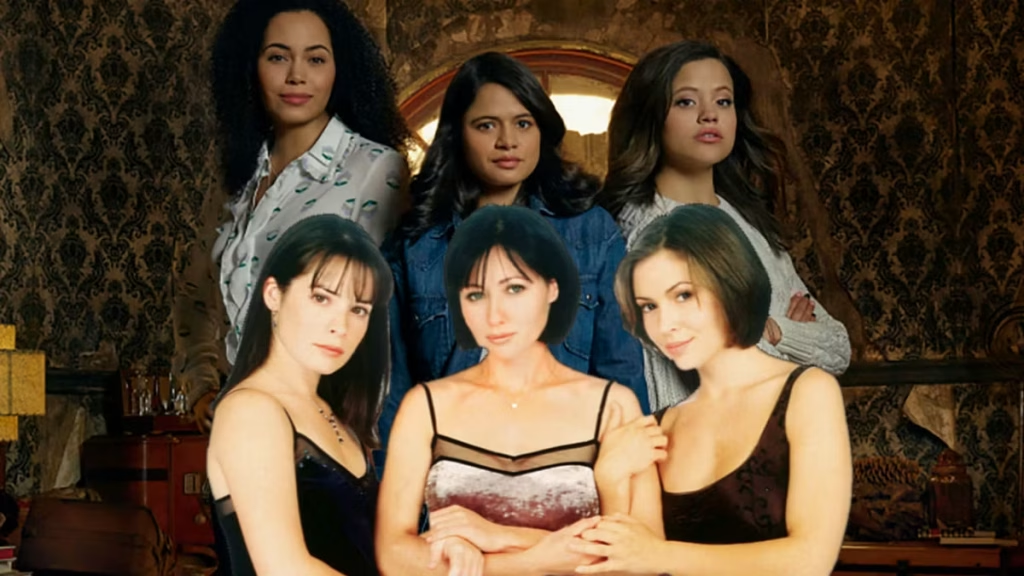
Image Source: Bing Image. License: All Creative Commons

1. Charmed (Original & Reboot)

Charmed follows sisters discovering their magical heritage while battling evil forces, blending action, humor, and family bonds. The original series became iconic in the late ’90s, while the reboot modernizes the story for a new generation.

Image Source: Bing Image. License: All Creative Commons

Both versions celebrate sisterhood, resilience, and the “Power of Three.” Charmed remains the gold standard for witchy television, inspiring generations of fans and proving that magic, family, and courage are timeless.

Image Source: Bing Image. License: All Creative Commons

From dark gothic dramas to lighthearted magical adventures, these 16 series showcase the diversity and creativity of witchy and fantasy storytelling on TV. Each show offers a unique lens on magic, power, and personal growth, making them perfect for binge-watching. Whether you’re drawn to suspenseful intrigue, heartwarming enchantment, or epic fantasy, this list has something to satisfy every magical craving. Grab some popcorn, settle in, and let the spellbinding binge begin.

10 Iconic Black Women in Anime Who Left a Lasting Impact

0
Image Source: Bing Image. License: All Creative Commons

Anime has historically lacked diverse representation, especially for Black women. Yet, over the years, a handful of characters have broken stereotypes, stood out with depth, and inspired fans around the world. These women are more than side characters—they’re warriors, dreamers, leaders, and trailblazers who bring strength, complexity, and style to their stories. From shonen fighters to music prodigies, they’ve left an undeniable mark on anime culture. Here’s a countdown of ten Black women in anime who changed the game.

Image Source: Bing Image. License: All Creative Commons

10. Canary – Hunter x Hunter

Canary may not be the main protagonist of Hunter x Hunter, but her presence is unforgettable. As the teenage bodyguard of the infamous Zoldyck family, she immediately establishes herself as a formidable obstacle for Gon and his friends. Her combat skills and precision make her a character you take seriously every time she appears.

Image Source: Bing Image. License: All Creative Commons

What sets Canary apart is the balance in her personality. While she is relentless and disciplined when protecting her family, there’s a softer side that emerges in her interactions with those she trusts. Her willingness to bend rules for people she cares about adds unexpected depth to a character who could easily have been one-dimensional.

Image Source: Bing Image. License: All Creative Commons

Her role in a mainstream shonen anime is significant for representation. Canary shows that Black women can be both intimidating and compassionate, offering fans a multi-faceted character whose loyalty, strength, and hidden vulnerability make her memorable.

Image Source: Bing Image. License: All Creative Commons

9. Carole – Carole & Tuesday

Carole Stanley is one half of the heartwarming duo in Carole & Tuesday, and she immediately commands attention with her determination and charm. Living on Mars, Carole faces numerous challenges as an aspiring musician, yet she remains steadfast in chasing her dreams. Her journey feels authentic, full of highs and lows that make her relatable and inspiring.

Image Source: Bing Image. License: All Creative Commons

Carole’s musical talent is undeniable, but it’s her resilience and optimism that truly define her. She’s not just chasing fame; she’s navigating life’s struggles with courage and creativity, making her a fully developed character in every sense. The series highlights her individuality and avoids reducing her to a stereotype or supporting role.

Image Source: Bing Image. License: All Creative Commons

Carole & Tuesday is a milestone for representation, placing a Black female character front and center in an anime world often dominated by different narratives. Carole’s story proves that Black women can lead, inspire, and carry emotional depth on screen.

Image Source: Bing Image. License: All Creative Commons

8. Yoruichi Shihouin – Bleach

Yoruichi Shihouin is the embodiment of cool and confidence in Bleach. Born into a noble family, she rejects the expected path of privilege to live a life of action, cunning, and adventure. Yoruichi is a mentor, a strategist, and a fighter who consistently outsmarts both allies and enemies with flair.

Image Source: Bing Image. License: All Creative Commons

Her laid-back demeanor hides a fierce fighter, and she effortlessly transitions from playful mentor to unstoppable combatant when needed. Yoruichi’s intelligence, independence, and fearlessness make her one of the most memorable characters in the series. She brings energy and charisma to every scene, leaving a lasting impression on fans.

Image Source: Bing Image. License: All Creative Commons

Yoruichi’s popularity is well-earned. As a Black woman in anime who is powerful, respected, and multifaceted, she serves as a cultural touchstone for fans and creators alike. Her influence stretches beyond the screen, inspiring countless cosplays and discussions about representation.

Image Source: Bing Image. License: All Creative Commons

7. Casca – Berserk

Casca is one of the earliest Black female characters to make a significant impact in anime. As a key member of the Band of the Falcon in Berserk, she demonstrates both exceptional combat skills and strong leadership, earning the respect of her peers. Her role goes far beyond being a supporting character; she is integral to the story’s progression.

Image Source: Bing Image. License: All Creative Commons

Her journey is intense, filled with victories and hardships that reveal her resilience and depth. Casca is a strategist and warrior who navigates a brutal, unforgiving world, balancing her strength with a vulnerability that makes her relatable. Her story arc, though at times controversial, remains powerful and inspiring.

Image Source: Bing Image. License: All Creative Commons

Casca’s presence was groundbreaking, breaking stereotypes and showing that Black women can be central, complex figures in anime. Her legacy continues, reminding audiences that representation matters in both character depth and narrative importance.

Image Source: Bing Image. License: All Creative Commons

6. S.A.M. – Cannon Busters

S.A.M., or Special Associate Model, is the heart and soul of Cannon Busters, a series created by LeSean Thomas. This cheerful android brings warmth, humor, and loyalty to a wild, action-packed story, captivating viewers with her bright personality and courage.

Image Source: Bing Image. License: All Creative Commons

Despite her friendly exterior, S.A.M. is no pushover. She possesses hidden strength and combat abilities that make her a formidable ally when challenges arise. Her journey revolves around self-discovery, friendship, and learning what it means to care for others in a dangerous world.

Image Source: Bing Image. License: All Creative Commons

Cannon Busters itself is an important milestone, showcasing a diverse cast and production team. S.A.M. embodies the possibilities for Black representation in anime, proving that characters can be both charming and powerful without fitting into tired stereotypes.

Image Source: Bing Image. License: All Creative Commons

5. Miyuki Ayukawa – Basquash!

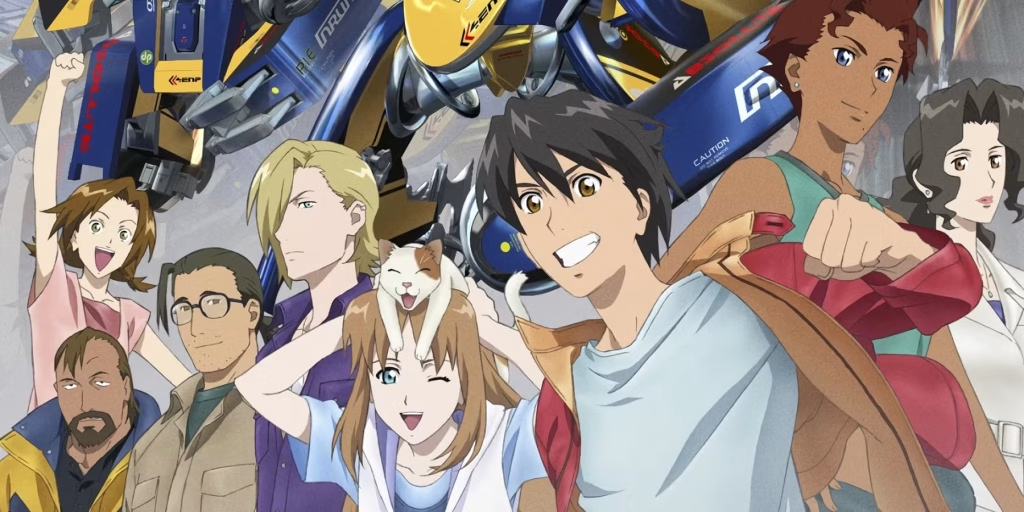
Miyuki Ayukawa is a brilliant engineer and mech specialist in Basquash!. She’s the team’s problem-solver, responsible for upgrading their giant robots with skill and precision. Her intelligence is central to the story, showing that Black women can be innovators and leaders in tech-focused narratives.

Image Source: Bing Image. License: All Creative Commons

Beyond her technical prowess, Miyuki stands out for her design and presence. Her locs and style are rare in anime, and she represents a strong, visible Black female character in a genre where they are often absent. She’s smart, stylish, and essential, proving that diversity can intersect with creativity and capability.

Image Source: Bing Image. License: All Creative Commons

For younger viewers and aspiring engineers, Miyuki is a role model. She demonstrates that intellect, confidence, and individuality are qualities to be celebrated, making her impact on representation just as strong as her contributions to the team.

Image Source: Bing Image. License: All Creative Commons

4. Michiko Malandro – Michiko & Hatchin

Michiko Malandro is unapologetically bold and independent in Michiko & Hatchin. As an Afro-Latina, her identity adds cultural richness to the story. She’s tough, clever, and fiercely protective of those she loves, never shying away from danger or challenge.

Image Source: Bing Image. License: All Creative Commons

Underneath her tough exterior lies a compassionate heart. Michiko navigates a complex world, showing growth, redemption, and loyalty in equal measure. Her character isn’t perfect, but her depth and relatability make her one of anime’s most compelling figures.

Image Source: Bing Image. License: All Creative Commons

Michiko’s presence is revolutionary for representation. By centering a strong Afro-Latinx woman, the show broadens anime’s cultural palette and emphasizes that diversity in character identity strengthens storytelling.

Image Source: Bing Image. License: All Creative Commons

3. Atsuko Jackson – Michiko & Hatchin

Atsuko Jackson is another standout from Michiko & Hatchin, portraying a determined, no-nonsense cop who navigates a complex relationship with Michiko. She blends rivalry and respect in a way that enhances both characters’ arcs, creating tension and growth throughout the series.

Image Source: Bing Image. License: All Creative Commons

Her determination, courage, and integrity make her a memorable character. Atsuko is more than a foil to Michiko; she has her own goals, struggles, and development, offering another example of a Black woman portrayed with depth and agency.

Image Source: Bing Image. License: All Creative Commons

By including characters like Atsuko, the series emphasizes that diversity adds layers and realism to anime. Her presence shows audiences that stories can be richer and more engaging when they reflect the full spectrum of human experience.

Image Source: Bing Image. License: All Creative Commons

2. Sister Krone – The Promised Neverland

Sister Krone is a complex, morally ambiguous character in The Promised Neverland. Introduced as an antagonist, she initially seems exaggerated or stereotypical, but her arc quickly reveals nuance, vulnerability, and survival instincts that challenge first impressions.

Image Source: Bing Image. License: All Creative Commons

Krone is cunning, resourceful, and ambitious, navigating a harsh system with intelligence and determination. Her motivations are layered, showing the lengths someone will go to survive while retaining moments of humanity and relatability.

Image Source: Bing Image. License: All Creative Commons

Despite some controversial aspects of her depiction, Sister Krone is memorable for pushing boundaries. She sparks conversations about representation and demonstrates that Black women in anime can be multifaceted, morally complex, and essential to the story.

Image Source: Bing Image. License: All Creative Commons

1. Coffee – Cowboy Bebop

Coffee is a brief yet unforgettable presence in Cowboy Bebop. Drawing inspiration from 1970s Blaxploitation heroines, she exudes confidence, charisma, and style, leaving a lasting impression despite limited screen time.

Image Source: Bing Image. License: All Creative Commons

Her design and attitude highlight the cool, self-assured energy often missing in anime representations of Black women. Coffee’s brief appearance feels like a nod to a rich history of Black female icons in media, blending nostalgia with innovation.

Image Source: Bing Image. License: All Creative Commons

Even with minimal exposure, Coffee proves that representation doesn’t have to be extensive to be impactful. She reminds viewers of the importance of including Black women in diverse roles and showcases how even small appearances can leave a lasting cultural imprint.

Image Source: Bing Image. License: All Creative Commons

These ten characters show that Black women in anime are not only possible—they’re essential. From fierce fighters to creative dreamers, they embody complexity, courage, and charisma. Each character has expanded the boundaries of representation, inspiring audiences and creators alike to push for more inclusive storytelling. As anime continues to grow globally, the hope is that we’ll see even more diverse and dynamic Black female characters taking center stage, shaping stories and redefining what it means to be iconic in the anime world.

15 Celebrities Who Owed Part of Their Success to Hollywood Nepotism

0
Image Source: Bing Image. License: All Creative Commons

Hollywood has long been shaped by family legacies, from the golden age of classic cinema to today’s sprawling reality TV empires. Being born into fame can offer a fast track into the spotlight, but it doesn’t guarantee lasting success. The stars on this list show that a famous last name alone isn’t enough—talent, hard work, and the ability to evolve are just as crucial. Some “nepo babies” openly embrace the advantages of their family connections, while others strive to carve out identities entirely their own. These actors, musicians, comedians, and reality TV personalities demonstrate that while family ties may open the door, staying in the spotlight demands determination, creativity, and the courage to take risks.

Image Source: Bing Image. License: All Creative Commons

15. Drew Barrymore

Drew Barrymore is Hollywood royalty in the truest sense. She first captured audiences’ hearts as a child in E.T. the Extra-Terrestrial and later became a beloved romantic-comedy star with films like The Wedding Singer and Charlie’s Angels. Beyond acting, she has also built a career as a producer, director, and talk show host, demonstrating remarkable versatility and staying power. Born into the legendary Barrymore acting dynasty, she is the granddaughter of John Barrymore and Dolores Costello, inheriting one of Hollywood’s most famous cinematic legacies while ultimately carving out her own identity in the industry.

Image Source: Bing Image. License: All Creative Commons

The Barrymores have shaped Hollywood for generations, making their roots some of the deepest in the industry. Despite her early fame, Drew’s path hasn’t been all glamour. She has been candid about her struggles with addiction and the pressures of growing up in the public eye. Her story demonstrates that even when you start life in the spotlight, building a lasting career requires resilience and reinvention.

Image Source: Bing Image. License: All Creative Commons

14. Zoë Kravitz

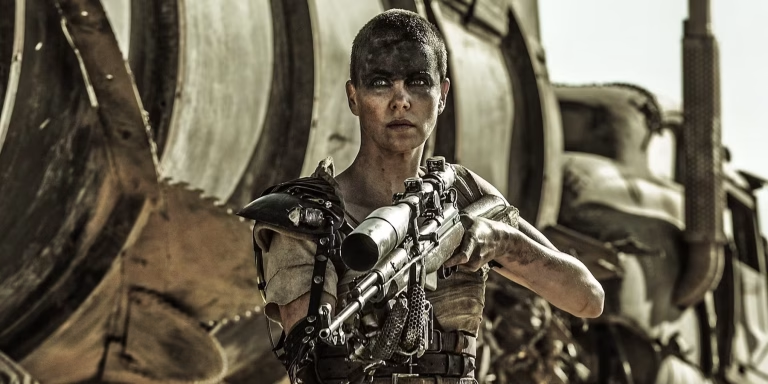
Zoë Kravitz effortlessly blends acting, music, and modeling into a career that exudes cool sophistication. Her roles in Big Little Lies, Mad Max: Fury Road, and The Batman have shown her range, while her personal style has made her a fashion icon. Zoë is the daughter of rock legend Lenny Kravitz and actress Lisa Bonet, and the granddaughter of Roxie Roker from The Jeffersons.

Image Source: Bing Image. License: All Creative Commons

With such a powerful lineage, star power seems to run in her veins, but she has worked hard to define herself on her own terms. Her influence stretches beyond acting. Zoë advocates for diversity in Hollywood, balances multiple creative endeavors, and has successfully stepped out of her parents’ shadows. She shows that a famous family name can be a platform for individuality rather than a limitation.

Image Source: Bing Image. License: All Creative Commons

13. Dakota Johnson

Dakota Johnson became a household name through the Fifty Shades of Grey franchise, but her talent goes far beyond a single role. She’s proven her acting chops in films like Suspiria and How to Be Single, navigating both drama and comedy with subtlety and charm. Her family tree reads like a Hollywood history book: daughter of Melanie Griffith and Don Johnson, and granddaughter of Alfred Hitchcock’s muse, Tippi Hedren.

Image Source: Bing Image. License: All Creative Commons

That’s three generations of legendary performers influencing her craft. Yet Dakota has chosen her path deliberately, embracing roles that challenge her and defy the expectations often placed on nepo babies. She demonstrates that lineage can open doors, but true artistry comes from the choices you make.

Image Source: Bing Image. License: All Creative Commons

12. Chris Pine

Chris Pine is Hollywood’s modern leading man, balancing blockbuster charisma with versatile performances. From Star Trek to Wonder Woman and The Princess Diaries 2, Pine’s roles span genres and showcase his natural charm. His grandmother, Anne Gwynne, was one of Hollywood’s original scream queens, a pioneer during the golden era of cinema.

Image Source: Bing Image. License: All Creative Commons

Pine continues the family tradition but also brings his own energy and personality to every project. He has crafted a career that blends homage to his roots with original contributions to film. Pine proves that talent and family legacy can coexist, creating longevity in an often fickle industry.

Image Source: Bing Image. License: All Creative Commons

11. Mariska Hargitay

Mariska Hargitay has become a television icon as Olivia Benson on Law & Order: SVU, a role she has embodied for more than twenty years. Her performance helped redefine what it means to play a strong, complex female lead on TV. Born to Jayne Mansfield and Mickey Hargitay, Mariska grew up in Hollywood’s spotlight, surrounded by fame and drama.

Image Source: Bing Image. License: All Creative Commons

Her upbringing gave her insight into showbiz, but it was her dedication and skill that made her a household name. Beyond acting, Mariska has dedicated herself to advocacy, founding the Joyful Heart Foundation to support survivors of assault and trauma. She demonstrates that being a nepo baby can come with the responsibility and opportunity to make a real difference.

Image Source: Bing Image. License: All Creative Commons

10. Riley Keough

Riley Keough has carved a distinct place for herself in Hollywood, favoring indie films and nuanced roles over straightforward blockbuster fame. Her performances in Mad Max: Fury Road and Daisy Jones & the Six highlight her ability to tackle complex characters. She is the granddaughter of Elvis Presley and the daughter of Lisa Marie Presley, meaning the entertainment gene runs deep in her veins.

Image Source: Bing Image. License: All Creative Commons

Yet Riley has avoided coasting on her family name, instead pursuing projects that showcase her talent and versatility. Her career path shows that nepo babies can forge independent identities, earning respect through hard work and thoughtful role selection rather than relying on legacy alone.

Image Source: Bing Image. License: All Creative Commons

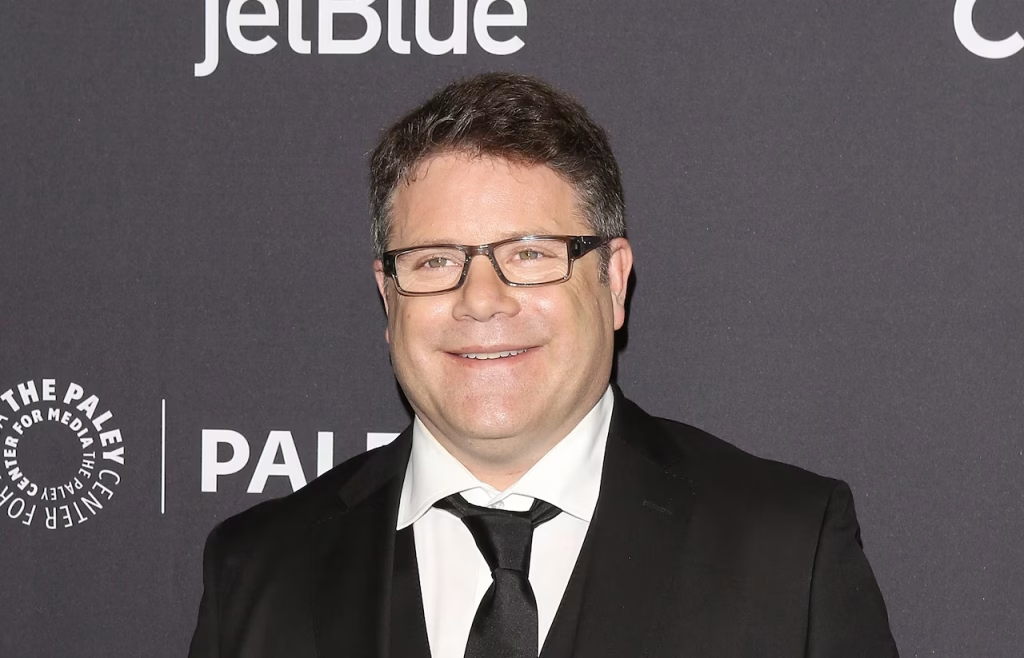
9. Sean Astin

Sean Astin has been an audience favorite for decades, from The Goonies to Rudy and The Lord of the Rings trilogy. He embodies the enduring charm of the underdog hero, connecting with generations of fans. Son of Patty Duke and John Astin, Sean grew up immersed in Hollywood’s inner workings.

Image Source: Bing Image. License: All Creative Commons

That early exposure gave him perspective, but it’s his own talent and charisma that have made him a lasting figure in film. Astin’s career proves that while family connections can be helpful, longevity comes from consistent performances and an ability to adapt to different roles and eras.

Image Source: Bing Image. License: All Creative Commons

8. Kate Burton

Kate Burton is a commanding presence on stage and screen, known for Grey’s Anatomy, Scandal, and numerous theatrical roles. She has the poise and talent to carry complex characters with ease. Daughter of legendary actor Richard Burton and accomplished actress and producer Sybil Christopher, Kate was born into the arts.

Image Source: Bing Image. License: All Creative Commons

She has honored her family legacy while establishing her own career, earning critical acclaim along the way. Her success shows that navigating the shadow of celebrated parents is possible with dedication and a commitment to crafting your own path in a competitive industry.

Image Source: Bing Image. License: All Creative Commons

7. Oona Chaplin

Oona Chaplin has gained international recognition for her work in Game of Thrones and other projects across film and TV. She brings emotional depth and versatility to every role she takes on. Granddaughter of Charlie Chaplin, her cinematic heritage is extraordinary.

Image Source: Bing Image. License: All Creative Commons

Yet Oona has embraced her legacy without being confined by it, exploring diverse roles that span genres and countries. By blending her inherited talent with her own creative instincts, Oona demonstrates that being a nepo baby doesn’t have to mean following in someone else’s footsteps; it can be about carving a new, global identity.

Image Source: Bing Image. License: All Creative Commons

6. Steven R. McQueen

Steven R. McQueen is best known for The Vampire Diaries, with additional roles in shows like Chicago Fire. He carries the cool, brooding charisma that made his grandfather, Steve McQueen, an icon.

Image Source: Bing Image. License: All Creative Commons

Navigating the legacy of one of Hollywood’s most famous figures isn’t easy, but Steven has worked to establish his own identity in television, balancing respect for his heritage with his desire to succeed on his own merits. His career reflects a thoughtful approach to fame, proving that nepo babies can honor family history while creating their own narrative in a modern entertainment landscape.

Image Source: Bing Image. License: All Creative Commons

5. Anjelica Huston

Anjelica Huston has earned her place in Hollywood history with memorable performances in The Addams Family, Prizzi’s Honor, and The Witches. She’s an Oscar-winning actress and accomplished director. Daughter of legendary filmmaker John Huston, Anjelica grew up in a world surrounded by cinematic genius.

Image Source: Bing Image. License: All Creative Commons

Despite the weight of that legacy, she has proven herself independently through a diverse and acclaimed body of work. Her story shows that talent, hard work, and creative vision can elevate a famous family name into something entirely your own.

Image Source: Bing Image. License: All Creative Commons

4. Tony Goldwyn

Tony Goldwyn has made his mark as an actor, director, and producer, with credits ranging from Scandal to Ghost. He embodies the classic Hollywood leading man while also shaping projects behind the camera. Son of producer Samuel Goldwyn Jr. and actress Jennifer Howard, Tony inherited a deep understanding of the industry.

Image Source: Bing Image. License: All Creative Commons

His career shows that familial connections can provide insight and guidance, but true influence comes from skill and vision. He continues to leave a mark on both television and film, showing how a nepo baby can use legacy as a springboard rather than a crutch.

Image Source: Bing Image. License: All Creative Commons

3. Abby Elliott

Abby Elliott has carved a niche in comedy, starring on Saturday Night Live and The Bear. She combines impeccable timing with quirky character work, making her a standout performer in a crowded field. Granddaughter of legendary comedian Bob Elliott and daughter of Chris Elliott, comedy is in her DNA.

Image Source: Bing Image. License: All Creative Commons

Yet Abby has proven her own talent by blending classic comedic sensibilities with modern humor, appealing to both old and new audiences. Her success shows that while legacy can inspire, it’s the individual’s creativity and work ethic that determine lasting impact.

Image Source: Bing Image. License: All Creative Commons

2. Sarah Sutherland

Sarah Sutherland made waves as Catherine Meyer on Veep, delivering a performance that balances awkwardness, wit, and depth. She has quickly become a rising star in television. Granddaughter of Donald Sutherland, Sarah grew up with a front-row seat to the world of acting.

Image Source: Bing Image. License: All Creative Commons

Her family ties provided exposure, but she’s carved out a career on her own terms, carefully selecting roles that highlight her range. Her journey underscores that a famous last name can open doors, but talent, discernment, and dedication define the trajectory of a lasting career.

Image Source: Bing Image. License: All Creative Commons

1. The Kardashian-Jenner Clan

No list of influential nepo babies is complete without the Kardashian-Jenner family. From Kim’s reality TV dominance to Kylie’s beauty empire, they’ve transformed fame into a global brand. The family’s ability to collaborate, innovate, and stay culturally relevant is unmatched.

Image Source: Bing Image. License: All Creative Commons

Each member, Kris, Kim, Khloé, Kourtney, Kendall, and Kylie, has leveraged connections while crafting individual brands, setting new standards for business and entertainment. Love them or loathe them, the Kardashians exemplify how family influence can shape not just Hollywood but the world’s understanding of fame, branding, and pop culture.

Image Source: Bing Image. License: All Creative Commons

Being born into a famous family may give you a head start, but it’s what you do with that advantage that counts. These 15 celebrities demonstrate that while lineage can open doors, true staying power comes from talent, determination, and the willingness to carve out your own identity. In Hollywood, a famous last name might get your foot in the door, but it’s your skill, choices, and creativity that determine how far you go.

15 Timeless and Contemporary Revenge Movies Worth Seeing

0
Image Source: Bing Image. License: All Creative Commons

Revenge movies tap into a primal fascination that’s hard to resist. Whether through explosive action, tense psychological thrillers, or deeply affecting character studies, these films explore what happens when justice fails and someone takes matters into their own hands. Sometimes, revenge feels righteous and justified; other times, it’s morally complex and heartbreaking. The best films in the genre strike this delicate balance, showing that revenge can take many forms. Here are 15 unforgettable revenge movies that prove just how varied—and compelling—the pursuit of retribution can be.

Image Source: Bing Image. License: All Creative Commons

15. Law Abiding Citizen

Law Abiding Citizen wastes no time pulling viewers into moral chaos. Gerard Butler stars as Clyde Shelton, a man whose life is shattered when the justice system lets his family’s killers walk free. What follows isn’t a simple vigilante story; it’s a full-scale war against the legal system itself.

Image Source: Bing Image. License: All Creative Commons

The film’s strength lies in its unpredictability. Shelton’s revenge is meticulously planned and disturbingly clever, turning the movie into a high-stakes chess match. You may not agree with his actions, but the film constantly challenges you to question where justice truly breaks down.

Image Source: Bing Image. License: All Creative Commons

14. The Brave One

In The Brave One, Jodie Foster delivers a deeply introspective performance as Erica Bain, a woman forever changed by a violent attack that leaves her fiancé dead. Her transformation into a vigilante isn’t glamorous; it’s quiet, uneasy, and emotionally raw.

Image Source: Bing Image. License: All Creative Commons

Rather than glorifying revenge, the film focuses on its psychological cost. Erica’s choices feel heavy, and the film asks uncomfortable questions about whether reclaiming power through violence actually brings peace. Foster grounds the story with a performance that’s both restrained and haunting.

Image Source: Bing Image. License: All Creative Commons

13. Man on Fire

Denzel Washington brings raw intensity to Man on Fire, playing a burned-out former operative tasked with protecting a young girl in Mexico City. When she’s taken, his mission becomes brutally personal.

Image Source: Bing Image. License: All Creative Commons

The film blends stylized violence with deep emotional weight, turning revenge into an act of love and redemption. Tony Scott’s frenetic direction amplifies the chaos, but it’s Washington’s aching performance that gives the film its lasting impact.

Image Source: Bing Image. License: All Creative Commons

12. Mystic River

Mystic River approaches revenge from a somber, tragic angle. Childhood trauma resurfaces decades later after a devastating crime, pulling three former friends into a spiral of suspicion, grief, and irreversible choices.

Image Source: Bing Image. License: All Creative Commons

Clint Eastwood’s restrained direction allows the performances, particularly those of Sean Penn and Tim Robbins, to carry the emotional burden. The film shows revenge not as release, but as a force that corrodes everyone it touches.

Image Source: Bing Image. License: All Creative Commons

11. Blue Ruin

Stripped-down and painfully realistic, Blue Ruin follows an ordinary man attempting to avenge his parents’ murder. There’s no swagger here, just desperation, mistakes, and consequences.

Image Source: Bing Image. License: All Creative Commons

The film’s power comes from its honesty. Revenge is messy, terrifying, and often ineffective. Director Jeremy Saulnier crafts tension through silence and vulnerability, making every act of violence feel deeply unsettling rather than triumphant.

Image Source: Bing Image. License: All Creative Commons

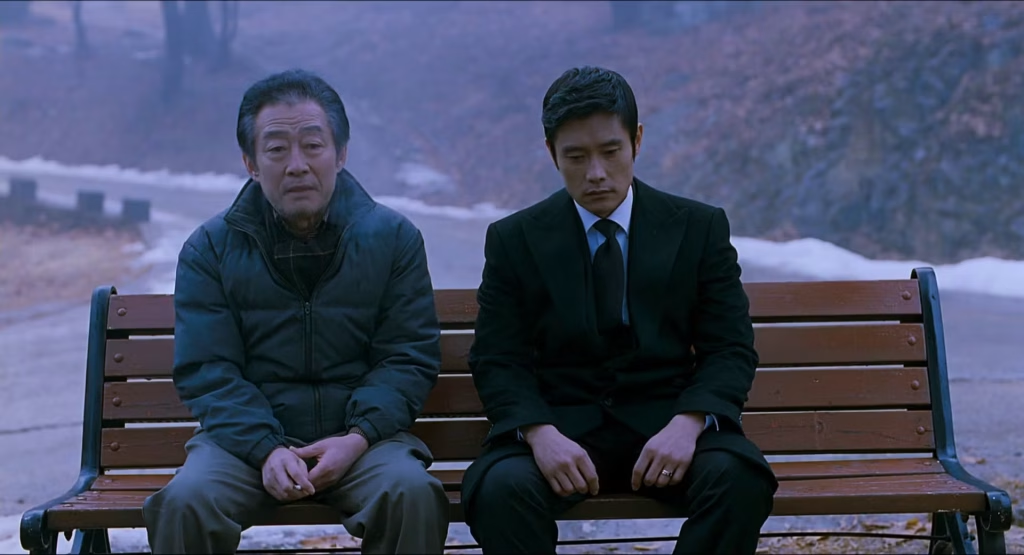
10. I Saw the Devil

Few films examine the darkness of revenge as relentlessly as I Saw the Devil. This South Korean thriller pits a secret agent against a sadistic killer, but the lines between hunter and monster blur with each confrontation.

Image Source: Bing Image. License: All Creative Commons

The violence is extreme, but purposeful. The film dares to ask whether vengeance ultimately destroys the avenger just as completely as their enemy. It’s harrowing, unforgettable, and not easily shaken off.

Image Source: Bing Image. License: All Creative Commons

9. John Wick

What began as a simple revenge story quickly became a modern action phenomenon. John Wick takes the loss of a beloved dog and transforms it into a relentless, beautifully choreographed descent into underworld chaos.

Image Source: Bing Image. License: All Creative Commons

Keanu Reeves’ stoic performance, paired with groundbreaking action design and rich world-building, turned the film into an instant classic. It proves that even the simplest revenge motivation can fuel something extraordinary when executed with precision and style.

Image Source: Bing Image. License: All Creative Commons

8. The Count of Monte Cristo (2002 & 2024)

Few revenge tales are as elegant as The Count of Monte Cristo. Wrongfully imprisoned, Edmond Dantès escapes, reinvents himself, and patiently dismantles the lives of those who betrayed him.

Image Source: Bing Image. License: All Creative Commons

Both the 2002 adaptation and the recent French version capture the emotional transformation at the heart of the story. It’s revenge as strategy, restraint, and psychological warfare, and it remains the blueprint for the genre.

Image Source: Bing Image. License: All Creative Commons

7. Oldboy

Oldboy is vengeance pushed to its absolute breaking point. After being imprisoned for 15 years without explanation, Oh Dae-su is released and forced to uncover the reason behind his suffering.

Image Source: Bing Image. License: All Creative Commons

The film’s shocking revelations, brutal action, and operatic intensity make it one of the most disturbing revenge stories ever told. It’s not just about payback, it’s about obsession, cruelty, and irreversible truth.

Image Source: Bing Image. License: All Creative Commons

6. Kill Bill: Vol. 1 & 2

Quentin Tarantino’s Kill Bill saga is revenge cinema turned myth. Uma Thurman’s Bride embarks on a blood-soaked journey against the assassins who left her for dead.

Image Source: Bing Image. License: All Creative Commons

The films celebrate genre filmmaking while delivering emotional payoff beneath the stylized violence. Every duel, monologue, and musical cue feeds into a revenge story that’s as cathartic as it is operatic.

Image Source: Bing Image. License: All Creative Commons

5. The War of the Roses

Revenge doesn’t always involve weapons; sometimes it’s domestic warfare. The War of the Roses transforms divorce into a dark comedy of escalation and spite.

Image Source: Bing Image. License: All Creative Commons

Kathleen Turner and Michael Douglas go toe-to-toe with venomous precision, turning petty resentment into all-out destruction. The film is funny, horrifying, and a reminder of how revenge can rot relationships beyond repair.

Image Source: Bing Image. License: All Creative Commons

4. The First Wives Club

The First Wives Club flips revenge into empowerment. Three women, cast aside by their husbands, band together to reclaim their lives and have a little fun along the way.

Image Source: Bing Image. License: All Creative Commons

It’s lighthearted, sharp, and deeply satisfying, offering revenge not as destruction but as reinvention. The film’s enduring appeal lies in its humor, heart, and unapologetic joy.

Image Source: Bing Image. License: All Creative Commons

3. Waiting to Exhale

Few revenge moments are as emotionally cathartic as Waiting to Exhale. The film explores heartbreak, betrayal, and resilience through the lives of four women leaning on friendship to survive romantic devastation.

Image Source: Bing Image. License: All Creative Commons

Angela Bassett’s iconic fire scene may steal the spotlight, but the film’s true strength is its emotional honesty. Revenge here isn’t the end goal; healing is.

Image Source: Bing Image. License: All Creative Commons

2. Kramer vs. Kramer

Revenge in Kramer vs. Kramer is subtle and painfully human. A custody battle becomes a battleground of pride, resentment, and self-discovery.

Image Source: Bing Image. License: All Creative Commons

The film avoids easy villains, instead showing how love can curdle into competition. Its quiet intensity and devastating performances make it one of the most emotionally complex “revenge” films ever made.

Image Source: Bing Image. License: All Creative Commons

1. Marriage Story

At the top of the list is Marriage Story, a film that proves revenge doesn’t need violence to cut deep. Through legal maneuvering, harsh words, and emotional withdrawal, a once-loving marriage slowly collapses.

Image Source: Bing Image. License: All Creative Commons

Adam Driver and Scarlett Johansson deliver raw, intimate performances that make every argument feel painfully real. The film captures how revenge can be unintentionally born from hurt rather than hatred and how deeply it can wound.

Image Source: Bing Image. License: All Creative Commons

Revenge movies endure because they reflect our darkest impulses and hardest questions. Is justice ever truly served by vengeance? Does payback heal or just leave more scars? The best revenge films don’t offer easy answers. They let us feel the satisfaction, the guilt, and the fallout, and leave us wrestling with what revenge really costs.

15 Memorable Batman Performances That Shaped the Character

0
Image Source: Bing Image. License: All Creative Commons

Few characters in cinema have been reinvented as often as Batman. The Dark Knight has swung between campy, lighthearted fun and dark, psychological crime drama, appearing in everything from animated adventures to gritty, realistic interpretations. Over the years, Batman has taken many forms—and not always in black. Certain performances and scenes capture the full spectrum of what the character can be: thrilling, humorous, frightening, stylish, and unforgettable. Here are 15 defining moments that have cemented Batman as one of Hollywood’s most iconic figures.

Image Source: Bing Image. License: All Creative Commons

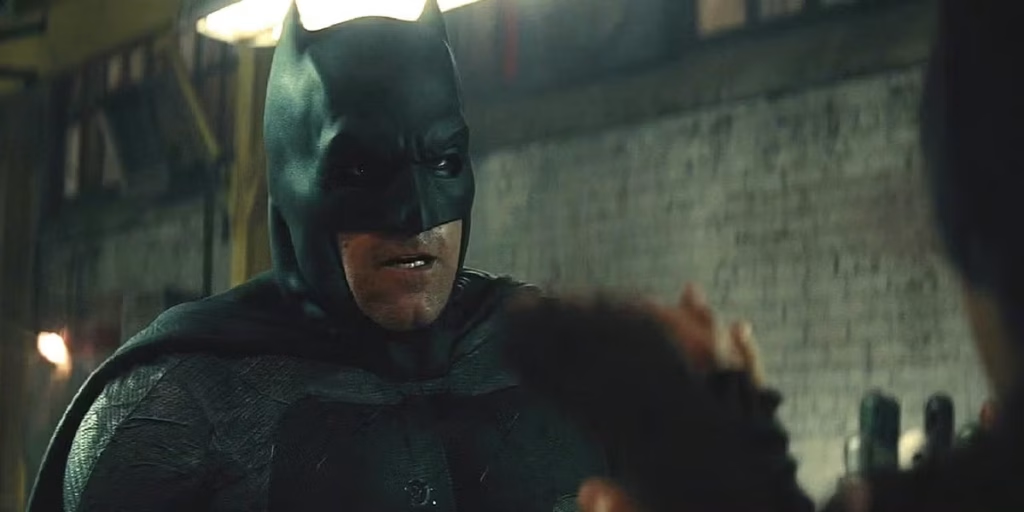
15. Batman vs Superman: Dawn of Justice — The Warehouse Fight

Few Batman scenes have sparked as much debate or praise as the warehouse brawl in Batman v Superman. This is the moment Ben Affleck’s Batman finally moves as the character fans had long imagined: fast, brutal, and terrifyingly efficient.

Image Source: Bing Image. License: All Creative Commons

Every punch lands with weight, every gadget feels purposeful, and the choreography turns Batman into a one-man wrecking crew. While the film around it divided audiences, this sequence earned near-universal respect for delivering the most physically convincing Batman combat ever put on screen.

Image Source: Bing Image. License: All Creative Commons

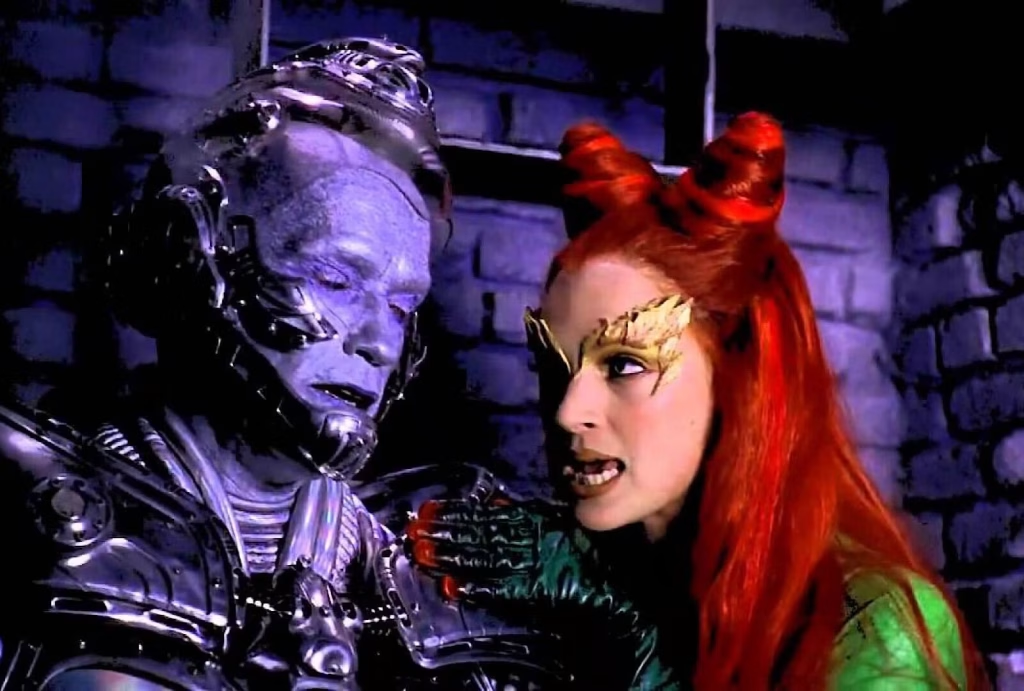
14. Batman & Robin — Mr. Freeze and Poison Ivy Go Full Camp

Yes, Batman & Robin is famously ridiculous, and that’s exactly why it endures. Arnold Schwarzenegger’s pun-loving Mr. Freeze and Uma Thurman’s wildly theatrical Poison Ivy embrace excess with zero restraint.

Image Source: Bing Image. License: All Creative Commons

Thurman, in particular, commits completely, delivering a performance that feels equal parts cartoon villain and glamorous chaos. The neon sets, exaggerated costumes, and relentless ice jokes make this film less a crime drama and more a live-action comic book fever dream, one that’s gained cult appreciation over time.

Image Source: Bing Image. License: All Creative Commons

13. Batman: The Movie (1966) — Opening Credits and Villain Alliance

Before angst and armor defined Batman, there was pure, joyful absurdity. The 1966 film opens with a bright, swinging title sequence that immediately sets the tone for a version of Batman rooted in pop art and parody.

Image Source: Bing Image. License: All Creative Commons

The team-up of Joker, Penguin, Riddler, and Catwoman is gleefully silly, with Frank Gorshin’s hyperactive Riddler stealing scenes. It’s a reminder that Batman has always had room for humor and that camp is a legitimate chapter in his film history.

Image Source: Bing Image. License: All Creative Commons

12. Batman Forever — Iconic Soundtrack and Cartoonish Villains

Batman Forever may split opinion, but its soundtrack is undeniable. Seal’s “Kiss from a Rose” alone cemented the film in pop culture, while tracks from U2 and Smashing Pumpkins elevated its emotional atmosphere.

Image Source: Bing Image. License: All Creative Commons

Jim Carrey’s Riddler goes all-in on manic energy, while Tommy Lee Jones’s Two-Face is pure chaos. The performances are loud, colorful, and deliberately unhinged, perfectly matching Joel Schumacher’s neon-soaked Gotham.

Image Source: Bing Image. License: All Creative Commons

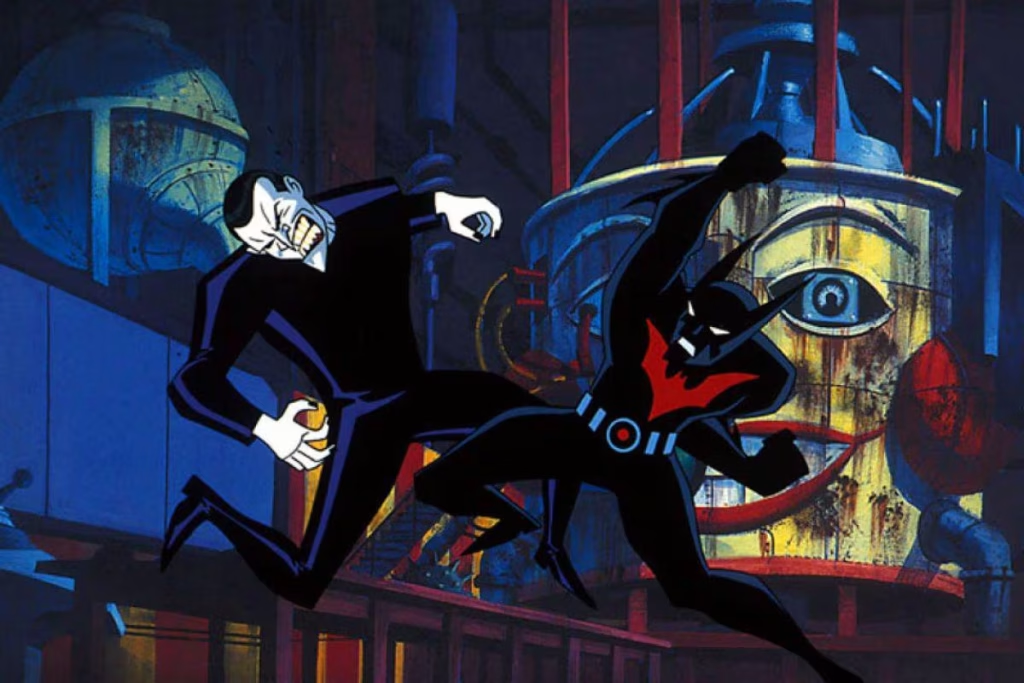
11. Batman Beyond: Return of the Joker — The Flashback Reveal

This animated feature quietly delivers one of the darkest Batman moments ever. The flashback revealing Joker’s final fate and the trauma inflicted on the Bat-family is chilling, emotional, and unforgettable.

Image Source: Bing Image. License: All Creative Commons

The sequence proves animation can explore mature themes without softening the blow. For many fans, this moment elevated Batman Beyond into essential canon.

Image Source: Bing Image. License: All Creative Commons

10. Mask of the Phantasm — Bruce Becomes Batman

Few scenes capture Bruce Wayne’s internal struggle better than his first transformation into Batman in Mask of the Phantasm. The moment is quiet, tragic, and deeply personal.

Image Source: Bing Image. License: All Creative Commons

As Bruce puts on the mask, Alfred’s horrified reaction underscores the cost of this choice. It’s not a victory, it’s a surrender. This emotional clarity is why the film remains one of the most respected Batman stories ever told.

Image Source: Bing Image. License: All Creative Commons

9. Batman Begins — Scarecrow’s Fear Toxin Nightmare

Christopher Nolan reintroduced Batman as a creature of fear, and nowhere is that clearer than Scarecrow’s toxin-induced hallucinations. Cillian Murphy’s Jonathan Crane becomes trapped in a nightmare where Batman appears as a literal monster.

Image Source: Bing Image. License: All Creative Commons

The distorted visuals and horror-inspired framing remind audiences that Batman isn’t just a hero — he’s a symbol meant to terrify criminals. It was a bold tonal reset for the franchise.

Image Source: Bing Image. License: All Creative Commons

8. The Dark Knight Rises — Bane’s Plane Hijacking

Bane’s introduction is pure spectacle. The midair hijacking that opens The Dark Knight Rises is tense, meticulously staged, and grounded in practical effects.

Image Source: Bing Image. License: All Creative Commons

Tom Hardy’s Bane immediately establishes himself as a physical and ideological threat. The sequence sets the stakes high and signals that Gotham is about to face something far worse than it’s seen before.

Image Source: Bing Image. License: All Creative Commons

7. Batman (1989) — Joker Destroys the Art Museum

Jack Nicholson’s Joker dances through a museum, vandalizing priceless art to Prince’s “Partyman,” and superhero cinema is never the same again.

Image Source: Bing Image. License: All Creative Commons

The scene perfectly captures Tim Burton’s offbeat vision, stylish, unsettling, and darkly funny. Nicholson’s Joker is theatrical chaos incarnate, and this moment defines his anarchic philosophy.

Image Source: Bing Image. License: All Creative Commons

6. The Dark Knight — Joker Visits Harvey Dent

Heath Ledger’s Joker doesn’t shout; he persuades. His hospital conversation with Harvey Dent is one of the most disturbing scenes in the trilogy, quietly transforming Gotham’s white knight into something monstrous.

Image Source: Bing Image. License: All Creative Commons

Ledger’s performance is hypnotic, balancing humor with pure menace. This moment doesn’t just change the movie; it reshapes the entire moral landscape of the story.

Image Source: Bing Image. License: All Creative Commons

5. Batman Returns — Catwoman Is Born

Selina Kyle’s transformation in Batman Returns is raw, surreal, and unforgettable. Michelle Pfeiffer turns a moment of trauma into a fierce rebirth as she tears apart her apartment and stitches together her catsuit.

Image Source: Bing Image. License: All Creative Commons

Every visual choice tells a story of rage, liberation, and identity. It’s one of the most emotionally charged origin scenes in any superhero film.

Image Source: Bing Image. License: All Creative Commons

4. Batman Returns — Bruce and Selina’s Maskless Dance

At a masquerade ball, Bruce Wayne and Selina Kyle are the only two without masks, and they know exactly who the other is. Their dance is quiet, loaded, and heartbreakingly intimate.

Image Source: Bing Image. License: All Creative Commons

Michael Keaton and Michelle Pfeiffer share electric chemistry, making this one of the most romantic and tragic moments in the Batman franchise.

Image Source: Bing Image. License: All Creative Commons

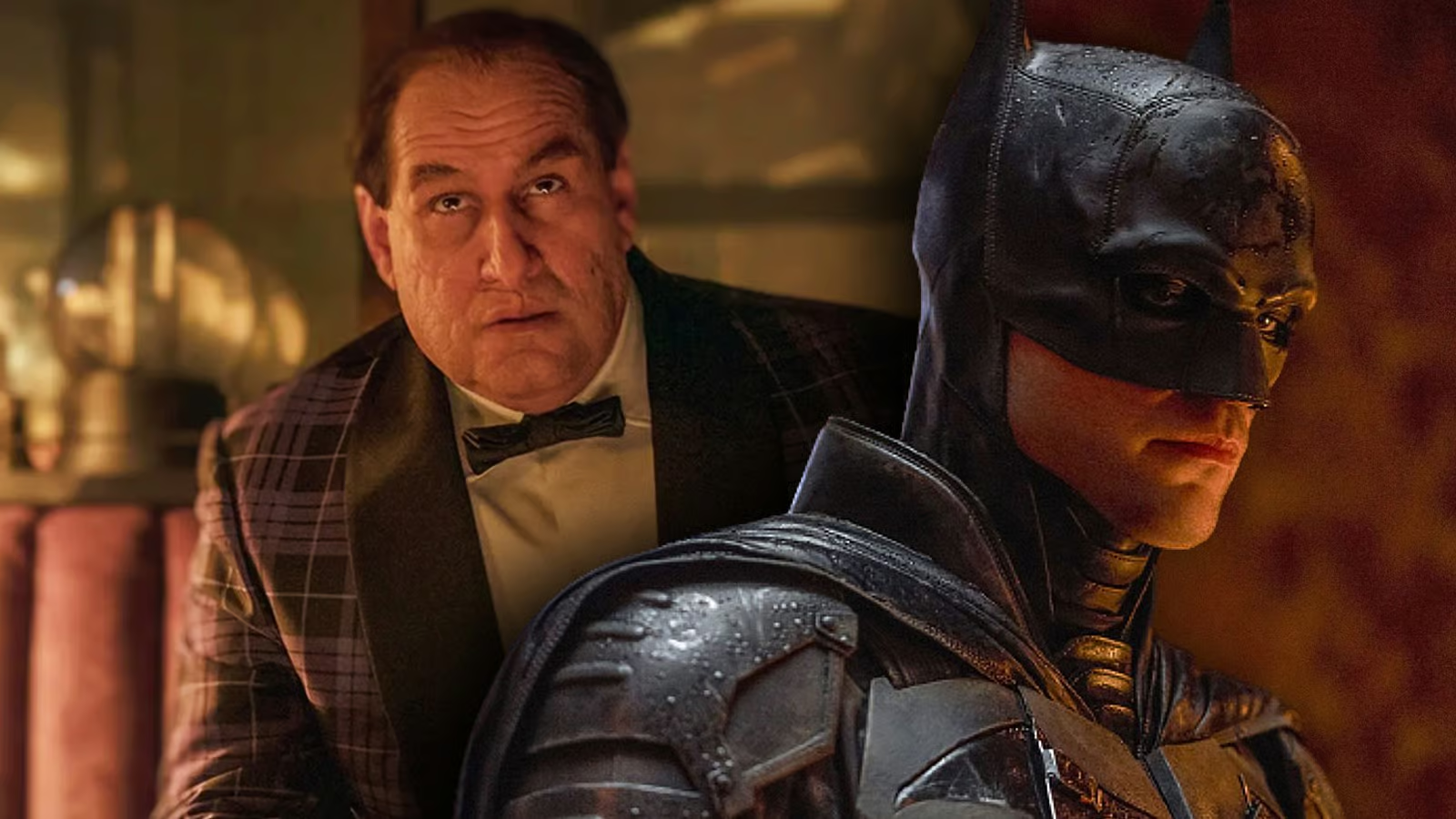
3. The Batman (2022) — The Batmobile vs. Penguin

Matt Reeves reintroduced the Batmobile as something terrifying. The rain-soaked chase through Gotham’s highways is visceral, immersive, and brutally effective.

Image Source: Bing Image. License: All Creative Commons

Colin Farrell’s Penguin reacting in real time sells the danger, while Batman emerges from the flames like a myth come to life. It’s a definitive Batmobile moment.

Image Source: Bing Image. License: All Creative Commons

2. The Batman (2022) — Riddler Meets Batman

The Arkham interrogation between Batman and the Riddler is a psychological chess match. Paul Dano’s performance shifts effortlessly between vulnerability and menace, while Robert Pattinson’s Batman slowly realizes he may have inspired the very evil he’s chasing. The tension is suffocating and unforgettable.

Image Source: Bing Image. License: All Creative Commons

1. Batman Returns — Catwoman Chooses Herself

The finale of Batman Returns isn’t about Batman; it’s about Selina Kyle. She rejects Bruce’s fantasy of a clean ending, kills Max Shreck, and disappears on her own terms.

Image Source: Bing Image. License: All Creative Commons

It’s bold, tragic, and defiantly unconventional. Tim Burton ends the film by denying easy answers, making Catwoman the emotional center of the story. Decades later, it remains one of the most daring endings in superhero cinema.

Image Source: Bing Image. License: All Creative Commons

Batman’s film history is messy, ambitious, strange, and endlessly fascinating. These moments remind us that the character thrives on reinvention and that the Dark Knight is at his best when filmmakers take risks. Whether gritty or campy, animated or live-action, Batman endures because he can be anything… as long as the shadow is deep enough.

14 Movie Roles That Changed Hands and Changed the Story

0
Image Source: Bing Image. License: All Creative Commons

Film sets are delicate ecosystems, and even seasoned, talented actors aren’t immune to being replaced when on-screen chemistry falters, creative differences emerge, or unexpected issues disrupt production. These behind-the-scenes shakeups can change careers—and sometimes, the course of cinema history itself. Below are fifteen notable instances where actors were swapped mid-production, along with the stories of what happened next.
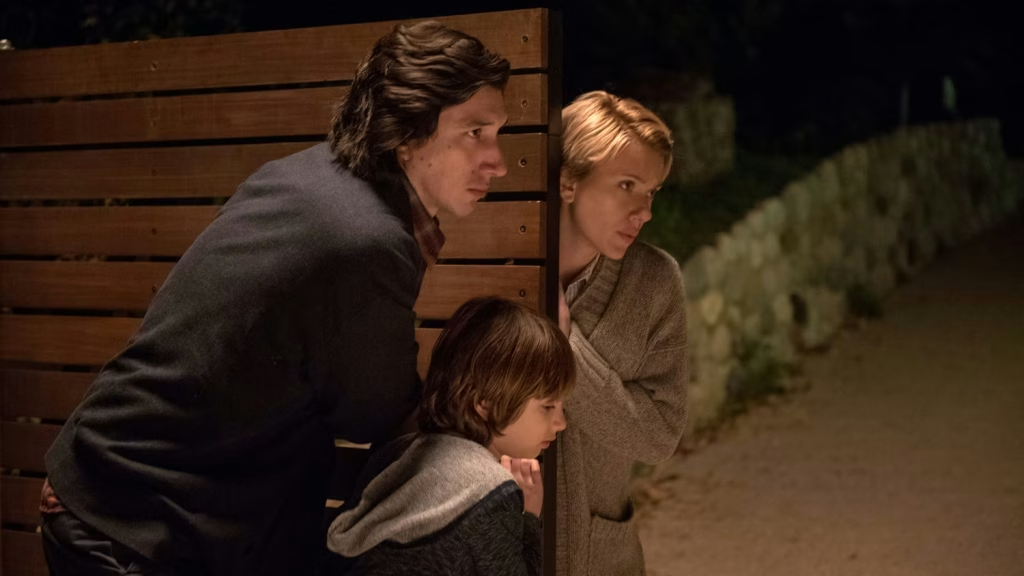
Image Source: Bing Image. License: All Creative Commons

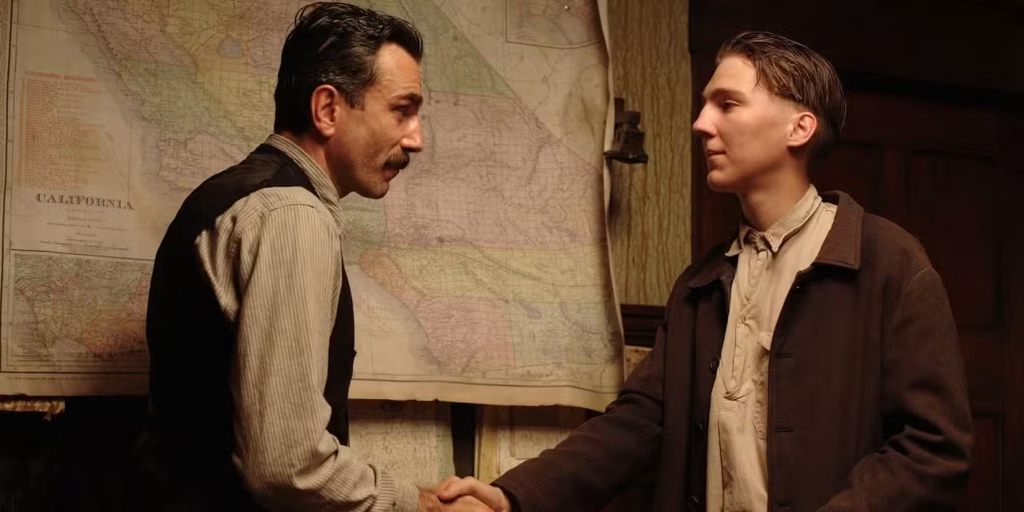
14. Kel O’Neill — There Will Be Blood

Kel O’Neill was originally cast as preacher Eli Sunday in Paul Thomas Anderson’s There Will Be Blood, opposite Daniel Day-Lewis. After several weeks of filming, however, it became clear something wasn’t clicking.

Image Source: Bing Image. License: All Creative Commons

O’Neill later said he sensed the disconnect early on. Anderson decided to replace him with Paul Dano, who was already in the film as Eli’s brother. The script was reworked so Dano played identical twins, resulting in one of the film’s most unforgettable performances. O’Neill ultimately stepped away from acting and found success directing documentaries.

Image Source: Bing Image. License: All Creative Commons

13. Colin Firth — Paddington

Colin Firth had fully recorded his dialogue as the voice of Paddington Bear, but once the animation came together, the filmmakers felt his voice sounded too grown-up for the character.

Image Source: Bing Image. License: All Creative Commons

Firth himself acknowledged the decision with grace, noting that the bear simply wasn’t meant to sound like him. Ben Whishaw was brought in to re-record the role, and his lighter tone helped turn Paddington into a modern family-film icon.

Image Source: Bing Image. License: All Creative Commons

12. James Remar — Aliens

James Remar spent nearly a month filming Aliens as Corporal Hicks before being dismissed. Officially, the explanation was “creative differences,” but Remar later admitted his firing followed a drug-related arrest during production.

Image Source: Bing Image. License: All Creative Commons

Reports also described disruptive on-set behavior, including accidentally firing a prop weapon into a neighboring soundstage. Michael Biehn stepped into the role, delivering a performance that became central to the franchise.

Image Source: Bing Image. License: All Creative Commons

11. Holly Hunter — Chicken Little

In early development, Chicken Little featured a female protagonist voiced by Holly Hunter. After recording her lines, Disney executives decided to rework the character into a boy, believing it would attract a wider audience.

Image Source: Bing Image. License: All Creative Commons

Hunter was replaced by Zach Braff, and the story was reshaped entirely. While the decision reflected industry thinking at the time, later successes of female-led animated films suggest how much perspectives have shifted.

Image Source: Bing Image. License: All Creative Commons

10. Connor Ratliff — Band of Brothers

Connor Ratliff lost his small role in Band of Brothers just one day before filming began. He was told executive producer Tom Hanks felt he had “dead eyes.”

Image Source: Bing Image. License: All Creative Commons

Years later, Ratliff transformed the experience into the podcast Dead Eyes, exploring rejection in Hollywood. Hanks eventually appeared on the show, owning the decision and offering clarity. What began as a painful dismissal became a thoughtful conversation about art and subjectivity.

Image Source: Bing Image. License: All Creative Commons

9. Dennis Hopper — The Truman Show

Dennis Hopper was originally cast as Christof, the creator of Truman’s artificial world, but struggled early on with memorization and performance consistency.

Image Source: Bing Image. License: All Creative Commons

After reviewing early footage, director Peter Weir and producer Scott Rudin decided to recast the role. Ed Harris stepped in and delivered a quietly haunting performance that earned him an Oscar nomination.

Image Source: Bing Image. License: All Creative Commons

8. Judy Garland — Valley of the Dolls

Judy Garland’s casting in Valley of the Dolls ended disastrously. Conflicts with director Mark Robson, combined with substance abuse struggles, made filming increasingly difficult.

Image Source: Bing Image. License: All Creative Commons

Accounts from co-stars describe a tense environment that worsened Garland’s condition. She was ultimately fired, replaced by Susan Hayward, and reportedly left with her costumes in protest. The episode remains one of Hollywood’s saddest behind-the-scenes stories.

Image Source: Bing Image. License: All Creative Commons

7. Eric Stoltz — Back to the Future

Eric Stoltz played Marty McFly for several weeks, but his intense, method-driven performance clashed with the film’s comedic tone.

Image Source: Bing Image. License: All Creative Commons

The filmmakers quietly continued shooting while arranging to replace him with Michael J. Fox, their original choice. Fox’s arrival reshaped the movie’s energy—and helped turn it into a timeless classic.

Image Source: Bing Image. License: All Creative Commons

6. Harvey Keitel — Apocalypse Now

Harvey Keitel was initially cast as Captain Willard but was let go shortly after production began in the Philippines. Director Francis Ford Coppola felt Keitel wasn’t connecting with the role under the harsh conditions.

Image Source: Bing Image. License: All Creative Commons

Martin Sheen took over, delivering a performance that became legendary. Though the decision was painful, it proved pivotal to the film’s final impact.

Image Source: Bing Image. License: All Creative Commons

5. Lori Petty — Demolition Man

Lori Petty was cast opposite Sylvester Stallone but exited the film after only a few days. Both sides cited creative differences, though Petty later described a personality clash between herself and Stallone.

Image Source: Bing Image. License: All Creative Commons

Sandra Bullock replaced her, launching one of the actress’s earliest breakout roles. The change became a classic example of how chemistry can redefine a movie.

Image Source: Bing Image. License: All Creative Commons

4. Jean-Claude Van Damme — Predator

Jean-Claude Van Damme was initially hired to play the Predator creature, but the role proved impractical. The restrictive suit and stilt-based design made movement nearly impossible.

Image Source: Bing Image. License: All Creative Commons

The production ultimately redesigned the alien and recast the role with Kevin Peter Hall, whose height and presence helped create one of cinema’s most iconic monsters.

Image Source: Bing Image. License: All Creative Commons

3. Lee Coleman — Friday the 13th Part VIII

Lee Coleman was cast as Sean Robertson but was dismissed after about a week. Creative concerns and an injury he sustained during off-hours complicated matters.

Image Source: Bing Image. License: All Creative Commons

Scott Reeves replaced him, and the production moved on quickly. Though minor, the recasting highlighted how unforgiving tight shooting schedules can be.

Image Source: Bing Image. License: All Creative Commons

2. The Voice Cast of The Good Dinosaur

Pixar’s The Good Dinosaur underwent a massive creative reset. Original director Bob Peterson was replaced, and much of the voice cast was let go as the story was reimagined.

Image Source: Bing Image. License: All Creative Commons

Several major roles were recast, with Frances McDormand being the lone actor to remain. The overhaul demonstrated how dramatically animated films can change, even deep into production.

Image Source: Bing Image. License: All Creative Commons

1. Samantha Morton — Her

Samantha Morton originally voiced Samantha, the AI companion in Her, and even performed scenes on set. During post-production, however, Spike Jonze realized the character needed a different emotional texture.

Image Source: Bing Image. License: All Creative Commons

Scarlett Johansson re-recorded the role, infusing it with warmth and immediacy. Though difficult, the change helped define the film’s emotional core and became one of Johansson’s most acclaimed performances.

Image Source: Bing Image. License: All Creative Commons

Being fired from a film doesn’t always reflect a lack of talent; often, it’s about timing, tone, or creative alignment. In several of these cases, the shakeups led to iconic performances and unforgettable movies. Behind every polished final cut lies a story of risk, revision, and sometimes, reinvention.

15 Beloved Figures Hollywood Lost That Fans Can’t Forget

0
Image Source: Bing Image. License: All Creative Commons

Fame can magnify joy, but it also magnifies vulnerability. For many public figures, their influence reaches beyond their work—the sudden, tragic, or mysterious circumstances of their deaths leave a lasting imprint on collective memory. Fans are haunted not by morbid curiosity, but by the sense of talent lost too soon and lives cut short before their full potential could be realized, leaving echoes that linger long after they’re gone.

Image Source: Bing Image. License: All Creative Commons

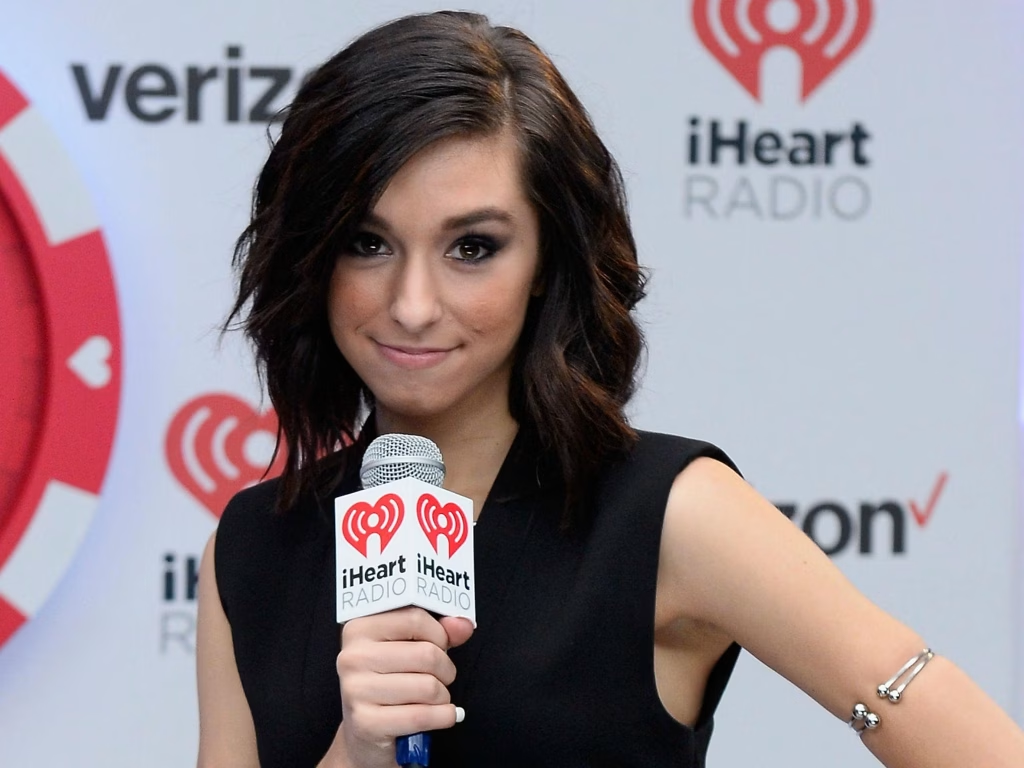
15. Christina Grimmie

Christina Grimmie’s rise felt organic and joyful. From YouTube covers to a powerful run on The Voice, she built her career through talent, sincerity, and a genuine connection with fans. Her future in music looked incredibly bright.

Image Source: Bing Image. License: All Creative Commons

That promise was shattered when she was fatally shot by an obsessed fan during a post-concert meet-and-greet in Orlando. The shocking act stunned the music world and forced a reckoning around artist safety. Grimmie’s loss is felt not just in what she achieved, but in everything she never had the chance to become.

Image Source: Bing Image. License: All Creative Commons

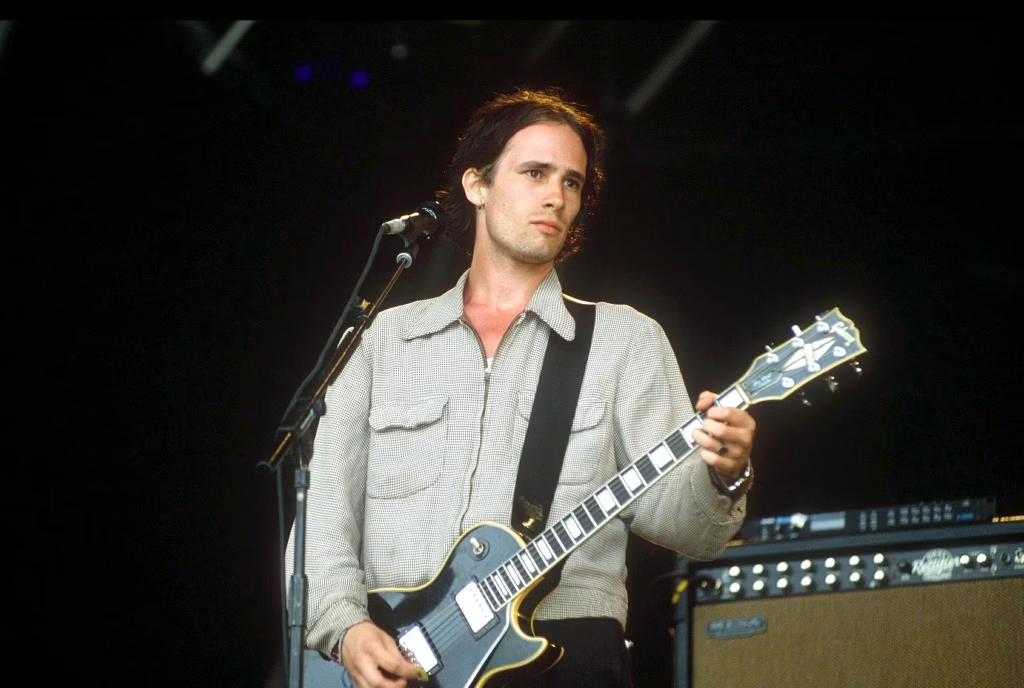
14. Jeff Buckley

Jeff Buckley possessed a voice that felt almost supernatural, fragile, soaring, and deeply emotional. His lone studio album, Grace, cemented his reputation as a once-in-a-generation talent.

Image Source: Bing Image. License: All Creative Commons

His accidental drowning in Memphis remains deeply unsettling. Buckley entered the water on a whim and never resurfaced. With no substances involved and new music on the horizon, his death feels especially cruel. His influence lives on, but the unanswered “what if” still aches.

Image Source: Bing Image. License: All Creative Commons

13. Lisa “Left Eye” Lopes

As TLC’s creative spark, Lisa Lopes brought fire, individuality, and vulnerability to one of the most successful groups of the 1990s. She was outspoken, experimental, and deeply introspective.

Image Source: Bing Image. License: All Creative Commons

Her fatal car accident while filming a documentary in Honduras shocked fans worldwide. Lopes was only 30, in the midst of self-reflection and artistic reinvention. Her energy remains embedded in TLC’s music and in the fearless spirit she encouraged in others.

Image Source: Bing Image. License: All Creative Commons

12. Lee Thompson Young

Lee Thompson Young grew up in the public eye, charming audiences as the lead of The Famous Jett Jackson. As he matured, he transitioned into more serious roles, earning respect within the industry.

Image Source: Bing Image. License: All Creative Commons

His death by suicide at 29 revealed a private struggle with mental illness that many never saw. His passing reignited discussions about mental health support for young performers and remains a sobering reminder that outward success doesn’t equal inner peace.

Image Source: Bing Image. License: All Creative Commons

11. Elizabeth Wurtzel

Elizabeth Wurtzel changed how a generation talked about depression. With Prozac Nation, she wrote with raw honesty about pain, treatment, and self-destruction, long before such openness was common.

Image Source: Bing Image. License: All Creative Commons

She died at 52 after battling advanced breast cancer, but her legacy extends far beyond her books. Wurtzel gave language to suffering and encouraged openness at a time when silence was the norm.

Image Source: Bing Image. License: All Creative Commons

10. Andy Hallett

Andy Hallett brought warmth and humor to Angel as Lorne, a character unlike anything else on television. His musical talent and gentle presence made him deeply beloved by fans. He died unexpectedly at 33 due to heart complications stemming from an undiagnosed condition. His death left a noticeable absence in the fandom and among colleagues who remembered his kindness more than his fame.

Image Source: Bing Image. License: All Creative Commons

9. Mia Zapata

Mia Zapata was a force in the Seattle punk scene, fronting The Gits with raw emotion and conviction. She was admired not just for her music but for her integrity.

Image Source: Bing Image. License: All Creative Commons

Her brutal murder in 1993 devastated the music community. Though justice eventually came years later, her loss remains a painful reminder of violence against women, particularly within creative spaces.

Image Source: Bing Image. License: All Creative Commons

8. Bobbi Kristina Brown

Growing up as the daughter of Whitney Houston and Bobby Brown placed Bobbi Kristina in an unforgiving spotlight. She struggled to define herself amid family turmoil and public scrutiny.

Image Source: Bing Image. License: All Creative Commons

Found unresponsive in a bathtub, she passed away at just 22 after months in a coma. The haunting parallels to her mother’s death deepened the tragedy and underscored the heavy toll of inherited fame.

Image Source: Bing Image. License: All Creative Commons

7. Chi Chi DeVayne

Chi Chi DeVayne radiated warmth and humor on RuPaul’s Drag Race, quickly becoming a fan favorite. Her performances were full of heart, resilience, and joy.

Image Source: Bing Image. License: All Creative Commons

She died at 34 from complications related to scleroderma, a rare autoimmune disease. Her struggle highlighted serious gaps in healthcare access, especially for marginalized communities. Her spirit remains an inspiration.

Image Source: Bing Image. License: All Creative Commons

6. Peaches Geldof

Peaches Geldof lived much of her life under public scrutiny, yet worked to establish herself as a writer and media voice. She was candid about motherhood and personal growth.

Image Source: Bing Image. License: All Creative Commons

Her death from a heroin overdose at 25 echoed the loss of her mother years earlier. The tragedy reopened conversations about addiction, trauma, and the weight of growing up in the public eye.

Image Source: Bing Image. License: All Creative Commons

5. Jonghyun (SHINee)

Jonghyun was revered not only for his vocal talent but for his emotional honesty. He spoke openly about mental health in an industry often resistant to such conversations.

Image Source: Bing Image. License: All Creative Commons

His death at 27 devastated fans worldwide and forced the K-pop industry to confront its pressures more openly. His music and words continue to comfort those who saw themselves in his vulnerability.

Image Source: Bing Image. License: All Creative Commons

4. Diem Brown

Diem Brown’s story unfolded publicly on The Challenge, where she openly shared her fight against ovarian cancer. Her bravery and optimism resonated deeply with viewers.

Image Source: Bing Image. License: All Creative Commons

Her death at 34 left fans heartbroken, especially those who followed her journey for years. Brown’s openness helped raise awareness and encouraged early health advocacy.

Image Source: Bing Image. License: All Creative Commons

3. Krissy Taylor

Krissy Taylor was just beginning her modeling career when it ended abruptly. At 17, she had already achieved what many dream of.

Image Source: Bing Image. License: All Creative Commons

Her sudden death from an undetected heart condition shocked the fashion world and her family. Her story highlighted the silent dangers of congenital illness, even among the young and healthy.

Image Source: Bing Image. License: All Creative Commons

2. Brad Renfro

Brad Renfro showed extraordinary promise as a child actor, delivering performances far beyond his years. Hollywood embraced him early, but offered little protection.

Image Source: Bing Image. License: All Creative Commons

He died at 25 from an accidental overdose after years of struggle. His life remains a cautionary tale about the costs of fame without support.

Image Source: Bing Image. License: All Creative Commons

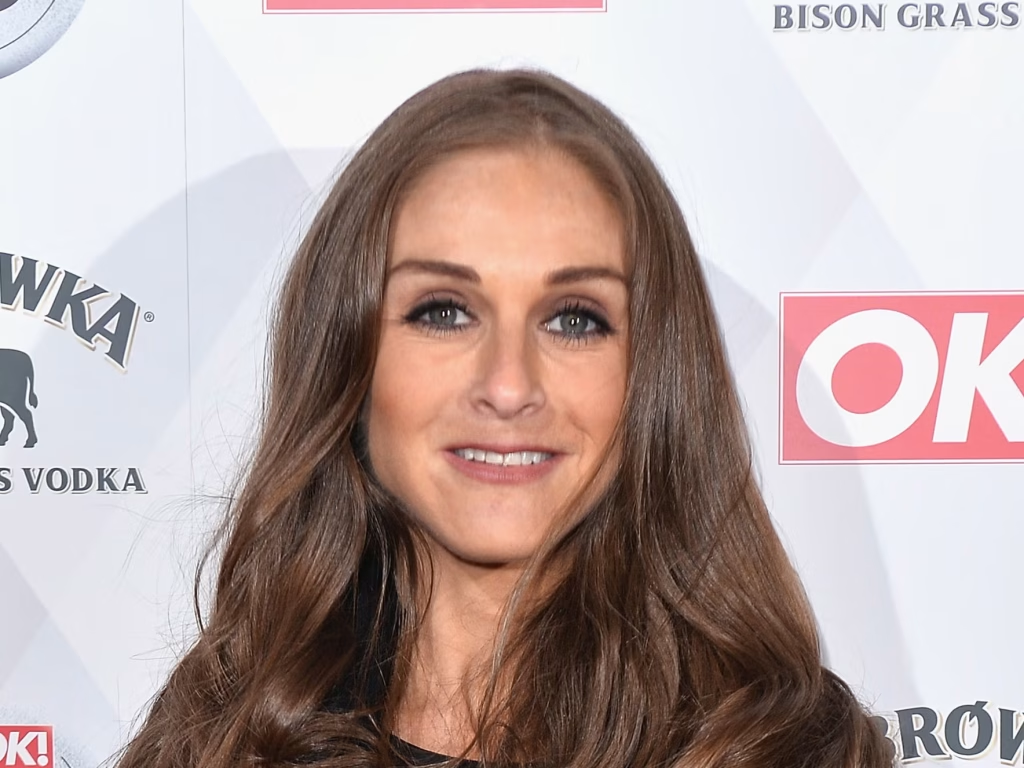
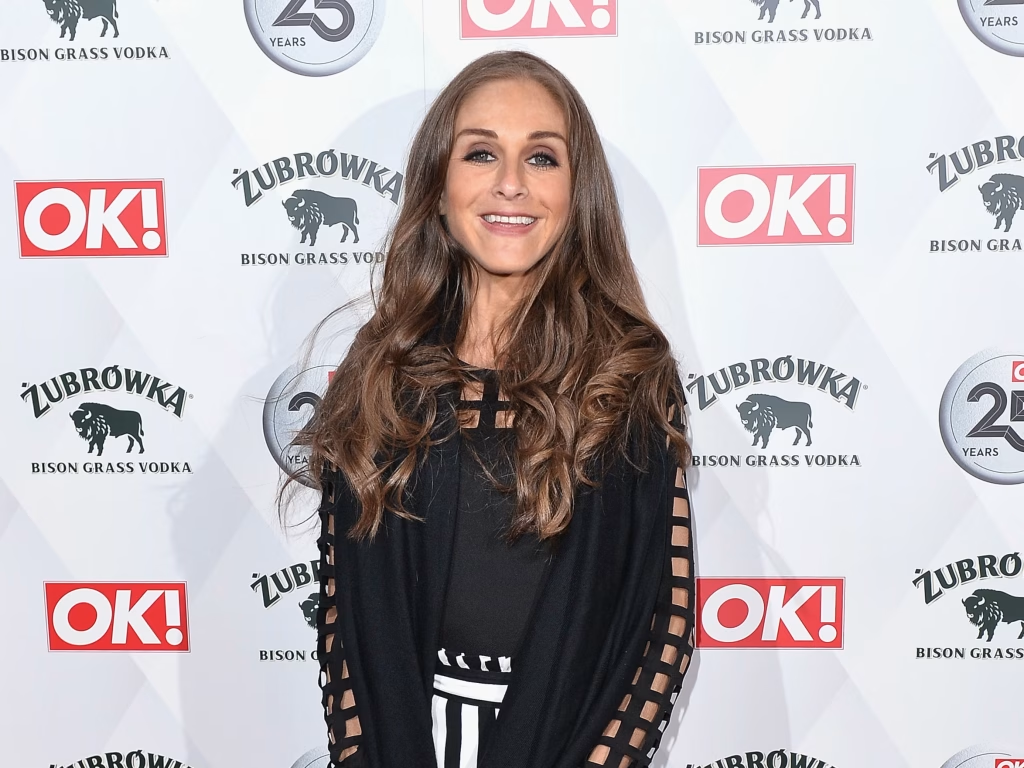
1. Nikki Grahame

Nikki Grahame became beloved through reality television, where her humor, intensity, and vulnerability made her unforgettable.

Image Source: Bing Image. License: All Creative Commons

Behind the scenes, she fought anorexia for most of her life. Her death at 38 brought renewed attention to eating disorders and the lifelong battles they can involve. Fans remember her not for her struggles alone, but for her light.

Image Source: Bing Image. License: All Creative Commons

These stories endure because they touch something deeply human: fragility, hope, and the ache of unfinished lives. While fame made these individuals visible, their struggles were profoundly personal. Remembering them means honoring both their talent and their humanity, and recognizing the importance of compassion, support, and care long before tragedy strikes.

15 Remarkable First Films That Made Industry Waves

0
Image Source: Bing Image. License: All Creative Commons

A debut film is always a leap of faith, but for some directors, that first step does more than introduce a new voice—it shakes the very foundations of cinema. These filmmakers arrived with bold visions, limited resources, and an urgent need to tell their stories. The fifteen directorial debuts highlighted here didn’t just launch careers; they transformed audience expectations and reshaped what studios believed was possible on screen.

Image Source: Bing Image. License: All Creative Commons

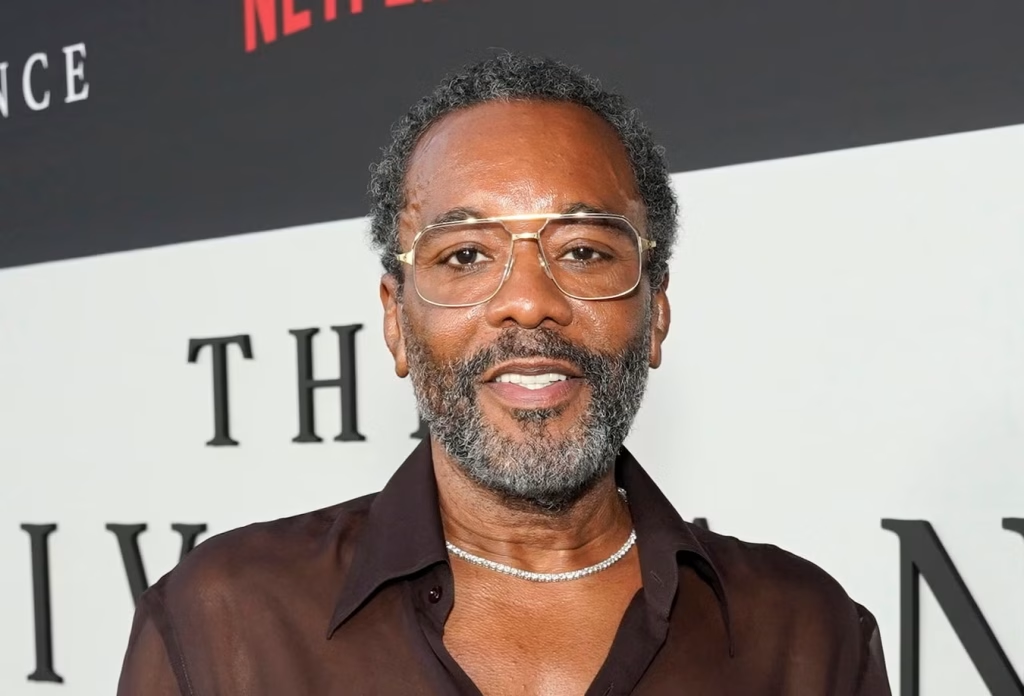
15. Lee Daniels — Precious

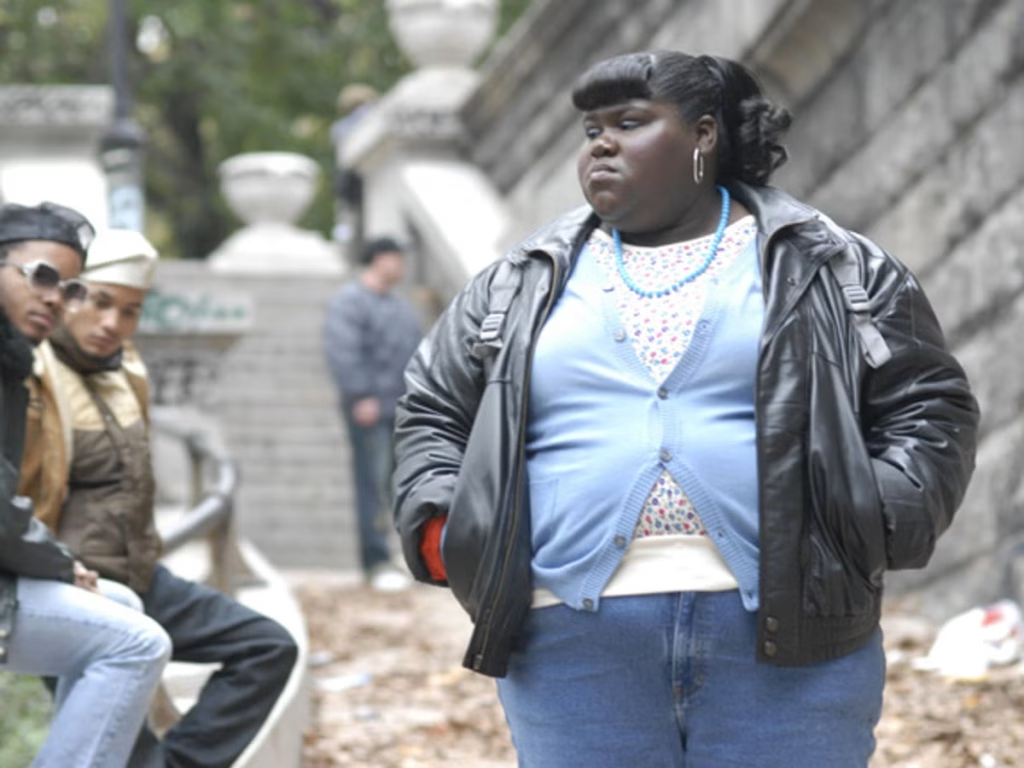
Lee Daniels announced himself with Precious, a fearless and emotionally bruising portrait of survival in modern Harlem. Drawing on his background as a producer, Daniels leaned into performance over polish, giving the film an immediacy that’s impossible to ignore.

Image Source: Bing Image. License: All Creative Commons

Powered by a breakout turn from Gabourey Sidibe and a devastating, Oscar-winning performance by Mo’Nique, the film confronted abuse, poverty, and self-worth without softening its edges. Its impact rippled beyond awards recognition, helping expand space in mainstream cinema for stories centered on marginalized voices.

Image Source: Bing Image. License: All Creative Commons

14. Steve McQueen — 12 Years a Slave

Steve McQueen’s transition from visual artist to filmmaker arrived with astonishing authority. 12 Years a Slave rejected sentimentality in favor of restraint, letting long takes and silence communicate the brutality of American slavery.

Image Source: Bing Image. License: All Creative Commons

Despite modest resources for a period epic, McQueen extracted staggering performances and crafted imagery that lingered long after the credits rolled. The film’s Best Picture win confirmed that confronting history head-on could resonate deeply with audiences worldwide.

Image Source: Bing Image. License: All Creative Commons

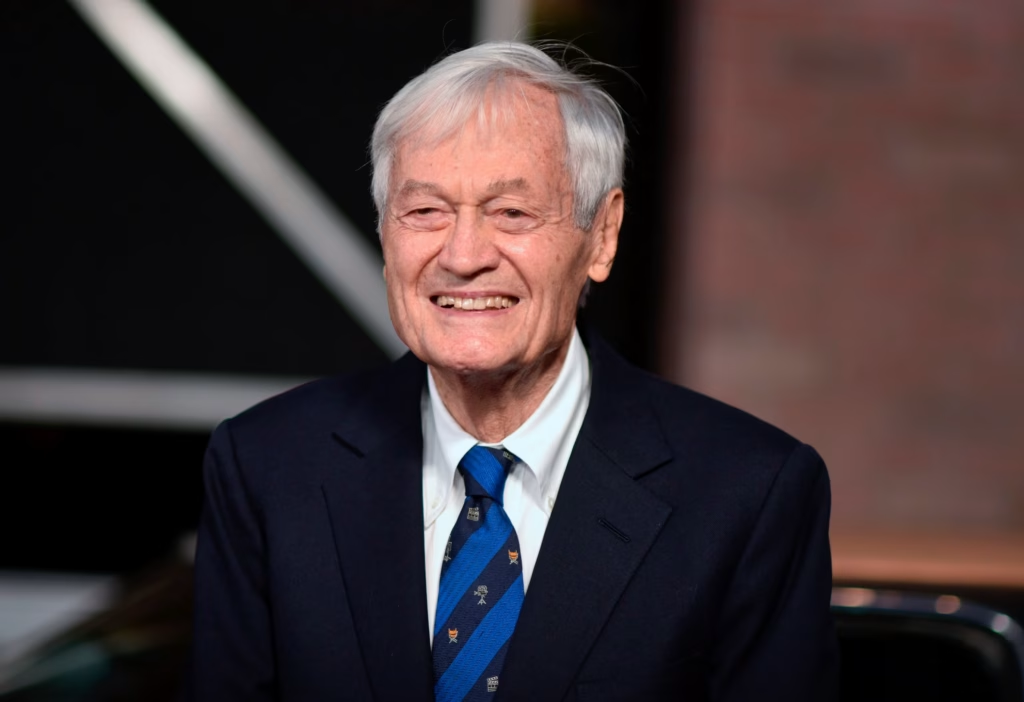
13. Roger Corman — Monster from the Ocean Floor

Roger Corman began exactly where he would continue: working fast, cheaply, and creatively. His debut creature feature may have been modest, but it showcased his uncanny ability to stretch resources to their limit.

Image Source: Bing Image. License: All Creative Commons

More importantly, it launched a career dedicated to nurturing new talent. Corman became an unofficial film school, proving that discipline, efficiency, and imagination could build an empire without studio excess.

Image Source: Bing Image. License: All Creative Commons

12. Julie Dash — Daughters of the Dust

Julie Dash’s debut was unlike anything American cinema had seen. Daughters of the Dust unfolded as a visual poem, chronicling the lives and traditions of the Gullah Geechee community with reverence and grace.

Image Source: Bing Image. License: All Creative Commons

Shot independently and structured non-traditionally, the film challenged narrative norms and aesthetic expectations. Its influence has only grown over time, shaping the visual language of contemporary Black filmmakers and artists.

Image Source: Bing Image. License: All Creative Commons

11. James Wan — Saw

James Wan turned constraint into an advantage. Shot quickly and cheaply, Saw relied on tension, pacing, and structure rather than spectacle. Its unsettling premise and sharp twist electrified audiences.

Image Source: Bing Image. License: All Creative Commons

The film’s massive success redefined modern horror economics and launched a franchise juggernaut. Wan’s debut proved that clever design and strong storytelling can outperform big budgets every time.

Image Source: Bing Image. License: All Creative Commons

10. Darren Aronofsky — Pi

Pi arrived like a fever dream. Darren Aronofsky’s stark, black-and-white debut plunged viewers into obsession, paranoia, and mathematical mysticism, all crafted on a shoestring budget.

Image Source: Bing Image. License: All Creative Commons

The film’s experimental visuals and relentless intensity announced Aronofsky as a director unafraid of discomfort or ambiguity. It set the tone for a career built on emotional extremity and formal risk.

Image Source: Bing Image. License: All Creative Commons

9. Richard Linklater — Slacker

Richard Linklater’s Slacker had no conventional plot, and that was the point. Meandering through conversations and chance encounters, the film captured a generation’s drifting anxieties with disarming honesty.

Image Source: Bing Image. License: All Creative Commons

Its loose structure and low-budget ethos helped define 1990s indie cinema. Linklater proved that observation could be just as compelling as action.

Image Source: Bing Image. License: All Creative Commons

8. Robert Rodríguez — El Mariachi

Few debut stories are as legendary as El Mariachi. Shot for the cost of a used car, Robert Rodriguez’s action film showcased relentless ingenuity, from creative camera tricks to guerrilla locations.

Image Source: Bing Image. License: All Creative Commons

The film’s success shattered assumptions about what independent filmmakers could achieve. Rodriguez didn’t wait for permission; he made his own door and kicked it open.

Image Source: Bing Image. License: All Creative Commons

7. Kevin Smith — Clerks

Kevin Smith’s Clerks felt like eavesdropping on real life. Filmed after hours in a convenience store, the movie thrived on sharp dialogue, awkward silences, and deeply relatable frustrations.

Image Source: Bing Image. License: All Creative Commons

Its Sundance success transformed Smith into an indie icon and proved that voice mattered more than gloss. Sometimes, all you need is something honest to say.

Image Source: Bing Image. License: All Creative Commons

6. The Coen Brothers — Blood Simple

With Blood Simple, the Coen brothers arrived fully formed. Their debut blended noir, dark comedy, and meticulous visual storytelling into something both familiar and strange.

Image Source: Bing Image. License: All Creative Commons

The film’s precision and tonal confidence signaled the arrival of two filmmakers obsessed with structure and subversion. Their fingerprints would soon be everywhere.

Image Source: Bing Image. License: All Creative Commons

5. Jordan Peele — Get Out

Jordan Peele’s pivot from comedy to horror caught many off guard, but Get Out landed like a thunderclap. Using genre as a Trojan horse, Peele dissected race, privilege, and performance in America.

Image Source: Bing Image. License: All Creative Commons

The film’s cultural impact extended far beyond box office success, reshaping expectations for socially conscious genre cinema. Peele’s debut didn’t just scare, it challenged.

Image Source: Bing Image. License: All Creative Commons

4. John Singleton — Boyz n the Hood

John Singleton was barely out of college when he made Boyz n the Hood, yet the film carried the weight of lived experience. His depiction of South Central Los Angeles balanced violence with tenderness and hope.

Image Source: Bing Image. License: All Creative Commons

Singleton’s historic Oscar nomination marked a turning point, proving that authenticity could thrive in mainstream cinema without compromise.

Image Source: Bing Image. License: All Creative Commons

3. Ava DuVernay — Selma

Ava DuVernay brought urgency and humanity to Selma, focusing not just on history but on the people living it. Her direction emphasized emotion, struggle, and moral courage.

Image Source: Bing Image. License: All Creative Commons

The film affirmed DuVernay as a powerful voice in American cinema and opened doors for future filmmakers to blend activism with artistry.

Image Source: Bing Image. License: All Creative Commons

2. Spike Lee — She’s Gotta Have It

Spike Lee burst onto the scene with swagger, humor, and defiance. She’s Gotta Have It was raw, stylish, and unapologetically Black, reshaping how stories about urban life were told.

Image Source: Bing Image. License: All Creative Commons

Lee’s debut wasn’t just a calling card; it was a declaration of independence from cinematic convention.

Image Source: Bing Image. License: All Creative Commons

1. Orson Welles — Citizen Kane

Few debuts come close to Citizen Kane. At 25, Orson Welles rewrote the grammar of cinema, experimenting with structure, perspective, and visual depth in ways that still feel modern.

Image Source: Bing Image. License: All Creative Commons

The film’s innovations reshaped storytelling itself. Decades later, it remains a benchmark for ambition and artistic fearlessness.

Image Source: Bing Image. License: All Creative Commons

These debut films remind us that revolution often starts small—with a first idea, a borrowed camera, or a story that refuses to stay quiet. Whether made for thousands or millions, each of these works reshaped cinema by daring to be different from the very beginning.

15 Stunning VFX Moments That Transformed Fantasy and Period Films

0
Image Source: Bing Image. License: All Creative Commons

From hand-crafted creatures to cutting-edge digital worlds, special effects have always been cinema’s secret weapon. Long before CGI took over, filmmakers relied on ingenuity, craftsmanship, and sheer creativity to make the impossible feel real. This list spotlights fifteen landmark films that not only amazed audiences but also transformed moviemaking, leaving a lasting mark on fantasy, sci-fi, and spectacle-driven storytelling.

Image Source: Bing Image. License: All Creative Commons

15. Mad Max: Fury Road (2015)

Mad Max: Fury Road feels less like a movie and more like a controlled explosion. George Miller returned to his wasteland with a singular mission: to put as much chaos on screen as physically possible. Real vehicles crashed, flipped, and collided at full speed, while performers swung between them on massive poles. Yes, that flamethrower guitar was real, and yes, it was glorious.

Image Source: Bing Image. License: All Creative Commons

What elevates the film is how subtly digital effects are used. CGI enhances skies, environments, and motion rather than replacing them, giving the film its hyper-stylized, almost mythic look. Miller even adjusted frame rates and backgrounds shot-by-shot to guide the viewer’s eye. The result is a relentless visual symphony that proves practical effects were far from obsolete.

Image Source: Bing Image. License: All Creative Commons

14. Avatar (2009)

James Cameron didn’t just make a hit with Avatar; he built an entire ecosystem. Pandora felt alive in a way audiences had never experienced, so much so that some viewers famously struggled to return to reality after leaving the theater.

Image Source: Bing Image. License: All Creative Commons

The film’s biggest leap was emotional motion capture on an unprecedented scale. Instead of one digital character stealing the show, Cameron filled his world with expressive, fully realized beings. The technology allowed subtle performances to shine through layers of CGI skin, forever changing expectations for digital characters. Nearly every modern effects-heavy blockbuster owes something to Avatar’s blueprint.

Image Source: Bing Image. License: All Creative Commons

13. The Curious Case of Benjamin Button (2008)

David Fincher’s Benjamin Button didn’t shout about its technical achievements, and that’s exactly why they worked. The film required Brad Pitt to convincingly age backward over decades, a task no amount of makeup alone could handle.

Image Source: Bing Image. License: All Creative Commons

Through a seamless blend of digital face replacement, subtle CGI adjustments, and practical techniques, the transformation unfolds naturally. Nothing feels flashy or artificial. This understated approach became the foundation for today’s de-aging technology, proving that visual effects don’t need to be loud to be revolutionary.

Image Source: Bing Image. License: All Creative Commons

12. The Lord of the Rings: The Two Towers (2002)

Middle-earth truly found its digital soul with Gollum. Andy Serkis’ motion-capture performance brought depth, vulnerability, and menace to a fully CGI character in a way audiences had never seen before. He wasn’t just a visual effect; he was a tragic presence.

Image Source: Bing Image. License: All Creative Commons

Beyond Gollum, the Battle of Helm’s Deep redefined large-scale warfare on screen. Weta Digital’s crowd simulation software allowed thousands of fighters to move independently, creating chaos that felt authentic. The Two Towers showed how technology could serve emotion, scale, and storytelling all at once.

Image Source: Bing Image. License: All Creative Commons

11. The Matrix (1999)

Few films have left fingerprints on pop culture like The Matrix. Its most famous innovation, “bullet time,” froze action mid-movement while the camera seemed to glide impossibly around it. Achieved through precise still photography and virtual camera mapping, the effect instantly became iconic.

Image Source: Bing Image. License: All Creative Commons

The Wachowskis also used color grading as storytelling, bathing the simulated world in sickly greens to subtly reinforce the idea of artificial reality. The Matrix didn’t just introduce new tricks; it changed how filmmakers thought about visuals as philosophy.

Image Source: Bing Image. License: All Creative Commons

10. Jurassic Park (1993)

When dinosaurs first roared onto the screen in Jurassic Park, audiences genuinely wondered how filmmakers had done it. Steven Spielberg’s genius was knowing when to use animatronics and when to lean on CGI.

Image Source: Bing Image. License: All Creative Commons

The physical dinosaurs gave weight and presence, while digital effects filled in motion and scale that mechanical models couldn’t achieve. This careful balance made the creatures feel alive. Nearly every modern creature feature traces its lineage back to this film.

Image Source: Bing Image. License: All Creative Commons

9. Dead Alive (Braindead) (1992)

Long before epic battles and Oscar wins, Peter Jackson was gleefully drowning audiences in fake blood. Dead Alive is a low-budget splatter comedy that pushed practical gore to absurd extremes.

Image Source: Bing Image. License: All Creative Commons

Using puppets, prosthetics, and outrageous quantities of stage blood, Jackson created unforgettable scenes of chaos, most famously a lawnmower massacre that remains legendary. The film proved imagination could outweigh budget, and it cemented Jackson as a fearless effects experimenter.

Image Source: Bing Image. License: All Creative Commons

8. Terminator 2: Judgment Day (1991)

Terminator 2 arrived like a warning shot from the future. The liquid-metal T-1000 was unlike anything audiences had seen, morphing seamlessly between human and machine.

Image Source: Bing Image. License: All Creative Commons

Industrial Light & Magic pushed early CGI to its limits, spending days rendering seconds of footage. Combined with practical stunts and explosive action, the effects still hold up decades later. T2 redefined what a blockbuster villain could look like and how real CGI could feel.

Image Source: Bing Image. License: All Creative Commons

7. Who Framed Roger Rabbit? (1988)

Blending live action and animation had been attempted before, but never at this level. Who Framed Roger Rabbit? required obsessive precision, from camera movement to lighting, to sell the illusion that humans and cartoons shared the same space.

Image Source: Bing Image. License: All Creative Commons

Bob Hoskins’ committed performance anchored the fantasy, while inventive tricks solved problems no one had faced before. The result remains one of the most convincing hybrid films ever made.

Image Source: Bing Image. License: All Creative Commons

6. Tron (1982)

Tron was a gamble that paid off in influence, if not initially at the box office. At a time when computers were barely household items, the film dared to visualize life inside a digital world.

Image Source: Bing Image. License: All Creative Commons

Using early CGI, backlit animation, and experimental compositing, the filmmakers worked with laughably small memory limits by today’s standards. The bold visual language they created laid the groundwork for how cinema imagines cyberspace even now.

Image Source: Bing Image. License: All Creative Commons

5. The Thing (1982)

Rob Bottin’s work on The Thing remains the gold standard for practical horror effects. The film’s alien transformations are grotesque, shocking, and deeply unsettling because they’re real.

Image Source: Bing Image. License: All Creative Commons

Using puppetry, animatronics, and mechanical effects, Bottin crafted scenes that feel unpredictable and alive. Decades later, they’re still studied, celebrated, and rarely matched.

Image Source: Bing Image. License: All Creative Commons

4. An American Werewolf in London (1981)

Rick Baker’s transformation sequence didn’t cut away or hide in shadows; it lingered. Bones stretched, muscles shifted, and the horror unfolded in full view.

Image Source: Bing Image. License: All Creative Commons

This commitment to realism earned Baker an Academy Award and permanently raised expectations for creature effects. The scene remains one of the most influential transformations in film history.

Image Source: Bing Image. License: All Creative Commons

3. Alien (1979)

Alien didn’t rely on spectacle; it relied on atmosphere. H.R. Giger’s biomechanical creature design was deeply unsettling, and the film’s grimy, industrial sets made the future feel claustrophobic and hostile.

Image Source: Bing Image. License: All Creative Commons

By keeping the alien partially hidden and grounding effects in physical reality, Ridley Scott created terror through suggestion. The film’s aesthetic still echoes through sci-fi and horror today.

Image Source: Bing Image. License: All Creative Commons

2. Star Wars: A New Hope (1977)

Before Star Wars, science fiction looked clean and distant. George Lucas made it dirty, lived-in, and thrilling. Miniatures, matte paintings, and practical sets created a universe that felt real and expansive.

Image Source: Bing Image. License: All Creative Commons

ILM’s groundbreaking work reshaped the industry overnight, and the opening Star Destroyer shot remains one of cinema’s most unforgettable images.

Image Source: Bing Image. License: All Creative Commons

1. Jason and the Argonauts (1963)

At the top stands Ray Harryhausen’s masterpiece. Jason and the Argonauts showcased stop-motion animation at its absolute peak, especially during the legendary skeleton battle.

Image Source: Bing Image. License: All Creative Commons

Harryhausen animated each frame by hand, perfectly matching movement, lighting, and choreography with live-action footage. The result is still magical, proof that patience, artistry, and imagination can outlast any technology.

Image Source: Bing Image. License: All Creative Commons

From stop-motion skeletons to liquid-metal assassins, these films represent turning points where creativity and technology collided. While tools have evolved, the heart of great visual effects hasn’t changed: it’s about making audiences believe, even just for a moment, that the impossible is real.

10 Action-Packed Sports Anime Every Fan Should Watch

0
Image Source: Bing Image. License: All Creative Commons

Sports anime has long thrived on exaggeration and high energy, and that’s a big part of its appeal. While some series aim for realistic gameplay and inspirational character growth, others fully embrace the absurd—pushing the limits of what’s possible on screen. That willingness to go all in is what makes the genre so exciting. It proves that even the most ordinary sport can become thrilling, outrageous, and wildly entertaining when the stakes—and the creativity—are turned up to eleven.

Image Source: Bing Image. License: All Creative Commons

You might know some of the popular classics, but once you move past the limelight, sports anime goes delightfully weird. This is where unusual activities, fictional sports, and utterly insane concepts become the norm. These shows prove that the genre is not bound by reality but rather by creativity. The following is a reverse countdown of the weirdest, most entertaining sports anime that you should check out. Whether they are guilty pleasures or full-blown genre-benders, each one has something unusual to offer, regardless of where the action unfolds.

Image Source: Bing Image. License: All Creative Commons

10. Iwa Kakeru! Sport Climbing Girls

Iwa Kakeru! takes a surprisingly different approach to the competitive climbing sport, focusing on a former hardcore gamer who trades in her game controllers for climbing walls. Instead of relying solely on her physical prowess, she uses her problem-solving abilities and analytical mind to overcome each route, making it as much of a mental battle as it is a physical one. This fresh take allows the series to establish its own identity among more traditional sports anime.

Image Source: Bing Image. License: All Creative Commons

The climbing scenes themselves are surprisingly engaging, breaking down routes, grip choices, and body positioning in a way that actually explains the sport. There’s a genuine effort to make climbing feel tactical and intense, even when the stakes are relatively small compared to national tournaments or world championships.

Image Source: Bing Image. License: All Creative Commons

That said, the show undeniably leans into fan service, sometimes aggressively. For some viewers, this distracts from the sport and character growth, but for others, it’s just part of the package. If you’re curious about a lesser-known competitive sport and don’t mind some excess, Iwa Kakeru! is a decent entry point.

Image Source: Bing Image. License: All Creative Commons

9. Keijo!!!!!!!!

Keijo!!!!!!!! is the kind of anime premise that sounds fake until you see it animated. Set in a fictional professional sport, competitors battle on floating platforms and can only use their chests and backsides to knock opponents into the water. It’s ridiculous, unapologetic, and very aware of what it’s doing.

Image Source: Bing Image. License: All Creative Commons

What makes Keijo!!!!!!!! Work isn’t just the fanservice, it’s the commitment. The series treats its nonsense sport with the same seriousness that other anime reserve for soccer or boxing. There are special techniques, rivalries, power-ups, and dramatic commentary that elevate the absurdity into full-blown parody.

Image Source: Bing Image. License: All Creative Commons

Surprisingly, the animation quality is solid, and the matches are genuinely fun to watch. You’re not here for realism or deep philosophy, you’re here for chaos. If you want to see how far sports anime can stretch the definition of “sport,” this is as far as it goes.

Image Source: Bing Image. License: All Creative Commons

8. Re-Main

Water polo doesn’t get much representation in anime, which makes Re-Main feel refreshing right out of the gate. The series follows a talented player who loses most of his memories after a long coma, forcing him to relearn both the sport and his own identity from scratch.

Image Source: Bing Image. License: All Creative Commons

Rather than focusing purely on winning matches, Re-Main spends a lot of time exploring confidence, frustration, and the pressure of expectations. The protagonist isn’t just battling opposing teams; he’s fighting against the shadow of the person he used to be.

Image Source: Bing Image. License: All Creative Commons

While it doesn’t reinvent the sports anime formula, the emotional angle gives it weight. It’s quieter, more introspective, and sometimes awkward, but that realism makes it resonate. If you want a sports anime that prioritizes character recovery over flashy victories, Re-Main is worth the dive.

Image Source: Bing Image. License: All Creative Commons

7. Bakuten!!

Bakuten!! shines a spotlight on men’s rhythmic gymnastics, a sport rarely explored in anime or media in general. The story follows a complete beginner who becomes fascinated after witnessing a competition, eventually joining his school’s team despite having no prior experience.

Image Source: Bing Image. License: All Creative Commons

The narrative itself is fairly standard practice, setbacks, rival schools—but the execution is where the show stands out. The gymnastics performances are beautifully animated, capturing the speed, precision, and artistic flair that define the sport.

Image Source: Bing Image. License: All Creative Commons

More than anything, Bakuten!! respects its subject. It portrays rhythmic gymnastics as physically demanding and fiercely competitive, not just a flashy spectacle. Even if the characters don’t break new ground, the presentation alone makes this series feel fresh.

Image Source: Bing Image. License: All Creative Commons

6. 2.43: Seiin High School Boys Volleyball Team

There’s no escaping the comparisons to Haikyuu!!, and unfortunately, 2.43 lives in that shadow. It follows two former childhood friends with unresolved tension as they reunite on a struggling volleyball team, aiming to rebuild both trust and performance.

Image Source: Bing Image. License: All Creative Commons

The volleyball itself is competently animated, and the matches have moments of genuine intensity. However, the pacing can feel uneven, and the emotional beats don’t always land as strongly as they should.

Image Source: Bing Image. License: All Creative Commons

Still, 2.43 isn’t without merit. It focuses more on interpersonal conflict and mental blocks than explosive hype, making it a slower, more grounded watch. If you’re already invested in volleyball anime and want something lower-key, it scratches that itch.

Image Source: Bing Image. License: All Creative Commons

5. Birdie Wing

Birdie Wing takes golf, a sport often associated with calm and restraint, and turns it into a high-octane drama. Underground matches, criminal organizations, and reality-defying shots redefine what golf anime can look like.

Image Source: Bing Image. License: All Creative Commons

At the center of the story is Eve, a ruthless street golfer who competes in illegal matches to survive, and Aoi, a sheltered prodigy with perfect form. Their rivalry is intense, personal, and wildly exaggerated in the best way possible.

Image Source: Bing Image. License: All Creative Commons

The show thrives on excess. Named techniques, dramatic monologues, and impossible trajectories make every swing feel like a finishing move. Even if you’ve never cared about golf, Birdie Wing makes it exciting, ridiculous, and endlessly entertaining.

Image Source: Bing Image. License: All Creative Commons

4. IGPX

On paper, IGPX looks like a mecha anime, and it is, but structurally, it’s pure sports drama. Teams of pilots race giant robots in professional leagues, dealing with rankings, sponsorships, and rival teams just like traditional athletes.

Image Source: Bing Image. License: All Creative Commons

Each race emphasizes teamwork, timing, and strategy, blending mechanical combat with the familiar rhythms of sports anime storytelling. The characters grow not just as pilots, but as competitors learning to trust one another.

Image Source: Bing Image. License: All Creative Commons

Backed by Production I.G.’s strong animation, IGPX remains visually impressive even years later. If you enjoy sports anime but want something louder, faster, and packed with sci-fi flair, this is an easy pick.

Image Source: Bing Image. License: All Creative Commons

3. Air Gear

Air Gear starts grounded enough, with rollerblading gangs battling for turf, but quickly escalates into complete insanity. High-tech skates allow characters to defy gravity, pull off impossible tricks, and turn races into full-scale battles.

Image Source: Bing Image. License: All Creative Commons

The realism disappears early, but that’s exactly the point. Air Gear embraces excess, blending street culture, supernatural elements, and intense rivalries into something uniquely chaotic.

Image Source: Bing Image. License: All Creative Commons

Between the iconic soundtrack, bold visual style, and relentless energy, the series leaves a strong impression. It’s messy, exaggerated, and unforgettable, a perfect example of sports anime abandoning restraint and thriving because of it.

Image Source: Bing Image. License: All Creative Commons

2. SK8 the Infinity

SK8 the Infinity injects skateboarding with pure anime drama. Set in Okinawa, it revolves around secret downhill races where skaters risk serious injury for pride, passion, and personal freedom.

Image Source: Bing Image. License: All Creative Commons

The relationship between Reki and Langa forms the emotional core of the show, balancing adrenaline-fueled races with heartfelt character moments. The supporting cast adds style, humor, and intensity in equal measure.

Image Source: Bing Image. License: All Creative Commons

Visually striking and emotionally charged, SK8 feels modern, expressive, and confident in its identity. Add in a flamboyant antagonist who steals every scene, and you’ve got one of the most memorable sports anime in recent years.

Image Source: Bing Image. License: All Creative Commons

1. Blue Lock

Blue Lock takes everything sports anime usually stands for and flips it on its head. After Japan’s World Cup failure, 300 strikers are locked into an experimental program where only one will emerge as the nation’s savior.

Image Source: Bing Image. License: All Creative Commons

Teamwork takes a backseat to ego, ambition, and survival. Players are encouraged to be selfish, ruthless, and obsessed with scoring because hesitation means elimination.

Image Source: Bing Image. License: All Creative Commons

The result is a tense, psychological battle disguised as a soccer anime. With its darker tone, sharp visuals, and relentless pacing, Blue Lock feels more like a survival game than a sports series, and that bold approach is exactly why it stands at the top.

Image Source: Bing Image. License: All Creative Commons

Sports anime continues to evolve because it refuses to stay predictable. Whether grounded or completely absurd, these shows prove that competition can be thrilling in any form. If you’re willing to step outside the usual courts and fields, you’ll find some of anime’s most creative storytelling waiting for you.