Home Blog Page 781

MQ-25 Stingray: Changing Modern Naval Aviation

0
Image Source: Bing Image. License: All Creative Commons

The MQ-25 Stingray aerial refueling drone of the Navy, its first fleet-based unmanned refueling aircraft, is going far in the most considerable change in naval aviation for years. Typically, the U.S. aircraft carrier has been the centerpiece of American power projection. Still, it has always been supported by ground-based air operations that carried out vital support tasks such as air refueling. Everything has changed with the MQ-25. The time when uncrewed systems merely serve as support but also revolutionize carrier operations has arrived.

Image Source: Bing Image. License: All Creative Commons

A Historic Aviation Milestone

The MQ-25 hit the headlines in June 2021, when a test aircraft from Boeing successfully transferred fuel during flight to a Navy F/A-18 Super Hornet. The test, conducted over Illinois, was not only a technological achievement—it was a milestone in the way unmanned systems complement crewed platforms. The Super Hornet flew only 20 feet from the unmanned MQ-25, holding station through both dry and wet contacts before taking on board fuel. This wasn’t proof of concept—it was proof of capability in realistic conditions.

Image Source: Bing Image. License: All Creative Commons

More Than a Flying Tanker

Although the MQ-25’s stated purpose is to refuel carrier-based aircraft at range, its effect extends far beyond logistics. Rear Adm. John Meier, Commander of Naval Air Force Atlantic, has described the Stingray as a “revolutionary” move toward creating the Air Wing of the Future. By lifting the refueling load off F/A-18s—historically employed as ad hoc tankers—the Navy can now send more of those aircraft on strike and combat missions. The payoff? More firepower, longer reach, and greater efficiency without more pilots or platforms.

Image Source: Bing Image. License: All Creative Commons

Proven on the Deck, Ready for the Fleet

Getting an unmanned aircraft onto the tightly choreographed deck of a carrier took careful testing. Initially, engineers tested the MQ-25 at Chambers Field in Norfolk by getting it to maneuver within lines painted on mock-ups of carrier decks using remote control. The simulations later led to live demonstrations on board the USS George H.W. Bush, confirming how the MQ-25 could be incorporated into routine deck operations.

Image Source: Bing Image. License: All Creative Commons

A Strategic Building Block

The MQ-25 is not an independent test—it is the Navy’s first step toward creating a networked, hybrid force of manned and unmanned platforms. It is part of the larger movement toward manned-unmanned teaming (MUM-T), in which human pilots and autonomous vehicles work together as integrated teams.

Image Source: Bing Image. License: All Creative Commons

Future success, according to defense analyst Heather Penney of the Mitchell Institute, will not only be based on constructing cutting-edge machines, but on systems where machine and human can understand each other’s strengths and weaknesses. That’s the kind of thinking found in initiatives such as the “Two View Autonomy Framework” that seeks to close the gap between operators and engineers as autonomy becomes more prevalent.

Image Source: Bing Image. License: All Creative Commons

Moving Fast and Learning Faster

Since Boeing won the development contract in 2018, the MQ-25 program has been rapidly moving forward. Within a few years, it not only refueled an F/A-18 but also topped off an F-35C and an E-2D Advanced Hawkeye—showing its versatility throughout the fleet. The Navy has been pushing to get the MQ-25 into operational use as fast as possible, particularly as competitors are building systems intended to counter U.S. carrier superiority in high-threat operations.

Image Source: Bing Image. License: All Creative Commons

A Glimpse Into What’s Next

The deployment of MQ-25s onto Ford- and Nimitz-class carriers will change the way the Navy projects airpower. With its capability to refuel strike aircraft away from the carrier, it enables the U.S. to reach farther without getting closer to enemy defenses. But equally significant, the Stingray opens the door to future unmanned systems—from surveillance drones to autonomous strike aircraft and loyal wingmen designs.

Image Source: Bing Image. License: All Creative Commons

Each lesson gained from the MQ-25—technical, tactical, or procedural—is part of a greater push to transform naval aviation for the battles of the future. In a world defined by speed, precision, and stealth, unmanned vehicles like the MQ-25 won’t be bit players—they’ll be driving the mission.

More related images you may be interested in:

Image Source: Bing Image. License: All Creative Commons

B-2 Bomber Hits Iran in a Show of Stealth and Strength

0
Image Source: Bing Image. License: All Creative Commons

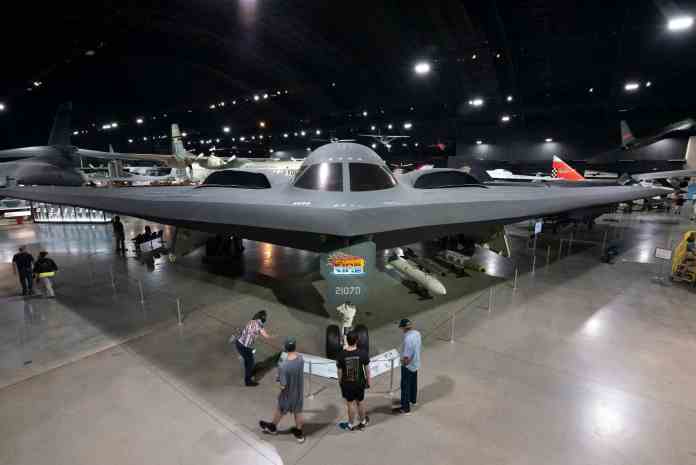
If you are a fan of extreme drama, top-notch technology, and the feeling of being in the middle of one of those Hollywood movies that you already know, then maybe it would be interesting for you to learn about the recent attacks with the American B-2 Spirit stealth bomber on Iran’s nuclear facilities, as they were the perfect combination of these elements.

Image Source: Bing Image. License: All Creative Commons

In the dead of night on June 21, a squadron of B-2s—each a $2 billion marvel of engineering—flew out of Whiteman Air Force Base in Missouri. Their target: three of Iran’s most heavily defended nuclear facilities—Fordow, Natanz, and Isfahan.

Image Source: Bing Image. License: All Creative Commons

This wasn’t business as usual. The B-2s dropped their entire payloads at Fordow before heading back home, all safely. The strike wasn’t merely a military action—it was a massive escalation of the Israel-Iran confrontation, with Washington openly joining in along with its closest Middle East ally to deliver a direct punch to Tehran’s nuclear program.

Image Source: Bing Image. License: All Creative Commons

So what made the B-2 the go-to weapon? For one, it’s the only plane on the planet that can deliver the Massive Ordnance Penetrator (MOP)—a 30,000-pound “bunker buster” intended to smash underground targets once considered beyond reach.

Image Source: Bing Image. License: All Creative Commons

Fordow, which is located inside the mountain, was built to withstand normal bombs. The B-2, however, as having one of the most stealthy radar-dodging flying wing designs, can go beyond the enemy’s protection and deliver the bunker buster in the exact spot.

Image Source: Bing Image. License: All Creative Commons

And although brute power is part of the equation, the B-2’s real advantage is stealth. Its radar cross-section is so small it’s likened to a bird, rendering it nearly invisible to cutting-edge air defense systems.

Image Source: Bing Image. License: All Creative Commons

With a radius of more than 6,000 nautical miles—and even more with in-flight refueling—it can hit anywhere on the planet from its Missouri base.

Image Source: Bing Image. License: All Creative Commons

Its two-person crew depends on advanced automation and concealed weapons bays, allowing it to possess a one-of-a-kind capability of up to 40,000 pounds of bombs while remaining almost invisible.

Image Source: Bing Image. License: All Creative Commons

Preparing such missions is as amazing as the attacks themselves. All 19 B-2s are home-based at Whiteman, but the Pentagon forward-deployed six of them to Diego Garcia in the Indian Ocean earlier this year—a deployment that caused a stir when satellite imagery captured the bombers queued up on the runway.

Image Source: Bing Image. License: All Creative Commons

Cedric Leighton, a former Air Force colonel, said the deployment was designed to send several messages to Iran: cease supporting proxies such as the Houthis in Yemen, and realize the repercussions of not coming to the negotiating table regarding nuclear matters.

Image Source: Bing Image. License: All Creative Commons

The B-2’s resume is already filled with combat history. It’s flown missions over Kosovo, Afghanistan, Libya, Yemen, and now Iran—demonstrating time and again that it can deliver crippling strikes anywhere on the planet, no matter what the defenses. When the B-2 Spirit engages in the battle, it’s an airstrike on steroids—it’s a statement.

The Strongest Tanks vs. the Rise of Drones

0
Image Source: Bing Image. License: All Creative Commons

Originally, the victors of tank confrontations were mostly decided through brute strength, the vehicles’ thick armor, and their impressive speeds. Over the last century, larger guns, more resilient armor, and quicker engines were essentially what armored battles revolved around, but things have changed on the battlefield. There is a new player in the game who is small, inexpensive, and up in the air. The drones are altering the game by performing their assaults from locations that tank crews can not even imagine. Despite that, armored vehicles still constitute the main power of the ground forces; the latter have a bigger problem with changing their tactics.

Image Source: Bing Image. License: All Creative Commons

Here’s a countdown of the world’s top 10 tanks in active use today, and how each is standing its ground in this new era of aerial threats.

Image Source: Bing Image. License: All Creative Commons

10. T-90 — Russia’s Workhorse

The T-90 marries an upgraded Soviet chassis with new armor and firepower. Its 125mm smoothbore cannon and reactive armor make it deadly against conventional opponents, and its light weight provides acceptable agility. But as recent wars have demonstrated, even a heavily armored T-90 can be defeated by a $1,000 drone with the proper targeting.

Image Source: Bing Image. License: All Creative Commons

9. Type 99 — The Contender

Equipped with a 125mm cannon, composite armor, and computer fire control, the Type 99 is the Chinese response to NATO’s heavyweights. Active protection systems enable it to resist missile attacks and drones, but with UAV technology moving so rapidly, safety requires frequent upgrades.

Image Source: Bing Image. License: All Creative Commons

8. Leclerc — France’s Digital Brawler

France’s Leclerc carries a 120mm smoothbore gun, modifiable armor, and a very high rate of fire. Its advanced electronics enable rapid target pickup, but as with all tanks of this type, its initial designers never expected a battlefield swarming with weaponized quadcopters.

Image Source: Bing Image. License: All Creative Commons

7. K2 Black Panther — South Korea’s Tech Tank

The K2 is among the world’s most advanced tanks. Its 120mm gun, sensor technology, and networked systems are combined with active protection that’s designed to combat drones as well as missiles. Agile enough to complement its firepower, the K2 is built for today’s drone-heavy battlefield.

Image Source: Bing Image. License: All Creative Commons

6. Type 90 — Japan’s Agile Striker

Japan’s Type 90 was designed to be fast and accurate. Its 120mm cannon and high-powered engine provide it with superior agility, and its computer systems improve crew effectiveness. Even this agile platform, however, needs to continue to adapt to remain superior to hordes of FPV drones.

Image Source: Bing Image. License: All Creative Commons

5. Merkava Mk 4 — Israel’s Fortress on Tracks

The Merkava Mk 4 reverses the conventional tank design by placing its engine at the front, protecting the crew. Its 120mm cannon, modular armor, and advanced active protection are specifically designed for asymmetrical battlefields where drones pose a daily threat.

Image Source: Bing Image. License: All Creative Commons

4. Challenger 2 — Britain’s Heavy Hitter

Renowned for its strength and precision, Challenger 2 has a 120mm rifled gun and heavy armor. It’s been upgraded with improved sensors and anti-drone technology, but increased use of UAVs is compelling even this battle-hardened veteran to change.

Image Source: Bing Image. License: All Creative Commons

3. Leopard 2 — Germany’s Balanced Champion

Usually referred to as the world’s greatest all-around tank, the Leopard 2 provides a combination of pace, firepower, and protection that few can equal. Its 120mm smoothbore, powerful engine, and reliable design have made it a NATO darling. Now, new electronic warfare systems and active defenses are keeping it in the running against drones.

Image Source: Bing Image. License: All Creative Commons

2. T-14 Armata — Russia’s Next-Gen Gamble

With an unmanned turret, 125mm gun, and heavy armor, the T-14 Armata is a daring advance in tank technology. Its sensors and battlefield networking are designed to counter both conventional and drone dangers, but its absence of a tested combat record leaves some things to guesswork.

Image Source: Bing Image. License: All Creative Commons

1. M1 Abrams — The American Benchmark

The M1 Abrams has been the gold standard for decades. Equipped with a 120mm smoothbore gun, composite armor, and a steady stream of upgrades, it is still a force to be reckoned with. Newer variants are receiving top-of-the-line active protection and advanced sensors to deal with drones, so the Abrams is not losing its crown yet.

Image Source: Bing Image. License: All Creative Commons

The Drone Factor

The conflict in Ukraine has demonstrated how much of a disruption drones can cause, sometimes only costing hundreds of dollars, but able to incapacitate million-dollar tanks. FPV drones, loitering munitions, and AI-controlled UAVs are turning the tables, compelling tank crews to reorganize or face annihilation at the hands of drones. Electronic warfare may be able to jam certain drones, but AI-controlled models can fly signal-free, rendering jamming futile. It’s an arms race where evolution means survival.

Image Source: Bing Image. License: All Creative Commons

Lessons of the Past

Legends such as the Tiger I, T-34, and Sherman M4 continue to influence the design of tanks today. The sloping armor of the T-34 changed survivability forever, while the Tiger I established new levels of firepower. These lessons of balance, versatility, and protection remain the foundational principles for tanks today.

Image Source: Bing Image. License: All Creative Commons

Rolling Into the Future

Tanks no longer battle only other tanks. Their foes now fly, swarm, and think. The greatest tanks in the world will be those that remain connected, remain armored, and remain mobile—whatever the battlefield becomes.

The B-52’s Near Miss Over North Dakota and Its Safety Lessons

0
Image Source: Bing Image. License: All Creative Commons

On July 18, 2025, the atmosphere above Minot, North Dakota, transformed into an aerial display of a dramatic and disturbing chapter in the history of American air travel. Following an impressive overflight at the North Dakota State Fair, a U.S. Air Force B-52 bomber was chasing a commercial airliner and a small private plane so closely that it nearly collided with them. This incident has turned into a reference point for discussions about the intricacies and vulnerabilities of the coexistence of the military and civil aviation sectors, especially in the vicinity of less-trafficked airports.

Image Source: Bing Image. License: All Creative Commons

A B-52 based at Minot Air Force Base was wrapping up its officially authorized overflight when it went off track and started its landing approach at Minot International Airport, which triggered the incident. At that time, SkyWest Airlines Flight 3788, operating as a Delta Connection from Minneapolis, was on final approach with 76 passengers and four crew members.

Image Source: Bing Image. License: All Creative Commons

The National Transportation Safety Board report – at its initial stage – states that the B-52 was on its briefed flight plan and was coordinated in advance with Minot Air Traffic Control as well as Dakota Radar Approach Control. The air traffic controller who was on duty, however, did not suggest to the B-52 crew that a commercial jet was inbound, nor did he warn the pilot of the airliner of the bomber’s whereabouts.

Image Source: Bing Image. License: All Creative Commons

Just at that moment when the two aircraft locations were about to overlap, the SkyWest pilot suddenly saw the massive bomber coming up on his right side. Since he was given no warning, he did what he called later “an aggressive maneuver” to avoid a crash, in which he wrenched the regional jet into a quick turn that not only pushed him into their seat but also looked at the ground instead of the sky. Monica Green, a passenger seated near the front, remembered the quietness and uneasiness that gripped the plane as it made the steep bank and everyone realized in silence that something was not right. The pilot, letting his nervousness be heard, apologized to the passengers after landing, saying it was a surprise for him when it happened, and he did not receive any prior warning from air traffic control. 

Image Source: Bing Image. License: All Creative Commons

The drama was not over with a near miss of a commercial jet. The B-52 came close to crashing with a light aircraft, a privately operated Piper PA-28-151, which was also flying around the airport under visual flight rules, less than a minute after the near-miss with the commercial jet. The detail that the bomber came within one-third of a mile of the Piper is only in the NTSB’s preliminary findings. Once again, the controller did not tell the crew on the B-52 that there was a smaller plane in the area.

Image Source: Bing Image. License: All Creative Commons

The NTSB report describes a tower in Minot where both confusion and a breakdown in procedures were evident. As things stood, there was only one controller on duty, and he was in charge of visually managing all traffic because there was no radar; as a result, the work quickly went beyond his capacity.

Image Source: Bing Image. License: All Creative Commons

Looking at transcripts of radio communications, it is clear that the controller had issued several confusing or delayed commands, and in one instance, had even to reverse the instructions because he had confused call signs. The local controller was also in charge of communicating with a regional FAA radar controller from Rapid City, South Dakota, before he could give out any instructions, and this procedure might have been the reason for the delays that occurred.

Image Source: Bing Image. License: All Creative Commons

Jeff Guzzetti, an aviation safety consultant who has worked on the NTSB and FAA investigation cases, was very clear that the controller did not warn the Delta and Piper pilots early enough to turn the aircraft off and thus be able to keep a safe distance from the bomber. He added that the occurrence of three aircraft meeting each other at the very same time, combined with the unavailability of radar and the need for external coordination, escalated the situation quickly.

Image Source: Bing Image. License: All Creative Commons

However, wonderfully, the three aircraft managed to land without any problems, and no one was injured. The NTSB’s initial report did not point fingers, but only stated that the B-52 was functioning within its limits and that the visual separation standard was followed by both the bomber and the Piper. Meanwhile, the Air Force stressed that it remains committed to safety and will cooperate fully with the ongoing investigations, as was also confirmed by the FAA, which has already set up its own inquiry, commenting that Minot’s tower is run by private contractors and not by the agency’s staff.

Image Source: Bing Image. License: All Creative Commons

This is an incident that occurred amidst the implementation of military and civilian airspace coordination strategies, which have been under increased focus after several accidents and close calls that have been reported in recent years.

The Minot event shows how airports with no radar, and particularly smaller ones, are handling the situation under the still present military operations that have now been overlapped with commercial and private aviation, and thus are facing the challenges of such a convergence. While the NTSB and FAA are conducting their investigations, aviation is still struggling with how to prevent this from happening again as the skies get more and more crowded, especially in those areas where the risk is the highest and there is very little room for error.

Su-57 Felon and the Challenges of Russia’s Stealth Jet

0
Image Source: Bing Image. License: All Creative Commons

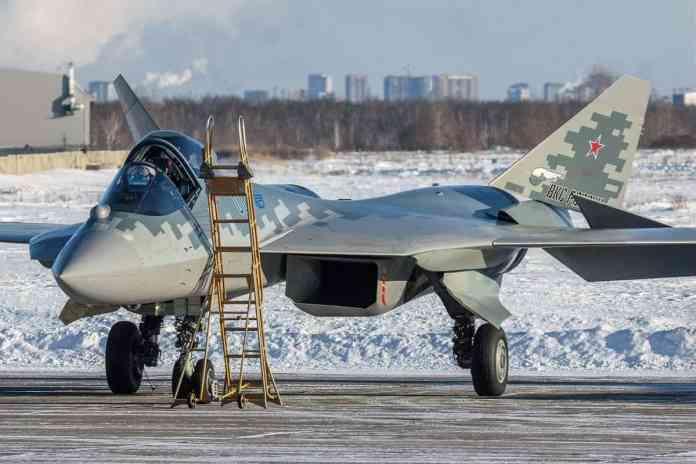
The Sukhoi Su-57 Felon was the Russian initiative to create an excellent stealth fighter of the fifth generation – a single that consisted of a lot of advanced technology that would have taken Russian aerospace back to the front of the news and been able to rival the USA’s top and smartest fighter aircraft, such as the F-22 and F-35. Nevertheless, the plane has not been going well for a long time. Instead of achieving fantastic success, the Su-57 has hit the problems of delays, production issues, and ambiguities about its role in the changing military sphere.

Image Source: Bing Image. License: All Creative Commons

The Su-57 project was started as early as the 2000s under the PAK FA program. It was to create a multi-role fighter that would dominate the air, attack targets on the ground, and perform reconnaissance. It featured stealth technology, a lot of lightweight composite materials, hidden armament bays, and cutting-edge avionics.

Image Source: Bing Image. License: All Creative Commons

The plane was designed to be incredibly maneuverable in the air, with smart systems onboard — some went so far as calling the flight computer an “electronic co-pilot” — and radar spread all across the airframe to watch out for threats coming in from all angles.

Image Source: Bing Image. License: All Creative Commons

Artificial intelligence was built into its communication and data systems so that pilots could get ahead of their competition and make fast decisions under difficult conditions. Russia’s state producers asserted that the technology made it possible for the plane to send encrypted information at high rates, helping to increase reconnaissance and combat effectiveness.

Image Source: Bing Image. License: All Creative Commons

On paper, the Su-57 is impressive. It has a top speed of twice the speed of sound, a range of over 2,000 miles, and can accommodate hypersonic missiles and precise smart weapons. Its sensors can track multiple targets at once, and its artificial intelligence can learn from mission results to be a more effective tactician and help maintain the plane out of harm’s way. Its slender, angled shape with radar-absorbing materials and engines concealed within is intended to make it invisible to enemy radar, especially head-on.

Image Source: Bing Image. License: All Creative Commons

But in reality, it has not been smooth sailing. Sanctions from the West have bitten Russia, keeping it from accessing key components like cutting-edge electronics and special materials employed in order to attain stealth. The Su-57’s radar, which was initially built based on German technology, is most affected. Efforts to replace these components with imports from other countries have not been straightforward, and there is doubt about the availability of these alternatives.

Image Source: Bing Image. License: All Creative Commons

Because of these problems, very few Su-57s are operational. By late 2024, only about 22 had been delivered, including test and production models. Official targets for attaining higher numbers in subsequent years now seem unrealistic. Every Su-57 is a treasure — when one of them was hit in an attack in the Astrakhan region, it was losing an expensive part of Russia’s cutting-edge fighter capability. Replacing these planes is time-consuming and expensive, with limited spares, while Russia churns out more proven aircraft like the Su-30SM2 and Su-35S to fill gaps.

Image Source: Bing Image. License: All Creative Commons

In action, the Su-57 has had a limited role in the war in Ukraine. Russia has been cautious about risking its precious few jets in contested airspace, not wanting to lose expensive, advanced technology and damage the jet’s global reputation. That self-restraint has meant the Su-57 has had little impact so far. Instead, Russia employs upgraded older jets, which may not be as advanced but are abundant and less expensive to repair.

Image Source: Bing Image. License: All Creative Commons

Or vice versa, they have had to wait a considerable time before starting to export to foreign countries. Algeria is the first customer to buy six Su-57E fighter aircraft. Besides that, the pilots are training in Russia, and they’re talking about making more purchases. In part, it is a matter of doing what others in the region who have the most modern fighters are doing. Nevertheless, this order is the only one, and no big sales are expected. In 2018, India, which had originally intended to co-design a fighter jet with Russia, decided to withdraw, being dissatisfied with the stealth and electronic features of the Su-57. Few people can help but feel sympathetic towards the bad-boy reputation the aircraft got from the times it displayed its glaring weaknesses at airshows and from ongoing quality issues in the manufacturing. 

Image Source: Bing Image. License: All Creative Commons

One of the contrasts between the Western competitors and the Russian fighter is the severity and visibility of the different issues with the Su-57. Just to name only one example, the U.S. already produces over a thousand F-35s globally at various locations, all controlled by a massive supply chain and quality assurance regime. While the F-22 and F-35 are the stealth/sensor tech standards of gold with histories of success in modern warfare and very stable flight, Russian planes, although said to be able to cancel out Western air defense, are still considered by most experts as far from being perfect in the stealth area.

Image Source: Bing Image. License: All Creative Commons

Nevertheless, the Kremlin still regards the Su-57 as central to Russia’s military strategy over the long haul. The Kremlin interprets the Su-57 as a national pride masterpiece and a way to keep pace with other powers of similar calibre. However, as the sanctions proceed and with all the production difficulties, the Su-57 is more of a prestige program than a front-line game changer. The global arms market is watching, but for now, Russia’s leading-edge fighter is having trouble flying on the runway and worldwide.

10 Rare WWII Aircraft That Changed Aviation

0
Image Source: Bing Image. License: All Creative Commons

The development of the aviation industry during the Second World War was a major transformation with the most rapid change in technology. Since all the factions in the war were trying to dominate the sky, the engineers were creating the craziest, weirdest, and strangely productive aeronautics that were not previously known. They even surpassed the limits of human capabilities with these machines and, in some instances, were beyond quite a few people’s perception of madness. Here were the ten most amazing and weird planes, and above all, ships with their own independent stories of ambition and genius.

Image Source: Bing Image. License: All Creative Commons

10. Martin PBM-5A Mariner

The PBM-5A Mariner was one of America’s most powerful patrol bombers, even beating the legendary PBY Catalina at several tasks. Designed by the Glenn L. Martin Company, it boasted a gull wing that left its engines above the spray of salt, and retractable wing floats to cut drag. Its bomb bay lay hidden in the fuselage, so it could fly more quickly when weighed down with bombs. Subsequent versions were even equipped with jet-assisted take-off rockets for short, high-angle climbs—ideal for rescue missions in choppy seas. Staffed by nine and equipped with several .50-caliber cannons, the Mariner paid its dues in the Battle of the Atlantic by sinking ten German submarines. Of the over a thousand that were built, just one survives today.

Image Source: Bing Image. License: All Creative Commons

9. Curtiss XP-55 Ascender

The XP-55 Ascender resembled something out of a science fiction strip—its engine was mounted behind the pilot, it featured a canard wing at the front, and dual vertical tails mounted at the end of its wings. The unorthodox “pusher” design was supposed to provide improved visibility and concentrate firepower in the nose. Unfortunately, it had unpredictable stalls and never produced the desired performance. Three were constructed, and two were destroyed in crashes. The one that remains is a testament to how far engineers would push things to experiment.

Image Source: Bing Image. License: All Creative Commons

8. Vought V-173 “Flying Pancake”

The bizarrely endearing V-173 became known by its nickname due to its body being round and flat and its massive propellers—over sixteen feet in diameter each. Conceived by Charles Zimmerman, the plane was able to lift off over an extremely short distance, and with a powerful headwind, it could nearly fly vertically. Its peculiar shape created lift over its entire surface, which provided helicopter-like maneuverability in flight. Although testing was successful, the Navy’s interest was already turned toward more speed-oriented jet aircraft, and the Flying Pancake never entered production.

Image Source: Bing Image. License: All Creative Commons

7. Focke-Wulf 190D “Long Nose”

Designated as the “Langnasen” to German airmen, the Focke-Wulf 190D was an interception-capable high-altitude fighter equipped with a liquid-cooled Jumo 213 engine. Its top speed was raised to approximately 440 mph with this improvement and enabled it to engage Allied bombers at altitude. Equipped with 20mm and 13mm cannons, it was a formidable foe, but wartime production interruptions meant that it was never produced in the quantities that could have made the difference. Now, only a few remain on display in museums. 

Image Source: Bing Image. License: All Creative Commons

6. Nakajima Ki-43 Hayabusa (“Oscar”)

The Ki-43 Hayabusa, or “Peregrine Falcon,” was a long-legged and quick-flying fighter that surprised Allied pilots at the beginning of the war. Highly agile, it was one of Japan’s most ubiquitous fighters, with over 5,900 produced. Early models had no armor or self-sealing fuel tanks, but subsequent improvements corrected those limitations without destroying the plane’s legendary agility. There is only one complete example of the type preserved.

Image Source: Bing Image. License: All Creative Commons

5. Mitsubishi A6M7 Reisen (Zero)

The Mitsubishi Zero was legendary enough for its speed and maneuverability, but the A6M7 model added even more capabilities. It was built for dive-bombing from smaller carriers with strengthened wings and bomb racks instead of a centerline fuel tank. This model was one of the last Zeros to fly, as the war went against the Japanese. Although more than ten thousand Zeros were produced in total, relatively few intact aircraft remain in original condition today.

Image Source: Bing Image. License: All Creative Commons

4. Horten Ho 229

The Ho 229 was in a class by itself—a streamlined jet-propelled flying wing decades ahead of its time. Its unconventional shape cut both drag and radar signature, and its twin jet motors promised up to 600 mph speeds. The aircraft took to the air in prototype in 1944, but the war’s end came before it could go into production. Still, it was one of the most sophisticated ideas to come out of the war.

Image Source: Bing Image. License: All Creative Commons

3. Messerschmitt Me 262

The Me 262 was the first operational jet fighter in the world, and when it emerged, it startled Allied pilots. It had a top speed of around 540 mph and nose-mounted heavy cannons, and could tear through bomber formations before the bombers had time to respond. Reliability and fuel shortages held it back from altering the war, but its design left a gigantic mark on postwar aircraft development.

Image Source: Bing Image. License: All Creative Commons

2. Heinkel He 178 and He 280

The Heinkel He 178 is the first jet plane to have ever flown, which it did in 1939. Following on from this achievement, Heinkel produced the He 280, the first purpose-built turbojet fighter. With a top speed of in excess of 550 mph, the He 280 was a leading contender, but rival designs—such as the Me 262—got to production first. Nevertheless, these initial jets represented the beginning of a new age for flight.

Image Source: Bing Image. License: All Creative Commons

1. Mitsubishi J8M1 Shusui / Ki-200

The number one position is held by the Mitsubishi J8M1 Shusui, a rocket-powered interceptor designed with Germany’s Me 163 Komet as its model. Developed to combat bombers at high altitudes, it was able to ascend to breathtaking heights in just minutes and achieve scorching speeds—but for only five minutes, as the fuel would then be depleted. Technical information from Germany came in pieces, so Japanese engineers had to improvise much of the development. Unfortunately, the prototype crashed during its initial test flight, and it killed the test pilot. The war broke out before the aircraft were further developed.

Image Source: Bing Image. License: All Creative Commons

These planes are a testament to the daring experiments and risky leaps in technology that characterized WWII aviation. Some of them were breakthroughs, some failures, but all left their unique imprint on the history of aviation.

The Elder Scrolls Online: The Ultimate Playground for RPG Fans

0

If you were a fantasy fan who, as a child, would fantasize about elves, dragons, and monumental quests, then The Elder Scrolls Online (ESO) should have been one of the things on your list. On the other hand, if you had a go at it a few years back—with the emphasis on grinding and subscription—you will probably be amazed at the progress it has made. Presently, the game has diminished the tediousness aspect and has amplified building the gigantic, customizable RPG world that caters to everyone, including solo players and hardcore raiders. How an MMO with a niche has turned into one of the most inclusive, content-rich RPGs by ESO, let’s find out.

Image Source: Bing Image. License: All Creative Commons

ESO’s Expansions: Building a World, One Chapter at a Time

ESO’s history is presented in its expansions, which add new zones, features, and occasionally entire classes. Morrowind launched with the Warden class and battleground PvP. Summerset introduced the Psijic Order skill line and jewel-crafting. Elsweyr returned dragons to Tamriel and the Necromancer class. Greymoor took players back to Western Skyrim with vampires, werewolves, and the Antiquities system.

Greymoor’s Antiquities system specifically set the industry standard by allowing prospectors to unearth Mythic items—equipment so potent it revolutionized the way people created their characters.

The momentum did not slow down. Blackwood brought the Companions system, allowing solo players AI companions with personalities and quests of their own. High Isle responded with Tales of Tribute, a collectible card game, along with even more companions. Necrom brought large story reveals alongside new recruitable allies, and the newest expansion, Gold Road, revealed Scribing, a system that allows for skill customization in ways the game has never before.

Systems That Change the Game

ESO expansions serve to do more than just add pretty new places—they frequently remake how the game is played. Consider Antiquities: it’s the sole way to get Mythic gear, which provides special effects that can entirely transform your build. Pieces such as the Ring of the Pale Order, which heals you as you damage things, or Faun’s Lark Cladding, which allows you to run through things while charming them, have been staples for some playstyles.

The Companions system, introduced in Blackwood, also transformed the solo experience. With recruitable characters like Mirri, Ember, and Azandar, you’re no longer forced to adventure alone. These companions aren’t just filler—they level up, learn skills, and respond to your decisions, adding more depth to the world.

Gold Road’s Scribing system is the newest upgrade, allowing the player to customize their skills like never before. It’s a grind to max out, but the reward is the possibility of building a character that’s yours alone.

The Solo Player’s Paradise

ESO excels at solo play. Level scaling means the game never locks you out of content, regardless of your character’s level. You are free to explore anywhere, pursue any questline, and play as you see fit. For soloists, companions bring even more assistance, so Tamriel feels full of life without being a group-play experience.

The Changing Meta: Classes, Builds, and Gear

Similar to any progressive RPG, ESO’s meta changes with every update. Currently, the Arcanist is the PvE raid carry of choice due to its combination of raw power and simplicity, while the Nightblades are best for PvP and healing. Necromancers lost some momentum in the latest update, but they’re still good options.

Mythic items continue to define builds, as pieces such as the Oakensoul Ring, Sea-Serpent’s Coil, and Harpooner’s Wading Kilt provide players with fresh, bold ways to play.

The Player Experience: PvE, PvP, and Everything In Between

ESO succeeds as a casual-friendly MMO RPG. You can play it like a single-player Elder Scrolls game, dive into mid-level group content, or roll into hardcore raiding if that’s your style. PvP has gotten better since the game first came out, but performance issues, particularly in Cyrodiil, persist, so expectations should be managed there.

On the brighter side, performance on next-gen consoles is much smoother, and the game is more alt-friendly than ever. Add to that the stunning sound design and breathtaking zones like Summerset and West Weald, and you’ve got a game that constantly rewards exploration.

ESO’s Place in the RPG Landscape

The Elder Scrolls Online is not an MMO—it’s a living RPG that adjusts to the way you desire to play. You’re either a lore fanatic, a creator of special characters, a collector of mighty equipment, or an explorer who prefers to roam and discover. Whatever you are, ESO has cut out a niche for you. Its growth has brought it closer, more tailored, and more immersive than ever. If you’re searching for a fantasy world to get lost in, ESO still stands as one of the best.

15 Scene-Stealing Supporting Characters

0
Image Source: Bing Image. License: All Creative Commons

Let’s be real: not every showstopper wears the crown of “main character.” Sometimes it’s the sidekick, the villain, or the oddball in the corner who makes us lean forward in our seats and think: yep, this is the one I’ll remember. These are the characters who walk in, deliver a handful of lines (or maybe steal entire episodes), and somehow become the thing everyone’s quoting for years after. Here are 15 movie and TV supporting roles that didn’t merely support the plot, and then they stole the show. 

Image Source: Bing Image. License: All Creative Commons

15. Klaus Daimler – The Life Aquatic with Steve Zissou (Willem Dafoe)

Wes Anderson films are full of offbeat characters, but Willem Dafoe’s Klaus is the icing on the cake. As the insecure but deeply devoted first mate, Klaus is both laugh-out-loud funny and surprisingly poignant. Dafoe commits fully to the character’s vulnerability, providing us with humor and a surprising injection of heart.

Image Source: Bing Image. License: All Creative Commons

14. Emily Charlton – The Devil Wears Prada (Emily Blunt)

Imagine going head-to-head with Meryl Streep and still leaving with the fan favorite crown. That’s what Emily Blunt did. As Miranda Priestly’s beleaguered assistant, her eye-rolling and razor-sharp sarcasm were so good they basically created a new “snarky office sidekick” character.

Image Source: Bing Image. License: All Creative Commons

13. Cat Adams – Criminal Minds (Aubrey Plaza)

Aubrey Plaza is familiar for playing deadpan oddballs, but her role as assassin Cat Adams was a harrowing surprise. Both terrorizing and darkly comedic, Plaza made her episodes must-see TV. Fans eagerly anticipated whenever Cat was back to taunt Spencer Reid, and she never let them down.

Image Source: Bing Image. License: All Creative Commons

12. Dr. King Schultz – Django Unchained (Christoph Waltz)

Tarantino provided us with all sorts of over-the-top characters, but Christoph Waltz’s charming, witty bounty hunter stands alone. He’s commanding from the outset, injecting a peculiar warmth and humor into a grim tale. No surprise that Waltz won an Oscar for the part.

Image Source: Bing Image. License: All Creative Commons

11. Bobby Hicks – The Florida Project (Willem Dafoe)

Willem Dafoe once more, but without quirks and playing grounded. As the manager of the motel struggling to keep things under control, he was the emotional center of Sean Baker’s indie treasure. Dafoe’s performance is tender, gruff, and softly tragic—a contrast to the crazy kids he takes in.

Image Source: Bing Image. License: All Creative Commons

10. Mona Lisa Vito – My Cousin Vinny (Marisa Tomei)

Marisa Tomei shone bright as Vinny’s hard-nosed, wisecracking girlfriend. Her Queens accent, exhaustive knowledge of cars, and blazing one-liners didn’t just provide laughs—she won an Oscar. Confirmation that even the “girlfriend role” can be the best part of a movie when executed properly.

Image Source: Bing Image. License: All Creative Commons

9. Princess Carolyn – BoJack Horseman (Amy Sedaris)

BoJack is the star, but Princess Carolyn is the heart. Working a crazy career, messy relationships, and her constant hustle, she became the character fans loved the most. With Amy Sedaris’s humor and tear-jerking vulnerability, Princess Carolyn became an instant fan favorite.

Image Source: Bing Image. License: All Creative Commons

8. Catwoman – Batman Returns (Michelle Pfeiffer)

Michelle Pfeiffer’s Selina Kyle is sexy, lethal, and infinitely compelling. She took a part that could’ve been cartoonish and made it raw energy. By the time Batman Returns ends, she’s obviously the one whose face you can’t look away from—even Batman recedes into the shadows.

Image Source: Bing Image. License: All Creative Commons

7. Barney Stinson – How I Met Your Mother (Neil Patrick Harris)

What began as a comic relief vehicle soon became the highlight of the show. Neil Patrick Harris’s womanizing, larger-than-life Barney made “suit up!” a catchphrase and brought some of the show’s most poignant moments. Love him or despise him, you watched Barney.

Image Source: Bing Image. License: All Creative Commons

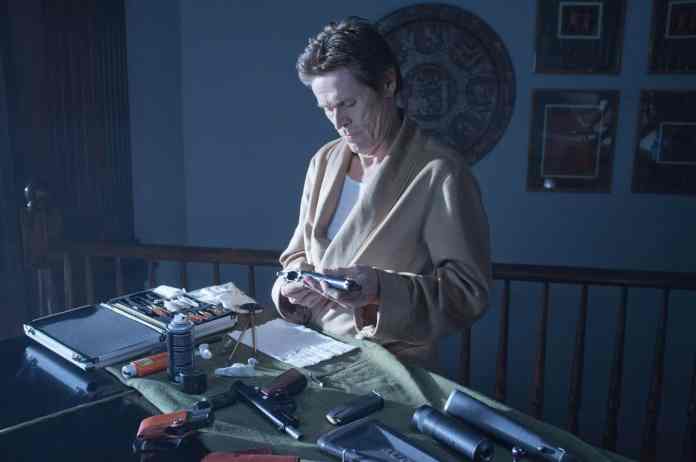
6. Marcus – John Wick (Willem Dafoe)

Yes, Dafoe once more—because scene-stealing is his thing. As John Wick’s mentor and hidden guardian, Marcus brought unexpected depth to an action franchise. His blend of tough love and moral nuance added more emotional heft to Wick’s quest than anyone could have anticipated.

Image Source: Bing Image. License: All Creative Commons

5. Ron Swanson – Parks and Recreation (Nick Offerman)

The mustache. The steak. The woodshop. Ron Swanson was supposed to be Leslie Knope’s cranky opposite number, but Nick Offerman’s deadpan delivery made him a TV legend. Each libertarian tirade and breakfast cuisine fixation solidified his place as one of the funniest and most quotable sitcom stars.

Image Source: Bing Image. License: All Creative Commons

4. The Joker – The Dark Knight (Heath Ledger)

Heath Ledger didn’t steal scenes—he revolutionized the comic book villain’s role. His anarchic Joker brought havoc, fear, and an unforgettable performance that eclipsed even Batman. Ledger’s performance is a benchmark not only in superhero movies but in acting, in general.

Image Source: Bing Image. License: All Creative Commons

3. Dwight Schrute – The Office (Rainn Wilson)

What started as a quirky side character soon became the backbone of The Office. Dwight’s strange sense of reasoning, his pranks, and his unwavering dedication to Dunder Mifflin transformed him into both absurd and lovable. Rainn Wilson made Dwight an icon, and let’s be honest, the real “Assistant Regional Manager” of hearts.

Image Source: Bing Image. License: All Creative Commons

2. Mia Wallace – Pulp Fiction (Uma Thurman)

Mia appears in only a small portion of Pulp Fiction, yet Uma Thurman’s appearance sets the tone for the whole film. From the nostalgic bob to that infamous dance sequence with John Travolta, Mia is mysterious and magnetic—a character who became a pop icon overnight.

Image Source: Bing Image. License: All Creative Commons

1. Captain Jack Sparrow – Pirates of the Caribbean (Johnny Depp)

Technically, the film was meant to center on Will Turner and Elizabeth Swann. Then along came Johnny Depp, swaggering onto the screen, slurring through one-liners, and outright stealing the franchise. Jack Sparrow wasn’t a supporting player—he became Pirates’ heart (and mayhem) and rewrote the rulebook on what a blockbuster supporting character could do.

Image Source: Bing Image. License: All Creative Commons

At the end of the day, it’s usually the so-called “supporting” roles that make movies and TV truly unforgettable. Whether they’re the villains, the comic relief, or just a spark of something different, these characters remind us that sometimes the best stories are told from the sidelines.

10 Stars Who Left Hollywood Behind

0
Image Source: Bing Image. License: All Creative Commons

Let’s be real: life in Hollywood is not all glamour and glitz. Yes, there are red carpets, hefty paychecks, and constant attention, but for certain stars, that limelight shines too brightly. Whether it was burnout, tragedy, or merely a desire for a quieter existence, these celebrities took fans by surprise when they left the acting industry, sometimes temporarily, sometimes for good. Here’s a glance at 10 of Hollywood’s biggest stars who walked away from fame, from number 10 to the number one spot.

Image Source: Bing Image. License: All Creative Commons

10. Grace Kelly

Grace Kelly paved the way before Meghan Markle captured headlines as a Hollywood royal. A true star of the 1950s, she dazzled audiences in Alfred Hitchcock classics and even snagged an Oscar before the age of 26. But at the height of her fame, she gave it all up to marry Prince Rainier III of Monaco. Grace traded scripts for palace life, devoting her time to philanthropy and cultural causes. One of the most renowned leading ladies of her era, she ended up becoming a real-life princess rather than a screen queen.

Image Source: Bing Image. License: All Creative Commons

9. Daniel Day-Lewis

Few thespians have ever rivalled the ferocity or the trophy display case of Daniel Day-Lewis. Renowned for immersing himself fully in characters, he became the sole thespian to win three Best Actor Oscars. And then, having completed Phantom Thread in 2017, he shocked the industry by retiring. Though fans continue to hold out hope he’ll have a change of heart someday, for the time being, the man widely regarded as the greatest living actor appears happy enough away from the camera.

Image Source: Bing Image. License: All Creative Commons

8. Cameron Diaz

Cameron Diaz dominated the box office for two decades, with hits like The Mask, Charlie’s Angels, and There’s Something About Mary. But after her role in Annie (2014), she walked away from acting, deciding Hollywood’s grind wasn’t worth it anymore. Since then, Diaz has focused on health, writing books, and launching her own wine brand. She may not be on movie posters these days, but she’s still thriving just on her own terms.

Image Source: Bing Image. License: All Creative Commons

7. Gene Hackman

Two Oscars and a filmography full of classics make Gene Hackman one of the all-time greats. But in the early 2000s, he retired without fanfare, later solidifying in 2008 that he’d retired from acting period. Instead, he applied his creative talents to writing novels. Although his fans would adore another big-screen appearance, Hackman appears content with the pen rather than the camera.

Image Source: Bing Image. License: All Creative Commons

6. Rick Moranis

For anyone who grew up during the ’80s or ’90s, Rick Moranis was a familiar household name due to Ghostbusters, Spaceballs, and Honey, I Shrunk the Kids. Yet since his wife, Ann Belsky, passed away in 1991, Moranis eased himself out of Hollywood to care for their children. He’s done some voice work here and there since then, but otherwise stayed out of the public eye. It wasn’t so much that he gave up fame as that he chose family first.

Image Source: Bing Image. License: All Creative Commons

5. Michael J. Fox

Michael J. Fox captivated audiences on Family Ties with Alex P. Keaton and became an icon with Back to the Future. Even after a diagnosis of Parkinson’s disease in the ’90s, he worked for years. But in 2020, he announced that his condition made it impossible to memorize lines, and he formally retired. These days, his energy is devoted to his family and his foundation, which has brought in millions for Parkinson’s research.

Image Source: Bing Image. License: All Creative Commons

4. Mara Wilson

Mara Wilson was among the most recognizable child stars of the ’90s, courtesy of Mrs. Doubtfire, Miracle on 34th Street, and her breakout role in Matilda. But in Hollywood, behind the cameras, things were not so kind. Between unattainable beauty ideals and losing her mother at a tender age, she decided to step away. Today, Wilson has rebranded herself as an author and voice actor, with a life far removed from the limelight of child stardom.

Image Source: Bing Image. License: All Creative Commons

3. Frankie Muniz

Frankie Muniz transitioned from indie darling to household name playing Malcolm in the Middle. Rather than pursuing additional acting work, he turned to his true interests: racecar driving and music. Today, he’s more apt to be at the wheel or operating a business than on a movie lot. Although he appears sporadically here and there, Muniz has gladly eschewed Hollywood as his day job.

Image Source: Bing Image. License: All Creative Commons

2. Ke Huy Quan

Decades before his Oscar-winning resurgence, Ke Huy Quan was a popular child actor in Indiana Jones and the Temple of Doom and The Goonies. But as he matured, Hollywood ceased to cast him, particularly in ubstantial roles for Asian actors. So he retreated behind the scenes, serving as a stunt coordinator and assistant director for decades. His victorious return with Everything Everywhere All at Once decades later is a testament that talent never actually fades.

Image Source: Bing Image. License: All Creative Commons

1. Brendan Fraser

Brendan Fraser was at one time the world’s most bankable star, with hits such as George of the Jungle and The Mummy setting him up as a favorite among fans. Yet the physical demands of action films, coupled with addictions and a traumatic experience with the Hollywood Foreign Press Association, drove him out of the limelight. After years of virtual absence, he came back in The Whale with a jaw-dropping upset, winning an Oscar and reclaiming fans who had sorely missed him. Fraser’s tale is not one of departure from Hollywood; it’s one of comeback, more powerful than ever.

Image Source: Bing Image. License: All Creative Commons

Hollywood careers seldom go in a straight line, and the boldest move of all is sometimes leaving the stage. Whatever they did, retired at the height of their career, turned their attention to family, or discovered new interests, these stars suggest that fame isn’t all. Sometimes life itself is the greatest role of all.

Nintendo Switch 2: Ushering in a New Era of Gaming

0

It’s been just as debated as part of the company’s success and failure, the history of gaming hardware at Nintendo. Nintendo’s success with the Wii was nothing short of spectacular; on the other hand, the company also went a long way with the Wii U in the opposite direction. Consequently, the mood around new console announcements is still so divided, which is a little surprising. Still, it looks like the Switch 2 will be the reason for Nintendo’s comeback at the top of the playing field, not only because the company is out of its past mistakes, but also more in line with the current gamers’ needs.

Image Source: Bing Image. License: All Creative Commons

A Hybrid Success Story

While Nintendo might not have been as successful in the home console, it still managed to be a handheld gaming giant for years. However, the first Switch changed the game entirely by effectively merging the two worlds. In fact, not only was its hybrid nature clever, but it also made sense. In other words, portability was not merely a selling point anymore but a central feature, and that flexibility was what made the Switch reach such a wide variety of people.

Among other things, the gaming industry itself has undergone a radical transformation since the Wii U period. The modern consumer expects a high level of standardization. For instance, they want their libraries, DLC, and save data to be able to migrate seamlessly from one console to another. In the words of one expert, “It is becoming very difficult to persuade players to switch between the different generations when games that they like to play are still running perfectly on their old consoles.” Backwards compatibility has evolved to be the standard.

Backwards Compatibility as a Starting Point

Fortunately, Nintendo does appear to realize that. The Switch 2 will natively support both physical and digital Switch games. That alone provides it with a huge advantage. Instead of coming out with a meager initial range of new games, the Switch 2 will have thousands of games available immediately. High-profile future releases like Metroid Prime 4 and Pokémon Z-A are already committed to the new hardware, giving it a healthy launch.

But that huge library comes with its own headaches. When the first Switch shipped, it had minimal third-party competition, allowing early exclusives to take center stage. This time around, the Switch 2 will find itself in a much more populated ecosystem. With Microsoft already announcing Call of Duty support and other publishers sure to follow suit, competition for player eyeballs will be intense.

A Power Boost Where It Counts

Spec-wise, the bar is higher than ever. The first Switch was great for its era, but in terms of hardware, it’s now surpassed by things like the Steam Deck. As much as Nintendo usually doesn’t pursue bleeding-edge performance, the Switch 2 should at least keep up with something like the PlayStation 4 Pro or Xbox One X—a fair benchmark for games these days.

4K resolution is also in the cards, particularly with the majority of homes now having 4K televisions. Instead of emphasizing native 4K, Nintendo will depend on Nvidia’s DLSS (Deep Learning Super Sampling) tech. This AI-driven upscaling technique could provide a visual enhancement for both new and current games without calling for premier processing capability. That would imply that older titles such as Breath of the Wild or Super Mario Odyssey might appear crisper and perform better without requiring a complete remake. 

New Tricks for a Familiar Form Factor

There’s also a rumor of innovations in how the Switch 2 interacts with TVs. Wireless connectivity has been rumored, eliminating clunky docks and cables. It’s like a more mature version of the Wii U’s two-screen strategy but with an emphasis on convenience over attachment. Picture playing Mario Kart where one player is on the TV and the other is on the handheld screen—no split-screen required.

And it’s not merely visual. The Switch 2’s improved hardware should make everything run better overall. It’s reported that most current Switch games will load more quickly and play smoothly on the new console, even without dedicated updates. That being said, frame rate caps and other in-game restrictions will still be present unless developers update and optimize their games.

A Digital Shift in Nintendo’s Strategy

Nintendo’s vision for online services and digital content is changing, too. Physical games remain its core business, but digital uptake is increasing. More recent experiments—such as surprise multiplayer trials and a new music app—hint at a more significant and inventive digital future. Such services might have a greater part to play in constructing sustained enthusiasm for Switch 2.

One difficulty? Nintendo’s first-party slate. The original Switch received a tranche of Wii U ports and high-profile exclusives. This time, Nintendo is increasing its in-house development teams and collaborating with third-party developers to keep the momentum going, but establishing that content pipeline requires time.

The market itself has shifted, too. The initial Switch benefited from debuting just as there was a worldwide trend toward home-based entertainment. Without such a wind at its back this time, Nintendo will have to rely more than ever on innovation and reliability to keep players engaged.

A Platform Built for the Future

Nevertheless, Nintendo has a significant edge: a huge, engaged player base. The company just announced 127 million annual active users—more than ever. And if those players can bring their purchases and progress along with them to a new device, adoption is an easier sell.

The Switch 2 doesn’t have to move 150 million units to be a success. By focusing on backwards compatibility, improved performance, and digital growth, Nintendo is putting itself in a position for long-term success. This isn’t a new console—it’s an intelligent refinement of a platform that already revolutionized the way people play.