Home Blog Page 265

15 Blumhouse Movies That Left the Biggest Mark on Horror Cinema

0
Image Source: Bing Image. License: All Creative Commons

Blumhouse has carved a unique niche in horror cinema, turning low-budget ingenuity into some of the most memorable, talked-about films in recent decades. Whether it’s chilling psychological terror, social commentary wrapped in genre thrills, or pure, adrenaline-pumping scares, Blumhouse knows how to make audiences scream—and think—at the same time.

Image Source: Bing Image. License: All Creative Commons

From quiet, unsettling dread to blockbuster spectacle, their films are often as clever as they are frightening. Here’s a reverse-order countdown of the 15 Blumhouse horror movies that have left the biggest mark on audiences and the genre itself, whether through innovation, cultural impact, or sheer memorability.

Image Source: Bing Image. License: All Creative Commons

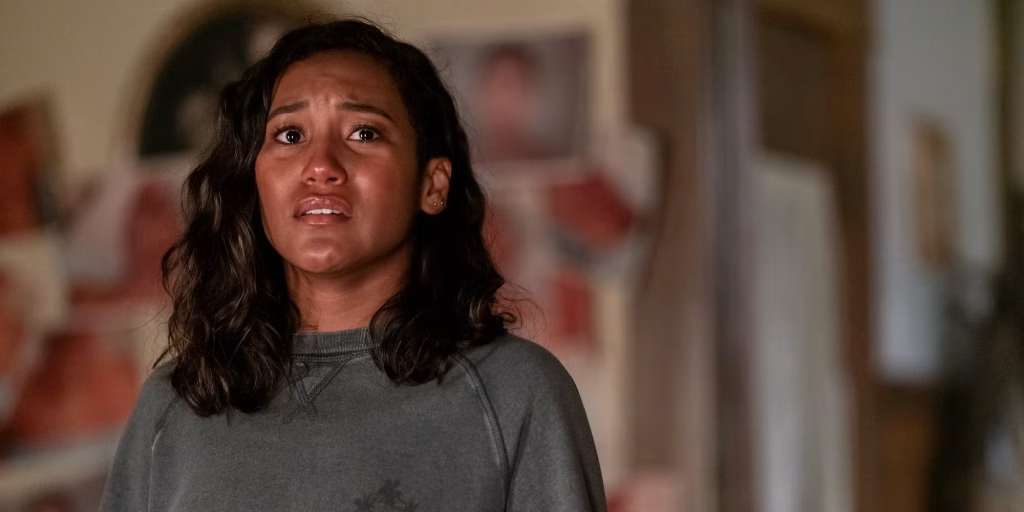
15. Soft & Quiet

Beth de Araújo’s Soft & Quiet is a tense, real-time thriller that’s as uncomfortable as it is masterful. The film follows a small gathering of white supremacist women that spirals into escalating violence, all captured in a single, continuous take. The minimalism of the production—focused on real-time events and personal interactions—creates an intimacy that makes the violence feel disturbingly immediate. It’s a film that forces viewers to sit with their unease rather than offering easy catharsis.
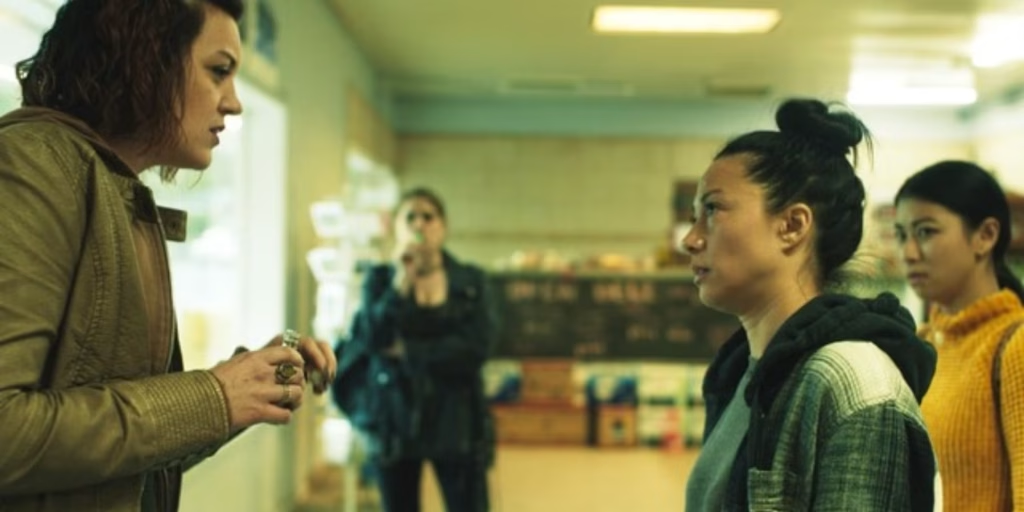
Image Source: Bing Image. License: All Creative Commons

More than just a story about literal horror, the movie engages with cultural and social fears, exploring how ideology can manifest in everyday settings and turn mundane interactions terrifying. Its impact lies in its unflinching commitment to realism and tension, proving that horror doesn’t always need monsters—it can come from human cruelty and groupthink.

Image Source: Bing Image. License: All Creative Commons

14. Creep 2

Mark Duplass returns in Creep 2 as the socially awkward, deeply unsettling serial killer from the first film, and this time his character wrestles with existential ennui and loneliness. The sequel expands the psychological tension, pairing Duplass’s charm and creepiness with Desiree Akhavan’s equally fearless presence. Their interaction builds suspense that’s as much about uncomfortable social dynamics as it is about danger.

Image Source: Bing Image. License: All Creative Commons

The brilliance of the film lies in its exploration of loneliness, obsession, and human connection in the context of horror. With long takes and restrained pacing, the tension grows organically, making each moment feel like a slow, escalating nightmare. It’s proof that horror can thrive in the quiet spaces between words, and that a truly compelling villain can be just a human being with disturbingly relatable desires.
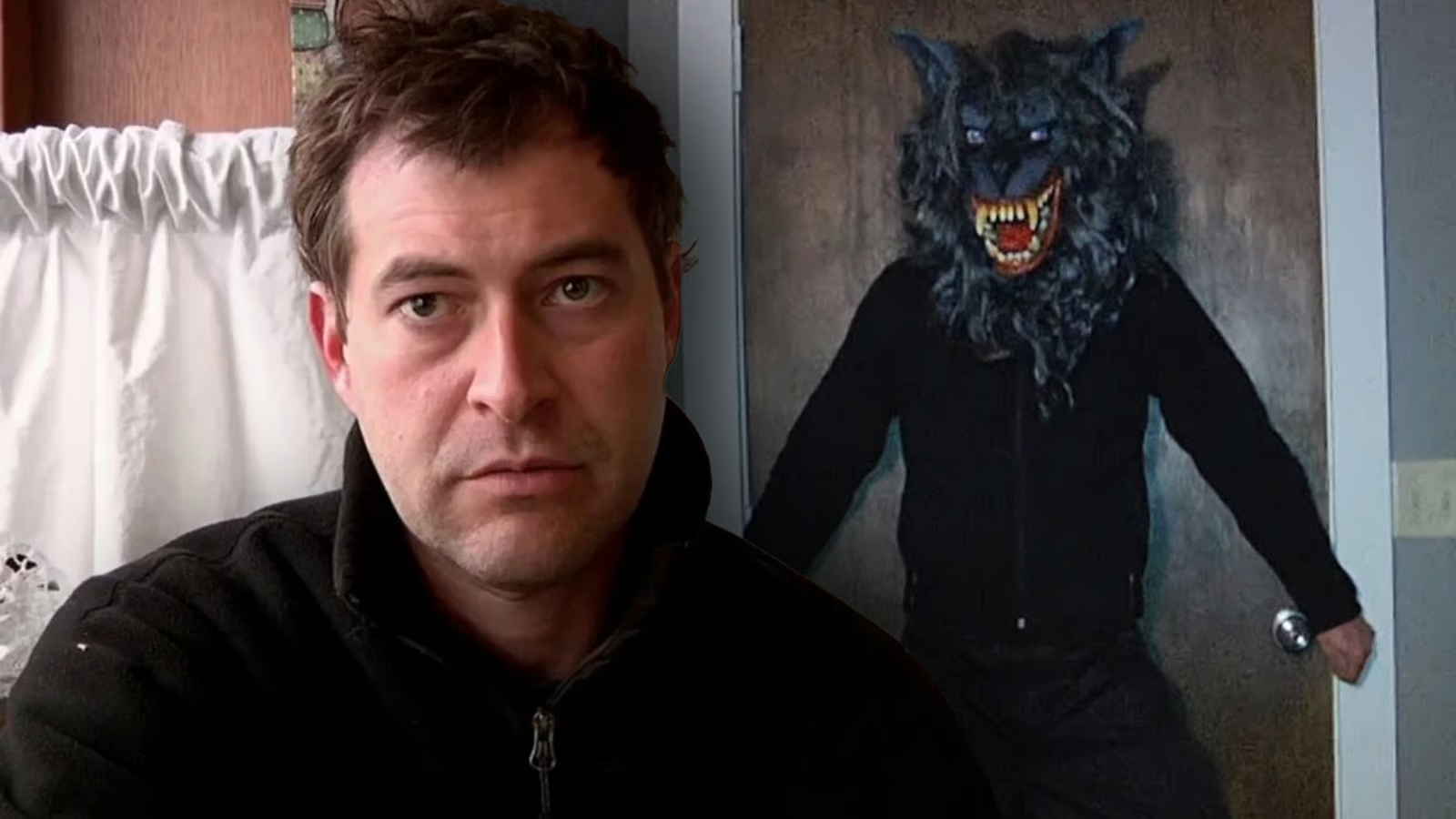
Image Source: Bing Image. License: All Creative Commons

13. Creep

The original Creep introduced audiences to the found-footage horror format executed with meticulous precision. Patrick Brice’s character unknowingly invites himself into the home of Duplass’s unsettling Craigslist client, and what follows is a study in unease. The low-budget aesthetic enhances the realism, making every awkward interaction, misplaced gesture, and long, silent moment feel laden with dread.

Image Source: Bing Image. License: All Creative Commons

It’s a film that thrives on psychological tension rather than gore, and its slow-burning pacing allows the audience to feel the protagonist’s growing discomfort. The intimacy of the camera makes viewers complicit in the situation, a technique that set Creep apart from many other horror films of its time and cemented its place as a standout Blumhouse entry.

Image Source: Bing Image. License: All Creative Commons

12. Nanny

Anna Diop shines in Nanny, a film that blends psychological horror with elements of West African folklore. The story follows a woman navigating displacement, cultural isolation, and the emotional toll of caregiving, while supernatural forces loom subtly in the background. Nikyatu Jusu balances the real-world anxieties of the protagonist with eerie, otherworldly events, creating a story that is both grounded and terrifyingly surreal.
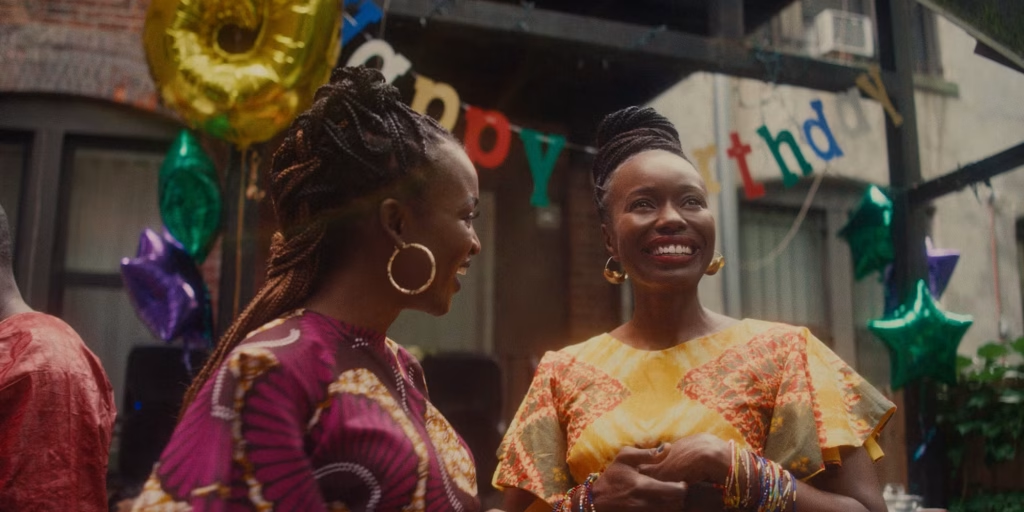
Image Source: Bing Image. License: All Creative Commons

What makes the movie particularly impactful is its focus on personal and cultural stakes. The horror is deeply human at its core, exploring the cost of migration, motherhood, and identity, and wrapping these themes in a suspenseful narrative that lingers long after the credits roll. It proves that horror can be both socially resonant and deeply unsettling.

Image Source: Bing Image. License: All Creative Commons

11. M3GAN

Move over, classic killer dolls—M3GAN is here. Blumhouse, alongside James Wan and Jason Blum, delivers a film that’s equal parts campy fun and social commentary. M3GAN, a hyper-intelligent robotic companion, becomes a meme-worthy sensation thanks to her deadly antics, but the film cleverly explores issues of modern parenting, screen addiction, and our reliance on technology for companionship and emotional support.

Image Source: Bing Image. License: All Creative Commons

The movie thrives because it balances laughs, suspense, and horror in a way that appeals to a broad audience. The choreography, especially the viral dance scene, shows that Blumhouse understands how to merge spectacle with storytelling. M3GAN isn’t just a killer doll—it’s a reflection of our contemporary anxieties in an accessible, entertaining package.

Image Source: Bing Image. License: All Creative Commons

10. The Invisible Man

Leigh Whannell’s The Invisible Man reinvents a classic horror icon with a contemporary lens, turning the story into a tense psychological thriller about control, abuse, and gaslighting. Elisabeth Moss delivers a career-best performance, embodying a woman navigating fear and trauma while being hunted by someone who appears untouchable. The tension in every scene is palpable, making the audience feel every moment of paranoia and dread alongside her.

Image Source: Bing Image. License: All Creative Commons

The brilliance of the film lies in its use of absence as a threat—the unseen becomes more terrifying than anything visible, turning ordinary spaces into arenas of terror. By blending social commentary with traditional horror tropes, The Invisible Man shows that suspense and psychological depth can elevate genre storytelling to something profoundly affecting.

Image Source: Bing Image. License: All Creative Commons

9. Cam

Cam tackles horror in the digital age, exploring identity, obsession, and online duplicity. Madeline Brewer plays a camgirl whose life is upended when a perfect digital version of herself begins taking over her online presence. The story is both unnerving and topical, highlighting the eerie vulnerabilities inherent in a world dominated by screens, social media, and performative intimacy.

Image Source: Bing Image. License: All Creative Commons

Beyond the technological thrills, the film is a tense psychological character study. Brewer’s layered performance conveys panic, ingenuity, and isolation, while the horror emerges naturally from a familiar, seemingly safe environment turned threatening. It’s a modern story of selfhood, performance, and the uncanny power of digital doubles.

Image Source: Bing Image. License: All Creative Commons

8. Sweetheart

J.D. Dillard’s Sweetheart brings survival horror to an isolated tropical setting, where Kiersey Clemons must outwit a terrifying sea creature after being stranded. The film fuses elements of classic monster movies with a contemporary psychological sensibility, emphasizing tension, resourcefulness, and human vulnerability. Every night, the protagonist faces fear amplified by isolation, fatigue, and environmental hazards.
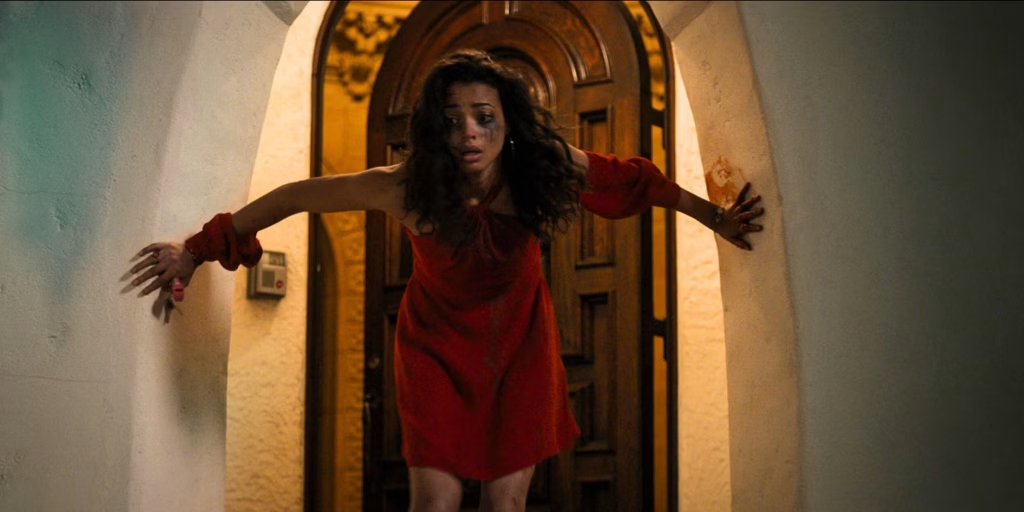
Image Source: Bing Image. License: All Creative Commons

The story’s power comes from its combination of minimalist storytelling and primal fear. Dillard uses natural settings, sound design, and Clemons’s anchored performance to create a claustrophobic, high-stakes scenario. Sweetheart reminds audiences that isolation itself can be a form of horror, even before the monsters appear.

Image Source: Bing Image. License: All Creative Commons

7. The Vigil

Keith Thomas’s The Vigil merges supernatural horror with deep cultural context, following a man tasked with watching over a deceased body overnight, only to confront malevolent forces. The movie’s strength lies in its blend of folklore, ritual, and psychological tension, providing fresh material within the familiar haunted-house framework.

Image Source: Bing Image. License: All Creative Commons

Dave Davis anchors the film with a performance that balances fear, disbelief, and moral responsibility, making viewers feel the weight of his nightly vigil. The supernatural elements are both terrifying and thematically resonant, exploring grief, guilt, and spiritual reckoning. The Vigil is proof that cultural specificity can enrich horror without sacrificing universal scares.
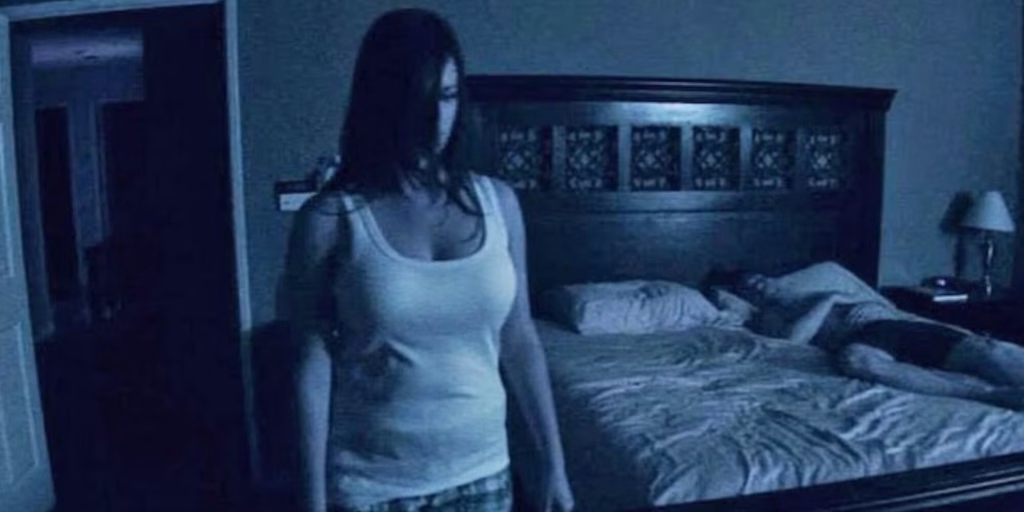
Image Source: Bing Image. License: All Creative Commons

6. Paranormal Activity

Oren Peli’s Paranormal Activity transformed low-budget filmmaking into a horror powerhouse. The minimalist found-footage approach relied on subtle, creeping dread rather than blood or shock value, making every flicker, whisper, and shadow terrifying. The film became a cultural phenomenon, demonstrating that atmosphere and suspense could outweigh spectacle.
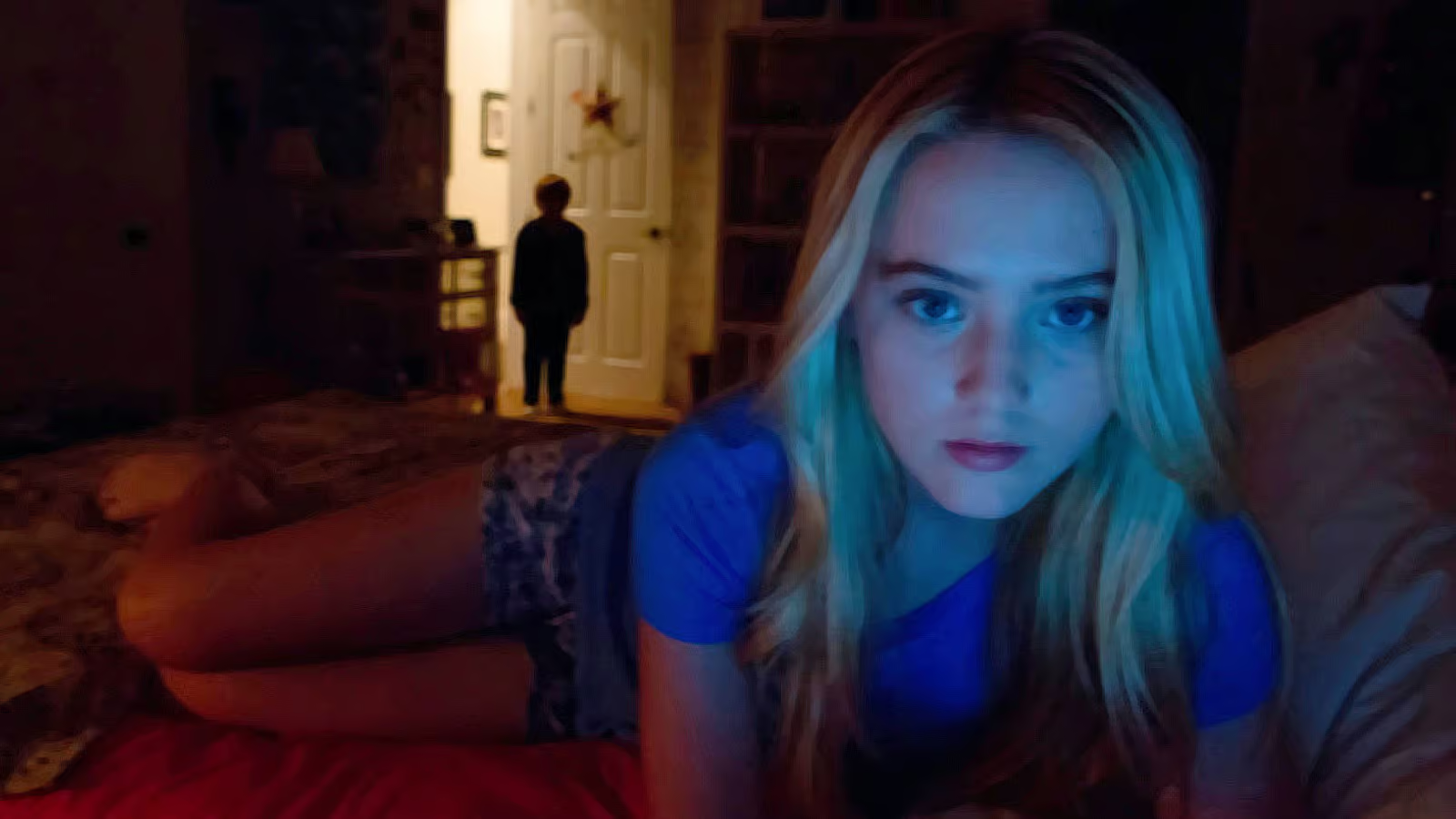
Image Source: Bing Image. License: All Creative Commons

Its legacy is undeniable: it spawned numerous sequels, inspired imitators, and turned ordinary household spaces into vessels of fear. Watching the seemingly mundane become sinister reminds audiences that horror doesn’t require grandiose monsters—sometimes, tension is enough to keep viewers up all night.

Image Source: Bing Image. License: All Creative Commons

5. Hush

Mike Flanagan’s Hush delivers a masterclass in tension, placing a deaf and mute protagonist at the center of a home-invasion scenario. Kate Siegel’s performance makes the audience acutely aware of the character’s vulnerability while also showcasing her resourcefulness. Every noise, shadow, and movement becomes heightened, turning the familiar home into a suspenseful maze.

Image Source: Bing Image. License: All Creative Commons

By removing spoken dialogue, the film intensifies viewer immersion, relying on visual storytelling, sound design, and physical performance to convey terror. Hush demonstrates that horror can be both innovative and emotionally gripping without relying on overt gore or exposition.
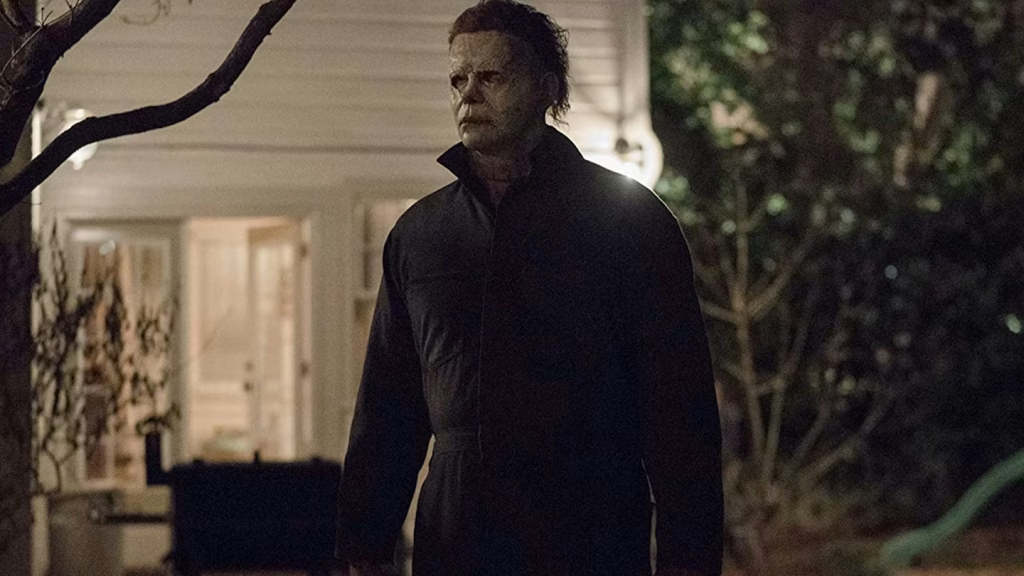
Image Source: Bing Image. License: All Creative Commons

4. Halloween (2018)

David Gordon Green’s Halloween revitalizes the iconic franchise with a back-to-basics approach, bringing Jamie Lee Curtis back as Laurie Strode. The film strips away decades of convoluted sequels to focus on primal fear, survival, and the unstoppable menace of Michael Myers. Carpenter’s involvement in the score and tone ensures that this reboot feels respectful yet thrillingly contemporary.
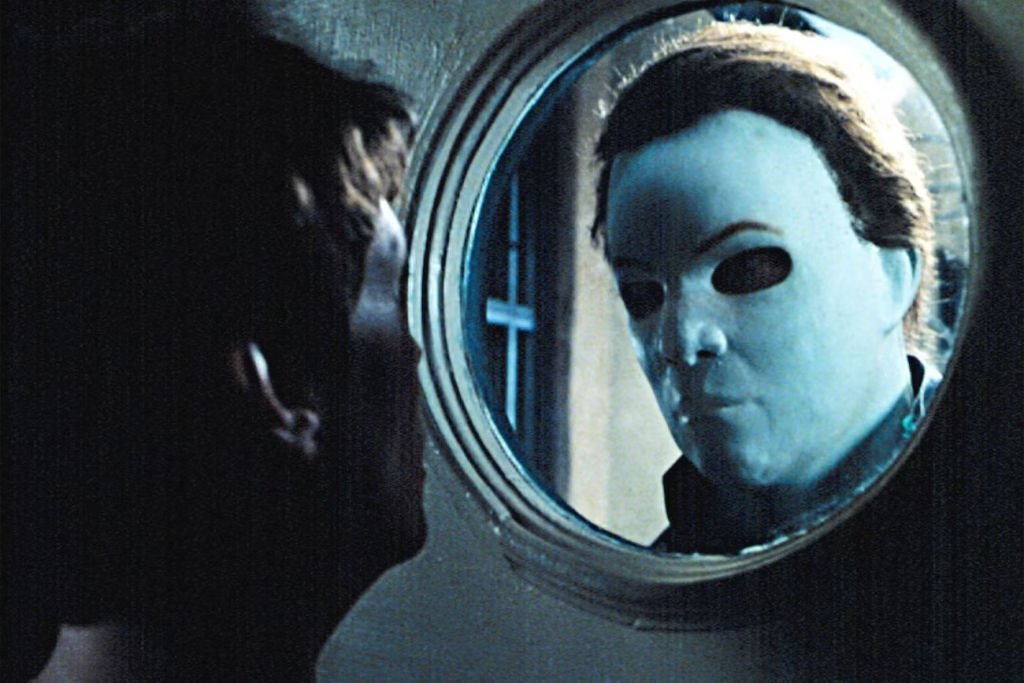
Image Source: Bing Image. License: All Creative Commons

The movie succeeds because it balances nostalgia with tension, giving longtime fans the scares they expect while introducing suspenseful pacing and character-driven stakes. It’s a masterclass in legacy franchise filmmaking that respects the past while asserting its own relevance.

Image Source: Bing Image. License: All Creative Commons

3. Us

Jordan Peele’s Us expands his exploration of horror and social commentary, following a family confronted by terrifying doppelgängers. Lupita Nyong’o’s dual performance is extraordinary, anchoring a film that examines identity, privilege, and the darkness lurking within society itself. Peele’s visual storytelling and careful attention to symbolism make the narrative rich with interpretive depth.

Image Source: Bing Image. License: All Creative Commons

The horror in Us is as much psychological as it is visceral. Scenes of tension, dread, and the uncanny interplay between characters elevate it beyond simple jump scares. It’s a thought-provoking horror experience that rewards repeated viewing and analysis, cementing Peele’s place as one of modern horror’s most ambitious directors.

Image Source: Bing Image. License: All Creative Commons

2. Get Out

Get Out is a watershed moment in horror cinema. Jordan Peele’s debut blends sharp social commentary with suspenseful storytelling, exploring racism and exploitation through the lens of a home-invasion horror scenario. Daniel Kaluuya’s performance conveys a mix of fear, intelligence, and resilience, guiding viewers through a tense narrative filled with both subtle and overt threats.
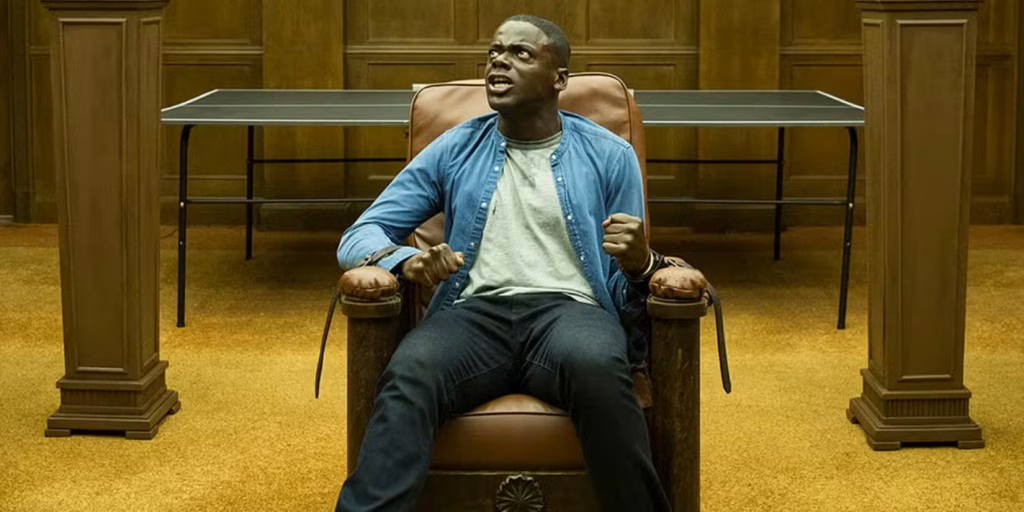
Image Source: Bing Image. License: All Creative Commons

The film’s impact extends beyond horror, influencing discussions around race, genre, and narrative innovation. By combining satire, suspense, and deeply felt characterization, Get Out became a cultural touchstone, proving that genre films can carry both entertainment value and profound societal critique.

Image Source: Bing Image. License: All Creative Commons

1. Nope

Jordan Peele’s Nope pushes genre boundaries, delivering a UFO-centered spectacle with wide-open cinematic landscapes. Keke Palmer and Daniel Kaluuya lead the cast with compelling performances that balance tension, awe, and human vulnerability. Peele’s command of pacing, framing, and suspense transforms what could have been a conventional thriller into a visually stunning and emotionally resonant experience.

Image Source: Bing Image. License: All Creative Commons

The film’s impact lies in its blending of spectacle and social commentary, reflecting on humanity’s obsession with spectacle, exploitation, and survival instincts. With jaw-dropping visuals, unforgettable set pieces, and moments of pure tension, Nope solidifies Peele’s status as one of the most innovative voices in contemporary horror.

Image Source: Bing Image. License: All Creative Commons

Blumhouse has redefined what modern horror can be, blending psychological depth, social relevance, and inventive scares in ways few studios can replicate. From intimate, character-driven nightmares to big-budget thrillers that command IMAX screens, these 15 films showcase the studio’s versatility and lasting influence.
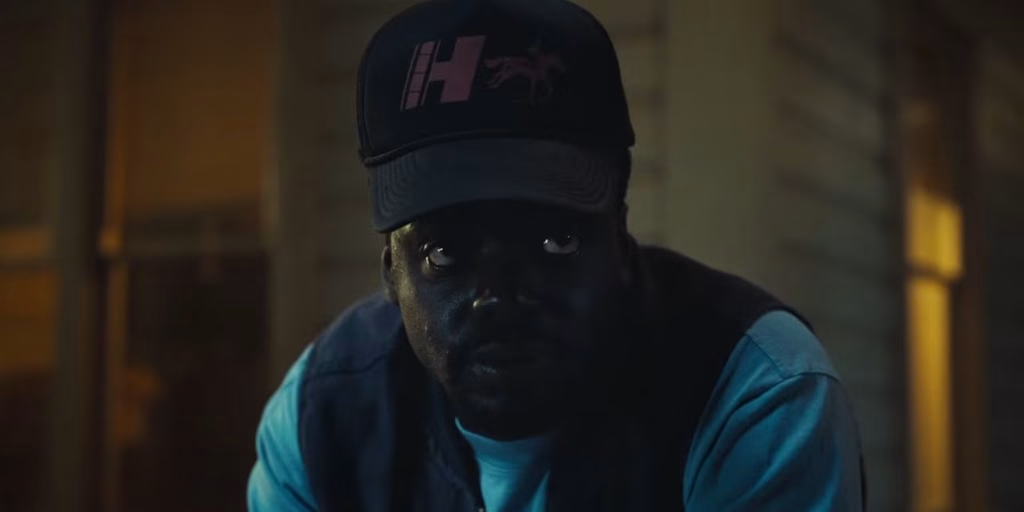
Image Source: Bing Image. License: All Creative Commons

Whether you’re here for the tension, the cultural commentary, or the sheer audacity of killer dolls and invisible threats, Blumhouse continues to prove that horror can be smart, impactful, and undeniably entertaining—one terrifying story at a time.
15 Best Sci-Fi Movies and Shows Right Now

0
Image Source: Bing Image. License: All Creative Commons

Science fiction is having a moment and not just the flashy, effects-driven kind. Right now, the genre is overflowing with stories that ask big questions about technology, identity, community, and what it really means to be human. From animated gems to massive franchises and thoughtful TV epics, these are 15 of the best sci-fi movies and shows you can watch right now.

Image Source: Bing Image. License: All Creative Commons

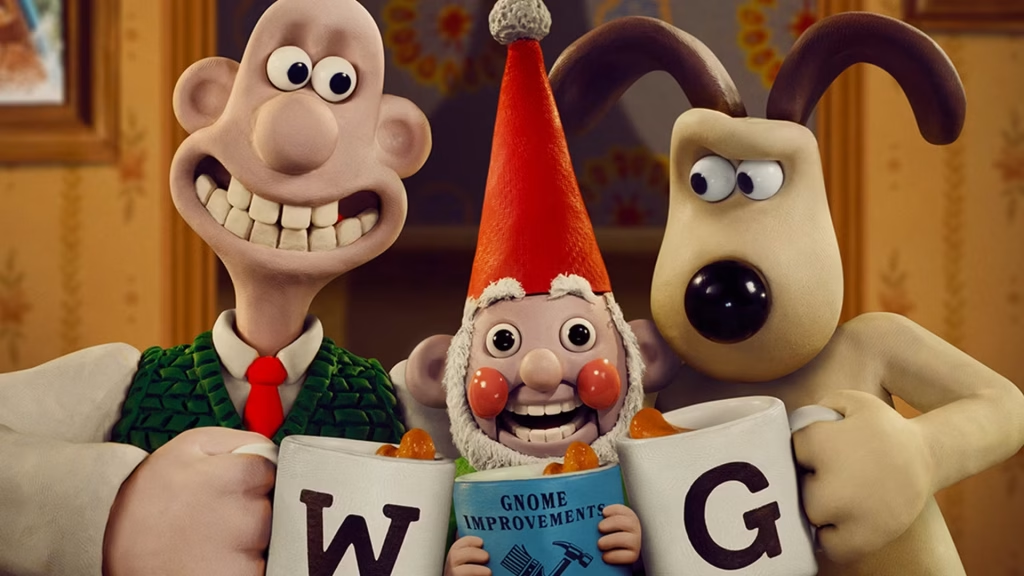
15. Wallace and Gromit: Vengeance Most Fowl

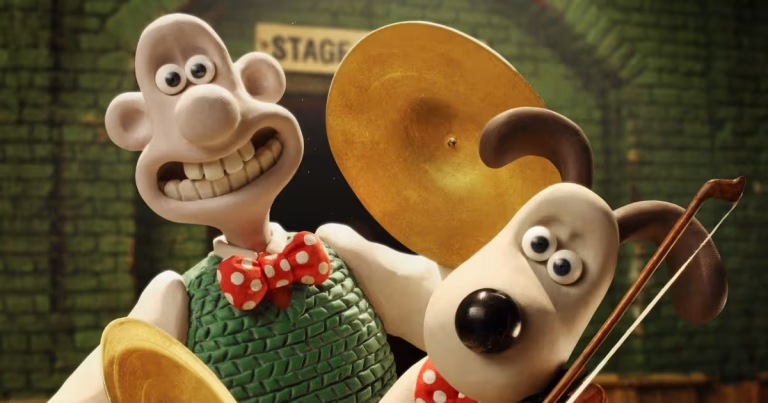
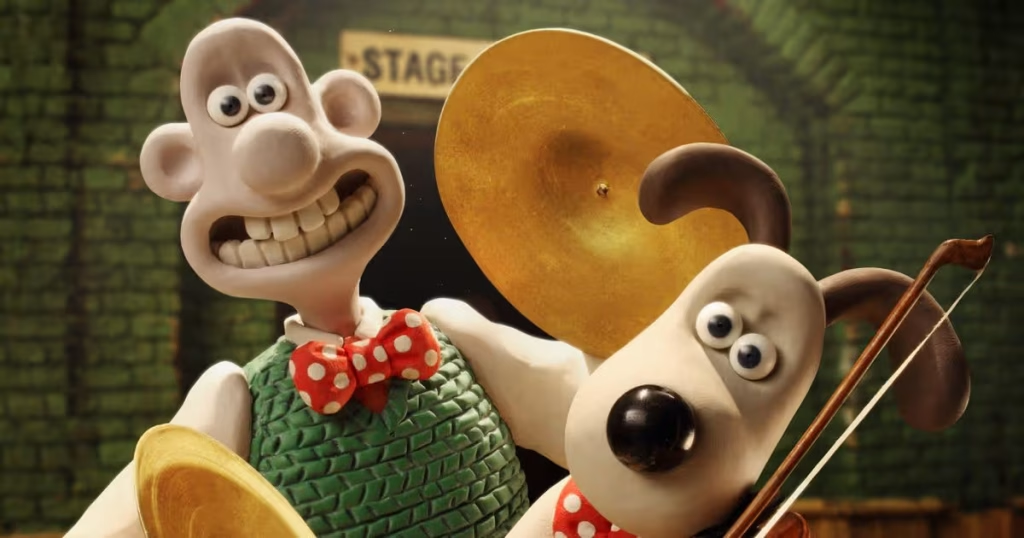
Wallace and Gromit have always mixed whimsy with clever ideas, but Vengeance Most Fowl leans harder into timely themes than ever before. At its heart, this charming stop-motion adventure aims to address technological overreach, especially when innovation starts replacing creativity, connection, and care.

Image Source: Bing Image. License: All Creative Commons

While Wallace remains blissfully obsessed with his gadgets, Gromit fights to protect his chaotic, living garden from the cold efficiency of the robotic Norbot. It’s a simple conflict that carries real emotional weight, acting as a metaphor for art made by hand versus automation without heart. Funny, warm, and surprisingly thoughtful, this entry proves the duo still has plenty to say in the age of AI.

Image Source: Bing Image. License: All Creative Commons

14. Transformers One

Transformers One refreshes the long-running franchise by going back to the beginning, this time through animation. Beneath the explosive action is a surprisingly layered origin story about friendship, power, and ideology.

Image Source: Bing Image. License: All Creative Commons

Rather than a straightforward heroes-versus-villains tale, the film frames the conflict as a philosophical split, drawing clear parallels between Optimus Prime and Megatron as former allies shaped by different visions of justice. The political undertones feel bold for a mainstream animated release. Even viewers unfamiliar with Transformers lore can jump in, making this both an accessible entry point and a rewarding expansion of the mythos.

Image Source: Bing Image. License: All Creative Commons

13. The Wild Robot

The Wild Robot manages to be gentle, adventurous, and emotionally rich all at once. The story follows Roz, a robot who gradually finds purpose not through programming, but through caring for others in a wild, animal-filled environment.

Image Source: Bing Image. License: All Creative Commons

As Roz becomes a mother figure and leader, the film explores identity, adaptation, and belonging. Characters like Bright Bill, a goose forced to survive outside his nature, add unexpected emotional depth. It’s the rare animated sci-fi that works just as well for adults as it does for kids, quietly devastating in the best way.

Image Source: Bing Image. License: All Creative Commons

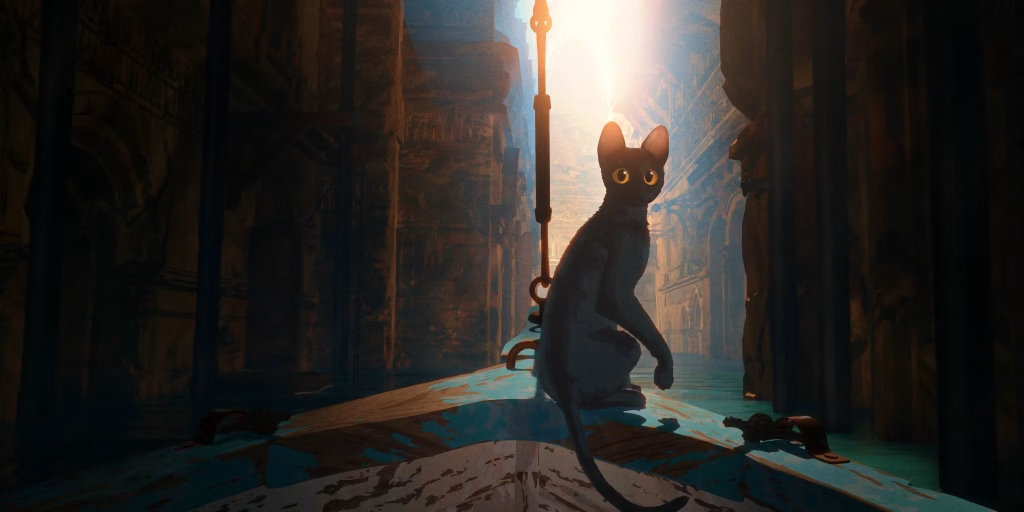
12. Robot Dreams

Told entirely without dialogue, Robot Dreams is a beautiful meditation on friendship, loss, and time. The film follows a lonely dog and his robot companion as their bond is tested by circumstance and change.

Image Source: Bing Image. License: All Creative Commons

Small visual moments carry enormous emotional weight, from the robot forming connections with birds to dreamlike musical sequences filled with nostalgia. The recurring use of “September” adds a bittersweet emotional anchor. It’s a reminder that sci-fi doesn’t need exposition or spectacle to hit hard,d it just needs honesty.

Image Source: Bing Image. License: All Creative Commons

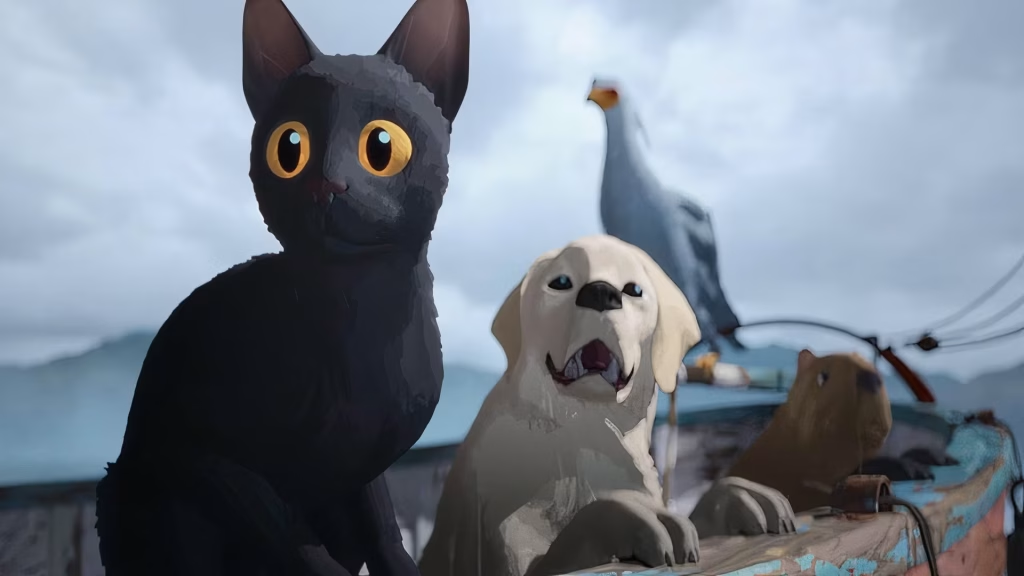
11. Flow

Flow is a visually arresting animated film that places animals at the center of a post-disaster world. With no spoken language, the story relies on movement, sound, and behavior to convey survival and cooperation.

Image Source: Bing Image. License: All Creative Commons

The animation, created using Blender, feels immersive and natural, capturing how animals communicate without words. While danger is ever-present, the film leans toward hope rather than despair. By removing humans from the spotlight, Flow offers a refreshing, eco-conscious take on science fiction storytelling.

Image Source: Bing Image. License: All Creative Commons

10. ME

Don Hertzfeldt’s ME is only 22 minutes long, but it leaves a lasting impression. Using minimalist stick-figure animation and an eclectic score, the short explores how modern technology feeds isolation and self-obsession.

Image Source: Bing Image. License: All Creative Commons

There’s no dialogue, just images that spiral into deeply unsettling territory. The film feels both absurd and painfully sincere, capturing the loneliness of retreating inward in a hyper-connected world. It’s strange, funny, and quietly devastating, classic Hertzfeldt in the best way.

Image Source: Bing Image. License: All Creative Commons

9. Omni Loop

Omni Loop uses time travel not as a puzzle to solve, but as a lens for grief, regret, and intergenerational connection. Zoya, facing terminal illness, reflects on the lives she never lived, while Paula searches for meaning in her own uncertain future.

Image Source: Bing Image. License: All Creative Commons

Their bond becomes the emotional core of the film, touching on feminism, legacy, and the wisdom passed between women. The sci-fi elements stay grounded, serving the characters rather than overshadowing them. It’s intimate, thoughtful, and far more emotionally complex than its indie budget might suggest.

Image Source: Bing Image. License: All Creative Commons

8. A Quiet Place: Day One

Rather than focusing on survival at all costs, A Quiet Place: Day One asks a more haunting question: What do you live for when the world is ending? Lupita Nyong’o delivers a powerful performance as Sam, a woman facing both terminal illness and an alien invasion.

Image Source: Bing Image. License: All Creative Commons

Her priorities feel refreshingly human, and her bond with her cat adds unexpected tenderness. The scares are effective, but it’s the existential undertone that makes this entry linger.

Image Source: Bing Image. License: All Creative Commons

7. Kingdom of the Planet of the Apes

Jumping far ahead in the timeline, Kingdom of the Planet of the Apes introduces a new generation shaped by the myths and ruins of the past. The film wastes no time establishing its characters and conflicts.

Image Source: Bing Image. License: All Creative Commons

Proximus, a villain obsessed with Roman history, adds a chilling layer of ideology, while Nova’s mysterious role keeps the story unpredictable. The film balances action with philosophical questions about power and progress. It’s proof that this franchise still has room to evolve, and plenty left to say.

Image Source: Bing Image. License: All Creative Commons

6. Furiosa: A Mad Max Saga

Furiosa trades nonstop chaos for something more emotionally charged, without sacrificing intensity. The film dives into Furiosa’s origins, pairing her journey with the unhinged presence of Dementus, played with wild energy by Chris Hemsworth.

Image Source: Bing Image. License: All Creative Commons

Anya Taylor-Joy brings restraint and strength to the role, grounding the film’s larger-than-life world. The result is a story that feels operatic rather than purely explosive. It expands the Mad Max universe while standing firmly on its own.

Image Source: Bing Image. License: All Creative Commons

5. Alien: Romulus

Alien: Romulus understands that the franchise’s greatest weapon isn’t scale it’s fear. Director Fede Álvarez leans into claustrophobia, body horror, and relentless tension.

Image Source: Bing Image. License: All Creative Commons

The film introduces a group of young characters bound by loyalty, adding emotional stakes to the familiar xenomorph terror. While some CGI moments divide opinion, the atmosphere is unmistakably Alien. It’s a confident reminder that this universe still knows how to scare.

Image Source: Bing Image. License: All Creative Commons

4. The Beast

Rather than imagining AI as a destructive force, The Beast explores how technology can quietly reshape who we are. Léa Seydoux stars as Gabrielle, a woman using AI to revisit and process trauma from past lives.

Image Source: Bing Image. License: All Creative Commons

The film raises unsettling questions about emotional shortcuts, memory, and authenticity. Its sci-fi elements are understated, allowing character and philosophy to take center stage. For viewers craving introspective science fiction, this is a standout.

Image Source: Bing Image. License: All Creative Commons

3. 3 Body Problem

Adapting Liu Cixin’s ambitious novel was no small task, but The 3 Body Problem rises to the challenge. The series blends scientific mystery with global stakes as researchers confront forces that defy known reality.

Image Source: Bing Image. License: All Creative Commons

The ensemble cast grounds the massive ideas, keeping the story personal even as it grows cosmic in scope. Themes of inevitability, fear, and human response to the unknown run throughout. It’s dense, challenging, and deeply rewarding sci-fi television.

Image Source: Bing Image. License: All Creative Commons

2. Stranger Things

Few shows balance genres as smoothly as Stranger Things. What begins as a missing-child mystery grows into a sprawling sci-fi saga filled with monsters, alternate dimensions, and emotional growth.

Image Source: Bing Image. License: All Creative Commons

The ’80s aesthetic is more than nostalgia; it reinforces the characters’ innocence as the darkness deepens. The young cast remains the heart of the series, keeping the story grounded. Its influence on pop culture is undeniable, and its emotional core remains intact.

Image Source: Bing Image. License: All Creative Commons

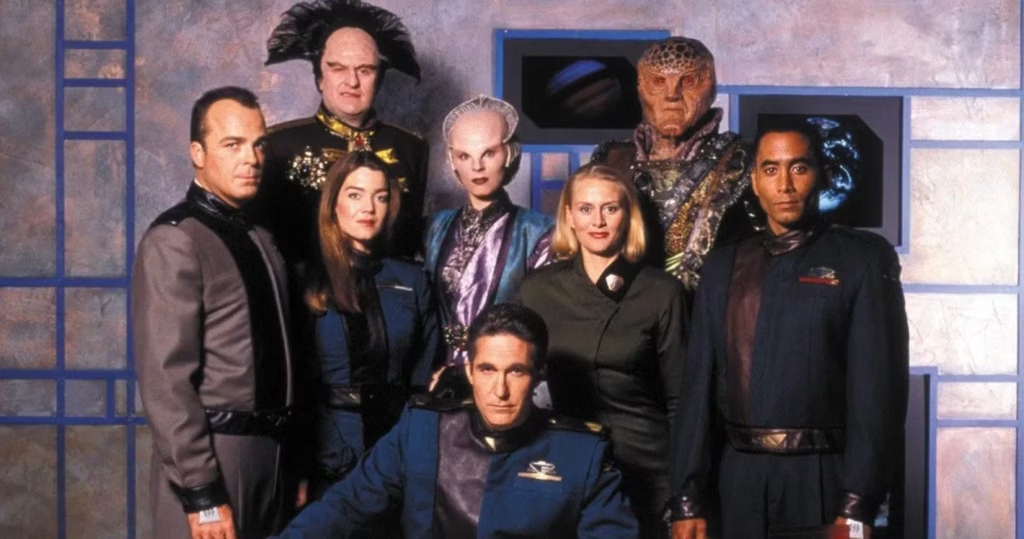
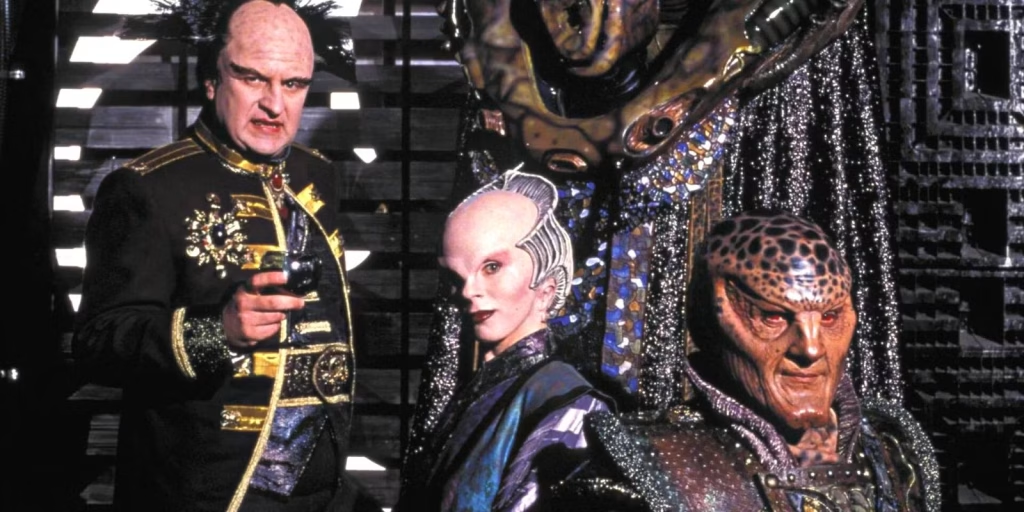
1. Babylon 5

Babylon 5 remains a landmark in science fiction television. Set on a neutral space station, the series weaves politics, war, religion, and identity into a long-form narrative that was ahead of its time.

Image Source: Bing Image. License: All Creative Commons

Despite limited mainstream recognition, its ambitious storytelling and character arcs earned it a devoted fan base. Many modern sci-fi shows owe a debt to their serialized approach. For viewers who love deep lore and moral complexity, Babylon 5 is essential.

Image Source: Bing Image. License: All Creative Commons

From intimate animated shorts to galaxy-spanning epics, modern sci-fi is proving that imagination and emotional depth go hand in hand. These films and shows don’t just ask “what if?” They ask why it matters. And right now, there’s no better time to dive in.

10 Best Zombie Movies That Deliver Nonstop Horror and Thrills

0
Image Source: Bing Image. License: All Creative Commons

Zombie movies are one of horror’s great comfort genres. No matter how bleak the apocalypse gets, something is reassuring about watching humanity completely fall apart from the safety of your couch. These films give us blood-soaked chaos, yes, but they also sneak in sharp observations about fear, loneliness, greed, and cooperation when the world stops making sense.

Image Source: Bing Image. License: All Creative Commons

Whether you’re craving high-energy action, emotional storytelling, or slow-burn psychological dread, zombie cinema has you covered. Below is a reverse-order countdown of ten standout zombie movies that are absolutely worth your time right now—each one offering its own spin on the undead nightmare.

Image Source: Bing Image. License: All Creative Commons

10. Day Shift (2022)

Day Shift approaches the undead apocalypse with the mindset of a blockbuster action film rather than traditional horror. Jamie Foxx stars as a working-class vampire hunter just trying to make ends meet, balancing family obligations with a dangerous profession that keeps him knee-deep in supernatural chaos. The movie leans heavily into slick choreography, stylized violence, and a fast pace that rarely lets up.

Image Source: Bing Image. License: All Creative Commons

What really drives Day Shift is its energy. The film doesn’t pause for deep introspection, instead focusing on entertaining fight scenes, dark humor, and buddy-cop-style banter. Dave Franco’s nervous sidekick adds comedic contrast, while the world-building hints at a larger underground society of hunters and creatures that feels surprisingly fleshed out.

Image Source: Bing Image. License: All Creative Commons

While it technically centers more on vampires than classic zombies, the constant presence of undead threats and apocalyptic vibes makes it a fun genre crossover. If you enjoy horror-adjacent action with attitude, humor, and nonstop movement, Day Shift delivers a bloody good time.

Image Source: Bing Image. License: All Creative Commons

9. There’s Someone Inside Your House (2021)

This Netflix horror film blends teen slasher conventions with outbreak tension, creating a story that feels distinctly modern. Set in a small town grappling with both violence and infection, the movie follows high school students targeted by a masked killer who exposes their darkest secrets before striking. The looming threat of infected attackers adds another layer of paranoia to an already tense situation.

Image Source: Bing Image. License: All Creative Commons

The film works best when it explores themes of identity, shame, and public judgment in the age of social media. Characters are forced to confront who they are versus who they pretend to be, and that pressure cooker atmosphere keeps the suspense building. The mix of mystery and horror gives it an edge beyond a standard slasher.

Image Source: Bing Image. License: All Creative Commons

Though the zombie-like infection isn’t the central focus, it shapes the tone of the story and heightens the sense of danger. It’s an effective genre hybrid that will appeal to viewers who like their horror grounded in contemporary fears and youthful anxiety.

Image Source: Bing Image. License: All Creative Commons

8. The Night Eats the World (2018)

The Night Eats the World strips the zombie genre down to its emotional core. After a party in Paris, a man wakes up to find the city abandoned and overrun by the undead, leaving him utterly alone. From that moment on, the film becomes less about survival tactics and more about what isolation does to the human mind.

Image Source: Bing Image. License: All Creative Commons

Rather than relying on frequent attacks or loud scares, the movie focuses on quiet routines, creeping paranoia, and the slow erosion of sanity. Empty hallways, distant noises, and the constant awareness of danger outside create an oppressive atmosphere that never fully releases its grip. The zombies are frightening, but the silence is worse.

Image Source: Bing Image. License: All Creative Commons

This is a zombie movie for viewers who appreciate introspection and mood over action. It’s haunting, thoughtful, and emotionally draining in the best way, proving that the genre can be just as effective without explosions and gunfire.

Image Source: Bing Image. License: All Creative Commons

7. Zombieland (2009)

Zombieland takes the end of the world and turns it into a road trip comedy, without losing the stakes of survival. Jesse Eisenberg’s anxious narrator creates a set of “rules” for staying alive, whichbecomese a clever framing device for both humor and storytelling. Woody Harrelson’s fearless, Twinkie-obsessed zombie killer balances that nervous energy perfectly.

Image Source: Bing Image. License: All Creative Commons

The movie shines because of its cast chemistry. Emma Stone and Abigail Breslin add depth and emotional grounding, preventing the film from becoming purely comedic. The humor is sharp, often self-aware, and paired with sudden bursts of brutal violence that remind you the danger is real.

Image Source: Bing Image. License: All Creative Commons

Zombieland remains endlessly rewatchable because it understands the genre while poking fun at it. It’s fast, funny, and surprisingly heartfelt—a zombie movie that never forgets to entertain.

Image Source: Bing Image. License: All Creative Commons

6. World War Z (2013)

World War Z expands the zombie apocalypse to a truly global scale. Brad Pitt stars as a former investigator racing against time to uncover the cause of a worldwide outbreak that spreads faster than anyone can comprehend. The movie moves rapidly from country to country, emphasizing the sheer speed at which civilization collapses.

Image Source: Bing Image. License: All Creative Commons

What sets this film apart is its depiction of zombies as overwhelming forces rather than individual monsters. They move in massive swarms, climbing walls and overwhelming cities in seconds. The spectacle is intense, and the sense of urgency never fades.

Image Source: Bing Image. License: All Creative Commons

Rather than focusing on gore, World War Z leans into suspense, strategy, and large-scale disaster storytelling. It’s a polished, high-budget take on the genre that trades claustrophobic fear for adrenaline and scope.

Image Source: Bing Image. License: All Creative Commons

5. Train to Busan (2016)

Train to Busan wastes no time plunging viewers into panic. When an outbreak spreads across South Korea, passengers aboard a high-speed train find themselves trapped with nowhere to escape. The confined setting turns every moment into a test of endurance and decision-making.

Image Source: Bing Image. License: All Creative Commons

Beyond its thrilling action, the film excels at emotional storytelling. Characters are forced to confront selfishness, courage, and sacrifice in ways that feel painfully real. Every choice carries weight, and not everyone makes it out alive.

Image Source: Bing Image. License: All Creative Commons

By the time the film ends, Train to Busan has transformed into a deeply moving human story. It’s a rare zombie movie that leaves you shaken not just by fear, but by empathy.

Image Source: Bing Image. License: All Creative Commons

4. Shaun of the Dead (2004)

Shaun of the Dead perfectly balances parody and genuine affection for the zombie genre. Following a group of ordinary people stumbling through an outbreak in London, the film finds humor in denial, routine, and emotional immaturity. Even as the world collapses, the characters worry about relationships, jobs, and pints at the pub.

Image Source: Bing Image. License: All Creative Commons

Edgar Wright’s direction makes every frame count. Visual jokes, clever editing, and callbacks reward attentive viewers, while the dialogue stays sharp and endlessly quotable. The comedy never undercuts the horror—it enhances it.

Image Source: Bing Image. License: All Creative Commons

Underneath the laughs, the film carries surprising emotional weight. Shaun of the Dead understands loss and growth, making it both hilarious and heartfelt.

Image Source: Bing Image. License: All Creative Commons

3. 28 Days Later (2002)

28 Days Later redefined modern zombie horror by introducing fast, rage-driven infected that shattered the slow-walker tradition. The opening scenes of an empty London are haunting, setting a bleak tone that lingers throughout the film.

Image Source: Bing Image. License: All Creative Commons

Danny Boyle’s direction emphasizes decay, moral ambiguity, and the fragile nature of civilization. The movie isn’t just about surviving monsters—it’s about what people become when society disappears.

Image Source: Bing Image. License: All Creative Commons

Its influence on the genre cannot be overstated. Even decades later, 28 Days Later remains raw, unsettling, and deeply impactful.

Image Source: Bing Image. License: All Creative Commons

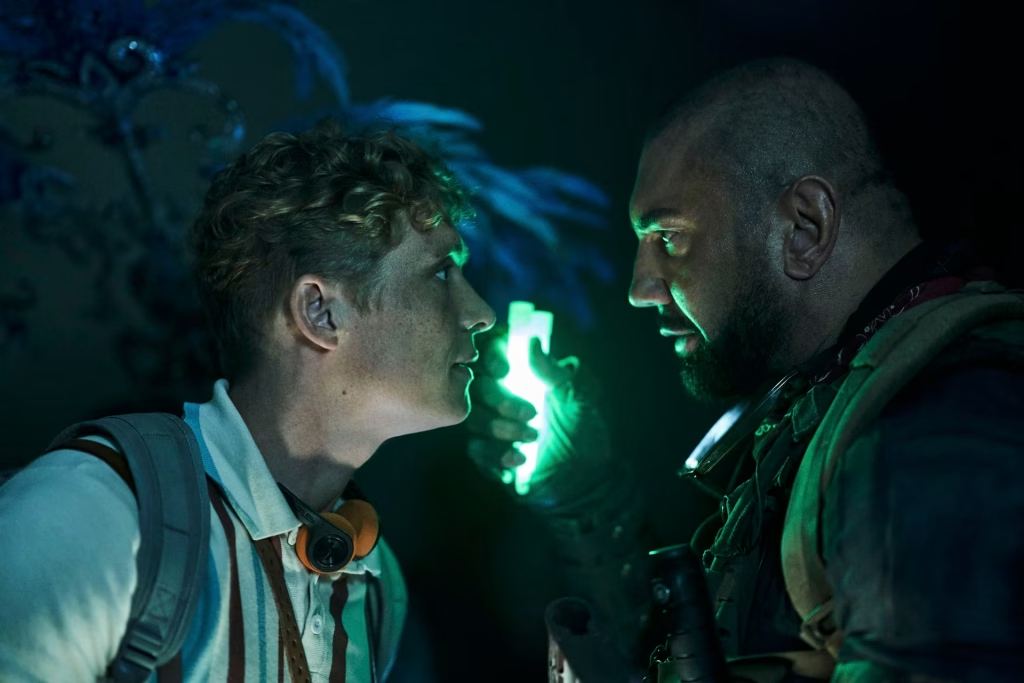
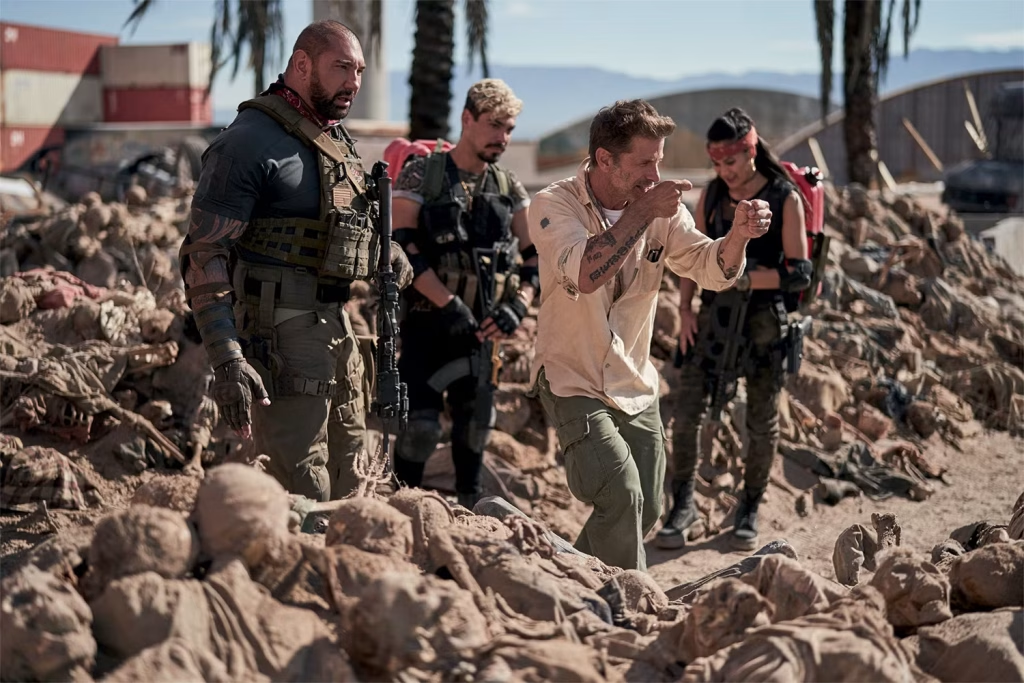
2. Army of the Dead (2021)

Army of the Dead takes zombie cinema into blockbuster territory by merging it with a full-scale heist film. Set in a quarantined Las Vegas overrun by intelligent undead, the movie follows a team of mercenaries attempting an impossible casino robbery.

Image Source: Bing Image. License: All Creative Commons

The film embraces excess in every way—stylized visuals, massive action sequences, and an elaborate mythos surrounding zombie hierarchy. It’s loud, ambitious, and unapologetically indulgent.

Image Source: Bing Image. License: All Creative Commons

While chaotic, the movie also explores loyalty, greed, and consequence. It’s a modern zombie epic built for viewers who want spectacle without restraint.

Image Source: Bing Image. License: All Creative Commons

1. #Alive (2020)

Alive stands out by focusing on isolation rather than scale. A young man becomes trapped in his apartment as a mysterious outbreak turns his city into a war zone. Cut off from the outside world, survival becomes a mental and emotional battle as much as a physical one.

Image Source: Bing Image. License: All Creative Commons

The film taps into modern anxieties surrounding technology, loneliness, and dependence on digital connections. Social media becomes both a lifeline and a reminder of how alone the protagonist truly is.

Image Source: Bing Image. License: All Creative Commons

Tense, relatable, and quietly devastating, Alive proves that zombie horror doesn’t need explosions to be effective. Its intimacy is what makes it unforgettable.

Image Source: Bing Image. License: All Creative Commons

Zombie movies endure because they reflect our deepest fears—collapse, isolation, and the struggle to stay human when everything falls apart. They’re messy, brutal, and strangely comforting all at once. No matter what flavor of undead chaos you prefer, these films prove the genre is still very much alive—and always worth revisiting.

15 Greatest Train Movies for Suspense and Story

0
Image Source: Bing Image. License: All Creative Commons

Trains have always been a gift to filmmakers. They move forward whether the characters are ready or not, trap people together in tight spaces, and turn time itself into a source of tension. From silent-era experiments to modern genre mashups, train movies have delivered some of cinema’s most gripping stories. Here are 15 of the greatest train films that use the rails to master suspense, emotion, and unforgettable storytelling.

Image Source: Bing Image. License: All Creative Commons

15. The Great Train Robbery (1903)

Everything starts here. The Great Train Robbery didn’t just popularize train-centered storytelling; it helped define how movies create suspense. This silent short may be over a hundred years old, but its energy is still impressive. By cutting back and forth between criminals robbing a train and a posse racing to stop them, the film introduced audiences to parallel editing in a way that felt thrilling and new.

Image Source: Bing Image. License: All Creative Commons

That technique became a cornerstone of action and thriller filmmaking. Watching it today feels like spotting the first sparks of modern cinema. Despite its simplicity, the film proves that tension doesn’t need dialogue, just smart pacing, movement, and purpose. Its influence stretches far beyond its runtime. Nearly every intense train sequence since owes something to this pioneering classic.

Image Source: Bing Image. License: All Creative Commons

14. Double Indemnity (1944)

When it comes to noir, Double Indemnity sits near the top of the mountain. Billy Wilder’s razor-sharp thriller uses a train as the key setting for a murder disguised as an accident. Barbara Stanwyck and Fred MacMurray bring a dangerous chemistry to a plot where greed and guilt ride side by side.

Image Source: Bing Image. License: All Creative Commons

The train sequence isn’t decorative; it’s essential. The enclosed environment magnifies every glance and hesitation, turning the journey into a pressure cooker of moral decay. The train’s unstoppable movement mirrors the characters’ slide toward ruin. Few films use setting so deliberately. The result is one of noir’s most iconic and suspenseful moments.

Image Source: Bing Image. License: All Creative Commons

13. Train to Busan (2016)

Few modern films have used a train as effectively, or as brutally, as Train to Busan. This South Korean hit drops a zombie outbreak onto a high-speed train, instantly turning every carriage into a survival test.

Image Source: Bing Image. License: All Creative Commons

What makes the film stand out is how creatively it uses the train’s structure. Each car presents new dangers, emotional beats, and moral choices. Beneath the relentless action is a sharp look at class, selfishness, and sacrifice. It’s thrilling, heartbreaking, and smart, proof that genre films can deliver both adrenaline and substance.

Image Source: Bing Image. License: All Creative Commons

12. Murder on the Orient Express (1974)

Elegant, icy, and meticulously constructed, Murder on the Orient Express turns a luxury train into a snowbound crime scene. With nowhere to escape, every passenger becomes a suspect, and Hercule Poirot must untangle a web of secrets.

Image Source: Bing Image. License: All Creative Commons

The isolation of the train fuels the suspense. Interviews, flashbacks, and subtle clues keep the mystery tight while the lavish production design adds a layer of old-world glamour. This adaptation helped define ensemble mystery filmmaking and cemented the train as the ultimate locked-room setting.

Image Source: Bing Image. License: All Creative Commons

11. The Darjeeling Limited (2007)

Wes Anderson’s The Darjeeling Limited takes a gentler approach to train storytelling. The film follows three brothers crossing India by rail, using the journey as a way to explore grief, family tension, and healing.

Image Source: Bing Image. License: All Creative Commons

The train acts as a floating emotional space, part refuge, part confrontation zone. Anderson’s visual precision and offbeat humor balance moments of genuine vulnerability. It’s not about danger or speed, but about what happens when people can’t outrun their past even while moving forward.

Image Source: Bing Image. License: All Creative Commons

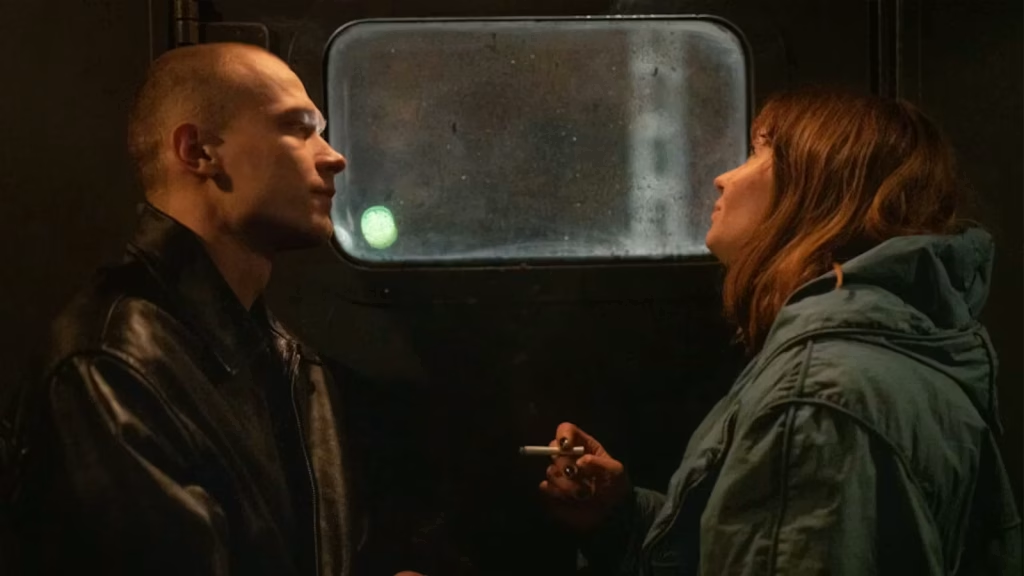
10. Compartment No. 6 (2021)

Quiet and deeply human, Compartment No. 6 proves that intimacy can be just as gripping as action. The film centers on two strangers sharing a sleeper car on a long journey north, forced into an awkward closeness that slowly softens.

Image Source: Bing Image. License: All Creative Commons

The train’s rhythm reflects their emotional shifts, while the bleak landscapes outside contrast with the warmth forming inside the compartment. Nothing feels rushed or overstated. It’s a reminder that sometimes the most powerful train stories happen in whispers, not explosions.

Image Source: Bing Image. License: All Creative Commons

9. Trans-Europ-Express (1966)

This French New Wave oddity turns the train into a playground for ideas. Trans-Europ-Express follows filmmakers discussing a crime story while traveling, only for that story to begin unfolding alongside them.

Image Source: Bing Image. License: All Creative Commons

The result is playful, confusing, and endlessly fascinating. The film constantly questions what’s real, what’s imagined, and who’s in control of the narrative. It’s not for everyone, but for adventurous viewers, it’s a reminder of how trains can carry stories in unexpected directions.

Image Source: Bing Image. License: All Creative Commons

8. Before Sunrise (1995)

One of cinema’s most beloved romances begins with a train ride. Before Sunrise introduces two strangers who meet by chance and decide to spend a night talking, walking, and connecting.

Image Source: Bing Image. License: All Creative Commons

The train is brief but crucial; it’s the spark that makes everything possible. That single decision sets off a story built entirely on conversation and emotional honesty. It’s proof that a journey doesn’t need danger to matter sometimes; it just needs the right people on board.

Image Source: Bing Image. License: All Creative Commons

7. The Taking of Pelham One Two Three (1974)

This gritty subway thriller turns New York’s transit system into a battlefield. When hijackers seize a train and demand a ransom, a weary transit cop becomes the city’s best hope.

Image Source: Bing Image. License: All Creative Commons

The film thrives on precision editing and sharp dialogue, cutting between criminals, officials, and trapped passengers. Every delay feels lethal. While it’s been remade, the original remains unmatched, lean, tense, and relentlessly efficient.

Image Source: Bing Image. License: All Creative Commons

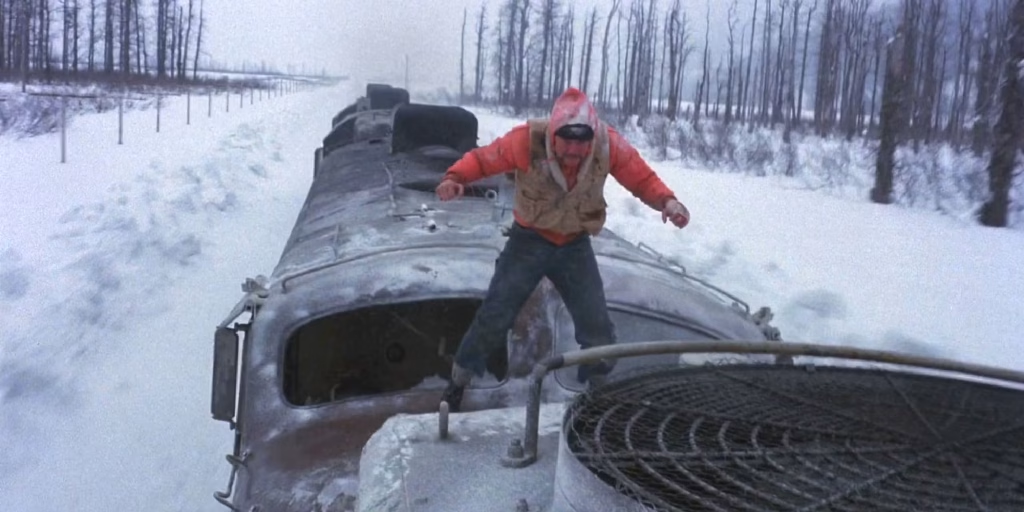
6. Runaway Train (1985)

Few films capture pure momentum like Runaway Train. Two escaped prisoners find themselves aboard a locomotive with no brakes, barreling through an unforgiving landscape.

Image Source: Bing Image. License: All Creative Commons

The action is intense, but the film’s real strength lies in its themes of fate, freedom, and self-destruction. Jon Voight and Eric Roberts deliver raw, desperate performances. It’s a survival thriller that feels philosophical without losing its edge.

Image Source: Bing Image. License: All Creative Commons

5. Snowpiercer (2013)

In Snowpiercer, the train becomes the world. Bong Joon-ho imagines humanity’s last survivors locked into a rigid class system aboard a constantly moving engine.

Image Source: Bing Image. License: All Creative Commons

Each train car represents a different layer of society, turning the forward march into a revolution. The action is brutal, inventive, and tightly choreographed. More than spectacle, the film is a sharp allegory about power, inequality, and survival.

Image Source: Bing Image. License: All Creative Commons

4. Strangers on a Train (1951)

Hitchcock turns a casual meeting into a nightmare in Strangers on a Train. A conversation about “exchanging murders” becomes horrifyingly real, setting fate into motion.

Image Source: Bing Image. License: All Creative Commons

The train represents inevitability. Once the idea is planted, there’s no stopping it. Hitchcock’s cross-cutting and visual precision build unbearable tension. It’s one of cinema’s great psychological thrillers, powered by chance and consequence.

Image Source: Bing Image. License: All Creative Commons

3. Twentieth Century (1934)

Fast-talking and ferociously funny, Twentieth Century transforms a train into a battleground for romance and ego. John Barrymore and Carole Lombard clash nonstop as former collaborators hurtle toward New York.

Image Source: Bing Image. License: All Creative Commons

The train’s nonstop movement matches the film’s breakneck pace. Every compartment becomes a stage for verbal sparring. It’s a reminder that comedy can be just as suspenseful as drama, especially when love is on the line.

Image Source: Bing Image. License: All Creative Commons

2. The Lady Vanishes (1938)

Another Hitchcock triumph, The Lady Vanishes blends mystery, humor, and paranoia. When a woman disappears mid-journey, one passenger’s insistence on finding her meets constant resistance.

Image Source: Bing Image. License: All Creative Commons

The train’s enclosed setting amplifies doubt and suspicion, while Hitchcock keeps the audience guessing through clever misdirection. It remains one of the finest examples of train-based mystery storytelling.

Image Source: Bing Image. License: All Creative Commons

1. The General (1926)

At the top of the list is Buster Keaton’s The General, a silent-era miracle of comedy and action. Set during the Civil War, the film revolves around a stolen locomotive and Keaton’s relentless pursuit.

Image Source: Bing Image. License: All Creative Commons

The stunts are astonishing, the timing flawless, and the suspense real. Keaton blends humor and danger so seamlessly that every chase feels exhilarating. Nearly a century later, The General still defines what a great train movie can be: funny, thrilling, and timeless.

Image Source: Bing Image. License: All Creative Commons

Whether they’re racing toward disaster, carrying strangers into connection, or serving as pressure cookers for crime and chaos, trains have given filmmakers a perfect storytelling engine. These films prove that once a story is set on the rails, all it needs is the right direction and the courage to keep moving forward.

15 Iconic LGBTQ+ Anime and Animated Characters Who Changed the Medium

0
Image Source: Bing Image. License: All Creative Commons

Queer representation in animation hasn’t always been loud or explicit. For years, it lived in subtext, coded behavior, lingering glances, and characters who simply didn’t fit into neat boxes. Yet even when creators couldn’t say things outright, audiences still found meaning—and themselves—on screen. These characters helped push animation forward, whether through confirmed relationships, intentional ambiguity, or bold defiance of norms. Together, they show how powerful visibility can be, even when it arrives quietly.

Image Source: Bing Image. License: All Creative Commons

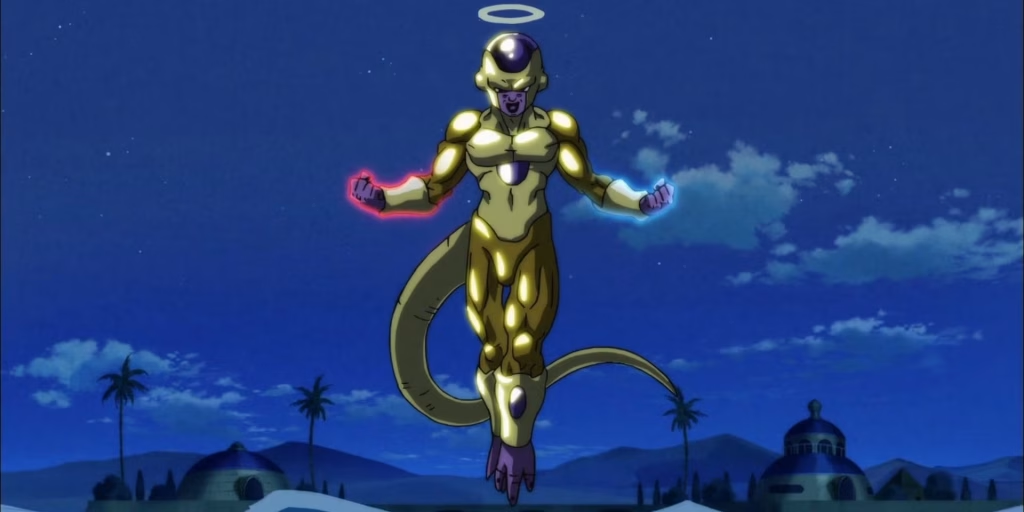
15. Frieza (Dragon Ball)

Frieza stands among anime’s most unforgettable villains, and part of that legacy comes from how completely the character breaks traditional expectations. With an elegant yet menacing presence, an androgynous design, and theatrical mannerisms, Frieza feels distinct even in a universe packed with exaggerated personalities.

Image Source: Bing Image. License: All Creative Commons

Although Dragon Ball never directly labels Frieza’s identity, the character’s presentation has fueled decades of fan discussion. That openness has allowed viewers to read deeper meaning into Frieza’s performance, turning a legendary antagonist into an unexpected point of connection for fans who value characters that exist outside rigid norms.

Image Source: Bing Image. License: All Creative Commons

14. Mako Mankanshoku (Kill la Kill)

Mako Mankanshoku bursts onto the screen with chaotic energy and an unshakable bond with Ryuko. Her loyalty borders on devotion, and her emotional intensity often reads as something deeper than ordinary friendship, especially given how openly she expresses affection.

Image Source: Bing Image. License: All Creative Commons

The show plays much of this for comedy, but fans have long embraced Mako as a character rich with subtext. Her sincerity, oddball charm, and refusal to tone herself down make her an enduring favorite—and a reminder that queerness in animation can be joyful, messy, and loud.

Image Source: Bing Image. License: All Creative Commons

13. Grell Sutcliff (Black Butler)

Grell Sutcliff is impossible to ignore. With flamboyant flair, unapologetic confidence, and a clear preference for men, Grell challenges conventional gender presentation in a genre that rarely allowed it at the time.

Image Source: Bing Image. License: All Creative Commons

While the series occasionally treats Grell as comic relief, her visibility remains important. She exists boldly and openly, inspiring fans who saw little reflection elsewhere in anime. Grell’s lasting appeal lies in her refusal to be subtle or apologetic.

Image Source: Bing Image. License: All Creative Commons

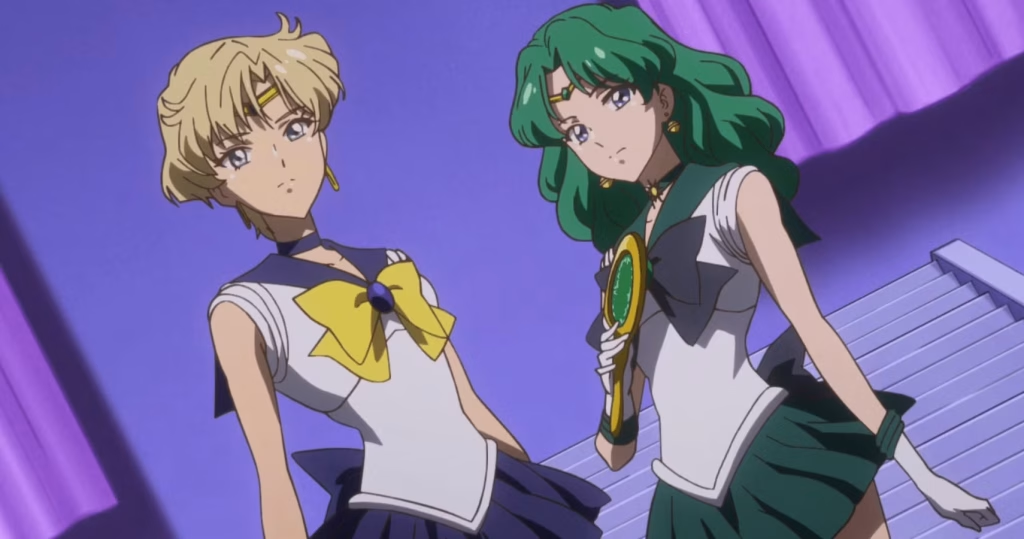
12. Sailor Neptune & Sailor Uranus (Sailor Moon)

Sailor Neptune and Sailor Uranus made history as one of anime’s earliest confirmed same-gender couples. Their connection is portrayed with elegance and mutual respect, framed as a partnership built on trust and shared purpose.

Image Source: Bing Image. License: All Creative Commons

Despite censorship attempts in some international releases, their bond remained undeniable in the original series. Neptune and Uranus became symbols of courage, showing that love between women could be powerful, heroic, and central to the story.

Image Source: Bing Image. License: All Creative Commons

11. Tomoyo Daidouji (Cardcaptor Sakura)

Tomoyo Daidouji’s feelings for Sakura are gentle, sincere, and deeply rooted in admiration. Her love is never exaggerated or mocked; instead, it’s portrayed as something tender and quietly heartbreaking.

Image Source: Bing Image. License: All Creative Commons

For a show aimed at younger audiences, Tomoyo’s portrayal was remarkably thoughtful. Her presence offered comfort to viewers who recognized her emotions, proving that affection between girls could be shown with care and dignity.

Image Source: Bing Image. License: All Creative Commons

10. Touya & Yukito (Cardcaptor Sakura)

Touya and Yukito’s relationship unfolds slowly, built on trust, sacrifice, and emotional intimacy. Their bond is never framed as shocking or controversial—it simply exists as part of the story.

Image Source: Bing Image. License: All Creative Commons

What makes their inclusion so meaningful is how natural it feels. In a series filled with magic and destiny, their connection stands out as one of the most grounded and sincere relationships, offering quiet but powerful representation.

Image Source: Bing Image. License: All Creative Commons

9. Hange Zoë (Attack on Titan)

Hange Zoë defies categorization, both in intellect and identity. The character’s gender is intentionally left undefined, a choice later affirmed by the creator as open to interpretation.

Image Source: Bing Image. License: All Creative Commons

That ambiguity has allowed fans to embrace Hange as a symbol of freedom beyond labels. Brilliant, passionate, and unpredictable, Hange proves that representation doesn’t always require explanation—sometimes presence alone is enough.

Image Source: Bing Image. License: All Creative Commons

8. Benson (Kipo and the Age of Wonderbeasts)

Benson’s story is refreshingly simple and deeply affirming. When he opens up about who he loves, the moment is treated with warmth and acceptance, free from drama or judgment.

Image Source: Bing Image. License: All Creative Commons

His arc reflects how far animation has come. Benson’s confidence, kindness, and happiness show young viewers that being yourself doesn’t have to come with pain—it can simply be part of who you are.

Image Source: Bing Image. License: All Creative Commons

7. Luz & Amity (The Owl House)

Luz and Amity’s relationship grows naturally, from awkward crushes to mutual support and love. Their journey feels honest, capturing the excitement and vulnerability of first romance.

Image Source: Bing Image. License: All Creative Commons

What makes their story so impactful is its normalization. Their bond isn’t framed as different or risky—it’s just love. That quiet confidence has made them icons for a new generation.

Image Source: Bing Image. License: All Creative Commons

6. Harley Quinn & Poison Ivy (Harley Quinn)

Harley and Ivy’s relationship evolves from friendship into something deeper, built on mutual growth and understanding. Their romance feels earned, shaped by shared experiences and emotional honesty.

Image Source: Bing Image. License: All Creative Commons

The series allows them to be flawed, passionate, and supportive without reducing their connection to a gimmick. Their story proves adult animation can handle queer relationships with heart and complexity.

Image Source: Bing Image. License: All Creative Commons

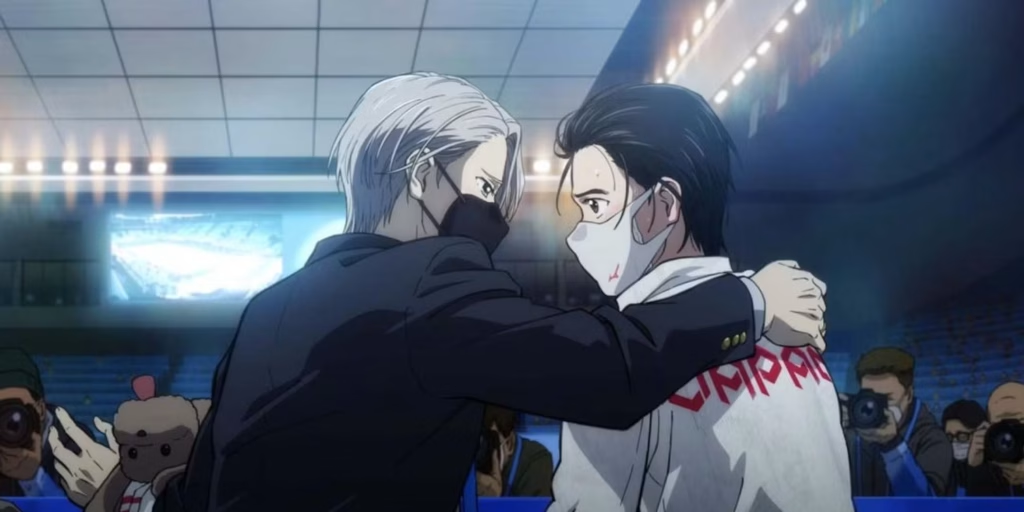
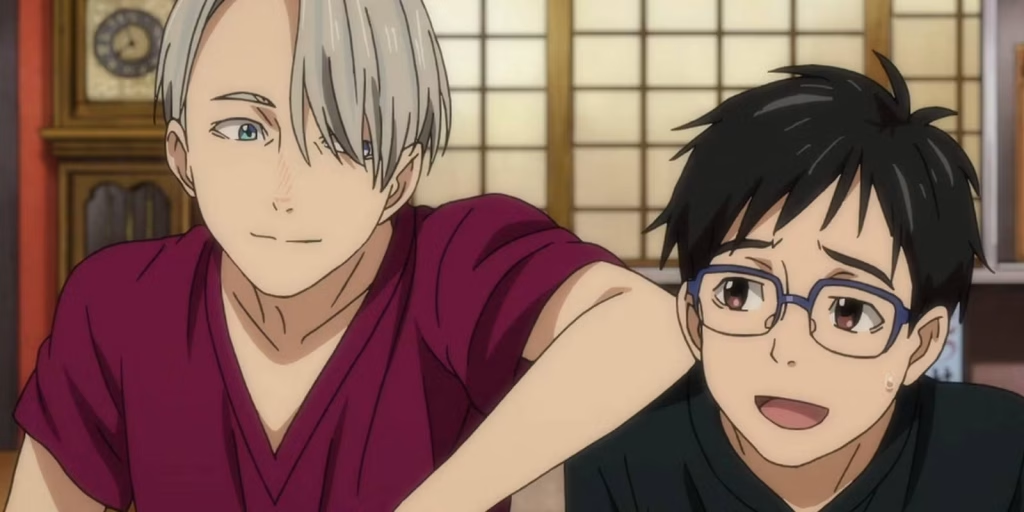
5. Yuri & Victor (Yuri!!! on Ice)

Yuri and Victor changed the landscape of sports anime by centering emotional intimacy alongside competition. Their bond grows through mentorship, trust, and admiration, eventually becoming unmistakably romantic.

Image Source: Bing Image. License: All Creative Commons

The series treats its connection with sincerity rather than spectacle. That choice resonated globally, showing that love stories between men could be tender, aspirational, and deeply human.

Image Source: Bing Image. License: All Creative Commons

4. Hatsuharu (Fruits Basket)

Hatsuharu openly expresses attraction beyond a single gender, something rarely depicted so casually in anime. His feelings are never questioned or framed as confusion—they’re simply part of who he is.

Image Source: Bing Image. License: All Creative Commons

This openness makes him stand out in a series that often hesitates around queerness. Hatsuharu’s confidence and emotional honesty remain refreshing, even when the story around him falls short.

Image Source: Bing Image. License: All Creative Commons

3. Ritsu & Momiji (Fruits Basket)

Ritsu and Momiji both challenge gender expectations through clothing and self-expression. Their choices offer moments of visibility for viewers who find comfort in fluid presentation.

Image Source: Bing Image. License: All Creative Commons

However, the series ultimately frames these traits as temporary, suggesting they must be left behind with adulthood. That framing has drawn criticism, turning their arcs into reminders of how representation can be limited by conformity.

Image Source: Bing Image. License: All Creative Commons

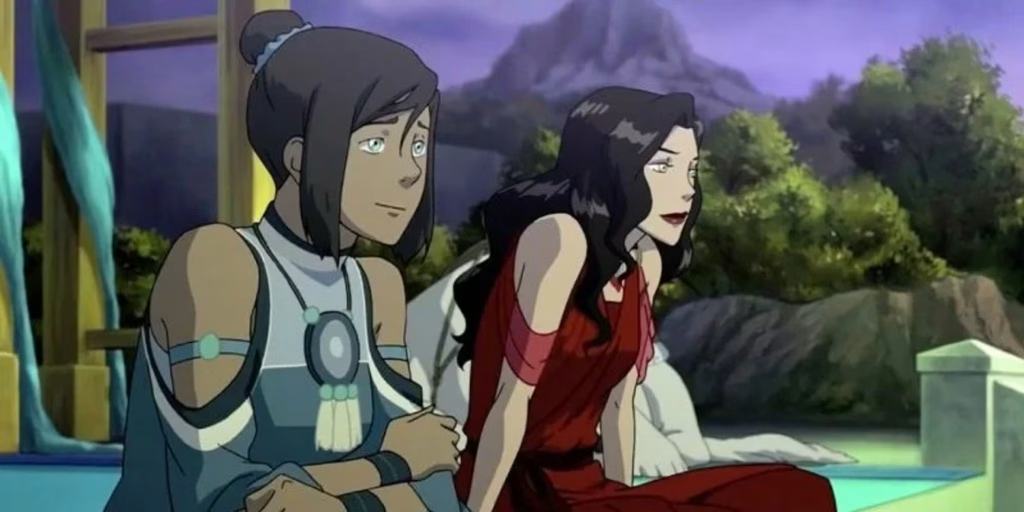
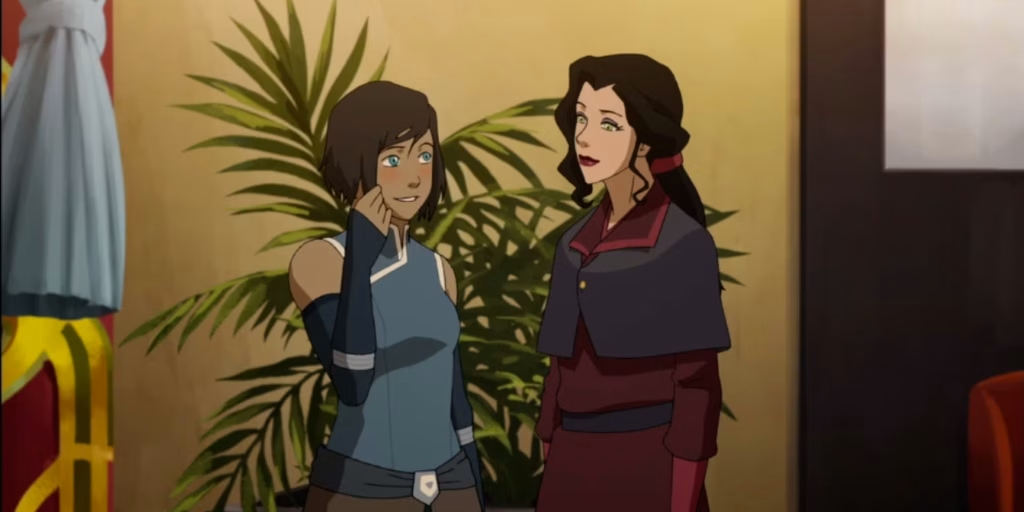
2. Asami & Korra (The Legend of Korra)

Asami and Korra’s relationship marked a turning point for Western animation. Their connection develops subtly, rooted in trust, shared struggle, and emotional healing.

Image Source: Bing Image. License: All Creative Commons

The finale’s confirmation of their bond resonated worldwide. It opened doors for future stories and proved that animated heroes could love beyond traditional pairings.

Image Source: Bing Image. License: All Creative Commons

1. Saki & Arisa (Fruits Basket)

Saki and Arisa share a bond that feels charged with devotion and emotional intensity. Their connection, especially in flashbacks, mirrors romantic storytelling in everything but name.

Image Source: Bing Image. License: All Creative Commons

Yet the series ultimately redirects them into conventional paths, leaving fans with a sense of lost potential. Their story highlights both the power of queer-coded relationships and the frustration of seeing them left unexplored.

Image Source: Bing Image. License: All Creative Commons

Queer characters in animation have often existed between the lines, shaped by implication, courage, and audience interpretation. Even so, their influence has been profound, inspiring viewers to imagine broader possibilities. As animation continues to evolve, these characters remain milestones—proof that representation matters, even when it starts quietly.

15 Most Realistic Movies and Shows About Love

0
Image Source: Bing Image. License: All Creative Commons

Love on screen is often exaggerated, polished, or wrapped up with a neat bow. But every so often, a movie or TV show dares to reflect relationships as they actually are: awkward, painful, tender, confusing, and deeply human. The following films and series stand out for portraying love, family, friendship, and partnership with honesty rather than fantasy. These are stories that don’t flinch from discomfort and, because of that, feel painfully real.

Image Source: Bing Image. License: All Creative Commons

15. His Three Daughters

His Three Daughters captures the emotional chaos that surfaces when family members are forced back into the same space during a moment of crisis. Three sisters, Katie, Christina, and Rachel, reunite in their father’s apartment as he approaches the end of his life, and old resentments immediately resurface.

Image Source: Bing Image. License: All Creative Commons

Each woman arrives carrying her own emotional armor: Katie’s need for control, Christina’s rigid sense of order, and Rachel’s lingering feeling that she doesn’t fully belong. Their conversations are uncomfortable, sharp, and often unresolved, mirroring the way real families communicate under stress. Rather than building toward a dramatic catharsis, the film lingers in quiet moments, glances, pauses, and half-finished thoughts that feel painfully familiar.

Image Source: Bing Image. License: All Creative Commons

What makes the film so affecting is its honesty. Healing doesn’t come easily, and not everything is fixed by the end. Instead, His Three Daughters reminds us that love within families is complicated, imperfect, and often expressed through conflict.

Image Source: Bing Image. License: All Creative Commons

14. Nobody Wants This

Nobody Wants This refreshes the romantic comedy by grounding it firmly in reality. Kristen Bell plays Joanne, who finds herself in a relationship with Noah, a rabbi whose faith and family introduce real-world complications into their romance.

Image Source: Bing Image. License: All Creative Commons

Rather than relying on grand gestures, the series focuses on communication, compromise, and self-awareness. Joanne and Noah don’t magically solve their problems; they talk, stumble, and reassess what they’re willing to give up or hold onto. The show acknowledges how cultural differences can strain even the most genuine connections. Its charm lies in its realism. Love here isn’t effortless or idealized; it’s work, negotiation, and growth, and that honesty makes the story resonate.

Image Source: Bing Image. License: All Creative Commons

13. Couples Therapy

Couples Therapy strips away the theatrics of reality television and replaces them with raw emotional truth. Following real couples in sessions with Dr. Orna Guralnik, the series offers a rare glimpse into what relationship repair actually looks like.

Image Source: Bing Image. License: All Creative Commons

Season three broadens the scope by including a polycule, but the heart of the show remains unchanged: unresolved resentment, emotional wounds, and the slow, sometimes frustrating process of learning how to communicate. There are no miracle breakthroughs, just incremental progress and painful realizations. What makes the series so compelling is its refusal to simplify. Love here is work, vulnerability is uncomfortable, and healing happens one conversation at a time.

Image Source: Bing Image. License: All Creative Commons

12. Past Lives

Past Lives is a quiet meditation on love, timing, and the lives we don’t end up living. Nora and Hae Sung reconnect years after their childhood friendship was cut short, and what unfolds is filled with longing and emotional restraint rather than melodrama.

Image Source: Bing Image. License: All Creative Commons

The film treats all relationships with care, including Nora’s marriage to Arthur, which is portrayed with tenderness and mutual respect. There are no villains, just people trying to understand their feelings without betraying their commitments. Rather than offering closure, Past Lives embraces ambiguity. It understands that some connections exist to shape us, not to last forever.

Image Source: Bing Image. License: All Creative Commons

11. Beef

On the surface, Beef is about a road rage incident spiraling out of control. Beneath that chaos, however, is a deeply uncomfortable exploration of marriage, resentment, and emotional repression.

Image Source: Bing Image. License: All Creative Commons

Amy and George’s relationship is strained, messy, and brutally honest. The show allows its characters to be selfish, cruel, and painfully human, showing how unspoken pain can rot relationships from the inside out. Beef doesn’t offer redemption through perfection; it suggests healing comes from accountability, self-awareness, and the willingness to confront uncomfortable truths.

Image Source: Bing Image. License: All Creative Commons

10. The Bear

While The Bear is set in the pressure cooker of a restaurant kitchen, its emotional core lies in relationships between coworkers, siblings, and oneself. Carmen’s attempt to run his late brother’s restaurant forces him to confront grief, control issues, and inherited trauma.

Image Source: Bing Image. License: All Creative Commons

The series excels at portraying how dysfunction is passed down and how difficult it is to unlearn harmful patterns. Trust is fragile, communication is messy, and progress is rarely linear. At its heart, The Bear is about rebuilding, not just a business, but connections fractured by loss and pride.

Image Source: Bing Image. License: All Creative Commons

9. Shrinking

Shrinking centers on grief and the reckless choices that often follow it. Jimmy, a therapist mourning his wife, blurs professional boundaries while trying, and often failing, to reconnect with his daughter and friends.

Image Source: Bing Image. License: All Creative Commons

The show embraces emotional messiness. Relationships fracture, heal, and fracture again, reflecting how grief doesn’t move in straight lines. Even the therapists are flawed, lost, and in need of support themselves. By blending humor with vulnerability, Shrinking presents healing as imperfect but possible.

Image Source: Bing Image. License: All Creative Commons

8. Somebody Somewhere

Somebody Somewhere quietly celebrates friendship as a form of love just as powerful as romance. Sam finds emotional refuge in her bond with Joel, a friendship built on acceptance rather than expectation.

Image Source: Bing Image. License: All Creative Commons

Their connection thrives on honesty, humor, and shared loneliness. The series challenges the idea that romantic relationships are the ultimate emotional goal, showing instead how platonic love can be deeply sustaining. It’s a gentle reminder that sometimes the most meaningful relationships are the ones that simply allow us to be ourselves.

Image Source: Bing Image. License: All Creative Commons

7. Marriage Story

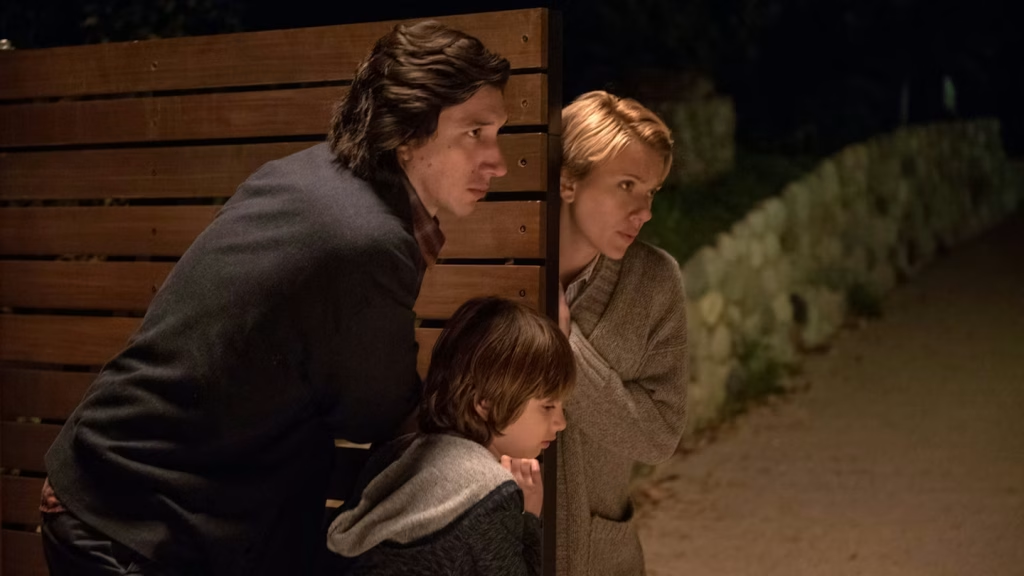
Marriage Story pulls no punches in its portrayal of divorce. Charlie and Nicole’s separation is painful, not because of cruelty, but because of unresolved hurt and miscommunication. The film captures the exhausting logistics of co-parenting alongside the emotional devastation of letting go.

Image Source: Bing Image. License: All Creative Commons

Both characters are deeply flawed, yet sympathetic, making the breakdown of their marriage feel tragically believable. Rather than assigning blame, Marriage Story explores how love can evolve, even when it no longer looks the way it once did.

Image Source: Bing Image. License: All Creative Commons

6. Blue Valentine

Blue Valentine traces a relationship from its hopeful beginnings to its heartbreaking end. By intercutting moments of early romance with scenes of emotional erosion, the film reveals how love can fade without a single defining moment.

Image Source: Bing Image. License: All Creative Commons

Michelle Williams and Ryan Gosling bring raw vulnerability to their roles, making every argument and quiet disappointment feel earned. The film refuses to soften its message or offer comfort. It’s an unflinching portrait of what happens when love alone isn’t enough.

Image Source: Bing Image. License: All Creative Commons

5. Like Crazy

Like Crazy examines long-distance love with brutal honesty. Separated by immigration laws, Anna and Jacob struggle to maintain intimacy across continents. The film shows how distance creates temptation, resentment, and emotional drift.

Image Source: Bing Image. License: All Creative Commons

Love persists, but it changes, often in painful ways neither partner anticipates. Its power lies in its uncertainty. Like Crazy understands that sometimes relationships don’t fail dramatically; they simply wear down.

Image Source: Bing Image. License: All Creative Commons

4. (500) Days of Summer

(500) Days of Summer dismantles the romantic fantasy by showing how expectations can sabotage love. Told out of order, the film mirrors how we replay relationships in our minds, highlighting the good while ignoring warning signs.

Image Source: Bing Image. License: All Creative Commons

Tom’s idealized view of Summer ultimately blinds him to who she really is. The film gently but firmly critiques the idea that love should follow a predetermined script. It’s a story about learning, growing, and accepting reality even when it hurts.

Image Source: Bing Image. License: All Creative Commons

3. Eternal Sunshine of the Spotless Mind

Despite its sci-fi premise, Eternal Sunshine of the Spotless Mind is one of the most emotionally grounded love stories ever made. Joel and Clementine attempt to erase each other from their memories, only to rediscover why they mattered in the first place.

Image Source: Bing Image. License: All Creative Commons

The film captures the chaos, tenderness, and regret embedded in relationships. It suggests that pain is inseparable from love, and perhaps worth enduring. Its message lingers: even flawed connections leave lasting imprints.

Image Source: Bing Image. License: All Creative Commons

2. The Before Trilogy

The Before trilogy follows Jesse and Céline across nearly two decades, chronicling how love evolves over time. Each installment reflects a different stage of infatuation, reconnection, and long-term partnership.

Image Source: Bing Image. License: All Creative Commons

The dialogue feels spontaneous and intimate, grounded in everyday concerns rather than cinematic fantasy. The films understand that love is shaped by choices, compromises, and persistence. Few stories capture romantic realism as completely as this trilogy.

Image Source: Bing Image. License: All Creative Commons

1. Call Me By Your Name

Call Me By Your Name is a tender exploration of first love and emotional awakening. Elio’s relationship with Oliver unfolds slowly, charged with longing, discovery, and inevitable heartbreak.

Image Source: Bing Image. License: All Creative Commons

What elevates the film is its emotional universality. Though rooted in a specific time and place, it captures feelings that nearly everyone recognizes: the intensity of loving deeply for the first time and the pain of letting go. It’s a love story that shapes us forever, even when it doesn’t last.

Image Source: Bing Image. License: All Creative Commons

These films and series resonate because they don’t promise perfection. Instead, they reflect love as it’s actually lived, complicated, fragile, transformative, and deeply human. Whether romantic, familial, or platonic, these stories remind us that connection is rarely easy, but always worth exploring.

15 Iconic Sitcom Casts and Performances That Made Television Legendary

0
Image Source: Bing Image. License: All Creative Commons

A truly great sitcom isn’t just about sharp writing or memorable jokes—it’s about chemistry. The kind where characters feel less like actors hitting marks and more like people you’d actually miss when the episode ends. The casts below didn’t just deliver laughs; they created worlds, rhythms, and relationships that reshaped television comedy. From classic black-and-white trailblazers to modern Emmy-sweeping ensembles, these sitcom casts represent the best of the best. Each one earned its place by elevating the material and turning great shows into timeless favorites.

Image Source: Bing Image. License: All Creative Commons

15. Schitt’s Creek

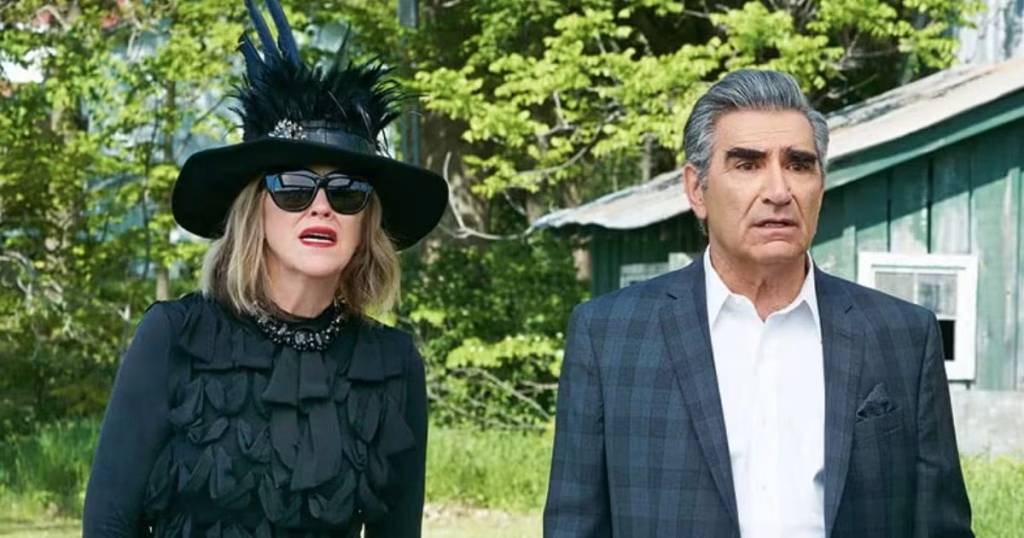
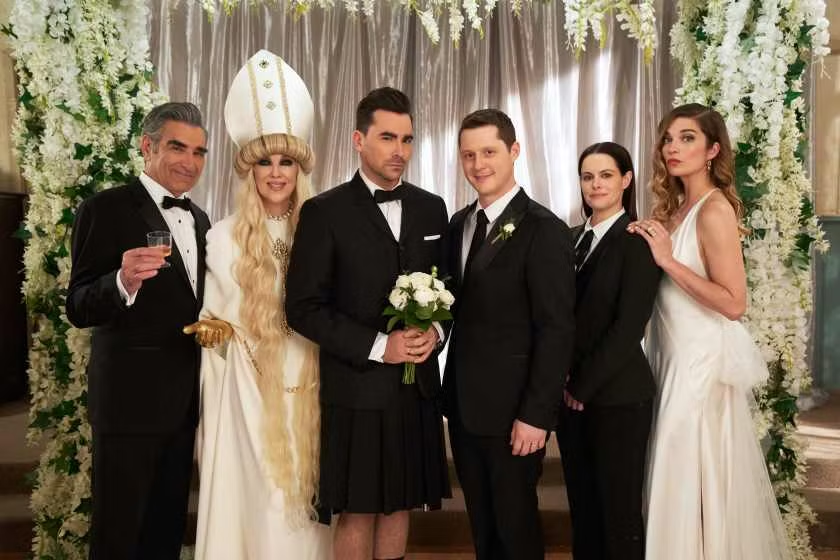
Schitt’s Creek started as a quirky fish-out-of-water comedy and grew into one of the most beloved sitcoms of its era. Catherine O’Hara and Eugene Levy bring veteran confidence to Moira and Johnny Rose, but the show truly flourishes thanks to the inspired performances of Dan Levy and Annie Murphy. Their characters evolve in ways that feel organic, heartfelt, and surprisingly moving for a half-hour comedy.

Image Source: Bing Image. License: All Creative Commons

The supporting cast deepens the charm. Chris Elliott’s offbeat Roland, Emily Hampshire’s dry and vulnerable Stevie, and Sarah Levy’s quieter presence all contribute to a tone that balances absurdity with warmth. That blend helped Schitt’s Creek make Emmy history—and cemented its reputation as a sitcom that could be genuinely kind without losing its edge.

Image Source: Bing Image. License: All Creative Commons

14. Veep

Veep thrives on ruthless energy, and Julia Louis-Dreyfus sits firmly at the center of that storm. Her portrayal of Selina Meyer is one of the sharpest comedic performances ever put on television, fueled by venomous delivery and fearless physicality. She’s surrounded by actors who match her intensity beat for beat.

Image Source: Bing Image. License: All Creative Commons

Tony Hale, Anna Chlumsky, Timothy Simons, and the ever-rotating ensemble create a workplace where incompetence is weaponized for laughs. Even bit players are given space to shine, making Veep feel like a perfectly calibrated machine of chaos. Few sitcoms have ever made politics this funny—or this brutal.

Image Source: Bing Image. License: All Creative Commons

13. The Office

The Office redefined workplace comedy by leaning into discomfort, and Steve Carell’s Michael Scott became its most unforgettable embodiment. His performance walks a razor-thin line between unbearable and sympathetic, grounding the show’s cringe-heavy humor. But the real magic comes from the ensemble around him.

Image Source: Bing Image. License: All Creative Commons

From Rainn Wilson’s unhinged Dwight to Jenna Fischer’s grounded Pam and John Krasinski’s charming Jim, every character feels distinct and lived-in. The cast’s chemistry allowed even mundane moments to land emotionally, turning a paper company into one of television’s most iconic settings.

Image Source: Bing Image. License: All Creative Commons

12. The Righteous Gemstones

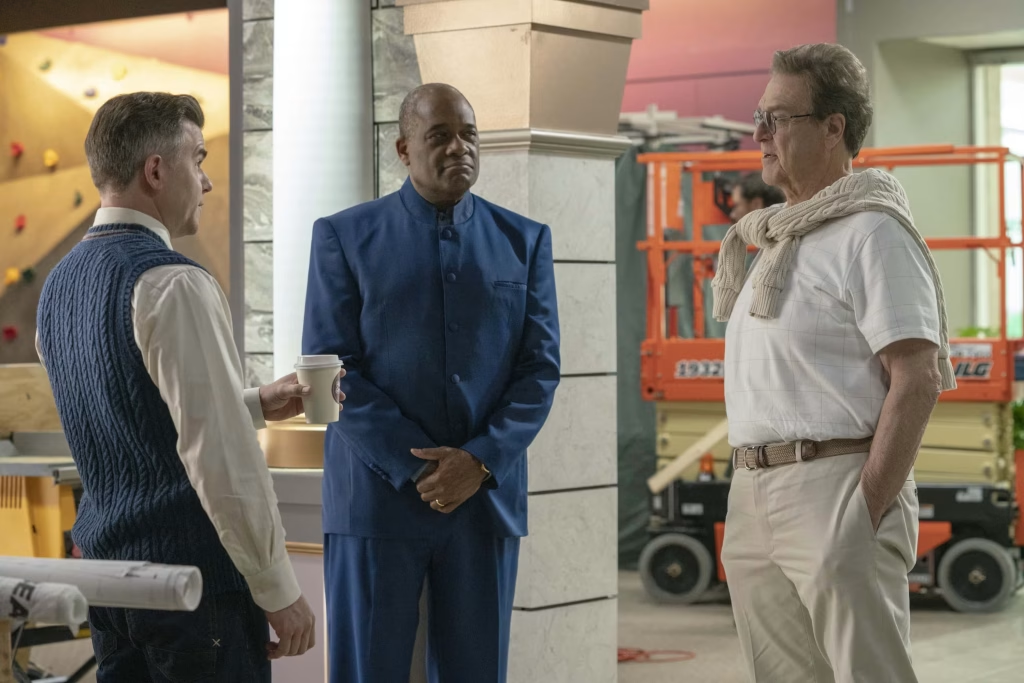
The Righteous Gemstones proves that outrageous satire still needs strong performances to work. Danny McBride leads the charge, but the show’s success hinges on a cast willing to fully commit to excess. Walton Goggins steals scenes with unfiltered intensity, while Edi Patterson consistently delivers some of the sharpest comedic beats.

Image Source: Bing Image. License: All Creative Commons

John Goodman provides a steady presence amid the madness, grounding the show just enough to make its wild turns believable. The ensemble thrives because it treats absurdity seriously, creating characters who feel ridiculous but never lazy. It’s bold comedy powered by fearless performances.

Image Source: Bing Image. License: All Creative Commons

11. Friends

Friends became a global phenomenon largely because its cast clicked instantly and completely. Jennifer Aniston, Courteney Cox, Lisa Kudrow, Matt LeBlanc, Matthew Perry, and David Schwimmer each carved out a clear comedic identity, and together they formed one of television’s most recognizable groups.

Image Source: Bing Image. License: All Creative Commons

What made the ensemble special was the balance. No single character overwhelmed the others, and every actor had room to shine. Even decades later, the cast’s chemistry remains the show’s strongest asset—and the reason it still feels endlessly rewatchable.

Image Source: Bing Image. License: All Creative Commons

10. Seinfeld

Seinfeld’s brilliance lies in how perfectly its four leads bounce off one another. Jerry Seinfeld plays the straight man by design, allowing Jason Alexander, Julia Louis-Dreyfus, and Michael Richards to fully lean into their characters’ extremes. The contrast is where the comedy explodes.

Image Source: Bing Image. License: All Creative Commons

The show also boasts one of the strongest benches in sitcom history. Characters like Newman and Frank Costanza feel just as iconic as the leads. Seinfeld’s cast mastered the art of turning trivial annoyances into comedic gold, redefining what a sitcom could focus on.

Image Source: Bing Image. License: All Creative Commons

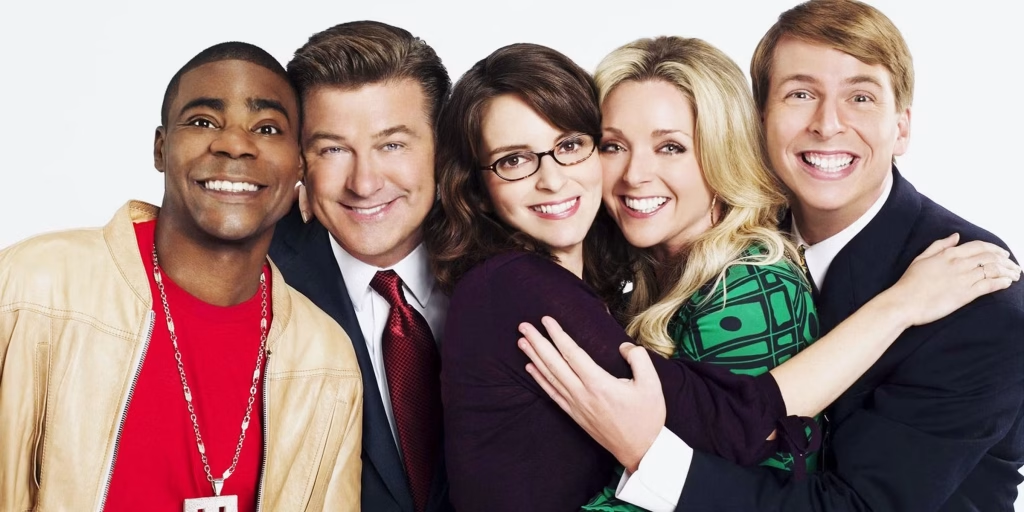
9. 30 Rock

30 Rock fires jokes at a relentless pace, and its cast keeps up effortlessly. Tina Fey’s Liz Lemon anchors the show with self-aware chaos, while Alec Baldwin’s Jack Donaghy provides one of TV’s great comedic counterweights. Tracy Morgan’s unpredictability completes the core trio.

Image Source: Bing Image. License: All Creative Commons

Beyond the leads, Jane Krakowski, Jack McBrayer, and the rest of the ensemble elevate even the most absurd material. The cast’s commitment to heightened reality makes 30 Rock feel like a live wire—smart, silly, and endlessly inventive.

Image Source: Bing Image. License: All Creative Commons

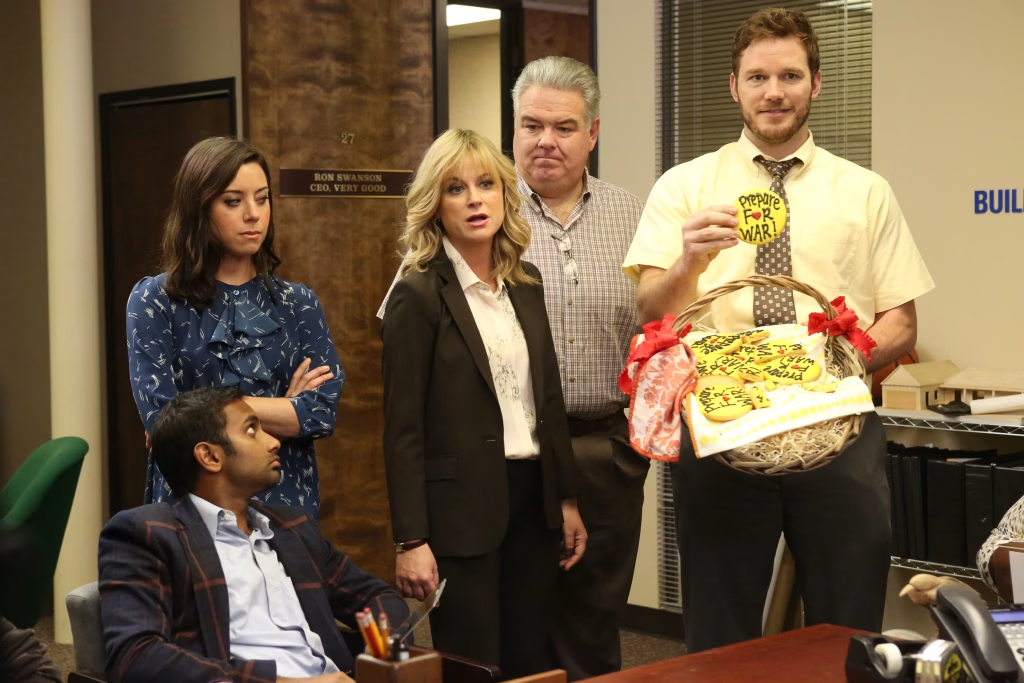
8. Parks and Recreation

Parks and Recreation is built on optimism, and its cast embodies that spirit. Amy Poehler’s Leslie Knope radiates sincerity and enthusiasm, setting the emotional tone for the entire series. Around her is a deep ensemble packed with distinct comedic voices.

Image Source: Bing Image. License: All Creative Commons

Nick Offerman’s Ron Swanson became an icon, but every character—from Aubrey Plaza’s deadpan April to Chris Pratt’s lovable Andy—adds something essential. The cast’s warmth turns Pawnee into a place viewers genuinely care about, making the comedy hit even harder.

Image Source: Bing Image. License: All Creative Commons

7. I Love Lucy

Lucille Ball remains one of the greatest physical comedians of all time, and I Love Lucy is her ultimate showcase. Her timing, expressions, and fearless commitment to slapstick still feel fresh decades later. Desi Arnaz complements her perfectly, bringing charm and rhythm to every scene.

Image Source: Bing Image. License: All Creative Commons

William Frawley and Vivian Vance complete the quartet, creating a dynamic that feels timeless. Beyond laughs, the cast helped invent the modern sitcom format, making I Love Lucy both historically important and endlessly entertaining.

Image Source: Bing Image. License: All Creative Commons

6. Newhart

Newhart succeeds because it understands restraint. Bob Newhart’s understated delivery provides the perfect contrast to a town full of eccentrics. Rather than overpowering the material, he lets the ensemble flourish around him.

Image Source: Bing Image. License: All Creative Commons

Julia Duffy, Peter Scolari, and the famously repetitive Larry–Darryl–Darryl trio give the show its unique identity. The cast’s precision and commitment to character-driven humor make Newhart quietly brilliant and deeply influential.

Image Source: Bing Image. License: All Creative Commons

5. Cheers

Cheers thrives on the feeling of community, and its cast sells that illusion completely. Ted Danson’s Sam Malone may be the face of the show, but it’s the ensemble that keeps the bar buzzing with life.

Image Source: Bing Image. License: All Creative Commons

From Rhea Perlman’s razor-sharp Carla to Kelsey Grammer’s refined Frasier, every addition strengthened the dynamic. The cast’s adaptability through major changes is a big reason Cheers remained a top-tier sitcom for over a decade.

Image Source: Bing Image. License: All Creative Commons

4. M*A*S*H

M*A*S*H stands out by blending comedy with emotional depth, and its cast handles that balance beautifully. Alan Alda’s leadership anchors the series, but the rotating ensemble consistently rises to the challenge.

Image Source: Bing Image. License: All Creative Commons

Despite numerous cast changes, the show never loses its rhythm. Each actor brings humanity to their role, helping MAS*H tell stories that are funny, painful, and unforgettable—all at once.

Image Source: Bing Image. License: All Creative Commons

3. All in the Family

All in the Family pushed boundaries like no sitcom before it, and its cast was fearless. Carroll O’Connor’s Archie Bunker is provocative by design, but the surrounding performances ensure the show never loses its moral center.

Image Source: Bing Image. License: All Creative Commons

Jean Stapleton, Rob Reiner, and Sally Struthers bring nuance and empathy to difficult material. Together, the ensemble proved sitcoms could confront real social issues without sacrificing humor.

Image Source: Bing Image. License: All Creative Commons

2. The Golden Girls

The Golden Girls is a masterclass in ensemble comedy. Betty White, Bea Arthur, Rue McClanahan, and Estelle Getty each play to their strengths, creating characters that feel iconic yet deeply human.

Image Source: Bing Image. License: All Creative Commons

Their chemistry allows the show to tackle aging, friendship, and loss with humor and grace. Few casts have ever felt so perfectly balanced—or so genuinely affectionate—on screen.

Image Source: Bing Image. License: All Creative Commons

1. The Dick Van Dyke Show

The Dick Van Dyke Show represents sitcom perfection. Dick Van Dyke’s physical comedy pairs seamlessly with Mary Tyler Moore’s sharp intelligence, creating a dynamic that feels effortless and modern even today.

Image Source: Bing Image. License: All Creative Commons

Supported by Morey Amsterdam and Rose Marie, the cast set a standard for naturalistic comedy and ensemble balance. Their influence echoes through every sitcom that followed, making this cast the undisputed gold standard.

Image Source: Bing Image. License: All Creative Commons

Great sitcom casts don’t just deliver punchlines—they build worlds viewers want to revisit again and again. The ensembles on this list shaped comedy, launched careers, and left lasting cultural footprints. Trends change, formats evolve, but the power of perfect casting never fades. These performances remain timeless reminders that when the chemistry is right, television magic happens.

14 Actors Who Were Replaced During Filming

0
Image Source: Bing Image. License: All Creative Commons

Movie productions can be fragile ecosystems. Even talented, well-known actors can find themselves abruptly removed when chemistry falters, creative visions clash, or circumstances spiral out of control. These behind-the-scenes shakeups often change careers, and sometimes cinema history itself. Here are fifteen notable cases where actors were fired mid-production, and what happened next.

Image Source: Bing Image. License: All Creative Commons

14. Kel O’Neill — There Will Be Blood

Kel O’Neill was originally cast as preacher Eli Sunday in Paul Thomas Anderson’s There Will Be Blood, opposite Daniel Day-Lewis. After several weeks of filming, however, it became clear something wasn’t clicking.

Image Source: Bing Image. License: All Creative Commons

O’Neill later said he sensed the disconnect early on. Anderson decided to replace him with Paul Dano, who was already in the film as Eli’s brother. The script was reworked so Dano played identical twins, resulting in one of the film’s most unforgettable performances. O’Neill ultimately stepped away from acting and found success directing documentaries.

Image Source: Bing Image. License: All Creative Commons

13. Colin Firth — Paddington

Colin Firth had fully recorded his dialogue as the voice of Paddington Bear, but once the animation came together, the filmmakers felt his voice sounded too grown-up for the character.

Image Source: Bing Image. License: All Creative Commons

Firth himself acknowledged the decision with grace, noting that the bear simply wasn’t meant to sound like him. Ben Whishaw was brought in to re-record the role, and his lighter tone helped turn Paddington into a modern family-film icon.

Image Source: Bing Image. License: All Creative Commons

12. James Remar — Aliens

James Remar spent nearly a month filming Aliens as Corporal Hicks before being dismissed. Officially, the explanation was “creative differences,” but Remar later admitted his firing followed a drug-related arrest during production.

Image Source: Bing Image. License: All Creative Commons

Reports also described disruptive on-set behavior, including accidentally firing a prop weapon into a neighboring soundstage. Michael Biehn stepped into the role, delivering a performance that became central to the franchise.

Image Source: Bing Image. License: All Creative Commons

11. Holly Hunter — Chicken Little

In early development, Chicken Little featured a female protagonist voiced by Holly Hunter. After recording her lines, Disney executives decided to rework the character into a boy, believing it would attract a wider audience.

Image Source: Bing Image. License: All Creative Commons

Hunter was replaced by Zach Braff, and the story was reshaped entirely. While the decision reflected industry thinking at the time, later successes of female-led animated films suggest how much perspectives have shifted.

Image Source: Bing Image. License: All Creative Commons

10. Connor Ratliff — Band of Brothers

Connor Ratliff lost his small role in Band of Brothers just one day before filming began. He was told executive producer Tom Hanks felt he had “dead eyes.”

Image Source: Bing Image. License: All Creative Commons

Years later, Ratliff transformed the experience into the podcast Dead Eyes, exploring rejection in Hollywood. Hanks eventually appeared on the show, owning the decision and offering clarity. What began as a painful dismissal became a thoughtful conversation about art and subjectivity.

Image Source: Bing Image. License: All Creative Commons

9. Dennis Hopper — The Truman Show

Dennis Hopper was originally cast as Christof, the creator of Truman’s artificial world, but struggled early on with memorization and performance consistency.

Image Source: Bing Image. License: All Creative Commons

After reviewing early footage, director Peter Weir and producer Scott Rudin decided to recast the role. Ed Harris stepped in and delivered a quietly haunting performance that earned him an Oscar nomination.

Image Source: Bing Image. License: All Creative Commons

8. Judy Garland — Valley of the Dolls

Judy Garland’s casting in Valley of the Dolls ended disastrously. Conflicts with director Mark Robson, combined with substance abuse struggles, made filming increasingly difficult.

Image Source: Bing Image. License: All Creative Commons

Accounts from co-stars describe a tense environment that worsened Garland’s condition. She was ultimately fired, replaced by Susan Hayward, and reportedly left with her costumes in protest. The episode remains one of Hollywood’s saddest behind-the-scenes stories.

Image Source: Bing Image. License: All Creative Commons

7. Eric Stoltz — Back to the Future

Eric Stoltz played Marty McFly for several weeks, but his intense, method-driven performance clashed with the film’s comedic tone.

Image Source: Bing Image. License: All Creative Commons

The filmmakers quietly continued shooting while arranging to replace him with Michael J. Fox, their original choice. Fox’s arrival reshaped the movie’s energy—and helped turn it into a timeless classic.

Image Source: Bing Image. License: All Creative Commons

6. Harvey Keitel — Apocalypse Now

Harvey Keitel was initially cast as Captain Willard but was let go shortly after production began in the Philippines. Director Francis Ford Coppola felt Keitel wasn’t connecting with the role under the harsh conditions.

Image Source: Bing Image. License: All Creative Commons

Martin Sheen took over, delivering a performance that became legendary. Though the decision was painful, it proved pivotal to the film’s final impact.

Image Source: Bing Image. License: All Creative Commons

5. Lori Petty — Demolition Man

Lori Petty was cast opposite Sylvester Stallone but exited the film after only a few days. Both sides cited creative differences, though Petty later described a personality clash between herself and Stallone.

Image Source: Bing Image. License: All Creative Commons

Sandra Bullock replaced her, launching one of the actress’s earliest breakout roles. The change became a classic example of how chemistry can redefine a movie.

Image Source: Bing Image. License: All Creative Commons

4. Jean-Claude Van Damme — Predator

Jean-Claude Van Damme was initially hired to play the Predator creature, but the role proved impractical. The restrictive suit and stilt-based design made movement nearly impossible.

Image Source: Bing Image. License: All Creative Commons

The production ultimately redesigned the alien and recast the role with Kevin Peter Hall, whose height and presence helped create one of cinema’s most iconic monsters.

Image Source: Bing Image. License: All Creative Commons

3. Lee Coleman — Friday the 13th Part VIII

Lee Coleman was cast as Sean Robertson but was dismissed after about a week. Creative concerns and an injury he sustained during off-hours complicated matters.

Image Source: Bing Image. License: All Creative Commons

Scott Reeves replaced him, and the production moved on quickly. Though minor, the recasting highlighted how unforgiving tight shooting schedules can be.

Image Source: Bing Image. License: All Creative Commons

2. The Voice Cast of The Good Dinosaur

Pixar’s The Good Dinosaur underwent a massive creative reset. Original director Bob Peterson was replaced, and much of the voice cast was let go as the story was reimagined.

Image Source: Bing Image. License: All Creative Commons

Several major roles were recast, with Frances McDormand being the lone actor to remain. The overhaul demonstrated how dramatically animated films can change, even deep into production.

Image Source: Bing Image. License: All Creative Commons

1. Samantha Morton — Her

Samantha Morton originally voiced Samantha, the AI companion in Her, and even performed scenes on set. During post-production, however, Spike Jonze realized the character needed a different emotional texture.

Image Source: Bing Image. License: All Creative Commons

Scarlett Johansson re-recorded the role, infusing it with warmth and immediacy. Though difficult, the change helped define the film’s emotional core and became one of Johansson’s most acclaimed performances.

Image Source: Bing Image. License: All Creative Commons

Being fired from a film doesn’t always reflect a lack of talent; often, it’s about timing, tone, or creative alignment. In several of these cases, the shakeups led to iconic performances and unforgettable movies. Behind every polished final cut lies a story of risk, revision, and sometimes, reinvention.

15 Tragic Celebrity Deaths That Still Haunt Fans

0
Image Source: Bing Image. License: All Creative Commons

Fame can amplify joy, but it can also magnify vulnerability. Some public figures leave behind more than memories of their work; their sudden, tragic, or mysterious deaths linger in the collective consciousness, raising unanswered questions and deep emotional echoes. These stories continue to haunt fans not out of morbid curiosity, but because they represent talent lost too soon and lives cut short before their full potential could be realized.

Image Source: Bing Image. License: All Creative Commons

15. Christina Grimmie

Christina Grimmie’s rise felt organic and joyful. From YouTube covers to a powerful run on The Voice, she built her career through talent, sincerity, and a genuine connection with fans. Her future in music looked incredibly bright.

Image Source: Bing Image. License: All Creative Commons

That promise was shattered when she was fatally shot by an obsessed fan during a post-concert meet-and-greet in Orlando. The shocking act stunned the music world and forced a reckoning around artist safety. Grimmie’s loss is felt not just in what she achieved, but in everything she never had the chance to become.

Image Source: Bing Image. License: All Creative Commons

14. Jeff Buckley

Jeff Buckley possessed a voice that felt almost supernatural, fragile, soaring, and deeply emotional. His lone studio album, Grace, cemented his reputation as a once-in-a-generation talent.

Image Source: Bing Image. License: All Creative Commons

His accidental drowning in Memphis remains deeply unsettling. Buckley entered the water on a whim and never resurfaced. With no substances involved and new music on the horizon, his death feels especially cruel. His influence lives on, but the unanswered “what if” still aches.

Image Source: Bing Image. License: All Creative Commons

13. Lisa “Left Eye” Lopes

As TLC’s creative spark, Lisa Lopes brought fire, individuality, and vulnerability to one of the most successful groups of the 1990s. She was outspoken, experimental, and deeply introspective.

Image Source: Bing Image. License: All Creative Commons

Her fatal car accident while filming a documentary in Honduras shocked fans worldwide. Lopes was only 30, in the midst of self-reflection and artistic reinvention. Her energy remains embedded in TLC’s music and in the fearless spirit she encouraged in others.

Image Source: Bing Image. License: All Creative Commons

12. Lee Thompson Young

Lee Thompson Young grew up in the public eye, charming audiences as the lead of The Famous Jett Jackson. As he matured, he transitioned into more serious roles, earning respect within the industry.

Image Source: Bing Image. License: All Creative Commons

His death by suicide at 29 revealed a private struggle with mental illness that many never saw. His passing reignited discussions about mental health support for young performers and remains a sobering reminder that outward success doesn’t equal inner peace.

Image Source: Bing Image. License: All Creative Commons

11. Elizabeth Wurtzel

Elizabeth Wurtzel changed how a generation talked about depression. With Prozac Nation, she wrote with raw honesty about pain, treatment, and self-destruction, long before such openness was common.

Image Source: Bing Image. License: All Creative Commons

She died at 52 after battling advanced breast cancer, but her legacy extends far beyond her books. Wurtzel gave language to suffering and encouraged openness at a time when silence was the norm.

Image Source: Bing Image. License: All Creative Commons

10. Andy Hallett

Andy Hallett brought warmth and humor to Angel as Lorne, a character unlike anything else on television. His musical talent and gentle presence made him deeply beloved by fans. He died unexpectedly at 33 due to heart complications stemming from an undiagnosed condition. His death left a noticeable absence in the fandom and among colleagues who remembered his kindness more than his fame.

Image Source: Bing Image. License: All Creative Commons

9. Mia Zapata

Mia Zapata was a force in the Seattle punk scene, fronting The Gits with raw emotion and conviction. She was admired not just for her music but for her integrity.

Image Source: Bing Image. License: All Creative Commons

Her brutal murder in 1993 devastated the music community. Though justice eventually came years later, her loss remains a painful reminder of violence against women, particularly within creative spaces.

Image Source: Bing Image. License: All Creative Commons

8. Bobbi Kristina Brown

Growing up as the daughter of Whitney Houston and Bobby Brown placed Bobbi Kristina in an unforgiving spotlight. She struggled to define herself amid family turmoil and public scrutiny.

Image Source: Bing Image. License: All Creative Commons

Found unresponsive in a bathtub, she passed away at just 22 after months in a coma. The haunting parallels to her mother’s death deepened the tragedy and underscored the heavy toll of inherited fame.

Image Source: Bing Image. License: All Creative Commons

7. Chi Chi DeVayne

Chi Chi DeVayne radiated warmth and humor on RuPaul’s Drag Race, quickly becoming a fan favorite. Her performances were full of heart, resilience, and joy.

Image Source: Bing Image. License: All Creative Commons

She died at 34 from complications related to scleroderma, a rare autoimmune disease. Her struggle highlighted serious gaps in healthcare access, especially for marginalized communities. Her spirit remains an inspiration.

Image Source: Bing Image. License: All Creative Commons

6. Peaches Geldof

Peaches Geldof lived much of her life under public scrutiny, yet worked to establish herself as a writer and media voice. She was candid about motherhood and personal growth.

Image Source: Bing Image. License: All Creative Commons

Her death from a heroin overdose at 25 echoed the loss of her mother years earlier. The tragedy reopened conversations about addiction, trauma, and the weight of growing up in the public eye.

Image Source: Bing Image. License: All Creative Commons

5. Jonghyun (SHINee)

Jonghyun was revered not only for his vocal talent but for his emotional honesty. He spoke openly about mental health in an industry often resistant to such conversations.

Image Source: Bing Image. License: All Creative Commons

His death at 27 devastated fans worldwide and forced the K-pop industry to confront its pressures more openly. His music and words continue to comfort those who saw themselves in his vulnerability.

Image Source: Bing Image. License: All Creative Commons

4. Diem Brown

Diem Brown’s story unfolded publicly on The Challenge, where she openly shared her fight against ovarian cancer. Her bravery and optimism resonated deeply with viewers.

Image Source: Bing Image. License: All Creative Commons

Her death at 34 left fans heartbroken, especially those who followed her journey for years. Brown’s openness helped raise awareness and encouraged early health advocacy.

Image Source: Bing Image. License: All Creative Commons

3. Krissy Taylor

Krissy Taylor was just beginning her modeling career when it ended abruptly. At 17, she had already achieved what many dream of.

Image Source: Bing Image. License: All Creative Commons

Her sudden death from an undetected heart condition shocked the fashion world and her family. Her story highlighted the silent dangers of congenital illness, even among the young and healthy.

Image Source: Bing Image. License: All Creative Commons

2. Brad Renfro

Brad Renfro showed extraordinary promise as a child actor, delivering performances far beyond his years. Hollywood embraced him early, but offered little protection.

Image Source: Bing Image. License: All Creative Commons

He died at 25 from an accidental overdose after years of struggle. His life remains a cautionary tale about the costs of fame without support.

Image Source: Bing Image. License: All Creative Commons

1. Nikki Grahame

Nikki Grahame became beloved through reality television, where her humor, intensity, and vulnerability made her unforgettable.

Image Source: Bing Image. License: All Creative Commons

Behind the scenes, she fought anorexia for most of her life. Her death at 38 brought renewed attention to eating disorders and the lifelong battles they can involve. Fans remember her not for her struggles alone, but for her light.

Image Source: Bing Image. License: All Creative Commons

These stories endure because they touch something deeply human: fragility, hope, and the ache of unfinished lives. While fame made these individuals visible, their struggles were profoundly personal. Remembering them means honoring both their talent and their humanity, and recognizing the importance of compassion, support, and care long before tragedy strikes.

15 Celebrities With the Worst Reputations on Set, According to Insiders

0
Image Source: Bing Image. License: All Creative Commons

Hollywood is full of stars who shine on screen, but not all of them are easy to work with behind the scenes. From egos that overshadow the production to strange or controlling behaviors, some celebrities have earned reputations that make cast and crew approach them with caution. While talent is undeniable, these individuals have made headlines for all the wrong reasons when it comes to professionalism.

Image Source: Bing Image. License: All Creative Commons

Here are 15 celebrities who, according to industry insiders, have proven particularly difficult to collaborate with on set.

Image Source: Bing Image. License: All Creative Commons

15. William Shatner

While William Shatner’s legacy as a television and film icon is unquestionable, his behavior off-screen has often been described as unpredictable and sometimes antagonistic. Security and crew members have recounted moments where his antics crossed lines, leaving those around him uncomfortable.

Image Source: Bing Image. License: All Creative Commons

One notorious story involved Shatner repeatedly commenting on a security guard’s height, pushing the interaction to the point where the guard nearly lost his temper. Incidents like this have left many hesitant to work with him, as his humor doesn’t always translate well outside the spotlight.

Image Source: Bing Image. License: All Creative Commons

14. David Boreanaz

Known for his role in Bones, David Boreanaz reportedly created a tense environment on set with his strict “no eye contact” rule for extras. Background actors had to be cautious, as even a casual glance could result in being sent home.

Image Source: Bing Image. License: All Creative Commons

This rigid approach fostered an atmosphere of anxiety, with crew and extras walking on eggshells. According to insiders, the rule wasn’t always enforced gently, leaving some feeling humiliated just for doing their jobs.

Image Source: Bing Image. License: All Creative Commons

13. Martin Kove

Martin Kove, famous for The Karate Kid and Cobra Kai, is remembered for the odd and sometimes unsettling treatment of production assistants. One PA described waiting outside Kove’s hotel room for an hour before finally being allowed in, only to experience an awkward and humiliating encounter afterward.

Image Source: Bing Image. License: All Creative Commons

Kove reportedly offered to buy a cookie but ate it himself while staring at the assistant during the drive back. These eccentric behaviors have made him notorious among the crew, leaving a lasting impression that isn’t always flattering.

Image Source: Bing Image. License: All Creative Commons

12. Sean Schemmel

As the voice of Goku in Dragon Ball, Sean Schemmel has gained a reputation for being very protective—and occasionally abrasive—about the character. At conventions, he has clashed with other voice actors and fans, creating tension over what he perceives as disrespect toward his role.

Image Source: Bing Image. License: All Creative Commons

Incidents include pressing Goku’s Japanese voice actor about ownership of the character and cutting autograph sessions short if he suspected signatures were intended for others. This possessiveness has left some fans and colleagues wary of engaging with him.

Image Source: Bing Image. License: All Creative Commons

11. Michael Cera

Michael Cera’s on-screen persona is awkwardly charming, but his real-life interactions tell a different story. Musicians on tour and fans in public have described him as dismissive, sometimes even confrontational.

Image Source: Bing Image. License: All Creative Commons

From brushing off casual greetings to bumping into people without apology, Cera’s behavior contrasts sharply with his character’s warmth, leaving many surprised and disappointed by his off-screen demeanor.

Image Source: Bing Image. License: All Creative Commons

10. Blake Lively

Blake Lively has been described as difficult and demanding on set. Crew members report an entitled attitude and tantrums that could sour the production environment, though she reportedly maintains good relations with directors.

Image Source: Bing Image. License: All Creative Commons

Some insiders have gone so far as to say they would avoid working with her again due to the stress and negativity she brings. Her reputation serves as a cautionary tale about the pressures of celebrity ego on collaborative work.

Image Source: Bing Image. License: All Creative Commons

9. James Corden

James Corden is known for his charm on television, but behind the scenes, crew members describe him as elitist and quick to anger. Insiders report that he only communicates with senior staff and can lose his temper over minor issues.

Image Source: Bing Image. License: All Creative Commons

This behavior has caused friction on set, with some labeling him as difficult to collaborate with. The contrast between his public friendliness and private behavior has surprised and frustrated many in the industry.

Image Source: Bing Image. License: All Creative Commons

8. Faye Dunaway

Faye Dunaway has long been infamous for her rigid demands on set. Stories include bringing scales to weigh her food, enforcing no eye contact rules, and losing her temper when staff didn’t comply exactly with her requests.

Image Source: Bing Image. License: All Creative Commons

Such exacting standards and frequent outbursts have made her a dreaded presence on productions, with crew members admitting to fearing interactions with her. Her legendary status hasn’t softened the challenges of working alongside her.

Image Source: Bing Image. License: All Creative Commons

7. Steven Seagal

Steven Seagal is widely regarded as one of the most difficult actors to work with in Hollywood. Multiple crew members describe him as entitled and dismissive, making collaboration stressful and often unpleasant.

Image Source: Bing Image. License: All Creative Commons

Seagal’s reputation has become an industry-wide cautionary tale, and anecdotes of his abrasive behavior continue to circulate among film and television professionals.

Image Source: Bing Image. License: All Creative Commons

6. Ben Stiller

Although Ben Stiller is celebrated for his comedic talent, several insiders have accused him of verbal abuse and entitlement on set. Some assistants report being berated or belittled, leaving a tense work atmosphere.

Image Source: Bing Image. License: All Creative Commons

Despite his public persona as approachable and humorous, these accounts show a darker, more challenging side, resulting in some crew members avoiding projects involving him.

Image Source: Bing Image. License: All Creative Commons

5. John Cusack

John Cusack has been described as demanding and difficult on set. Crew members recount situations where he expected special treatment and showed little appreciation for staff efforts.

Image Source: Bing Image. License: All Creative Commons

These behaviors reportedly created frustration and resentment among those working with him, making his sets less collaborative and enjoyable than others.

Image Source: Bing Image. License: All Creative Commons

4. Russell Crowe

Russell Crowe’s reputation for arrogance precedes him. Directors and crew have described him as acting above others, prioritizing his interests over the needs of the production.

Image Source: Bing Image. License: All Creative Commons

While Crowe is a talented actor, his self-importance has caused tension and strained relationships on multiple sets, leaving a trail of frustrated colleagues behind him.

Image Source: Bing Image. License: All Creative Commons

3. Michael Bay

Michael Bay’s demanding nature and entourage-driven environment have made him notorious in Hollywood. Crew members report that the combination of his high-pressure style and entourage behavior creates chaos on set.

Image Source: Bing Image. License: All Creative Commons

From assistants to bodyguards, the ripple effect of his behavior contributes to an overwhelming work atmosphere. Many insiders dread working on his films, regardless of the spectacle he delivers on screen.

Image Source: Bing Image. License: All Creative Commons

2. Dr. Phil

Dr. Phil is known to enforce strict personal rules on set, such as prohibiting eye contact, which interns and staff have described as intimidating. Breaking these rules reportedly results in immediate consequences, including termination.

Image Source: Bing Image. License: All Creative Commons

This rigid demeanor and self-focus create a stressful work environment, making staff hyper-aware and anxious about their every move.

Image Source: Bing Image. License: All Creative Commons

1. Tyra Banks

Tyra Banks tops the list for being exceptionally demanding with staff. Reports suggest she enforces the “no eye contact” rule so strictly that interns have been fired for simple mistakes.

Image Source: Bing Image. License: All Creative Commons

Such practices create a climate of fear and tension, leaving crew members feeling undervalued and anxious. Her behavior has become a cautionary example of the challenges of navigating celebrity egos in the entertainment industry.

Image Source: Bing Image. License: All Creative Commons

Even the most talented stars can bring challenges to a set, and these 15 celebrities demonstrate that fame doesn’t always guarantee a smooth working environment. For crew members and collaborators, knowing who is difficult to work with can be just as important as knowing who’s brilliant on camera.