Home Blog Page 264

Redefining Handheld Gaming: What Nintendo Switch 2 Means for Players Everywhere

0

Nintendo’s history with gaming consoles has been a rollercoaster of major hits and notable missteps, from the unprecedented success of the Wii to the struggles of the Wii U. Because of that track record, every new console announcement tends to spark a wide range of reactions. With the Switch 2, however, it appears Nintendo is hitting the right notes again. The company seems to have learned from past mistakes while also designing a system that aligns more closely with what today’s gamers are looking for.

Image Source: Bing Image. License: All Creative Commons

A Hybrid Success Story

Even​‍​‌‍​‍‌​‍​‌‍​‍‌ if Nintendo did not perform well in the home console market, it still managed to become a handheld gaming giant for years. After all, the first Switch has been a total game-changer by successfully combining the two worlds. In fact, not only was its hybrid nature ingenious, but it also worked perfectly. That is to say, portability was no longer just a feature but a core one, and it was this flexibility that made the Switch reach so many different kinds of people.

The gaming industry, among other things, has changed radically since the Wii U. Modern consumers demand a very high level of standardization. For example, they would want their libraries, DLC, and save data to be transferable to another console in a way that is both quick and easy. According to one expert, “It is becoming incredibly hard to convince players to move to the next generation when their favorite games are still running smoothly on their old consoles.” So backward compatibility has turned into a ​‍​‌‍​‍‌​‍​‌‍​‍‌norm.

Backwards Compatibility as a Starting Point

Fortunately, Nintendo does appear to realize that. The Switch 2 will natively support both physical and digital Switch games. That alone provides it with a huge advantage. Instead of coming out with a meager initial range of new games, the Switch 2 will have thousands of games available immediately. High-profile future releases like Metroid Prime 4 and Pokémon Z-A are already committed to the new hardware, giving it a healthy launch.

But that huge library comes with its own headaches. When the first Switch shipped, it had minimal third-party competition, allowing early exclusives to take center stage. This time around, the Switch 2 will find itself in a much more populated ecosystem. With Microsoft already announcing Call of Duty support and other publishers sure to follow suit, competition for player eyeballs will be intense.

A Power Boost Where It Counts

Spec-wise, the bar is higher than ever. The first Switch was great for its era, but in terms of hardware, it’s now surpassed by things like the Steam Deck. As much as Nintendo usually doesn’t pursue bleeding-edge performance, the Switch 2 should at least keep up with something like the PlayStation 4 Pro or Xbox One X—a fair benchmark for games these days.

4K resolution is also in the cards, particularly with the majority of homes now having 4K televisions. Instead of emphasizing native 4K, Nintendo will depend on Nvidia’s DLSS (Deep Learning Super Sampling) tech. This AI-driven upscaling technique could provide a visual enhancement for both new and current games without calling for premier processing capability. That would imply that older titles such as Breath of the Wild or Super Mario Odyssey might appear crisper and perform better without requiring a complete remake. 

New Tricks for a Familiar Form Factor

There’s also a rumor of innovations in how the Switch 2 interacts with TVs. Wireless connectivity has been rumored, eliminating clunky docks and cables. It’s like a more mature version of the Wii U’s two-screen strategy but with an emphasis on convenience over attachment. Picture playing Mario Kart where one player is on the TV and the other is on the handheld screen—no split-screen required.

And it’s not merely visual. The Switch 2’s improved hardware should make everything run better overall. It’s reported that most current Switch games will load more quickly and play smoothly on the new console, even without dedicated updates. That being said, frame rate caps and other in-game restrictions will still be present unless developers update and optimize their games.

A Digital Shift in Nintendo’s Strategy

Nintendo’s vision for online services and digital content is changing, too. Physical games remain its core business, but digital uptake is increasing. More recent experiments—such as surprise multiplayer trials and a new music app—hint at a more significant and inventive digital future. Such services might have a greater part to play in constructing sustained enthusiasm for Switch 2.

One difficulty? Nintendo’s first-party slate. The original Switch received a tranche of Wii U ports and high-profile exclusives. This time, Nintendo is increasing its in-house development teams and collaborating with third-party developers to keep the momentum going, but establishing that content pipeline requires time.

The market itself has shifted, too. The initial Switch benefited from debuting just as there was a worldwide trend toward home-based entertainment. Without such a wind at its back this time, Nintendo will have to rely more than ever on innovation and reliability to keep players engaged.

A Platform Built for the Future

Nevertheless, Nintendo has a significant edge: a huge, engaged player base. The company just announced 127 million annual active users—more than ever. And if those players can bring their purchases and progress along with them to a new device, adoption is an easier sell.

The Switch 2 doesn’t have to move 150 million units to be a success. By focusing on backwards compatibility, improved performance, and digital growth, Nintendo is putting itself in a position for long-term success. This isn’t a new console—it’s an intelligent refinement of a platform that already revolutionized the way people play.

Treyarch’s Black Ops 6: A Triumphant Comeback or a Franchise Misstep?

0

The hype surrounding each new Call of Duty launch is practically a yearly tradition, and Black Ops 6 didn’t just follow that pattern—it blew it out of the water. Set in the early 1990s, just after the fall of the Berlin Wall, Treyarch promised a fresh way to relive history, and the game smashed records with its first-day Game Pass release. But with the launch excitement fading, the big question lingers: is Black Ops 6 a triumphant shake-up of the series or just another rehash that leaves fans wanting more?

Image Source: Bing Image. License: All Creative Commons

Multiplayer is where Treyarch has truly taken risks. The game sticks to its tactical roots but adds a thrilling twist with omnimovement. Players can sprint in any direction, flip mid-air, and pull off moves that feel ripped straight from an action movie. It’s fast, fluid, and surprisingly intuitive—once you’ve mastered it, going back to traditional movement feels clunky. That said, the acrobatics can sometimes make matches feel chaotic rather than strategic, with players flying through windows and twirling in the air, guns blazing.

Map design is a mixed bag. Many 6v6 maps return to the familiar three-lane layout, which keeps games consistent and discourages camping. Lowtown shines with its layered verticality and bright beachside vibe, but not every map hits the mark. Babylon, for example, suffers from cluttered spawn points and long sightlines, echoing complaints from Modern Warfare (2019). Combine this with occasional netcode issues, and frustration can mount quickly.

Customization is deeper than ever. The Gunsmith system lets players tweak nearly every aspect of their weapons, though this occasionally leads to overpowered builds dominating matches. Time-to-kill is slightly slower than in recent entries but still favors twitchy reflexes. Loadouts gain a third perk slot, and Wild Cards return, letting players experiment with dual primaries or extra attachments. There’s a wealth of skins and unlockables, but maintaining balance as new content drops will be a challenge, as history shows.

Zombies mode takes a step back from experimental formats and returns to a more classic style. Players get two maps at launch: Liberty Falls and Terminus. Liberty Falls is a sprawling West Virginia town with detailed visuals, though its openness can make it feel less tense. Terminus, set on a dark island blacksite, better recaptures the traditional confined, creepy Zombies experience. Both maps offer lore and cutscenes, but neither quite reaches the legendary heights of Treyarch’s classic maps.

Technically, Black Ops 6 impresses. The game looks fantastic, runs smoothly, and includes numerous accessibility options. Crossplay works seamlessly, and the overall polish is top-notch. Yet longstanding issues remain: occasional netcode hiccups, a clunky UI, and cheating persist. While the new launcher is a minor improvement, the series’ underlying age is noticeable.

Fan reaction has been cautious. Player counts on Steam spiked to around 300,000 but dropped to 100,000 shortly after—a sharper decline than Modern Warfare 3. Longtime fans are debating whether Treyarch and Activision can address ongoing frustrations or if the series is approaching the limits of its traditional formula. Some speculate that future releases might pivot further toward Warzone-style gameplay or move away from the annual schedule entirely.

In many ways, Black Ops 6 delivers some of the best multiplayer action the series has seen in years, balancing core mechanics with exciting new directions. But it also carries the franchise’s familiar baggage. With player engagement already slipping, the big question remains: is this Treyarch’s triumphant return, or a warning that the old formula may no longer sustain the series?

The Decline of Fortnite’s Storytelling: How the Plot Became Confusing

0

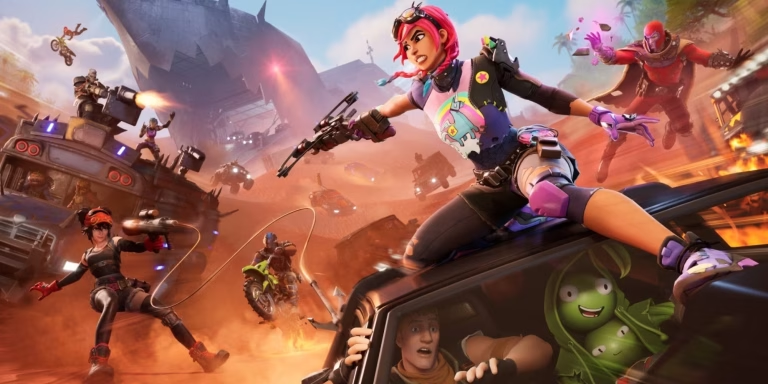
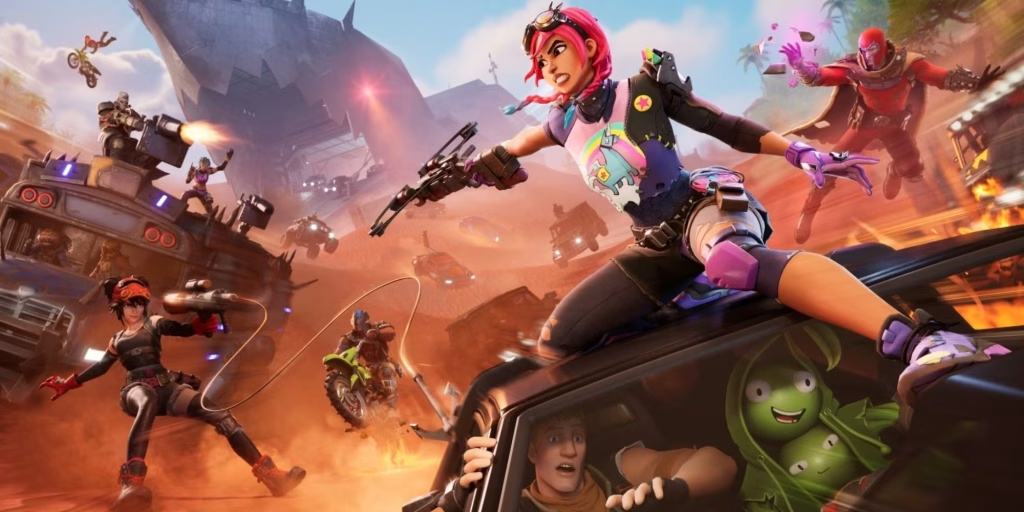
Fortnite isn’t just the massively popular battle royale or the creative playground streamers love—it’s also, surprisingly, a narrative-driven experience. For anyone who has ever wondered what’s really happening on the island, you’re far from alone. The storyline has captivated fans over the years, but it has also left many scratching their heads. What started as a promising narrative foundation has gradually frayed, creating moments that are both entertaining and frustrating.

Image Source: Bing Image. License: All Creative Commons

Back in 2019, the Fortnite universe felt full of potential. The dramatic close of Chapter 1, with its sky-splitting meteor and descent into darkness, was a cultural moment that drew attention even from nonplayers. The live destruction of the island gave players an emotional connection to the game, and it seemed Epic Games was building a coherent universe with recurring characters and a consistent storyline.

But over time, that clarity began to erode. Fortnite’s narrative has always been fluid, but in recent seasons, the lack of a clear direction has become impossible to ignore. At times, the story drives the action, like Chapter 3: Season 2 with its resistance-centered theme. At others, it fades into the background, as in Chapter 3: Season 3, leaving players with little sense of overarching stakes. Tonal swings—from battling reality-devouring chrome monsters one season to relaxing at summer events the next—can be jarring for those hoping for consistent lore.

The confusion deepened when Epic Games started moving major story elements into comics. Series like Zero Point and Zero War, created with Marvel and DC, revealed key secrets about the island and its events—but not every player could access them. Many fans were forced to rely on YouTube explainers or summaries to keep up, which made the in-game story feel fragmented and inaccessible.

Crossovers, while initially exciting, have also complicated the narrative. Seeing Spider-Man, Batman, or other famous characters land on the island is thrilling, but the line between Fortnite’s universe and the real world often feels blurred. The Seven, once a mysterious and compelling group, lost some of that allure when Dwayne “The Rock” Johnson’s Foundation was introduced. Add Ariana Grande, LeBron James, or Black Adam skins, and the story’s internal consistency begins to feel stretched.

Retcons have only added to the chaos. Fans once speculated that characters like The Paradigm and The Singularity were connected, but later comics declared them distinct, invalidating years of fan theories. These narrative reversals make it difficult even for longtime lore enthusiasts to discern what counts as canon.

Repetition has also dulled the story’s impact. Fortnite now often follows a predictable loop: a threat emerges, the map changes, heroes intervene, and the cycle repeats. While the season trailers remain exciting, the underlying formula rarely shifts, leaving veteran players with a sense of déjà vu.

That’s not to say Fortnite’s story is dead. The game’s universe still holds endless potential, and players are eager to see it fully realized. But until Epic Games ties these threads together into a cohesive, meaningful narrative, the lore will likely continue to feel patchwork—fascinating in pieces, but frustrating as a whole. For now, Fortnite’s story remains as elusive and unpredictable as the island itself.

A New Champion Rises: How Tekken 8 Redefines the Fighting Genre

0

Tekken 8 has landed like a perfectly timed uppercut, reigniting the competitive fighting game scene and reminding players why the King of Iron Fist Tournament remains the gold standard. After years of refinement, Bandai Namco has delivered more than just another sequel—this is a leap forward for the franchise. While titles like Street Fighter 6 and Mortal Kombat 1 continue to impress, Tekken 8 demonstrates that innovation, spectacle, and sheer fun are alive and well in the King of Iron Fist universe.

Image Source: Bing Image. License: All Creative Commons

The story mode blends anime-style drama with cinematic scale, offering a more streamlined narrative that still packs plenty of punch. Players follow Jin Kazama as he confronts his father, Kazuya Mishima, and grapples with the legacy of the devil bloodline. The stakes have never been higher, with the tournament entwined with threats of world domination. Beyond the fights, the game explores Jin’s character and his motivations, giving weight to the Mishima clan’s saga while balancing over-the-top action with moments of humor and camp. Some fan-favorite characters are briefly sidelined, but the storytelling remains engaging and entertaining.

Combat in Tekken 8 is where the game truly shines. The new Heat system injects energy into every match, filling up a bar that powers devastating attacks, shatters blocks, and unlocks signature moves. Matches feel fast, intense, and explosive, ensuring that no two rounds are ever the same. Ghost Battles further enhance the experience, letting AI opponents adapt to your playstyle. You can even spar against your own “ghost” or those of friends and pro players, offering a dynamic, practice-driven challenge even when you’re offline.

For newcomers, Tekken 8 introduces Special Style controls, which simplify complex combos into single-button inputs. This allows new players to jump straight into iconic moves and Heat attacks without memorizing long sequences, while experienced fighters can switch it off for maximum precision. It’s a thoughtful balance that keeps the game approachable without sacrificing depth.

Visually, Tekken 8 is a showcase powered by Unreal Engine 5. Characters are highly detailed, with lifelike textures, elaborate costumes, and expressive animations. Environments react dynamically to the action, and every punch, kick, and throw feels weighted and impactful. Running at 60fps, the game strikes a perfect balance between fluidity and visual fidelity, while the soundtrack heightens the tension with driving beats and character-specific themes.

Online play is polished, with smooth matchmaking and stable performance. The Arcade Lounge adds social features, letting players fight, spectate, create avatars, and even enjoy Tekken Ball—a fan-favorite, volleyball-inspired mode. Training modes are robust, providing tools like move analysis, save states, and replay functions, making them useful for both casual practice and competitive refinement.

Accessibility is well-considered for newcomers, but deeper options could still be improved. Special Style and Arcade Quest help ease entry into the game, though some classic modes are missing and the in-game store can feel aggressive. Still, the sheer volume of content—story mode, Tekken Ball, Arcade Quest, and a roster of 32 fighters—ensures there’s something for everyone.

Ultimately, Tekken 8 is more than a continuation of a storied franchise—it’s a statement of design, accessibility, and gameplay excellence. From high-octane combat and strategic systems to engaging story moments and social features, it caters to veterans and newcomers alike. With its combination of innovation, spectacle, and fun, Tekken 8 delivers the kind of fighting game experience that keeps players coming back for just one more match.

A Living Tamriel: How The Elder Scrolls Online Keeps RPG Fans Coming Back

0

The Elder Scrolls Online (ESO) has long captured the imagination of fantasy fans who grew up dreaming of elves, dragons, and epic quests. While early versions of the game were criticized for heavy grinding and a subscription model, ESO has transformed into a sprawling, highly customizable RPG world that caters to a wide variety of players. Whether you prefer exploring solo, tackling challenging raids with friends, or immersing yourself in a thriving community, the game now offers rich content and meaningful choices for everyone. What once felt like a niche experience has evolved into one of the most inclusive and expansive MMORPGs available today.

Image Source: Bing Image. License: All Creative Commons

ESO’s Expansions: Building a World, One Chapter at a Time

ESO’s history is presented in its expansions, which add new zones, features, and occasionally entire classes. Morrowind launched with the Warden class and battleground PvP. Summerset introduced the Psijic Order skill line and jewel-crafting. Elsweyr returned dragons to Tamriel and the Necromancer class. Greymoor took players back to Western Skyrim with vampires, werewolves, and the Antiquities system.

Greymoor’s Antiquities system specifically set the industry standard by allowing prospectors to unearth Mythic items—equipment so potent it revolutionized the way people created their characters.

The momentum did not slow down. Blackwood brought the Companions system, allowing solo players AI companions with personalities and quests of their own. High Isle responded with Tales of Tribute, a collectible card game, along with even more companions. Necrom brought large story reveals alongside new recruitable allies, and the newest expansion, Gold Road, revealed Scribing, a system that allows for skill customization in ways the game has never before.

Systems That Change the Game

ESO expansions serve to do more than just add pretty new places—they frequently remake how the game is played. Consider Antiquities: it’s the sole way to get Mythic gear, which provides special effects that can entirely transform your build. Pieces such as the Ring of the Pale Order, which heals you as you damage things, or Faun’s Lark Cladding, which allows you to run through things while charming them, have been staples for some playstyles.

The Companions system, introduced in Blackwood, also transformed the solo experience. With recruitable characters like Mirri, Ember, and Azandar, you’re no longer forced to adventure alone. These companions aren’t just filler—they level up, learn skills, and respond to your decisions, adding more depth to the world.

Gold Road’s Scribing system is the newest upgrade, allowing the player to customize their skills like never before. It’s a grind to max out, but the reward is the possibility of building a character that’s yours alone.

The Solo Player’s Paradise

ESO excels at solo play. Level scaling means the game never locks you out of content, regardless of your character’s level. You are free to explore anywhere, pursue any questline, and play as you see fit. For soloists, companions bring even more assistance, so Tamriel feels full of life without being a group-play experience.

The Changing Meta: Classes, Builds, and Gear

Similar to any progressive RPG, ESO’s meta changes with every update. Currently, the Arcanist is the PvE raid carry of choice due to its combination of raw power and simplicity, while the Nightblades are best for PvP and healing. Necromancers lost some momentum in the latest update, but they’re still good options.

Mythic items continue to define builds, as pieces such as the Oakensoul Ring, Sea-Serpent’s Coil, and Harpooner’s Wading Kilt provide players with fresh, bold ways to play.

The Player Experience: PvE, PvP, and Everything In Between

ESO succeeds as a casual-friendly MMO RPG. You can play it like a single-player Elder Scrolls game, dive into mid-level group content, or roll into hardcore raiding if that’s your style. PvP has gotten better since the game first came out, but performance issues, particularly in Cyrodiil, persist, so expectations should be managed there.

On the brighter side, performance on next-gen consoles is much smoother, and the game is more alt-friendly than ever. Add to that the stunning sound design and breathtaking zones like Summerset and West Weald, and you’ve got a game that constantly rewards exploration.

ESO’s Place in the RPG Landscape

The Elder Scrolls Online is not an MMO—it’s a living RPG that adjusts to the way you desire to play. You’re either a lore fanatic, a creator of special characters, a collector of mighty equipment, or an explorer who prefers to roam and discover. Whatever you are, ESO has cut out a niche for you. Its growth has brought it closer, more tailored, and more immersive than ever. If you’re searching for a fantasy world to get lost in, ESO still stands as one of the best.

A New Era at Hogwarts: How Hogwarts Legacy Brought the Magic Back

0

For many fans, the first taste of Harry Potter magic came from pretending to cast spells at a screen—plastic wand in hand, carefully whispering “Wingardium Leviosa.” That sense of wonder has followed the Wizarding World through its long journey in gaming, evolving from the simple, pixelated adventures of the early 2000s into the richly detailed, immersive experience of Hogwarts Legacy. Along the way, each new generation of games has brought players closer to the fantasy they imagined as children, culminating in a title that finally captures the scale, atmosphere, and enchantment of life at Hogwarts.

Image Source: Bing Image. License: All Creative Commons

Early Years: Charming, Clunky, and Full of Heart

Travel back to 2001, when the Harry Potter and the Sorcerer’s Stone game was released across Game Boy Color, Game Boy Advance, Windows, and the original PlayStation. Those early games were far from flawless—graphically basic, sometimes clunky, and sometimes more maddening than enjoyable. But they were also longingly nostalgic, providing enthusiasts with the opportunity to enter Hogwarts in a way that the movies never could.

Gameplay invariably tracked the movie storylines, and although the reception was divided, to many young Wizarding World fans, these games were their first digital immersion in that world. Yes, Harry’s face may have been a jumble of polygons and the castle cardboard rather than stone, but the magic was present. Even clunky Quidditch games and blocky spell battles couldn’t dampen the thrill of casting your first spell or sneaking around the castle under the cover of darkness.

A New Generation: Hogwarts Legacy and the Virtue of Next-Gen Magic

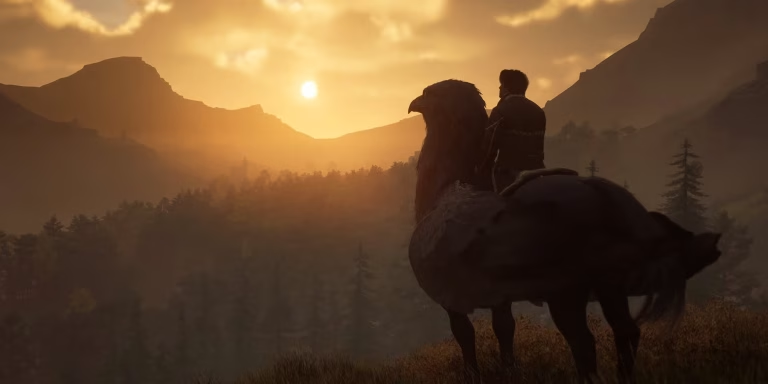
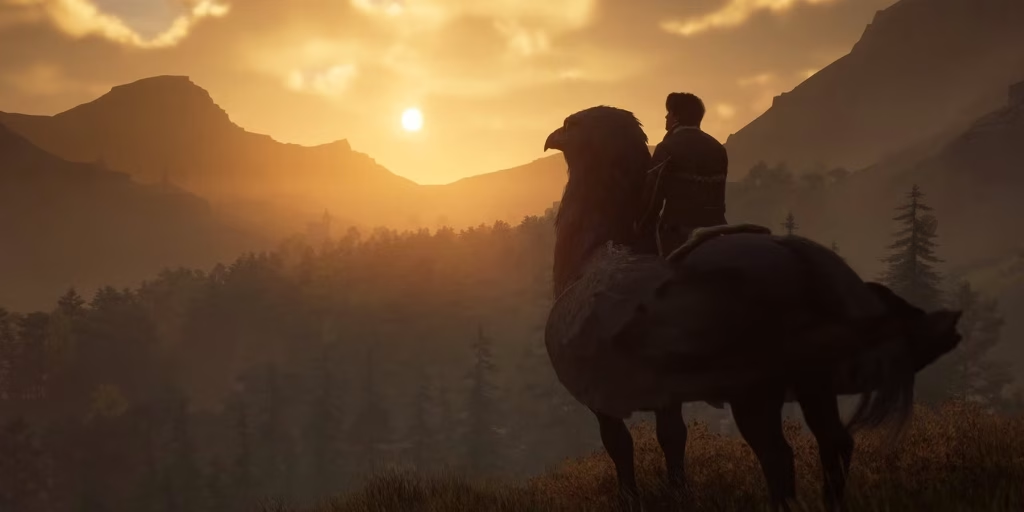
Leap forward two decades, and Hogwarts Legacy is the series’s most ambitious jump to date. With its breathtakingly beautiful open-world architecture, intricate character customization, and open-ended exploration of a living, breathing Hogwarts, it’s all fans ever fantasized about—and more.

The visual leap is breathtaking. A TikTok comparison by LookinAzz shows just how far things have gotten, with the neatly detailed castle in Hogwarts Legacy towering over its 2004 counterpart, while still paying homage to the original in its design. It’s a genuine graphical glow-up—one that would leave even Gilderoy Lockhart agog.

But the game’s attraction is far more than skin-deep. With its highly detailed environments, engaging side quests, dueling mechanics, and magical creature interactions, Hogwarts Legacy turns its players into magic students rather than mere spectators. Secrets lurk behind every door of the castle, and the world beyond its walls is equally as appealing—and treacherous.

PS5 vs. Switch Lite: Two Very Different Journeys

Naturally, not all wizarding adventures are equal. On PlayStation 5, Hogwarts Legacy is a visual masterpiece—detailed with lush color, immersive lighting, and silky-smooth motion. In the game, the environment is designed and detailed to the smallest pixel, from the common rooms to the Forbidden Forest. The technical brilliance is very visible through the game, whether you are flying over the Highlands or battling trolls.

The experience on the Switch Lite is limited, but surprisingly still good. The mainstay of the game is still strong,ong although the graphics are less detailed and the performance is not always smooth. The charm of cauldron stirring, casting spells, and discovering Hogwarts is still present. Moreover, the nicest thing is that your enchanting adventure can be with you wherever you go.

Fans Weigh In: Enchantment, Replayability, and a Few Frights

Fans have bestowed loads of affection on Hogwarts Legacy. Numerous fans sing the praises of the house-specific things—ranging from individual common rooms to specialized quests—and the excitement of rounding up magical creatures and equipment. One Ravenclaw enthusiast appreciated the breathtaking scenery and replayability, exclaiming that they couldn’t wait to play through each house just to see all the variations of the story.

Nevertheless, the game is not without its difficulties. Certain players have encountered the goblin battles as repetitive, while some players were caught off guard by the sheer number of spiders hiding in the Forbidden Forest. And on PlayStation, there’s a particular Hogsmeade-exclusive side quest with a house-elf that has become infamous for being a bit creepier than expected.

Magic Then and Now: A Legacy That Keeps Growing

Looking back, it’s remarkable to see how far Harry Potter games have come. The early titles may have lacked polish, but they sparked a generation’s imagination. Hogwarts Legacy, meanwhile, is both a technical marvel and a heartfelt tribute to the world fans know and love.

It’s not just a game—it’s an experience. One that blends nostalgia with modern gameplay, creating a journey that feels both familiar and fresh. Whether you’re a longtime fan reliving childhood memories or a first-year student just arriving at Hogwarts, the magic of this universe continues to evolve—and it’s never looked better.

Old Skies Marries Classic Style with a Bold Time-Travel Concept

0

Time travel has always been one of the trickiest ideas to get right in games. It’s a staple of science fiction, but few titles truly embrace its messiness—the paradoxes, the unintended consequences, the way even small changes can spiral into something unrecognizable. Old Skies, the latest adventure from Dave Gilbert and Wadjet Eye Games, doesn’t shy away from that complexity. Instead, it leans into it, crafting a narrative-driven experience that feels both refreshingly modern and deeply rooted in classic storytelling traditions.

Image Source: Bing Image. License: All Creative Commons

Set in the year 2062, Old Skies imagines a world where time travel is no longer theoretical. It’s regulated, commercialized, and quietly disastrous for human behavior. Players step into the role of Fia Quinn, a field agent for ChronoZen, a corporate time-travel agency whose mission is to preserve the integrity of history—while profiting from it. ChronoZen’s wealthy clients pay handsomely to revisit pivotal moments in their lives or nudge history in carefully controlled ways. Every trip is governed by psychological evaluations and a complex “timeline ranking” system that determines how much a person’s past can be altered without destabilizing reality.

The game’s structure gives Fia a unique advantage: no matter how drastically the timeline shifts, she—and her fellow agents—retain their memories. For players, this means that knowledge carries over between altered timelines, turning every failure and discovery into a meaningful step forward rather than a setback.

Fia is never alone in the field. Her handler, Frank “Nozzo” Nozzarelli, provides constant commentary from headquarters, blending sharp guidance with dry humor. Meanwhile, her mentor Duffy offers experience and restraint, grounding the more chaotic elements of the job. The chemistry between characters is a standout feature, brought to life by strong voice performances from Sally Beaumont as Fia and Edwyn Tiong as Nozzo. Their banter adds warmth and humanity, keeping the game’s high-concept premise firmly anchored in believable relationships.

The narrative unfolds across self-contained chapters, each centered on a different client and a different period in New York’s history. One moment you’re navigating the near future, the next you’re dropped into the grit and uncertainty of the 19th century. Each era is meticulously realized, from changing street sounds to evolving graffiti and signage. While the puzzles remain rooted in traditional point-and-click mechanics, Old Skies introduces a smart twist: instead of collecting physical items, you gather information. A searchable database allows players to comb through historical records, but only if they’ve pieced together accurate names and details from dialogue and environmental clues. It ensures that every conversation matters.

One of the game’s most distinctive choices is how it handles failure. Death is not a punishment or a game-over screen—it’s part of the learning process. Fia can and will die multiple times, often in the middle of solving a puzzle. Thanks to ChronoZen’s technology and Nozzo’s quick thinking, each death triggers a rewind, allowing players to apply what they’ve learned. These moments are often accompanied by wry commentary, reinforcing the idea that progress comes from persistence rather than perfection.

Dialogue is where Old Skies truly shines. Conversations are sharp, layered, and emotionally charged, whether you’re trading barbs with a bitter ex-boxer or navigating the tensions within a fractured family. The writing treats every interaction with care, and the voice acting adds depth even to minor characters, making the world feel lived-in and sincere.

Visually, the game marks a departure from Wadjet Eye’s signature pixel-art style. Instead, it features richly hand-painted backgrounds that bring each era to life, from sleek, neon-lit future interiors to the cluttered warmth of modern apartments. Rotoscoped character animations lend a smooth, expressive quality rarely seen in the genre. The soundtrack complements this attention to detail, shifting effortlessly between futuristic electronic tones and period-appropriate jazz and ambience.

Ultimately, Old Skies is more than a tribute to classic adventure games—it’s an evolution of the form. It explores the weight of choice, the fragility of time, and the human desire to rewrite the past, all through precise writing and thoughtful design. For fans of time-travel stories, narrative-driven games, or richly developed characters, this journey through history is hard to forget—and by the time the credits roll, you may find yourself wishing real life came with a rewind button.

Fatality-Level Fame: How Mortal Kombat Became the King of Fighting Games

0

For many players, their first encounter with Mortal Kombat is inseparable from memories of growing up near an arcade in the 1990s. Whether it was the striking digitized characters, the shocking splashes of blood, or the unforgettable moment when a booming voice declared “Finish Him!” just before a spine was torn free, the game left an immediate and lasting impression. It demanded attention in a way few titles ever had.

Image Source: Bing Image. License: All Creative Commons

Mortal Kombat was never simply another fighting game released into a crowded genre. From the start, it sparked intense controversy and ignited conversations well beyond gaming circles, becoming a lightning rod for debates about violence in media. At the same time, it delivered an experience so distinct and confident that it reshaped expectations for what fighting games could be. More than three decades later, the franchise remains a defining force in the industry—a rare example of a series that began as a cultural shockwave and evolved into a lasting global phenomenon.

The Arcade Origins: Blood, Controversy, and Fatalities

In 1992, Mortal Kombat invaded arcades with a brief twist: what if Street Fighter, but gory and with so much more attitude? Its sequel, Mortal Kombat II, doubled up on the gore and displayed a cheeky sense of humor with “babalities” and “friendships.” The creators very well knew how ridiculous it all was—and went with it. But the game’s infamy wasn’t all about humor. The firestorm over its violence was so intense that it helped spawn the ESRB ratings system. If your parents disliked it, that just made you adore it more.

The Art of the Port: Console Wars and Home Versions

For the rest of us who didn’t have unlimited quarters to waste, the real fight was which console offered the superior version at home. The SNES had better-looking and sounding graphics, but the Genesis offered smoother gameplay—and most importantly, it preserved the blood. For many fans, your initial Mortal Kombat was just whichever version your parents (or your spending money) could afford.

Storytelling and Lore: From Simple Fights to Epic Sagas

What began as a small-scale tournament with seven fighters quickly evolved into a sprawling saga filled with gods, realms, and messy family feuds. The roster exploded, the lore deepened, and suddenly, Mortal Kombat wasn’t just about uppercuts and fatalities anymore.

By the time the PlayStation 2 era rolled around, the series was dabbling in story modes, side material, and even a weird tangent into kart racing. It wasn’t exactly a work of genius, but it showed that Mortal Kombat wasn’t afraid to innovate and continue to surprise fans.

The Modern Era: Reboots, Reimaginings, and Mortal Kombat 1

Flash forward to the present, and Mortal Kombat continues to find new ways to reinvent itself. The newest iteration, Mortal Kombat 1, is a reboot, sequel, and prequel simultaneously. It tones down the military-focused tone of recent titles and becomes a full martial arts movie with outrageous cutscenes and a story mode that mixes melodrama and sheer pandemonium.

The introduction of the new Kameo system introduces classic characters as tag-in assists, with new depth added to combat. Invasion mode, which is a combination of brawler and board game, is another innovation. Not all of it works—some fans lament the content-heavy Mortal Kombat 11, and the Switch port is famously clunky—but the fundamental fighting still packs a more potent punch than ever.

Mortal Kombat on the Big Screen: Hits, Misses, and Fan Service

Mortal Kombat’s cinematic aspirations date back nearly as long as the games. The 1995 movie is a cult favorite, half campy and half endearing. Its sequel, Mortal Kombat: Annihilation, is better left unremembered.

The 2021 retooling sought to marry old fans and new. Though its narrative, for the most part, lays groundwork for sequels, it serves up brutal fight choreography and spectacular deaths. Joe Taslim’s Sub-Zero stands out, Kano steals every scene he’s in, and the movie isn’t afraid to get silly when it needs to. It glosses over the actual tournament, but promises more fights to follow.

The Secret Sauce: Why Mortal Kombat Endures

So what’s prevented Mortal Kombat from dying off when so many other fighting games have? It’s the combination of iconic characters, the balance between camp and seriousness, and a fanbase that loves both the lore and the extreme violence.

Mortal Kombat has fallen a lot—through awkward spin-offs, uneven sequels, cringeworthy movies—but it never stopped being unapologetically itself. And that’s why we keep coming back. Whether you’re a casual button-masher, a lore diehard, or just here to watch someone get ripped in half, there’s always another round waiting.

Nostalgia on Four Wheels: Why Gamers Can’t Let Go of The Simpsons: Hit & Run

0

Anyone who ever lost an afternoon tearing through Springfield as Homer—ducking Chief Wiggum, hunting down Buzz Cola cards, and casually demolishing mailboxes—already understands why The Simpsons: Hit & Run refuses to fade from memory. Released in 2003, the game wasn’t a lazy attempt to cash in on a hit TV show. It was thoughtful, funny, and surprisingly deep for what many expected to be a throwaway tie-in. That’s precisely why, more than two decades later, fans are still clamoring for anything that would let them slip back into the driver’s seat of the Family Sedan.

Image Source: Bing Image. License: All Creative Commons

What truly set Hit & Run apart was how boldly it let players step inside Springfield. This wasn’t some generic, yellow-painted city vaguely inspired by the show—it was a loving recreation packed with sight gags, callbacks, and hidden jokes that rewarded fans at every turn. Radical Entertainment clearly understood the source material. Iconic locations like Moe’s Tavern and the Kwik-E-Mart were recreated with care, and the return of the original voice cast helped the game feel less like a spin-off and more like an interactive episode. While the game rode the wave of early-2000s Grand Theft Auto popularity, it never lost its comedic identity, blending open-world chaos with The Simpsons’ irreverent humor. With over three million copies sold, its success wasn’t just commercial—it was cultural.

That success makes the absence of a sequel all the more baffling. For years, fans have asked the same question: Why was there never a Hit & Run 2? Former lead level designer Joe McGinn eventually shed light on the situation, and the explanation only made things more frustrating. According to McGinn, Gracie Films offered Radical Entertainment the chance to make three sequels—complete with full licensing and voice acting—at no cost. Somehow, that deal was rejected by publisher Vivendi Universal Games, with no explanation ever given. Even the developers were stunned. In hindsight, turning down free access to The Simpsons at the height of its popularity feels like one of the most bewildering decisions in gaming history.

Despite that missed opportunity, the love for Hit & Run has only grown stronger. Fans have kept the game alive through mods, replays, and even ambitious overhauls—including complete conversions inspired by other franchises, purely for fun. When the game’s soundtrack finally hit Spotify and Apple Music in early 2023, it reignited hopes that something official might still be on the horizon.

Those hopes gained more traction when The Simpsons co-showrunner Matt Selman openly expressed interest in seeing the game properly remastered. Of course, enthusiasm alone doesn’t solve the logistical hurdles. With Disney now owning the franchise and Radical Entertainment no longer operating in the same capacity, any revival would require rebuilding the experience from scratch. Capturing the exact mix of humor, nostalgia, and controlled chaos that defined the original would be no small task.

Still, that hasn’t stopped fans from trying. Independent developers have showcased impressive Unreal Engine 5 demos that imagine what a modern Hit & Run could look like—though without official approval, those projects often vanish as quickly as they appear.

Even so, the desire to return to Springfield hasn’t cooled. If anything, it’s grown. With decades of new characters, jokes, and locations to pull from, a modern sequel could go far beyond the original. Imagine exploring not just Springfield, but Shelbyville, Capital City, or even Itchy & Scratchy Land, all realized with today’s open-world technology. Until that dream becomes reality, The Simpsons: Hit & Run stands as a rare example of a licensed game done right—and a lingering reminder of how close it came to becoming something even bigger, if only the right people had said “yes.”

10 Unforgettable Family Animated Movies

0
Image Source: Bing Image. License: All Creative Commons

Let’s face it: streaming services may dominate today’s entertainment scene, but there’s something unmatched about grabbing a classic animated movie and letting the magic unfold on your own screen. Watching your kids, or even yourself, get lost in colorful characters, catchy songs, and imaginative chaos is a kind of joy that algorithms can’t replicate. Animation has evolved tremendously since the days of hand-painted cels and chalk sketches, yet the best family films still have that certain spark: heart, humor, nostalgia, and just the right amount of chaos.

Image Source: Bing Image. License: All Creative Commons

So, in classic entertainment-blogger fashion, here’s my reverse-order countdown of 10 unforgettable family animated movie collections that continue to enchant audiences. Whether you’re digging through the Blu-ray bin or scrolling through a streaming platform, these collections are guaranteed to keep the magic alive for generations.

Image Source: Bing Image. License: All Creative Commons

10. Hats Off to Dr. Seuss 5-Film Collection

If your household has ever celebrated Dr. Seuss Day with striped hats and a suspiciously Grinch-like visitor, you already know the charm of Ted Geisel’s rhymes. This collection isn’t just about The Grinch, though the green guy absolutely steals the show; it’s a trove of animated treasures, including The Cat in the Hat and Horton Hears a Who.

Image Source: Bing Image. License: All Creative Commons

The music was penned by Seuss himself, and the animation is the handiwork of Looney Tunes legend Chuck Jones. Because these half-hour specials rarely appear on streaming services, owning the Blu-ray set is almost essential for families wanting to keep the whimsical Seuss magic alive.

Image Source: Bing Image. License: All Creative Commons

Each short film is a reminder that storytelling can be simple, playful, and memorable all at once. Whether you’re introducing the classics to a new generation or reliving childhood favorites, this collection never disappoints.

Image Source: Bing Image. License: All Creative Commons

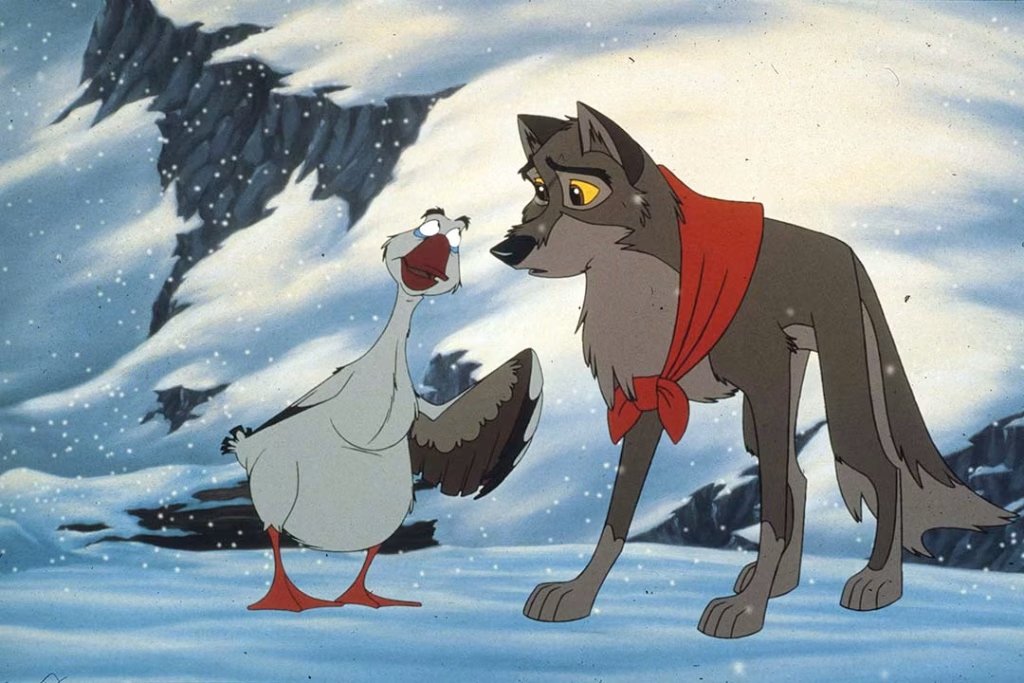
9. Balto 3-Movie Collection

Before DreamWorks became an animation powerhouse, Spielberg’s Amblimation studio gifted the world Balto, a heart-pounding adventure inspired by the real-life Iditarod Trail Sled Dog Race. The original film follows a heroic sled dog as he braves the Alaskan wilderness to deliver life-saving medicine.

Image Source: Bing Image. License: All Creative Commons

Suspense, courage, and talking pups combine to create a movie that keeps kids glued to the screen from start to finish. The sequels may take some liberties with the story, talking pups going on even more outlandish adventures, but they still provide entertainment and fun for younger audiences.

Image Source: Bing Image. License: All Creative Commons

While the first film is the star of the set, the follow-ups add a lighthearted charm that rounds out the collection. This trilogy is perfect for families who love action, adventure, and heroic animals.

Image Source: Bing Image. License: All Creative Commons

8. An American Tail 4-Movie Collection

Don Bluth’s tale of Fievel Mousekewitz and his family’s immigrant journey to New York is both heartwarming and adventurous. The story of hope, loss, and determination resonates across generations, blending emotion with engaging storytelling.

Image Source: Bing Image. License: All Creative Commons

The sequel, Fievel Goes West, was Amblimation’s first major project and includes Jimmy Stewart’s final voice performance as a wise sheriff dog, giving the film an added layer of nostalgia and gravitas.

Image Source: Bing Image. License: All Creative Commons

The later direct-to-video sequels may stray from the original’s emotional depth, but the music, charm, and sense of adventure remain intact. Kids can follow Fievel’s journeys while parents appreciate the heartfelt storytelling. This collection perfectly balances nostalgia for older viewers with fresh excitement for newcomers.

Image Source: Bing Image. License: All Creative Commons

7. VeggieTales 25th Anniversary 10-Film Collection

Who knew talking vegetables could become such a phenomenon? Phil Vischer and Mike Nawrocki’s early experiments with computer animation grew into a franchise that entertained millions of kids, combining humor with moral and biblical lessons. At its peak, VeggieTales was watched in roughly a third of U.S. households with children.

Image Source: Bing Image. License: All Creative Commons

The 25th-anniversary collection includes two feature films alongside a selection of half-hour episodes, making it ideal for long family viewing sessions. Despite the ever-changing landscape of streaming platforms, this set remains a reliable source of wholesome entertainment.

Image Source: Bing Image. License: All Creative Commons

Its clever humor, memorable songs, and creative storytelling continue to delight both kids and parents. The VeggieTales collection proves that animation can be fun, meaningful, and surprisingly clever all at once.

Image Source: Bing Image. License: All Creative Commons

6. The Prince of Egypt & Joseph: King of Dreams 2-Movie Bundle

DreamWorks’ The Prince of Egypt is a cinematic masterpiece, blending stunning visuals, dramatic storytelling, and a Grammy-winning soundtrack. The story of Moses’ journey from prince to prophet remains compelling decades later, captivating children and adults alike.

Image Source: Bing Image. License: All Creative Commons

Its companion film, Joseph: King of Dreams, offers a slightly lesser-known but equally powerful narrative, exploring another epic story from the Bible with beautiful animation and memorable songs.

Image Source: Bing Image. License: All Creative Commons

Streaming availability for these films can be limited, so owning this bundle ensures your family can revisit these classics whenever the mood strikes. Both movies succeed in combining drama, music, and adventure, making them standout examples of how animated films can be inspiring as well as entertaining.

Image Source: Bing Image. License: All Creative Commons

5. The Land Before Time 14-Movie Collection

When Don Bluth, Spielberg, and George Lucas collaborated on the original Land Before Time, they created a story that blends coming-of-age themes with adventure, friendship, and emotional depth. Littlefoot and his dinosaur friends navigate loss, hope, and resilience in a tale that still resonates today.

Image Source: Bing Image. License: All Creative Commons

The sequels, produced by Universal, may soften the tone but still keep the adventures engaging and fun for young audiences. Children adore following Littlefoot and friends on each new journey, while parents can appreciate the original’s emotional storytelling.

Image Source: Bing Image. License: All Creative Commons

With 14 films in total, this collection is perfect for long marathon sessions or casual family movie nights. It’s one of those rare franchises where every installment offers a little something special, keeping viewers invested across generations.

Image Source: Bing Image. License: All Creative Commons

4. The Complete Rankin-Bass Christmas 18-Movie Collection

Few things are more synonymous with the holidays than Rankin-Bass stop-motion animation. From Rudolph the Red-Nosed Reindeer to Frosty the Snowman, these specials defined the way American families experience Christmas for decades.

Image Source: Bing Image. License: All Creative Commons

The full Blu-ray collection offers all 18 movies in one convenient package, saving parents from juggling multiple discs and ensuring every holiday classic is readily available. The charm of Rankin-Bass lies not just in its animation but in its storytelling.

Image Source: Bing Image. License: All Creative Commons

Each tale carries warmth, whimsy, and life lessons that resonate with both children and adults. The combination of stop-motion visuals, memorable songs, and festive narratives makes this collection a must-have for families looking to create lasting holiday traditions.

Image Source: Bing Image. License: All Creative Commons

3. Scooby-Doo on Zombie Island

Among the many Scooby-Doo movies, Zombie Island stands apart. Its slightly darker tone, atmospheric setting, and cleverly designed villains give the Mystery Inc. gang a more grown-up edge without losing its family-friendly appeal.

Image Source: Bing Image. License: All Creative Commons

From the Ghost of Morgan Moonscar to the eerie zombies, the film combines suspense, comedy, and clever twists to create a memorable viewing experience. This movie works for both longtime fans and newcomers, offering a fresh take on the familiar gang while retaining the franchise’s classic charm.

Image Source: Bing Image. License: All Creative Commons

Zombie Island is a perfect example of how Scooby-Doo can balance mystery, humor, and heart, making it a standout addition to any family’s animated collection.

Image Source: Bing Image. License: All Creative Commons

2. Scooby-Doo and the Witch’s Ghost

Witch’s Ghost ups the ante with a small-town setting, a slow-building mystery, and the introduction of the Hex Girls, one of the coolest recurring elements in the franchise. The story’s writing is sharp, the twist ending is satisfying, and the overall atmosphere captures autumnal vibes like no other Scooby-Doo film.

Image Source: Bing Image. License: All Creative Commons

Kids are drawn to the mystery and fun, while adults can appreciate the clever nods and layered storytelling. The Hex Girls alone elevate this movie to must-watch status, making it a top-tier entry in the Scooby-Doo library.

Image Source: Bing Image. License: All Creative Commons

Witch’s Ghost proves that this long-running franchise can still deliver creativity and excitement decades after its inception.

Image Source: Bing Image. License: All Creative Commons

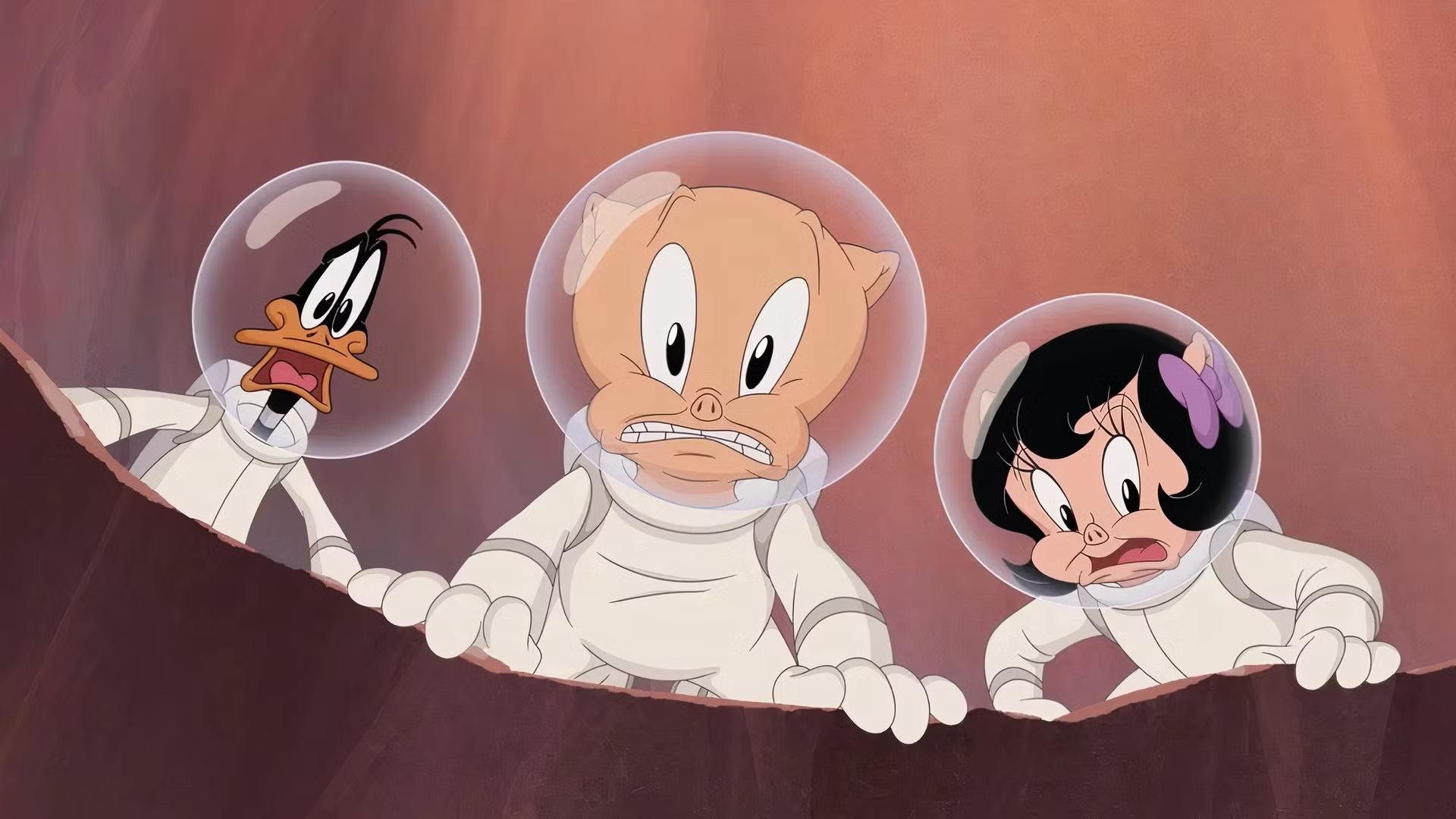
1. Looney Tunes: The Day the Earth Blew Up & the Legacy

Few animated franchises have had the cultural impact of Looney Tunes. From Porky Pig to Daffy Duck, these characters define American animation. The Day the Earth Blew Up brings the iconic gang to the big screen in a full-length theatrical adventure, mixing slapstick comedy with sci-fi chaos and classic toon antics.

Image Source: Bing Image. License: All Creative Commons

Fans of Bugs Bunny and Daffy Duck will revel in the absurdity, clever gags, and over-the-top action that the series has always been known for. The appeal of Looney Tunes goes beyond nostalgia. The humor is timeless, the animation dynamic, and the characters endlessly entertaining.

Image Source: Bing Image. License: All Creative Commons

Whether you grew up with these classics or are introducing them to a new generation, this franchise exemplifies everything that makes animated storytelling magical. It’s a collection every family should experience together.

Image Source: Bing Image. License: All Creative Commons

Animation has come a long way, but the films on this list remind us why the best family movies never lose their magic. From timeless classics to slightly offbeat gems, these collections offer laughter, adventure, and heartfelt moments that span generations. For families, there’s nothing quite like revisiting these treasures, proof that great animation is as enduring as it is enchanting.