Home Blog Page 181

The Bone Temple Proves Undead Horror Never Gets Old

0
Image Source: Bing Image. License: All Creative Commons

The zombie genre has never been short on blood, chaos, or bleak worldviews, but every once in a while, a film comes along that reminds us why the undead still matter. 28 Years Later: The Bone Temple isn’t just another sequel shambling forward on franchise momentum—it’s a strange, daring, and deeply unsettling evolution of a series that has always thrived on discomfort. What follows is a reimagining of that madness, one that leans into philosophy, satire, cruelty, and unexpected tenderness, all while keeping its foot firmly on the accelerator.

Image Source: Bing Image. License: All Creative Commons

From the very beginning, the 28 Days Later franchise has refused to play by the rules of traditional zombie cinema. Danny Boyle’s original film shattered expectations with its rage-fueled, infected, jittery, anxiety-inducing energy. Over two decades later, 28 Years Later: The Bone Temple proves that the series still has no interest in calming down. Instead, it pushes further into narrative chaos, turning what was once survival horror into something far stranger—a reflection on belief systems, memory, and the terrifying adaptability of humanity itself.

Image Source: Bing Image. License: All Creative Commons

What’s remarkable about The Bone Temple is how confidently it embraces its own instability. This isn’t a sequel trying to recreate past glories shot-for-shot. It understands that the world has changed, the audience has changed, and horror must evolve with it. The film leans into unpredictability, allowing its story to spiral into cult behavior, warped nostalgia, and emotional contradictions that feel uncomfortably close to our own reality.

Image Source: Bing Image. License: All Creative Commons

As the second installment in a planned trilogy, The Bone Temple carries the burden of being a narrative bridge. Middle chapters are notorious for feeling like connective tissue rather than complete stories, but this film refuses to settle for that role. Instead of laying groundwork quietly, it explodes outward, using its position to take risks that a first or final chapter might avoid. The result is a film that feels reckless in the best sense of the word.
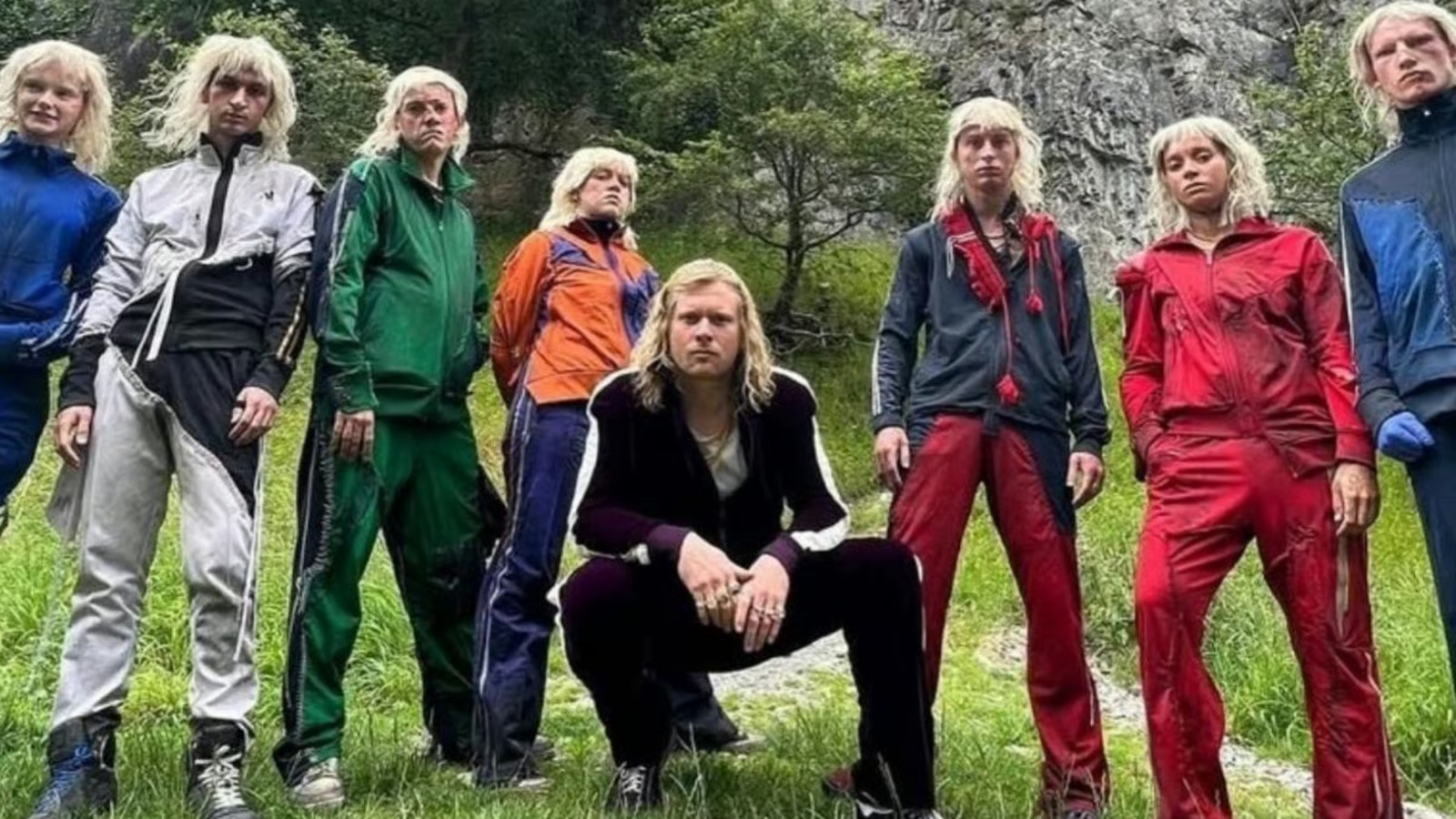
Image Source: Bing Image. License: All Creative Commons

Picking up directly after the events of 28 Days Later, the story wastes no time throwing viewers back into uncertainty. Young Spike’s journey takes a sharp left turn when he encounters a cult-like group obsessed with relics of the past. From that moment on, the film abandons any illusion of safety. It signals early that this world is no longer governed by survival logic alone, but by belief, performance, and desperation.
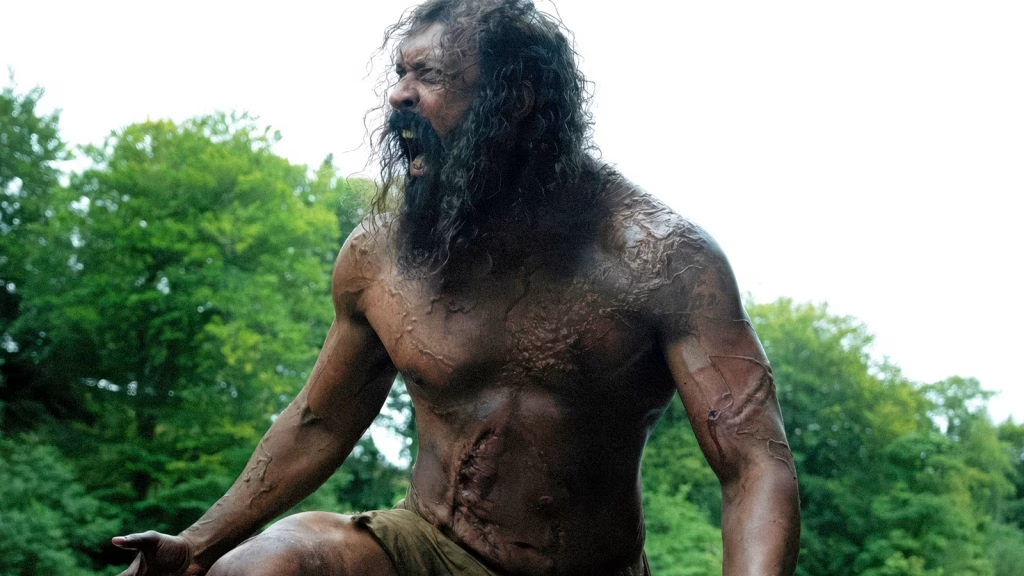
Image Source: Bing Image. License: All Creative Commons

Director Nia DaCosta brings a markedly different energy to the franchise, and that contrast works to the film’s advantage. Where Danny Boyle favored frantic movement and sensory overload, DaCosta opts for control and patience. Her camera lingers on faces, on rituals, on spaces that feel wrong long before violence erupts. This slower approach doesn’t dull the horror—it sharpens it, allowing dread to accumulate until it becomes unbearable.

Image Source: Bing Image. License: All Creative Commons

Visually, The Bone Temple feels more composed, almost ceremonial. Long takes and deliberate framing give the apocalypse a strange elegance, as if the end of the world has settled into a ritualistic rhythm. This aesthetic choice reinforces the film’s themes, suggesting that chaos doesn’t always look chaotic. Sometimes it organizes itself, dresses itself up, and demands to be respected.

Image Source: Bing Image. License: All Creative Commons

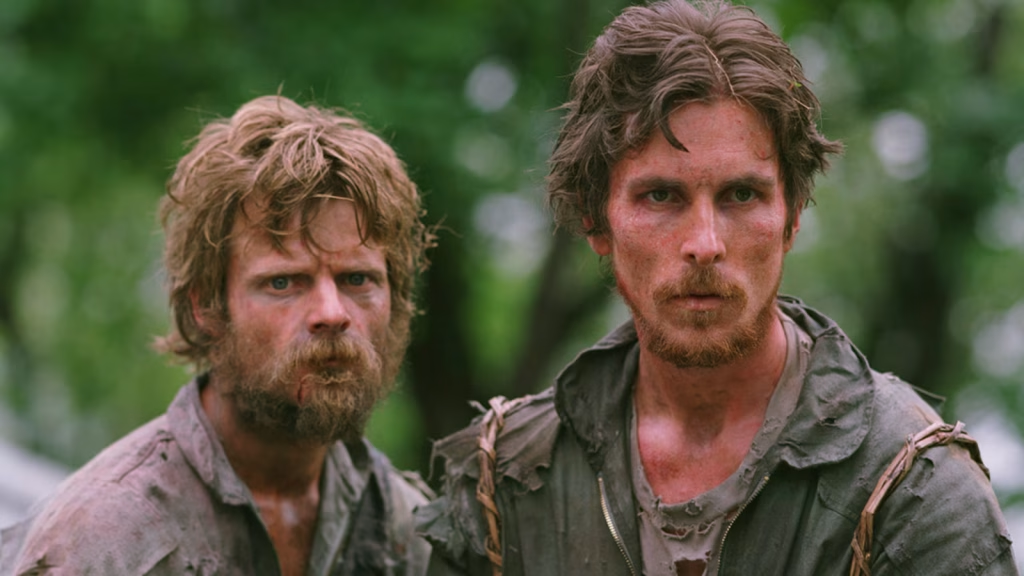
At the emotional core of the film is Ralph Fiennes’ Dr. Ian Kelson, a character who could have easily become a caricature but instead becomes the story’s most haunting presence. Kelson is a scientist, an artist, and a deeply broken man, trying to impose meaning on a world that has stripped it away. His obsession with bones is both literal and symbolic—a way of preserving what remains when everything else rots.

Image Source: Bing Image. License: All Creative Commons

Fiennes plays Kelson with a balance of eccentricity and sincerity that makes him impossible to dismiss. Watching him carefully clean bones or speak softly to infected individuals is unsettling, but never mocking. There’s compassion in his madness, and that compassion forces the audience to question where humanity truly ends in a world overrun by monsters.

Image Source: Bing Image. License: All Creative Commons

Kelson’s relationship with Samson, an infected man portrayed with surprising sensitivity by Chi Lewis-Parry, is one of the film’s most affecting elements. Their bond challenges the binary of human versus monster, suggesting that identity may persist even after transformation. These scenes slow the film down, allowing moments of empathy to exist in a genre that often prioritizes spectacle over soul.
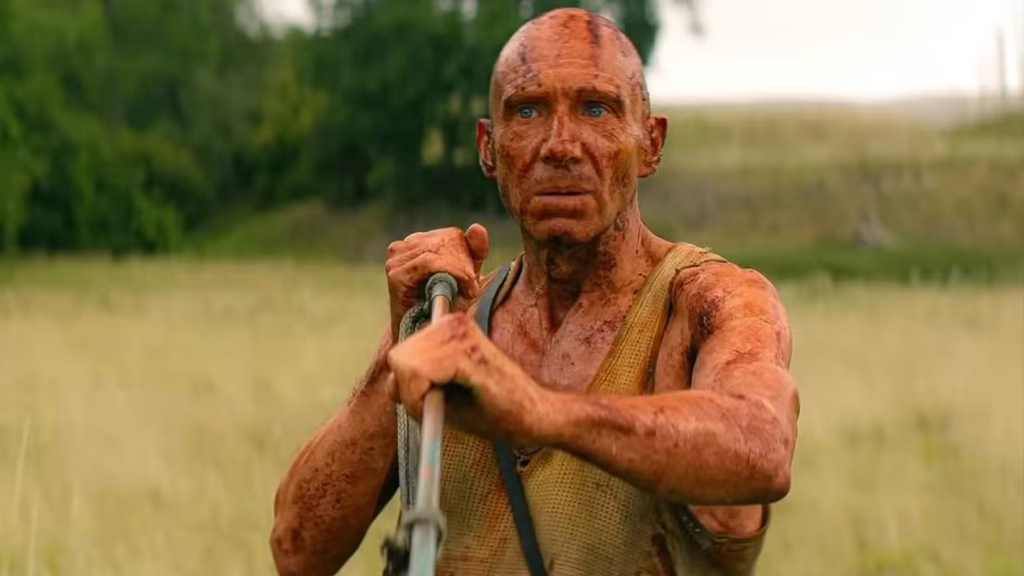
Image Source: Bing Image. License: All Creative Commons

On the opposite end of the moral spectrum is Sir Lord Jimmy Crystal, played with unnerving charisma by Jack O’Connell. Jimmy isn’t just a villain; he’s a performance. O’Connell portrays him as a grotesque blend of entertainer, preacher, and tyrant, a man who understands that power in the apocalypse comes from controlling stories as much as resources.

Image Source: Bing Image. License: All Creative Commons

Jimmy’s cult, known simply as the Jimmies, is one of the film’s most unsettling inventions. Dressed in tracksuits and blonde wigs, they parody childhood nostalgia while weaponizing it. Their rituals feel absurd until they suddenly feel terrifying, revealing how easily comfort can be twisted into control when people are desperate for meaning.
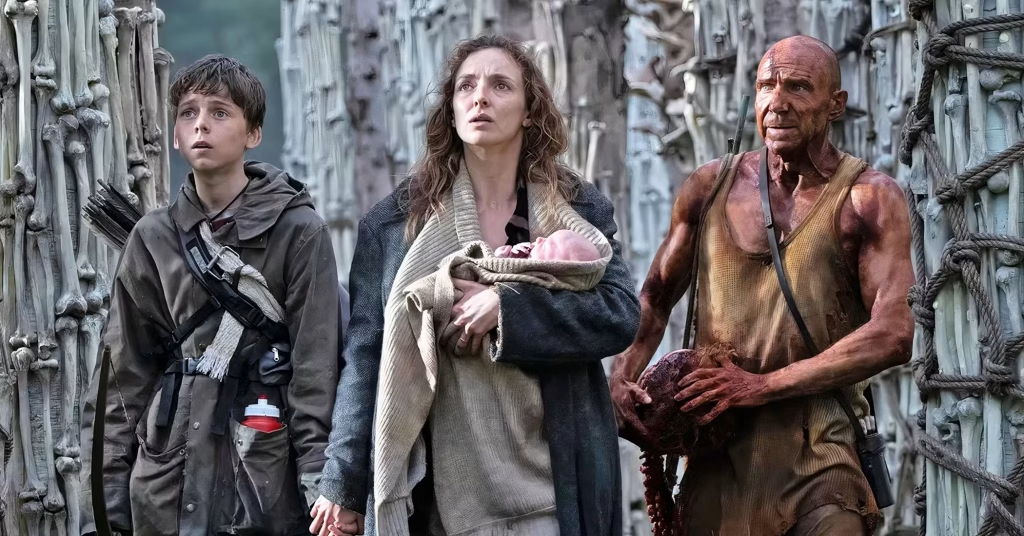
Image Source: Bing Image. License: All Creative Commons

The choice to base the cult’s imagery on a disgraced public figure from pre-collapse Britain adds another layer of discomfort. The film uses this misremembered past to explore how societies cling to symbols without understanding their true histories. It’s a sharp critique of nostalgia itself—how selective memory can become dangerous when truth no longer matters.

Image Source: Bing Image. License: All Creative Commons

Spike, portrayed by Alfie Williams, remains the audience’s emotional anchor, even when the story shifts focus away from him. His youth and vulnerability highlight the cost of this broken world, reminding viewers that innocence doesn’t disappear—it gets exploited. Spike’s quiet reactions often say more than any speech could.
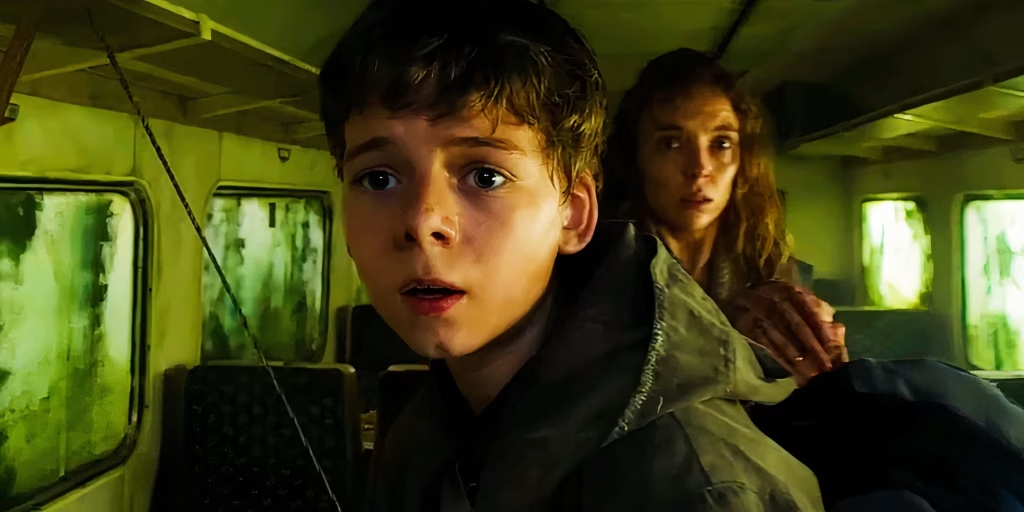
Image Source: Bing Image. License: All Creative Commons

His interactions with Jimmy Ink, played by Erin Kellyman, provide brief but meaningful moments of connection. These scenes don’t promise salvation, but they offer something just as rare in this universe: understanding. In a film obsessed with belief systems, these personal connections feel radical.

Image Source: Bing Image. License: All Creative Commons

Worldbuilding has always been a strength of the 28 franchise, and The Bone Temple expands it in unsettling ways. Rather than focusing on governments or resistance movements, the film zeroes in on micro-societies—cults, partnerships, rituals—that spring up when larger structures collapse.

Image Source: Bing Image. License: All Creative Commons

The Jimmies’ pseudo-charitable acts are especially disturbing. Their belief that cruelty can coexist with generosity reflects a frighteningly real human tendency to justify harm through ideology. The film makes it clear that the infected are not the greatest threat; unchecked belief is.
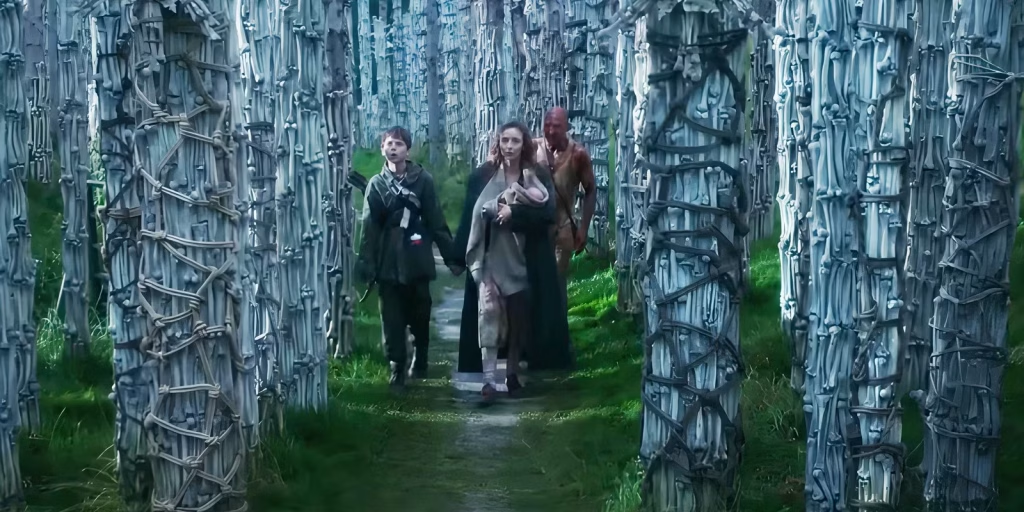
Image Source: Bing Image. License: All Creative Commons

Violence in The Bone Temple is handled with precision rather than excess. When gore appears, it feels earned and devastating. The infamous barn sequence is particularly difficult to watch, not because of graphic content alone, but because of how calmly the violence is framed.

Image Source: Bing Image. License: All Creative Commons

DaCosta refuses to sensationalize suffering. Instead, she lets scenes unfold with uncomfortable restraint, forcing the audience to sit with the consequences. This approach makes the horror linger long after the screen cuts to black.
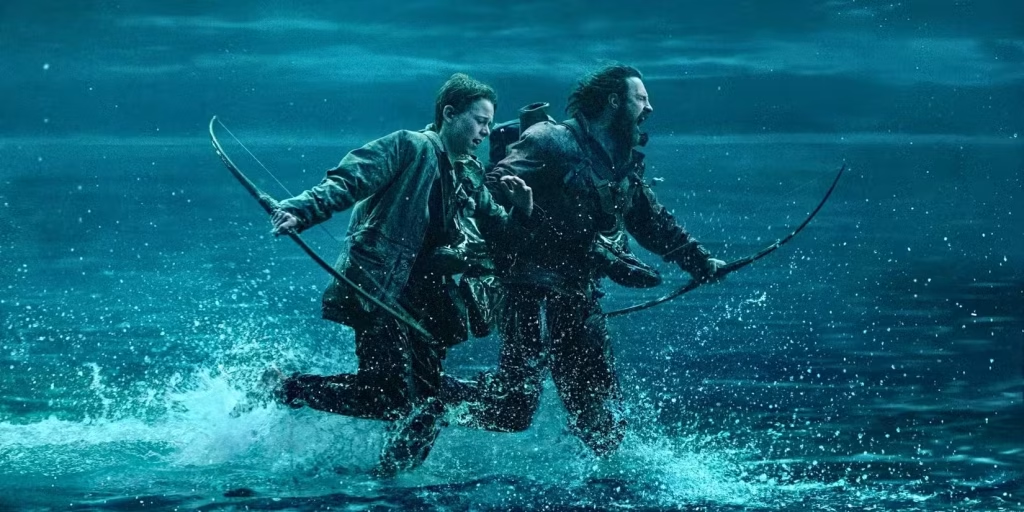
Image Source: Bing Image. License: All Creative Commons

Despite its darkness, the film frequently dips into grim humor. These moments aren’t comic relief so much as survival mechanisms, reflecting how people cope with unbearable realities. Kelson’s bizarre bonding rituals and the Jimmies’ warped catchphrases are funny until they suddenly aren’t.

Image Source: Bing Image. License: All Creative Commons

This tonal instability shouldn’t work, but it does. The film understands that fear and laughter often exist side by side, especially in times of crisis. By embracing that contradiction, The Bone Temple feels disturbingly honest.

Image Source: Bing Image. License: All Creative Commons

Like the best zombie stories, this film uses the undead as a metaphor rather than a threat alone. Here, zombies represent stagnation, unresolved trauma, and the danger of clinging to the past instead of confronting the present.

Image Source: Bing Image. License: All Creative Commons

The film repeatedly asks difficult questions without offering neat answers. How do people regain control when the world no longer makes sense? How do belief systems form when truth becomes optional? These questions resonate far beyond the screen.

Image Source: Bing Image. License: All Creative Commons

What makes The Bone Temple feel especially relevant is how closely its themes mirror modern anxieties. Misinformation, performative leadership, and nostalgia-driven politics all find disturbing echoes in the film’s world.

Image Source: Bing Image. License: All Creative Commons

Critics have largely embraced the film’s ambition, praising its willingness to alienate as much as entertain. While it may frustrate viewers expecting a straightforward zombie thriller, it rewards those willing to engage with its ideas.
Image Source: Bing Image. License: All Creative Commons

Some fans may miss the wider geopolitical scope of earlier entries, but The Bone Temple compensates by diving deeper into psychology and belief. Its focus is narrower, but far more intense.

Image Source: Bing Image. License: All Creative Commons

As a middle chapter, the film does more than set up future events—it redefines the franchise’s emotional and philosophical core. It expands what a zombie movie can be without abandoning the genre entirely.

Image Source: Bing Image. License: All Creative Commons

Ralph Fiennes’ performance alone would justify the film’s existence, but it’s the ensemble that elevates it. Every character feels like a response to the same question: how do you stay human when humanity has collapsed?

Image Source: Bing Image. License: All Creative Commons

Visually striking, emotionally challenging, and frequently disturbing, The Bone Temple refuses to be passive entertainment. It demands attention, patience, and reflection, qualities increasingly rare in blockbuster horror. In a genre crowded with repetition, this film dares to be strange. It embraces discomfort, ambiguity, and contradiction, trusting the audience to keep up rather than spoon-feeding easy thrills.

Image Source: Bing Image. License: All Creative Commons

Whether you view it as horror, satire, or philosophical provocation, 28 Years Later: The Bone Temple stands as one of the boldest zombie films in years. It proves that the undead still have something vital to say—if filmmakers are brave enough to listen.

Image Source: Bing Image. License: All Creative Commons

The Bone Temple isn’t just about surviving the apocalypse—it’s about what we build in its aftermath. By blending horror with dark humor and unsettling introspection, the film reminds us that the scariest thing in any ruined world isn’t the monsters roaming outside, but the beliefs we choose to cling to when everything else falls apart.

14 Enigmatic Coming-of-Age Films and Stories Worth Watching

0
Image Source: Bing Image. License: All Creative Commons

Coming-of-age stories have a unique way of capturing the highs, lows, and uncertainties of growing up. When these journeys are intertwined with mystery, dark academia, or fantastical elements, they create a compelling mix of suspense, self-discovery, and the strange or uncanny. Whether drawn from beloved literary classics or modern fantasy series, these tales immerse audiences in worlds where adolescence meets secrets, supernatural forces, and tough moral choices—showing that growing up isn’t just about age, but about confronting the unknown.

Image Source: Bing Image. License: All Creative Commons

15. Everything I Never Told You

Celeste Ng’s Everything I Never Told You is a deeply moving exploration of family dynamics, identity, and unspoken grief. Set in 1970s Ohio, the story revolves around the death of Lydia Lee and the ripples it causes within her family, revealing the tensions and expectations that had been simmering beneath the surface. Ng’s writing captures the quiet struggles of a mixed-race family navigating societal pressure and personal loss.

Image Source: Bing Image. License: All Creative Commons

The novel goes beyond a simple whodunit, instead examining how misunderstandings, assumptions, and silences shape relationships. Each character’s attempt to understand Lydia—and themselves—feels authentic and painfully human. Its emotional depth and literary precision have earned widespread acclaim, cementing its place as a poignant and thought-provoking coming-of-age mystery.

Image Source: Bing Image. License: All Creative Commons

14. Water Shall Refuse Them

Lucie McKnight Hardy’s Water Shall Refuse Them combines folk horror with a compelling coming-of-age narrative. Set in a remote Welsh village during the 1976 heatwave, the story follows sixteen-year-old Nif and her family as they try to escape grief and loss. The village itself is strange, unsettling, and tinged with a supernatural energy that mirrors Nif’s internal struggles.

Image Source: Bing Image. License: All Creative Commons

Hardy’s novel excels at blending psychological insight with chilling horror. The eerie, oppressive atmosphere captures the uncertainties of adolescence while exploring grief, transformation, and the growing awareness of a world that is often cruel and inexplicable. Its unsettling tone and coming-of-age themes make it a must-read for fans of the uncanny.

Image Source: Bing Image. License: All Creative Commons

13. Picnic at Hanging Rock

Joan Lindsay’s Picnic at Hanging Rock, along with its iconic 1975 film adaptation, is an enduring story of mystery and adolescence. When three students vanish during a school outing, the narrative explores both the unexplained and the emotional repercussions for those left behind. The sense of ambiguity and slow-burning tension elevates the tale from a simple disappearance to a meditation on innocence and loss.

Image Source: Bing Image. License: All Creative Commons

The novel’s haunting landscapes and atmospheric detail enhance the feeling of unease and wonder. Lindsay’s focus on the unknown and the unknowable taps into universal anxieties about growing up and encountering forces beyond comprehension, securing its place as a cornerstone of dark academia and coming-of-age mysteries.

Image Source: Bing Image. License: All Creative Commons

12. The Secret History

Donna Tartt’s The Secret History is widely regarded as the ultimate dark academia novel. Through the eyes of an outsider, the story delves into an elite group of college students obsessed with Greek mythology, art, and intellectual prestige. As secrets unravel and a murder occurs, the novel examines how ambition, loyalty, and moral compromise intersect in a world that prizes knowledge above all.

Image Source: Bing Image. License: All Creative Commons

The tension between beauty and corruption permeates every page. Tartt’s prose is as elegant as it is unsettling, and the exploration of ethical dilemmas within a close-knit, highly intellectual circle has inspired countless readers and writers in the realm of dark academia, proving that intelligence can be both seductive and dangerous.

Image Source: Bing Image. License: All Creative Commons

11. The Virgin Suicides

Jeffrey Eugenides’ The Virgin Suicides is a haunting exploration of adolescence, longing, and loss. Told from the perspective of neighborhood boys fascinated by the mysterious Lisbon sisters, the story unravels the sisters’ tragic fate while conveying the intensity of youthful obsession and confusion.

Image Source: Bing Image. License: All Creative Commons

The ethereal tone of the narrative, combined with the dreamlike depiction of suburban life, creates a sense of inevitability and melancholy. The book’s exploration of alienation, secrecy, and the unknowable aspects of other people’s lives remains deeply affecting, cementing it as a seminal coming-of-age mystery.

Image Source: Bing Image. License: All Creative Commons

10. Never Let Me Go

Kazuo Ishiguro’s Never Let Me Go combines dystopian science fiction with a quiet, introspective coming-of-age story. At Halisham School, children grow up unaware of their grim purpose as organ donors, and the narrative examines the fragility of friendship, love, and human experience.

Image Source: Bing Image. License: All Creative Commons

The novel’s restrained, melancholy tone intensifies its emotional impact. Ishiguro raises profound questions about identity, mortality, and the ethics of science, making the story both a deeply personal coming-of-age journey and a meditation on humanity’s moral boundaries.

Image Source: Bing Image. License: All Creative Commons

9. We Have Always Lived in the Castle

Shirley Jackson’s We Have Always Lived in the Castle is a gothic exploration of adolescence, isolation, and family trauma. Sisters Merricat and Constance live in seclusion following the poisoning of their family, creating a tense atmosphere where even small interactions with outsiders feel threatening and strange.

Image Source: Bing Image. License: All Creative Commons

Jackson’s novel excels at conveying the psychological dimensions of growing up in unusual circumstances. The story’s dark humor, eerie setting, and focus on the alienation of youth make it an enduring example of psychological mystery and gothic coming-of-age fiction.

Image Source: Bing Image. License: All Creative Commons

8. Girl from Nowhere

Netflix’s Girl from Nowhere is a modern, unsettling dark academia series. Nanno, a mysterious girl with supernatural powers, moves between schools exposing the lies, cruelty, and hypocrisy of students and teachers alike. Each episode functions as a standalone story, combining suspense, moral lessons, and the thrill of uncovering hidden truths.

Image Source: Bing Image. License: All Creative Commons

The series confronts themes such as bullying, abuse, and social injustice, all through the lens of adolescence. Nanno’s enigmatic presence and the show’s tense storytelling have earned it praise as a mature, thought-provoking coming-of-age mystery that challenges viewers to question the world around them.

Image Source: Bing Image. License: All Creative Commons

7. Over the Garden Wall

Cartoon Network’s Over the Garden Wall is an autumnal, whimsical tale of two brothers lost in a mysterious forest. Wirt and Greg, accompanied by the talking bluebird Beatrice, navigate strange lands while discovering courage, wisdom, and resilience along the way.

Image Source: Bing Image. License: All Creative Commons

The series balances charm, humor, and moments of genuine darkness. Its visual richness, folk-inspired music, and subtle allegories for growth and self-discovery make it a unique, emotionally resonant coming-of-age story with an undercurrent of mystery.

Image Source: Bing Image. License: All Creative Commons

6. Road to Avonlea

Road to Avonlea, based on L.M. Montgomery’s novels, is a cozy, yet poignant coming-of-age tale. Sarah Stanley moves from Montreal to live with her relatives on Prince Edward Island, encountering adventures, challenges, and life lessons that shape her understanding of family, loyalty, and independence.

Image Source: Bing Image. License: All Creative Commons

The series highlights the joys and hardships of small-town life while exploring themes of belonging and personal growth. Its warm, relatable narrative and rich character development make it a timeless story of adolescence, ideal for viewers drawn to reflective, gentle mysteries of youth.

Image Source: Bing Image. License: All Creative Commons

5. Anne With An E

Anne With An E reimagines the classic story of Anne of Green Gables, emphasizing Anne Shirley’s growth in a society filled with expectations and biases. Anne’s journey of self-discovery, resilience, and adaptation to Green Gables is both inspiring and emotionally engaging.

Image Source: Bing Image. License: All Creative Commons

The series addresses contemporary themes such as gender, identity, and belonging while maintaining the charm and heart of the original work. Its nuanced portrayal of adolescence has resonated with audiences, making it a standout example of dark academia in a historical setting.

Image Source: Bing Image. License: All Creative Commons

4. Dead Poets Society

Dead Poets Society is a quintessential coming-of-age film that explores individuality, creativity, and the power of mentorship. Set in a conservative prep school, students are inspired by Robin Williams’ character, John Keating, to think independently and pursue their passions.

Image Source: Bing Image. License: All Creative Commons

The film’s themes of intellectual curiosity, rebellion, and moral courage make it an enduring dark academia classic. Its exploration of adolescence, societal expectations, and self-expression continues to inspire generations of students and storytellers alike.

Image Source: Bing Image. License: All Creative Commons

3. Harry Potter and the Sorcerer’s Stone

J.K. Rowling’s Harry Potter and the Sorcerer’s Stone introduces audiences to a magical world where young Harry discovers his wizarding identity and navigates the challenges of growing up at Hogwarts. Mystery, friendship, and personal growth are woven seamlessly throughout the narrative.

Image Source: Bing Image. License: All Creative Commons

The first book sets the tone for a coming-of-age saga rich with adventure, danger, and self-discovery. Its magical school setting and complex characters have left an indelible mark on generations, blending fantasy with timeless lessons about courage, loyalty, and morality.

Image Source: Bing Image. License: All Creative Commons

2. The Chronicles of Narnia: The Lion, the Witch & the Wardrobe

C.S. Lewis’ classic tale follows the Pevensie siblings as they escape wartime England and enter Narnia, a world of magic, adventure, and moral lessons. Their journey mirrors the transition from innocence to experience, highlighting themes of courage, responsibility, and identity.

Image Source: Bing Image. License: All Creative Commons

The story’s imaginative setting and allegorical depth make it both a timeless fantasy and a thoughtful exploration of growing up. Its enduring influence lies in the way it intertwines wonder, moral reflection, and the coming-of-age experience across a fantastical landscape.

Image Source: Bing Image. License: All Creative Commons

From gothic mysteries to magical realms and modern supernatural tales, these fifteen stories capture the essence of adolescence and the transformative power of secrets, self-discovery, and intellectual curiosity. They remind us that growing up is rarely simple—it’s a journey filled with wonder, danger, and revelation. These tales of coming-of-age in mysterious and darkly academic worlds leave lasting impressions, offering both escape and reflection for readers and viewers alike.

15 Samuel L. Jackson Roles That Showcase His Acting Power

0
Image Source: Bing Image. License: All Creative Commons

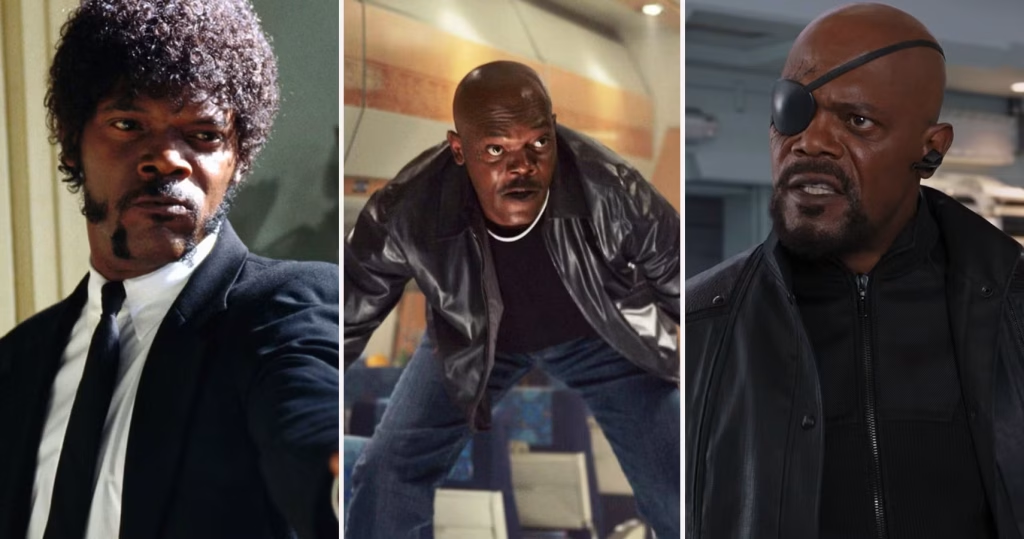
Few performers have shaped contemporary film culture as distinctly as Samuel L. Jackson. Across countless movies, he’s delivered blistering speeches, brought gravitas to major franchises, and often walked away with the most memorable moments—even in supporting parts. His body of work cuts across genres, eras, and moods, yet his signature energy and authority remain constant. From early career standouts to global blockbusters, these performances highlight the versatility, charisma, and lasting influence that define Jackson’s legacy on screen.

Image Source: Bing Image. License: All Creative Commons

15. Gator (Jungle Fever)

Samuel L. Jackson’s portrayal of Gator Purify in Jungle Fever announced him as an actor impossible to ignore. Gator is loud, charming, and deeply broken, a crack addict whose humor and swagger mask a devastating dependency. Jackson plays him with infectious energy, pulling viewers in before revealing the painful consequences beneath the surface.

Image Source: Bing Image. License: All Creative Commons

The character’s downward spiral culminates in a heartbreaking confrontation at his parents’ home, where desperation overtakes bravado. Jackson moves effortlessly between comedy and tragedy, crafting a performance that feels raw and unfiltered. It earned him major acclaim, including Best Supporting Actor at Cannes, and marked the arrival of a true scene-stealer.

Image Source: Bing Image. License: All Creative Commons

14. Boyd Crowder (Justified) – Walton Goggins

Though Boyd Crowder isn’t a Samuel L. Jackson role, Walton Goggins’ performance in Justified earns a spot here as a reflection of Jackson’s influence on ensemble-driven storytelling. Goggins brings volatility, intelligence, and charm to Boyd, making him one of television’s most compelling antagonists.

Image Source: Bing Image. License: All Creative Commons

The comparison feels especially fitting given Goggins’ collaborations with Jackson in Quentin Tarantino films. Their shared scenes highlight how powerful character actors elevate everything around them. Boyd Crowder embodies the same scene-commanding presence that Jackson has mastered throughout his career.

Image Source: Bing Image. License: All Creative Commons

13. Coach Ken Carter (Coach Carter)

In Coach Carter, Jackson steps away from villains and antiheroes to play a disciplinarian with a conscience. Ken Carter portrays a high school basketball coach who prioritizes academics over wins, challenging his players to think beyond the court.

Image Source: Bing Image. License: All Creative Commons

Jackson gives the role a grounded authority, balancing toughness with genuine care. His quiet moments, where concern slips through the stern exterior, are just as powerful as his motivational speeches. The performance resonated widely, earning him an NAACP Image Award and proving his ability to inspire as much as intimidate.

Image Source: Bing Image. License: All Creative Commons

12. Louis Batiste (Eve’s Bayou)

Louis Batiste is one of Jackson’s most layered and unsettling characters. In Eve’s Bayou, he plays a charismatic father whose warmth is slowly undercut by suspicion and secrecy. Jackson navigates the role with restraint, letting subtle shifts in tone and expression do the heavy lifting.

Image Source: Bing Image. License: All Creative Commons

His interactions with his family, particularly his children, carry a constant emotional undercurrent. Jackson’s performance deepens the film’s Southern Gothic atmosphere, making Louis both loving and unnerving. It’s a quiet, haunting turn that cemented his reputation for emotional complexity.

Image Source: Bing Image. License: All Creative Commons

11. Nick Fury (Marvel Cinematic Universe)

As Nick Fury, Samuel L. Jackson became the connective tissue of the Marvel Cinematic Universe. From his surprise appearance in Iron Man to his ongoing role as strategist and overseer, Fury exudes control, intelligence, and weary determination.

Image Source: Bing Image. License: All Creative Commons

Jackson brings gravitas to even the smallest moments, grounding superhero spectacle in authority and realism. His Fury is a leader who bends rules when necessary and believes in people even when they fail. The role introduced Jackson to a new generation and made him a cornerstone of modern blockbuster cinema.

Image Source: Bing Image. License: All Creative Commons

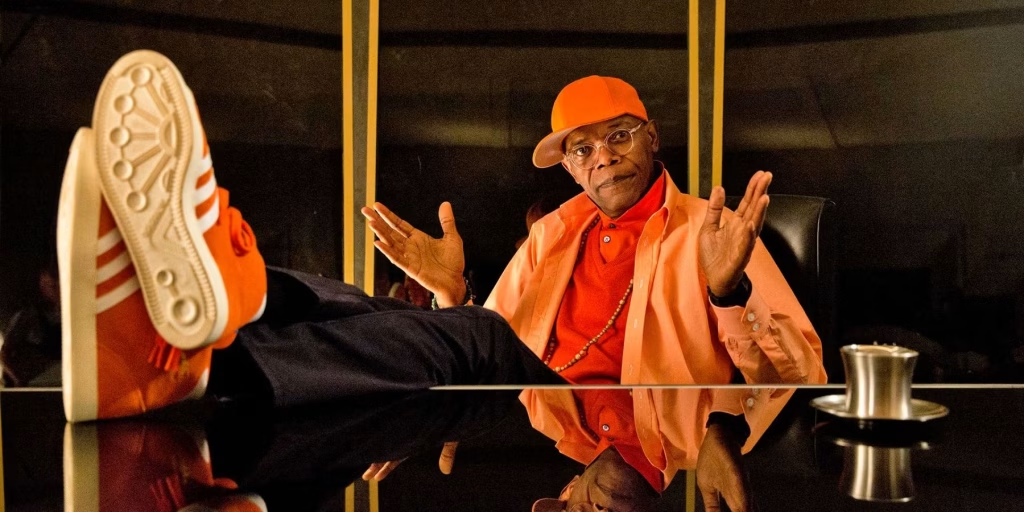
10. Richmond Valentine (Kingsman: The Secret Service)

Richmond Valentine is a delicious subversion of the traditional supervillain. With a lisp, aversion to blood, and tech-billionaire eccentricity, Jackson turns Valentine into an oddly charming menace in Kingsman: The Secret Service.

Image Source: Bing Image. License: All Creative Commons

What makes the performance shine is Jackson’s full commitment to the absurdity. He leans into the character’s contradictions, making Valentine as funny as he is dangerous. The result is a villain who feels fresh, unpredictable, and wildly entertaining, proof that Jackson thrives when playing against type.

Image Source: Bing Image. License: All Creative Commons

9. Elijah Price / Mr. Glass (Unbreakable)

Elijah Price is one of the most tragic figures in superhero cinema. Physically fragile yet intellectually formidable, Mr. Glass believes suffering must have meaning, and Jackson plays him with quiet intensity in Unbreakable.

Image Source: Bing Image. License: All Creative Commons

The film’s twist recontextualizes everything that came before it, and Jackson’s performance gains new weight in retrospect. His portrayal helped redefine what comic book villains could be: complex, wounded, and philosophically driven. Mr. Glass remains one of Jackson’s most thoughtful antagonists.

Image Source: Bing Image. License: All Creative Commons

8. Zeus Carver (Die Hard With a Vengeance)

Zeus Carver injects new life into the Die Hard franchise. Paired with Bruce Willis’ John McClane, Jackson brings humor, skepticism, and emotional grounding to a high-octane adventure.

Image Source: Bing Image. License: All Creative Commons

Beyond the action, Zeus reflects real-world tensions, challenging McClane and the audience alike. Jackson’s natural chemistry with Willis turns the film into a true two-hander, transforming the franchise into a sharp, engaging buddy thriller.

Image Source: Bing Image. License: All Creative Commons

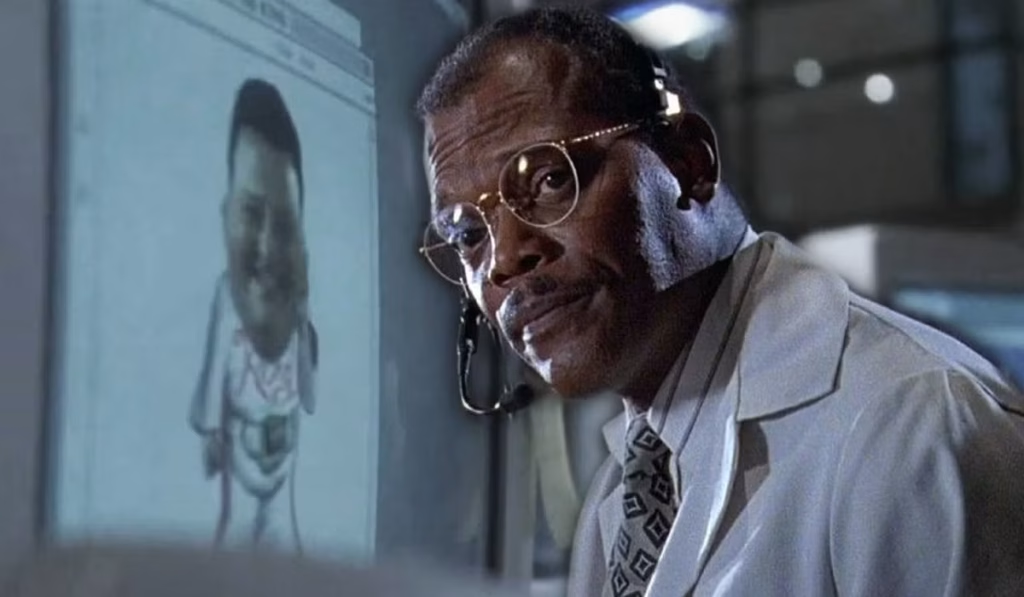
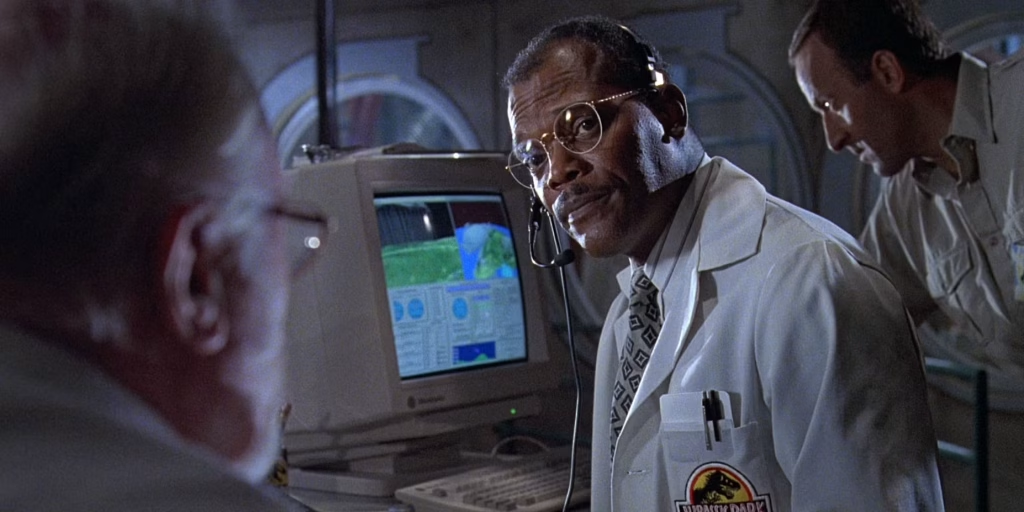
7. Ray Arnold (Jurassic Park)

Ray Arnold doesn’t have much screen time, but he leaves an outsized impact. As Jurassic Park’s chief engineer, Jackson delivers one of the film’s most quoted lines with effortless cool: “Hold onto your butts.”

Image Source: Bing Image. License: All Creative Commons

Even in a limited role, Jackson gives Arnold a sense of weary competence. His off-screen death heightens the tension, reminding viewers that no one is truly safe. It’s a perfect example of how Jackson can make even small parts iconic.

Image Source: Bing Image. License: All Creative Commons

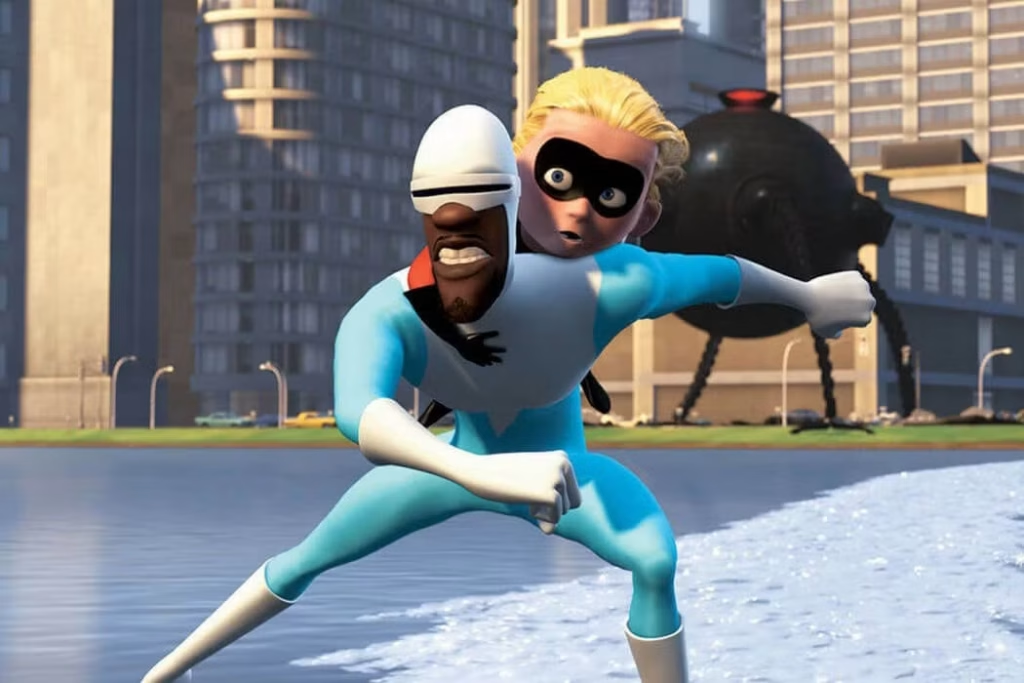
6. Frozone (The Incredibles)

Frozone is pure fun, and Jackson’s voice performance brings him to life with style and swagger. As Lucius Best, he balances superhero cool with everyday frustrations, most memorably during his frantic hunt for his super suit.

Image Source: Bing Image. License: All Creative Commons

Jackson’s comedic timing elevates every scene, making Frozone an instant fan favorite. Beneath the jokes, there’s warmth and loyalty, especially in his friendship with Mr. Incredible. It’s one of the most beloved voice roles of his career.

Image Source: Bing Image. License: All Creative Commons

5. Carl Lee Hailey (A Time to Kill)

Carl Lee Hailey is one of Jackson’s most emotionally devastating roles. Playing a father pushed to the brink after an unthinkable crime, Jackson channels grief, rage, and moral conflict with staggering intensity.

Image Source: Bing Image. License: All Creative Commons

His courtroom monologue is unforgettable, not because it seeks easy answers, but because it forces the audience to confront uncomfortable truths. The performance earned widespread acclaim and stands as one of the most powerful dramatic turns of his career.

Image Source: Bing Image. License: All Creative Commons

4. Major Marquis Warren (The Hateful Eight)

Major Marquis Warren is sharp, ruthless, and endlessly watchable. In The Hateful Eight, Jackson commands the screen with venomous wit and controlled menace, navigating a room full of liars and killers.

Image Source: Bing Image. License: All Creative Commons

His performance anchors the film’s tension, revealing layers of trauma and vengeance beneath the bravado. Even among Tarantino regulars and heavy hitters, Jackson stands tall, proving his mastery of dialogue-driven storytelling.

Image Source: Bing Image. License: All Creative Commons

3. Stephen (Django Unchained)

Stephen is one of the most disturbing characters Jackson has ever played. As an enslaved man aligned with his oppressors, he embodies internalized cruelty and manipulation in Django Unchained.

Image Source: Bing Image. License: All Creative Commons

Jackson’s fearless portrayal strips away comfort, forcing audiences to confront the ugliest facets of power and survival. It’s an intentionally provocative performance, and one that lingers long after the credits roll.

Image Source: Bing Image. License: All Creative Commons

2. Ordell Robbie (Jackie Brown)

Ordell Robbie is equal parts charming and terrifying. Jackson plays the arms dealer with swagger, humor, and sudden bursts of violence that keep viewers on edge.

Image Source: Bing Image. License: All Creative Commons

His scenes crackle with tension, especially opposite Robert De Niro and Pam Grier. Jackie Brown allows Jackson to slow things down, revealing his gift for layered character work within Tarantino’s world.

Image Source: Bing Image. License: All Creative Commons

1. Jules Winnfield (Pulp Fiction)

Jules Winnfield is the role that made Samuel L. Jackson immortal. As a hitman wrestling with faith and fate, Jules blends explosive dialogue with genuine philosophical depth.

Image Source: Bing Image. License: All Creative Commons

From the iconic Ezekiel speech to his quiet moment of transformation, Jackson gives Jules a full arc that elevates Pulp Fiction into legend. It’s not just his most famous role; it’s one of the most iconic performances in film history.

Image Source: Bing Image. License: All Creative Commons

Samuel L. Jackson’s career is a testament to what happens when talent meets fearlessness. Whether leading blockbusters, anchoring ensembles, or stealing scenes outright, he brings unmatched energy and purpose to every role. These performances don’t just define his legacy; they help define modern cinema itself. And if history is any indication, Jackson isn’t done making icons just yet.

15 Famous Hollywood Families: Stars Who Keep the Legacy Alive

0
Image Source: Bing Image. License: All Creative Commons

Hollywood has long been fascinated by legacy, and few stories are as compelling as talent passed down through generations. Whether connected by shared creativity, a famous surname, or entirely different career paths, these parent-child duos and trios prove that stardom can run in the family—though it often brings its own set of pressures, expectations, and challenges.

Image Source: Bing Image. License: All Creative Commons

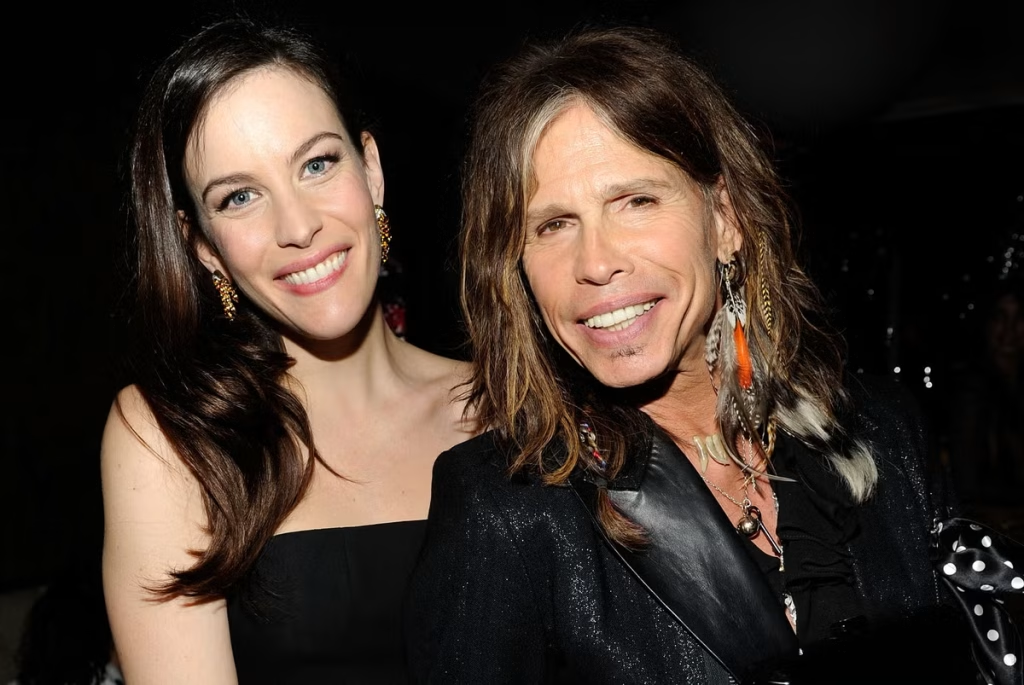
15. Liv Tyler & Steven Tyler

Liv Tyler carved out her own space in Hollywood with roles that emphasized grace and quiet strength, most famously as Arwen in The Lord of the Rings. Before acting, she worked as a model, gradually stepping into a career that felt distinctly her own despite her rock-star roots.

Image Source: Bing Image. License: All Creative Commons

Her connection to Aerosmith frontman Steven Tyler became public later than most celebrity family stories. Liv didn’t learn Steven was her biological father until she was around ten years old, after noticing how closely they resembled each other. Since then, their bond has grown strong, becoming one of Hollywood’s most fascinating and heartfelt father-daughter stories.

Image Source: Bing Image. License: All Creative Commons

14. Riley Keough & Lisa Marie Presley (and Elvis Presley)

Riley Keough was born into one of America’s most legendary families, but she never relied on nostalgia to define her career. As the daughter of Lisa Marie Presley and granddaughter of Elvis Presley, expectations followed her from the start.
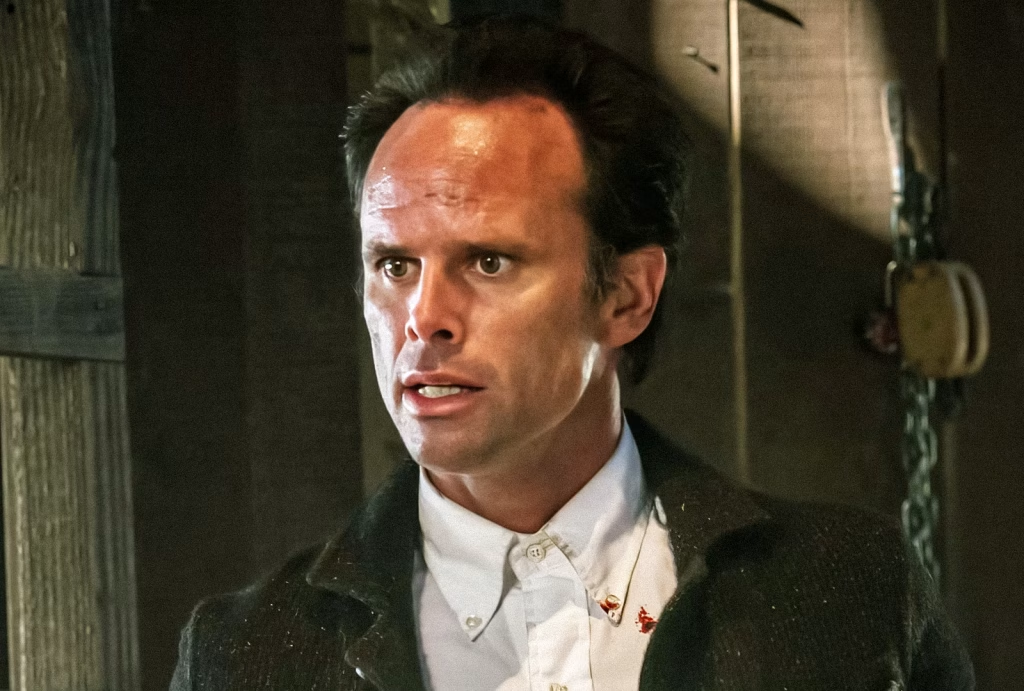
Image Source: Bing Image. License: All Creative Commons

Rather than leaning into music, Riley chose acting and quickly earned respect for roles in Mad Max: Fury Road and Daisy Jones & the Six. While she’s acknowledged the weight of her family legacy, she’s also proven she can stand confidently on her own, honoring the Presley name while building something entirely personal.

Image Source: Bing Image. License: All Creative Commons

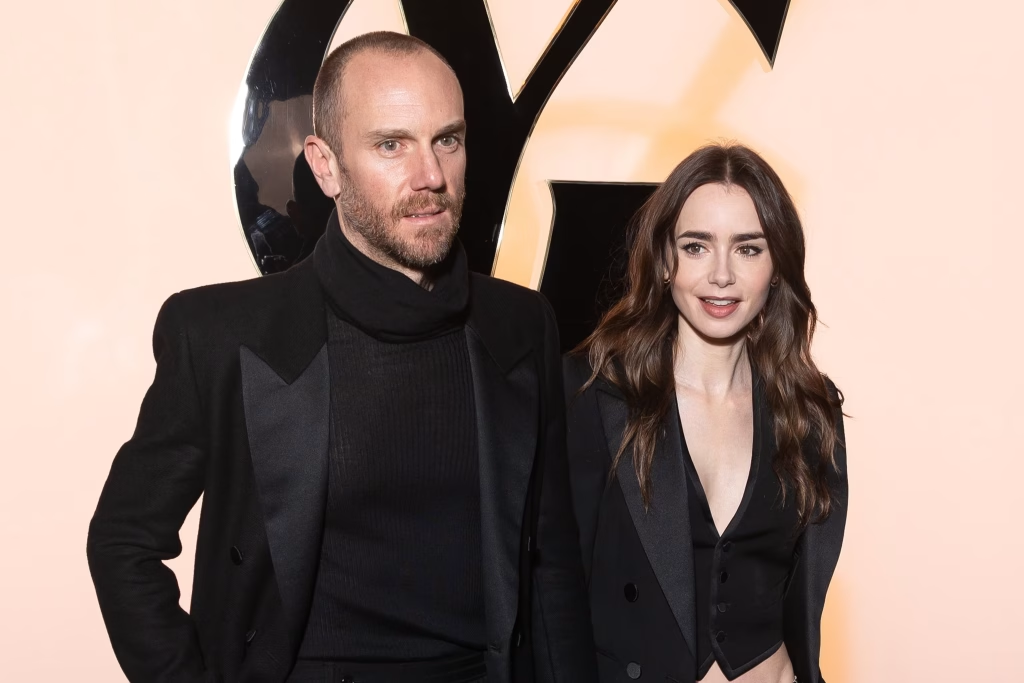
13. Lily Collins & Phil Collins

Lily Collins grew up surrounded by music royalty, thanks to her father, Genesis frontman and solo legend Phil Collins. Still, she pursued acting, eventually landing leading roles that showcased both charm and emotional range.

Image Source: Bing Image. License: All Creative Commons

Lily has been candid about the double-edged sword of her famous surname, admitting it opened doors but didn’t guarantee longevity. One of their sweetest connections came when Phil wrote “You’ll Be In My Heart” for Tarzan, a song inspired by his love for her—a rare blend of family and art.

Image Source: Bing Image. License: All Creative Commons

12. Maya Hawke, Uma Thurman & Ethan Hawke

Maya Hawke entered the spotlight carrying two instantly recognizable last names. As the daughter of Uma Thurman and Ethan Hawke, curiosity about her career came fast—and loud.

Image Source: Bing Image. License: All Creative Commons

Her breakout role on Stranger Things silenced doubts, proving she could hold her own. While she’s clearly influenced by her parents’ creative backgrounds, Maya has steadily shaped a career defined by individuality rather than inheritance.

Image Source: Bing Image. License: All Creative Commons

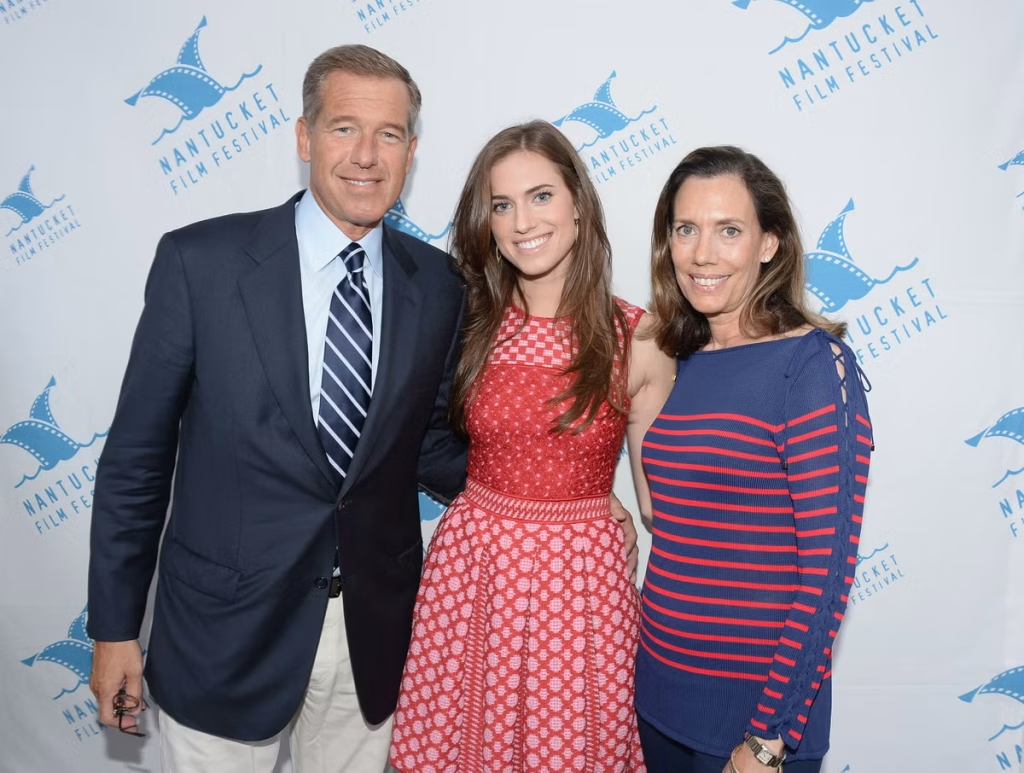
11. Allison Williams & Brian Williams

Allison Williams followed a different path than her father, longtime news anchor Brian Williams. While he became a fixture in American journalism, Allison found success in television and film.

Image Source: Bing Image. License: All Creative Commons

She’s spoken openly about navigating public scrutiny and expectations, especially when her career began gaining traction. Their story reflects how fame can look very different across industries—yet still shape family dynamics in meaningful ways.

Image Source: Bing Image. License: All Creative Commons

10. Billie Lourd, Carrie Fisher & Debbie Reynolds

Billie Lourd represents a rare three-generation Hollywood lineage. Her mother, Carrie Fisher, and grandmother, Debbie Reynold,s both left lasting marks on film history.

Image Source: Bing Image. License: All Creative Commons

Despite profound personal loss, Billie has continued acting with quiet confidence, appearing in projects like American Horror Story and Star Wars. Her career honors her family’s legacy while embracing a modern, understated approach to fame.

Image Source: Bing Image. License: All Creative Commons

9. Liza Minnelli & Judy Garland

Judy Garland was already a legend when Liza Minnelli was born, setting a daunting standard few could match. Yet Liza did exactly that, becoming an icon in her own right.

Image Source: Bing Image. License: All Creative Commons

Their relationship was layered and complex, shaped by success, pressure, and vulnerability. Together, they remain one of the most powerful examples of talent passed through generations—along with the emotional weight that often comes with it.

Image Source: Bing Image. License: All Creative Commons

8. Tracee Ellis Ross & Diana Ross

Tracee Ellis Ross grew up watching her mother, Diana Ross, redefine music and style. Instead of following her into singing, Tracee found her calling in comedy and television.

Image Source: Bing Image. License: All Creative Commons

Over time, she’s spoken lovingly about Diana’s influence—not just as a performer, but as a role model for independence and confidence. Their bond reflects a shared legacy of trailblazing success across different media.

Image Source: Bing Image. License: All Creative Commons

7. Zoë Kravitz, Lenny Kravitz & Lisa Bonet

Zoë Kravitz was raised at the intersection of music, film, and fashion. With Lenny Kravitz and Lisa Bonet as parents, creativity was simply part of daily life.

Image Source: Bing Image. License: All Creative Commons

Zoë has credited her upbringing for keeping her grounded despite fame. Her success across acting and music mirrors her parents’ versatility, making this trio one of Hollywood’s most effortlessly cool family legacies.

Image Source: Bing Image. License: All Creative Commons

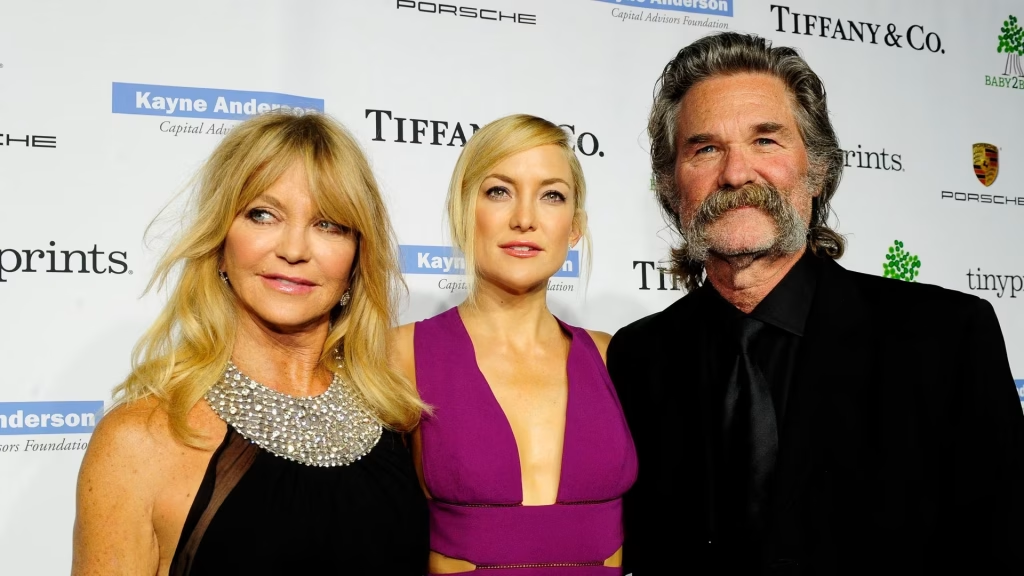
6. Kate Hudson, Goldie Hawn & Kurt Russell

Kate Hudson may share a surname with her biological father, but she’s long considered Kurt Russell her true parental figure. Raised by Goldie Hawn and Russell, Kate grew up in a deeply supportive, unconventional household.

Image Source: Bing Image. License: All Creative Commons

She’s often praised for prioritizing love and stability over Hollywood norms. Their family dynamic shows that emotional bonds—not genetics—are what truly shape a legacy.

Image Source: Bing Image. License: All Creative Commons

5. Dakota Johnson, Melanie Griffith, Don Johnson & Tippi Hedren

Dakota Johnson comes from a lineage packed with film history, spanning three generations of recognizable stars. Yet she’s navigated fame with a distinctly modern sensibility.

Image Source: Bing Image. License: All Creative Commons

Open about the realities of nepotism debates, Dakota has emphasized consistency and hard work. Her career reflects both the benefits and pressures of inheriting a Hollywood name—and surviving on her own merit.

Image Source: Bing Image. License: All Creative Commons

4. Rashida Jones, Quincy Jones & Peggy Lipton

Rashida Jones grew up surrounded by creative excellence, with music legend Quincy Jones and actress Peggy Lipton as parents. That environment shaped her curiosity and versatility.

Image Source: Bing Image. License: All Creative Commons

Rather than sticking to one lane, Rashida built a career spanning acting, writing, and producing. Her success reflects a blend of her parents’ artistic instincts and her own sharp voice.

Image Source: Bing Image. License: All Creative Commons

3. John David Washington & Denzel Washington

John David Washington took an unconventional route to acting, first pursuing professional football before transitioning into film. His father, Denzel Washington, offered guidance—but never shortcuts.

Image Source: Bing Image. License: All Creative Commons

John David has repeatedly stressed the importance of earning respect independently. Their relationship is rooted in discipline, humility, and mutual admiration rather than legacy alone.

Image Source: Bing Image. License: All Creative Commons

2. Sofia Coppola & Francis Ford Coppola, and Roman Coppola

The Coppola name is woven into film history, with multiple generations leaving their mark behind the camera. Sofia Coppola grew up immersed in storytelling, yet carved out her own signature style.

Image Source: Bing Image. License: All Creative Commons

Alongside her brother Roman and father Francis, she represents one of cinema’s most creatively influential families. Their collective legacy speaks to the power of artistic environments passed down through generations.

Image Source: Bing Image. License: All Creative Commons

1. Henry Fonda, Jane Fonda, & Peter Fonda

Few families loom as large over Hollywood history as the Fondas. Henry Fonda’s career set the foundation, while Jane and Peter expanded it in bold, transformative ways.

Image Source: Bing Image. License: All Creative Commons

Their shared achievements—including historic Oscar moments—cemented the family as a cinematic dynasty. Together, they embody the very idea of generational greatness in film.

Image Source: Bing Image. License: All Creative Commons

Hollywood legacies may begin with famous names, but they endure through talent, reinvention, and resilience. These parent-child duos and trios prove that while fame can be inherited, staying power must be earned—generation after generation.

13 Wealth Missteps and the Minimalist Choices That Turned Them Around

0
Image Source: Bing Image. License: All Creative Commons

Fame can come with massive paychecks and glittering lifestyles, but for many celebrities, the money often arrives before they’ve learned how to handle it. From child stars thrust into the spotlight to Oscar winners and hit-making musicians, these public figures quickly discover that even enormous fortunes can disappear just as fast as they’re earned. Extravagant spending, risky investments, and the pressure to maintain a certain image can turn sudden success into financial chaos in the blink of an eye.

Image Source: Bing Image. License: All Creative Commons

Yet their stories aren’t just cautionary tales—they’re also surprisingly instructive and, at times, inspiring. Many of these celebrities found ways to rebuild, often embracing minimalist lifestyles, smarter financial habits, or entirely new careers. Their experiences serve as a reminder that money mismanagement doesn’t have to define a person’s legacy, and that resilience, intentional choices, and humility can turn a dramatic financial fall into a powerful comeback.

Image Source: Bing Image. License: All Creative Commons

13. Christy Carlson Romano

Christy Carlson Romano rose to fame as a Disney Channel favorite, but behind the scenes, her financial reality was far less magical. After her Even Stevens success, she slipped into years of careless spending, assuming the money would never stop coming.

Image Source: Bing Image. License: All Creative Commons

Romano later admitted she splurged on designer shopping sprees, expensive cars, and even paid a psychic who steadily siphoned off her savings. She has openly shared that she never learned how money worked—only that she had access to it.

Image Source: Bing Image. License: All Creative Commons

That lack of understanding eventually caught up with her, forcing a hard reset. Today, her honesty serves as a warning about the importance of financial education, especially for young stars who grow up fast in the spotlight.

Image Source: Bing Image. License: All Creative Commons

12. Francis Ford Coppola

Even cinematic legends aren’t immune to financial disaster. Francis Ford Coppola risked everything on his dream project, One From the Heart, financing it largely himself. The gamble didn’t pay off—the film earned roughly $600,000 while costing around $26 million to make.

Image Source: Bing Image. License: All Creative Commons

The fallout was brutal. Coppola filed for bankruptcy multiple times over the next decade, shouldering the consequences of betting big on artistic vision. Still, he endured, continuing to create and produce influential work. His story illustrates the delicate balance between creative ambition and financial reality in Hollywood.

Image Source: Bing Image. License: All Creative Commons

11. 50 Cent

At the height of his success, 50 Cent seemed untouchable. But in 2015, a costly lawsuit pushed the rapper and entrepreneur to file for bankruptcy, revealing $36 million in debt against less than $20 million in assets.

Image Source: Bing Image. License: All Creative Commons

Rather than seeing it asa defeat, 50 framed bankruptcy as a strategic business move—a reset button. That decision helped him pivot toward television, eventually leading to the smash success of Power. His comeback proves that financial collapse doesn’t have to be the end if you’re willing to adapt and rebuild smartly.

Image Source: Bing Image. License: All Creative Commons

10. Kim Basinger

Kim Basinger made a bold—and risky—move when she bought an entire town in Georgia for $20 million, envisioning it as a future film production hub. Unfortunately, when a key project fell apart, the dream unraveled.

Image Source: Bing Image. License: All Creative Commons

After being sued for breach of contract and ordered to pay over $8 million, Basinger filed for bankruptcy. The experience became a textbook lesson in how ambitious investments can quickly spiral out of control without careful planning. Even Hollywood royalty, it turns out, isn’t immune to financial overreach.

Image Source: Bing Image. License: All Creative Commons

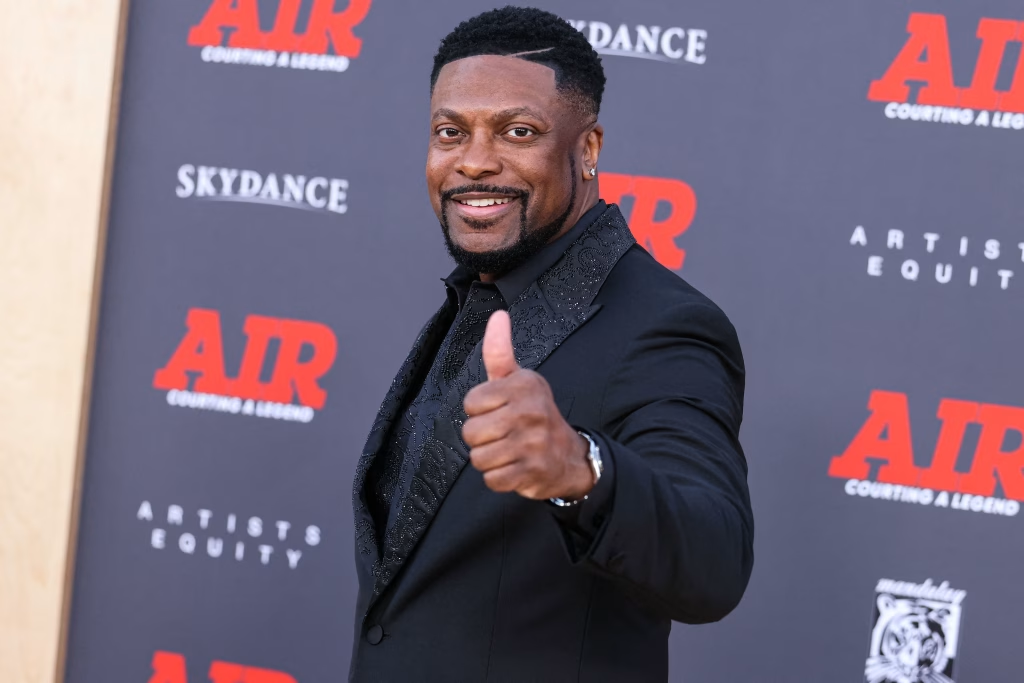
9. Chris Tucker

Chris Tucker earned massive paydays from the Rush Hour franchise, including a reported $25 million for the third installment. Yet despite the income, financial mismanagement led to serious trouble with the IRS.

Image Source: Bing Image. License: All Creative Commons

By 2014, Tucker owed nearly $10 million in unpaid taxes. Although he eventually settled for a reduced amount, the ordeal took a toll on both his finances and career momentum. His story highlights how inconsistent income and lax oversight can derail even the biggest earners.

Image Source: Bing Image. License: All Creative Commons

8. Willie Nelson

Willie Nelson’s tax troubles became the stuff of legend. The IRS seized his assets across multiple states after he racked up $16 million in unpaid taxes, including property, studios, and even a golf course.

Image Source: Bing Image. License: All Creative Commons

Instead of retreating, Nelson leaned into creativity. He released The IRS Tapes: Who’ll Buy My Memories?, cutting a deal that helped chip away at his debt. Though it didn’t cover everything, he eventually settled the rest. His story stands as a uniquely artistic example of resilience under pressure.

Image Source: Bing Image. License: All Creative Commons

7. MC Hammer

MC Hammer’s rise was explosive—and so was his spending. At his peak, he was earning tens of millions annually and living just as large, complete with a sprawling custom mansion and a massive entourage.

Image Source: Bing Image. License: All Creative Commons

The math didn’t work. By 1996, Hammer declared bankruptcy with over $10 million in debt. His downfall became a cultural cautionary tale, often cited as the ultimate example of what happens when lifestyle grows faster than income.

Image Source: Bing Image. License: All Creative Commons

6. Stephen Baldwin

Stephen Baldwin’s financial troubles unfolded over several years. After filing for bankruptcy in 2009 with roughly $2 million in debt, his situation worsened when he failed to file taxes for multiple years.

Image Source: Bing Image. License: All Creative Commons

He later pleaded guilty and agreed to repay taxes, but the damage had already rippled through his personal and professional life. Baldwin’s experience underscores how ignoring financial obligations—especially taxes—can snowball into long-term consequences.

Image Source: Bing Image. License: All Creative Commons

5. Heidi Montag & Spencer Pratt

At the height of The Hills, Heidi Montag and Spencer Pratt were earning millions annually. Unfortunately, most of it disappeared just as fast. Lavish spending on designer wardrobes, luxury meals, and even crystal collections drained their accounts.

Image Source: Bing Image. License: All Creative Commons

Looking back, Spencer admitted they tried to live like A-list celebrities instead of reality TV stars. Their financial crash became a lesson in comparison culture and the dangers of spending to maintain an image rather than stability.

Image Source: Bing Image. License: All Creative Commons

4. Toni Braxton

Toni Braxton’s voice earned her fame, awards, and millions—but her bank account told a different story. She filed for bankruptcy twice, blaming unfair record deals that left her earning far less than fans assumed.

Image Source: Bing Image. License: All Creative Commons

She also acknowledged personal overspending, particularly on home décor, which added to her struggles. Despite it all, Braxton rebuilt her career, proving that financial recovery is possible even after repeated setbacks.

Image Source: Bing Image. License: All Creative Commons

3. Lindsay Lohan

Lindsay Lohan’s transition from child star to adult celebrity was rocky, and her finances reflected that turbulence. At one point, her net worth soared to an estimated $28 million before declining sharply amid legal issues and career interruptions.

Image Source: Bing Image. License: All Creative Commons

In recent years, Lohan has worked steadily toward a comeback through films and streaming projects. Her story serves as a reminder that early success doesn’t guarantee long-term security without stability and support.

Image Source: Bing Image. License: All Creative Commons

2. T-Pain

T-Pain once had $40 million at his disposal—and watched it vanish. Poor real estate decisions, reckless spending, and luxury purchases like a Bugatti left him broke within a few years.

Image Source: Bing Image. License: All Creative Commons

At his lowest, he admitted he couldn’t even afford fast food for his kids without borrowing money. By openly sharing his mistakes, T-Pain has become one of the most candid voices about financial literacy in the music industry.

Image Source: Bing Image. License: All Creative Commons

1. Nicolas Cage

Few celebrity spending stories are as infamous as Nicolas Cage’s. From dinosaur skulls and rare artifacts to multiple castles and mansions, Cage spent freely—and often impulsively.

Image Source: Bing Image. License: All Creative Commons

Eventually, the bills came due. He owed millions in back taxes and lost several properties to foreclosure. While he continued acting to recover financially, Cage’s experience remains a striking example of how limitless wealth can disappear without discipline.

Image Source: Bing Image. License: All Creative Commons

What ties these stories together isn’t just loss, but survival. Each of these celebrities faced the uncomfortable reality of financial failure and, in different ways, found a path forward. Their experiences serve as powerful reminders that money comes and goes—but awareness, discipline, and resilience can make all the difference when the spotlight fades.

15 Smart Money-Saving Behaviors of the Ultra-Wealthy

0
Image Source: Bing Image. License: All Creative Commons

When we imagine celebrities and millionaires, visions of lavish homes and extravagant spending usually pop up. But behind the glamour, many of the wealthiest people actually practice surprising frugality. From rewearing outfits to following strict budgets and making deliberate financial decisions, these habits reveal that real wealth isn’t about splurging—it’s about smart, intentional money management.

Image Source: Bing Image. License: All Creative Commons

15. Tiffany Haddish: Proudly Repeating an Iconic Dress

Tiffany Haddish gained attention not just for her comedy, but for her refreshingly honest take on red-carpet fashion. Instead of unveiling a new outfit at every major event, she confidently wore the same $4,000 Alexander McQueen gown multiple times, including to the Oscars.

Image Source: Bing Image. License: All Creative Commons

Her reasoning was simple and relatable—the dress cost more than her mortgage, so she planned to actually use it. By ignoring Hollywood’s unspoken fashion rules, Haddish helped normalize outfit repetition and sparked conversations about confidence, sustainability, and common sense.

Image Source: Bing Image. License: All Creative Commons

14. Shailene Woodley: Making Beauty Products from Scratch

Shailene Woodley’s lifestyle leans heavily toward simplicity and self-sufficiency, and her beauty routine is no exception. Rather than spending on luxury skincare brands, she prefers crafting her own face oils, toothpaste, and lotions using natural ingredients.

Image Source: Bing Image. License: All Creative Commons

This habit reflects more than frugality—it’s about awareness and control. Woodley values knowing what goes into her products and reducing waste, proving that effective self-care doesn’t require expensive packaging or celebrity-endorsed labels.

Image Source: Bing Image. License: All Creative Commons

13. Dave Grohl: Saving Every Dollar Earned

Despite decades of success in the music industry, Dave Grohl approaches money with caution and humility. He’s known for depositing every paycheck straight into savings, rarely touching it once it’s there.

Image Source: Bing Image. License: All Creative Commons

That discipline comes from watching his mother struggle financially while he was growing up. Those early lessons stuck with him, shaping a mindset that values security and foresight over indulgence, even at the height of fame.

Image Source: Bing Image. License: All Creative Commons

12. Bethenny Frankel: Bargain Hunting Like a Pro

Bethenny Frankel’s wealth hasn’t dulled her love for a good deal. She openly shops clearance racks and searches online marketplaces like eBay for discounted clothes and accessories.

Image Source: Bing Image. License: All Creative Commons

For Frankel, paying full price rarely makes sense. Her approach reinforces the idea that smart shopping is about value—not income level—and that financial awareness doesn’t disappear once you reach success.

Image Source: Bing Image. License: All Creative Commons

11. Michelle Obama: Affordable Fashion with Impact

Michelle Obama has long been admired for her sense of style, but what truly stands out is her practicality. She’s been spotted shopping at Target and wearing affordable brands like H&M and J.Crew at public appearances.

Image Source: Bing Image. License: All Creative Commons

By mixing accessible fashion with high-end pieces, she redefined elegance for millions. Her choices sent a clear message: confidence and authenticity matter far more than luxury labels.

Image Source: Bing Image. License: All Creative Commons

10. Danica Patrick: Cooking Instead of Dining Out

Even with a packed travel schedule, former race car driver Danica Patrick prefers preparing her own meals. She often shops at local farmers’ markets and cooks rather than relying on expensive restaurant dining.

Image Source: Bing Image. License: All Creative Commons

This habit helps her maintain both health and financial balance. Patrick’s routine reflects a shift in how luxury is defined—prioritizing wellness, discipline, and self-sufficiency over convenience.

Image Source: Bing Image. License: All Creative Commons

9. Keira Knightley: Living Within a Set Budget

Despite her global fame, Keira Knightley limits herself to a personal yearly allowance of around $50,000. She’s spoken openly about how extreme wealth can feel isolating and disconnected from everyday life.

Image Source: Bing Image. License: All Creative Commons

By placing boundaries on her spending, Knightley avoids lifestyle inflation and stays grounded. Her choice highlights that financial freedom often comes from restraint, not excess.

Image Source: Bing Image. License: All Creative Commons

8. Zooey Deschanel: Budgeting with Precision

Zooey Deschanel takes a meticulous approach to managing her finances. Even with a high income, she tracks her spending carefully and sticks to a defined budget.

Image Source: Bing Image. License: All Creative Commons

This awareness helps her avoid unnecessary purchases and stay financially grounded. By sharing her habits publicly, Deschanel helps normalize budgeting as a proactive choice rather than a financial necessity.

Image Source: Bing Image. License: All Creative Commons

7. Jay Leno: Saving One Entire Paycheck

Jay Leno built his wealth through a simple but disciplined system. For years, he lived solely off his stand-up comedy income while saving everything he earned from television.

Image Source: Bing Image. License: All Creative Commons

That strategy allowed him to grow his fortune without inflating his lifestyle. Leno’s example shows how consistency and long-term thinking can outperform flashy spending.

Image Source: Bing Image. License: All Creative Commons

6. Jennifer Lawrence: Staying Grounded with Simple Choices

Jennifer Lawrence’s rise to fame didn’t change her everyday habits. She’s been seen shopping at thrift stores and driving a practical car instead of opting for luxury vehicles.

Image Source: Bing Image. License: All Creative Commons

Her approach reflects values shaped long before Hollywood success. Lawrence’s choices emphasize authenticity and humility, proving that financial restraint can coexist with massive success.

Image Source: Bing Image. License: All Creative Commons

5. Warren Buffett: Choosing Simplicity Over Status

Warren Buffett is famous for living in the same home he purchased decades ago and driving sensible cars. Despite his immense wealth, he has never felt the need to upgrade for appearances.

Image Source: Bing Image. License: All Creative Commons

His philosophy centers on value and long-term security. Buffett’s lifestyle serves as a reminder that wealth is most powerful when it provides peace of mind, not excess.

Image Source: Bing Image. License: All Creative Commons

4. Mark Zuckerberg and Jeff Bezos: Function Over Flash

Mark Zuckerberg has been spotted driving a modest Honda Fit, while Jeff Bezos drove a Honda Accord during Amazon’s early years. Neither felt compelled to showcase wealth through cars.

Image Source: Bing Image. License: All Creative Commons

These choices reflect a focus on practicality and long-term goals. Their stories challenge the idea that success must be displayed through luxury possessions.

Image Source: Bing Image. License: All Creative Commons

3. Lady Gaga and Clint Eastwood: Keeping It Practical

Lady Gaga’s bold stage persona contrasts with her everyday choice of a sturdy Ford truck. Clint Eastwood, meanwhile, prefers a classic GMC Typhoon over modern luxury vehicles.

Image Source: Bing Image. License: All Creative Commons

Both stars prioritize reliability and personal preference over flash. Their choices reinforce the idea that confidence—not extravagance—defines true style.

Image Source: Bing Image. License: All Creative Commons

2. Kristen Bell: Coupons and a Simple Wedding

Kristen Bell proudly embraces coupon clipping and bargain hunting for everyday purchases. She’s also known for her low-cost courthouse wedding, which totaled just $142.

Image Source: Bing Image. License: All Creative Commons

Bell’s philosophy centers on meaning over spectacle. Her openness encourages others to reject unnecessary spending and focus on what genuinely adds value to their lives.

Image Source: Bing Image. License: All Creative Commons

1. Frugal Habits Anyone Can Adopt

Celebrities may grab headlines, but frugality isn’t limited to the famous. Everyday people are saving money through habits like meal planning, buying secondhand, and automating savings.

Image Source: Bing Image. License: All Creative Commons

Small, consistent choices—canceling unused subscriptions, cooking at home, delaying impulse buys—add up over time. These habits are redefining success as intention, balance, and financial peace.

Image Source: Bing Image. License: All Creative Commons

These stories prove that frugality isn’t about deprivation—it’s about choice. Whether you’re a global superstar or an everyday earner, thoughtful spending creates freedom, stability, and peace of mind. In the end, the smartest luxury might simply be knowing you’re in control of your money.

Superman (2025) Explained: Why Fans Should Be Excited

0
Image Source: Bing Image. License: All Creative Commons

James Gunn’s Superman (2025) has arrived, and it wastes no time making an impression. This isn’t a restrained or understated take on the hero—it bursts onto the screen with striking visuals, fearless style, and relentless momentum that asks viewers to buckle up. Whether you’re thrilled by its intensity or slightly overwhelmed, one thing is undeniable: this is a movie that refuses to fade into the background.

Image Source: Bing Image. License: All Creative Commons

After more than a decade of grim DC storytelling, Gunn pivots hard in the opposite direction. Gone is the somber, joyless mood that once defined the franchise. In its place is something vibrant, eccentric, and unapologetically rooted in comic-book DNA.

Image Source: Bing Image. License: All Creative Commons

Rather than revisiting Superman’s origin story for the umpteenth time, the film assumes you already know the basics. Kal-El is here, he’s established, and the world has been living with superpowered beings for a very long time. Gunn wastes no time explaining rockets, farms, or glowing green rocks.

Image Source: Bing Image. License: All Creative Commons

This version of the DC Universe feels ancient and crowded. Metahumans are woven into history, politics, and culture, and Superman exists within a society that both depends on him and deeply mistrusts him. The result is a setting that feels fully lived-in—sometimes thrilling, sometimes exhausting.

Image Source: Bing Image. License: All Creative Commons

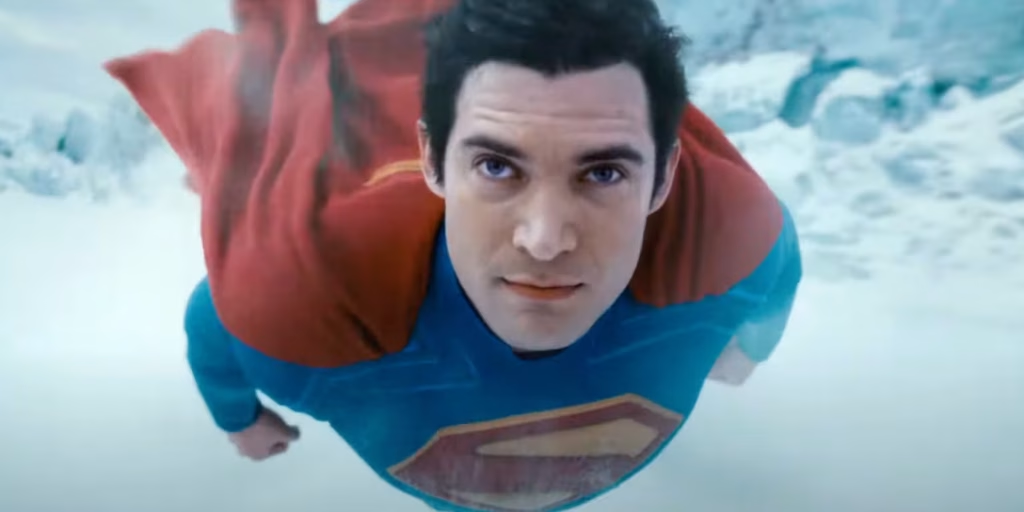
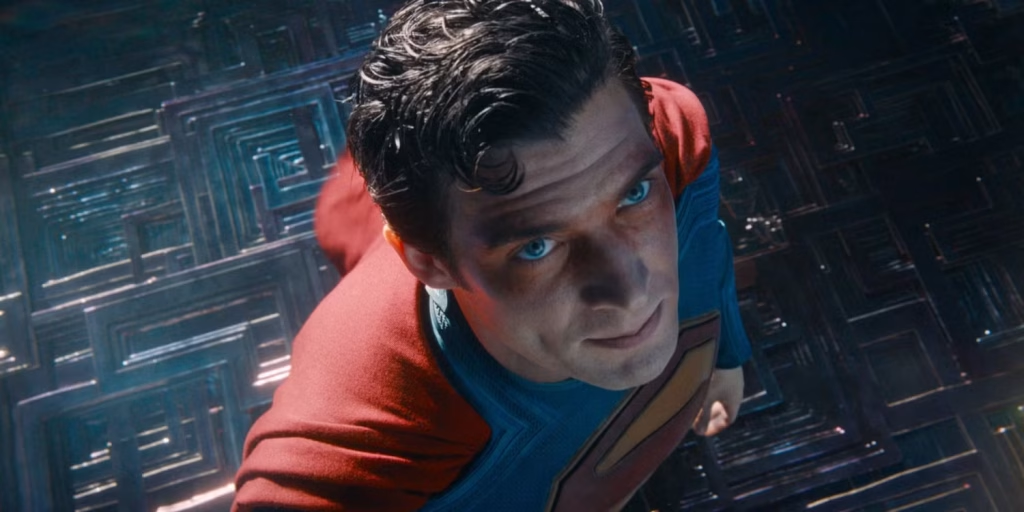
David Corenswet steps into the role of Superman with a performance that balances strength and vulnerability. His Man of Steel is powerful without being distant, confident yet emotionally exposed. There’s an earnestness to him that feels refreshingly sincere.

Image Source: Bing Image. License: All Creative Commons

As Clark Kent, Corenswet dials back the exaggerated clumsiness of earlier portrayals. Instead, his awkwardness feels human and relatable, like someone still trying to figure out where they fit in a world that expects perfection. It’s a quieter take that works surprisingly well.

Image Source: Bing Image. License: All Creative Commons

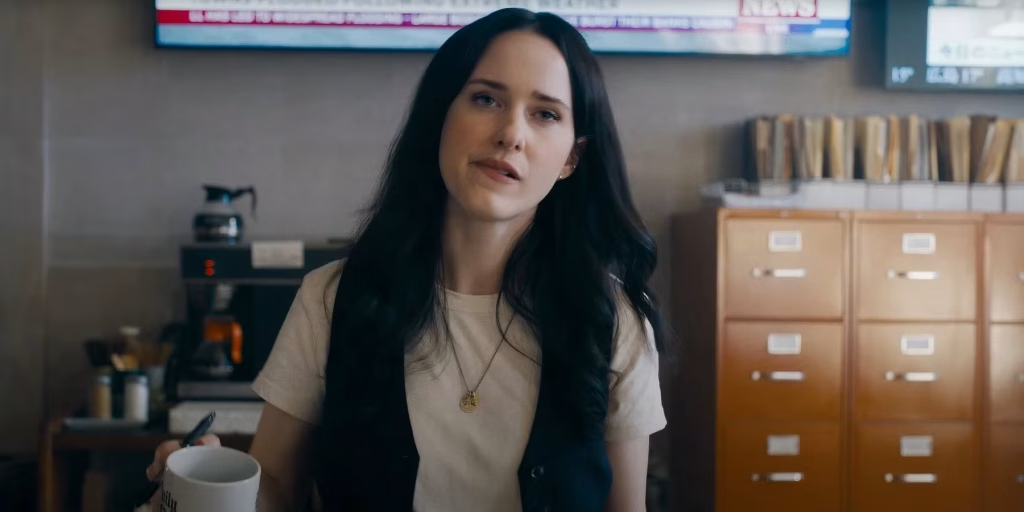
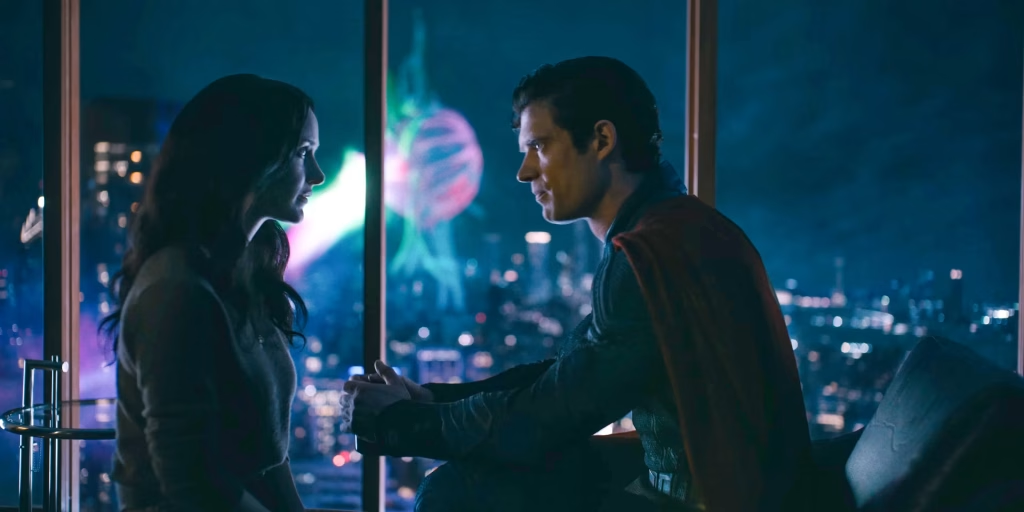
Rachel Brosnahan’s Lois Lane is sharp, relentless, and fearless. She’s not there to be rescued or sidelined; she’s constantly pushing the story forward. Her chemistry with Corenswet crackles, driven by wit, mutual respect, and just enough tension to keep things interesting.

Image Source: Bing Image. License: All Creative Commons

Their dynamic feels modern without losing what makes the pairing iconic. Lois challenges Superman’s ideals, questions his role in society, and refuses to accept easy answers. Brosnahan’s performance grounds the film whenever it threatens to spin out of control.

Image Source: Bing Image. License: All Creative Commons

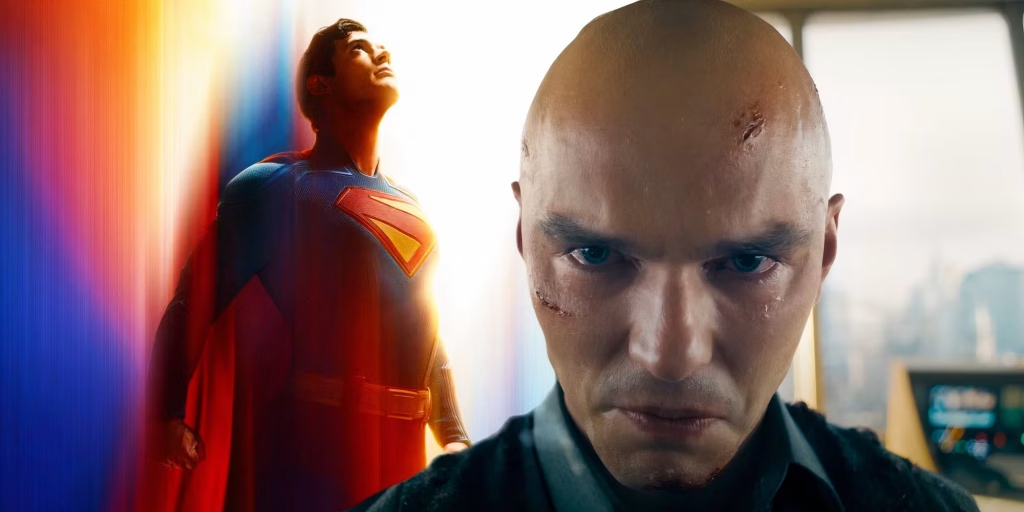
Nicholas Hoult’s Lex Luthor is a standout. This isn’t a cartoon mad scientist or a cold corporate villain. Instead, Hoult plays Lex as a hyper-aware narcissist who thrives on attention, influence, and perception.

Image Source: Bing Image. License: All Creative Commons

This Lex doesn’t need to conquer the world—he just needs to control the narrative. He manipulates media, public opinion, and digital outrage with unsettling ease, turning Superman into a lightning rod for fear and resentment. It’s one of the film’s sharpest and most contemporary ideas.

Image Source: Bing Image. License: All Creative Commons

The supporting cast is stacked with DC deep cuts. Nathan Fillion’s Guy Gardner is abrasive, smug, and intentionally irritating—a Green Lantern who feels like a walking headache. His presence adds humor but also tension within the superhero ranks.

Image Source: Bing Image. License: All Creative Commons

Isabela Merced’s Hawkgirl brings a ferocity that contrasts nicely with Superman’s restraint, even if her screen time is limited. Meanwhile, Edi Gathegi’s Mr. Terrific emerges as a quiet scene-stealer, offering intelligence and calm amid the chaos.

Image Source: Bing Image. License: All Creative Commons

Comic fans will immediately recognize the influence of All-Star Superman. Gunn openly embraced the work of Grant Morrison and Frank Quitely, and the movie wears that inspiration proudly. From visual composition to thematic choices, the influence is unmistakable.

Image Source: Bing Image. License: All Creative Commons

That said, this isn’t a straight adaptation. Gunn borrows ideas, moods, and philosophies rather than specific story beats. The result feels like a remix—familiar but unpredictable.

Image Source: Bing Image. License: All Creative Commons

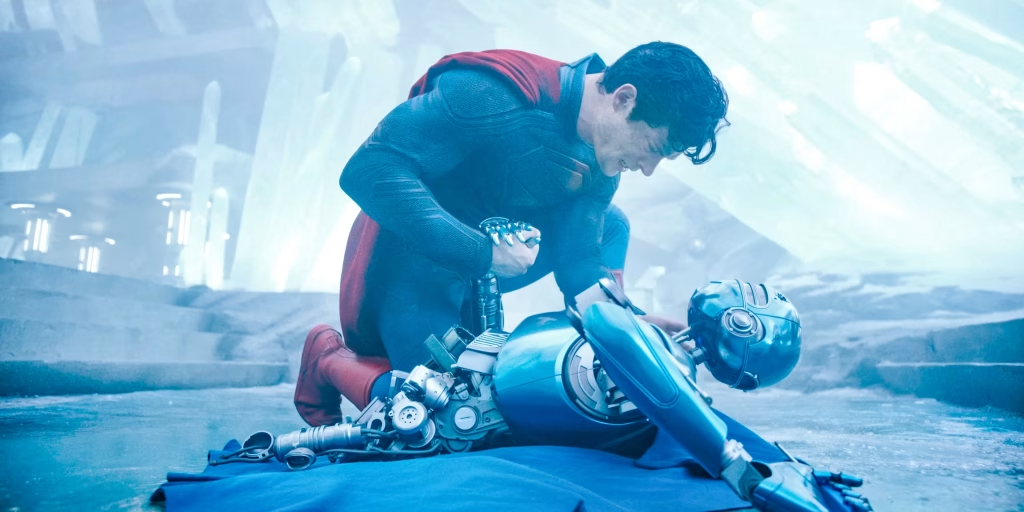
The Fortress of Solitude is a prime example. Instead of a sterile monument, it feels personal and cluttered, packed with artifacts and nods to Superman’s long history. It’s the kind of set fans will dissect frame by frame.

Image Source: Bing Image. License: All Creative Commons

Gunn also draws from stories like Superman for All Seasons, Kingdom Come, and Whatever Happened to the Man of Tomorrow?. These influences inform the film’s emotional core rather than its plot mechanics.

Image Source: Bing Image. License: All Creative Commons

At its heart, the movie treats Superman as a symbol rather than a solution. His greatest struggle isn’t physical—it’s ideological. He’s trying to do good in a world that increasingly views goodness with suspicion.

Image Source: Bing Image. License: All Creative Commons

That skepticism is fueled by fear, misinformation, and Luthor’s calculated manipulation. The film mirrors real-world anxieties about media narratives and public outrage, making Superman’s optimism feel radical instead of naive.

Image Source: Bing Image. License: All Creative Commons

The movie doesn’t shy away from political undertones. Superman’s identity as an outsider—an immigrant raised on Earth—becomes central to the story. Gunn frames this aspect with clarity and conviction.

Image Source: Bing Image. License: All Creative Commons

Rather than softening the message, the film leans into it. Superman’s belief in compassion and coexistence is presented as something worth defending, even when it’s mocked or attacked.

Image Source: Bing Image. License: All Creative Commons

Of course, ambition comes at a cost. Superman (2025) is dense—sometimes overwhelmingly so. The film introduces new characters, factions, concepts, and crises at a rapid pace, especially early on.

Image Source: Bing Image. License: All Creative Commons

Some subplots feel underdeveloped, and not every supporting character gets room to breathe. Hawkgirl, in particular, feels like she’s pushed into action before the audience truly knows her.

Image Source: Bing Image. License: All Creative Commons

Still, once the film finds its rhythm, it becomes easier to enjoy the ride. Gunn’s talent for blending humor with spectacle shines through in the action sequences.

Image Source: Bing Image. License: All Creative Commons

The set pieces are energetic and inventive, often punctuated by small, human moments. Superman saving a helpless animal mid-battle or reacting awkwardly to public praise adds warmth and levity.

Image Source: Bing Image. License: All Creative Commons

And then there’s Krypto. The super-dog is chaotic, adorable, and occasionally disruptive—but undeniably fun. His presence perfectly encapsulates the film’s embrace of comic-book absurdity.

Image Source: Bing Image. License: All Creative Commons

Visually, the movie is a feast. The color palette is bold, the costumes are unapologetically bright, and Metropolis finally feels like a city worth protecting.

Image Source: Bing Image. License: All Creative Commons

Audience reactions have been split but passionate. Some hail it as the most faithful cinematic Superman in decades. Others argue it tries to do too much, too fast.

Image Source: Bing Image. License: All Creative Commons

Even critics who take issue with the pacing agree on one thing: this film feels alive. It’s daring, expressive, and emotionally sincere in a genre that often plays it safe.

Image Source: Bing Image. License: All Creative Commons

Ultimately, Superman (2025) revolves around choice. Not what Superman can do—but what he chooses to stand for when the world pushes back.

Image Source: Bing Image. License: All Creative Commons

Gunn’s film suggests that kindness is not weakness, optimism is not ignorance, and doing the right thing still matters—even when it’s unpopular.

Image Source: Bing Image. License: All Creative Commons

This isn’t just another reboot. It’s a declaration of intent. Messy, ambitious, hopeful, and loud, Superman (2025) marks a turning point for DC—and maybe for superhero movies as a whole.

Image Source: Bing Image. License: All Creative Commons

Love it or feel buried by it, one thing is clear: the Man of Steel hasn’t felt this bold—or this busy—in a very long time.

Image Source: Bing Image. License: All Creative Commons

Superman (2025) may not be a perfectly streamlined superhero film, but it is a confident one. Its mix of hope, chaos, and sincerity makes a clear statement about who Superman is meant to be—and why his ideals still matter. If this is the future of DC, it’s a future that’s unafraid to take risks.

13 Essential Movies and TV Series to Stream on Prime Video

0
Image Source: Bing Image. License: All Creative Commons

Prime Video has steadily evolved into one of the most diverse and internationally minded streaming services out there. Whether you enjoy switching between genres, discovering global favorites, or simply searching for your next great watch, it often saves you from the frustration of endless browsing. With a catalog that covers different countries, languages, and storytelling approaches, it’s easy to find something that fits whatever mood you’re in.

Image Source: Bing Image. License: All Creative Commons

From sweeping fantasy epics and emotionally rich K-dramas to stories rooted in Black British history and culture, Prime Video understands that modern viewers don’t all want the same thing. If you’re building a watchlist and don’t know where to start, these 13 fan-favorite titles stand out for their impact, originality, and sheer watchability.

Image Source: Bing Image. License: All Creative Commons

13. Three Little Birds

Set in post-war England during the Windrush era, Three Little Birds follows two sisters who leave the Caribbean behind in search of opportunity and stability. Their journey is shaped by culture shock, discrimination, and the challenge of building a new identity in a country that doesn’t always welcome them.

Image Source: Bing Image. License: All Creative Commons

The series blends historical context with deeply personal storytelling, giving viewers an intimate look at Black British life during a pivotal moment in history. Its emotional honesty and strong performances make it especially compelling for fans of character-driven period dramas.

Image Source: Bing Image. License: All Creative Commons

12. Doctor Detective

Doctor Detective stands out among K-dramas by blending suspense with social commentary. The series follows occupational health physician Do Jung Eun as she investigates workplace accidents that point to much larger corporate crimes.

Image Source: Bing Image. License: All Creative Commons

Working alongside Dr. Heo Min Ki, she uncovers dangerous truths hidden beneath profit-driven industries. The show balances tension with moral questions about responsibility and justice, making it both gripping and thought-provoking for viewers who want more than surface-level drama.

Image Source: Bing Image. License: All Creative Commons

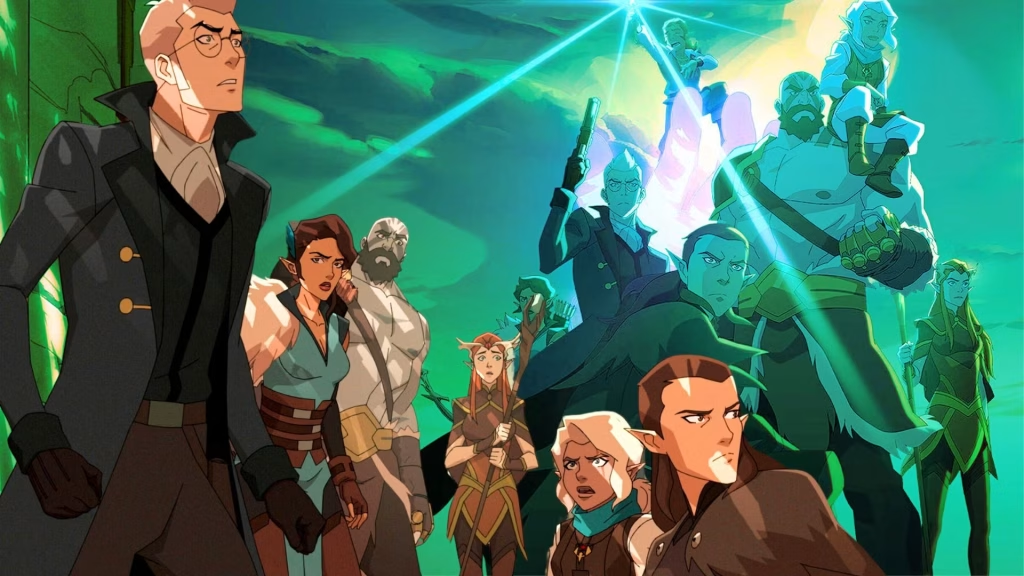
11. The Legend of Vox Machina

Based on the wildly popular Critical Role Dungeons & Dragons campaign, The Legend of Vox Machina brings tabletop chaos to animated life.

Image Source: Bing Image. License: All Creative Commons

The story centers on a misfit group of adventurers who stumble their way into epic quests filled with magic, monsters, and emotional stakes.

Image Source: Bing Image. License: All Creative Commons

Voiced by the original players, the show retains a genuine sense of camaraderie and unpredictability. It works equally well for longtime D&D fans and newcomers who simply enjoy fast-paced fantasy with heart and humor.

Image Source: Bing Image. License: All Creative Commons

10. Riches

Riches dives into the glamorous but cutthroat world of a wealthy Black British family whose beauty empire becomes a battleground after the death of its founder. What follows is a sharp exploration of ambition, inheritance, and power.

Image Source: Bing Image. License: All Creative Commons

The series thrives on strong performances, stylish visuals, and simmering family tension. Beneath the luxury and drama lies a thoughtful look at identity, loyalty, and what legacy really means when money is on the line.

Image Source: Bing Image. License: All Creative Commons

9. Find Me in Your Memory

This Korean romance drama offers a unique emotional hook. One lead remembers every detail of his life, while the other has buried painful memories she can’t fully face.

Image Source: Bing Image. License: All Creative Commons

As their paths cross, the show gently explores trauma, healing, and vulnerability. With its soft pacing and emotional sincerity, Find Me in Your Memory delivers a love story that lingers long after the final episode.

Image Source: Bing Image. License: All Creative Commons

8. Carnival Row

Blending fantasy with noir-style mystery, Carnival Row is set in a world where mythical creatures live as refugees among humans. Orlando Bloom and Cara Delevingne lead a story shaped by prejudice, political unrest, and hidden crimes.

Image Source: Bing Image. License: All Creative Commons

The series stands out for its detailed world-building and mature themes. Fans of darker fantasy and morally complex storytelling will find plenty to sink their teeth into here.

Image Source: Bing Image. License: All Creative Commons

7. Small Axe

Created by Steve McQueen, Small Axe is an anthology that chronicles the lives of West Indian communities in London from the late 1960s through the 1980s. Each installment tells a self-contained story rooted in real historical experiences.

Image Source: Bing Image. License: All Creative Commons

From police brutality to cultural celebration, the series captures struggle and joy with cinematic precision. It’s essential viewing for anyone interested in social history, resilience, and powerful storytelling.

Image Source: Bing Image. License: All Creative Commons

6. Maxton Hall: The World Between Us

Adapted from Mona Kasten’s bestselling novels, Maxton Hall explores life inside an elite prep school where privilege and pressure collide. Ruby Bell, a scholarship student, finds herself pulled into a complicated relationship with wealthy classmate James Beaufort.

Image Source: Bing Image. License: All Creative Commons

The show leans into emotional tension, secrets, and slow-burning romance. With another season on the way, it’s an ideal binge for fans of dramatic young adult storytelling.

Image Source: Bing Image. License: All Creative Commons

5. May I Help You

This Amazon Original K-drama blends supernatural elements with heartfelt slice-of-life storytelling. Baek Dong-Joo works as a funeral director who can communicate with the dead, helping them complete unfinished business.

Image Source: Bing Image. License: All Creative Commons

Paired with an errand runner who assists the living, the series balances humor, grief, and warmth. Its creative premise and emotional depth make it both comforting and surprisingly moving.

Image Source: Bing Image. License: All Creative Commons

4. The Librarians

The Librarians mixes adventure, fantasy, and historical mystery into an accessible, fun series. The story follows a secret group tasked with protecting magical artifacts from falling into the wrong hands.

Image Source: Bing Image. License: All Creative Commons

With a lighthearted tone and episodic structure, the show offers consistent entertainment without heavy commitment. It’s perfect for viewers who enjoy clever puzzles, action, and mythology with a sense of humor.

Image Source: Bing Image. License: All Creative Commons

3. Burning an Illusion

A cornerstone of Black British cinema, Burning an Illusion tells the story of a young Caribbean woman navigating love, racism, and self-awareness in 1970s Britain.

Image Source: Bing Image. License: All Creative Commons

Its quiet power lies in its realism and emotional honesty. Decades later, the film remains deeply relevant, offering insight into identity, resistance, and personal growth.

Image Source: Bing Image. License: All Creative Commons

2. Weightlifting Fairy Kim Bok Joo

Few shows radiate joy like Weightlifting Fairy Kim Bok Joo. The series follows a young athlete balancing competitive sports, friendships, and her first experience with love.

Image Source: Bing Image. License: All Creative Commons

Its charm comes from its warmth and relatability, celebrating self-acceptance and emotional growth. It’s an easy recommendation for anyone in need of something uplifting and heartfelt.

Image Source: Bing Image. License: All Creative Commons

1. The Lord of the Rings: The Rings of Power

Prime Video’s most ambitious series, The Rings of Power, expands Tolkien’s Middle-earth during its Second Age. The story weaves together familiar figures and new characters facing rising darkness.

Image Source: Bing Image. License: All Creative Commons

With stunning visuals, large-scale storytelling, and epic ambition, the series delivers a cinematic experience on the small screen. For fantasy fans, it’s a centerpiece of Prime Video’s lineup.

Image Source: Bing Image. License: All Creative Commons

Prime Video’s strength lies in its range. It doesn’t cater to just one type of viewer—it embraces variety, culture, and storytelling from around the world. Whether you’re chasing epic fantasy, emotional romance, or socially meaningful stories, these 13 picks prove there’s always something worth watching next.

When Stardom Clashes: 15 Celebrities With Notorious Reputations

0
Image Source: Bing Image. License: All Creative Commons

The film industry is packed with actors who captivate audiences, yet working with them off-camera can be a very different story. Whether it’s overpowering egos, unpredictable attitudes, or overly controlling tendencies, some stars have developed reputations that keep colleagues on edge. Their abilities may be impressive, but questions about their conduct and professionalism have often attracted attention for less flattering reasons.

Image Source: Bing Image. License: All Creative Commons

Here are 15 celebrities who, according to industry insiders, have proven particularly difficult to collaborate with on set.

Image Source: Bing Image. License: All Creative Commons

15. William Shatner

While William Shatner’s legacy as a television and film icon is unquestionable, his behavior off-screen has often been described as unpredictable and sometimes antagonistic. Security and crew members have recounted moments where his antics crossed lines, leaving those around him uncomfortable.

Image Source: Bing Image. License: All Creative Commons

One notorious story involved Shatner repeatedly commenting on a security guard’s height, pushing the interaction to the point where the guard nearly lost his temper. Incidents like this have left many hesitant to work with him, as his humor doesn’t always translate well outside the spotlight.

Image Source: Bing Image. License: All Creative Commons

14. David Boreanaz

Known for his role in Bones, David Boreanaz reportedly created a tense environment on set with his strict “no eye contact” rule for extras. Background actors had to be cautious, as even a casual glance could result in being sent home.

Image Source: Bing Image. License: All Creative Commons

This rigid approach fostered an atmosphere of anxiety, with crew and extras walking on eggshells. According to insiders, the rule wasn’t always enforced gently, leaving some feeling humiliated just for doing their jobs.

Image Source: Bing Image. License: All Creative Commons

13. Martin Kove

Martin Kove, famous for The Karate Kid and Cobra Kai, is remembered for the odd and sometimes unsettling treatment of production assistants. One PA described waiting outside Kove’s hotel room for an hour before finally being allowed in, only to experience an awkward and humiliating encounter afterward.

Image Source: Bing Image. License: All Creative Commons

Kove reportedly offered to buy a cookie but ate it himself while staring at the assistant during the drive back. These eccentric behaviors have made him notorious among the crew, leaving a lasting impression that isn’t always flattering.

Image Source: Bing Image. License: All Creative Commons

12. Sean Schemmel

As the voice of Goku in Dragon Ball, Sean Schemmel has gained a reputation for being very protective—and occasionally abrasive—about the character. At conventions, he has clashed with other voice actors and fans, creating tension over what he perceives as disrespect toward his role.

Image Source: Bing Image. License: All Creative Commons

Incidents include pressing Goku’s Japanese voice actor about ownership of the character and cutting autograph sessions short if he suspected signatures were intended for others. This possessiveness has left some fans and colleagues wary of engaging with him.

Image Source: Bing Image. License: All Creative Commons

11. Michael Cera

Michael Cera’s on-screen persona is awkwardly charming, but his real-life interactions tell a different story. Musicians on tour and fans in public have described him as dismissive, sometimes even confrontational.

Image Source: Bing Image. License: All Creative Commons

From brushing off casual greetings to bumping into people without apology, Cera’s behavior contrasts sharply with his character’s warmth, leaving many surprised and disappointed by his off-screen demeanor.

Image Source: Bing Image. License: All Creative Commons

10. Blake Lively

Blake Lively has been described as difficult and demanding on set. Crew members report an entitled attitude and tantrums that could sour the production environment, though she reportedly maintains good relations with directors.

Image Source: Bing Image. License: All Creative Commons

Some insiders have gone so far as to say they would avoid working with her again due to the stress and negativity she brings. Her reputation serves as a cautionary tale about the pressures of celebrity ego on collaborative work.

Image Source: Bing Image. License: All Creative Commons

9. James Corden

James Corden is known for his charm on television, but behind the scenes, crew members describe him as elitist and quick to anger. Insiders report that he only communicates with senior staff and can lose his temper over minor issues.

Image Source: Bing Image. License: All Creative Commons

This behavior has caused friction on set, with some labeling him as difficult to collaborate with. The contrast between his public friendliness and private behavior has surprised and frustrated many in the industry.

Image Source: Bing Image. License: All Creative Commons

8. Faye Dunaway

Faye Dunaway has long been infamous for her rigid demands on set. Stories include bringing scales to weigh her food, enforcing no eye contact rules, and losing her temper when staff didn’t comply exactly with her requests.

Image Source: Bing Image. License: All Creative Commons

Such exacting standards and frequent outbursts have made her a dreaded presence on productions, with crew members admitting to fearing interactions with her. Her legendary status hasn’t softened the challenges of working alongside her.

Image Source: Bing Image. License: All Creative Commons

7. Steven Seagal

Steven Seagal is widely regarded as one of the most difficult actors to work with in Hollywood. Multiple crew members describe him as entitled and dismissive, making collaboration stressful and often unpleasant.

Image Source: Bing Image. License: All Creative Commons

Seagal’s reputation has become an industry-wide cautionary tale, and anecdotes of his abrasive behavior continue to circulate among film and television professionals.

Image Source: Bing Image. License: All Creative Commons

6. Ben Stiller

Although Ben Stiller is celebrated for his comedic talent, several insiders have accused him of verbal abuse and entitlement on set. Some assistants report being berated or belittled, leaving a tense work atmosphere.

Image Source: Bing Image. License: All Creative Commons

Despite his public persona as approachable and humorous, these accounts show a darker, more challenging side, resulting in some crew members avoiding projects involving him.

Image Source: Bing Image. License: All Creative Commons

5. John Cusack

John Cusack has been described as demanding and difficult on set. Crew members recount situations where he expected special treatment and showed little appreciation for staff efforts.

Image Source: Bing Image. License: All Creative Commons

These behaviors reportedly created frustration and resentment among those working with him, making his sets less collaborative and enjoyable than others.

Image Source: Bing Image. License: All Creative Commons

4. Russell Crowe

Russell Crowe’s reputation for arrogance precedes him. Directors and crew have described him as acting above others, prioritizing his interests over the needs of the production.

Image Source: Bing Image. License: All Creative Commons

While Crowe is a talented actor, his self-importance has caused tension and strained relationships on multiple sets, leaving a trail of frustrated colleagues behind him.

Image Source: Bing Image. License: All Creative Commons

3. Michael Bay

Michael Bay’s demanding nature and entourage-driven environment have made him notorious in Hollywood. Crew members report that the combination of his high-pressure style and entourage behavior creates chaos on set.

Image Source: Bing Image. License: All Creative Commons

From assistants to bodyguards, the ripple effect of his behavior contributes to an overwhelming work atmosphere. Many insiders dread working on his films, regardless of the spectacle he delivers on screen.

Image Source: Bing Image. License: All Creative Commons

2. Dr. Phil

Dr. Phil is known to enforce strict personal rules on set, such as prohibiting eye contact, which interns and staff have described as intimidating. Breaking these rules reportedly results in immediate consequences, including termination.

Image Source: Bing Image. License: All Creative Commons

This rigid demeanor and self-focus create a stressful work environment, making staff hyper-aware and anxious about their every move.

Image Source: Bing Image. License: All Creative Commons

1. Tyra Banks

Tyra Banks tops the list for being exceptionally demanding with staff. Reports suggest she enforces the “no eye contact” rule so strictly that interns have been fired for simple mistakes.

Image Source: Bing Image. License: All Creative Commons

Such practices create a climate of fear and tension, leaving crew members feeling undervalued and anxious. Her behavior has become a cautionary example of the challenges of navigating celebrity egos in the entertainment industry.

Image Source: Bing Image. License: All Creative Commons

Even the most talented stars can bring challenges to a set, and these 15 celebrities demonstrate that fame doesn’t always guarantee a smooth working environment. For crew members and collaborators, knowing who is difficult to work with can be just as important as knowing who’s brilliant on camera.

8 Overlooked Christian Bale Movies That Deserve More Love

0
Image Source: Bing Image. License: All Creative Commons

Some actors play characters, but others fully immerse themselves to the point where you forget who they really are. Christian Bale firmly belongs in that second group. Renowned for his extreme physical changes and relentless dedication, Bale throws himself into every role with remarkable intensity, whether it’s a major blockbuster or a smaller, character-driven film.

Image Source: Bing Image. License: All Creative Commons

While many moviegoers immediately think of his turns as Batman or the chilling Patrick Bateman, his career runs much deeper than a few iconic roles. Scattered throughout his filmography are several underappreciated performances that showcase just how versatile and daring he truly is. Below are eight underrated Christian Bale films that deserve far more attention.

Image Source: Bing Image. License: All Creative Commons

8. The Pale Blue Eye

In this moody gothic thriller, Bale plays a weary detective tasked with solving a series of grisly murders at West Point. Assisting him is a young cadet named Edgar Allan Poe, adding a literary edge to the unfolding mystery. The film leans heavily into atmosphere, and Bale’s restrained performance keeps it grounded.

Image Source: Bing Image. License: All Creative Commons

Rather than opting for theatrical flair, Bale chooses subtlety. His character carries quiet grief and emotional fatigue, expressed through glances and pauses rather than dramatic monologues. It’s a reminder that he doesn’t always need grand gestures to command the screen.

Image Source: Bing Image. License: All Creative Commons

Though the film didn’t dominate headlines, it offers a rich, slow-burning experience. Bale’s presence anchors the story, making it a worthwhile watch for fans who appreciate layered, character-driven storytelling.

Image Source: Bing Image. License: All Creative Commons

7. Hostiles

Set in the American frontier, Hostiles casts Bale as Captain Joseph J. Blocker, a hardened soldier escorting a dying Cheyenne chief across dangerous territory. The journey forces him to confront his own prejudice and emotional scars. It’s a role that demands both grit and vulnerability.

Image Source: Bing Image. License: All Creative Commons

Bale portrays Blocker as a man shaped by violence but not beyond redemption. His performance simmers rather than explodes, revealing inner conflict through restrained emotion. The moral tension in his character feels authentic and deeply human.

Image Source: Bing Image. License: All Creative Commons

The film itself unfolds at a deliberate pace, prioritizing character over spectacle. Bale’s nuanced work ensures that the slow burn pays off, making Hostiles one of his most quietly affecting performances.

Image Source: Bing Image. License: All Creative Commons

6. Exodus: Gods and Kings

Directed by Ridley Scott, this large-scale biblical epic features Bale as Moses. Rather than presenting the prophet as a distant legend, Bale plays him as a conflicted, uncertain man grappling with immense responsibility. That grounded approach gives the story a more personal feel.

Image Source: Bing Image. License: All Creative Commons

Bale once again transformed himself physically for the part, embodying the exhaustion and determination of a reluctant leader. His Moses isn’t simply a figure of faith; he’s a man wrestling with doubt and destiny.

Image Source: Bing Image. License: All Creative Commons

While the film received mixed reactions, Bale’s commitment stands out. Even within the spectacle of massive set pieces, his performance brings emotional weight and credibility to the narrative.

Image Source: Bing Image. License: All Creative Commons

5. Out of the Furnace

In this gritty drama, Bale plays Russell Baze, a steelworker trying to keep his family together amid economic hardship and violence. It’s a stripped-down performance that relies on emotional honesty rather than showy moments. His portrayal feels raw and lived-in.

Image Source: Bing Image. License: All Creative Commons

Russell is a man burdened by responsibility and regret. Bale captures that heaviness through quiet restraint, letting silence speak louder than dialogue. The pain in his character feels genuine, never exaggerated.

Image Source: Bing Image. License: All Creative Commons

Out of the Furnace thrives on atmosphere and tension, but it’s Bale’s steady presence that holds everything together. His performance elevates the film into something far more powerful than a standard revenge story.

Image Source: Bing Image. License: All Creative Commons

4. I’m Not There

In Todd Haynes’ unconventional portrait of Bob Dylan, multiple actors embody different facets of the legendary artist. Bale portrays “Pastor John,” representing Dylan’s spiritual transformation during his gospel period. It’s a subtle but meaningful contribution.

Image Source: Bing Image. License: All Creative Commons

Rather than mimicking Dylan outright, Bale captures the essence of a man in search of faith and identity. His performance is introspective and layered, blending charisma with vulnerability.

Image Source: Bing Image. License: All Creative Commons

Surrounded by a talented ensemble, Bale still manages to stand out. His segment offers a thoughtful exploration of reinvention and belief, adding emotional texture to the film’s experimental structure.

Image Source: Bing Image. License: All Creative Commons

3. Rescue Dawn

In this harrowing war drama directed by Werner Herzog, Bale plays Dieter Dengler, a pilot captured during the Vietnam War. The role demanded extreme physical endurance, including significant weight loss and grueling shooting conditions. Bale embraced the challenge completely.

Image Source: Bing Image. License: All Creative Commons

His portrayal captures both desperation and unwavering resilience. Even in moments of near defeat, there’s a spark of determination in his performance that keeps the audience invested.

Image Source: Bing Image. License: All Creative Commons

Rescue Dawn is difficult to watch at times due to its unflinching realism. Yet Bale’s dedication to authenticity transforms it into a gripping study of survival and human willpower.

Image Source: Bing Image. License: All Creative Commons

2. Equilibrium

Before dystopian franchises dominated theaters, Equilibrium offered a stylized, philosophical action story. Bale plays John Preston, an elite enforcer in a society where emotions are outlawed. The role blends martial-arts precision with emotional awakening.

Image Source: Bing Image. License: All Creative Commons

At first, Bale’s performance is cold and mechanical, reflecting a man conditioned to suppress feeling. As the character begins to experience emotion, subtle shifts in expression and posture signal his transformation.

Image Source: Bing Image. License: All Creative Commons

The film has since developed a cult following. Bale’s ability to balance high-concept action with genuine character development makes Equilibrium a standout in his early career.

Image Source: Bing Image. License: All Creative Commons

1. Newsies

Long before becoming known for brooding intensity, Bale showcased his charm in this musical drama. Playing Jack Kelly, the charismatic leader of striking newsboys, he brought energy and heart to the screen.

Image Source: Bing Image. License: All Creative Commons

Although the film underperformed upon release, it eventually gained a devoted fanbase. Its themes of solidarity and youthful rebellion resonated with audiences over time, leading to a successful Broadway adaptation.

Image Source: Bing Image. License: All Creative Commons

Bale’s performance reveals a different side of his talent. Singing, dancing, and leading an ensemble, he demonstrated star quality even at a young age, a glimpse of the transformative performer he would later become.

Image Source: Bing Image. License: All Creative Commons

Christian Bale’s career is defined by risk-taking and total immersion. From musicals and dystopian thrillers to war dramas and westerns, he consistently chooses roles that challenge both himself and his audience.

Image Source: Bing Image. License: All Creative Commons

These underrated films highlight the depth of his range and the fearless approach he brings to every project. Exploring them offers a deeper appreciation for one of the most dedicated actors working today.