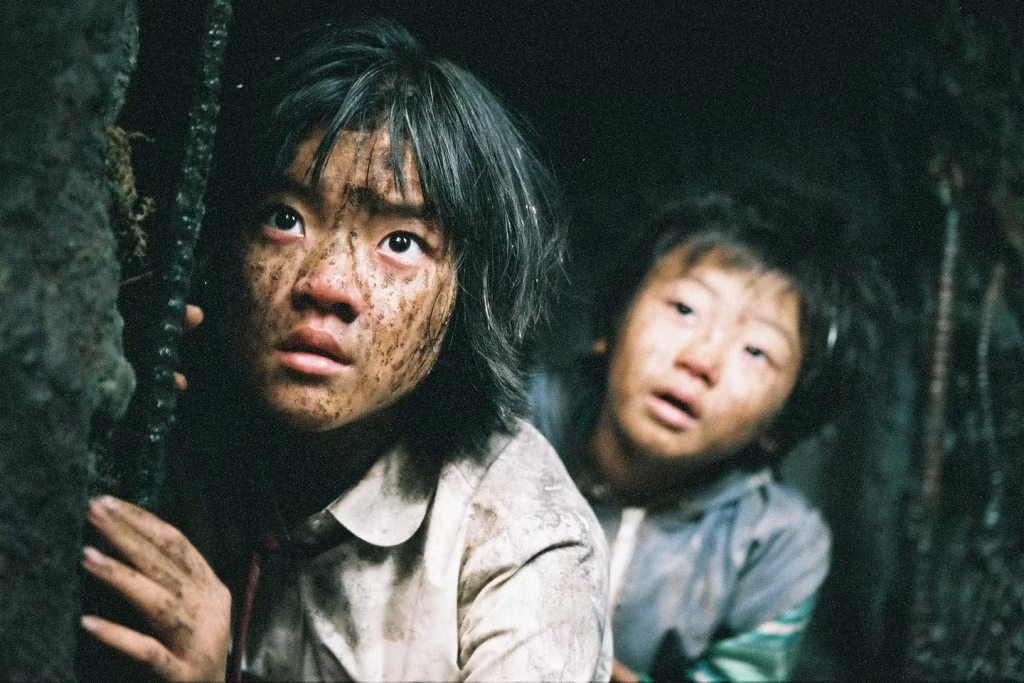
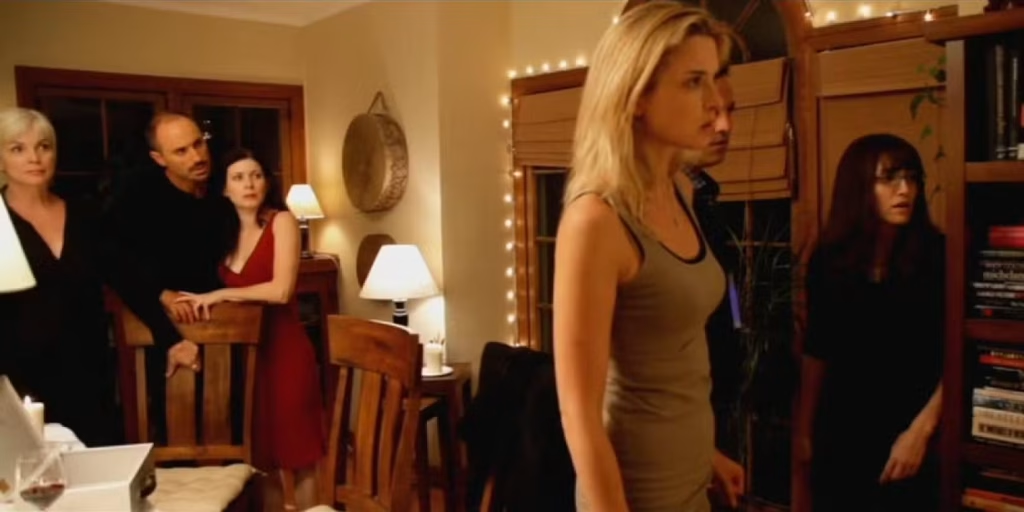
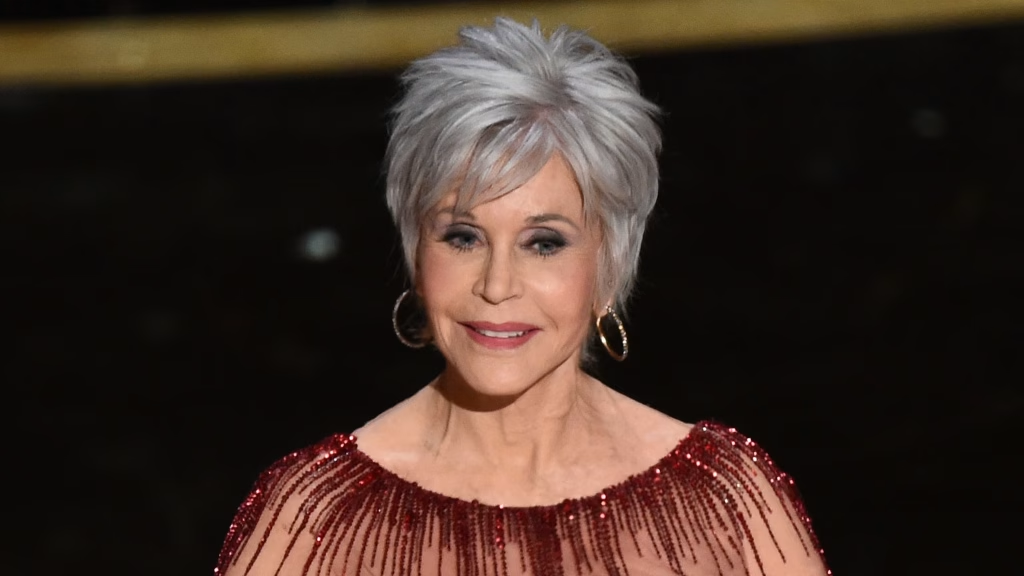
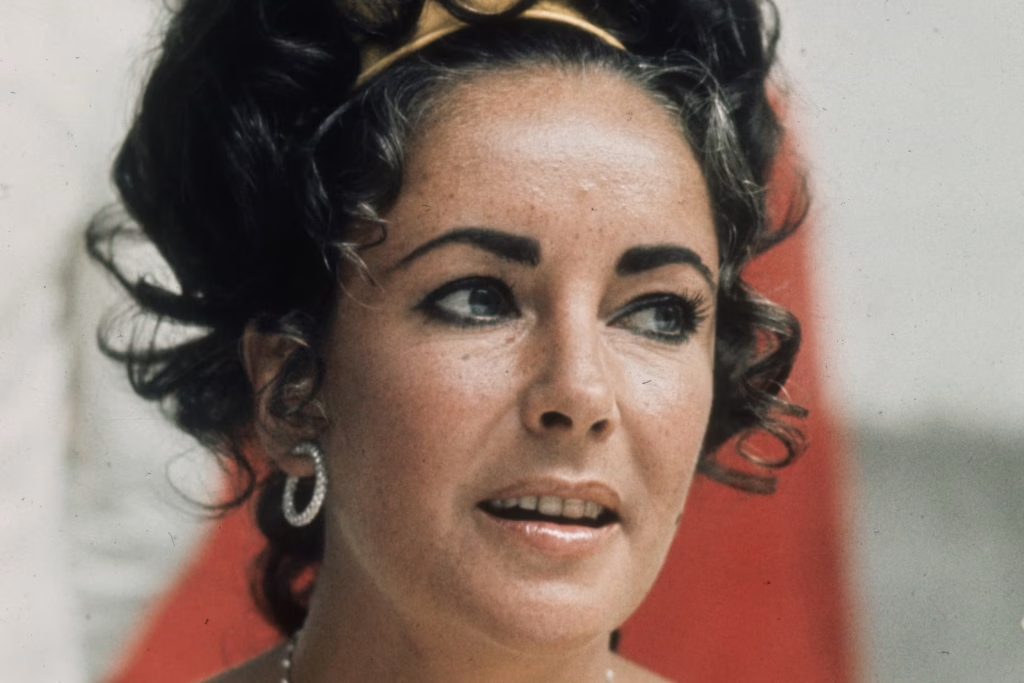
Image Source: Bing Image. License: All Creative Commons
Science fiction fans have quietly taken notice: Apple TV+ has evolved into a standout destination in an increasingly crowded streaming world. Though it doesn’t always command the same spotlight as bigger platforms, it has methodically assembled a lineup of intelligent, visually striking sci-fi series. From ambitious, idea-driven storytelling to immersive futuristic worlds, the service offers a depth and consistency that often exceeds expectations. For viewers willing to venture beyond the usual mainstream picks, Apple TV+ provides a wealth of genre offerings that truly reward patience, curiosity, and attention.
Image Source: Bing Image. License: All Creative Commons
While the fan community is busy with debates about the best Star Trek series or discussions about the effectiveness of Netflix’s algorithm, Apple has been quietly but just as efficiently creating a fantastic lineup of sci-fi series.
Image Source: Bing Image. License: All Creative Commons
These 10 best sci-fi shows to watch online on Apple TV+ are your next binge, and they are in order from the most mind-bending mystery to the most epic alternate history grand narrative.
Image Source: Bing Image. License: All Creative Commons
10. Sunny
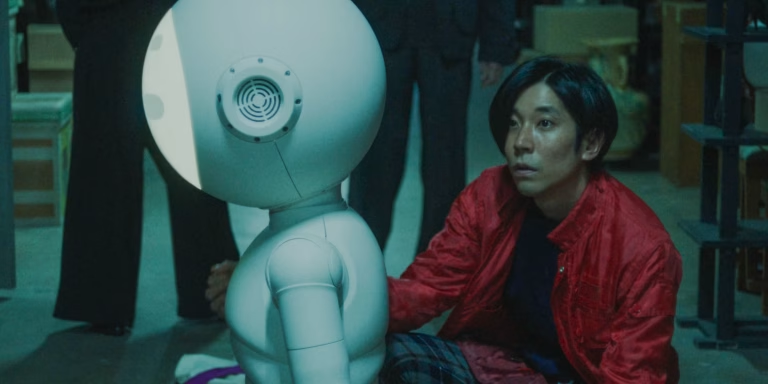
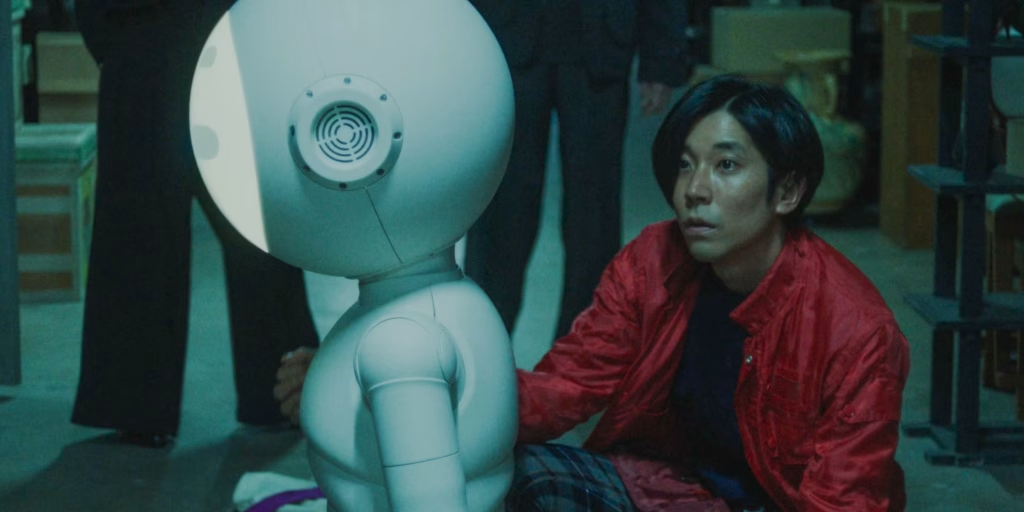
If you prefer your sci-fi a little dark, a little humorous, and a little melancholy, Sunny is a secret treasure. Rashida Jones plays an American expat in near-future Kyoto whose life is turned around when her husband and son disappear in a plane crash.
Image Source: Bing Image. License: All Creative Commons
Her sole companion is a relentlessly cheerful AI robot. Blending loss, suspense, and understated humor, the series is a one-season treat that’s quirky, sentimental, and well worth your time.
Image Source: Bing Image. License: All Creative Commons
9. Hello Tomorrow!
Enter a world in which 1950s optimism meets futuristic moon real estate fraud.
Image Source: Bing Image. License: All Creative Commons
Billy Crudup stars as a smooth-talking lunar salesman in this retro-futuristic dramedy.
Image Source: Bing Image. License: All Creative Commons
With its Jetsons-meets-Mad Men look, Hello Tomorrow! Dazzles with style, witty humor, and just enough charm to make you wistful for a future that never was.
Image Source: Bing Image. License: All Creative Commons
8. Constellation
Just as fans of cerebral, unsettling sci-fi would hope, Constellation does not disappoint. Noomi Rapace stars as an astronaut who journeys home to Earth only to find reality differs from what she knew.
Image Source: Bing Image. License: All Creative Commons
Merging psychological thriller and sci-fi, this one-season series is a drama about memory, identity, and paranoia, with twists and imagery that haunt long after the credits fade.
Image Source: Bing Image. License: All Creative Commons
7. Monarch: Legacy of Monsters
Monster lovers, rejoice. Monarch: Legacy of Monsters brings the Monsterverse to TV.
Image Source: Bing Image. License: All Creative Commons
Kurt Russell and Wyatt Russell play the same character in two different timelines, delivering epic battles and nostalgic touches to Godzilla fans.
Image Source: Bing Image. License: All Creative Commons
With season two in the works, it’s a must for anyone who loves giant creatures and visual spectacle.
Image Source: Bing Image. License: All Creative Commons
6. Invasion
Invasion takes a different direction with the alien apocalypse. Instead of hip action combat, it focuses on ordinary people everywhere struggling with the breakdown of society.
Image Source: Bing Image. License: All Creative Commons
The aliens are often in the background, but human drama—fear, determination, and anarchy—is center stage, and so it is a chilling and thought-provoking reimagining of first contact.
Image Source: Bing Image. License: All Creative Commons
5. Dark Matter
Multiverse storytelling is everywhere, but Dark Matter makes it personal.
Image Source: Bing Image. License: All Creative Commons
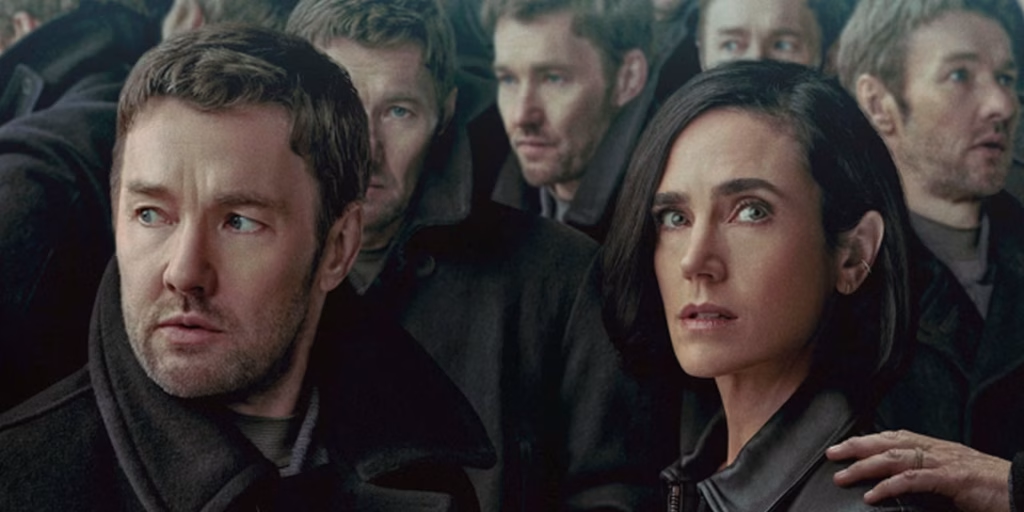
Joel Edgerton stars as a physicist pulled into an alternate universe of his existence, with no escape but to confront what could have been and his archenemy—himself.
Image Source: Bing Image. License: All Creative Commons
Renewed tofora eries for sea ason, the show continues to provide mind-bending twists and existential thrills.
Image Source: Bing Image. License: All Creative Commons
4. Silo
Dystopian fiction meets gripping mystery in Silo. Set in a massive underground bunker housing 10,000 people cut off from the toxic surface, Rebecca Ferguson leads a cast navigating secrets, betrayals, and layered storytelling.
Image Source: Bing Image. License: All Creative Commons
With multiple seasons confirmed, it’s a world you’ll want to explore episode after episode.
Image Source: Bing Image. License: All Creative Commons
3. For All Mankind
What if the Soviets got to the moon first? All Mankind takes that as its starting point and develops into a sprawling alternate history of ambition, politics, and lots of rocket launches.
Image Source: Bing Image. License: All Creative Commons
Each season leaps ahead a decade, into new eras and new frontiers, and so it’s both a reimagining of history and an epic human drama.
Image Source: Bing Image. License: All Creative Commons
2. Foundation
Taking Isaac Asimov’s classic novels in hand was always considered impossible, but Foundation sets the doubters straight.
Image Source: Bing Image. License: All Creative Commons
The visually stunning, intellectually demanding, epic in scope story spans galaxy politics and predictive science like psychohistory.
Image Source: Bing Image. License: All Creative Commons
A true standout of Apple’s catalog, this space opera is ambitious, challenging to the mind, and a must-see.
Image Source: Bing Image. License: All Creative Commons
1. Severance
Topping the list is Severance, arguably Apple TV+’s crowning achievement. Imagine splitting your work and personal memories so you’re two versions of yourself.
Image Source: Bing Image. License: All Creative Commons
With Ben Stiller directing, the show is a sharp, darkly comic take on corporate life, blending Black Mirror vibes, office satire, and psychological horror.
Image Source: Bing Image. License: All Creative Commons
Absurd, tense, and thought-provoking, Severance is the kind of show that demands immediate binge-watching.
Image Source: Bing Image. License: All Creative Commons
Apple TV+ may not have the flashiest brand recognition in sci-fi yet, but these 10 shows prove it’s a platform worth paying attention to.
Image Source: Bing Image. License: All Creative Commons
Whether you’re in the mood for existential dread, monster battles, or mind-bending mysteries, there’s something here for every fan of the genre.
Image Source: Bing Image. License: All Creative Commons
Hollywood is experiencing a vibrant new energy, fueled in large part by a rising wave of young Black actors. Through undeniable talent, infectious enthusiasm, and authentic storytelling, these performers are breaking barriers on screen and redefining the stories Hollywood tells. Their work proves that passion, skill, and honesty can challenge old norms and help usher in a bold, exciting era for the film industry.
Image Source: Bing Image. License: All Creative Commons
These celebs under 30 are not going about it sneakily; they are dismantling the character, sharing the narratives that have importance, and using their voices for the sake of authentic transformation. These are 15 of the most powerful young Black actors who have a bright future in Hollywood.
Image Source: Bing Image. License: All Creative Commons
15. Chosen Jacobs (23)
You know him as Mike Hanlon from It (2017), but Chosen Jacobs is far more than a horror-movie gem. With appearances in Hawaii Five-0 and Disney+’s Sneakerella, to name a few, as well as singing and producing work, he’s creating a career across several creative channels.
Image Source: Bing Image. License: All Creative Commons
Offscreen, he’s equally committed to philanthropy and mentoring youth, making him one of Hollywood’s most down-to-earth up-and-comers.
Image Source: Bing Image. License: All Creative Commons
14. Myles Truitt (22)
Myles burst onto the scene in the sci-fi thriller Kin and has gone on to make his presence felt on shows like Black Lightning and Euphoria.
Image Source: Bing Image. License: All Creative Commons
Respected for the depth and vulnerability he brings to his characters, he has a talent for making every single one of them feel genuine. He’s not yet old enough, but his consistent rise indicates he’s not going anywhere.
Image Source: Bing Image. License: All Creative Commons
13. Niles Fitch (23)
This Is Us fans will immediately remember him as Randall Pearson in his teen years. Niles has since diversified with projects such as Disney+’s Secret Society of Second-Born Royals and still lobbies for greater inclusivity in storytelling.
Image Source: Bing Image. License: All Creative Commons
His activism, particularly regarding lupus awareness after losing his father, goes to show just how deeply he connects his work with the real world.
Image Source: Bing Image. License: All Creative Commons
12. Jahking Guillory (23)
From his breakout role in Kicks to starring roles in On My Block and Black Lightning, Jahking is making a name for himself as a bold performer.
Image Source: Bing Image. License: All Creative Commons
He’s candid about his own experience with mental illness, which lends added authenticity to his work. His raw, emotional performances make it impossible not to take notice.
Image Source: Bing Image. License: All Creative Commons
11. Marcus Scribner (24)
Growing up on Black-ish and Grown-ish familiarized us with Marcus, but he’s also recognizable for voicing She-Ra and the Princesses of Power.
Image Source: Bing Image. License: All Creative Commons
Aside from acting, he speaks up regarding ecological and justice concerns. His blend of humor, talent, and activism shows he’s more than a sitcom celebrity.
Image Source: Bing Image. License: All Creative Commons
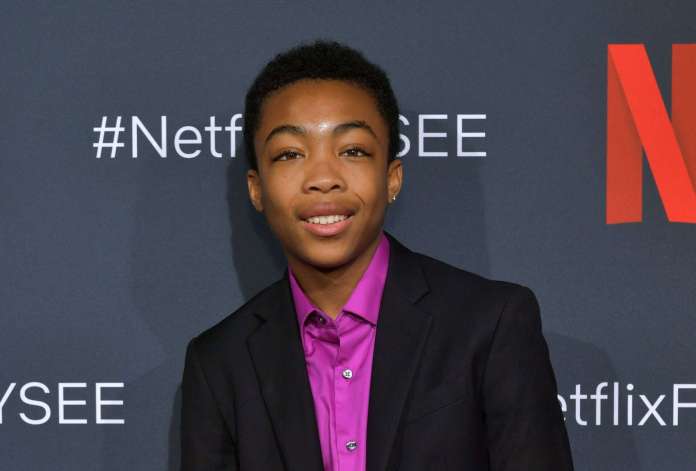
10. Asante Blackk (23)
Asante burst onto the scene with Ava DuVernay’s When They See Us, receiving an Emmy nomination straight out of the box. He’s been wowing audiences in This Is Us ever since.
Image Source: Bing Image. License: All Creative Commons
He’s an outspoken advocate for representation and equality in Hollywood, and his acting always displays a sagacity beyond his years.
Image Source: Bing Image. License: All Creative Commons
9. Jahi Winston (20)
With The Upside, Proud Mary, Charm City Kings, and Netflix’s We Have a Ghost under his belt, Jahi is developing a career that combines mainstream smashes with more resonant indie efforts.
Image Source: Bing Image. License: All Creative Commons
Toss in his music ability, and you have one of the most well-rounded emerging stars in the industry.
Image Source: Bing Image. License: All Creative Commons
8. Michael Rainey Jr. (24)
As Tariq St. Patrick in Power and its spin-off Power Book II: Ghost, Michael has enthralled fans with his nuanced acting of a complex character stuck between right and wrong.
Image Source: Bing Image. License: All Creative Commons
While he has grown to fame, he remains down-to-earth, and his work ethic implies this is just the tip of the iceberg for a long, fruitful career.
Image Source: Bing Image. License: All Creative Commons
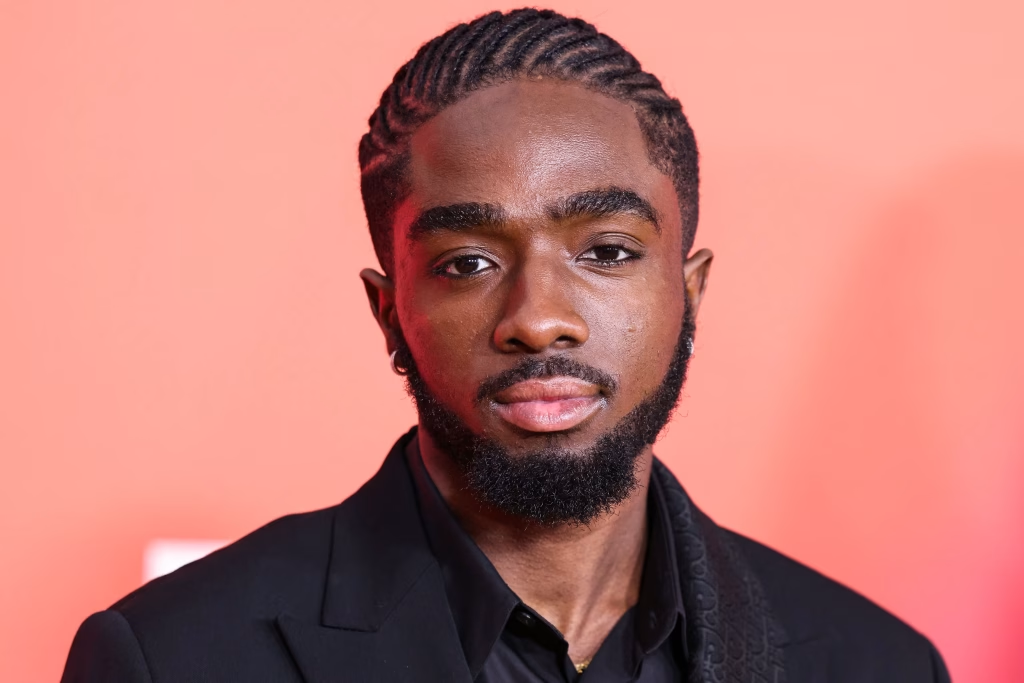
7. Caleb McLaughlin (23)
Best recognized as Lucas Sinclair on Stranger Things, Caleb has already demonstrated he’s up for blockbuster stardom. But with Concrete Cowboy and being Dior’s first Black youth ambassador, he’s also turning into a role model.
Image Source: Bing Image. License: All Creative Commons
He talks regularly to young fans about self-esteem and confidence, demonstrating that his reach is far beyond acting.
Image Source: Bing Image. License: All Creative Commons
6. Jharrel Jerome (27)
From Moonlight to his Emmy-winning performance in When They See Us, Jharrel has established himself as one of the most real actors of his generation.
Image Source: Bing Image. License: All Creative Commons
His performances are rooted in humanity, and he tends to take tough roles and make them unforgettable.
Image Source: Bing Image. License: All Creative Commons
5. Miles Brown (19)
Best known for his role as Jack Johnson on Black-ish, Miles is already a multi-hyphenate: dancer, actor, rapper, and activist.
Image Source: Bing Image. License: All Creative Commons
At the age of 19, he has become a voice for his generation, fusing art and advocacy. His energy and optimism make him one of the most exciting young faces in Hollywood.
Image Source: Bing Image. License: All Creative Commons
4. Jacob Latimore (28)
As Emmett on The Chi, Jacob has shown just how much heart and range he brings to the screen.
Image Source: Bing Image. License: All Creative Commons
But he’s not limited to acting; he’s also a singer and dancer, making him a true triple threat. His career is proof that versatility pays off.
Image Source: Bing Image. License: All Creative Commons
3. Michael Evans Behling (28)
All American fans recognize him as Jordan Baker, but Michael’s influence extends beyond television. One of the highest-paid young Black actors in the industry today, he’s opening doors while revealing his own adoption and identity narrative. His transparency makes him accessible and inspiring to many.
Image Source: Bing Image. License: All Creative Commons
2. Jaden Smith (26)
From The Karate Kid to his genre-pushing music and fashion endeavors, Jaden has never been in one place.
Image Source: Bing Image. License: All Creative Commons
He’s a risk-taker who leverages his popularity to break rules, whether that’s with fashion, the environment, or human rights. He’s not so much a “Hollywood actor” as he is a cultural phenomenon unto himself.
Image Source: Bing Image. License: All Creative Commons
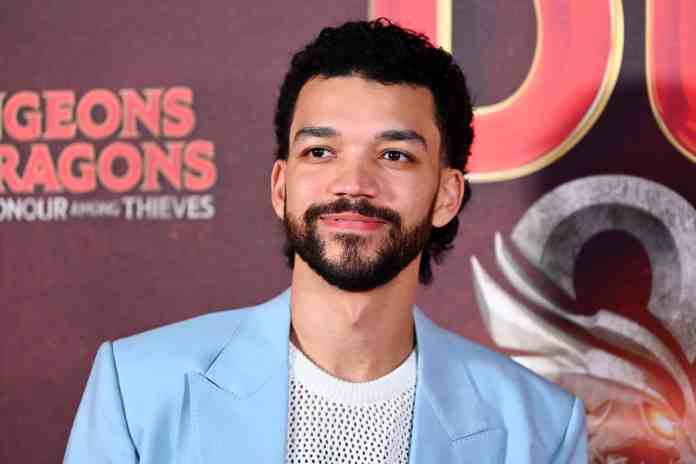
1. Justice Smith (29)
Justice leads the pack for good reason. With lead roles in Jurassic World: Fallen Kingdom and Detective Pikachu, he’s demonstrated his blockbuster clout. But his stand for LGBTQ+ rights and mental health makes him more than a film star; he’s making Hollywood a more inclusive place.
Image Source: Bing Image. License: All Creative Commons
These performers aren’t just up-and-coming talent; they’re leaders, weavers of stories, and change-makers redefining Hollywood for the present. They’re proof positive that the future of cinema is fearless, diverse, and brighter than ever.
Image Source: Bing Image. License: All Creative Commons
While many sci-fi fans gravitate toward blockbuster franchises like Star Wars, The Matrix, and Blade Runner, true enthusiasts often delight in the hidden gems—underrated or overlooked films and series that fly under the mainstream radar. These lesser-known works frequently offer bold ideas, inventive storytelling, and unexpected creativity, giving fans the thrill of discovery that even the biggest spectacles can’t always provide.
Image Source: Bing Image. License: All Creative Commons
Such movies that you ask yourself, “Why is nobody talking about it?” If you are fed up with the endless reruns of the same franchises and still want to delve into the underappreciated world of the genre, then here are 15 sci-fi movies waiting for more recognition. From the worst to the best, as it is more fun to discover the best last.
Image Source: Bing Image. License: All Creative Commons
15. Arena (1989)
Picture Rocky set in the Star Wars cantina. That’s Arena. Paul Satterfield stars as a short-order cook who finds himself boxing against aliens in an offbeat intergalactic league.
Image Source: Bing Image. License: All Creative Commons
Between rubber-suited monsters, campy charm, and low-budget practical effects, this cult B-movie has more heart than you might guess. If you enjoy gritty sci-fi, this one’s a sleeper knockout.
Image Source: Bing Image. License: All Creative Commons
14. The Visitor (1979)
This trippy oddity looks as though someone had edited together The Omen, Close Encounters, and a prog rock gig.
Image Source: Bing Image. License: All Creative Commons
An alien warrior attempts to prevent a psychic kid from energizing an apocalyptic cult, as John Huston and a killer score fuel the mayhem. It’s trippy, sloppy, and unforgettable.
Image Source: Bing Image. License: All Creative Commons
13. The Man from Earth (2007)
What if your professor casually revealed that he was 14,000 years old? That’s the premise for this micro-budget blockbuster.
Image Source: Bing Image. License: All Creative Commons
The whole story takes place in one room, where scholars argue whether their peer is lying or not. No special effects, no action sequences—just sheer, cerebral storytelling. It’s tiny in scale but gigantic in ideas.
Image Source: Bing Image. License: All Creative Commons
12. Coherence (2013)
An intimate dinner party goes awry when a comet in the sky derails reality. Parallel worlds collide, and friends find alternate versions of themselves.
Image Source: Bing Image. License: All Creative Commons
Filmed in only a few days with largely improvised dialogue, this gripping little indie shows you don’t need large effects to blow minds.
Image Source: Bing Image. License: All Creative Commons
11. Primer (2004)
Few time-travel films welcome complexity as enthusiastically as Primer. Two engineers inadvertently build a time machine in their garage, and the resulting whiplash of loops, paradoxes, and causality follows.
Image Source: Bing Image. License: All Creative Commons
Costing only $7,000 to make, it’s dense, intellectual, and putty for sci-fi elitists.
Image Source: Bing Image. License: All Creative Commons
10. A Scanner Darkly (2006)
Richard Linklater employs rotoscope animation to bring Philip K. Dick’s chilling story of paranoia, addiction, and surveillance to the screen.
Image Source: Bing Image. License: All Creative Commons
Keanu Reeves plays an undercover detective losing his sanity, and Robert Downey Jr. and Winona Ryder complete the ensemble. The animation technique alone is a journey well worth taking.
Image Source: Bing Image. License: All Creative Commons
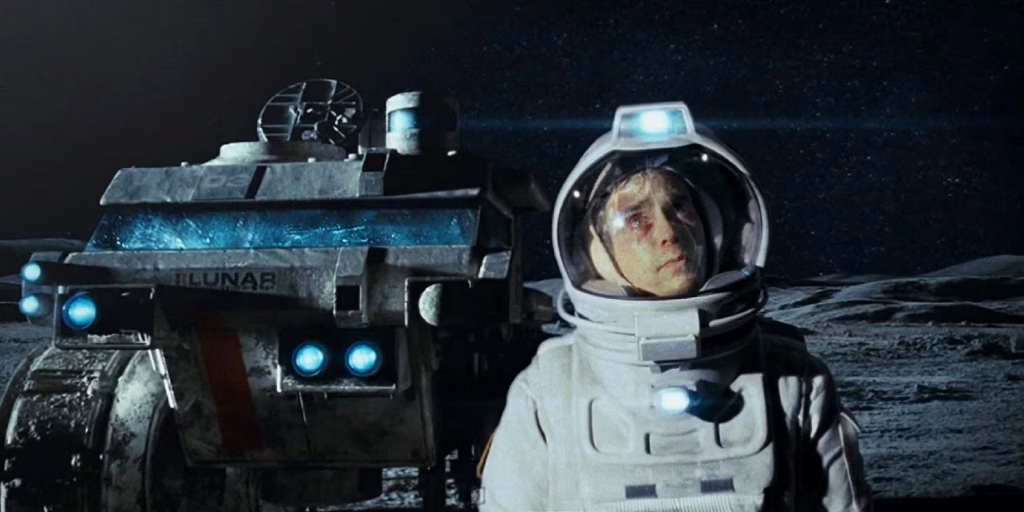
9. Moon (2009)
Sam Rockwell supports this whole movie—literally. He’s a lunar worker who’s at the end of his contract and finds himself not as alone as he believed.
Image Source: Bing Image. License: All Creative Commons
With few sets and a quietly heartbreaking tale, Another Earth is a modern masterpiece that continues to fail to get its due.
Image Source: Bing Image. License: All Creative Commons
8. Another Earth (2011)
When a duplicate planet suddenly materializes in the sky, a young woman sees an opportunity for redemption for her checkered past.
Image Source: Bing Image. License: All Creative Commons
This low-key, emotional film mixes sci-fi concepts with human drama, kept afloat by a warm performance from Brit Marling. It’s just as much about forgiveness as it is about parallel universes.
Image Source: Bing Image. License: All Creative Commons
7. The Host (2006)
Before Parasite, Bong Joon-ho presented us with this monster movie with brains. A family wages war on a river creature that abducts their daughter, and is held back by bureaucracy and corruption.
Image Source: Bing Image. License: All Creative Commons
Scary, satirical, and tear-jerking, it’s an uncommon creature feature with substance.
Image Source: Bing Image. License: All Creative Commons
6. Barbarella (1968)
Jane Fonda in outer space, over-the-top costumes, and a script that’s all camp. Written off as nonsense when it was released, Barbarella has since gained cult status and feminist icon status of a sort—the only female-fronted sci-fi extravaganza of its day.
Image Source: Bing Image. License: All Creative Commons
Ridiculous? For sure. Enjoyable? Beyond doubt.
Image Source: Bing Image. License: All Creative Commons
5. Dark City (1998)
On the one hand, the movie “Dark City” is in the neo-noir genre; on the other hand, it is a mind-bender. It follows a man who finds himself suffering from amnesia in a city where evil forces are controlling everything.
Image Source: Bing Image. License: All Creative Commons
The film features Rufus Sewell, Jennifer Connelly, and Kiefer Sutherland as the main cast, and the sights that were later used in “The Matrix” were already here. Anyone who enjoys watching their reality altered shouldn’t miss it.
Image Source: Bing Image. License: All Creative Commons
4. Predestination (2014)
A time-travel movie that folds back on itself until your head hurts—in the good way.
Image Source: Bing Image. License: All Creative Commons
Ethan Hawke plays an agent pursuing a bomber across timelines, only to get hit with identity-shattering revelations about destiny. One of the best paradox movies ever constructed.
Image Source: Bing Image. License: All Creative Commons
3. Gattaca (1997)
Shot in a future fixated on genetic perfection, Gattaca is a chic, disturbing examination of discrimination and ambition.
Image Source: Bing Image. License: All Creative Commons
Ethan Hawke stars as a man attempting to overcome the system against him, and the movie is even more timely today, amidst gene editing. Underappreciated? Absolutely.
Image Source: Bing Image. License: All Creative Commons
2. Snowpiercer (2014)
Humanity’s final remnants survive on a train that perpetually loops around a cold, desolate Earth, and there are merciless class divisions between the cars.
Image Source: Bing Image. License: All Creative Commons
Chris Evans takes charge in this icy dystopian thriller, helmed by Bong Joon-ho. It’s action-packed, visually stunning, and rich in biting social commentary.
Image Source: Bing Image. License: All Creative Commons
1. Coherence (2013)
Yes, it’s here again—and for good reason. Coherence is one of the smartest, most rewatchable sci-fi movies of the past 20 years.
Image Source: Bing Image. License: All Creative Commons
On a tiny budget, it delivers tension, brain-teasing twists, and an ending that sticks with you. If you only pick one film from this list, make it this one. Then watch it twice.
Image Source: Bing Image. License: All Creative Commons
These films prove that sci-fi isn’t just about flashy effects and big franchises—it’s about bold ideas, clever storytelling, and sometimes a little campy fun.
Image Source: Bing Image. License: All Creative Commons
Whether you’re in the mood for a brain puzzle, a cult oddity, or a heartfelt indie, this list has something to surprise you. So grab some popcorn and dive into the underrated side of the galaxy.
Image Source: Bing Image. License: All Creative Commons
Let’s face it—who hasn’t fantasized about living like a Hollywood star? Glittering red-carpet events, fans cheering your name, and dazzling designer outfits (fashion mishaps included) are just the beginning. Beyond the glamour lies the excitement of nonstop attention, exclusive parties, and a lifestyle that feels bigger than life—a dream many of us can’t resist imagining, even if just for a moment.
Image Source: Bing Image. License: All Creative Commons
But the fame didn’t shine for some actors as brightly as they expected. These celebrities might have stopped acting due to burnout, a wish for a normal life, or just a new passion, and they had to let go of their performing careers, some forever, some only for a while. There is a countdown of 15 stars who shocked the public by quitting their roles—and their next moves.
Image Source: Bing Image. License: All Creative Commons
15. Shirley Temple
The first child star of the 1930s retired from Hollywood at only 22. After a failed bid at an adult comeback, she retired from acting altogether in 1950 and transitioned into politics, serving later as U.S. ambassador to Ghana and Czechoslovakia.
Image Source: Bing Image. License: All Creative Commons
14. Debra Winger
With three Oscar nominations to her credit, Winger appeared invincible—but departed at the peak of her career. Disgruntled with unfulfilling roles, she took six years off before reclaiming her seat at the table, but only when the projects truly tested her.
Image Source: Bing Image. License: All Creative Commons
13. Audrey Hepburn
After captivating the world in Breakfast at Tiffany’s and dozens of other timeless classics, Hepburn devoted her life to humanitarian causes.
Image Source: Bing Image. License: All Creative Commons
As a UNICEF spokesperson, she visited all corners of the globe and left behind a legacy of kindness that earned her the Presidential Medal of Freedom.
Image Source: Bing Image. License: All Creative Commons
12. Gene Hackman
Hackman retired from acting in 2004 after Welcome to Mooseport. Doctors told him that he needed to cut down on stress, and he decided to take a quieter life in New Mexico.
Image Source: Bing Image. License: All Creative Commons
Having two Oscars in his pocket, he figured he’d done enough for Hollywood.
Image Source: Bing Image. License: All Creative Commons
11. Portia de Rossi
Best known for Scandal and Arrested Development, de Rossi retired at age 45. She told Ellen DeGeneres’ daytime talk show that she needed to begin a new life beyond her acting career.
Image Source: Bing Image. License: All Creative Commons
For a short time, aside from completing Arrested Development, she’s been a businesswoman.
Image Source: Bing Image. License: All Creative Commons
10. Robert Redford
After six decades in front of the camera, Redford announced his retirement with The Old Man & the Gun (2018).
Image Source: Bing Image. License: All Creative Commons
While he’s still dabbled in producing and occasional cameos, he’s largely stepped away, saying it was simply time.
Image Source: Bing Image. License: All Creative Commons
9. Terrence Howard
Howard made headlines when he declared he was done with acting after Empire. “I’m done pretending,” he said.
Image Source: Bing Image. License: All Creative Commons
But Hollywood retirements don’t always stick—he’s since appeared in other projects.
Image Source: Bing Image. License: All Creative Commons
8. Lindsay Lohan
Lohan has made a gentle return after all those years of tabloid melodrama, appearing in Netflix’s Falling for Christmas.
Image Source: Bing Image. License: All Creative Commons
She’s now juggling motherhood and acting, and appears to have found her balance again in life and career.
Image Source: Bing Image. License: All Creative Commons
7. Cameron Diaz
One of the biggest stars of the late 90s and early 2000s, Diaz quit after Annie in 2014. She explained later that she wanted to put family and personal happiness first.
Image Source: Bing Image. License: All Creative Commons
Ten years later, she’s back for Back in Action alongside Jamie Foxx.
Image Source: Bing Image. License: All Creative Commons
6. Jane Fonda
Fonda quit acting for 15 years after she married media mogul Ted Turner, believing she’d never be back.
Image Source: Bing Image. License: All Creative Commons
But at age 60, she came back—and has been working consistently ever since. At 85, she’s still a force to be reckoned with.
Image Source: Bing Image. License: All Creative Commons
5. Brendan Fraser
Having ruled the 90s, Fraser took a step back because of health problems and personal issues.
Image Source: Bing Image. License: All Creative Commons
His return in The Whale was victorious, awarding him an Academy Award and demonstrating that second acts really are better.
Image Source: Bing Image. License: All Creative Commons
4. Ke Huy Quan
The Indiana Jones and The Goonies child star favorite faded from view in Hollywood for 20 years, toiling behind the scenes.
Image Source: Bing Image. License: All Creative Commons
Then he made his breathtaking comeback in Everything Everywhere All At Once, for which he won an Oscar.
Image Source: Bing Image. License: All Creative Commons
3. Shelley Duvall
Duvall’s spooky performances in The Shining and Popeye are iconic, but she slipped quietly out of Hollywood in 2002 to tend to relatives in Texas. She briefly reappeared in 2023, just a year before her death.
Image Source: Bing Image. License: All Creative Commons
2. Frankie Muniz
Once he became a household name from Malcolm in the Middle, Muniz ditched acting for race cars. He dived headfirst into professional driving and loved every second of it. He is circling back to acting with a Disney+ revival of Malcolm in the works.
Image Source: Bing Image. License: All Creative Commons
1. Cate Blanchett
Blanchett hasn’t officially retired, but she’s been open about the idea of leaving acting behind. “I’m serious about giving it up,” she’s said, pointing to passions like conservation and family.
Image Source: Bing Image. License: All Creative Commons
For now, she’s still gracing the screen—but fans are bracing for the day she does step back.
Image Source: Bing Image. License: All Creative Commons
And that’s it—evidence that fame does not necessarily translate to satisfaction.
Image Source: Bing Image. License: All Creative Commons
For these celebrities, the largest plot twist came not on screen, but in real life, when they decided to leave behind the roles that earned them immortality.
Image Source: Bing Image. License: All Creative Commons
15. Elizabeth Taylor: A Hollywood Icon Who Faced Addiction Head-On
Elizabeth Taylor’s struggles with alcoholism and prescription drug dependence remain among Hollywood’s most notorious and widely discussed personal battles. At her lowest points, she was reportedly too impaired to perform her lines during entire days of filming, jeopardizing both her career and personal life. Behind the glitz and acclaim, these struggles highlighted the immense pressures of fame and the personal cost of stardom, making her story both tragic and a stark reminder of Hollywood’s darker side.
Image Source: Bing Image. License: All Creative Commons
In 1983, Taylor made a bold and historic decision by checking herself into the Betty Ford Center, becoming the first major celebrity to do so. Her choice helped normalize seeking treatment and encouraged others to step forward without fear of public shame.
Image Source: Bing Image. License: All Creative Commons
Personal writings from her time in rehab paint a harrowing picture—racing heartbeats, crushing fatigue, and the brutal reality of withdrawal. Though her health declined later in life and contributed to her passing at 79, Taylor’s openness transformed conversations around addiction and left behind a lasting legacy of resilience and advocacy.
Image Source: Bing Image. License: All Creative Commons
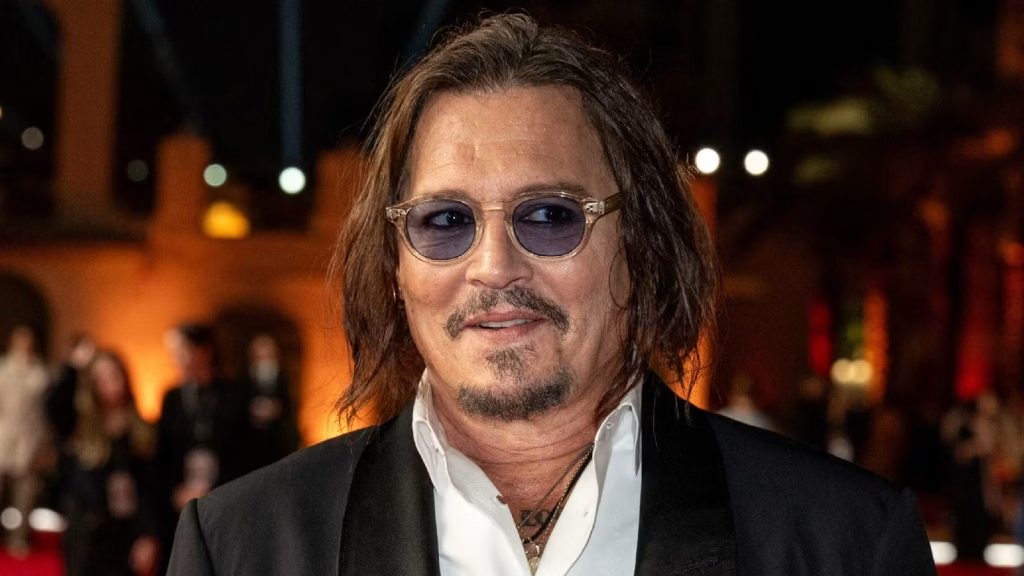
14. Johnny Depp: When Addiction Took Everything
Johnny Depp’s struggle with alcohol intensified during the aftermath of his divorce from Amber Heard. He has spoken openly about starting his mornings with vodka, writing through tears, and spending tens of thousands of dollars each month on wine alone.
Image Source: Bing Image. License: All Creative Commons
The excess eventually spiraled into emotional turmoil and financial chaos, forcing Depp to confront the roots of his self-destructive habits. Stepping away from alcohol, he turned to music and writing as healthier forms of expression.
Image Source: Bing Image. License: All Creative Commons
His brutally honest reflections serve as a reminder that fame, wealth, and success offer no immunity from addiction—and that recovery often begins with painful self-awareness.
Image Source: Bing Image. License: All Creative Commons
13. Michael Phelps: Beneath the Gold Medal
Despite being the most decorated Olympian in history, Michael Phelps found himself battling alcohol abuse following his second DUI arrest. Initially unsure whether drinking was truly his problem, Phelps later recognized how closely it was tied to untreated depression and emotional burnout.
Image Source: Bing Image. License: All Creative Commons
By speaking publicly about his struggles, he helped shatter myths surrounding athletes and addiction. His willingness to seek treatment and prioritize mental health has inspired countless others to acknowledge their own challenges and pursue recovery.
Image Source: Bing Image. License: All Creative Commons
12. Tim McGraw: Breaking Free From “Liquid Courage.”
For years, Tim McGraw relied on alcohol to calm his nerves before performances—a habit deeply influenced by the binge-drinking culture of his Louisiana roots. Over time, what began as confidence-boosting behavior grew into something far more destructive.
Image Source: Bing Image. License: All Creative Commons
Recognizing the toll it was taking on his family and career, McGraw chose sobriety just before a major tour, calling it one of the hardest decisions he’s ever made. By confronting emotional wounds and dismantling the excuses behind his drinking, he rebuilt his life from a place of honesty and vulnerability.
Image Source: Bing Image. License: All Creative Commons
11. Kat Von D: Choosing Sobriety—and Sharing It
Kat Von D has turned her sobriety into a public message of hope, marking each year alcohol-free with her followers online. She’s described her former lifestyle as an “addiction to chaos,” one that was glamorized within creative circles.
Image Source: Bing Image. License: All Creative Commons
Art became her anchor during recovery, helping her regain clarity and stability. By openly discussing both her destructive past and her joy in sobriety, Von D has become a source of encouragement for those navigating recovery themselves.
Image Source: Bing Image. License: All Creative Commons
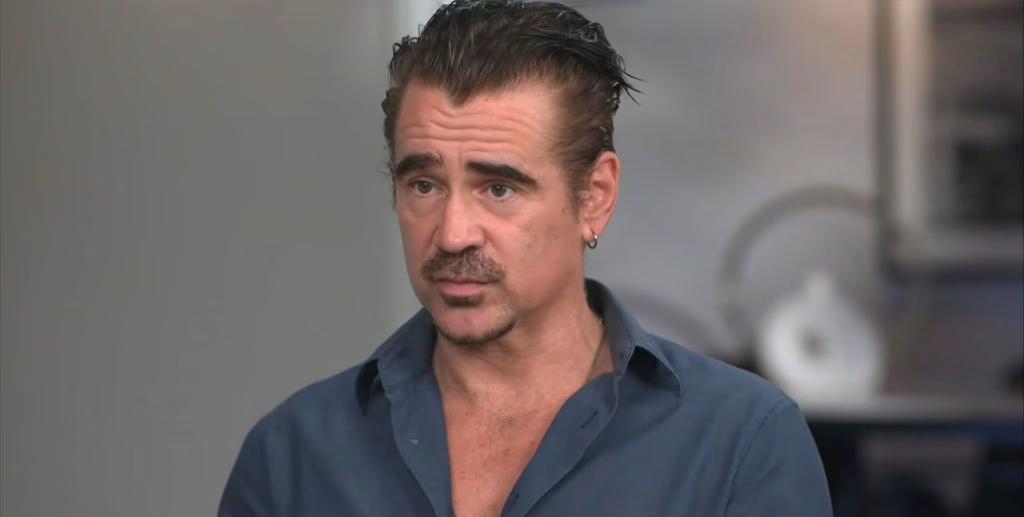
10. Colin Farrell: Recovery Without Illusions
Colin Farrell has referred to his addiction as a familiar story—messy, painful, and deeply human. After finishing Miami Vice, he found himself emotionally adrift, prompting another return to rehab in hopes of repairing relationships and regaining control.
Image Source: Bing Image. License: All Creative Commons
Farrell emphasizes that recovery isn’t a one-time victory but an ongoing commitment. He’s particularly vocal about dismantling the stigma surrounding addiction, especially in cultures that equate masculinity with emotional suppression.
Image Source: Bing Image. License: All Creative Commons
9. Zac Efron: Fame Came First—Addiction Followed
Zac Efron’s rapid rise to stardom brought intense pressure, and alcohol soon became a coping mechanism. Working on party-heavy films like Neighbors blurred boundaries, leading to repeated rehab visits within a short span of time.
Image Source: Bing Image. License: All Creative Commons
Efron has described addiction as a lifelong challenge, one he continues to manage through therapy and Alcoholics Anonymous. His willingness to discuss embarrassment, setbacks, and growth offers reassurance to others trying to recover under constant scrutiny.
Image Source: Bing Image. License: All Creative Commons
8. Edie Falco: Turning Personal Pain Into Powerful Art
Edie Falco’s own history with addiction deeply informed her performance as Nurse Jackie. With more than 25 years of sobriety, she found the role both affirming and emotionally difficult—especially when her character relapsed.
Image Source: Bing Image. License: All Creative Commons
Falco has praised the show for portraying addiction honestly, without neat resolutions or glamorization. Her work demonstrates how lived experience can elevate storytelling and foster deeper understanding.
Image Source: Bing Image. License: All Creative Commons
7. Daniel Radcliffe: Escaping Fame Through Alcohol
After becoming world-famous as a teenager, Daniel Radcliffe used alcohol to cope with constant public attention. He has described himself as having an inherently addictive personality and admitted to drinking daily during that period.
Image Source: Bing Image. License: All Creative Commons
Support from close friends helped him find healthier ways to manage pressure and seek help. By speaking candidly about his struggles, Radcliffe challenges the myth that success shields people from inner turmoil.
Image Source: Bing Image. License: All Creative Commons
6. Ben Affleck: Recovery as a Lifelong Practice
Ben Affleck has never hidden the fact that sobriety is an ongoing journey for him. After multiple rehab stays, including a 40-day inpatient program followed by outpatient care, he’s emphasized that addiction requires constant vigilance.
Image Source: Bing Image. License: All Creative Commons
Affleck hopes his transparency encourages others to seek treatment without shame. His story reflects persistence, accountability, and the courage it takes to keep starting again.
Image Source: Bing Image. License: All Creative Commons
5. The Outrun: From Memoir to Screen
Amy Liptrot’s memoir about recovering from alcoholism while returning to Scotland’s Orkney Islands was later adapted into a film starring Saoirse Ronan. Watching her life reimagined on screen felt surreal—like confronting a distorted reflection of herself.
Image Source: Bing Image. License: All Creative Commons
Liptrot remained involved in the adaptation process, helping preserve the emotional truth while maintaining personal distance. The film stands as a quiet, moving exploration of healing through place, solitude, and connection.
Image Source: Bing Image. License: All Creative Commons
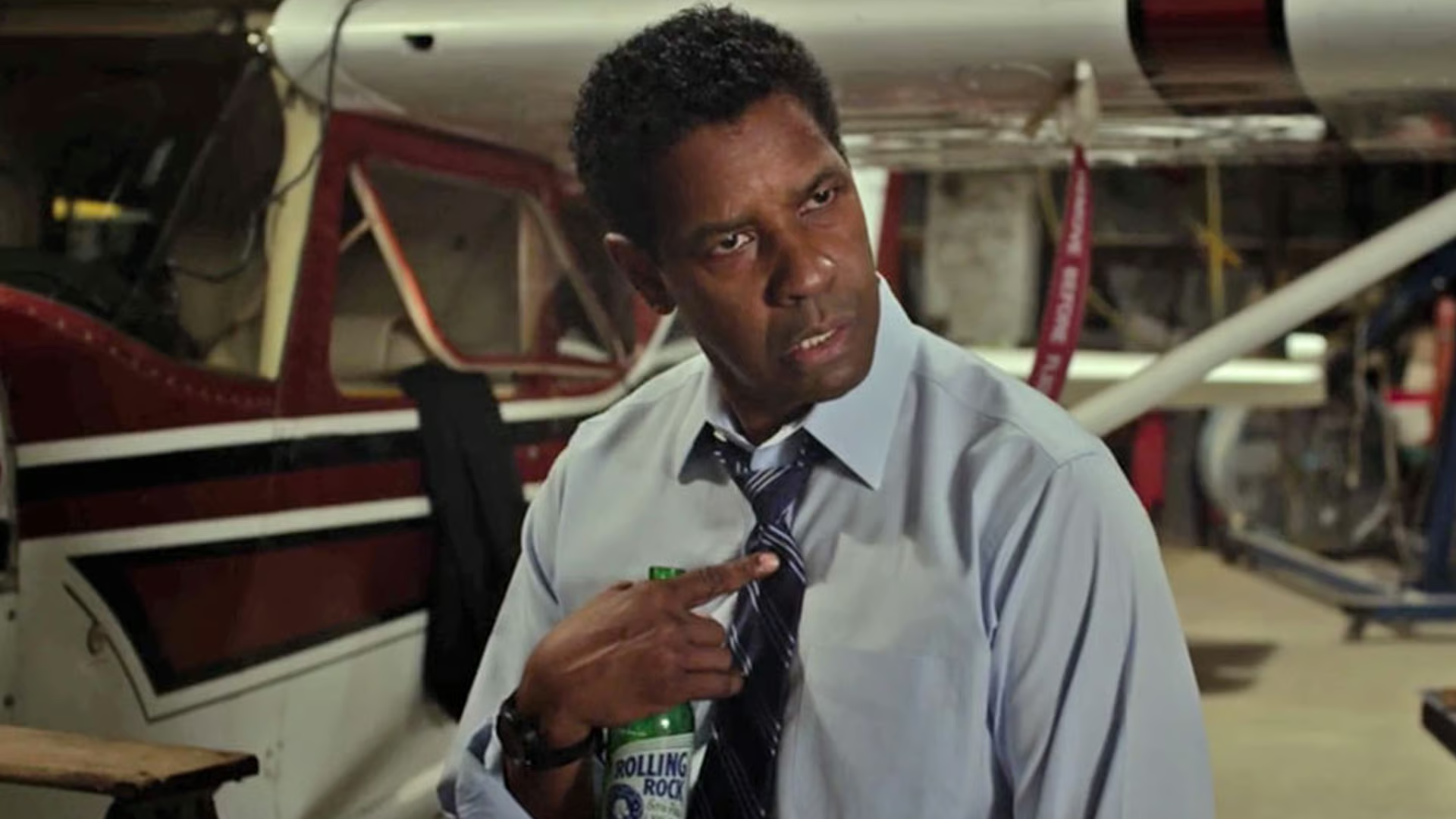
4. Flight (2012): A Stark Portrait of Functional Addiction
Denzel Washington’s portrayal of pilot Whip Whitaker offers one of cinema’s most honest depictions of “functional” alcoholism. Though outwardly competent, Whitaker’s addiction slowly unravels his life until catastrophe forces him to face the truth.
Image Source: Bing Image. License: All Creative Commons
The film avoids sensationalism, instead focusing on denial, consequences, and accountability. It remains one of the rare movies that captures addiction’s complexity without romanticizing it.
Image Source: Bing Image. License: All Creative Commons
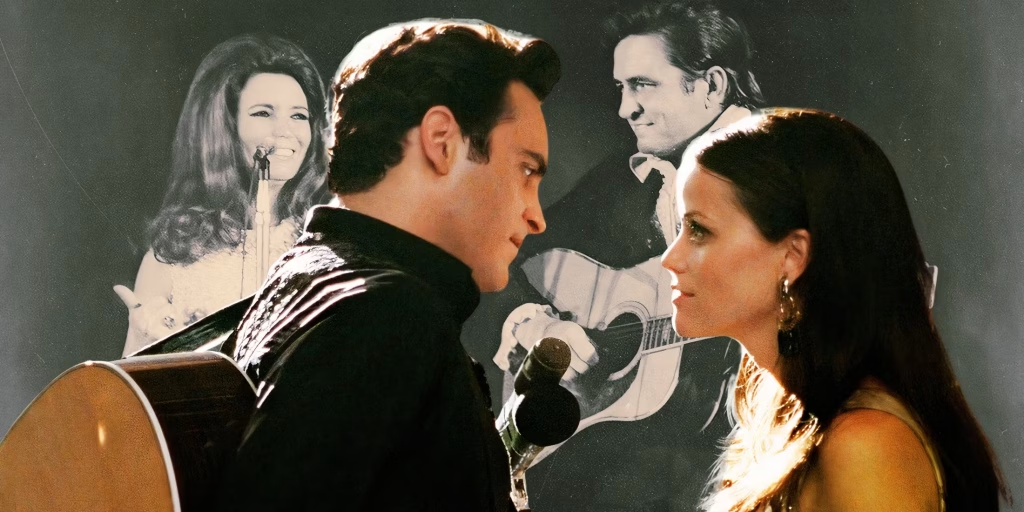
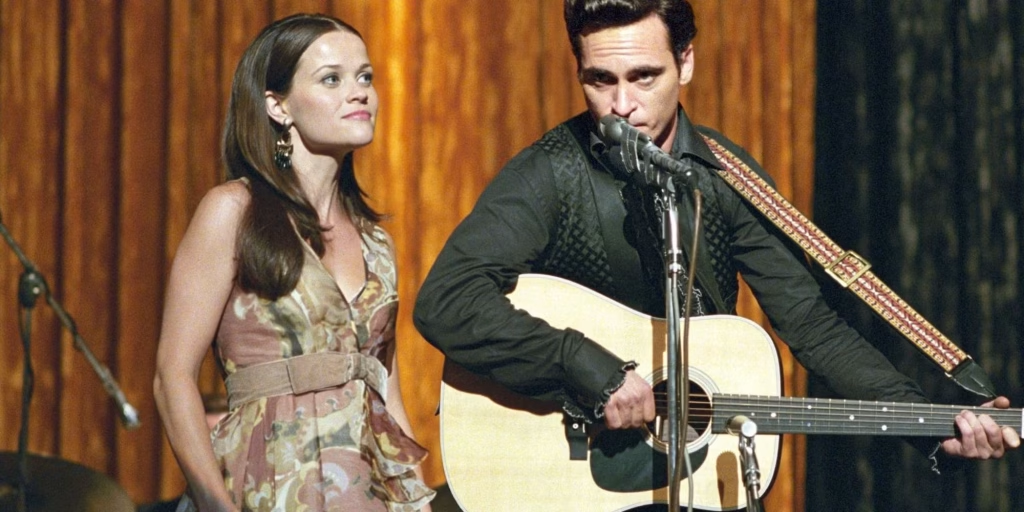
3. Walk the Line (2005): Johnny Cash’s Demons
Walk the Line traces Johnny Cash’s rise to fame alongside his destructive dependence on alcohol and pills. The film presents addiction as both fuel and threat—deeply intertwined with creativity yet capable of destroying everything it touches.
Image Source: Bing Image. License: All Creative Commons
By refusing to soften Cash’s struggles, the movie resonates with audiences who recognize the chaos of substance abuse in their own lives.
Image Source: Bing Image. License: All Creative Commons
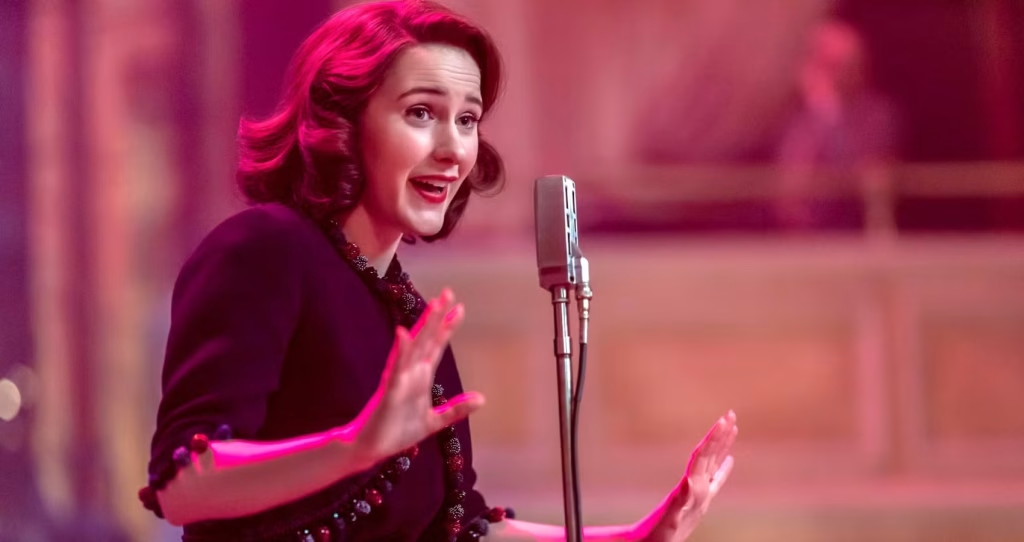
2. The Marvelous Mrs. Maisel: Letting Go of the Crutch
Early seasons of The Marvelous Mrs. Maisel show Midge using alcohol as emotional armor during her stand-up routines. Over time, she realizes her confidence and talent don’t actually depend on drinking.
Image Source: Bing Image. License: All Creative Commons
The show’s subtle shift away from alcohol reflects personal growth rather than dramatic intervention, offering a relatable portrayal of outgrowing unhealthy coping mechanisms.
Image Source: Bing Image. License: All Creative Commons
1. How Hollywood Really Portrays Drinking
On screen, alcohol is an illusion. Actors rarely consume real liquor during filming—iced tea, juices, and non-alcoholic substitutes stand in for spirits and wine. Fake ice cubes ensure visual consistency, while performers rely on acting techniques to convey intoxication authentically.
Image Source: Bing Image. License: All Creative Commons
Actors are often coached to play the attempt to seem sober rather than exaggerated drunkenness, creating more realistic scenes. While movies can sometimes glamorize drinking, behind the camera, the focus ison safety, professionalism, and telling these stories responsibly.
Image Source: Bing Image. License: All Creative Commons
Horror has always been a powerful way to explore fear, but some of the genre’s most unforgettable films go beyond monsters and jump scares—they dive straight into trauma. Using supernatural thrills and psychological tension, these movies tackle grief, abuse, loss, and the lasting impact they leave on the mind. The result is a type of terror that lingers long after the credits roll, confronting viewers with emotional wounds that feel raw, real, and impossible to ignore, making the horror both visceral and deeply personal.
Image Source: Bing Image. License: All Creative Commons
16. The Wailing
If you want a horror movie that quietly crawls into your mind and refuses to leave, The Wailing delivers. This South Korean standout blends folklore, possession, and supernatural terror with the slow collapse of a rural town that is set by unexplained deaths.
Image Source: Bing Image. License: All Creative Commons
At the center is an awkward, overwhelmed police officer whose attempt to investigate a string of brutal incidents pulls him into something far darker than he can comprehend. As fear spreads, certainty erodes, and grief takes hold, the line between the natural and the otherworldly completely dissolves.
Image Source: Bing Image. License: All Creative Commons
What truly sets The Wailing apart is how it captures the way trauma spreads—infecting individuals, families, and entire communities. Its deliberate pacing and gut-punch twists have earned it a lasting reputation as one of the most unsettling horror films of the modern era.
Image Source: Bing Image. License: All Creative Commons
15. Noroi: The Curse
Fans of found-footage horror should consider Noroi: The Curse essential viewing. This Japanese mockumentary uses realism as its sharpest weapon, constructing a chilling investigation into an ancient supernatural force.
Image Source: Bing Image. License: All Creative Commons
The story unfolds through fragmented media—interviews, broadcasts, home recordings—as a paranormal researcher pieces together a disturbing pattern of possession and ritual. That patchwork structure makes the horror feel alarmingly plausible.
Image Source: Bing Image. License: All Creative Commons
Rather than relying on shock tactics, Noroi excels at cultivating unease. The sense that something is deeply wrong—and unavoidable—lingers long after the film ends, earning it cult status among horror devotees.
Image Source: Bing Image. License: All Creative Commons
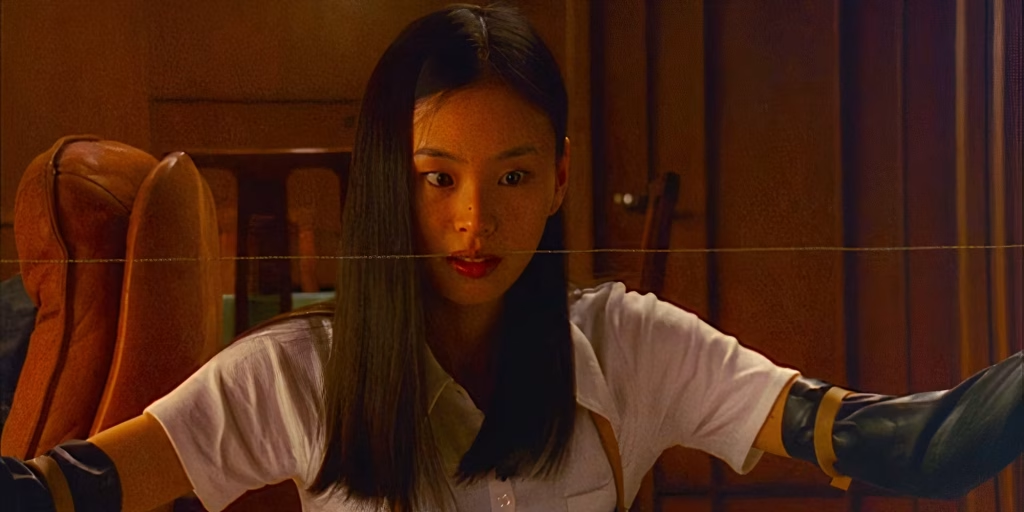
14. Audition
Few films embody the phrase “slow burn” quite like Audition. What begins as a subdued drama about loneliness and romance gradually transforms into an emotional and psychological nightmare.
Image Source: Bing Image. License: All Creative Commons
Director Takashi Miike intentionally disarms the viewer, setting expectations before shattering them in the film’s infamous final act. The violence isn’t just shocking—it feels like an eruption of long-suppressed pain.
Image Source: Bing Image. License: All Creative Commons
The trauma depicted cuts both ways, impacting characters and audience alike. Audition remains a landmark of extreme horror, influencing filmmakers while continuing to test viewers’ emotional endurance.
Image Source: Bing Image. License: All Creative Commons
13. Titane
Julia Ducournau’s Titane twists body horror into something deeply personal and strangely tender. The film follows Alexia, a woman marked by both physical injury and emotional disconnection, as she undergoes a radical transformation.
Image Source: Bing Image. License: All Creative Commons
Beneath the shocking imagery and surreal narrative lies a story about identity, alienation, and the need to be seen. Trauma here reshapes the body itself, becoming inseparable from selfhood.
Image Source: Bing Image. License: All Creative Commons
Uncomfortable, darkly funny, and unexpectedly moving, Titane challenges conventional horror while proving how powerful the genre can be when emotion drives the terror.
Image Source: Bing Image. License: All Creative Commons
12. The Others
While haunted house films are plentiful, The Others distinguishes itself through mood, restraint, and psychological depth. Nicole Kidman’s Grace lives in near darkness with her children, convinced unseen forces have invaded their home.
Image Source: Bing Image. License: All Creative Commons
As the story unfolds, it becomes clear that grief and denial are the true specters haunting the mansion. The film’s iconic twist forces a reevaluation of everything that came before, revealing trauma buried beneath fear.
Image Source: Bing Image. License: All Creative Commons
Elegant and eerie, The Others relies on atmosphere rather than spectacle, crafting a chilling experience that lingers quietly.
Image Source: Bing Image. License: All Creative Commons
11. Gerald’s Game
In Gerald’s Game, a secluded retreat becomes a nightmare of isolation and memory. After a tragic accident leaves Jessie physically trapped, she must survive not only the present danger but also the emotional scars she has long suppressed.
Image Source: Bing Image. License: All Creative Commons
The horror comes from both the body and the mind, as hallucinations and buried trauma resurface. Each revelation tightens the tension, and escaping seems impossible.
Image Source: Bing Image. License: All Creative Commons
Mike Flanagan’s adaptation turns a minimal setting into a deeply intense study of survival, reckoning, and resilience.
Image Source: Bing Image. License: All Creative Commons
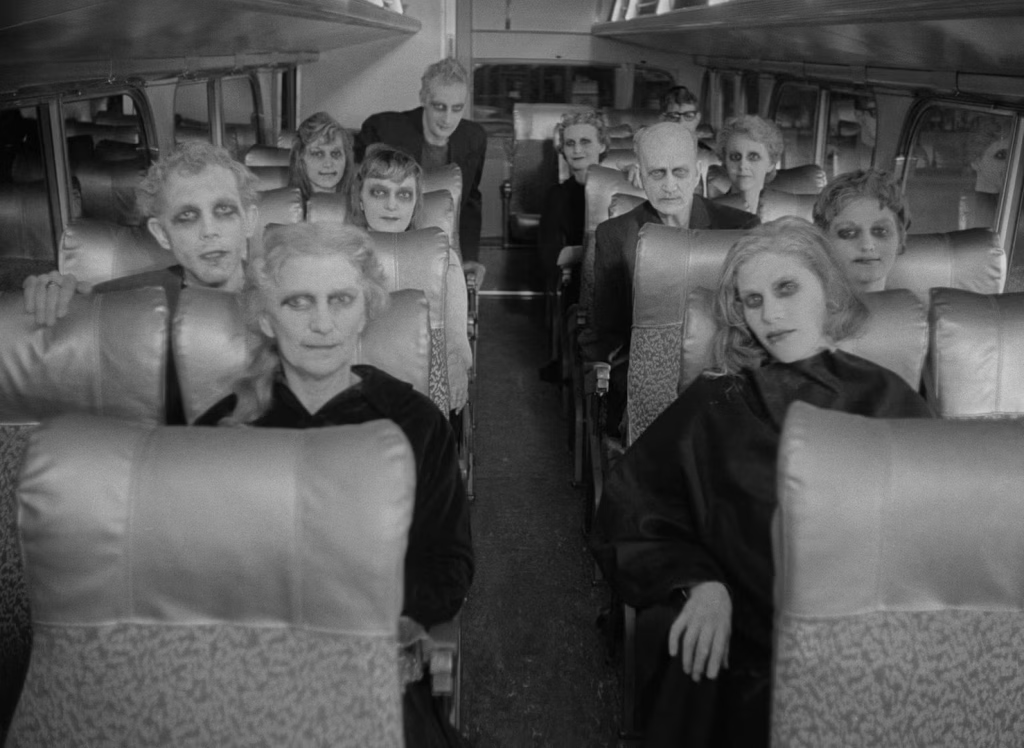
10. Carnival of Souls
A classic that still resonates, Carnival of Souls follows a woman haunted by strange visions after surviving a car crash. Shot in stark black-and-white, the film feels like a waking nightmare.
Image Source: Bing Image. License: All Creative Commons
Its unsettling imagery reflects the emotional aftermath of trauma—disconnection, alienation, and a sense of not belonging in the world anymore. The ghosts may be symbolic, but the dread feels real. Decades later, the film remains a cornerstone of psychological horror, proving that atmosphere and emotion outlast special effects.
Image Source: Bing Image. License: All Creative Commons
9. Mother!
Darren Aronofsky’s Mother! is an anxiety attack rendered on film. Jennifer Lawrence plays a woman whose home becomes a battleground as strangers invade her space, autonomy, and sanity.
Image Source: Bing Image. License: All Creative Commons
The film works simultaneously as an allegory and a personal horror, depicting trauma through relentless violation and chaos. The audience experiences the story almost entirely through her perspective, amplifying the sense of helplessness. Divisive and confrontational, Mother! refuses comfort, forcing viewers to sit with its emotional brutality.
Image Source: Bing Image. License: All Creative Commons
8. Antichrist
Lars von Trier’s Antichrist confronts grief with unflinching intensity. After the loss of their child, a couple retreats to the woods, hoping isolation will heal them. Instead, their pain manifests violently.
Image Source: Bing Image. License: All Creative Commons
Nature becomes hostile, reflecting guilt, despair, and psychological collapse. The film’s disturbing imagery serves as an externalization of internal torment. Notorious for its extremity, Antichrist remains a harrowing exploration of what happens when trauma is left to fester.
Image Source: Bing Image. License: All Creative Commons
7. Saint Maud
Saint Maud explores faith, trauma, and obsession through the eyes of a deeply troubled caregiver. Maud’s devotion to her dying patient gradually transforms into something terrifyingly unhinged.
Image Source: Bing Image. License: All Creative Commons
Her past trauma fuels her need for purpose, blurring the line between spiritual transcendence and psychological breakdown. The horror is subtle, building through isolation and belief. With haunting visuals and an unforgettable lead performance, Saint Maud proves how quietly devastating horror can be.
Image Source: Bing Image. License: All Creative Commons
6. Possum
Possum is a grim descent into repressed memory and childhood abuse. The story follows a broken man returning to his past, haunted by both a grotesque puppet and the trauma it represents. The film’s oppressive atmosphere mirrors the weight of unresolved pain. Silence, decay, and nightmare imagery combine to create something deeply uncomfortable. Bleak and uncompromising, Possum is horror at its most psychologically invasive.
Image Source: Bing Image. License: All Creative Commons
5. The Night House
On the surface, The Night House is a ghost story—but at its core, it’s about grief and depression. After her husband’s death, Beth begins uncovering unsettling truths about the home he left behind.
Image Source: Bing Image. License: All Creative Commons
As reality fractures, the house becomes a symbol of everything she’s trying to avoid confronting. Shadows conceal more than supernatural threats—they hide emotional devastation. Rebecca Hall’s performance anchors the film, elevating it into one of the most emotionally resonant horror films in recent years.
Image Source: Bing Image. License: All Creative Commons
4. Lake Mungo
Presented as a documentary, Lake Mungo explores grief through quiet devastation rather than loud scares. After a teenage girl’s drowning, her family begins noticing subtle signs that she may not be gone.
Image Source: Bing Image. License: All Creative Commons
The film’s realism makes its emotional weight hit harder, grounding the supernatural in very real pain and unresolved questions. More melancholy than terrifying, Lake Mungo lingers because it understands that loss rarely comes with closure.
Image Source: Bing Image. License: All Creative Commons
3. Twin Peaks: Fire Walk with Me
This prequel dives directly into Laura Palmer’s suffering, stripping away mystery to expose raw trauma. David Lynch presents her pain through surreal horror and fractured reality. Supernatural elements function as metaphors for abuse, fear, and dissociation, placing viewers inside Laura’s emotional world. Once misunderstood, the film is now recognized as a devastating portrait of survival, with Sheryl Lee delivering a career-defining performance.
Image Source: Bing Image. License: All Creative Commons
2. Hereditary
Hereditary weaponizes grief. As a family fractures after tragedy, inherited trauma takes shape in horrifying ways. The film’s slow escalation, paired with shocking moments of violence, creates a suffocating atmosphere. Toni Collette’s portrayal of unraveling despair is unforgettable. Now considered a modern horror landmark, Hereditary helped usher in a new era of emotionally driven terror.
Image Source: Bing Image. License: All Creative Commons
1. The Babadook
Few films embody trauma as effectively as The Babadook. Following a mother and son trapped in unresolved grief, the film turns sorrow into a literal monster. The Babadook itself represents pain that’s ignored rather than processed—growing stronger the longer it’s denied. Both terrifying and deeply empathetic, the film demonstrates how horror can be cathartic, offering understanding through fear.
Image Source: Bing Image. License: All Creative Commons
What makes these films so haunting isn’t just their imagery or shocks—it’s their honesty. By turning trauma into horror, they give shape to experiences that are often hard to articulate, let alone face. Long after the credits roll, these stories stay with us, proving that the most frightening monsters are often the ones we carry inside ourselves.
Image Source: Bing Image. License: All Creative Commons
Psychiatric hospitals and asylums have long served as eerie backdrops in horror films, blending isolation, suspense, and psychological tension. Some draw from real-life critiques of institutional practices, while others lean into supernatural or exaggerated elements—but all explore how fear, trauma, and human vulnerability can fester behind locked doors meant to heal. The result is a setting that’s both terrifying and disturbingly believable, transforming places of care into nightmarish arenas where the mind itself becomes the ultimate source of horror.
Image Source: Bing Image. License: All Creative Commons
15. Smile (2022)
Smile places supernatural horror inside a psychiatric setting, following therapist Dr. Rose Cotter after she witnesses a patient’s disturbing suicide. Soon, she’s stalked by an entity that spreads trauma through horrifying, unnatural smiles.
Image Source: Bing Image. License: All Creative Commons
As Rose’s sanity begins to fracture, the hospital becomes a space where healing and horror collide. While effective and creepy, the film also leans heavily on familiar tropes, portraying psychiatric spaces as environments where evil easily takes root.
Image Source: Bing Image. License: All Creative Commons
14. Unsane (2018)
Shot entirely on an iPhone, Unsane follows Sawyer Valentini, a woman involuntarily committed after seeking help for a stalker. The hospital quickly reveals itself as cold, corporate, and indifferent to patient welfare.
Image Source: Bing Image. License: All Creative Commons
As Sawyer suspects her stalker is among the staff, the film explores gaslighting, power imbalance, and institutional exploitation. Its claustrophobic style makes the paranoia feel disturbingly real.
Image Source: Bing Image. License: All Creative Commons
13. Gonjiam: Haunted Asylum (2018)
This found-footage hit follows YouTubers who livestream an overnight exploration of an abandoned psychiatric hospital. What begins as staged scares quickly turns into genuine terror.
Image Source: Bing Image. License: All Creative Commons
The immersive camerawork heightens every moment, transforming the asylum into a suffocating maze. The film taps into fears of forgotten institutions and the dangers of turning trauma into entertainment.
Image Source: Bing Image. License: All Creative Commons
12. A Cure for Wellness (2016)
A young executive travels to a remote Alpine wellness center to retrieve his boss, only to become trapped himself. The serene facility hides disturbing medical practices beneath its polished surface.
Image Source: Bing Image. License: All Creative Commons
The film blends gothic horror with modern health anxieties, portraying treatment as both seductive and dangerous. Its asylum-like setting turns wellness into something deeply unsettling.
Image Source: Bing Image. License: All Creative Commons
11. Stonehearst Asylum (2014)
Set in a Victorian psychiatric hospital, Stonehearst Asylum follows a doctor who slowly realizes the institution’s staff and patients aren’t what they seem. Strange treatments and shifting power dynamics fuel suspicion.
Image Source: Bing Image. License: All Creative Commons
Inspired by Edgar Allan Poe, the film critiques early psychiatric practices while playing with the idea that sanity is often defined by authority, not truth.
Image Source: Bing Image. License: All Creative Commons
10. Grave Encounters (2011)
A ghost-hunting TV crew locks itself inside an abandoned psychiatric hospital, expecting fake scares. Instead, they uncover a very real and hostile supernatural presence.
Image Source: Bing Image. License: All Creative Commons
Shot in found-footage style, the film turns the asylum into a living nightmare where space, time, and reality collapse. It’s both a satire and a genuinely frightening cult favorite.
Image Source: Bing Image. License: All Creative Commons
9. Shutter Island (2010)
U.S. Marshal Teddy Daniels investigates a disappearance at a hospital for the criminally insane, only to find himself questioning everything he believes. The institution’s isolation heightens the psychological tension.
Image Source: Bing Image. License: All Creative Commons
As reality and delusion blur, the hospital becomes a labyrinth of memory and trauma. The film’s twist cements its legacy as a haunting meditation on sanity and denial.
Image Source: Bing Image. License: All Creative Commons
8. The Ward (2010)
A young woman wakes up in a mental institution with no memory of how she got there. Soon, patients begin disappearing under mysterious circumstances.
Image Source: Bing Image. License: All Creative Commons
The film blends supernatural horror with themes of trauma and repression, using the asylum to explore vulnerability and identity. It’s ending reframes the entire experience.
Image Source: Bing Image. License: All Creative Commons
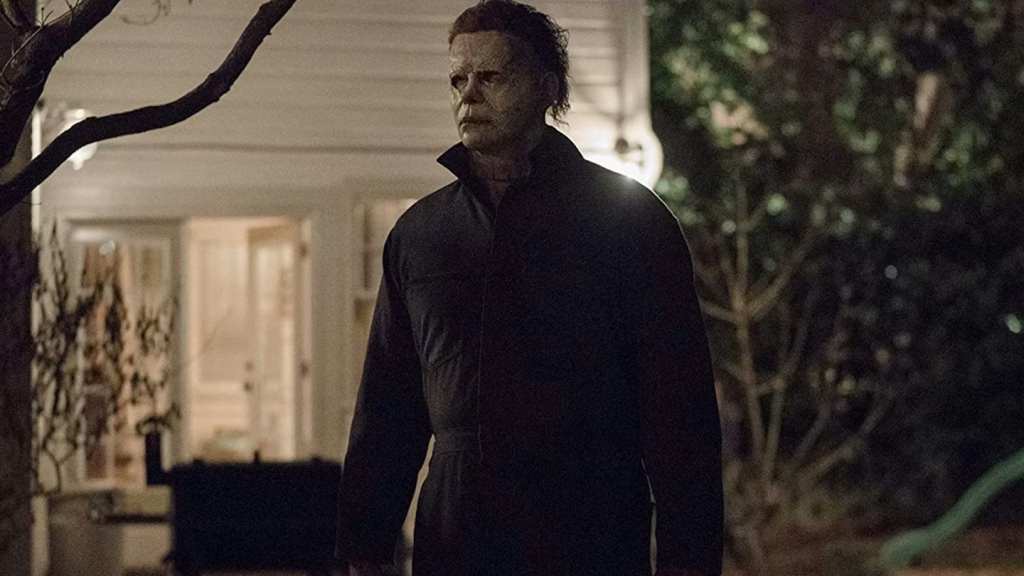
7. Halloween (2007 / 2018)
Michael Myers’ origins are tied to psychiatric confinement, particularly in Rob Zombie’s reboot, which explores his childhood institutionalization. Treatment fails, and violence escalates.
Image Source: Bing Image. License: All Creative Commons
Later entries revisit the asylum as a holding space rather than a solution, reinforcing its role as a symbol of containment and systemic failure in horror.
Image Source: Bing Image. License: All Creative Commons
6. The Jacket (2005)
A war veteran is committed to a mental hospital and subjected to experimental treatments involving sensory deprivation. These sessions trigger disturbing visions and fractured memories.
Image Source: Bing Image. License: All Creative Commons
The asylum becomes a metaphor for unresolved trauma and institutional cruelty. The film blends sci-fi and psychological horror into a deeply disorienting experience.
Image Source: Bing Image. License: All Creative Commons
5. Gothika (2003)
A psychiatrist wakes up as a patient in her own hospital, accused of murder. Haunted by ghosts and memory gaps, she must uncover the truth.
Image Source: Bing Image. License: All Creative Commons
The film thrives on paranoia and role reversal, turning the hospital into a place where authority, reality, and sanity constantly shift.
Image Source: Bing Image. License: All Creative Commons
4. Session 9 (2001)
An asbestos crew working inside an abandoned mental hospital uncovers disturbing therapy tapes. As the job continues, their mental states begin to unravel.
Image Source: Bing Image. License: All Creative Commons
Using a real asylum location, the film relies on atmosphere and sound rather than shocks. Trauma and guilt slowly surface, making the horror deeply psychological.
Image Source: Bing Image. License: All Creative Commons
3. One Flew Over the Cuckoo’s Nest (1975)
This classic pits a rebellious patient against the rigid authority of Nurse Ratched. The psychiatric ward becomes a battleground for autonomy and control.
Image Source: Bing Image. License: All Creative Commons
Its portrayal of institutional abuse reshaped public perceptions of mental health care. The film remains influential—and controversial—decades later.
Image Source: Bing Image. License: All Creative Commons
2. The Snake Pit (1948)
One of the first films to openly depict psychiatric institutions, The Snake Pit follows a woman navigating dehumanizing treatment and confinement.
Image Source: Bing Image. License: All Creative Commons
The film sparked real-world reform and remains historically significant for exposing the cruelty of early mental health systems.
Image Source: Bing Image. License: All Creative Commons
1. Spellbound (1945)
Alfred Hitchcock’s psychological thriller centers on a doctor with a mysterious past and a psychoanalyst determined to unlock his mind. The hospital setting becomes a gateway to the subconscious. With dream sequences and themes of repression, Spellbound helped establish psychiatric institutions as enduring spaces of suspense and psychological horror.
Image Source: Bing Image. License: All Creative Commons
Whether it’s slow-burning dread, unsettling experiments, or haunted corridors, the films on this list turn mental health facilities into settings of terror, making audiences question what’s real—and what’s lurking just out of sight.
Image Source: Bing Image. License: All Creative Commons
Not every celebrity starts their journey from scratch. While talent, dedication, and timing matter, some stars hit the spotlight with a built-in advantage: wealth, connections, and opportunities that most can only imagine. From Hollywood dynasties to music legends, these individuals grew up with resources that made entering notoriously tough industries a bit easier. This list spotlights 18 famous faces who were financially privileged long before their big breaks, showing how family background can shape both opportunity—and sometimes destiny.
Image Source: Bing Image. License: All Creative Commons
18. Paul Giamatti
Paul Giamatti didn’t just rely on his talent to make it in Hollywood—he grew up with a level of privilege most actors can only dream of. His father, A. Bartlett Giamatti, served as Yale’s president and later as Major League Baseball commissioner, providing a household steeped in connections and opportunity.
Image Source: Bing Image. License: All Creative Commons
This kind of environment meant Giamatti had access to elite schools, influential social circles, and a safety net that smoothed his path into acting. His story shows how wealth and networks can open doors in a career often defined by struggle.
Image Source: Bing Image. License: All Creative Commons
17. Chevy Chase
Chevy Chase grew up in a world of old-school privilege. His father was a successful magazine editor, his mother’s adoptive father owned the Crane Company, and his father later married into the Folgers Coffee family.
Image Source: Bing Image. License: All Creative Commons
This wealth gave Chase early access to influential social circles, allowing him to pursue comedy and television without the financial pressures most entertainers face. Privilege in his case was both monetary and social.
Image Source: Bing Image. License: All Creative Commons
16. Darren Criss
Darren Criss’s family made its mark in banking—his father founded EastWest Bank and later chaired the Chase Manhattan Trust Company of California. Growing up in San Francisco’s elite social scene gave Criss both financial security and cultural exposure.
Image Source: Bing Image. License: All Creative Commons
This foundation allowed him to pursue music and acting freely, eventually leading to his breakout role on Glee. His story illustrates how resources can amplify natural talent.
Image Source: Bing Image. License: All Creative Commons
15. Carly Simon
Carly Simon was born into publishing royalty; her father founded Simon & Schuster. Her upbringing offered her cultural exposure and the freedom to explore music without worrying about money.
Image Source: Bing Image. License: All Creative Commons
Simon’s family connections gave her a head start in the music industry, making it easier to develop her style and voice. Privilege didn’t replace talent—it amplified it.
Image Source: Bing Image. License: All Creative Commons
14. Edward Norton
Edward Norton’s grandfather, James Rouse, was a real estate visionary who developed Columbia, Maryland, among other projects. Norton grew up surrounded by creativity and opportunity.
Image Source: Bing Image. License: All Creative Commons
This background allowed Norton to pursue acting roles he was passionate about rather than just taking work for financial survival. Privilege shaped both his career options and worldview.
Image Source: Bing Image. License: All Creative Commons
13. Salma Hayek
Salma Hayek’s father was a wealthy oil executive in Mexico, giving her a childhood marked by freedom and opportunity. Hayek even famously had three tigers purchased for her as a child. This financial security allowed her to choose acting roles she wanted, rather than taking whatever came her way. Her career reflects both talent and the doors that wealth can open.
Image Source: Bing Image. License: All Creative Commons
12. Riley Keough
Riley Keough inherited fame—and fortune—as Elvis Presley’s granddaughter. With her family estate carefully managed, she entered Hollywood with a financial cushion most actors never see. Keough could navigate her early career without the pressure of supporting herself, benefiting from both her family name and the wealth that came with it.
Image Source: Bing Image. License: All Creative Commons
11. Benedict Cumberbatch
Benedict Cumberbatch hails from a family whose fortune, while controversial in origin, afforded him significant opportunities. His ancestors owned a sugar plantation and were involved in the slave trade, leaving a long-standing legacy of wealth.
Image Source: Bing Image. License: All Creative Commons
Cumberbatch acknowledges this privilege while carving his own path, proving that while family wealth can open doors, talent is still needed to walk through them.
Image Source: Bing Image. License: All Creative Commons
10. Rashida Jones
Rashida Jones grew up immersed in entertainment, the daughter of music legend Quincy Jones and actress Peggy Lipton. Exposure to industry circles early on gave her an invaluable head start.
Image Source: Bing Image. License: All Creative Commons
Her upbringing allowed her to explore acting, writing, and producing without the typical financial pressures, giving her freedom to build a versatile career.
Image Source: Bing Image. License: All Creative Commons
9. Anderson Cooper
Anderson Cooper is a Vanderbilt by birth, descending from one of America’s wealthiest families. His upbringing provided elite education and connections, paving the way for his media career.
Image Source: Bing Image. License: All Creative Commons
While Cooper has made his own name as a journalist, his story illustrates how financial security and social standing can influence opportunities in any field.
Image Source: Bing Image. License: All Creative Commons
8. Olivia Wilde
Olivia Wilde’s parents were journalists and documentary filmmakers, offering her a childhood filled with creativity and famous connections. Celebrities like Steven Spielberg visited her home, giving her early exposure to influential networks.
Image Source: Bing Image. License: All Creative Commons
This privilege allowed Wilde to navigate her career strategically, picking roles that aligned with her interests rather than taking opportunities out of necessity.
Image Source: Bing Image. License: All Creative Commons
7. Nick Kroll
Nick Kroll’s father founded Kroll, Inc., a billion-dollar investigations firm. Growing up with financial security allowed Kroll to explore comedy and writing without the stress that often limits creative experimentation.
Image Source: Bing Image. License: All Creative Commons
This freedom helped him develop a unique comedic voice, showing how wealth can fuel risk-taking in the arts.
Image Source: Bing Image. License: All Creative Commons
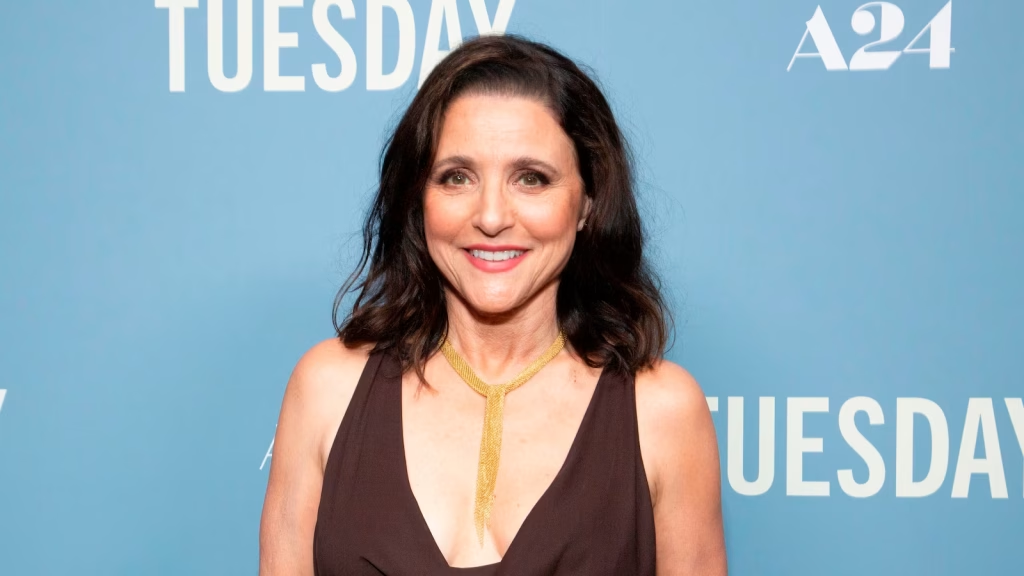
6. Julia Louis-Dreyfus
Born into the Louis-Dreyfus fortune, Julia Louis-Dreyfus had access to elite education and a safety net that let her focus on comedy. Her background helped her pursue roles that highlighted her talent rather than simply paying bills. Privilege didn’t guarantee success, but it provided her the freedom to refine her craft and ultimately dominate sitcom television.
Image Source: Bing Image. License: All Creative Commons
5. Taylor Swift
Taylor Swift’s father invested in her music career early, buying a stake in Big Machine Records while she recorded her debut album. This kind of support accelerated her path to pop stardom. Financial backing allowed Swift to focus on songwriting and building her brand, giving her an edge that many emerging musicians can’t afford.
Image Source: Bing Image. License: All Creative Commons
4. Kate and Rooney Mara
The Mara sisters are heirs to NFL dynasties, with family wealth helping smooth their path into acting. Their connections in sports and entertainment created opportunities unavailable to most newcomers. Their story shows how legacy and privilege can cross industries, opening doors in both Hollywood and beyond.
Image Source: Bing Image. License: All Creative Commons
3. Lady Gaga
Lady Gaga’s parents held executive positions in telecommunications, providing her with elite schooling and an environment that nurtured her artistic talent. Her financial security allowed Gaga to experiment and reinvent herself in music and fashion, turning creative freedom into global superstardom.
Image Source: Bing Image. License: All Creative Commons
2. Adam Levine
Adam Levine grew up in a wealthy family, attending Brentwood School in Los Angeles, where he met future Maroon 5 bandmates. His upbringing allowed him to form his band and pursue music without financial pressure. Access to elite networks and resources helped shape Levine’s path, highlighting how privilege can influence pop culture careers.
Image Source: Bing Image. License: All Creative Commons
1. Ariana Grande
Ariana Grande’s parents were corporate leaders who helped her land early performance opportunities, from cruise ship gigs to singing the National Anthem.
Image Source: Bing Image. License: All Creative Commons
Their support gave Grande the freedom to focus on building her voice and brand, showing that family resources can provide both opportunity and confidence in pursuing an entertainment career.
Image Source: Bing Image. License: All Creative Commons
Being born into wealth doesn’t guarantee fame, and these stars still had to prove their talent to succeed. But their early advantages—from elite schooling to influential networks—gave them a safety net many aspiring entertainers can only imagine. Looking at their journeys reminds us that success is often a mix of skill, timing, and opportunity—and sometimes, the foundation of privilege plays a bigger role than we realize.
Image Source: Bing Image. License: All Creative Commons
Marvel fans are eagerly anticipating Ironheart, the upcoming Disney+ series that puts Riri Williams at the heart of the Marvel Cinematic Universe. First appearing in Black Panther: Wakanda Forever, Riri now steps into her own story, signaling Marvel’s shift toward a more grounded and nuanced take on heroism.
Image Source: Bing Image. License: All Creative Commons
Set after the events of Wakanda Forever, the series feels like a natural continuation rather than a standalone spin-off. It expands the MCU’s scope by focusing less on legacy heroes and more on what the next generation brings to the table—new ideas, new struggles, and new definitions of power.
Image Source: Bing Image. License: All Creative Commons
Riri Williams, played by Dominique Thorne, is immediately compelling because she doesn’t fit the traditional superhero mold. She’s young, brilliant, stubborn, and still figuring herself out. Her intelligence is undeniable, but her emotional journey is just as important as her technological achievements.
Image Source: Bing Image. License: All Creative Commons
Growing up in Chicago, Riri’s life has been shaped by loss, particularly from gun violence. These experiences aren’t just background details—they inform everything she does. Her need to build and invent comes from a desire to protect, to prevent future pain, and to impose order on a world that often feels cruel and unpredictable.
Image Source: Bing Image. License: All Creative Commons
Unlike many origin stories, Ironheart doesn’t rely heavily on flashbacks to explain who Riri is. Instead, it places viewers alongside her in the present moment, letting her past surface naturally through conversations, choices, and consequences.
Image Source: Bing Image. License: All Creative Commons
One of the first major hurdles Riri faces is her expulsion from MIT. Losing access to institutional support forces her to confront how much of her success depended on resources she no longer has. It’s a sobering reminder that talent alone doesn’t guarantee opportunity.
Image Source: Bing Image. License: All Creative Commons
Without funding or protection, Riri is pushed into uncomfortable territory. She has to hustle, compromise, and sometimes take risks that feel morally questionable just to keep her work alive. The show doesn’t glamorize this struggle—it lets it feel messy and stressful.
Image Source: Bing Image. License: All Creative Commons
Riri’s ambition is a defining trait, but Ironheart treats it with nuance. She isn’t chasing fame or validation; she’s chasing possibility. At the same time, the series questions whether ambition without restraint can become dangerous.
Image Source: Bing Image. License: All Creative Commons
Throughout the story, Riri is repeatedly asked to justify her inventions. Why build weapons? Why push technology so far? These questions follow her everywhere, highlighting the scrutiny she faces as a young Black woman operating in spaces that rarely make room for her.
Image Source: Bing Image. License: All Creative Commons
Her answers aren’t always neat or satisfying. Sometimes she deflects with sarcasm, other times she responds with raw honesty. This inconsistency makes her feel real—someone still learning how to articulate her purpose.
Image Source: Bing Image. License: All Creative Commons
A major turning point in the series comes with the introduction of Parker Robbins, also known as The Hood. Played by Anthony Ramos, he represents a completely different kind of power—one rooted in magic rather than machinery.
Image Source: Bing Image. License: All Creative Commons
The clash between Riri and The Hood sets up one of the show’s most intriguing themes: science versus sorcery. Riri believes in logic, data, and engineering, while Robbins operates in a world defined by mystery and ancient forces.
Image Source: Bing Image. License: All Creative Commons
Rather than choosing one side, Ironheart explores what happens when these two philosophies collide. Riri is forced to admit that technology alone may not be enough to face every threat.
Image Source: Bing Image. License: All Creative Commons
This realization pushes her into unfamiliar territory. Blending magic with engineering challenges everything she knows, but it also opens the door to new forms of creativity and problem-solving.
Image Source: Bing Image. License: All Creative Commons
One of the most emotionally complex storylines revolves around N.A.T.A.L.I.E., Riri’s artificial intelligence modeled after her deceased best friend. The AI is a stunning technical achievement, but it also raises deeply uncomfortable questions.
Image Source: Bing Image. License: All Creative Commons
By recreating Natalie in digital form, Riri blurs the line between remembrance and resurrection. The AI provides comfort, companionship, and guidance, but it also risks trapping Riri in her grief.
Image Source: Bing Image. License: All Creative Commons
The emotional weight of this choice becomes especially clear when Riri’s mother encounters N.A.T.A.L.I.E. Seeing a version of someone she lost evokes both warmth and unease, forcing the family to confront what it means to let go.
Image Source: Bing Image. License: All Creative Commons
The show wisely doesn’t rush past these ethical concerns. Instead, it leans into them, suggesting that technological progress without emotional responsibility can cause as much harm as good.
Image Source: Bing Image. License: All Creative Commons
The inclusion of a tech ethicist character reinforces this idea. Their presence signals that Ironheart wants to engage with real-world debates about innovation, accountability, and moral boundaries.
Image Source: Bing Image. License: All Creative Commons
Beyond Riri herself, the supporting cast adds depth and texture to the story. Lyric Ross delivers a powerful performance as both Natalie and N.A.T.A.L.I.E., capturing the humanity that makes the AI so emotionally charged.
Image Source: Bing Image. License: All Creative Commons
Alden Ehrenreich plays a mentor figure who understands the cost of brilliance. His guidance isn’t about control—it’s about survival, restraint, and learning when to step back.
Image Source: Bing Image. License: All Creative Commons
Characters played by Regan Aliyah, Manny Montana, Matthew Elam, and Anji White help ground the story in everyday reality. Their relationships with Riri remind viewers that heroism doesn’t exist in isolation.
Image Source: Bing Image. License: All Creative Commons
Behind the scenes, Ironheart benefits from strong creative leadership. Head writer Chinaka Hodge brings emotional clarity and cultural specificity, ensuring Riri’s story feels authentic rather than generic.
Image Source: Bing Image. License: All Creative Commons
Executive producers Kevin Feige and Ryan Coogler help maintain continuity with the larger MCU while allowing the series to carve out its own identity. The result is a show that feels both connected and refreshingly personal.
Image Source: Bing Image. License: All Creative Commons
One of the most striking aspects of Ironheart is its focus on representation. Riri’s struggle isn’t just about villains—it’s about navigating a world that demands proof of her worth at every turn.
Image Source: Bing Image. License: All Creative Commons
The series highlights how differently innovation is judged depending on who’s doing the inventing. Riri’s creations are scrutinized in ways her predecessors rarely experienced, adding cultural weight to her journey.
Image Source: Bing Image. License: All Creative Commons
Early reactions to the show suggest that this approach is resonating with audiences. Fans and critics alike have praised its willingness to tackle heavy themes without losing sight of entertainment.
Image Source: Bing Image. License: All Creative Commons
The timing of Ironheart also feels significant. In an era dominated by conversations about AI, surveillance, and responsible technology, the show’s questions feel urgently relevant.
Image Source: Bing Image. License: All Creative Commons
Production delays may have slowed its release, but they’ve arguably strengthened its impact. The world has caught up to the issues Ironheart is exploring.
Image Source: Bing Image. License: All Creative Commons
By the end of the season, Riri Williams stands as something more than a successor to Iron Man. She represents a new kind of hero—one defined by empathy, accountability, and innovation, shaped by lived experience.
Image Source: Bing Image. License: All Creative Commons
With its blend of advanced technology, mystical forces, and deeply human storytelling, Ironheart sets the stage for a bold future in the MCU. Riri’s story is just beginning, but it already feels like one of Marvel’s most meaningful evolutions yet.
Image Source: Bing Image. License: All Creative Commons
Joaquin Phoenix has long been known for choosing the road less traveled, consistently gravitating toward characters who are psychologically complex, emotionally exposed, and often deeply flawed. Instead of relying on safe or conventional roles, he has built a career defined by bold, unpredictable choices that span both blockbuster productions and intimate, character-driven films. His performances frequently blur the line between vulnerability and volatility, creating portrayals that feel intensely personal and occasionally unsettling. This collection highlights 15 of his most remarkable roles—some celebrated by critics, others embraced as cult favorites, and a few that sparked divided reactions—yet each one stands as a testament to Phoenix’s fearless commitment and singular artistic presence.
Image Source: Bing Image. License: All Creative Commons
15. Buffalo Soldiers
Buffalo Soldiers is a sudden change of pace from what one would normally expect out of a war movie, and certainly, Joaquin Phoenix’s character, Ray Elwood, is not your standard soldier type. The movie is housed at a US Army base in Germany and stars Phoenix as Elwood, a supply clerk with ambitions towards business. Phoenix brings Elwood a certain air of confidence and charm that makes him immediately interesting.
Image Source: Bing Image. License: All Creative Commons
Yet, what actually sets this film apart are the themes of authority and America’s power, and this was actually dangerous to the film’s initial success. Phoenix plays it cleverly so Elwood becomes endearing and lovable enough to support his cause, and at the same time, dubious and arrogant to harbor ulterior motives. It was a peek at how comfortable Phoenix became in his later performances as a complex character who didn’t fit in either as a hero or villain cliché.
Image Source: Bing Image. License: All Creative Commons
14. Quills
In Quills, Phoenix steps into a richly unsettling period drama as Abbé du Coulmier, a young priest assigned to oversee the infamous Marquis de Sade. Surrounded by powerhouse performances from Geoffrey Rush and Kate Winslet, Phoenix plays a man torn between religious duty and forbidden curiosity. His restraint gives the character a quiet tension that slowly unravels.
Image Source: Bing Image. License: All Creative Commons
The film itself is provocative and often disturbing, exploring themes of censorship, desire, and control. Phoenix’s performance stands out because he refuses to simplify the Abbé’s inner conflict. Instead, he leans into discomfort, signaling early in his career that taboo material wasn’t something he’d shy away from.
Image Source: Bing Image. License: All Creative Commons
13. Parenthood
Before his role as Joaquin Phoenix, he appeared as Leaf Phoenix in Parenthood, and his performance is certainly one of its emotional centerpieces. As troubled teenager Garry Buckman, struggling with abandonment and angry at his father, Phoenix brings great depth to what might have been played as a comedy turn.
Image Source: Bing Image. License: All Creative Commons
Even among a stacked ensemble cast, his vulnerability shines through. Phoenix portrays the awkwardness, confusion, and pain of adolescence with remarkable honesty, anticipating the emotional fearlessness that would characterize his later career as an adult actor.
Image Source: Bing Image. License: All Creative Commons
12. The Yards
The Yards marks the first collaboration between Phoenix and director James Gray, a partnership that would yield some of his most complex performances. Phoenix plays Willie Gutierrez, a fast-talking operator whose charm masks a ruthless survival instinct. From the start, there’s a sense that Willie is both an ally and a threat.
Image Source: Bing Image. License: All Creative Commons
Phoenix brings an unpredictable energy to the role, keeping viewers off balance. The film’s slow, methodical pace allows his performance to simmer, and his chemistry with Mark Wahlberg adds tension to an already morally fraught story. It’s the beginning of Phoenix embracing characters who thrive in gray areas.
Image Source: Bing Image. License: All Creative Commons
11. We Own the Night
Reuniting with James Gray, Phoenix takes center stage as Bobby Green, a nightclub manager caught between the criminal underworld and his family’s legacy in law enforcement. The role requires him to balance swagger with vulnerability, and Phoenix leans into both.
Image Source: Bing Image. License: All Creative Commons
What makes the performance resonate is its emotional grounding. Beneath the crime-thriller surface, Phoenix plays Bobby as a man slowly realizing the cost of his choices. His internal struggle gives the film a weight that elevates it beyond genre expectations.
Image Source: Bing Image. License: All Creative Commons
10. Napoleon
Taking on one of history’s most scrutinized figures, Phoenix approaches Napoleon Bonaparte with unpredictability. Rather than portraying the emperor as purely commanding or heroic, Phoenix emphasizes his insecurity, ego, and strange charisma. The result is a performance that feels oddly intimate within a massive historical epic.
Image Source: Bing Image. License: All Creative Commons
While reactions to the film were mixed, Phoenix’s commitment is undeniable. He isn’t interested in reverence; he’s interested in contradiction. That willingness to humanize, even ridicule, a legendary figure underscores his appetite for creative risk.
Image Source: Bing Image. License: All Creative Commons
9. Inherent Vice
In his role as Doc Sportello in the 2014 film Inherent Vice, Phoenix puts in perhaps the weirdest and most endearing performance of any detective in recent history. The stoned private eye wanders Los Angeles in the 1970s in search of clues and answers for his clients.
Image Source: Bing Image. License: All Creative Commons
Phoenix is completely devoted to the logic of the character, offering an unexpected touch of warmth to the otherwise chaotic story. Though the plot is often in danger of being lost in smoke, Phoenix grounds the film’s audience emotionally.
Image Source: Bing Image. License: All Creative Commons
8. The Village
In The Village, Phoenix plays Lucius Hunt, a quiet, principled man living in an isolated 19th-century community plagued by fear. His performance is understated, relying on stillness and restraint rather than overt emotion.
Image Source: Bing Image. License: All Creative Commons
Phoenix’s chemistry with Bryce Dallas Howard gives the film its emotional core. Regardless of how audiences felt about the twist, his portrayal of Lucius remains a highlight, calm, grounded, and deeply sincere.
Image Source: Bing Image. License: All Creative Commons
7. Walk the Line
Phoenix’s performance as Johnny Cash in the movie is one of his most impressive roles to date. He does not replicate Johnny Cash’s voice and gestures, but also acts out the inner struggles of the character with addiction and drug abuse.
Image Source: Bing Image. License: All Creative Commons
Though his own singing brought authenticity, it’s his emotional honesty that resonates. Phoenix plays Cash as a flawed figure and a dedicated artist, and his ascendancy and love interest with June Carter feel genuine.
Image Source: Bing Image. License: All Creative Commons
6. Two Lovers
In Two Lovers, Phoenix strips everything back. Playing Leonard, a deeply lonely man torn between comfort and obsession, he delivers a painfully intimate performance. His body language alone communicates volumes of longing and insecurity.
Image Source: Bing Image. License: All Creative Commons
The film unfolds quietly, but Phoenix makes every moment ache. It’s a reminder that his most devastating performances often come without spectacle, just raw emotion and complete vulnerability.
Image Source: Bing Image. License: All Creative Commons
5. Her
In Her, Phoenix carries almost the entire film on his shoulders as Theodore Twombly. His portrayal of a man falling in love with an AI could’ve felt absurd, but he grounds it with tenderness and emotional truth.
Image Source: Bing Image. License: All Creative Commons
The universality of the film stems from Phoenix’s incredible ability to convey intimacy, usually when opposite a voice. He evokes loneliness, connection, and heartbreak in a deeply human manner.
Image Source: Bing Image. License: All Creative Commons
4. Gladiator
Phoenix’s Commodus is one of modern cinema’s most unforgettable villains. Rather than playing him as purely evil, Phoenix infuses the Roman emperor with insecurity, jealousy, and desperation.
Image Source: Bing Image. License: All Creative Commons
Every scene crackles with unease. His performance is uncomfortable to watch in the best way, transforming Commodus into a figure who is both pitiable and terrifying.
Image Source: Bing Image. License: All Creative Commons
3. You Were Never Really Here
In this brutal and minimalist thriller, Phoenix plays a traumatized man named Joe, whose brutality is matched by his emotional trauma. The role is physically demanding, although it is the psychic burden of playing the important part.
Image Source: Bing Image. License: All Creative Commons
In Phoenix, the somatic nature of Joe’s pain is acknowledged through gestures, movement, and facial expression, whereas no words are exchanged between him and Nelly. It’s a haunting, minimalist performance from Phoenix that resonates long after.
Image Source: Bing Image. License: All Creative Commons
2. Joker
Phoenix’s performance as Arthur Fleck is an entire transformation in terms of physical, emotional, and psychological attributes. He creates a character whose descent into insanity appears to be disturbingly grounded in pain.
Image Source: Bing Image. License: All Creative Commons
The film made all of this possible and was at the center of conversation, and it earned him an Oscar. Like it or not, he was committed to this film and made one of the boldest performances of his life.
Image Source: Bing Image. License: All Creative Commons
1. The Master
Highest up in the oeuvre of Phoenix is his role in the movie The Master, which is a movie of aching depth and complexity. He plays the character of Freddie Quell in a feral manner.
Image Source: Bing Image. License: All Creative Commons
Performing in films together with Philip Seymour Hoffman, Phoenix never flinched. His performances in these films were fearless, cringe-inducing, and are, by most accounts, one of the greatest acting performances of the modern age, at least in terms of depth of commitment.
Image Source: Bing Image. License: All Creative Commons
The work of Joaquin Phoenix is not measured by anything close to box office results or fan-base loyalty. What it is measured by is curiosity, willingness, and an insatiable dedication to emotional authenticity. He selects projects that are just as provocative for the viewer as they are for him. This is what makes his filmography so fascinating, and regardless of the films’ style or scope, it’s undeniable that Joaquin Phoenix is an arresting screen presence.