Home Blog Page 967

How Glock Transformed Military Sidearms Worldwide

0
Image Source: Bing Image. License: All Creative Commons

When one speaks of military sidearms in contemporary times, few brands weigh as heavily as Glock. The revolution started in Austria during the early 1980s when Gaston Glock, more famous then for producing polymer curtain rods than anything firearm-related, saw an opportunity. The Austrian Ministry of Defense had issued a request for a new service pistol to be lighter, more dependable, and simpler to operate than those currently in use. Glock, with no background in gun design, assembled a small team and approached the task of totally reinventing what a military pistol could be.

Image Source: Bing Image. License: All Creative Commons

The game-changer was an injection-molded polymer frame—a radical departure from decades of all-steel construction in the industry. This wasn’t only a means of cutting a few ounces; it revolutionized the way a pistol managed recoil and withstood the abuse of hard use. By stripping the design down to its essentials, Glock reduced the number of potential failure points in the field—something soldiers could appreciate when their lives depended on their sidearm.

Image Source: Bing Image. License: All Creative Commons

Glock also innovated with the Safe Action System, a trio of automatic mechanical safeties that reduced the need for a traditional manual safety lever. The pistol was safer to carry and faster to bring into action, and survived rigorous drop tests that had caught other designs out. What resulted was a sidearm not only to the military’s standard, but also setting the bar for reliability and simplicity to follow.

Image Source: Bing Image. License: All Creative Commons

In 1982, Glock presented prototypes to the Austrian military. What ensued was a merciless gauntlet of testing—water submersion, freezing, mud baths, drops from height, and even being trucked over. Glock’s pistol survived them all and was adopted by the Austrian military as the P80. Soon, it was renamed the Glock 17, its name derived from the size of its magazine, which held 17 rounds. Austria took delivery of more than 25,000 of these first-generation pistols between 1982 and 1984, and news of their performance soon spread throughout Europe.

Image Source: Bing Image. License: All Creative Commons

Norway and Sweden were quick to join Austria in using the Glock 17 as its standard sidearm. The image of durability and simplicity soon spread to police services and military organizations across the globe. By the mid-1980s, Glock set its eyes on the United States. The decision to open a subsidiary in Georgia saw the company begin to woo law enforcement agencies. The first U.S. police department to adopt the Glock 17 was that of Colby, Kansas, in 1986, and from there, its usage among American law enforcement authorities took off.

Image Source: Bing Image. License: All Creative Commons

Every new generation of Glock improved on the previous one. The original had a straightforward design: a full-size, striker-fired pistol with a textured grip and an accessory rail. The second generation enhanced the grip texture to enhance handling.

Image Source: Bing Image. License: All Creative Commons

The third generation, brought out in 1998, added the now-ubiquitous accessory rail for lights and lasers, as well as finger grooves and a thumb rest—features that were controversial but served many shooters. In 2009, the fourth generation included interchangeable backstraps and a dual recoil spring system to control felt recoil.

Image Source: Bing Image. License: All Creative Commons

The fifth generation, which came in 2017, eliminated the finger grooves, introduced a flared magwell for faster reloads, and featured ambidextrous controls. It also introduced the Glock Marksman Barrel, with better rifling and a precision crown for improved accuracy.

Image Source: Bing Image. License: All Creative Commons

With all these refinements, Glock remained faithful to its founding philosophy: keep it simple, make it reliable, and make it easy to use. The company’s brash slogan, “Perfection,” is not hype—it’s been tested and proven over decades of service. By the close of 2023, over 23 million Glock pistols were in circulation across the globe, a number that speaks volumes about how much shooters trust the brand.

Image Source: Bing Image. License: All Creative Commons

Glock’s influence permeates far beyond the war zone. Police forces across the globe issue them, and recreational shooters value them for their sturdiness, simple form, and immense aftermarket possibilities.

Image Source: Bing Image. License: All Creative Commons

No matter the size, from the full-frame Glock 17 to the compact Glock 19 to the slim-line Glock 43 for carry concealed, each carries the same DNA: tough, reliable, and prepared for whatever lies ahead.

Image Source: Bing Image. License: All Creative Commons

What started as a curtain rod factory in Austria evolved into a revolution in the way guns were made—a pistol that not only revolutionized military sidearms, but also set a new standard for what shooters around the globe expect from their handguns.

More related images you may be interested in:

Image Source: Bing Image. License: All Creative Commons

15 Celebrities Who Changed Careers After Acting

0
Image Source: Bing Image. License: All Creative Commons

Let’s face it: who among us hasn’t fantasized about switching places with a Hollywood star? The red-carpet premieres, the screaming fans, and designer dresses (including the occasional fashion malfunction). But for some actors, the spotlight simply didn’t shine as brightly as they had hoped. Whether it was burnout, a desire to live an ordinary life, or just a new calling in a new passion, these celebrities had to hang up their acting spurs–permanently for some, temporarily for others. Here’s a countdown of 15 stars who stunned audiences by hanging up their scripts—and what they went on to do next.

Image Source: Bing Image. License: All Creative Commons

15. Shirley Temple

The first child star of the 1930s retired from Hollywood at only 22. After a failed bid at an adult comeback, she retired from acting altogether in 1950 and transitioned into politics, serving later as U.S. ambassador to Ghana and Czechoslovakia.

Image Source: Bing Image. License: All Creative Commons

14. Debra Winger

With three Oscar nominations to her credit, Winger appeared invincible—but departed at the peak of her career. Disgruntled with unfulfilling roles, she took six years off before reclaiming her seat at the table, but only when the projects truly tested her.

Image Source: Bing Image. License: All Creative Commons

13. Audrey Hepburn

After captivating the world in Breakfast at Tiffany’s and dozens of other timeless classics, Hepburn devoted her life to humanitarian causes. As a UNICEF spokesperson, she visited all corners of the globe and left behind a legacy of kindness that earned her the Presidential Medal of Freedom.

Image Source: Bing Image. License: All Creative Commons

12. Gene Hackman

Hackman retired from acting in 2004 after Welcome to Mooseport. Doctors told him that he needed to cut down on stress, and he decided to take a quieter life in New Mexico. Having two Oscars in his pocket, he figured he’d done enough for Hollywood.

Image Source: Bing Image. License: All Creative Commons

11. Portia de Rossi

Best known for Scandal and Arrested Development, de Rossi retired at age 45. She told Ellen DeGeneres’ daytime talk show that she needed to begin a new life beyond her acting career. For a short time, aside from completing Arrested Development, she’s been a businesswoman.

Image Source: Bing Image. License: All Creative Commons

10. Robert Redford

After six decades in front of the camera, Redford announced his retirement with The Old Man & the Gun (2018). While he’s still dabbled in producing and occasional cameos, he’s largely stepped away, saying it was simply time.

Image Source: Bing Image. License: All Creative Commons

9. Terrence Howard

Howard made headlines when he declared he was done with acting after Empire. “I’m done pretending,” he said. But Hollywood retirements don’t always stick—he’s since appeared in other projects.

Image Source: Bing Image. License: All Creative Commons

8. Lindsay Lohan

Lohan has made a gentle return after all those years of tabloid melodrama, appearing in Netflix’s Falling for Christmas. She’s now juggling motherhood and acting, and appears to have found her balance again in life and career.

Image Source: Bing Image. License: All Creative Commons

7. Cameron Diaz

One of the biggest stars of the late 90s and early 2000s, Diaz quit after Annie in 2014. She explained later that she wanted to put family and personal happiness first. Ten years later, she’s back for Back in Action alongside Jamie Foxx.

Image Source: Bing Image. License: All Creative Commons

6. Jane Fonda

Fonda quit acting for 15 years after she married media mogul Ted Turner, believing she’d never be back. But at age 60, she came back—and has been working consistently ever since. At 85, she’s still a force to be reckoned with.

Image Source: Bing Image. License: All Creative Commons

5. Brendan Fraser

Having ruled the 90s, Fraser took a step back because of health problems and personal issues. His return in The Whale was victorious, awarding him an Academy Award and demonstrating that second acts really are better.

Image Source: Bing Image. License: All Creative Commons

4. Ke Huy Quan

The Indiana Jones and The Goonies child star favorite faded from view in Hollywood for 20 years, toiling behind the scenes. Then he made his breathtaking comeback in Everything Everywhere All At Once, for which he won an Oscar.

Image Source: Bing Image. License: All Creative Commons

3. Shelley Duvall

Duvall’s spooky performances in The Shining and Popeye are iconic, but she slipped quietly out of Hollywood in 2002 to tend to relatives in Texas. She briefly reappeared in 2023, just a year before her death.

Image Source: Bing Image. License: All Creative Commons

2. Frankie Muniz

Once he became a household name from Malcolm in the Middle, Muniz ditched acting for race cars. He dived headfirst into professional driving and loved every second of it. He is circling back to acting with a Disney+ revival of Malcolm in the works.

Image Source: Bing Image. License: All Creative Commons

1. Cate Blanchett

Blanchett hasn’t officially retired, but she’s been open about the idea of leaving acting behind. “I’m serious about giving it up,” she’s said, pointing to passions like conservation and family. For now, she’s still gracing the screen—but fans are bracing for the day she does step back.

Image Source: Bing Image. License: All Creative Commons

And that’s it—evidence that fame does not necessarily translate to satisfaction. For these celebrities, the largest plot twist came not on screen, but in real life, when they decided to leave behind the roles that earned them immortality.

10 Casting Decisions That Shocked Fans

0
Image Source: Bing Image. License: All Creative Commons

Casting can break or make a TV show or film. The correct actor in the proper part feels like lightning in a bottle—but when it doesn’t work, fans quickly vocalize their disappointment. Some casting choices have been the stuff of legend over the years, fueling arguments that continue to rage amongst fans. It’s sometimes miscasting, sometimes fan demand. Let’s review ten casting announcements that shook the foundations—for better or for worse.

Image Source: Bing Image. License: All Creative Commons

10. Tom Holland as Nathan Drake (Uncharted)

When Tom Holland was cast to portray treasure hunter Nathan Drake, veteran fans of the Uncharted games were not convinced. In the games, Drake is a weathered, thirty-something adventurer with years of experience under his belt. Holland, coming off his teenage version of Spider-Man, was an odd choice. Others went so far as to joke he seemed more the right man for the part of Victor “Sully” Sullivan’s youth than Drake himself. Holland had energy and charisma, but a lot of gamers couldn’t close the age and feel gap. 

Image Source: Bing Image. License: All Creative Commons

9. Zendaya in Dune and Challengers

Zendaya does have undeniable star power, but recent roles have had mixed reviews. In Dune, the fans were waiting for her to be in the center, only to see her character featured so minimally. In Challengers, criticism moved to the performance itself—some felt she relied too heavily on the same expressions while her co-actors bore the emotional burden. It shows that even A-listers can feel in the limelight when the expectations are through the roof.

Image Source: Bing Image. License: All Creative Commons

8. Elijah Wood as Frodo (The Lord of the Rings)

To millions, Elijah Wood is Frodo Baggins. But not all were spellbound by his interpretation of Tolkien’s hero. Critics felt his wide-eyed, tear-jerking performance was a tad too much at times, dragging them out of the epic scope of Middle-earth. A reminder that, however great a trilogy gets, its fans will always argue about how well the characters were brought to life.

Image Source: Bing Image. License: All Creative Commons

7. Kristen Stewart & Robert Pattinson (Twilight)

Few casting choices have been more controversial than Twilight’s leads. Kristen Stewart and Robert Pattinson were catapulted to superstardom due to the saga, but their on-screen dynamic was regularly criticized as awkward and stilted. Book readers who fell hard for Bella and Edward’s passionate romance grumbled that the flame just didn’t translate. Their performances were the target of endless memes, ensuring even gigantic success doesn’t protect actors from criticism.

Image Source: Bing Image. License: All Creative Commons

6. Joaquin Phoenix as Napoleon

One of the greatest actors of his generation, Joaquin Phoenix’s performance as Napoleon confused early viewers. His mannerisms were out of sorts and even “cringe-worthy” in some people’s opinions. Historical figures have extremely high expectations, and this was one instance where even an Oscar winner couldn’t shy away from criticism regarding whether he was the ideal candidate.

Image Source: Bing Image. License: All Creative Commons

5. Gary Oldman as Sirius Black (Harry Potter)

Gary Oldman has reinvented himself countless times throughout his career, but some Harry Potter enthusiasts felt his Sirius Black wasn’t exactly what they had envisioned from the novels. Though many loved his intensity, others believed he lacked the warmth and charisma that characterized the character in novels. For a franchise so praised for nearly flawless casting, Oldman’s interpretation became an unexpected thorn in the side of devoted fans.

Image Source: Bing Image. License: All Creative Commons

4. Sofia Coppola in The Godfather: Part III

Hollywood nepotism isn’t new, yet Sofia Coppola’s performance in The Godfather: Part III has always been singled out as one of its biggest blunders. Replacing another actress who quit, Coppola found it difficult to compete with the powerhouse cast of the franchise. Most reviewers continue to cite her effort as the weakest link in the trilogy’s conclusion, overshadowing her father’s otherwise epic saga.

Image Source: Bing Image. License: All Creative Commons

3. Johnny Depp as Tonto (The Lone Ranger)

The casting of Johnny Depp as Tonto was met with instant outrage. Most decried it as a classic case of Hollywood’s inability to give Native American actors Native roles. Even Depp’s box office appeal couldn’t make the casting seem anything but tone-deaf, sparking debates about representation and authenticity in casting.

Image Source: Bing Image. License: All Creative Commons

2. Tom Cruise as Jack Reacher (and Lestat)

Tom Cruise is a seasoned action hero, but fans of Lee Child’s Jack Reacher series were perplexed when he was cast. Reacher is portrayed as a massive, physically imposing man—traits Cruise simply can’t live up to, despite his charm. Likewise, his acting in Interview with the Vampire divided fans, with some complaining he portrayed the character too toosadisticallyc, taking away the sophistication of Anne Rice’s vision. These roles show the conflict between casting for name recognition and remaining faithful to the original.

Image Source: Bing Image. License: All Creative Commons

1. The Roles That Almost Happened

Sometimes, the craziest casting rumors are the ones that never materialized. Think Al Pacino as Han Solo, Emily Blunt as Black Widow, or Tim Roth as Severus Snape. Amy Schumer was nearly Barbie, George Clooney almost starred in The Notebook, and Claire Danes could have been Rose in Titanic. Robin Williams even lobbied to play Hagrid in Harry Potter, but was turned down because of the “British actors only” rule. These near-misses prove just how fragile movie history is—one different choice, and our favorite films could look completely different.

Image Source: Bing Image. License: All Creative Commons

Casting is one of the most risky aspects of filmmaking. It makes legends sometimes, and it leaves people polarized for decades sometimes. Either it’s a much-loved actor in the wrong role or a close miss that alters everything, audiences will always have something to say—and that’s what makes Hollywood controversies live long after the credits have rolled.

Top 10 TV Shows Canceled in 2025

0
Image Source: Bing Image. License: All Creative Commons

If 2025 has taught us anything, it’s that no show is ever safe. Long-running favorites, new hits, and even cultural icons were pulled from the air this year, sometimes with barely any warning. Regardless of the reasons behind them – budgets, viewership changes, or industry upheavals – the cancellations stung. Here are the 10 biggest surprise TV show cancellations of 2025—buckle up, some of these still hurt.

Image Source: Bing Image. License: All Creative Commons

10. Goosebumps (Disney+)

The revamped anthology, drawing from R.L. Stine’s original novels, appeared to be hitting its stride at last. But after only two seasons, Disney+ canceled it in August. Season two, titled The Vanishing, will instead be the show’s final fright—disappointing fans of the original novels and this new adaptation alike.

Image Source: Bing Image. License: All Creative Commons

9. The Sandman (Netflix)

Lauded by critics and loved by fans, Neil Gaiman’s dark fantasy was one of Netflix’s riskiest ventures. With its sumptuous visuals and detailed world-building, The Sandman seemed invincible. Instead, it lasted for two seasons. Behind-the-scenes problems and its enormous budget probably played a role, but for fans, losing such a distinctive take feels like a punch in the gut.

Image Source: Bing Image. License: All Creative Commons

8. Resident Alien (SYFY)

Alan Tudyk’s comedic turn as an alien posing as a human provided SYFY with a rare breakout success. After four seasons of offbeat sci-fi adventure, however, the network wrapped things up. Fans will miss Tudyk’s bizarre charm and the small-town eccentricity that made this series so unique.

Image Source: Bing Image. License: All Creative Commons

7. The Equalizer (CBS)

Queen Latifah’s contemporary take on the traditional vigilante show pushed boundaries and earned respectable ratings, so its cancellation after five seasons came as a massive shock. With Latifah’s draw and the show’s cultural significance, many believed The Equalizer would be on the air much longer. Instead, season five’s finale came as a shocking conclusion to the series.

Image Source: Bing Image. License: All Creative Commons

6. The Wheel of Time (Prime Video)

Fantasy fans were devastated when Prime Video ended its relationship with this ambitious reboot after season three. The series had a good creative run—season three received a whopping 97% on Rotten Tomatoes. But stratospheric production expenses and dwindling audiences were more than it could handle. Although the final season attempted to wrap up loose ends, fans feel shortchanged nonetheless.

Image Source: Bing Image. License: All Creative Commons

5. FBI: International and FBI: Most Wanted (CBS)

In one of its most daring gambles, CBS killed off two cornerstones of its FBI franchise, leaving the flagship series alone. A brand famous for crossovers and hard-core fans, the spin-offs seemed invincible—until they were not. Wolf’s ever-broadening universe had fans reeling from the double shock.

Image Source: Bing Image. License: All Creative Commons

4. The Residence and Pulse (Netflix)

Two debuts with bright openings did not make it past Netflix’s brutal axe. The Residence, a White House-set comedic murder mystery starring Uzo Aduba, and Pulse, a medical soap drama, both placed in Netflix’s Top 35 for the year. Despite that, expenses and brutal competition cut their runs short at one season apiece. Fans lamented the missed potential.

Image Source: Bing Image. License: All Creative Commons

3. Suits: LA (NBC)

Looking to capitalize on the Suits revival, NBC rolled out this spinoff with Stephen Amell. Lightning didn’t strike twice, though. The show ran just one season before it was cancelled, prompting some to wonder if the Suits franchise should lay its case to rest.

Image Source: Bing Image. License: All Creative Commons

2. Queer Eye (Netflix)

After a decade of feel-good seasons, Netflix is bidding adieu to the Fab Five. The makeover show that warmed hearts and inspired a nation became a cultural phenomenon, lauded for its blend of heart, humor, and unapologetic self-love. Fans aren’t ready to say goodbye, but the legacy of Queer Eye will endure long after its conclusion.

Image Source: Bing Image. License: All Creative Commons

1. The Late Show with Stephen Colbert (CBS)

Maybe the biggest bombshell of them all: CBS is canceling late-night’s top-rated program. When Colbert’s contract expires in May 2026, The Late Show is coming with it. Officially, CBS attributed the decision to financial hardship and softening ad revenue, but with merger activity and political pressure brewing, the decision has sparked speculation. Colbert’s biting wit and satire defined an era, and his departure puts the future of late-night in doubt.

Image Source: Bing Image. License: All Creative Commons

TV in 2025 has been merciless, reminding viewers that every wonderful show has behind it the cold truth of the industry. Some shows seemed a given, others came out of left field—but all have had a lasting impact on viewers who only wanted more time with their beloved tales.

10 Biggest Korean Releases on Netflix in 2025

0
Image Source: Bing Image. License: All Creative Commons

K-dramas and movies have evolved from cult favourite to global phenomenon, and Netflix is among the largest contributors to the mania. With more than 80% of its worldwide subscribers watching Korean content, the service is betting big with a slate that covers romance, thrillers, historical epics, and even animation. If you’re already wondering what should land on your watchlist, here are the 10 Korean releases set to dominate Netflix in 2025—counted down from 10 to 1.

Image Source: Bing Image. License: All Creative Commons

10. Cashero

Who’s to say superheroes should be wealthy or extraterrestrial? Cashero sheds light on a regular public servant who finds his strength increasing with money in his pocket. Rather than holding onto his pay, he uses it to save the world—won by won. Headlined by Lee Jun-ho, this quirky action-comedy offers a funny and touching take on the superhero franchise.

Image Source: Bing Image. License: All Creative Commons

9. The Great Flood

End-of-the-world catastrophe dramas don’t come much larger than this. Shot on man’s last day on earth, The Great Flood holds out amidst the deluge in a half-drowned apartment building with survivors Kim Da-mi and Park Hae-soo in the front line. Count on heart-stopping drama, blockbuster cinematography, and survival stakes ratcheted to the extreme.

Image Source: Bing Image. License: All Creative Commons

8. Love Untangled

Against the 1998 Busan backdrop, Love Untangled is a sweet coming-of-age romance. It traces Park Se-ri, a 19-year-old determined to tame her curls before confessing a life-altering secret—only for her plans to be thwarted by an enigmatic new schoolmate. Nostalgic, sentimental, and full of teenage angst, this one is bound to sweep up both first-love feels and period charm.

Image Source: Bing Image. License: All Creative Commons

7. Melo Movie

For the die-hard meta-romance and movie reference fan, Melo Movie is an absolute must-see. Park Bo-young and Choi Woo-shik play a movie critic and a budding director who find themselves swept up in love, brokenness, and conflating truth from fiction. With interwoven narratives and abundant references to film classics, it’s equally emotional and clever.

Image Source: Bing Image. License: All Creative Commons

6. Karma

This black thriller interweaves the fates of six individuals stuck in a cycle of poor decisions and spiraling repercussions. Starring Park Hae-soo and Shin Min-a, Karma is a cause-and-effect suspense series about morality, responsibility, and destiny. Expect suspense, ethical predicaments, and a plot that keeps surprising to the last. 

Image Source: Bing Image. License: All Creative Commons

5. Dear Hongrang

For lovers of epic historical dramas, Dear Hongrang delivers. Taking place during the Joseon dynasty, the drama centers on the disappearance of the son of a dominant merchant and his stepsister’s mission to locate him. With Lee Jae-wook and Cho Bo-ah starring, the series will bring rich period detail, tense suspense, and high-stakes family struggles.

Image Source: Bing Image. License: All Creative Commons

4. Lost in Starlight

Netflix Korea’s inaugural original animated feature is already making waves. Lost in Starlight follows Nan-young, a NASA scientist still reeling from her mother’s death in space, as she falls in love with Jay, a musician. Their love is put to the test, however, when she’s selected for a mission to Mars. Starring Kim Tae-ri and Hong Kyung as the leads, look for a visually spectacular, poignant romance that combines sci-fi spectacle and raw emotion.

Image Source: Bing Image. License: All Creative Commons

3. Revelations

From Train to Busan and Hellbound’s visionary Yeon Sang-ho comes Revelations. A pastor thinks he has been instructed by God to punish a suspect in a missing persons investigation, while a detective who is tormented by her sister’s death tries to uncover the truth. It’s a tale of morality, obsession, and the dark underbelly of belief.

Image Source: Bing Image. License: All Creative Commons

2. Culinary Class Wars (Season 2)

The unsuspected cooking survival series no one could see coming is back. Having dominated Netflix’s Global Top 10 (Non-English) list for three consecutive weeks, the Culinary Class Wars returns with more intense competition. One hundred contestants—80 amateur self-taught underdogs and 20 talented celebrity chefs—fight for dominance in a blazing kitchen battle. With bigger drama, sharper knives, and more culinary mayhem, Season 2 is here. 

Image Source: Bing Image. License: All Creative Commons

1. Squid Game (Season 3)

The largest K-drama sensation ever comes back for its conclusion. In the third season of Squid Game, Gi-hun is faced with heartbreaking decisions while the Front Man keeps plotting gruesome schemes. Lee Jung-jae, Lee Byung-hun, and a loaded cast are back. Look forward to greater stakes, jaw-dropping surprises, and a finale ending that redefined survival dramas globally.

Image Source: Bing Image. License: All Creative Commons

From heartbreaking romances and high-octane thrillers to groundbreaking animation and survival showdowns, Netflix’s 2025 K-content lineup proves that the Korean wave isn’t slowing down—it’s only getting stronger. Whether you’re a longtime fan or a newcomer, there’s no better time to dive in.

9 Women Who Transformed Wartime Entertainment

0
Image Source: Bing Image. License: All Creative Commons

The story of wartime entertainment is not only music and glamour—it’s one of resilience, bravery, and the women who raised morale when the world was at its darkest. From World War II battlefields to the Vietnamese camps, these performers provided soldiers with their most precious commodity: hope, laughter, and a taste of home. Most risked not only their comfort but their lives to entertain the troops. Let’s count down nine incredible women whose war legacies are still felt to this day.

Image Source: Bing Image. License: All Creative Commons

9. Martha Raye – “Colonel Maggie” and the Troops’ Darling

Martha Raye began entertaining soldiers in 1942, and her dedication extended from World War II through Korea and Vietnam. Called “Colonel Maggie” by the soldiers, she was more than an entertainer: she rolled up her shirtsleeves, played poker, cracked jokes, and even gave physical exams to wounded soldiers. Her strong connection with the Green Berets created a legend in her own right, remembered more as one of them than as a Hollywood actress.

Image Source: Bing Image. License: All Creative Commons

8. Loretta Lynn – Country Comfort Abroad

The queen of country music took a little bit of home to troops far from home. Loretta Lynn was the headliner on the 1988 USO Christmas tour with Conway Twitty, entertaining troops abroad. She often testified that her relationship with troops was very personal, and the smiles she put on their faces for Christmas made her one of the greatest artists to ever step onto the USO stage.

Image Source: Bing Image. License: All Creative Commons

7. Diahann Carroll – Shattering Barriers, Onstage and Off

Diahann Carroll broke barriers when she became the first African American woman to star in hen television series in 1968 with Julia. But she also brought that pioneering ethos to the stage, joining USO tours and performing for soldiers during the Vietnam War. Her mere presence shattered stereotypes and helped inspire countless others, demonstrating that representation is important even in the unlikeliest of corners.

Image Source: Bing Image. License: All Creative Commons

6. Raquel Welch – A Flash of Glamour in Vietnam

When Raquel Welch accompanied Bob Hope to Saigon in 1967, she brought celebrity and dynamism that charged the audience. GIs adored her dance numbers—particularly her duet with Hope on “Dancing in the Streets.” For guys who hadn’t seen home base in months, Welch’s charm and personality were a shining, unforgettable experience amid a war zone.

Image Source: Bing Image. License: All Creative Commons

5. Lola Falana – The Complete Entertainer

Singer, dancer, actress, model—Lola Falana did it all, and she brought all of that ability to the stage during her USO tours in Vietnam. Singing with Bob Hope and wowing crowds with her versatility, Falana was a crowd-pleaser. Her ability to relate to troops left its mark, which has lasted generations.

Image Source: Bing Image. License: All Creative Commons

4. Joan Crawford – Hollywood Royalty with a Soldier’s Heart

Joan Crawford was a Hollywood superstar, but she was equally devoted to serving the troops. Starting during WWI, I worked with the USO, and she continued to make appearances for soldiers deep into the 1970s. In 1965, she was the first-ever USO Woman of the Year, and at her death, she left some of her estate to the organization. Crawford didn’t merely donate her name—she donated her heart.

Image Source: Bing Image. License: All Creative Commons

3. Marlene Dietrich – Courage Under Fire

Marlene Dietrich was not afraid of danger. She traveled with the USO in North Africa, Italy, France, and Germany, singing mere miles from the front. In Anzio, she was the first performer to visit rescued soldiers. Her 11-month tour across Europe became legendary, not only for the music but for the bravery she demonstrated in standing alongside the troops she adored.

Image Source: Bing Image. License: All Creative Commons

2. Dinah Shore – A Voice of Resilience

Before she was a household name, Dinah Shore overcame polio as a child—proof of her resilience long before she sang a single note. That spirit carried into her career and her USO tours, where she became a favorite among soldiers. Known simply as “Dinah,” she brought warmth and optimism that resonated deeply with service members during and after the war.

Image Source: Bing Image. License: All Creative Commons

1. Marilyn Monroe – The Hollywood Gift to Korea

In 1954, shortly after her honeymoon with Joe DiMaggio, Marilyn Monroe made a trip to South Korea to entertain American soldiers. The war had recently concluded, but troops remaining there were given a once-in-a-lifetime experience: Monroe illuminating the stage with her music and trademark wit. To many who were present, it was the service highlight—and it is one of the most memorable USO moments in history.

Image Source: Bing Image. License: All Creative Commons

Carole Landis – The True “Jill in a Jeep”

Carole Landis was more than just a pretty pin-up girl—she was one of the most prolific performers of WWII. She, Kay Francis, Martha Raye, and Mitzi Mayfair traveled bases throughout Europe and North Africa, experiences she later wrote about in her autobiography Four Jills in a Jeep. The book was adapted into a 1944 film, with Landis and the other performers portraying themselves. Her own life was cut short in 1948, but her wartime commitment placed an unforgettable stamp on Hollywood and the USO.

Image Source: Bing Image. License: All Creative Commons

These women were not just entertainers—they were lifelines. With music, comedy, dance, and presence, they provided soldiers with a touch of home and a smile. Their fearlessness and empathy transformed entertainment into something greater: a legacy of hope that continues to inspire today.

.950 JDJ: The Most Powerful Rifle Never Fielded in War

0
Image Source: Bing Image. License: All Creative Commons

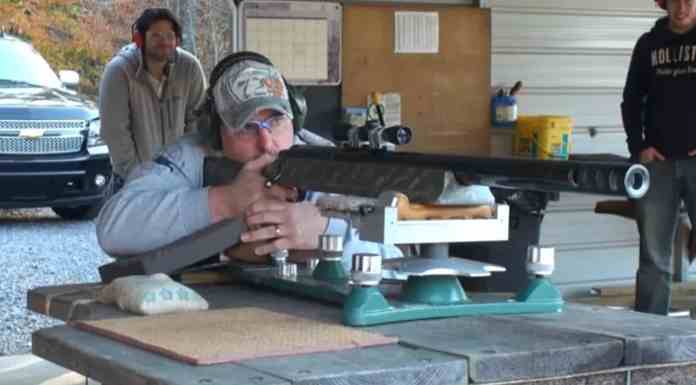
Few guns attract as much attention as the .950 JDJ—more popularly referred to by its nickname, Fat Mac. This behemoth is not merely another large-bore rifle; it’s one of the most outrageous endeavors in the history of small arms engineering ever undertaken. Its sale at Rock Island Auction Company’s Sporting & Collector Auction in Bedford, Texas, in recent times brought in just under $100,000—testimony that its fame remains as potent among serious collectors.

Image Source: Bing Image. License: All Creative Commons

At its center is its ammunition. The .950 JDJ shoots a cartridge based on the enormous 20×110mm Vulcan cartridge originally conceived for anti-aircraft guns. Firearms designer JD Jones reduced and expanded that case to accommodate a .950-inch bullet, making it downright dwarf even the ominous .50 BMG. Each 3,600-grain bullet (that’s about five times as heavy as a standard .50 BMG bullet) and a loaded cartridge measure nearly four inches high. The bore size—0.950 inches—places it securely in a class of its own.

Image Source: Bing Image. License: All Creative Commons

Developing a rifle capable of controlling such a monster was no easy feat. Constructed with sturdy McMillan-style stocks and stout Krieger bull barrels, each rifle is designed to withstand tremendous chamber pressures. The muzzle brake itself weighs 18 pounds, a countermeasure needed for the sort of recoil this rifle generates. By build, the rifle weighs between 61 and 110 pounds—bench-rest only. Even then, recoil is over 200 foot-pounds—over ten times that of a .30-06 hunting rifle—requiring reinforced optics, bipods, and shooting rests to prevent damage to both gear and user.

Image Source: Bing Image. License: All Creative Commons

In terms of performance, the figures are staggering. The .950 JDJ fires its 3,600-grain bullet at around 2,200 feet per second, generating an incredible 38,000 foot-pounds of muzzle energy. That puts it in the same neighborhood as the World War I-era tank rounds and well over twice the 12,000 foot-pounds put out by the .50 BMG. It’s the size of a round so enormous that no nation has ever managed to conceive a practical application for it—it’s just too much.

Image Source: Bing Image. License: All Creative Commons

Legally speaking, the .950 JDJ is an unusual exception. Most firearms with a bore greater than half an inch are, under the National Firearms Act, Destructive Devices, which are heavily regulated. However, SSK Industries, the manufacturer of the rifle, obtained a “Sporting Purposes Exception,” so it can be bought as a standard rifle by any clean-recorded adult—no additional permits are needed.

Image Source: Bing Image. License: All Creative Commons

For all its engineering excellence, the Fat Mac is impractical for anything outside of range. It is too large and heavy to be taken in the field, and recoil eliminates genuine shoulder-fired usability by anyone but the most steadfast (and properly braced) shooters. The prices are formidable too—the rifles begin around $8,000, and each of the custom cartridges can cost anywhere from $40 or more. For the average owner, it’s a “range queen,” a gun pulled out to impress a crowd more than to meet an in-the-field function.

Image Source: Bing Image. License: All Creative Commons

In the gun culture, the .950 JDJ has become iconic—a testament to what occurs when designers discard practicality and shoot for extremes. As SOFREP put it, “the monster truck of rifles”—noisy, large, and unrepentantly excessive. And that’s precisely why it’s cemented its place in the annals of firearms history—not for its capabilities, but for just how much it stretched the limits of shoulder-fired firepower.

More related images you may be interested in:

Image Source: Bing Image. License: All Creative Commons

10 Women Who Transformed the Movie Industry

0
Image Source: Bing Image. License: All Creative Commons

Movie history is not all about guys with Oscars and megaphones. It’s also the tale of women who broke the rules, opened doors that had been closed tight, and redefined the art form in ways that continue to ripple today. From the earliest times in silent film to the era of streaming, these pioneers advanced movies and made them bolder, more diverse, and more human. Here are ten women whose impact on film cannot be exaggerated.

Image Source: Bing Image. License: All Creative Commons

10. Jane Campion – Unearthing the Human Soul

Jane Campion has never been afraid to probe the grimiest recesses of the human mind, especially women’s interior lives. With films such as The Piano and Top of the Lake, she crafted worlds that were at once unsettling and intimate. Campion’s talent is her capacity for probing unease without wincing, and for this reason, she is one of the most original voices in modern cinema.

Image Source: Bing Image. License: All Creative Commons

9. Chloé Zhao – The Genre Defier

Chloé Zhao interweaves realism and fiction with a raw, poetic feel. Her Oscar victory in Nomadland was historic—both for her and for what it stood for. Zhao speaks for the people and the communities that are usually marginalized and, in the process, expands the possibilities of what filmmaking can do. Her approach redefines the documentary-narrative connection and presents storytelling as both intimate and sprawling.

Image Source: Bing Image. License: All Creative Commons

8. Greta Gerwig – Feminism Goes Mainstream

From independent origins to box-office success, Greta Gerwig has established a career based on narratives that straddle individual truth and cultural relevance. Lady Bird, Little Women, and the zeitgeist that was Barbie all showed that female-led films can open wide while still being uniquely intimate. Gerwig is rewriting the script on what it means to be a mainstream feminist director.

Image Source: Bing Image. License: All Creative Commons

7. Ava DuVernay – Cinema as Activism

Ava DuVernay has reimagined the filmmaker’s role as one of social transformation. Whether fictionalizing history in Selma or illuminating systemic injustice in 13th, she employs the power of storytelling as a tool for justice. DuVernay’s films are not mere entertainment—yet they are a call to consciousness, a nudge toward fairness, and a reframing of the industry’s narrative topography.

Image Source: Bing Image. License: All Creative Commons

6. Kathryn Bigelow – Shattering Action’s Boys’ Club

Kathryn Bigelow demonstrated that action, war, and suspense are not “men’s genres.” Her Oscar victory for The Hurt Locker opened doors, and movies such as Zero Dark Thirty demonstrated that she was able to craft gritty, character-driven narratives within traditionally macho structures. Bigelow’s unflinching, hard-hitting filmmaking rewrote the rules of what viewers want from high-stakes movies.

Image Source: Bing Image. License: All Creative Commons

5. Susan Seidelman – Defining the Spirit of the ’80s

With Smithereens and Desperately Seeking Susan, Susan Seidelman captured the messy, defiant attitude of the 1980s. She highlighted messy, unconventional women and positioned them as the pulse of her movies, opening the doors to anti-heroines in popular cinema. Her films proved that women characters didn’t need to be neat to be interesting—they could be complex, imperfect, and captivating.

Image Source: Bing Image. License: All Creative Commons

4. Lina Wertmüller – Italy’s Subversive Visionary

Lina Wertmüller did not hesitate to combine politics, humor, and critique of gender in a way that shocked viewers. Seven Beauties made her the first woman nominated for an Oscar for Best Director, but she did so much more than win awards. With tart humor and feminist passion, Wertmüller compelled Italian filmmaking—and everyone else’s eyes—to confront power and politics from a woman’s point of view.

Image Source: Bing Image. License: All Creative Commons

3. Ida Lupino – Independent Before It Was Cool

Ida Lupino started out as an actress but became a legend as one of Hollywood’s earliest independent female directors. She worked on topics the major studios wouldn’t touch—assault, bigamy, social mores—and did them with sensitivity and understanding. With movies such as Outrage and The Hitch-Hiker, Lupino paved the way for women who wished to direct beyond the studio apparatus.

Image Source: Bing Image. License: All Creative Commons

2. Dorothy Arzner – A Voice in Hollywood’s Golden Age

At a time when not many women got behind the camera, Dorothy Arzner directed more than 20 films and left her mark on Hollywood’s Golden Age. With films such as Dance, Girl, Dance, she made room for stories about women during a period when they were scarce on screen. As one of the earliest openly gay filmmakers in the industry, Arzner also lived her truth when the world usually asked her to be quiet.

Image Source: Bing Image. License: All Creative Commons

1. Alice Guy-Blaché – The Overlooked Pioneer

Alice Guy-Blaché is probably the greatest movie director you’ve never heard of. In 1896—pre-Hollywood days—she was already playing around with synchronized sound, hand-coloring film, and narrative cinema. At her Solax studio in New Jersey, she made and directed hundreds of movies, many of which established the foundations of cinema as we understand it today. Briefly: without Guy-Blaché, film language might very well look quite different today.

Image Source: Bing Image. License: All Creative Commons

These ten women are only half the tale. Legends such as Lena Horne, who defied Hollywood stereotypes, and Hedy Lamarr, whose inventions paved the way for Wi-Fi, serve to remind us that women’s impact reaches well beyond the screen. The same can be said in science and invention, where visionaries such as Rosalind Franklin and Katherine Johnson revolutionized the way we understand the world.

Image Source: Bing Image. License: All Creative Commons

As Karla Rae Fuller says, women’s future in film is brighter than ever. A new generation of creators is breaking barriers, reshaping some narratives, and carrying forward the legacies of those who have come before. And the story of cinema is still being written—and women are always at the center of it.

10 TV Spinoffs That Beat the Originals

0
Image Source: Bing Image. License: All Creative Commons

Spinoffs are always a risk. For every failed short-term flop like Joey or The Brady Brides, there’s a show that not only matches expectations but exceeds them, forging its niche in television history. Some of these shows became so powerful, it’s hard to remember that they ever existed as spinoffs in the first place. These are ten that didn’t just ride the coattails of their progenitors — they broke through, becoming icons unto themselves.

Image Source: Bing Image. License: All Creative Commons

10. The Originals (The Vampire Diaries)

When The Vampire Diaries launched the Mikaelsons, viewers fastened onto their magnetic blend of danger, drama, and loyalty. That energy whirled into The Originals, which realigned focus from teen romance to darker, more adult storytelling against the atmospheric location of New Orleans. With supernatural politics, complicated family dynamics, and a darker tone, the show separated itself and wrapped on its terms, sidestepping the exhaustion that besieged its parent series.

Image Source: Bing Image. License: All Creative Commons

9. Angel (Buffy the Vampire Slayer)

Buffy was already popular, but Angel’s standalone path provided viewers with something darker and more sophisticated. Moving to Los Angeles, the spin-off adopted a noir atmosphere, exploring redemption, moral ambiguity, and complications of having a troubled history. With more developed character plots and darker subjects, Angel demonstrated it wasn’t merely surfing Buffy’s wave — for others, even surpassing it.

Image Source: Bing Image. License: All Creative Commons

8. A Different World (The Cosby Show)

Denise Huxtable’s college escapade began, but soon enough, the spin-off became its own show with its cultural significance. With Debbie Allen at the helm, A Different World became must-see TV, addressing race, class, and social justice issues that The Cosby Show would never attempt. It was so ingrained that it encouraged a generation of Black students to attend HBCUs, demonstrating that its impact extended far beyond television.

Image Source: Bing Image. License: All Creative Commons

7. The Good Fight (The Good Wife)

The Good Wife was prestige television, but The Good Fight went further still. Starring Diane Lockhart (Christine Baranski), the spinoff did well on streaming, liberated from network constraints. Its incisive political bite, edgy storytelling, and unflinching commentary on anything from Trump-era politics to made it have an air of urgency and relevance that very few dramas have managed.

Image Source: Bing Image. License: All Creative Commons

6. Law & Order: SVU (Law & Order)

The original Law & Order was a cog, but SVU put the formula to a heavier emotional load. Under the leadership of Mariska Hargitay’s Olivia Benson, the show tackled sensitive topics such as assault and domestic violence with both grit and empathy. Now the longest-running live-action primetime drama ever in U.S. television history, SVU has not only surpassed its parent series but has become a staple of contemporary TV.

Image Source: Bing Image. License: All Creative Commons

5. The Jeffersons (All in the Family)

Spin-off of one iconic sitcom, The Jeffersons did some innovating itself. George and Louise Jefferson’s relocation to the Upper East Side of Manhattan provided television with its initial upper-strata Black family, defying stereotypes with cleverness and humor. Its social relevance and biting social commentary made it a success beyond a hit — it became a TV landmark.

Image Source: Bing Image. License: All Creative Commons

4. Laverne & Shirley (Happy Days)

While Happy Days was already a powerhouse, Laverne & Shirley was soon a phenomenon. Focused on two blue-collar roommates with endless charisma, the spinoff dialed up physical humor and heart. Penny Marshall and Cindy Williams’ chemistry drove the show, and its silly but unforgettable chant — “Schlemiel! Schlimazel!” — is seared into TV lore.

Image Source: Bing Image. License: All Creative Commons

3. NCIS (JAG)

Whereas JAG was good but niche, its naval-investigations spinoff blew up into one of television’s largest procedurals. NCIS combined crime-fighting with offbeat, charming characters and just a touch of military intrigue enough to captivate audiences across demographics. The series not only survived JAG but begat an expansive franchise of its own, solidifying itself as the flagship.

Image Source: Bing Image. License: All Creative Commons

2. Frasier (Cheers)

Cheers was a cultural phenomenon, yet Frasier demonstrated that lightning could strike twice. After Dr. Frasier Crane relocated from Boston to Seattle, the spinoff replaced barroom repartee with intellectual sparring and family dysfunction. Its acerbic dialogue, flawless ensemble, and record 37 Emmys made it one of the most awarded sitcoms of all time.

Image Source: Bing Image. License: All Creative Commons

1. The Simpsons (The Tracey Ullman Show)

It’s almost unbelievable, but television’s most popular animated family began life as fast-paced shorts on The Tracey Ullman Show. What followed was the stuff of legend: The Simpsons became the longest-running American sitcom, a pop culture phenomenon, and one of the wittiest satirical voices in the media. It didn’t just eclipse its humble beginnings — it transformed television.

Image Source: Bing Image. License: All Creative Commons

From cartoon icons to decade-spanning dramas, these spinoffs illustrate that sometimes the “second act” is the one that steals the scene.

10 Tanks That Shaped Armored Warfare

0
Image Source: Bing Image. License: All Creative Commons

The history of armored warfare is one of ongoing innovation—a back-and-forth struggle between more firepower, thicker armor, and quicker movement. Throughout the decades, some tanks have done more than simply win wars; they’ve altered the thinking of armies when it comes to combat. Below is a countdown of ten that left an indelible impression, beginning with contemporary icons and working backward to the vehicles that began it all.

Image Source: Bing Image. License: All Creative Commons

10. M1 Abrams

If one tank embodies battlefield supremacy, it’s the M1 Abrams. Rolled out in the early 1980s, this American main battle tank combined heavy armor, a 120mm smoothbore cannon, and a thundering gas turbine engine that generates 1,500 horsepower. For something that tips the scales at just under 70 tons, it’s amazingly quick—more than 40 mph on favorable terrain. During the Gulf War and Iraq War, Abrams crews consistently defeated Soviet-made T-72s, frequently unscathed due to their composite and depleted uranium armor. Years later, it’s still being developed through incessant sensor, electronics, and protective system upgrades, being used not just in U.S. armies but also in the arsenals of major allies.

Image Source: Bing Image. License: All Creative Commons

9. T-34

Few tanks can match the influence of the Soviet T-34. Its sloping armor, high-velocity 76mm gun, and tough diesel engine provided a tremendous advantage over German armor at the beginning of World War II. Produced in astronomical quantities, it showed you could have quantity and quality at the same time. The T-34 was a template for the modern tank: mobile, heavily armored, and deadly enough to transform battles.

Image Source: Bing Image. License: All Creative Commons

8. M4 Sherman

The M4 Sherman was not the most potent or heavily armored tank of WWII, but it was the Allies’ workhorse. It was fast, reliable, and quick to fix, and it continued to roll when others failed. Spare parts were abundant, and the battered Shermans could be back in action in a matter of days. Its versatility was its greatest asset—it could be used as a tank destroyer, recovery vehicle, or even an amphibious assault ship. In the overall strategy of the war, numbers and reliability can outdo raw firepower at times.

Image Source: Bing Image. License: All Creative Commons

7. Tiger Tank

When the German Tiger I came rolling onto the battlefield, everything changed. Its 88mm gun could knock out enemy armor well before they could strike back, and its armor was so dense that it was notoriously difficult to kill. The Tiger was expensive, complicated, and thirsty for fuel, but in the capable hands of an experienced tank commander, it could keep entire units at bay. Its terrifying reputation still resonates in the annals of military history.

Image Source: Bing Image. License: All Creative Commons

6. British Mk. I

The Mk. I was not merely a tank—it was the first tank. Conceived from the barbarity of trench warfare during World War I, it crawled across barbed wire, traversed trenches, and pushed guns right into entrenched positions. Clumsy and slow, yes, but it shattered the stalemate of static warfare and demonstrated that armored vehicles had the power to transform the battlefield forever.

Image Source: Bing Image. License: All Creative Commons

5. Char B1

In the initial years of WWII, the French Char B1 was a rolling fortress. With the turret-mounted 47mm gun and the hull-mounted 75mm, it could mete out massive punishment and take staggering amounts of damage. One Char B1 survived well over 100 direct hits in one battle while knocking out an entire company of German Panzers—a testament to how much armor and firepower could turn a battle around.

Image Source: Bing Image. License: All Creative Commons

4. Panzer Mk. IV

The Panzer IV was the workhorse of Germany’s armor. Beginning as a medium tank, it was progressively improved during the conflict, ultimately having a high-velocity 75mm gun and additional armor to counter the newer Allied tanks. It wasn’t pretty, but its flexibility saw it remain in action until the end. 

Image Source: Bing Image. License: All Creative Commons

3. British Whippet Tank

The Whippet was the British answer to hurrying things along in WWI. Where the earlier tanks were heavy and slow, the Whippet was able to make relatively speedy movements on the battlefield, showering enemy positions with several machine guns. It was intended to follow through on breakthroughs, something which would eventually become a staple of armored warfare tactics.

Image Source: Bing Image. License: All Creative Commons

2. Panzer Mark II

The Panzer II wasn’t a serious puncher, but it revolutionized how crews worked. By providing the tank with a committed commander independent of the gunner, it enabled more coordinated and quicker decision-making when fighting. That crew arrangement became standard in subsequent tanks, and they were considerably more effective on the battlefield.

Image Source: Bing Image. License: All Creative Commons

1. British Centurion

Too late to see action in WWII but right on time for the Cold War, the British Centurion became the postwar tank design standard. With superior armor, a potent 105mm gun, and a versatile platform that could be configured for a variety of missions, it remained in service for decades. In the Middle East and Southeast Asia, the Centurion became renowned as one of the greatest all-purpose tanks ever produced.

Image Source: Bing Image. License: All Creative Commons

Nowadays, heavyweights such as the M1 Abrams and Leopard 2 rule the armored landscape. Each has sophisticated targeters, a 120mm smoothbore cannon, and the latest in armor—be it the Abrams’ uranium-ceramic composite or the Leopard’s rapidly exchangeable modular plating. Yet history shows us that the most crucial element isn’t necessarily the vehicle itself—it’s the men who pilot it. From the clanking steel behemoths of World War I to the high-speed, high-tech killers of the modern era, these ten tanks each broke new ground in design and strategy, shaping the future of warfare.