Home Blog Page 94

15 Famous Hollywood Families You Need to Know About

0
Image Source: Bing Image. License: All Creative Commons

Hollywood has long been captivated by family legacies, and few stories are as compelling as talent passed down through generations. Whether connected by shared creativity, a famous surname, or entirely different career paths, these parent-child duos and trios prove that stardom can be a family affair—though it often brings its own set of pressures, expectations, and challenges.

Image Source: Bing Image. License: All Creative Commons

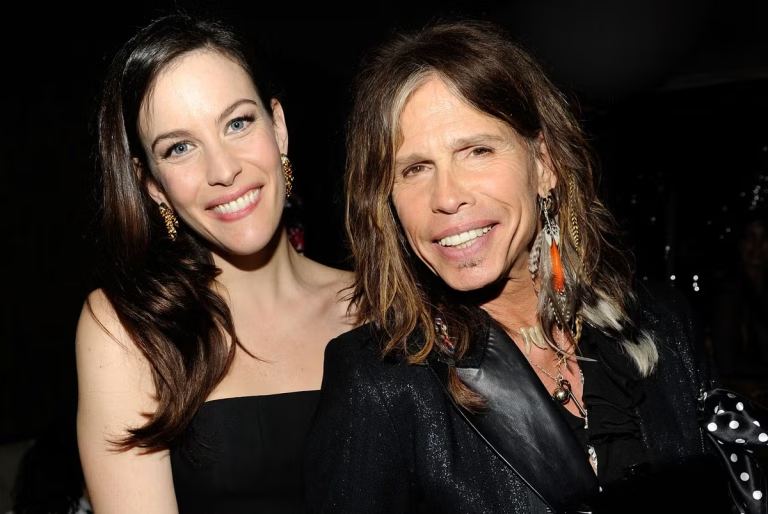
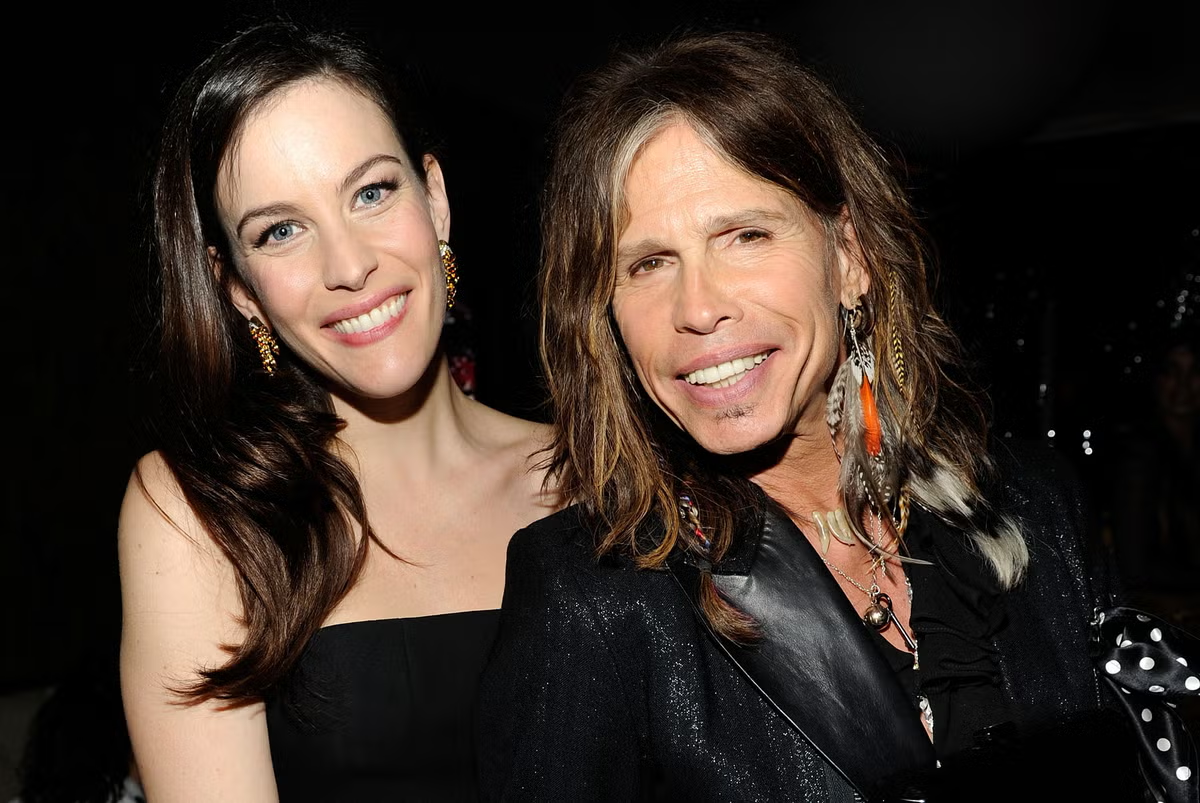
15. Liv Tyler & Steven Tyler

Liv Tyler carved out her own space in Hollywood with roles that emphasized grace and quiet strength, most famously as Arwen in The Lord of the Rings. Before acting, she worked as a model, gradually stepping into a career that felt distinctly her own despite her rock-star roots.

Image Source: Bing Image. License: All Creative Commons

Her connection to Aerosmith frontman Steven Tyler became public later than most celebrity family stories. Liv didn’t learn Steven was her biological father until she was around ten years old, after noticing how closely they resembled each other. Since then, their bond has grown strong, becoming one of Hollywood’s most fascinating and heartfelt father-daughter stories.

Image Source: Bing Image. License: All Creative Commons

14. Riley Keough & Lisa Marie Presley (and Elvis Presley)

Riley Keough was born into one of America’s most legendary families, but she never relied on nostalgia to define her career. As the daughter of Lisa Marie Presley and granddaughter of Elvis Presley, expectations followed her from the start.

Image Source: Bing Image. License: All Creative Commons

Rather than leaning into music, Riley chose acting and quickly earned respect for roles in Mad Max: Fury Road and Daisy Jones & the Six. While she’s acknowledged the weight of her family legacy, she’s also proven she can stand confidently on her own, honoring the Presley name while building something entirely personal.
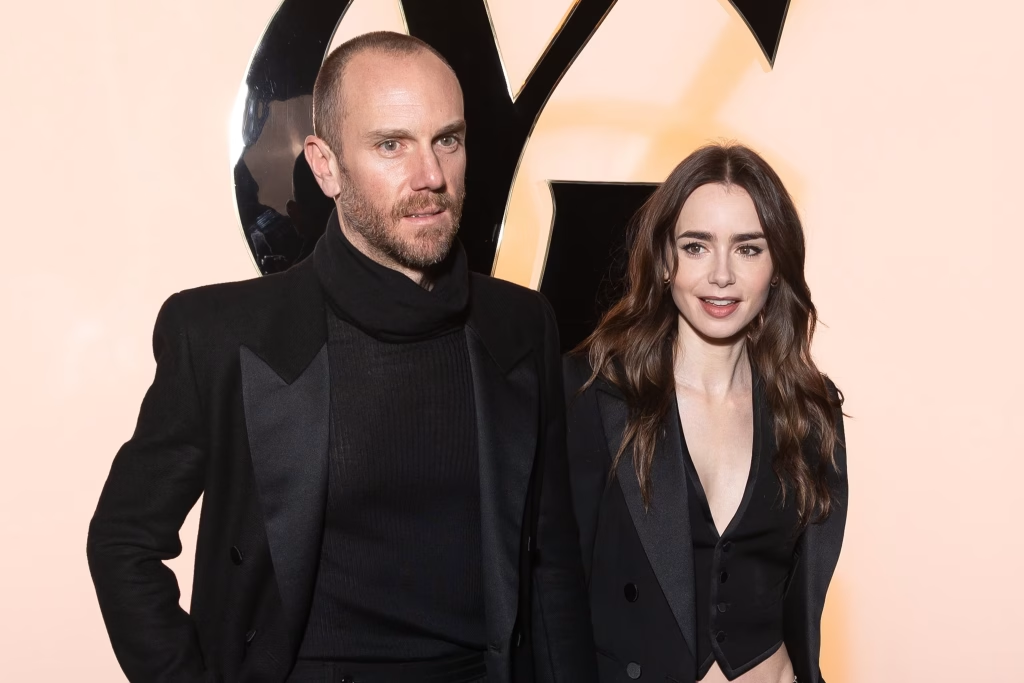
Image Source: Bing Image. License: All Creative Commons

13. Lily Collins & Phil Collins

Lily Collins grew up surrounded by music royalty, thanks to her father, Genesis frontman and solo legend Phil Collins. Still, she pursued acting, eventually landing leading roles that showcased both charm and emotional range.

Image Source: Bing Image. License: All Creative Commons

Lily has been candid about the double-edged sword of her famous surname, admitting it opened doors but didn’t guarantee longevity. One of their sweetest connections came when Phil wrote “You’ll Be In My Heart” for Tarzan, a song inspired by his love for her—a rare blend of family and art.

Image Source: Bing Image. License: All Creative Commons

12. Maya Hawke, Uma Thurman & Ethan Hawke

Maya Hawke entered the spotlight carrying two instantly recognizable last names. As the daughter of Uma Thurman and Ethan Hawke, curiosity about her career came fast—and loud.

Image Source: Bing Image. License: All Creative Commons

Her breakout role on Stranger Things silenced doubts, proving she could hold her own. While she’s clearly influenced by her parents’ creative backgrounds, Maya has steadily shaped a career defined by individuality rather than inheritance.
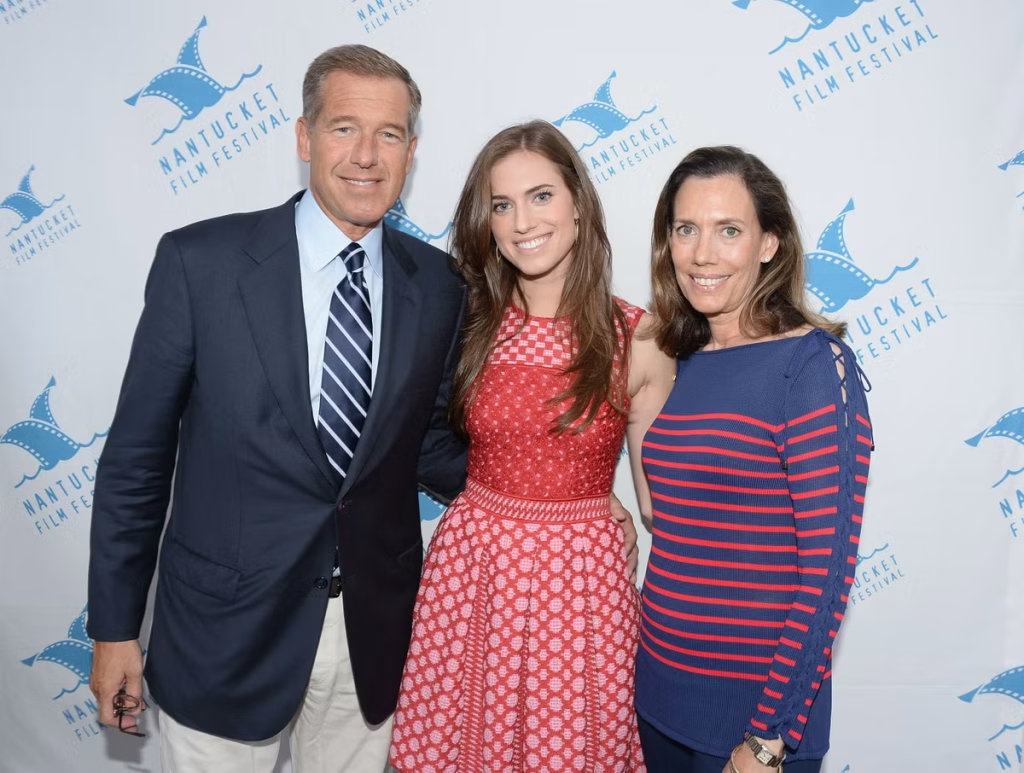
Image Source: Bing Image. License: All Creative Commons

11. Allison Williams & Brian Williams

Allison Williams followed a different path than her father, longtime news anchor Brian Williams. While he became a fixture in American journalism, Allison found success in television and film.

Image Source: Bing Image. License: All Creative Commons

She’s spoken openly about navigating public scrutiny and expectations, especially when her career began gaining traction. Their story reflects how fame can look very different across industries—yet still shape family dynamics in meaningful ways.

Image Source: Bing Image. License: All Creative Commons

10. Billie Lourd, Carrie Fisher & Debbie Reynolds

Billie Lourd represents a rare three-generation Hollywood lineage. Her mother, Carrie Fisher, and grandmother, Debbie Reynold,s both left lasting marks on film history.

Image Source: Bing Image. License: All Creative Commons

Despite profound personal loss, Billie has continued acting with quiet confidence, appearing in projects like American Horror Story and Star Wars. Her career honors her family’s legacy while embracing a modern, understated approach to fame.

Image Source: Bing Image. License: All Creative Commons

9. Liza Minnelli & Judy Garland

Judy Garland was already a legend when Liza Minnelli was born, setting a daunting standard few could match. Yet Liza did exactly that, becoming an icon in her own right.

Image Source: Bing Image. License: All Creative Commons

Their relationship was layered and complex, shaped by success, pressure, and vulnerability. Together, they remain one of the most powerful examples of talent passed through generations—along with the emotional weight that often comes with it.

Image Source: Bing Image. License: All Creative Commons

8. Tracee Ellis Ross & Diana Ross

Tracee Ellis Ross grew up watching her mother, Diana Ross, redefine music and style. Instead of following her into singing, Tracee found her calling in comedy and television.

Image Source: Bing Image. License: All Creative Commons

Over time, she’s spoken lovingly about Diana’s influence—not just as a performer, but as a role model for independence and confidence. Their bond reflects a shared legacy of trailblazing success across different media.

Image Source: Bing Image. License: All Creative Commons

7. Zoë Kravitz, Lenny Kravitz & Lisa Bonet

Zoë Kravitz was raised at the intersection of music, film, and fashion. With Lenny Kravitz and Lisa Bonet as parents, creativity was simply part of daily life.

Image Source: Bing Image. License: All Creative Commons

Zoë has credited her upbringing for keeping her grounded despite fame. Her success across acting and music mirrors her parents’ versatility, making this trio one of Hollywood’s most effortlessly cool family legacies.

Image Source: Bing Image. License: All Creative Commons

6. Kate Hudson, Goldie Hawn & Kurt Russell

Kate Hudson may share a surname with her biological father, but she’s long considered Kurt Russell her true parental figure. Raised by Goldie Hawn and Russell, Kate grew up in a deeply supportive, unconventional household.
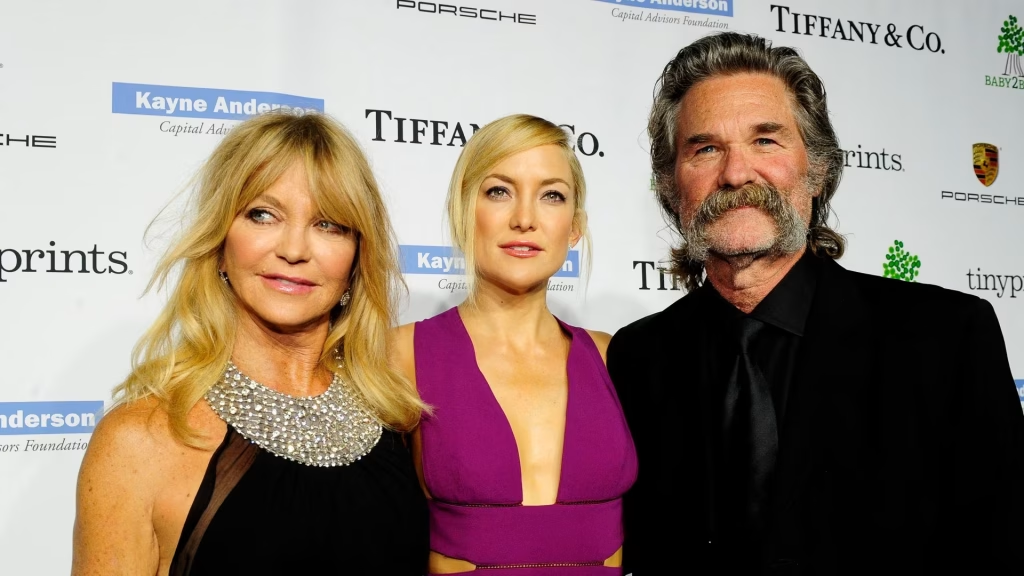
Image Source: Bing Image. License: All Creative Commons

She’s often praised for prioritizing love and stability over Hollywood norms. Their family dynamic shows that emotional bonds—not genetics—are what truly shape a legacy.

Image Source: Bing Image. License: All Creative Commons

5. Dakota Johnson, Melanie Griffith, Don Johnson & Tippi Hedren

Dakota Johnson comes from a lineage packed with film history, spanning three generations of recognizable stars. Yet she’s navigated fame with a distinctly modern sensibility.

Image Source: Bing Image. License: All Creative Commons

Open about the realities of nepotism debates, Dakota has emphasized consistency and hard work. Her career reflects both the benefits and pressures of inheriting a Hollywood name—and surviving on her own merit.

Image Source: Bing Image. License: All Creative Commons

4. Rashida Jones, Quincy Jones & Peggy Lipton

Rashida Jones grew up surrounded by creative excellence, with music legend Quincy Jones and actress Peggy Lipton as parents. That environment shaped her curiosity and versatility.

Image Source: Bing Image. License: All Creative Commons

Rather than sticking to one lane, Rashida built a career spanning acting, writing, and producing. Her success reflects a blend of her parents’ artistic instincts and her own sharp voice.

Image Source: Bing Image. License: All Creative Commons

3. John David Washington & Denzel Washington

John David Washington took an unconventional route to acting, first pursuing professional football before transitioning into film. His father, Denzel Washington, offered guidance—but never shortcuts.

Image Source: Bing Image. License: All Creative Commons

John David has repeatedly stressed the importance of earning respect independently. Their relationship is rooted in discipline, humility, and mutual admiration rather than legacy alone.

Image Source: Bing Image. License: All Creative Commons

2. Sofia Coppola & Francis Ford Coppola, and Roman Coppola

The Coppola name is woven into film history, with multiple generations leaving their mark behind the camera. Sofia Coppola grew up immersed in storytelling, yet carved out her own signature style.

Image Source: Bing Image. License: All Creative Commons

Alongside her brother Roman and father Francis, she represents one of cinema’s most creatively influential families. Their collective legacy speaks to the power of artistic environments passed down through generations.

Image Source: Bing Image. License: All Creative Commons

1. Henry Fonda, Jane Fonda, & Peter Fonda

Few families loom as large over Hollywood history as the Fondas. Henry Fonda’s career set the foundation, while Jane and Peter expanded it in bold, transformative ways.

Image Source: Bing Image. License: All Creative Commons

Their shared achievements—including historic Oscar moments—cemented the family as a cinematic dynasty. Together, they embody the very idea of generational greatness in film.

Image Source: Bing Image. License: All Creative Commons

Hollywood legacies may begin with famous names, but they endure through talent, reinvention, and resilience. These parent-child duos and trios prove that while fame can be inherited, staying power must be earned—generation after generation.

13 Wealthy Blunders and the Minimalist Moves That Saved Them

0
Image Source: Bing Image. License: All Creative Commons

Fame can come with huge paychecks and glamorous lifestyles, but for many celebrities, wealth often arrives before they’ve learned how to handle it. From former child stars thrust into the spotlight to Oscar-winning actors and chart-topping musicians, these high-profile figures discovered that even massive fortunes can disappear as quickly as they materialize. Extravagant spending, risky investments, and the constant pressure to maintain a public image can turn sudden success into financial chaos in the blink of an eye.

Image Source: Bing Image. License: All Creative Commons

Yet their stories aren’t just cautionary tales—they’re also surprisingly instructive and, at times, inspiring. Many of these celebrities found ways to rebuild, often embracing minimalist lifestyles, smarter financial habits, or entirely new careers. Their experiences serve as a reminder that money mismanagement doesn’t have to define a person’s legacy, and that resilience, intentional choices, and humility can turn a dramatic financial fall into a powerful comeback.

Image Source: Bing Image. License: All Creative Commons

13. Christy Carlson Romano

Christy Carlson Romano rose to fame as a Disney Channel favorite, but behind the scenes, her financial reality was far less magical. After her Even Stevens success, she slipped into years of careless spending, assuming the money would never stop coming.

Image Source: Bing Image. License: All Creative Commons

Romano later admitted she splurged on designer shopping sprees, expensive cars, and even paid a psychic who steadily siphoned off her savings. She has openly shared that she never learned how money worked—only that she had access to it.

Image Source: Bing Image. License: All Creative Commons

That lack of understanding eventually caught up with her, forcing a hard reset. Today, her honesty serves as a warning about the importance of financial education, especially for young stars who grow up fast in the spotlight.

Image Source: Bing Image. License: All Creative Commons

12. Francis Ford Coppola

Even cinematic legends aren’t immune to financial disaster. Francis Ford Coppola risked everything on his dream project, One From the Heart, financing it largely himself. The gamble didn’t pay off—the film earned roughly $600,000 while costing around $26 million to make.

Image Source: Bing Image. License: All Creative Commons

The fallout was brutal. Coppola filed for bankruptcy multiple times over the next decade, shouldering the consequences of betting big on artistic vision. Still, he endured, continuing to create and produce influential work. His story illustrates the delicate balance between creative ambition and financial reality in Hollywood.

Image Source: Bing Image. License: All Creative Commons

11. 50 Cent

At the height of his success, 50 Cent seemed untouchable. But in 2015, a costly lawsuit pushed the rapper and entrepreneur to file for bankruptcy, revealing $36 million in debt against less than $20 million in assets.

Image Source: Bing Image. License: All Creative Commons

Rather than seeing it as a defeat, 50 framed bankruptcy as a strategic business move—a reset button. That decision helped him pivot toward television, eventually leading to the smash success of Power. His comeback proves that financial collapse doesn’t have to be the end if you’re willing to adapt and rebuild smartly.

Image Source: Bing Image. License: All Creative Commons

10. Kim Basinger

Kim Basinger made a bold—and risky—move when she bought an entire town in Georgia for $20 million, envisioning it as a future film production hub. Unfortunately, when a key project fell apart, the dream unraveled.

Image Source: Bing Image. License: All Creative Commons

After being sued for breach of contract and ordered to pay over $8 million, Basinger filed for bankruptcy. The experience became a textbook lesson in how ambitious investments can quickly spiral out of control without careful planning. Even Hollywood royalty, it turns out, isn’t immune to financial overreach.

Image Source: Bing Image. License: All Creative Commons

9. Chris Tucker

Chris Tucker earned massive paydays from the Rush Hour franchise, including a reported $25 million for the third installment. Yet despite the income, financial mismanagement led to serious trouble with the IRS.

Image Source: Bing Image. License: All Creative Commons

By 2014, Tucker owed nearly $10 million in unpaid taxes. Although he eventually settled for a reduced amount, the ordeal took a toll on both his finances and career momentum. His story highlights how inconsistent income and lax oversight can derail even the biggest earners.

Image Source: Bing Image. License: All Creative Commons

8. Willie Nelson

Willie Nelson’s tax troubles became the stuff of legend. The IRS seized his assets across multiple states after he racked up $16 million in unpaid taxes, including property, studios, and even a golf course.

Image Source: Bing Image. License: All Creative Commons

Instead of retreating, Nelson leaned into creativity. He released The IRS Tapes: Who’ll Buy My Memories?, cutting a deal that helped chip away at his debt. Though it didn’t cover everything, he eventually settled the rest. His story stands as a uniquely artistic example of resilience under pressure.

Image Source: Bing Image. License: All Creative Commons

7. MC Hammer

MC Hammer’s rise was explosive—and so was his spending. At his peak, he was earning tens of millions annually and living just as large, complete with a sprawling custom mansion and a massive entourage.

Image Source: Bing Image. License: All Creative Commons

The math didn’t work. By 1996, Hammer declared bankruptcy with over $10 million in debt. His downfall became a cultural cautionary tale, often cited as the ultimate example of what happens when lifestyle grows faster than income.

Image Source: Bing Image. License: All Creative Commons

6. Stephen Baldwin

Stephen Baldwin’s financial troubles unfolded over several years. After filing for bankruptcy in 2009 with roughly $2 million in debt, his situation worsened when he failed to file taxes for multiple years.

Image Source: Bing Image. License: All Creative Commons

He later pleaded guilty and agreed to repay taxes, but the damage had already rippled through his personal and professional life. Baldwin’s experience underscores how ignoring financial obligations—especially taxes—can snowball into long-term consequences.

Image Source: Bing Image. License: All Creative Commons

5. Heidi Montag & Spencer Pratt

At the height of The Hills, Heidi Montag and Spencer Pratt were earning millions annually. Unfortunately, most of it disappeared just as fast. Lavish spending on designer wardrobes, luxury meals, and even crystal collections drained their accounts.

Image Source: Bing Image. License: All Creative Commons

Looking back, Spencer admitted they tried to live like A-list celebrities instead of reality TV stars. Their financial crash became a lesson in comparison culture and the dangers of spending to maintain an image rather than stability.

Image Source: Bing Image. License: All Creative Commons

4. Toni Braxton

Toni Braxton’s voice earned her fame, awards, and millions—but her bank account told a different story. She filed for bankruptcy twice, blaming unfair record deals that left her earning far less than fans assumed.

Image Source: Bing Image. License: All Creative Commons

She also acknowledged personal overspending, particularly on home décor, which added to her struggles. Despite it all, Braxton rebuilt her career, proving that financial recovery is possible even after repeated setbacks.

Image Source: Bing Image. License: All Creative Commons

3. Lindsay Lohan

Lindsay Lohan’s transition from child star to adult celebrity was rocky, and her finances reflected that turbulence. At one point, her net worth soared to an estimated $28 million before declining sharply amid legal issues and career interruptions.

Image Source: Bing Image. License: All Creative Commons

In recent years, Lohan has worked steadily toward a comeback through films and streaming projects. Her story serves as a reminder that early success doesn’t guarantee long-term security without stability and support.

Image Source: Bing Image. License: All Creative Commons

2. T-Pain

T-Pain once had $40 million at his disposal—and watched it vanish. Poor real estate decisions, reckless spending, and luxury purchases like a Bugatti left him broke within a few years.

Image Source: Bing Image. License: All Creative Commons

At his lowest, he admitted he couldn’t even afford fast food for his kids without borrowing money. By openly sharing his mistakes, T-Pain has become one of the most candid voices about financial literacy in the music industry.

Image Source: Bing Image. License: All Creative Commons

1. Nicolas Cage

Few celebrity spending stories are as infamous as Nicolas Cage’s. From dinosaur skulls and rare artifacts to multiple castles and mansions, Cage spent freely—and often impulsively.

Image Source: Bing Image. License: All Creative Commons

Eventually, the bills came due. He owed millions in back taxes and lost several properties to foreclosure. While he continued acting to recover financially, Cage’s experience remains a striking example of how limitless wealth can disappear without discipline.

Image Source: Bing Image. License: All Creative Commons

What ties these stories together isn’t just loss, but survival. Each of these celebrities faced the uncomfortable reality of financial failure and, in different ways, found a path forward. Their experiences serve as powerful reminders that money comes and goes—but awareness, discipline, and resilience can make all the difference when the spotlight fades.

15 Clever Money-Saving Tricks Used by Celebrities and Millionaires

0
Image Source: Bing Image. License: All Creative Commons

When we think of celebrities and millionaires, we often imagine lavish mansions and endless splurges. But behind the glamour, many of the world’s wealthiest people practice remarkable frugality. From reusing outfits and following strict budgets to making deliberate financial choices, these unexpected habits reveal that real wealth isn’t about extravagance—it’s about thoughtful, intentional money management.

Image Source: Bing Image. License: All Creative Commons

15. Tiffany Haddish: Proudly Repeating an Iconic Dress

Tiffany Haddish gained attention not just for her comedy but for her refreshingly honest take on red-carpet fashion. Instead of unveiling a new outfit at every major event, she confidently wore the same $4,000 Alexander McQueen gown multiple times, including to the Oscars.

Image Source: Bing Image. License: All Creative Commons

Her reasoning was simple and relatable—the dress cost more than her mortgage, so she planned to actually use it. By ignoring Hollywood’s unspoken fashion rules, Haddish helped normalize outfit repetition and sparked conversations about confidence, sustainability, and common sense.

Image Source: Bing Image. License: All Creative Commons

14. Shailene Woodley: Making Beauty Products from Scratch

Shailene Woodley’s lifestyle leans heavily toward simplicity and self-sufficiency, and her beauty routine is no exception. Rather than spending on luxury skincare brands, she prefers crafting her own face oils, toothpaste, and lotions using natural ingredients.

Image Source: Bing Image. License: All Creative Commons

This habit reflects more than frugality—it’s about awareness and control. Woodley values knowing what goes into her products and reducing waste, proving that effective self-care doesn’t require expensive packaging or celebrity-endorsed labels.

Image Source: Bing Image. License: All Creative Commons

13. Dave Grohl: Saving Every Dollar Earned

Despite decades of success in the music industry, Dave Grohl approaches money with caution and humility. He’s known for depositing every paycheck straight into savings, rarely touching it once it’s there.

Image Source: Bing Image. License: All Creative Commons

That discipline comes from watching his mother struggle financially while he was growing up. Those early lessons stuck with him, shaping a mindset that values security and foresight over indulgence, even at the height of fame.

Image Source: Bing Image. License: All Creative Commons

12. Bethenny Frankel: Bargain Hunting Like a Pro

Bethenny Frankel’s wealth hasn’t dulled her love for a good deal. She openly shops clearance racks and searches online marketplaces like eBay for discounted clothes and accessories.

Image Source: Bing Image. License: All Creative Commons

For Frankel, paying full price rarely makes sense. Her approach reinforces the idea that smart shopping is about value—not income level—and that financial awareness doesn’t disappear once you reach success.

Image Source: Bing Image. License: All Creative Commons

11. Michelle Obama: Affordable Fashion with Impact

Michelle Obama has long been admired for her sense of style, but what truly stands out is her practicality. She’s been spotted shopping at Target and wearing affordable brands like H&M and J.Crew at public appearances.

Image Source: Bing Image. License: All Creative Commons

By mixing accessible fashion with high-end pieces, she redefined elegance for millions. Her choices sent a clear message: confidence and authenticity matter far more than luxury labels.

Image Source: Bing Image. License: All Creative Commons

10. Danica Patrick: Cooking Instead of Dining Out

Even with a packed travel schedule, former race car driver Danica Patrick prefers preparing her own meals. She often shops at local farmers’ markets and cooks rather than relying on expensive restaurant dining.

Image Source: Bing Image. License: All Creative Commons

This habit helps her maintain both health and financial balance. Patrick’s routine reflects a shift in how luxury is defined—prioritizing wellness, discipline, and self-sufficiency over convenience.

Image Source: Bing Image. License: All Creative Commons

9. Keira Knightley: Living Within a Set Budget

Despite her global fame, Keira Knightley limits herself to a personal yearly allowance of around $50,000. She’s spoken openly about how extreme wealth can feel isolating and disconnected from everyday life.

Image Source: Bing Image. License: All Creative Commons

By placing boundaries on her spending, Knightley avoids lifestyle inflation and stays grounded. Her choice highlights that financial freedom often comes from restraint, not excess.

Image Source: Bing Image. License: All Creative Commons

8. Zooey Deschanel: Budgeting with Precision

Zooey Deschanel takes a meticulous approach to managing her finances. Even with a high income, she tracks her spending carefully and sticks to a defined budget.

Image Source: Bing Image. License: All Creative Commons

This awareness helps her avoid unnecessary purchases and stay financially grounded. By sharing her habits publicly, Deschanel helps normalize budgeting as a proactive choice rather than a financial necessity.

Image Source: Bing Image. License: All Creative Commons

7. Jay Leno: Saving One Entire Paycheck

Jay Leno built his wealth through a simple but disciplined system. For years, he lived solely off his stand-up comedy income while saving everything he earned from television.

Image Source: Bing Image. License: All Creative Commons

That strategy allowed him to grow his fortune without inflating his lifestyle. Leno’s example shows how consistency and long-term thinking can outperform flashy spending.

Image Source: Bing Image. License: All Creative Commons

6. Jennifer Lawrence: Staying Grounded with Simple Choices

Jennifer Lawrence’s rise to fame didn’t change her everyday habits. She’s been seen shopping at thrift stores and driving a practical car instead of opting for luxury vehicles.

Image Source: Bing Image. License: All Creative Commons

Her approach reflects values shaped long before Hollywood success. Lawrence’s choices emphasize authenticity and humility, proving that financial restraint can coexist with massive success.

Image Source: Bing Image. License: All Creative Commons

5. Warren Buffett: Choosing Simplicity Over Status

Warren Buffett is famous for living in the same home he purchased decades ago and driving sensible cars. Despite his immense wealth, he has never felt the need to upgrade for appearances.

Image Source: Bing Image. License: All Creative Commons

His philosophy centers on value and long-term security. Buffett’s lifestyle serves as a reminder that wealth is most powerful when it provides peace of mind, not excess.

Image Source: Bing Image. License: All Creative Commons

4. Mark Zuckerberg and Jeff Bezos: Function Over Flash

Mark Zuckerberg has been spotted driving a modest Honda Fit, while Jeff Bezos drove a Honda Accord during Amazon’s early years. Neither felt compelled to showcase wealth through cars.

Image Source: Bing Image. License: All Creative Commons

These choices reflect a focus on practicality and long-term goals. Their stories challenge the idea that success must be displayed through luxury possessions.

Image Source: Bing Image. License: All Creative Commons

3. Lady Gaga and Clint Eastwood: Keeping It Practical

Lady Gaga’s bold stage persona contrasts with her everyday choice of a sturdy Ford truck. Clint Eastwood, meanwhile, prefers a classic GMC Typhoon over modern luxury vehicles.

Image Source: Bing Image. License: All Creative Commons

Both stars prioritize reliability and personal preference over flash. Their choices reinforce the idea that confidence—not extravagance—defines true style.

Image Source: Bing Image. License: All Creative Commons

2. Kristen Bell: Coupons and a Simple Wedding

Kristen Bell proudly embraces coupon clipping and bargain hunting for everyday purchases. She’s also known for her low-cost courthouse wedding, which totaled just $142.

Image Source: Bing Image. License: All Creative Commons

Bell’s philosophy centers on meaning over spectacle. Her openness encourages others to reject unnecessary spending and focus on what genuinely adds value to their lives.

Image Source: Bing Image. License: All Creative Commons

1. Frugal Habits Anyone Can Adopt

Celebrities may grab headlines, but frugality isn’t limited to the famous. Every day, people are saving money through habits like meal planning, buying secondhand, and automating savings.

Image Source: Bing Image. License: All Creative Commons

Small, consistent choices—canceling unused subscriptions, cooking at home, delaying impulse buys—add up over time. These habits are redefining success as intention, balance, and financial peace.

Image Source: Bing Image. License: All Creative Commons

These stories prove that frugality isn’t about deprivation—it’s about choice. Whether you’re a global superstar or an everyday earner, thoughtful spending creates freedom, stability, and peace of mind. In the end, the smartest luxury might simply be knowing you’re in control of your money.

15 Sci-Fi Adventures That Belong on Your Watchlist

0
Image Source: Bing Image. License: All Creative Commons

Science fiction isn’t just about dazzling visuals anymore—it’s a genre brimming with stories that explore technology, identity, society, and the very essence of humanity. From animated classics to blockbuster franchises and thought-provoking TV epics, the 15 standout sci-fi movies and series on this list showcase the best the genre has to offer and are must-sees for any fan.

Image Source: Bing Image. License: All Creative Commons

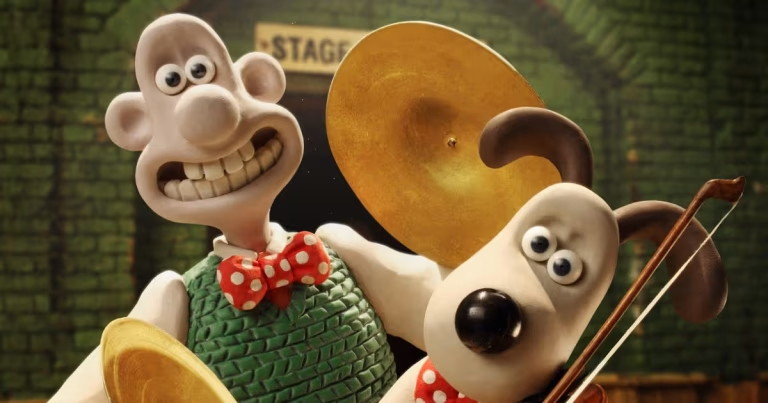
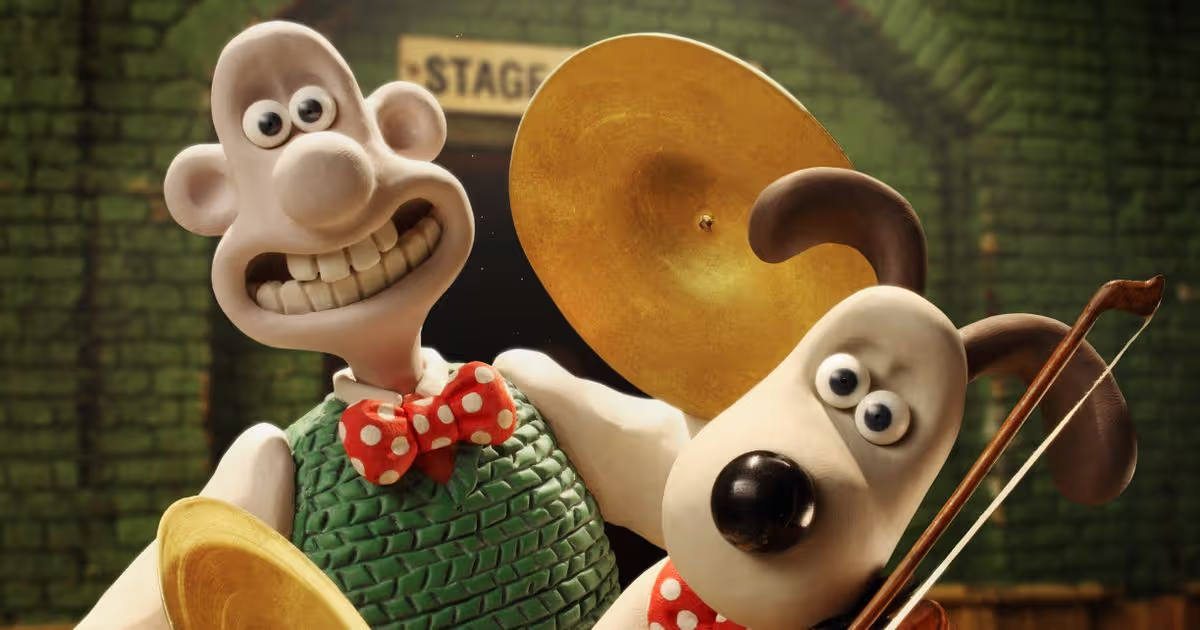
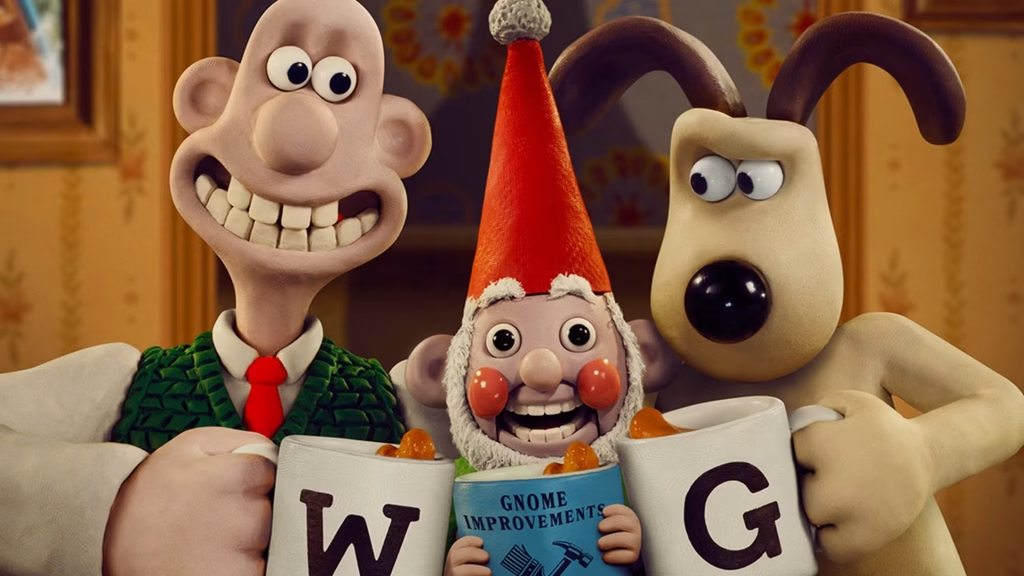
15. Wallace and Gromit: Vengeance Most Fowl

Wallace and Gromit have always mixed whimsy with clever ideas, but Vengeance Most Fowl leans harder into timely themes than ever before. At its heart, this charming stop-motion adventure aims to address technological overreach, especially when innovation starts replacing creativity, connection, and care.

Image Source: Bing Image. License: All Creative Commons

While Wallace remains blissfully obsessed with his gadgets, Gromit fights to protect his chaotic, living garden from the cold efficiency of the robotic Norbot. It’s a simple conflict that carries real emotional weight, acting as a metaphor for art made by hand versus automation without heart. Funny, warm, and surprisingly thoughtful, this entry proves the duo still has plenty to say in the age of AI.

Image Source: Bing Image. License: All Creative Commons

14. Transformers One

Transformers One refreshes the long-running franchise by going back to the beginning, this time through animation. Beneath the explosive action is a surprisingly layered origin story about friendship, power, and ideology.

Image Source: Bing Image. License: All Creative Commons

Rather than a straightforward heroes-versus-villains tale, the film frames the conflict as a philosophical split, drawing clear parallels between Optimus Prime and Megatron as former allies shaped by different visions of justice. The political undertones feel bold for a mainstream animated release. Even viewers unfamiliar with Transformers lore can jump in, making this both an accessible entry point and a rewarding expansion of the mythos.

Image Source: Bing Image. License: All Creative Commons

13. The Wild Robot

The Wild Robot manages to be gentle, adventurous, and emotionally rich all at once. The story follows Roz, a robot who gradually finds purpose not through programming, but through caring for others in a wild, animal-filled environment.

Image Source: Bing Image. License: All Creative Commons

As Roz becomes a mother figure and leader, the film explores identity, adaptation, and belonging. Characters like Bright Bill, a goose forced to survive outside his nature, add unexpected emotional depth. It’s the rare animated sci-fi that works just as well for adults as it does for kids, quietly devastating in the best way.

Image Source: Bing Image. License: All Creative Commons

12. Robot Dreams

Told entirely without dialogue, Robot Dreams is a beautiful meditation on friendship, loss, and time. The film follows a lonely dog and his robot companion as their bond is tested by circumstance and change.

Image Source: Bing Image. License: All Creative Commons

Small visual moments carry enormous emotional weight, from the robot forming connections with birds to dreamlike musical sequences filled with nostalgia. The recurring use of “September” adds a bittersweet emotional anchor. It’s a reminder that sci-fi doesn’t need exposition or spectacle to hit hard,d it just needs honesty.

Image Source: Bing Image. License: All Creative Commons

11. Flow

Flow is a visually arresting animated film that places animals at the center of a post-disaster world. With no spoken language, the story relies on movement, sound, and behavior to convey survival and cooperation.

Image Source: Bing Image. License: All Creative Commons

The animation, created using Blender, feels immersive and natural, capturing how animals communicate without words. While danger is ever-present, the film leans toward hope rather than despair. By removing humans from the spotlight, Flow offers a refreshing, eco-conscious take on science fiction storytelling.

Image Source: Bing Image. License: All Creative Commons

10. ME

Don Hertzfeldt’s ME is only 22 minutes long, but it leaves a lasting impression. Using minimalist stick-figure animation and an eclectic score, the short explores how modern technology feeds isolation and self-obsession.

Image Source: Bing Image. License: All Creative Commons

There’s no dialogue, just images that spiral into deeply unsettling territory. The film feels both absurd and painfully sincere, capturing the loneliness of retreating inward in a hyper-connected world. It’s strange, funny, and quietly devastating, classic Hertzfeldt in the best way.

Image Source: Bing Image. License: All Creative Commons

9. Omni Loop

Omni Loop uses time travel not as a puzzle to solve, but as a lens for grief, regret, and intergenerational connection. Zoya, facing terminal illness, reflects on the lives she never lived, while Paula searches for meaning in her own uncertain future.

Image Source: Bing Image. License: All Creative Commons

Their bond becomes the emotional core of the film, touching on feminism, legacy, and the wisdom passed between women. The sci-fi elements stay grounded, serving the characters rather than overshadowing them. It’s intimate, thoughtful, and far more emotionally complex than its indie budget might suggest.

Image Source: Bing Image. License: All Creative Commons

8. A Quiet Place: Day One

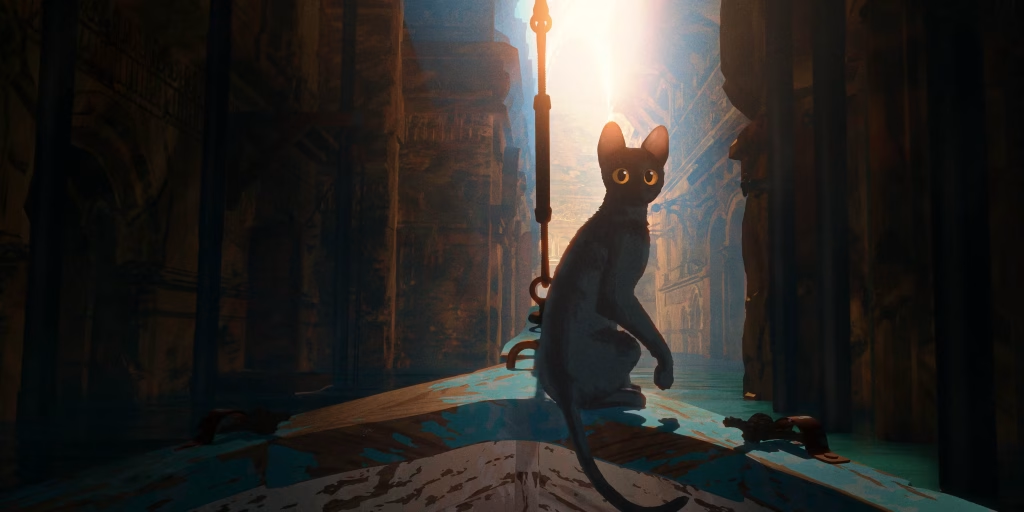
Rather than focusing on survival at all costs, A Quiet Place: Day One asks a more haunting question: What do you live for when the world is ending? Lupita Nyong’o delivers a powerful performance as Sam, a woman facing both terminal illness and an alien invasion.

Image Source: Bing Image. License: All Creative Commons

Her priorities feel refreshingly human, and her bond with her cat adds unexpected tenderness. The scares are effective, but it’s the existential undertone that makes this entry linger.

Image Source: Bing Image. License: All Creative Commons

7. Kingdom of the Planet of the Apes

Jumping far ahead in the timeline, Kingdom of the Planet of the Apes introduces a new generation shaped by the myths and ruins of the past. The film wastes no time establishing its characters and conflicts.

Image Source: Bing Image. License: All Creative Commons

Proximus, a villain obsessed with Roman history, adds a chilling layer of ideology, while Nova’s mysterious role keeps the story unpredictable. The film balances action with philosophical questions about power and progress. It’s proof that this franchise still has room to evolve, and plenty left to say.

Image Source: Bing Image. License: All Creative Commons

6. Furiosa: A Mad Max Saga

Furiosa trades nonstop chaos for something more emotionally charged, without sacrificing intensity. The film dives into Furiosa’s origins, pairing her journey with the unhinged presence of Dementus, played with wild energy by Chris Hemsworth.

Image Source: Bing Image. License: All Creative Commons

Anya Taylor-Joy brings restraint and strength to the role, grounding the film’s larger-than-life world. The result is a story that feels operatic rather than purely explosive. It expands the Mad Max universe while standing firmly on its own.

Image Source: Bing Image. License: All Creative Commons

5. Alien: Romulus

Alien: Romulus understands that the franchise’s greatest weapon isn’t scale, it’s fear. Director Fede Álvarez leans into claustrophobia, body horror, and relentless tension.

Image Source: Bing Image. License: All Creative Commons

The film introduces a group of young characters bound by loyalty, adding emotional stakes to the familiar xenomorph terror. While some CGI moments divide opinion, the atmosphere is unmistakably Alien. It’s a confident reminder that this universe still knows how to scare.

Image Source: Bing Image. License: All Creative Commons

4. The Beast

Rather than imagining AI as a destructive force, The Beast explores how technology can quietly reshape who we are. Léa Seydoux stars as Gabrielle, a woman using AI to revisit and process trauma from past lives.

Image Source: Bing Image. License: All Creative Commons

The film raises unsettling questions about emotional shortcuts, memory, and authenticity. Its sci-fi elements are understated, allowing character and philosophy to take center stage. For viewers craving introspective science fiction, this is a standout.

Image Source: Bing Image. License: All Creative Commons

3. 3 Body Problem

Adapting Liu Cixin’s ambitious novel was no small task, but The 3 Body Problem rises to the challenge. The series blends scientific mystery with global stakes as researchers confront forces that defy known reality.

Image Source: Bing Image. License: All Creative Commons

The ensemble cast grounds the massive ideas, keeping the story personal even as it grows cosmic in scope. Themes of inevitability, fear, and human response to the unknown run throughout. It’s dense, challenging, and deeply rewarding sci-fi television.

Image Source: Bing Image. License: All Creative Commons

2. Stranger Things

Few shows balance genres as smoothly as Stranger Things. What begins as a missing-child mystery grows into a sprawling sci-fi saga filled with monsters, alternate dimensions, and emotional growth.

Image Source: Bing Image. License: All Creative Commons

The ’80s aesthetic is more than nostalgia; it reinforces the characters’ innocence as the darkness deepens. The young cast remains the heart of the series, keeping the story grounded. Its influence on pop culture is undeniable, and its emotional core remains intact.

Image Source: Bing Image. License: All Creative Commons

1. Babylon 5

Babylon 5 remains a landmark in science fiction television. Set on a neutral space station, the series weaves politics, war, religion, and identity into a long-form narrative that was ahead of its time.

Image Source: Bing Image. License: All Creative Commons

Despite limited mainstream recognition, its ambitious storytelling and character arcs earned it a devoted fan base. Many modern sci-fi shows owe a debt to their serialized approach. For viewers who love deep lore and moral complexity, Babylon 5 is essential.

Image Source: Bing Image. License: All Creative Commons

From intimate animated shorts to galaxy-spanning epics, modern sci-fi is proving that imagination and emotional depth go hand in hand. These films and shows don’t just ask “what if?” They ask why it matters. And right now, there’s no better time to dive in.

15 Must-Watch Train Movies Full of Tension and Drama

0
Image Source: Bing Image. License: All Creative Commons

Filmmakers have long been fascinated by trains, and it’s easy to see why. Trains naturally propel a story forward, often pushing characters into situations they may not be ready for. They confine multiple characters within a tight space, heightening tension and interpersonal drama. Plus, the relentless movement of a train can turn time itself into a source of pressure. From the silent film era to today, when genres often blur and blend, train-centered movies continue to deliver some of the most gripping, intense, and memorable stories in cinema. Here’s a countdown of 15 standout train movies that masterfully use the rails to craft suspense, drama, and unforgettable storytelling.

Image Source: Bing Image. License: All Creative Commons

15. The Great Train Robbery (1903)

Everything starts here. The Great Train Robbery didn’t just popularize train-centered storytelling; it helped define how movies create suspense. This silent short may be over a hundred years old, but its energy is still impressive. By cutting back and forth between criminals robbing a train and a posse racing to stop them, the film introduced audiences to parallel editing in a way that felt thrilling and new.

Image Source: Bing Image. License: All Creative Commons

That technique became a cornerstone of action and thriller filmmaking. Watching it today feels like spotting the first sparks of modern cinema. Despite its simplicity, the film proves that tension doesn’t need dialogue, just smart pacing, movement, and purpose. Its influence stretches far beyond its runtime. Nearly every intense train sequence since owes something to this pioneering classic.

Image Source: Bing Image. License: All Creative Commons

14. Double Indemnity (1944)

When it comes to noir, Double Indemnity sits near the top of the mountain. Billy Wilder’s razor-sharp thriller uses a train as the key setting for a murder disguised as an accident. Barbara Stanwyck and Fred MacMurray bring a dangerous chemistry to a plot where greed and guilt ride side by side.

Image Source: Bing Image. License: All Creative Commons

The train sequence isn’t decorative; it’s essential. The enclosed environment magnifies every glance and hesitation, turning the journey into a pressure cooker of moral decay. The train’s unstoppable movement mirrors the characters’ slide toward ruin. Few films use setting so deliberately. The result is one of noir’s most iconic and suspenseful moments.

Image Source: Bing Image. License: All Creative Commons

13. Train to Busan (2016)

Few modern films have used a train as effectively, or as brutally, as Train to Busan. This South Korean hit drops a zombie outbreak onto a high-speed train, instantly turning every carriage into a survival test.

Image Source: Bing Image. License: All Creative Commons

What makes the film stand out is how creatively it uses the train’s structure. Each car presents new dangers, emotional beats, and moral choices. Beneath the relentless action is a sharp look at class, selfishness, and sacrifice. It’s thrilling, heartbreaking, and smart, proof that genre films can deliver both adrenaline and substance.

Image Source: Bing Image. License: All Creative Commons

12. Murder on the Orient Express (1974)

Elegant, icy, and meticulously constructed, Murder on the Orient Express turns a luxury train into a snowbound crime scene. With nowhere to escape, every passenger becomes a suspect, and Hercule Poirot must untangle a web of secrets.

Image Source: Bing Image. License: All Creative Commons

The isolation of the train fuels the suspense. Interviews, flashbacks, and subtle clues keep the mystery tight while the lavish production design adds a layer of old-world glamour. This adaptation helped define ensemble mystery filmmaking and cemented the train as the ultimate locked-room setting.

Image Source: Bing Image. License: All Creative Commons

11. The Darjeeling Limited (2007)

Wes Anderson’s The Darjeeling Limited takes a gentler approach to train storytelling. The film follows three brothers crossing India by rail, using the journey as a way to explore grief, family tension, and healing.

Image Source: Bing Image. License: All Creative Commons

The train acts as a floating emotional space, part refuge, part confrontation zone. Anderson’s visual precision and offbeat humor balance moments of genuine vulnerability. It’s not about danger or speed, but about what happens when people can’t outrun their past even while moving forward.

Image Source: Bing Image. License: All Creative Commons

10. Compartment No. 6 (2021)

Quiet and deeply human, Compartment No. 6 proves that intimacy can be just as gripping as action. The film centers on two strangers sharing a sleeper car on a long journey north, forced into an awkward closeness that slowly softens.

Image Source: Bing Image. License: All Creative Commons

The train’s rhythm reflects their emotional shifts, while the bleak landscapes outside contrast with the warmth forming inside the compartment. Nothing feels rushed or overstated. It’s a reminder that sometimes the most powerful train stories happen in whispers, not explosions.

Image Source: Bing Image. License: All Creative Commons

9. Trans-Europ-Express (1966)

This French New Wave oddity turns the train into a playground for ideas. Trans-Europ-Express follows filmmakers discussing a crime story while traveling, only for that story to begin unfolding alongside them.

Image Source: Bing Image. License: All Creative Commons

The result is playful, confusing, and endlessly fascinating. The film constantly questions what’s real, what’s imagined, and who’s in control of the narrative. It’s not for everyone, but for adventurous viewers, it’s a reminder of how trains can carry stories in unexpected directions.

Image Source: Bing Image. License: All Creative Commons

8. Before Sunrise (1995)

One of cinema’s most beloved romances begins with a train ride. Before Sunrise introduces two strangers who meet by chance and decide to spend a night talking, walking, and connecting.

Image Source: Bing Image. License: All Creative Commons

The train is brief but crucial; it’s the spark that makes everything possible. That single decision sets off a story built entirely on conversation and emotional honesty. It’s proof that a journey doesn’t need danger to matter sometimes; it just needs the right people on board.

Image Source: Bing Image. License: All Creative Commons

7. The Taking of Pelham One Two Three (1974)

This gritty subway thriller turns New York’s transit system into a battlefield. When hijackers seize a train and demand a ransom, a weary transit cop becomes the city’s best hope.

Image Source: Bing Image. License: All Creative Commons

The film thrives on precision editing and sharp dialogue, cutting between criminals, officials, and trapped passengers. Every delay feels lethal. While it’s been remade, the original remains unmatched, lean, tense, and relentlessly efficient.

Image Source: Bing Image. License: All Creative Commons

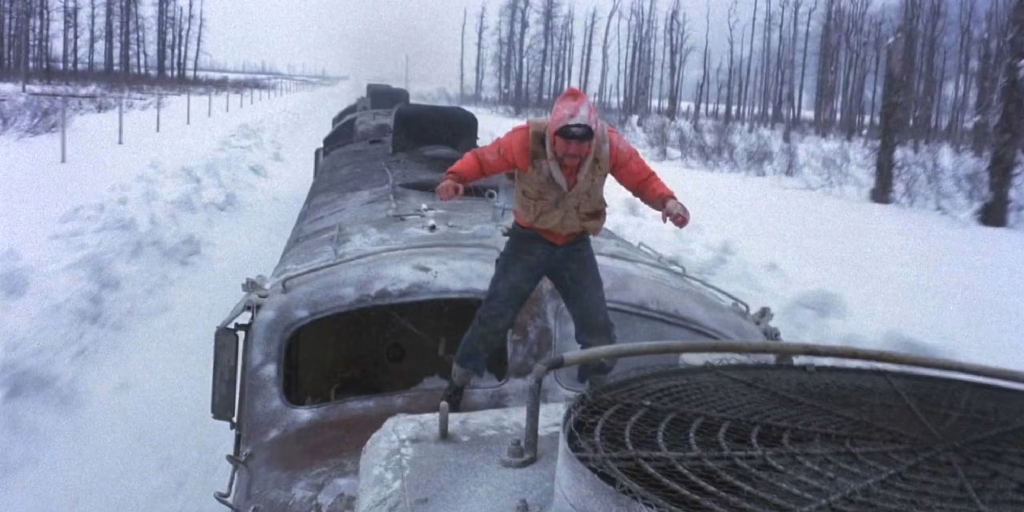
6. Runaway Train (1985)

Few films capture pure momentum like Runaway Train. Two escaped prisoners find themselves aboard a locomotive with no brakes, barreling through an unforgiving landscape.

Image Source: Bing Image. License: All Creative Commons

The action is intense, but the film’s real strength lies in its themes of fate, freedom, and self-destruction. Jon Voight and Eric Roberts deliver raw, desperate performances. It’s a survival thriller that feels philosophical without losing its edge.

Image Source: Bing Image. License: All Creative Commons

5. Snowpiercer (2013)

In Snowpiercer, the train becomes the world. Bong Joon-ho imagines humanity’s last survivors locked into a rigid class system aboard a constantly moving engine.

Image Source: Bing Image. License: All Creative Commons

Each train car represents a different layer of society, turning the forward march into a revolution. The action is brutal, inventive, and tightly choreographed. More than a spectacle, the film is a sharp allegory about power, inequality, and survival.

Image Source: Bing Image. License: All Creative Commons

4. Strangers on a Train (1951)

Hitchcock turns a casual meeting into a nightmare in Strangers on a Train. A conversation about “exchanging murders” becomes horrifyingly real, setting fate into motion.

Image Source: Bing Image. License: All Creative Commons

The train represents inevitability. Once the idea is planted, there’s no stopping it. Hitchcock’s cross-cutting and visual precision build unbearable tension. It’s one of cinema’s great psychological thrillers, powered by chance and consequence.

Image Source: Bing Image. License: All Creative Commons

3. Twentieth Century (1934)

Fast-talking and ferociously funny, Twentieth Century transforms a train into a battleground for romance and ego. John Barrymore and Carole Lombard clash nonstop as former collaborators hurtle toward New York.

Image Source: Bing Image. License: All Creative Commons

The train’s nonstop movement matches the film’s breakneck pace. Every compartment becomes a stage for verbal sparring. It’s a reminder that comedy can be just as suspenseful as drama, especially when love is on the line.

Image Source: Bing Image. License: All Creative Commons

2. The Lady Vanishes (1938)

Another Hitchcock triumph, The Lady Vanishes blends mystery, humor, and paranoia. When a woman disappears mid-journey, one passenger’s insistence on finding her meets constant resistance.

Image Source: Bing Image. License: All Creative Commons

The train’s enclosed setting amplifies doubt and suspicion, while Hitchcock keeps the audience guessing through clever misdirection. It remains one of the finest examples of train-based mystery storytelling.

Image Source: Bing Image. License: All Creative Commons

1. The General (1926)

At the top of the list is Buster Keaton’s The General, a silent-era miracle of comedy and action. Set during the Civil War, the film revolves around a stolen locomotive and Keaton’s relentless pursuit.

Image Source: Bing Image. License: All Creative Commons

The stunts are astonishing, the timing flawless, and the suspense real. Keaton blends humor and danger so seamlessly that every chase feels exhilarating. Nearly a century later, The General still defines what a great train movie can be: funny, thrilling, and timeless.

Image Source: Bing Image. License: All Creative Commons

Whether they’re racing toward disaster, carrying strangers into connection, or serving as pressure cookers for crime and chaos, trains have given filmmakers a perfect storytelling engine. These films prove that once a story is set on the rails, all it needs is the right direction and the courage to keep moving forward.

15 Movies and Series Celebrating Love at Its Best

0
Image Source: Bing Image. License: All Creative Commons

Hollywood love stories get glamorized, sanitized, and almost always have a happy ending, right? But, there are films and TV shows that dare to depict relationships in a real way: such as being awkward, hurting, loving, puzzling, and basically human. Below are some movies and TV shows that visually present examples of love, family, friendship, and partnership that are intentionally stripped of fantasy. These stories do not shy away from pain, and, hence, they look very natural.

Image Source: Bing Image. License: All Creative Commons

15. His Three Daughters

His Three Daughters captures the emotional chaos that surfaces when family members are forced back into the same space during a moment of crisis. Three sisters, Katie, Christina, and Rachel, reunite in their father’s apartment as he approaches the end of his life, and old resentments immediately resurface.

Image Source: Bing Image. License: All Creative Commons

Each woman arrives carrying her own emotional armor: Katie’s need for control, Christina’s rigid sense of order, and Rachel’s lingering feeling that she doesn’t fully belong. Their conversations are uncomfortable, sharp, and often unresolved, mirroring the way real families communicate under stress. Rather than building toward a dramatic catharsis, the film lingers in quiet moments, glances, pauses, and half-finished thoughts that feel painfully familiar.

Image Source: Bing Image. License: All Creative Commons

What makes the film so affecting is its honesty. Healing doesn’t come easily, and not everything is fixed by the end. Instead, His Three Daughters reminds us that love within families is complicated, imperfect, and often expressed through conflict.

Image Source: Bing Image. License: All Creative Commons

14. Nobody Wants This

Nobody Wants This refreshes the romantic comedy by grounding it firmly in reality. Kristen Bell plays Joanne, who finds herself in a relationship with Noah, a rabbi whose faith and family introduce real-world complications into their romance.

Image Source: Bing Image. License: All Creative Commons

Rather than relying on grand gestures, the series focuses on communication, compromise, and self-awareness. Joanne and Noah don’t magically solve their problems; they talk, stumble, and reassess what they’re willing to give up or hold onto. The show acknowledges how cultural differences can strain even the most genuine connections. Its charm lies in its realism. Love here isn’t effortless or idealized; it’s work, negotiation, and growth, and that honesty makes the story resonate.

Image Source: Bing Image. License: All Creative Commons

13. Couples Therapy

Couples Therapy strips away the theatrics of reality television and replaces them with raw emotional truth. Following real couples in sessions with Dr. Orna Guralnik, the series offers a rare glimpse into what relationship repair actually looks like.

Image Source: Bing Image. License: All Creative Commons

Season three broadens the scope by including a polycule, but the heart of the show remains unchanged: unresolved resentment, emotional wounds, and the slow, sometimes frustrating process of learning how to communicate. There are no miracle breakthroughs, just incremental progress and painful realizations. What makes the series so compelling is its refusal to simplify. Love here is work, vulnerability is uncomfortable, and healing happens one conversation at a time.

Image Source: Bing Image. License: All Creative Commons

12. Past Lives

Past Lives is a quiet meditation on love, timing, and the lives we don’t end up living. Nora and Hae Sung reconnect years after their childhood friendship was cut short, and what unfolds is filled with longing and emotional restraint rather than melodrama.

Image Source: Bing Image. License: All Creative Commons

The film treats all relationships with care, including Nora’s marriage to Arthur, which is portrayed with tenderness and mutual respect. There are no villains, just people trying to understand their feelings without betraying their commitments. Rather than offering closure, Past Lives embraces ambiguity. It understands that some connections exist to shape us, not to last forever.

Image Source: Bing Image. License: All Creative Commons

11. Beef

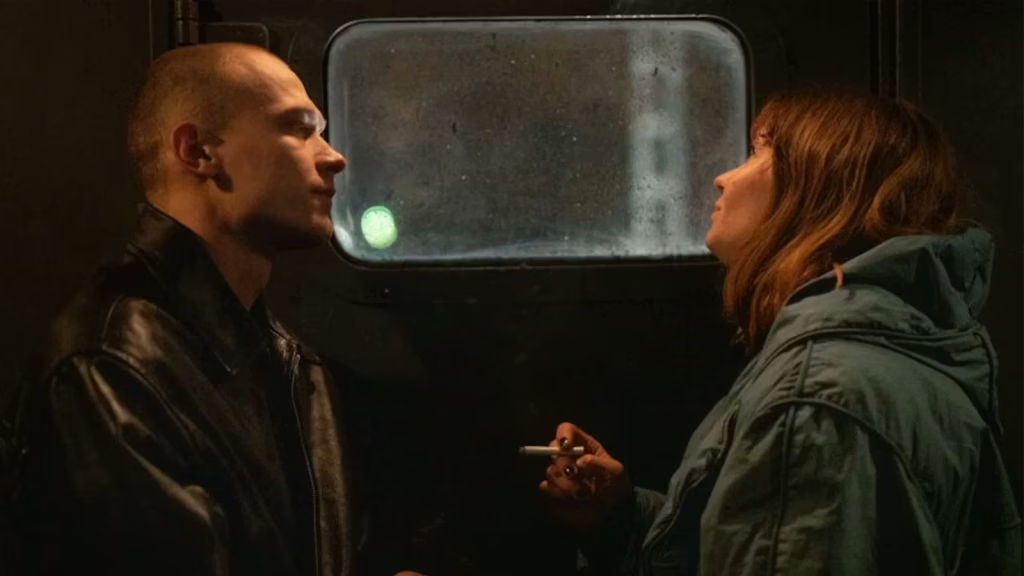
On the surface, Beef is about a road rage incident spiraling out of control. Beneath that chaos, however, is a deeply uncomfortable exploration of marriage, resentment, and emotional repression.

Image Source: Bing Image. License: All Creative Commons

Amy and George’s relationship is strained, messy, and brutally honest. The show allows its characters to be selfish, cruel, and painfully human, showing how unspoken pain can rot relationships from the inside out. Beef doesn’t offer redemption through perfection; it suggests healing comes from accountability, self-awareness, and the willingness to confront uncomfortable truths.

Image Source: Bing Image. License: All Creative Commons

10. The Bear

While The Bear is set in the pressure cooker of a restaurant kitchen, its emotional core lies in relationships between coworkers, siblings, and oneself. Carmen’s attempt to run his late brother’s restaurant forces him to confront grief, control issues, and inherited trauma.

Image Source: Bing Image. License: All Creative Commons

The series excels at portraying how dysfunction is passed down and how difficult it is to unlearn harmful patterns. Trust is fragile, communication is messy, and progress is rarely linear. At its heart, The Bear is about rebuilding, not just a business, but connections fractured by loss and pride.

Image Source: Bing Image. License: All Creative Commons

9. Shrinking

Shrinking centers on grief and the reckless choices that often follow it. Jimmy, a therapist mourning his wife, blurs professional boundaries while trying, and often failing, to reconnect with his daughter and friends.

Image Source: Bing Image. License: All Creative Commons

The show embraces emotional messiness. Relationships fracture, heal, and fracture again, reflecting how grief doesn’t move in straight lines. Even the therapists are flawed, lost, and in need of support themselves. By blending humor with vulnerability, Shrinking presents healing as imperfect but possible.

Image Source: Bing Image. License: All Creative Commons

8. Somebody Somewhere

Somebody Somewhere quietly celebrates friendship as a form of love just as powerful as romance. Sam finds emotional refuge in her bond with Joel, a friendship built on acceptance rather than expectation.

Image Source: Bing Image. License: All Creative Commons

Their connection thrives on honesty, humor, and shared loneliness. The series challenges the idea that romantic relationships are the ultimate emotional goal, showing instead how platonic love can be deeply sustaining. It’s a gentle reminder that sometimes the most meaningful relationships are the ones that simply allow us to be ourselves.

Image Source: Bing Image. License: All Creative Commons

7. Marriage Story

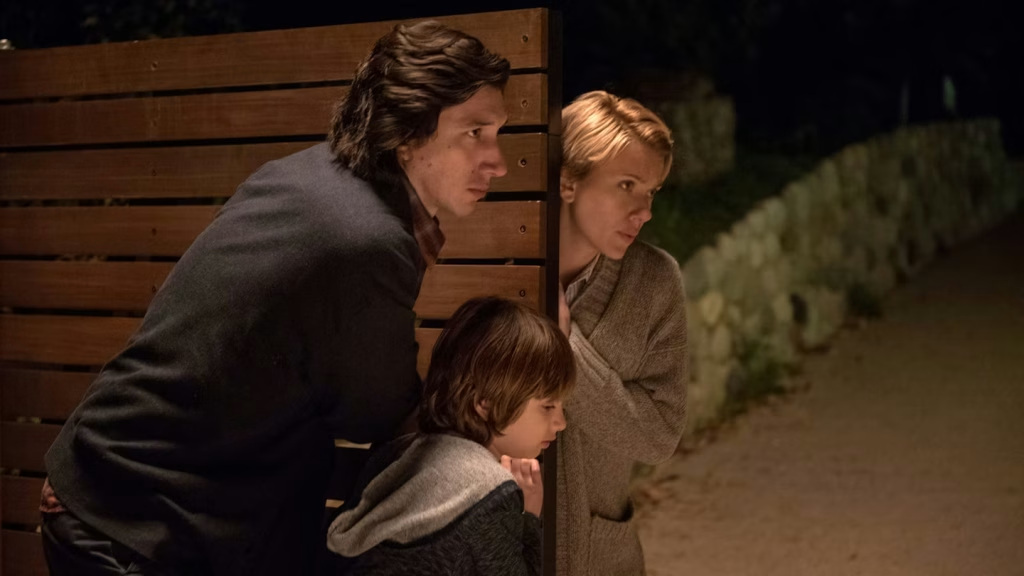
Marriage Story pulls no punches in its portrayal of divorce. Charlie and Nicole’s separation is painful, not because of cruelty, but because of unresolved hurt and miscommunication. The film captures the exhausting logistics of co-parenting alongside the emotional devastation of letting go.

Image Source: Bing Image. License: All Creative Commons

Both characters are deeply flawed, yet sympathetic, making the breakdown of their marriage feel tragically believable. Rather than assigning blame, Marriage Story explores how love can evolve, even when it no longer looks the way it once did.

Image Source: Bing Image. License: All Creative Commons

6. Blue Valentine

Blue Valentine traces a relationship from its hopeful beginnings to its heartbreaking end. By intercutting moments of early romance with scenes of emotional erosion, the film reveals how love can fade without a single defining moment.

Image Source: Bing Image. License: All Creative Commons

Michelle Williams and Ryan Gosling bring raw vulnerability to their roles, making every argument and quiet disappointment feel earned. The film refuses to soften its message or offer comfort. It’s an unflinching portrait of what happens when love alone isn’t enough.

Image Source: Bing Image. License: All Creative Commons

5. Like Crazy

Like Crazy examines long-distance love with brutal honesty. Separated by immigration laws, Anna and Jacob struggle to maintain intimacy across continents. The film shows how distance creates temptation, resentment, and emotional drift.

Image Source: Bing Image. License: All Creative Commons

Love persists, but it changes, often in painful ways neither partner anticipates. Its power lies in its uncertainty. Like Crazy understands that sometimes relationships don’t fail dramatically; they simply wear down.

Image Source: Bing Image. License: All Creative Commons

4. (500) Days of Summer

(500) Days of Summer dismantles the romantic fantasy by showing how expectations can sabotage love. Told out of order, the film mirrors how we replay relationships in our minds, highlighting the good while ignoring warning signs.

Image Source: Bing Image. License: All Creative Commons

Tom’s idealized view of Summer ultimately blinds him to who she really is. The film gently but firmly critiques the idea that love should follow a predetermined script. It’s a story about learning, growing, and accepting reality even when it hurts.

Image Source: Bing Image. License: All Creative Commons

3. Eternal Sunshine of the Spotless Mind

Despite its sci-fi premise, Eternal Sunshine of the Spotless Mind is one of the most emotionally grounded love stories ever made. Joel and Clementine attempt to erase each other from their memories, only to rediscover why they mattered in the first place.

Image Source: Bing Image. License: All Creative Commons

The film captures the chaos, tenderness, and regret embedded in relationships. It suggests that pain is inseparable from love, and perhaps worth enduring. Its message lingers: even flawed connections leave lasting imprints.

Image Source: Bing Image. License: All Creative Commons

2. The Before Trilogy

The Before trilogy follows Jesse and Céline across nearly two decades, chronicling how love evolves. Each installment reflects a different stage of infatuation, reconnection, and long-term partnership.

Image Source: Bing Image. License: All Creative Commons

The dialogue feels spontaneous and intimate, grounded in everyday concerns rather than cinematic fantasy. The films understand that love is shaped by choices, compromises, and persistence. Few stories capture romantic realism as completely as this trilogy.

Image Source: Bing Image. License: All Creative Commons

1. Call Me By Your Name

Call Me By Your Name is a tender exploration of first love and emotional awakening. Elio’s relationship with Oliver unfolds slowly, charged with longing, discovery, and inevitable heartbreak.

Image Source: Bing Image. License: All Creative Commons

What elevates the film is its emotional universality. Though rooted in a specific time and place, it captures feelings that nearly everyone recognizes: the intensity of loving deeply for the first time and the pain of letting go. It’s a love story that shapes us forever, even when it doesn’t last.

Image Source: Bing Image. License: All Creative Commons

These films and series resonate because they don’t promise perfection. Instead, they reflect love as it’s actually lived, complicated, fragile, transformative, and deeply human. Whether romantic, familial, or platonic, these stories remind us that connection is rarely easy, but always worth exploring.

15 Overrated Movies That Left Audiences Let Down

0
Image Source: Bing Image. License: All Creative Commons

Hype can be a double-edged sword for films. With star-studded casts, flashy trailers, and nonstop buzz, audiences often expect something extraordinary. Yet when anticipation runs too high, even a genuinely good movie can feel like a letdown if it doesn’t match the excitement that preceded it. The films below were heavily hyped—and, unfortunately, many viewers felt disappointed, believing they didn’t live up to the enormous expectations.

Image Source: Bing Image. License: All Creative Commons

15. Wonder Woman 1984

After the huge success of the first Wonder Woman film, the sequel had a lot to live up to. Trailers and advertisements hinted at a radical 1980s setting, the long-awaited battle with Cheetah, and the type of high-octane action that fans hoped would live up to or even exceed the original.

Image Source: Bing Image. License: All Creative Commons

When the film finally came out, however, many fans were left disappointed. Wonder Woman 1984 suffered from an overly convoluted plot, one-dimensional villains, and a surprisingly dull finale. For many fans, the film lacked the emotional resonance that made the first film so memorable, leaving a sense that it never quite lived up to its potential. The film is a reminder that successful sequels require more than just familiar elements and callbacks—something with real stakes and real storytelling is needed to truly connect.

Image Source: Bing Image. License: All Creative Commons

14. Thor: Love and Thunder

With Taika Waititi back in the director’s chair and a star-studded cast, Thor: Love and Thunder promised a humorous, action-packed adventure full of spectacle and heart. Audiences expected a combination of laughs, epic action, and the emotional beats that made Thor: Ragnarok such a hit.

Image Source: Bing Image. License: All Creative Commons

Unfortunately, the balance between humor and story fell apart. The comedic elements often overshadowed the emotional narrative, and the absence of key characters left notable gaps in engagement. While the film was visually entertaining, it lacked the cohesion and depth fans hoped for. Thor: Love and Thunder demonstrates how tricky it can be to replicate past successes. Comedy and heroics must work in harmony, or even a visually dazzling film can feel hollow.

Image Source: Bing Image. License: All Creative Commons

13. Don’t Look Up

Don’t Look Up arrived with a buzzworthy cast and a satirical premise, promising sharp social commentary and humor aimed squarely at current global crises. Audiences expected biting satire, clever dialogue, and a film that would spark conversation and reflection. However, the film struggled to deliver on its promises.

Image Source: Bing Image. License: All Creative Commons

Much of the humor felt forced, the pacing meandered, and the social commentary often seemed heavy-handed rather than insightful. Many viewers found themselves disengaged, leaving the theater feeling that the film’s ambition outpaced its execution. Despite its intentions, Don’t Look Up is a reminder that even star-studded casts and timely premises cannot guarantee audience engagement. Execution matters as much as concept.

Image Source: Bing Image. License: All Creative Commons

12. The Huntsman: Winter’s War

With a cast that included Charlize Theron, Emily Blunt, Chris Hemsworth, and Jessica Chastain, The Huntsman: Winter’s War seemed poised to deliver a captivating fantasy epic. Marketing emphasized lavish battles, magical creatures, and a rich narrative that promised to expand the universe of its predecessor.

Image Source: Bing Image. License: All Creative Commons

Yet, the movie felt uninspired. The story lacked intrigue, the fantasy elements appeared recycled, and even the talented cast could not elevate the thin material. The magical spectacle failed to leave a lasting impression, and audiences were left wishing for more substance. The film highlights that even a star-studded ensemble and stunning visuals can’t rescue weak storytelling. Strong writing and imaginative world-building are essential, especially in fantasy epics.

Image Source: Bing Image. License: All Creative Commons

11. Leave The World Behind

Leave the World Behind was promoted as a gripping thriller with ties to the acclaimed series Mr. Robot. The marketing suggested suspense, intrigue, and a tense, shared universe connection that would engage both fans of the series and newcomers. In practice, the connection to Mr. Robot felt forced, confusing, and ultimately unnecessary.

Image Source: Bing Image. License: All Creative Commons

The story became convoluted, and the tension was diluted by overcomplicated plot points, leaving audiences frustrated and unsatisfied. This film serves as a lesson in how overcomplicated narratives and forced franchise connections can backfire. Simplicity and clarity often create stronger engagement than convoluted ambition.

Image Source: Bing Image. License: All Creative Commons

10. Frozen 2

Frozen 2 had the monumental task of following Disney’s breakout hit, promising magical adventures, new songs, and character growth. Fans of all ages anticipated a continuation that would recapture the charm and heart of the original. Unfortunately, the sequel stumbled.

Image Source: Bing Image. License: All Creative Commons

Its plot was confusing, the music less memorable, and many felt that the emotional depth and charm of the first film were missing. While visually stunning, the movie didn’t fully satisfy long-time fans. Frozen 2 is a reminder that nostalgia and beloved characters can only go so far. To succeed, sequels must offer both a coherent story and fresh emotional stakes.

Image Source: Bing Image. License: All Creative Commons

9. The Artist

The Artist generated excitement as a black-and-white silent film paying homage to early cinema. Marketing promised a charming, innovative experience for audiences curious about this unusual format.

Image Source: Bing Image. License: All Creative Commons

Some viewers, however, were unprepared for the silent narrative, leading to confusion, disengagement, and even walkouts. While the film was celebrated critically, many mainstream viewers felt alienated by its unconventional style. The Artist highlights that hype can sometimes backfire if the audience isn’t ready for experimental storytelling, even when the film is groundbreaking.

Image Source: Bing Image. License: All Creative Commons

8. Bridesmaids

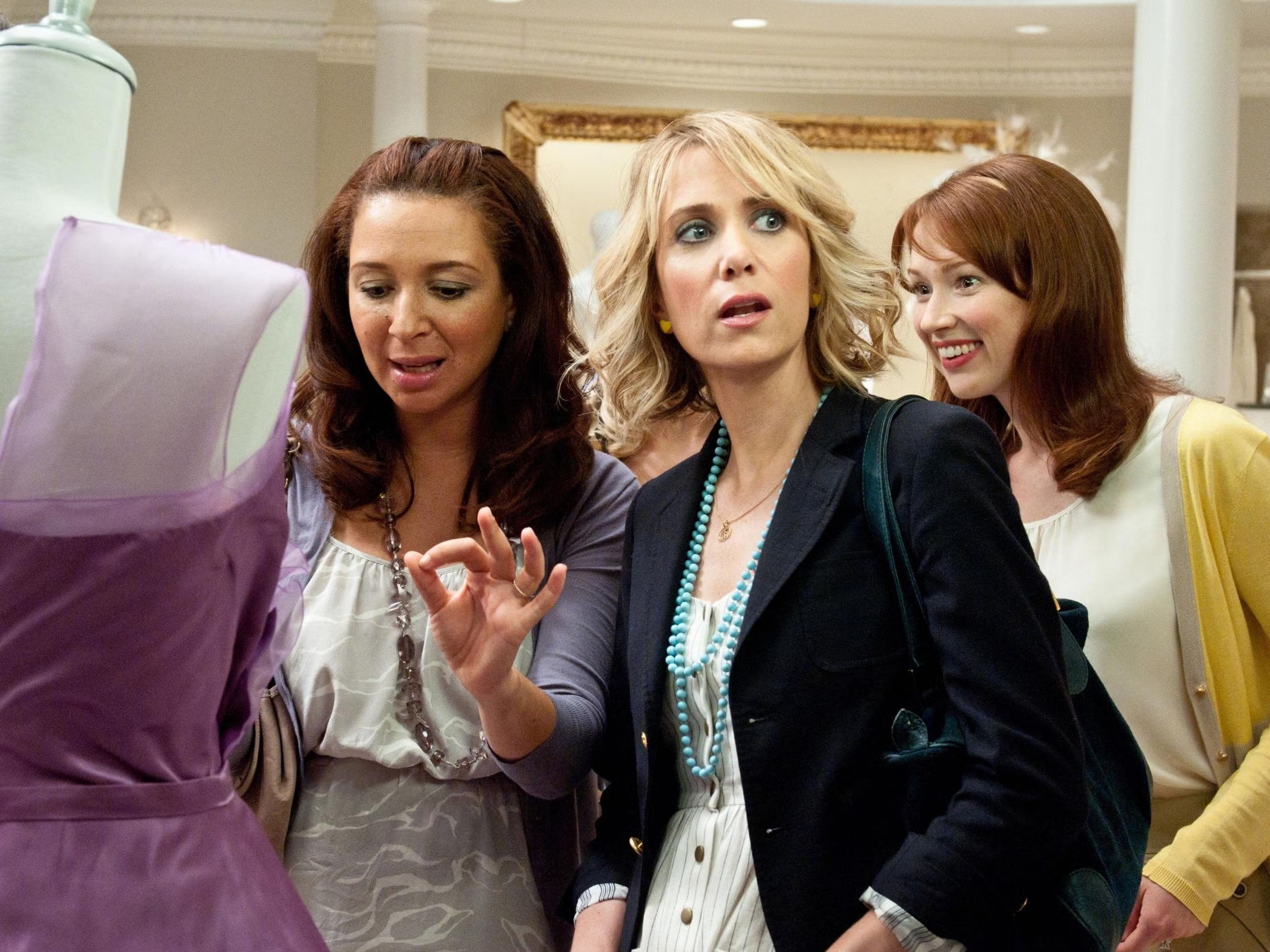
Bridesmaids arrived with immense buzz as a comedy that would break new ground in the genre. Trailers promised outrageous humor, bold performances, and scenes that would live on in pop culture, including the infamous bathroom gag. Yet, humor is subjective, and some viewers found the film underwhelming.

Image Source: Bing Image. License: All Creative Commons

Jokes that were heavily advertised fell flat for certain audiences, demonstrating that even well-marketed comedies can disappoint when expectations are sky-high. Bridesmaids illustrates the double-edged nature of hype: the more you promise laughs, the higher the risk of disappointment if they don’t land.

Image Source: Bing Image. License: All Creative Commons

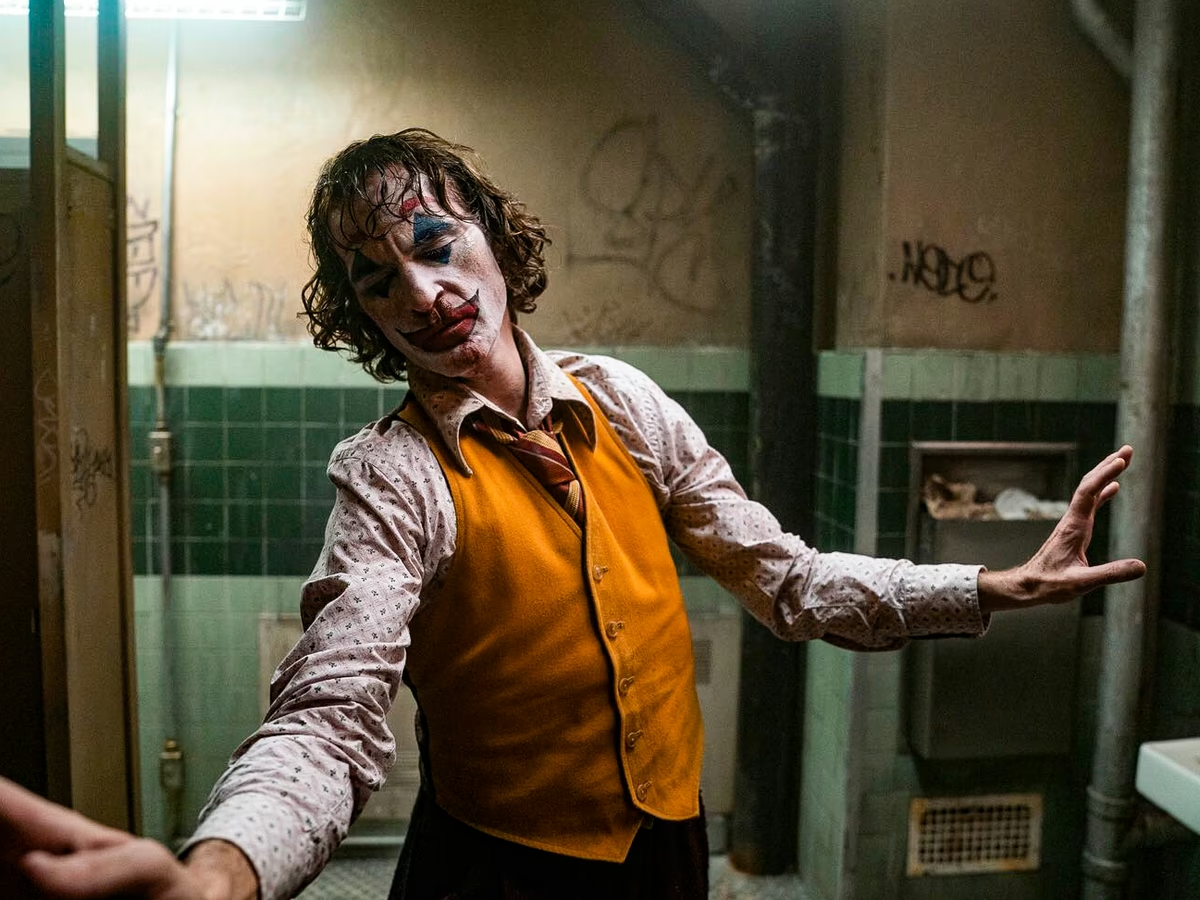
7. Joker

Joker was promoted as a daring, dark reinvention of an iconic character, with Joaquin Phoenix delivering a performance many expected would redefine the modern villain. Marketing leaned heavily into a gritty, mature tone reminiscent of classic psychological thrillers.

Image Source: Bing Image. License: All Creative Commons

While the film received critical acclaim, many casual viewers found it slow, repetitive, or overly derivative of other films. The messaging and moral ambiguity were polarizing, resulting in a split between critics and mainstream audiences. Joker demonstrates that even a celebrated performance and provocative concept can feel overhyped if it doesn’t resonate with a wide audience.

Image Source: Bing Image. License: All Creative Commons

6. Birds of Prey

Birds of Prey was positioned as DC’s bold comeback after the mixed reception of Suicide Squad. Marketing highlighted a fun, female-driven story, a vibrant visual style, and a quirky, playful energy with Margot Robbie at the helm.

Image Source: Bing Image. License: All Creative Commons

However, critics and fans noted that the story was thin, the villain underdeveloped, and character arcs lacked emotional resonance. The flashy style of the marketing could not make up for the story’s weaknesses, leaving some viewers disappointed. The film underscores that visual flair and star power cannot fully replace coherent storytelling and strong character development.

Image Source: Bing Image. License: All Creative Commons

5. Suicide Squad

Suicide Squad’s marketing campaign was intense, featuring highly stylized trailers, a top-tier cast, and a killer soundtrack. Expectations were enormous, with fans anticipating an irreverent, action-packed, character-driven adventure. The final product, however, was disjointed.

Image Source: Bing Image. License: All Creative Commons

Studio interference led to uneven pacing, a fractured narrative, and a film that often felt more like a music video than a coherent story. Audience disappointment was swift and widespread. Suicide Squad is a prime example of how even massive hype cannot guarantee satisfaction if the creative vision is compromised.

Image Source: Bing Image. License: All Creative Commons

4. Barbie

Barbie’s marketing promised a clever, self-aware take on the iconic toy, blending humor, nostalgia, and social commentary. Buzz was everywhere, from billboards to viral campaigns, making the film one of the most anticipated releases of its season. Despite its hype, the movie left some audiences feeling underwhelmed.

Image Source: Bing Image. License: All Creative Commons

Older viewers found the story lacking in substance, and some critics argued that the commentary didn’t land universally. While it resonated with younger audiences, the film didn’t fully satisfy broader expectations. Barbie demonstrates that even brilliant marketing cannot replace storytelling depth and emotional resonance.

Image Source: Bing Image. License: All Creative Commons

3. Mean Girls (2024)

The 2024 musical adaptation of Mean Girls aimed to modernize a beloved classic for a new generation. With anticipation fueled by the Broadway success and the original film’s cult following, expectations were sky-high. Unfortunately, the remake faltered.

Image Source: Bing Image. License: All Creative Commons

Musical numbers felt weak, the story updates seemed forced, and cultural references often missed the mark. Audiences felt that the charm and wit of the original had been diluted, leaving a sense of disappointment. Mean Girls illustrates the risks of remaking classics: nostalgia can draw interest, but without meaningful innovation or execution, the legacy of the original can suffer.

Image Source: Bing Image. License: All Creative Commons

2. Saltburn

Saltburn arrived with hype for its provocative, shocking premise and the star power of Rosamund Pike and Barry Keoghan. Marketing suggested a thrilling, unforgettable cinematic experience.

Image Source: Bing Image. License: All Creative Commons

The film, however, relied too heavily on shock value, with little substance to back it up. The narrative meandered, and the moments designed to surprise often fell flat, leaving viewers confused or unimpressed. Saltburn shows that sensationalism alone can’t sustain a film; audiences ultimately crave story, depth, and engagement.

Image Source: Bing Image. License: All Creative Commons

1. Madame Web

Madame Web was hyped as a mysterious, thrilling addition to the Spider-Man universe, with promises of action, intrigue, and exciting ties to the larger franchise. Instead, the film struggled to deliver a compelling narrative or memorable characters.

Image Source: Bing Image. License: All Creative Commons

Many viewers found it boring or uninspired, leaving theaters frustrated and disappointed. Madame Web is a stark reminder that even high-concept properties with franchise connections cannot succeed without substance, strong storytelling, and engaging characters.

Image Source: Bing Image. License: All Creative Commons

Hype can spark anticipation and fill theaters on opening weekend, but it is no substitute for quality storytelling. These 15 films highlight how easily expectations can clash with reality, leaving audiences frustrated or disappointed. Star power, viral marketing, and flashy trailers can only carry a film so far. At the end of the day, viewers crave substance, emotion, and engaging narratives—the elements that truly make a movie worth remembering.

15 Transformative Stories of Triumph and Resilience

0
Image Source: Bing Image. License: All Creative Commons

Addiction does not discriminate—fame, talent, or success offers no immunity. For many celebrities and musicians, living in the public eye can amplify internal struggles. What resonates in these stories isn’t the downfall itself, but the courage it takes to get back on one’s feet. The accounts below reveal both the honesty of relapse and the triumphs of recovery, showcasing resilience and perseverance. Some highlight years of sustained sobriety, while others remind us how fragile progress can be. Together, they illustrate that healing is rarely linear—but as a deeply human experience, it is always meaningful.

Image Source: Bing Image. License: All Creative Commons

15. Steven Tyler

Steven Tyler’s life as Aerosmith’s frontman was fueled by creativity, chaos, and extreme excess. He has openly discussed spending millions on drugs over the years, cycling through heroin, cocaine, alcohol, and prescription opioids. His addiction nearly cost him his health, his family, and the band that made him a rock icon.

Image Source: Bing Image. License: All Creative Commons

Despite relapses and setbacks, Tyler continues to fight for sobriety with striking honesty. He doesn’t romanticize addiction; instead, he frames recovery as a daily commitment. By speaking openly about his struggles, Tyler has permitted fans to confront their own battles without shame.

Image Source: Bing Image. License: All Creative Commons

14. Nicole Richie

Nicole Richie’s early stardom was accompanied by harsh media attention, and her heroin and alcohol addiction struggles were documented in the tabloids and in courtrooms. Arrests and public outcry forced her to realize the path her life was taking and the toll of her uncontrolled addiction.

Image Source: Bing Image. License: All Creative Commons

However, her recovery became a turning point, particularly after she had children. Richie has talked about using her own experiences as a lesson for her kids, opting to be open and honest with them rather than keeping quiet. Her redemption illustrates that accountability and positive change are possible even after the most public mistakes.

Image Source: Bing Image. License: All Creative Commons

13. Howard Hughes

Howard Hughes’ addiction was a result of physical pain and not indulgence. Following a disastrous plane crash in 1946, he was hooked on prescription pain medication to cope with the chronic pain he suffered from, eventually becoming addicted to them for the next several decades.

Image Source: Bing Image. License: All Creative Commons

Although his addiction was largely out of public sight, it still had a significant impact on his life in his later years. His story is a warning of how quickly a need for pain medication can lead to addiction, even for a man as intelligent as Hughes.

Image Source: Bing Image. License: All Creative Commons

12. Macklemore

Macklemore had issues with alcohol and OxyContin addiction before his international success, calling opioids “deceptively dangerous” because of their availability. His addiction issues posed a problem not only for his career but for his most intimate relationships as well.

Image Source: Bing Image. License: All Creative Commons

Rehab was a turning point for Macklemore, providing him with the necessary structure, self-discovery, and support for long-term sobriety. Since rehab, Macklemore has been using his fame to spread awareness about addiction, turning his own struggle into a mission for the greater good.

Image Source: Bing Image. License: All Creative Commons

11. Gerard Butler

Gerard Butler’s addiction to painkillers began after a physical injury he sustained during the shooting of one of his movies. What began as a prescription gradually led to a dependence he couldn’t shake, eventually sending him to rehab in 2012.

Image Source: Bing Image. License: All Creative Commons

The ordeal led Butler to face issues he had been ignoring for a long time. By opening up about the emotional toll of rehab, he has encouraged others to embrace their vulnerabilities, even when they’re at the top of their game.

Image Source: Bing Image. License: All Creative Commons

10. Eminem

Eminem’s prescription drug addiction almost took his life. His overuse of Vicodin and Valium left him stuck in a vicious cycle of addiction that numbed both his imagination and his sense of joy.

Image Source: Bing Image. License: All Creative Commons

But sobriety brought clarity, and not without its challenges. Eminem has talked about learning to feel happiness without using, giving hope to those who think recovery is losing yourself, instead of finding yourself again.

Image Source: Bing Image. License: All Creative Commons

9. Matthew Perry

Matthew Perry’s success on Friends was matched by his increasing addiction to alcohol and prescription drugs. The demands of fame fueled his addiction, forcing him into rehab and health problems.

Image Source: Bing Image. License: All Creative Commons

Though Perry dedicated himself to helping others through addiction and recovery programs, sadly, he died in October 2023. His story highlights the need for ongoing support and the fact that addiction is a lifelong struggle.

Image Source: Bing Image. License: All Creative Commons

8. Bradley Cooper

Bradley Cooper sought recovery quite early in his life, choosing to stay away from alcohol and drugs before they took over his life completely. Recovery helped him regain his relationships and tap into the emotional side of life that he had never experienced before.

Image Source: Bing Image. License: All Creative Commons

Recovery has helped Bradley Cooper become a better son, partner, and artist, as he credits it. His example proves that recovery is not just about quitting but also about being receptive to the possibilities of connection and presence.

Image Source: Bing Image. License: All Creative Commons

7. August Alsina

August Alsina was exposed to addiction right from his childhood days, witnessing the damage it could cause. Ironically, his exposure to addiction came through prescription painkillers after a medical procedure, which he didn’t realize the danger of at first.

Image Source: Bing Image. License: All Creative Commons

Alsina had a close call with death and chose recovery, speaking out about the dangers of prescription drugs. His example has helped dispel myths about addiction and the ease with which addiction can creep in.

Image Source: Bing Image. License: All Creative Commons

6. Robert Downey Jr.

Robert Downey Jr. began his addiction at a shockingly young age, introduced to drugs by his father as a child. Years of arrests, rehab stints, and professional setbacks followed, leaving his future in Hollywood uncertain.

Image Source: Bing Image. License: All Creative Commons

His sobriety in the early 2000s is one of the greatest comeback stories in the history of entertainment. Downey’s tale is a testament that redemption is possible with the right accountability, support, and dedication.

Image Source: Bing Image. License: All Creative Commons

5. Simon Kirke

Simon Kirke struggled with addiction for decades, influenced by a family history of alcoholism and the touring musician lifestyle that bred excess. Near-death experiences and rehab stints littered a long, arduous journey.

Image Source: Bing Image. License: All Creative Commons

Today, sober for over a decade, Kirke uses his experiences to fuel advocacy and artistic pursuits related to addiction recovery. His story proves that it’s never too late to change and that recovery can actually enhance, not hinder, artistic expression.

Image Source: Bing Image. License: All Creative Commons

4. Sly Stone

Sly Stone’s revolutionary success in music was later marred by his heavy use of drugs, which affected his performances, recording sessions, and interpersonal relationships. Addiction slowly destroyed both his career and his stability.

Image Source: Bing Image. License: All Creative Commons

Instead of a clean redemption story, Stone’s is one of survival. His life is a wake-up call that talent is no shield against the effects of addiction.

Image Source: Bing Image. License: All Creative Commons

3. Bobby Torello

Bobby Torello had a respectable career as a drummer, performing with prominent artists while dealing with his own personal struggles, such as addiction. Music was both his escape and his anchor throughout his life.

Image Source: Bing Image. License: All Creative Commons

His ability to stay in the industry is a testament to his strength and commitment. Torello’s experience shows that recovery can sustain creativity instead of stifling it.

Image Source: Bing Image. License: All Creative Commons

2. Colin “Scummy” Morrison

Colin Morrison lived hard in the motocross scene, where partying and drug use were a big part of the culture. His journey to sobriety was rocky, with relapse and the hard truth that honesty was non-negotiable.

Image Source: Bing Image. License: All Creative Commons

Morrison’s willingness to share his struggles has brought him real respect in the recovery community. His experience shows that authenticity, not perfection, is often the secret to successful sobriety.

Image Source: Bing Image. License: All Creative Commons

1. Everyday Heroes in Recovery

Not all recovery tales are about stars. Many people rebuild their lives in the background through meetings, therapy, nature, faith, and friends, with no recognition or accolades. Everyday heroes struggle with the same fears, cravings, and struggles, demonstrating that recovery isn’t about fame or fortune. It’s about grit, determination, and the power of hope.

Image Source: Bing Image. License: All Creative Commons

Addiction stories aren’t about weakness; they’re about survival. Whether the journey leads to long-term sobriety or serves as a cautionary tale, each experience adds to a larger conversation about compassion, accountability, and healing. Recovery doesn’t erase the past, but it can reshape the future. And in every story, famous or not, there’s a reminder that help is possible, and change is worth fighting for.

Wednesday: 13 Characters With the Greatest Power

0
Image Source: Bing Image. License: All Creative Commons

Wednesday has captivated audiences with its dark humor, gothic aesthetic, and a sprawling cast of extraordinary characters. From psychic visions to supernatural strength, the show is brimming with outcasts, leaders, and wildcards whose abilities define the story. While Wednesday Addams herself is at the center, the series thrives on the interplay of power, loyalty, and secrets. Here’s a look at the 13 most formidable characters in the Wednesday universe, ranked from formidable to outright unstoppable.

Image Source: Bing Image. License: All Creative Commons

13. Grandmama Hester Frump

Hester Frump is the matriarch whose shadow stretches across generations of the Addams family. Her mansion is more than a home—it’s a gothic fortress of secrets, filled with hidden chambers and dark surprises. Hester’s choices often ripple through the family, influencing both children and grandchildren in ways that aren’t immediately visible.

Image Source: Bing Image. License: All Creative Commons

In Season 2, Hester’s role intensifies, as she is revealed to have kept Aunt Ophelia hidden in her basement. This act hints at her cunning and her deep understanding of supernatural forces. Her connection to Morticia is tense and layered, and her interactions with Wednesday reveal both affection and suspicion, marking her as a character of immense intrigue and power.

Image Source: Bing Image. License: All Creative Commons

12. Aunt Ophelia Frump

Aunt Ophelia emerges from mystery as a formidable force within the Addams family. Until recently, her absence was a haunting secret, leaving a void felt across the household. Her return in Season 2 uncovers layers of plotting and potential menace, suggesting she is far more than a passive presence.

Image Source: Bing Image. License: All Creative Commons

Ophelia’s psychic connection to Wednesday adds a dangerous edge to her character. When Wednesday discovers notes and visions pointing to her aunt’s intentions, the stakes skyrocket. The cryptic warning, “Wednesday must die,” showcases the potential threat she poses and sets the stage for intense family conflict, making Ophelia a key figure in the series’ supernatural power dynamics.

Image Source: Bing Image. License: All Creative Commons

11. Rowan Laslow

Rowan’s time at Nevermore may have been brief, but his psychic legacy endures. The son of a powerful seer, Rowan’s telekinetic abilities allowed him to move objects and people with ease, and his talents earned him membership in the secretive Nightshades society.

Image Source: Bing Image. License: All Creative Commons

Rowan’s attempts to fulfill his mother’s prophecy created ripples that influenced the series’ events. His raw power suggested untapped potential, and his early demise at the hands of Hyde added tragedy to his story. Though gone, Rowan’s presence continues to remind viewers that immense power often comes with great risk and unforeseen consequences.

Image Source: Bing Image. License: All Creative Commons

10. Xavier Thorpe

Xavier is the artistic soul whose creations come to life, blurring the line between imagination and reality. His sketches can animate into living beings, a power as beautiful as it is dangerous. From spiders to the Hyde, Xavier’s art often becomes an unpredictable weapon in battle.

Image Source: Bing Image. License: All Creative Commons

He also experiences cryptic precognitive dreams, which guide him but rarely give clear direction. His internal struggle—balancing his creative talents with the responsibility they bring—makes him a compelling figure. Xavier’s loyalty to friends and willingness to put himself in danger highlight both his courage and the weight of his supernatural abilities.

Image Source: Bing Image. License: All Creative Commons

9. Thing

The thing is far more than a helpful disembodied hand; he is a loyal companion and a cunning warrior. In Season 2, it is revealed that he was once connected to Isaac Night, adding depth to his story and elevating him from comic relief to true hero.

Image Source: Bing Image. License: All Creative Commons

Thing’s bravery and resourcefulness have saved lives repeatedly. From infiltrating enemy territory to hand-to-hand combat, he proves that size doesn’t define strength. His final confrontation with Isaac, where he seizes control of his destiny, solidifies Thing’s evolution into a protector of the Addams family in both spirit and action.

Image Source: Bing Image. License: All Creative Commons

8. Isaac Night (Slurp)

Isaac Night embodies brilliance and madness. A telekinetic genius, his experiments with Hyde powers and his pursuit of forbidden knowledge make him a formidable adversary. His ingenuity is matched by his willingness to cross moral boundaries, creating both awe and fear in his enemies.

Image Source: Bing Image. License: All Creative Commons

The tragic connection to Thing’s own severed hand adds layers of irony and pathos. Isaac’s ability to manipulate both machines and people sets him apart as a threat few can match. Despite his downfall, the chaos he leaves behind ensures his influence on Nevermore and the Addams family will be remembered for seasons to come.

Image Source: Bing Image. License: All Creative Commons

7. Tyler Galpin (Hyde)

Tyler Galpin is a study in power and inner turmoil. As a Hyde, he possesses extraordinary strength, and his capacity for destruction mirrors the intensity of his emotional struggles. His journey is shaped by trauma, family secrets, and the heavy burden of his abilities.

Image Source: Bing Image. License: All Creative Commons

Season 2 reveals new dimensions of his power and challenges. Guided by Isadora Capri and facing revelations about his mother, Tyler must confront both his inner demons and external threats. His story is a compelling balance of strength, fear, and self-discovery, demonstrating that power alone cannot define a person.

Image Source: Bing Image. License: All Creative Commons

6. Enid Sinclair

Enid transforms from a cheerful, uncertain werewolf into a commanding alpha, her latent abilities blossoming at critical moments. The blood moon awakens a power within her that positions her as both a leader and a figure to be reckoned with.

Image Source: Bing Image. License: All Creative Commons

This transformation comes with cost: her wolf form risks alienating her from the very community she wants to belong to. Her brave actions, particularly to protect Wednesday, show the tension between power and compassion. Enid’s story resonates as a tale of loyalty, courage, and self-discovery in a world that fears the extraordinary.

Image Source: Bing Image. License: All Creative Commons

5. Wednesday Addams

Wednesday is the undeniable center of the series, a detective and reluctant psychic with growing mastery over her visions. Her psychic abilities, while taxing, allow her to uncover truths that others cannot, and her evolving powers reflect her personal growth.

Image Source: Bing Image. License: All Creative Commons

Her intelligence, emotional complexity, and resourcefulness make her a leader among outcasts. Wednesday doesn’t just react to the world—she shapes it, confronting supernatural threats and family secrets with courage and clarity. Season 2 shows her continuing ascent, cementing her status as one of the most powerful characters in the series.

Image Source: Bing Image. License: All Creative Commons

4. Morticia Addams

Morticia balances elegance and formidable supernatural skill. Her positive psychic visions, combined with intuitive insight, mark her as a figure of authority and wisdom within the family. She often guides Wednesday, helping her navigate the perilous mysteries surrounding Nevermore.

Image Source: Bing Image. License: All Creative Commons

Her influence stretches beyond mentorship. Morticia’s willingness to confront her sister Ophelia and address difficult truths demonstrates leadership and resilience. She is a stabilizing presence, blending maternal care with decisive action, proving that power is as much about guidance as it is about ability.

Image Source: Bing Image. License: All Creative Commons

3. Uncle Fester

Fester is the unpredictable powerhouse of the Addams family. With electrokinesis, martial prowess, and escapology skills, he blends chaos and effectiveness, making him a wildcard in any confrontation.

Image Source: Bing Image. License: All Creative Commons

His abilities have been used to protect and save, including reviving Thing, showing that even comic relief can carry monumental power. Fester’s unpredictability makes him both a source of humor and a critical player, capable of turning the tide in life-or-death situations.

Image Source: Bing Image. License: All Creative Commons

2. Bianca Barclay

Bianca, the siren of Nevermore, combines supernatural allure with lethal combat skill. Her voice can manipulate even the strongest minds, making her one of the academy’s most feared students.

Image Source: Bing Image. License: All Creative Commons

Beyond her siren abilities, Bianca is a skilled swordswoman and strategist. Her journey from rival to ally is fraught with moral dilemmas, loyalty tests, and personal growth. Her leadership and courage ensure her place as a central figure whose power extends far beyond her supernatural talents.

Image Source: Bing Image. License: All Creative Commons

1. Principal Larissa Weems

At the apex of power on Wednesday stands Principal Larissa Weems. A master shapeshifter and strategist, she can take on any form and navigate the treacherous politics of Nevermore with ease.

Image Source: Bing Image. License: All Creative Commons

Weems’s abilities are matched by her leadership and dedication to her students. Her willingness to put herself in harm’s way, her mentorship of Wednesday, and her role as the guardian of the school’s secrets make her a character of unmatched influence. She is not just powerful, she is indispensable, shaping the course of the series through intellect, skill, and heart.

Image Source: Bing Image. License: All Creative Commons

The world of Wednesday is full of extraordinary abilities, hidden agendas, and the constant interplay of loyalty, power, and family. From the cunning matriarchs to the young outcasts discovering their potential, these 13 characters represent the pinnacle of strength in a series that thrives on the unusual and the uncanny. Whether psychic, shapeshifter, or werewolf, each leaves an indelible mark on Nevermore and the Addams family legacy.

15 Stars Who Expanded Their Families Through Adoption

0
Image Source: Bing Image. License: All Creative Commons

Adoption can shape a life in profound ways, even when its impact isn’t immediately apparent. For many celebrities, being adopted or raised by someone other than their biological parents has been a pivotal part of their personal growth. These stories go beyond fame—they highlight resilience, new opportunities, and the transformative power of a safe, loving environment. The following list of stars—from actors and musicians to athletes and public figures—demonstrates how adoption can unlock potential, nurture talent, and alter the course of a life.

Image Source: Bing Image. License: All Creative Commons

15. Daunte Culpepper

Daunte Culpepper was adopted shortly after birth by Emma Lewis Culpepper, a correctional facility employee with experience raising foster children. His biological mother, incarcerated at a young age, made the difficult decision to place him for adoption in hopes of giving him a more secure future.

Image Source: Bing Image. License: All Creative Commons

Growing up, Culpepper benefited from the structure, care, and encouragement his adoptive mother provided. That steady foundation helped him develop the discipline and perseverance that later defined his career as an NFL quarterback, reminding us how early support can shape lifelong success.

Image Source: Bing Image. License: All Creative Commons

14. Michaela DePrince

Michaela DePrince lost her parents during the civil war in Sierra Leone and spent her early childhood in an orphanage. There, she endured discrimination because of vitiligo, a skin condition that made her visibly different and often targeted by others.

Image Source: Bing Image. License: All Creative Commons

Her life changed at age four when Elaine and Charles DePrince adopted her and brought her to the United States. With their unwavering support, Michaela pursued ballet, eventually rising to international acclaim and proving how adoption can transform trauma into extraordinary achievement.

Image Source: Bing Image. License: All Creative Commons

13. Tommy Davidson

Tommy Davidson’s life began with severe hardship. Abandoned as a toddler, he was found and brought to a hospital by Barbara Davidson, who later adopted him with her husband after learning about his neglect and medical issues.

Image Source: Bing Image. License: All Creative Commons

Raised in a loving and stable home, Davidson gradually overcame his early struggles. His difficult beginnings shaped his sharp sense of humor and emotional depth, both of which became central to his success as a comedian and actor.

Image Source: Bing Image. License: All Creative Commons

12. Darryl “DMC” McDaniels

Darryl McDaniels of Run-DMC was adopted as an infant by Byford and Banna McDaniels. For most of his life, he was unaware of his adoption and only learned the truth while working on his autobiography in his mid-30s.

Image Source: Bing Image. License: All Creative Commons

That revelation led him on a deeply personal journey to understand his origins and reconnect with his birth mother. The experience influenced both his music and his advocacy, encouraging open conversations about identity, mental health, and the emotional layers of adoption.
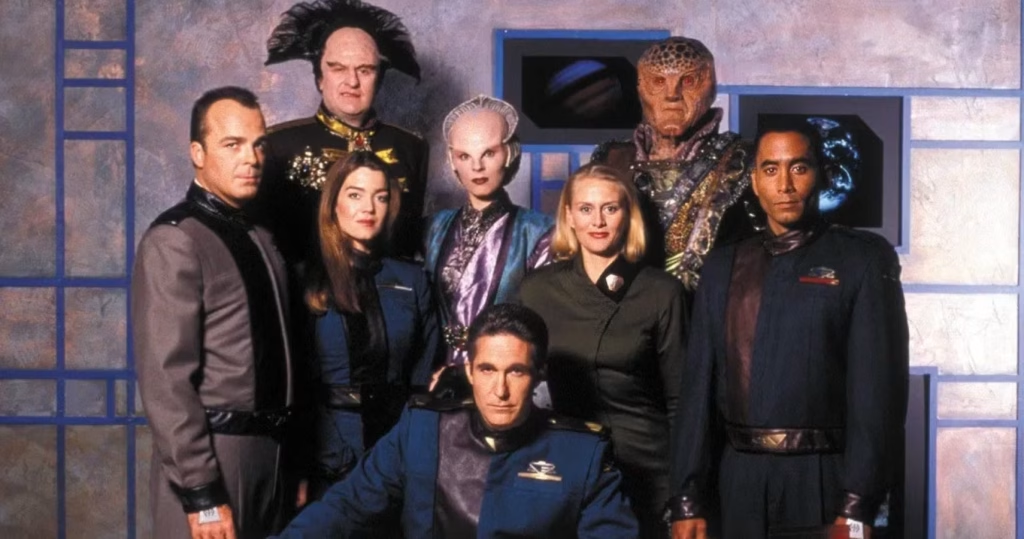
Image Source: Bing Image. License: All Creative Commons

11. Gary Coleman

Gary Coleman was adopted just days after birth by Edmonia Sue and W.G. Coleman. Born with serious health conditions, he required ongoing medical care, which his adoptive parents committed to providing from the very beginning.

Image Source: Bing Image. License: All Creative Commons

Despite his physical challenges, Coleman became a household name through his role on Diff’rent Strokes. His story highlights how adoption can offer children not only care but the chance to thrive despite obstacles beyond their control.

Image Source: Bing Image. License: All Creative Commons

10. Colin Kaepernick

Colin Kaepernick was adopted at five weeks old by Rick and Teresa Kaepernick after his biological mother, then a teenager, decided she could not raise him. He grew up in a multiracial household with strong family values and encouragement.

Image Source: Bing Image. License: All Creative Commons

That environment helped shape Kaepernick’s confidence, sense of purpose, and willingness to stand up for his beliefs. His adoption story is closely tied to the identity and conviction that later defined both his football career and his activism.

Image Source: Bing Image. License: All Creative Commons

9. Keyshia Cole

Keyshia Cole entered foster care as a young child due to her biological mother’s struggles with addiction. She was eventually adopted by close family friends, Leon and Yvonne Cole, who gave her a more stable and supportive home.

Image Source: Bing Image. License: All Creative Commons

Those early experiences deeply influenced her music and emotional expression. Through adoption, Cole found the support she needed to channel pain into creativity, building a career that resonates with honesty and resilience.
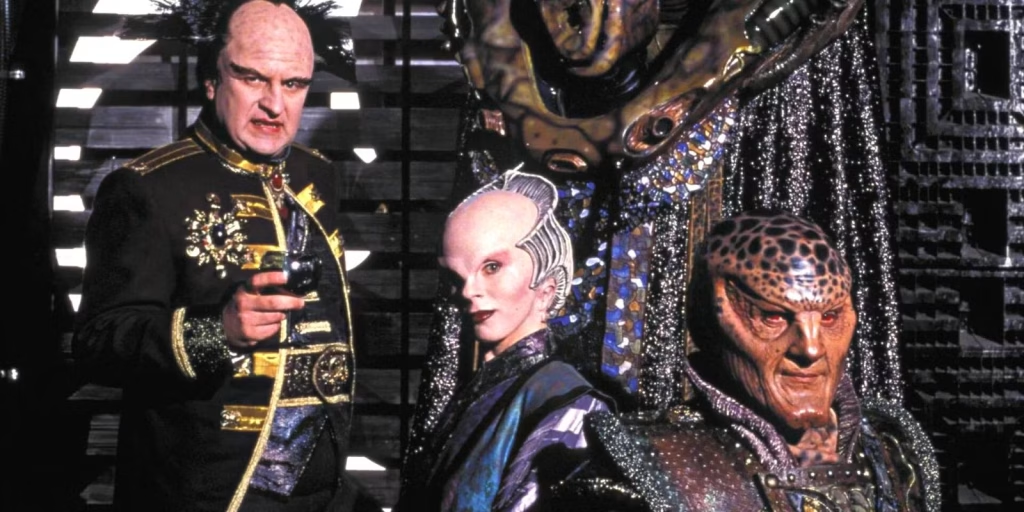
Image Source: Bing Image. License: All Creative Commons

8. Kristin Chenoweth

Kristin Chenoweth was adopted as an infant and has always spoken positively about the experience. Raised with openness and love, she grew up knowing her adoption story and feeling grateful for both her birth mother’s decision and her parents’ devotion.

Image Source: Bing Image. License: All Creative Commons

She has since become a vocal advocate for adoption, often emphasizing that adopted children are deeply wanted. Her perspective has helped reframe adoption as an act of love rather than loss.

Image Source: Bing Image. License: All Creative Commons

7. Lana Condor

Lana Condor was adopted from Vietnam at just four months old and raised in the United States alongside an adopted brother. Her parents made a conscious effort to educate her about her cultural roots while giving her a strong sense of belonging.

Image Source: Bing Image. License: All Creative Commons

As her career grew, Condor began sharing her adoption story more openly. By doing so, she has helped normalize conversations about identity, heritage, and the many forms family can take.

Image Source: Bing Image. License: All Creative Commons

6. Nicole Richie

Nicole Richie moved in with Lionel Richie and Brenda Harvey at age four when her biological parents faced financial hardship. Though initially an informal arrangement, the Richies officially adopted her several years later.

Image Source: Bing Image. License: All Creative Commons

Richie has consistently described her adoption as a positive and grounding experience. Growing up in a supportive household allowed her to explore creativity and independence while maintaining a strong sense of family connection.

Image Source: Bing Image. License: All Creative Commons

5. Simone Biles

Simone Biles spent part of her early childhood in foster care after her biological parents were unable to care for her. At age six, she and her sister were adopted by their maternal grandparents, Ron and Nellie Biles.

Image Source: Bing Image. License: All Creative Commons

Under their care, Simone discovered gymnastics and flourished. She frequently credits her grandparents—whom she calls her parents—for providing the love and stability that helped her become one of the most decorated athletes in history.

Image Source: Bing Image. License: All Creative Commons

4. Jamie Foxx

Jamie Foxx was adopted as a baby by his grandparents and raised in Terrell, Texas. He learned about his adoption at a young age and has said he never felt abandoned, only supported.

Image Source: Bing Image. License: All Creative Commons

His grandparents played a central role in nurturing his talents and discipline. Their guidance laid the groundwork for his success across music, comedy, and film.

Image Source: Bing Image. License: All Creative Commons

3. Faith Hill

Faith Hill was adopted shortly after birth by Ted and Edna Perry and grew up knowing her story from the start. Her parents’ honesty helped her feel secure and confident about her identity.

Image Source: Bing Image. License: All Creative Commons

As an adult, Hill sought out her biological family and eventually connected with them. The experience brought clarity and closure, further strengthening her appreciation for adoption and family bonds.

Image Source: Bing Image. License: All Creative Commons

2. Steve Jobs

Steve Jobs was adopted as an infant by Paul and Clara Jobs after his biological parents faced social pressure that prevented them from raising him together. His adoptive parents made sure he always knew he was chosen.

Image Source: Bing Image. License: All Creative Commons

Later in life, Jobs connected with his biological sister, author Mona Simpson, but consistently emphasized that his adoptive parents were his true family. His adoption story became part of the narrative behind his independent thinking and creative drive.

Image Source: Bing Image. License: All Creative Commons

1. Bill Clinton

Bill Clinton lost his biological father before birth and was later adopted by his stepfather, Roger Clinton Sr., during childhood. Though informal at first, the adoption became a defining part of his family identity.

Image Source: Bing Image. License: All Creative Commons

As President, Clinton championed adoption reform, signing legislation aimed at improving outcomes for children in foster care. His personal connection to adoption helped shape policies that continue to affect families today.

Image Source: Bing Image. License: All Creative Commons

These stories reveal that adoption is not a footnote; it’s often a foundation. While each journey is different, they all underscore the importance of stability, compassion, and opportunity. Behind the fame and accomplishments are families who stepped in, chose love, and helped shape lives that went on to inspire millions.