Home Blog Page 787

The Most Bizarre Designs in Aviation History

0
Image Source: Bing Image. License: All Creative Commons

The aviation sector was massively influenced by World War II, and the technological advancement was beyond anyone’s imagination. The different countries were competing with each other to be the leaders in the sky, while at the same time, the engineers were pushing the limits of their designs to get an advantage over the rival countries. Consequently, the world had some of the bizarre, surprising, and even the weirdest types of airplanes that had ever been made. The innovations tested with rockets to power interceptors and flying wings, which were new and had never been thought possible or even logical. These are ten of the most surprising and weird aircraft of that time, and each one is a tale of innovation and the desire to conquer.

Image Source: Bing Image. License: All Creative Commons

10. Martin PBM-5A Mariner

The PBM-5A Mariner was a class of America’s patrol bombers, even surpassing the legendary PBY Catalina in several missions. Developed by the Glenn L. Martin Company, it sported gull wings to maintain engines higher than sea spray and retractable wing floats to reduce drag. Its fuselage contained the bomb bay, enabling quicker flight when loaded with heavy bombs. Some models were fitted with jet-assisted take-off rockets, which made them perfect for short, steep rescue climbs. Manned by nine and equipped with several .50-caliber machine guns, the Mariner sank ten German submarines at the Battle of the Atlantic. Of over a thousand produced, just one survives today.

Image Source: Bing Image. License: All Creative Commons

9. Curtiss XP-55 Ascender

The XP-55 Ascender appeared to be straight out of a comic book, with its engine in the back, canard wing up front, and twin vertical tails on wingtips. The “pusher” design was intended to enhance visibility and focus firepower toward the nose. In spite of its radical styling, it had unstable stalls and never achieved the anticipated performance. Three were produced; two crashed, leaving one as a scarce reminder of experimental thought.

Image Source: Bing Image. License: All Creative Commons

8. Vought V-173 “Flying Pancake”

The V-173 got its nickname from its pancake-shaped, round fuselage and enormous propellers, each more than sixteen feet across. Charles Zimmerman designed it. It could take off in a very short distance and nearly hover into a stiff headwind. Its odd shape produced lift on every part of the aircraft, making it as agile as a helicopter in the air. Although its test flights were successful, the Navy had lost interest and was now interested in faster jet aircraft, and the Flying Pancake never entered production.

Image Source: Bing Image. License: All Creative Commons

7. Focke-Wulf 190D “Long Nose”

Nicknamed the “Langnasen” by German airmen, the Focke-Wulf 190D was a high-altitude interceptor with a liquid-cooled Jumo 213 engine. It was capable of speeds approaching 440 mph, making it a good match against Allied bombers. Equipped with 20mm and 13mm cannons, it was a force to be reckoned with, but wartime delays in production prevented it from being produced in numbers sufficient to be decisive. A few exist today in museums.

Image Source: Bing Image. License: All Creative Commons

6. Nakajima Ki-43 Hayabusa (“Oscar”)

The Ki-43 Hayabusa, or Peregrine Falcon, was a long-legged, agile fighter that surprised Allied pilots during the early stages of the war. More than 5,900 were manufactured. Early models did not have armor or self-sealing fuel tanks, but subsequent models addressed these defects while maintaining the aircraft’s legendary maneuverability. Only one fully complete example exists today.

Image Source: Bing Image. License: All Creative Commons

5. Mitsubishi A6M7 Reisen (Zero)

The Mitsubishi Zero was already renowned for its agility and speed, and the A6M7 variant added additional capabilities. Produced for dive-bombing off smaller carriers, it had reinforced wings and bomb racks in place of a centerline fuel tank. More than ten thousand Zeros were produced, although few survive in one piece today, and they are uncommon relics of aviation history.

Image Source: Bing Image. License: All Creative Commons

4. Horten Ho 229

The Ho 229 was a jet-powered flying wing decades ahead of its time. Its streamlined shape cut drag and radar signature, and its double engines promised up to 600 mph. It made its first flight as a prototype in 1944, but the war was over before production could start. It is one of the most advanced and innovative aircraft concepts of the era.

Image Source: Bing Image. License: All Creative Commons

3. Messerschmitt Me 262

The Me 262 was the first operational jet fighter in the world. Capable of a top speed of about 540 mph, with nose-mounted cannons, it could rip apart bomber formations before they even got a chance to respond. Though fuel shortages and unreliability restricted its impact during the war, its design shaped postwar aviation for decades.

Image Source: Bing Image. License: All Creative Commons

2. Heinkel He 178 and He 280

The He 178 was the first jet-powered plane to take to the skies in 1939. It was later followed by the He 280, the first dedicated turbojet fighter, with speeds over 550 mph. Although the Me 262 reached production earlier, these early aircraft marked the onset of a new era in aviation.

Image Source: Bing Image. License: All Creative Commons

1. Mitsubishi J8M1 Shusui / Ki-200

The rocket-plane J8M1 Shusui, based on Germany’s Me 163 Komet, was intended to shoot down high-altitude bombers. It could ascend to tremendous altitudes and achieve blistering velocities in a matter of minutes, but fuel was only good for about five minutes. Japanese technicians hacked out much of its design, and the prototype crashed on its maiden flight, killing the pilot. The war ended before it could be further developed.

Image Source: Bing Image. License: All Creative Commons

These planes show the world-class innovation and bold risks of World War II aviation. Some worked, others didn’t, but all left an indelible mark on the history of flight.

F-22 vs Eurofighter: Battle for Air Superiority

0
Image Source: Bing Image. License: All Creative Commons


“F-22 vs Eurofighter: Which is Best?” compares the two most advanced aerial combatants of the world – the F-22 Raptor and the Eurofighter Typhoon. Both are at the pinnacle of technological achievements and represent the most innovative technologies from their respective countries. In fact, the reality is quite different from the way the media show it, and it is closer to a tie. These are only a few of the many differences that become apparent when delving into blueprints, mission capabilities, and high-altitude performance of each aircraft.

Image Source: Bing Image. License: All Creative Commons

Essentially, these planes speak to very different philosophies regarding how to engage in combat. Lockheed Martin’s F-22, which was introduced late in the 1990s, was designed as an air-superiority fighter built with stealth in mind. It wasn’t about scoring points against the opposition—it was about being unseen until it counted. With its stealthy airframe, supercruise ability, thrust-vectoring engines, and leading-edge avionics, the Raptor represents a first-strike, information-driven approach to thinking about modern aerial warfare.

Image Source: Bing Image. License: All Creative Commons

The Eurofighter Typhoon, in contrast, followed a different path. Entering service operation in 2003 after decades of multinational co-development, the Typhoon is all about speed, maneuverability, and multi-role capability. Its delta-canard wing and narrow structure make it extremely responsive. Not as stealthy in all ways as the F-22, it uses radar-absorbent paints and has a relatively low radar cross-section for a fourth-generation fighter. One of the standout features of the Raptor is its P.I.R.A.T.E. infrared search and track (IRST) system, which can detect heat signatures—yes, even those of planes designed to be low-observable.

Image Source: Bing Image. License: All Creative Commons

Performance-wise, each aircraft performs best in its niche. The F-22’s thrust-vectoring allows for stunning maneuvers and razor-sharp turns. The Typhoon’s high thrust-to-weight ratio and low wing loading allow for rapid acceleration and sharp directional maneuverability, which make it a close-range dogfight killer.

Image Source: Bing Image. License: All Creative Commons

One of the strongest instances was during 2012’s Red Flag exercise in Alaska. German Typhoons were pitted against eight U.S. F-22s in visual-range combat. Maj. Marc Gruene, a German fighter pilot, reported that Typhoons were able to turn around the Raptors on certain instances; they themselves joked that they had “Raptor salad for lunch.” Context is key, however—Typhoons flew light, no external fuel tanks or guns, while Raptors had tanks that reduced their maneuverability, an improbable scenario during real combat.

Image Source: Bing Image. License: All Creative Commons

The F-22s were also said to have registered some kills by U.S. pilots, further showing the complexity of such exercises. Training battles have procedures, safety limitations, and equipment differences that make them not precisely replicate real-world outcomes.

Image Source: Bing Image. License: All Creative Commons

Nevertheless, one of the lessons was: the Raptor’s thrust-vectoring, while potent, can bleed energy. If a pilot pushes too hard in a turn, the F-22 can be vulnerable to “energy fighters” such as the Typhoon, which can carry on speed and re-engage successfully. As one test pilot for the Eurofighter described, not out-turning a Typhoon sets it up to launch a counterattack using its close-range missiles.

Image Source: Bing Image. License: All Creative Commons

All the same, modern air combat is not very much about dogfighting. All the action is long before aircraft are within visual distance. That is the F-22’s advantage. With stealth and cutting-edge radar, it can track and hit from a long distance, sometimes undetected. Equipped with AIM-120 AMRAAM missiles, effective to a range of 75 kilometers, the Raptor can strike before adversaries have time to know it’s there.

Image Source: Bing Image. License: All Creative Commons

The Typhoon’s IRST can detect subsonic targets at over 100 kilometers in ideal circumstances. However, stealth fighters such as the F-22 are far harder to spot using heat seekers, and its advanced electronic warfare package makes it even harder to tag. Conversely, the Raptor’s radar can detect aircraft at around 220 kilometers and engage from 180 kilometers—well beyond the Typhoon’s optimal range.

Image Source: Bing Image. License: All Creative Commons

Technicalities aside, exercises like Red Flag or Arctic Defender serve a number of purposes. NATO pilots utilize them to experiment with tactics, share strategies, and adapt to evolving combat scenarios. According to Col. Kevin Jamieson, commander of the 3rd Wing, exercises of this nature train pilots for high-threat missions where synchronized coordination can be the difference between success and failure.

Image Source: Bing Image. License: All Creative Commons

Finally, the F-22 remains peerless in stealth and beyond-visual-range fighting, while the Eurofighter Typhoon has established itself as a capable and helpful rival in close-in combat. The message is clear: no aircraft can excel at everything. Air supremacy truly comes from maximizing the strengths of an aircraft while exploiting the weaknesses of the adversary.

B-1B Lancer: Its Enduring Role in Modern Warfare

0
Image Source: Bing Image. License: All Creative Commons

For a very long time, the B-1B Lancer was the image of the might of the United States; however, at the start of 2024, it surpassed being just a power symbol. The concept was no longer how far it could go, but to make a sign that the use of force was not an option. After that unfortunate incident, the B-1 showed that the U.S. still possessed the capability – and the desire – to make a similar response. The concerted strike after the brutal assault on Tower 22 in Jordan was the moment that changed the Lancer’s reflection from a bygone era bomber to a deterrent force.

Image Source: Bing Image. License: All Creative Commons

The killing of three U.S. soldiers in that drone attack wasn’t just another event within an extended sequence of attacks—it was a tipping point. The attack, launched by Iran-backed forces with Iran-supplied drones, also injured dozens more and broke a fragile stalemate. American forces stationed in Iraq and Syria had suffered more than 160 attacks for months, but Tower 22 required something different. It required a reaction that might be able to re-establish deterrence, rather than reacting with violence to violence.

Image Source: Bing Image. License: All Creative Commons

All this at a time when the Air Force was already thinned. Just a few weeks earlier, on January 4, a B-1B had crashed on a training mission at Ellsworth Air Force Base in South Dakota. The crash closed down the base’s only runway, relocating planes and scores of airmen to temporary quarters at Dyess Air Force Base in Texas. It was a test of endurance, but bomber crews flew on, trained on, and assembled squadron by squadron in ways that increased preparedness and confidence.

Image Source: Bing Image. License: All Creative Commons

Then came the mission that would provide the moment its life-defining purpose. On Feb. 2, two B-1Bs took off from Dyess on direct presidential orders. Their target: high-priority targets in Iraq and Syria with militia ties to Iran-aligned militias. The bombers flew almost 7,000 miles on a straight-around-the-world trip—17 hours out, 17 hours back—and never landed overseas. In the words of Air War College fellow Ross Hobbs, it was the first time that the size of a combat mission had ever been conducted from all of the U.S. territory. It was history in motion.

Image Source: Bing Image. License: All Creative Commons

The strike actually happened. There were over 85 targets American forces attacked, and over 125 precision-guided munitions dropped. These were not threats; they were aimed at command nodes, intelligence nodes, weapons storage depots, and supply lines that kept the militias in business. The B-1B was selected because it could bring reach and unbridled firepower, putting it at the point of the spear.

Image Source: Bing Image. License: All Creative Commons

But most important was not the ground destruction—it was the message to the world. By conducting such a big operation without being dependent on foreign bases, the U.S. declared a potent reality: it can act independently, rapidly, and from home. In a time when access to bases and host country politics can disrupt operations, that is the tipping point.

Image Source: Bing Image. License: All Creative Commons

President Biden insisted that Americans who were attacked would be met with force, and this move solidified that. That it came on the same day the troops who were killed returned to Dover Air Force Base made the message even more powerful—it was not just payback, it was accountability.

Image Source: Bing Image. License: All Creative Commons

Over the weeks and months that ensued, the impact was experienced. The shelling of American troops in Syria and Iraq has been reduced to virtually nothing. Tehran did not desire to escalate the war, leading many to assume that the raid had achieved something greater than the objectives of the day—it changed the near-term threat context. It also caused other rivals to reconsider: American bombers can deliver a nasty and swift kick, even from the other side of an ocean.

Image Source: Bing Image. License: All Creative Commons

Additionally, the journey communicated the need to maintain the preparedness of the bombers as well as the coordination between the different squadrons. A lot of the personnel had in mind that the function of the B-1B was fading away since the newer planes were waiting to take its place, but this task proved them wrong.

Image Source: Bing Image. License: All Creative Commons

It is possible to get results from old systems if they are still up to date, if the staff is trained, and they are properly deployed. As Col. Derek Oakley of the 28th Bomb Wing put it, the interaction between Dyess and Ellsworth crews was the perfect combination of the two worlds, making it clear how well the bomber force is capable and can work together.

Image Source: Bing Image. License: All Creative Commons

Though so, the Air Force continued to balance needs and requirements near term with needs farther ahead. Preparing for B-21 Raider arrivals at Ellsworth involved short-term site relocations of bombers and troops to bases such as Grand Forks, North Dakota, with ripple effects on missions and families. It was a reminder that strategic flexibility must sometimes be achieved at some level at the expense of people.

The P-38 Lightning’s Impact on WWII Air Combat

0
Image Source: Bing Image. License: All Creative Commons

One of those things that can still amaze people and maybe even cause a small argument is the P-38 Lockheed, the well-known twin-boom aircraft from the Second World War. The Lightning, which was a technological disaster of the double hull but with a history of killing the enemy, was simultaneously a wonder of technology and a weapon of psychosynthesis. So terrorized were the Luftwaffe pilots that they gave it a new and very memorable name: der Gabelschwanz Teufel – “fork-tailed devil”. The expression, which might have been spoken by a German pilot during the confusion of the incident who was caught in Tunisia, was an epitome of the mysterious aspect of this amazing fighter.

Image Source: Bing Image. License: All Creative Commons

A Radical Design from the Start

The Lightning’s roots go back to the late 1930s when Lockheed engineers Hall Hibbard and Clarence “Kelly” Johnson aimed to get ahead of all other fighters on the planet.

Image Source: Bing Image. License: All Creative Commons

Their creation was a beautiful twin-boom configuration driven by two turbo-supercharged engines, with the cockpit being a central pod studded with four .50 caliber machine guns and a 20mm cannon.

Image Source: Bing Image. License: All Creative Commons

This focused nose-mounted firepower eliminated the need for synchronization to shoot through propeller arcs and enabled the P-38 to release a focused, deadly burst of fire. Performance statistics were equally staggering: a climb rate of 3,300 feet per minute, a top speed of 400 mph—about 100 mph faster than its contemporaries—and a range of 1,150 miles. Early models even had a payload heavier than some B-17s of their time.

Image Source: Bing Image. License: All Creative Commons

A Plane for Every Mission

The P-38 was no one-trick pony—it was a workhorse with multiple missions. It could engage in air superiority combat, escort bombers, strafe ground targets, sink ships, or conduct high-altitude reconnaissance missions. Its photo versions took some 90 percent of the aerial photography over Europe, and it was thus a vital intelligence asset.

Image Source: Bing Image. License: All Creative Commons

Its twin engines also provided an insurance policy—if one had a failure, pilots usually were able to use the other to fly the Lightning back home, a lifesaver on long sorties over open sea or hostile country.

Image Source: Bing Image. License: All Creative Commons

Triumphs and Challenges in Combat

The Dramatic record of the Lightning was different in each case. It was a brilliant performance in the Pacific. Its rapidity, extensive range, and heavy artillery allowed American flyers to crush Japanese fighter aircraft, and more were killed in P-38s over Japan than in any other American fighter. The large distances and high-altitude flights of the Pacific were perfect for it.

Image Source: Bing Image. License: All Creative Commons

In Europe, the results were less consistent. Harsh mountainous cold, maintenance issues, and tenacious German resistance held it back. Though still a fine attack and escort plane, some pilots liked the P-51 Mustang better due to its maneuverability and the ease of its maintenance. Its unique shape also made it simple for enemy pilots to see from a distance—occasionally an asset, occasionally not.

Image Source: Bing Image. License: All Creative Commons

Operation Vengeance—The Lightning’s Defining Mission

Arguably, the most iconic P-38 mission was in April 1943. American codebreakers picked up Japanese plans that Admiral Isoroku Yamamoto, architect of the attack on Pearl Harbor, would be flying between Japanese island bases in the Solomons. To intercept and destroy him would take a 1,000-mile round trip—out of range for most fighters. The Lightning was the only plane that could manage it.

Image Source: Bing Image. License: All Creative Commons

Eighteen P-38s, commanded by Major John W. Mitchell, took a bold low-level attack to elude detection. They arrived right on schedule, shot down Yamamoto’s transport, and killed the admiral in mid-air.

Image Source: Bing Image. License: All Creative Commons

The victory was a severe psychological shock to Japan. Controversy as to who made the killing shots—Rex Barber or Tom Lanphier—would simmer for decades, but the mission itself was an indelible lesson in range, accuracy, and tactical courage.

Image Source: Bing Image. License: All Creative Commons

Continuous Improvement and the End of an Era

During the war, Lockheed developed the P-38’s design, enhancing performance, firepower, and survivability. The XP-49 project was a development to build a more powerful successor, but wartime advancements in speed and the beginning of the jet age meant Lightning’s days would inevitably be numbered by newer design concepts.

The Mustang eventually emerged as the preferred long-range escort in Europe, but the P-38’s specific strengths—particularly in the Pacific and in specialized missions—kept it at the forefront until war’s end.

Image Source: Bing Image. License: All Creative Commons

An Enduring Legacy

When naming the new F-35 Lightning II, it was no accident—it was an homage to the original P-38’s spirit. They both share a common goal: to provide U.S. pilots with unparalleled speed, adaptability, and fighting capability.

Image Source: Bing Image. License: All Creative Commons

To its pilots, the Lightning was more than a machine. Test pilot Colonel Ben Kelsey once described it as a “comfortable old cluck” that was able to “fly like hell, fight like a wasp upstairs, and land like a butterfly.” That blend of speed, firepower, and dependability made the P-38 not only fight in the war but influence its outcome, leaving a legacy as unique as its twin tails.

MQ-25 Stingray: Redefining Modern Naval Aviation

0
Image Source: Bing Image. License: All Creative Commons

The MQ-25 Stingray, the refueling drone of the Navy, is its first fleet-based unmanned refueling aircraft, and it is going significantly ahead with the most considerable change in naval aviation for years. The U.S. aircraft carrier has been, most of the time, the heart of the United States’ power projection. Nevertheless, it has been vitally dependent on crewed aircraft for the most critical support operations, such as air refueling. Everything is different with the MQ-25. It is a totally different era when unmanned systems not only offer assistance but also change the carrier operations.

Image Source: Bing Image. License: All Creative Commons

A Historic Aviation Milestone

The MQ-25 hit the headlines in June 2021, when a test aircraft from Boeing successfully transferred fuel during flight to a Navy F/A-18 Super Hornet. The test, conducted over Illinois, was not only a technological achievement—it was a milestone in the way unmanned systems complement crewed platforms. The Super Hornet flew only 20 feet from the unmanned MQ-25, holding station through both dry and wet contacts before taking on board fuel. This wasn’t proof of concept—it was proof of capability in realistic conditions.

Image Source: Bing Image. License: All Creative Commons

More Than a Flying Tanker

Although the MQ-25’s stated purpose is to refuel carrier-based aircraft at range, its effect extends far beyond logistics. Rear Adm. John Meier, Commander of Naval Air Force Atlantic, has described the Stingray as a “revolutionary” move toward creating the Air Wing of the Future. By lifting the refueling load off F/A-18s—historically employed as ad hoc tankers—the Navy can now send more of those aircraft on strike and combat missions. The payoff? More firepower, longer reach, and greater efficiency without more pilots or platforms.

Image Source: Bing Image. License: All Creative Commons

Proven on the Deck, Ready for the Fleet

Getting an unmanned aircraft onto the tightly choreographed deck of a carrier took careful testing. Initially, engineers tested the MQ-25 at Chambers Field in Norfolk by getting it to maneuver within lines painted on mock-ups of carrier decks using remote control. The simulations later led to live demonstrations on board the USS George H.W. Bush, confirming how the MQ-25 could be incorporated into routine deck operations.

Image Source: Bing Image. License: All Creative Commons

A Strategic Building Block

The MQ-25 is not an independent test—it is the Navy’s first step toward creating a networked, hybrid force of manned and unmanned platforms. It is part of the larger movement toward manned-unmanned teaming (MUM-T), in which human pilots and autonomous vehicles work together as integrated teams.

Image Source: Bing Image. License: All Creative Commons

Future success, according to defense analyst Heather Penney of the Mitchell Institute, will not only be based on constructing cutting-edge machines, but on systems where machine and human can understand each other’s strengths and weaknesses. That’s the kind of thinking found in initiatives such as the “Two View Autonomy Framework” that seeks to close the gap between operators and engineers as autonomy becomes more prevalent.

Image Source: Bing Image. License: All Creative Commons

Moving Fast and Learning Faster

Since Boeing won the development contract in 2018, the MQ-25 program has been rapidly moving forward. Within a few years, it not only refueled an F/A-18 but also topped off an F-35C and an E-2D Advanced Hawkeye—showing its versatility throughout the fleet. The Navy has been pushing to get the MQ-25 into operational use as fast as possible, particularly as competitors are building systems intended to counter U.S. carrier superiority in high-threat operations.

Image Source: Bing Image. License: All Creative Commons

A Glimpse Into What’s Next

The deployment of MQ-25s onto Ford- and Nimitz-class carriers will change the way the Navy projects airpower. With its capability to refuel strike aircraft away from the carrier, it enables the U.S. to reach farther without getting closer to enemy defenses. But equally significant, the Stingray opens the door to future unmanned systems—from surveillance drones to autonomous strike aircraft and loyal wingmen designs.

Image Source: Bing Image. License: All Creative Commons

Each lesson gained from the MQ-25—technical, tactical, or procedural—is part of a greater push to transform naval aviation for the battles of the future. In a world defined by speed, precision, and stealth, unmanned vehicles like the MQ-25 won’t be bit players—they’ll be driving the mission.

More related images you may be interested in:

Image Source: Bing Image. License: All Creative Commons

MiG Alley: The Deadliest Skies of the Korean War

0
Image Source: Bing Image. License: All Creative Commons

Imagine a location or an area where the Cold War escalated so much that it ended in an outbreak of fighting. One could hear the sound of jets traveling at very high speeds. The pilots were engaged in some activities that required very little time when the speed was about 700 miles per hour.

Image Source: Bing Image. License: All Creative Commons

It is a place called MiG Alley, the infamous line of the sky over the Yalu River in Korea, where the fight between MiG-15 and F-86 Sabre has combined the conflicts in the air. Forget the Hollywood portrayal of dogfights—what were fated were brutal, raw, and death-or-life.

Image Source: Bing Image. License: All Creative Commons

MiG Alley was not just a nickname—it was a warning sign. MiG-15s, built in the Soviet Union, flew by pilots who were Russians in disguise, ready to lie in wait for UN troops. The pilots sported North Korean or Chinese uniforms, mime insignia, and even attempted to communicate in the local languages over the radio—though when tensions ran high, Russian crept through again.

Image Source: Bing Image. License: All Creative Commons

The MiG-15 was revolutionary. Designed by Artem Mikoyan and Mikhail Gurevich, it went to war first as a swept-wing fighter and was able to outperform the American jets in dive, climb, and acceleration of all kinds. It was powered by a reverse-engineered Rolls-Royce Nene engine and carried a heavyweight punch with one 37mm gun and two 23mm guns—sufficient to knock a B-29 Superfortress out of the sky with one pass. Its appearance in November 1950 shook UN air forces to their foundations, making propeller-driven Mustangs and bombers exposed as never before.

Image Source: Bing Image. License: All Creative Commons

America replied with the F-86 Sabre, a jet designed to take on the MiG. It had swept wings, a General Electric J47 turbojet, six .50-caliber machine guns, and a radar-ranging gunsight that made high-speed shooting a matter of precision, not luck.

Image Source: Bing Image. License: All Creative Commons

The ensuing dogfights were unlike any during World War II—violent, short, and on the brink of the sound barrier. MiGs got up to superior altitudes and increased their speed more effectively, while Sabres were tailored to more aggressive control at lower altitudes and to winning by dive-and-glide tactics.

Image Source: Bing Image. License: All Creative Commons

The aviators adjusted their tactics by utilizing clouds, sunlight, and even gunfire from the enemy’s ground as protection.

Image Source: Bing Image. License: All Creative Commons

To defy an intensely firing barrage of his comrades’ anti-aircraft guns, Soviet ace Sergei Kramarenko dived through it only to escape his chasing Sabres, thus proving the war had never been more dangerous.

Image Source: Bing Image. License: All Creative Commons

The competition was personal as well as mechanical. Soviet pilots Nikolai Sutyagin and Yevgeny Pepelyaev notched dozens of kills, and U.S. aces James Jabara and Joseph McConnell turned into legends. Many instances in history were not disclosed for a long time.

Image Source: Bing Image. License: All Creative Commons

First of all, I can mention the instance of Royce Williams battling seven MiGs in a “dogfight” which was only revealed after fifty years. The two opposing forces would usually keep these skirmishes a secret due to the high tension, as they thought that such a disclosure would lead to the conflict escalating.

Image Source: Bing Image. License: All Creative Commons

MiG Alley was not only a fracas of the air war that had been put on trial but also a battlefield of aerial warfare. Since the tactics were changing very rapidly, pilots had to figure it out by themselves that altitude, surprise, and coordination were the main things. The Americans turned technology and their training to their advantage by the use of antigravity suits and radar gunsights. The Soviets were sending their elite pilots through a hard routine in Korea, practically training them in a war that was their continuous camp for the sharpening of their skills.

Image Source: Bing Image. License: All Creative Commons

The MiG Alley training is still relevant in different situations. This is actually the reason why today everything about aerial combat, starting from fighter design to pilot training, is heavily influenced by the Korean skies lessons. The Cold War era was very different from the current one, which was much more intimate, fought at supersonic speeds, and had an uncertain winner. Nevertheless, the Cold War period tales of aviators who vanished without a trace, secret burial grounds, and aircraft becoming legends are still being told.

The Fight for Avdiivka and Its Impact on the Ukraine War

0
Image Source: Bing Image. License: All Creative Commons

The struggle for Avdiivka is probably one of the most expressive examples that depict that the war has shifted to be a battle of attrition, supply, and morale at least as much as it has been of the employment of tanks and guns. To get out of the deadlock, the Russian leaders, after a few months, decided to push through the city; they tried to flank and change the situation of the area with their plan. Their idea was only relying on numbers – they went in several times the number of poorly trained and equipped troops, and most of the witnesses referred to those attacks as “human wave” assaults. As U.S. officials at that time reminded, Russia was ready to keep sending a large number of poorly trained troops straight into the frontline, and she was not worried about the losses.

Image Source: Bing Image. License: All Creative Commons

Those casualties were overwhelming. Ukrainian commanders put the number of Russian soldiers killed or wounded at almost 47,000, with up to 17,000 dead. Nevertheless, the city was eventually captured by Russia. The win came at such a price that a lot of people have doubted its worth. Britain’s defense ministry estimated Russian tank losses at over 400 in the fighting, well above the population of Avdiivka before the war. The analysts said that Moscow had to take units from other fronts just to keep the offensive going, an indicator of the Kremlin’s determination to hold ground no matter what the cost.

Image Source: Bing Image. License: All Creative Commons

Ukraine’s version of events was no less complex. Avdiivka’s defense was impeded by ammunition shortages, diminishing Western aid, and—most unexpectedly—poor fortifications. Satellite imagery indicated that the trench lines to the west of the city were shallow and rudimentary, nothing at all like the multiple-layered defenses Russia had established in the south, complete with tank traps, dragon’s teeth, and interlocking trench systems. American officials in private admitted concern that Ukraine had not spent enough on defensive positions in the early going, a shortage painfully clear after the Russian attack broke through.

Image Source: Bing Image. License: All Creative Commons

The difference with Russian engineering was stark. Close to villages such as Verbove, Russia’s defenses were virtually impregnable in Ukraine’s counteroffensive. Along Avdiivka, Ukrainian lines were exposed and underprepared by comparison. Kyiv officials acknowledged resources were thin and much of the attention had been given to offensive action and not digging in. Establishing solid defenses was regarded as costly and less immediate—until it came too late.

Image Source: Bing Image. License: All Creative Commons

The equipment losses highlighted the war’s ugly math. The Ukrainian intelligence stated that Russia has lost more than 7,200 tanks and nearly 14,000 armored personnel carriers since the invasion began. In Avdiivka alone, Ukraine lost some 50 combat vehicles, but Russia lost nearly 700. That kind of ratio cannot be maintained indefinitely. Moscow turned to deploying lightly armored vehicles to transport troops, a last-ditch improvisation that says much about the strain on its inventory.

Image Source: Bing Image. License: All Creative Commons

Western aid has been the key to Ukraine’s capacity to continue the combat. American and European deliveries of ammunition and air defenses have maintained their front lines, but setbacks in new appropriations took a heavy toll during fighting. Shells and interceptors dwindled, and American officials openly threatened that not keeping the support could have implications far outside of Ukraine. Most in Kyiv felt that the loss of Avdiivka was not because of low fighting spirit, but because important supplies were trapped in a political deadlock.

Image Source: Bing Image. License: All Creative Commons

Manpower is also an issue. Russia has relied on minorities, convicts, and conscripts from poorer areas to make up its numbers. Ukraine’s troops, on the other hand, tend to be older, better educated, and more motivated, but the average age on the front lines has now risen over 40. Hundreds of days have passed since many of them have had a break from combat, and the toll is obvious.

Image Source: Bing Image. License: All Creative Commons

There is discontent among Russian troops as well. Footage has been leaked of troops griping about suicidal missions, inadequate leadership, and substandard equipment. The Kremlin’s ability and willingness to accept enormous casualties in pursuit of incremental advances further undermined morale, even if threats of punishment keep most compliant.

Image Source: Bing Image. License: All Creative Commons

Tactically, Avdiivka’s capture does create new avenues for Russian advances, but no one imagines that Moscow can drive much further. Its soldiers are weary, and reserves are thin. Ukraine, meanwhile, is digging fresh defensive lines outside the city, but short of a surge in Western aid, additional city strongholds might be in jeopardy. European factories are ramping up production of ammunition, but the pace of acceleration has been glacial. The U.S. has already prepared weapons to be shipped, but politics have held them back from reaching the front lines.

Image Source: Bing Image. License: All Creative Commons

Fundamentally, the war has become less a matter of maneuver and more one of endurance. Russia has taken awful losses in men and equipment, yet it retains reserves and the ability to continue at this rate for years. Ukraine, by contrast, must depend on the stream of Western supplies and the will of its soldiers to remain in the contest.

Image Source: Bing Image. License: All Creative Commons

The Battle of Avdiivka encapsulates the spirit of this war: high cost, modest returns, and results determined as much by political choice as by fighting. It was a Russian victory in name only—a battle which can be expected to end up costing more than the territory it gained.

More images you may be interested in:

Image Source: Bing Image. License: All Creative Commons

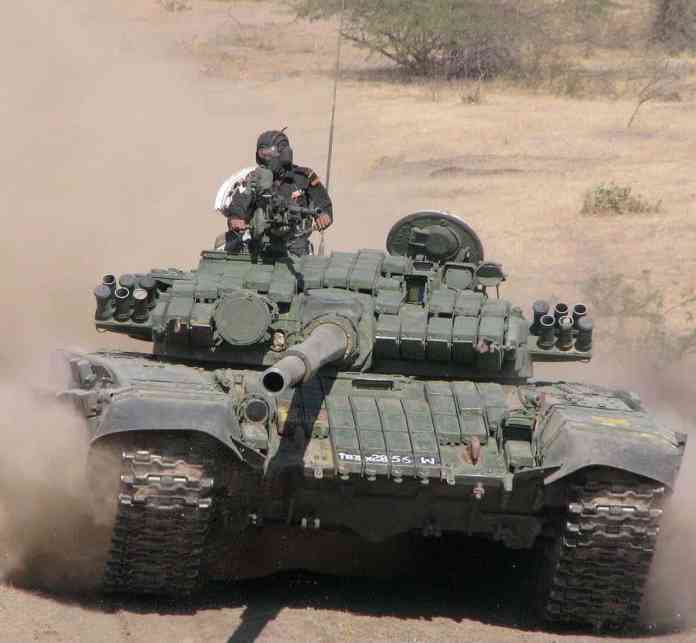
T-72B in the 21st Century: Modern Upgrades for Combat

0
Image Source: Bing Image. License: All Creative Commons

The T-72B main battle tank is a marvel of strength and versatility, beyond just being a tank. It remembers a long time ago, with references to the Cold War period, but the vehicle is still very potent. The tank’s past is a somewhat progressive one that reflects the changes in the vehicle requirements through different times and the hours of battle; hence, it ended up being the perfect combination of firepower, protection, and mobility for the almost unimaginable war terrains. The T-72B has been a witness to its endurance against contemporary wars and its staying power from the 1980s production to Ukraine today.

Image Source: Bing Image. License: All Creative Commons

The T-72 was created as a less complex, less expensive companion to the sophisticated yet problematic T-64. It was manufactured in 1973 as an attempt to be rugged, mobile, and easy to operate, even for poorly trained operators. The initial models were plagued by approximately primitive fire control, microscopic nighttime vision, and armor that could only withstand low-caliber guns. As the advanced anti-tank guided weapons, such as the TOW and MILA, came into action, all these weaknesses soon surfaced and compelled the designers to upgrade their performance.

Image Source: Bing Image. License: All Creative Commons

The 1984 T-72B introduced solutions to the majority of these shortcomings. Its enhanced composite armor has been referred to as “Super Dolly Parton” because of the typical turret cheek plates. KONTAKT-1 explosive reactive armor (ERA) mounting provided it with extra protection against modern anti-tank ammunition, providing it with approximately 700–900mm of equivalent armor protection against most threats. No tank is ever completely invulnerable, but it made the T-72B much more survivable in intense combat.

Image Source: Bing Image. License: All Creative Commons

Not every T-72B was built the same. Export models, such as the T-72S ‘Shilden,’ included lighter ERA and other trade-offs. The tanks supplied the majority of armor to Polish, Czech, and East German units. Each country operated in its own way: Polish crews preferred aggressive assault, Czech units used large formations for morale, and the East Germans were very well trained in strict, accurate breakthroughs. These tanks were phased up over the years and thus remained operational even after several decades. To this day, the T-72B remains extremely sought after.

Image Source: Bing Image. License: All Creative Commons

The fact that it is still being used in Ukraine attests to the versatility of the platform. The U.S., for one, paid for remanufactured Czech-produced T-72Bs for the Ukrainians because it realized that it would be too expensive, too time-consuming, and would require extensive training to bring completely new tank systems into the battlefield.

Image Source: Bing Image. License: All Creative Commons

Ukrainian officers already accustomed to the system would have no problem adapting to these tanks, and they would have a disadvantage relative to Russian troops using the same tanks. War is different.

Image Source: Bing Image. License: All Creative Commons

Drones, electronic warfare, and high-capability weapons now present persistent threats. Some predicted that tanks like the T-72B would be obsolete, but modernization like ERA, urban armor kits, and counter-IED technology helped keep them alive.

Image Source: Bing Image. License: All Creative Commons

In the meantime, guns remain the “God of War,” and while FPV drones are commanding the headlines, they’re still beset by technical maladies, jamming, and the skill level of their operators.

Image Source: Bing Image. License: All Creative Commons

Mortars and light guns are stable, consistent, and still not affected by these new guns. Despite modernization, the brutal realities of extended war have seen both sides deploy more old reserve tanks, some with no new optics or thermal imaging.

Image Source: Bing Image. License: All Creative Commons

Russian forces, for instance, started equipping tanks with SOSNA-U thermal sight units from 2022, but battle forced older variants to be rammed back into action, where their varied capabilities were all muddled in a mess. In such situations, fire control equipment, optic quality, and crew training can be as controlling as the armor itself. The still-active use of the T-72B confirms the value in simplicity and heavy-duty platforms.

Image Source: Bing Image. License: All Creative Commons

Though Western tanks like the Leopard 2 or M1 Abrams offer advanced technology, complexity, and logistical needs undermine forces committed to Soviet design to extend power quickly. The T-72B, on the other hand, integrates simplicity of design with incremental development, giving it versatility and reliability in attack as well as defense.

Image Source: Bing Image. License: All Creative Commons

Into the future, the T-72B—and the concept of main battle tank—only improves. Drone swarms, electronic warfare, and precision-guided weapons will continue to compel armored forces to adapt. But what history shows us is that with the right adjustments and plan, the tank is far from archaic. The T-72B proves that tough, well-designed armor has its place on the battlefield today.

Su-57 Felon: Russia’s Stealth Fighter Challenges

0
Image Source: Bing Image. License: All Creative Commons

The Sukhoi Su-57 Felon was a Russian-made project intended to be a crowning achievement of a fifth-generation stealth fighter — a machine with a high amount of advanced technology that, aside from putting Russia back into the aerospace headlines, would have also made it possible to compete with the United States’ best and smartest fighter aircraft like the F-22 and F-35. But the plane hasn’t been having a great time with it. Instead of fantastic triumphs, the Su-57 has been tripped up by the delay, production problems, and doubts about its role in the changing military landscape.

Image Source: Bing Image. License: All Creative Commons

The Su-57 project was started as early as the 2000s under the PAK FA program. It was to create a multi-role fighter that would dominate the air, attack targets on the ground, and perform reconnaissance. It featured stealth technology, a lot of lightweight composite materials, hidden armament bays, and cutting-edge avionics.

Image Source: Bing Image. License: All Creative Commons

The plane was designed to be incredibly maneuverable in the air, with smart systems onboard — some went so far as calling the flight computer an “electronic co-pilot” — and radar spread all across the airframe to watch out for threats coming in from all angles.

Image Source: Bing Image. License: All Creative Commons

Artificial intelligence was built into its communication and data systems so that pilots could get ahead of their competition and make fast decisions under difficult conditions. Russia’s state producers asserted that the technology made it possible for the plane to send encrypted information at high rates, helping to increase reconnaissance and combat effectiveness.

Image Source: Bing Image. License: All Creative Commons

On paper, the Su-57 is impressive. It has a top speed of twice the speed of sound, a range of over 2,000 miles, and can accommodate hypersonic missiles and precise smart weapons. Its sensors can track multiple targets at once, and its artificial intelligence can learn from mission results to be a more effective tactician and help maintain the plane out of harm’s way. Its slender, angled shape with radar-absorbing materials and engines concealed within is intended to make it invisible to enemy radar, especially head-on.

Image Source: Bing Image. License: All Creative Commons

But in reality, it has not been smooth sailing. Sanctions from the West have bitten Russia, keeping it from accessing key components like cutting-edge electronics and special materials employed in order to attain stealth. The Su-57’s radar, which was initially built based on German technology, is most affected. Efforts to replace these components with imports from other countries have not been straightforward, and there is doubt about the availability of these alternatives.

Image Source: Bing Image. License: All Creative Commons

Because of these problems, very few Su-57s are operational. By late 2024, only about 22 had been delivered, including test and production models. Official targets for attaining higher numbers in subsequent years now seem unrealistic. Every Su-57 is a treasure — when one of them was hit in an attack in the Astrakhan region, it was losing an expensive part of Russia’s cutting-edge fighter capability. Replacing these planes is time-consuming and expensive, with limited spares, while Russia churns out more proven aircraft like the Su-30SM2 and Su-35S to fill gaps.

Image Source: Bing Image. License: All Creative Commons

In action, the Su-57 has had a limited role in the war in Ukraine. Russia has been cautious about risking its precious few jets in contested airspace, not wanting to lose expensive, advanced technology and damage the jet’s global reputation. That self-restraint has meant the Su-57 has had little impact so far. Instead, Russia employs upgraded older jets, which may not be as advanced but are abundant and less expensive to repair.

Image Source: Bing Image. License: All Creative Commons

Or vice versa, they have had to wait a considerable time before starting to export to foreign countries. Algeria is the first customer to buy six Su-57E fighter aircraft. Besides that, the pilots are training in Russia, and they’re talking about making more purchases. In part, it is a matter of doing what others in the region who have the most modern fighters are doing. Nevertheless, this order is the only one, and no big sales are expected. In 2018, India, which had originally intended to co-design a fighter jet with Russia, decided to withdraw, being dissatisfied with the stealth and electronic features of the Su-57. Few people can help but feel sympathetic towards the bad-boy reputation the aircraft got from the times it displayed its glaring weaknesses at airshows and from ongoing quality issues in the manufacturing. 

Image Source: Bing Image. License: All Creative Commons

One of the contrasts between the Western competitors and the Russian fighter is the severity and visibility of the different issues with the Su-57. Just to name only one example, the U.S. already produces over a thousand F-35s globally at various locations, all controlled by a massive supply chain and quality assurance regime. While the F-22 and F-35 are the stealth/sensor tech standards of gold with histories of success in modern warfare and very stable flight, Russian planes, although said to be able to cancel out Western air defense, are still considered by most experts as far from being perfect in the stealth area.

Image Source: Bing Image. License: All Creative Commons

Nevertheless, the Kremlin still regards the Su-57 as central to Russia’s military strategy over the long haul. The Kremlin interprets the Su-57 as a national pride masterpiece and a way to keep pace with other powers of similar calibre. However, as the sanctions proceed and with all the production difficulties, the Su-57 is more of a prestige program than a front-line game changer. The global arms market is watching, but for now, Russia’s leading-edge fighter is having trouble flying on the runway and worldwide.

F-15EX Eagle II: Where Classic Strength Meets Cutting-Edge Tech

0
Image Source: Bing Image. License: All Creative Commons

The F-15EX Eagle II is one of the limited vehicles that connect the range of traditional powers of fighter aircraft with the needs of the new era of combat. A single person would probably tell you that it is just an old thing coming back to life with minor changes, whereas another would argue that it is the future’s gateway. Nevertheless, the fact remains that this is not an obsolete or stopgap aircraft, but a high-tech, painstakingly engineered plane designed to handle the complicated nature of modern air war.

Image Source: Bing Image. License: All Creative Commons

Its heritage goes back to the original F-15 Eagle, which first flew in the early 1970s. Then, the F-15 was designed to own the dogfight environment, relying on energy-maneuverability theory to provide unrivaled agility. Over the years, it developed through variants such as the F-15C/D and multirole F-15E Strike Eagle, each incorporating new technology to get ahead of the threat. When the U.S. Air Force ordered the F-15EX for the first time in 2020, the mission was simple: exchange old F-15Cs/Ds with a more capable, updated plane capable of conducting much more than air-to-air combat.

Image Source: Bing Image. License: All Creative Commons

In terms of performance, the F-15EX is a beast. With the ability to achieve Mach 2.5, it’s the fastest fighter on U.S. production lines today. Its two General Electric F110-GE-129 engines produce almost 30,000 pounds of thrust each and take it up to a top altitude of 60,000 feet. Digital fly-by-wire flight controls—introduced in the F-15 family—provide the pilots with even narrower handling and safety margins, enabling them to perform wild maneuvers comparable to more advanced thrust-vectoring designs. Large touchscreen screens and dual Digital Helmet Mounted Cueing Systems in the cockpit provide pilots with a clear picture of the battlefield.

Image Source: Bing Image. License: All Creative Commons

Where the Eagle II shines is in carrying a massive payload—over 29,000 pounds of ordnance. That can be a dozen AMRAAM missiles or even 22-foot-long hypersonic missiles. With AMBER racks, it can hold up to 22 air-to-air missiles, which means it is an unparalleled “missile truck” for supporting stealth fighters by bringing raw firepower from afar. Its open architecture for mission systems allows it to rapidly add new sensors and weapons as technology evolves.

Image Source: Bing Image. License: All Creative Commons

Its electronic warfare is equally impressive. Its AN/APG-82(V)1 AESA radar has long-range detection and multitarget tracking, while its EPAWSS (Eagle Passive/Active Warning and Survivability System) gives it enhanced threat detection and countermeasures. Brig. Gen. Jason Voorheis called EPAWSS a huge step forward in survivability and lethality, capable of finding, identifying, and jamming adversary systems on its own. Because it’s software-centric, it can be updated in real-time to remain effective against shifting threats.

Image Source: Bing Image. License: All Creative Commons

F-15EX is not limited to a single role. While air dominance is part of its DNA, it’s also being considered for missions from electronic attack to manned-unmanned teaming. It has the potential to be outfitted with Next Generation Jammer Pods, which will perform some of the electronic warfare missions previously reserved for other aircraft. Its two-seat configuration makes room for a backseat weapons officer to control drone formations, stretching the jet’s reach without taking it into the most dangerous areas.

Image Source: Bing Image. License: All Creative Commons

Most unorthodox of all is its possibility as an air refueler at high speeds. With “buddy” tanker pods in progress, the F-15EX could top off stealth fighters in much closer proximity to the fight than big, vulnerable tankers can, resupplying the front line and keeping it engaged.

Image Source: Bing Image. License: All Creative Commons

From a cost and logistics perspective, the F-15EX is a huge plus. It’s much cheaper to purchase and maintain compared to stealth-specific aircraft, and it uses roughly 70% of its components from previous F-15s. It takes just two weeks to rotate an F-15C pilot into an F-15EX, which means very little downtime for operational squadrons. The Air Force intends to purchase at least 144 of them, giving it a robust fighter force without being dependent solely on high-maintenance stealth squadrons.

Image Source: Bing Image. License: All Creative Commons

Internationally, the jet has attracted interest from a number of allies. Israel ordered 50 F-15IAs, Indonesia ordered 24 F-15IDNs, and Poland is considering its position. Qatar and Saudi Arabia already have advanced models of the Eagle, further cementing the type’s position as a reliable and versatile platform.

Image Source: Bing Image. License: All Creative Commons

Its lack of stealth is usually criticized as its greatest failing, particularly in light of current long-range air defenses. That’s missing the point, however—the F-15EX isn’t meant to replace stealth planes. Rather, it augments them, performing roles where stealth isn’t quite as necessary while bringing enormous firepower, electronic warfare assistance, and adaptable mission envelopes. Once the airspace is secured, it can take up much of the workload, allowing stealth platforms to be reserved for the missions only they are suited to.

Image Source: Bing Image. License: All Creative Commons

The blending of proven airframe, state-of-the-art avionics, and advanced electronic warfare capabilities guarantees the F-15EX will be on the battlefield for years to come. In a world where responsiveness and flexibility are paramount, the Eagle II demonstrates that speed, payload, and flexibility are as important as stealth in forging air combat’s future.