Home Blog Page 758

MiG-25 Foxbat: The Soviet Jet That Stunned the West

0
Image Source: Bing Image. License: All Creative Commons

One out of the small list of vehicles that have amazed, frightened, and confused the minds of people to a large extent is the Mikoyan-Gurevich MiG-25 “Foxbat”. During the Cold War era, the Western spies who scrutinized the unsharp aerial photos believed that they had come across an exceptional aerial vehicle from the Soviet Union, characterized by huge wings, enormous air intakes, and a shape that looked like it was made for astonishing speed only.

Image Source: Bing Image. License: All Creative Commons

To U.S. officials, it appeared to be an invincible fighter, one that outranked anything in the American arsenal. Merely looking at it helped hasten production on the McDonnell Douglas F-15 Eagle. But under the intimidating silhouette was a vehicle with unusually targeted strengths—and glaring defects.

Image Source: Bing Image. License: All Creative Commons

A Plane Designed to Counter a Particular Fear

The MiG-25 was not built to reign supreme in dogfights or spend hours prowling as a sentry. It was formed in direct response to a very particular problem: the emergence during the late 1950s and early 1960s of Mach 2-and-better American supersonic bombers, such as the B-58 Hustler and the XB-70 Valkyrie prototype.

Image Source: Bing Image. License: All Creative Commons

These planes boasted a cruise speed of Mach 2 or better, far faster than the Soviet interceptors of the period. Because of this, Soviet engineers required something new: a high-speed, high-altitude intercept that would take off from the ground, destroy a nuclear bomber before it could drop its payload, and return to base in a hurry. Endurance, maneuverability, and multifunctionality were secondary considerations.

Image Source: Bing Image. License: All Creative Commons

When Brute Force Meets Engineering

The Foxbat was built out of practical necessity. Rather than exotic titanium alloys, its airframe was predominantly nickel-steel, selected to resist the heat of prolonged speeds at more than Mach 2.8. This rendered the aircraft strong but heavy, and seriously restricted its maneuverability.

Image Source: Bing Image. License: All Creative Commons

Two powerful Tumansky R-15B-300 turbojet engines delivered the power. They imparted the MiG-25 incredible speed—up to Mach 2.83 for long-range flight, and even above Mach 3 in emergency sprints (though this would destroy the engines). The drawback was efficiency: the plane consumed fuel at a phenomenal rate, leaving it with only a fleeting combat radius of a few hundred miles. Also, the high-speed flights took their toll on the engines.

Image Source: Bing Image. License: All Creative Commons

The MiG-25 set records, reaching heights of more than 123,000 feet and speed milestones. But these statistics concealed the fact: the jet could just barely tolerate 4.5 Gs, which made it a bad choice against highly maneuverable fighters. Its RP-25 “Smerch-A” radar was impressive, but it was unable to detect low-flying targets—an Achilles’ heel once Western bombers began using low-altitude attacks.

Image Source: Bing Image. License: All Creative Commons

Cold War Showdowns and Stories of Combat

Combat experience was mixed for the MiG-25 on the battlefield. Reconnaissance models were highly successful, operating at speeds and altitudes that enemy fighter aircraft were unable to match. During the Iran-Iraq War and the Gulf War, Iraqi MiG-25s were able to shoot down a few Western aircraft, including a U.S. Navy F/A-18. They also lost some, and their vulnerabilities were discovered against advanced fighters such as the F-15.

Image Source: Bing Image. License: All Creative Commons

The Foxbat’s mystique was dispelled in dramatic style on September 6, 1976, when Soviet pilot Viktor Belenko defected to Japan flying his MiG-25. Skimming low to evade radar and finally landing on almost depleted fuel, Belenko brought one of the Cold War’s greatest intelligence coups.

Image Source: Bing Image. License: All Creative Commons

A Shattered Myth

Examination of Belenko’s aircraft was sobering to the West. Anything but a titanium-clad super-fighter, the MiG-25 was grossly overweight, employed vacuum-tube electronics, and had engines that could not safely maintain their maximum velocities. Its radar was old, and its missiles were no match for the U.S. SR-71 Blackbird, which routinely outclimbed and outlew Foxbats. Soviet pilots, Belenko disclosed, were instructed not to fly faster than Mach 2.5 in normal operations. The SR-71, on the other hand, appeared to mock the MiG-25s dispatched to intercept it—flying higher, faster, and uncatchable.

Image Source: Bing Image. License: All Creative Commons

Legacy of the Foxbat

All things considered, the MiG-25 left a lasting legacy. It was a fighter built to counter a threat—the high-altitude supersonic bomber—that never became the focus of U.S. strategy. Its weaknesses had an impact on the design of its replacement, the MiG-31 Foxhound, which addressed many of the Foxbat’s issues with better avionics and armament.

P-40 Warhawk: From WWII Icon to Forgotten Legend

0
Image Source: Bing Image. License: All Creative Commons

The Curtiss P-40 Warhawk might not have been as dazzlingly popular as the stylish P-51 Mustang or the mighty P-47 Thunderbolt, but it is still acknowledged as a great aircraft by people who study aerial combat during World War II. In fact, P-40 was the ugliest and clumsiest of the fighters in the air; yet it was loved by some of the toughest war pilots for its indubitably reliable, rugged, and tough qualities.

Image Source: Bing Image. License: All Creative Commons

Its ancestry goes back to the Curtiss P-36 Hawk. Instead of beginning anew, Curtiss designers used the P-36 airframe as a starting point, substituting the Allison V-1710 liquid-cooled engine in place of the P-36’s radial. The product of this was a single-engine, single-seat fighter with an unusual appearance and the image of taking a tremendous amount of battle damage and still returning its pilot safely to base.

Image Source: Bing Image. License: All Creative Commons

On paper, the P-40 was a good performer. It had a top speed of about 318 knots (589 km/h) because of its 1,240-horsepower Allison engine. Its standard armament was two .50 caliber Browning machine guns in the nose and four .303 caliber guns in the wings.

Image Source: Bing Image. License: All Creative Commons

The Warhawk had a ceiling of 29,000 feet, could climb at 2,100 feet per minute, and was used for a range of missions. Though it did not surpass the most agile or quickest fighters, it excelled at durability and reach, traits that made it a tremendous asset for air defense as well as for attacking the ground. Pilots returned from missions in planes riddled with bullets, their Warhawks beaten but still flyable.

Image Source: Bing Image. License: All Creative Commons

The P-40 engaged in almost every theater of the war—North Africa, the Pacific, and the China-Burma-India Theater. It could escort bombers, dive-bomb enemy ground targets, or engage enemy fighters.

Image Source: Bing Image. License: All Creative Commons

The plane’s most legendary pilots were the Flying Tigers, a unit of American volunteer pilots who helped protect China prior to the U.S. entering the war officially. Their shark-toothed nose art is one of the most iconic images of the war.

Image Source: Bing Image. License: All Creative Commons

One of the P-40’s pilots, Keith Bissonnette, was the epitome of the kind of toughness the P-40 is known for. A professional minor leaguer before the war, Bissonnette enlisted in the Army Air Forces in 1942 and flew with the 88th Fighter Squadron, 80th Fighter Group.

Image Source: Bing Image. License: All Creative Commons

He flew P-40s and then P-47 Thunderbolts on over 200 combat missions in the China-Burma-India Theater—bombs, strafing, and even hazardous supply flights over the Himalayas referred to as “the Hump.” His service ended in tragedy in March of 1945 when his P-47 crashed near Keng Tung, Burma. He received the Distinguished Flying Cross, Air Medal, and Purple Heart for bravery.

Image Source: Bing Image. License: All Creative Commons

Pitted against its German equivalent, the Messerschmitt Bf 109, the P-40 did not always win on sheer performance. The Bf 109’s 1,455-horsepower Daimler-Benz engine provided it with more speed, superior altitude performance, and superior climb rates.

Image Source: Bing Image. License: All Creative Commons

But the Warhawk responded with toughness, more protection, and greater resistance to damage—traits which frequently made the difference between living and dying. The two pilots embodied different philosophies: German concepts of agility and quickness, and American ideals of hardness and flexibility.

Image Source: Bing Image. License: All Creative Commons

As the war ended, the advent of jet aircraft sent the P-0 and other piston-driven fighters into retirement. Only a few survived, and now only a few Warhawks exist in museums or have been returned to flight status.

Image Source: Bing Image. License: All Creative Commons

Though it was never the darling of the limelight, the Curtiss P-40 Warhawk forged its reputation through reliability, versatility, and the determination of the flyers who flew it. It is an icon of the lesser-known air war heroes—men and machines that fought as hard as the greats but without as much acclaim.

More related images you may be interested in:

Image Source: Bing Image. License: All Creative Commons

MQ-25 Stingray: Revolutionizing Aerial Refueling at Sea

0
Image Source: Bing Image. License: All Creative Commons

One of the most radical changes in recent years is going on in naval aviation, and the MQ-25 Stingray is leading the way – the U.S. Navy’s first drone for in-flight refueling, off a carrier, has been launched. Aircraft carriers have been the center of U.S. energy exports, but it is a new case that they still need the help of manned aircraft to perform the most basic support tasks, such as aerial refueling. Everything is turned over to the MQ-25; hence, a new era is becoming established in which the unmanned aerial vehicles are not only the supporters but also the mainstay of carrier operations.

Image Source: Bing Image. License: All Creative Commons

A Historic Aviation Milestone

The MQ-25 hit the headlines in June 2021, when a test aircraft from Boeing successfully transferred fuel during flight to a Navy F/A-18 Super Hornet. The test, conducted over Illinois, was not only a technological achievement—it was a milestone in the way unmanned systems complement crewed platforms. The Super Hornet flew only 20 feet from the unmanned MQ-25, holding station through both dry and wet contacts before taking on board fuel. This wasn’t proof of concept—it was proof of capability in realistic conditions.

Image Source: Bing Image. License: All Creative Commons

More Than a Flying Tanker

Although the MQ-25’s stated purpose is to refuel carrier-based aircraft at range, its effect extends far beyond logistics. Rear Adm. John Meier, Commander of Naval Air Force Atlantic, has described the Stingray as a “revolutionary” move toward creating the Air Wing of the Future. By lifting the refueling load off F/A-18s—historically employed as ad hoc tankers—the Navy can now send more of those aircraft on strike and combat missions. The payoff? More firepower, longer reach, and greater efficiency without more pilots or platforms.

Image Source: Bing Image. License: All Creative Commons

Proven on the Deck, Ready for the Fleet

Getting an unmanned aircraft onto the tightly choreographed deck of a carrier took careful testing. Initially, engineers tested the MQ-25 at Chambers Field in Norfolk by getting it to maneuver within lines painted on mock-ups of carrier decks using remote control. The simulations later led to live demonstrations on board the USS George H.W. Bush, confirming how the MQ-25 could be incorporated into routine deck operations.

Image Source: Bing Image. License: All Creative Commons

A Strategic Building Block

The MQ-25 is not an independent test—it is the Navy’s first step toward creating a networked, hybrid force of manned and unmanned platforms. It is part of the larger movement toward manned-unmanned teaming (MUM-T), in which human pilots and autonomous vehicles work together as integrated teams.

Image Source: Bing Image. License: All Creative Commons

Future success, according to defense analyst Heather Penney of the Mitchell Institute, will not only be based on constructing cutting-edge machines, but on systems where machine and human can understand each other’s strengths and weaknesses. That’s the kind of thinking found in initiatives such as the “Two View Autonomy Framework” that seeks to close the gap between operators and engineers as autonomy becomes more prevalent.

Image Source: Bing Image. License: All Creative Commons

Moving Fast and Learning Faster

Since Boeing won the development contract in 2018, the MQ-25 program has been rapidly moving forward. Within a few years, it not only refueled an F/A-18 but also topped off an F-35C and an E-2D Advanced Hawkeye—showing its versatility throughout the fleet. The Navy has been pushing to get the MQ-25 into operational use as fast as possible, particularly as competitors are building systems intended to counter U.S. carrier superiority in high-threat operations.

Image Source: Bing Image. License: All Creative Commons

A Glimpse Into What’s Next

The deployment of MQ-25s onto Ford- and Nimitz-class carriers will change the way the Navy projects airpower. With its capability to refuel strike aircraft away from the carrier, it enables the U.S. to reach farther without getting closer to enemy defenses. But equally significant, the Stingray opens the door to future unmanned systems—from surveillance drones to autonomous strike aircraft and loyal wingmen designs.

Image Source: Bing Image. License: All Creative Commons

Each lesson gained from the MQ-25—technical, tactical, or procedural—is part of a greater push to transform naval aviation for the battles of the future. In a world defined by speed, precision, and stealth, unmanned vehicles like the MQ-25 won’t be bit players—they’ll be driving the mission.

More related images you may be interested in:

Image Source: Bing Image. License: All Creative Commons

A Retro Comeback: Donkey Kong Country Returns HD Swings Back In

0

Bananas are going to be needed again, as Donkey Kong and Diddy are back in action, and their fans, no doubt, the most delighted people probably could not be. The release of Donkey Kong Country Returns HD on the Nintendo Switch means players can experience an outstandingly made platform game once again, which was “off limits” for quite a while. New characters’ arrival is not just a matter of a better presentation but also a sign of how the same team as Metroid Prime, i.e., Retro Studios, has gone on to bring back the dead and mark their place in Nintendo’s history.

Image Source: Bing Image. License: All Creative Commons

When Retro initially came into the spotlight for work on the Metroid Prime trilogy, they were already established masters of moody, atmospheric first-person journeys. So, when they announced that they’d be leading a reboot of Donkey Kong Country, people were surprised—and rightly so. As longtime Nintendo producer Kensuke Tanabe tells it, it all came together by accident. With prominent staff leaving Retro, the company was searching for its next direction. That’s when Shigeru Miyamoto came along with an interest in restarting Donkey Kong, and Tanabe sold Retro as the best team to do it. That one idea set off what would eventually become Donkey Kong Country Returns—a game that would honor the SNES classics while taking the series in bold new directions.

The pressure was on immediately. As developers Kynan Pearson, Mike Wikan, and Tom Ivey later explained, internal shake-ups within the studio created a void—but it also presented an opportunity for fresh ideas and a new vision. Most of the new members were lifelong enthusiasts of the original trilogy, and that strong passion carried over into their work. Pearson describes how the mutual love of the series spurred their innovation, and that enthusiasm was heightened by working near Nintendo’s Kyoto-based developers. The combined effort bridged skepticism about whether Retro was capable of doing something so divergent from Metroid.

When Donkey Kong Country Returns was announced at E3 2010, it caused a massive splash. It managed to recapture the series’ characteristic platforming accuracy and creative level design, as well as offering a more colorful look and fresh gameplay mechanics. The positive critical and commercial success of the game quickly silenced the doubters. As Tanabe would later remark, Retro’s innate understanding of why Donkey Kong Country was great helped it succeed.

And now, Donkey Kong Country Returns HD is bringing that magic jungle to a whole new generation. Scheduled to ship on January 16, 2025, the HD remaster contains all 80 levels from the first Wii release, in addition to the extra content introduced for the 3DS. Whether you’re tackling mine carts solo or teaming up in local co-op, the Switch version is designed to preserve everything that made the original great, now with enhanced visuals and smoother performance to match today’s expectations.

Of course, no Donkey Kong game is complete without some memorable villains, and Retro didn’t hold back. In Donkey Kong Country Returns, the player had battled the hypnotic Tiki Tak Tribe, but Tropical Freeze did the real groundwork in terms of shaking things up with the inclusion of the Snowmads under the leadership of the portly, horn-blowing Lord Fredrik. His icy invasion and Viking-inspired design lent the game a certain flavor, and although his boss battle didn’t quite avoid comparisons to King K. Rool, he at least introduced some new life into the series. From frozen battlefields to called-in frost dragons, the Snowmads contributed to making Tropical Freeze different, even if Fredrik himself was a bit of a mixed bag for longtime fans.

However, it’s easy to see that Retro Studios contributed reverence and risk-taking in equal measure. They were not hesitant to mess with the formula if it involved upsetting villain lineups or experimenting with level mechanics. That willingness to try new things, coupled with a clear affection for the source material, allowed the series to grow without losing its foundations.

In the center of Donkey Kong Country’s resurgence is a profound respect for the past—coupled with an aggressive push to take it further. Retro Studios didn’t simply reissue a platformer—they revitalized a franchise. With Donkey Kong Country Returns HD coming to the Switch very shortly, both old school and newcomers alike can enjoy the charm, difficulty, and imagination that make this franchise so endearing. Whether you’re ready to roll through jungles again or pick up a barrel for the first time, Kong country is calling—and it’s more vibrant than ever.

Black Ops 6: Comeback or Just Another COD?

0

The worldwide gaming community wants the new versions of the Call of Duty franchise to come out all the time, with Black Ops 6, in particular, the announcement was never before so big. It is a historical event of the early 1990s that the game was staged, just after the dissection of the Berlin Wall, and Treyarch has been teasing a different way to revisit history with this new release, besides this being their first time off the launch day with Game Pass. So, the question everyone is asking is if Black Ops 6 is the new release to shock the fans or just another same-old rehash?

Image Source: Bing Image. License: All Creative Commons

It makes its most ambitious moves, thankfully, in multiplayer. Treyarch revisits its traditional tactic-focused style, but this time with a bit of a mad new twist in the form of omnimovement. Players can sprint in any direction, twist mid-air, and pull off flashy moves that look straight out of an action movie. It’s fast, smooth, and surprisingly easy to pick up–and once you’ve played a few rounds with it, going back to a more traditional shooter feels clunky. That said, the acrobatics can get a little over the top. Imagine players jumping through windows, twirling in mid-air, and shooting clips left and right. It’s enjoyable but tends to make battles more haphazard than tactical.

Map design is somewhat of a mixed bag. The old three-lane format returns for most 6v6 maps, providing games with a consistent beat and keeping campers at bay. Lowtown is a standout, with its bright beachside village atmosphere and vertical layers that create visual depth. But not every map is a hit. Babylon, for instance, is marred by excessive sightlines and cluttered spawn points, recalling some of the same issues players were complaining about in Modern Warfare (2019). When the netcode falters or the spawn logic fails, the anger can accumulate fast.

Customization remains a balancing act. The Gunsmith system allows you to adjust almost everything on your gun, which is wonderful–until you see an overpowered build in every single match. Although the time-to-kill is slightly slower than recent installments, it’s fast enough that twitch reflexes prevail more often than not. Loadouts receive an improvement with a third perk bonus reward, catering to players stacking perks of the same type. Wild Cards also make a comeback, enabling creative setups such as dual primaries or additional attachments. The game ships with loads of skins and unlockables, but the worry is whether balance will be maintained with fresh content releases, something Call of Duty has previously struggled to accomplish.

Then there’s Zombies, which goes back to the classic format broadly. The experimental DMZ-style mode is gone. Instead, users are given two maps right out of the box: Liberty Falls and Terminus. Liberty Falls is big, well-detailed, and takes place in a dark West Virginia town, but its open design makes it play a tad too generously. Terminus, on a spooky island blacksite, does a slightly better job of recapturing that classic Zombies tension in tight spaces and creepy set dressing. Each map has its background and cool cutscenes, but they don’t quite have that legendary status of Treyarch’s classic Zombies maps.

Visually and technically, Black Ops 6 is a stunner. The engine cranks out solid graphics, silky-smooth gameplay, and a copious array of accessibility features. Crossplay is seamless, and overall refinement is first-class. But many of the same old problems persist. Janky netcode, obtuse UI, and cheating still plague the series. The new launcher is a minor step forward, but the series is starting to feel its age internally.

Meanwhile, the fan reaction has been tepid. On Steam, the title reached a high of about 300,000 players but fell to 100,000 shortly thereafter–a sharper drop-off than Modern Warfare 3. Some dedicated fans are questioning whether Activision and Treyarch can mend what’s broken or if the series is simply petering out. Even the possibility has been floated that the series will abandon its annual schedule or move further in the direction of Warzone in the future, particularly if current trends continue.

In every sense, Black Ops 6 is the multiplayer at its finest in years, perhaps even since before Modern Warfare (2019). It gets the fundamentals correct, takes gameplay in exciting new directions, and is stunning. But it pulls along some of the same baggage that’s weighed down the series for some time now. And with existing players already falling off, the question is whether this is the next big step for Call of Duty–or the end times for its previous formula.

10 Best Family Movies & Shows

0
Image Source: Bing Image. License: All Creative Commons

Popcorn is ready, get your blanket on, and make your way to your/the couch—it’s family movie night! No matter if you are parents of little children, tweens, or teenagers that are too cool for school, the right movie or show will be a great way to transform an average evening into something exceptional. But with so many choices available, how to select the perfect one? No stress—we are here for you. Here is a list of ten family-friendly must-sees that will have you laughing, learning, and reminiscing all at once.

Image Source: Bing Image. License: All Creative Commons

10. The Dragon Prince

This beautifully animated series is a dream come true for any fantasy lover and is filled with dragons, elves, and adventures. The narrative is heartfelt and does not shy away from the themes of forgiveness, teamwork, and the power of friendship. It is just right for children around eight years old and above, but the smart writing, stunning graphics, and complex characters make it very close to equally appealing for adults. In the first case, you are with your family; in the second, you find yourself watching it nonstop. Anyway, The Dragon Prince is definitely the most wonderful thing that can happen to people of any age.

Image Source: Bing Image. License: All Creative Commons

9. Moana

Moana is one of the modern Disney masterpieces that still garners worldwide love. On its journey of following the unsuspecting, brave young heroine as she sails the sea, the film ignites with stunning visuals, unforgettable tunes, and a narrative full of bravery, self-discovery, and empathy. The character of Moana alone is fascinating as she embarks on a voyage that communicates with everybody of all ages. Whether it is for the score, the impressive render, or the empowering tale, this film is one of the rare few that genuinely bewitches kids and adults alike bewitched with, the perfect film for family movie nights.

Image Source: Bing Image. License: All Creative Commons

8. The Goonies

This 80s adventure treasure-hunt classic never gets old, as it still enchants viewers even when it is watched decades after its release. The children-hunting-treasure film equipped with mystical cartography, the use of the traps and tricks concocted by kids who are fearless, is just the one that would encourage people of all ages to get fired up and unleash their imagination. The film is a masterpiece that fits kids 10 and older like a glove. It’s also a great opportunity for parents to introduce one of their favourite childhood classics to their families. The movie is made of all the ingredients of a thriller if suspense, wit, and timelessness, and it becomes a necessary viewing among people who love thrill-seeking activities on a movie night.

Image Source: Bing Image. License: All Creative Commons

7. Inside Out

Pixar creates a unique idea for one of the most difficult areas of human nature – the five basic emotions are introduced as very bright, very funny, and very long-lasting characters. Joy, Sadness, Anger, Fear, and Disgust together take passengers on an 11-year-old mind journey, making kids and grown-ups giddy with the amusement of an emotional intelligence tutorial, playful and unexpectedly deep. The story is very well balanced between comedy, emotion, and authenticity: it makes you laugh when it wants and, pretty soon after, it quite forcibly tugs your heartstrings. Marvelous, funny, and quite touching, a film that both entertains and reminds us of the complexity and beauty of our own feelings, yes, you are most likely to cry a little too.

Image Source: Bing Image. License: All Creative Commons

6. Paddington

That beloved bear of everyone’s is back on the big screen, once again charming the audience with his typical warmth and good humor in this delightful live-action comedy. The film is the kind of good and fun entertainment that will be enjoyed by any audience, regardless of age, with its heartwarming story and funny mishaps. Rewatch it with your kids or see it again as an adult, and it’s just impossible not to walk away from the theater with a smile on your face.

Image Source: Bing Image. License: All Creative Commons

5. The Incredibles

Pixar masterfully blends superhero action with heartfelt family scenes to deliver the story of The Incredibles, which is one of their strongest films ever. The Parra family tries to live an ordinary life, and at the same time, they are obligated to keep their powers secret as well as fight off evil characters. Thus, the movie is full of thrilling moments, but also, it has really relatable family interactions, which are quite touching. The film is one of those that combines laughter, action, and emotion very well and thus is equally liked by kids and adults. It’s a great mixture of huskiness, suspense, and touching moments, which makes it the perfect film for a family movie night.

Image Source: Bing Image. License: All Creative Commons

4. Spirited Away

One of the most impressive works in Hayao Miyazaki’s career is Spirited Away, a spectacular trip to a world of fantasy and surprise. The whole plot is revealed through stunning visuals, weird creatures, and surprising emotional depth when Chihiro physically enters an enchanting universe. It is a motion picture that fascinates the kids with its unbelievable aspects, on the other hand, also provides some very profound themes and ideas for the grown-ups. With all its enchanting places and unforgettable tales, this masterpiece is basically an audiovisual art that invites spectators of any age to experience its amazement firsthand.

Image Source: Bing Image. License: All Creative Commons

3. Bluey

This little Australian gem has captured the hearts of viewers worldwide, and it is quite easy to see why. Bluey has short, very sweet episodes that cover play, creativity, and daily family life, all done with a mix of humor and sympathy. It is not only children who benefit from the series—parents will also be entertained and at times even ruminating about their own family life. Bluey is very intelligent, witty, and always entertaining. It is a treat that rarely appears and which really all ages.

Image Source: Bing Image. License: All Creative Commons

2. Mister Rogers’ Neighborhood

Calm, meditative, and really comforting, Fred Rogers loved program is still the benchmark in the standards for children’s television. The show has a very soothing and slow rhythm and also carries very honest messages, which is like a haven for the audience in the middle of modern-day hectic life. Watching the show is not just a form of amusement; it is a means to implant love, understanding, and wonder in young viewers, and also provides the adults with a calming, reflective break time. The whole atmosphere of companions, kids, and the like, is very much close to nature and with the feeling of being very timeless, really.

Image Source: Bing Image. License: All Creative Commons

1. Toy Story

Nearly three decades later, Pixar’s Toy Story still manages to surprise. What must be the funniest, bravest, and most touching band of toys in the history of cinema is Woody, Buzz, and their friends, who keep on delighting adults and children with their perfect comeback and adventurous plot of the story. Whereas the background, the jokes, and the sentimental note have all been kept au naturel over time, this confirms and motivates further the reason why this legendary production is still a model of comparison for the rest of the industry. It is a work that one can constantly recite its magic and newness, never relinquishing the childish delight it creates in an audience of any age.

Image Source: Bing Image. License: All Creative Commons

Nothing else comparable would sum up as well as these 15 carefully picked, family-friendly movies do, not only picturing the festival of the cinema as a piece of cake but also showing the opposite when you would decide to rebel and perhaps argue about which film to watch with no end for an hour, and come away putting down the Shrek series. Whether you choose the suggested ones or simply go back to the tried and true classics, the main point is sitting down, relaxing, and having some quality time together. Honestly, family movie night is all about the laughs, the memories, and a little bit of chaos, too.

10 Celebs with Unexpected Alma Maters

0
Image Source: Bing Image. License: All Creative Commons

Forget the Ivy League hype—most of today’s big actors, musicians, and athletes have gone to schools that you wouldn’t expect. Harvard and Yale indeed sound impressive, but a good number of celebrities used to be at community colleges, state universities, or in programs that they didn’t even complete. And frankly, that makes their paths a lot more relatable. So, why don’t we list ten celebrities whose educational background could be an astonishment for you (in reverse order, of course—because what is a list without a bit of suspense?).

Image Source: Bing Image. License: All Creative Commons

10. Amy Tan – San Jose City College (plus a few more)

Before The Joy Luck Club transformed her into a literary queen, Amy Tan’s academic career was far from linear. She was first at San Jose City College and subsequently passed through several other colleges before she received her degree in English and linguistics. Although that unconventional path may not have been typical, it certainly paved the way for one of the most unique voices in contemporary literature.

Image Source: Bing Image. License: All Creative Commons

9. Mayim Bialik – UCLA

On The Big Bang Theory, she was a scientist. In real life? No different. Mayim Bialik rejected an Ivy League acceptance to study at UCLA, where she ultimately received a PhD in neuroscience. That ain’t acting, she’s the genuine article.

Image Source: Bing Image. License: All Creative Commons

8. Morgan Freeman – Los Angeles City College

Freeman’s iconic voice was partly formed at Los Angeles City College, where he took classes after serving in the Air Force. He credits LACC with enabling him to drop his voice an octave, a sound that would become a hallmark of his career.

Image Source: Bing Image. License: All Creative Commons

7. George Lucas – Modesto Junior College

The creator of Star Wars began life as a Modesto Junior College student who lived and breathed cars and auto racing. A crash changed his direction, and after he transferred to the film school at USC, he created a galaxy far, far away.

Image Source: Bing Image. License: All Creative Commons

6. Jessica Chastain – Sacramento City College

Before Juilliard and the Oscars, Jessica Chastain was developing her skills at Sacramento City College. She enrolled in the drama program and debate team, then won a scholarship that sent her to Juilliard testimony that top-of-the-line talent can emerge from anywhere.

Image Source: Bing Image. License: All Creative Commons

5. Billy Crystal – Nassau Community College

Billy Crystal did not enter straight into the limelight straight away—first, he learned directing and filmmaking at Nassau Community College in New York. After that, he went to NYU, where his instructor was none other than Martin Scorsese.

Image Source: Bing Image. License: All Creative Commons

4. Queen Latifah – Borough of Manhattan Community College

Before becoming a multi-hyphenate superstar, Queen Latifah was balancing BMCC classes with her music career. Juggling rap and school was the precursor to the career behemoth she would become.

Image Source: Bing Image. License: All Creative Commons

3. Arnold Schwarzenegger – Santa Monica College

Just off the plane from Austria, Arnold set foot in higher education at Santa Monica College for business and ESL courses. There, a counselor urged him to pursue more than language studies, imparting skills he would utilize as an actor, businessman, and even governor. 

Image Source: Bing Image. License: All Creative Commons

2. Jackie Robinson – Pasadena City College

Long before Jackie Robinson broke baseball’s color barrier, he was dominating as a multi-sport star at Pasadena City College. He headed to UCLA and lettered in four sports, becoming the first person to do so, a legend in the making from day one. 

Image Source: Bing Image. License: All Creative Commons

1. Oprah Winfrey – Tennessee State University

Oprah’s ascent started with a scholarship to Tennessee State University after she won an oratory competition and a pageant. That was the foundation for her transformation from student to queen of daytime television and beyond.

Image Source: Bing Image. License: All Creative Commons

It turns out you don’t have to have a glossy Ivy League degree to become a superstar. From state colleges to surprise state schools, these celebrities show that drive, enthusiasm, and chance are so much more important than where you begin. Success, it appears, can arise from just about anywhere.

10 Stars Who Passed During Filming

0
Image Source: Bing Image. License: All Creative Commons

It is well known that Hollywood is a place where magic is created – but sometimes, the most unexpected tragedies happen, which no one would ever imagine happening in a script. When an actor or a crew member dies during the shooting of a film, the grief is not limited to the set. It extends to the families, friends, and fans, who, in turn, are touched by it. Moreover, it can put the studios in a position where they have to make difficult decisions such as whether they should go ahead with the project by recasting, rewriting the story, or using digital effects to finish the proje.t? They have been a range of results from pioneering to controversial—and even, in some cases, have had an impact on the change of film history. Ten of the most memorable events that caused Hollywood to confront the heartbreak of the death of a star in the middle of the production are presented here, together with the ways in which the filmmakers used to carry on their work.

Image Source: Bing Image. License: All Creative Commons

10. Ray Liotta — Dangerous Waters

The best thing about Ray Liotta that comes to one’s mind is, without doubt, his unforgettable character in Goodfellas. However, the actor passed away suddenly in his sleep while filming Dangerous Waters in the Dominican Republic. It was later revealed that the cause of death was a combination of heart and lung complications. Production had to go on without cessation, and consequently, the two films that Liotta had left were released as scheduled. Till the time of his death, his commitment to his art was exemplary, thus not only leaving acting credits but also a memorable instance of his zeal for the craft of acting.

Image Source: Bing Image. License: All Creative Commons

9. John Ritter — 8 Simple Rules

John Ritter was not only a figure of the popular sitcoms, but he was also TV’s most lovable and funniest character for years. Hence, his unexpected death from an undetected aortic dissection during rehearsals for 8 Simple Rules is what caused the most shock. The filming of the show halted at that point, and later, as the shoot restarted, the writers chose to depict actual events: the character played by Ritter was rewritten as being dead, too. The farewell episode remains one of the most sincere and touching moments ever made for a sitcom, and it happened to be a live catch of the grief at that time.

Image Source: Bing Image. License: All Creative Commons

8. Nancy Marchand — The Sopranos

Nancy Marchand’s Livia Soprano provided HBO’s The Sopranos with some of its most frightening moments. When she passed away before Season 3, the writers were in a bind. Rather than recasting, they employed digital effects and unused shots to provide her character one last unnerving appearance. It was a groundbreaking (and controversial) application of CGI to create a continuous onscreen presence for an actor at the time.

Image Source: Bing Image. License: All Creative Commons

7. Aaliyah — The Matrix Reloaded

When R&B sensation Aaliyah was cast in the role of Zee in The Matrix Reloaded, it promised to be her big-screen breakout. But when she died in a plane crash, the Wachowskis re-shot the role with Nona Gaye, who redid all the scenes. While fans were left weeping over what could have been, Gaye’s portrayal breathed new life into the character, and the movie itself became in part a tribute to the lost potential of Aaliyah.

Image Source: Bing Image. License: All Creative Commons

6. Chris Farley — Shrek

Not many people know that Shrek was initially going to be voiced by Chris Farley. He had done the majority of his lines for the film before he passed away due to an overdose. DreamWorks decided to go for a complete recast instead of trying to compensate with the already recorded lines; thus, the role was given to Mike Myers. Myers didn’t just take the role; he transformed it by adding the now-famous Scottish accent, which really changed Shrek’s character. After a period, parts of Farley’s original recordings leaked, allowing the audience to watch a montage of the movie that was never made.

Image Source: Bing Image. License: All Creative Commons

5. Richard Harris — Harry Potter

Through the character of Professor Dumbledore, Richard Harris embodied the wise and loving spirit of magic in the first two Harry Potter films. After his demise from cancer, Michael Gambon took over the role for the rest of the series. Gambon gave off a more dynamic, pointed, and severe vibe; however, the change was so effective that now both Dumbledore’s incarnations are appreciated.

Image Source: Bing Image. License: All Creative Commons

4. Philip Seymour Hoffman — The Hunger Games: Mockingjay

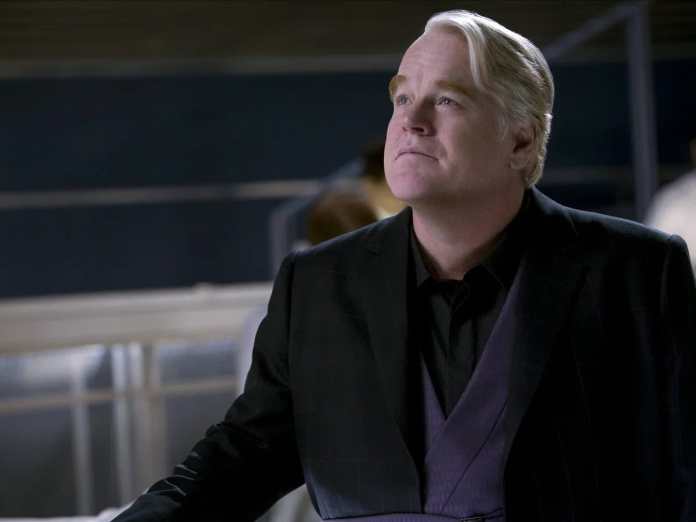
Philip Seymour Hoffman, arguably one of the greatest actors of his time, passed away suddenly in the midst of completing his work as Plutarch Heavensbee in the final Hunger Games installment. The studio didn’t digitally recreate him or recast. Rather, they re-shot scenes and assigned some of his lines to other characters. It was a nice, understated method of keeping his work without intruding upon it with effects.

Image Source: Bing Image. License: All Creative Commons

3. Paul Walker — Fast & Furious 7

When Paul Walker died as a result of a car accident, the news was a shock to the whole world, and Furious 7 was left halfway. The idea of a family-based franchise, which was there only a few moments ago, having to deal with the absence of one of its closest members, was something difficult to imagine. What the filmmakers did was far from erasing him; instead, they combined his remaining scenes by using CGI, some people who looked like him (including Walker’s brothers), and previous audio. This farewell scene, made not only by blending technology but also one of the most heartfelt goodbyes in the history of blockbusters, was their way of saying goodbye.

Image Source: Bing Image. License: All Creative Commons

2. Heath Ledger — The Imaginarium of Doctor Parnassus

After the death of Heath Ledger, the director Terry Gilliam had a hard time deciding what to do with the movie The Imaginarium of Doctor Parnassus. Eventually, he concluded that it was the best solution to make the character of Ledger alter and transform each time when entering the fantasy dream world, which allowed three actors, Johnny Depp, Jude Law, and Colin Farrell, to play the same role. Thus, the film not only became a story, but also a eulogy, and the final scene ended with the bittersweet words: “A Film from Heath Ledger and Friends.”

Image Source: Bing Image. License: All Creative Commons

1. Brandon Lee — The Crow

The most tragic and infamous event, in all probability, was the death of Brandon Lee from a prop gun accident on the set of The Crow. His passing brought the halt of production and a huge debate about the safety of the set. Eventually, with the help of stunt doubles and some impressive CGI, the directors managed to complete the movie and even filmed the scenes where Lee appeared. The tragic incident was a major turning point in the industry as well: stricter rules for handling prop weapons were introduced, and a heated debate that had already been going on because of the Rust incident.

Image Source: Bing Image. License: All Creative Commons

These deaths forced Hollywood to get creative in how to move forward, from using digital doubles to rewriting the story entirely, but they still carried an emotional weight. They served as a constant reminder that safety should never be overlooked and that the people whose faces we see on the screen are human beings first, and artists second. While we do say “the show must go on,” these tragedies remind us that it is not an endless game that doesn’t take away something from someone. Every film produced after an incident like this is not only entertainment, but also a tribute.

10 Biggest Comebacks in Hollywood

0
Image Source: Bing Image. License: All Creative Commons

If Hollywood were to have one thing it would love almost as much as sequels, it would be a nice comeback story. Just beneath all the glitz and the fame, the stories are the same: rejections, personal issues, and times when quitting would have seemed easier than going on. But some stars still did not let themselves disappear-they battled with their dark times and converted their defeats into triumphant returns. Below is the list of ten Hollywood’s best comedies.

Image Source: Bing Image. License: All Creative Commons

10. Hedy Lamarr – From a Movie Beauty to a Scientist

Hedy Lamarr at one time was called “the most beautiful woman in the world,” but still, she was more than a beautiful actress. After she got out of the abusive marriage in Austria, she took the Hollywood world by storm-though she made history quietly outside the camera. During the War, Lamarr developed a secret communication method with composer George Antheil that used piano rolls to change frequencies of the radio transmissions. The military at the time rejected the idea, but today the concept goes into almost all the wireless communications that we have, such as Wi-Fi, Bluetooth, and GPS. To sum up, her genius was not only on the screen, but it is still present in almost all modern technology that we use.

Image Source: Bing Image. License: All Creative Commons

9. Millie Bobby Brown – From Rejection to Breakout Star

Before Stranger Things, Millie Bobby Brown experienced rejection upon rejection, including an audition for Game of Thrones that came close to making her abandon acting altogether. Just as she was ready to leave, she was cast as Eleven, a role that catapulted her from relative unknown to international superstar. Sometimes, that final attempt at something makes all the difference.

Image Source: Bing Image. License: All Creative Commons

8. John Krasinski – From Quitting to Jim Halpert

Decades of rejection prepared John Krasinski to give up. He even phoned his mom, telling her he was quitting. She persuaded him to hold on for just a little longer, and three weeks later, he landed the role of Jim on The Office. That gig only kick-started his career; it made him one of TV’s favorite everymen.

Image Source: Bing Image. License: All Creative Commons

7. Laverne Cox – Breaking Down Barriers

Laverne Cox was broke, struggling, and thinking of quitting acting before Orange Is the New Black. But she kept at it, and when she landed the part of Sophia Burset, she became the first openly transgender actor nominated for a Primetime Emmy. Her journey wasn’t a personal resurrection; it was making history.

Image Source: Bing Image. License: All Creative Commons

6. Jon Hamm – Beating His Own Deadline

At 25, Jon Hamm set himself five years to “make it” in Hollywood or quit. He got by waiting tables and teaching until, on his 30th birthday, he played his first film role. Success didn’t happen overnight, but at 3,7 he became Don Draper in Mad Men, one of television’s most famous roles. Hamm’s tale attests to the fact that timing truly is everything.

Image Source: Bing Image. License: All Creative Commons

5. Melissa McCarthy – Making It Just in Time

Melissa McCarthy gave herself the same timeline: if she was not making a living as an actor by 30, she’d leave it all behind. With only a few days until her birthday, she landed Gilmore Girls. Playing Sookie not only provided her with consistent employment for seven years, but it also catapulted her to the comedy force she is today.

Image Source: Bing Image. License: All Creative Commons

4. Sylvester Stallone – From Rock Bottom to Rocky

Before Rocky, Stallone was homeless and penniless, even sleeping in a bus terminal. Refusing to quit, he went through rejection after rejection until finally obtaining a minor role in The Lords of Flatbush. Along came the script he wouldn’t sell unless he was allowed to play it, Rocky. That risk made him an icon.

Image Source: Bing Image. License: All Creative Commons

3. Samuel L. Jackson – The Breakthrough After 40

Today, Samuel L. Jackson is one of Hollywood’s highest-grossing stars. But his big break didn’t arrive until his 40s. After years of small roles, his performance in Spike Lee’s Jungle Fever at 42, and later Pulp Fiction at 45, made him impossible to ignore. Proof that it’s never too late to make it big.

Image Source: Bing Image. License: All Creative Commons

2. Halle Berry – From Homeless Shelter to Hollywood Royalty

Long before winning her Oscar, Halle Berry slept in a homeless shelter while attempting to enter the business. She fought her way up through acting and modeling jobs, ultimately becoming the first African American woman to win an Oscar for Best Actress. Her tale is one of determination, perseverance, and unwavering faith in herself.

Image Source: Bing Image. License: All Creative Commons

1. Robert Downey Jr. – Iron Man’s Resurrection

Few comebacks are as dramatic as Robert Downey Jr.’s. Following decades of drug addiction, run-ins with the law, plus failed efforts at recovery, he was “uninsurable” in Hollywood. But thanks to grit and determination, he rebuilt his life, and in 2008, Marvel took a chance on him as Tony Stark. The rest is history. Downey’s comeback is more than a career resurgence; it’s a tale of redemption.

Image Source: Bing Image. License: All Creative Commons

Hollywood shines with stardom, but it’s the determination behind the glitz that makes these celebrities immortal. Each resurrection is evidence that no matter the odds against you, it’s possible to get up, rebuild, and reimagine your history.

Top 10 Netflix Period Dramas

0
Image Source: Bing Image. License: All Creative Commons

To tell you the truth, the one thing to decide is when to stop doomscrolling and take a break in the world of royal intrigues, corsets, and juicy scandals. Netflix has gathered together a brilliant selection of period dramas that have it all, from love to the loss of love and tge to survival, to the lives of ordinary people.. But how would you go? Indulge in either tea or mead while resting because here are ten of the best historical and period dramas you can stream on Netflix right now, counted down in reverse for maximum drama.

Image Source: Bing Image. License: All Creative Commons

10. The Law According to Lidia Poët

Ever heard that every legal drama is just about a boring courtroom with nothing but disputes shouted? You should change your mind. This charming Italian-language series is about Lidia Poet, the first female lawyer in Italy, who fought for the right to practice law in the male-dominated profession. Matilda De Angelis does a fantastic job of portraying the character as she deals with the law and societal customs of 19th-century Turin. Besides the wonderful costumes and gorgeous scenery, the show also has the most exciting genres of the TV world – the court drama and the romance.

Image Source: Bing Image. License: All Creative Commons

9. The Empress

If you love watching Bridgerton, then you are most likely going to love the next show on my list: The Empress. Set in the 1850s, the series follows the disruptive Elisabeth of Austria, aka “Sissi,” as she shakes up the stale, tradition-based Habsburg court. The show is a mix of forbidden love, cunning political games, and breathtaking attention to detail in the period. The second season was out in late 2024, and it just raised the stakes with the addition of more love and palace intrigues.

Image Source: Bing Image. License: All Creative Commons

8. Vikings: Valhalla

Don’t you wish to watch something that has more swords than ballrooms? The new show Vikings: Valhalla carries on from where the old show Vikings ended, but it’s a century later. The new story is about these famous people, such as Leif Erikson and Freydis, who had to choose between religions that were enemies and cultures that were clashing. It’s not 100% historically accurate, but if the fight scenes are this epi, then you probably don’t really care.

Image Source: Bing Image. License: All Creative Commons

7. The Last Kingdom

In ninth-century England, a merciless and unstable society, Uhtred of Bebbanburg, a Saxon nobleman who was raised by the Vikings, is followed in the famous series as he fights to get back his hereditary rights. Playing out through a mix of scheming, war stratagem, and personalities with high risks, The Last Kingdom reaches the ideal midpoint of tough-as-nails realism and grand-scale adventure. The show just kept getting larger and more spectacular throughout its five seasons.

Image Source: Bing Image. License: All Creative Commons

6. American Primeval

The American frontier was as brutal as it comes, and American Primeval doesn’t hold back. Set in the 1857 Utah War, the series drops you into the wars between settlers, Native tribes, Mormons, and the U.S. Army. It’s brutal, gritty, and unapologetic, confronting some of America’s darkest moments. What sets it apart is its realism—consultants from each of the various communities worked to bring the series to life.

Image Source: Bing Image. License: All Creative Commons

5. Queen Charlotte: A Bridgerton Story

Queen Charlotte was a young woman before she became Bridgerton’s sassy power broker, but that wouldn’t have been dramatic enough for Lady Whistledown to invent. This prequel weaves a poignant origin story that balances romance with serious discussions of race and power in 18th-century England. India Amarteifio is wonderful in the role, and Charlotte’s ascension to the throne really was as dramatic as anything Lady Whistledown might invent.

Image Source: Bing Image. License: All Creative Commons

4. Peaky Blinders

Gangsters, razor blades, and three-piece suits—Peaky Blinders has it all in terms of grit and swagger. Tracking Tommy Shelby (a charismatic Cillian Murphy) and his clan around post–WWI Birmingham, the series is a chic mix of history and crime drama. The music is contemporary, the images are atmospheric, and the action is addictive. It takes liberties with the truth, but there’s no matching its ambience.

Image Source: Bing Image. License: All Creative Commons

3. All the Light We Cannot See

Based on Anthony Doerr’s Pulitzer Prize-winning book, this limited series takes place in Nazi-occupied France in the last days of World War II. It is about the unlikely bond between Marie-Laure, a blind French girl, and Werner, a young German soldier. Visually stunning and emotionally powerful, the series captures the atrocities of war and the hope that can keep shining through even the darkest moments.

Image Source: Bing Image. License: All Creative Commons

2. The Crown

The Crown, perhaps the most precious jewel in the Netflix crown (pun intended), tells the saga of Queen Elizabeth II’s reign, and with it goes through the decades of both the Queen’s and the country’s personal and political drama. With lavish and grandiose sets, commendable care in research, and great acting skills, it is a definite history shovel and a prestige soap at the same time. Nevertheless, debates about its truthfulness have been an issue, but the fact remains: none of the other shows have been so full of drama.

Image Source: Bing Image. License: All Creative Commons

1. Bridgerton

And obviously, at the very top of it all is the show that started the whole regency craze: Bridgerton. It is half-love story, half-scandal, half-fantasy, and it really is a feast of sumptuous clothes, diverse casting, and juicy plotlines. No doubt it is as historically accurate as a unicorn in a ballroom, but that is exactly the point—it’s romantic, it’s fun, and it’s addictively habit-forming. Bridgerton is more than just a show; it’s a cultural phenomenon.

Image Source: Bing Image. License: All Creative Commons

Therefore, if you are into Viking raids, royal intrigue, or courtroom battles, Netflix has a historical drama for every taste. Not one of these shows transports you back in time, but they all let you live in another era.