Home Blog Page 735

The Future of Aviation Safety: Where Innovation Meets Regulation

0
Image Source: Bing Image. License: All Creative Commons

Technology has become more intelligent than before, and stricter rules imply that the future of flying will be an even safer one. In case you have taken a plane recently, perhaps you have also observed some of these changes happening in the vicinity of the airport—small things such as fold-down cockpit doors or enhanced cockpit warning systems that are aimed at providing safety to you and the crew.

Image Source: Bing Image. License: All Creative Commons

One of the most publicized upgrades is the secondary cockpit barrier. The swing gates fold inward whenever the cockpit door is opened in flight to protect pilots in the event they ever must leave. Carriers such as Southwest began installing them on their Boeing 737s, following the Federal Aviation Administration’s approval of a rule in 2023. The idea is simple: a second barrier to ensure only the right people ever get onto the flight deck.

Image Source: Bing Image. License: All Creative Commons

But the safety story doesn’t stop there. In the cockpit, advances in computers are helping to prevent the kinds of mistakes pilots make under pressure. Honeywell’s “SmartLanding” and “SmartRunway” computer programs alert before an airplane is going down the wrong runway, taxiway, or at too high a speed or altitude. These computer copilots don’t tell humans what to do, but they do have two eyes and ears to offer, which can prove priceless.

Image Source: Bing Image. License: All Creative Commons

The march of automation and artificial intelligence is also revolutionizing aviation in terms previously the domain of science fiction. Aircraft now integrate predictive maintenance technologies that scan real-time sensor feeds to detect issues before they become flight problems.

Image Source: Bing Image. License: All Creative Commons

AI-powered autopilot systems can divert flights around turbulence, maximize fuel efficiency, and even guide landing in inclement weather. Collision avoidance systems such as TCAS are more and more sophisticated, utilizing advanced data analysis in a bid to ensure safe separation among aircraft.

Image Source: Bing Image. License: All Creative Commons

But no technology will ever replace the human role. Plane officials are repeatedly emphasizing that highly trained pilots and flight staff are still at the forefront of flight safety. New technology is being developed to support human judgment, not replace it. Cockpits are becoming smarter with systems that monitor pilot fatigue or respond to voice commands, streamlining tasks so pilots can focus on what matters most.

Image Source: Bing Image. License: All Creative Commons

Regulators are keeping up with those rapid shifts. A new FAA reauthorization bill recently enacted into law requires airlines to equip with new safety gear, adds air traffic controllers, and adds scrutiny of aircraft manufacturing and repair.

Image Source: Bing Image. License: All Creative Commons

It also requires longer cockpit voice recorders to provide investigators with more data to sift through once an accident happens. These actions are intended to make the system safer today and ready the industry for challenges tomorrow.

Image Source: Bing Image. License: All Creative Commons

Efficiency and sustainability are also on the safety equation. New airplanes have cockpits with touchscreen command, flight management systems, and voice commands. All three combined can minimize fuel use, emissions, and workload for the pilot. For airlines, that translates into millions of dollars every year in savings and a measurable reduction of environmental impact.

Image Source: Bing Image. License: All Creative Commons

The future of aviation safety is a future of endless advancement. As the rule of law, smart systems, and artificial intelligence continue to drive the boundaries, flying will be more efficient, safer, and more reliable.

Image Source: Bing Image. License: All Creative Commons

And while computers will handle more of the automated, routine tasks, the role of human presence in the cockpit will remain at the center of aviation—engrafted rather than replaced by the technologies that were developed to benefit us all.

The F-15EX Eagle II: Reviving a Legend for Modern Air Combat

0
Image Source: Bing Image. License: All Creative Commons

The F-15EX Eagle II is more than just the next generation of a freshly made aircraft; it is a blend of an acclaimed design and advanced technology. The result of the classic F-15 airframe being combined with the latest tech and then outfitted with the presently most capable gear, the Eagle II is, in essence, the longest, eventful, and successful history of performance culminating and the first compatible with the battlefields of the future. It is a carefully, technically formulated answer to the solution demands that arise from the trend in the development of the U.S. airpower over the last several decades.

Image Source: Bing Image. License: All Creative Commons

The F-15 story starts after the Vietnam War. The U.S. needed an airplane that would surpass the best aircraft in the world in terms of maneuverability, firepower, and performance. In 1972, the F-15A had its maiden flight, and it was put into service in 1976. Designed based on Major John Boyd’s energy-maneuverability concept, the F-15 was like a new force in the air fighting arena right from the start. Nevertheless, its periods of revision and permutations, such as the F-15C and the F-15E, have always kept it up to date, with the ability to change according to the evolving requirements of modern warfare.

Image Source: Bing Image. License: All Creative Commons

The F-15EX performs the same function currently. So, in a way, it is not really a new plane; it is just a highly decorated and highly capable version of a platform that has already proven its worth. To put it simply, it does not do one thing that the previous models have already done, but it makes most of those things better. Formally speaking, the program was initiated in 2019 when the Air Force decided to retire the older fleet of F-15C/Ds. After having been approved by Congress, in the middle of 2020, a contract was signed with Boeing to build the initial jets. The number of aircraft was initially planned to be 144, which was later reduced to 104 when the priorities had been changed and the older planes were set to be removed from service.

Image Source: Bing Image. License: All Creative Commons

The new Boeing F-15EX St. Louis factory line was made in March 2021, and the first unit was handed over to the Eglin Air Force Base in Florida. The work had been progressing quite well aside from a few delays caused by the disruption of the supply chain. Such trials and examinations are compulsory for every aircraft to certify its fighting capabilities.

Image Source: Bing Image. License: All Creative Commons

Where Eagle II excels is by combining cutting-edge technology and reliable airframe performance. Fly-by-wire flight controls and an all-digital glass cockpit featuring large displays replace traditional analog systems, with pilots having greater control and awareness of the situation. Its Raytheon APG-82(V)1 radar can detect early and precisely, further enhancing pilots’ advantage in extended-range engagements.

Image Source: Bing Image. License: All Creative Commons

Electronic warfare is managed by the EPAWSS system, created by BAE Systems, that defends the jet against detection using radar, enables jamming, and increases survivability in hostile environments. F-15EX can be easily upgraded and reconfigured within a short period using Open Mission System software as threats change.

Image Source: Bing Image. License: All Creative Commons

Since its first flight, the Eagle II has been well-tested and flown in exercises such as Northern Edge and Combat Hammer. One of the highlights achieved was firing 12 air-to-air missiles in one flight—a first for F-15s. Contemporary production has also included such niceties as enhanced cockpit pressurization and satellite communications, enhancing each aircraft over the last.

Image Source: Bing Image. License: All Creative Commons

The payload capacity of the F-15EX is one of its most significant strengths. It will be able to carry well over 29,000 pounds of ordnance, from air-to-air missiles and bombs to new hypersonic systems. With AMBER missile racks, it will be able to carry as many as 22 air-to-air missiles—more than almost any other fighter—and is an adjunct to stealth fighters like the F-35, a deployable weapons platform for high-threat missions.

Image Source: Bing Image. License: All Creative Commons

Its open architecture and modular design enable it to prepare for future applications—whether drone squad-mates, testing new computer programming, or bearing-un systems in conceptual development. The F-15EX is designed to remain relevant years from now. Demand from foreign allies is strong. Israel has ordered 50 F-15IA aircraft, and Qatar and Saudi Arabia operate advanced variants. Indonesia bought 24 F-15IDNs in 2023, and Poland is considering a purchase. Sharing approximately 70% commonality with earlier F-15s makes the EX a cost-effective way for allies to catch up without starting from scratch.

Image Source: Bing Image. License: All Creative Commons

Critics have pointed out that the F-15EX is not stealthy relative to an F-22 or F-35 and that it might be at a disadvantage in deeply contested airspaces. It is, however, its speed, visibility, and enormous payload that make it strategically superior, which are then supported by stealth fighters flying with it.

Image Source: Bing Image. License: All Creative Commons

Previously, the F-15EX was the clear choice for the Air Force’s Next Generation Air Dominance strategy. It has an estimated lifespan of 20,000 hours and can easily integrate new technologies – it is basically designed to be a more sustainable solution rather than just a temporary fix for the short-term, i.e., an investment that can last a long time. In the end, the F-15EX Eagle II shows that great design is timeless. Through light upgrading and the application of new technology, a fighter that was created during the Cold War era can still frighten the enemy in the air today.

B-52J: The Classic Bomber Evolving for the Future of Air Warfare

0
Image Source: Bing Image. License: All Creative Commons

The B-52 Stratofortress is a plane of the highest class-outstanding in the truest sense. As a rule, the giant bomber has been the photographic metaphor of the US Air Force’s biologically, enormously tensile, and the longest-fighting wars, from the Middle East to Vietnam, which it had crowned. However, the B-52 is not planning to stay out of the evolutionary march; instead, it gets a very sizable overhaul that might let it wheel beyond the 2050s or further. It is not only the B-52J, the updated model, which features a significant change from the old one in terms of the surface, but also the whole concept change.

Image Source: Bing Image. License: All Creative Commons

So why is the Air Force spending millions on a bomber that flew in the 1950s? The reason is its unrivaled versatility, track record, and ability to keep pace with the times. But turning the B-52 into a contemporary aircraft hasn’t come without challenges, and controversy remains over whether it’s the right decision in an era of stealth fighters and hypersonic missiles.

Image Source: Bing Image. License: All Creative Commons

A New Powerplant: The F130 Engine Upgrade

At the center of all this change is the engine upgrade. The aged TF33 engines, veterans of the 1960s, are finally being swapped out for modern Rolls-Royce F130s. The new engines will render the B-52J about 20–30% more efficient, extend its range, and greatly lessen maintenance woes.

Image Source: Bing Image. License: All Creative Commons

Colonel Louis Ruscetta, the commander of the Air Force’s B-52 program, describes the transformation as so drastic that it should receive a new name. From the handling qualities to the maintenance routines and even the power plants, the variations are sufficient to regard this as a new plane in every sense but name.

Image Source: Bing Image. License: All Creative Commons

The engine upgrade also results in fewer refueling stops, which provides more room for international missions—fewer tankers, quicker deployments, and less stress on support personnel.

Image Source: Bing Image. License: All Creative Commons

Smarter, Not Just Stronger: Avionics and Radar Upgrade

In addition to new engines, the B-52J is receiving a much-needed shot of cognitive enhancement. The antiquated radar system is being replaced by an AESA radar based on the system used in the Navy’s F/A-18 Super Hornet. The upgrade will provide the bomber with much more accurate targeting and tracking capabilities, crucial for today’s contested battle spaces.

Image Source: Bing Image. License: All Creative Commons

But modernization has not been easy. The radar system has encountered successive delays, pushing its planned operating debut to 2030. Software glitches, environmental testing issues, and supply chain issues have all played a role in the delay.

Image Source: Bing Image. License: All Creative Commons

Inside the cockpit, crews will experience a blend of the new and old. Although new digital screens and automated systems are arriving, a couple of analog gauges will stay—an appreciation of the jet’s extensive and complicated past. The crew numbers are decreasing as well, from five to four, due to automation.

Image Source: Bing Image. License: All Creative Commons

Payload Potential: The B-52J’s Expanded Arsenal

The new bomber is not only being constructed to fly farther or more intelligently, but to strike harder as well. It will be equipped to deliver up to 35 tons of ordnance, ranging from legacy bombs to advanced cruise and hypersonic missiles. As the Air Force shifts its attention from the problematic ARRW to the more promising Hypersonic Attack Cruise Missile (HACM), the B-52J will likely be one of its main delivery vehicles.

Image Source: Bing Image. License: All Creative Commons

It’s not merely a matter of bombs, either. The B-52J will probably be central to launching next-generation unmanned systems, and as such, will be a hub for the Air Force’s vision of networked, collaborative warfare.

Image Source: Bing Image. License: All Creative Commons

Delays and Dollars: Modernization at a Cost

Of course, this is a program of this size, and growing pains are to be expected. Between engine upgrades, avionics integration, and radar development, the B-52J effort is already about three years behind schedule. The radar portion alone has overrun its planned timeline, and the price tag is climbing.

Image Source: Bing Image. License: All Creative Commons

To date, the Air Force has asked for close to $5.5 billion, divided between R&D and procurement. Some claim this will be wasted on outdated platforms like the B-21 Raider, which is stealthy. Others maintain that the B-52J’s persistence, versatility, and sheer carrying capacity make it a wise long-term investment.

Image Source: Bing Image. License: All Creative Commons

Is the B-52J Future-Ready?

That’s the million-dollar question. Can an updated Cold War bomber thrive in today’s high-threat world? It won’t be stealth, and its likely enemies are building more sophisticated air defenses. But the Air Force is counting on standoff weapons, electronic warfare assets, and transparent digital integration to keep the B-52J current.

Image Source: Bing Image. License: All Creative Commons

Major General Thomas Bussiere, commander of Global Strike Command, has even joked that the Stratofortress could end up being the Air Force’s first “sixth-generation” plane, just because it’ll have been flown by six generations of airmen before retirement. The intention is to operate the B-52J in concert with the B-21, providing the Air Force with a two-bomber force that combines stealth and endurance. The force will eventually consist of about 200 bombers, of which slightly more than half will be B-21s and the rest B-52Js.

Image Source: Bing Image. License: All Creative Commons

What the B-52J Offers

When fully updated, the B-52J will have:

  • Increased fuel efficiency and range
  • Improved AESA radar and modern avionics
  • Enhanced weapons capabilities, including hypersonics
  • Enhanced integration with combined forces through Link 16
  • Streamlined, four-man crew
Image Source: Bing Image. License: All Creative Commons

But survivability remains its greatest challenge. In the absence of stealth, the B-52J will have to heavily depend on standoff methods, data linking, and smart weapons to survive in contested areas. As Boeing is set to roll out its first B-52Js from San Antonio, around 2030, the world will keep its eyes peeled: Can the U.S. military turn one of its oldest bombers into a next-generation threat? The answer could define the Air Force’s future for decades to come.

The B-17 Flying Fortress Story: Strength, Survival, and Legacy

0
Image Source: Bing Image. License: All Creative Commons

The Boeing B-17 Flying Fortress was, for a long time, one of the images that were closely associated with the air power of the United States in World War II – a sturdy aircraft that was flown by brave crews whose exploits have become the stuff of legends. However, the story behind the story of the B-17 is actually quite different, and it is a bit of a mess because it involves design compromises, a wrong strategy, and the tragic deaths of those who went up in the plane, as well as the incredible sacrifice of those who followed.

Image Source: Bing Image. License: All Creative Commons

When it entered service in 1935, the B-17 was already looking past its prime. Based on ideas hatched during the 1920s and early 1930s, it wasn’t as much of a long-range bomber as the Army Air Corps had hoped. In fact, insiders regarded the newer Consolidated B-24 Liberator as an upgrade over the B-17, with its heavier payload and more efficient wing design. But the B-17’s smooth handling and capacity to fly at higher altitudes won it a loyal following among pilots, particularly those still familiarizing themselves with biplanes.

Image Source: Bing Image. License: All Creative Commons

Its emergence to the forefront was as much a matter of timing as engineering. When tensions mounted in Europe, President Franklin Roosevelt’s appeal for military expansion achieved mass production of American bombers—the B-17 among them—before the U.S. officially entered the war. The Flying Fortress was set to command the nation’s strategic bombing campaign by the time it entered the war.

Image Source: Bing Image. License: All Creative Commons

That effort was based on a radical concept formulated at the Air Corps Tactical School: daylight precision bombing. The theory was that large numbers of heavily armed bombers, flying in close formations, could blast strategic industrial objectives with great precision—paralyzing an enemy’s capacity to fight a war. In practice, this doctrine would turn out to be ambitious and expensive.

Image Source: Bing Image. License: All Creative Commons

The first real combat trial of the B-17 was actually not with American crews, but rather with the British. The Royal Air Force was given several B-17Cs in 1941 with the expectation that they could carry out deep raids into Germany. The outcome, however, was not as anticipated. In their first mission, the aircraft were plagued by a series of mechanical failures, the bombs did not release properly, and the targeting was off. Consequently, the RAF immediately ruled out the airplane as a suitable aircraft for its needs and focused instead on other bombers.

Image Source: Bing Image. License: All Creative Commons

These were also the bitter lessons of the American crews. The initial flights over the occupied France were somewhat manageable, but problems began to surface when the raids got deeper into Germany. It was then that the proponents of daylight bombing revealed their falsehoods. Even though B-17 wings were heavily armed with various types of defensive guns, the formations still fell easy prey to coordinated Luftwaffe attacks, especially after the escort fighters had to go back due to running out of fuel. The losses grew, and the legend of the self-defending bomber was at the same time rapidly dismantled.

Image Source: Bing Image. License: All Creative Commons

The most dramatic incident occurred in 1943. The combined raid on Regensburg and Schweinfurt in August led to the destruction of 60 out of 376 planes that were sent off, as well as a large number of others being put out of action. The subsequent Schweinfurt raid in October, also known as “Black Thursday,” caused 60 of the 229 bombers that took part to go down, and more than 600 airmen to die or become missing. The devastation stopped the heavily armed bomber from flying counterattacks for some time and triggered a rethinking of the strategy.

Image Source: Bing Image. License: All Creative Commons

One of the last resort measures that was taken was the attempt by the engineers to build “escort bombers” like the YB-40, which were supposed to be heavily armed with additional guns, but the design was awkward and inefficient. However, the real solution came with the P-51 Mustang, a long-range fighter that could go with the bombers to their targets and back safely. From that moment onwards, the Allied bombing campaigns were able to continue without such heavy losses as before.

Image Source: Bing Image. License: All Creative Commons

Even outside combat areas, the risks were enormous. The American air forces grew explosively, with tens of thousands of young men hurried through training programs with little experience on high-speed planes. Mechanical brbreakdownsbad weather, and pilot errors created thousands of fatal crashes. For many crews, the war was finished before they even encountered the enemy.

Image Source: Bing Image. License: All Creative Commons

Nevertheless, the B-17 established itself as tough through thousands of tales of bomber cripples making it home against impossible odds. Although both the B-24 and the B-17 could be destroyed by one fortunate hit, the stories of battered Fortresses limping back across the Channel entered into its lasting mythos.

Image Source: Bing Image. License: All Creative Commons

By the end of the war, the B-17 was no longer an airplane—it was an emblem of American perseverance and sacrifice. But its story is not one of heroism only. It is also a tale of how ambitious Air Force theories of airpower ran up against the brutal facts of modern war. The conclusions drawn from its missions—about strategy, technology, and what the human body could endure—would influence the course of aviation for years to come.

B-58 Hustler: The Story of America’s First Supersonic Bomber

0
Image Source: Bing Image. License: All Creative Commons

Maybe one of the most daring airplanes of the Cold War era was the B-58 Convair Hustler—a really fast bomber that was able to outrun, outflank, and even deceive almost all of the enemy’s radar and missile defenses. On the other hand, the history of the Hustler is, to a large extent, a story of the fading of bright expectations and the coming of the lessons of the unanticipated consequences of quick action.

Image Source: Bing Image. License: All Creative Commons

The B-58 history dates back to the late 1940s, when the U.S. Air Force, buoyed by the success it had enjoyed in WWII, initiated what had been dubbed the Generalized Bomber Study (GEBO II). The plan was to construct a bomber that would outfly and outclimb any of the Soviet Union’s current fighters or missiles.

Image Source: Bing Image. License: All Creative Commons

It was, however, at the time more theory than practice, and even before it took to the skies, the potential price tag was already making eyebrows rise. Nevertheless, the Air Force pushed ahead, requesting proposals from the likes of America’s premier aerospace concerns. Convair, in 1952, won the deal with a streamlined, delta-wing plane that drew heavily upon post-war research, some of which had been “borrowed” from German research.

Image Source: Bing Image. License: All Creative Commons

The B-58 was built to impress from day one. With aggressively angled delta wings, a thin, extended fuselage, and four GE J79 engines hung beneath the wings, the aircraft resembled something out of a science fiction film. Those J79 engines were revolutionary, meant to produce power specifically at sustained supersonic velocities. Its airframe was equally sophisticated, constructed of honeycomb sandwich panels to accommodate the hot flight at Mach 2.

Image Source: Bing Image. License: All Creative Commons

Perhaps the Hustler’s most distinctive feature was the huge external pod carried under the fuselage. This pod contained additional fuel as well as a nuclear bomb, because the aircraft’s narrow body left little room for anything within. Later models even featured external hardpoints to hold more than one nuclear weapon.

Image Source: Bing Image. License: All Creative Commons

The inside was no less unusual. Rather than sitting together, the three-man crew—pilot, navigator/bombardier, and defensive systems operator—sat in a line, each with his own covered cockpit. Communication was so difficult that some crews allegedly used a string-and-pulley system to pass notes. Instead of standard ejection seats, each crewman had his escape capsule. These capsules were also tested on animals—chimpanzees and bears—to see if they were capable of withstanding ejection at supersonic speeds and even serving as flotation devices in case of necessity.

Image Source: Bing Image. License: All Creative Commons

The B-58 lived up to its performance promises as well. It set nineteen world speed and altitude records, such as a coast-to-coast run over the United States in less than five hours, and a Mach 2 dash from Tokyo to London. These accomplishments won the plane a variety of aviation awards and established it as the fastest bomber of its era. According to one aerospace historian, the J79 engine itself was a wonder, cutting-edge technology that broke records and set the standard for jet propulsion to come.

Image Source: Bing Image. License: All Creative Commons

While being a state-of-the-art design, the B-58 was a disaster made of metal, both in terms of providing and financially. Exorbitantly expensive to make and maintain, the B-58 was, compared to the B-47 and B-52, the cost of one flight-hour per hour reached the sky. The aircraft, unfortunately, also ranked low on the safety scale: over a quarter of all the B-58s were wrecked in accidents, and 36 personnel were killed in crashes due to structural and system failure. One researcher emphasized that out of the 116 planes that were built, 26 were destroyed—numbers that speak for themselves and are quite depressing, not only for an aircraft but also for those armed with nuclear weapons.

Image Source: Bing Image. License: All Creative Commons


Afterward, the situation was changed entirely and was non-negotiable: the Soviet Union’s introduction of the S-75 (SA-2 Guideline) surface-to-air missile system. The incident when the missile brought down the high-altitude U-2 spy plane, which was flying at 70,000 feet, was a turning point that basically put an end to the idea that speed and altitude could save bombers from being shot down.

Image Source: Bing Image. License: All Creative Commons

The Air Force then tried a different approach, moving the Hustler to low-altitude missions where the radar could not pick it up, but the plane was not designed for that type of flying. It battled the wind, and its range was cut significantly, which meant it had to be refueled more often. Thus, the performance that had been honored before the Hustler’s arrival now had severe limitations.

Image Source: Bing Image. License: All Creative Commons

By 1970, only ten years after entering service, the B-58 was withdrawn from service. It never delivered a single combat flight. Its responsibilities were transferred to the FB-111A, a more flexible aircraft more attuned to the changing exigencies of nuclear war. Now, there remain just eight B-58s on display in museums throughout the U.S., reminders of an era when speed and height were the measures of victory. As one aviation authority described it, the B-58’s achievements—particularly in shattering speed and altitude records—are still worth noting, even though the service life of the plane was short.

Image Source: Bing Image. License: All Creative Commons

The B-58’s legacy is a bittersweet one. It demonstrated what was technologically possible, but also the danger of rushing ahead without complete consideration for practical requirements and overall strategy. While its flight was brief, the Hustler left a lasting mark. It demonstrated the power of ambition to drive innovation, but also the speed with which that innovation can be overthrown as the strategic environment changes. Ultimately, the B-58 is both an icon of Cold War audacity and a reminder that even the greatest machines can be made obsolete nearly overnight.

X-45A: Pioneering the Next Era of Autonomous Air Combat

0
Image Source: Bing Image. License: All Creative Commons

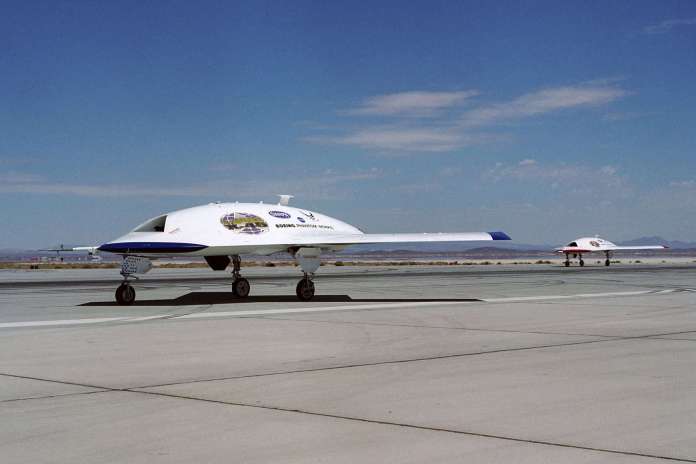
Throughout the 21st century, the Mojave Desert in California had a flight that would become the next big step after the Wright brothers over a 100 years. The transcontinental flight was very fast, jet-powered, and standard in the air, but nobody had seen this before from the visual side, and it was a look into the future when battles in the air would be without human pilots. This was the Boeing X-45A, a conceptual drawing of an unmanned aerial vehicle that would dramatically change the presentation of the air force in the 21st century.

Image Source: Bing Image. License: All Creative Commons

Pioneers Behind the Program

Boeing’s research division, Phantom Works—famous for its willingness to take a chance—teamed up with DARPA and the U.S. Air Force to tackle a daunting challenge: knocking out enemy air defenses without risking pilots’ lives. It was a lofty mission, and the X-45A was their solution.

Image Source: Bing Image. License: All Creative Commons

Form Meets Function

The X-45A was not built for looks—it was constructed to hunt. Its bulbous fuselage, spindly landing gear, and 26-foot wingspan created a slightly bug-like shape. Behind that visage was a single-minded mission: to prove that an unmanned aircraft could conduct combat missions, specifically the Suppression of Enemy Air Defenses (SEAD).

Image Source: Bing Image. License: All Creative Commons

The initial of the two prototypes, Elsie May by nickname, flew in 2002 from Edwards Air Force Base. Under the call sign Stingray One, it reached 7,500 feet and 225 mph on its first flight.

Image Source: Bing Image. License: All Creative Commons

When the drone took off from the runway, the cry of the flight director—”She’s off!”—emotionally conveyed the sense of being there when history happened. Soon after, the X-45A was the first autonomous UAV to deliver ordnance on a target.

Image Source: Bing Image. License: All Creative Commons

Milestones in the Mojave

Two X-45As were constructed by Boeing as reduced-scale proof-of-concept planes. The inaugural test flight arrived on May 22, 2002, in a 14-minute oval-track mission at 195 knots. The second entered the program in November. The X-45A had reached a significant milestone by April 2004: hitting a ground target with a 250-pound inert precision-guided bomb.

Image Source: Bing Image. License: All Creative Commons

The event was four months later, when the program demonstrated multi-drone coordination, which had two X-45As controlled by a single ground operator. On their 50th mission in February 2005, the pair took this another step further by autonomously deciding which aircraft was best positioned to engage a simulated target, allocating resources, and reacting to new threats in real time. This was not some preprogrammed flight-it was adaptive, coordinated decision-making without constant human input.

Image Source: Bing Image. License: All Creative Commons

Why UCAVs Matter

The X-45A was part of the larger Unmanned Combat Air Vehicle (UCAV) idea: cheap, deadly, and handy machines to hit early and frequently in a war. These vehicles could engage many targets on one mission, fight in tandem with manned aircraft, and deploy from regular air bases. The “pilotless” configuration eliminated weight, saved money, and avoided the long time needed to train flesh-and-blood aviators.

Image Source: Bing Image. License: All Creative Commons

With improvements in precision-guided weapons, even a small UCAV such as the X-45A might destroy hardened targets that previously necessitated heavy bombers. In a universe where budgets and operational risk are continuously balanced, this was a tantalizing capability.

Image Source: Bing Image. License: All Creative Commons

A Success That Never Deployed

Even with its stellar track record, the X-45A never saw operational deployment—a familiar destiny for testbeds. The shift from technology demonstrator to deployed system tends to get mired in what has been termed the “valley of death,” in which funding and strategic interest fluctuate before production can start.

Image Source: Bing Image. License: All Creative Commons

Now, DARPA is trying to narrow that gap with programs such as the “X Prime” program, which seeks to get promising prototypes out of the lab and into real-world applications sooner and narrow the gap between experimentation and deployment.

Image Source: Bing Image. License: All Creative Commons

Roots and Legacy

The DNA of the X-45A lies in previous Boeing experiments, such as the YF-118G Bird of Prey, where low-cost stealth and manufacturing methods were experimented with. Insights from those initiatives directly influenced the design and building of the X-45A.

Image Source: Bing Image. License: All Creative Commons

Both X-45A prototypes are now housed in museums, reminders of a time when unmanned air combat made a huge leap forward. But their impact goes far beyond placating static displays. Contemporary UAVs and UCAVs still borrow from the autonomy, survivability, and mission flexibility first demonstrated in Mojave skies.

Image Source: Bing Image. License: All Creative Commons

The X-45A’s story is more than a chapter in aviation history—it’s a blueprint for the future. In an age where speed, precision, and risk reduction drive innovation, its lessons remain highly relevant. The program proved one thing beyond doubt: the era of the autonomous combat aircraft isn’t coming—it’s already here.

Fortnite’s Plot Problem: Why the Story Doesn’t Add Up Anymore

0

Besides being recognized as the most popular battle royale and a creative place for streamers, Fortnite is also a narrative-driven game. If the plot had convinced you to stop wondering about the newest events on the island, then you would be one of many. The storyline has been engaging people for quite some time, but it has also confused a great number of them. Quite stubbornly, it has transitioned from a possible mythological background to a charming, humorous, and irritating, pretty much straightforward explanation.

Image Source: Bing Image. License: All Creative Commons

Just in 2019, the Fortnite universe was brimming with possibilities. The end of Chapter 1 was not only an event that marked the pause of the Fortnite saga, but also disconnected the sky due to the explosion of the meteor and the mysterious fall into darkness. These events were something from the global culture to which even people who were not into the gaming community could not help but get attracted. Those who witnessed the island’s death happening live were given a sense of participation, and it looked like Epic Games was flourishing in a universe with recurring characters and some degree of continuity.

But that promise gradually disappeared with the times. The plot of Fortnite has been really inconsistent throughout, but in the latest developments, the lack of a clear direction is very evident. Sometimes the story is used to lead the action, for example, in Chapter 3: Season 2, the resistance theme was very dominant and centrally located. At some other moments, it is so much in the background that it is hardly noticeable; this is, for instance, in Chapter 3: Season 3, where the story barely makes any sense. The change in the mood can be quite sudden. In one season, you may be fighting a reality devouring chrome entity, and the next, you may be hanging out with summer parties. For players who are into the lore and want it to be consistent and evolving, this inconsistency can be frustrating.

At one point, things got even more complicated when Fortnite started telling its story in a different way through comics. The Zero Point and Zero War series, created with the help of Marvel and DC, revealed some of the game’s hidden secrets, such as the secrets of secret bunkers and final parts of massive live events. The irony? Not everyone got to experience them. Those who didn’t buy the comics or couldn’t get them in their country were totally clueless, and a big number of them had to resort to YouTube lore explainers for updates. That shift from in-game to different media storytelling had the story feeling fragmented, and the fans who were unaware of the happenings were left in the dark.

The crossovers, at first, may have seemed to be a part of the confusion, but now they are an integral part of the whole story. It is very interesting to watch Spider-Man or Batman coming onto the island. These relationships sometimes can fit the lore the right way. On the other hand, most of the time, they are just blending. The Seven, a once-mysterious and compelling group, had a little bit of charm left after The Foundation turned out to be based on and voiced by Dwayne Johnson. Now, the distinction between Fortnite’s world and the world of celebrity became ambiguous and weird. Moreover, if you add Ariana Grande skins, LeBron James skins, or The Rock skins as Black Adam to the mix, then it becomes very apparent that the universe is not seamlessly connected. It is a completely different thing that actors can be the voices of characters and that they can be the characters themselves, literally.

Moreover, there are also retcons. At one time, fans constantly imagined that The Paradigm and The Singularity were the same, as they had similar-looking designs and they were the same characters, just different interpretations. But later, the Zero War comics decided to depict them as separate characters, which in turn discredited fan theories. Retcons of this kind make it very challenging for even the most hardcore lore enthusiasts to ever figure out what canon is.

Repetition is another problem that has been raised. Fortnite’s story loop has become stuck in a predictable cycle: something threatens the island, the map shifts, and the heroes band together to prevent it. Large trailers build up each new season, but beneath the surface, the formula doesn’t ever really change. For long-time fans, it’s beginning to feel like déjà vu.

It doesn’t mean that Fortnite’s narrative is dead. The universe has infinite possibilities, and the people surely desire a greater investment in the lore. But until Epic Games manages to integrate these narratives into something cohesive and significant, the story will continue to feel more like a patchwork and less like an epic. Currently, the lore is as elusive and as infuriating as ever.

Lockheed XF-90: The Jet That Survived Nuclear Tests

0
Image Source: Bing Image. License: All Creative Commons

In the early days of the Cold War, the United States was suffering from the problem of how its bombers were able to get deep into enemy territory and protect themselves from faster enemy fighters, long-range missiles, and the general threat of nuclear war. One of the replies, the solution that was offered, was “penetration fighter” – a fighter aircraft that would accompany the bombers, clear the enemy, and then return with them to the base.

Image Source: Bing Image. License: All Creative Commons

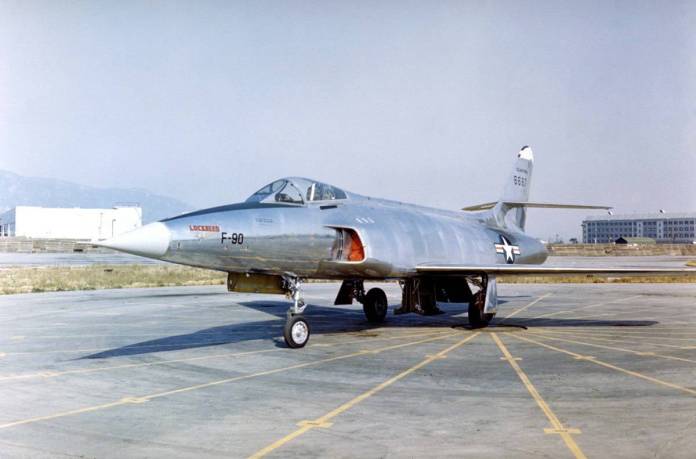
Lockheed’s response to this issue was the XF-90, designed at the Skunk Works legend by Kelly Johnson and Willis Hawkins.

Image Source: Bing Image. License: All Creative Commons

Taking a lesson from the P-80 Shooting Star, the XF-90 was state-of-the-art in drawings: 35-degree swept wings, Fowler flaps, leading-edge slats, and a swept wings-afterburners-tip tanks combination novel to home production.

Image Source: Bing Image. License: All Creative Commons

Its tail surfaces were adjustable in both directions, another innovative step forward.

Image Source: Bing Image. License: All Creative Commons

But engineering superiority had its price. The XF-90’s airframe was constructed from 75ST aluminum—stronger by far than the more conventional 24ST—but also considerably heavier.

Image Source: Bing Image. License: All Creative Commons

The consequence was an aircraft that would endure incredible forces, such as nuclear shock waves, but whose two Westinghouse J34 turbojets simply could not generate enough power.

Image Source: Bing Image. License: All Creative Commons

Though the plane theoretically achieved 665 mph, with a range of 2,300 miles and a ceiling of 39,000 feet, it fell behind Air Force requirements and its competition.

Image Source: Bing Image. License: All Creative Commons

Flight testing exposed its deficiencies. The XF-90 was able to break the sound barrier only in a dive, and even takeoff needed rocket-assisted boosters.

Image Source: Bing Image. License: All Creative Commons

It was compared unfavorably with competitors such as the McDonnell XF-88 and North American YF-93, as it was slow, clumsy, and underpowered.

Image Source: Bing Image. License: All Creative Commons

When the Air Force chose the XF-88 as its favored aircraft, the penetration fighter idea lost momentum as strategic needs changed and appropriations ended.

Image Source: Bing Image. License: All Creative Commons

But the XF-90 became oddly famous due to its unparalleled durability. One of the prototypes was subjected to stress tests at the National Advisory Committee for Aeronautics, and the second one was shipped to the Nevada Test Site for nuclear weapons tests.

Image Source: Bing Image. License: All Creative Commons

The tests yielded surprising results: a one-kiloton explosion produced minor fractures only, a 33-kiloton explosion crumpled the nose but did not suffer catastrophic structural damage, and even a 19-kiloton explosion that ripped off the tail left the plane mostly intact.

Image Source: Bing Image. License: All Creative Commons

Amazingly, engineers assessed that it would only take 106 hours to return the plane to airworthiness after the initial explosion.

Image Source: Bing Image. License: All Creative Commons

Years later, the radiation-stained pieces of the XF-90 were unearthed, restored, and put on exhibit at the United States Air Force National Museum in Dayton, Ohio—a rare reminder of a jet that withstood three nuclear explosions.

Image Source: Bing Image. License: All Creative Commons

Though it never saw active duty and failed to fulfill its intended mission, the XF-90 influenced future designs like the F-104 Starfighter. Its story demonstrates that even “failed” aircraft can push technological boundaries and that some machines are built tough enough to endure both battlefield stress and atomic fire.

A-3 Skywarrior: The Navy’s All-Purpose Carrier Aircraft

0
Image Source: Bing Image. License: All Creative Commons

In case there was a particular one known as “The Top Boss,” the Douglas A-3 Skywarrior, or more appropriately “The Whale,” as termed by the crew, would be the one to indicate no hesitation that the rest of the U.S. Navy planes are the leaders. In fact, this colossal Cold War weapon was the very first to make a test flight over the ocean in 1952, and it virtually performed all the Navy task repertory with one or two operations: it terrorized the atomic bombs, photographed from the air for spying purposes, conducted the electronic war, and it worked as an aerial tanker that allowed fighters to stay on the sky for a long time and also gave a lot of pilots the rescue.

Image Source: Bing Image. License: All Creative Commons

Born of a Nuclear Mission

After the Second World War, the period was very tense, and the Navy was looking for a method to drop nuclear warheads from the ocean. The Douglas Aircraft Company, led by genius Ed Heinemann, came back with the A-3—an enormous, long-range, carrier-based jet that could deliver its bomb deep into the continent. It was no easy task to put such a massive thing on a rolling, sea-tied runway. The engineers went on to create a tricycle landing gear to facilitate the deck handling, they gave the folding high-mounted wings to save space in the hangar, and they also installed two powerful Pratt & Whitney J57 turbojets for the extended range.

Image Source: Bing Image. License: All Creative Commons

The cockpit looked working, but it really was miserable—the pilot and the bombardier/navigator were sitting next to each other, and the third member, who was in charge of the defense equipment, was facing backwards. No ejection seats were installed, as part of a rather controversial decision to save weight, a choice that brought about the dark crewroom humor that “A3D” meant “All Three Dead” in an accident.

Image Source: Bing Image. License: All Creative Commons

From Nuclear Strike to All-Purpose Giant

The Skywarrior began operations in 1956, taking the place of the AJ Savage as the Navy’s nuclear strike weapon. However, with the advent of submarine-launched ballistic missiles, the nuclear bomber was soon out of a job. Rather than being retired prematurely, “The Whale” diversified. Its massive bomb bay, tough airframe, and endurance capabilities made it well-suited to new missions—electronic jamming, surveillance, and, most notably, air refueling.

Image Source: Bing Image. License: All Creative Commons

Vietnam and the Tanker’s Lifeline

It was in Vietnam that the A-3 earned its legendary status. In the early days of the war, there were some Skywarriors that flew bombing missions, but it was the tanker versions—the KA-3B and EKA-3B—that provided the foundation for carrier operations. They refueled strike packages before crossing the beach, hovered at the edge of enemy airspace for emergencies, and even descended on floundering aircraft making their way home damaged or with dangerously low fuel levels.

Image Source: Bing Image. License: All Creative Commons

War stories are replete with Skywarrior heroism. On July 18, 1967, for instance, Commander Tom Maxwell piloted his tanker deep into country—contrary to orders and under fire from enemy defenses—to refuel Lt. Commander Dick Schaffert’s low-flying F-8 Crusader, shepherding it back to safety. Aviation historian Joe Baugher estimated that Skywarrior tankers rescued up to 700 Navy and Marine planes during the war.

Image Source: Bing Image. License: All Creative Commons

Built to Adapt

More than 282 Skywarriors were built in several versions. The main production model was the A-3B with better engines and avionics. The KA-3B performed the tanker role, while the EKA-3B did both refueling and jamming. The RA-3B was prepped for reconnaissance, and the EA-3B became a Cold War standard for electronic intelligence, flying around the globe and even flying missions in Operation Desert Storm in 1991. The U.S. Air Force also looked to the design, converting it to the B-66 Destroyer for use in ground-based operations.

Image Source: Bing Image. License: All Creative Commons

Big Jet, Big Risks

Flying something the size of the Skywarrior off a carrier deck was an ongoing challenge. It broke records for the heaviest catapult launch, but its size made it less tolerant of error. Almost 42% of all Skywarriors produced were destroyed in accidents or combat, and without ejector seats, crews had fewer chances to survive an emergency. In spite of the hazards, its crews developed a reputation for skill, discipline, and lifesaving resolve.

Image Source: Bing Image. License: All Creative Commons

Adieu to “The Whale”

By the early 1990s, newer and more specialized planes had replaced the Skywarrior’s missions. The Navy retired the remaining A-3s in September 1991, but their memory continues. Surviving specimens are on display at museums around the country, reminders of a time when the biggest bird on the carrier deck wasn’t a strike fighter, but the plane that ensured the strike fighters made it home.

Image Source: Bing Image. License: All Creative Commons

The Douglas A-3 Skywarrior’s history is more than a roll call of specs or combat missions. It’s one of adaptation, unheralded heroism, and a plane so versatile it served for decades in missions its original creators never dreamed of. In short, it was “The Whale,” but it got the Navy through some of its most challenging years at sea.

More related images you may be interested in:

Image Source: Bing Image. License: All Creative Commons

How the P-61 Black Widow Ruled the Night Skies of WWII

0
Image Source: Bing Image. License: All Creative Commons

The Northrop P-61 Black Widow was a unique model in the context of other World War II planes that flew in the same airspace as it – it was an aircraft that was specially made for night operations. In fact, it was the first American plane to be completely reconstructed to go to war at night, and by combining innovative radar technology, lethal weapons, and an odd but still interesting design by today’s plane fans, it became one of the most victorious entries of history.

Image Source: Bing Image. License: All Creative Commons

Here’s how this incredible plane became one of history’s most feared nighttime fighters.

Image Source: Bing Image. License: All Creative Commons

5. A Legacy That Continues to Cast a Shadow

The Black Widow’s tale did not conclude with the final days of World War II. Squadrons such as the 547th Night Fighter Squadron—now renamed the 547th Intelligence Squadron—took their essence into subsequent ages, refining themselves to keep up with changing menaces.

In 2023, a plaque was dedicated at Meadows Field Airport in Bakersfield, California, commemorating the squadron’s WWII service. For Lt. Col. Jeremy Hirsch, now its commander, it was an opportunity to look back on a proud heritage. The unit’s mission today is much more high-tech—tracking and countering today’s adversaries, especially in the Indo-Pacific.

Image Source: Bing Image. License: All Creative Commons

Although their Vietnam-era slogan “HIT MY SMOKE” persists in squadron lore, Fridays are still special—members fly the original Black Widow patch, preserving the legacy of the aircraft.

Image Source: Bing Image. License: All Creative Commons

4. Proving Its Worth in Combat

The P-61 joined the battle in the summer of 1944 and did not wait long to display what it was capable of. On July 6, its first verified kill was a Japanese Mitsubishi G4M “Betty” bomber shot down by a Black Widow of the 6th Night Fighter Squadron. In the Pacific, its firepower and radar quickly dispatched the night raiders of the enemy.

Image Source: Bing Image. License: All Creative Commons

In Europe, it supplanted earlier British night fighters, picking off German bombers and fighters in the darkness of night. Perhaps its most legendary flight was on August 14, 1945—just before VJ Day—when a P-61B called Lady in the Dark racked up what’s believed to be the last Allied air victory of the war.

Image Source: Bing Image. License: All Creative Commons

The Black Widow’s career lasted far past WWII. Renamed the F-61, it remained in service through 1954, and its design was used in the F-15 Reporter for reconnaissance missions. The best description came from aviation journalist Isaac Seitz: “The P-61 Black Widow was one of the most distinctive and visually unusual aircraft to fly in the Second World War.”

Image Source: Bing Image. License: All Creative Commons

3. Power Meets Precision Design

The Black Widow was highly armed—four 20mm Hispano M2 cannons under the fuselage and four .50 caliber Browning machine guns in a remote dorsal turret. A three-member crew—pilot, gunner, and radar operator—collaborated to find, chase, and annihilate objectives.

Image Source: Bing Image. License: All Creative Commons

Its twin-boom configuration provided stability, and the stepped and bubble canopies gave outstanding visibility to each crewman. With two Pratt & Whitney R-2800 radial engines producing approximately 2,000 horsepower each, the P-61 had a top speed of 366 mph and could climb higher than 33,000 feet—remarkable for an airplane as big as a medium bomber.

Image Source: Bing Image. License: All Creative Commons

In spite of its size, it was light on its feet. Tricycle landing gear and spoilers instead of ailerons rendered it surprisingly maneuverable. As the Smithsonian’s National Air and Space Museum reiterated: “The XP-61 flies beautifully and is an old man’s airplane”—easy to fly and forgiving.

Image Source: Bing Image. License: All Creative Commons

2. Radar—Its True Superpower

Though its weapons were impressive, the P-61’s true advantage lay in its radar. The Western Electric SCR-720A system could detect enemy planes up to five miles away, regardless of night or bad weather. With the radar operator helping the pilot onto target, the Black Widow could deliver a lethal blow.

Image Source: Bing Image. License: All Creative Commons

Britain had led the way with night-fighting techniques using planes such as the Bristol Blenheim and Boulton Paul Defiant, but the P-61 took things to another level—mating sophisticated radar with a gun-laden, specifically designed night fighter. It was a quantum leap that redefined the game.

Image Source: Bing Image. License: All Creative Commons

1. A Permanent Place in Aviation History

The P-61 Black Widow was greater than a war machine—it was an icon of American resourcefulness and flexibility. Built upon British experience but with U.S. engineering expertise, it integrated long range, longevity, radar capability, and abundant firepower in one powerful package.

Image Source: Bing Image. License: All Creative Commons

Its legacy is still felt today—not merely in museum exhibits or historical markers, but in the DNA of contemporary all-weather warriors built to own the heavens, day or night.