Home Blog Page 72

15 Movies and Shows That Perfectly Capture the Heart of Romance

0
Image Source: Bing Image. License: All Creative Commons

Hollywood often paints love as glamorous, perfectly polished, and neatly resolved with a happy ending. Yet, some films and TV shows take a different path, showing relationships as messy, complicated, painful, and deeply human. The movies and series below explore love, family, friendship, and partnership in ways that feel authentic—unvarnished and unafraid to face heartbreak. These stories capture the highs and lows of real connections, making them honest, relatable, and profoundly moving.

Image Source: Bing Image. License: All Creative Commons

15. His Three Daughters

His Three Daughters captures the emotional chaos that surfaces when family members are forced back into the same space during a moment of crisis. Three sisters, Katie, Christina, and Rachel, reunite in their father’s apartment as he approaches the end of his life, and old resentments immediately resurface.

Image Source: Bing Image. License: All Creative Commons

Each woman arrives carrying her own emotional armor: Katie’s need for control, Christina’s rigid sense of order, and Rachel’s lingering feeling that she doesn’t fully belong. Their conversations are uncomfortable, sharp, and often unresolved, mirroring the way real families communicate under stress. Rather than building toward a dramatic catharsis, the film lingers in quiet moments, glances, pauses, and half-finished thoughts that feel painfully familiar.

Image Source: Bing Image. License: All Creative Commons

What makes the film so affecting is its honesty. Healing doesn’t come easily, and not everything is fixed by the end. Instead, His Three Daughters reminds us that love within families is complicated, imperfect, and often expressed through conflict.

Image Source: Bing Image. License: All Creative Commons

14. Nobody Wants This

Nobody Wants This refreshes the romantic comedy by grounding it firmly in reality. Kristen Bell plays Joanne, who finds herself in a relationship with Noah, a rabbi whose faith and family introduce real-world complications into their romance.

Image Source: Bing Image. License: All Creative Commons

Rather than relying on grand gestures, the series focuses on communication, compromise, and self-awareness. Joanne and Noah don’t magically solve their problems; they talk, stumble, and reassess what they’re willing to give up or hold onto. The show acknowledges how cultural differences can strain even the most genuine connections. Its charm lies in its realism. Love here isn’t effortless or idealized; it’s work, negotiation, and growth, and that honesty makes the story resonate.

Image Source: Bing Image. License: All Creative Commons

13. Couples Therapy

Couples Therapy strips away the theatrics of reality television and replaces them with raw emotional truth. Following real couples in sessions with Dr. Orna Guralnik, the series offers a rare glimpse into what relationship repair actually looks like.

Image Source: Bing Image. License: All Creative Commons

Season three broadens the scope by including a polycule, but the heart of the show remains unchanged: unresolved resentment, emotional wounds, and the slow, sometimes frustrating process of learning how to communicate. There are no miracle breakthroughs, just incremental progress and painful realizations. What makes the series so compelling is its refusal to simplify. Love here is work, vulnerability is uncomfortable, and healing happens one conversation at a time.

Image Source: Bing Image. License: All Creative Commons

12. Past Lives

Past Lives is a quiet meditation on love, timing, and the lives we don’t end up living. Nora and Hae Sung reconnect years after their childhood friendship was cut short, and what unfolds is filled with longing and emotional restraint rather than melodrama.

Image Source: Bing Image. License: All Creative Commons

The film treats all relationships with care, including Nora’s marriage to Arthur, which is portrayed with tenderness and mutual respect. There are no villains, just people trying to understand their feelings without betraying their commitments. Rather than offering closure, Past Lives embraces ambiguity. It understands that some connections exist to shape us, not to last forever.

Image Source: Bing Image. License: All Creative Commons

11. Beef

On the surface, Beef is about a road rage incident spiraling out of control. Beneath that chaos, however, is a deeply uncomfortable exploration of marriage, resentment, and emotional repression.

Image Source: Bing Image. License: All Creative Commons

Amy and George’s relationship is strained, messy, and brutally honest. The show allows its characters to be selfish, cruel, and painfully human, showing how unspoken pain can rot relationships from the inside out. Beef doesn’t offer redemption through perfection; it suggests healing comes from accountability, self-awareness, and the willingness to confront uncomfortable truths.

Image Source: Bing Image. License: All Creative Commons

10. The Bear

While The Bear is set in the pressure cooker of a restaurant kitchen, its emotional core lies in relationships between coworkers, siblings, and oneself. Carmen’s attempt to run his late brother’s restaurant forces him to confront grief, control issues, and inherited trauma.

Image Source: Bing Image. License: All Creative Commons

The series excels at portraying how dysfunction is passed down and how difficult it is to unlearn harmful patterns. Trust is fragile, communication is messy, and progress is rarely linear. At its heart, The Bear is about rebuilding, not just a business, but connections fractured by loss and pride.

Image Source: Bing Image. License: All Creative Commons

9. Shrinking

Shrinking centers on grief and the reckless choices that often follow it. Jimmy, a therapist mourning his wife, blurs professional boundaries while trying, and often failing, to reconnect with his daughter and friends.

Image Source: Bing Image. License: All Creative Commons

The show embraces emotional messiness. Relationships fracture, heal, and fracture again, reflecting how grief doesn’t move in straight lines. Even the therapists are flawed, lost, and in need of support themselves. By blending humor with vulnerability, Shrinking presents healing as imperfect but possible.

Image Source: Bing Image. License: All Creative Commons

8. Somebody Somewhere

Somebody Somewhere quietly celebrates friendship as a form of love just as powerful as romance. Sam finds emotional refuge in her bond with Joel, a friendship built on acceptance rather than expectation.

Image Source: Bing Image. License: All Creative Commons

Their connection thrives on honesty, humor, and shared loneliness. The series challenges the idea that romantic relationships are the ultimate emotional goal, showing instead how platonic love can be deeply sustaining. It’s a gentle reminder that sometimes the most meaningful relationships are the ones that simply allow us to be ourselves.

Image Source: Bing Image. License: All Creative Commons

7. Marriage Story

Marriage Story pulls no punches in its portrayal of divorce. Charlie and Nicole’s separation is painful, not because of cruelty, but because of unresolved hurt and miscommunication. The film captures the exhausting logistics of co-parenting alongside the emotional devastation of letting go.
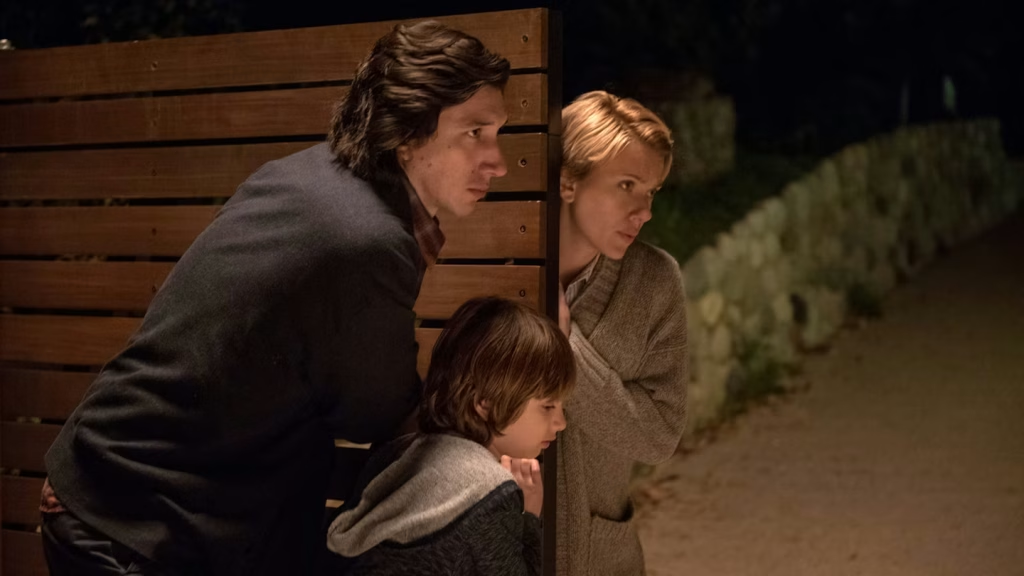
Image Source: Bing Image. License: All Creative Commons

Both characters are deeply flawed, yet sympathetic, making the breakdown of their marriage feel tragically believable. Rather than assigning blame, Marriage Story explores how love can evolve, even when it no longer looks the way it once did.

Image Source: Bing Image. License: All Creative Commons

6. Blue Valentine

Blue Valentine traces a relationship from its hopeful beginnings to its heartbreaking end. By intercutting moments of early romance with scenes of emotional erosion, the film reveals how love can fade without a single defining moment.

Image Source: Bing Image. License: All Creative Commons

Michelle Williams and Ryan Gosling bring raw vulnerability to their roles, making every argument and quiet disappointment feel earned. The film refuses to soften its message or offer comfort. It’s an unflinching portrait of what happens when love alone isn’t enough.

Image Source: Bing Image. License: All Creative Commons

5. Like Crazy

Like Crazy examines long-distance love with brutal honesty. Separated by immigration laws, Anna and Jacob struggle to maintain intimacy across continents. The film shows how distance creates temptation, resentment, and emotional drift.

Image Source: Bing Image. License: All Creative Commons

Love persists, but it changes, often in painful ways neither partner anticipates. Its power lies in its uncertainty. Like Crazy understands that sometimes relationships don’t fail dramatically; they simply wear down.

Image Source: Bing Image. License: All Creative Commons

4. (500) Days of Summer

(500) Days of Summer dismantles the romantic fantasy by showing how expectations can sabotage love. Told out of order, the film mirrors how we replay relationships in our minds, highlighting the good while ignoring warning signs.

Image Source: Bing Image. License: All Creative Commons

Tom’s idealized view of Summer ultimately blinds him to who she really is. The film gently but firmly critiques the idea that love should follow a predetermined script. It’s a story about learning, growing, and accepting reality even when it hurts.

Image Source: Bing Image. License: All Creative Commons

3. Eternal Sunshine of the Spotless Mind

Despite its sci-fi premise, Eternal Sunshine of the Spotless Mind is one of the most emotionally grounded love stories ever made. Joel and Clementine attempt to erase each other from their memories, only to rediscover why they mattered in the first place.

Image Source: Bing Image. License: All Creative Commons

The film captures the chaos, tenderness, and regret embedded in relationships. It suggests that pain is inseparable from love, and perhaps worth enduring. Its message lingers: even flawed connections leave lasting imprints.

Image Source: Bing Image. License: All Creative Commons

2. The Before Trilogy

The Before trilogy follows Jesse and Céline across nearly two decades, chronicling how love evolves. Each installment reflects a different stage of infatuation, reconnection, and long-term partnership.

Image Source: Bing Image. License: All Creative Commons

The dialogue feels spontaneous and intimate, grounded in everyday concerns rather than cinematic fantasy. The films understand that love is shaped by choices, compromises, and persistence. Few stories capture romantic realism as completely as this trilogy.

Image Source: Bing Image. License: All Creative Commons

1. Call Me By Your Name

Call Me By Your Name is a tender exploration of first love and emotional awakening. Elio’s relationship with Oliver unfolds slowly, charged with longing, discovery, and inevitable heartbreak.

Image Source: Bing Image. License: All Creative Commons

What elevates the film is its emotional universality. Though rooted in a specific time and place, it captures feelings that nearly everyone recognizes: the intensity of loving deeply for the first time and the pain of letting go. It’s a love story that shapes us forever, even when it doesn’t last.

Image Source: Bing Image. License: All Creative Commons

These films and series resonate because they don’t promise perfection. Instead, they reflect love as it’s actually lived, complicated, fragile, transformative, and deeply human. Whether romantic, familial, or platonic, these stories remind us that connection is rarely easy, but always worth exploring.

15 Blockbuster Movies That Disappointed Audiences

0
Image Source: Bing Image. License: All Creative Commons

Hype can be a double-edged sword for movies. With star-studded casts, eye-catching trailers, and nonstop buzz, audiences often arrive expecting something truly spectacular. But when anticipation runs too high, even a solid film can feel underwhelming if it doesn’t match the excitement leading up to its release. The films below were heavily promoted and eagerly awaited, yet many viewers left feeling disappointed—they simply didn’t live up to the hype.

Image Source: Bing Image. License: All Creative Commons

15. Wonder Woman 1984

After the huge success of the first Wonder Woman film, the sequel had a lot to live up to. Trailers and advertisements hinted at a radical 1980s setting, the long-awaited battle with Cheetah, and the type of high-octane action that fans hoped would live up to or even exceed the original.

Image Source: Bing Image. License: All Creative Commons

When the film finally came out, however, many fans were left disappointed. Wonder Woman 1984 suffered from an overly convoluted plot, one-dimensional villains, and a surprisingly dull finale. For many fans, the film lacked the emotional resonance that made the first film so memorable, leaving a sense that it never quite lived up to its potential. The film is a reminder that successful sequels require more than just familiar elements and callbacks—something with real stakes and real storytelling is needed to truly connect.

Image Source: Bing Image. License: All Creative Commons

14. Thor: Love and Thunder

With Taika Waititi back in the director’s chair and a star-studded cast, Thor: Love and Thunder promised a humorous, action-packed adventure full of spectacle and heart. Audiences expected a combination of laughs, epic action, and the emotional beats that made Thor: Ragnarok such a hit.

Image Source: Bing Image. License: All Creative Commons

Unfortunately, the balance between humor and story fell apart. The comedic elements often overshadowed the emotional narrative, and the absence of key characters left notable gaps in engagement. While the film was visually entertaining, it lacked the cohesion and depth fans hoped for. Thor: Love and Thunder demonstrates how tricky it can be to replicate past successes. Comedy and heroics must work in harmony, or even a visually dazzling film can feel hollow.

Image Source: Bing Image. License: All Creative Commons

13. Don’t Look Up

Don’t Look Up arrived with a buzzworthy cast and a satirical premise, promising sharp social commentary and humor aimed squarely at current global crises. Audiences expected biting satire, clever dialogue, and a film that would spark conversation and reflection. However, the film struggled to deliver on its promises.

Image Source: Bing Image. License: All Creative Commons

Much of the humor felt forced, the pacing meandered, and the social commentary often seemed heavy-handed rather than insightful. Many viewers found themselves disengaged, leaving the theater feeling that the film’s ambition outpaced its execution. Despite its intentions, Don’t Look Up is a reminder that even star-studded casts and timely premises cannot guarantee audience engagement. Execution matters as much as concept.

Image Source: Bing Image. License: All Creative Commons

12. The Huntsman: Winter’s War

With a cast that included Charlize Theron, Emily Blunt, Chris Hemsworth, and Jessica Chastain, The Huntsman: Winter’s War seemed poised to deliver a captivating fantasy epic. Marketing emphasized lavish battles, magical creatures, and a rich narrative that promised to expand the universe of its predecessor.

Image Source: Bing Image. License: All Creative Commons

Yet, the movie felt uninspired. The story lacked intrigue, the fantasy elements appeared recycled, and even the talented cast could not elevate the thin material. The magical spectacle failed to leave a lasting impression, and audiences were left wishing for more substance. The film highlights that even a star-studded ensemble and stunning visuals can’t rescue weak storytelling. Strong writing and imaginative world-building are essential, especially in fantasy epics.

Image Source: Bing Image. License: All Creative Commons

11. Leave The World Behind

Leave the World Behind was promoted as a gripping thriller with ties to the acclaimed series Mr. Robot. The marketing suggested suspense, intrigue, and a tense, shared universe connection that would engage both fans of the series and newcomers. In practice, the connection to Mr. Robot felt forced, confusing, and ultimately unnecessary.

Image Source: Bing Image. License: All Creative Commons

The story became convoluted, and the tension was diluted by overcomplicated plot points, leaving audiences frustrated and unsatisfied. This film serves as a lesson in how overcomplicated narratives and forced franchise connections can backfire. Simplicity and clarity often create stronger engagement than convoluted ambition.

Image Source: Bing Image. License: All Creative Commons

10. Frozen 2

Frozen 2 had the monumental task of following Disney’s breakout hit, promising magical adventures, new songs, and character growth. Fans of all ages anticipated a continuation that would recapture the charm and heart of the original. Unfortunately, the sequel stumbled.

Image Source: Bing Image. License: All Creative Commons

Its plot was confusing, the music less memorable, and many felt that the emotional depth and charm of the first film were missing. While visually stunning, the movie didn’t fully satisfy long-time fans. Frozen 2 is a reminder that nostalgia and beloved characters can only go so far. To succeed, sequels must offer both a coherent story and fresh emotional stakes.

Image Source: Bing Image. License: All Creative Commons

9. The Artist

The Artist generated excitement as a black-and-white silent film paying homage to early cinema. Marketing promised a charming, innovative experience for audiences curious about this unusual format.

Image Source: Bing Image. License: All Creative Commons

Some viewers, however, were unprepared for the silent narrative, leading to confusion, disengagement, and even walkouts. While the film was celebrated critically, many mainstream viewers felt alienated by its unconventional style. The Artist highlights that hype can sometimes backfire if the audience isn’t ready for experimental storytelling, even when the film is groundbreaking.

Image Source: Bing Image. License: All Creative Commons

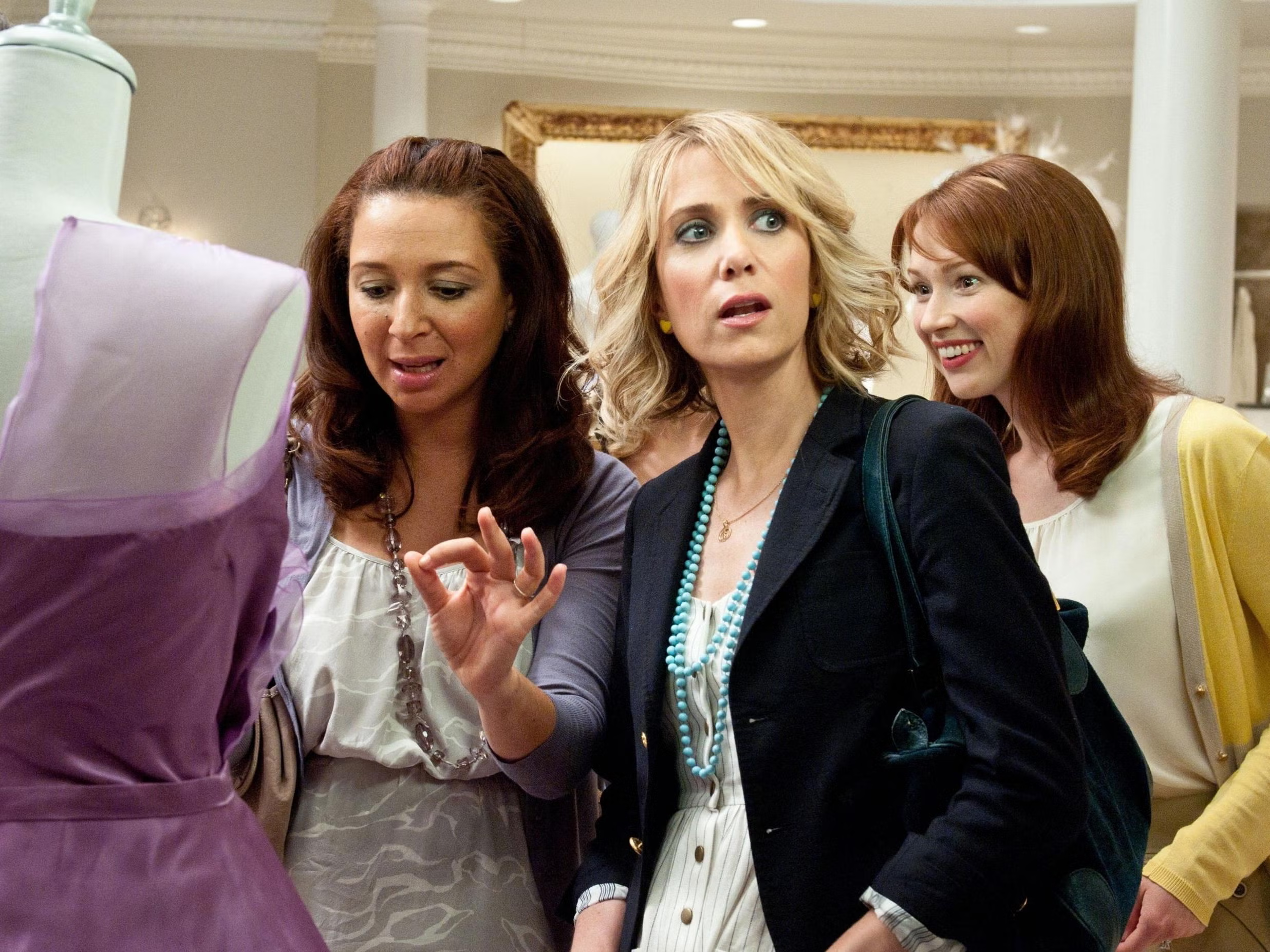
8. Bridesmaids

Bridesmaids arrived with immense buzz as a comedy that would break new ground in the genre. Trailers promised outrageous humor, bold performances, and scenes that would live on in pop culture, including the infamous bathroom gag. Yet, humor is subjective, and some viewers found the film underwhelming.

Image Source: Bing Image. License: All Creative Commons

Jokes that were heavily advertised fell flat for certain audiences, demonstrating that even well-marketed comedies can disappoint when expectations are sky-high. Bridesmaids illustrates the double-edged nature of hype: the more you promise laughs, the higher the risk of disappointment if they don’t land.

Image Source: Bing Image. License: All Creative Commons

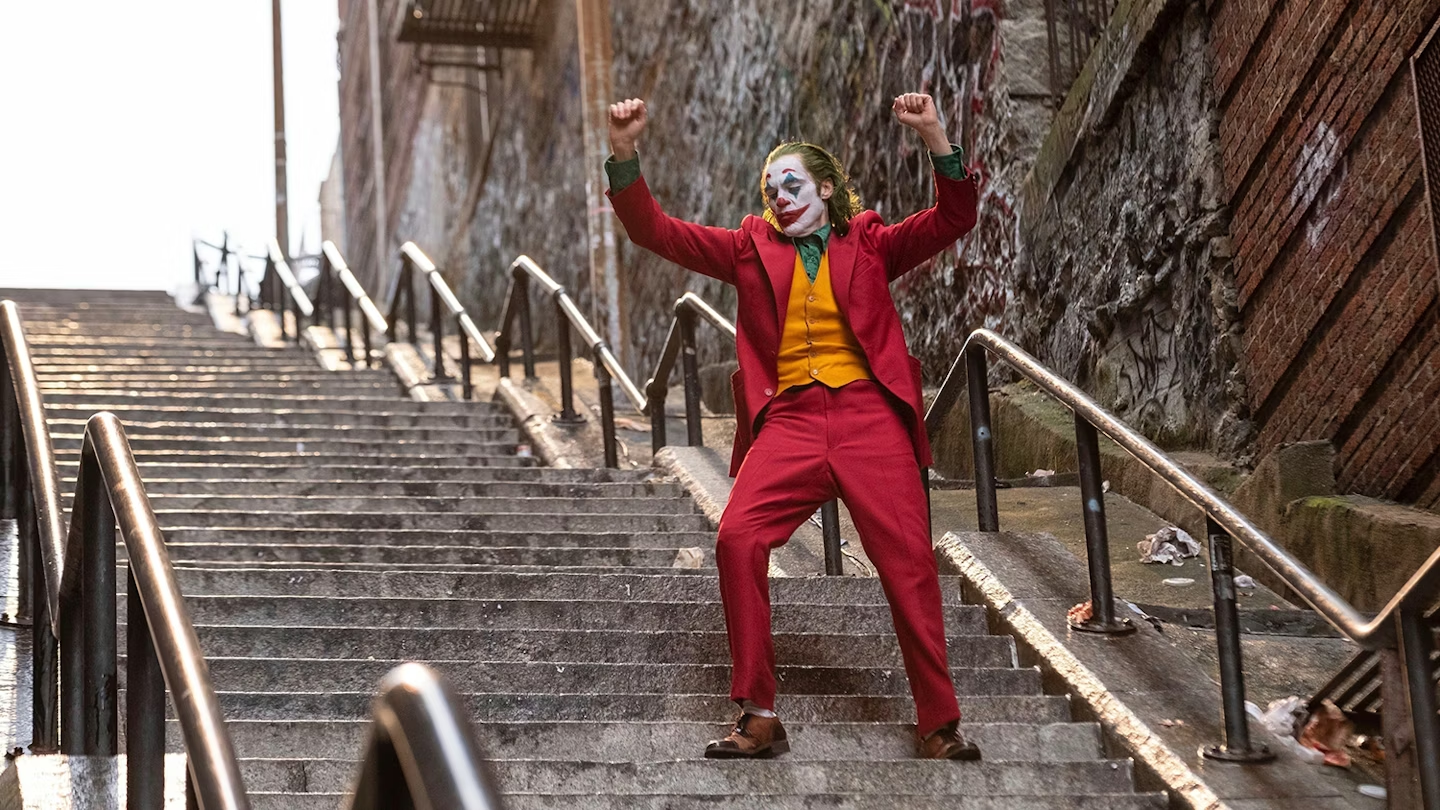
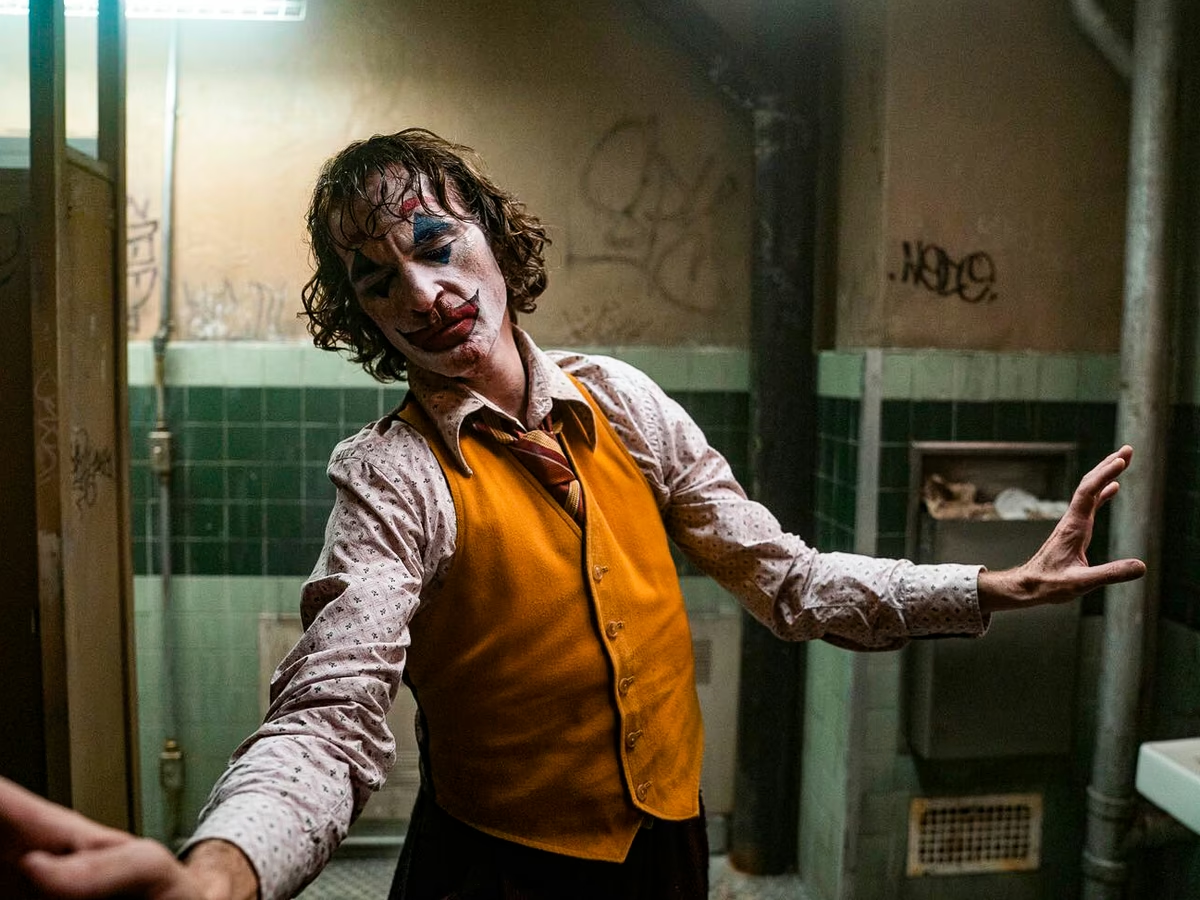
7. Joker

Joker was promoted as a daring, dark reinvention of an iconic character, with Joaquin Phoenix delivering a performance many expected would redefine the modern villain. Marketing leaned heavily into a gritty, mature tone reminiscent of classic psychological thrillers.

Image Source: Bing Image. License: All Creative Commons

While the film received critical acclaim, many casual viewers found it slow, repetitive, or overly derivative of other films. The messaging and moral ambiguity were polarizing, resulting in a split between critics and mainstream audiences. Joker demonstrates that even a celebrated performance and provocative concept can feel overhyped if it doesn’t resonate with a wide audience.

Image Source: Bing Image. License: All Creative Commons

6. Birds of Prey

Birds of Prey was positioned as DC’s bold comeback after the mixed reception of Suicide Squad. Marketing highlighted a fun, female-driven story, a vibrant visual style, and a quirky, playful energy with Margot Robbie at the helm.

Image Source: Bing Image. License: All Creative Commons

However, critics and fans noted that the story was thin, the villain underdeveloped, and character arcs lacked emotional resonance. The flashy style of the marketing could not make up for the story’s weaknesses, leaving some viewers disappointed. The film underscores that visual flair and star power cannot fully replace coherent storytelling and strong character development.

Image Source: Bing Image. License: All Creative Commons

5. Suicide Squad

Suicide Squad’s marketing campaign was intense, featuring highly stylized trailers, a top-tier cast, and a killer soundtrack. Expectations were enormous, with fans anticipating an irreverent, action-packed, character-driven adventure. The final product, however, was disjointed.

Image Source: Bing Image. License: All Creative Commons

Studio interference led to uneven pacing, a fractured narrative, and a film that often felt more like a music video than a coherent story. Audience disappointment was swift and widespread. Suicide Squad is a prime example of how even massive hype cannot guarantee satisfaction if the creative vision is compromised.

Image Source: Bing Image. License: All Creative Commons

4. Barbie

Barbie’s marketing promised a clever, self-aware take on the iconic toy, blending humor, nostalgia, and social commentary. Buzz was everywhere, from billboards to viral campaigns, making the film one of the most anticipated releases of its season. Despite its hype, the movie left some audiences feeling underwhelmed.

Image Source: Bing Image. License: All Creative Commons

Older viewers found the story lacking in substance, and some critics argued that the commentary didn’t land universally. While it resonated with younger audiences, the film didn’t fully satisfy broader expectations. Barbie demonstrates that even brilliant marketing cannot replace storytelling depth and emotional resonance.

Image Source: Bing Image. License: All Creative Commons

3. Mean Girls (2024)

The 2024 musical adaptation of Mean Girls aimed to modernize a beloved classic for a new generation. With anticipation fueled by the Broadway success and the original film’s cult following, expectations were sky-high. Unfortunately, the remake faltered.

Image Source: Bing Image. License: All Creative Commons

Musical numbers felt weak, the story updates seemed forced, and cultural references often missed the mark. Audiences felt that the charm and wit of the original had been diluted, leaving a sense of disappointment. Mean Girls illustrates the risks of remaking classics: nostalgia can draw interest, but without meaningful innovation or execution, the legacy of the original can suffer.

Image Source: Bing Image. License: All Creative Commons

2. Saltburn

Saltburn arrived with hype for its provocative, shocking premise and the star power of Rosamund Pike and Barry Keoghan. Marketing suggested a thrilling, unforgettable cinematic experience.

Image Source: Bing Image. License: All Creative Commons

The film, however, relied too heavily on shock value, with little substance to back it up. The narrative meandered, and the moments designed to surprise often fell flat, leaving viewers confused or unimpressed. Saltburn shows that sensationalism alone can’t sustain a film; audiences ultimately crave story, depth, and engagement.

Image Source: Bing Image. License: All Creative Commons

1. Madame Web

Madame Web was hyped as a mysterious, thrilling addition to the Spider-Man universe, with promises of action, intrigue, and exciting ties to the larger franchise. Instead, the film struggled to deliver a compelling narrative or memorable characters.

Image Source: Bing Image. License: All Creative Commons

Many viewers found it boring or uninspired, leaving theaters frustrated and disappointed. Madame Web is a stark reminder that even high-concept properties with franchise connections cannot succeed without substance, strong storytelling, and engaging characters.

Image Source: Bing Image. License: All Creative Commons

Hype can spark anticipation and fill theaters on opening weekend, but it is no substitute for quality storytelling. These 15 films highlight how easily expectations can clash with reality, leaving audiences frustrated or disappointed. Star power, viral marketing, and flashy trailers can only carry a film so far. At the end of the day, viewers crave substance, emotion, and engaging narratives—the elements that truly make a movie worth remembering.

15 Stories of Triumph: Overcoming Obstacles and Starting Anew

0
Image Source: Bing Image. License: All Creative Commons

Addiction knows no boundaries—fame, talent, or success offers no shield from its hold. For many celebrities and musicians, the relentless gaze of the public eye often intensifies their personal struggles. What captivates us in these stories isn’t the fall itself, but the courage it takes to rise again. The accounts below reveal the realities of relapse and recovery, highlighting resilience, perseverance, and the ongoing effort it takes to heal. Some showcase long-term sobriety, while others remind us how fragile recovery can be—but together, they show that the path to healing is rarely linear, yet always profoundly human.

Image Source: Bing Image. License: All Creative Commons

15. Steven Tyler

Steven Tyler’s life as Aerosmith’s frontman was fueled by creativity, chaos, and extreme excess. He has openly discussed spending millions on drugs over the years, cycling through heroin, cocaine, alcohol, and prescription opioids. His addiction nearly cost him his health, his family, and the band that made him a rock icon.

Image Source: Bing Image. License: All Creative Commons

Despite relapses and setbacks, Tyler continues to fight for sobriety with striking honesty. He doesn’t romanticize addiction; instead, he frames recovery as a daily commitment. By speaking openly about his struggles, Tyler has permitted fans to confront their own battles without shame.

Image Source: Bing Image. License: All Creative Commons

14. Nicole Richie

Nicole Richie’s early stardom was accompanied by harsh media attention, and her heroin and alcohol addiction struggles were documented in the tabloids and in courtrooms. Arrests and public outcry forced her to realize the path her life was taking and the toll of her uncontrolled addiction.

Image Source: Bing Image. License: All Creative Commons

However, her recovery became a turning point, particularly after she had children. Richie has talked about using her own experiences as a lesson for her kids, opting to be open and honest with them rather than keeping quiet. Her redemption illustrates that accountability and positive change are possible even after the most public mistakes.

Image Source: Bing Image. License: All Creative Commons

13. Howard Hughes

Howard Hughes’ addiction was a result of physical pain and not indulgence. Following a disastrous plane crash in 1946, he was hooked on prescription pain medication to cope with the chronic pain he suffered from, eventually becoming addicted to them for the next several decades.

Image Source: Bing Image. License: All Creative Commons

Although his addiction was largely out of public sight, it still had a significant impact on his life in his later years. His story is a warning of how quickly a need for pain medication can lead to addiction, even for a man as intelligent as Hughes.

Image Source: Bing Image. License: All Creative Commons

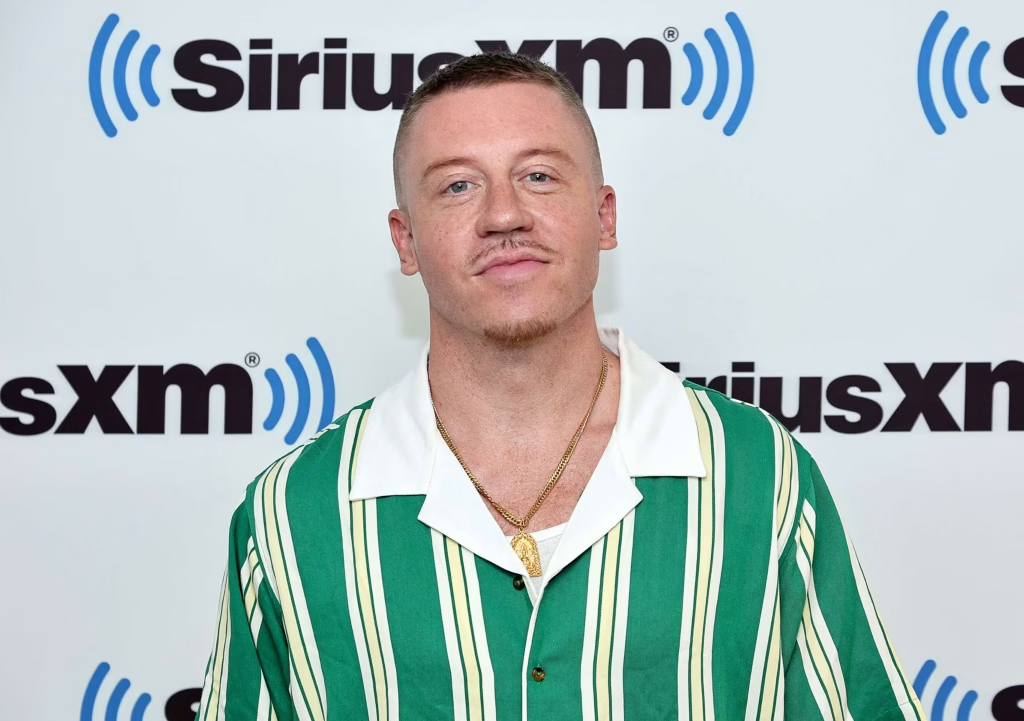
12. Macklemore

Macklemore had issues with alcohol and OxyContin addiction before his international success, calling opioids “deceptively dangerous” because of their availability. His addiction issues posed a problem not only for his career but for his most intimate relationships as well.

Image Source: Bing Image. License: All Creative Commons

Rehab was a turning point for Macklemore, providing him with the necessary structure, self-discovery, and support for long-term sobriety. Since rehab, Macklemore has been using his fame to spread awareness about addiction, turning his own struggle into a mission for the greater good.

Image Source: Bing Image. License: All Creative Commons

11. Gerard Butler

Gerard Butler’s addiction to painkillers began after a physical injury he sustained during the shooting of one of his movies. What began as a prescription gradually led to a dependence he couldn’t shake, eventually sending him to rehab in 2012.

Image Source: Bing Image. License: All Creative Commons

The ordeal led Butler to face issues he had been ignoring for a long time. By opening up about the emotional toll of rehab, he has encouraged others to embrace their vulnerabilities, even when they’re at the top of their game.

Image Source: Bing Image. License: All Creative Commons

10. Eminem

Eminem’s prescription drug addiction almost took his life. His overuse of Vicodin and Valium left him stuck in a vicious cycle of addiction that numbed both his imagination and his sense of joy.

Image Source: Bing Image. License: All Creative Commons

But sobriety brought clarity, and not without its challenges. Eminem has talked about learning to feel happiness without using, giving hope to those who think recovery is losing yourself, instead of finding yourself again.

Image Source: Bing Image. License: All Creative Commons

9. Matthew Perry

Matthew Perry’s success on Friends was matched by his increasing addiction to alcohol and prescription drugs. The demands of fame fueled his addiction, forcing him into rehab and health problems.

Image Source: Bing Image. License: All Creative Commons

Though Perry dedicated himself to helping others through addiction and recovery programs, sadly, he died in October 2023. His story highlights the need for ongoing support and the fact that addiction is a lifelong struggle.

Image Source: Bing Image. License: All Creative Commons

8. Bradley Cooper

Bradley Cooper sought recovery quite early in his life, choosing to stay away from alcohol and drugs before they took over his life completely. Recovery helped him regain his relationships and tap into the emotional side of life that he had never experienced before.

Image Source: Bing Image. License: All Creative Commons

Recovery has helped Bradley Cooper become a better son, partner, and artist, as he credits it. His example proves that recovery is not just about quitting but also about being receptive to the possibilities of connection and presence.

Image Source: Bing Image. License: All Creative Commons

7. August Alsina

August Alsina was exposed to addiction right from his childhood days, witnessing the damage it could cause. Ironically, his exposure to addiction came through prescription painkillers after a medical procedure, which he didn’t realize the danger of at first.

Image Source: Bing Image. License: All Creative Commons

Alsina had a close call with death and chose recovery, speaking out about the dangers of prescription drugs. His example has helped dispel myths about addiction and the ease with which addiction can creep in.

Image Source: Bing Image. License: All Creative Commons

6. Robert Downey Jr.

Robert Downey Jr. began his addiction at a shockingly young age, introduced to drugs by his father as a child. Years of arrests, rehab stints, and professional setbacks followed, leaving his future in Hollywood uncertain.

Image Source: Bing Image. License: All Creative Commons

His sobriety in the early 2000s is one of the greatest comeback stories in the history of entertainment. Downey’s tale is a testament that redemption is possible with the right accountability, support, and dedication.

Image Source: Bing Image. License: All Creative Commons

5. Simon Kirke

Simon Kirke struggled with addiction for decades, influenced by a family history of alcoholism and the touring musician lifestyle that bred excess. Near-death experiences and rehab stints littered a long, arduous journey.

Image Source: Bing Image. License: All Creative Commons

Today, sober for over a decade, Kirke uses his experiences to fuel advocacy and artistic pursuits related to addiction recovery. His story proves that it’s never too late to change and that recovery can actually enhance, not hinder, artistic expression.

Image Source: Bing Image. License: All Creative Commons

4. Sly Stone

Sly Stone’s revolutionary success in music was later marred by his heavy use of drugs, which affected his performances, recording sessions, and interpersonal relationships. Addiction slowly destroyed both his career and his stability.

Image Source: Bing Image. License: All Creative Commons

Instead of a clean redemption story, Stone’s is one of survival. His life is a wake-up call that talent is no shield against the effects of addiction.

Image Source: Bing Image. License: All Creative Commons

3. Bobby Torello

Bobby Torello had a respectable career as a drummer, performing with prominent artists while dealing with his own personal struggles, such as addiction. Music was both his escape and his anchor throughout his life.

Image Source: Bing Image. License: All Creative Commons

His ability to stay in the industry is a testament to his strength and commitment. Torello’s experience shows that recovery can sustain creativity instead of stifling it.

Image Source: Bing Image. License: All Creative Commons

2. Colin “Scummy” Morrison

Colin Morrison lived hard in the motocross scene, where partying and drug use were a big part of the culture. His journey to sobriety was rocky, with relapse and the hard truth that honesty was non-negotiable.

Image Source: Bing Image. License: All Creative Commons

Morrison’s willingness to share his struggles has brought him real respect in the recovery community. His experience shows that authenticity, not perfection, is often the secret to successful sobriety.

Image Source: Bing Image. License: All Creative Commons

1. Everyday Heroes in Recovery

Not all recovery tales are about stars. Many people rebuild their lives in the background through meetings, therapy, nature, faith, and friends, with no recognition or accolades. Everyday heroes struggle with the same fears, cravings, and struggles, demonstrating that recovery isn’t about fame or fortune. It’s about grit, determination, and the power of hope.

Image Source: Bing Image. License: All Creative Commons

Addiction stories aren’t about weakness; they’re about survival. Whether the journey leads to long-term sobriety or serves as a cautionary tale, each experience adds to a larger conversation about compassion, accountability, and healing. Recovery doesn’t erase the past, but it can reshape the future. And in every story, famous or not, there’s a reminder that help is possible, and change is worth fighting for.

15 Well-Known Faces Welcoming Children Through Adoption

0
Image Source: Bing Image. License: All Creative Commons

Adoption has the power to shape lives in profound ways, often quietly influencing people’s paths. For many well-known figures, whether they were adopted themselves or expanded their families through adoption, it has played a crucial role in their growth and character. These stories go beyond the spotlight—they showcase resilience, new opportunities, and the transformative impact of a loving, supportive home. The celebrities featured below—from athletes and artists to leaders—demonstrate how adoption can nurture talent, unlock potential, and even change the course of a life.

Image Source: Bing Image. License: All Creative Commons

15. Daunte Culpepper

Daunte Culpepper was adopted soon after birth by Emma Lewis Culpepper, a corrections worker with experience raising foster children. His biological mother, who faced incarceration at a young age, made the difficult choice to place him for adoption, hoping to provide him with a safer and more stable future.

Image Source: Bing Image. License: All Creative Commons

Growing up, Daunte Culpepper thrived under the guidance, care, and encouragement of his adoptive mother. That stable foundation nurtured the discipline and determination that would later define his career in the NFL, illustrating how early support can have a lasting impact on a person’s success.

Image Source: Bing Image. License: All Creative Commons

14. Michaela DePrince

Michaela DePrince lost her parents during the civil war in Sierra Leone and spent her early childhood in an orphanage. There, she endured discrimination because of vitiligo, a skin condition that made her visibly different and often targeted by others.

Image Source: Bing Image. License: All Creative Commons

Her life changed at age four when Elaine and Charles DePrince adopted her and brought her to the United States. With their unwavering support, Michaela pursued ballet, eventually rising to international acclaim and proving how adoption can transform trauma into extraordinary achievement.

Image Source: Bing Image. License: All Creative Commons

13. Tommy Davidson

Tommy Davidson’s life began with severe hardship. Abandoned as a toddler, he was found and brought to a hospital by Barbara Davidson, who later adopted him with her husband after learning about his neglect and medical issues.

Image Source: Bing Image. License: All Creative Commons

Raised in a loving and stable home, Davidson gradually overcame his early struggles. His difficult beginnings shaped his sharp sense of humor and emotional depth, both of which became central to his success as a comedian and actor.

Image Source: Bing Image. License: All Creative Commons

12. Darryl “DMC” McDaniels

Darryl McDaniels of Run-DMC was adopted as an infant by Byford and Banna McDaniels. For most of his life, he was unaware of his adoption and only learned the truth while working on his autobiography in his mid-30s.

Image Source: Bing Image. License: All Creative Commons

That revelation led him on a deeply personal journey to understand his origins and reconnect with his birth mother. The experience influenced both his music and his advocacy, encouraging open conversations about identity, mental health, and the emotional layers of adoption.

Image Source: Bing Image. License: All Creative Commons

11. Gary Coleman

Gary Coleman was adopted just days after birth by Edmonia Sue and W.G. Coleman. Born with serious health conditions, he required ongoing medical care, which his adoptive parents committed to providing from the very beginning.

Image Source: Bing Image. License: All Creative Commons

Despite his physical challenges, Coleman became a household name through his role on Diff’rent Strokes. His story highlights how adoption can offer children not only care but the chance to thrive despite obstacles beyond their control.

Image Source: Bing Image. License: All Creative Commons

10. Colin Kaepernick

Colin Kaepernick was adopted at five weeks old by Rick and Teresa Kaepernick after his biological mother, then a teenager, decided she could not raise him. He grew up in a multiracial household with strong family values and encouragement.

Image Source: Bing Image. License: All Creative Commons

That environment helped shape Kaepernick’s confidence, sense of purpose, and willingness to stand up for his beliefs. His adoption story is closely tied to the identity and conviction that later defined both his football career and his activism.

Image Source: Bing Image. License: All Creative Commons

9. Keyshia Cole

Keyshia Cole entered foster care as a young child due to her biological mother’s struggles with addiction. She was eventually adopted by close family friends, Leon and Yvonne Cole, who gave her a more stable and supportive home.

Image Source: Bing Image. License: All Creative Commons

Those early experiences deeply influenced her music and emotional expression. Through adoption, Cole found the support she needed to channel pain into creativity, building a career that resonates with honesty and resilience.

Image Source: Bing Image. License: All Creative Commons

8. Kristin Chenoweth

Kristin Chenoweth was adopted as an infant and has always spoken positively about the experience. Raised with openness and love, she grew up knowing her adoption story and feeling grateful for both her birth mother’s decision and her parents’ devotion.

Image Source: Bing Image. License: All Creative Commons

She has since become a vocal advocate for adoption, often emphasizing that adopted children are deeply wanted. Her perspective has helped reframe adoption as an act of love rather than loss.

Image Source: Bing Image. License: All Creative Commons

7. Lana Condor

Lana Condor was adopted from Vietnam at just four months old and raised in the United States alongside an adopted brother. Her parents made a conscious effort to educate her about her cultural roots while giving her a strong sense of belonging.

Image Source: Bing Image. License: All Creative Commons

As her career grew, Condor began sharing her adoption story more openly. By doing so, she has helped normalize conversations about identity, heritage, and the many forms family can take.

Image Source: Bing Image. License: All Creative Commons

6. Nicole Richie

Nicole Richie moved in with Lionel Richie and Brenda Harvey at age four when her biological parents faced financial hardship. Though initially an informal arrangement, the Richies officially adopted her several years later.

Image Source: Bing Image. License: All Creative Commons

Richie has consistently described her adoption as a positive and grounding experience. Growing up in a supportive household allowed her to explore creativity and independence while maintaining a strong sense of family connection.

Image Source: Bing Image. License: All Creative Commons

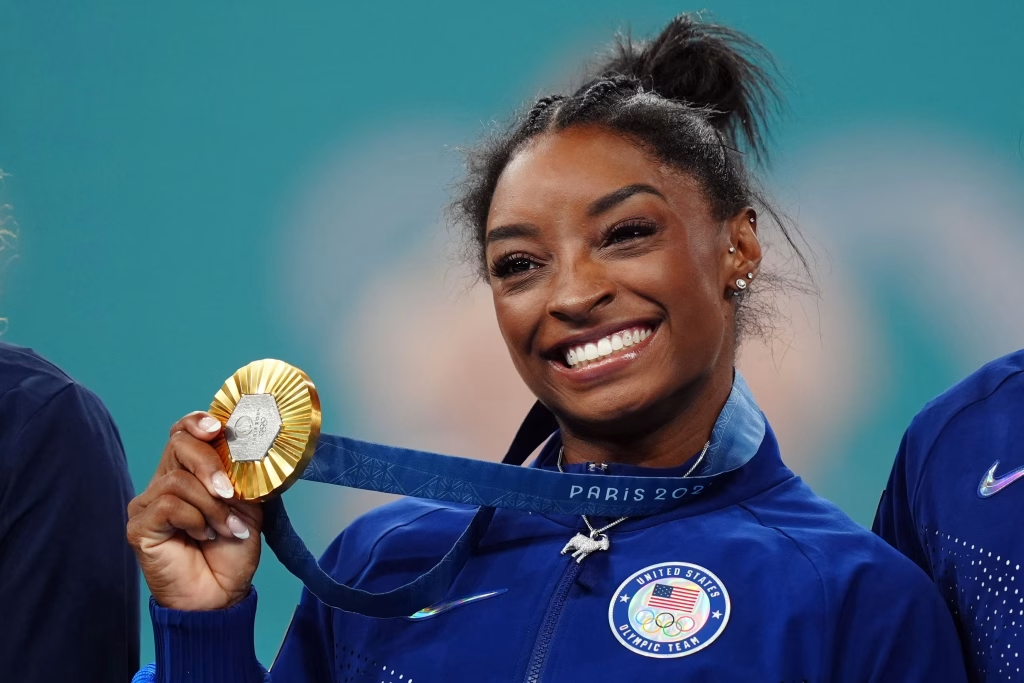
5. Simone Biles

Simone Biles spent part of her early childhood in foster care after her biological parents were unable to care for her. At age six, she and her sister were adopted by their maternal grandparents, Ron and Nellie Biles.

Image Source: Bing Image. License: All Creative Commons

Under their care, Simone discovered gymnastics and flourished. She frequently credits her grandparents—whom she calls her parents—for providing the love and stability that helped her become one of the most decorated athletes in history.

Image Source: Bing Image. License: All Creative Commons

4. Jamie Foxx

Jamie Foxx was adopted as a baby by his grandparents and raised in Terrell, Texas. He learned about his adoption at a young age and has said he never felt abandoned, only supported.

Image Source: Bing Image. License: All Creative Commons

His grandparents played a central role in nurturing his talents and discipline. Their guidance laid the groundwork for his success across music, comedy, and film.

Image Source: Bing Image. License: All Creative Commons

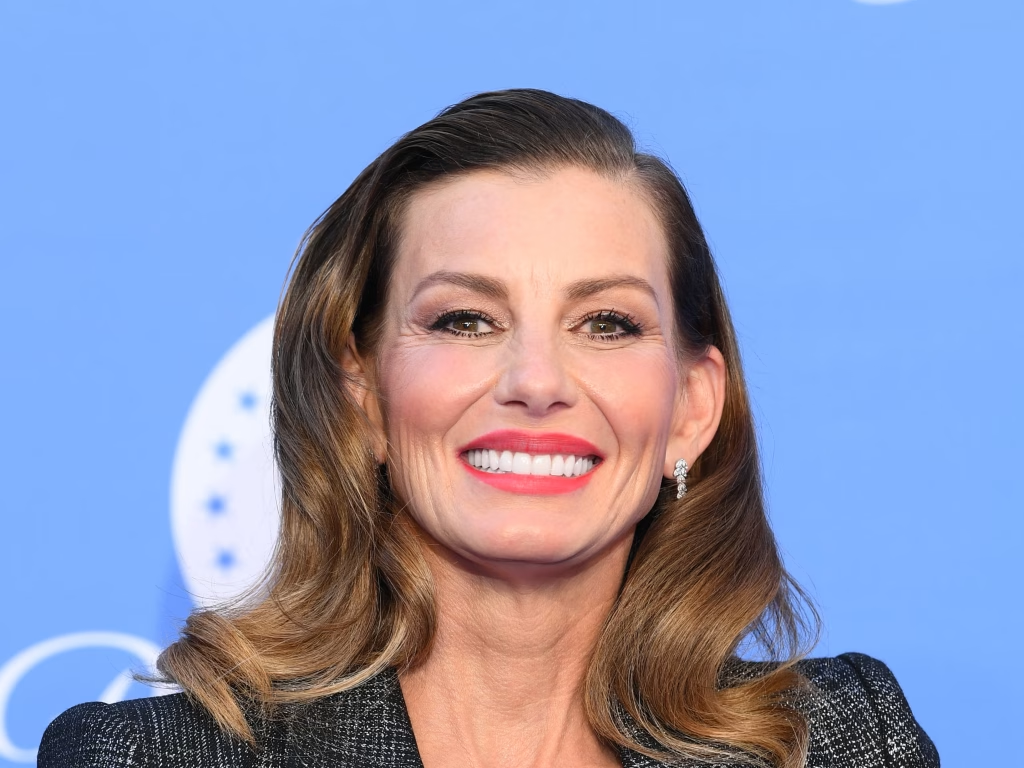
3. Faith Hill

Faith Hill was adopted shortly after birth by Ted and Edna Perry and grew up knowing her story from the start. Her parents’ honesty helped her feel secure and confident about her identity.

Image Source: Bing Image. License: All Creative Commons

As an adult, Hill sought out her biological family and eventually connected with them. The experience brought clarity and closure, further strengthening her appreciation for adoption and family bonds.

Image Source: Bing Image. License: All Creative Commons

2. Steve Jobs

Steve Jobs was adopted as an infant by Paul and Clara Jobs after his biological parents faced social pressure that prevented them from raising him together. His adoptive parents made sure he always knew he was chosen.

Image Source: Bing Image. License: All Creative Commons

Later in life, Jobs connected with his biological sister, author Mona Simpson, but consistently emphasized that his adoptive parents were his true family. His adoption story became part of the narrative behind his independent thinking and creative drive.

Image Source: Bing Image. License: All Creative Commons

1. Bill Clinton

Bill Clinton lost his biological father before birth and was later adopted by his stepfather, Roger Clinton Sr., during childhood. Though informal at first, the adoption became a defining part of his family identity.

Image Source: Bing Image. License: All Creative Commons

As President, Clinton championed adoption reform, signing legislation aimed at improving outcomes for children in foster care. His personal connection to adoption helped shape policies that continue to affect families today.

Image Source: Bing Image. License: All Creative Commons

These stories reveal that adoption is not a footnote; it’s often a foundation. While each journey is different, they all underscore the importance of stability, compassion, and opportunity. Behind the fame and accomplishments are families who stepped in, chose love, and helped shape lives that went on to inspire millions.

Christopher Nolan’s The Odyssey: Who’s Who in the Cast

0
Image Source: Bing Image. License: All Creative Commons

Christopher Nolan taking on The Odyssey is a cinematic event in its own right, and the casting choices are what truly elevate the project. This isn’t just a star-studded lineup—Nolan is pairing actors with mythical characters in ways that feel deliberate, surprising, and thematically rich. From gods and monsters to loyal companions and long-suffering family members, the cast brings a version of The Odyssey that is intimate, brutal, and deeply emotional. Below, we break down the most thrilling character castings and why each actor seems perfectly suited for their role.

Image Source: Bing Image. License: All Creative Commons

15. Charlize Theron as Athena

Athena is the silent architect behind Odysseus’s survival—a goddess of wisdom who carefully plans while others act in haste. Strategic, powerful, and deeply engaged in human matters, she often steps in at critical moments, wielding her influence with a subtle yet decisive hand.

Image Source: Bing Image. License: All Creative Commons

Charlize Theron feels born for this role. She has the kind of commanding presence that can convey intelligence and authority without raising her voice, and her history of playing powerful, battle-hardened figures makes her a natural Athena. With Theron, every glance and calculated move could feel like divine chess in motion.

Image Source: Bing Image. License: All Creative Commons

14. Mia Goth as Ino

Ino is one of the quieter but most mysterious figures in The Odyssey. Once mortal, now divine, she appears at Odysseus’ lowest moment to save him from drowning, offering help that feels both merciful and otherworldly.

Image Source: Bing Image. License: All Creative Commons

Mia Goth’s uncanny screen presence makes her a compelling choice. She excels at roles that blur the line between fragility and menace, which suits Ino’s liminal nature perfectly. Even a brief appearance could feel haunting, lingering long after the scene ends.

Image Source: Bing Image. License: All Creative Commons

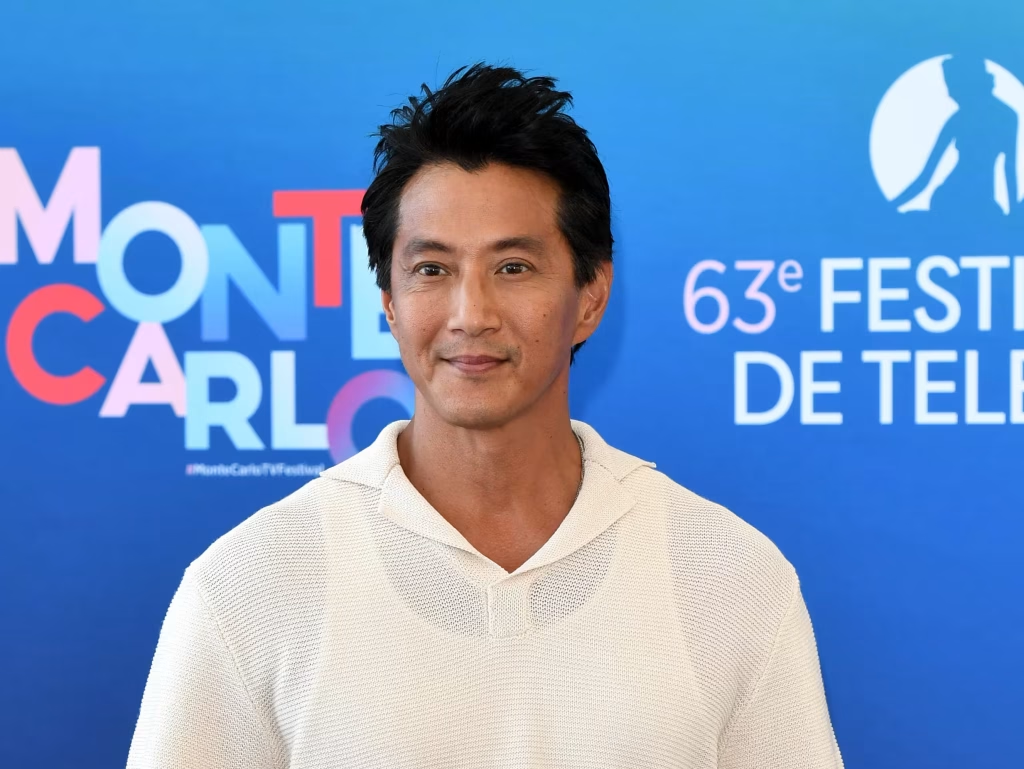
13. Will Yun Lee as Amphinomus

Among Penelope’s many suitors, Amphinomus stands apart. He’s thoughtful, restrained, and capable of empathy, qualities that make his fate all the more tragic. He represents the idea that decency alone isn’t enough to escape destiny.

Image Source: Bing Image. License: All Creative Commons

Will Yun Lee brings the exact kind of quiet intensity this role needs. His ability to communicate internal conflict without grand gestures could turn Amphinomus into one of the film’s most emotionally complex side characters, rather than just another name on a list.

Image Source: Bing Image. License: All Creative Commons

12. Jon Bernthal as Antinous

Antinous is arrogance incarnate, the loudest, cruelest, and most entitled of Penelope’s suitors. He embodies everything rotten about the occupation of Ithaca during Odysseus’s absence, making him the perfect lightning rod for audience hatred.

Image Source: Bing Image. License: All Creative Commons

Jon Bernthal thrives in roles that demand raw aggression and simmering cruelty. His Antinous won’t just be a villain; he’ll be a presence that dominates scenes and makes his eventual downfall deeply satisfying. Few actors make this watchable.

Image Source: Bing Image. License: All Creative Commons

11. John Leguizamo as Eumaeus

Eumaeus is the emotional backbone of The Odyssey. A loyal servant and surrogate family member, he remains steadfast even when hope seems foolish. His loyalty contrasts sharply with the betrayal Odysseus finds elsewhere.

Image Source: Bing Image. License: All Creative Commons

John Leguizamo’s warmth and humanity make him ideal for this role. He has a gift for grounding epic stories in emotional reality, and his Eumaeus will likely serve as a reminder that loyalty, not power, is what ultimately restores Ithaca.

Image Source: Bing Image. License: All Creative Commons

10. Elliot Page as Hermes

Hermes is the ultimate go-between: messenger of the gods, trickster, and guide for lost souls. He’s fast-thinking, sharp-tongued, and always slightly amused by the chaos of mortals.

Image Source: Bing Image. License: All Creative Commons

Elliot Page brings intelligence and kinetic energy that suit Hermes beautifully. Page can balance humor with sincerity, making Hermes feel playful without being frivolous, a god who enjoys the game but understands its stakes.

Image Source: Bing Image. License: All Creative Commons

9. Zendaya as Calypso

Calypso represents temptation without cruelty. Her island is paradise, her love sincere, and her offer immortality nearly irresistible. What makes her tragic is not malice, but longing.

Image Source: Bing Image. License: All Creative Commons

Zendaya’s emotional depth makes her perfect for this role. She can convey longing, isolation, and desire with subtlety, making Calypso’s relationship with Odysseus feel genuinely complicated rather than purely seductive.

Image Source: Bing Image. License: All Creative Commons

8. Bill Irwin as Laertes

Laertes, Odysseus’ father, is a hero who has already lived his legend. When we meet him, he’s broken by grief and time, clinging to the past in isolation.

Image Source: Bing Image. License: All Creative Commons

Bill Irwin has the gravitas to make Laertes’ quiet despair feel monumental. His reunion with Odysseus could be one of the film’s most tender moments, reminding us that the cost of heroism doesn’t end with victory.

Image Source: Bing Image. License: All Creative Commons

7. Samantha Morton as Anticleia

Anticleia appears only briefly, but her presence cuts deep. Encountered in the underworld, she reveals how Odysseus’ absence devastated those he loved most.

Image Source: Bing Image. License: All Creative Commons

Samantha Morton is a devastatingly effective choice. Her ability to communicate sorrow and wisdom in minimal screen time ensures that this moment will land with emotional force, anchoring Odysseus’ journey in personal loss.

Image Source: Bing Image. License: All Creative Commons

6. Robert Pattinson as Achilles’ Ghost

Achilles’ appearance in The Odyssey reframes heroism itself. Once the greatest warrior alive, he now regrets trading a long life for glory.

Image Source: Bing Image. License: All Creative Commons

Robert Pattinson’s introspective intensity makes him ideal for this role. He can embody both mythic stature and existential regret, turning this encounter into one of the story’s most philosophical moments.

Image Source: Bing Image. License: All Creative Commons

5. Himesh Patel as Aeolus

Aeolus offers Odysseus one of his closest chances at home, only for it to unravel through human error. His role highlights the limits of divine generosity.

Image Source: Bing Image. License: All Creative Commons

Himesh Patel’s calm authority suits the wind god perfectly. He can play Aeolus as a benevolent yet resigned deity who understands that fate will always find a way.

Image Source: Bing Image. License: All Creative Commons

4. Corey Hawkins as Poseidon

Poseidon isn’t just an antagonist; he’s a force of nature fueled by wounded pride. His grudge defines Odysseus’ suffering and gives the epic its relentless momentum.

Image Source: Bing Image. License: All Creative Commons

Corey Hawkins has the commanding presence needed to make Poseidon terrifying without exaggeration. His performance could make every storm feel intentional, personal, and unstoppable.

Image Source: Bing Image. License: All Creative Commons

3. Benny Safdie as Polyphemus

Polyphemus is monstrous, but not mindless. His encounter with Odysseus is a brutal lesson in hubris and consequence.

Image Source: Bing Image. License: All Creative Commons

Benny Safdie’s unpredictable energy makes him a fascinating choice. He can bring humor, rage, and vulnerability to the Cyclops, making the episode unsettling rather than purely fantastical.

Image Source: Bing Image. License: All Creative Commons

2. Lupita Nyong’o as Circe

Circe is power wrapped in allure, dangerous, seductive, and ultimately transformative. Her island tests Odysseus’ will in ways brute force never could.

Image Source: Bing Image. License: All Creative Commons

Lupita Nyong’o’s magnetic presence ensures Circe will be unforgettable. She can shift effortlessly between menace and compassion, making this chapter one of the film’s most psychologically rich.

Image Source: Bing Image. License: All Creative Commons

1. Tom Holland as Telemachus

Telemachus begins as a boy overshadowed by absence and expectation. His journey toward confidence mirrors his father’s in quieter, more vulnerable ways.

Image Source: Bing Image. License: All Creative Commons

Tom Holland’s sincerity and emotional openness make him ideal for the role. He can capture the uncertainty of youth while growing into quiet strength, giving the story a powerful generational arc.

Image Source: Bing Image. License: All Creative Commons

Anne Hathaway as Penelope

Penelope is the unsung strategist of The Odyssey. While Odysseus battles monsters abroad, she wages a war of patience and intellect at home.

Image Source: Bing Image. License: All Creative Commons

Anne Hathaway’s ability to blend warmth with resolve makes her a perfect Penelope. Her portrayal promises a woman who survives not by force, but by intelligence and emotional endurance.

Image Source: Bing Image. License: All Creative Commons

Matt Damon as Odysseus (Confirmed)

Odysseus is clever, flawed, stubborn, and endlessly human, a hero who survives through wit as much as strength. His journey is the spine of the epic.

Image Source: Bing Image. License: All Creative Commons

Matt Damon’s grounded intensity makes him a natural fit. He has the gravitas to carry Nolan’s vision while keeping Odysseus relatable, anchoring myth in human struggle.

Image Source: Bing Image. License: All Creative Commons

Christopher Nolan’s The Odyssey is shaping up to be less about spectacle alone and more about character, consequence, and endurance. This cast suggests a myth told with emotional precision, where gods feel personal, and heroes feel painfully human. If these performances land the way they promise to, Nolan’s take on Homer’s epic won’t just be another adaptation—it’ll be a defining one.

15 Iconic Celebrities Showing Height Doesn’t Define Success

0
Image Source: Bing Image. License: All Creative Commons

In Hollywood, the “ideal” female lead is often imagined as tall, glamorous, and larger than life. Yet some of the most vibrant and unforgettable personalities in the industry come in surprisingly small packages. Fans are always intrigued by height, especially when a celebrity appears towering on screen but is actually of average or even shorter stature in real life. These stars prove that charisma, talent, and presence matter far more than inches.

Image Source: Bing Image. License: All Creative Commons

According​‍​‌‍​‍‌​‍​‌‍​‍‌ to the CDC, the average height for a woman in the U.S. is about 5’3.5″. Most people tend to think that their favorite celebrities and pop stars are much taller, but the truth is, quite a few powerful women in the entertainment industry are 5’2″ or less, and they are absolutely stunningly perfect in every inch of their height. These 15 women, spanning from pop stars with hit singles to actors with Oscars, are the testament that personality, fashion sense, and natural talent are what really count and not a few extra inches on the measuring ​‍​‌‍​‍‌​‍​‌‍​‍‌tape.

Image Source: Bing Image. License: All Creative Commons

15. Lady Gaga – 5’1″

Renowned for sky-high heels and even loftier notes, Lady Gaga stands at only 5’1″. Whether she’s scooping up Grammys, swiping scenes in A Star Is Born, or accepting a Golden Globe for American Horror Story, her presence on stage is gigantic. Fun fact: Taichung, Taiwan, even has “Lady Gaga Day” every July 3rd.

Image Source: Bing Image. License: All Creative Commons

14. Isla Fisher – 5’1″

With her iconic red locks and impeccable comedic sense, Isla Fisher has illuminated movies such as Wedding Crashers and Confessions of a Shopaholic. Beginning in Australia before hitting Hollywood, she shows that being small does not prevent you from making an impact—or from marrying fellow actor Sacha Baron Cohen.

Image Source: Bing Image. License: All Creative Commons

13. Natalie Portman – 5’3″

A bit over the 5’2″ mark, Natalie Portman nonetheless finds her way onto the petite list because of her powerhouse resume. From her debut in Léon: The Professional to her Black Swan Oscar win, Portman’s Harvard intelligence and acting abilities have continually been her defining characteristics.

Image Source: Bing Image. License: All Creative Commons

12. Scarlett Johansson – 5’3″

Scarlett Johansson’s commanding on-screen presence makes her seem taller than she is, but she’s 5’3″. She’s played everything from superheroes to indie darlings, proving that height has nothing to do with landing iconic roles.

Image Source: Bing Image. License: All Creative Commons

11. Dakota Fanning – 5’4″

A child star turned respected actress, Dakota Fanning is 5’4″. Best known for I Am Sam, War of the Worlds, and Coraline, she’s also graduated with a degree in women’s studies from NYU—demonstrating that she’s got brains to go along with her talent.

Image Source: Bing Image. License: All Creative Commons

10. Megan Fox – 5’4″

Usually thought of as statuesque, Megan Fox stands only 5’4″. Her breakthrough in Transformers and cult classic Jennifer’s Body solidified her pop culture fame, winning her numerous Teen Choice Awards and a place among Hollywood icons.

Image Source: Bing Image. License: All Creative Commons

9. Salma Hayek – 5’2″

Salma Hayek stands at 5’2″ and was the first Mexican actress to be nominated for the Best Actress Oscar for her performance in Frida. She has had a career spanning from telenovelas to Hollywood films, one that is as powerful as it is inspiring.

Image Source: Bing Image. License: All Creative Commons

8. AnnaSophia Robb – 5’0″

Standing at 5’0″, AnnaSophia Robb embarked on blockbuster escapades such as Bridge to Terabithia and Soul Surfer. Her charm and versatility have established her as a go-to choice for roles demanding heart and courage.

Image Source: Bing Image. License: All Creative Commons

7. Becky G – 5’0″

This mini pop sensation has hit after hit, working with artists such as Peso Pluma and topping the charts. Becky G might stand at 5’0″, but her career is anything but little.

Image Source: Bing Image. License: All Creative Commons

6. Kylie Minogue – 5’0″

Decades-long music icon Kylie Minogue may only be 5’0″ tall, but she’s dominating stages everywhere in the world. Pop star of the ’80s to current-day legend, she’s still one of the greatest influences out there.

Image Source: Bing Image. License: All Creative Commons

5. Kourtney Kardashian Barker – 5’0″

Reality TV personality, businesswoman, and lifestyle mogul Kourtney Kardashian Barker is living proof that you don’t have to be towering to leave a huge mark on television and business.

Image Source: Bing Image. License: All Creative Commons

4. Rhea Perlman – 5’0″

Comedy legend Rhea Perlman, famous for Cheers, has won four Emmy Awards due to her quick wit and memorable characters. Standing at 5’0″, she’s comedy royalty.

Image Source: Bing Image. License: All Creative Commons

3. Kristin Chenoweth – 4’11”

Broadway star and TV legend Kristin Chenoweth may be only an inch short of 5 feet tall, but her voice sings miles higher. Whether she’s illuminating Wicked or stealing scenes on Pushing Daisies, she’s unforgettable.

Image Source: Bing Image. License: All Creative Commons

2. Jada Pinkett Smith – 4’11”

Jada Pinkett Smith has acted it all—drama, action, and comedy—despite measuring under 5 feet tall. From The Matrix to Girls Trip, she exudes intensity and energy that make her seem bigger than life.

Image Source: Bing Image. License: All Creative Commons

1. Nicole “Snooki” Polizzi – 4’8″

Topping the tall list at 4’8″, Snooki was made famous by Jersey Shore. Her confidence, entrepreneurial spirit, and TV hosting work show that you don’t have to be tall to reign supreme in pop culture.

Image Source: Bing Image. License: All Creative Commons

Honorable mention goes to celebrities such as Sabrina Carpenter, Melissa Rauch, and Lil’ Kim—each of them a testament to the fact that in Hollywood, talent comes in all sizes. They remind us that the true key to standing tall is confidence, charisma, and a little bit of sparkle.

Roofman: The Most Genuine Movie to Come Out of Charlotte

0
Image Source: Bing Image. License: All Creative Commons

Sometimes the wildest heist stories aren’t made up—they’re real-life legends shaped by a city’s streets, its people, and its culture. Roofman isn’t just another crime film; it’s a love letter to Charlotte, North Carolina, bringing the notorious exploits of Jeffrey Manchester to life with a mix of thrills, humor, and heart. Here’s why this movie stands out as the most authentically Charlotte story ever told.

Image Source: Bing Image. License: All Creative Commons

Before Channing Tatum brought him to life, Jeffrey Manchester was a real-life enigma. A Sacramento-born Army vet from the 82nd Airborne Division, Manchester’s post-military life veered into audacious criminality: robbing nearly 40 McDonald’s locations by sneaking in through the roofs. His approach was oddly polite; he’d escort employees into the walk-in freezer for safety while he emptied the registers. Manchester’s story was part criminal caper, part performance art, and part small-town legend.

Image Source: Bing Image. License: All Creative Commons

Manchester’s story didn’t end in the fast-food chains. After serving time, he staged a dramatic escape, hiding under a delivery truck, and disappeared into Charlotte. There, he lived for months inside a Toys “R” Us, surviving on baby food, observing employees with baby monitors, and constructing secret hideouts. He dated a local woman under an alias, attended church, and became a folk hero before being finally caught, a tale stranger than fiction.

Image Source: Bing Image. License: All Creative Commons

Director Derek Cianfrance, known for Blue Valentine and The Place Beyond the Pines, was drawn to Manchester’s story for its mix of comedy, tragedy, and heart. He and co-writer Kirt Gunn treated the project like investigative journalists, interviewing everyone from Manchester’s former girlfriend to the pastor he attended church with. The goal was clear: honor the story’s authenticity while crafting a compelling cinematic experience.

Image Source: Bing Image. License: All Creative Commons

Cianfrance didn’t just film in Charlotte; he let the city breathe as part of the narrative. Real locations, like the church Manchester attended and rebuilt versions of the Toys “R” Us and Circuit City, were used to capture the city’s essence. Local landmarks like Red Lobster and the Gaston County courthouse also appear, grounding the story in the real Queen City.

Image Source: Bing Image. License: All Creative Commons

To further blur the line between reality and film, Charlotte locals were cast to play themselves or versions of people from Manchester’s life. The truck driver who unknowingly helped Manchester escape? In the movie. The CMPD sergeant who captured him? Also there. Even church members appear on screen, giving the film an undeniable lived-in texture.

Image Source: Bing Image. License: All Creative Commons

Every frame was carefully crafted to feel period-accurate. Archival news footage from WBTV was licensed, and real Charlotte journalists helped recreate scenes with the proper era equipment. Cianfrance said, “The team was genuinely interested in making it feel like Charlotte in the early 2000s.” The result is a movie that feels like a time capsule as much as it is a story.

Image Source: Bing Image. License: All Creative Commons

Channing Tatum’s portrayal of Manchester is a mix of charm, humor, and vulnerability, making a morally ambiguous character feel relatable. Kirsten Dunst brings empathy as Leigh Wainscott, balancing Tatum’s energy. Supporting roles from Peter Dinklage, Ben Mendelsohn, and LaKeith Stanfield shine, but it’s the real locals who make the city itself feel alive on screen.

Image Source: Bing Image. License: All Creative Commons

Roofman isn’t just a heist film; it’s a tonal balancing act. Part comedy, part crime thriller, part character study, the movie leans into Manchester’s contradictions: a criminal with principles, a dreamer with chaos, a man searching for home. Cianfrance captures the emotional depth of the story without diminishing its absurdity or humor.

Image Source: Bing Image. License: All Creative Commons

The film doesn’t shy away from consequences but explores the gray areas of morality and justice. Manchester’s story becomes a lens for examining the American dream, the human desire for belonging, and the power of community. Charlotte’s culture and the people who inhabit it elevate the film beyond a simple true-crime tale.

Image Source: Bing Image. License: All Creative Commons

By combining real people, real places, and meticulous period details, Roofman stands as a definitive cinematic portrait of Charlotte. It’s a testament to the city’s quirks, resilience, and humanity, and a reminder that some of the wildest, most memorable stories come from the streets closest to home.

Image Source: Bing Image. License: All Creative Commons

Roofman proves that truth can be stranger and more captivating than fiction. For true-crime fans, cinephiles, and anyone who loves a story steeped in place and character, this film is a reminder that sometimes, the most extraordinary tales are hiding in plain sight.

10 Iconic Disney Villain Voices That Stole the Show

0
Image Source: Bing Image. License: All Creative Commons

Let’s face it—Disney’s heroes may get the spotlight, but it’s the villains who make the magic unforgettable. From sultry purrs and menacing laughs to silky growls, these vocal performances have brought some of cinema’s most memorable baddies to life. From cunning schemers to full-blown maniacs, these voices are just as iconic as the characters themselves. Here’s a countdown of the 10 most legendary Disney villain voices, starting at number 10 and building up to the ultimate villainous performance.

Image Source: Bing Image. License: All Creative Commons

10. Yzma (The Emperor’s New Groove)

Eartha Kitt didn’t just voice Yzma, she embodied her. With her smoky voice and sultry presence, Kitt made this over-the-top villainess pure comedy gold. Her flair for self-mockery and sharp timing made for a truly scene-stealing Yzma, one so beloved that she reprised the role in spin-offs and the television series. Rarely has any villain ever been so fabulously unhinged.

Image Source: Bing Image. License: All Creative Commons

9. Shere Khan (The Jungle Book)

George Sanders infused Shere Khan with a kind of menace that whispered rather than roared. With his velvety British accent and unshakable confidence, Sanders turned the tiger into the ultimate gentleman predator. His sophisticated snarl inspired most of the villains that followed, including Scar from The Lion King. One could even say without exaggeration that his performance set the templates for Disney villainy for years to come.

Image Source: Bing Image. License: All Creative Commons

8. Clayton (Tarzan)

Brian Blessed’s deep, booming delivery gave Clayton the gravitas of a true old-school adventurer turned villain. Best known for his theatrical performances in Flash Gordon and other cult hits, Blessed infused Clayton with bravado and arrogance, an explorer who hunts not for sport but for ego. Though he doesn’t get much love compared with other Disney baddies, his commanding voice leaves a lasting impression.

Image Source: Bing Image. License: All Creative Commons

7. Ratigan (The Great Mouse Detective)

Vincent Price was born to be the voice of villains, and his turn as Ratigan is pure delight. The legendary horror icon imbued the character with a rich blend of refinement and insanity, delivering each line with wicked glee. Price’s flair for the dramatic transformed Ratigan into one of Disney’s most entertaining scoundrels, equal parts posh and psychotic.

Image Source: Bing Image. License: All Creative Commons

6. The Bowler Hat Guy (Meet the Robinsons)

Director Stephen J. Anderson himself supplied the voice for the film’s oddball villain, Goob, better known as the Bowler Hat Guy, and the result is comedic perfection. His performance walks a fine line between goofy and tragic, making the character strangely sympathetic. It’s one of those rare Disney villain voices that are hilarious and heartfelt, really a hidden gem in the studio’s catalog.

Image Source: Bing Image. License: All Creative Commons

5. The Queen of Hearts (Alice in Wonderland)

The thunderous delivery of Verna Felton as the Queen of Hearts made “Off with their heads!” an immortal Disney catchphrase. A powerhouse of radio and animation, Felton voiced the Fairy Godmother in Cinderella and Flora in Sleeping Beauty. Her ability to swing from sweetness to fury in a heartbeat made her the definitive voice of royal rage.

Image Source: Bing Image. License: All Creative Commons

4. Jafar (Aladdin)

Jonathan Freeman’s Jafar slithers through Aladdin with oily charm and theatrical menace. His sinuous voice gives every word a sly edge, making him one of Disney’s most deliciously evil characters. Freeman loved the role so much he even reprised it onBroadway, cementing Jafar as one of animation’s most enduring villains.

Image Source: Bing Image. License: All Creative Commons

3. Judge Claude Frollo (The Hunchback of Notre Dame)

Tony Jay’s dark, resonant baritone made Frollo one of Disney’s most chilling creations. His take on a man consumed by power, lust, and self-righteousness is little short of haunting. Every line oozes authority and moral corruption; proof that the most terrifying villains are sometimes the most human.

Image Source: Bing Image. License: All Creative Commons

2. Captain Hook (Peter Pan)

Hans Conried granted Captain Hook a voice as flamboyant as the pirate himself. In mere seconds, he could change from pompous bluster to terrified squeals, creating a performance that is both hilarious and menacing. Fun fact: Conried also voiced Mr. Darling, a stage tradition in which one actor plays both parts. His dynamic energy still sets the gold standard for Disney’s comic villains.

Image Source: Bing Image. License: All Creative Commons

1. Scar (The Lion King)

Jeremy Irons’ Scar is not just iconic; he’s untouchable. With a mix of kingly disdain and pure malice, Irons created one of the greatest villain voices in film history. His sardonic tone was smooth in delivery and had an air of chilling charisma, making Scar simply the ultimate in envy and betrayal. No one, even to this day, replicates the delicious wickedness he brought to the role as well as he did.

Image Source: Bing Image. License: All Creative Commons

Disney villains are defined not only by their villainous ways but also by the voices that brought them to life. From the catlike sass of Eartha Kitt to the silken sneer of Jeremy Irons, these performers gave us the ultimate in villains we love to hate. Their voices will echo through generations as proof that in Disney’s world, evil has never sounded so good.

10 Popular Netflix Shows That Are Perfect for Binge-Watching

0
Image Source: Bing Image. License: All Creative Commons

Netflix’s December 2025 lineup is impossible to ignore. From jaw-dropping finales and globe-trotting adventures to chilling true crime and edge-of-your-seat thrillers, there’s something for every binge-watcher. Here’s a countdown of the 10 hottest Netflix shows and movies to stream right now, starting at number 10 and saving the biggest hits for last.

Image Source: Bing Image. License: All Creative Commons

10. Wake Up Dead Man: A Knives Out Mystery

Rian Johnson’s third Benoit Blanc adventure slices into Netflix with all the precision of a master chef wielding a very sharp knife. Daniel Craig returns as the endlessly charming Southern detective, this time investigating a murder at a small upstate New York church. With a star-studded cast including Glenn Close, Josh Brolin, Mila Kunis, and Jeremy Renner, the twists are crazier than ever. Johnson calls it Blanc’s “most dangerous” and “most personal” case yet. If Glass Onion left you breathless, brace yourself.

Image Source: Bing Image. License: All Creative Commons

9. Emily in Paris: Season 5

Lily Collins is back as Emily, now expanding her adventures from Paris to the streets of Rome. Season 5 juggles new romance, career milestones, and that eternal question: croissant or cornetto? The show is still serving the iconic fashion, jaw-dropping drama, and Instagram-ready moments fans have come to love. With a sixth season already on the horizon, Emily’s journey is far from over, proving life, love, and baguettes wait for no one.

Image Source: Bing Image. License: All Creative Commons

8. The Abandons

Kurt Sutter (Sons of Anarchy) delivers a gritty Western showdown where Lena Headey’s Fiona Nolan faces off against Gillian Anderson’s Constance Van Ness. Set in 1850s Washington Territory, the series mixes frontier justice, family drama, and power struggles, all with a hint of Shakespearean intrigue. A story about the “haves versus have-nots,” the show’s blend of star-crossed romance and buried secrets keeps viewers hooked episode after episode.

Image Source: Bing Image. License: All Creative Commons

7. Tomb Raider: The Legend of Lara Croft – Season 2

Lara Croft is back in animated form, voiced by Hayley Atwell, and she’s not just raiding tombs, she’s racing against a corrupt billionaire to secure ancient African artifacts that could change the world. Action-packed and visually stunning, this season pairs globe-trotting adventure with callbacks to the classic games, making it a treat for both longtime fans and newcomers alike.

Image Source: Bing Image. License: All Creative Commons

6. Record of Ragnarok: Season 3

Anime fans, this one’s for you. The gods-versus-humans battle continues, now tied at 3-3. Each fight tests humanity’s courage, wit, and strength against divine adversaries. The animation is as over-the-top as ever, with mythological mashups and epic duels that are pure fan service. Season 3 raises the stakes higher than ever, keeping viewers on the edge of their seats.

Image Source: Bing Image. License: All Creative Commons

5. Wake Up Dead Man: A Knives Out Mystery (again!)

It’s that good; it earns a second spot. Rian Johnson’s murder mystery became a streaming sensation with 8.1 million views in its debut week on the English film list. The buzz is undeniable: clever plotting, sharp dialogue, and Daniel Craig at his detective best. If you haven’t watched it yet, prepare for twists, turns, and some seriously brilliant sleuthing.

Image Source: Bing Image. License: All Creative Commons

4. The Great Flood

This Korean sci-fi thriller takes disaster to a personal level. Trapped in an apartment as a massive flood engulfs the city, a mother discovers she may be part of a mission to save humanity itself. With 11.1 million views on the non-English film list, The Great Flood combines pulse-pounding tension with existential stakes, making it a must-watch for fans of intense, emotional thrillers.

Image Source: Bing Image. License: All Creative Commons

3. Run Away

Harlan Coben’s latest adaptation is a gripping family thriller. James Nesbitt stars as a father hunting for his missing daughter, only to uncover a tangle of murder, viral conspiracies, and family secrets. Twisty, emotional, and suspenseful, Run Away is perfect for viewers who love mysteries that keep you guessing until the very end.

Image Source: Bing Image. License: All Creative Commons

2. Evil Influencer: The Jodi Hildebrandt Story

True crime meets social media in this chilling documentary. Directed by Skye Borgman, it examines how Utah therapist Jodi Hildebrandt and parenting influencer Ruby Franke were involved in abusive practices. With 15 million views and topping the English film list, it’s a stark reminder that not everything on the internet is as it seems, and the real-life consequences can be horrifying.

Image Source: Bing Image. License: All Creative Commons

1. Stranger Things: Season 5 Finale

The crown jewel of Netflix December 2025: Hawkins is back, and the finale broke records with 31.3 million views on New Year’s Day alone. Eleven is in hiding, Vecna is more terrifying than ever, and the series wraps up an epic saga that has captivated the globe. With over 105 million total views across the Most Popular English TV list, this finale is both a cultural moment and a masterclass in suspense. Fans are already gearing up for One Last Adventure: The Making of Stranger Things 5, a behind-the-scenes look at the series’ monumental finale.

Image Source: Bing Image. License: All Creative Commons

From murder mysteries and true crime to epic sci-fi and heart-pounding finales, December’s Netflix lineup proves there’s something for everyone. Whether you’re hunting for thrills, laughs, or emotional drama, these 10 picks are guaranteed to keep you glued to your screen well into the new year.

10 Shocking Movie Conclusions Everyone Is Talking About

0
Image Source: Bing Image. License: All Creative Commons

Let’s​‍​‌‍​‍‌​‍​‌‍​‍‌ be honest: no film delivers a more powerful punch than one that blindsides you completely at the last minute. A surprise ending is the greatest cinematic trump card, the one that makes you sit there silently in front of the credits, mumbling, “Wait, what did I just see?” It could be a twist that changes the whole reality, a heartbreaking tragedy, or a revelation that makes you rethink everything you have seen. Whatever it is, these endings are the ones that come back to your mind time and time again. Here are 10 of the most shocking endings in movie history, going from those that left us speechless to those that utterly broke our ​‍​‌‍​‍‌​‍​‌‍​‍‌hearts.

Image Source: Bing Image. License: All Creative Commons

10. Final Destination 5 (2011)

Audiences entered expecting the same old thing:g creepy death scenes, cursed twenty-somethings, and an air of dark destiny. And yet this sequel managed something smart: the twist that the film is a prequel to the original. When the characters get on that ill-fated plane, the entire franchise comes into sharp focus. It’s a genius move that revitalizes the franchise and makes you want to see every film again, all from a completely different angle.

Image Source: Bing Image. License: All Creative Commons

9. Uncut Gems (2019)

For two hours, Howard Ratner, Adam Sandler’s character, defies death, debt, and calamity, making you believe he’ll always squirm out of trouble. And then bang. Just when it appears that he’s managed the impossible, he’s shot out of nowhere. The shock of it is what makes it so heartbreaking; there’s no processing time, no warning fire. It’s a vicious gut-punch that leaves the viewer in as much shock as the people onscreen.

Image Source: Bing Image. License: All Creative Commons

8. The Others (2001)

This gothic chiller of a slow burn threatens to tantalise you with hints of the supernatural: white-skinned children, unsettling servants, a mother slowly losing her mind. But the twist turns it all on its head; the family isn’t haunted; they are the ghosts. Nicole Kidman’s acting makes the twist that much more chilling, and once you see it, you can’t help but go back over every previous scene, finding the breadcrumbs you missed.

Image Source: Bing Image. License: All Creative Commons

7. The Prestige (2006)

Christopher Nolan’s story of dueling magicians is a masterclass in misdirection. The ultimate twist that Christian Bale’s character has been quietly two individuals the entire time, while Hugh Jackman’s magician has turned to cloning himself, landed like a magic trick you can’t look away from. It’s shocking and deeply tragic, a narrative of obsession and sacrifice pushed to inhuman limits. Even on multiple viewings, the ending is still effective.

Image Source: Bing Image. License: All Creative Commons

6. Parasite (2019)

What starts as a biting, black comedy of class distinctions suddenly descends into pandemonium once the secret basement family is exposed. By the third act, violence erupts in a dreamlike bloodbath at a birthday party, and the patriarch of the Kim family’s own destiny leaves viewers reeling. Bong Joon-ho deftly changes gears, and just when you think you’re in on it, the movie catches you off guard once more.

Image Source: Bing Image. License: All Creative Commons

5. The Mist (2007)

Stephen King’s tale was dark enough, but Frank Darabont turned it into unforgettable lore with a conclusion so heart-wrenching even King himself commended it. A father, despairing of hope, makes the most agonizing choice only to discover rescue was mere seconds away. The raw heartlessness of the timing left audiences speechless, some even enraged, but nobody ever forgets it.

Image Source: Bing Image. License: All Creative Commons

4. Fight Club (1999)

Few reveals have penetrated popular culture as deeply as this one: Tyler Durden does not exist. The mind-blowing revelation that the narrator has been fighting himself recontextualizes the entire movie, leaving audiences wondering about every scene leading up to it. It’s been spoofed and referenced ad nauseam, but nothing compares to that first time you learn that twist.

Image Source: Bing Image. License: All Creative Commons

3. Memento (2000)

Told in reverse, Nolan’s early masterpiece forces viewers to share Leonard’s disorientation. The finale reveals that Leonard has been deliberately manipulating his own fractured memory, creating a cycle of endless revenge. It’s not just a twist ending, it’s a revelation about how fragile memory and identity truly are.

Image Source: Bing Image. License: All Creative Commons

2. The Sixth Sense (1999)

The twist that defined a generation of moviegoers: Bruce Willis’s character has been dead all along. It’s meticulously set up yet still takes you by total surprise. Once the truth is revealed, every prior moment gains new meaning, making you desperate to rewatch and piece it together. It’s the rare twist that elevates an entire movie from good to iconic.

Image Source: Bing Image. License: All Creative Commons

1. Avengers: Infinity War (2018)

For more than a decade, Marvel conditioned viewers to expect the heroes to triumph. And then Thanos snapped his fingers. Seeing favorite characters disintegrate into dust, Spider-Man, Black Panther, and Doctor Strange, was a sight that fans never imagined in a superhero movie. The silence in the cinemas spoke volumes: shock, dismay, disbelief. It wasn’t a twist; it was a moment of cultural significance.

Image Source: Bing Image. License: All Creative Commons

These are the conclusions that haunt those who surprised us, saddened us, or challenged all the things we believed we understood regarding stories. These remind us why film, as a medium at its finest, doesn’t simply entertain; it shakes us up, lingers with us, and gets us to look at films and perhaps the world differently.