
Home Blog Page 71

15 Celebrities Who Quit Hollywood for Happiness

0
Image Source: Bing Image. License: All Creative Commons

For many people, fame seems like the ultimate dream. Red carpets, huge paychecks, and worldwide recognition can make celebrity life look glamorous from the outside. But for some stars, the pressure, constant attention, and demanding schedules eventually become too much or simply no longer align with the life they want. Over the years, several well-known celebrities have stepped away from the spotlight to pursue quieter, more meaningful paths. Some turned to education, others focused on family, and a few discovered entirely new careers. Here are 15 celebrities who chose to walk away from fame and create a completely different life.
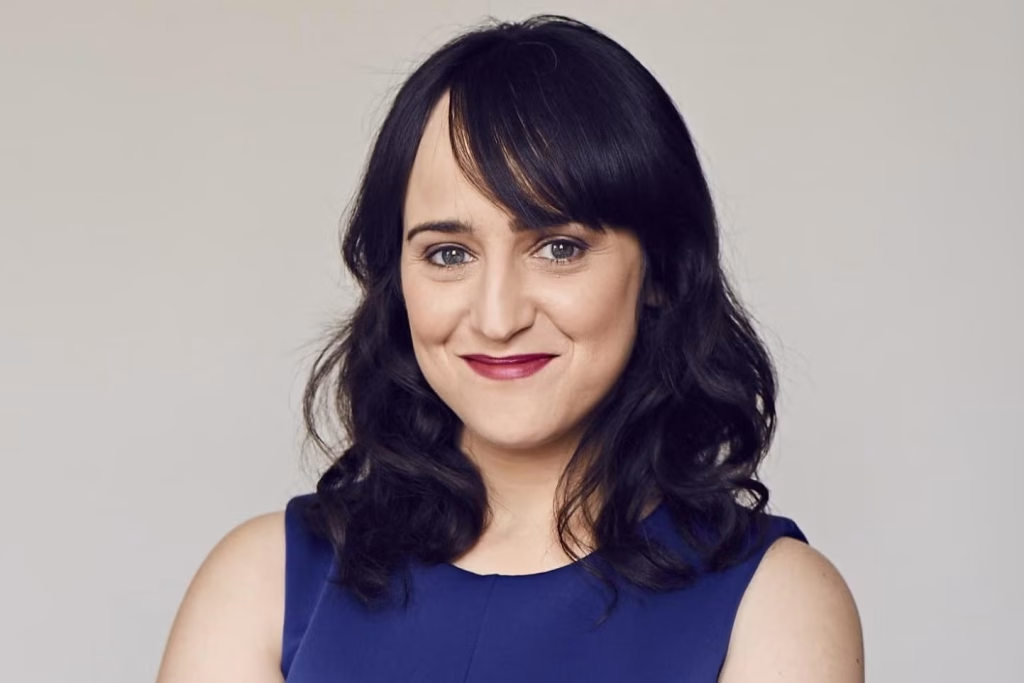
Image Source: Bing Image. License: All Creative Commons

15. Mara Wilson

Mara Wilson became a familiar face in the 1990s thanks to beloved family films like Matilda and Mrs. Doubtfire. As a child star, she experienced the highs and pressures of Hollywood at a very young age. However, as she grew older, Wilson began to feel disconnected from acting and the expectations that came with it.

Image Source: Bing Image. License: All Creative Commons

Instead of continuing down the acting path, she gradually shifted toward writing. Wilson eventually found her voice as an author, sharing honest reflections about childhood fame and growing up in the entertainment industry. Her books, including Where Am I Now?: True Stories of Girlhood and Accidental Fame and Good Girls Don’t, explore identity, creativity, and life beyond Hollywood.

Image Source: Bing Image. License: All Creative Commons

14. Phoebe Cates

Phoebe Cates rose to fame in the 1980s and early ’90s with memorable roles in films like Fast Times at Ridgemont High and Gremlins. She was considered one of Hollywood’s most recognizable actresses during that era, but her career took an unexpected turn after she married actor Kevin Kline.

Image Source: Bing Image. License: All Creative Commons

After starting a family, Cates decided to step back from acting and focus on raising her children. While she has made the occasional brief appearance on screen, her main focus has been her family and her boutique, Blue Tree, in New York City. Her decision shows that sometimes personal happiness and family life can take priority over a thriving career.

Image Source: Bing Image. License: All Creative Commons

13. Adrian Grenier

Adrian Grenier became widely known for his role in the hit television series Entourage. For years, he lived the fast-paced Hollywood lifestyle, attending events and building a successful acting career. Eventually, though, he began craving a slower and more meaningful way of living.

Image Source: Bing Image. License: All Creative Commons

Grenier moved away from California and settled in Texas, where he focuses on family life and spending more time in nature. Although he hasn’t completely abandoned acting, he now carefully selects projects that align with his values. His lifestyle shift reflects a desire to live more intentionally rather than simply chasing fame.

Image Source: Bing Image. License: All Creative Commons

12. Rick Astley

Rick Astley became a global pop sensation in the late 1980s with his iconic hit “Never Gonna Give You Up.” At the height of his popularity, however, he decided to step away from the music industry while still in his twenties.

Image Source: Bing Image. License: All Creative Commons

Feeling burned out and disillusioned with the realities of pop stardom, Astley chose to focus on family life instead. He later returned to music years later with a healthier outlook and a deeper appreciation for his craft. His story highlights the importance of balance and mental well-being in creative careers.

Image Source: Bing Image. License: All Creative Commons

11. Ian Somerhalder

Ian Somerhalder gained international fame through his television roles, especially on The Vampire Diaries. Despite the success of the show and his popularity among fans, Somerhalder eventually decided to move away from acting.

Image Source: Bing Image. License: All Creative Commons

In recent years, he has focused on environmental activism, entrepreneurship, and raising a family with his wife, Nikki Reed. Living on a farm, he spends much of his time working on projects related to sustainability and regenerative agriculture. For Somerhalder, stepping away from acting opened the door to causes he feels passionate about.

Image Source: Bing Image. License: All Creative Commons

10. Jennifer Stone

Jennifer Stone became well-known to younger audiences for her role as Harper on the Disney Channel series Wizards of Waverly Place. After years of acting, however, she decided to pursue a completely different career path.

Image Source: Bing Image. License: All Creative Commons

Stone went back to school and eventually became a registered nurse. During the COVID-19 pandemic, she worked in healthcare, helping patients during one of the most challenging times in recent history. Her transition from television star to healthcare professional shows that meaningful careers can take many forms.

Image Source: Bing Image. License: All Creative Commons

9. Erik von Detten

Erik von Detten appeared in several popular Disney projects, including The Princess Diaries and the Disney Channel film Brink!. As his acting career progressed, however, he began to feel that the entertainment industry wasn’t the right long-term path for him.
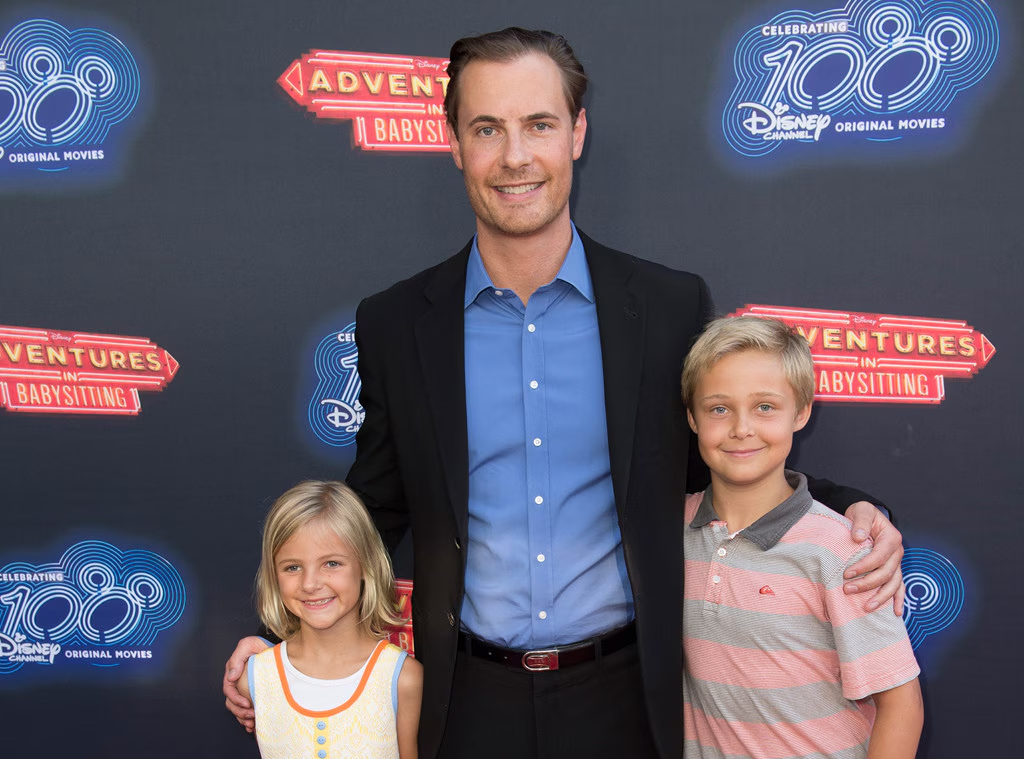
Image Source: Bing Image. License: All Creative Commons

Seeking greater stability and a lifestyle more suited to family life, he eventually moved into the finance world. Today, he enjoys a quieter life outside Hollywood. His decision reflects the reality that many actors eventually look for careers that provide consistency and balance.

Image Source: Bing Image. License: All Creative Commons

8. Peter Ostrum

Peter Ostrum is best remembered for playing Charlie in the classic film Willy Wonka & the Chocolate Factory. Despite appearing in such a beloved movie, he chose not to pursue a career in acting afterward.

Image Source: Bing Image. License: All Creative Commons

Instead, Ostrum followed his interest in animals and became a veterinarian specializing in dairy cattle. He has often said he has no regrets about leaving Hollywood behind. For him, a life working with animals proved far more fulfilling than an entertainment career.

Image Source: Bing Image. License: All Creative Commons

7. Kay Panabaker

Kay Panabaker began acting at a young age, appearing in television series such as Summerland and the Disney Channel movie Cyberbully. Despite her success, she eventually realized that acting was no longer something she enjoyed.

Image Source: Bing Image. License: All Creative Commons

After leaving Hollywood, Panabaker pursued her passion for animals and completed training in zoology. She later became a zookeeper at Disney’s Animal Kingdom. Her career change demonstrates how following personal interests can lead to greater satisfaction than staying in the spotlight.

Image Source: Bing Image. License: All Creative Commons

6. Rick Moranis

Rick Moranis became one of the most beloved comedic actors of the 1980s and early 1990s with films like Honey, I Shrunk the Kids and Ghostbusters. At the peak of his career, however, tragedy struck when his wife passed away.

Image Source: Bing Image. License: All Creative Commons

Moranis chose to step away from acting to raise his children as a single parent. Although he has occasionally been approached about returning to the screen, he has remained largely focused on family life. His decision is widely respected as a powerful example of putting family first.

Image Source: Bing Image. License: All Creative Commons

5. Bridgit Mendler

Bridgit Mendler gained fame as the star of the Disney Channel series Good Luck Charlie and the movie Lemonade Mouth. Instead of continuing in entertainment, she decided to pursue higher education and academic interests.

Image Source: Bing Image. License: All Creative Commons

Mendler went on to earn advanced degrees, including studying at MIT and Harvard. She now works in the space technology sector as the CEO of a company focused on satellite communications. Her impressive transition from pop star to tech entrepreneur shows how dramatically careers can evolve.

Image Source: Bing Image. License: All Creative Commons

4. Frankie Muniz

Frankie Muniz became a household name through the hit sitcom Malcolm in the Middle and films like Agent Cody Banks. After the show ended, he gradually stepped away from acting to explore other interests.

Image Source: Bing Image. License: All Creative Commons

Muniz pursued professional race car driving and also spent time performing with a band. Although he has recently shown interest in returning to television, his years away allowed him to experience life beyond Hollywood. His journey highlights the value of exploring passions outside one’s original career.

Image Source: Bing Image. License: All Creative Commons

3. Erik Per Sullivan

Erik Per Sullivan was known for playing the quirky and lovable Dewey on Malcolm in the Middle. After the show concluded, he quietly stepped away from acting and chose not to pursue further roles.

Image Source: Bing Image. License: All Creative Commons

Instead, Sullivan focused on education and academic pursuits. He studied at the University of Southern California and later continued his studies in literature. His shift from acting to academia reflects a completely different direction from the entertainment industry.
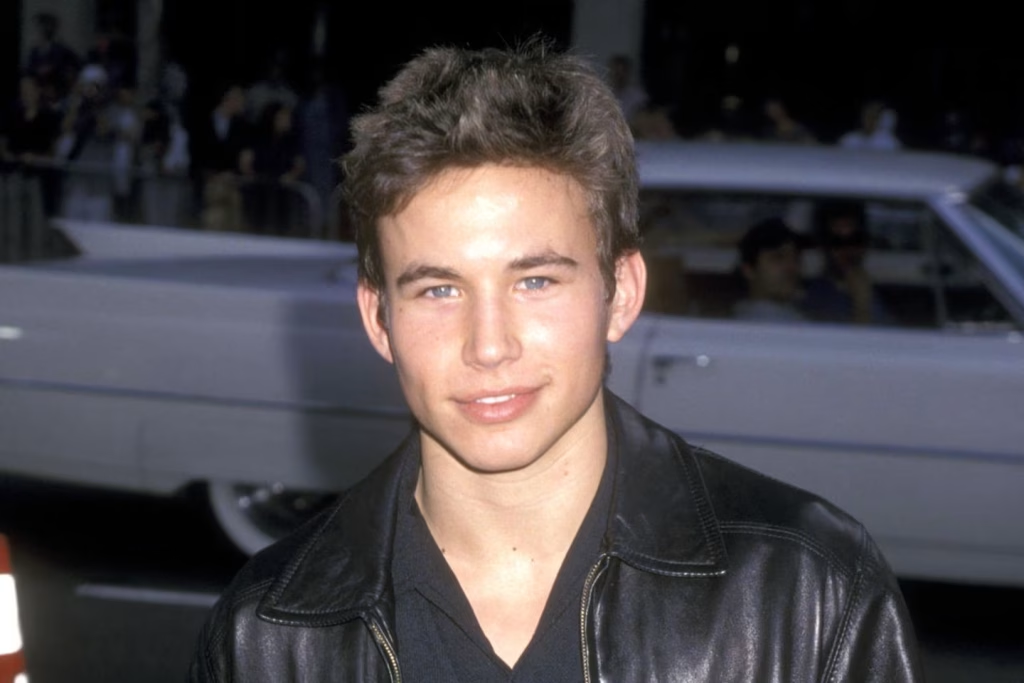
Image Source: Bing Image. License: All Creative Commons

2. Jonathan Taylor Thomas

Jonathan Taylor Thomas was one of the biggest teen stars of the 1990s thanks to his role on Home Improvement. At the height of his popularity, he made the surprising decision to leave the show and focus on education.

Image Source: Bing Image. License: All Creative Commons

Thomas attended prestigious universities, including Columbia and Harvard, while also traveling and exploring life outside Hollywood. Though he has occasionally returned to acting, he largely stepped away from fame to enjoy a more private and balanced life.

Image Source: Bing Image. License: All Creative Commons

1. Karyn Parsons

Karyn Parsons became widely recognized for playing Hilary Banks on the classic sitcom The Fresh Prince of Bel-Air. After the show ended, she gradually shifted her focus away from acting.

Image Source: Bing Image. License: All Creative Commons

Parsons later founded Sweet Blackberry, a nonprofit organization dedicated to teaching children about lesser-known stories in Black history. Through films and educational projects, she helps bring these important stories to young audiences. Her work demonstrates how leaving fame can open the door to meaningful contributions in education and culture.
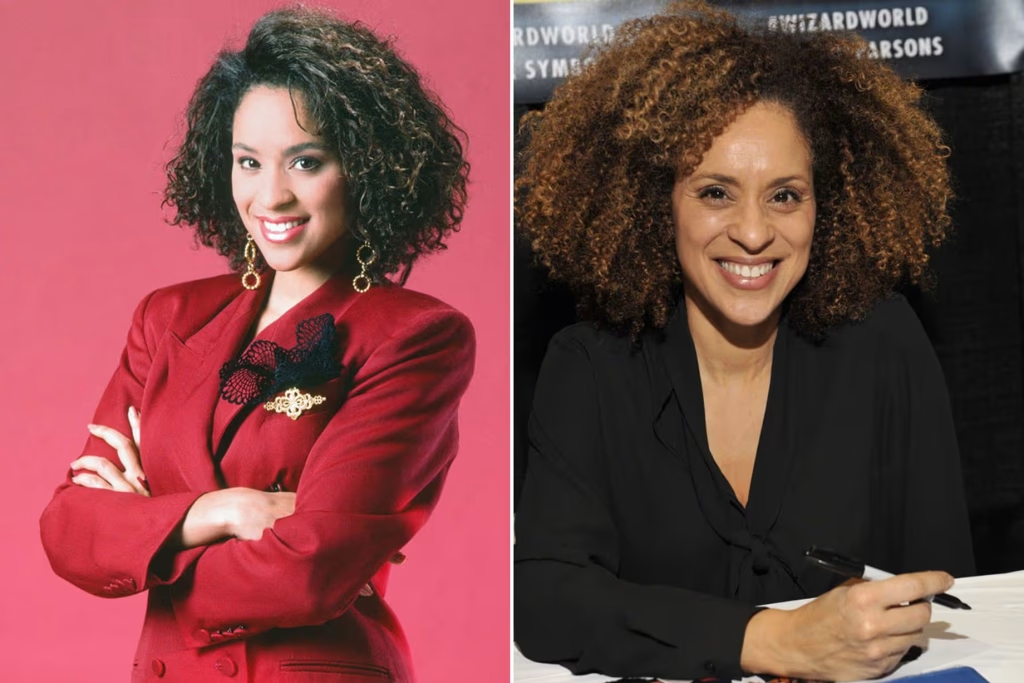
Image Source: Bing Image. License: All Creative Commons

While fame often looks glamorous, it isn’t always the path that leads to long-term happiness. Many celebrities eventually realize that personal fulfillment, family life, or new passions matter more than staying in the spotlight. The stars on this list prove that stepping away from fame doesn’t mean disappearing; it simply means choosing a different direction. Whether through education, activism, or entirely new careers, they found ways to redefine success on their own terms.

15 Hollywood Comebacks: Stars Who Left and Returned

0
Image Source: Bing Image. License: All Creative Commons

Hollywood is full of stories about reinvention. Some stars leave the spotlight to pursue new passions, others retire at the peak of their fame, and a few stage remarkable comebacks that remind everyone why they captured our hearts in the first place. From child actors rediscovering their craft to celebrities switching industries entirely, these 15 stories show that careers in Hollywood are rarely linear, and sometimes the most fascinating journeys happen off-camera.

Image Source: Bing Image. License: All Creative Commons

15. Ke Huy Quan

Ke Huy Quan first became a household name as Short Round in Indiana Jones and the Temple of Doom and as Data in The Goonies. His childhood success was meteoric, but as he grew older, the roles began to dry up, especially for Asian actors navigating Hollywood’s limited opportunities.

Image Source: Bing Image. License: All Creative Commons

Rather than leaving the industry completely, Quan pivoted to behind-the-scenes work as a stunt coordinator and assistant director, quietly honing his skills while waiting for the right opportunity. Decades later, he made a stunning return with Everything Everywhere All At Once, earning an Oscar and proving that perseverance, talent, and timing can lead to one of Hollywood’s most inspiring comeback stories.

Image Source: Bing Image. License: All Creative Commons

14. Gene Hackman

Gene Hackman enjoyed a legendary career starring in films like The French Connection, Superman, and Bonnie and Clyde. However, after decades in the spotlight, he retired, prioritizing his health and personal peace, following advice from his heart doctor.

Image Source: Bing Image. License: All Creative Commons

Hackman felt that the compromises and pressures of filmmaking had grown too stressful, and stepping away was a conscious choice to maintain balance in his life. Though retired, his legacy remains untouchable; he is remembered as one of the finest actors of his generation, proving that even legends sometimes need to prioritize themselves over their careers.

Image Source: Bing Image. License: All Creative Commons

13. Rick Moranis

Rick Moranis was beloved for his comedic roles in Ghostbusters, Honey, I Shrunk the Kids, and Little Shop of Horrors. After his wife tragically passed away from cancer, Moranis chose to step back from acting to raise his children, focusing on family over fame.

Image Source: Bing Image. License: All Creative Commons

While he occasionally did voiceover work, Moranis largely disappeared from the big screen. Fans hoped for a return in a Honey, I Shrunk the Kids reboot, but the project never materialized. His story highlights that sometimes the bravest career move is simply being there for loved ones, showing a different kind of courage than the one displayed on screen.

Image Source: Bing Image. License: All Creative Commons

12. Sean Connery

Sean Connery became an international superstar as the original James Bond and later starred in classics like The Untouchables and The Hunt for Red October. Yet despite his fame, Connery eventually retired, citing frustration with Hollywood and a growing disconnect between filmmakers and studio executives.

Image Source: Bing Image. License: All Creative Commons

His last major role was in The League of Extraordinary Gentlemen, and even in retirement, Connery remained outspoken about the industry. He demonstrated that it’s possible for an icon to walk away on their own terms, valuing personal principles over career obligations.

Image Source: Bing Image. License: All Creative Commons

11. Greta Garbo

Greta Garbo was one of the few silent film stars who successfully transitioned to talkies, captivating audiences with her enigmatic presence. Despite her success, Garbo famously withdrew from Hollywood to preserve her privacy, moving to New York and living quietly away from public scrutiny.

Image Source: Bing Image. License: All Creative Commons

Garbo’s retreat only heightened her mystique, and she clarified her need for personal space by stating she didn’t “want to be alone” but rather “wanted to be let alone.” Her story remains a testament to the power of choice and the enduring allure of Hollywood’s golden age.

Image Source: Bing Image. License: All Creative Commons

10. Jack Nicholson

Jack Nicholson, one of the few actors to win three Academy Awards, gradually stepped back from acting, expressing a desire not to “be out there anymore.” While he never formally announced retirement, his absence from major projects has been notable in recent years.

Image Source: Bing Image. License: All Creative Commons

Nicholson continues to read scripts, and directors have hinted that he might return if the right role comes along. His career reminds us that even the most celebrated actors can step back without closing the door entirely, leaving space for personal exploration and selective work.

Image Source: Bing Image. License: All Creative Commons

9. Daniel Day-Lewis

Daniel Day-Lewis is renowned for his method acting and meticulous preparation, earning three Best Actor Oscars for My Left Foot, There Will Be Blood, and Lincoln. Throughout his career, he has taken extended breaks, including a period as a shoemaker in Florence, emphasizing his commitment to authenticity.

Image Source: Bing Image. License: All Creative Commons

Even after announcing his retirement in 2017, Day-Lewis returned for a family project, co-writing and starring in Anemone with his son. His approach demonstrates that career breaks can be deeply creative and personally fulfilling, showing that Hollywood success doesn’t always follow a straight path.

Image Source: Bing Image. License: All Creative Commons

8. Cameron Diaz

Cameron Diaz became a star in comedies like My Best Friend’s Wedding and There’s Something About Mary, later proving her dramatic chops in Being John Malkovich and Gangs of New York. After Annie in 2014, she took a decade-long hiatus to focus on family and personal life.

Image Source: Bing Image. License: All Creative Commons

Diaz recently returned with the spy thriller Back in Action alongside Jamie Foxx. Her story illustrates that stepping away to nurture personal happiness can make a comeback even more meaningful and celebrated by fans.

Image Source: Bing Image. License: All Creative Commons

7. Mara Wilson

Mara Wilson charmed audiences as a child star in Matilda and Mrs. Doubtfire. Yet the pressures of early fame and a desire for a normal life led her to leave Hollywood behind.

Image Source: Bing Image. License: All Creative Commons

She found fulfillment through writing and advocacy, proving that personal growth and well-being can take precedence over public recognition. Wilson’s story resonates as a reminder that career success isn’t the only measure of a meaningful life.

Image Source: Bing Image. License: All Creative Commons

6. Kal Penn

Kal Penn made waves in the Harold & Kumar films before stepping away from Hollywood to serve in the White House under President Obama. His transition from acting to public service demonstrated that an actor’s influence can extend far beyond entertainment.

Image Source: Bing Image. License: All Creative Commons

Eventually, Penn returned to acting, finding a balance between civic engagement and creative work. His journey shows that career flexibility and pursuing multiple passions are not only possible but can be deeply rewarding.

Image Source: Bing Image. License: All Creative Commons

5. Frankie Muniz

Frankie Muniz, known for Malcolm in the Middle, left acting to pursue a career in auto racing. The shift from Hollywood to the racetrack reflected a desire for adventure and personal reinvention.

Image Source: Bing Image. License: All Creative Commons

Muniz embraced this new lifestyle wholeheartedly, illustrating that reinvention often requires courage and curiosity. His story is a reminder that fame can be just one chapter in a much larger journey of self-discovery.

Image Source: Bing Image. License: All Creative Commons

4. Gwyneth Paltrow

Gwyneth Paltrow transitioned from Oscar-winning actress in Shakespeare in Love to wellness entrepreneur, founding the lifestyle brand Goop. Her career shift allowed her to explore business, health, and culture on her own terms.

Image Source: Bing Image. License: All Creative Commons

By moving beyond acting, Paltrow showed that creativity can manifest in multiple industries, inspiring others to pursue passion projects even outside their initial career path.

Image Source: Bing Image. License: All Creative Commons

3. Bruce Willis

Bruce Willis became an action legend with the Die Hard series, but in recent years, health concerns, specifically aphasia, led him to retire from acting. Directors and crew noted his declining ability to communicate, prompting accommodations on set and shortened roles.

Image Source: Bing Image. License: All Creative Commons

His family publicly announced his retirement, ensuring that his final years in Hollywood were marked by dignity and care. Willis’s story is a poignant reminder of the human challenges behind even the most iconic careers.

Image Source: Bing Image. License: All Creative Commons

2. Law Roach

Law Roach is a stylist whose work with stars like Zendaya, Céline Dion, and Priyanka Chopra Jonas has reshaped Hollywood fashion. Despite his success, he announced his retirement from celebrity styling, citing burnout, industry politics, and a need for personal freedom.

Image Source: Bing Image. License: All Creative Commons

Roach is now exploring new creative directions, including book deals and personality-driven projects. His journey highlights that reinvention is possible at any stage, and prioritizing well-being can lead to even greater impact.

Image Source: Bing Image. License: All Creative Commons

1. Daniel Day-Lewis (additional context)

Day-Lewis’s career is defined by his dedication to craft, immersive preparation, and the courage to step away when needed. His time as a shoemaker reflects a deliberate choice to seek authenticity and renewal outside the film industry.

Image Source: Bing Image. License: All Creative Commons

Through method acting and creative breaks, Day-Lewis has influenced generations of performers, proving that stepping back isn’t failure, it’s a vital part of sustaining artistic integrity and personal growth.

Image Source: Bing Image. License: All Creative Commons

From child actors like Ke Huy Quan and Mara Wilson to legends like Sean Connery and Daniel Day-Lewis, these stories show that Hollywood careers aren’t always linear. Whether it’s stepping away to nurture family, explore new passions, or prioritize health, these stars remind us that reinvention is possible at any stage. Sometimes, leaving the spotlight only makes the return or the next chapter more powerful and inspiring.

14 Black Women Who Transformed Television

0
Image Source: Bing Image. License: All Creative Commons

Television has long been a mirror of society, reflecting culture, values, and representation. For decades, Black women faced significant barriers in the industry, often limited to stereotypical or secondary roles. Yet, a courageous group of performers challenged those boundaries, creating space for nuanced, powerful, and unforgettable portrayals that changed TV forever. These 14 women not only broke barriers in front of the camera but also influenced storytelling behind the scenes. Through acting, producing, writing, and activism, they reshaped how Black women are seen and inspired future generations to dream bigger. Here are the trailblazers who redefined television.

Image Source: Bing Image. License: All Creative Commons

14. Quinta Brunson

Quinta Brunson has quickly become one of television’s brightest voices as the creator and star of Abbott Elementary. Her portrayal of Janine Teagues is a perfect mix of humor, hope, and authenticity, reflecting the realities of underfunded public schools while celebrating the dedication of educators.

Image Source: Bing Image. License: All Creative Commons

Brunson’s work has earned her multiple Emmy Awards, including a historic win as Lead Actress in a Comedy, making her the first Black woman in over forty years to take that honor. By centering stories that matter and infusing them with humor, she proves that modern television can be inclusive, intelligent, and joyfully entertaining.

Image Source: Bing Image. License: All Creative Commons

13. Laverne Cox

Laverne Cox made history with her role as Sophia Burset on Orange Is the New Black, becoming the first openly transgender actor nominated for a Primetime Emmy. Her performance brought authenticity, visibility, and humanity to transgender stories on mainstream television.

Image Source: Bing Image. License: All Creative Commons

Beyond acting, Cox has broken barriers as a producer, advocate, and activist, becoming the first trans woman to win a Daytime Emmy as a producer and the first trans person featured on the cover of Time. Her influence extends far beyond the screen, creating opportunities and inspiring countless viewers and creators.

Image Source: Bing Image. License: All Creative Commons

12. Angela Bassett

Angela Bassett’s commanding presence has elevated every project she’s touched, from early portrayals of Katherine Jackson and Rosa Parks to her role as Athena Grant on 9-1-1. Her versatility and talent have earned her Emmy nominations and cemented her status as one of the highest-paid Black actresses on television.

Image Source: Bing Image. License: All Creative Commons

Bassett has also produced numerous projects, proving that Black women can lead action-packed, dramatic, and prestige television while shaping industry standards. Her career demonstrates that excellence, authority, and longevity are not mutually exclusive in Hollywood.

Image Source: Bing Image. License: All Creative Commons

11. Viola Davis

Viola Davis made history as the first Black woman to win the Primetime Emmy for Outstanding Lead Actress in a Drama Series with her portrayal of Annalise Keating on How to Get Away with Murder. Her fearless and layered performance set a new standard for television storytelling.

Image Source: Bing Image. License: All Creative Commons

Already celebrated on stage and in film, Davis brought extraordinary depth to television, earning numerous awards and cementing her influence on the industry. She continues to inspire audiences and creators alike, proving that complex, authentic Black female characters can lead major series.

Image Source: Bing Image. License: All Creative Commons

10. Kerry Washington

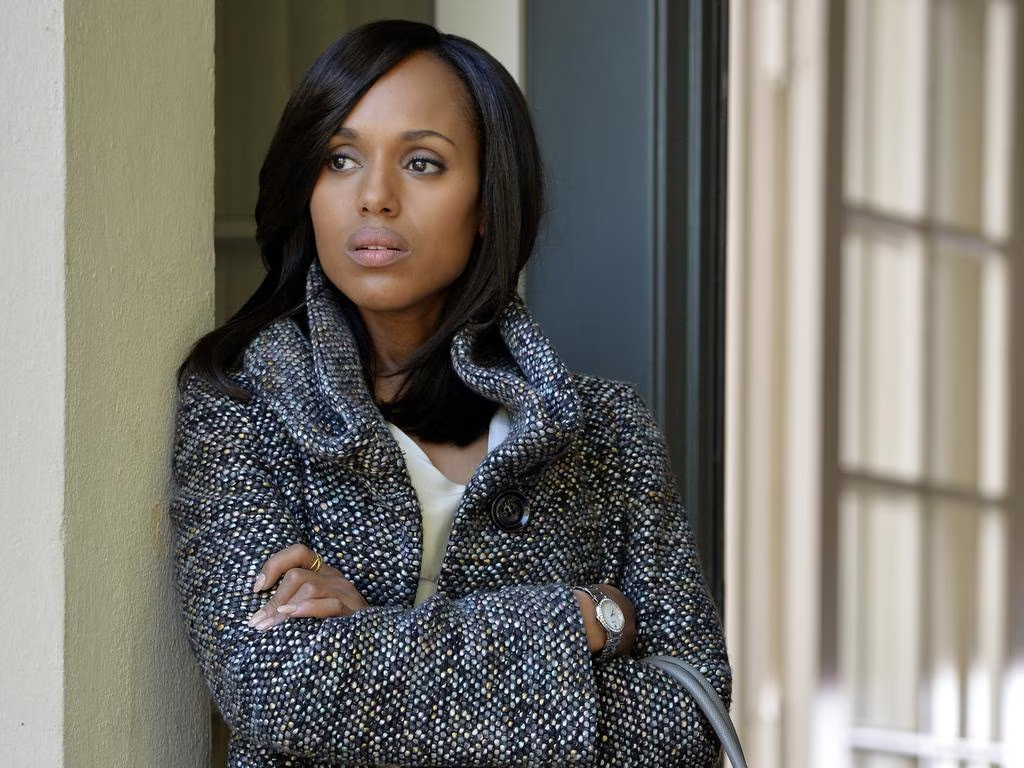
Kerry Washington broke long-standing barriers as Olivia Pope on Scandal, becoming the first Black woman in nearly forty years to lead a network primetime drama. Her portrayal of a brilliant, stylish, and morally complex crisis manager captivated audiences and redefined the possibilities for Black actresses on network TV.

Image Source: Bing Image. License: All Creative Commons

Washington also produces and directs, fostering inclusive storytelling and mentoring new talent. Her trailblazing path opened doors for future Black women to lead primetime dramas while advocating for representation and authentic narratives.

Image Source: Bing Image. License: All Creative Commons

9. Oprah Winfrey

Oprah Winfrey redefined daytime television with The Oprah Winfrey Show, becoming the first Black woman to produce and own her nationally syndicated program. Her empathetic and engaging style transformed TV into a platform for conversation, empowerment, and cultural change.

Image Source: Bing Image. License: All Creative Commons

Through Harpo Productions and the OWN Network, Winfrey built a media empire that launched careers, shaped public discourse, and highlighted underrepresented stories. Her legacy demonstrates how television can be a tool for both entertainment and societal transformation.

Image Source: Bing Image. License: All Creative Commons

8. Debbie Allen

Debbie Allen’s multifaceted career spans acting, dancing, choreography, directing, and producing. She gained recognition starring in Fame, becoming the first Black woman to win a Golden Globe in her category and earning numerous Emmy nominations.

Image Source: Bing Image. License: All Creative Commons

Beyond performing, Allen has directed and produced influential series like A Different World and Grey’s Anatomy, nurturing new generations of talent. Her career exemplifies the power of versatility and mentorship in shaping the television landscape.

Image Source: Bing Image. License: All Creative Commons

7. Phylicia Rashad

Phylicia Rashad transformed perceptions of Black motherhood on television through her role as Clair Huxtable on The Cosby Show. Her elegant, intelligent, and loving portrayal broke stereotypes and became a model for future TV matriarchs.

Image Source: Bing Image. License: All Creative Commons

Rashad’s career extends beyond acting, including stage work in A Raisin in the Sun and roles in This Is Us and The Gilded Age. Her enduring presence continues to inspire audiences and redefine what strong, intelligent women can contribute to television.

Image Source: Bing Image. License: All Creative Commons

6. Leslie Uggams

Leslie Uggams made history as the first Black woman in the modern era to host a network variety show with The Leslie Uggams Show. Her charisma and talent paved the way for performers of color in mainstream entertainment.

Image Source: Bing Image. License: All Creative Commons

Uggams also delivered standout performances as Kizzy in Roots, earning Emmy and Golden Globe nominations. Her ability to thrive across genres—from variety shows to dramas—demonstrates the breadth of possibilities for Black women on television.

Image Source: Bing Image. License: All Creative Commons

5. Cicely Tyson

Cicely Tyson elevated television into an art form with roles that celebrated the dignity and complexity of Black women. Her Emmy-winning performance in The Autobiography of Miss Jane Pittman remains a benchmark of excellence.

Image Source: Bing Image. License: All Creative Commons

Tyson’s career earned her multiple Emmys, the Kennedy Center Honors, the Presidential Medal of Freedom, and an Honorary Academy Award. Her dedication to integrity and representation transformed television storytelling, leaving an unmatched legacy.

Image Source: Bing Image. License: All Creative Commons

4. Esther Rolle

Esther Rolle redefined Black motherhood with her portrayal of Florida Evans on Maude and Good Times. She insisted on portraying her character with strength, dignity, and realism, challenging stereotypes that often dominated TV at the time.

Image Source: Bing Image. License: All Creative Commons

Rolle’s accolades included an Emmy win for Summer of My German Soldier and the NAACP Chairman’s Civil Rights Leadership Award. Her advocacy for authentic representation made lasting contributions to television and culture.

Image Source: Bing Image. License: All Creative Commons

3. Roxie Roker

Roxie Roker made television history as Helen Willis on The Jeffersons, part of one of the first interracial couples regularly featured on primetime TV. Her portrayal blended warmth, intelligence, and humor, breaking societal barriers with grace.

Image Source: Bing Image. License: All Creative Commons

Roker’s career also included influential appearances in Roots and Claudine, as well as work in community advocacy in Los Angeles. Her commitment to representation helped normalize inclusion on television in meaningful and enduring ways.

Image Source: Bing Image. License: All Creative Commons

2. Nichelle Nichols

Nichelle Nichols made history as Lieutenant Nyota Uhura on Star Trek, one of the first non-stereotypical roles for a Black woman in American television. Uhura’s intelligence, skill, and equality within the crew offered a revolutionary vision of the future.

Image Source: Bing Image. License: All Creative Commons

Nichols also contributed to NASA’s efforts to recruit women and people of color into the astronaut corps, inspiring generations to imagine themselves in roles once thought impossible. Her legacy is one of empowerment, representation, and breaking barriers.

Image Source: Bing Image. License: All Creative Commons

1. Diahann Carroll

Diahann Carroll broke television history in 1968 as the first Black woman to headline a network series without being cast as a domestic worker. Her role as Julia Baker in Julia was groundbreaking, showing Black women as intelligent, independent, and modern.

Image Source: Bing Image. License: All Creative Commons

Carroll later starred as Dominique Devereaux on Dynasty, demonstrating that Black women could also play glamorous, powerful, and multidimensional characters. Her induction into the Television Academy Hall of Fame cemented her status as a pioneer, leaving a legacy that continues to inspire.

Image Source: Bing Image. License: All Creative Commons

These 14 women reshaped television, proving that talent, vision, and persistence can challenge stereotypes and open doors. Their performances, leadership, and advocacy not only expanded opportunities for Black women on screen but also enriched storytelling for all audiences. From comedic brilliance to dramatic gravitas, from groundbreaking roles to mentorship behind the scenes, these trailblazers remind us that representation matters and that the courage to break barriers can transform an entire industry.

The White Lotus Season 3: 12 Characters You Can’t Forget

0
Image Source: Bing Image. License: All Creative Commons

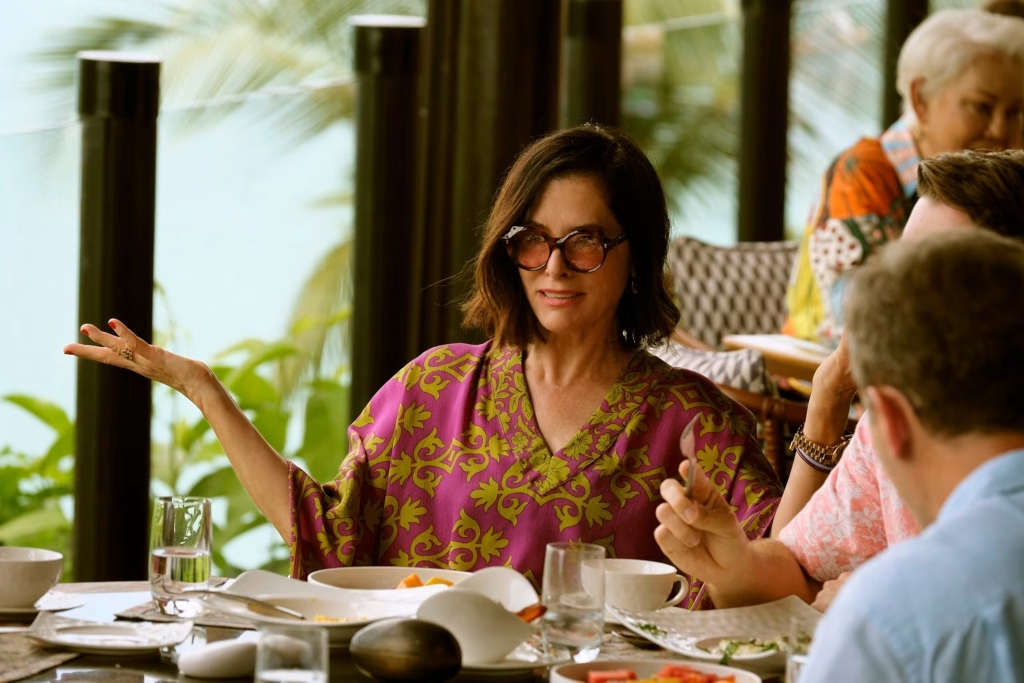
Season 3 of The White Lotus continues the show’s tradition of blending dark humor, social satire, and intricate character work, all set against the stunning backdrop of Koh Samui. This season dives deep into the lives of its guests and staff, revealing the hidden tensions, desires, and secrets that simmer beneath the resort’s polished surface. From privileged families grappling with wealth and identity to staff members navigating moral dilemmas, every character plays a vital role in the season’s intricate narrative. Below, we rank the key players of Season 3, exploring their journeys, wardrobes, and the subtle details that make them unforgettable. Each entry highlights how clothing, accessories, and interactions illuminate personality traits, providing insight into the human behaviors that drive the series’ drama.

Image Source: Bing Image. License: All Creative Commons

12. Valentin

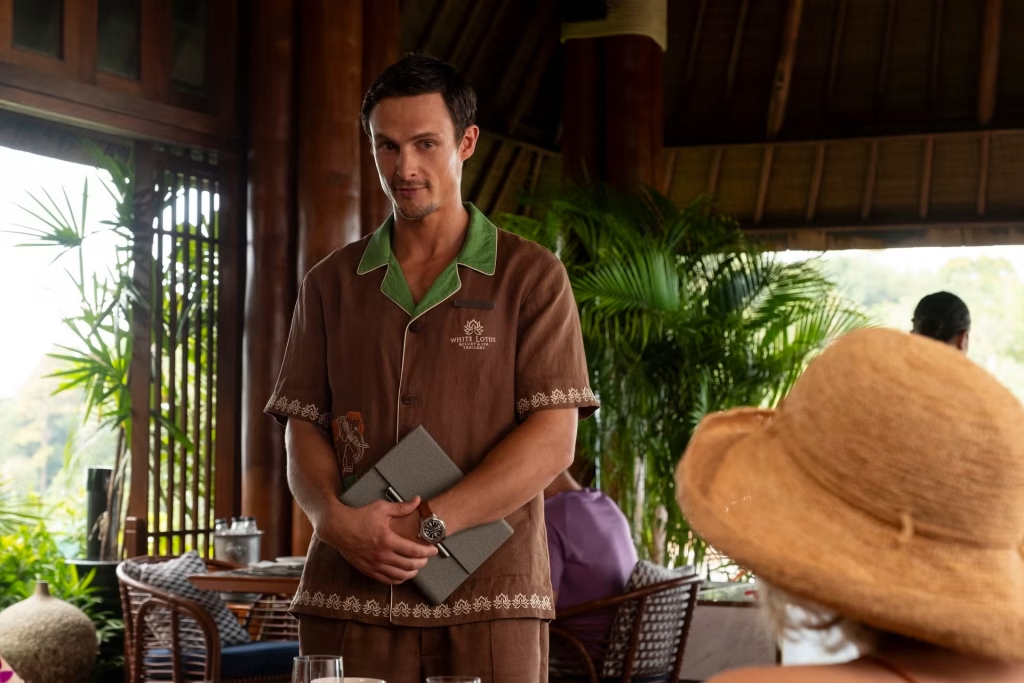
Valentin enters the White Lotus under the guise of a mysterious Russian “health coach,” projecting calmness and expertise in wellness. But as the story unfolds, it becomes clear that he has far more complex motives than simply guiding guests toward relaxation. He is eventually revealed as a central figure in the hotel’s jewelry heist, part of a cunning trio orchestrating chaos from behind the scenes.

Image Source: Bing Image. License: All Creative Commons

His wardrobe mirrors this duality. While he maintains the appearance of a standard resort employee, subtle details like his Vostok Amphibian watch nod to his Russian heritage and hint at his hidden agenda. These small touches reinforce the idea that Valentin is always calculating, blending seamlessly into the environment while keeping viewers guessing.

Image Source: Bing Image. License: All Creative Commons

Valentin’s interactions with the guests, particularly Jaclyn, reveal a character who thrives in ambiguity. He is charming yet dangerous, a figure who embodies the season’s themes of deception and blurred morality. His presence is both a source of intrigue and tension, leaving a lasting impression as one of the season’s most enigmatic figures.

Image Source: Bing Image. License: All Creative Commons

11. Sritala

Sritala, the owner of the Koh Samui White Lotus, is the ultimate portrait of opulence. She is unapologetically extravagant, her wardrobe a glittering display of diamonds, emeralds, and statement pieces, including a David Webb monkey brooch and a $380,000 Jacob & Co. Fleurs de Jardin watch shaped like a butterfly pollinating flowers. Each piece is a declaration of her wealth and status, signaling that she is firmly at the top of the social hierarchy.

Image Source: Bing Image. License: All Creative Commons

Beyond the surface, her taste for ostentation reflects a deeper fascination with power and control. Recurring animal motifs in her jewelry suggest primal instincts at play, hinting that beneath her polished exterior lies a cunning awareness of the dynamics around her. Sritala uses her aesthetic as armor, both projecting dominance and subtly influencing the people around her.

Image Source: Bing Image. License: All Creative Commons

Interactions with staff and guests alike reveal a woman confident in her authority, yet slightly removed from the chaos she oversees. She is a living symbol of the resort’s lavish excess, reminding everyone that even in a place built for leisure, money and power dictate behavior and influence outcomes.

Image Source: Bing Image. License: All Creative Commons

10. Saxon Ratliff

Saxon Ratliff, the eldest of the Ratliff siblings, embodies hyper-masculinity and inherited privilege. From the moment he arrives at the resort, his persona screams wealth and entitlement, exemplified by his $23,000 Hublot Big Bang Unico Black Magic watch. However, as the season progresses, Saxon subtly shifts toward a more understated style, swapping it for a Rolex Milgauss, a visual hint that there may be more complexity to his character than just brash confidence.

Image Source: Bing Image. License: All Creative Commons

While Saxon’s humor and behavior often cross boundaries, revealing misogynistic tendencies and a love for provocation, the narrative allows glimpses of introspection. His engagement with astrology through Chelsea’s books and moments of personal reflection suggests a young man wrestling with identity, trying to reconcile familial expectations with his inner self.

Image Source: Bing Image. License: All Creative Commons

Saxon’s arc serves as a microcosm of the Ratliff family’s unraveling. He oscillates between cringe-worthy arrogance and vulnerable authenticity, making him a character who simultaneously frustrates and fascinates viewers. His journey is one of subtle transformation within a family teetering on the edge of collapse.

Image Source: Bing Image. License: All Creative Commons

9. Lochlan Ratliff

Lochlan, the youngest Ratliff, is the sibling most adrift in the family’s turbulent sea of privilege and dysfunction. His journey swings between extremes, from intimate encounters with Chloe to a taboo exploration with Saxon, even contemplating monastic life alongside his sister Piper. These experiences form a chaotic path of self-discovery, highlighting his search for purpose and identity.

Image Source: Bing Image. License: All Creative Commons

His wardrobe mirrors this inner turmoil. The playful “Talk to Me About a Reality Check” tee, the alligator-printed Tombolo shirt, and his glow-in-the-dark Omega x Swatch Saturn watch are visual markers of both his naivete and the life lessons he is forced to navigate. Each choice tells a story of uncertainty, experimentation, and personal growth.

Image Source: Bing Image. License: All Creative Commons

Lochlan’s arc combines dark comedy and tragedy. His explorations of intimacy, spirituality, and familial bonds underscore the season’s fascination with privilege, authenticity, and the consequences of both reckless and thoughtful decisions. Through him, viewers witness the awkward and sometimes painful process of growing up in a chaotic world.

Image Source: Bing Image. License: All Creative Commons

8. Piper Ratliff

Piper Ratliff’s storyline is fueled by curiosity and a desire for enlightenment. Intending to interview a monk for her thesis, she arrives at the White Lotus seeking something beyond materialism, a glimpse into spirituality and self-understanding. Her idealism, however, is repeatedly challenged by the realities of resort life and her family’s distractions.

Image Source: Bing Image. License: All Creative Commons

Her journey is marked by tension between aspiration and comfort. Piper’s rejection of her monastic ambitions, due to something as trivial yet telling as the food not being organic enough, speaks volumes about the limits of privilege and idealism when faced with inconvenience. It’s a sharp, satirical commentary on the gap between intention and action.

Image Source: Bing Image. License: All Creative Commons

Relationships, particularly with her mother, Victoria, further shape her arc. Victoria’s disdain for Piper’s pursuits and her own preoccupations with status amplify the generational and moral conflicts within the family. Piper’s story explores the difficult reconciliation of personal values, familial expectations, and the compromises that come with growing up in an affluent environment.

Image Source: Bing Image. License: All Creative Commons

7. Timothy Ratliff

Timothy Ratliff, the family patriarch, faces an unraveling, both internal and external. Beneath his genteel Southern manner lies a mounting financial crisis, with embezzlement charges threatening to destroy his carefully curated world. Maintaining control while facing these pressures becomes a central tension of his arc.

Image Source: Bing Image. License: All Creative Commons

His wardrobe choices, particularly his gold Rolex Day Date-40 that matches Victoria’s, symbolize the intertwined fates of the couple, reflecting both shared history and the cracks in their relationship. Timothy’s struggle is often masked by humor or charm, yet moments like the attempted murder-suicide underscore the darkness lurking beneath his polished exterior.

Image Source: Bing Image. License: All Creative Commons

Portrayed with a mix of pathos and privilege, Timothy’s journey is a commentary on the fragility of the American dream. His character illustrates how wealth, status, and family can be both a source of identity and a crucible of pressure, leading to profound consequences for himself and those around him.

Image Source: Bing Image. License: All Creative Commons

6. Victoria Ratliff

Victoria Ratliff, brought vividly to life by Parker Posey, is both loathsome and magnetic. Her mix of materialism, naïveté, and outspoken commentary makes her impossible to ignore. She is a “woman-child” from a privileged background, and her behavior reflects both the indulgences and insecurities of someone unaccustomed to accountability.

Image Source: Bing Image. License: All Creative Commons

Her wardrobe is an intricate language of status and personality, featuring high-end labels like Rachel Comey, Lanvin, Stella McCartney, a $37,000 Rolex, and a $285,000 David Webb necklace. These pieces operate as both armor and assertion, reinforcing her identity while highlighting her detachment from ordinary concerns.

Image Source: Bing Image. License: All Creative Commons

Victoria’s social interactions, influenced by substance use and sharp privilege, produce some of the season’s most memorable moments. From viral breakfast snubs to awkward attempts at control, she embodies the absurdities of wealth and entitlement while also captivating viewers with her unapologetic presence.

Image Source: Bing Image. License: All Creative Commons

5. Chelsea

Chelsea, portrayed by Aimee Lou Wood, quickly becomes a fan favorite through her combination of charm, optimism, and vulnerability. Her free-spirited, bohemian style signals her individuality, but her journey is fraught with life-threatening challenges that test her resilience.

Image Source: Bing Image. License: All Creative Commons

Her signature necklace, a diamond-studded dog tag engraved with “Stay Gold,” serves as a symbolic anchor, evoking innocence, fragility, and the transient nature of happiness. Chelsea’s fate, threatened by both human malice and natural dangers, underscores the precariousness of purity in a world dominated by wealth and chaos.

Image Source: Bing Image. License: All Creative Commons

Her relationship with Rick amplifies her story’s emotional weight. Chelsea’s youthful optimism and energy contrast sharply with Rick’s haunted past, creating a poignant dynamic that enhances the tragedy of her arc. Her presence brings warmth, hope, and ultimately a sense of loss that resonates long after the season concludes.

Image Source: Bing Image. License: All Creative Commons

4. Rick

Rick, Chelsea’s older and troubled partner, is a complex figure defined by both vengeance and restraint. Haunted by past trauma, he arrives at the resort prepared for confrontation, wielding both a gun and a thirst for justice, yet his internal struggle governs his actions more than impulsive anger.

Image Source: Bing Image. License: All Creative Commons

His understated fashion choices, vintage Hawaiian shirts, and simple jewelry serve as a visual metaphor for his attempt to maintain calm in the midst of chaos. Rick’s restraint is notable when he confronts his father’s killer, choosing to step away rather than exact violence, subverting expectations.

Image Source: Bing Image. License: All Creative Commons

Despite his self-control, Rick inadvertently catalyzes Chelsea’s tragic death, showing that even those who strive for morality can have unintended consequences. His arc examines age, trauma, and the moral ambiguities that define human relationships, adding layers to the season’s exploration of cause and effect.

Image Source: Bing Image. License: All Creative Commons

3. Kate, Jaclyn, and Laurie

The trio of Kate, Jaclyn, and Laurie offers a nuanced exploration of female friendship and social navigation. Their dynamics revolve around shifting alliances, with humor, gossip, and rivalry shaping their interactions. Each woman’s wardrobe reflects her character: Jaclyn’s bold designer looks demand attention, Kate’s conservative floral sundresses hint at her Texas roots, and Laurie’s practical resort wear signals her status as an outsider.

Image Source: Bing Image. License: All Creative Commons

Throughout the season, their relationships evolve in response to the absurdities of the resort. Moments of vulnerability and confrontation deepen their connection, revealing the complexities of lifelong bonds tested under pressure. The show uses these interactions to dissect themes of loyalty, envy, and self-awareness.

Image Source: Bing Image. License: All Creative Commons

Laurie’s closing reflections on friendship provide a resonant insight into the season’s underlying human truths. The trio’s journey elevates them beyond comic relief, showing how social hierarchies and personal histories intersect in ways both entertaining and profound.

Image Source: Bing Image. License: All Creative Commons

2. Belinda

Belinda, returning from Season 1 and portrayed by Natasha Rothwell, emerges as a stabilizing force in the resort’s whirlwind. Her role as a spa entrepreneur highlights themes of hope, agency, and visibility, offering a contrast to the excesses and moral ambiguities surrounding her.

Image Source: Bing Image. License: All Creative Commons

This season, Belinda’s story gains depth, emphasizing representation and the importance of shared experience. Her silent, meaningful connections with other Black guests reflect both her empathy and her perspective on spaces traditionally dominated by privilege.

Image Source: Bing Image. License: All Creative Commons

Her quiet presence and thoughtful choices make Belinda a moral touchstone within the narrative. Through her, viewers see the possibility of integrity, resilience, and warmth in a world often defined by chaos, entitlement, and deception.

Image Source: Bing Image. License: All Creative Commons

1. Gaitok

Gaitok, the resort’s security guard, is the embodiment of the season’s moral core. Torn between his Buddhist principles and the violent demands of his position, he confronts the complexities of duty, morality, and masculinity.

Image Source: Bing Image. License: All Creative Commons

His arc is a meditation on choice and consequence, as he weighs leaving the job to preserve his ethics or staying to maintain social order. Each decision carries personal and symbolic weight, reflecting the tension between spiritual ideals and worldly pressures.

Image Source: Bing Image. License: All Creative Commons

Gaitok’s quiet strength, empathy, and moral courage define the season’s emotional resonance. As the moral heart of Season 3, his journey leaves a lasting impression, illustrating that heroism can manifest not in grand gestures but in the disciplined, thoughtful choices we make in everyday life.

Image Source: Bing Image. License: All Creative Commons

Season 3 of The White Lotus proves once again that character is king. From chaotic guests and morally ambiguous staff to quiet moral anchors, the season’s ensemble paints a vivid picture of privilege, identity, and human folly. Each character, with their distinct wardrobe, personality, and narrative arc, contributes to a tapestry of intrigue, comedy, and tragedy, solidifying the series as a sharp, compelling meditation on wealth, desire, and the human condition.

When Celebrities Cheat Time: 15 Age Lies Revealed

0
Image Source: Bing Image. License: All Creative Commons

In Hollywood, age can feel like both a currency and a barrier. From landing teen roles to fitting into a music trend, many stars have adjusted their ages—sometimes by just a year, other times by a decade to keep doors open or maintain an image. While some fibs are harmless, others have led to public revelations and even legal battles. Here are 15 celebrities who got creative with their birthdays, and the stories behind the numbers.

Image Source: Bing Image. License: All Creative Commons

15. Chloë Grace Moretz

Chloë Grace Moretz isn’t just known for her acting talent—she’s also shown that sometimes bending the truth can help a career take off. When auditioning for Martin Scorsese’s Hugo, Moretz pretended to be British, complete with an accent and a fabricated backstory about being the daughter of horse breeders from Cambridgeshire.

Image Source: Bing Image. License: All Creative Commons

The casting director knew she was willing to play the part fully and encouraged her to keep up the act. Moretz impressed Scorsese and eventually landed the role, proving that a little creative storytelling before the cameras roll can sometimes pay off. Her boldness helped solidify her reputation as a versatile and fearless young actress.

Image Source: Bing Image. License: All Creative Commons

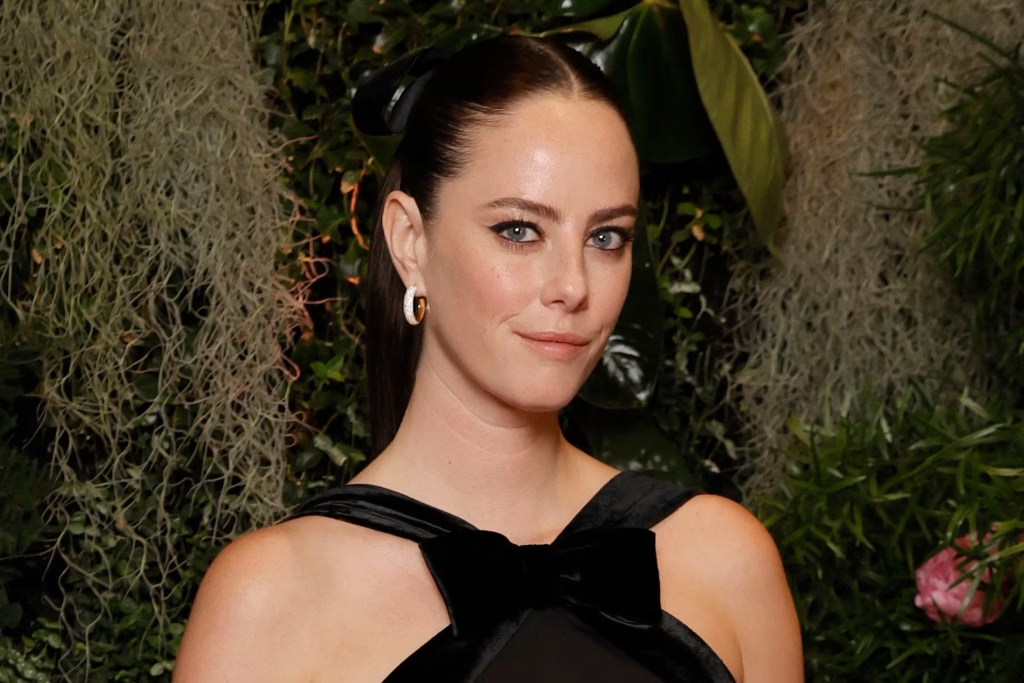
14. Kaya Scodelario

At just 14 years old, Kaya Scodelario auditioned for Skins and told the producers she was 15, matching the show’s casting requirements. The fib was small, but significant enough to make her eligible for the role.

Image Source: Bing Image. License: All Creative Commons

After she was cast, Scodelario came clean about her real age, and the producers were surprisingly supportive. Her youthful energy fit the show perfectly, turning her slight deception into a harmless footnote in her career. Her story shows how age rules in casting can sometimes feel arbitrary, especially for teen actors.

Image Source: Bing Image. License: All Creative Commons

13. Nicki Minaj

For years, Nicki Minaj kept fans guessing about her age. She claimed to be born in 1984, but official records later revealed she was actually born in 1982, two years older than reported.

Image Source: Bing Image. License: All Creative Commons

The revelation didn’t slow her career one bit. Minaj’s talent, charisma, and larger-than-life persona remained the focus, proving that in the world of pop stardom, age is just a number—and it’s rarely what defines success.

Image Source: Bing Image. License: All Creative Commons

12. Geri Halliwell

During her days as Ginger Spice in the Spice Girls, Geri Halliwell kept her exact age under wraps. Fans and even her bandmates often speculated about how old she really was, making her age a playful mystery.

Image Source: Bing Image. License: All Creative Commons

Halliwell handled it with humor and grace, often laughing along with the rumors. The uncertainty became part of her charm and added a sense of intrigue to the Spice Girls’ dynamic. In an industry obsessed with youth, Halliwell’s age ambiguity became an asset rather than a liability.

Image Source: Bing Image. License: All Creative Commons

11. Jennifer Lopez

Jennifer Lopez’s age has been a topic of debate for decades, with different sources listing her birth year as either 1969 or 1970. Despite the uncertainty, Lopez has continued to defy expectations, performing at peak energy and maintaining a multi-faceted career in music, film, and fashion.

Image Source: Bing Image. License: All Creative Commons

For Lopez, age has never been a barrier. Fans focus more on her talent, business acumen, and relentless drive than on the exact number of candles on her birthday cake. Her story is a reminder that in Hollywood, achievements often speak louder than numbers.

Image Source: Bing Image. License: All Creative Commons

10. Nelly

In 2003, rapper Nelly appeared on Teen People’s Hottest Stars Under 25 list—but it turned out he was actually 28 at the time. The revelation caused a minor stir but didn’t hurt his popularity.

Image Source: Bing Image. License: All Creative Commons

Nelly’s age deception was likely a strategic move to fit the young hip-hop scene. Today, he’s celebrated for his contributions to music and culture, proving that a few extra years on paper can’t dim genuine talent or charisma.

Image Source: Bing Image. License: All Creative Commons

9. Doris Day

Legendary singer and actress Doris Day spent much of her career shaving years off her age to appear younger in Hollywood. In a time when ageism was rampant, especially for women, Day’s strategy helped her stay in demand.

Image Source: Bing Image. License: All Creative Commons

Eventually, the truth came out, but it didn’t tarnish her legacy. Day remains a beloved icon, demonstrating the pressures female performers faced and the lengths some had to go to navigate an unforgiving industry.

Image Source: Bing Image. License: All Creative Commons

8. Carla Gugino

Carla Gugino also experienced the Hollywood age game firsthand. She occasionally claimed to be younger than she was to secure certain roles, a common tactic for actors navigating a youth-focused industry.

Image Source: Bing Image. License: All Creative Commons

Despite the deception, Gugino’s talent always shone through. Her story highlights both the barriers age can create in casting and the resilience required to succeed in Hollywood while managing public perception.

Image Source: Bing Image. License: All Creative Commons

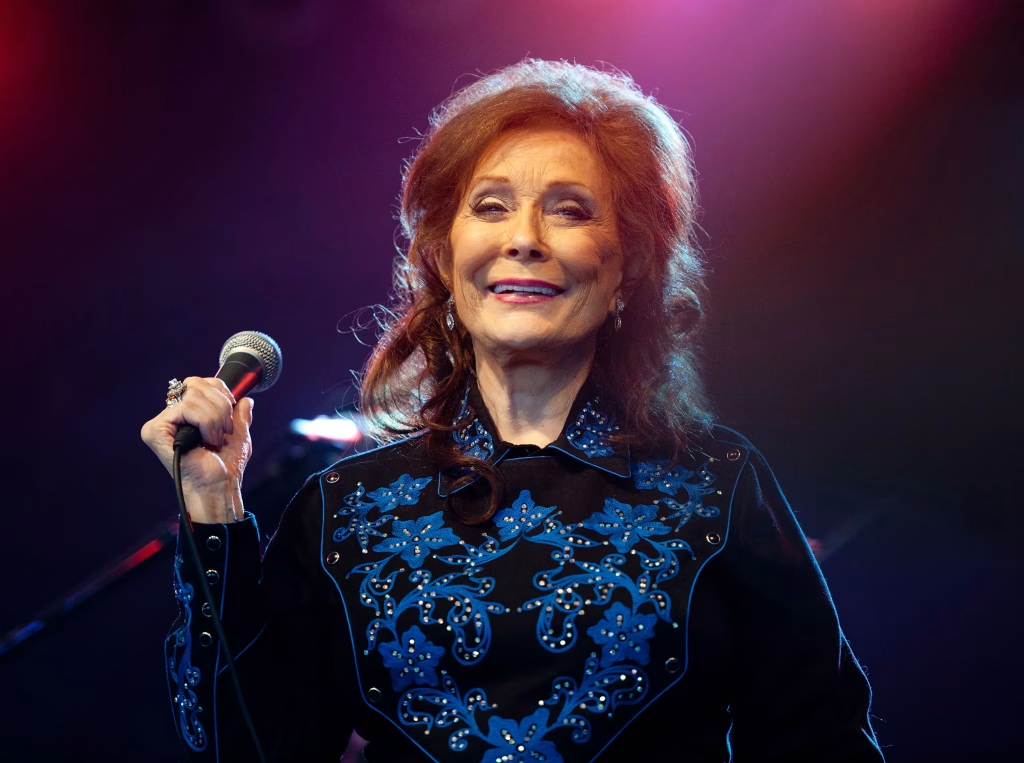
7. Loretta Lynn

Country music legend Loretta Lynn maintained an air of mystery around her age for decades. In her autobiography, she refused to disclose her exact birth year, preferring that fans focus on her music instead.

Image Source: Bing Image. License: All Creative Commons

Her pragmatic approach emphasized talent over numbers. By keeping her age under wraps, Lynn allowed her audience to connect with her artistry rather than her personal details, solidifying her status as a timeless figure in country music.

Image Source: Bing Image. License: All Creative Commons

6. Mila Kunis

When Mila Kunis auditioned for That ’70s Show at age 14, she claimed to be 18 to meet legal requirements for filming. Her youthful appearance helped her land the role of Jackie Burkhart, which became a career-defining performance.

Image Source: Bing Image. License: All Creative Commons

Later, Kunis revealed her real age to the producers, who decided to keep her on the show. Her experience shows that sometimes bending the truth, especially in the early stages of a career, can open doors that talent alone might not immediately unlock.

Image Source: Bing Image. License: All Creative Commons

5. Sandra Bullock

Sandra Bullock has occasionally kept her age ambiguous, even admitting that after lying about it multiple times, she lost track of the truth herself. Her approach was a way to sidestep age discrimination in Hollywood.

Image Source: Bing Image. License: All Creative Commons

Bullock’s strategy allowed her to maintain flexibility in casting and retain a sense of mystery. Her experience illustrates the pressures actresses face and the creative ways they navigate them to protect their careers.

Image Source: Bing Image. License: All Creative Commons

4. Gabrielle Carteris

Gabrielle Carteris was 29 when she auditioned for Beverly Hills 90210, but she claimed to be 21 to play high school student Andrea Zuckerman. Legal counsel ensured her contract accounted for the age discrepancy.

Image Source: Bing Image. License: All Creative Commons

The show became a hit, and Carteris kept her role despite the revelation. Her story is a classic example of how age manipulation has been a survival tactic in Hollywood, especially for women playing younger characters.

Image Source: Bing Image. License: All Creative Commons

3. Rebel Wilson

Rebel Wilson faced a public age scandal when a former classmate revealed she was 36, not 28 as she had claimed. The revelation reportedly cost her certain movie roles, leading Wilson to sue Bauer Media for defamation.

Image Source: Bing Image. License: All Creative Commons

She won over $4 million in damages, which she donated to support Australian charities and the film industry. Wilson’s experience underscores the real-world consequences of ageism and the courage it takes to fight back against public scrutiny.

Image Source: Bing Image. License: All Creative Commons

2. Laurence Fishburne

Laurence Fishburne claimed to be older than he was when auditioning for Apocalypse Now. At 14, he said he was 16 so he could portray an 18-year-old character, with a secretary vouching for him.

Image Source: Bing Image. License: All Creative Commons

Fishburne’s youthful energy made his performance memorable, and by the time the film was released, he matched his character’s age. His story illustrates how young actors often have to navigate flexible casting standards to land challenging roles.

Image Source: Bing Image. License: All Creative Commons

1. Whoopi Goldberg

Whoopi Goldberg admitted to shaving years off her age early in her career to land roles. At one point, people thought she was 35 when she was actually 30.

Image Source: Bing Image. License: All Creative Commons

Goldberg’s honesty about her past deception highlights Hollywood’s age bias, especially against women. Her story reminds us that even Oscar winners sometimes have to get creative with the numbers just to get through the door.

Image Source: Bing Image. License: All Creative Commons

Age has always been a tricky topic in Hollywood, and these 15 stories show the lengths actors and performers will go to protect opportunities or preserve their image. From strategic fibs to outright deception, the industry’s obsession with youth has shaped many careers. Yet, as these stars prove, talent, resilience, and charisma ultimately matter far more than the digits on a birth certificate.

Top Shows on Amazon Prime Video That Deserve Your Attention

0
Image Source: Bing Image. License: All Creative Commons

Amazon Prime Video has quietly built one of the most impressive streaming libraries out there, especially for fans of thrillers, prestige dramas, and genre-bending series that take creative risks. Whatever your mood—intense, emotional, comedic, or delightfully quirky—there’s something on Prime Video worth watching. Below is a list of standout shows that are making waves right now, whether you’re hunting for your next binge-worthy obsession or just figuring out what to watch next.

Image Source: Bing Image. License: All Creative Commons

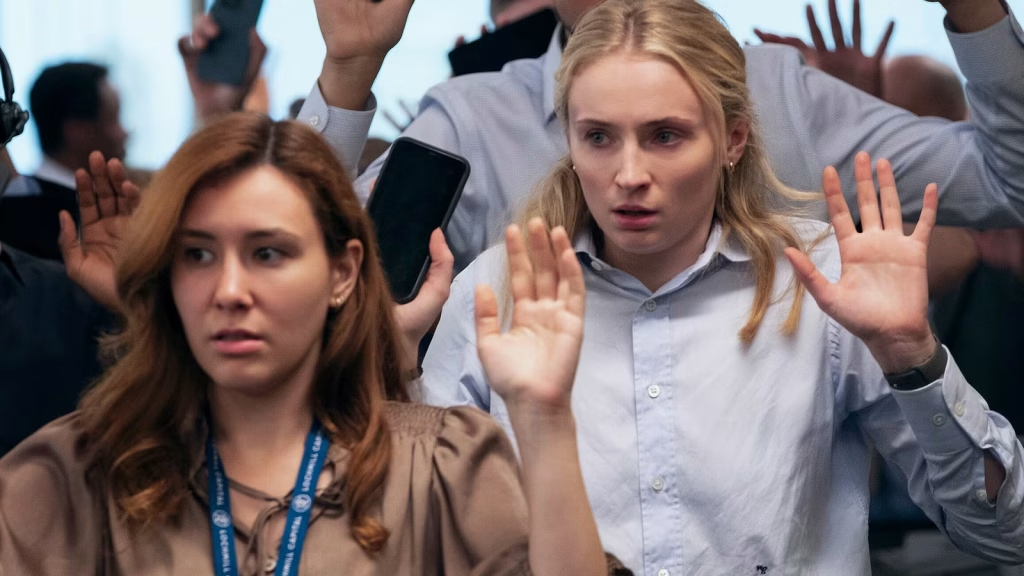
15. Steal

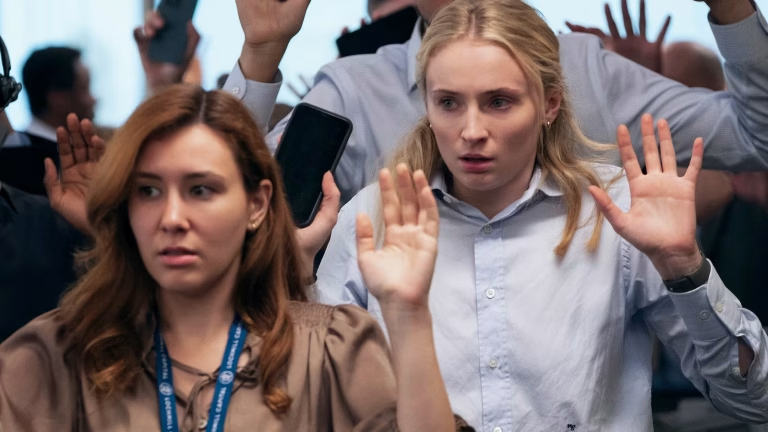
Steal is the type of thriller that doesn’t squander a single second getting to the good stuff. Right from the first episode, it drops you right in the middle of a tight spot and just keeps piling on more and more complications. Sophie Turner plays the role of Zara, a seemingly demure office worker whose life goes into complete chaos as she finds herself caught up in a perilous and high-stakes heist that is obviously much bigger than she could have ever possibly imagined.

Image Source: Bing Image. License: All Creative Commons

The key to the success of the show is the acting of Sophie Turner. She gives a perfect blend of fear, determination, and primal intuition that makes the character of Zara seem like a real person, even when the story goes into full-blown chaos mode. Steal is a six-episode show that moves at a rapid pace and is ideal for a weekend binge watch.

Image Source: Bing Image. License: All Creative Commons

14. The Night Manager

It’s been almost a decade since its premiere, but The Night Manager is back as if it never left. Tom Hiddleston and Olivia Colman effortlessly fall back into their characters, exuding the same level of cool and complex depth that made the first season such a success. The new installments take place years after the events of the first season, injecting new life into the series while maintaining its sharp sense of identity.

Image Source: Bing Image. License: All Creative Commons

The series follows Jonathan Pine, a former hotel manager and reluctant spy, as he is pulled back into the world of arms dealers and intelligence agencies. With its international setting, impeccable style, and shocking moments of violence, The Night Manager is a sophisticated and thrilling spy series that always knows what it is doing.

Image Source: Bing Image. License: All Creative Commons

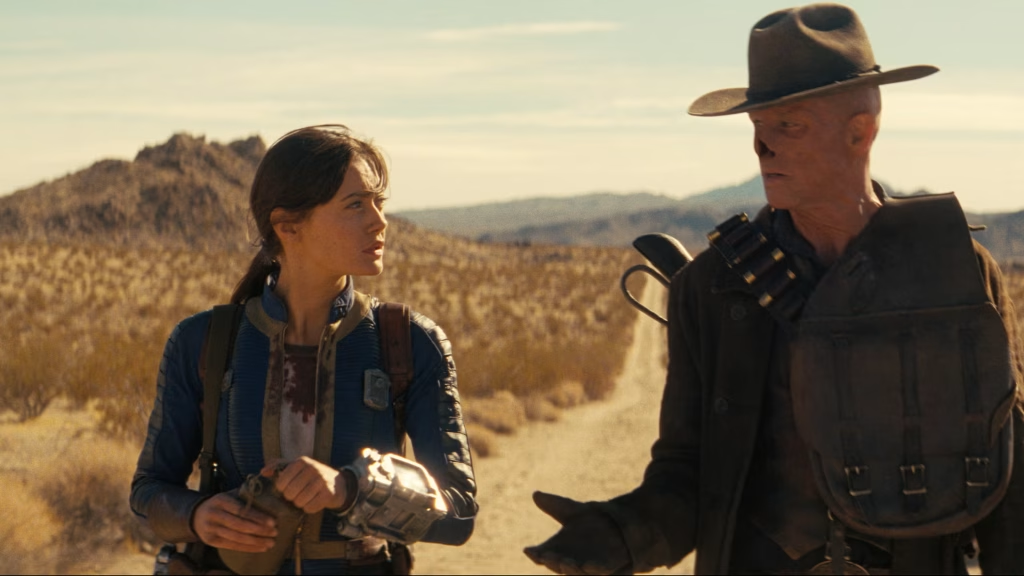
13. Fallout

Fallout is a welcome exception in the world of video game adaptations, as it seems to have a deep understanding of the source material. The show is set in a retro-futuristic, post-nuclear Los Angeles and combines dark humor, violence, and moral absurdity as the characters struggle to survive in a radioactive wasteland of mutants, power armor, and ever-changing allegiances.

Image Source: Bing Image. License: All Creative Commons

The series stars Ella Purnell and Walton Goggins and is produced by Jonathan Nolan and Lisa Joy. It strikes a great balance between spectacle and character-driven storytelling. Its stylized aesthetic and sharp wit make it stand out from other post-apocalyptic shows, and it has been well-received by fans and critics alike. It’s just plain weird, smart, and ridiculously fun.

Image Source: Bing Image. License: All Creative Commons

12. Gen V

Gen V is the savage world of The Boys transplanted into a superhero college, and then it just falls apart. The show is about Marie Moreau, a young supe trying to make her way at Godolkin University, where ambition and corruption are masked by a shiny veneer.

Image Source: Bing Image. License: All Creative Commons

Like its parent show, Gen V is unapologetically violent, satirical, and morally complex. It is also cringeworthy, often disturbing, and yet still manages to create real emotional investment. The show is a loving tribute to the late Chance Perdomo, and Gen V is a must-watch for anyone who loves this dark corner of the universe.

Image Source: Bing Image. License: All Creative Commons

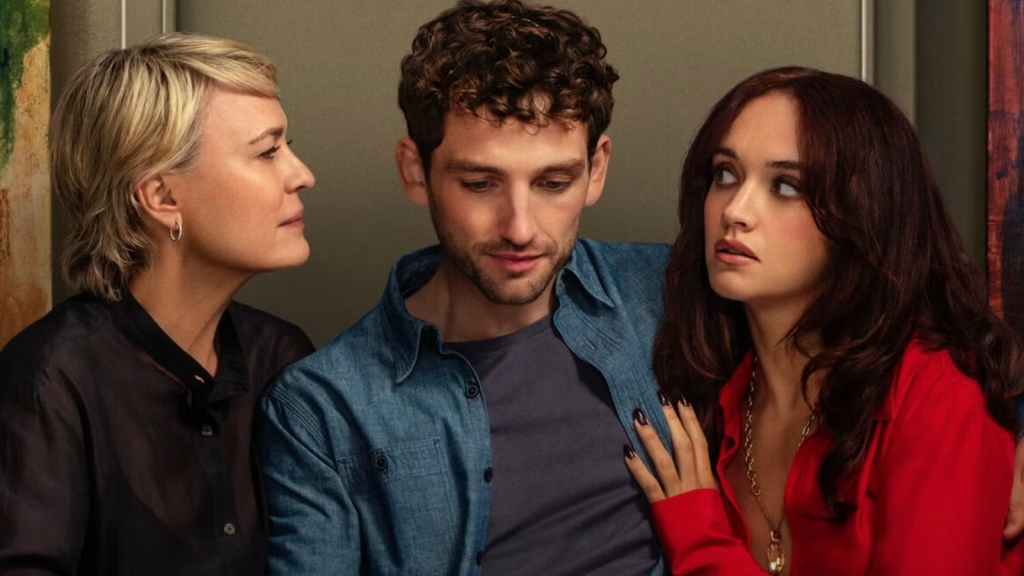
11. The Girlfriend

The Girlfriend is a slow-burning psychological thriller that lives on discomfort. Robin Wright stars as Laura, a successful gallery owner whose entire identity is wrapped up in her relationship with her son. When he brings home his new girlfriend, Cherry, Laura’s suspicions quickly turn to obsession.

Image Source: Bing Image. License: All Creative Commons

The show is told through multiple perspectives, keeping you guessing at motives and what’s true the entire time. Olivia Cooke is terrifyingly good as Cherry, while Wright is chilling as the controlling and denying Laura. The Girlfriend is tense, unsettling, and impossible to look away from.

Image Source: Bing Image. License: All Creative Commons

10. Reacher

Reacher is long overdue as a proper adaptation of the legendary Lee Child series. Alan Ritchson brings Jack Reacher to life with his physical presence and wit, making him seem as if he’s been pulled from the pages of a book. This Reacher is as much about his instincts as he is about his brawn.

Image Source: Bing Image. License: All Creative Commons

Season three turns even darker as Reacher attempts to pull out an undercover DEA informant, finding himself in a very bad place. The no-nonsense action, sharp dialogue, and hard-boiled attitude of this series make it a pure joy to watch. It’s like having comfort food for those who like their crime stories with a hard edge.

Image Source: Bing Image. License: All Creative Commons

9. The Expanse

The Expanse is science fiction on the grandest of scales. It takes place in a future where humanity has colonized the solar system, and it follows the politics and struggles of this new society. It begins with a simple missing persons case, but it quickly escalates into something much, much bigger.

Image Source: Bing Image. License: All Creative Commons

A fan favorite for its attention to world-building and storytelling, the series strikes a perfect harmony between science and emotional investment. The fact that Amazon chose to revive it after being canceled allowed it to reach its full potential, making The Expanse one of the most acclaimed sci-fi series of the past decade.

Image Source: Bing Image. License: All Creative Commons

8. Bosch

Bosch is a crime procedural series that deserves its gritty reputation. Titus Welliver’s portrayal of Harry Bosch is that of a highly principled detective who finds himself in the gray areas of Los Angeles homicide cases. The series never resorts to easy answers or shortcuts in favor of more dramatic storytelling.

Image Source: Bing Image. License: All Creative Commons

Over several seasons, Bosch has been able to sustain a high level of writing and tension. Its spin-off series, Bosch: Legacy, demonstrates that the character still has plenty of stories left to tell. If you are a fan of crime series that treat you like an intelligent person, then this series is definitely one to check out.

Image Source: Bing Image. License: All Creative Commons

7. Jack Ryan

Jack Ryan brings back Tom Clancy’s beloved analyst as a contemporary action hero, with John Krasinski surprising in the role with a welcome level of physicality and passion.

Image Source: Bing Image. License: All Creative Commons

The show is very effective at combining politics and action, with high production values and exotic locations around the world. Even if the plots are a little familiar, the delivery is smooth and entertaining, making Jack Ryan an easy call for fans of action thrillers.

Image Source: Bing Image. License: All Creative Commons

6. The Boys

The Boys is a deconstruction of superhero lore, taking it apart with glee. In this reality, superheroes are celebrities who use their powers for their own gain, and a group of misfits is out to take them down.

Image Source: Bing Image. License: All Creative Commons

With Karl Urban and Antony Starr’s deranged Homelander at the helm, The Boys is a violent, dark, and often disturbing show. But it’s also a commentary on the dangers of fame, power, and blind loyalty. As it nears the end of its final season, The Boys remains as bold as ever.

Image Source: Bing Image. License: All Creative Commons

5. Invincible

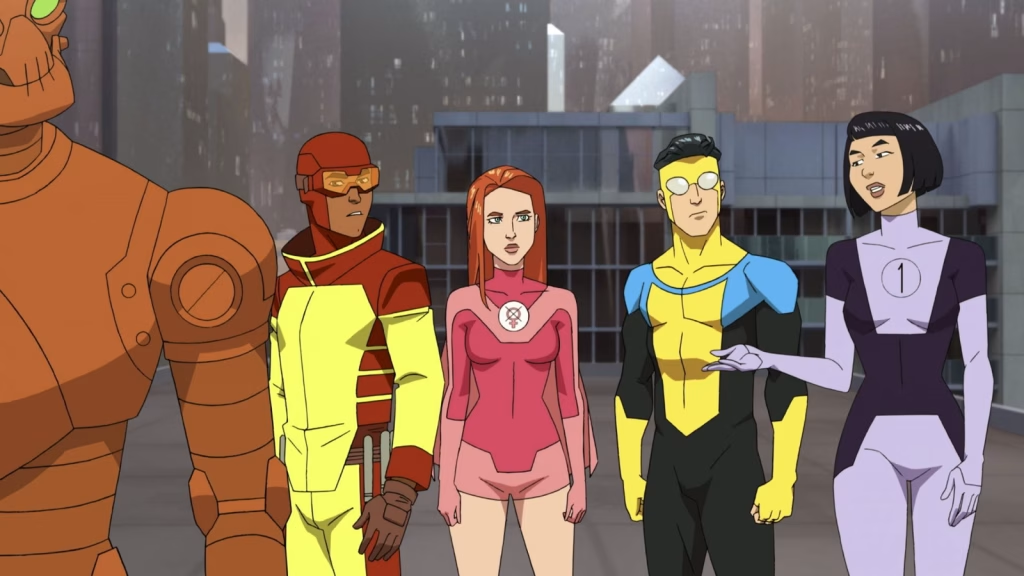
Invincible is an animated series that is far from kid-friendly. The show follows Mark Grayson as he discovers he has superpowers and trains to become a hero just like his father, Omni-Man—the most powerful superhero on the planet.

Image Source: Bing Image. License: All Creative Commons

What begins as a traditional coming-of-age tale quickly spirals into something much darker and more complex. Featuring exceptional voice acting from Steven Yeun, J.K. Simmons, and Sandra Oh, Invincible is one of the best animated shows that Prime Video has to offer.

Image Source: Bing Image. License: All Creative Commons

4. The Wheel of Time

The Wheel of Time is a sweeping fantasy epic that Prime Video has brought to life on a massive scale. Rosamund Pike leads the cast as Moiraine, a woman of great power who is guiding a young group of individuals who may hold the key to saving or destroying the world.

Image Source: Bing Image. License: All Creative Commons

As the seasons pass, the show becomes more complex, adding layers of politics, morality, and impending doom. With its rich world-building and talented ensemble cast, The Wheel of Time has established itself as a must-watch for fans of epic fantasy.

Image Source: Bing Image. License: All Creative Commons

3. Mr. & Mrs. Smith

Mr. & Mrs. Smith is a spin on the traditional spy-romance genre, but with a more muted, weird, and complex emotional sensibility. The series stars Donald Glover and Maya Erskine as two agents who are assigned to go undercover as a married couple for their missions. 

Image Source: Bing Image. License: All Creative Commons

The series is based on awkward chemistry, dry humor, and intense outbursts of violence. Rather than just focusing on the action, it explores the realms of intimacy, trust, and power struggles, which makes it feel very new and unexpected. It’s a very smart spin on the genre that demands a lot of patience.

Image Source: Bing Image. License: All Creative Commons

2. The Rig

The Rig is a show that takes place almost entirely on a remote oil platform off the coast of Scotland, where the isolation is a horror in and of itself. When strange occurrences start happening, the crew must deal with both supernatural elements and their own paranoia.

Image Source: Bing Image. License: All Creative Commons

The show combines environmental elements with a slow-burning horror, which creates a very tense and very claustrophobic experience. The show has great acting and a very interesting setting, which makes The Rig a standout, especially for those who enjoy dark, high-concept thrillers.

Image Source: Bing Image. License: All Creative Commons

1. Undone

Undone is one of the most ambitious and risk-taking shows on Prime Video. Employing rotoscope animation, it follows the life of Alma, a woman who develops the power to control time after a near-death accident.

Image Source: Bing Image. License: All Creative Commons

As Alma rekindles her relationship with her deceased father, the show explores themes of grief, mental illness, and the fabric of reality itself. With its breathtaking visuals and deeply personal narrative, Undone is unlike any other television show, and that’s what makes it so unforgettable.

Image Source: Bing Image. License: All Creative Commons

Whether you’re in the mood for some serious action, some thoughtful sci-fi, dark humor, or just good storytelling, Amazon Prime Video has something for you. These shows are the best of what Prime Video has to offer: ambitious, innovative, and always pushing the envelope.

Tom Holland Returns as Spider-Man, Ushering in the MCU’s Next Phase

0
Image Source: Bing Image. License: All Creative Commons

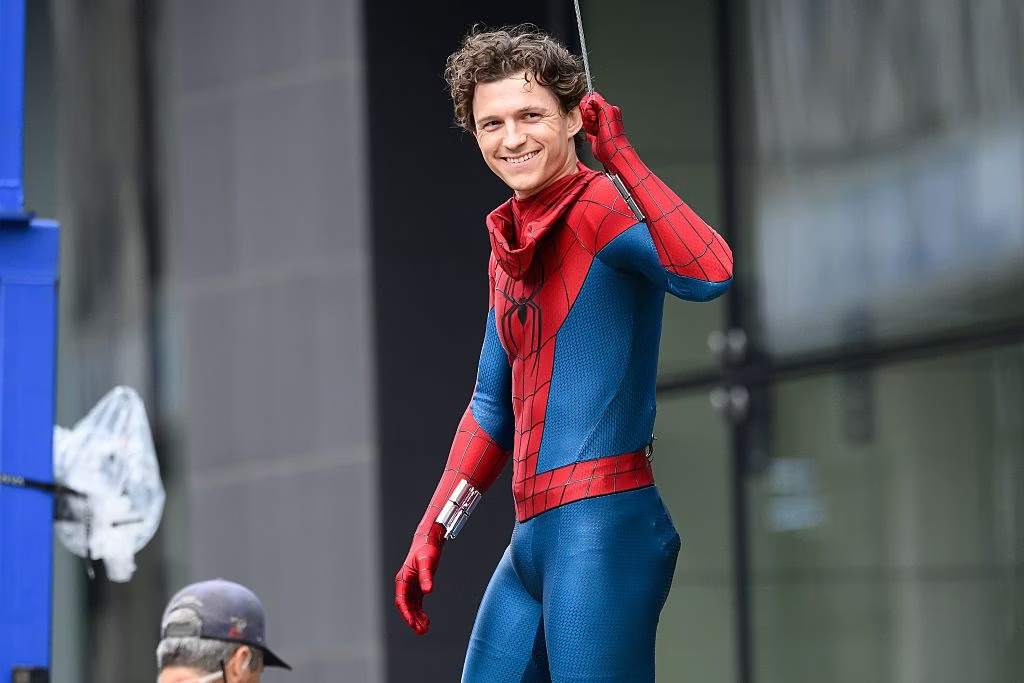
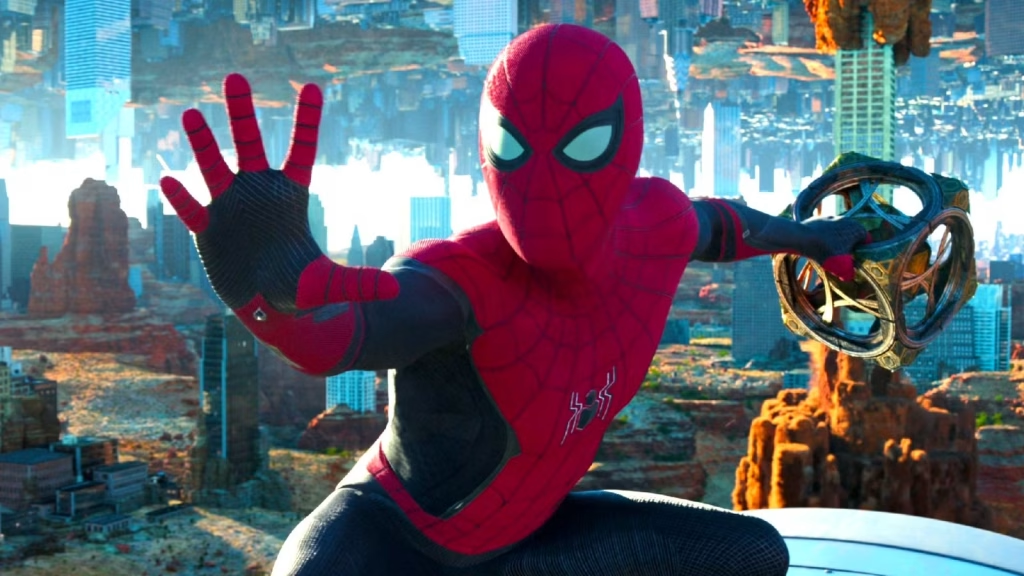
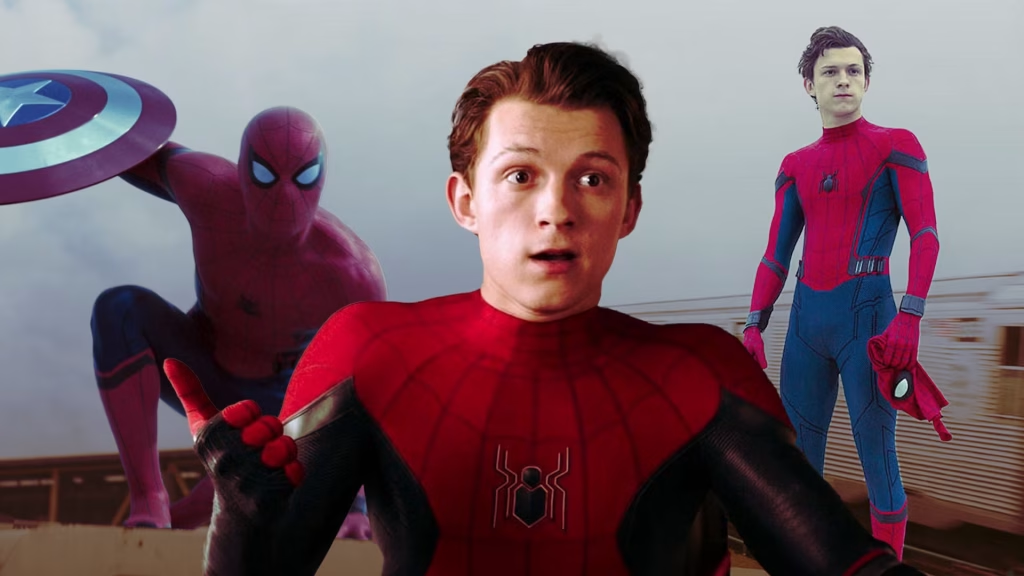
Spider-Man fans can finally breathe a sigh of relief. Peter Parker is swinging back into action on the big screen. After years of rumors, delays, and uncertainty post-No Way Home, Marvel and Sony have finally lifted the curtain on what the future holds for the beloved web-slinger.

Image Source: Bing Image. License: All Creative Commons

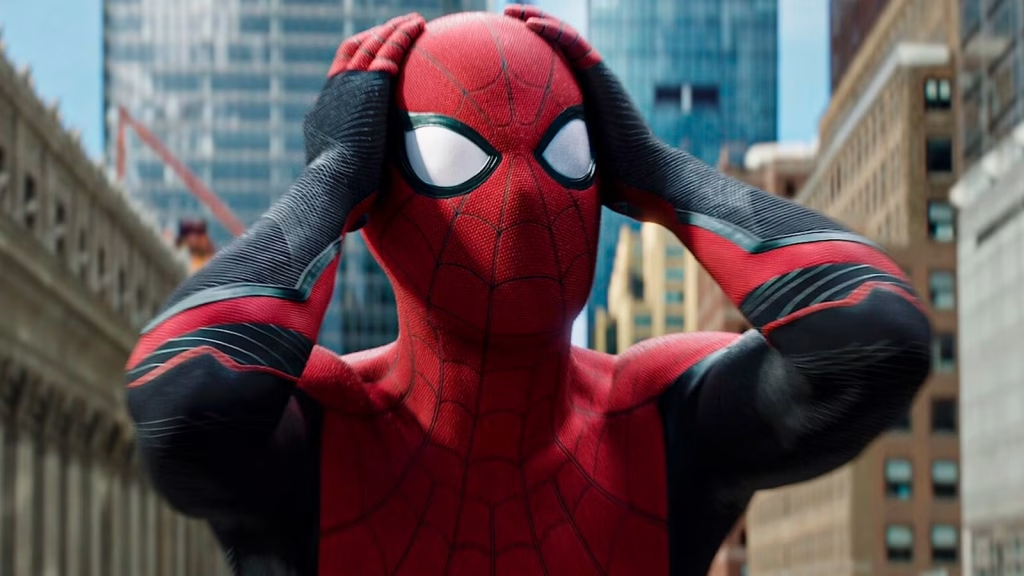
This is more than just another sequel in an already massive franchise. The fourth installment of the Tom Holland-led Spider-Man series is a reset, a shift in tone, and a completely new beginning for the beloved character. As such, it is now officially known as “Spider-Man: Brand New Day.”

Image Source: Bing Image. License: All Creative Commons

The title alone has the fandom going wild. It is a sign of change, a sign of rebirth, and a sign of the emotional repercussions of everything Peter Parker went through in No Way Home. For the first time in a long time, Spider-Man is on his own.

Image Source: Bing Image. License: All Creative Commons

The official announcement took place during the Sony CinemaCon event, where the studio announced that Brand New Day will release on July 31, 2026.

Image Source: Bing Image. License: All Creative Commons

This announcement has already sparked rumors not only of the story but also of the future of Spider-Man within the MCU.

Image Source: Bing Image. License: All Creative Commons

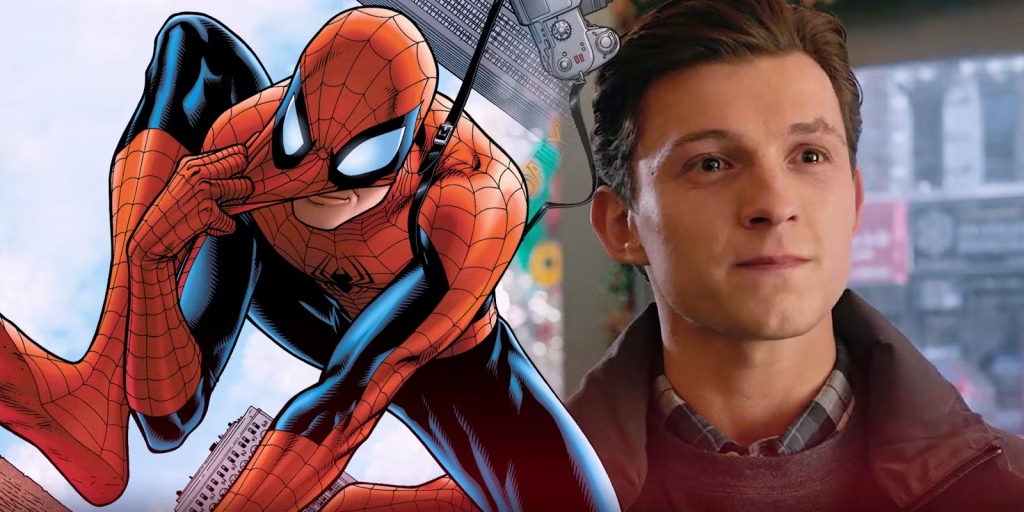
This isn’t a random name choice. “Brand New Day” is lifted directly from one of the most talked-about eras in Spider-Man comic history. Longtime readers know it as a soft reboot that stripped Peter back to basics.

Image Source: Bing Image. License: All Creative Commons

In the comics, that era followed the controversial “One More Day” storyline, where Peter made a devastating deal that erased key parts of his life. While the MCU isn’t adapting that story literally, the emotional parallels are impossible to ignore.

Image Source: Bing Image. License: All Creative Commons

At the end of No Way Home, Peter chose anonymity over happiness. The world forgot who he was. His friends forgot him. His life, as he knew it, was wiped clean. Brand New Day is about what comes after that choice.

Image Source: Bing Image. License: All Creative Commons

Stepping in to guide this next chapter is Destin Daniel Cretton, the director behind Shang-Chi and the Legend of the Ten Rings. His involvement hints at a more grounded, character-driven approach, less spectacle for spectacle’s sake, more heart and humanity.

Image Source: Bing Image. License: All Creative Commons

Tom Holland has been vocal about his excitement to return. He’s described the experience as reconnecting with an old friend, but under very different circumstances than before.

Image Source: Bing Image. License: All Creative Commons

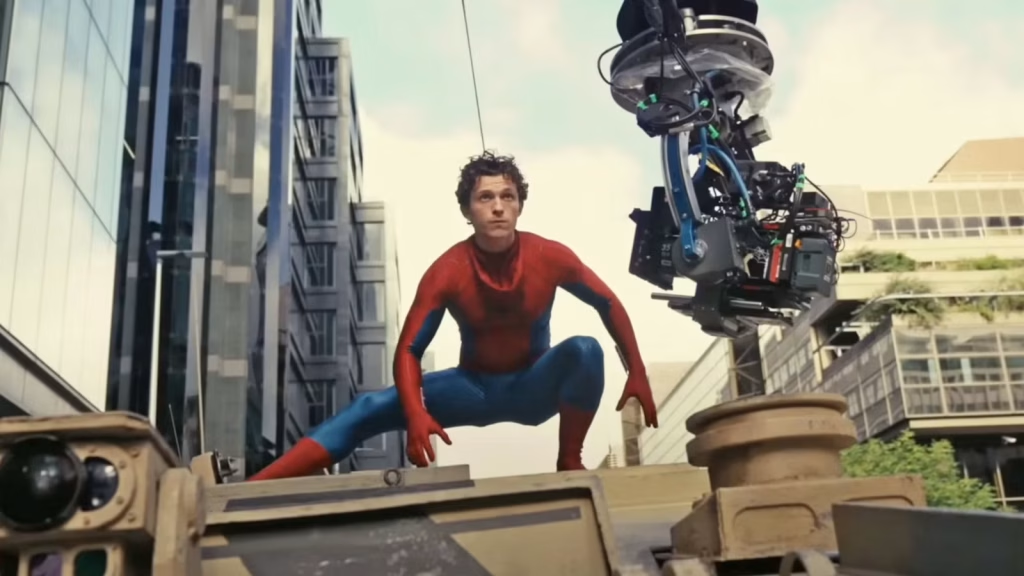
One of the big differences this time around is the way the movie is being made. Holland has said that No Way Home was very limited in terms of what they could do due to pandemic restrictions, with most of the movie being filmed on sound stages.

Image Source: Bing Image. License: All Creative Commons

For Brand New Day, they’re going back to real-world locations. They’re going to start filming in Glasgow, which will put Spider-Man back in the real world instead of a virtual one.

Image Source: Bing Image. License: All Creative Commons

Just that alone tells me that they’re going for a grittier, more real Spider-Man, one that’s more down on the street level than in the middle of a multiverse battle.

Image Source: Bing Image. License: All Creative Commons

As far as the story goes, the movie is supposed to deal with Peter trying to rebuild his life from the ground up. No Stark gadgets. No Avengers protection. Just a poor, anonymous kid trying to do the right thing.

Image Source: Bing Image. License: All Creative Commons

Zendaya and Jacob Batalon are both coming back as MJ and Ned, although their roles are supposed to be more limited. They’re still out there, but they don’t know who Peter is.

Image Source: Bing Image. License: All Creative Commons

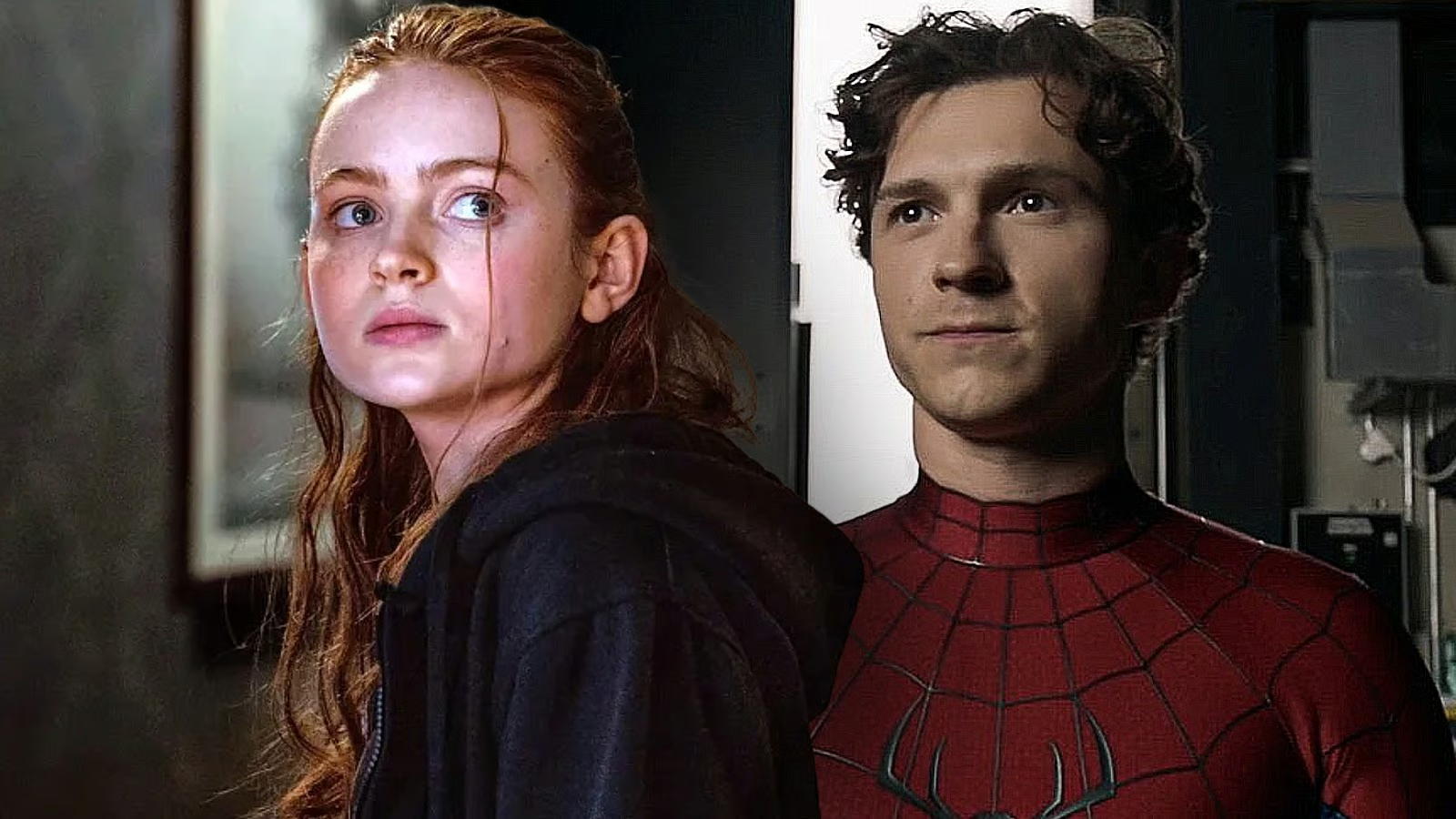
That emotional distance could be one of the film’s biggest strengths. Watching Peter protect people who don’t recognize him adds a quiet kind of tragedy to his heroism. Joining the cast is Sadie Sink, and her role is being kept tightly under wraps. Naturally, speculation has exploded.

Image Source: Bing Image. License: All Creative Commons

Some fans think she might be Gwen Stacy. Others think she might be Carlie Cooper or another comic book character. A few even think she might have an MCU surprise in store. Regardless, her casting means that new relationships and new emotional conflicts are on the horizon.

Image Source: Bing Image. License: All Creative Commons

The context itself may also shift. With Peter Parker struggling financially and socially, rumors are that the series will explore his life as a working-class New Yorker, perhaps even operating out of Brooklyn instead of Manhattan.

Image Source: Bing Image. License: All Creative Commons

This more down-to-earth approach would allow for a more personal take on the character, exploring themes of responsibility, isolation, and resilience.

Image Source: Bing Image. License: All Creative Commons

Of course, Spider-Man tales are only as good as their villains. And this time, the roster may be particularly intense. Jon Bernthal is reportedly on board as The Punisher, which has fans excited. A conflict between Frank Castle and Peter Parker would certainly introduce some moral complexity to the series.

Image Source: Bing Image. License: All Creative Commons

Michael Mando is also rumored to reappear as Scorpion, finally putting the character front and center as was hinted at all those years ago in Homecoming. There is also some buzz about Mr. Negative and the Inner Demons, which would be a perfect fit for the street-level feel of the movie.

Image Source: Bing Image. License: All Creative Commons

Although the multiverse is still a part of the MCU, Brand New Day is rumored to tone it down and avoid the nostalgia-fueled spectacle that was No Way Home. In terms of what is happening behind the scenes, Marvel president Kevin Feige and producer Amy Pascal are also returning, which is great for continuity.

Image Source: Bing Image. License: All Creative Commons

Writers Chris McKenna and Erik Sommers are also returning, as they look to strike the right balance between emotional resonance and blockbuster spectacle. Financially, expectations are sky-high.

Image Source: Bing Image. License: All Creative Commons

Tom Holland’s Spider-Man films have generated billions, and Brand New Day is widely believed to be the start of a new trilogy.

Image Source: Bing Image. License: All Creative Commons

Meanwhile, fans are already analyzing every aspect, from titles to quotes to casting news and set photos leaked online.

Image Source: Bing Image. License: All Creative Commons

The biggest questions are still left unanswered. Will Peter ever get back his life? Will MJ remember him? Or is this really a new beginning?

Image Source: Bing Image. License: All Creative Commons

One thing is for sure: Spider-Man: Brand New Day is not only about saving the city but learning to live in it again.

Image Source: Bing Image. License: All Creative Commons

And for a hero who is all about sacrifice, responsibility, and resilience, this might be the most Spider-Man story of all.

The Emma Stone Effect: Igniting a Talent Boom in Hollywood

0
Image Source: Bing Image. License: All Creative Commons

Emma Stone has always occupied a distinctive place in Hollywood. She’s not just another glamorous starlet—she’s the clever, witty, and slightly awkward performer whose expressive features and sharp sense of humor make her instantly memorable. Over the years, her unique look has become a defining part of her charm and lasting appeal.

Image Source: Bing Image. License: All Creative Commons

However, of late, that very identifiable face has become the subject of a completely different kind of attention. For the past few months, internet chatter has reached a fever pitch with rumors that Emma Stone’s face has undergone a radical change. What started as a mere observation has quickly turned into a full-blown internet fixation.

Image Source: Bing Image. License: All Creative Commons

The “new face” has become a shorthand term in all of this. It has been used in social media posts, comments, and reaction videos, often in conjunction with side-by-side pictures and heated debates.

Image Source: Bing Image. License: All Creative Commons

The latest wave of speculation came after Stone’s appearance at the Eddington premiere in Los Angeles, closely followed by her attendance at a Louis Vuitton fashion show in Paris. Screenshots were shared almost immediately. Fans zoomed in. Angles were compared. Lighting was discussed.

Image Source: Bing Image. License: All Creative Commons

Skeptical onlookers noted what they thought were obvious changes—raised eyebrows, changed eyelids, more defined facial features. Some said her eyes seemed more open, while others said her face seemed tighter, more chiseled. The conversation snowballed at breakneck speed.

Image Source: Bing Image. License: All Creative Commons

Reactions on social media were all over the map. Some fans loved her new look, saying it was striking and beautiful. Others were confused or disappointed, saying she looked like an entirely different person.

Image Source: Bing Image. License: All Creative Commons

Before long, internet speak began to creep into the discussion. Hashtags such as “blepharoplasty” and “fox eye lift” began trending on comment sections and videos. What may have been a private bit of gossip was now a shared experience online.

Image Source: Bing Image. License: All Creative Commons

At the center of all this is the internet’s never-ending fascination with change. Everyone loves a good before-and-after moment, and when it involves a celebrity they feel a personal stake in, it’s even more irresistible.

Image Source: Bing Image. License: All Creative Commons

However, the “new face” trend is more than just celebrity gossip. Increasingly, cosmetic experts have begun to chime in on the conversation, sharing their insights in viral TikTok videos and Instagram posts. Among them is cosmetic specialist Jonny Betteridge.

Image Source: Bing Image. License: All Creative Commons

In his videos, Betteridge proposed that Stone’s face could be a candidate for procedures such as upper blepharoplasty, an endoscopic brow lift, or a mid-face lift. He pointed out that her eyebrows seem to be higher, her eyelids more prominent, and her eyes longer.

Image Source: Bing Image. License: All Creative Commons

As he explained, procedures of this nature are commonly linked to subtle surgical work rather than major makeovers. These procedures are commonly touted as a means of “refreshing” the face rather than changing it.

Image Source: Bing Image. License: All Creative Commons

Upper blepharoplasty, the most commonly cited procedure, involves the removal of excess skin from the upper eyelids to give the face an “open-eyed” look. It is commonly cited as one of the least invasive forms of facial surgery, although the results can be dramatic.

Image Source: Bing Image. License: All Creative Commons

On the other hand, a brow lift is a surgical procedure that involves the subtle lifting of the brow area through incisions made close to the hairline. This can be used to eliminate the heaviness of the eyes and also alter the facial expression.

Image Source: Bing Image. License: All Creative Commons

Next, there is the mid-face lift. This is a surgical procedure that is aimed at the cheek area and the area surrounding the eyes. It is designed to add volume, eliminate lines, and generally improve the facial structure without drastically altering the appearance of the individual.

Image Source: Bing Image. License: All Creative Commons

Other surgeons, such as Dr. Joel Kopelman, have also noted that the new wave of cosmetic surgery is all about achieving a result that blends seamlessly with the individual’s natural features. The aim, of course, is not to alter but to enhance.

Image Source: Bing Image. License: All Creative Commons

Of course, it’s worth noting that all of this is purely speculative. Emma Stone herself has never come out and said that she’s had any work done.

Image Source: Bing Image. License: All Creative Commons

Rather, she’s always attributed her looks to her skin care and makeup routine. Stone has been very open about the fact that she has sensitive skin and keeps her routine very simple, focusing on products that are just one ingredient and very gentle on the skin.

Image Source: Bing Image. License: All Creative Commons

She’s said that she uses coconut oil or olive oil as a moisturizer and will sometimes exfoliate with baking soda or brown sugar. It’s a very old-fashioned way of looking at things in an industry that’s completely obsessed with 12-step skin care regimens.

Image Source: Bing Image. License: All Creative Commons

Makeup is also an important part of this. Stone has repeatedly stated that drawing her eyebrows and wearing mascara can greatly change the look of her face and how she feels about it. Just makeup alone can change perception more than people think.

Image Source: Bing Image. License: All Creative Commons

Despite this, the rumors have not ceased. For some fans, the change is a loss. They are mourning what they think was a unique face in a world of Hollywood sameness.

Image Source: Bing Image. License: All Creative Commons

Statements such as “She looks like everyone else now” or “Why do they all have to erase their uniqueness?” are more than just a reaction to Emma Stone. They are a reaction to what she represents.

Image Source: Bing Image. License: All Creative Commons

On the other hand, some people think that the reaction to the change is itself an injustice. They think that women should be able to change, try new things, and grow old in whatever way they want without being picked apart by millions of strangers.

Image Source: Bing Image. License: All Creative Commons

The beauty industrial complex profits from this paradox. It markets the notion that aging is both inevitable and unacceptable, with an endless stream of products and procedures to solve a problem that it itself created.

Image Source: Bing Image. License: All Creative Commons

Cultural commentators and feminist theorists have long argued that this paradigm erodes self-esteem. By perpetually changing the rules of beauty, it ensures that no one ever really fits the bill.

Image Source: Bing Image. License: All Creative Commons

Social media has taken these forces to a whole new level. These sites are essentially a digital panopticon, where every possible angle is recorded, dissected, and critiqued. Filters have erased the distinction between reality and fantasy.

Image Source: Bing Image. License: All Creative Commons

The younger generations, especially Gen Z, are now practicing “prejuvenation,” preventative cosmetic procedures to halt the aging process before it even begins. The normalization of these practices has completely rewritten the rules on what is expected.

Image Source: Bing Image. License: All Creative Commons

Celebrity faces are a powerful force in determining these expectations. When celebrities change their faces, even slightly, it can reset what is considered normal or desirable in society.

Image Source: Bing Image. License: All Creative Commons

The rise of fox eye surgery and cat eye beauty trends, fueled by social media filters and influencers, has led to a homogenization of faces. Fans are lamenting the loss of distinctive features that were once considered unique or quirky.

Image Source: Bing Image. License: All Creative Commons

However, there is a darker side to the story. Plastic surgery is not without its risks, complications, and emotional tolls, as well as the psychological cost of an ever-elusive ideal.

Image Source: Bing Image. License: All Creative Commons

As beauty trends change, the face that was “perfect” just yesterday can quickly become last season’s news, leaving many women stuck in a cycle of discontent.

Image Source: Bing Image. License: All Creative Commons

The debate often circles back to choice. Some argue that personal autonomy should end the conversation if someone chooses cosmetic work; that’s the end of it.

Image Source: Bing Image. License: All Creative Commons

Others suggest that choice is not an isolated event. When choice is fueled by relentless marketing, social pressures, and economic gain, the concept of autonomy becomes complicated. In the end, the discussion regarding Emma Stone’s “new face” has absolutely nothing to do with whether or not she has had surgery.

Image Source: Bing Image. License: All Creative Commons

It has everything to do with what we are projecting onto the face of women, and what that projection says about us. Her story is a reflection of a society that is very uncomfortable with the concept of aging, difference, and imperfection.

Image Source: Bing Image. License: All Creative Commons

As we dissect the appearance of celebrities, we are also dissecting our own fears of visibility and worth. The frenzy may fade, as internet obsessions always do. But the questions it raises about beauty, identity, and authenticity aren’t going anywhere anytime soon.

15 Sci-Fi Favorites That Belong on Every Fan’s Watchlist

0
Image Source: Bing Image. License: All Creative Commons

Science fiction has experienced a major resurgence, and it’s about far more than just eye-popping visuals. Today’s sci-fi delves into big ideas—technology, identity, society, and the very essence of what it means to be human. From animated classics and blockbuster franchises to thought-provoking TV epics, the genre spans a vast range of storytelling. The 15 films and series featured here are some of the best sci-fi experiences every fan should have on their watchlist right now.

Image Source: Bing Image. License: All Creative Commons

15. Wallace and Gromit: Vengeance Most Fowl

Wallace and Gromit have always mixed whimsy with clever ideas, but Vengeance Most Fowl leans harder into timely themes than ever before. At its heart, this charming stop-motion adventure aims to address technological overreach, especially when innovation starts replacing creativity, connection, and care.

Image Source: Bing Image. License: All Creative Commons

While Wallace remains blissfully obsessed with his gadgets, Gromit fights to protect his chaotic, living garden from the cold efficiency of the robotic Norbot. It’s a simple conflict that carries real emotional weight, acting as a metaphor for art made by hand versus automation without heart. Funny, warm, and surprisingly thoughtful, this entry proves the duo still has plenty to say in the age of AI.

Image Source: Bing Image. License: All Creative Commons

14. Transformers One

Transformers One refreshes the long-running franchise by going back to the beginning, this time through animation. Beneath the explosive action is a surprisingly layered origin story about friendship, power, and ideology.

Image Source: Bing Image. License: All Creative Commons

Rather than a straightforward heroes-versus-villains tale, the film frames the conflict as a philosophical split, drawing clear parallels between Optimus Prime and Megatron as former allies shaped by different visions of justice. The political undertones feel bold for a mainstream animated release. Even viewers unfamiliar with Transformers lore can jump in, making this both an accessible entry point and a rewarding expansion of the mythos.

Image Source: Bing Image. License: All Creative Commons

13. The Wild Robot

The Wild Robot manages to be gentle, adventurous, and emotionally rich all at once. The story follows Roz, a robot who gradually finds purpose not through programming, but through caring for others in a wild, animal-filled environment.

Image Source: Bing Image. License: All Creative Commons

As Roz becomes a mother figure and leader, the film explores identity, adaptation, and belonging. Characters like Bright Bill, a goose forced to survive outside his nature, add unexpected emotional depth. It’s the rare animated sci-fi that works just as well for adults as it does for kids, quietly devastating in the best way.

Image Source: Bing Image. License: All Creative Commons

12. Robot Dreams

Told entirely without dialogue, Robot Dreams is a beautiful meditation on friendship, loss, and time. The film follows a lonely dog and his robot companion as their bond is tested by circumstance and change.

Image Source: Bing Image. License: All Creative Commons

Small visual moments carry enormous emotional weight, from the robot forming connections with birds to dreamlike musical sequences filled with nostalgia. The recurring use of “September” adds a bittersweet emotional anchor. It’s a reminder that sci-fi doesn’t need exposition or spectacle to hit hard,d it just needs honesty.

Image Source: Bing Image. License: All Creative Commons

11. Flow

Flow is a visually arresting animated film that places animals at the center of a post-disaster world. With no spoken language, the story relies on movement, sound, and behavior to convey survival and cooperation.

Image Source: Bing Image. License: All Creative Commons

The animation, created using Blender, feels immersive and natural, capturing how animals communicate without words. While danger is ever-present, the film leans toward hope rather than despair. By removing humans from the spotlight, Flow offers a refreshing, eco-conscious take on science fiction storytelling.

Image Source: Bing Image. License: All Creative Commons

10. ME

Don Hertzfeldt’s ME is only 22 minutes long, but it leaves a lasting impression. Using minimalist stick-figure animation and an eclectic score, the short explores how modern technology feeds isolation and self-obsession.

Image Source: Bing Image. License: All Creative Commons

There’s no dialogue, just images that spiral into deeply unsettling territory. The film feels both absurd and painfully sincere, capturing the loneliness of retreating inward in a hyper-connected world. It’s strange, funny, and quietly devastating, classic Hertzfeldt in the best way.

Image Source: Bing Image. License: All Creative Commons

9. Omni Loop

Omni Loop uses time travel not as a puzzle to solve, but as a lens for grief, regret, and intergenerational connection. Zoya, facing terminal illness, reflects on the lives she never lived, while Paula searches for meaning in her own uncertain future.

Image Source: Bing Image. License: All Creative Commons

Their bond becomes the emotional core of the film, touching on feminism, legacy, and the wisdom passed between women. The sci-fi elements stay grounded, serving the characters rather than overshadowing them. It’s intimate, thoughtful, and far more emotionally complex than its indie budget might suggest.

Image Source: Bing Image. License: All Creative Commons

8. A Quiet Place: Day One

Rather than focusing on survival at all costs, A Quiet Place: Day One asks a more haunting question: What do you live for when the world is ending? Lupita Nyong’o delivers a powerful performance as Sam, a woman facing both terminal illness and an alien invasion.

Image Source: Bing Image. License: All Creative Commons

Her priorities feel refreshingly human, and her bond with her cat adds unexpected tenderness. The scares are effective, but it’s the existential undertone that makes this entry linger.

Image Source: Bing Image. License: All Creative Commons

7. Kingdom of the Planet of the Apes

Jumping far ahead in the timeline, Kingdom of the Planet of the Apes introduces a new generation shaped by the myths and ruins of the past. The film wastes no time establishing its characters and conflicts.

Image Source: Bing Image. License: All Creative Commons

Proximus, a villain obsessed with Roman history, adds a chilling layer of ideology, while Nova’s mysterious role keeps the story unpredictable. The film balances action with philosophical questions about power and progress. It’s proof that this franchise still has room to evolve, and plenty left to say.

Image Source: Bing Image. License: All Creative Commons

6. Furiosa: A Mad Max Saga

Furiosa trades nonstop chaos for something more emotionally charged, without sacrificing intensity. The film dives into Furiosa’s origins, pairing her journey with the unhinged presence of Dementus, played with wild energy by Chris Hemsworth.

Image Source: Bing Image. License: All Creative Commons

Anya Taylor-Joy brings restraint and strength to the role, grounding the film’s larger-than-life world. The result is a story that feels operatic rather than purely explosive. It expands the Mad Max universe while standing firmly on its own.

Image Source: Bing Image. License: All Creative Commons

5. Alien: Romulus

Alien: Romulus understands that the franchise’s greatest weapon isn’t scale, it’s fear. Director Fede Álvarez leans into claustrophobia, body horror, and relentless tension.

Image Source: Bing Image. License: All Creative Commons

The film introduces a group of young characters bound by loyalty, adding emotional stakes to the familiar xenomorph terror. While some CGI moments divide opinion, the atmosphere is unmistakably Alien. It’s a confident reminder that this universe still knows how to scare.

Image Source: Bing Image. License: All Creative Commons

4. The Beast

Rather than imagining AI as a destructive force, The Beast explores how technology can quietly reshape who we are. Léa Seydoux stars as Gabrielle, a woman using AI to revisit and process trauma from past lives.

Image Source: Bing Image. License: All Creative Commons

The film raises unsettling questions about emotional shortcuts, memory, and authenticity. Its sci-fi elements are understated, allowing character and philosophy to take center stage. For viewers craving introspective science fiction, this is a standout.

Image Source: Bing Image. License: All Creative Commons

3. 3 Body Problem

Adapting Liu Cixin’s ambitious novel was no small task, but The 3 Body Problem rises to the challenge. The series blends scientific mystery with global stakes as researchers confront forces that defy known reality.

Image Source: Bing Image. License: All Creative Commons

The ensemble cast grounds the massive ideas, keeping the story personal even as it grows cosmic in scope. Themes of inevitability, fear, and human response to the unknown run throughout. It’s dense, challenging, and deeply rewarding sci-fi television.

Image Source: Bing Image. License: All Creative Commons

2. Stranger Things

Few shows balance genres as smoothly as Stranger Things. What begins as a missing-child mystery grows into a sprawling sci-fi saga filled with monsters, alternate dimensions, and emotional growth.

Image Source: Bing Image. License: All Creative Commons

The ’80s aesthetic is more than nostalgia; it reinforces the characters’ innocence as the darkness deepens. The young cast remains the heart of the series, keeping the story grounded. Its influence on pop culture is undeniable, and its emotional core remains intact.

Image Source: Bing Image. License: All Creative Commons

1. Babylon 5

Babylon 5 remains a landmark in science fiction television. Set on a neutral space station, the series weaves politics, war, religion, and identity into a long-form narrative that was ahead of its time.

Image Source: Bing Image. License: All Creative Commons

Despite limited mainstream recognition, its ambitious storytelling and character arcs earned it a devoted fan base. Many modern sci-fi shows owe a debt to their serialized approach. For viewers who love deep lore and moral complexity, Babylon 5 is essential.

Image Source: Bing Image. License: All Creative Commons

From intimate animated shorts to galaxy-spanning epics, modern sci-fi is proving that imagination and emotional depth go hand in hand. These films and shows don’t just ask “what if?” They ask why it matters. And right now, there’s no better time to dive in.

15 Suspenseful Train Films That Keep the Tension Rolling

0
Image Source: Bing Image. License: All Creative Commons

Filmmakers have long been captivated by trains as storytelling tools. Trains propel narratives forward, often catching characters off guard, confining multiple people in tight spaces to amplify tension, and turning time itself into a source of pressure. From the silent era to today’s genre-blending films, train-centered movies continue to deliver some of cinema’s most gripping and memorable stories. Below is a list of 15 standout train movies that masterfully use the rails to create suspense, drama, and unforgettable cinematic moments.

Image Source: Bing Image. License: All Creative Commons

15. The Great Train Robbery (1903)

Everything starts here. The Great Train Robbery didn’t just popularize train-centered storytelling; it helped define how movies create suspense. This silent short may be over a hundred years old, but its energy is still impressive. By cutting back and forth between criminals robbing a train and a posse racing to stop them, the film introduced audiences to parallel editing in a way that felt thrilling and new.

Image Source: Bing Image. License: All Creative Commons

That technique became a cornerstone of action and thriller filmmaking. Watching it today feels like spotting the first sparks of modern cinema. Despite its simplicity, the film proves that tension doesn’t need dialogue, just smart pacing, movement, and purpose. Its influence stretches far beyond its runtime. Nearly every intense train sequence since owes something to this pioneering classic.

Image Source: Bing Image. License: All Creative Commons

14. Double Indemnity (1944)

When it comes to noir, Double Indemnity sits near the top of the mountain. Billy Wilder’s razor-sharp thriller uses a train as the key setting for a murder disguised as an accident. Barbara Stanwyck and Fred MacMurray bring a dangerous chemistry to a plot where greed and guilt ride side by side.

Image Source: Bing Image. License: All Creative Commons

The train sequence isn’t decorative; it’s essential. The enclosed environment magnifies every glance and hesitation, turning the journey into a pressure cooker of moral decay. The train’s unstoppable movement mirrors the characters’ slide toward ruin. Few films use setting so deliberately. The result is one of noir’s most iconic and suspenseful moments.

Image Source: Bing Image. License: All Creative Commons

13. Train to Busan (2016)

Few modern films have used a train as effectively, or as brutally, as Train to Busan. This South Korean hit drops a zombie outbreak onto a high-speed train, instantly turning every carriage into a survival test.

Image Source: Bing Image. License: All Creative Commons

What makes the film stand out is how creatively it uses the train’s structure. Each car presents new dangers, emotional beats, and moral choices. Beneath the relentless action is a sharp look at class, selfishness, and sacrifice. It’s thrilling, heartbreaking, and smart, proof that genre films can deliver both adrenaline and substance.

Image Source: Bing Image. License: All Creative Commons

12. Murder on the Orient Express (1974)

Elegant, icy, and meticulously constructed, Murder on the Orient Express turns a luxury train into a snowbound crime scene. With nowhere to escape, every passenger becomes a suspect, and Hercule Poirot must untangle a web of secrets.

Image Source: Bing Image. License: All Creative Commons

The isolation of the train fuels the suspense. Interviews, flashbacks, and subtle clues keep the mystery tight while the lavish production design adds a layer of old-world glamour. This adaptation helped define ensemble mystery filmmaking and cemented the train as the ultimate locked-room setting.

Image Source: Bing Image. License: All Creative Commons

11. The Darjeeling Limited (2007)

Wes Anderson’s The Darjeeling Limited takes a gentler approach to train storytelling. The film follows three brothers crossing India by rail, using the journey as a way to explore grief, family tension, and healing.

Image Source: Bing Image. License: All Creative Commons

The train acts as a floating emotional space, part refuge, part confrontation zone. Anderson’s visual precision and offbeat humor balance moments of genuine vulnerability. It’s not about danger or speed, but about what happens when people can’t outrun their past even while moving forward.

Image Source: Bing Image. License: All Creative Commons

10. Compartment No. 6 (2021)

Quiet and deeply human, Compartment No. 6 proves that intimacy can be just as gripping as action. The film centers on two strangers sharing a sleeper car on a long journey north, forced into an awkward closeness that slowly softens.

Image Source: Bing Image. License: All Creative Commons

The train’s rhythm reflects their emotional shifts, while the bleak landscapes outside contrast with the warmth forming inside the compartment. Nothing feels rushed or overstated. It’s a reminder that sometimes the most powerful train stories happen in whispers, not explosions.

Image Source: Bing Image. License: All Creative Commons

9. Trans-Europ-Express (1966)

This French New Wave oddity turns the train into a playground for ideas. Trans-Europ-Express follows filmmakers discussing a crime story while traveling, only for that story to begin unfolding alongside them.

Image Source: Bing Image. License: All Creative Commons

The result is playful, confusing, and endlessly fascinating. The film constantly questions what’s real, what’s imagined, and who’s in control of the narrative. It’s not for everyone, but for adventurous viewers, it’s a reminder of how trains can carry stories in unexpected directions.

Image Source: Bing Image. License: All Creative Commons

8. Before Sunrise (1995)

One of cinema’s most beloved romances begins with a train ride. Before Sunrise introduces two strangers who meet by chance and decide to spend a night talking, walking, and connecting.

Image Source: Bing Image. License: All Creative Commons

The train is brief but crucial; it’s the spark that makes everything possible. That single decision sets off a story built entirely on conversation and emotional honesty. It’s proof that a journey doesn’t need danger to matter sometimes; it just needs the right people on board.

Image Source: Bing Image. License: All Creative Commons

7. The Taking of Pelham One Two Three (1974)

This gritty subway thriller turns New York’s transit system into a battlefield. When hijackers seize a train and demand a ransom, a weary transit cop becomes the city’s best hope.

Image Source: Bing Image. License: All Creative Commons

The film thrives on precision editing and sharp dialogue, cutting between criminals, officials, and trapped passengers. Every delay feels lethal. While it’s been remade, the original remains unmatched, lean, tense, and relentlessly efficient.

Image Source: Bing Image. License: All Creative Commons

6. Runaway Train (1985)

Few films capture pure momentum like Runaway Train. Two escaped prisoners find themselves aboard a locomotive with no brakes, barreling through an unforgiving landscape.

Image Source: Bing Image. License: All Creative Commons

The action is intense, but the film’s real strength lies in its themes of fate, freedom, and self-destruction. Jon Voight and Eric Roberts deliver raw, desperate performances. It’s a survival thriller that feels philosophical without losing its edge.

Image Source: Bing Image. License: All Creative Commons

5. Snowpiercer (2013)

In Snowpiercer, the train becomes the world. Bong Joon-ho imagines humanity’s last survivors locked into a rigid class system aboard a constantly moving engine.

Image Source: Bing Image. License: All Creative Commons

Each train car represents a different layer of society, turning the forward march into a revolution. The action is brutal, inventive, and tightly choreographed. More than a spectacle, the film is a sharp allegory about power, inequality, and survival.

Image Source: Bing Image. License: All Creative Commons

4. Strangers on a Train (1951)

Hitchcock turns a casual meeting into a nightmare in Strangers on a Train. A conversation about “exchanging murders” becomes horrifyingly real, setting fate into motion.

Image Source: Bing Image. License: All Creative Commons

The train represents inevitability. Once the idea is planted, there’s no stopping it. Hitchcock’s cross-cutting and visual precision build unbearable tension. It’s one of cinema’s great psychological thrillers, powered by chance and consequence.

Image Source: Bing Image. License: All Creative Commons

3. Twentieth Century (1934)

Fast-talking and ferociously funny, Twentieth Century transforms a train into a battleground for romance and ego. John Barrymore and Carole Lombard clash nonstop as former collaborators hurtle toward New York.

Image Source: Bing Image. License: All Creative Commons

The train’s nonstop movement matches the film’s breakneck pace. Every compartment becomes a stage for verbal sparring. It’s a reminder that comedy can be just as suspenseful as drama, especially when love is on the line.

Image Source: Bing Image. License: All Creative Commons

2. The Lady Vanishes (1938)

Another Hitchcock triumph, The Lady Vanishes blends mystery, humor, and paranoia. When a woman disappears mid-journey, one passenger’s insistence on finding her meets constant resistance.

Image Source: Bing Image. License: All Creative Commons

The train’s enclosed setting amplifies doubt and suspicion, while Hitchcock keeps the audience guessing through clever misdirection. It remains one of the finest examples of train-based mystery storytelling.

Image Source: Bing Image. License: All Creative Commons

1. The General (1926)

At the top of the list is Buster Keaton’s The General, a silent-era miracle of comedy and action. Set during the Civil War, the film revolves around a stolen locomotive and Keaton’s relentless pursuit.

Image Source: Bing Image. License: All Creative Commons

The stunts are astonishing, the timing flawless, and the suspense real. Keaton blends humor and danger so seamlessly that every chase feels exhilarating. Nearly a century later, The General still defines what a great train movie can be: funny, thrilling, and timeless.

Image Source: Bing Image. License: All Creative Commons

Whether they’re racing toward disaster, carrying strangers into connection, or serving as pressure cookers for crime and chaos, trains have given filmmakers a perfect storytelling engine. These films prove that once a story is set on the rails, all it needs is the right direction and the courage to keep moving forward.