Image Source: Bing Image. License: All Creative Commons
It is a fact that not every TV celebrity will make it big in the movies. The number of actors who lose their way after TV fame and cannot take a successful leap to the cinema is as large as that of those who can do it without any problem, like George Clooney or Will Smith. Moreover, we are ranking these actors from the most terrible to the most excellent ones because it is more fun than only talking about the actors who dominated TV but failed to become the top stars of Hollywood.
Image Source: Bing Image. License: All Creative Commons
10. Aaron Paul
As Breaking Bad’s Jesse Pinkman, Aaron Paul gave one of television’s greatest performances. Of course, the expectations for film stardom were equally high. Sadly, his breakout, Need for Speed, stalled in theaters rather than revving up a franchise. Though he’s still a TV behemoth with appearances on Westworld and Black Mirror, his bid for movie superstardom never got into top gear.
Image Source: Bing Image. License: All Creative Commons
9. Charlie Hunnam
Sons of Anarchy made Charlie Hunnam a household name, but his big-screen career has been a series of close calls and letdowns. He famously passed on Fifty Shades of Grey, a decision he says still gnaws at him, and his prospective blockbusters like King Arthur bombed. His strongest big-screen effort yet? Maybe The Gentleman. Still, television is where Hunnam’s glow is brightest.
Image Source: Bing Image. License: All Creative Commons
8. David Duchovny
As Fox Mulder on The X-Files and Hank Moody on Californication, David Duchovny became a legend. On the big screen, however, it didn’t work out. Yes, he showed up in some great cameo parts (Evolution, Zoolander), but he never emerged as a leading man. Now, at this juncture, Duchovny seems like the very definition of a TV-first legend, just where he should be.
Image Source: Bing Image. License: All Creative Commons
7. Jon Hamm
Don Draper made Jon Hamm a cool icon, yet Hollywood never anointed him a movie star. He’s had great supporting roles in movies such as Baby Driver and Top Gun: Maverick, but he’s hardly ever in the lead. Passing on Gone Girl, a part that might have marked a turning point, was a huge what-if. Hamm has tons of Emmys, but superstardom in film never knocked.
Image Source: Bing Image. License: All Creative Commons
6. Kaley Cuoco
Penny on The Big Bang Theory catapulted Kaley Cuoco into one of the most famous faces in sitcom history. Yet when she turned to films, she never quite hit it big. Instead, Cuoco came back to TV with The Flight Attendant and the voice work on Harley Quinn, two endeavors that have done so much more for her career than any romantic comedy ever could. Sometimes home is where the television is.
Image Source: Bing Image. License: All Creative Commons
5. Jessica Biel
Jessica Biel was a favorite on 7th Heaven, but her transition to film never caught on. She acted in a series of action movies and comedies, but none made an impact. In a twist of fate, her strongest work came in a return to the world of TV, particularly The Sinner, which received serious critical acclaim. The film never panned out, but Biel has established a robust persona on television.
Image Source: Bing Image. License: All Creative Commons
4. Mary-Louise Parker
Weeds made Mary-Louise Parker a Showtime star, but her film career never caught up. Movies such as R.I.P.D. and Red 2 disappointed, and she hasn’t been in a noteworthy role in a long time. Parker’s strongest work is always on television, where her quick wit and rich performances receive the attention they deserve.
Image Source: Bing Image. License: All Creative Commons
3. Topher Grace
Topher Grace will always be Eric Forman of That ’70s Show. On the big screen, though, his career plateaued. He attempted leading roles in films such as In Good Company and even dipped into villainy as Venom in Spider-Man 3. Ever since, he’s been a steady supporting actor (BlacKkKlansman, Interstellar) before returning to television. Grace is a testament that sitcom fame doesn’t always translate to movie stardom.
Image Source: Bing Image. License: All Creative Commons
2. Michael C. Hall
As Dexter Morgan, Michael C. Hall emerged as one of television’s greatest antiheroes. But whereas his career on television flourished, his career on film hardly registered. Even though his future did seem to be a horror-movie franchise, he’s only starred in one horror film. For whatever reason, Hollywood never did offer him the kind of parts that could equal his television excellence.
Image Source: Bing Image. License: All Creative Commons
1. Kiefer Sutherland
Before 24, Kiefer Sutherland was an established film star with classics such as The Lost Boys and A Few Good Men. However, after Jack Bauer became his signature role, Hollywood roles dried up. Today, he’s still ubiquitous in TV suspense series like Designated Survivor and Rabbit Hole, but his days as a film headliner are over. Television ultimately became the home field for Sutherland.
Image Source: Bing Image. License: All Creative Commons
And there you have it, ten television legends who demonstrate that the transition from TV to movie stardom is by no means inevitable. Although their careers on the big screen never reached the heights predicted, all of them left an indelible mark on television history nonetheless. Sometimes, the little screen truly is the greatest stage of all.
Image Source: Bing Image. License: All Creative Commons
There’s nothing quite like the sting of a bad movie ending. You spend hours getting invested in the characters and swept up in the story, only for the credits to roll and leave you wondering, What just happened? Sometimes an ending is so wildly off-base, so disconnected from everything before it, that it sinks an otherwise great film. Here are the top 10 worst movie endings that derailed good movies and sent them spiraling into cinematic infamy.
Image Source: Bing Image. License: All Creative Commons
10. The Grey
Liam Neeson vs. wolves—what could go wrong? The setup for The Grey is survivalist gold: after a plane crash, Neeson’s character leads a pack of men through the Alaskan bush, stalked by a pack of killing wolves. The tension mounts to a fever pitch, and the trailer suggests an epic battle of man against beast. But as one enraged viewer recounts, the film ends just as Neeson is poised to meet the alpha wolf for the very first time, cutting to black before the fight has even begun. Not even the post-credits shot, in which the man and wolf both lie out in survival mode, does anything to shed light on the situation. As Robert Vaux and Fawzia Khan say, “audiences were set up for a suspenseful and action-filled fight between Ottway and the wolves, but it ended rather anticlimactically.”
Image Source: Bing Image. License: All Creative Commons
9. Thor: Ragnarok
Connected narratives are what Marvel films are well known for, but sometimes continuity comes at the expense of a satisfying ending. Thor: Ragnarok is a wild, colorful ride in which Thor, Loki, and their companions fight to salvage Asgard. They win—sort of—so that the film can have an instant setup for the next huge crossover, Avengers: Infinity War, when Thanos kills fleeing Asgardians. The heroes’ victory is soon reversed, so that in the end, the audience feels that the film surrendered its conclusion to the greater Marvel machine. As Robert Vaux and Fawzia Khan observe, “the protagonists do nothing, and the Asgardians get killed anyway.”
Image Source: Bing Image. License: All Creative Commons
8. The Accountant
Ben Affleck’s The Accountant is a glossy, action-packed thriller with a mysterious lead and plenty of suspense. But when the big twist finally arrives—Jon Bernthal’s character being Affleck’s secret brother—it falls flat. The film gives away nothing in advance toward this reality, making it random rather than earned. According to Robert Vaux and Fawzia Khan, “the big reveal of the movie is no more than an announcement. Stories must be able to hold up, start to finish.”
Image Source: Bing Image. License: All Creative Commons
7. Spectre
James Bond fans waited years for Blofeld, the best Bond bad guy, played in this one by Christoph Waltz. Spectre spends most of its time setting up the character as the behind-the-scenes mastermind of all of Bond’s suffering. But then the climactic confrontation arrives, and it fails: Bond simply shoots at Blofeld’s helicopter, and it goes down, and the villain is taken down easily. As one of the Reddit commenters opined, all that build-up for so anticlimactic a defeat left the fans in disappointment. According to Redditor dontforgetyourshoes, “All that setup for Christoph Waltz’s character. And then Bond just shoots up his helicopter a few times with a pistol, it blows up, and he gets apprehended.”
Image Source: Bing Image. License: All Creative Commons
6. Sunshine
Danny Boyle’s Sunshine is a slow-burning, visually impressive sci-fi film about a group trying to re-ignite the dying sun. It’s a tense, character-driven drama for the majority of its duration. Then, out of nowhere, the movie goes into slasher mode with a human villain who obliterates the mission. This jolting genre shift confused and annoyed most fans. As one Redditor lamented, the ending “attempts to be Event Horizon and destroys all it was heading towards.” Redditor Tisdue stated, “Out of nowhere, it attempts to be Event Horizon and destroys all it was heading towards.So disappointing.“
Image Source: Bing Image. License: All Creative Commons
5. Pay It Forward
Pay It Forward is about kindness, goodness, and goodwill in the world. So for the film to end with its young hero, Trevor, stabbed to death in meaningless violence, is a shock. The ending is so bleak and out of sync with the film’s uplifting message that people were left reeling. As a Redditor put it, “The ending is so woefully sad, and they did not have to end it that way.” Another Redditor stated, “The Pay It Forward shock death was a Shameless Oscar-grab.“
Image Source: Bing Image. License: All Creative Commons
4. Now You See Me
A heist thriller featuring stage magicians pulling off impossible heists? Sign us up! Now You See Me sparkles with its snappy tricks and twisty plot—until the final reveal, which suggests that magic might exist, and that the FBI agent tracking down the magicians is a mole from their side. The twist of the movie is so confusingly and poorly explained that it left everyone scratching their heads.
Image Source: Bing Image. License: All Creative Commons
3. The Village
M. Night Shyamalan is the master of the twist ending, but the worst offender is The Village. The film creates an unsettling, isolated 19th-century village under attack from supernatural creatures lurking in the woods. The twist? It’s actually modern-day, and the monsters are just townsfolk wearing masks. Critics and audiences were let down by the twist, which derailed the entire conceit.
Image Source: Bing Image. License: All Creative Commons
2. Remember Me
Remember Me is a romantic drama that spends the majority of its time discussing grief, love, and family. Then, at the very end, it’s revealed that the protagonist is waiting in the World Trade Center on September 11, 2001. The revelation was so sudden and exploitative that audiences were left speechless and outraged. Employing a real tragedy as a last-minute plot twist was universally criticized as tacky and manipulative. In The Independent, “The last-minute twist — that Pattinson is inside the World Trade Center, seconds before the 9/11 terrorist strikes — is so atrociously misjudged that it made the film into some kind of bad-taste joke.”
Image Source: Bing Image. License: All Creative Commons
1. The Mist
Frank Darabont’s adaptation of Stephen King’s The Mist is a masterclass in suspense and terror, up to the end. In a gut-wrenching twist, the hero, believing all lost, kills his friends to protect them from the monsters outside, just as the military troops soon thereafter arrive to save the day. The abruptness and brutality of the ending divided audiences, with some cheering its shock value while others condemned it as needlessly sick.
Image Source: Bing Image. License: All Creative Commons
There you go—the conclusions that made us cringe, seethe, or just blankly stare at the screen. Occasionally, the journey is worth it, but oh, how we wish these films had stuck the landing.
Image Source: Bing Image. License: All Creative Commons
When moviegoers of all ages sit around discussing films from the 1980s, the same heavy-hitting titles tend to make it back to the conversation: Back to the Future, The Breakfast Club, Ghostbusters, and nearly anything that had the John Hughes seal. But the reality is, the decade was rife with so much more than the obvious blockbusters. Hidden under the neon lights and power ballads was a goldmine of bizarre experiments, daring risks, and cult classics that never received their due. Some of them bombed at the box office, some were outshone by more glamorous competition, and others were just too freaky for mainstream viewers at the time. But now, they remain marvelous and are worthy of a place on your “must-watch” list. So break out your VHS machine or at least your streaming account and immerse yourself in these 15 unsung classics of the 1980s.
Image Source: Bing Image. License: All Creative Commons
15. UHF (1989)
Before “Weird Al” Yankovic became a mainstream household name and parody saint, he starred in one of the strangest comedies ever to reach movie screens. UHF tracks a daydreamer who takes over a struggling UHF TV station and makes it a carnival of surreal programming, including phony movie trailer parodies, surreal game shows, and numerous musical jokes. The movie flopped when it came out, but later gained cult status, largely because it so well captured Weird Al’s wild, erratic sense of humor. Add in Michael Richards, years before Seinfeld, going completely off the rails as the station’s janitor-turned-star, and you’ve got a movie that’s every bit as chaotic and fun as its premise suggests.
Image Source: Bing Image. License: All Creative Commons
14. The Mosquito Coast (1986)
Most people remember Harrison Ford in the ’80s as Han Solo or Indiana Jones, but The Mosquito Coast shows him in a completely different light. In this Peter Weir film, Ford plays Allie Fox, a genius but unstable inventor who relocates his family to establish an ideal community in the jungles of Central America. What starts as an adventure turns quickly into obsession, and Ford gives one of the most demanding performances of his life. While critics were interested, audiences avoided it, and the movie disappeared into history. With outstanding support from Helen Mirren and a teenage River Phoenix, it’s a spooky character study of ambition, control, and what it costs to pursue perfection.
Image Source: Bing Image. License: All Creative Commons
13. Innerspace (1987)
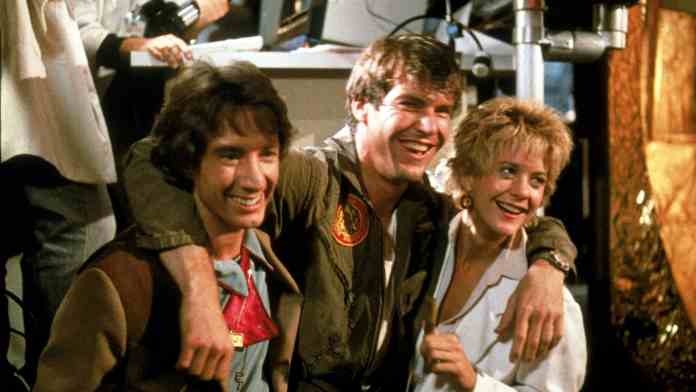
Directed by Joe Dante, Innerspace does a crazy sci-fi premise and plays it for laughs. Dennis Quaid is a test pilot who gets miniaturized and injected into the body of a high-strung grocery clerk, played by Martin Short. Following is a fast-paced mix of slapstick, body horror, and action, enhanced still further by Short’s bodily humor and Meg Ryan’s sweetness as the love interest caught up in the mayhem. For all its great premise and good performances, the film did poorly in theaters, losing to more flashy summer blockbusters. Throughout the decades, however, it was resurrected on VHS and cable reruns and became a classic for anyone who is a fan of witty, high-concept comedies.
Image Source: Bing Image. License: All Creative Commons
12. Some Kind of Wonderful (1987)
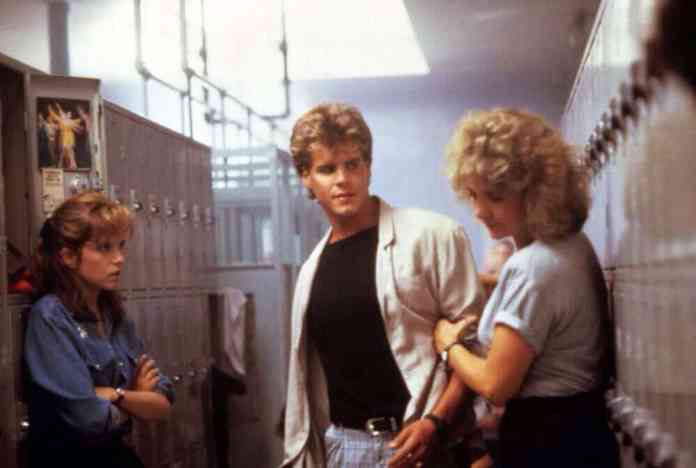
John Hughes’ touch is everywhere in the teen movie genre of the 1980s, but Some Kind of Wonderful is too often relegated to the background by Pretty in Pink or Sixteen Candles. Directed by Howard Deutch and written by Hughes, the movie turns the Pretty in Pink love triangle on its side, with Eric Stoltz as a struggling artist between his infatuation with an upper-class classmate and his intense friendship with a tomboy classmate, played by Mary Stuart Masterson. The film is more down-to-earth and poignant than some of Hughes’s more flashy blockbusters, with characters that are realistically exposed. It’s a sophisticated interpretation of high school love that should hold its own in the rest of the Hughes oeuvre.
Image Source: Bing Image. License: All Creative Commons
11. River’s Edge (1986)
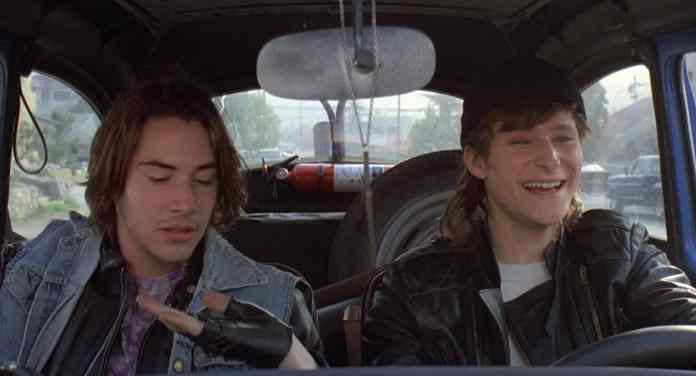
If Hughes’ films were all about winningly awkwardness, River’s Edge is their dark, disturbing opposite. Loosely based on a true crime, the film tracks a clique of existential teens as they process the killing of one of their own. Keanu Reeves and Crispin Glover star in a cast of disaffected teens, with Dennis Hopper as a seriously disturbing local drug dealer. The bleak mood, raw acting, and unflinching examination of teenage alienation made the film difficult to market, but it stands as one of the most chilling depictions of suburban drift ever committed to film. It’s the sort of film that stays with you long after the credits finish rolling.
Image Source: Bing Image. License: All Creative Commons
10. Near Dark (1987)
Before vampires sparkled in YA books, Kathryn Bigelow offered a stylish, gory, and eerily cool vampire take. Near Dark combines vampire legend with Western clichés, as a drifter joins up with a traveling tribe of vampires. Featuring outstanding work by Lance Henriksen and Bill Paxton, the movie drips atmosphere and grunge. Sadly, it never reached mainstream audiences, overshadowed by The Lost Boys, which came out the same year. Today, though, Near Dark is recognized as one of the most original and daring vampire films of the decade, blending horror, romance, and Western swagger.
Image Source: Bing Image. License: All Creative Commons
9. Legend (1985)
Ridley Scott’s Legend is pure fantasy with excessive lush forests, glowing unicorns, and Tim Curry giving one of the all-time great villain performances as the Lord of Darkness. Tom Cruise, long before his blockbuster superstardom, plays the young hero who must fight to save the world from permanent darkness. The movie shimmers with practical effects and makeup that hold up today, but its theatrical release was panned as disjointed. The subsequent director’s cut, however, showed the movie in all its glory, making it a cult classic. If you enjoy your fairy tales dark, operatic, and soaking in atmosphere, Legend is a must-see.
Image Source: Bing Image. License: All Creative Commons
8. The Last Starfighter (1984)
The Last Starfighter is one of those few movies that amazingly represented the 80s fulfillment to the highest degree. When a kid from a high school manages to beat a video game in his trailer, he discovers that the game was only a way to measure the skills of the candidates for the pilot seat, just like in a real space war, but only a different place, off Earth. Along with ground-breaking early CGI, the flick’s charm and Lance Guest’s charismatic performance made it kind of a cult classic among arcade teenagers who used to dream of the stars. It can never be compared to the likes of Star Wars or other blockbusters, but it left a strong and unforgettable footprint in game culture and sci-fi storytelling. If you were a fan of arcade cabinets during your childhood, this film will definitely take you back to those times and remind you how much you loved them then.
Image Source: Bing Image. License: All Creative Commons
7. To Live and Die in L.A. (1985)
Director of The French Connection, William Friedkin, took the crime genre back with this neon-blazing thriller, and his comeback was very impressive. William Petersen plays a wild Secret Service agent who is obsessed with capturing a master of forgery, the character played by Willem Dafoe, who, throughout, is dripping with charisma and sleaze, and this made the film even more enthralling. This movie holds a great place in film history for sharing one of the most incredible car chases, but at the same time, it is only a piece of the film’s universe, a morally ambiguous, visually breathtaking dive into the themes of obsession and corruption. The throbbing Wang Chung synth score is the icing on the cake, making it an ’80s time capsule that still manages to be edgy and dangerous to this day.
Image Source: Bing Image. License: All Creative Commons
6. After Hours (1985)
Martin Scorsese is used to crime dramas, but with After Hours, he made a sharp left turn into surrealist comedy. The movie tracks a plain office guy, played by Griffin Dunne, as his effort at a quiet date devolves into a hellish journey through SoHo. What starts slightly embarrassing soon becomes absurd, then terrifying, as he meets offbeat characters, mounting coincidences, and a city that conspires against him. The film was not successful, but it’s a cutting-edge, tension-cramped comedy that shows Scorsese could direct as much tension into comedy as gangsters.
Image Source: Bing Image. License: All Creative Commons
5. The Adventures of Buckaroo Banzai Across the 8th Dimension (1984)
If you’ve ever wondered what it would be like to mash together a superhero story, a sci-fi epic, a pulp adventure, and a rock-and-roll band movie, Buckaroo Banzai is your answer. Peter Weller stars as the brilliant scientist, surgeon, and rock star who, alongside his eccentric crew, battles interdimensional aliens. The all-star cast is filled with cult heroes Jeff Goldblum, John Lithgow, Christopher Lloyd, and the film is wonderfully unapologetic in its strangeness. It confused audiences and bombed at the box office, but its blend of absurd comedy and genre-bending genius has been a cult favorite for decades.
Image Source: Bing Image. License: All Creative Commons
4. Real Genius (1985)
Before Val Kilmer became a Hollywood A-lister, he gave one of his best comedic performances in Real Genius. As a prankster science whiz, Kilmer injects charm and humor into a movie that combines biting college humor with a cleverly unexpected storyline regarding scientific morality and military manipulation. The jokes are droll, the repartee is quick, and the climax, that glorious montage of a house full of popcorn, is the stuff of legend. It’s a kinetic, cerebral comedy that was underappreciated at the time but retains its zing in the present day.
Image Source: Bing Image. License: All Creative Commons
3. Thief (1981)
Michael Mann’s debut feature is a neon-bathed, atmospheric crime drama that paved the way for his later masterpieces such as Heat and Collateral. James Caan plays a professional safecracker attempting to extricate himself from the underworld to live a normal life, but is continuously pulled back in by his own actions and destiny. The movie is stylish and humane, combining Mann’s visual style with one of Caan’s finest performances. Even though it wasn’t a hit, it’s a landmark film that spawned decades of crime movies.
Image Source: Bing Image. License: All Creative Commons
2. Streets of Fire (1984)
Placed by its writer-director, Walter Hill, as a “rock & roll fable,” Streets of Fire is a fever dream of a film. It combines musical numbers, action scenes, and dystopian urban landscape with something that is half-fairy tale, half-MTV music video. Michael Paré stars as a mercenary who has been contracted to save a kidnapped rock star, with Diane Lane, Rick Moranis, and Willem Dafoe completing a wacky cast. The picture didn’t find its fans in theaters, but eventually, its energy, its style, and its larger-than-life characters gave it cult appeal.
Image Source: Bing Image. License: All Creative Commons
1. Blow Out (1981)
Not only is Brian De Palma’s Blow Out undervalued, it may be the greatest thriller of the 1980s, hands down. John Travolta plays a soundman who inadvertently captures a political murder on tape while working for a B-movie. What ensues is a lean, stylish conspiracy thriller filled with paranoia, tension, and De Palma’s visual panache. Travolta delivers one of his finest performances, walking the thin line between charm and increasing desperation. Overwhelmed by larger thrillers of the time, Blow Out awaits rediscovery as a masterpiece.
Image Source: Bing Image. License: All Creative Commons
The 1980s were more than Brat Pack comedies and blockbuster movies. For each huge success, there were risky experiments and lesser-known films that dared to push limits that mainstream viewers weren’t yet prepared for. These movies may not have topped the box office charts, but they’ve stood the test of time, quietly building reputations as cult classics, hidden gems, and overlooked masterpieces. So the next time you’re looking for something different, skip the usual suspects and give these films a spin; you’ll find the deep cuts are just as rewarding as the greatest hits.
Image Source: Bing Image. License: All Creative Commons
In Hollywood, appearances often seem to matter most—but height isn’t everything. While tall leading ladies get the spotlight, many female powerhouses under 5’2″ have built remarkable careers, proving that talent, charm, and determination matter far more. These stars, some Academy Award winners and music icons, are living proof that being small in stature is no barrier to standing tall in a world of giants.
Image Source: Bing Image. License: All Creative Commons
10. Sabrina Carpenter (5’0″)
Though she’s just five feet tall, Sabrina Carpenter’s star is stratospheric. From her Disney debut in Girl Meets World to chart-topping music, Carpenter has found a way to make her shortness work for her. Her adorable pixie vibe and down-to-earth demeanor make her one of today’s most down-to-earth—and irresistible—stars.
Image Source: Bing Image. License: All Creative Commons
9. Stevie Nicks (5’1″)
The mystical queen of rock energy, Stevie Nicks, has a presence on stage that is totally immense. At a mere 5’1″, the Fleetwood Mac icon has spent decades in the business, collecting Grammys, a Rock & Roll Hall of Fame induction, and a cult following for her dark sense of style and ethereal singing.
Image Source: Bing Image. License: All Creative Commons
8. Reese Witherspoon (5’1.5″)
Reese Witherspoon has played many roles: actress, producer, business owner, and supporter of women in film. At a mere 5’2″ short, she’s one of Hollywood’s largest moguls, with an Oscar and a production company that produces such hits as Big Little Lies and The Morning Show. Small, yes—but a giant force in terms of influence.
Image Source: Bing Image. License: All Creative Commons
7. Anna Kendrick (5’2″)
Whether she’s singing her heart out in Pitch Perfect or nominated for an Oscar for Up in the Air, Anna Kendrick shows that wit and timing are thicker than water. Standing at 5’2″, Kendrick is the “little but fierce” reigning queen.
Image Source: Bing Image. License: All Creative Commons
6. Ariana Grande (5’0″)
With a voice strong enough to shake stadiums, Ariana Grande’s 5-foot stature nearly seems ironic. She’s dominated the pop charts, headlined record-breaking tours, and even acted—yet still rocked her iconic platforms and ponytail. If anything, her size only serves to highlight just how imposing her presence really is.
Image Source: Bing Image. License: All Creative Commons
5. Lady Gaga (5’1″)
Renowned for her bold fashion and powerful vocals, Lady Gaga is evidence that height does not matter in terms of commanding attention. Standing at 5’1″, she’s won Grammys, an Oscar, and the love of millions. Gaga’s versatility, artistry, and talent have made her one of the most change-maker artists in entertainment.
Image Source: Bing Image. License: All Creative Commons
4. Lucy Liu (5’2″)
Lucy Liu has spent her professional life changing the face of what a leading lady can be. Going from Charlie’s Angels to Kill Bill, she’s infused action pictures with both strength and grace and opened doors for Asian-American actresses. At 5’2″, Liu doesn’t have a small presence.
Image Source: Bing Image. License: All Creative Commons
3. Kristen Bell (5’1″)
Kristen Bell’s combination of warmth and wit made her a favorite among Hollywood fans. Whether voicing Frozen’s Anna or crime-solving Veronica Mars, Bell’s short 5’1″ frame has never gotten in the way of big-screen (or small-screen) presence.
Image Source: Bing Image. License: All Creative Commons
2. Salma Hayek (5’2″)
Salma Hayek has been pushing back against Hollywood’s stereotypes about leading ladies for years. Standing at 5’2″, she’s played powerhouse roles in movies such as Frida and Desperado, and walked into blockbuster franchises. She’s living proof that being a leading woman is all about strength and presence—not how tall you stand.
Image Source: Bing Image. License: All Creative Commons
1. Dolly Parton (5’0″)
If any one star is proof that size doesn’t matter, it’s Dolly Parton. At 5 feet tall, the legend is not only a musical icon but also an actress, humanitarian, and cultural icon. Her sharp wit, outsized talent, and largesse have constructed a larger-than-life empire.
Image Source: Bing Image. License: All Creative Commons
The typical woman in the U.S. is approximately 5’3.5″, and numerous actresses are taller than that—but these celebrities prove that success is not determined by inches. Indeed, Hollywood’s shortest stars tend to turn their height into an advantage, appealing to fans who can see themselves portrayed on screen. At the end of the day, it’s not height that makes a star—it’s talent, determination, and the capacity to illuminate a stage or screen. These women are living proof that you don’t have to be tall to shine.
If you are in Outlands for some time, the very first thing that you would probably see is that the Rampage LMG is not simply another large weapon. It is different in some way. Since the very first time that it was shown in Apex Legends, this gigantic weapon has been the most liked one by those who are the most of the weapon kind and want to unleash the heavy firepower but not in a dull and usual way. The article is going to tell you about the Rampage, why it is so cool, a brief history of its changes, and the reasons for its popularity.
Image Source: Bing Image. License: All Creative Commons
What Makes the Rampage Unique: Revved Up and Thermite-Powered
The Rampage doesn’t shoot bullets—it’s charged. Its best feature, the Revved Up mechanic, allows you to charge the gun with a Thermite Grenade. In just a four-second charge, the Rampage receives a 30 percent increased rate of fire for a duration of up to 90 seconds. The more you fire, the quicker the charge depletes, so you should aim to get the most out of each round.
One of the best things about it? When revved, the Rampage can blast down doors in two shots—or one, if they’re already partially damaged. That makes for a fine tool for clearing out enemies in cramped areas.
How It’s Changed Over the Seasons
Since its release in August 2021, the Rampage has come a long way. It initially began as regular ground loot, but after running rampant in matches on every mode, it was shifted into the care package pool, becoming a rare (but much-coveted) find.
Damage stats have been rather inconsistent—beginning at 26 damage per shot, followed by increases to 28, and most recently ranging from 29 to 30. Headshot damage is as high as 38. Charge time for the Revved Up has also changed, beginning as long as 147 seconds, then being reduced to a more level 60, and now 90 seconds.
Other adjustments have served to tighten up the way the Rampage handles in your hands. Hipfire spread has been tweaked to be less effective close up, but powerful mid-range. Reload speed and animation have also been smoothed out, and the weapon automatically reloads when you build up your rev—a minor but appreciated nicety. Compatibility with the Gun Shield Generator provides yet another utility.
Rampage Stats and Attachments
Let’s discuss numbers. The Rampage packs a punch. On mobile, it deals 26 base body damage and 39 on headshots. On console and PC, those have increased somewhat with body shots at about 29 to 30, and headshots remaining at about 38. Leg shots will do less damage—but really, you ought to be aiming higher.
When attachments are concerned, the Rampage is versatile. It can be fitted with barrel stabilizers, extended heavy mags, and regular stocks. In terms of optics, anything between a simple 1x HCOG and a 2x-4x Variable AOG would do nicely, depending on your playing style. With its slower rate of fire, accuracy comes into play, so stabilizing attachments are important.
How to Use the Rampage Like a Pro
The Rampage isn’t an average spray-and-pray LMG. Its lower fire rate is more suited to patient, deliberate engagements. It shines medium and long range, where you can whittle away at enemy crews before your squad charges in. It’s less suited for close combat, so combine it with a shotgun or SMG to remain flexible.
If you’re new to the Rampage or just rusty, head to the Practice Range. Learn the feel of the recoil and timing, and practice tracking targets. Always carry a few Thermite Grenades so you can rev up when needed—running out mid-fight is never fun.
Rampage and Rampart: A Perfect Pairing
Rampart mains, rejoice—the Rampage was practically made for you. Her Modded Loader passive gives the gun a 15 percent boost in magazine size and a 25 percent reduction in reload time. That means more bullets flying and less time spent reloading. When it’s pulled from the care package, it comes with 220 rounds and, for Rampart, a boosted mag size of 46 (compared to the usual 40).
Skins and Customization Choices
Well, of course, it wouldn’t be Apex Legends without a little flair. The Rampage enjoys a respectable skin lineup—one Eternal, two Legendary, three Epic, two Rare, and one Common. If you like to make a statement or go low-key, there’s something for each type of player.
Why the Rampage Still Matters
The Rampage LMG has found its niche in Apex Legends through its changing design and considerate mechanics. It responds to clever, precise play and a little tactical ingenuity—naturally, there’s also something very satisfying about charging it up with a Thermite and mangling a door.
If it’s been a while since you last used it, perhaps it’s time to get back at it. Fill it up, light it up, and teach the Outlands what this heavy hitter’s capable of.
One of those moments when you just burst out laughing and do not even think about the consequences of your actions is when you, as a player, are going through the streets of Springfield while being chased by the police in a car-crash spree. In that sense, hitting The Simpsons: Hit & Run is a tour de force of the series’ cult classic for those who do not realize it already. Simply cloning the Simpsons formula for the sake of money was not the subject of this 2003 open-world adventure. This game was made very smart, with a lot of finesse, and quite surprisingly, it had more than one layer. So it is not surprising at all that more than 20 years later, people are still demanding a remake, a sequel, or just any excuse to be able to drive the Family Sedan again.
Image Source: Bing Image. License: All Creative Commons
Why was Hit & Run such an innovation? The game camintoin the world when it was the first one that made it possible for gamers to be a part of Springfield life. Furthermore, not even any Springfield – this one was filled with references, the visual gags, and the Easter eggs, which made the users feel like the game was sourced from folks who were fans of The Simpsons. Radical Entertainment did not just dip the city in yellow and present a fake one; they not only reconstructed the likes of Moe’s Tavern and the Kwik-E-Mart but also recorded the new lines of the original characters’ voices. It was like going into a living, breathing episode of the show. The game sold over 3 million copies and was showered with awards, but the main thing was whether the game was able to capture in an outrageous way the comedy of the show, while being a GTA clone of the early 2000s, which it was, with a lot of homage.
The weird thing is, though—and a little bit sad—that the question of why there has never been a Hit & Run 2 is the one people have been asking for years. As you might guess, the sequel never came because the first game was a massive hit, right? The answer to this riddle, which lead level designer Joe McGinn gave, was quite a bit daunting and confusing at the same time. As per McGinn’s story, Gracie Films offered the developers a deal for three follow-ups—with all the rights and voice acting included—at zero cost. Free. However, someone from publisher Vivendi Universal Games said no for a totally arbitrary reason. McGinn has it that they never found out who turned down the offer, and the development team was also quite surprised. Looking back at it now, it is the kind of decision that makes you want to scream “D’oh!” at the top of your lungs. Turning down free Simpsons rights back in the early 2000s?
It’s still pretty much insane. Love for the game has only grown with time, and the devoted followers of Hit & Run have been playing the game over and over again and applying modifications for many years. There are even some scenarios where the game has been entirely converted into new ones, for instance, a complete Futurama-themed version just for fun, by some fans. At the beginning of 2023, the full game soundtrack became available on Spotify and Apple Music, and people started to dream that a remake was finally on its way.
The murmurs were amplified further by Matt Selman, co-showrunner of The Simpsons, expressing his desire to see the game remastered properly. Sure, making it happen is a different thing altogether, though. As the Simpsons franchise is under Disney now, licensing is quite a complicated affair. Besides, Radical Entertainment, the one responsible for the first installment, isn’t quite the same company anymore. If there were to be a new version, it wouldn’t be a continuation but a completely new game, and recreating the perfect mix of humor, chaos, and nostalgia that the original game had would not be an easy task.
Nevertheless, the fans and the zealots of the game have not been deterred by this fact—several independent developers have put together some great demos with Unreal Engine 5, but without any official greenlight, these passion projects are always on the verge of vanishing.
Still, if anything, the desire to revisit Springfield has never been stronger. Given the 20 years of new materials to pull from—characters, locations, jokes—a properly made sequel could be a lot better than the first one. Imagine not only being able to go through Springfield but also Shelbyville, Capital City, or even Itchy & Scratchy Land, all equipped with today’s open-world tech. Such a game would be the ultimate dream of any fan. Until that time comes, Hit & Run is a brilliant way to show how licensed games should be done—— and a sad reminder of what might have been if someone had just uttered ‘yes’ to that once-in-a-lifetime offer. We will continue to play the original, listen to the soundtrack, and keep our hopes up that someday, someone will bring us the return to Springfield we’ve been waiting for.
If you ever grab a controller and find yourself suddenly surrounded by an alien beach and some Marines ready to help you, then surely you got the Halo experience. Among many other things, Halo: Combat Evolved is highlighted by the mission “The Silent Cartographer,” which can simply be referred to as a landmark moment in gaming. So what exactly makes it so memorable, and why are fans talking about it even after so many years?
Image Source: Bing Image. License: All Creative Commons
Imagine it: you are with the rest of the UNSC Marines, cramped inside a Pelican dropship, with the engines loudly going and Gunnery Sergeant Waller giving orders. The ramp is down, and the moment after, you are storming a sun-drenched beach, with gunfire breaking the silence, while Covenant forces are trying to react. It’s pure cinematic spectacle. Yet, the brilliance of this mission is the subsequent gameplay after the initial combat.
After fighting and winning the first battle, you get a Warthog and are told to drive to the Cartographer station. From that point on, the mission unravels in a way that was revolutionary back in 2001. You have the freedom to carry out your objectives in whichever way you want to—either by rushing the enemy lines in a frontal attack or going undercover and killing from afar. As you battle your way through the island, eluding Banshees and killing off Covenant patrols, it is very much alive, and you could not predict it. The fact that you are always on the lookout for a dropship that might be coming at you and the variety of second encounters happening at the same time, that no two gaming sessions can be alike, plays a big role here.
It is not all about killing aliens—although, in all fairness, Grunts may not be that hard to kill with the Warthog’s chaingun. There is a strange, almost ghostly vibe to the mission’s architecture and tempo. The Forerunner buildings are harsh and scary, something old, otherworldly, and not created for you. The long, hollow corridors and huge command centers give off the vibe of being functional in some way you are not quite aware of, and you feel like a trespasser in the universe, which is suited for beings bigger than you.
The tension is not just an atmosphere. You’re running against time to figure out the mystery of Halo while the attackers never stop coming. Cortana is the one who is deciphering the installation’s real use—a weapon that can kill entire species—while you are the one who is fighting off the enemies. Meanwhile, Zuka ‘Zamamee, a Covenant Special Operations Officer, is plotting to ambush you by sending in Hunters and setting attacks while you do not know it. The Marines you fight alongside? The majority of them will not survive the mission, and their deaths serve as a reminder to you of how much is at stake. The climax – unveiling the map room – is like revealing a door to something much bigger than you.
Caveat: the mission does have its detractors. Some players consider Halo’s gameplay as being repetitive, “just mindless shooting” with no variety in puzzles or environmental complexity like the ones in Half-Life. And certainly, if you are not into the rhythm of Halo’s action, then the repetition might annoy you. But for most people, the simple loop is exactly why it is so great. The game is very playable, the weapons are excellent, and the speed of the game keeps you from putting it down from start to finish. The story not only intrigues you, but it also leaves you with a craving for the next mission.
So why does The Silent Cartographer remain great? It is the way that it combines freedom, urgency, and atmosphere into a seamless experience. It gives you a chance to step outside the fight, look around as much as you want, and get lost in the mystery of the Halo ring. It is not a level – yet a rite of passage, a change from the known to the unknown.
Even now, with millions of shooters and open-world games existing, few instances are as vivid as storming the beach, Warthog engine roaring, holding in your hands the fate of the galaxy. The Silent Cartographer is not just a mission; it’s an imprint on the history of gaming.
God of War Ragnarök is not only a loud and impressive finale to Kratos’ Norse saga—it’s a significant point in terms of accessibility in major gaming. As the whole video game industry slowly opens its eyes to the fact that not every gamer sees the world in the same way, the new epic by Santa Monica Studio is a remarkable one. In a way, it is massive and imperfect like any other, but it is enormously and irrevocably transformative in the manner it extends its mythic world for more people to be able to play.
Image Source: Bing Image. License: All Creative Commons
Right from the start, Ragnarök conveys a message that the developers want you to feel comfortable, like in your own home, regardless of your skill level. The very first thing you do is decide whether to play a Quick Start or go through a Guided Setup. It gives the users a chance to adjust visuals, music, and accessibility even before opening the game. If it is needed, turning on the Square button immediately enables the screen reader, which starts reading down the entire interface in an accessible and logical order: the option name, its current value, what it is, and how to change it. A review from the Game Accessibility Nexus states that this feature makes the whole operation considerably less intimidating and more straightforward for people who rely solely on audio cues.
The accessibility options in the game will also tell you a lot just by looking at them. There are an enormous number of them – somewhat like a labyrinth, but in a positive way. There are four preset groups: vision, hearing, motor skills, and motion sensitivity, each opening the respective set of personalized options. The game offers practically everything from changing the UI text size (up to XX-Large) and icon size to even the highest contrast of the screen and color modifications. When you are adjusting HUD components or the look and feel of the game, it is still the same one goal that is being pursued: to facilitate reading and comprehension. Additionally, if you want to, you can also further go by adjusting aim assist, puzzle timing, traversal assist, auto pick-up, and so on. It is a broad spectrum of instruments, and it is obvious that the developers drew inspiration from accessibility pioneers like The Last of Us Part II.
However, the question remains as to how well the great accessibility features work in gameplay. For blind and low-vision players, the combination of auditory cues, screen narration, and assistance in navigation is an absolute revolution. Ross Minor points out that the game provides audio feedback for almost all actions, such as axe throwing, dodging, and blocking, and it even has a glossary so that you know what each sound is for. By pressing R3, navigation assist is activated, and Kratos will be led to his next goal, whether it is the main story or a side quest. This way, blind players will be able to explore the game’s rich world in their own way instead of just following a single path.
One of the features that deserves to be mentioned is the high-contrast mode. It allows you to paint characters, enemies, and even those objects that you can interact with, as well as danger, in bright and highly visible colors. For example, Atreus can be given a radiant green color, the enemies can be marked red, and the objects that you need to use can stand out even on a dark background. It is not just a simple cosmetic switch but rather an indispensable tool for players who have reading difficulties in the game’s dark and atmospheric environments.
Nevertheless, the system is far from perfect. Disabled reviewers have pointed out that the screen reader is excellent in many features, such as the pause menu and tutorials, but it is not functioning in other areas, like the skill tree, stores, journals, or map. Consequently, it means that getting ready for an activity or doing side quests can become quite a situation, thus turning these moments into infuriating and time-consuming guessing games. The game offers an auto-equip option, but it is not exactly a complete substitute for the missing control. Although all but the most difficult puzzles are made accessible, some of the optional ones are still beyond the reach, as the navigation aid does not always lead to their solutions, and not all actions have corresponding sound cues.
Nevertheless, the experience is a great step forward to a large extent. One of the reviewers likened the combination of high-contrast mode and navigation support to unveiling the game’s world in a whole new way that was not even feasible in the previous 2018 title. The opportunity to independently explore, fight, and solve puzzles gives a strong feeling of freedom. Moreover, the game’s audio design is up to par with the rest—3D spatial sound and distinct audio cues for different actions constitute some of the differences between sighted and non-sighted players.
God of War Ragnarök is not just an accessibility checkbox being ticked—it is a radical shift in what accessibility could mean in AAA games. Yes, there are still a lot of things to be done, such as making sure that every aspect of the game and each menu is accessible to everyone. However, the plethora of features presented here is proof that great storytelling and inclusive design are not two separate, mutually exclusive goals. To every gamer who has ever been ignored by the biggest games in the market, Ragnarök is an emotional and powerful invitation to join the fight.
In no way can indoor air quality be considered a buzzword; even though it is becoming more popular, it remains the most crucial factor in healthy homes. As homes become more and more laden with allergens and pollutants like formaldehyde, consumers are resorting to air purifiers to provide themselves with fresh air. In fact, the air quality inside a home can be elevated by implementing intelligent measures that can be facilitated by companies like Dyson and a few other brands that are compatible.
Image Source: Bing Image. License: All Creative Commons
The Dyson Purifier Big+Quiet Formaldehyde: What Makes It Stand Out
Dyson has been an industry leader in air cleaning for years, and their Purifier Big+Quiet Formaldehyde model is no exception. It does not even remove dust and pollen, and it removes the formaldehyde completely, a gas that is the main cause of most homes due to the building materials and furniture.
Tests on the device in the lab show that it leads to a reduction in the amount of formaldehyde in the air, and it also releases bacteria, mold spores, and viruses in the air, practically a total of 99.9% of the time. The other feature that can be enumerated is the efficiency of the airflow, which works quietly, and thus the noise of a conventional fan or air conditioner is not heard, even if the room is ventilated rapidly and effectively.
How Air Purifier Technology Works
Not every air purifier uses the same technology, and it makes a difference in how effectively they work. Most good purifiers utilize mechanical filtration, that is, HEPA filters, which capture very small particles such as dust, pet dander, and pollen incredibly well.
Odors and gases, such as formaldehyde, are commonly filtered with activated carbon filters. They filter by capturing gas molecules, but only up to a point. These filters will become clogged more quickly than HEPA filters and usually have to be replaced every three months, whereas HEPA filters can last six months to one year.
Other technologies, such as ionizers and ozone generators, are frequently advertised as being effective but are largely avoided by health professionals. Ozone is especially harsh on the lungs and can lead to other medical problems.
Filter Maintenance: Why It Matters
The finest purifier is only effective if its filter works as well as it should. Eventually, filters trap increasing amounts of impurities. If they are not replaced, however, efficiency declines, and you may even detect unusual odors.
One Dyson owner posted on the company’s community forum a mystery chemical smell emanating from their three-year-old machine. The probable culprit? A saturated carbon filter. How it works, according to Dyson support: Once carbon filters become full, they may start to release stored gases into the air. The only solution is to change the filters—vacuuming the surface dust won’t do it.
Are Third-Party Filters an Acceptable Alternative?
Original replacement filters may cost a lot of money, and therefore, some people decide to use third-party ones. For instance, the company called Fette Filter offers carbon-based compatible products for Dyson's Big+Quiet Formaldehyde models. Such alternatives propose eliminating VOCs and formaldehyde with the help of high-grade carbon technology. Also, these are promoted as easy to install and longer-lasting, which is a way to save more money.
However, their efficiency may differ to some extent. Before you decide to change, you may want to check the reviews of the customers and also whether the filters are in line with the specifications of your air purifier.
Real-Life Troubleshooting and Pro Tips
Even a top-ranked air cleaner can face problems, especially when filter replacement is overdue. Bad chemical odors or a decrease in the quality of the air are typical signs of a clogged carbon filter. One of the users shared her experience after she attempted to clean the filter but failed, “It made no difference to the smell. I will have to get new filters.” A better way to avoid the replacement of filters is to always send them in on time, which will keep your air clean and fresh.
What to Look for in an Air Purifier
The process of selecting the most appropriate air cleaning device will essentially revolve around understanding what you really need. When it comes to allergens and tiny particles, the use of High-Efficiency Particulate Air (HEPA) filters is unavoidable. If smells or volatile organic compounds are the issues, then you have to get the one that has not only a powerful carbon filter but also the ability to absorb. Some products that are full of exaggerated claims ought not to be trusted, mainly those that generate ozone.
In addition, you should also be thinking about the money that you will be paying for the product in the long run. The necessity to change the filters must be done regularly, and that forms the major part of the total cost of taking care of the product. By factoring in the costs of maintenance, you can then select a purifier that will blend well with your way of life and financial plan.
Minding your responsibilities as a consumer through research and maintenance shall be the turning point of a great air purifier in your home. The choice between Dyson's new model and an economically priced filter is what being always current with the information will make you respond with smarter and healthier decisions for your surroundings.
WHOOP’s latest health and fitness tracking devices, the 5.0 and MG, were the center of a lot of buzz when they were unveiled. Their stylish appearances and advanced health monitoring features made them seem like a significant leap forward. However, the joy of a few users was quickly replaced by their disappointment due to the issues with the release. The article below sheds light on what has changed, what the error was, and how WHOOP is responding.
Image Source: Bing Image. License: All Creative Commons
What’s New in WHOOP 5.0 and MG?
The WHOOP 5.0 and MG (Medical Grade) variants brought a bunch of updates with them that sounded very nice in theory. The most important change, in my opinion, was the battery life, which can now last up to 14 days, i.e., it has been increased 3 times compared to the 4-5 days application from the previous model. The recharge is also a lot smoother with the new wireless PowerPack that can recharge the unit in two hours for Peak and Life members.
The two devices implemented Healthspan Tracking for 18+ users. It tracks your “WHOOP Age” as well as your aging rate and offers you weekly tips that help you to slow it. The MG variant takes a step further with the provision of an FDA-cleared electrocardiogram for monitoring arrhythmia and generating a report to share. Nevertheless, only certain groups can use the features. Those under 22 years of age, pacemaker wearers, or people residing in certain areas cannot access these features.
One of the substantial features added to the beta is Blood Pressure Insights. It predicts systolic and diastolic pressure 24 hours a day using the data of the sleep cycle and a single baseline reading from the cuff. WHOOP makes it clear that it is not a diagnostic instrument and is not suitable for pregnant women or users taking medication for blood pressure.
The gadget is smaller, 7 percent smaller than the WHOOP 4.0, and is powered by a processor that is ten times more efficient. The sensors are now able to retrieve information 26 times per second, which results in more precise data.
All are still available: sleep, recovery, strain, stress, heart rate, blood oxygen, skin temperature, and workout tracking. On top of that, the device offers real-time stress tracking, women’s health tracking, versatile wear options, and AI-driven coaching. Membership perks like a lifetime warranty (for direct orders), support 24/7, and bi-weekly feature updates are also part of the package.
Launch Issues: Device Malfunctions and Irate Users
Even with the amazing upgrades, the rollout was not as flawless as WHOOP had anticipated. Most users started complaining about significant issues with their new MG devices right out of the gate. In a few instances, trackers simply became completely non-responsive—no lights, no syncing, and no sign of life even after charging them to completion.
Individuals attempted all the typical troubleshooting procedures—charging, resetting, even tapping the sensor to trigger a reset—but for many, nothing seemed to work.
Subscription Confusion and Accessory Frustrations
It wasn’t only the technical issues that irked customers. WHOOP’s policy on upgrades also left them in the dark and confused. Initially, they were informed that they’d have to pay $49 for the 5.0 or $79 for the MG—or commit to a full year membership if they wanted to bypass the cost. That didn’t go down well with loyal subscribers who had been assured upgrades would be complimentary after six months.
Most of the users felt deceived, noting that their yearly subscriptions, at $199 to $359, were all-inclusive, including hardware upgrades and everything. Others went as far as comparing the cost and specifications of the WHOOP MG to an Apple Watch, wondering whether they were getting value for money.
The more compact size of the 5.0 caused issues as well. Accessories for the 4.0 model, such as straps and compatible gear, no longer work. For customers, this was perceived as a deliberate attempt to get them to buy new.
Customer support wasn’t immune to complaints either. Some customers complained about support being unresponsive or sending out replacements that were already DOA.
How WHOOP Is Handling It
To its credit, WHOOP did respond. The company began to voluntarily swap out defective MG units, at times ahead of customers, even complaining. One user reported they were caught off guard when WHOOP sent them an email with an offer for a replacement before they could complain.
A company official minimized the problem, referring to it as infrequent and isolated, but conceded that WHOOP was sending replacements in a timely fashion. Customers were not charged for lost time if a replacement took more than a day to ship.
WHOOP also addressed the upset over upgrade charges. As of May 10, all members with more than 12 months remaining on their subscription are entitled to a free upgrade to 5.0. Users who had paid for an upgrade were guaranteed refunds. WHOOP explained that previous blog articles had caused confusion regarding eligibility and that current plans come with either 12- or 24-month commitments.
To allay concerns among users remaining on WHOOP 4.0, the company assured that features such as Healthspan and Stress Monitor would still be rolled out. The only exceptions are ECG and blood pressure monitoring, which are unique to the MG model.
Mixed Reactions from Users
Not everyone has experienced problems. Some users say their new WHOOP MG operates perfectly. Testers have also reported smooth performance in their review. But for some who have been impacted by malfunctions or policy ambiguity, it’s been annoying.
If your device is unresponsive, WHOOP recommends making sure it’s fully charged, then trying a forced reset by tapping the top of the sensor until the side LED flashes blue. If that doesn’t work, support is your next step—and recent reports suggest you’ll likely get a replacement quickly.