Image Source: Bing Image. License: All Creative Commons
There’s a strange kind of solace that comes with a movie that shatters you completely into pieces. Obviously, such movies are the ones that make us so sad we cry with red faces, but somehow, we also feel refreshed after leaving the theater. Tragic movies, in a way, extend a very special giftthey give us a chance to empathize, to grieve and, eventually, to get a bit of healing through them. It can be romantic tragedies or stories with a huge loss. Movies of this genre always bring us back to the core of our emotions and make us realize how human we really are. So, go ahead and get some tissues (and a big glass of water, if you can), because we are bringing to you the Ten Films That Will Leave You Emotionally Spent and Unforgettable!
Image Source: Bing Image. License: All Creative Commons
10. A Star Is Born
The 2018 remake of this classic tragedy is a musical version of heartbreak. Lady Gaga and Bradley Cooper shine on screen together in this musical drama, portraying the characters of Ally and Jackson, who find themselves torn apart in their relationship because Ally’s career is on the up and up, while Jackson’s career seems to be heading in the opposite direction. They sizzle so much that their ending becomes truly heart-wrenching.
Image Source: Bing Image. License: All Creative Commons
9. Hachi: A Dog’s Tale
This one is harsh for animal lovers. Adapted from a true story, it’s about the relationship between a professor (Richard Gere) and his faithful Akita, Hachiko. When his owner dies suddenly, Hachi waits for him at the train station every day, never considering he’ll never come back. Seeing that loyalty last is both gorgeous and completely heartbreaking. If you don’t shed a tear, check your pulse.
Image Source: Bing Image. License: All Creative Commons
8. The Boy in the Striped Pajamas
Against the backdrop of World War II, this movie is about Bruno, the son of a Nazi officer, who befriends Shmuel, a child in a concentration camp. Their innocent friendship culminates in an ending so appalling and heartbreaking that you’re left paralyzed in your seat. It’s a painful reminder of how innocence is devoured by history’s worst moments.
Image Source: Bing Image. License: All Creative Commons
7. Blue Valentine
Few films chart the death and conception of love as unflinchingly as Blue Valentine. Ryan Gosling and Michelle Williams star as a pair whose love ignites with passion but burns gradually in the years that follow. The non-linear narrative makes it agonizing in the best possible way—you witness their best days together with their worst lows. It’s grimy, honest, and the reality that heartbreak isn’t always the result of epic tragedy but sometimes merely the gradual demise of love.
Image Source: Bing Image. License: All Creative Commons
6. Grave of the Fireflies
Ghibli is famous for whimsy, but this movie is sheer destruction. It is about two siblings who are fighting to live in occupied Japan during the war after they lost their home and family. Each shot is filled with sorrow, starvation, and the tenuous beauty of brotherly love. This is not a sad film; it’s a heartbreaking masterpiece that imprints itself on your heart forever.
Image Source: Bing Image. License: All Creative Commons
5. The Green Mile
Based on Stephen King’s book, The Green Mile is a supernatural thriller combined with unendurable sadness. Tom Hanks stars as a prison guard whose existence is altered by John Coffey (Michael Clarke Duncan), a compassionate death-row prisoner who possesses a divine blessing. The film is transformed into a journey of cruelty, mercy, and injustice. It’s heartbreaking and yet curiously uplifting, evidence that hope rides in on the tears.
Image Source: Bing Image. License: All Creative Commons
4. Brokeback Mountain
Ennis (Heath Ledger) and Jack (Jake Gyllenhaal) fall in love in the Wyoming mountains, but the world compels their affair into secrecy and unfulfillment. The result is decades of lost opportunities and heartbreaking abstinence. The film’s understated tragedy and heartbreaking conclusion render it one of the most unforgettable love stories ever to hit the screen.
Image Source: Bing Image. License: All Creative Commons
3. Titanic
It’s impossible to leave out James Cameron’s epic. Jack and Rose’s romance is the stuff of fantasy set against one of history’s most tragic maritime disasters, and by the time the ship is down, viewers are left in tatters. Half love story, half tragedy, Titanic is the ultimate weepie blockbust, er, one that continues to generate arguments over whether there was sufficient space on that door.
Image Source: Bing Image. License: All Creative Commons
2. Manchester by the Sea
This movie doesn’t merely depict sorrow; it inhabits it. Casey Affleck gives a heart-shattering performance as Lee, a man who must look after his nephew as he struggles to come to terms with an unbearable loss in his own past. There’s no tidy denouement, no fairy-tale cure, only the hard truth of coming to terms with pain. It’s honest to a fault and unshakable.
Image Source: Bing Image. License: All Creative Commons
1. Past Lives
On top is a recent work of muted devastation. Past Lives tracks Nora and Hae Sung, who were childhood friends separated when Nora moved to the U.S. They reconnect decades later in New York and share a bond that is no less strong—but unattainable. This is a melodramatic film, but one of longing and lost opportunities. Its power lies in its honesty, proving that sometimes the most heartbreaking endings are the ones that feel the most real.
Image Source: Bing Image. License: All Creative Commons
Sad movies are not about indulging, they’re about release. They teach us that sorrow and heartbreak are things we all, at some point, experience; that suffering may be alongside beauty; and that, at times, the best means of progress is to allow yourself to feel it all. The movies in this list will break you, but they will also make you remember the totality and strength of the human heart.
Image Source: Bing Image. License: All Creative Commons
Just as before, Hollywood has its performers, both mature and youthful, but the fresh generation represents an entirely different species. Instead of imitating the careers of blockbuster franchises and achieving the traditional kind of fame, it is the new generation that is transforming the very essence of Hollywood and questioning the regulations in their chase of the spotlight. They don’t desire the traditional kind of fame; rather, they are reshaping this new universe of celebrity according to their own needs and definitions. Here are 10 new faces of Hollywood.
Image Source: Bing Image. License: All Creative Commons
10. Bella Ramsey
Bella Ramsey gained recognition for her role as the fiery Lyanna Mormont in Game of Thrones, but it is HBO’s The Last of Us that has actually set her on her main trajectory. With the lead role of Ellie in the show, she has already established that she has enough talent to lead a major series. Now, she has a few interesting projects lined up.
Image Source: Bing Image. License: All Creative Commons
9. Jacob Elordi
Jacob Elordi’s career could have stalled at Netflix rom-com heartthrob (The Kissing Booth), but instead, he’s reinvented himself as one of Hollywood’s most intriguing young actors. He’s chilling in Saltburn, complex in Euphoria, and already catching the eye of auteurs like Sofia Coppola and Guillermo del Toro. Elordi has the looks of a classic star but the instincts of a character actor or a rare combination.
Image Source: Bing Image. License: All Creative Commons
8. Sydney Sweeney
Sydney Sweeney is everywhere, and it’s no coincidence. She’s racked up over 50 credits before her late 20s, from Euphoria and The White Lotus to producing her own passion projects. She’s also getting into genre pictures like Immaculate and cult classics like Barbarella. Hustle, talent, and business acumen have made her one of the most sought-after names of her generation.
Image Source: Bing Image. License: All Creative Commons
7. Glen Powell
After years of struggling, Glen Powell is now out of nowhere, Hollywood’s man. He won over fans in Top Gun: Maverick, captured hearts in the rom-com Anyone But You, and co-wrote the buzzed-about Hit Man. Powell’s blend of charm and versatility has endeared him to both action films and comedies—and he’s showing he’s got creative muscle behind the camera, as well.
Image Source: Bing Image. License: All Creative Commons
6. Jenna Ortega
Jenna Ortega is Gen Z’s queen of dark allure. She transitioned from Disney parts to horror staple (Scream, X) before becoming an international breakout as Wednesday Addams on Netflix’s Wednesday. And now, she’s starring in Beetlejuice and demonstrating that she can lead franchises as easily as indie films. Ortega’s building a career that’s half spooky, half sharp, and half wildly relatable.
Image Source: Bing Image. License: All Creative Commons
5. Anya Taylor-Joy
Anya Taylor-Joy has found her career in parts that are as bold as they are unforgettable. From The Witch to The Queen’s Gambit, she’s proved she can dominate both small and large screens. Her stint in Furiosa demonstrated she can headline a big-budget blockbuster, and she’s continuing with genre-defying roles that directors and viewers can’t resist.
Image Source: Bing Image. License: All Creative Commons
4. Florence Pugh
Florence Pugh does everything: indie dramas, psychological horror, and Marvel action. She stunned critics in Lady Macbeth and Midsommar, was nominated for an Oscar for Little Women, and was a fan favorite playing Yelena in the MCU. With Oppenheimer, Dune: Part Two, and her increasing number of leads, Pugh has established herself as both an artist and box office gold.
Image Source: Bing Image. License: All Creative Commons
3. Austin Butler
Austin Butler’s Oscar-nominated turn as Elvis propelled him into A-list status at once. He’s since played meaty roles in Dune: Part Two and ventures with acclaimed filmmakers, exhibiting range and intensity. With classic leading man looks and contemporary toughness, Butler is the kind of actor Hollywood hasn’t seen in years.
Image Source: Bing Image. License: All Creative Commons
2. Zendaya
Zendaya is in a league of her own. She’s single-handedly carried Euphoria, starred in Spider-Man and Dune, and emerged as a worldwide fashion and cultural sensation. Off-screen, she’s producing, commanding endorsement contracts, and rewriting the playbook on what it means to be a relatable yet untouchable star. The studios regard her as a guaranteed blockbuster-maker, and the fans can’t get enough.
Image Source: Bing Image. License: All Creative Commons
1. Timothée Chalamet
Timothée Chalamet is now the face of the new Hollywood. With Call Me By Your Name, he cemented himself as a serious actor; with Wonka and Dune: Part Two, he showed he can star in billion-dollar blockbusters. Directors trust him, the audience loves him, and his Bob Dylan biopic is already one of the most highly anticipated films in development. Chalamet is a generational talent who’s just as comfortable in arthouse films and international blockbusters.
Image Source: Bing Image. License: All Creative Commons
These performers aren’t the future; they’re the future. They’re fearless, eclectic, and making decisions that keep Hollywood exciting. Whether you’re a fan of indie drama, big-budget blockbusters, or a touch of both, this generation is keeping the big screen charged.
Image Source: Bing Image. License: All Creative Commons
Let’s face it: if you’ve ever fantasized about walking into a place where everyone knows your name, Cheers probably holds a special place in your heart. This iconic Boston sitcom wasn’t just about beer and quick wit; it honored friendships, chosen families, and some of the most unforgettable characters to ever grace the small screen. Years after the final episode aired, the Cheers cast continues to capture attention, bring smiles, and, in some cases, remind us of the impermanence of life. So grab a stool at the bar-we’re taking a look back at 10 of the show’s most memorable cast members, seeing what they’ve been up to, and how their legacies continue to resonate today.
Image Source: Bing Image. License: All Creative Commons
10. A Toast to the Supporting Players
Cheers was more than its lead stars—the ensemble supporting cast added immensely to the world of the series. Nicholas Colasanto, who played the beloved Coach Ernie Pantusso, added much warmth to the bar before he died in 1985. Jay Thomas, who played Carla’s short-lived husband Eddie LeBec, added comedic and charismatic elements until he died in 2017. Regulars with unique personalities, such as Roger Rees as the cunning Robin Colcord, as well as others like Al Rosen, Doris Grau, Georgia Brown, and Rhea Perlman’s father, Philip Perlman, added dynamics and spice to the series. Though these actors and many more are no longer with us, their legacy lives on with every repeat showing of Cheers.
Image Source: Bing Image. License: All Creative Commons
9. Ted Danson (Sam Malone)
The charming bartender and former Red Sox hurler, Sam Malone, was the heart of Cheers. Ted Danson received two Emmys for the role and has since anchored popular shows such as Becker, CSI, The Good Place, and Mr. Mayor. In real life, he’s an avid environmentalist and happily married to actress Mary Steenburgen. To this day, Danson is keeping busy with new endeavors and recently started a podcast with co-star Woody Harrelson.
Image Source: Bing Image. License: All Creative Commons
8. Shelley Long (Diane Chambers)
As Diane Chambers, Shelley Long mastered the pretentious, intelligent waitress that audiences couldn’t help but cheer for. Her chemistry with Sam Malone became the gold standard for sitcom couples. Long departed after five seasons to pursue other ventures but returned for the series finale and later appeared on Frasier. She’s best known now for appearances on Modern Family, The Money Pit, and voice acting on Milo Murphy’s Law.
Image Source: Bing Image. License: All Creative Commons
7. Rhea Perlman (Carla Tortelli)
Sassy, sharp-tongued Carla Tortelli, the sassy waitress, was the heart and soul of the bar. Rhea Perlman’s acting earned her four Emmys, and she is still a sitcom legend. Perlman went on to appear in Pearl, The Mindy Project, and even the Barbie film. She has written children’s books and remained close with cast members. Although she and Danny DeVito broke up in 2017, they are lifelong partners in every sense.
Image Source: Bing Image. License: All Creative Commons
6. John Ratzenberger (Cliff Clavin)
No trivia question was too esoteric for Cliff Clavin, courtesy of John Ratzenberger’s side-splitting performance. Interesting fact: Cliff was his own invention—a concept he brought to the table at his audition. Post-Cheers, Ratzenberger became a mainstay of Pixar, voicing Hamm for Toy Story, Mack for Cars, and many more. He’s also hosted Made in America and still acts today.
Image Source: Bing Image. License: All Creative Commons
5. Kelsey Grammer (Frasier Crane)
What was to be a temporary gig became an empire on TV. Kelsey Grammer’s performance as Dr. Frasier Crane spawned the hugely popular spinoff Frasier, which ran for 11 seasons and won 37 Emmys. He’s since reprised his role in a new Frasier revival, continued to voice Sideshow Bob on The Simpsons, and is a theatrical and TV powerhouse.
Image Source: Bing Image. License: All Creative Commons
4. Bebe Neuwirth (Lilith Sternin)
Deadpan genius from Bebe Neuwirth as Lilith Sternin, Frasier’s chilly but adorable live-in, earned her two Emmys on Cheers. She also acted on Frasier, while making it big on Broadway in such hits as Chicago and Sweet Charity. She’s worked on Madam Secretary, How to Lose a Guy in 10 Days, and still gets along perfectly on stage and screen.
Image Source: Bing Image. License: All Creative Commons
3. Woody Harrelson (Woody Boyd)
When Woody Harrelson took over as bartender Woody Boyd upon Coach’s death, he had audiences immediately in his corner. He won an Emmy for the part and six nominations, but his career didn’t exactly plateau. Harrelson proceeded to get three Oscar nods and appear in everything from Natural Born Killers to Zombieland, The Hunger Games, and True Detective. An outspoken activist, he still doesn’t shirk from tackling new risks.
Image Source: Bing Image. License: All Creative Commons
2. Kirstie Alley (Rebecca Howe)
Kirstie Alley came aboard as Rebecca Howe, the neurotic and ambitious manager who provided new vitality for the bar following Shelley Long’s departure. Alley received both an Emmy and a Golden Globe for the role before going on to star in Look Who’s Talking, Veronica’s Closet, and cult classics like Drop Dead Gorgeous. She discussed her personal demons and gave credit to Scientology for overcoming them. Alley died of colon cancer in December 2022 at age 71, leaving behind a legacy of quick-witted comedic genius.
Image Source: Bing Image. License: All Creative Commons
1. George Wendt (Norm Peterson)
When Norm entered the bar, all the patrons yelled his name, and millions at home did as well. George Wendt’s performance as Peterson, the affable accountant with an endless beer mug, made him one of television’s most beloved everymen. Wendt was in every one of the 275 episodes and received six Emmy nominations in the process. He also performed well on stage, appearing in Hairspray, Art, and Elf.
Image Source: Bing Image. License: All Creative Commons
Sadly, George Wendt died peacefully in his sleep on May 20, 2025, at 76, precisely 32 years since the end of Cheers. The accolades came swiftly and sincerely: Rhea Perlman recalled him as “the sweetest, kindest man I ever met,” while John Ratzenberger referred to him as “a true craftsman—humble, hilarious, and full of heart.” Wendt’s impact isn’t Norm—it’s the happiness he brought to generations of viewers.
Image Source: Bing Image. License: All Creative Commons
From Coach’s malapropisms to Norm’s one-liners, Cheers provided us with more than a belly laugh—it provided us with family. Years later, the cast’s tales remind us that even when the bar is closed, the friendships (and the memories) endure.
Image Source: Bing Image. License: All Creative Commons
Let’s face it, nothing can be more inspiring than hearing a story of someone who was down and then came back even stronger. Naturally, we admire our superheroes. But who is it that we really admire? It’s not the ones who have achieved great success but rather those who have hit the lowest points in their lives and have used those experiences to reach greater heights. It is said that legends are made, not born. Their success is not instant, but instead it comes from enduring the experiences of failure and setbacks that most people would have been crushed by. If at any time you’ve felt like you’re on the top of failure mountain, don’t forget these 10 legends below and how failure was the turning point in their success stories.
Image Source: Bing Image. License: All Creative Commons
10. Oprah Winfrey
Oprah has not always been the media giant that the world recognizes and respects. In the early stages of her professional life, Oprah had been a local television anchor in Baltimore, and then, she had been fired from her position because her employers believed that “she wasn’t fit for television.” Rather, this setback had only made Oprah stronger, and instead, she showcased her ability to tell a great story and connect it with a human. This is how Oprah created a landmark and an empire, and she is a billionaire today.
Image Source: Bing Image. License: All Creative Commons
9. Vincent van Gogh
Van Gogh is now regarded as one of the greatest painters to have ever existed, but was he in his lifetime? He was penniless, ill, and sold one painting only to a friend for nearly nothing. Amidst poverty and rejection, he painted with abandon, and he left behind over 800 paintings. Years after his death, his paintings became invaluable, and his name was attached to genius. Occasionally, the world simply needs to catch up.
Image Source: Bing Image. License: All Creative Commons
8. Steven Spielberg
Steven Spielberg, the genius behind Jurassic Park, E.T., and Indiana Jones, couldn’t even get accepted into film school. He was rejected three times from USC’s elite School of Theater, Film, and Television. He eventually quit another college to pursue directing on his own terms. Not only did he disprove his critics, but he went on to become one of the most influential directors in history. The kicker? USC subsequently conferred an honorary degree upon him.
Image Source: Bing Image. License: All Creative Commons
7. Charles Darwin
Darwin was once considered lazy, distracted, and a disappointment to his family. Teachers and even his dad believed he would amount to nothing. His revolutionary concepts on evolution were mocked, dismissed, and even considered heresy. But Darwin persisted with his work, and his book On the Origin of Species revolutionized science forever. His so-called “daydreaming” was one of humanity’s greatest epiphanies.
Image Source: Bing Image. License: All Creative Commons
6. Fred Astaire
One of Hollywood’s greatest legends almost didn’t make it. Following his first screen test, a studio executive composed the devastating critique: “Can’t act. Can’t sing. Slightly bald. Not handsome. Can dance a little.” Astaire saved that note for inspiration, and then danced into history as one of the all-time greats. As it turns out, “can dance a little” was the century’s greatest understatement.
Image Source: Bing Image. License: All Creative Commons
5. Stephen King
Stephen King is horror’s king today, but his career came close to not materializing. His novel Carrie was rejected by 30 publishers. Disgruntled, King threw the manuscript away until his wife rescued it from the trash and urged him to give it another try. On the 31st try, at last, a publisher accepted, and King’s career began to soar. Now, his novels have sold over 350 million copies. Tenaciousness (and a good partner) rewarded.”.
Image Source: Bing Image. License: All Creative Commons
4. Michael Jordan
Even the GOAT of basketball began with a grand failure: he didn’t get onto his high school varsity team. Rather than quitting, Jordan worked harder and used every failure as motivation. During his career, he missed over 9,000 shots and lost close to 300 games, but he loved failure as much as he loved success. His own words say it best: “I’ve failed over and over again in my life. And that is why I succeed.”
Image Source: Bing Image. License: All Creative Commons
3. Ludwig van Beethoven
Growing up, Beethoven’s teachers believed he was hopeless as a musician. Some even labeled him “too stupid” to write music. Afterwards, he started losing his hearing, an unfathomable tragedy for a composer. Yet Beethoven did not give up. Even when he became totally deaf, he kept composing, producing some of the most recognizable works of music in history. It is a testament that passion can transcend even the toughest challenges.
Image Source: Bing Image. License: All Creative Commons
2. J.K. Rowling
Before Harry Potter, J.K. Rowling was surviving on welfare checks, depressed, and a single mother to her daughter. She had her manuscript rejected by a dozen publishers before one of them finally decided to take a chance on it. A few years later, she transitioned from penniless and unknown to being one of the world’s best-selling authors. Magic didn’t occur in her novels; it occurred in her life as well.
Image Source: Bing Image. License: All Creative Commons
1. Abraham Lincoln
Abraham Lincoln is one of America’s greatest presidents, but his journey was far from easy. He twice declared bankruptcy, was a business failure, lost many elections, and even fought in a war as a captain but returned as a private, the lowest rank. Most folks would have quit, but not Lincoln. His determination took him all the way to the presidency, where he altered the course of U.S. history.
Image Source: Bing Image. License: All Creative Commons
Setbacks aren’t the end of the book; oh, they’re only the messy, painful pages before the victory. All the legends you read about today used to have to struggle through doubt, rejection, and defeat. So if you find yourself halfway through your own failure, take note: it could just be the prologue to your comeback.
Image Source: Bing Image. License: All Creative Commons
Marvel Studios is entering one of its most unpredictable and ambitious eras yet. As the Multiverse Saga barrels toward its conclusion, the MCU is juggling massive crossover events, long-rumored solo projects, animated standouts, and street-level stories that feel more grounded than ever. From mutants finally stepping into the spotlight to cosmic heroes waiting in the wings, these upcoming Marvel movies and TV shows will shape what the franchise looks like for the next decade. Here’s a breakdown of the biggest projects fans should be watching closely.
Image Source: Bing Image. License: All Creative Commons
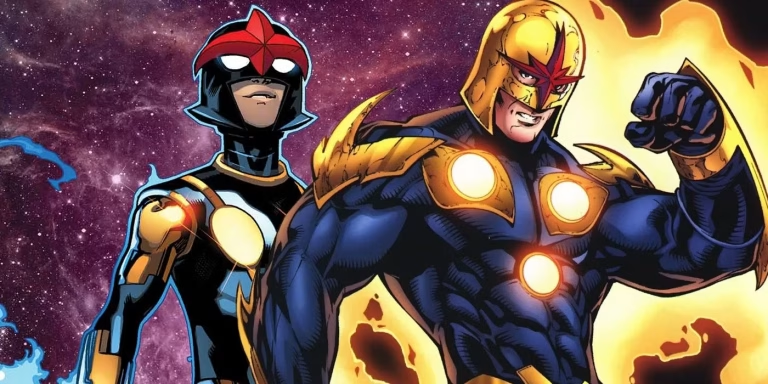
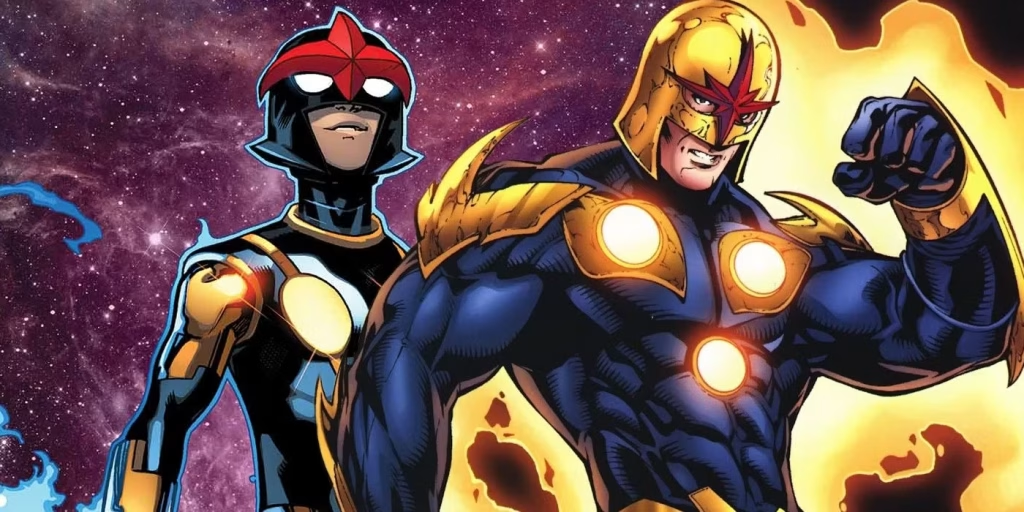
15. Nova (Disney+ Series)
For years, Nova has topped fan wish lists, and Marvel Studios is finally laying the groundwork to introduce Richard Rider into the MCU. The project has gone through several creative evolutions, with early development led by Moon Knight writer Sabir Pirzada before Criminal Minds alum Ed Bernero stepped in as showrunner.
Image Source: Bing Image. License: All Creative Commons
The series is expected to follow Rider’s initiation into the Nova Corps, the intergalactic peacekeepers first seen in Guardians of the Galaxy. Blending cosmic spectacle with a hero’s coming-of-age arc, Nova could become Marvel’s next major space franchise and a natural successor to the Guardians’ corner of the universe.
Image Source: Bing Image. License: All Creative Commons
14. Star-Lord Solo Project (Movie or Series)
While Guardians of the Galaxy Vol. 3 closed the book on the team as we knew it, Peter Quill’s journey is far from finished. Marvel confirmed Star-Lord will return, igniting speculation about a solo movie or Disney+ series centered on the legendary outlaw.
Image Source: Bing Image. License: All Creative Commons
Chris Pratt has made it clear he’d only come back for something meaningful, especially without James Gunn steering the ship. Whether Quill’s future unfolds on Earth or back among the stars, fans are eager to see how Marvel reinvents one of its most beloved characters for a post-Guardians era.
Image Source: Bing Image. License: All Creative Commons
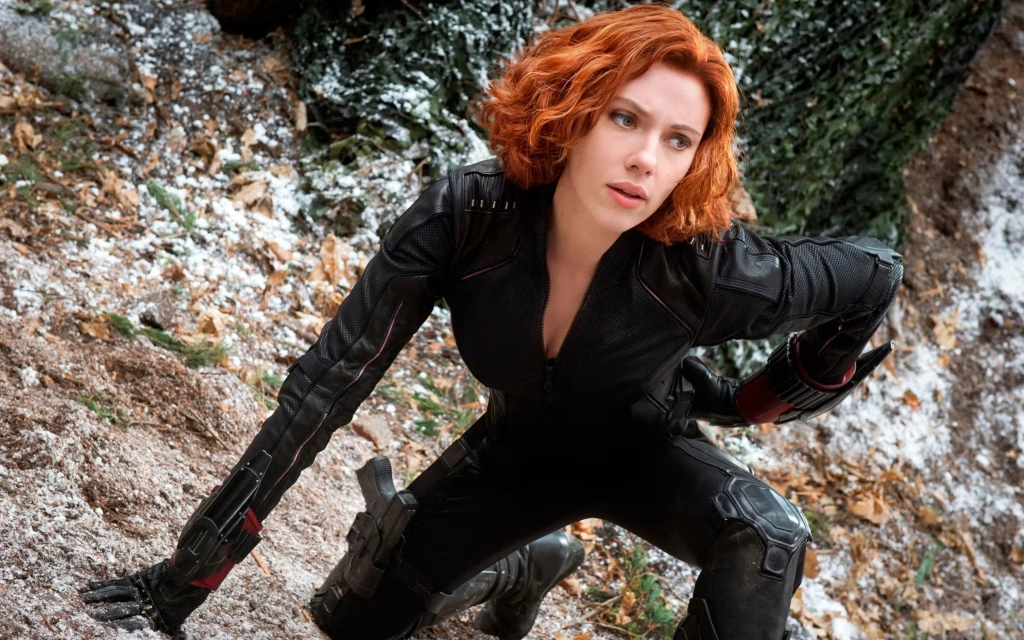
13. Untitled Scarlett Johansson Marvel Project
Scarlett Johansson’s return to Marvel isn’t in front of the camera, but it may be just as impactful. Kevin Feige revealed that Johansson is producing a secret Marvel Studios project completely unrelated to Black Widow, instantly fueling speculation.
Image Source: Bing Image. License: All Creative Commons
Details remain tightly under wraps, though rumors range from an A-Force ensemble to a prestige Disney+ series. Whatever it turns out to be, Johansson’s involvement signals Marvel’s push toward more creator-driven stories and stronger female-led projects in the franchise’s next phase.
Image Source: Bing Image. License: All Creative Commons
12. Untitled Okoye Disney+ Series
Danai Gurira is set to headline a spinoff centered on Okoye, the fearless general of the Dora Milaje. The series is expected to explore her life beyond the throne room, offering a deeper look at Wakandan warriors and their role in the wider world.
Image Source: Bing Image. License: All Creative Commons
Though plot specifics are scarce, the show promises to expand Wakanda’s mythology while pushing Okoye into a more central heroic role. It’s a chance to spotlight one of the MCU’s most respected fighters while laying groundwork for future crossovers.
Image Source: Bing Image. License: All Creative Commons
11. Ryan Coogler’s Wakanda-Based TV Series
Ryan Coogler isn’t done with Wakanda. Under his deal with Disney, multiple series set within the technologically advanced nation are in development, potentially including political dramas, historical stories, and character-driven spinoffs.
Image Source: Bing Image. License: All Creative Commons
These shows aim to deepen Wakanda’s culture, science, and internal power dynamics beyond what the films could cover. With Coogler’s creative touch, Marvel has an opportunity to turn Wakanda into one of the MCU’s richest long-term storytelling hubs.
Image Source: Bing Image. License: All Creative Commons
10. X-Men (MCU Film)
After years of anticipation, the X-Men are finally preparing to enter the MCU properly. The Hunger Games: The Ballad of Songbirds & Snakes writer Michael Lesslie is penning the script, with Thunderbolts director Jake Schreier attached to direct.
Image Source: Bing Image. License: All Creative Commons
Marvel Studios is reportedly leaning toward a younger lineup inspired by early ’90s comics, setting the stage for mutants to lead the franchise into its next saga. The debut could redefine Marvel storytelling and introduce a whole new generation of iconic heroes.
Image Source: Bing Image. License: All Creative Commons
9. Shang-Chi 2
Following the success of Shang-Chi and the Legend of the Ten Rings, a sequel has been quietly moving forward. While director Destin Daniel Cretton’s involvement in Spider-Man: Brand New Day has slowed things down, the project remains very much alive.
Image Source: Bing Image. License: All Creative Commons
The sequel is expected to explore the mysterious origins of the Ten Rings and Shang-Chi’s growing importance in the MCU. With Simu Liu set to return, the film could blend martial arts spectacle with larger cosmic stakes.
Image Source: Bing Image. License: All Creative Commons
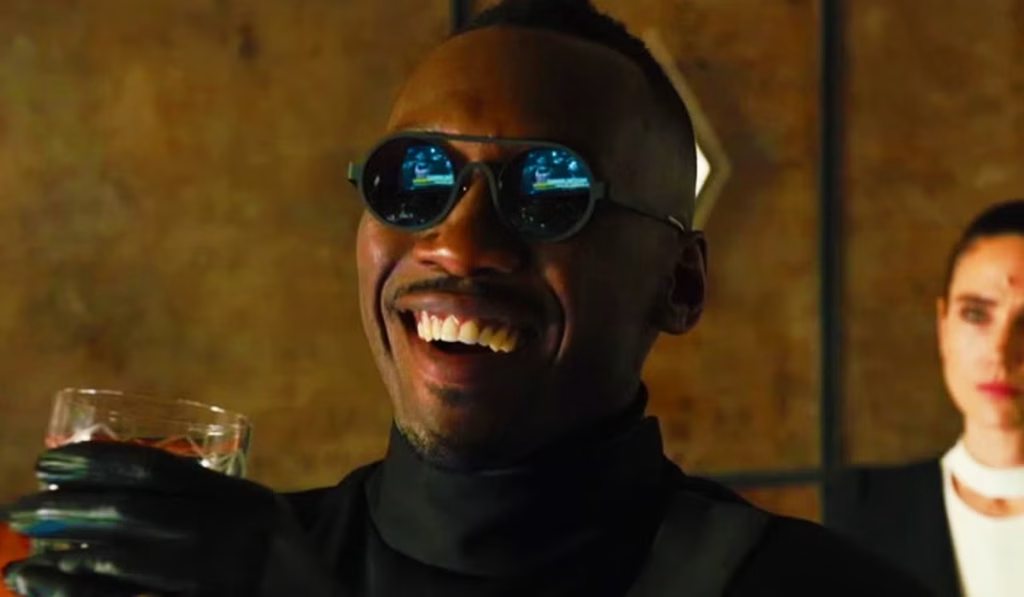
8. Blade
Few MCU projects have had a rockier road than Blade. Despite Mahershala Ali’s casting generating massive hype, the film has faced repeated delays, creative resets, and shifting priorities behind the scenes.
Image Source: Bing Image. License: All Creative Commons
Still, Marvel hasn’t abandoned the Daywalker. Blade’s eventual arrival is expected to anchor the supernatural side of the MCU, potentially leading into a Midnight Sons team-up and opening the door to darker, horror-infused storytelling.
Image Source: Bing Image. License: All Creative Commons
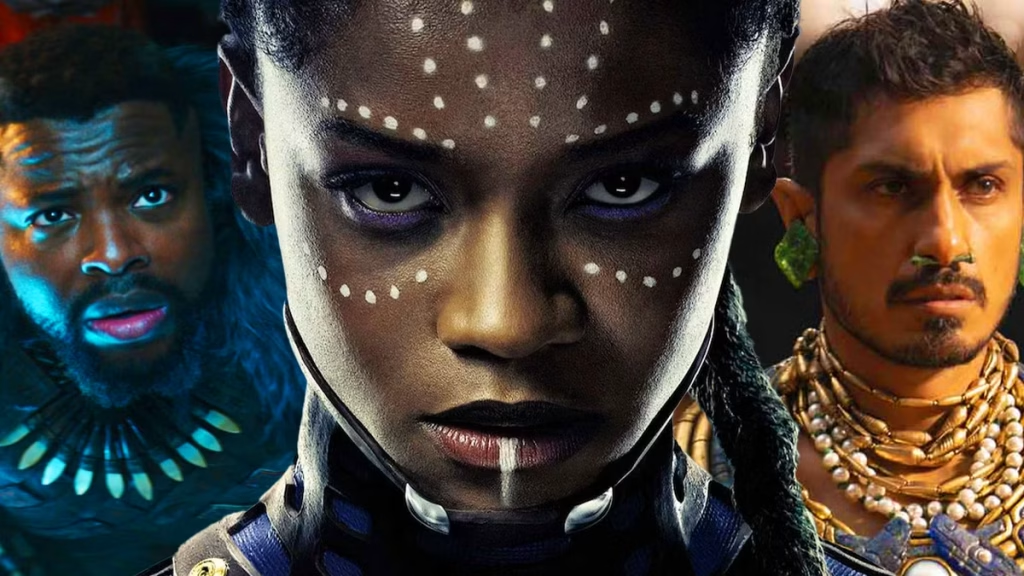
7. Black Panther 3
Marvel is moving forward with Black Panther 3, with Ryan Coogler once again involved and Denzel Washington joining the cast in a mystery role. The film will explore Wakanda’s future in a world reshaped by multiversal chaos.
Image Source: Bing Image. License: All Creative Commons
With Shuri continuing as Black Panther and M’Baku now ruling Wakanda, the next chapter promises political tension, emotional weight, and new global threats. Washington’s presence alone suggests a powerful, character-driven story.
Image Source: Bing Image. License: All Creative Commons
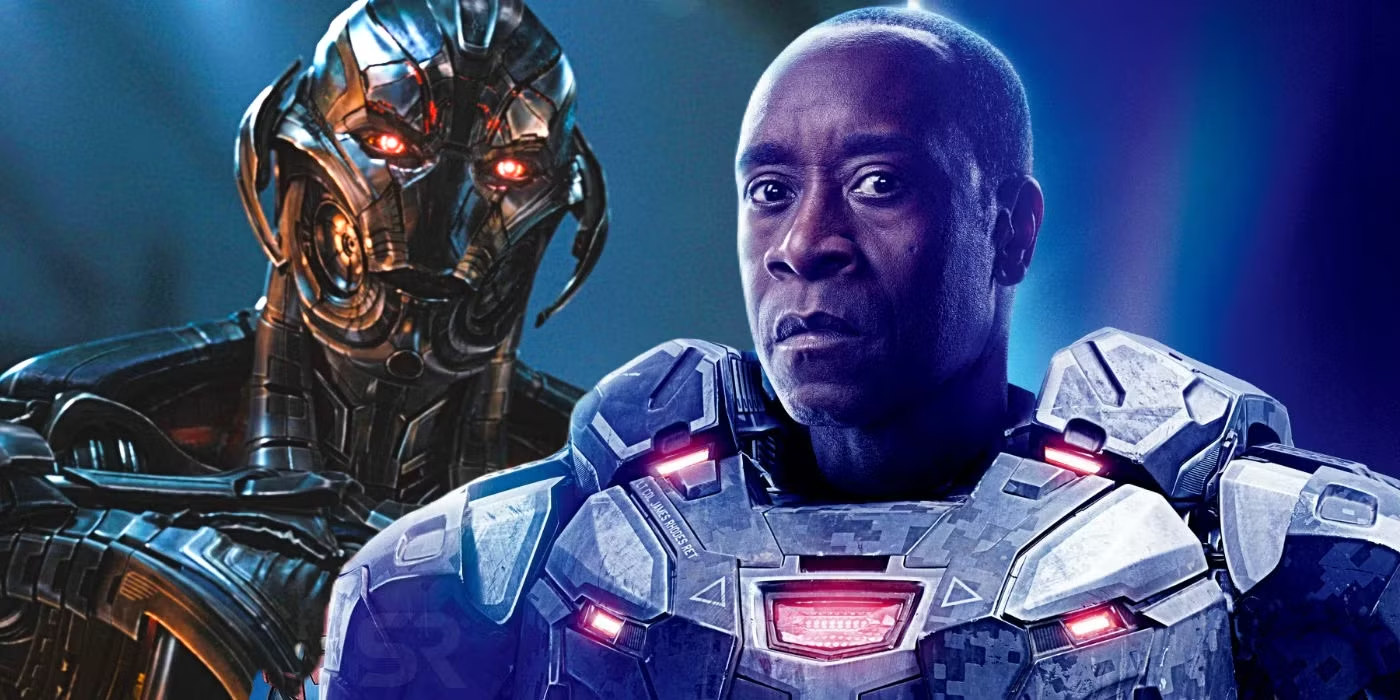
6. Armor Wars
Originally planned as a Disney+ series, Armor Wars has been retooled into a full-fledged feature film. Don Cheadle’s James Rhodes takes center stage as War Machine confronts the dangerous legacy of Tony Stark’s technology.
Image Source: Bing Image. License: All Creative Commons
The film is expected to feature familiar faces like Justin Hammer and Riri Williams, while diving into themes of power, accountability, and technological warfare. It’s a grounded Marvel story with massive implications.
Image Source: Bing Image. License: All Creative Commons
5. VisionQuest (Disney+ Series)
VisionQuest continues the story of White Vision after WandaVision, with Paul Bettany returning to explore the android’s fractured identity. The series leans heavily into philosophical questions about memory, humanity, and purpose.
Image Source: Bing Image. License: All Creative Commons
Adding intrigue, James Spader returns as Ultron, setting up a cerebral and emotional conflict. VisionQuest is expected to play a key role in setting up the MCU’s future, possibly even Doctor Doom’s rise.
Image Source: Bing Image. License: All Creative Commons
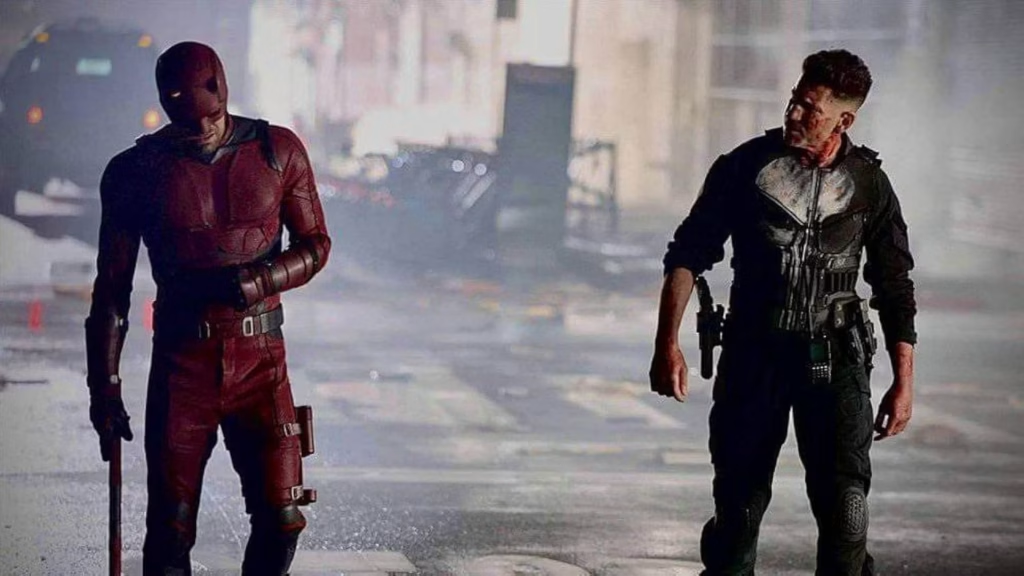
4. Daredevil: Born Again Season 2 & The Punisher Special
Marvel’s street-level corner expands with Daredevil: Born Again Season 2 and a standalone Punisher special. Charlie Cox and Jon Bernthal return, joined by Krysten Ritter’s Jessica Jones.
Image Source: Bing Image. License: All Creative Commons
These projects promise gritty storytelling, grounded action, and deeper integration of Netflix-era heroes into the MCU. It’s a major win for fans who’ve been waiting for Marvel to fully embrace its darker side again.
Image Source: Bing Image. License: All Creative Commons
3. X-Men ’97 Season 2
The animated revival X-Men ’97 returns with a second season that promises even higher emotional stakes. According to cast members, the new episodes will take darker turns and won’t shy away from tragedy.
Image Source: Bing Image. License: All Creative Commons
With a third season already confirmed, the show has become a cornerstone of Marvel’s mutant strategy. Its success proves that animation can be just as impactful as live-action in shaping the MCU’s future.
Image Source: Bing Image. License: All Creative Commons
2. Spider-Man: Brand New Day
Tom Holland’s Spider-Man returns in Brand New Day, a film that resets Peter Parker’s life after No Way Home. Directed by Destin Daniel Cretton, the movie leans into a more grounded, street-level tone.
Image Source: Bing Image. License: All Creative Commons
With appearances from Daredevil, the Punisher, Hulk, and Scorpion, the film bridges street heroes and Avengers-level threats. It’s a fresh start for Peter, and a crucial piece of Marvel’s next phase.
Image Source: Bing Image. License: All Creative Commons
1. Avengers: Doomsday & Avengers: Secret Wars
Marvel’s next two Avengers films represent the climax of the Multiverse Saga. Avengers: Doomsday introduces Doctor Doom, played by Robert Downey Jr., as the ultimate threat to reality itself.
Image Source: Bing Image. License: All Creative Commons
Avengers: Secret Wars follows, adapting the iconic storyline where Doom rules Battleworld. Together, these films are expected to reboot the MCU, merge universes, and redefine Marvel for the next generation.
Image Source: Bing Image. License: All Creative Commons
Marvel’s future is massive, messy, and full of possibilities. With legacy characters evolving, new heroes rising, and the multiverse heading toward collapse, the franchise is clearly gearing up for its biggest transformation yet. Whether every project lands or not, one thing is certain: the MCU isn’t slowing down anytime soon, and the next few years will define what superhero storytelling looks like moving forward.
Image Source: Bing Image. License: All Creative Commons
What can be more thrilling than conspiracy thrillers that keep us on the edge of our seats, glued to the screen with our eyes wide open, and our brains ticking really fast? Maybe it is the endless sensation that the world around us is not quite what we see. Or the excitement of a character who, after stringing along one by one, finally exposes a conspiracy that shakes the world.
Image Source: Bing Image. License: All Creative Commons
Whether it is secret societies, hidden motives, or suppressed facts concealed in a web of lies, these films draw on our deepest doubts and give you some really great, intense cinema experiences. From political cover-ups to secrets that have been around for centuries, here are 15 of the best conspiracy thrillers of recent years. We are going to put the spotlight on the least-known ones first and then go up to the classics of the genre.
Image Source: Bing Image. License: All Creative Commons
15. The International (2009)
Who would have thought banking globally could be so perilous? In The International, Clive Owen and Naomi Watts confront a powerful financial institution that’s deep in corruption, arms transactions, and assassination conspiracies.
Image Source: Bing Image. License: All Creative Commons
With slick visuals and jet-set speed, this thriller lifts the veil on how money and power work behind closed doors. As Flickering Myth observes, it’s a gripping examination of how financial institutions can affect global politics with fatal repercussions.
Image Source: Bing Image. License: All Creative Commons
14. The Ghost Writer (2010)
Roman Polanski directs a chilling, slow-burning story of a ghostwriter (Ewan McGregor) hired to assist a former British Prime Minister on his memoirs—only to become caught up in a fatal web of secrets.
Image Source: Bing Image. License: All Creative Commons
Cold, sophisticated, and politically charged, it’s a thriller that creeps up on you. Flickering Myth mentions its uncanny resemblance to actual political scandals, adding another dimension to its intrigue.
Image Source: Bing Image. License: All Creative Commons
13. The Insider (1999)
Not every conspiracy involves spies or ancient relics—sometimes, it’s about taking on Big Tobacco. The Insider tells the real story of Jeffrey Wigand, a scientist who blew the whistle on the cigarette industry.
Image Source: Bing Image. License: All Creative Commons
With powerhouse performances from Russell Crowe and Al Pacino, it’s a high-stakes drama that plays like a nerve-racking thriller. As WatchMojo highlights, it’s a haunting, real-world look at the cost of telling the truth.
Image Source: Bing Image. License: All Creative Commons
12. Conspiracy Theory (1997)
Mel Gibson plays a cab driver with a brain full of paranoid conspiracy theories—most of which sound crazy, until one of them is true.
Image Source: Bing Image. License: All Creative Commons
With Julia Roberts, he’s pulled into a deadly intrigue he never knew existed. It’s quick, quirky, and surprisingly moving. Flickering Myth refers to it as a wild and unpredictable ride that keeps you on your toes.
Image Source: Bing Image. License: All Creative Commons
11. The Manchurian Candidate (2004)
This contemporary reworking of the Cold War classic substitutes corporate manipulation and political brainwashing for communist brainwashing. Denzel Washington is a Gulf War veteran beset by bizarre flashbacks, and Meryl Streep is frightening as an ambitious senator.
Image Source: Bing Image. License: All Creative Commons
Unsettling and topical, it plunges deep into the concept of manufactured consent. Screen Rant applauds its motifs of subtle influence and high-level manipulation.
Image Source: Bing Image. License: All Creative Commons
10. Minority Report (2002)
What does it mean when your destiny is predetermined? Steven Spielberg’s sci-fi thriller delves into a world where crime is prevented before it occurs—but at what cost? Tom Cruise’s character is now a fugitive in a system that he once served, and he questions everything he thought was true.
Image Source: Bing Image. License: All Creative Commons
WatchMojo hails the movie’s philosophical conflict between free will and destiny, all packaged in high-gloss sci-fi action.
Image Source: Bing Image. License: All Creative Commons
9. Captain America: The Winter Soldier (2014)
This is not your average superhero movie. The second Captain America movie is an old-school spy thriller in spirit as Cap and Black Widow discover a Hydra coup inside S.H.I.E.L.D.
Image Source: Bing Image. License: All Creative Commons
Surveillance, trust, and betrayal are the themes, as it stands as one of the smartest, most realistic MCU entries. Flickering Myth calls it a blockbuster that never shies away from the real-world stakes.
Image Source: Bing Image. License: All Creative Commons
8. The Bourne Identity (2002)
Jason Bourne awoke with no memory and a whole lot of folks wanting him dead. That leads to a suspenseful, world-traveling adventure through a realm of covert operations, black government agencies, and hitmen lurking at every turn.
Image Source: Bing Image. License: All Creative Commons
Flickering Myth gives credit to the film for revitalizing the spy thriller, establishing a gritty new benchmark for the genre.
Image Source: Bing Image. License: All Creative Commons
7. Enemy of the State (1998)
Back in the days when “surveillance state” was not yet everyday parlance, Enemy of the State already had us warned.
Image Source: Bing Image. License: All Creative Commons
Will Smith stars as an attorney unwittingly caught up in a deadly political conspiracy, and Gene Hackman assists him in navigating a world where privacy is nonexistent. WatchMojo deems it a chillingly timely exploration of digital paranoia and government surveillance reach.
Image Source: Bing Image. License: All Creative Commons
6. National Treasure (2004)
Yes, this one’s popcorn rather than paranoia—but who doesn’t enjoy a historical treasure hunt? Nicolas Cage is the ringleader in stealing the Declaration of Independence (indeed) and discovering a Founding Father’s secret.
Image Source: Bing Image. License: All Creative Commons
The Film Project applauds its blend of puzzles, adventure, and light-hearted charm as an ideal starting point in the genre.
Image Source: Bing Image. License: All Creative Commons
5. Indiana Jones and the Dial of Destiny (2023)
In his last adventure, Indy rushes to be the first to obtain an ancient gadget with bizarre abilities before it falls into the wrong hands.
Image Source: Bing Image. License: All Creative Commons
With a balance of high-octane action, archaeological adventure, and time-twisting turns, it has everything franchise fans adore about the series. Keith & the Movies praises its nostalgic Indiana Jones feel and crazy, wild conclusion.
Image Source: Bing Image. License: All Creative Commons
4. Uncharted (2022)
An action-adventure romp with a youthful energy, Uncharted tracks Tom Holland’s Nathan Drake and Mark Wahlberg’s Sully on the hunt for myths and gold around the world. It doesn’t do anything new, but it’s quick, entertaining, and loaded with puzzles and backstabbing.
Image Source: Bing Image. License: All Creative Commons
Roobla calls it a love letter to the genre, replete with slick moves and lovable leads.
Image Source: Bing Image. License: All Creative Commons
3. JFK (1991)
Oliver Stone’s sprawling epic explores the most long-lasting American conspiracy theory—the JFK assassination. New Orleans DA Jim Garrison is played by Kevin Costner, whose probe defies the official story and raises endless questions.
Image Source: Bing Image. License: All Creative Commons
Flickering Myth describes it as a bold, questioning film that straddles fact and speculation.
Image Source: Bing Image. License: All Creative Commons
2. The Da Vinci Code (2006)
Secret societies, ancient codes, and a murder in the Louvre? Yes, please. Tom Hanks plays Robert Langdon in this action-packed mystery uniting art, religion, and a covert truth that threatens to shake the foundations of Christianity.
Image Source: Bing Image. License: All Creative Commons
Screen Rant applauds it for bringing Dan Brown’s dense, symbol-laden novel to life with energy and urgency.
Image Source: Bing Image. License: All Creative Commons
1. Three Days of the Condor (1975)
This one established the gold standard. Robert Redford stars as a low-ranking CIA analyst who comes back to work after lunch and finds his whole staff killed—and now he’s the target. What ensues is a tightly coiled thriller shot through with paranoia, suspicion, and corporate spying.
Image Source: Bing Image. License: All Creative Commons
WatchMojo deems it a classic that never goes out of style, detailing the very essence of what conspiracy thrillers are all about.
Image Source: Bing Image. License: All Creative Commons
Blumhouse has managed to create a distinct identity in the horror film industry by utilizing low-budget creativity to produce some of the most unforgettable and discussed movies of recent decades. From frightful psychological horror to deeply engaging social commentary disguised with genre thrills, or simply highly energizing and terrifying movie experiences, Blumhouse is a brand that expertly knows how to make its viewers both scream and reflect at the same time.
Image Source: Bing Image. License: All Creative Commons
From quiet, unsettling dread to blockbuster spectacle, their films are often as clever as they are frightening. Here’s a reverse-order countdown of the 15 Blumhouse horror movies that have left the biggest mark on audiences and the genre itself, whether through innovation, cultural impact, or sheer memorability.
Image Source: Bing Image. License: All Creative Commons
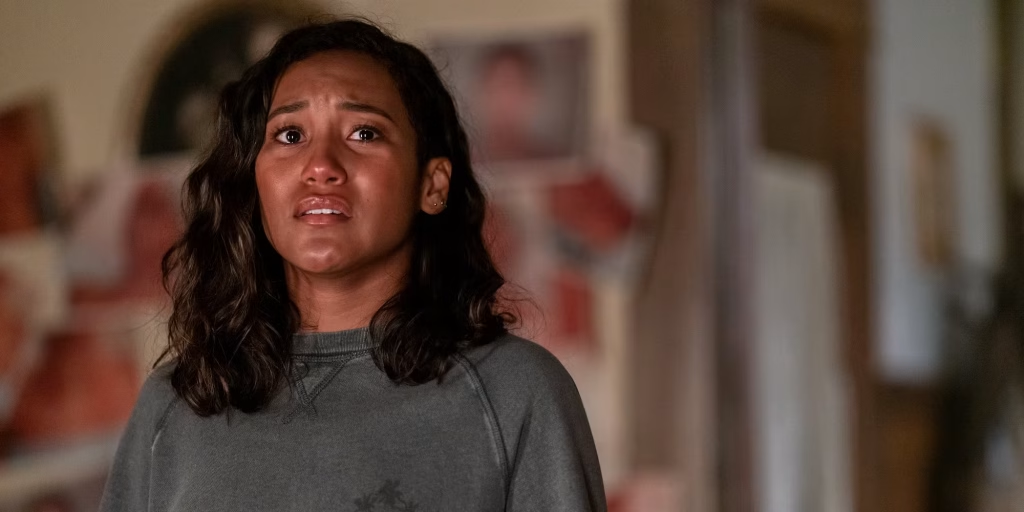
15. Soft & Quiet
Beth de Araújo’s Soft & Quiet is a tense, real-time thriller that’s as uncomfortable as it is masterful. The film follows a small gathering of white supremacist women that spirals into escalating violence, all captured in a single, continuous take. The minimalism of the production—focused on real-time events and personal interactions—creates an intimacy that makes the violence feel disturbingly immediate. It’s a film that forces viewers to sit with their unease rather than offering easy catharsis.
Image Source: Bing Image. License: All Creative Commons
More than just a story about literal horror, the movie engages with cultural and social fears, exploring how ideology can manifest in everyday settings and turn mundane interactions terrifying. Its impact lies in its unflinching commitment to realism and tension, proving that horror doesn’t always need monsters—it can come from human cruelty and groupthink.
Image Source: Bing Image. License: All Creative Commons
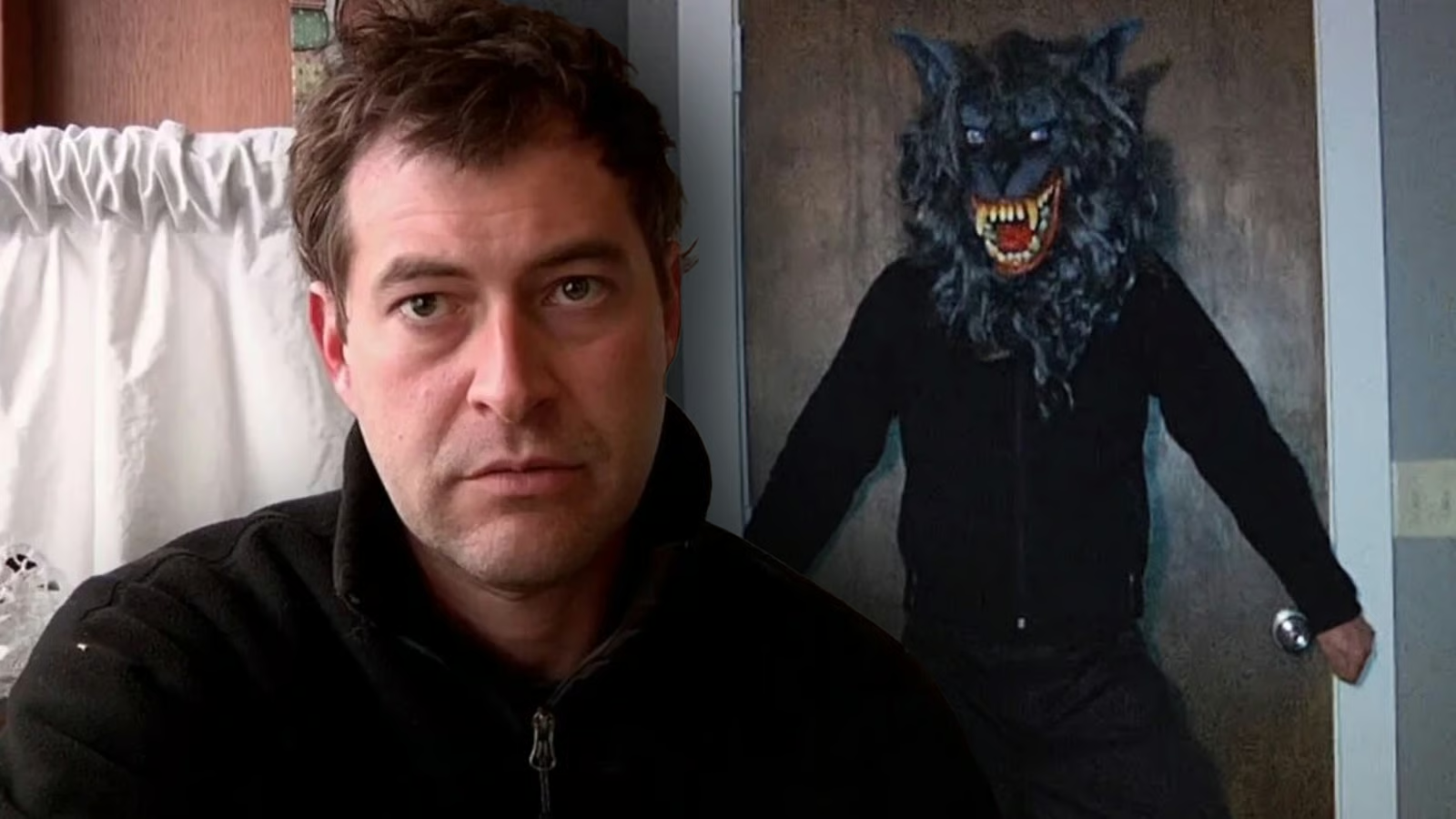
14. Creep 2
Mark Duplass returns in Creep 2 as the socially awkward, deeply unsettling serial killer from the first film, and this time his character wrestles with existential ennui and loneliness. The sequel expands the psychological tension, pairing Duplass’s charm and creepiness with Desiree Akhavan’s equally fearless presence. Their interaction builds suspense that’s as much about uncomfortable social dynamics as it is about danger.
Image Source: Bing Image. License: All Creative Commons
The brilliance of the film lies in its exploration of loneliness, obsession, and human connection in the context of horror. With long takes and restrained pacing, the tension grows organically, making each moment feel like a slow, escalating nightmare. It’s proof that horror can thrive in the quiet spaces between words, and that a truly compelling villain can be just a human being with disturbingly relatable desires.
Image Source: Bing Image. License: All Creative Commons
13. Creep
The original Creep introduced audiences to the found-footage horror format executed with meticulous precision. Patrick Brice’s character unknowingly invites himself into the home of Duplass’s unsettling Craigslist client, and what follows is a study in unease. The low-budget aesthetic enhances the realism, making every awkward interaction, misplaced gesture, and long, silent moment feel laden with dread.
Image Source: Bing Image. License: All Creative Commons
It’s a film that thrives on psychological tension rather than gore, and its slow-burning pacing allows the audience to feel the protagonist’s growing discomfort. The intimacy of the camera makes viewers complicit in the situation, a technique that set Creep apart from many other horror films of its time and cemented its place as a standout Blumhouse entry.
Image Source: Bing Image. License: All Creative Commons
12. Nanny
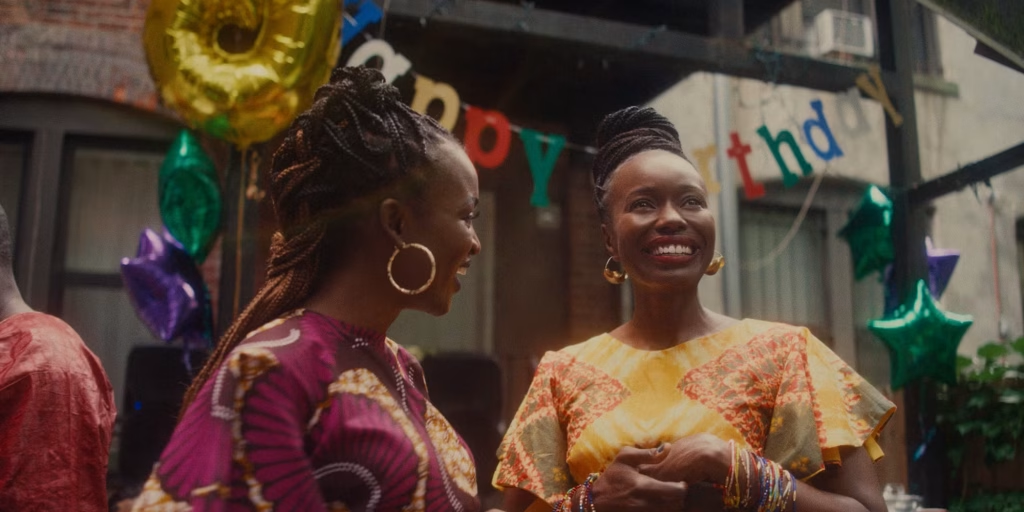
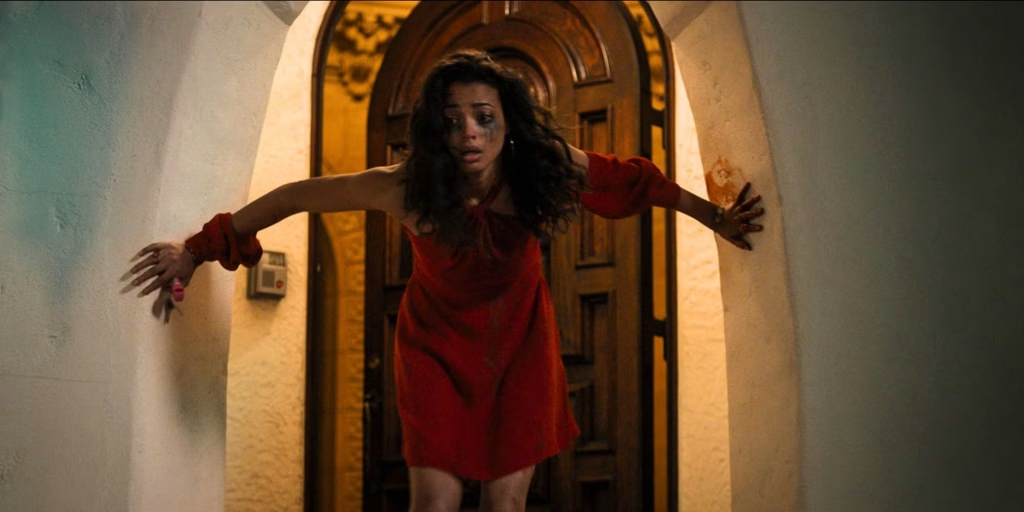
Anna Diop shines in Nanny, a film that blends psychological horror with elements of West African folklore. The story follows a woman navigating displacement, cultural isolation, and the emotional toll of caregiving, while supernatural forces loom subtly in the background. Nikyatu Jusu balances the real-world anxieties of the protagonist with eerie, otherworldly events, creating a story that is both grounded and terrifyingly surreal.
Image Source: Bing Image. License: All Creative Commons
What makes the movie particularly impactful is its focus on personal and cultural stakes. The horror is deeply human at its core, exploring the cost of migration, motherhood, and identity, and wrapping these themes in a suspenseful narrative that lingers long after the credits roll. It proves that horror can be both socially resonant and deeply unsettling.
Image Source: Bing Image. License: All Creative Commons
11. M3GAN
Move over, classic killer dolls—M3GAN is here. Blumhouse, alongside James Wan and Jason Blum, delivers a film that’s equal parts campy fun and social commentary. M3GAN, a hyper-intelligent robotic companion, becomes a meme-worthy sensation thanks to her deadly antics, but the film cleverly explores issues of modern parenting, screen addiction, and our reliance on technology for companionship and emotional support.
Image Source: Bing Image. License: All Creative Commons
The movie thrives because it balances laughs, suspense, and horror in a way that appeals to a broad audience. The choreography, especially the viral dance scene, shows that Blumhouse understands how to merge spectacle with storytelling. M3GAN isn’t just a killer doll—it’s a reflection of our contemporary anxieties in an accessible, entertaining package.
Image Source: Bing Image. License: All Creative Commons
10. The Invisible Man
Leigh Whannell’s The Invisible Man reinvents a classic horror icon with a contemporary lens, turning the story into a tense psychological thriller about control, abuse, and gaslighting. Elisabeth Moss delivers a career-best performance, embodying a woman navigating fear and trauma while being hunted by someone who appears untouchable. The tension in every scene is palpable, making the audience feel every moment of paranoia and dread alongside her.
Image Source: Bing Image. License: All Creative Commons
The brilliance of the film lies in its use of absence as a threat—the unseen becomes more terrifying than anything visible, turning ordinary spaces into arenas of terror. By blending social commentary with traditional horror tropes, The Invisible Man shows that suspense and psychological depth can elevate genre storytelling to something profoundly affecting.
Image Source: Bing Image. License: All Creative Commons
9. Cam
Cam tackles horror in the digital age, exploring identity, obsession, and online duplicity. Madeline Brewer plays a camgirl whose life is upended when a perfect digital version of herself begins taking over her online presence. The story is both unnerving and topical, highlighting the eerie vulnerabilities inherent in a world dominated by screens, social media, and performative intimacy.
Image Source: Bing Image. License: All Creative Commons
Beyond the technological thrills, the film is a tense psychological character study. Brewer’s layered performance conveys panic, ingenuity, and isolation, while the horror emerges naturally from a familiar, seemingly safe environment turned threatening. It’s a modern story of selfhood, performance, and the uncanny power of digital doubles.
Image Source: Bing Image. License: All Creative Commons
8. Sweetheart
J.D. Dillard’s Sweetheart brings survival horror to an isolated tropical setting, where Kiersey Clemons must outwit a terrifying sea creature after being stranded. The film fuses elements of classic monster movies with a contemporary psychological sensibility, emphasizing tension, resourcefulness, and human vulnerability. Every night, the protagonist faces fear amplified by isolation, fatigue, and environmental hazards.
Image Source: Bing Image. License: All Creative Commons
The story’s power comes from its combination of minimalist storytelling and primal fear. Dillard uses natural settings, sound design, and Clemons’s anchored performance to create a claustrophobic, high-stakes scenario. Sweetheart reminds audiences that isolation itself can be a form of horror, even before the monsters appear.
Image Source: Bing Image. License: All Creative Commons
7. The Vigil
Keith Thomas’s The Vigil merges supernatural horror with deep cultural context, following a man tasked with watching over a deceased body overnight, only to confront malevolent forces. The movie’s strength lies in its blend of folklore, ritual, and psychological tension, providing fresh material within the familiar haunted-house framework.
Image Source: Bing Image. License: All Creative Commons
Dave Davis anchors the film with a performance that balances fear, disbelief, and moral responsibility, making viewers feel the weight of his nightly vigil. The supernatural elements are both terrifying and thematically resonant, exploring grief, guilt, and spiritual reckoning. The Vigil is proof that cultural specificity can enrich horror without sacrificing universal scares.
Image Source: Bing Image. License: All Creative Commons
6. Paranormal Activity
Oren Peli’s Paranormal Activity transformed low-budget filmmaking into a horror powerhouse. The minimalist found-footage approach relied on subtle, creeping dread rather than blood or shock value, making every flicker, whisper, and shadow terrifying. The film became a cultural phenomenon, demonstrating that atmosphere and suspense could outweigh spectacle.
Image Source: Bing Image. License: All Creative Commons
Its legacy is undeniable: it spawned numerous sequels, inspired imitators, and turned ordinary household spaces into vessels of fear. Watching the seemingly mundane become sinister reminds audiences that horror doesn’t require grandiose monsters—sometimes, tension is enough to keep viewers up all night.
Image Source: Bing Image. License: All Creative Commons
5. Hush
Mike Flanagan’s Hush delivers a masterclass in tension, placing a deaf and mute protagonist at the center of a home-invasion scenario. Kate Siegel’s performance makes the audience acutely aware of the character’s vulnerability while also showcasing her resourcefulness. Every noise, shadow, and movement becomes heightened, turning the familiar home into a suspenseful maze.
Image Source: Bing Image. License: All Creative Commons
By removing spoken dialogue, the film intensifies viewer immersion, relying on visual storytelling, sound design, and physical performance to convey terror. Hush demonstrates that horror can be both innovative and emotionally gripping without relying on overt gore or exposition.
Image Source: Bing Image. License: All Creative Commons
4. Halloween (2018)
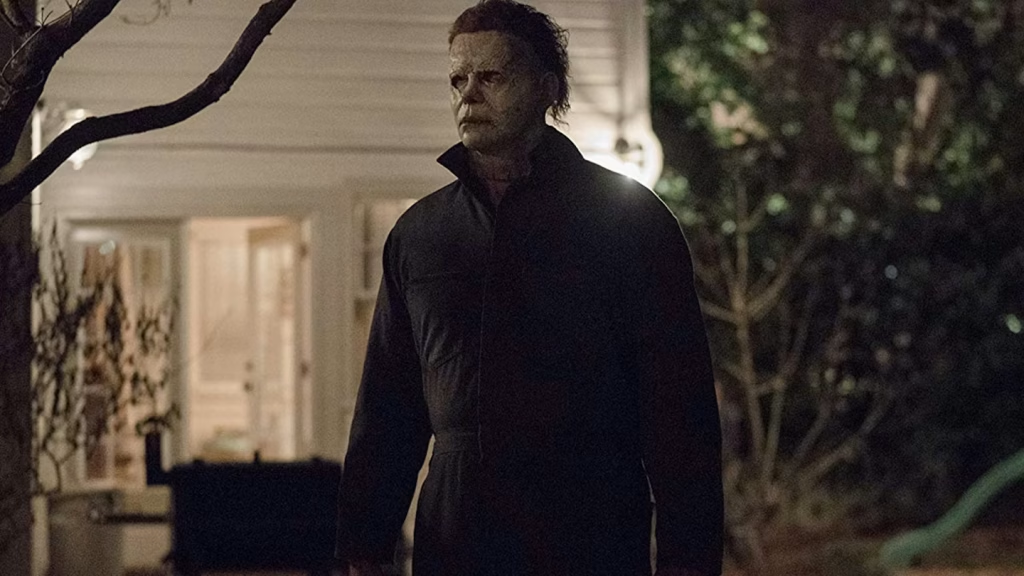
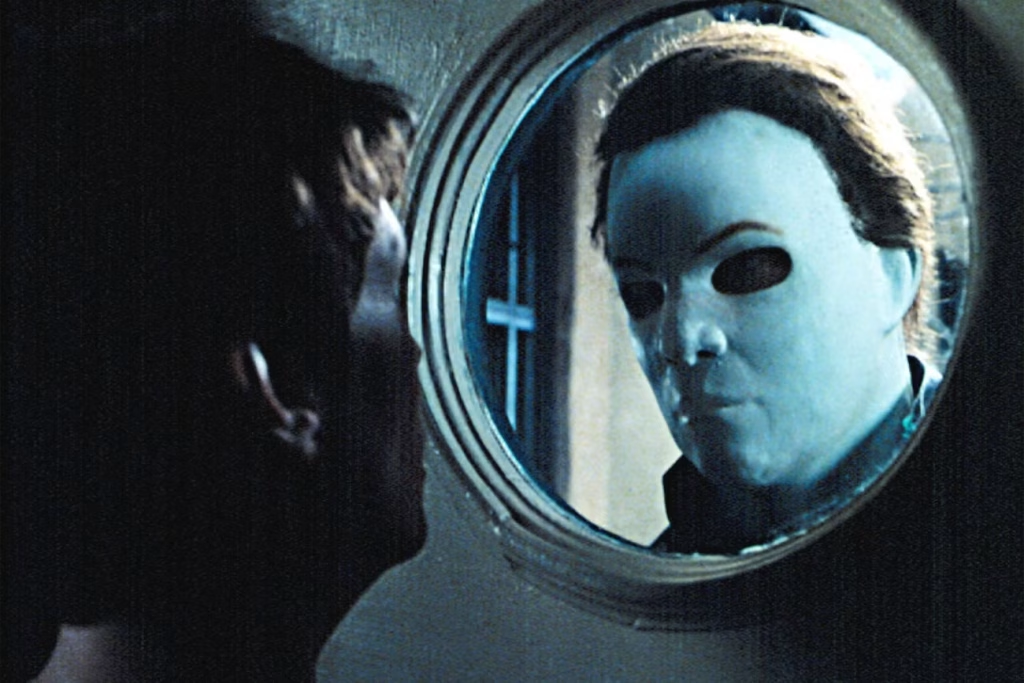
David Gordon Green’s Halloween revitalizes the iconic franchise with a back-to-basics approach, bringing Jamie Lee Curtis back as Laurie Strode. The film strips away decades of convoluted sequels to focus on primal fear, survival, and the unstoppable menace of Michael Myers. Carpenter’s involvement in the score and tone ensures that this reboot feels respectful yet thrillingly contemporary.
Image Source: Bing Image. License: All Creative Commons
The movie succeeds because it balances nostalgia with tension, giving longtime fans the scares they expect while introducing suspenseful pacing and character-driven stakes. It’s a masterclass in legacy franchise filmmaking that respects the past while asserting its own relevance.
Image Source: Bing Image. License: All Creative Commons
3. Us
Jordan Peele’s Us expands his exploration of horror and social commentary, following a family confronted by terrifying doppelgängers. Lupita Nyong’o’s dual performance is extraordinary, anchoring a film that examines identity, privilege, and the darkness lurking within society itself. Peele’s visual storytelling and careful attention to symbolism make the narrative rich with interpretive depth.
Image Source: Bing Image. License: All Creative Commons
The horror in Us is as much psychological as it is visceral. Scenes of tension, dread, and the uncanny interplay between characters elevate it beyond simple jump scares. It’s a thought-provoking horror experience that rewards repeated viewing and analysis, cementing Peele’s place as one of modern horror’s most ambitious directors.
Image Source: Bing Image. License: All Creative Commons
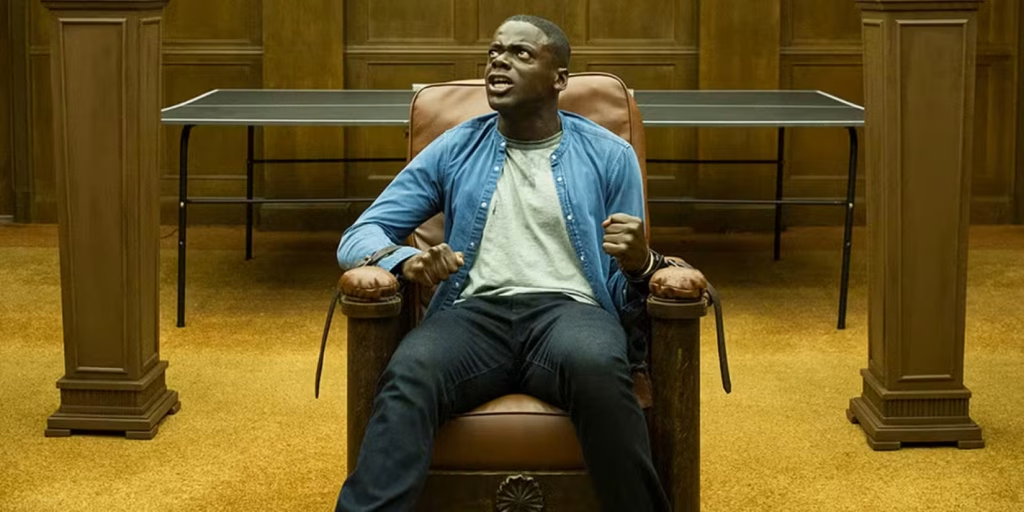
2. Get Out
Get Out is a watershed moment in horror cinema. Jordan Peele’s debut blends sharp social commentary with suspenseful storytelling, exploring racism and exploitation through the lens of a home-invasion horror scenario. Daniel Kaluuya’s performance conveys a mix of fear, intelligence, and resilience, guiding viewers through a tense narrative filled with both subtle and overt threats.
Image Source: Bing Image. License: All Creative Commons
The film’s impact extends beyond horror, influencing discussions around race, genre, and narrative innovation. By combining satire, suspense, and deeply felt characterization, Get Out became a cultural touchstone, proving that genre films can carry both entertainment value and profound societal critique.
Image Source: Bing Image. License: All Creative Commons
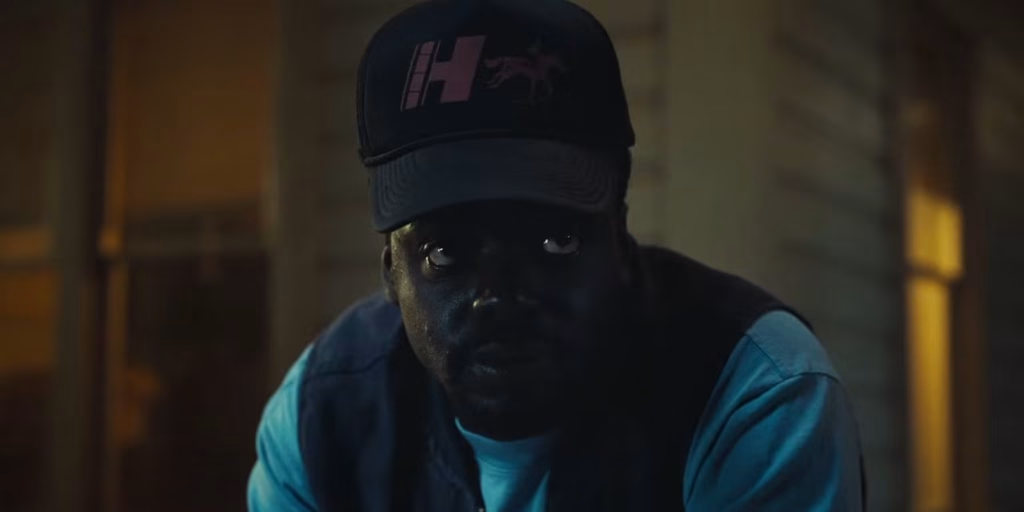
1. Nope
Jordan Peele’s Nope pushes genre boundaries, delivering a UFO-centered spectacle with wide-open cinematic landscapes. Keke Palmer and Daniel Kaluuya lead the cast with compelling performances that balance tension, awe, and human vulnerability. Peele’s command of pacing, framing, and suspense transforms what could have been a conventional thriller into a visually stunning and emotionally resonant experience.
Image Source: Bing Image. License: All Creative Commons
The film’s impact lies in its blending of spectacle and social commentary, reflecting on humanity’s obsession with spectacle, exploitation, and survival instincts. With jaw-dropping visuals, unforgettable set pieces, and moments of pure tension, Nope solidifies Peele’s status as one of the most innovative voices in contemporary horror.
Image Source: Bing Image. License: All Creative Commons
Blumhouse has redefined what modern horror can be, blending psychological depth, social relevance, and inventive scares in ways few studios can replicate. From intimate, character-driven nightmares to big-budget thrillers that command IMAX screens, these 15 films showcase the studio’s versatility and lasting influence.
Image Source: Bing Image. License: All Creative Commons
Whether you’re here for the tension, the cultural commentary, or the sheer audacity of killer dolls and invisible threats, Blumhouse continues to prove that horror can be smart, impactful, and undeniably entertaining—one terrifying story at a time.
Image Source: Bing Image. License: All Creative Commons
Zombie movies remain one of the trusted comfort genres of horror. No matter how grim the end of the world is portrayed, there is always an element of comfort in watching the total collapse of humanity while you are safely seated on your couch. Such movies not only offer us gory and violent disorder, but they also, almost unnoticed, render some very insightful and thought-provoking reflections on fear, solitude, human nature, and the capacity to unite when life loses its meaning.
Image Source: Bing Image. License: All Creative Commons
Whether you’re craving high-energy action, emotional storytelling, or slow-burn psychological dread, zombie cinema has you covered. Below is a reverse-order countdown of ten standout zombie movies that are absolutely worth your time right now—each one offering its own spin on the undead nightmare.
Image Source: Bing Image. License: All Creative Commons
10. Day Shift (2022)
Day Shift approaches the undead apocalypse with the mindset of a blockbuster action film rather than traditional horror. Jamie Foxx stars as a working-class vampire hunter just trying to make ends meet, balancing family obligations with a dangerous profession that keeps him knee-deep in supernatural chaos. The movie leans heavily into slick choreography, stylized violence, and a fast pace that rarely lets up.
Image Source: Bing Image. License: All Creative Commons
What really drives Day Shift is its energy. The film doesn’t pause for deep introspection, instead focusing on entertaining fight scenes, dark humor, and buddy-cop-style banter. Dave Franco’s nervous sidekick adds comedic contrast, while the world-building hints at a larger underground society of hunters and creatures that feels surprisingly fleshed out.
Image Source: Bing Image. License: All Creative Commons
While it technically centers more on vampires than classic zombies, the constant presence of undead threats and apocalyptic vibes makes it a fun genre crossover. If you enjoy horror-adjacent action with attitude, humor, and nonstop movement, Day Shift delivers a bloody good time.
Image Source: Bing Image. License: All Creative Commons
9. There’s Someone Inside Your House (2021)
This Netflix horror film blends teen slasher conventions with outbreak tension, creating a story that feels distinctly modern. Set in a small town grappling with both violence and infection, the movie follows high school students targeted by a masked killer who exposes their darkest secrets before striking. The looming threat of infected attackers adds another layer of paranoia to an already tense situation.
Image Source: Bing Image. License: All Creative Commons
The film works best when it explores themes of identity, shame, and public judgment in the age of social media. Characters are forced to confront who they are versus who they pretend to be, and that pressure cooker atmosphere keeps the suspense building. The mix of mystery and horror gives it an edge beyond a standard slasher.
Image Source: Bing Image. License: All Creative Commons
Though the zombie-like infection isn’t the central focus, it shapes the tone of the story and heightens the sense of danger. It’s an effective genre hybrid that will appeal to viewers who like their horror grounded in contemporary fears and youthful anxiety.
Image Source: Bing Image. License: All Creative Commons
8. The Night Eats the World (2018)
The Night Eats the World strips the zombie genre down to its emotional core. After a party in Paris, a man wakes up to find the city abandoned and overrun by the undead, leaving him utterly alone. From that moment on, the film becomes less about survival tactics and more about what isolation does to the human mind.
Image Source: Bing Image. License: All Creative Commons
Rather than relying on frequent attacks or loud scares, the movie focuses on quiet routines, creeping paranoia, and the slow erosion of sanity. Empty hallways, distant noises, and the constant awareness of danger outside create an oppressive atmosphere that never fully releases its grip. The zombies are frightening, but the silence is worse.
Image Source: Bing Image. License: All Creative Commons
This is a zombie movie for viewers who appreciate introspection and mood over action. It’s haunting, thoughtful, and emotionally draining in the best way, proving that the genre can be just as effective without explosions and gunfire.
Image Source: Bing Image. License: All Creative Commons
7. Zombieland (2009)
Zombieland takes the end of the world and turns it into a road trip comedy, without losing the stakes of survival. Jesse Eisenberg’s anxious narrator creates a set of “rules” for staying alive, whichbecomese a clever framing device for both humor and storytelling. Woody Harrelson’s fearless, Twinkie-obsessed zombie killer balances that nervous energy perfectly.
Image Source: Bing Image. License: All Creative Commons
The movie shines because of its cast chemistry. Emma Stone and Abigail Breslin add depth and emotional grounding, preventing the film from becoming purely comedic. The humor is sharp, often self-aware, and paired with sudden bursts of brutal violence that remind you the danger is real.
Image Source: Bing Image. License: All Creative Commons
Zombieland remains endlessly rewatchable because it understands the genre while poking fun at it. It’s fast, funny, and surprisingly heartfelt—a zombie movie that never forgets to entertain.
Image Source: Bing Image. License: All Creative Commons
6. World War Z (2013)
World War Z expands the zombie apocalypse to a truly global scale. Brad Pitt stars as a former investigator racing against time to uncover the cause of a worldwide outbreak that spreads faster than anyone can comprehend. The movie moves rapidly from country to country, emphasizing the sheer speed at which civilization collapses.
Image Source: Bing Image. License: All Creative Commons
What sets this film apart is its depiction of zombies as overwhelming forces rather than individual monsters. They move in massive swarms, climbing walls and overwhelming cities in seconds. The spectacle is intense, and the sense of urgency never fades.
Image Source: Bing Image. License: All Creative Commons
Rather than focusing on gore, World War Z leans into suspense, strategy, and large-scale disaster storytelling. It’s a polished, high-budget take on the genre that trades claustrophobic fear for adrenaline and scope.
Image Source: Bing Image. License: All Creative Commons
5. Train to Busan (2016)
Train to Busan wastes no time plunging viewers into panic. When an outbreak spreads across South Korea, passengers aboard a high-speed train find themselves trapped with nowhere to escape. The confined setting turns every moment into a test of endurance and decision-making.
Image Source: Bing Image. License: All Creative Commons
Beyond its thrilling action, the film excels at emotional storytelling. Characters are forced to confront selfishness, courage, and sacrifice in ways that feel painfully real. Every choice carries weight, and not everyone makes it out alive.
Image Source: Bing Image. License: All Creative Commons
By the time the film ends, Train to Busan has transformed into a deeply moving human story. It’s a rare zombie movie that leaves you shaken not just by fear, but by empathy.
Image Source: Bing Image. License: All Creative Commons
4. Shaun of the Dead (2004)
Shaun of the Dead perfectly balances parody and genuine affection for the zombie genre. Following a group of ordinary people stumbling through an outbreak in London, the film finds humor in denial, routine, and emotional immaturity. Even as the world collapses, the characters worry about relationships, jobs, and pints at the pub.
Image Source: Bing Image. License: All Creative Commons
Edgar Wright’s direction makes every frame count. Visual jokes, clever editing, and callbacks reward attentive viewers, while the dialogue stays sharp and endlessly quotable. The comedy never undercuts the horror—it enhances it.
Image Source: Bing Image. License: All Creative Commons
Underneath the laughs, the film carries surprising emotional weight. Shaun of the Dead understands loss and growth, making it both hilarious and heartfelt.
Image Source: Bing Image. License: All Creative Commons
3. 28 Days Later (2002)
28 Days Later redefined modern zombie horror by introducing fast, rage-driven infected that shattered the slow-walker tradition. The opening scenes of an empty London are haunting, setting a bleak tone that lingers throughout the film.
Image Source: Bing Image. License: All Creative Commons
Danny Boyle’s direction emphasizes decay, moral ambiguity, and the fragile nature of civilization. The movie isn’t just about surviving monsters—it’s about what people become when society disappears.
Image Source: Bing Image. License: All Creative Commons
Its influence on the genre cannot be overstated. Even decades later, 28 Days Later remains raw, unsettling, and deeply impactful.
Image Source: Bing Image. License: All Creative Commons
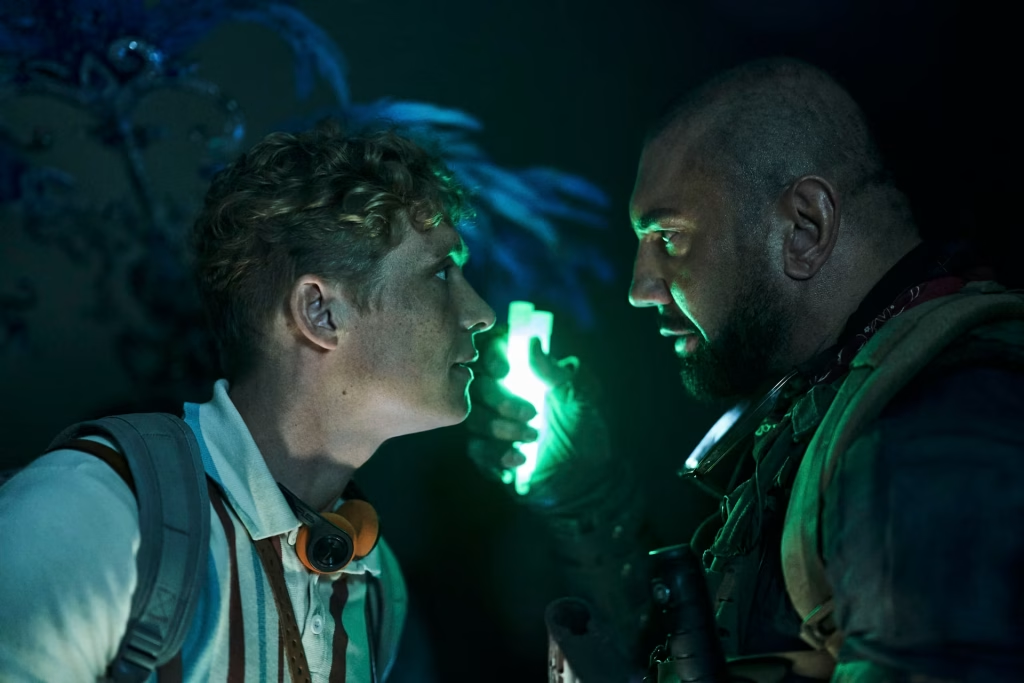
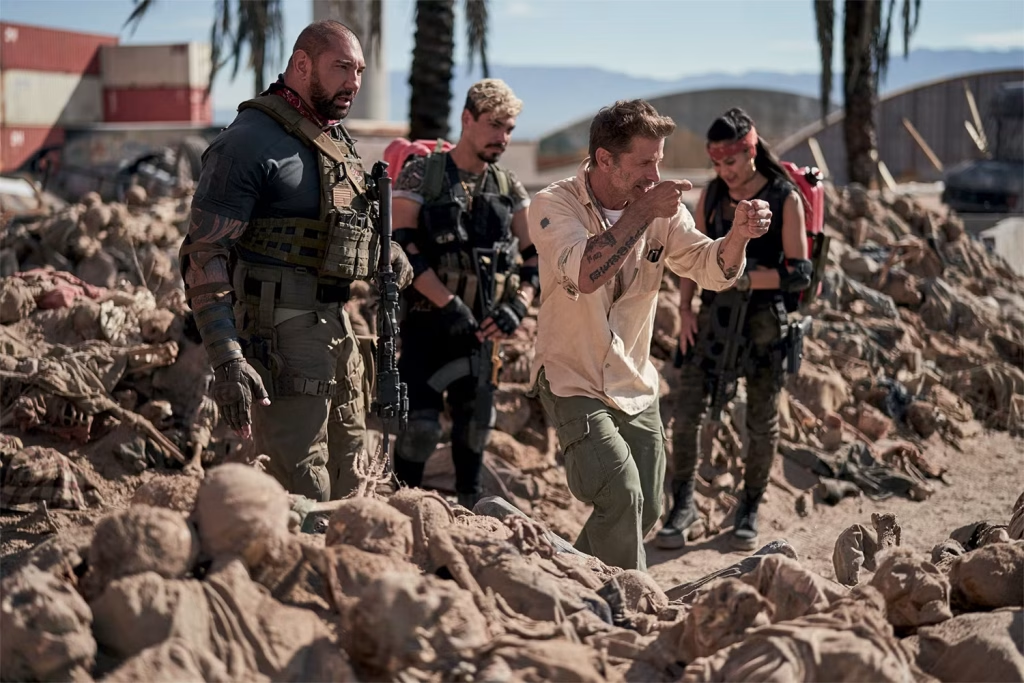
2. Army of the Dead (2021)
Army of the Dead takes zombie cinema into blockbuster territory by merging it with a full-scale heist film. Set in a quarantined Las Vegas overrun by intelligent undead, the movie follows a team of mercenaries attempting an impossible casino robbery.
Image Source: Bing Image. License: All Creative Commons
The film embraces excess in every way—stylized visuals, massive action sequences, and an elaborate mythos surrounding zombie hierarchy. It’s loud, ambitious, and unapologetically indulgent.
Image Source: Bing Image. License: All Creative Commons
While chaotic, the movie also explores loyalty, greed, and consequence. It’s a modern zombie epic built for viewers who want spectacle without restraint.
Image Source: Bing Image. License: All Creative Commons
1. #Alive (2020)
Alive stands out by focusing on isolation rather than scale. A young man becomes trapped in his apartment as a mysterious outbreak turns his city into a war zone. Cut off from the outside world, survival becomes a mental and emotional battle as much as a physical one.
Image Source: Bing Image. License: All Creative Commons
The film taps into modern anxieties surrounding technology, loneliness, and dependence on digital connections. Social media becomes both a lifeline and a reminder of how alone the protagonist truly is.
Image Source: Bing Image. License: All Creative Commons
Tense, relatable, and quietly devastating, Alive proves that zombie horror doesn’t need explosions to be effective. Its intimacy is what makes it unforgettable.
Image Source: Bing Image. License: All Creative Commons
Zombie movies endure because they reflect our deepest fears—collapse, isolation, and the struggle to stay human when everything falls apart. They’re messy, brutal, and strangely comforting all at once. No matter what flavor of undead chaos you prefer, these films prove the genre is still very much alive—and always worth revisiting.
Image Source: Bing Image. License: All Creative Commons
A brilliant sitcom finally boils down to the interaction between characters that is so authentic and natural that we completely believe it. We see them less as actors getting their marks and more as persons who are so much a part of our lives that we miss them after an episode is over. The casts below have done more than simply make us laugh; they have used their acting talents to build entire worlds, establish different rhythms, and develop relationships that have not only entertained us but have also given TV comedy a new twist. Sitcom casts, which include those of the black and white classics as well as the recent one have won many Emmys; these casts have been judged as representing the best of the best. They have each won their position by lifting the content and making great shows go on to become classics that people love and watch over and over again.
Image Source: Bing Image. License: All Creative Commons
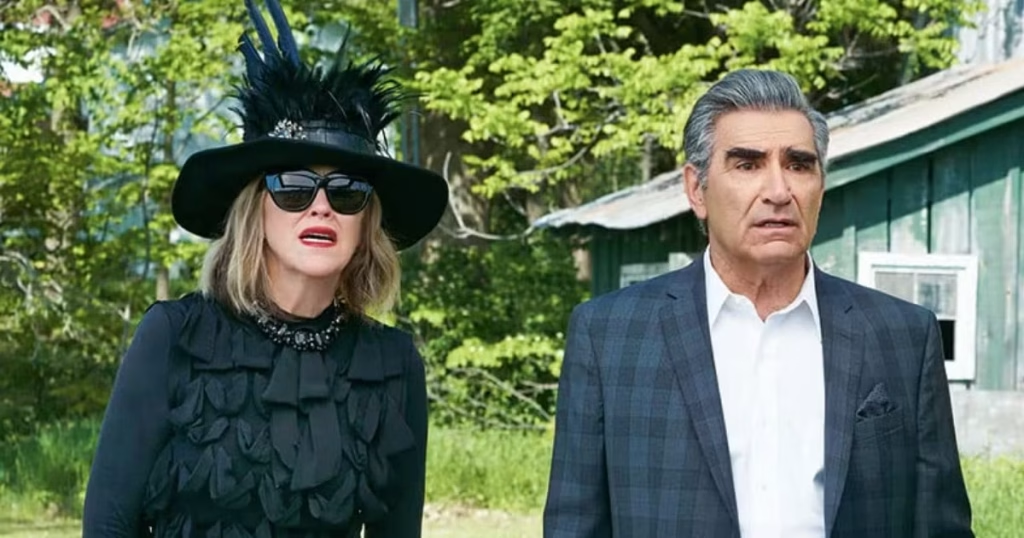
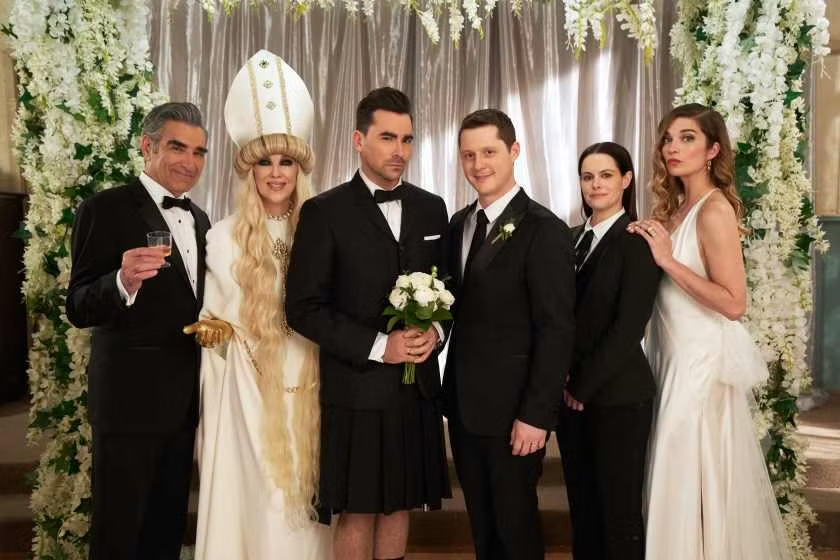
15. Schitt’s Creek
Schitt’s Creek started as a quirky fish-out-of-water comedy and grew into one of the most beloved sitcoms of its era. Catherine O’Hara and Eugene Levy bring veteran confidence to Moira and Johnny Rose, but the show truly flourishes thanks to the inspired performances of Dan Levy and Annie Murphy. Their characters evolve in ways that feel organic, heartfelt, and surprisingly moving for a half-hour comedy.
Image Source: Bing Image. License: All Creative Commons
The supporting cast deepens the charm. Chris Elliott’s offbeat Roland, Emily Hampshire’s dry and vulnerable Stevie, and Sarah Levy’s quieter presence all contribute to a tone that balances absurdity with warmth. That blend helped Schitt’s Creek make Emmy history—and cemented its reputation as a sitcom that could be genuinely kind without losing its edge.
Image Source: Bing Image. License: All Creative Commons
14. Veep
Veep thrives on ruthless energy, and Julia Louis-Dreyfus sits firmly at the center of that storm. Her portrayal of Selina Meyer is one of the sharpest comedic performances ever put on television, fueled by venomous delivery and fearless physicality. She’s surrounded by actors who match her intensity beat for beat.
Image Source: Bing Image. License: All Creative Commons
Tony Hale, Anna Chlumsky, Timothy Simons, and the ever-rotating ensemble create a workplace where incompetence is weaponized for laughs. Even bit players are given space to shine, making Veep feel like a perfectly calibrated machine of chaos. Few sitcoms have ever made politics this funny—or this brutal.
Image Source: Bing Image. License: All Creative Commons
13. The Office
The Office redefined workplace comedy by leaning into discomfort, and Steve Carell’s Michael Scott became its most unforgettable embodiment. His performance walks a razor-thin line between unbearable and sympathetic, grounding the show’s cringe-heavy humor. But the real magic comes from the ensemble around him.
Image Source: Bing Image. License: All Creative Commons
From Rainn Wilson’s unhinged Dwight to Jenna Fischer’s grounded Pam and John Krasinski’s charming Jim, every character feels distinct and lived-in. The cast’s chemistry allowed even mundane moments to land emotionally, turning a paper company into one of television’s most iconic settings.
Image Source: Bing Image. License: All Creative Commons
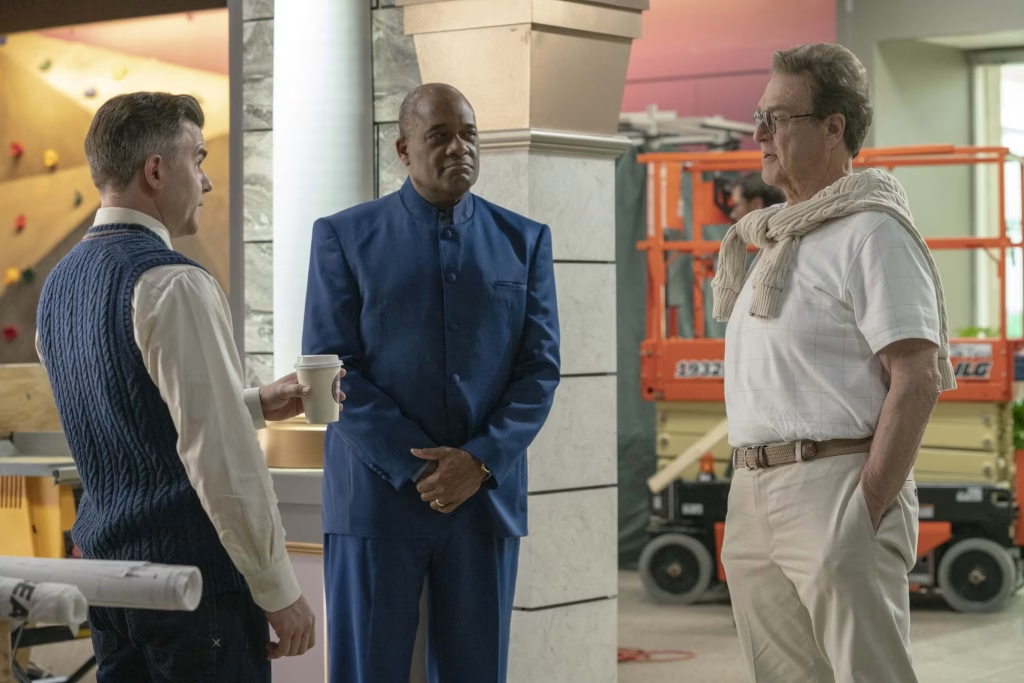
12. The Righteous Gemstones
The Righteous Gemstones proves that outrageous satire still needs strong performances to work. Danny McBride leads the charge, but the show’s success hinges on a cast willing to fully commit to excess. Walton Goggins steals scenes with unfiltered intensity, while Edi Patterson consistently delivers some of the sharpest comedic beats.
Image Source: Bing Image. License: All Creative Commons
John Goodman provides a steady presence amid the madness, grounding the show just enough to make its wild turns believable. The ensemble thrives because it treats absurdity seriously, creating characters who feel ridiculous but never lazy. It’s bold comedy powered by fearless performances.
Image Source: Bing Image. License: All Creative Commons
11. Friends
Friends became a global phenomenon largely because its cast clicked instantly and completely. Jennifer Aniston, Courteney Cox, Lisa Kudrow, Matt LeBlanc, Matthew Perry, and David Schwimmer each carved out a clear comedic identity, and together they formed one of television’s most recognizable groups.
Image Source: Bing Image. License: All Creative Commons
What made the ensemble special was the balance. No single character overwhelmed the others, and every actor had room to shine. Even decades later, the cast’s chemistry remains the show’s strongest asset—and the reason it still feels endlessly rewatchable.
Image Source: Bing Image. License: All Creative Commons
10. Seinfeld
Seinfeld’s brilliance lies in how perfectly its four leads bounce off one another. Jerry Seinfeld plays the straight man by design, allowing Jason Alexander, Julia Louis-Dreyfus, and Michael Richards to fully lean into their characters’ extremes. The contrast is where the comedy explodes.
Image Source: Bing Image. License: All Creative Commons
The show also boasts one of the strongest benches in sitcom history. Characters like Newman and Frank Costanza feel just as iconic as the leads. Seinfeld’s cast mastered the art of turning trivial annoyances into comedic gold, redefining what a sitcom could focus on.
Image Source: Bing Image. License: All Creative Commons
9. 30 Rock
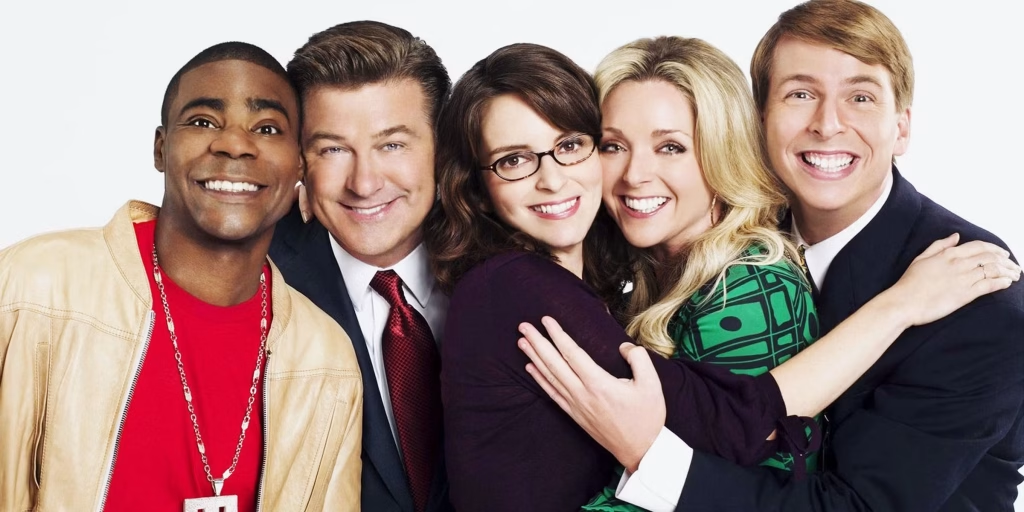
30 Rock fires jokes at a relentless pace, and its cast keeps up effortlessly. Tina Fey’s Liz Lemon anchors the show with self-aware chaos, while Alec Baldwin’s Jack Donaghy provides one of TV’s great comedic counterweights. Tracy Morgan’s unpredictability completes the core trio.
Image Source: Bing Image. License: All Creative Commons
Beyond the leads, Jane Krakowski, Jack McBrayer, and the rest of the ensemble elevate even the most absurd material. The cast’s commitment to heightened reality makes 30 Rock feel like a live wire—smart, silly, and endlessly inventive.
Image Source: Bing Image. License: All Creative Commons
8. Parks and Recreation
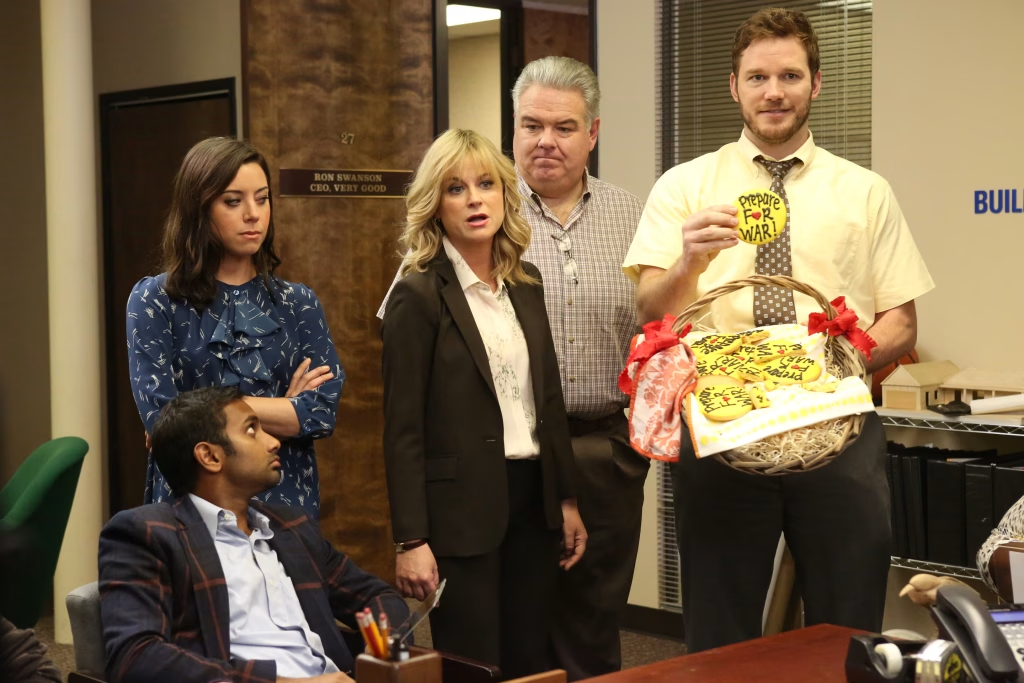
Parks and Recreation is built on optimism, and its cast embodies that spirit. Amy Poehler’s Leslie Knope radiates sincerity and enthusiasm, setting the emotional tone for the entire series. Around her is a deep ensemble packed with distinct comedic voices.
Image Source: Bing Image. License: All Creative Commons
Nick Offerman’s Ron Swanson became an icon, but every character—from Aubrey Plaza’s deadpan April to Chris Pratt’s lovable Andy—adds something essential. The cast’s warmth turns Pawnee into a place viewers genuinely care about, making the comedy hit even harder.
Image Source: Bing Image. License: All Creative Commons
7. I Love Lucy
Lucille Ball remains one of the greatest physical comedians of all time, and I Love Lucy is her ultimate showcase. Her timing, expressions, and fearless commitment to slapstick still feel fresh decades later. Desi Arnaz complements her perfectly, bringing charm and rhythm to every scene.
Image Source: Bing Image. License: All Creative Commons
William Frawley and Vivian Vance complete the quartet, creating a dynamic that feels timeless. Beyond laughs, the cast helped invent the modern sitcom format, making I Love Lucy both historically important and endlessly entertaining.
Image Source: Bing Image. License: All Creative Commons
6. Newhart
Newhart succeeds because it understands restraint. Bob Newhart’s understated delivery provides the perfect contrast to a town full of eccentrics. Rather than overpowering the material, he lets the ensemble flourish around him.
Image Source: Bing Image. License: All Creative Commons
Julia Duffy, Peter Scolari, and the famously repetitive Larry–Darryl–Darryl trio give the show its unique identity. The cast’s precision and commitment to character-driven humor make Newhart quietly brilliant and deeply influential.
Image Source: Bing Image. License: All Creative Commons
5. Cheers
Cheers thrives on the feeling of community, and its cast sells that illusion completely. Ted Danson’s Sam Malone may be the face of the show, but it’s the ensemble that keeps the bar buzzing with life.
Image Source: Bing Image. License: All Creative Commons
From Rhea Perlman’s razor-sharp Carla to Kelsey Grammer’s refined Frasier, every addition strengthened the dynamic. The cast’s adaptability through major changes is a big reason Cheers remained a top-tier sitcom for over a decade.
Image Source: Bing Image. License: All Creative Commons
4. M*A*S*H
M*A*S*H stands out by blending comedy with emotional depth, and its cast handles that balance beautifully. Alan Alda’s leadership anchors the series, but the rotating ensemble consistently rises to the challenge.
Image Source: Bing Image. License: All Creative Commons
Despite numerous cast changes, the show never loses its rhythm. Each actor brings humanity to their role, helping MAS*H tell stories that are funny, painful, and unforgettable—all at once.
Image Source: Bing Image. License: All Creative Commons
3. All in the Family
All in the Family pushed boundaries like no sitcom before it, and its cast was fearless. Carroll O’Connor’s Archie Bunker is provocative by design, but the surrounding performances ensure the show never loses its moral center.
Image Source: Bing Image. License: All Creative Commons
Jean Stapleton, Rob Reiner, and Sally Struthers bring nuance and empathy to difficult material. Together, the ensemble proved sitcoms could confront real social issues without sacrificing humor.
Image Source: Bing Image. License: All Creative Commons
2. The Golden Girls
The Golden Girls is a masterclass in ensemble comedy. Betty White, Bea Arthur, Rue McClanahan, and Estelle Getty each play to their strengths, creating characters that feel iconic yet deeply human.
Image Source: Bing Image. License: All Creative Commons
Their chemistry allows the show to tackle aging, friendship, and loss with humor and grace. Few casts have ever felt so perfectly balanced—or so genuinely affectionate—on screen.
Image Source: Bing Image. License: All Creative Commons
1. The Dick Van Dyke Show
The Dick Van Dyke Show represents sitcom perfection. Dick Van Dyke’s physical comedy pairs seamlessly with Mary Tyler Moore’s sharp intelligence, creating a dynamic that feels effortless and modern even today.
Image Source: Bing Image. License: All Creative Commons
Supported by Morey Amsterdam and Rose Marie, the cast set a standard for naturalistic comedy and ensemble balance. Their influence echoes through every sitcom that followed, making this cast the undisputed gold standard.
Image Source: Bing Image. License: All Creative Commons
Great sitcom casts don’t just deliver punchlines—they build worlds viewers want to revisit again and again. The ensembles on this list shaped comedy, launched careers, and left lasting cultural footprints. Trends change, formats evolve, but the power of perfect casting never fades. These performances remain timeless reminders that when the chemistry is right, television magic happens.
Image Source: Bing Image. License: All Creative Commons
Hollywood is crowded with stars that shine on the big screen. However, only a few of them are very easy to work with behind the scenes. Some of them, from their egos that are so large as to overshadow the production, to their being weird or controlling, have earned a reputation so that the cast and crew have to approach them with caution. Undoubtedly, they are talented, but these people have made the news for their lack of professionalism.
Image Source: Bing Image. License: All Creative Commons
Here are 15 celebrities who, according to industry insiders, have proven particularly difficult to collaborate with on set.
Image Source: Bing Image. License: All Creative Commons
15. William Shatner
While William Shatner’s legacy as a television and film icon is unquestionable, his behavior off-screen has often been described as unpredictable and sometimes antagonistic. Security and crew members have recounted moments where his antics crossed lines, leaving those around him uncomfortable.
Image Source: Bing Image. License: All Creative Commons
One notorious story involved Shatner repeatedly commenting on a security guard’s height, pushing the interaction to the point where the guard nearly lost his temper. Incidents like this have left many hesitant to work with him, as his humor doesn’t always translate well outside the spotlight.
Image Source: Bing Image. License: All Creative Commons
14. David Boreanaz
Known for his role in Bones, David Boreanaz reportedly created a tense environment on set with his strict “no eye contact” rule for extras. Background actors had to be cautious, as even a casual glance could result in being sent home.
Image Source: Bing Image. License: All Creative Commons
This rigid approach fostered an atmosphere of anxiety, with crew and extras walking on eggshells. According to insiders, the rule wasn’t always enforced gently, leaving some feeling humiliated just for doing their jobs.
Image Source: Bing Image. License: All Creative Commons
13. Martin Kove
Martin Kove, famous for The Karate Kid and Cobra Kai, is remembered for the odd and sometimes unsettling treatment of production assistants. One PA described waiting outside Kove’s hotel room for an hour before finally being allowed in, only to experience an awkward and humiliating encounter afterward.
Image Source: Bing Image. License: All Creative Commons
Kove reportedly offered to buy a cookie but ate it himself while staring at the assistant during the drive back. These eccentric behaviors have made him notorious among the crew, leaving a lasting impression that isn’t always flattering.
Image Source: Bing Image. License: All Creative Commons
12. Sean Schemmel
As the voice of Goku in Dragon Ball, Sean Schemmel has gained a reputation for being very protective—and occasionally abrasive—about the character. At conventions, he has clashed with other voice actors and fans, creating tension over what he perceives as disrespect toward his role.
Image Source: Bing Image. License: All Creative Commons
Incidents include pressing Goku’s Japanese voice actor about ownership of the character and cutting autograph sessions short if he suspected signatures were intended for others. This possessiveness has left some fans and colleagues wary of engaging with him.
Image Source: Bing Image. License: All Creative Commons
11. Michael Cera
Michael Cera’s on-screen persona is awkwardly charming, but his real-life interactions tell a different story. Musicians on tour and fans in public have described him as dismissive, sometimes even confrontational.
Image Source: Bing Image. License: All Creative Commons
From brushing off casual greetings to bumping into people without apology, Cera’s behavior contrasts sharply with his character’s warmth, leaving many surprised and disappointed by his off-screen demeanor.
Image Source: Bing Image. License: All Creative Commons
10. Blake Lively
Blake Lively has been described as difficult and demanding on set. Crew members report an entitled attitude and tantrums that could sour the production environment, though she reportedly maintains good relations with directors.
Image Source: Bing Image. License: All Creative Commons
Some insiders have gone so far as to say they would avoid working with her again due to the stress and negativity she brings. Her reputation serves as a cautionary tale about the pressures of celebrity ego on collaborative work.
Image Source: Bing Image. License: All Creative Commons
9. James Corden
James Corden is known for his charm on television, but behind the scenes, crew members describe him as elitist and quick to anger. Insiders report that he only communicates with senior staff and can lose his temper over minor issues.
Image Source: Bing Image. License: All Creative Commons
This behavior has caused friction on set, with some labeling him as difficult to collaborate with. The contrast between his public friendliness and private behavior has surprised and frustrated many in the industry.
Image Source: Bing Image. License: All Creative Commons
8. Faye Dunaway
Faye Dunaway has long been infamous for her rigid demands on set. Stories include bringing scales to weigh her food, enforcing no eye contact rules, and losing her temper when staff didn’t comply exactly with her requests.
Image Source: Bing Image. License: All Creative Commons
Such exacting standards and frequent outbursts have made her a dreaded presence on productions, with crew members admitting to fearing interactions with her. Her legendary status hasn’t softened the challenges of working alongside her.
Image Source: Bing Image. License: All Creative Commons
7. Steven Seagal
Steven Seagal is widely regarded as one of the most difficult actors to work with in Hollywood. Multiple crew members describe him as entitled and dismissive, making collaboration stressful and often unpleasant.
Image Source: Bing Image. License: All Creative Commons
Seagal’s reputation has become an industry-wide cautionary tale, and anecdotes of his abrasive behavior continue to circulate among film and television professionals.
Image Source: Bing Image. License: All Creative Commons
6. Ben Stiller
Although Ben Stiller is celebrated for his comedic talent, several insiders have accused him of verbal abuse and entitlement on set. Some assistants report being berated or belittled, leaving a tense work atmosphere.
Image Source: Bing Image. License: All Creative Commons
Despite his public persona as approachable and humorous, these accounts show a darker, more challenging side, resulting in some crew members avoiding projects involving him.
Image Source: Bing Image. License: All Creative Commons
5. John Cusack
John Cusack has been described as demanding and difficult on set. Crew members recount situations where he expected special treatment and showed little appreciation for staff efforts.
Image Source: Bing Image. License: All Creative Commons
These behaviors reportedly created frustration and resentment among those working with him, making his sets less collaborative and enjoyable than others.
Image Source: Bing Image. License: All Creative Commons
4. Russell Crowe
Russell Crowe’s reputation for arrogance precedes him. Directors and crew have described him as acting above others, prioritizing his interests over the needs of the production.
Image Source: Bing Image. License: All Creative Commons
While Crowe is a talented actor, his self-importance has caused tension and strained relationships on multiple sets, leaving a trail of frustrated colleagues behind him.
Image Source: Bing Image. License: All Creative Commons
3. Michael Bay
Michael Bay’s demanding nature and entourage-driven environment have made him notorious in Hollywood. Crew members report that the combination of his high-pressure style and entourage behavior creates chaos on set.
Image Source: Bing Image. License: All Creative Commons
From assistants to bodyguards, the ripple effect of his behavior contributes to an overwhelming work atmosphere. Many insiders dread working on his films, regardless of the spectacle he delivers on screen.
Image Source: Bing Image. License: All Creative Commons
2. Dr. Phil
Dr. Phil is known to enforce strict personal rules on set, such as prohibiting eye contact, which interns and staff have described as intimidating. Breaking these rules reportedly results in immediate consequences, including termination.
Image Source: Bing Image. License: All Creative Commons
This rigid demeanor and self-focus create a stressful work environment, making staff hyper-aware and anxious about their every move.
Image Source: Bing Image. License: All Creative Commons
1. Tyra Banks
Tyra Banks tops the list for being exceptionally demanding with staff. Reports suggest she enforces the “no eye contact” rule so strictly that interns have been fired for simple mistakes.
Image Source: Bing Image. License: All Creative Commons
Such practices create a climate of fear and tension, leaving crew members feeling undervalued and anxious. Her behavior has become a cautionary example of the challenges of navigating celebrity egos in the entertainment industry.
Image Source: Bing Image. License: All Creative Commons
Even the most talented stars can bring challenges to a set, and these 15 celebrities demonstrate that fame doesn’t always guarantee a smooth working environment. For crew members and collaborators, knowing who is difficult to work with can be just as important as knowing who’s brilliant on camera.