Image Source: Bing Image. License: All Creative Commons
Let’s be real: sitcoms are the TV version of comfort food. After a long day, when all you want is something light, funny, and familiar, nothing quite hits the spot like a great comedy series. And if you happen to have Hulu, then you are even luckier; the platform’s collection of sitcoms is seriously impressive. From legendary animated series to quirky workplace comedies, there is a show for every disposition. Whether you are re-watching a classic or unveiling a new favorite, here are the 10 best sitcoms on Hulu right now for you to stream, counting down from ten, just to add some spice to the list.
Image Source: Bing Image. License: All Creative Commons
10. Workaholics
What happens when college buddies refuse to grow up? Workaholics has the hilarious answer. Blake, Adam, and Anders are three telemarketing bros who treat their jobs like an extension of frat life. Between their wild schemes and total lack of maturity, chaos is always just around the corner. With seven seasons available, it’s an easy show to binge and even easier to love.
Image Source: Bing Image. License: All Creative Commons
9. Superstore
Welcome to Cloud 9, where the staff is quirky, the customers are unpredictable, and every shift becomes an adventure. Superstore transforms chaos in retail work into acerbic, character-driven comedy. The chemistry in the cast, along with the mix between satire and sincerity in the show, makes it one of the most relatable workplace comedies in recent memory.
Image Source: Bing Image. License: All Creative Commons
8. Scrubs
Few shows balance humor and heart like Scrubs. This medical comedy, following the misadventures of J.D., Turk, and the rest of Sacred Heart Hospital, is ridiculous and deeply touching in equal measure. It’s silly, surreal, full of heart, and the kind of show that has you laughing one minute and in tears the next. All nine seasons are streaming, so you can relive every absurd daydream and heartfelt goodbye.
Image Source: Bing Image. License: All Creative Commons
7. Sabrina the Teenage Witch
For a hit of pure ’90s nostalgia, look no further than Sabrina the Teenage Witch. Melissa Joan Hart charms as the half-witch, half-teen trying to navigate school, family, and magic mishaps, often with help or sass from her talking cat, Salem. It’s light, funny, and timelessly fun, with all seven seasons ready to stream.
Image Source: Bing Image. License: All Creative Commons
6. Family Guy
Few animated series have had the cultural impact of Family Guy. This long-running sitcom, with over 20 seasons in the bag, keeps pushing boundaries and getting laughs nonstop. Between Peter’s clueless antics, Stewie’s world domination schemes, and Brian’s dry wit, there’s never a dull moment in Quahog.
Image Source: Bing Image. License: All Creative Commons
5. Bob’s Burgers
There’s just something special about Bob’s Burgers. The loving dysfunction of the Belchers, sharp writing, and offbeat humor make this animated gem endlessly rewatchable. From Tina’s awkward charm, Gene’s musical outbursts, to Linda’s relentless optimism, each episode is a feel-good delight. Fourteen seasons in, and it still sizzles.
Image Source: Bing Image. License: All Creative Commons
4. Letterkenny
Small-town life has never been weirder-or wittier-than in Letterkenny. This Canadian cult favorite serves up rapid-fire dialogue, absurd humor, and plenty of hockey talk. It’s bizarre in the best way possible and full of quotable lines that’ll stick with you long after the credits roll. Twelve seasons mean there’s a whole lot of small-town nonsense to enjoy.
Image Source: Bing Image. License: All Creative Commons
3. Dave
Meet Dave Burd, a neurotic, ambitious rapper who’s convinced he’s destined for greatness if only people would take him seriously. Loosely based on Lil Dicky’s real life, Dave mixes sharp comedy with surprising vulnerability. It’s a fresh, modern sitcom that dives into fame, friendship, and creative chaos, with three binge-worthy seasons available.
Image Source: Bing Image. License: All Creative Commons
2. That’s So Raven
A staple of the early 2000s and still laugh-out-loud funny, That’s So Raven brings the feels, too. Raven Symoné is a teen psychic with visions of the future that constantly get her into trouble. It’s a funny, heartfelt return to Disney Channel’s golden age-and one that’s every bit as fun for adults as it is for the kiddos.
Image Source: Bing Image. License: All Creative Commons
1. Black-ish
But at the top of the list is Black-ish, the rare sitcom that’s laugh-out-loud hilarious while being genuinely insightful. Following Dre Johnson and his family as they navigate culture, identity, and modern life, the show pairs sharp satire with heartfelt storytelling. With eight stellar seasons and spinoffs like Grown-ish and Mixed-ish also onHulu, it’ss a modern classic that deserves every bit of praise it gets.
Image Source: Bing Image. License: All Creative Commons
Whether you’re in the mood for nostalgia, chaos, or some rather clever social commentary, Hulu’s sitcom library has got all kinds of comedy fans covered. So, get out the snacks, get comfortable, and let the laughter roll.
Image Source: Bing Image. License: All Creative Commons
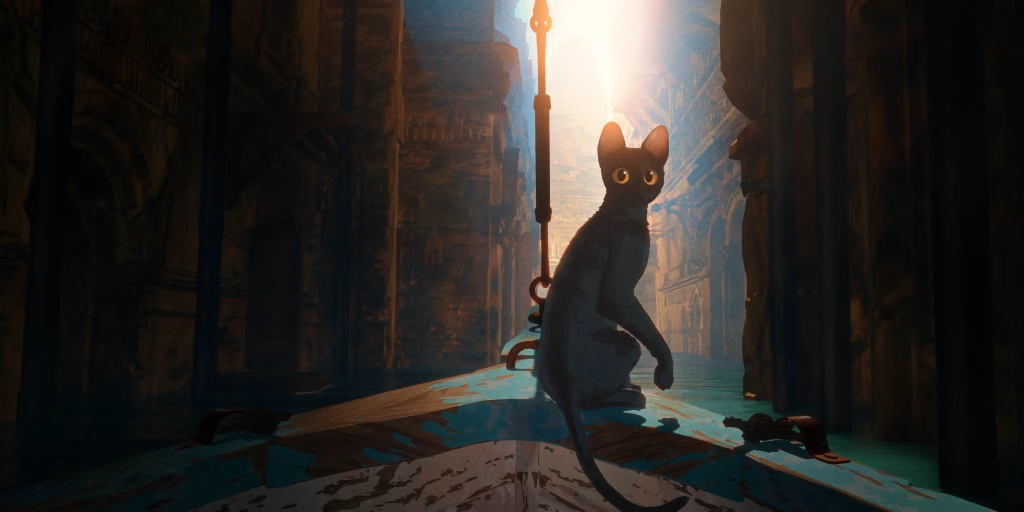
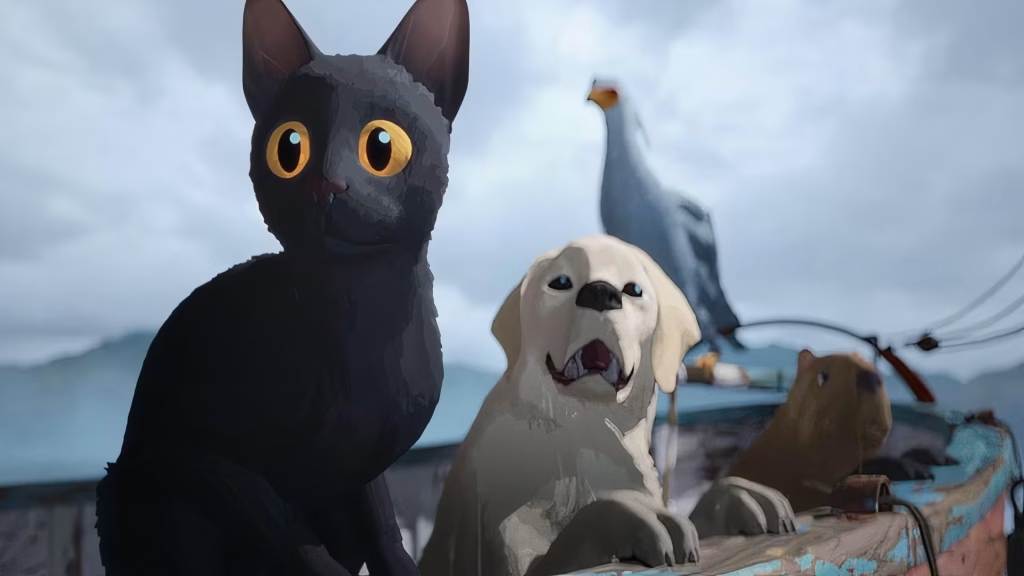
Pixar’s Elio is the kind of film that rewards with that lingering, floating feeling when the credits start to roll, the feeling that you’ve just seen something beautiful and touching. Elio is a movie about feeling small in the face of the gigantic universe, about wanting to belong to something greater than yourself, and about finding that connection in unexpected ways. If Elio has inspired you to want more cosmic adventures, touching friendships, and stories about kids with big emotions set against even bigger backdrops, then here are ten movies to take you on that journey.
Image Source: Bing Image. License: All Creative Commons
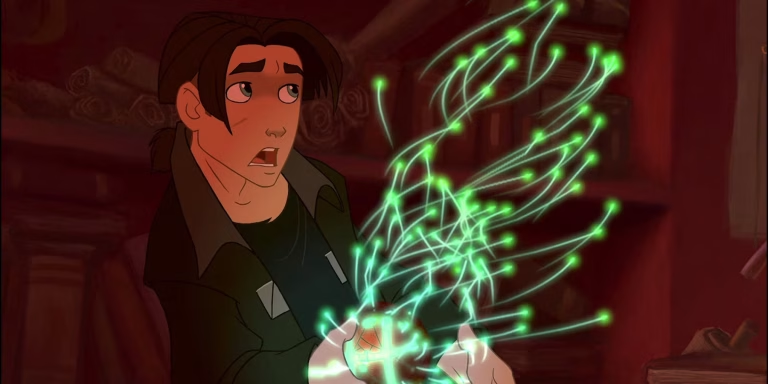
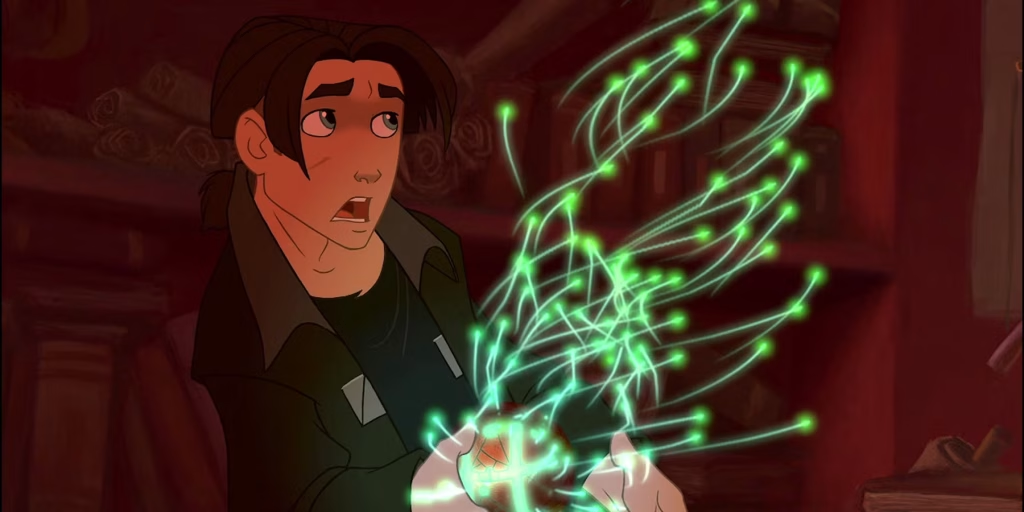
10. Treasure Planet
Treasure Planet takes a basic storyline about an adventure. It shoots it off into outer space by reimaging the sci-fi classic Treasure Island as a futuristic tale of solar-powered spacecraft and unknown worlds. At its core is Jim Hawkins, a restless youth in pursuit of something greater than himself.
Image Source: Bing Image. License: All Creative Commons
What makes it a great companion to Elio is its sense of imagination. The universe feels alive and expansive, full of wildly creative designs. There is a sense of discovery within it, much like the crowded, alien-filled Communiverse Elio is part of.
Image Source: Bing Image. License: All Creative Commons
Emotionally, Treasure Planet is a story of guidance, trust, and found families. The relationship between Jim and John Silver has the same level of warmth as one might find with those friends of Elio’s, proving that sometimes the most meaningful relationships come from the most unlikely of places.
Image Source: Bing Image. License: All Creative Commons
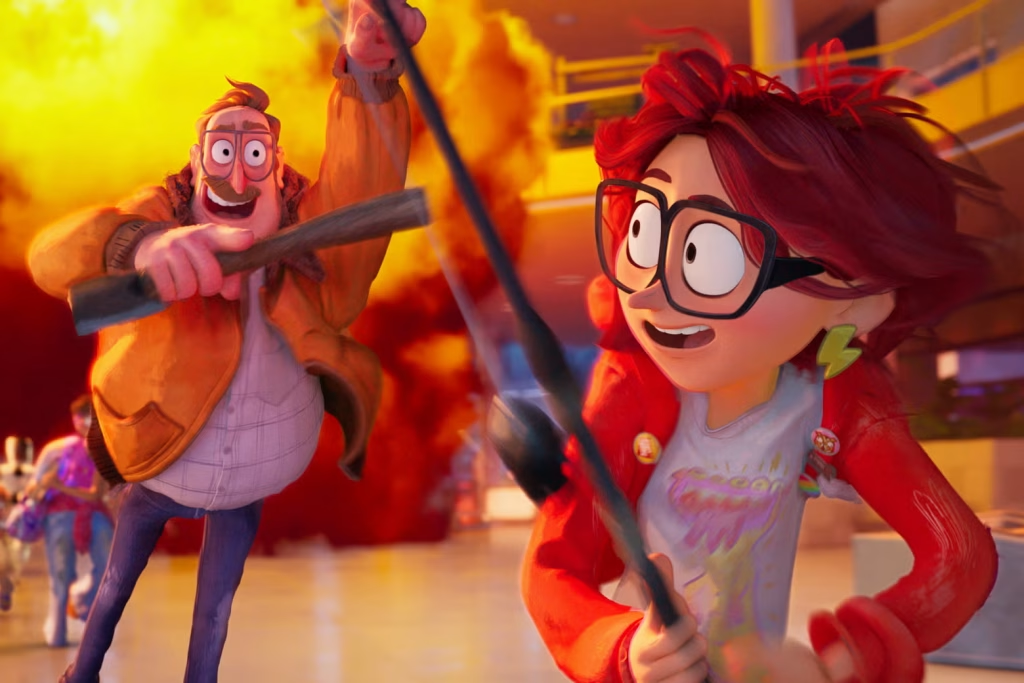
9. The Mitchells vs. the Machines
If The Mitchells vs. the Machines appears to be a quick and chaotic film about robot apocalypses on the surface, at heart, it’s actually very sweet and sentimental in its focus on family and learning to love people even when they think differently from the character.
Image Source: Bing Image. License: All Creative Commons
As is the case for Elio, it is a movie about another young creative person who feels misunderstood by the world and tries to connect in her own way. The struggle for Katie Mitchell to be seen is analogous to the struggle for Elio to be understood by those around him who love him.
Image Source: Bing Image. License: All Creative Commons
While aliens are replaced by malfunctioning AI, the emotional content is the same. Both movies use the chaos of sci-fi to remind audiences that, in the end, accepting diversity, not fearing it, can help save a relationship or the world.
Image Source: Bing Image. License: All Creative Commons
8. Jimmy Neutron: Boy Genius
Prior to Pixar launching a kid into space diplomacy, “Jimmy Neutron: Boy Genius” treated viewers to a child inventor whose curiosity literally extended to the stars. The genius of Jimmy Neutron gets him into trouble because he inadvertently calls attention to himself with aliens, with potentially world-changing consequences.
Image Source: Bing Image. License: All Creative Commons
You can see the similarity to Elio at work here, a studious and lonely teenager whose interest in space spawned a first contact story. Both share a balance of comedy, adventure, and responsibility with the importance of thee.
Image Source: Bing Image. License: All Creative Commons
Despite being softer and cartoonish in style, Jimmy Neutron has an important and familiar moral about not taking one’s loved ones for granted. It is a nostalgic choice that works well because it is significant and evocative for those who have grown up dreaming of rockets, distant stars, and galaxies.
Image Source: Bing Image. License: All Creative Commons
7. WALL-E
Few animated films capture loneliness and hope as beautifully as WALL-E. Pixar’s trash-collecting robot spends years alone on a deserted Earth before stumbling into an adventure that reconnects humanity with its purpose.
Image Source: Bing Image. License: All Creative Commons
While Elio focuses on belonging through interstellar friendships, WALL-E explores isolation and connection through silence and visual storytelling. Both films use space not just as a setting, but as a metaphor for emotional distance and longing.
Image Source: Bing Image. License: All Creative Commons
The result is deeply moving. If Elio made you reflect on where you fit in the universe, WALL-E extends that feeling, reminding viewers that even the smallest acts of care can spark enormous change.
Image Source: Bing Image. License: All Creative Commons
6. The Iron Giant
The Iron Giant tells the story of a boy who befriends a massive robot from outer space, forging a bond rooted in trust and compassion. Despite its Cold War backdrop, the film’s message feels timeless.
Image Source: Bing Image. License: All Creative Commons
Much like Elio’s friendship with an alien outsider, Hogarth’s connection with the Giant is built on empathy and understanding. Both films argue that kindness, not power, is what truly defines strength.
Image Source: Bing Image. License: All Creative Commons
Emotionally rich and quietly devastating, The Iron Giant is a story about choice and identity. It pairs perfectly with Elio for anyone drawn to stories where friendship transcends fear.
Image Source: Bing Image. License: All Creative Commons
5. Strange World
Disney’s Strange World dives into an unexplored ecosystem filled with bizarre creatures and unfamiliar terrain. At its core, though, it’s about family tension and generational disconnect.
Image Source: Bing Image. License: All Creative Commons
Like Elio, the film thrives on discovery, both external and internal. The strange landscapes echo Elio’s cosmic surroundings, while the emotional journey centers on learning to listen and adapt.
Image Source: Bing Image. License: All Creative Commons
The film’s strength lies in its willingness to portray family relationships as messy but meaningful. If Elio resonated because of its emotional honesty, Strange World offers a similar mix of spectacle and sincerity.
Image Source: Bing Image. License: All Creative Commons
4. Turning Red
Directed by Domee Shi, who also helped bring Elio to life, Turning Red explores adolescence through a wildly imaginative lens. Mei’s transformation into a giant red panda is both hilarious and painfully relatable.
Image Source: Bing Image. License: All Creative Commons
Like Elio, the film captures the awkwardness of growing up and the fear of disappointing family. Both stories focus on young protagonists learning to embrace who they are—even when it’s overwhelming.
Image Source: Bing Image. License: All Creative Commons
Bold, funny, and emotionally raw, Turning Red pairs beautifully with Elio. Together, they show Pixar at its best: telling deeply personal stories through playful, inventive worlds.
Image Source: Bing Image. License: All Creative Commons
3. Over the Moon
Over the Moon follows Fei Fei, a determined young girl who builds a rocket to meet a mythical moon goddess. Her journey is fueled by grief, curiosity, and hope.
Image Source: Bing Image. License: All Creative Commons
The emotional parallels to Elio are strong. Both characters are navigating loss and longing, looking to the stars for answers when life on Earth feels uncertain.
Image Source: Bing Image. License: All Creative Commons
Visually dazzling and emotionally tender, Over the Moon blends fantasy with space exploration in a way that feels gentle and sincere, perfect for viewers still riding Elio’s emotional wave.
Image Source: Bing Image. License: All Creative Commons
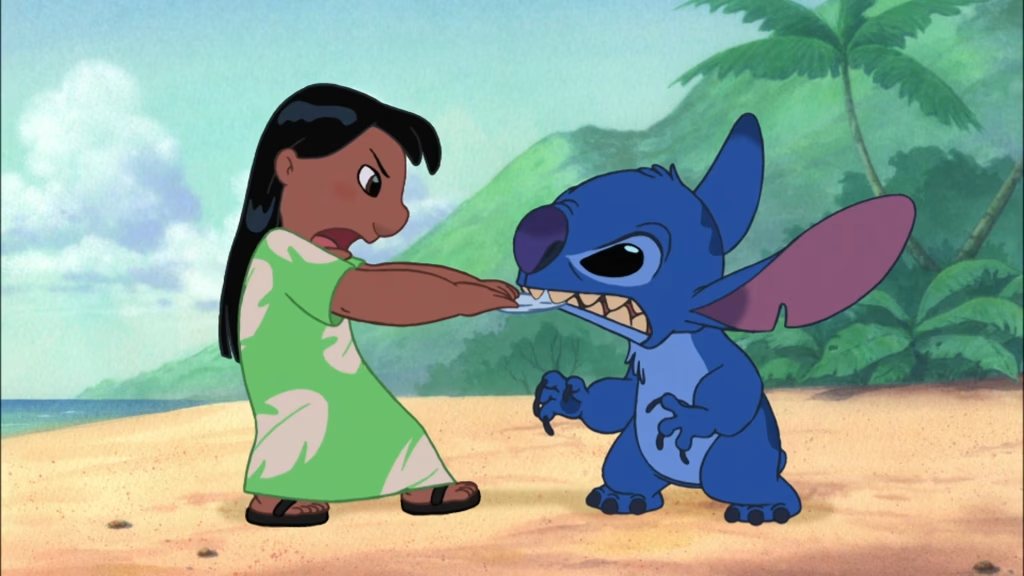
2. Lilo & Stitch
At its heart, Lilo & Stitch is about finding family in unexpected places. Lilo’s bond with Stitch, a chaotic alien experiment, mirrors Elio’s connection to beings who help him feel less alone.
Image Source: Bing Image. License: All Creative Commons
Both films center on kids who don’t quite fit in, discovering that being different can be a source of strength. Humor and heart work hand in hand, creating stories that are funny, messy, and deeply emotional.
Image Source: Bing Image. License: All Creative Commons
With its emphasis on chosen family and unconditional love, Lilo & Stitch remains one of Disney’s most touching films and a perfect match for fans of Elio’s themes.
Image Source: Bing Image. License: All Creative Commons
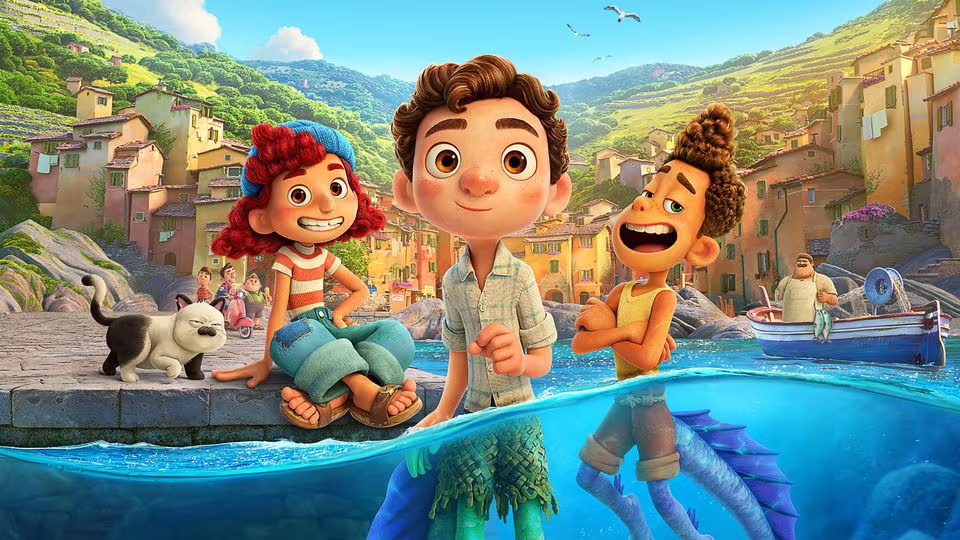
1. Luca
If there’s one movie that truly captures the emotional soul of Elio, it’s Luca. Set in a sunlit Italian seaside town, the film follows a sea monster boy experiencing the human world for the first time.
Image Source: Bing Image. License: All Creative Commons
Like Elio, Luca is a gentle coming-of-age story about identity, friendship, and courage. Both protagonists feel out of place, yet find freedom and belonging through connection.
Image Source: Bing Image. License: All Creative Commons
Warm, sincere, and quietly powerful, Luca leaves viewers with the same tender ache as Elio. It’s a reminder that sometimes, the bravest thing you can do is be yourself.
Image Source: Bing Image. License: All Creative Commons
Elio taps into something universal: the desire to be seen, understood, and accepted. These films carry that same emotional spark, whether through space travel, unlikely friendships, or deeply personal journeys.
Image Source: Bing Image. License: All Creative Commons
Science fiction has been quite popular recently, and it’s not only about the kind with flashy effects. At the moment, the genre is packed with stories that interrogate themes such as technology, identity, community, and what defines a human being. Sci-fi, assorted from animated classics, huge franchises, and insightful TV epics, are just some of the things that these 15 best sci-fi movies and shows that you should watch right now have to offer.
Image Source: Bing Image. License: All Creative Commons
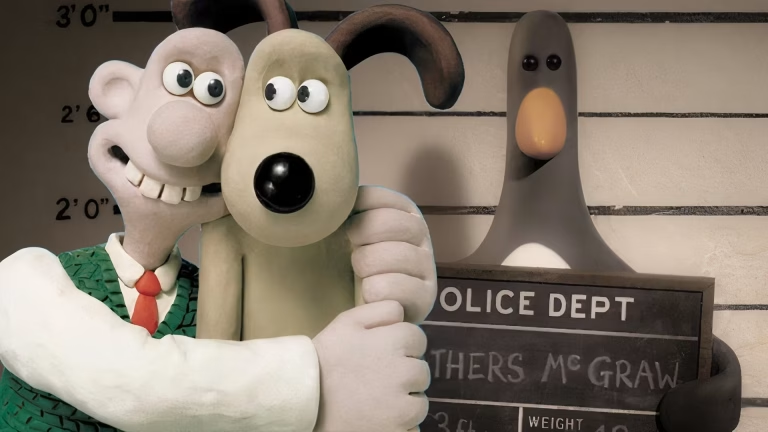
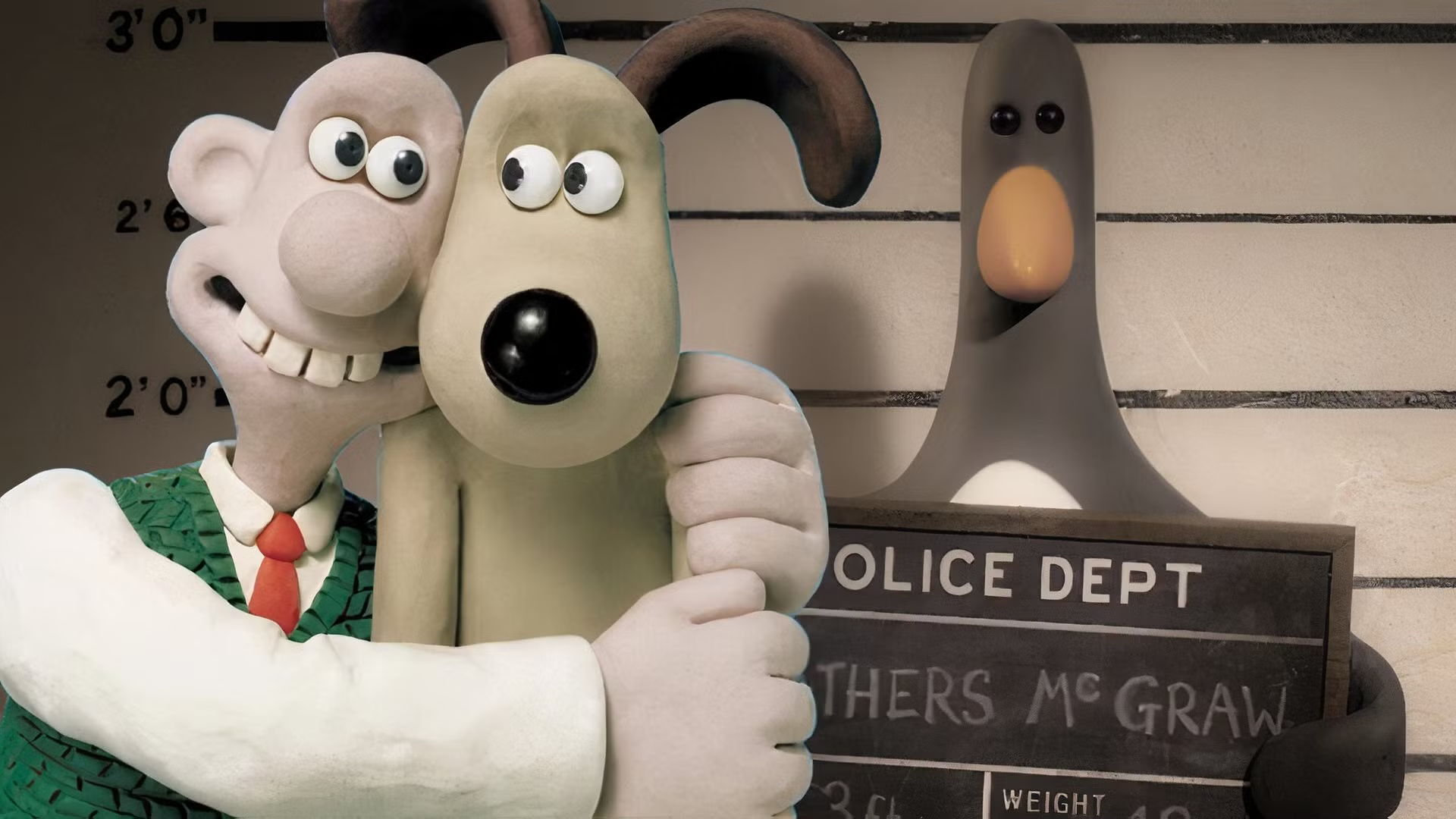
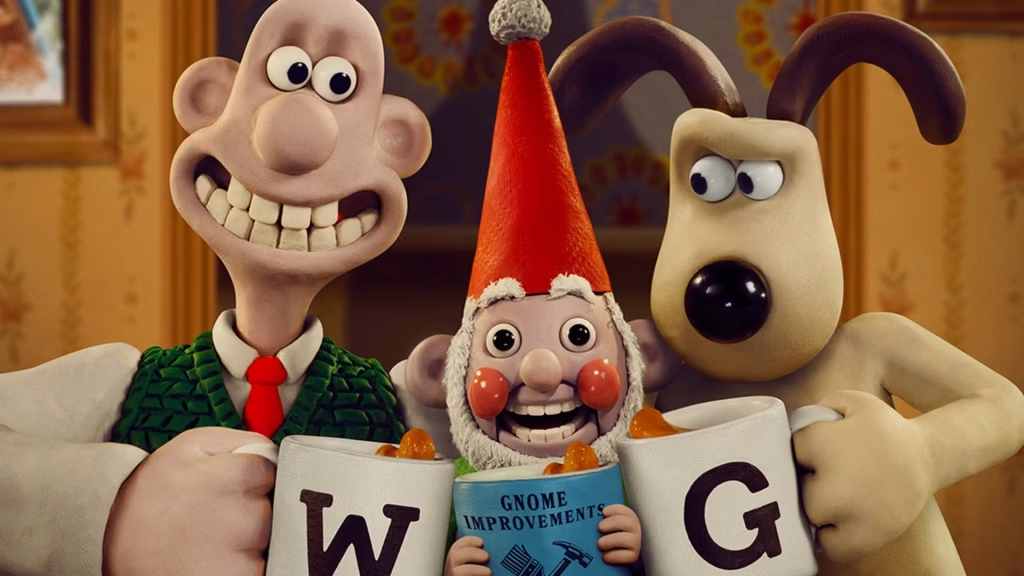
15. Wallace and Gromit: Vengeance Most Fowl
Wallace and Gromit have always mixed whimsy with clever ideas, but Vengeance Most Fowl leans harder into timely themes than ever before. At its heart, this charming stop-motion adventure aims to address technological overreach, especially when innovation starts replacing creativity, connection, and care.
Image Source: Bing Image. License: All Creative Commons
While Wallace remains blissfully obsessed with his gadgets, Gromit fights to protect his chaotic, living garden from the cold efficiency of the robotic Norbot. It’s a simple conflict that carries real emotional weight, acting as a metaphor for art made by hand versus automation without heart. Funny, warm, and surprisingly thoughtful, this entry proves the duo still has plenty to say in the age of AI.
Image Source: Bing Image. License: All Creative Commons
14. Transformers One
Transformers One refreshes the long-running franchise by going back to the beginning, this time through animation. Beneath the explosive action is a surprisingly layered origin story about friendship, power, and ideology.
Image Source: Bing Image. License: All Creative Commons
Rather than a straightforward heroes-versus-villains tale, the film frames the conflict as a philosophical split, drawing clear parallels between Optimus Prime and Megatron as former allies shaped by different visions of justice. The political undertones feel bold for a mainstream animated release. Even viewers unfamiliar with Transformers lore can jump in, making this both an accessible entry point and a rewarding expansion of the mythos.
Image Source: Bing Image. License: All Creative Commons
13. The Wild Robot
The Wild Robot manages to be gentle, adventurous, and emotionally rich all at once. The story follows Roz, a robot who gradually finds purpose not through programming, but through caring for others in a wild, animal-filled environment.
Image Source: Bing Image. License: All Creative Commons
As Roz becomes a mother figure and leader, the film explores identity, adaptation, and belonging. Characters like Bright Bill, a goose forced to survive outside his nature, add unexpected emotional depth. It’s the rare animated sci-fi that works just as well for adults as it does for kids, quietly devastating in the best way.
Image Source: Bing Image. License: All Creative Commons
12. Robot Dreams
Told entirely without dialogue, Robot Dreams is a beautiful meditation on friendship, loss, and time. The film follows a lonely dog and his robot companion as their bond is tested by circumstance and change.
Image Source: Bing Image. License: All Creative Commons
Small visual moments carry enormous emotional weight, from the robot forming connections with birds to dreamlike musical sequences filled with nostalgia. The recurring use of “September” adds a bittersweet emotional anchor. It’s a reminder that sci-fi doesn’t need exposition or spectacle to hit hard,d it just needs honesty.
Image Source: Bing Image. License: All Creative Commons
11. Flow
Flow is a visually arresting animated film that places animals at the center of a post-disaster world. With no spoken language, the story relies on movement, sound, and behavior to convey survival and cooperation.
Image Source: Bing Image. License: All Creative Commons
The animation, created using Blender, feels immersive and natural, capturing how animals communicate without words. While danger is ever-present, the film leans toward hope rather than despair. By removing humans from the spotlight, Flow offers a refreshing, eco-conscious take on science fiction storytelling.
Image Source: Bing Image. License: All Creative Commons
10. ME
Don Hertzfeldt’s ME is only 22 minutes long, but it leaves a lasting impression. Using minimalist stick-figure animation and an eclectic score, the short explores how modern technology feeds isolation and self-obsession.
Image Source: Bing Image. License: All Creative Commons
There’s no dialogue, just images that spiral into deeply unsettling territory. The film feels both absurd and painfully sincere, capturing the loneliness of retreating inward in a hyper-connected world. It’s strange, funny, and quietly devastating, classic Hertzfeldt in the best way.
Image Source: Bing Image. License: All Creative Commons
9. Omni Loop
Omni Loop uses time travel not as a puzzle to solve, but as a lens for grief, regret, and intergenerational connection. Zoya, facing terminal illness, reflects on the lives she never lived, while Paula searches for meaning in her own uncertain future.
Image Source: Bing Image. License: All Creative Commons
Their bond becomes the emotional core of the film, touching on feminism, legacy, and the wisdom passed between women. The sci-fi elements stay grounded, serving the characters rather than overshadowing them. It’s intimate, thoughtful, and far more emotionally complex than its indie budget might suggest.
Image Source: Bing Image. License: All Creative Commons
8. A Quiet Place: Day One
Rather than focusing on survival at all costs, A Quiet Place: Day One asks a more haunting question: What do you live for when the world is ending? Lupita Nyong’o delivers a powerful performance as Sam, a woman facing both terminal illness and an alien invasion.
Image Source: Bing Image. License: All Creative Commons
Her priorities feel refreshingly human, and her bond with her cat adds unexpected tenderness. The scares are effective, but it’s the existential undertone that makes this entry linger.
Image Source: Bing Image. License: All Creative Commons
7. Kingdom of the Planet of the Apes
Jumping far ahead in the timeline, Kingdom of the Planet of the Apes introduces a new generation shaped by the myths and ruins of the past. The film wastes no time establishing its characters and conflicts.
Image Source: Bing Image. License: All Creative Commons
Proximus, a villain obsessed with Roman history, adds a chilling layer of ideology, while Nova’s mysterious role keeps the story unpredictable. The film balances action with philosophical questions about power and progress. It’s proof that this franchise still has room to evolve, and plenty left to say.
Image Source: Bing Image. License: All Creative Commons
6. Furiosa: A Mad Max Saga
Furiosa trades nonstop chaos for something more emotionally charged, without sacrificing intensity. The film dives into Furiosa’s origins, pairing her journey with the unhinged presence of Dementus, played with wild energy by Chris Hemsworth.
Image Source: Bing Image. License: All Creative Commons
Anya Taylor-Joy brings restraint and strength to the role, grounding the film’s larger-than-life world. The result is a story that feels operatic rather than purely explosive. It expands the Mad Max universe while standing firmly on its own.
Image Source: Bing Image. License: All Creative Commons
5. Alien: Romulus
Alien: Romulus understands that the franchise’s greatest weapon isn’t scale, it’s fear. Director Fede Álvarez leans into claustrophobia, body horror, and relentless tension.
Image Source: Bing Image. License: All Creative Commons
The film introduces a group of young characters bound by loyalty, adding emotional stakes to the familiar xenomorph terror. While some CGI moments divide opinion, the atmosphere is unmistakably Alien. It’s a confident reminder that this universe still knows how to scare.
Image Source: Bing Image. License: All Creative Commons
4. The Beast
Rather than imagining AI as a destructive force, The Beast explores how technology can quietly reshape who we are. Léa Seydoux stars as Gabrielle, a woman using AI to revisit and process trauma from past lives.
Image Source: Bing Image. License: All Creative Commons
The film raises unsettling questions about emotional shortcuts, memory, and authenticity. Its sci-fi elements are understated, allowing character and philosophy to take center stage. For viewers craving introspective science fiction, this is a standout.
Image Source: Bing Image. License: All Creative Commons
3. 3 Body Problem
Adapting Liu Cixin’s ambitious novel was no small task, but The 3 Body Problem rises to the challenge. The series blends scientific mystery with global stakes as researchers confront forces that defy known reality.
Image Source: Bing Image. License: All Creative Commons
The ensemble cast grounds the massive ideas, keeping the story personal even as it grows cosmic in scope. Themes of inevitability, fear, and human response to the unknown run throughout. It’s dense, challenging, and deeply rewarding sci-fi television.
Image Source: Bing Image. License: All Creative Commons
2. Stranger Things
Few shows balance genres as smoothly as Stranger Things. What begins as a missing-child mystery grows into a sprawling sci-fi saga filled with monsters, alternate dimensions, and emotional growth.
Image Source: Bing Image. License: All Creative Commons
The ’80s aesthetic is more than nostalgia; it reinforces the characters’ innocence as the darkness deepens. The young cast remains the heart of the series, keeping the story grounded. Its influence on pop culture is undeniable, and its emotional core remains intact.
Image Source: Bing Image. License: All Creative Commons
1. Babylon 5
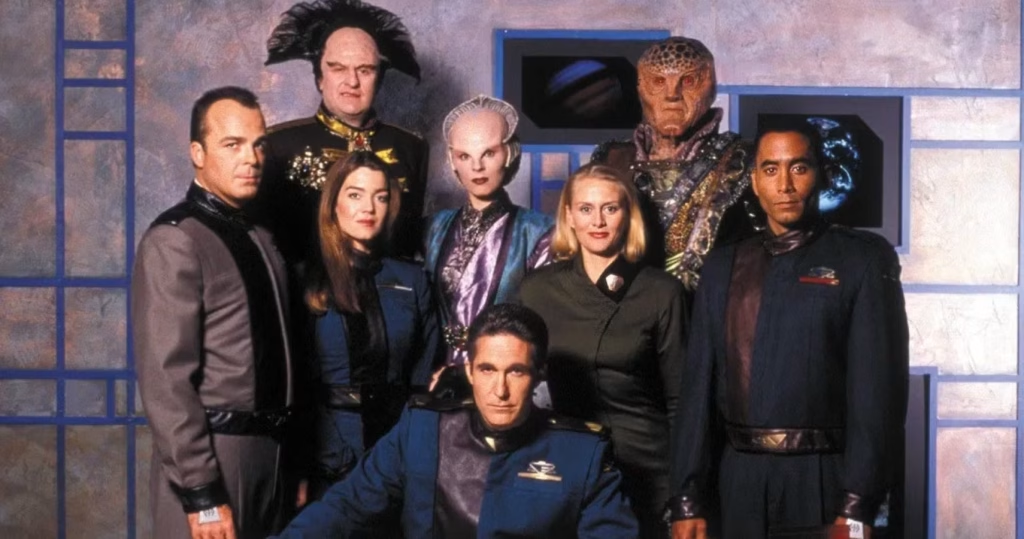
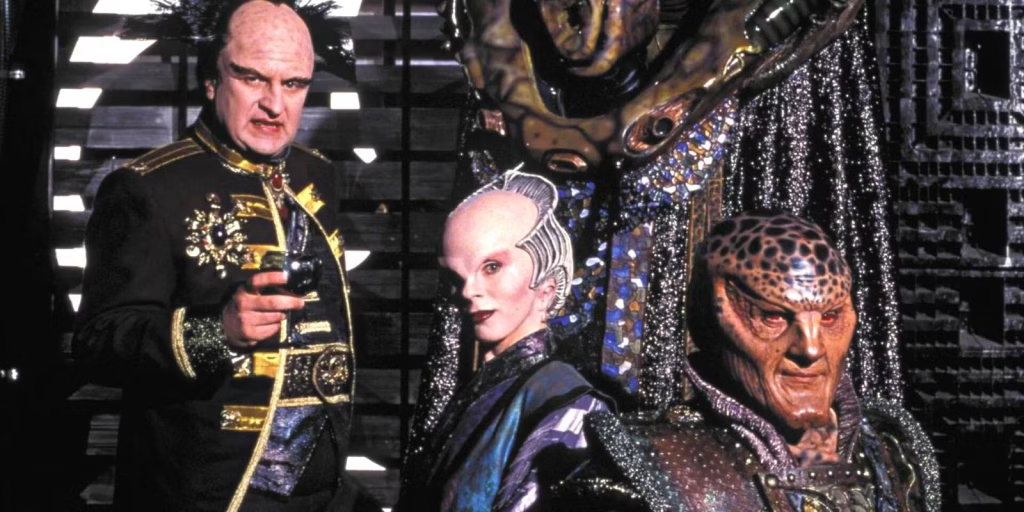
Babylon 5 remains a landmark in science fiction television. Set on a neutral space station, the series weaves politics, war, religion, and identity into a long-form narrative that was ahead of its time.
Image Source: Bing Image. License: All Creative Commons
Despite limited mainstream recognition, its ambitious storytelling and character arcs earned it a devoted fan base. Many modern sci-fi shows owe a debt to their serialized approach. For viewers who love deep lore and moral complexity, Babylon 5 is essential.
Image Source: Bing Image. License: All Creative Commons
From intimate animated shorts to galaxy-spanning epics, modern sci-fi is proving that imagination and emotional depth go hand in hand. These films and shows don’t just ask “what if?” They ask why it matters. And right now, there’s no better time to dive in.
Image Source: Bing Image. License: All Creative Commons
Movie makers have a great liking for trains. One of the reasons is that trains, among other things, jolt a story forward regardless of a character’s readiness; they can confine several characters in a very limited space, thus increasing tension, and also, trains have the ability to make time a source of pressure. Since the silent era up until the present time, when the genres are frequently mixed, train movies continue to give us some of the most captivating stories in the world of cinema. Here is a list of 15 amazing train movies that use railroad tracks as a tool for the creation of suspense, drama, and unforgettable storytelling.
Image Source: Bing Image. License: All Creative Commons
15. The Great Train Robbery (1903)
Everything starts here. The Great Train Robbery didn’t just popularize train-centered storytelling; it helped define how movies create suspense. This silent short may be over a hundred years old, but its energy is still impressive. By cutting back and forth between criminals robbing a train and a posse racing to stop them, the film introduced audiences to parallel editing in a way that felt thrilling and new.
Image Source: Bing Image. License: All Creative Commons
That technique became a cornerstone of action and thriller filmmaking. Watching it today feels like spotting the first sparks of modern cinema. Despite its simplicity, the film proves that tension doesn’t need dialogue, just smart pacing, movement, and purpose. Its influence stretches far beyond its runtime. Nearly every intense train sequence since owes something to this pioneering classic.
Image Source: Bing Image. License: All Creative Commons
14. Double Indemnity (1944)
When it comes to noir, Double Indemnity sits near the top of the mountain. Billy Wilder’s razor-sharp thriller uses a train as the key setting for a murder disguised as an accident. Barbara Stanwyck and Fred MacMurray bring a dangerous chemistry to a plot where greed and guilt ride side by side.
Image Source: Bing Image. License: All Creative Commons
The train sequence isn’t decorative; it’s essential. The enclosed environment magnifies every glance and hesitation, turning the journey into a pressure cooker of moral decay. The train’s unstoppable movement mirrors the characters’ slide toward ruin. Few films use setting so deliberately. The result is one of noir’s most iconic and suspenseful moments.
Image Source: Bing Image. License: All Creative Commons
13. Train to Busan (2016)
Few modern films have used a train as effectively, or as brutally, as Train to Busan. This South Korean hit drops a zombie outbreak onto a high-speed train, instantly turning every carriage into a survival test.
Image Source: Bing Image. License: All Creative Commons
What makes the film stand out is how creatively it uses the train’s structure. Each car presents new dangers, emotional beats, and moral choices. Beneath the relentless action is a sharp look at class, selfishness, and sacrifice. It’s thrilling, heartbreaking, and smart, proof that genre films can deliver both adrenaline and substance.
Image Source: Bing Image. License: All Creative Commons
12. Murder on the Orient Express (1974)
Elegant, icy, and meticulously constructed, Murder on the Orient Express turns a luxury train into a snowbound crime scene. With nowhere to escape, every passenger becomes a suspect, and Hercule Poirot must untangle a web of secrets.
Image Source: Bing Image. License: All Creative Commons
The isolation of the train fuels the suspense. Interviews, flashbacks, and subtle clues keep the mystery tight while the lavish production design adds a layer of old-world glamour. This adaptation helped define ensemble mystery filmmaking and cemented the train as the ultimate locked-room setting.
Image Source: Bing Image. License: All Creative Commons
11. The Darjeeling Limited (2007)
Wes Anderson’s The Darjeeling Limited takes a gentler approach to train storytelling. The film follows three brothers crossing India by rail, using the journey as a way to explore grief, family tension, and healing.
Image Source: Bing Image. License: All Creative Commons
The train acts as a floating emotional space, part refuge, part confrontation zone. Anderson’s visual precision and offbeat humor balance moments of genuine vulnerability. It’s not about danger or speed, but about what happens when people can’t outrun their past even while moving forward.
Image Source: Bing Image. License: All Creative Commons
10. Compartment No. 6 (2021)
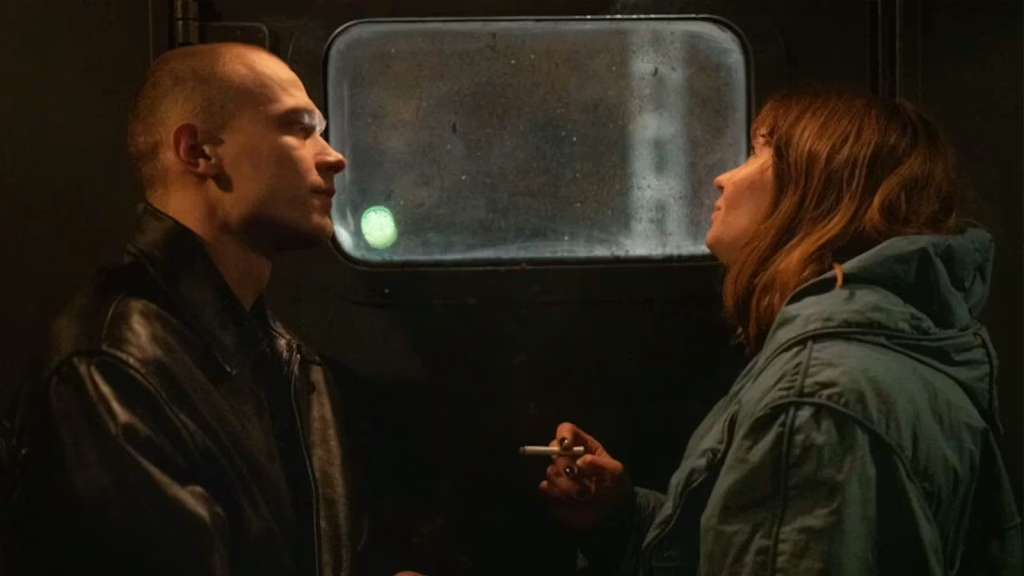
Quiet and deeply human, Compartment No. 6 proves that intimacy can be just as gripping as action. The film centers on two strangers sharing a sleeper car on a long journey north, forced into an awkward closeness that slowly softens.
Image Source: Bing Image. License: All Creative Commons
The train’s rhythm reflects their emotional shifts, while the bleak landscapes outside contrast with the warmth forming inside the compartment. Nothing feels rushed or overstated. It’s a reminder that sometimes the most powerful train stories happen in whispers, not explosions.
Image Source: Bing Image. License: All Creative Commons
9. Trans-Europ-Express (1966)
This French New Wave oddity turns the train into a playground for ideas. Trans-Europ-Express follows filmmakers discussing a crime story while traveling, only for that story to begin unfolding alongside them.
Image Source: Bing Image. License: All Creative Commons
The result is playful, confusing, and endlessly fascinating. The film constantly questions what’s real, what’s imagined, and who’s in control of the narrative. It’s not for everyone, but for adventurous viewers, it’s a reminder of how trains can carry stories in unexpected directions.
Image Source: Bing Image. License: All Creative Commons
8. Before Sunrise (1995)
One of cinema’s most beloved romances begins with a train ride. Before Sunrise introduces two strangers who meet by chance and decide to spend a night talking, walking, and connecting.
Image Source: Bing Image. License: All Creative Commons
The train is brief but crucial; it’s the spark that makes everything possible. That single decision sets off a story built entirely on conversation and emotional honesty. It’s proof that a journey doesn’t need danger to matter sometimes; it just needs the right people on board.
Image Source: Bing Image. License: All Creative Commons
7. The Taking of Pelham One Two Three (1974)
This gritty subway thriller turns New York’s transit system into a battlefield. When hijackers seize a train and demand a ransom, a weary transit cop becomes the city’s best hope.
Image Source: Bing Image. License: All Creative Commons
The film thrives on precision editing and sharp dialogue, cutting between criminals, officials, and trapped passengers. Every delay feels lethal. While it’s been remade, the original remains unmatched, lean, tense, and relentlessly efficient.
Image Source: Bing Image. License: All Creative Commons
6. Runaway Train (1985)
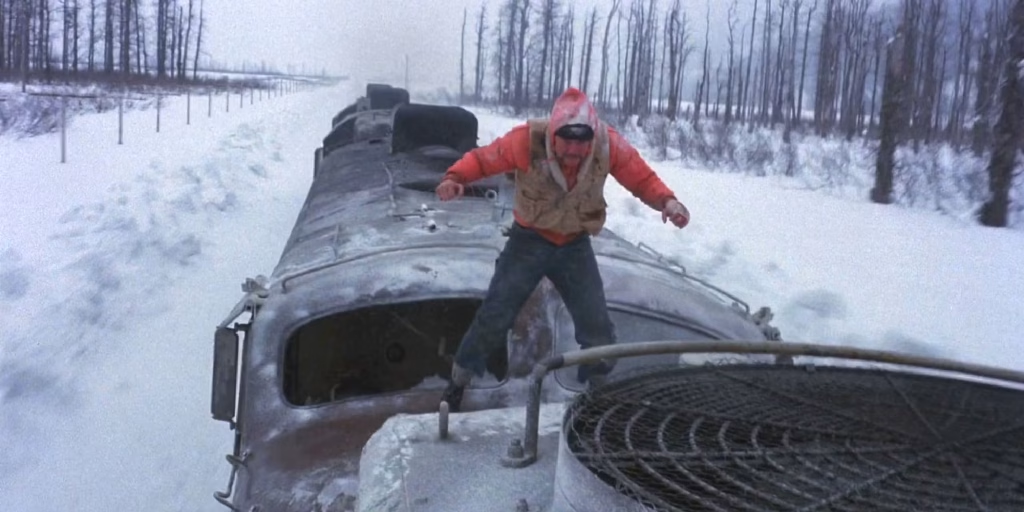
Few films capture pure momentum like Runaway Train. Two escaped prisoners find themselves aboard a locomotive with no brakes, barreling through an unforgiving landscape.
Image Source: Bing Image. License: All Creative Commons
The action is intense, but the film’s real strength lies in its themes of fate, freedom, and self-destruction. Jon Voight and Eric Roberts deliver raw, desperate performances. It’s a survival thriller that feels philosophical without losing its edge.
Image Source: Bing Image. License: All Creative Commons
5. Snowpiercer (2013)
In Snowpiercer, the train becomes the world. Bong Joon-ho imagines humanity’s last survivors locked into a rigid class system aboard a constantly moving engine.
Image Source: Bing Image. License: All Creative Commons
Each train car represents a different layer of society, turning the forward march into a revolution. The action is brutal, inventive, and tightly choreographed. More than a spectacle, the film is a sharp allegory about power, inequality, and survival.
Image Source: Bing Image. License: All Creative Commons
4. Strangers on a Train (1951)
Hitchcock turns a casual meeting into a nightmare in Strangers on a Train. A conversation about “exchanging murders” becomes horrifyingly real, setting fate into motion.
Image Source: Bing Image. License: All Creative Commons
The train represents inevitability. Once the idea is planted, there’s no stopping it. Hitchcock’s cross-cutting and visual precision build unbearable tension. It’s one of cinema’s great psychological thrillers, powered by chance and consequence.
Image Source: Bing Image. License: All Creative Commons
3. Twentieth Century (1934)
Fast-talking and ferociously funny, Twentieth Century transforms a train into a battleground for romance and ego. John Barrymore and Carole Lombard clash nonstop as former collaborators hurtle toward New York.
Image Source: Bing Image. License: All Creative Commons
The train’s nonstop movement matches the film’s breakneck pace. Every compartment becomes a stage for verbal sparring. It’s a reminder that comedy can be just as suspenseful as drama, especially when love is on the line.
Image Source: Bing Image. License: All Creative Commons
2. The Lady Vanishes (1938)
Another Hitchcock triumph, The Lady Vanishes blends mystery, humor, and paranoia. When a woman disappears mid-journey, one passenger’s insistence on finding her meets constant resistance.
Image Source: Bing Image. License: All Creative Commons
The train’s enclosed setting amplifies doubt and suspicion, while Hitchcock keeps the audience guessing through clever misdirection. It remains one of the finest examples of train-based mystery storytelling.
Image Source: Bing Image. License: All Creative Commons
1. The General (1926)
At the top of the list is Buster Keaton’s The General, a silent-era miracle of comedy and action. Set during the Civil War, the film revolves around a stolen locomotive and Keaton’s relentless pursuit.
Image Source: Bing Image. License: All Creative Commons
The stunts are astonishing, the timing flawless, and the suspense real. Keaton blends humor and danger so seamlessly that every chase feels exhilarating. Nearly a century later, The General still defines what a great train movie can be: funny, thrilling, and timeless.
Image Source: Bing Image. License: All Creative Commons
Whether they’re racing toward disaster, carrying strangers into connection, or serving as pressure cookers for crime and chaos, trains have given filmmakers a perfect storytelling engine. These films prove that once a story is set on the rails, all it needs is the right direction and the courage to keep moving forward.
Image Source: Bing Image. License: All Creative Commons
Hollywood love stories get glamorized, sanitized, and almost always have a happy ending, right? But, there are films and TV shows that dare to depict relationships in a real way: such as being awkward, hurting, loving, puzzling, and basically human. Below are some movies and TV shows that visually present examples of love, family, friendship, and partnership that are intentionally stripped of fantasy. These stories do not shy away from pain, and, hence, they look very natural.
Image Source: Bing Image. License: All Creative Commons
15. His Three Daughters
His Three Daughters captures the emotional chaos that surfaces when family members are forced back into the same space during a moment of crisis. Three sisters, Katie, Christina, and Rachel, reunite in their father’s apartment as he approaches the end of his life, and old resentments immediately resurface.
Image Source: Bing Image. License: All Creative Commons
Each woman arrives carrying her own emotional armor: Katie’s need for control, Christina’s rigid sense of order, and Rachel’s lingering feeling that she doesn’t fully belong. Their conversations are uncomfortable, sharp, and often unresolved, mirroring the way real families communicate under stress. Rather than building toward a dramatic catharsis, the film lingers in quiet moments, glances, pauses, and half-finished thoughts that feel painfully familiar.
Image Source: Bing Image. License: All Creative Commons
What makes the film so affecting is its honesty. Healing doesn’t come easily, and not everything is fixed by the end. Instead, His Three Daughters reminds us that love within families is complicated, imperfect, and often expressed through conflict.
Image Source: Bing Image. License: All Creative Commons
14. Nobody Wants This
Nobody Wants This refreshes the romantic comedy by grounding it firmly in reality. Kristen Bell plays Joanne, who finds herself in a relationship with Noah, a rabbi whose faith and family introduce real-world complications into their romance.
Image Source: Bing Image. License: All Creative Commons
Rather than relying on grand gestures, the series focuses on communication, compromise, and self-awareness. Joanne and Noah don’t magically solve their problems; they talk, stumble, and reassess what they’re willing to give up or hold onto. The show acknowledges how cultural differences can strain even the most genuine connections. Its charm lies in its realism. Love here isn’t effortless or idealized; it’s work, negotiation, and growth, and that honesty makes the story resonate.
Image Source: Bing Image. License: All Creative Commons
13. Couples Therapy
Couples Therapy strips away the theatrics of reality television and replaces them with raw emotional truth. Following real couples in sessions with Dr. Orna Guralnik, the series offers a rare glimpse into what relationship repair actually looks like.
Image Source: Bing Image. License: All Creative Commons
Season three broadens the scope by including a polycule, but the heart of the show remains unchanged: unresolved resentment, emotional wounds, and the slow, sometimes frustrating process of learning how to communicate. There are no miracle breakthroughs, just incremental progress and painful realizations. What makes the series so compelling is its refusal to simplify. Love here is work, vulnerability is uncomfortable, and healing happens one conversation at a time.
Image Source: Bing Image. License: All Creative Commons
12. Past Lives
Past Lives is a quiet meditation on love, timing, and the lives we don’t end up living. Nora and Hae Sung reconnect years after their childhood friendship was cut short, and what unfolds is filled with longing and emotional restraint rather than melodrama.
Image Source: Bing Image. License: All Creative Commons
The film treats all relationships with care, including Nora’s marriage to Arthur, which is portrayed with tenderness and mutual respect. There are no villains, just people trying to understand their feelings without betraying their commitments. Rather than offering closure, Past Lives embraces ambiguity. It understands that some connections exist to shape us, not to last forever.
Image Source: Bing Image. License: All Creative Commons
11. Beef
On the surface, Beef is about a road rage incident spiraling out of control. Beneath that chaos, however, is a deeply uncomfortable exploration of marriage, resentment, and emotional repression.
Image Source: Bing Image. License: All Creative Commons
Amy and George’s relationship is strained, messy, and brutally honest. The show allows its characters to be selfish, cruel, and painfully human, showing how unspoken pain can rot relationships from the inside out. Beef doesn’t offer redemption through perfection; it suggests healing comes from accountability, self-awareness, and the willingness to confront uncomfortable truths.
Image Source: Bing Image. License: All Creative Commons
10. The Bear
While The Bear is set in the pressure cooker of a restaurant kitchen, its emotional core lies in relationships between coworkers, siblings, and oneself. Carmen’s attempt to run his late brother’s restaurant forces him to confront grief, control issues, and inherited trauma.
Image Source: Bing Image. License: All Creative Commons
The series excels at portraying how dysfunction is passed down and how difficult it is to unlearn harmful patterns. Trust is fragile, communication is messy, and progress is rarely linear. At its heart, The Bear is about rebuilding, not just a business, but connections fractured by loss and pride.
Image Source: Bing Image. License: All Creative Commons
9. Shrinking
Shrinking centers on grief and the reckless choices that often follow it. Jimmy, a therapist mourning his wife, blurs professional boundaries while trying, and often failing, to reconnect with his daughter and friends.
Image Source: Bing Image. License: All Creative Commons
The show embraces emotional messiness. Relationships fracture, heal, and fracture again, reflecting how grief doesn’t move in straight lines. Even the therapists are flawed, lost, and in need of support themselves. By blending humor with vulnerability, Shrinking presents healing as imperfect but possible.
Image Source: Bing Image. License: All Creative Commons
8. Somebody Somewhere
Somebody Somewhere quietly celebrates friendship as a form of love just as powerful as romance. Sam finds emotional refuge in her bond with Joel, a friendship built on acceptance rather than expectation.
Image Source: Bing Image. License: All Creative Commons
Their connection thrives on honesty, humor, and shared loneliness. The series challenges the idea that romantic relationships are the ultimate emotional goal, showing instead how platonic love can be deeply sustaining. It’s a gentle reminder that sometimes the most meaningful relationships are the ones that simply allow us to be ourselves.
Image Source: Bing Image. License: All Creative Commons
7. Marriage Story
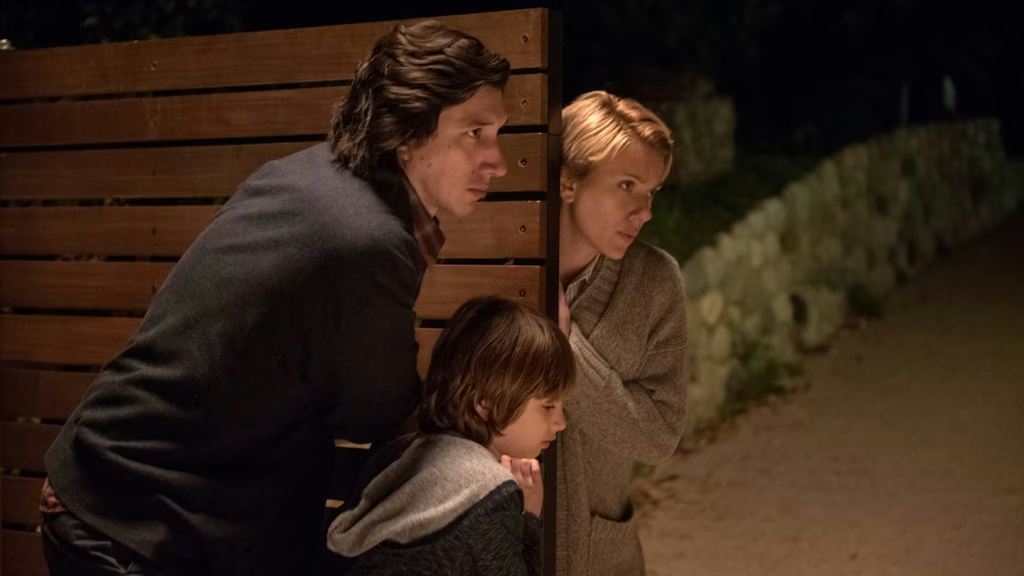
Marriage Story pulls no punches in its portrayal of divorce. Charlie and Nicole’s separation is painful, not because of cruelty, but because of unresolved hurt and miscommunication. The film captures the exhausting logistics of co-parenting alongside the emotional devastation of letting go.
Image Source: Bing Image. License: All Creative Commons
Both characters are deeply flawed, yet sympathetic, making the breakdown of their marriage feel tragically believable. Rather than assigning blame, Marriage Story explores how love can evolve, even when it no longer looks the way it once did.
Image Source: Bing Image. License: All Creative Commons
6. Blue Valentine
Blue Valentine traces a relationship from its hopeful beginnings to its heartbreaking end. By intercutting moments of early romance with scenes of emotional erosion, the film reveals how love can fade without a single defining moment.
Image Source: Bing Image. License: All Creative Commons
Michelle Williams and Ryan Gosling bring raw vulnerability to their roles, making every argument and quiet disappointment feel earned. The film refuses to soften its message or offer comfort. It’s an unflinching portrait of what happens when love alone isn’t enough.
Image Source: Bing Image. License: All Creative Commons
5. Like Crazy
Like Crazy examines long-distance love with brutal honesty. Separated by immigration laws, Anna and Jacob struggle to maintain intimacy across continents. The film shows how distance creates temptation, resentment, and emotional drift.
Image Source: Bing Image. License: All Creative Commons
Love persists, but it changes, often in painful ways neither partner anticipates. Its power lies in its uncertainty. Like Crazy understands that sometimes relationships don’t fail dramatically; they simply wear down.
Image Source: Bing Image. License: All Creative Commons
4. (500) Days of Summer
(500) Days of Summer dismantles the romantic fantasy by showing how expectations can sabotage love. Told out of order, the film mirrors how we replay relationships in our minds, highlighting the good while ignoring warning signs.
Image Source: Bing Image. License: All Creative Commons
Tom’s idealized view of Summer ultimately blinds him to who she really is. The film gently but firmly critiques the idea that love should follow a predetermined script. It’s a story about learning, growing, and accepting reality even when it hurts.
Image Source: Bing Image. License: All Creative Commons
3. Eternal Sunshine of the Spotless Mind
Despite its sci-fi premise, Eternal Sunshine of the Spotless Mind is one of the most emotionally grounded love stories ever made. Joel and Clementine attempt to erase each other from their memories, only to rediscover why they mattered in the first place.
Image Source: Bing Image. License: All Creative Commons
The film captures the chaos, tenderness, and regret embedded in relationships. It suggests that pain is inseparable from love, and perhaps worth enduring. Its message lingers: even flawed connections leave lasting imprints.
Image Source: Bing Image. License: All Creative Commons
2. The Before Trilogy
The Before trilogy follows Jesse and Céline across nearly two decades, chronicling how love evolves. Each installment reflects a different stage of infatuation, reconnection, and long-term partnership.
Image Source: Bing Image. License: All Creative Commons
The dialogue feels spontaneous and intimate, grounded in everyday concerns rather than cinematic fantasy. The films understand that love is shaped by choices, compromises, and persistence. Few stories capture romantic realism as completely as this trilogy.
Image Source: Bing Image. License: All Creative Commons
1. Call Me By Your Name
Call Me By Your Name is a tender exploration of first love and emotional awakening. Elio’s relationship with Oliver unfolds slowly, charged with longing, discovery, and inevitable heartbreak.
Image Source: Bing Image. License: All Creative Commons
What elevates the film is its emotional universality. Though rooted in a specific time and place, it captures feelings that nearly everyone recognizes: the intensity of loving deeply for the first time and the pain of letting go. It’s a love story that shapes us forever, even when it doesn’t last.
Image Source: Bing Image. License: All Creative Commons
These films and series resonate because they don’t promise perfection. Instead, they reflect love as it’s actually lived, complicated, fragile, transformative, and deeply human. Whether romantic, familial, or platonic, these stories remind us that connection is rarely easy, but always worth exploring.
Image Source: Bing Image. License: All Creative Commons
The buzz around films at times is indeed a double-edged weapon. With a car full of stars, attractive trailers, and constant talk about the movie, it is quite easy for audiences to get the idea that they are going to see something extraordinary. However, if the anticipation level goes too high, then even a really good film can be a letdown if it does not meet the exhilaration that has preceded it. The movies below were tremendously hyped up, and, sadly, most viewers were let down by the films, thinking that they didn’t really live up to the hype.
Image Source: Bing Image. License: All Creative Commons
15. Wonder Woman 1984
After the huge success of the first Wonder Woman film, the sequel had a lot to live up to. Trailers and advertisements hinted at a radical 1980s setting, the long-awaited battle with Cheetah, and the type of high-octane action that fans hoped would live up to or even exceed the original.
Image Source: Bing Image. License: All Creative Commons
When the film finally came out, however, many fans were left disappointed. Wonder Woman 1984 suffered from an overly convoluted plot, one-dimensional villains, and a finale that was surprisingly dull. For many fans, the film lacked the emotional resonance that made the first film so memorable, leaving a sense that it never quite lived up to its potential. The film is a reminder that successful sequels require more than just familiar elements and callbacks—something with real stakes and real storytelling is needed to truly connect.
Image Source: Bing Image. License: All Creative Commons
14. Thor: Love and Thunder
With Taika Waititi back in the director’s chair and a star-studded cast, Thor: Love and Thunder promised a humorous, action-packed adventure full of spectacle and heart. Audiences expected a combination of laughs, epic action, and the emotional beats that made Thor: Ragnarok such a hit.
Image Source: Bing Image. License: All Creative Commons
Unfortunately, the balance between humor and story fell apart. The comedic elements often overshadowed the emotional narrative, and the absence of key characters left notable gaps in engagement. While the film was visually entertaining, it lacked the cohesion and depth fans hoped for. Thor: Love and Thunder demonstrates how tricky it can be to replicate past successes. Comedy and heroics must work in harmony, or even a visually dazzling film can feel hollow.
Image Source: Bing Image. License: All Creative Commons
13. Don’t Look Up
Don’t Look Up arrived with a buzzworthy cast and a satirical premise, promising sharp social commentary and humor aimed squarely at current global crises. Audiences expected biting satire, clever dialogue, and a film that would spark conversation and reflection. However, the film struggled to deliver on its promises.
Image Source: Bing Image. License: All Creative Commons
Much of the humor felt forced, the pacing meandered, and the social commentary often seemed heavy-handed rather than insightful. Many viewers found themselves disengaged, leaving the theater feeling that the film’s ambition outpaced its execution. Despite its intentions, Don’t Look Up is a reminder that even star-studded casts and timely premises cannot guarantee audience engagement. Execution matters as much as concept.
Image Source: Bing Image. License: All Creative Commons
12. The Huntsman: Winter’s War
With a cast that included Charlize Theron, Emily Blunt, Chris Hemsworth, and Jessica Chastain, The Huntsman: Winter’s War seemed poised to deliver a captivating fantasy epic. Marketing emphasized lavish battles, magical creatures, and a rich narrative that promised to expand the universe of its predecessor.
Image Source: Bing Image. License: All Creative Commons
Yet, the movie felt uninspired. The story lacked intrigue, the fantasy elements appeared recycled, and even the talented cast could not elevate the thin material. The magical spectacle failed to leave a lasting impression, and audiences were left wishing for more substance. The film highlights that even a star-studded ensemble and stunning visuals can’t rescue weak storytelling. Strong writing and imaginative world-building are essential, especially in fantasy epics.
Image Source: Bing Image. License: All Creative Commons
11. Leave The World Behind
Leave the World Behind was promoted as a gripping thriller with ties to the acclaimed series Mr. Robot. The marketing suggested suspense, intrigue, and a tense, shared universe connection that would engage both fans of the series and newcomers. In practice, the connection to Mr. Robot felt forced, confusing, and ultimately unnecessary.
Image Source: Bing Image. License: All Creative Commons
The story became convoluted, and the tension was diluted by overcomplicated plot points, leaving audiences frustrated and unsatisfied. This film serves as a lesson in how overcomplicated narratives and forced franchise connections can backfire. Simplicity and clarity often create stronger engagement than convoluted ambition.
Image Source: Bing Image. License: All Creative Commons
10. Frozen 2
Frozen 2 had the monumental task of following Disney’s breakout hit, promising magical adventures, new songs, and character growth. Fans of all ages anticipated a continuation that would recapture the charm and heart of the original. Unfortunately, the sequel stumbled.
Image Source: Bing Image. License: All Creative Commons
Its plot was confusing, the music less memorable, and many felt that the emotional depth and charm of the first film were missing. While visually stunning, the movie didn’t fully satisfy long-time fans. Frozen 2 is a reminder that nostalgia and beloved characters can only go so far. To succeed, sequels must offer both a coherent story and fresh emotional stakes.
Image Source: Bing Image. License: All Creative Commons
9. The Artist
The Artist generated excitement as a black-and-white silent film paying homage to early cinema. Marketing promised a charming, innovative experience for audiences curious about this unusual format.
Image Source: Bing Image. License: All Creative Commons
Some viewers, however, were unprepared for the silent narrative, leading to confusion, disengagement, and even walkouts. While the film was celebrated critically, many mainstream viewers felt alienated by its unconventional style. The Artist highlights that hype can sometimes backfire if the audience isn’t ready for experimental storytelling, even when the film is groundbreaking.
Image Source: Bing Image. License: All Creative Commons
8. Bridesmaids
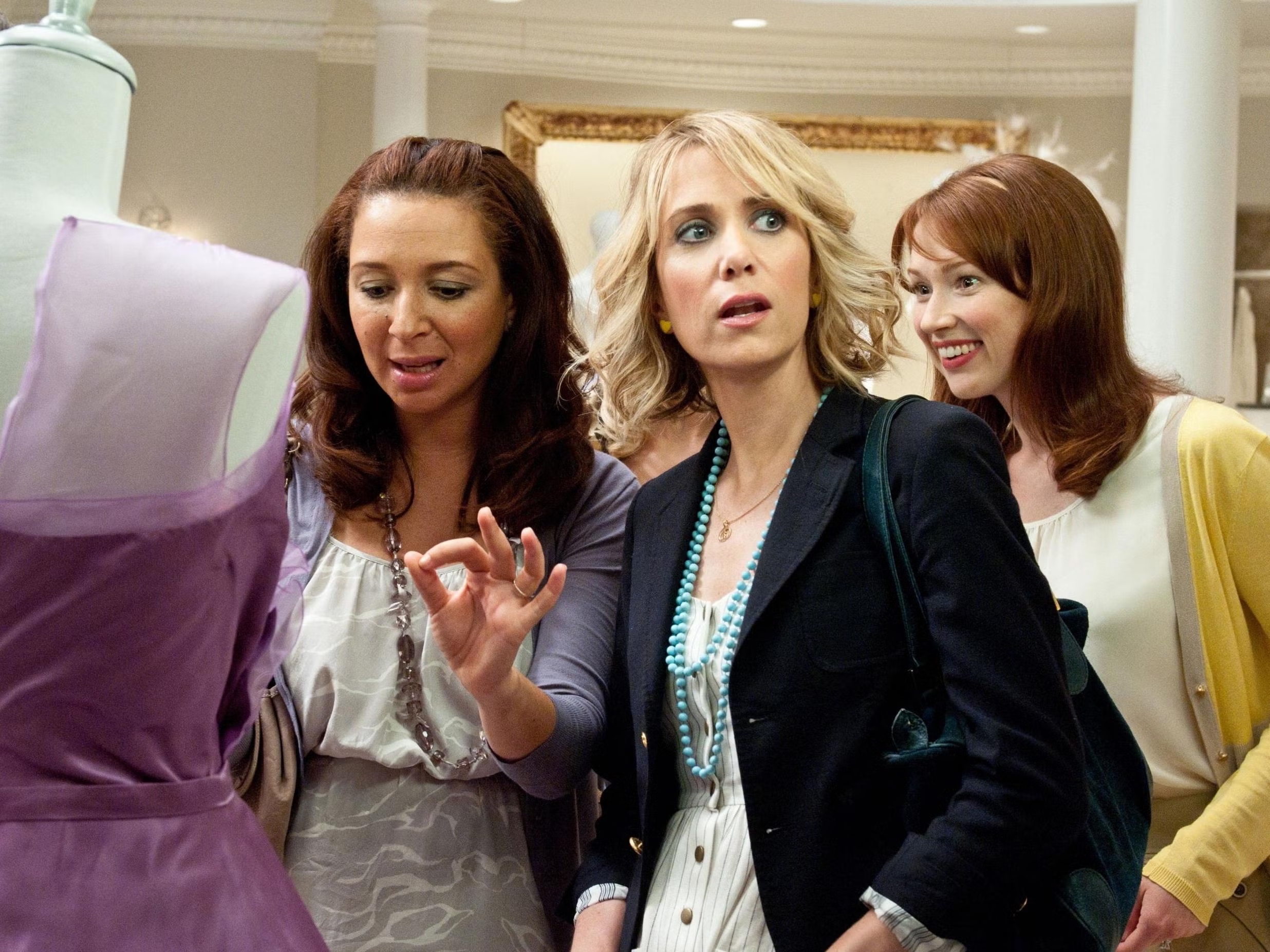
Bridesmaids arrived with immense buzz as a comedy that would break new ground in the genre. Trailers promised outrageous humor, bold performances, and scenes that would live on in pop culture, including the infamous bathroom gag. Yet, humor is subjective, and some viewers found the film underwhelming.
Image Source: Bing Image. License: All Creative Commons
Jokes that were heavily advertised fell flat for certain audiences, demonstrating that even well-marketed comedies can disappoint when expectations are sky-high. Bridesmaids illustrates the double-edged nature of hype: the more you promise laughs, the higher the risk of disappointment if they don’t land.
Image Source: Bing Image. License: All Creative Commons
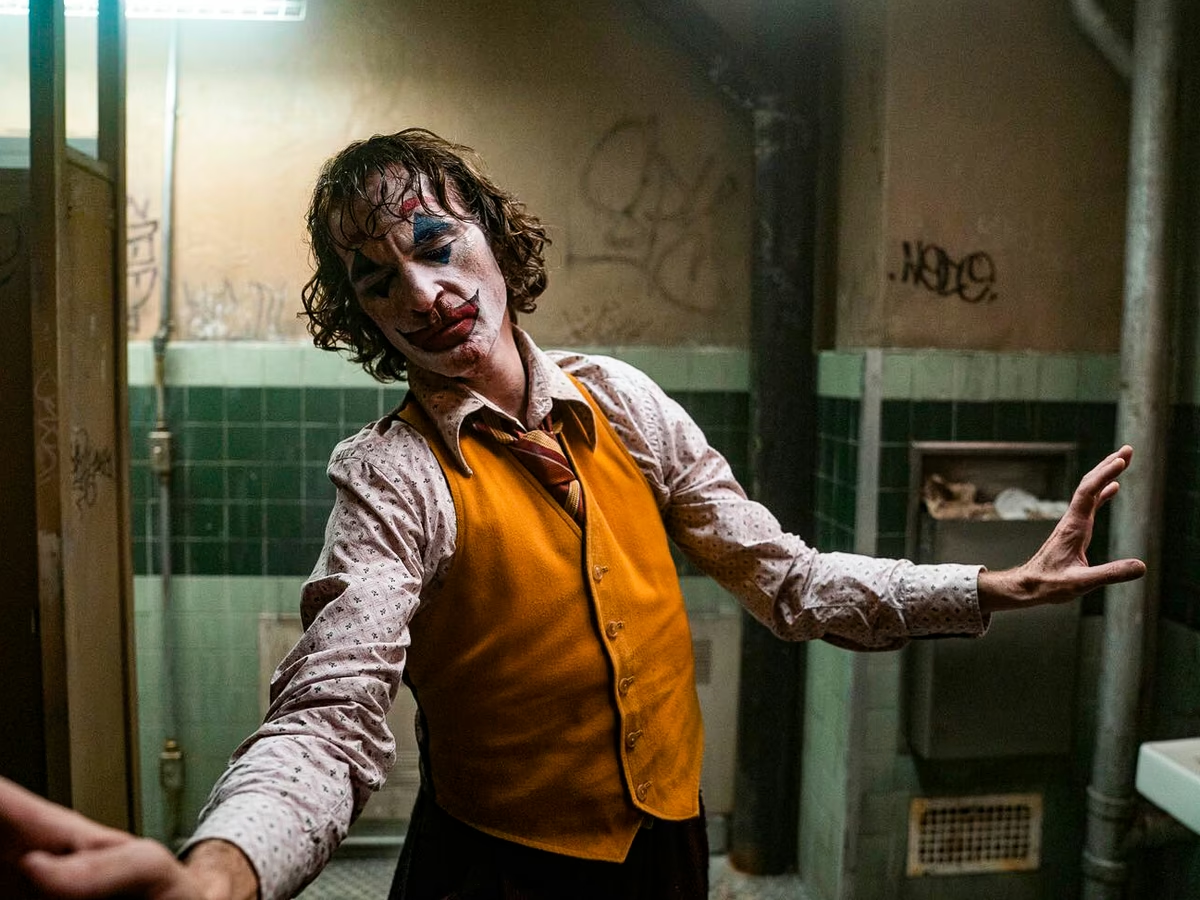
7. Joker
Joker was promoted as a daring, dark reinvention of an iconic character, with Joaquin Phoenix delivering a performance many expected would redefine the modern villain. Marketing leaned heavily into a gritty, mature tone reminiscent of classic psychological thrillers.
Image Source: Bing Image. License: All Creative Commons
While the film received critical acclaim, many casual viewers found it slow, repetitive, or overly derivative of other films. The messaging and moral ambiguity were polarizing, resulting in a split between critics and mainstream audiences. Joker demonstrates that even a celebrated performance and provocative concept can feel overhyped if it doesn’t resonate with a wide audience.
Image Source: Bing Image. License: All Creative Commons
6. Birds of Prey
Birds of Prey was positioned as DC’s bold comeback after the mixed reception of Suicide Squad. Marketing highlighted a fun, female-driven story, a vibrant visual style, and a quirky, playful energy with Margot Robbie at the helm.
Image Source: Bing Image. License: All Creative Commons
However, critics and fans noted that the story was thin, the villain underdeveloped, and character arcs lacked emotional resonance. The flashy style of the marketing could not make up for the story’s weaknesses, leaving some viewers disappointed. The film underscores that visual flair and star power cannot fully replace coherent storytelling and strong character development.
Image Source: Bing Image. License: All Creative Commons
5. Suicide Squad
Suicide Squad’s marketing campaign was intense, featuring highly stylized trailers, a top-tier cast, and a killer soundtrack. Expectations were enormous, with fans anticipating an irreverent, action-packed, character-driven adventure. The final product, however, was disjointed.
Image Source: Bing Image. License: All Creative Commons
Studio interference led to uneven pacing, a fractured narrative, and a film that often felt more like a music video than a coherent story. Audience disappointment was swift and widespread. Suicide Squad is a prime example of how even massive hype cannot guarantee satisfaction if the creative vision is compromised.
Image Source: Bing Image. License: All Creative Commons
4. Barbie
Barbie’s marketing promised a clever, self-aware take on the iconic toy, blending humor, nostalgia, and social commentary. Buzz was everywhere, from billboards to viral campaigns, making the film one of the most anticipated releases of its season. Despite its hype, the movie left some audiences feeling underwhelmed.
Image Source: Bing Image. License: All Creative Commons
Older viewers found the story lacking in substance, and some critics argued that the commentary didn’t land universally. While it resonated with younger audiences, the film didn’t fully satisfy broader expectations. Barbie demonstrates that even brilliant marketing cannot replace storytelling depth and emotional resonance.
Image Source: Bing Image. License: All Creative Commons
3. Mean Girls (2024)
The 2024 musical adaptation of Mean Girls aimed to modernize a beloved classic for a new generation. With anticipation fueled by the Broadway success and the original film’s cult following, expectations were sky-high. Unfortunately, the remake faltered.
Image Source: Bing Image. License: All Creative Commons
Musical numbers felt weak, the story updates seemed forced, and cultural references often missed the mark. Audiences felt that the charm and wit of the original had been diluted, leaving a sense of disappointment. Mean Girls illustrates the risks of remaking classics: nostalgia can draw interest, but without meaningful innovation or execution, the legacy of the original can suffer.
Image Source: Bing Image. License: All Creative Commons
2. Saltburn
Saltburn arrived with hype for its provocative, shocking premise and the star power of Rosamund Pike and Barry Keoghan. Marketing suggested a thrilling, unforgettable cinematic experience.
Image Source: Bing Image. License: All Creative Commons
The film, however, relied too heavily on shock value, with little substance to back it up. The narrative meandered, and the moments designed to surprise often fell flat, leaving viewers confused or unimpressed. Saltburn shows that sensationalism alone can’t sustain a film; audiences ultimately crave story, depth, and engagement.
Image Source: Bing Image. License: All Creative Commons
1. Madame Web
Madame Web was hyped as a mysterious, thrilling addition to the Spider-Man universe, with promises of action, intrigue, and exciting ties to the larger franchise. Instead, the film struggled to deliver a compelling narrative or memorable characters.
Image Source: Bing Image. License: All Creative Commons
Many viewers found it boring or uninspired, leaving theaters frustrated and disappointed. Madame Web is a stark reminder that even high-concept properties with franchise connections cannot succeed without substance, strong storytelling, and engaging characters.
Image Source: Bing Image. License: All Creative Commons
Hype can spark anticipation and fill theaters on opening weekend, but it is no substitute for quality storytelling. These 15 films highlight how easily expectations can clash with reality, leaving audiences frustrated or disappointed. Star power, viral marketing, and flashy trailers can only carry a film so far. At the end of the day, viewers crave substance, emotion, and engaging narratives—the elements that truly make a movie worth remembering.
Image Source: Bing Image. License: All Creative Commons
Addiction does not discriminate. Being famous, skilled, or successful will not grant anyone immunity to substance abuse. For a great number of celebrities and musicians, living under the public eye only intensified their internal struggles. What attracts our attention in such stories is not the downfall but the struggle to get back on one’s feet. The accounts below demonstrate not only the truthfulness but also the cases of relapse and recovery, as well as the spirit of endurance. Some narratives illustrate prolonged sobriety, while others keep us aware of how easily recovery can break down. When combined, they reflect that the process of healing is not straight but, being a part of the human experience, it is always.
Image Source: Bing Image. License: All Creative Commons
15. Steven Tyler
Steven Tyler’s life as Aerosmith’s frontman was fueled by creativity, chaos, and extreme excess. He has openly discussed spending millions on drugs over the years, cycling through heroin, cocaine, alcohol, and prescription opioids. His addiction nearly cost him his health, his family, and the band that made him a rock icon.
Image Source: Bing Image. License: All Creative Commons
Despite relapses and setbacks, Tyler continues to fight for sobriety with striking honesty. He doesn’t romanticize addiction; instead, he frames recovery as a daily commitment. By speaking openly about his struggles, Tyler has permitted fans to confront their own battles without shame.
Image Source: Bing Image. License: All Creative Commons
14. Nicole Richie
Nicole Richie’s early stardom was accompanied by harsh media attention, and her heroin and alcohol addiction struggles were documented in the tabloids and in courtrooms. Arrests and public outcry forced her to realize the path her life was taking and the toll of her uncontrolled addiction.
Image Source: Bing Image. License: All Creative Commons
However, her recovery became a turning point, particularly after she had children. Richie has talked about using her own experiences as a lesson for her kids, opting to be open and honest with them rather than keeping quiet. Her redemption illustrates that accountability and positive change are possible even after the most public mistakes.
Image Source: Bing Image. License: All Creative Commons
13. Howard Hughes
Howard Hughes’ addiction was a result of physical pain and not indulgence. Following a disastrous plane crash in 1946, he was hooked on prescription pain medication to cope with the chronic pain he suffered from, eventually becoming addicted to them for the next several decades.
Image Source: Bing Image. License: All Creative Commons
Although his addiction was largely out of public sight, it still had a significant impact on his life in his later years. His story is a warning of how quickly a need for pain medication can lead to addiction, even for a man as intelligent as Hughes.
Image Source: Bing Image. License: All Creative Commons
12. Macklemore
Macklemore had issues with alcohol and OxyContin addiction before his international success, calling opioids “deceptively dangerous” because of their availability. His addiction issues posed a problem not only for his career but for his most intimate relationships as well.
Image Source: Bing Image. License: All Creative Commons
Rehab was a turning point for Macklemore, providing him with the necessary structure, self-discovery, and support for long-term sobriety. Since rehab, Macklemore has been using his fame to spread awareness about addiction, turning his own struggle into a mission for the greater good.
Image Source: Bing Image. License: All Creative Commons
11. Gerard Butler
Gerard Butler’s addiction to painkillers began after a physical injury he sustained during the shooting of one of his movies. What began as a prescription gradually led to a dependence he couldn’t shake, eventually sending him to rehab in 2012.
Image Source: Bing Image. License: All Creative Commons
The ordeal led Butler to face issues he had been ignoring for a long time. By opening up about the emotional toll of rehab, he has encouraged others to embrace their vulnerabilities, even when they’re at the top of their game.
Image Source: Bing Image. License: All Creative Commons
10. Eminem
Eminem’s prescription drug addiction almost took his life. His overuse of Vicodin and Valium left him stuck in a vicious cycle of addiction that numbed both his imagination and his sense of joy.
Image Source: Bing Image. License: All Creative Commons
But sobriety brought clarity, and not without its challenges. Eminem has talked about learning to feel happiness without using, giving hope to those who think recovery is losing yourself, instead of finding yourself again.
Image Source: Bing Image. License: All Creative Commons
9. Matthew Perry
Matthew Perry’s success on Friends was matched by his increasing addiction to alcohol and prescription drugs. The demands of fame fueled his addiction, forcing him into rehab and health problems.
Image Source: Bing Image. License: All Creative Commons
Though Perry dedicated himself to helping others through addiction and recovery programs, sadly, he died in October 2023. His story highlights the need for ongoing support and the fact that addiction is a lifelong struggle.
Image Source: Bing Image. License: All Creative Commons
8. Bradley Cooper
Bradley Cooper sought recovery quite early in his life, choosing to stay away from alcohol and drugs before they took over his life completely. Recovery helped him regain his relationships and tap into the emotional side of life that he had never experienced before.
Image Source: Bing Image. License: All Creative Commons
Recovery has helped Bradley Cooper become a better son, partner, and artist, as he credits it. His example proves that recovery is not just about quitting but also about being receptive to the possibilities of connection and presence.
Image Source: Bing Image. License: All Creative Commons
7. August Alsina
August Alsina was exposed to addiction right from his childhood days, witnessing the damage it could cause. Ironically, his exposure to addiction came through prescription painkillers after a medical procedure, which he didn’t realize the danger of at first.
Image Source: Bing Image. License: All Creative Commons
Alsina had a close call with death and chose recovery, speaking out about the dangers of prescription drugs. His example has helped dispel myths about addiction and the ease with which addiction can creep in.
Image Source: Bing Image. License: All Creative Commons
6. Robert Downey Jr.
Robert Downey Jr. began his addiction at a shockingly young age, introduced to drugs by his father as a child. Years of arrests, rehab stints, and professional setbacks followed, leaving his future in Hollywood uncertain.
Image Source: Bing Image. License: All Creative Commons
His sobriety in the early 2000s is one of the greatest comeback stories in the history of entertainment. Downey’s tale is a testament that redemption is possible with the right accountability, support, and dedication.
Image Source: Bing Image. License: All Creative Commons
5. Simon Kirke
Simon Kirke struggled with addiction for decades, influenced by a family history of alcoholism and the touring musician lifestyle that bred excess. Near-death experiences and rehab stints littered a long, arduous journey.
Image Source: Bing Image. License: All Creative Commons
Today, sober for over a decade, Kirke uses his experiences to fuel advocacy and artistic pursuits related to addiction recovery. His story proves that it’s never too late to change and that recovery can actually enhance, not hinder, artistic expression.
Image Source: Bing Image. License: All Creative Commons
4. Sly Stone
Sly Stone’s revolutionary success in music was later marred by his heavy use of drugs, which affected his performances, recording sessions, and interpersonal relationships. Addiction slowly destroyed both his career and his stability.
Image Source: Bing Image. License: All Creative Commons
Instead of a clean redemption story, Stone’s is one of survival. His life is a wake-up call that talent is no shield against the effects of addiction.
Image Source: Bing Image. License: All Creative Commons
3. Bobby Torello
Bobby Torello had a respectable career as a drummer, performing with prominent artists while dealing with his own personal struggles, such as addiction. Music was both his escape and his anchor throughout his life.
Image Source: Bing Image. License: All Creative Commons
His ability to stay in the industry is a testament to his strength and commitment. Torello’s experience shows that recovery can sustain creativity instead of stifling it.
Image Source: Bing Image. License: All Creative Commons
2. Colin “Scummy” Morrison
Colin Morrison lived hard in the motocross scene, where partying and drug use were a big part of the culture. His journey to sobriety was rocky, with relapse and the hard truth that honesty was non-negotiable.
Image Source: Bing Image. License: All Creative Commons
Morrison’s willingness to share his struggles has brought him real respect in the recovery community. His experience shows that authenticity, not perfection, is often the secret to successful sobriety.
Image Source: Bing Image. License: All Creative Commons
1. Everyday Heroes in Recovery
Not all recovery tales are about stars. Many people rebuild their lives in the background through meetings, therapy, nature, faith, and friends, with no recognition or accolades. Everyday heroes struggle with the same fears, cravings, and struggles, demonstrating that recovery isn’t about fame or fortune. It’s about grit, determination, and the power of hope.
Image Source: Bing Image. License: All Creative Commons
Addiction stories aren’t about weakness; they’re about survival. Whether the journey leads to long-term sobriety or serves as a cautionary tale, each experience adds to a larger conversation about compassion, accountability, and healing. Recovery doesn’t erase the past, but it can reshape the future. And in every story, famous or not, there’s a reminder that help is possible, and change is worth fighting for.
Image Source: Bing Image. License: All Creative Commons
Adoption can have a pretty powerful impact on the way people live without them even realizing it. A lot of famous people, simply by being adopted or raised by someone other than their biological parents, have found it to be a major factor in their development as individuals. These narratives are not only about fame; they also exemplify the themes of endurance, new opportunities, and the significant influence of secure, loving homes. The following celebrities, ranging from sportspeople and artists to political leaders, demonstrate how adoption could be the key to unlocking the potential, nurturing talent, and changing the very destiny of a life.
Image Source: Bing Image. License: All Creative Commons
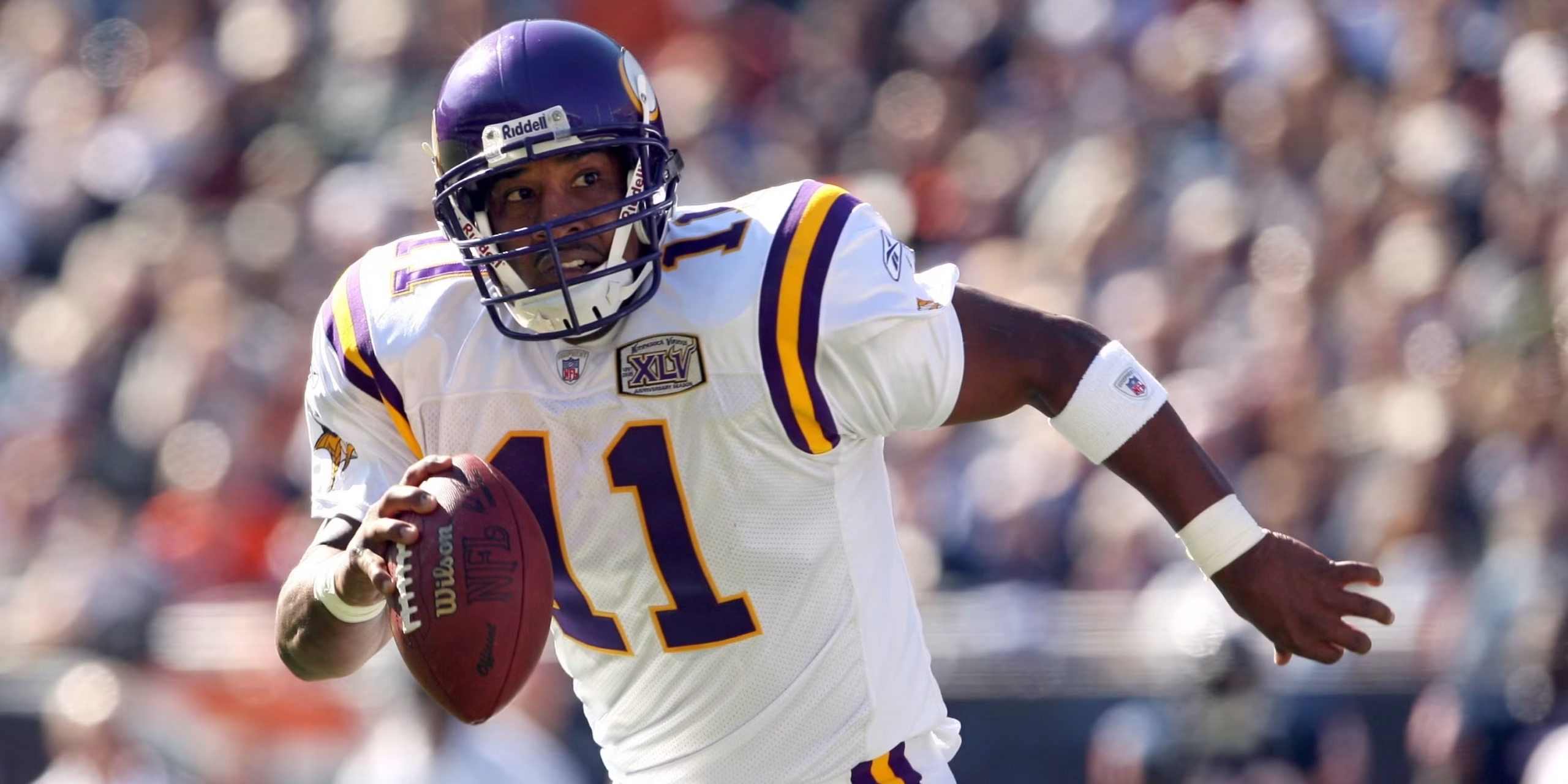
15. Daunte Culpepper
Daunte Culpepper was adopted shortly after birth by Emma Lewis Culpepper, a correctional facility employee with experience raising foster children. His biological mother, incarcerated at a young age, made the difficult decision to place him for adoption in hopes of giving him a more secure future.
Image Source: Bing Image. License: All Creative Commons
Growing up, Culpepper benefited from the structure, care, and encouragement his adoptive mother provided. That steady foundation helped him develop the discipline and perseverance that later defined his career as an NFL quarterback, reminding us how early support can shape lifelong success.
Image Source: Bing Image. License: All Creative Commons
14. Michaela DePrince
Michaela DePrince lost her parents during the civil war in Sierra Leone and spent her early childhood in an orphanage. There, she endured discrimination because of vitiligo, a skin condition that made her visibly different and often targeted by others.
Image Source: Bing Image. License: All Creative Commons
Her life changed at age four when Elaine and Charles DePrince adopted her and brought her to the United States. With their unwavering support, Michaela pursued ballet, eventually rising to international acclaim and proving how adoption can transform trauma into extraordinary achievement.
Image Source: Bing Image. License: All Creative Commons
13. Tommy Davidson
Tommy Davidson’s life began with severe hardship. Abandoned as a toddler, he was found and brought to a hospital by Barbara Davidson, who later adopted him with her husband after learning about his neglect and medical issues.
Image Source: Bing Image. License: All Creative Commons
Raised in a loving and stable home, Davidson gradually overcame his early struggles. His difficult beginnings shaped his sharp sense of humor and emotional depth, both of which became central to his success as a comedian and actor.
Image Source: Bing Image. License: All Creative Commons
12. Darryl “DMC” McDaniels
Darryl McDaniels of Run-DMC was adopted as an infant by Byford and Banna McDaniels. For most of his life, he was unaware of his adoption and only learned the truth while working on his autobiography in his mid-30s.
Image Source: Bing Image. License: All Creative Commons
That revelation led him on a deeply personal journey to understand his origins and reconnect with his birth mother. The experience influenced both his music and his advocacy, encouraging open conversations about identity, mental health, and the emotional layers of adoption.
Image Source: Bing Image. License: All Creative Commons
11. Gary Coleman
Gary Coleman was adopted just days after birth by Edmonia Sue and W.G. Coleman. Born with serious health conditions, he required ongoing medical care, which his adoptive parents committed to providing from the very beginning.
Image Source: Bing Image. License: All Creative Commons
Despite his physical challenges, Coleman became a household name through his role on Diff’rent Strokes. His story highlights how adoption can offer children not only care but the chance to thrive despite obstacles beyond their control.
Image Source: Bing Image. License: All Creative Commons
10. Colin Kaepernick
Colin Kaepernick was adopted at five weeks old by Rick and Teresa Kaepernick after his biological mother, then a teenager, decided she could not raise him. He grew up in a multiracial household with strong family values and encouragement.
Image Source: Bing Image. License: All Creative Commons
That environment helped shape Kaepernick’s confidence, sense of purpose, and willingness to stand up for his beliefs. His adoption story is closely tied to the identity and conviction that later defined both his football career and his activism.
Image Source: Bing Image. License: All Creative Commons
9. Keyshia Cole
Keyshia Cole entered foster care as a young child due to her biological mother’s struggles with addiction. She was eventually adopted by close family friends, Leon and Yvonne Cole, who gave her a more stable and supportive home.
Image Source: Bing Image. License: All Creative Commons
Those early experiences deeply influenced her music and emotional expression. Through adoption, Cole found the support she needed to channel pain into creativity, building a career that resonates with honesty and resilience.
Image Source: Bing Image. License: All Creative Commons
8. Kristin Chenoweth
Kristin Chenoweth was adopted as an infant and has always spoken positively about the experience. Raised with openness and love, she grew up knowing her adoption story and feeling grateful for both her birth mother’s decision and her parents’ devotion.
Image Source: Bing Image. License: All Creative Commons
She has since become a vocal advocate for adoption, often emphasizing that adopted children are deeply wanted. Her perspective has helped reframe adoption as an act of love rather than loss.
Image Source: Bing Image. License: All Creative Commons
7. Lana Condor
Lana Condor was adopted from Vietnam at just four months old and raised in the United States alongside an adopted brother. Her parents made a conscious effort to educate her about her cultural roots while giving her a strong sense of belonging.
Image Source: Bing Image. License: All Creative Commons
As her career grew, Condor began sharing her adoption story more openly. By doing so, she has helped normalize conversations about identity, heritage, and the many forms family can take.
Image Source: Bing Image. License: All Creative Commons
6. Nicole Richie
Nicole Richie moved in with Lionel Richie and Brenda Harvey at age four when her biological parents faced financial hardship. Though initially an informal arrangement, the Richies officially adopted her several years later.
Image Source: Bing Image. License: All Creative Commons
Richie has consistently described her adoption as a positive and grounding experience. Growing up in a supportive household allowed her to explore creativity and independence while maintaining a strong sense of family connection.
Image Source: Bing Image. License: All Creative Commons
5. Simone Biles
Simone Biles spent part of her early childhood in foster care after her biological parents were unable to care for her. At age six, she and her sister were adopted by their maternal grandparents, Ron and Nellie Biles.
Image Source: Bing Image. License: All Creative Commons
Under their care, Simone discovered gymnastics and flourished. She frequently credits her grandparents—whom she calls her parents—for providing the love and stability that helped her become one of the most decorated athletes in history.
Image Source: Bing Image. License: All Creative Commons
4. Jamie Foxx
Jamie Foxx was adopted as a baby by his grandparents and raised in Terrell, Texas. He learned about his adoption at a young age and has said he never felt abandoned, only supported.
Image Source: Bing Image. License: All Creative Commons
His grandparents played a central role in nurturing his talents and discipline. Their guidance laid the groundwork for his success across music, comedy, and film.
Image Source: Bing Image. License: All Creative Commons
3. Faith Hill
Faith Hill was adopted shortly after birth by Ted and Edna Perry and grew up knowing her story from the start. Her parents’ honesty helped her feel secure and confident about her identity.
Image Source: Bing Image. License: All Creative Commons
As an adult, Hill sought out her biological family and eventually connected with them. The experience brought clarity and closure, further strengthening her appreciation for adoption and family bonds.
Image Source: Bing Image. License: All Creative Commons
2. Steve Jobs
Steve Jobs was adopted as an infant by Paul and Clara Jobs after his biological parents faced social pressure that prevented them from raising him together. His adoptive parents made sure he always knew he was chosen.
Image Source: Bing Image. License: All Creative Commons
Later in life, Jobs connected with his biological sister, author Mona Simpson, but consistently emphasized that his adoptive parents were his true family. His adoption story became part of the narrative behind his independent thinking and creative drive.
Image Source: Bing Image. License: All Creative Commons
1. Bill Clinton
Bill Clinton lost his biological father before birth and was later adopted by his stepfather, Roger Clinton Sr., during childhood. Though informal at first, the adoption became a defining part of his family identity.
Image Source: Bing Image. License: All Creative Commons
As President, Clinton championed adoption reform, signing legislation aimed at improving outcomes for children in foster care. His personal connection to adoption helped shape policies that continue to affect families today.
Image Source: Bing Image. License: All Creative Commons
These stories reveal that adoption is not a footnote; it’s often a foundation. While each journey is different, they all underscore the importance of stability, compassion, and opportunity. Behind the fame and accomplishments are families who stepped in, chose love, and helped shape lives that went on to inspire millions.
Image Source: Bing Image. License: All Creative Commons
Chris Nolan taking on The Odyssey is a film event in itself, and casting decisions are what really take the project to the next level. It’s not just a star-studded cast that Nolan is putting together; he is aligning actors with mythical characters in ways that seem deliberate, surprising, and full of thematic depth. The list of gods, monsters, faithful followers, and family members who have endured the pain for a long time portrays a version of The Odyssey that is close, savage, and with a high degree of feeling. Below is an analysis of the most thrilling character castings and the reasons why each one seems to be a perfect match.
Image Source: Bing Image. License: All Creative Commons
15. Charlize Theron as Athena
Athena is the quiet architect of Odysseus’ survival, the goddess of wisdom who plays the long game while everyone else rushes into chaos. She’s strategic, formidable, and deeply invested in human affairs, often intervening at key moments with subtle but decisive force.
Image Source: Bing Image. License: All Creative Commons
Charlize Theron feels born for this role. She has the kind of commanding presence that can convey intelligence and authority without raising her voice, and her history of playing powerful, battle-hardened figures makes her a natural Athena. With Theron, every glance and calculated move could feel like divine chess in motion.
Image Source: Bing Image. License: All Creative Commons
14. Mia Goth as Ino
Ino is one of the quieter but most mysterious figures in The Odyssey. Once mortal, now divine, she appears at Odysseus’ lowest moment to save him from drowning, offering help that feels both merciful and otherworldly.
Image Source: Bing Image. License: All Creative Commons
Mia Goth’s uncanny screen presence makes her a compelling choice. She excels at roles that blur the line between fragility and menace, which suits Ino’s liminal nature perfectly. Even a brief appearance could feel haunting, lingering long after the scene ends.
Image Source: Bing Image. License: All Creative Commons
13. Will Yun Lee as Amphinomus
Among Penelope’s many suitors, Amphinomus stands apart. He’s thoughtful, restrained, and capable of empathy, qualities that make his fate all the more tragic. He represents the idea that decency alone isn’t enough to escape destiny.
Image Source: Bing Image. License: All Creative Commons
Will Yun Lee brings the exact kind of quiet intensity this role needs. His ability to communicate internal conflict without grand gestures could turn Amphinomus into one of the film’s most emotionally complex side characters, rather than just another name on a list.
Image Source: Bing Image. License: All Creative Commons
12. Jon Bernthal as Antinous
Antinous is arrogance incarnate, the loudest, cruelest, and most entitled of Penelope’s suitors. He embodies everything rotten about the occupation of Ithaca during Odysseus’s absence, making him the perfect lightning rod for audience hatred.
Image Source: Bing Image. License: All Creative Commons
Jon Bernthal thrives in roles that demand raw aggression and simmering cruelty. His Antinous won’t just be a villain; he’ll be a presence that dominates scenes and makes his eventual downfall deeply satisfying. Few actors make this watchable.
Image Source: Bing Image. License: All Creative Commons
11. John Leguizamo as Eumaeus
Eumaeus is the emotional backbone of The Odyssey. A loyal servant and surrogate family member, he remains steadfast even when hope seems foolish. His loyalty contrasts sharply with the betrayal Odysseus finds elsewhere.
Image Source: Bing Image. License: All Creative Commons
John Leguizamo’s warmth and humanity make him ideal for this role. He has a gift for grounding epic stories in emotional reality, and his Eumaeus will likely serve as a reminder that loyalty, not power, is what ultimately restores Ithaca.
Image Source: Bing Image. License: All Creative Commons
10. Elliot Page as Hermes
Hermes is the ultimate go-between: messenger of the gods, trickster, and guide for lost souls. He’s fast-thinking, sharp-tongued, and always slightly amused by the chaos of mortals.
Image Source: Bing Image. License: All Creative Commons
Elliot Page brings intelligence and kinetic energy that suit Hermes beautifully. Page can balance humor with sincerity, making Hermes feel playful without being frivolous, a god who enjoys the game but understands its stakes.
Image Source: Bing Image. License: All Creative Commons
9. Zendaya as Calypso
Calypso represents temptation without cruelty. Her island is paradise, her love sincere, and her offer immortality nearly irresistible. What makes her tragic is not malice, but longing.
Image Source: Bing Image. License: All Creative Commons
Zendaya’s emotional depth makes her perfect for this role. She can convey longing, isolation, and desire with subtlety, making Calypso’s relationship with Odysseus feel genuinely complicated rather than purely seductive.
Image Source: Bing Image. License: All Creative Commons
8. Bill Irwin as Laertes
Laertes, Odysseus’ father, is a hero who has already lived his legend. When we meet him, he’s broken by grief and time, clinging to the past in isolation.
Image Source: Bing Image. License: All Creative Commons
Bill Irwin has the gravitas to make Laertes’ quiet despair feel monumental. His reunion with Odysseus could be one of the film’s most tender moments, reminding us that the cost of heroism doesn’t end with victory.
Image Source: Bing Image. License: All Creative Commons
7. Samantha Morton as Anticleia
Anticleia appears only briefly, but her presence cuts deep. Encountered in the underworld, she reveals how Odysseus’ absence devastated those he loved most.
Image Source: Bing Image. License: All Creative Commons
Samantha Morton is a devastatingly effective choice. Her ability to communicate sorrow and wisdom in minimal screen time ensures that this moment will land with emotional force, anchoring Odysseus’ journey in personal loss.
Image Source: Bing Image. License: All Creative Commons
6. Robert Pattinson as Achilles’ Ghost
Achilles’ appearance in The Odyssey reframes heroism itself. Once the greatest warrior alive, he now regrets trading a long life for glory.
Image Source: Bing Image. License: All Creative Commons
Robert Pattinson’s introspective intensity makes him ideal for this role. He can embody both mythic stature and existential regret, turning this encounter into one of the story’s most philosophical moments.
Image Source: Bing Image. License: All Creative Commons
5. Himesh Patel as Aeolus
Aeolus offers Odysseus one of his closest chances at home, only for it to unravel through human error. His role highlights the limits of divine generosity.
Image Source: Bing Image. License: All Creative Commons
Himesh Patel’s calm authority suits the wind god perfectly. He can play Aeolus as a benevolent yet resigned deity who understands that fate will always find a way.
Image Source: Bing Image. License: All Creative Commons
4. Corey Hawkins as Poseidon
Poseidon isn’t just an antagonist; he’s a force of nature fueled by wounded pride. His grudge defines Odysseus’ suffering and gives the epic its relentless momentum.
Image Source: Bing Image. License: All Creative Commons
Corey Hawkins has the commanding presence needed to make Poseidon terrifying without exaggeration. His performance could make every storm feel intentional, personal, and unstoppable.
Image Source: Bing Image. License: All Creative Commons
3. Benny Safdie as Polyphemus
Polyphemus is monstrous, but not mindless. His encounter with Odysseus is a brutal lesson in hubris and consequence.
Image Source: Bing Image. License: All Creative Commons
Benny Safdie’s unpredictable energy makes him a fascinating choice. He can bring humor, rage, and vulnerability to the Cyclops, making the episode unsettling rather than purely fantastical.
Image Source: Bing Image. License: All Creative Commons
2. Lupita Nyong’o as Circe
Circe is power wrapped in allure, dangerous, seductive, and ultimately transformative. Her island tests Odysseus’ will in ways brute force never could.
Image Source: Bing Image. License: All Creative Commons
Lupita Nyong’o’s magnetic presence ensures Circe will be unforgettable. She can shift effortlessly between menace and compassion, making this chapter one of the film’s most psychologically rich.
Image Source: Bing Image. License: All Creative Commons
1. Tom Holland as Telemachus
Telemachus begins as a boy overshadowed by absence and expectation. His journey toward confidence mirrors his father’s in quieter, more vulnerable ways.
Image Source: Bing Image. License: All Creative Commons
Tom Holland’s sincerity and emotional openness make him ideal for the role. He can capture the uncertainty of youth while growing into quiet strength, giving the story a powerful generational arc.
Image Source: Bing Image. License: All Creative Commons
Anne Hathaway as Penelope
Penelope is the unsung strategist of The Odyssey. While Odysseus battles monsters abroad, she wages a war of patience and intellect at home.
Image Source: Bing Image. License: All Creative Commons
Anne Hathaway’s ability to blend warmth with resolve makes her a perfect Penelope. Her portrayal promises a woman who survives not by force, but by intelligence and emotional endurance.
Image Source: Bing Image. License: All Creative Commons
Matt Damon as Odysseus (Confirmed)
Odysseus is clever, flawed, stubborn, and endlessly human, a hero who survives through wit as much as strength. His journey is the spine of the epic.
Image Source: Bing Image. License: All Creative Commons
Matt Damon’s grounded intensity makes him a natural fit. He has the gravitas to carry Nolan’s vision while keeping Odysseus relatable, anchoring myth in human struggle.
Image Source: Bing Image. License: All Creative Commons
Christopher Nolan’s The Odyssey is shaping up to be less about spectacle alone and more about character, consequence, and endurance. This cast suggests a myth told with emotional precision, where gods feel personal, and heroes feel painfully human. If these performances land the way they promise to, Nolan’s take on Homer’s epic won’t just be another adaptation—it’ll be a defining one.
Image Source: Bing Image. License: All Creative Commons
Not only memorizing dialogue and knowing where to be are the keys to good acting. It is changing your whole body, changing your whole way of thinking, and sometimes giving up on your health. Great actors don’t just play characters; they become them. To make their performances stand out, they put themselves through gruelling and punishing training regimes and performed some unimaginable, crazy stunts, but at the same time, they managed to make the impressions that won’t fade away very soon. Here are 15 of the most extreme transformations in movies of all time.
Image Source: Bing Image. License: All Creative Commons
15. Tom Cruise: Hollywood’s Daredevil
Tom Cruise is not just an on-screen actor—he’s a stunt machine. Years of doing his stunts, from Top Gun to Mission: Impossible, have been the defining feature of his career. From scaling the Burj Khalifa building to clinging to the side of an actual plane as it taxied down the runway, Cruise has risked his life countless times, keeping stunt coordinators and insurers on edge.
Image Source: Bing Image. License: All Creative Commons
14. Jackie Chan: The Stunt Legend
Before becoming a star, Jackie Chan was a stunt double for Bruce Lee. Afterwards, he developed his stunt team and made a career out of doing the impossible—jumping off buildings, shattering glass, and turning brawls into slapstick masterpieces. His body has scars from thousands of injuries, but Chan’s commitment to authenticity made him a global legend.
Image Source: Bing Image. License: All Creative Commons
13. Charlize Theron: Warrior on Screen
Charlize Theron is not afraid to get hurt when the part calls for it. For Atomic Blonde, she plunged headlong into rigorous fight training, performing complex choreography herself and having bruises to prove it. Her commitment was so admirable that even Keanu Reeves confessed that she pushed him harder in training for his parts.
Image Source: Bing Image. License: All Creative Commons
12. Keanu Reeves: Precision Personified
Speaking of Reeves—his preparation for John Wick is the stuff of myth. He trained in martial arts, gun handling, and high-speed driving stunts, and performed most of his stunts. Even at almost 60, Reeves won’t do anything but lift the heavy loads himself, setting a new gold standard for the action hero of the modern era.
Image Source: Bing Image. License: All Creative Commons
11. Christian Bale: The Human Shape-Shifter
Christian Bale’s record for complete body makeovers is unbeaten. He lost all his weight to an emaciated skeleton for The Machinist, then ballooned up into a comic book anti-hero for Batman Begins. He’s oscillated back and forth and back and forth again, sometimes losing or gaining dozens of pounds within months, all while doing stunt work.
Image Source: Bing Image. License: All Creative Commons
10. Daniel Day-Lewis: Method to the Madness
Day-Lewis is the dictionary definition of method acting. He spent his time in a wheelchair and had his most elementary needs attended to by crew members in My Left Foot, even cracking ribs from his slumping over. In The Crucible, he lived with no electricity or running water to recreate his character’s world. He even refused proper winter gear on Gangs of New York, getting pneumonia. To him, there’s no middle ground in a performance.
Image Source: Bing Image. License: All Creative Commons
9. Heath Ledger: Becoming the Joker
Heath Ledger’s preparation for The Dark Knight was the stuff of legend. He secluded himself in a hotel room for weeks, filling a diary with the Joker’s twisted thoughts and experimenting with voices and physical movements. His immersion was so total that it exacerbated his insomnia and anxiety. The result was a performance so frightening that he won a posthumous Oscar.
Image Source: Bing Image. License: All Creative Commons
8. Jim Carrey: Andy Kaufman, Inside and Out
When portraying Andy Kaufman in Man on the Moon, Jim Carrey didn’t merely impersonate him—he became him, both during and outside of filming. He never broke character, much to the dismay of cast and crew. After filming, according to Carrey, it was a challenge to reclaim himself. The documentary Jim & Andy reveals just how unsettling and intriguing his transformation was.
Image Source: Bing Image. License: All Creative Commons
7. Natalie Portman: Black Swan on the Edge
Portman learned ballet classically as a child, but for Black Swan, she endured six months of intense rehearsals—six hours a day. She lost 20 pounds, suffered injuries, and even dislocated a rib. The physical and psychological cost was stratospheric, but the performance earned her an Oscar and catapulted her into being one of the most dedicated actors of her generation.
Image Source: Bing Image. License: All Creative Commons
6. Hilary Swank: Creating and Shattering Herself
Swank’s transformations are the stuff of legend. To play Boys Don’t Cry, she lived off-stage as a male, taping her breasts and speaking in a lower voice. To play Million Dollar Baby, she gained 20 pounds of muscle, trained like a pro boxer, and even developed a staph infection along the way. Few actors undertake physical and emotional transformation the way Swank does.
Image Source: Bing Image. License: All Creative Commons
5. Jared Leto: Hollywood’s Method Wild Card
Jared Leto is infamous for going all in. For Dallas Buyers Club, he dropped over 30 pounds. For Blade Runner 2049, he wore opaque lenses to create the illusion of partial blindness. And for Suicide Squad, he stayed in the Joker persona, sending odd “gifts” to co-stars. His methodology is dubious, but his dedication is not.
Image Source: Bing Image. License: All Creative Commons
4. Robert De Niro: The Blueprint
De Niro wrote the book on transformation. For Taxi Driver, he operated a taxi cab in New York City. For Raging Bull, he trained as a boxer quite hard, then gained more than 60 pounds to play Jake LaMotta in his later life. His dedication to body transformation, as well as lifestyle, set the stage for actors to come.
Image Source: Bing Image. License: All Creative Commons
3. Marlon Brando: The Groundbreaker
Marlon Brando infused acting with a rawness that Hollywood had never previously witnessed. To prepare for The Men, he stayed at a veterans’ hospital to learn about life with paralysis. His performances in A Streetcar Named Desire and On the Waterfront rewrote screen acting, demonstrating that intense, method-oriented absorption could produce forever art.
Image Source: Bing Image. License: All Creative Commons
2. Kate Winslet: Living Inside Her Roles
Kate Winslet doesn’t merely slip into character—she lives them whole. To prepare for The Reader, she retained a German accent even at home with her children. During filming of Ammonite, she wanted to live in solitude in a cold, wind-swept sea cottage to reflect her character’s existence. Winslet has conceded that it can take her ages to extricate herself from roles once filming is over.
Image Source: Bing Image. License: All Creative Commons
1. Forest Whitaker: Total Immersion
Whitaker’s performance as Ugandan dictator Idi Amin in The Last King of Scotland is the most thorough acting makeover in history. He mastered Swahili and Kakwa, studied Amin’s body language, and immersed himself in Ugandan life. His work was so realistic that he won an Academy Award—and worldwide admiration for his unflinching dedication.
Image Source: Bing Image. License: All Creative Commons
When performers push themselves to extremes—physical, mental, and emotional—the payoff can be unforgettable. Whether it’s hanging off airplanes, starving for a role, or staying in character for months, these actors remind us that brilliant art is often created at a great individual sacrifice.