Image Source: Bing Image. License: All Creative Commons
The Hollywood 2025 scene is loaded with talent, charm, and a major impact on society, and the people who are leading the way are ushering in the change of a new era of celebrity. These stars are not only winning fans but also changing the industry, art, and story for the next generation by embracing their identities as LGBTQ+ icons, thus breaking down the walls and reeling the industry with their outstanding talent. We’ve come up with a list of eight most interesting and highly talented people who are right now shining a brilliant light in the sky of Hollywood.
Image Source: Bing Image. License: All Creative Commons
8. Leo Sheng – The Changemaker
Leo Sheng has turned authenticity into a career. Maybe best known for his work on Adam and The L Word: Generation Q, Sheng has been a prominent voice in advocating for queer and trans representation on television. Off camera, he’s equally powerful lobbying for social justice, workers’ rights, and queer youth voices. Charismatic, unapologetic, and on a mission, Sheng is as lovely as he is talented.
Image Source: Bing Image. License: All Creative Commons
7. Tramell Tillman – The Breakout Force
You watched Severance, so you know Tramell Tillman as the unforgettable Milchick, both charming and unsettling. He’s gone on to break into big-budget films with Mission: Impossible, The Final Reckoning, starring Tom Cruise. As a gay Black man breaking ceilings in Hollywood, Tillman brings talent with trailblazing visibility, and his effortless charm makes him irrefutable.
Image Source: Bing Image. License: All Creative Commons
6. Jonathan Groff – The Broadway Powerhouse
Jonathan Groff is a Broadway royalty transplanted into a natural film, television, and voice actor. From Spring Awakening to originating Kristoff in Frozen to unnerving turns in Mindhunter, his versatility speaks volumes. Following his recent Tony Award win for Merrily We Roll Along, Groff continues to pave the way for openly gay actors. Warm, magnetic, and unapologetic in his manner, he’s always guaranteed to please the crowd.
Image Source: Bing Image. License: All Creative Commons
5. Omar Apollo – The Sound of Now
Omar Apollo is now one of the defining voices of music in the 2020s, with hits such as Evergreen and albums that transcend genres. But he’s not resting on his laurels. His film debut in Luca Guadagnino’s Queer, starring alongside Daniel Craig, was a demonstration of his acting abilities. Apollo’s candor, creativity, and fearless queerness make him a cultural force who won’t be contained in one box.
Image Source: Bing Image. License: All Creative Commons
4. Lukas Gage – The Gambler
Lukas Gage has made a career out of saying yes to dangerous roles. He began with a splash on The White Lotus and went on to star in films like Smile 2 and Companion. Never afraid to get raw or gritty, Gage is opening doors for queer performers in Hollywood. His most recent role in Overcompensating cemented his status as one of the most exciting up-and-coming stars in the business.
Image Source: Bing Image. License: All Creative Commons
3. Tonatiuh – The Cultural Star
Nominated for his Aztec heritage, Tonatiuh is lighting up the screen in Hollywood. From his initial breakout in Vida to his latest in the musical Kiss of the Spider Woman with Diego Luna and Jennifer Lopez, he’s offering a solid queer Latine presence on the screen. Full of pride, balancing his heritage on his back with every new project, Tonatiuh is already a familiar face on his way to household name status.
Image Source: Bing Image. License: All Creative Commons
2. Matt Rogers – The Comedy Visionary
Matt Rogers is pop culture’s master thief. Stealing moments on Fire Island, dropping holiday singles, or co-hosting the behemoth Las Culturistas podcast with Bowen Yang, Rogers is as quick on his tongue as he is adaptable. His mixture of humor, musicality, and cultural critique has made him one of the leading voices in queer comedy and a go-to personality on all scales.
Image Source: Bing Image. License: All Creative Commons
1. Jeremy Pope – The Game-Changer
Jeremy Pope is the package deal: actor, singer, and visual artist. Praise has come his way on Broadway and television (Hollywood, One Night in Miami), he’s released an experimental album (Last Name: Pope), and even courted controversy with his photography series, which confronted toxic masculinity head-on.
Image Source: Bing Image. License: All Creative Commons
With his new lineup, The Beauty, ready to make waves, Pope is already cementing himself not just as a star but as a cultural icon. Wittier, more charming, and more unapologetically himself, he’s Hollywood’s future face.
Image Source: Bing Image. License: All Creative Commons
These eight men are not just stars; they’re creating the next chapter of Hollywood. Talented, commanding, and unapologetically authentic, they’re reauthoring the playbook on what it means to be a leading man in 2025.
Image Source: Bing Image. License: All Creative Commons
One simply cannot resist the magnetism of gangster movies. It could be the brashness, the stylish suits, the clever one-liners that people will keep referring to forever, or maybe it’s just the naughty thrill of rooting for the villain. The gangster film has given us some of the most iconic moments in the history of cinema, whether it be from the gas, filled speakeasies of Prohibition-era America or the gritty streets of Rio. Therefore, get ready (and yes, the cannoli), as we are presenting the 10 best gangster movies of all time, beginning with the last ones for the most suspense.
Image Source: Bing Image. License: All Creative Commons
10. American Gangster (2007)
Ridley Scott’s gripping crime drama follows the real-life events of Frank Lucas, a Harlem cocaine dealer. Washington is just electric, as Lucas and Crowe are the perfect foil to him as the morally unyielding cop trying to take him down. The movie is a great combination of a big studio movie with its energy and style, and a slow, thoughtful meditation on ambition, corruption, and the dregs of the American dream.
Image Source: Bing Image. License: All Creative Commons
9. The Untouchables (1987)
Brian De Palma whisks us away to Prohibition, as lawmen and gangsters battle in operatic style. Starring Kevin Costner as Eliot Ness, Sean Connery in an Oscar-winning turn, and Robert De Niro in a scenery-chewing role as Al Capone, the film is a combination of style and spectacle. With its slow-motion shoot-’em-ups and swooping camera movements, The Untouchables is gangster drama at its most cinematic.
Image Source: Bing Image. License: All Creative Commons
8. Scarface (1983)
“Say hello to my little friend!” Few phrases are as iconic as Tony Montana’s volcanic introduction. Al Pacino’s cocaine-fueled meltdown in Miami is hyperbolic, brutal, and indelible. With its neon-drenched decadence and operatic drama, Scarface transcended being a movie; it became a cultural reference point, informing everything from rap lyrics to video games.
Image Source: Bing Image. License: All Creative Commons
7. Mean Streets (1973)
Before Goodfellas and Casino, Martin Scorsese introduced the world to his brutal vision of life in the mob with Mean Streets. Harvey Keitel and young Robert De Niro infuse raw energy into this tale of small-time hoods in Little Italy. With its jittery camera moves, rock ‘n’ roll score, and Catholic guilt, this was the film that signaled Scorsese as an emerging voice in American cinema.
Image Source: Bing Image. License: All Creative Commons
6. Once Upon a Time in America (1984)
Sergio Leone’s epic sprawl is a story of friendship, betrayal, and regret that spans decades. Robert De Niro heads a top-notch cast in this tale of Jewish gangsters in New York, presented with Leone’s characteristic splendor and heightened by Ennio Morricone’s spine-tingling score. Its knotty history of release only adds to its myth, but the restored version is nothing short of gobsmacking.
Image Source: Bing Image. License: All Creative Commons
5. City of God (2002)
Crime is not the exclusive property of American streets. City of God transports us to the favelas of Rio de Janeiro, where children mature prematurely and die sooner. With breakneck editing, documentary realism, and indelible performances, this Brazilian masterpiece redefined the possibilities of a gangster film. It’s raw, gorgeous, and unforgettable.
Image Source: Bing Image. License: All Creative Commons
4. The Departed (2006)
Martin Scorsese finally captured his overdue Oscar with this Boston-based crime thriller. Jack Nicholson, Leonardo DiCaprio, and Matt Damon live a lethal game of deception and double lives in a betrayal-filled, blood-soaked payoff-rich tale. Half tense, half darkly comedic, The Departed is the reason why Scorsese is still the undisputed king of gangster films.
Image Source: Bing Image. License: All Creative Commons
3. Goodfellas (1990)
“Ever since I can remember, I always wanted to be a gangster.” And so Scorsese begins a whirlwind tale of life in the mob that’s both thrilling and terrifying. Ray Liotta, Joe Pesci, and Robert De Niro give performances for the ages, and narration, editing, and soundtrack that have become part of film history. Few films capture the highs and inevitable downfalls of life as a gangster as well as Goodfellas.
Image Source: Bing Image. License: All Creative Commons
2. The Godfather (1972)
Francis Ford Coppola’s classic is not merely a movie; it’s a cultural touchstone. Marlon Brando’s Don Vito Corleone established the benchmark for all mob bosses to come, and the film’s breadth, dialogue, and craftsmanship have rendered it an enduring classic. The Godfather is still the greatest of the mob movies, combining crime, family, and tragedy in pure cinema.
Image Source: Bing Image. License: All Creative Commons
1. The Godfather Part II (1974)
Somehow, Coppola topped himself. Sequeling the Corleone saga, The Godfather Part II juxtaposes Michael’s brutal reign with flashbacks of young Vito’s ascension, perfectly played by Robert De Niro. Al Pacino gives a searing performance at the film’s core, and the movie plays out like a Shakespearean tragedy. It’s not only the greatest gangster film ever, but it’s one of the greatest films, period.
Image Source: Bing Image. License: All Creative Commons
That’s the roster. From operatic sagas to hard-boiled street-level tales, these movies demonstrate why the gangster genre remains so compelling. They’re stories of power, loyalty, betrayal, and ambition, and they illustrate that occasionally the bad guys truly do get the good lines.
Image Source: Bing Image. License: All Creative Commons
Comedy is something that makes people laugh, but those who are the source of it sometimes very quickly run out of time. That is the very thing that makes it bittersweet that, although their time was short, the laughter and the impact they left can still be felt through the stand-up stages, late-night shows, and reruns. Check out these 10 comedians who passed away too soon, but their legacy still governs comedy today.
Image Source: Bing Image. License: All Creative Commons
10. Nick Nemeroff
Nick Nemeroff was one of Canada’s brightest rising stars in comedy. Known for his deadpan delivery and quirky, unexpected punchlines, his style made audiences laugh in waves. You’d chuckle, pause, and then find yourself laughing even harder as the joke settled in. His sudden death at just 32, from a heart attack, shocked the comedy world. Nick’s career was only getting started, making his loss feel especially heavy for fans and fellow comics alike.
Image Source: Bing Image. License: All Creative Commons
9. Jak Knight
Jak Knight possessed the unusual talent of combining biting social commentary with self-deprecating humor. At 28, he wasn’t merely doing stand-up; he was also writing for and producing on television, establishing himself as one of the hottest new voices in comedy. His passing was a body blow to the community, ending a career already demonstrating he had the chops to become a great.
Image Source: Bing Image. License: All Creative Commons
8. Kevin Barnett
Kevin Barnett was a man of many talents: stand-up, writing, producing, and acting. His creative footprint is left everywhere from Broad City to The Eric Andre Show. Already at 32, he was making waves as a genre-bending comedy giant. When he suddenly died, it seemed like the world of comedy lost not only a performer but also a visionary whose best pieces were yet to be done.
Image Source: Bing Image. License: All Creative Commons
7. Patrice O’Neal
Patrice O’Neal was brutally candid, bold, and cutting-edge. He possessed an ability to address uncomfortable realities with a combination of humor and introspection, making people laugh as well as think. Complications from a stroke took him at 41 years old, but his impact is humongous. Numerous comedians today still mention Patrice as among the most vital voices of his time, proof that comedy can be at once hilarious and profoundly human.
Image Source: Bing Image. License: All Creative Commons
6. Bernie Mac
Bernie Mac wasn’t merely comedic; he was magnetic. From his stand-up specials to The Bernie Mac Show, he made tough-love humor and heart combine in a manner that audiences everywhere connected with. His death at 50, from pneumonia complications, shocked the world. His larger-than-life persona and bold style, however, live on in the numerous comedians he inspired.
Image Source: Bing Image. License: All Creative Commons
5. Sam Kinison
Before comedy, Sam Kinison was a minister, and that intense passion transferred over into his stand-up. With his wild scream, explosive delivery, and willingness to offend, Kinison was among the most memorable comedians of the 1980s. His life was cut short at 38 when he died in a car crash, but his uncompromising approach left an indelible stamp on comedy, opening the door for comedians who won’t play it safe.
Image Source: Bing Image. License: All Creative Commons
4. Andy Kaufman
Andy Kaufman confused the distinction between comedy and performance art. Either his “Foreign Man” persona or his bizarre wrestling escapades, Kaufman lived for confusion as much as for laughs. He died of lung cancer at the age of 35, but left behind a brand of unique, genre-bending humor that continues to influence comedians who enjoy challenging comedy into the offbeat and the unexpected.
Image Source: Bing Image. License: All Creative Commons
3. Bill Hicks
Bill Hicks was the truth-teller of comedy. Witty, bold, and profoundly philosophical, he employed the microphone to oppose politics, religion, and culture in a manner that still rings true today. His life was cut short at only 33 years old by pancreatic cancer, but his work remains vibrant in comedians who employ humor both to amuse and to challenge and inspire change.
Image Source: Bing Image. License: All Creative Commons
2. Chris Farley
Chris Farley was chaos incarnate–in the best sense of the word. His excess physical humor and frenetic energy made him a Saturday Night Live and film star on the break, but behind all the laughter, he was also addicted to substance use, which took his life at age 33. Farley’s risk-taking, all-out performances are legendary, and his legacy continues to be felt in comedy and film today.
Image Source: Bing Image. License: All Creative Commons
1. Mitch Hedberg
Mitch Hedberg stood in a league of his own. His quirky one-liners, spoken in a relaxed, stoner-like drone, made the most mundane observations, such as escalators or sandwiches, a joke. Behind the genius, Hedberg struggled with addiction, which took his life at 37. Despite this, his delivery and comedic sensibilities are still cutting, an indication that sometimes the most distinctive voices remain the ones we’re most fond of.
Image Source: Bing Image. License: All Creative Commons
Even though their careers were shortened, these comedians left behind more than punchlines; they left styles, perspectives, and raw honesty that continue to influence stand-up today. Their voices are gone, but the laughter they produced reminds us that at its most effective, comedy is eternal.
Image Source: Bing Image. License: All Creative Commons
Not all horror films are just about scary moments and frightening tricks to scare the audience. These kinds of films can be quite good when they explore the fears of human nature, reflect the fears of society, and use the medium in brave and innovative ways. Over the years, horror has reinvented itself, thus giving rise to legendary monsters, unforgettable villains, and unanticipated plot twists. Still, we can wonder: which movies have really changed the horror genre? Below are 10 horror movies that impacted the genre to such an extent that their influence is both instrumental and lasting.
Image Source: Bing Image. License: All Creative Commons
10. Alien (1979)
Ridley Scott’s Alien took the distinctions between science fiction and horror and blurred them in ways that no one had until then. With its claustrophobic setting, startling chestburster moment, and Sigourney Weaver’s groundbreaking performance as Ripley, it set new parameters for what space horror could be. It also delivered us one of the most powerful heroines in genre legend.
Image Source: Bing Image. License: All Creative Commons
9. Rosemary’s Baby (1968)
Rather than Gothic castles or spooky mansions, Roman Polanski placed his horror in a Manhattan apartment, demonstrating that terror could be next door. Focusing on paranoia, control, and motherhood, Rosemary’s Baby moved horror from the realms of the supernatural to the psychologically and socially oriented, opening the door for the genre of “elevated” horror today.
Image Source: Bing Image. License: All Creative Commons
8. Saw (2004)
James Wan’s Saw initiated a cultural phenomenon. It’s gruesome survival games and the morally ambiguous villain Jigsaw infused horror with a new hook when the genre was otherwise stagnant. Saw’s success also initiated a new template for annual horror franchises and demonstrated to studios that there remained a huge appetite for creative frights.
Image Source: Bing Image. License: All Creative Commons
7. The Blair Witch Project (1999)
Even before “viral marketing” became a term, this independent cult classic had folks believing that maybe, just maybe, it was true. Employing only rough, handheld-style footage, improvisation, and innuendo, it helped revive low-budget horror and kick-started the found-footage phenomenon. Its impact is still being felt today.
Image Source: Bing Image. License: All Creative Commons
6. Psycho (1960)
Alfred Hitchcock’s Psycho broke all the rules. The graphic, early-on killing of its central character, Bernard Herrmann’s jarring score, and that legendary shower scene redefined horror on film. Above all, it presented the notion that the real monster could be the one living next door.
Image Source: Bing Image. License: All Creative Commons
5. Frankenstein (1931)
James Whale’s Frankenstein solidified the classic “monster movie” and provided us with images still seared into pop culture nearly a century on. Aside from the imagery, the film provided sympathy for the creature, mixing fear with tragedy. It demonstrated that horror could be scary and also profoundly human.
Image Source: Bing Image. License: All Creative Commons
4. Night of the Living Dead (1968)
George A. Romero’s seminal film established the contemporary zombie model: slow, unrelenting, and immovable. But it also provided a stinging social critique, particularly through its historic Black hero and grim ending. Night of the Living Dead scared us, but it also revolutionized.
Image Source: Bing Image. License: All Creative Commons
3. Halloween (1978)
John Carpenter’s Halloween perfected the slasher equation: the masked killer, the suburban location, the “final girl” trope, and the unrelenting sense of fear. Michael Myers was an icon, and Laurie Strode established the template for hundreds of horror heroines. This is the movie that turned babysitters, suburbs, and quiet evenings frightening.
Image Source: Bing Image. License: All Creative Commons
2. Nosferatu (1922)
F.W. Murnau’s silent classic introduced the vampire to the screen in a manner that, even today, is unsettling. Its atmospheric employment of shadow and its discovery of sunlight as a weakness to vampires have had an impact on directors for generations. Count Orlok is still one of the scariest movie monsters ever conceived.
Image Source: Bing Image. License: All Creative Commons
1. The Exorcist (1973)
Few movies have ever unsettled audiences quite like William Friedkin’s The Exorcist. With its combination of religious horror, psychological suspense, and innovative practical effects, it became the definitive horror experience. It didn’t merely frighten people—it raised the genre to high art, demonstrating that horror could be both frightening and deep.
Image Source: Bing Image. License: All Creative Commons
These aren’t merely fright films—these are cultural touchstones that changed horror and cinema altogether. From quiet shadows to devilish possession, every one of these films made a lasting impact on the way we consume fear on screen. Love ’em or fear ’em, they’re the reason horror is still one of the most timeless (and adapting) of all time.
Image Source: Bing Image. License: All Creative Commons
Have any of us not dreamt about swapping lives with a Hollywood star? Imagine the premieres on the red carpet, the fans going crazy, and the designer dresses (albeit sometimes a fashion mishap). However, the glamour of fame did not shine brightly for some actors as they had thought. These stars might have pulled out of the acting profession due to tiredness, craving for a normal life, or just discovering a new passion, and hence, they had to give up their performing careers, in some cases permanently, and in others only temporarily. So, there is a countdown of 15 stars who made the biggest surprise quitting their roles, and what they did next.
Image Source: Bing Image. License: All Creative Commons
15. Shirley Temple
The first child star of the 1930s retired from Hollywood at only 22. After a failed bid at an adult comeback, she retired from acting altogether in 1950 and transitioned into politics, serving later as U.S. ambassador to Ghana and Czechoslovakia.
Image Source: Bing Image. License: All Creative Commons
14. Debra Winger
With three Oscar nominations to her credit, Winger appeared invincible—but departed at the peak of her career. Disgruntled with unfulfilling roles, she took six years off before reclaiming her seat at the table, but only when the projects truly tested her.
Image Source: Bing Image. License: All Creative Commons
13. Audrey Hepburn
After captivating the world in Breakfast at Tiffany’s and dozens of other timeless classics, Hepburn devoted her life to humanitarian causes. As a UNICEF spokesperson, she visited all corners of the globe and left behind a legacy of kindness that earned her the Presidential Medal of Freedom.
Image Source: Bing Image. License: All Creative Commons
12. Gene Hackman
Hackman retired from acting in 2004 after Welcome to Mooseport. Doctors told him that he needed to cut down on stress, and he decided to take a quieter life in New Mexico. Having two Oscars in his pocket, he figured he’d done enough for Hollywood.
Image Source: Bing Image. License: All Creative Commons
11. Portia de Rossi
Best known for Scandal and Arrested Development, de Rossi retired at age 45. She told Ellen DeGeneres’ daytime talk show that she needed to begin a new life beyond her acting career. For a short time, aside from completing Arrested Development, she’s been a businesswoman.
Image Source: Bing Image. License: All Creative Commons
10. Robert Redford
After six decades in front of the camera, Redford announced his retirement with The Old Man & the Gun (2018). While he’s still dabbled in producing and occasional cameos, he’s largely stepped away, saying it was simply time.
Image Source: Bing Image. License: All Creative Commons
9. Terrence Howard
Howard made headlines when he declared he was done with acting after Empire. “I’m done pretending,” he said. But Hollywood retirements don’t always stick—he’s since appeared in other projects.
Image Source: Bing Image. License: All Creative Commons
8. Lindsay Lohan
Lohan has made a gentle return after all those years of tabloid melodrama, appearing in Netflix’s Falling for Christmas. She’s now juggling motherhood and acting, and appears to have found her balance again in life and career.
Image Source: Bing Image. License: All Creative Commons
7. Cameron Diaz
One of the biggest stars of the late 90s and early 2000s, Diaz quit after Annie in 2014. She explained later that she wanted to put family and personal happiness first. Ten years later, she’s back for Back in Action alongside Jamie Foxx.
Image Source: Bing Image. License: All Creative Commons
6. Jane Fonda
Fonda quit acting for 15 years after she married media mogul Ted Turner, believing she’d never be back. But at age 60, she came back—and has been working consistently ever since. At 85, she’s still a force to be reckoned with.
Image Source: Bing Image. License: All Creative Commons
5. Brendan Fraser
Having ruled the 90s, Fraser took a step back because of health problems and personal issues. His return in The Whale was victorious, awarding him an Academy Award and demonstrating that second acts really are better.
Image Source: Bing Image. License: All Creative Commons
4. Ke Huy Quan
The Indiana Jones and The Goonies child star favorite faded from view in Hollywood for 20 years, toiling behind the scenes. Then he made his breathtaking comeback in Everything Everywhere All At Once, for which he won an Oscar.
Image Source: Bing Image. License: All Creative Commons
3. Shelley Duvall
Duvall’s spooky performances in The Shining and Popeye are iconic, but she slipped quietly out of Hollywood in 2002 to tend to relatives in Texas. She briefly reappeared in 2023, just a year before her death.
Image Source: Bing Image. License: All Creative Commons
2. Frankie Muniz
Once he became a household name from Malcolm in the Middle, Muniz ditched acting for race cars. He dived headfirst into professional driving and loved every second of it. He is circling back to acting with a Disney+ revival of Malcolm in the works.
Image Source: Bing Image. License: All Creative Commons
1. Cate Blanchett
Blanchett hasn’t officially retired, but she’s been open about the idea of leaving acting behind. “I’m serious about giving it up,” she’s said, pointing to passions like conservation and family. For now, she’s still gracing the screen—but fans are bracing for the day she does step back.
Image Source: Bing Image. License: All Creative Commons
And that’s it—evidence that fame does not necessarily translate to satisfaction. For these celebrities, the largest plot twist came not on screen, but in real life, when they decided to leave behind the roles that earned them immortality.
Image Source: Bing Image. License: All Creative Commons
Netflix is a serial rewriter that we are all in some ways responsible for. No matter what your preference is, loving cute rom-coms or pumped-up action, it looks like the whole network’s new movies and series are almost intentionally made for “just one more watch.” A few titles just mesmerize you with their charm, twists, or simply being fun. Grab some food (or two), get comfortable, and get ready to dive into the top ten Netflix originals that the audience keeps rewatching.
Image Source: Bing Image. License: All Creative Commons
10. Do Revenge (2022)
Mean Girls with an edge. Do Revenge is a wickedly snappy teen satire that takes the look of Clueless and Heathers and adds a contemporary, unflinching spin. Drea Torres and her new friend partnering up for some tasty revenge is great for whip-smart banter and unexpected twists. The nods and subtle burns are worth watching again just to get the ones you missed the first time around.
Image Source: Bing Image. License: All Creative Commons
9. Extraction (2020)
Chris Hemsworth plays a mercenary on an all-out rescue mission across Mumbai, and the result is unadulterated, adrenaline-pumping action. The infamous long-take sequence is enough to become a rewatch legend on its own. With stunts, fight choreography, and pacing that require repeat viewings, it’s one you can stick on whenever you’re in the mood for a dose of adrenaline.
Image Source: Bing Image. License: All Creative Commons
8. The Killer (2023)
Directed with minute attention to detail, The Killer follows an experienced assassin whose flawless routine unravels after a single error. Every frame is layered with detail, so much so that a second or third viewing feels almost required. Every time, you’ll catch something you didn’t catch: a hidden clue, a slight gesture, or a perfectly timed bit of dark humor.
Image Source: Bing Image. License: All Creative Commons
7. Leave the World Behind (2023)
A holiday vacation that went wrong. A cryptic hack. Strangers in your house. This gripping thriller flips everything upside down in the last act. The conclusion recontextualizes the entire story, so re-watching becomes finding the golden nugget of every little clue that you didn’t catch the first time. It’s a page-turner the first time through and even more fascinating the second.
Image Source: Bing Image. License: All Creative Commons
6. Don’t Look Up (2021)
This scorching, surreal comedy about two astronomers attempting to alert mankind to impending doom pays off on more than one level. The initial viewing is a wild ride; the second is where the satire, commentary, and gags truly shine. Each scene lands differently after you know how things turn out.
Image Source: Bing Image. License: All Creative Commons
5. Nimona (2023)
Vibrant, colorful, and very emotional, Nimona is a cartoon adventure that has something to say. Its messages about identity and acceptance are all wrapped up in humor, action, and stunning visuals. The chemistry between Nimona and Ballister Boldheart is undeniable, so it’s the sort of movie you can watch again with new eyes and still be moved.
Image Source: Bing Image. License: All Creative Commons
4. The Ballad of Buster Scruggs (2018)
Six tales, six moods. The Coen Brothers’ western anthology allows you to choose your favorite chapter or revisit them all. From singing gunfights to creepy stagecoach rides, there’s always something new to appreciate in the performances, dialogue, and rich detail of each story.
Image Source: Bing Image. License: All Creative Commons
3. To All the Boys I’ve Loved Before (2018)
Sometimes you just need a movie that’s like a warm blanket. Lara Jean and Peter Kavinsky’s adorable, cringey, and heart-skipping romance is reassuringly comforting. It’s the best go-to when you require a shot of feel-good charm, or simply need to relive the butterflies of first love.
Image Source: Bing Image. License: All Creative Commons
2. The Babysitter (2017)
Equal parts horror and comedy, this blood-soaked gem turns the babysitter cliché on its head. Samara Weaving delivers an unforgettable performance as Bee, whose wholesome image hides a deadly secret. Over-the-top kills and outrageous humor make it a midnight-movie staple you’ll find yourself quoting.
Image Source: Bing Image. License: All Creative Commons
1. Red Notice (2021)
Headlining the list is the action-comedy extravaganza featuring Dwayne Johnson, Ryan Reynolds, and Gal Gadot. It’s packed with globe-trotting heists, witty banter, and non-stop action set pieces. It isn’t about awards nor critics’ adoration—it’s about clean fun, the kind that encourages you to watch it a second time just for giggles and chemistry.
Image Source: Bing Image. License: All Creative Commons
Of course, one reason these shows keep us engaged is how Netflix presents them. Autoplay, recommendations based on our tastes, and rapid access to favorites render it well-nigh impossible to slip into a binge. And there’s a thrill—scientists claim repeated viewing can release feel-good brain chemicals, making us desire more. So, whether you’re hitting play for the first time or the fifth, some titles just never lose their spark. And on Netflix, that’s by design.
Image Source: Bing Image. License: All Creative Commons
Nothing can be more heartbreaking than the sting of a bad movie ending. Two hours or so, maybe more, you’ve been hooked on the characters, taken in by the plot, and then, BAM!, credits start rolling, and you are left with disappointment, not even understanding what happened. There are instances when a movie’s finale is just so crazy, so completely different from the rest of the story, that it becomes the downfall of the whole ride. We are going to look at the 10 worst movie endings that destroyed the films and caused them to sink into the abyss of cinematic infamy.
Image Source: Bing Image. License: All Creative Commons
10. The Grey
Liam Neeson vs. wolves—what could go wrong? The setup for The Grey is survivalist gold: after a plane crash, Neeson’s character leads a pack of men through the Alaskan bush, stalked by a pack of killing wolves. The tension mounts to a fever pitch, and the trailer suggests an epic battle of man against beast. But as one enraged viewer recounts, the film ends just as Neeson is poised to meet the alpha wolf for the very first time, cutting to black before the fight has even begun. Not even the post-credits shot, in which the man and wolf both lie out in survival mode, does anything to shed light on the situation. As Robert Vaux and Fawzia Khan say, “audiences were set up for a suspenseful and action-filled fight between Ottway and the wolves, but it ended rather anticlimactically.”
Image Source: Bing Image. License: All Creative Commons
9. Thor: Ragnarok
Connected narratives are what Marvel films are well known for, but sometimes continuity comes at the expense of a satisfying ending. Thor: Ragnarok is a wild, colorful ride in which Thor, Loki, and their companions fight to salvage Asgard. They win—sort of—so that the film can have an instant setup for the next huge crossover, Avengers: Infinity War, when Thanos kills fleeing Asgardians. The heroes’ victory is soon reversed, so that in the end, the audience feels that the film surrendered its conclusion to the greater Marvel machine. As Robert Vaux and Fawzia Khan observe, “the protagonists do nothing, and the Asgardians get killed anyway.”
Image Source: Bing Image. License: All Creative Commons
8. The Accountant
Ben Affleck’s The Accountant is a glossy, action-packed thriller with a mysterious lead and plenty of suspense. But when the big twist finally arrives—Jon Bernthal’s character being Affleck’s secret brother—it falls flat. The film gives away nothing in advance toward this reality, making it random rather than earned. According to Robert Vaux and Fawzia Khan, “the big reveal of the movie is no more than an announcement. Stories must be able to hold up, start to finish.”
Image Source: Bing Image. License: All Creative Commons
7. Spectre
James Bond fans waited years for Blofeld, the best Bond bad guy, played in this one by Christoph Waltz. Spectre spends most of its time setting up the character as the behind-the-scenes mastermind of all of Bond’s suffering. But then the climactic confrontation arrives, and it fails: Bond simply shoots at Blofeld’s helicopter, and it goes down, and the villain is taken down easily. As one of the Reddit commenters opined, all that build-up for so anticlimactic a defeat left the fans in disappointment. According to Redditor dontforgetyourshoes, “All that setup for Christoph Waltz’s character. And then Bond just shoots up his helicopter a few times with a pistol, it blows up, and he gets apprehended.”
Image Source: Bing Image. License: All Creative Commons
6. Sunshine
Danny Boyle’s Sunshine is a slow-burning, visually impressive sci-fi film about a group trying to re-ignite the dying sun. It’s a tense, character-driven drama for the majority of its duration. Then, out of nowhere, the movie goes into slasher mode with a human villain who obliterates the mission. This jolting genre shift confused and annoyed most fans. As one Redditor lamented, the ending “attempts to be Event Horizon and destroys all it was heading towards.” Redditor Tisdue stated, “Out of nowhere, it attempts to be Event Horizon and destroys all it was heading towards.So disappointing.“
Image Source: Bing Image. License: All Creative Commons
5. Pay It Forward
Pay It Forward is about kindness, goodness, and goodwill in the world. So for the film to end with its young hero, Trevor, stabbed to death in meaningless violence, is a shock. The ending is so bleak and out of sync with the film’s uplifting message that people were left reeling. As a Redditor put it, “The ending is so woefully sad, and they did not have to end it that way.” Another Redditor stated, “The Pay It Forward shock death was a Shameless Oscar-grab.“
Image Source: Bing Image. License: All Creative Commons
4. Now You See Me
A heist thriller featuring stage magicians pulling off impossible heists? Sign us up! Now You See Me sparkles with its snappy tricks and twisty plot—until the final reveal, which suggests that magic might exist, and that the FBI agent tracking down the magicians is a mole from their side. The twist of the movie is so confusingly and poorly explained that it left everyone scratching their heads.
Image Source: Bing Image. License: All Creative Commons
3. The Village
M. Night Shyamalan is the master of the twist ending, but the worst offender is The Village. The film creates an unsettling, isolated 19th-century village under attack from supernatural creatures lurking in the woods. The twist? It’s actually modern-day, and the monsters are just townsfolk wearing masks. Critics and audiences were let down by the twist, which derailed the entire conceit.
Image Source: Bing Image. License: All Creative Commons
2. Remember Me
Remember Me is a romantic drama that spends the majority of its time discussing grief, love, and family. Then, at the very end, it’s revealed that the protagonist is waiting in the World Trade Center on September 11, 2001. The revelation was so sudden and exploitative that audiences were left speechless and outraged. Employing a real tragedy as a last-minute plot twist was universally criticized as tacky and manipulative. In The Independent, “The last-minute twist — that Pattinson is inside the World Trade Center, seconds before the 9/11 terrorist strikes — is so atrociously misjudged that it made the film into some kind of bad-taste joke.”
Image Source: Bing Image. License: All Creative Commons
1. The Mist
Frank Darabont’s adaptation of Stephen King’s The Mist is a masterclass in suspense and terror, up to the end. In a gut-wrenching twist, the hero, believing all is lost, kills his friends to protect them from the monsters outside, just as the military troops soon thereafter arrive to save the day. The abruptness and brutality of the ending divided audiences, with some cheering its shock value while others condemned it as needlessly sick.
Image Source: Bing Image. License: All Creative Commons
There you go—the conclusions that made us cringe, seethe, or just blankly stare at the screen. Occasionally, the journey is worth it, but oh, how we wish these films had stuck the landing.
Image Source: Bing Image. License: All Creative Commons
Grey’s Anatomy has not only been a top medical drama for years, but it has also steadily evolved into a pop culture reference point that derives its life through shocking plot turns, seedy backstage scandals, and deaths that keep the fans talking for years. A few of these were bound to happen, and some really shook us, but each one left its mark. Therefore, here are the 14 most insane cast departures from the show. Frankly, the only way the list could work is by being a countdown in Shonda land.
Image Source: Bing Image. License: All Creative Commons
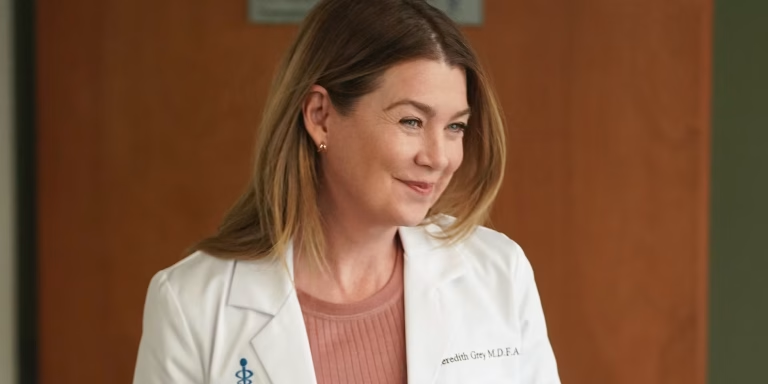
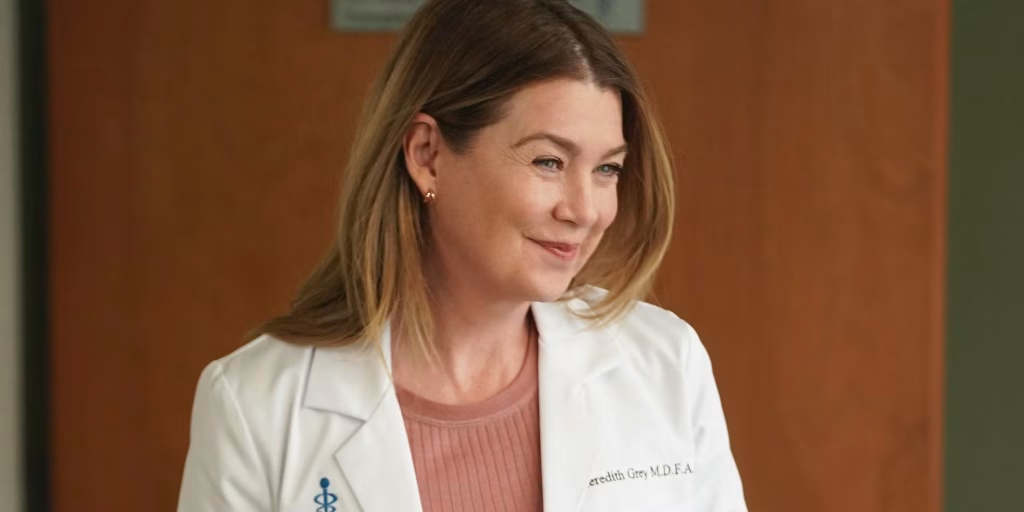
14. Ellen Pompeo (Meredith Grey)
The face and heart of the show, Ellen Pompeo, stepped down as a series regular after more than 400 episodes. She admitted she chose security and a massive paycheck over seeking out “perilous” acting roles, signing a deal for about $20 million a year. While she still pops up sporadically and remains an executive producer, Meredith’s reign at Grey Sloan is officially finished.
Image Source: Bing Image. License: All Creative Commons
13. Justin Chambers (Alex Karev)
The viewers were left stunned when Alex Karev left after 16 years. The writers of the show showed him the door to Kansas, where he reunited with Izzie and their kids. Chambers had said that he wanted to expand his career and try out new characters outside the comfort of Grey’s. In his own words, he has been going after more complex, darker characters since then.
Image Source: Bing Image. License: All Creative Commons
12. Jesse Williams (Jackson Avery)
Jackson’s exit in season 17 tugged at heartstrings. Jesse Williams felt it was a necessary turning point in the character’s arc and departed to search for new opportunities. Jackson’s move to Boston gave closure to his story, but Williams has returned for cameo roles to leave that door slightly ajar.
Image Source: Bing Image. License: All Creative Commons
11. Giacomo Gianniotti (Andrew DeLuca)
DeLuca’s dramatic on-season 17 death—stabbed while pursuing a human trafficker—was among the show’s greatest. Gianniotti shared he was grateful for how his character died and said it was a beautiful ending to DeLuca’s turbulent ride.
Image Source: Bing Image. License: All Creative Commons
Season 14 featured viewers stunned by a double elimination. Sarah Drew and Jessica Capshaw were both written out in “creative direction,” stoking rumors that it had to do with Pompeo’s big new salary. April was in harmony at a clinic, and Arizona moved to New York to co-parent with Callie.
Image Source: Bing Image. License: All Creative Commons
9. Eric Dane (Mark Sloan)
McSteamy’s tragic death in season 9 still hurts. Eric Dane originally departed to pursue other ventures, though afterwards admitted the decision wasn’t entirely his. Fans nonetheless got a sweet and poignant closure when Mark was reunited with Lexie in the afterlife after the plane crash storyline.
Image Source: Bing Image. License: All Creative Commons
8. Chyler Leigh (Lexie Grey)
Lexie’s untimely death with Mark was another tearful moment. Leigh requested to leave to ground herself on her family, and Shonda Rhimes worked with her to get her to write a good goodbye. Leigh then went on to appear in Supergirl when she reprised for a dreamy cameo in season 17.
Image Source: Bing Image. License: All Creative Commons
7. Patrick Dempsey (Derek Shepherd)
McDreamy’s season 11 death shook the fanbase. Offscreen, Dempsey said it was a natural progression, but behind-the-scenes gossip later reported tension with the cast and crew. His feud with Pompeo and Rhimes clearly sealed his fate. Even so, his dream sequence appearances gave fans one last dose of MerDer magic.
Image Source: Bing Image. License: All Creative Commons
6. Sandra Oh (Cristina Yang)
Cristina’s departure in season 10 was a class in refined storytelling. Sandra Oh just felt it was time to go after having given the character her best. Cristina’s move to Zurich gave her a good send-off, and though fans still beg to have her back, Oh has emphatically declared that she’s closed the book.
Image Source: Bing Image. License: All Creative Commons
5. Katherine Heigl (Izzie Stevens)
Heigl’s season 6 dramatic departure followed public criticism of the show’s writing and her removal from Emmy consideration. She later regretted how she was being interpreted. Izzie’s departure divided the fans, and Heigl’s career took a different turn afterward, with roles on Firefly Lane and otherwise.
Image Source: Bing Image. License: All Creative Commons
4. T.R. Knight (George O’Malley)
George’s horrific death following his rescue of a stranger from a bus crash remains Grey’s darkest moment. Knight left after becoming upset with having no storylines and speaking with producers. Off-stage conflicts—like Isaiah Washington’s infamous slur—also weighed on his tenure.
Image Source: Bing Image. License: All Creative Commons
3. Isaiah Washington (Preston Burke)
Burke’s season 3 departure was surrounded by off-screen scandal. Washington was fired after using a homophobic slur to refer to Knight, which resulted in a fight with Patrick Dempsey. On the show, Burke left Cristina standing at the altar—a mean scene. He did return for a season 10 cameo to help close out Cristina’s story.
Image Source: Bing Image. License: All Creative Commons
2. Sara Ramirez (Callie Torres)
After season 12, Ramirez confirmed they were departing Grey’s to develop individually, stating they had reached “emotional and physical capacity” with the character. Callie’s departure to New York was the end of a trailblazing run for LGBTQ+ representation. Ramirez then came out as non-binary and has since caused a stir in shows like And Just Like That.
Image Source: Bing Image. License: All Creative Commons
1. The Legacy of Grey’s Exits
Every one of their departures—hurt, sudden, or messy—has redefined Grey’s Anatomy in unforgettable ways. These exits have launched fan debate, fueled headlines, and reminded us that drama never ends at Grey Sloan, on or off the screen.
Image Source: Bing Image. License: All Creative Commons
If there’s one constant in Grey’s Anatomy, it’s that nobody’s job is ever safe. But every goodbye, no matter how painful, has kept fans hooked for nearly two decades—and made sure the show stays just as unpredictable as day one.
Image Source: Bing Image. License: All Creative Commons
Blumhouse has been able to develop a unique identity in the horror movie business by making creative use of a low budget to come up with some of the most memorable and talked-about films of the last several decades. From scary psychological horror to very compelling social commentary wrapped in genre thrills, or just highly exciting and terrifying movie experiences, Blumhouse is a brand that skillfully knows how to get its viewers to scream and think at the same time.
Image Source: Bing Image. License: All Creative Commons
From quiet, unsettling dread to blockbuster spectacle, their films are often as clever as they are frightening. Here’s a reverse-order countdown of the 15 Blumhouse horror movies that have left the biggest mark on audiences and the genre itself, whether through innovation, cultural impact, or sheer memorability.
Image Source: Bing Image. License: All Creative Commons
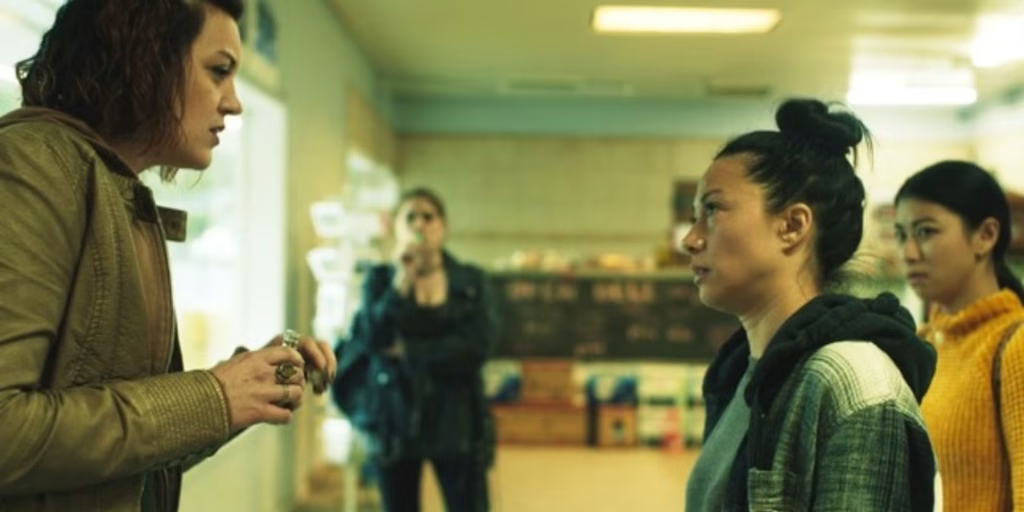
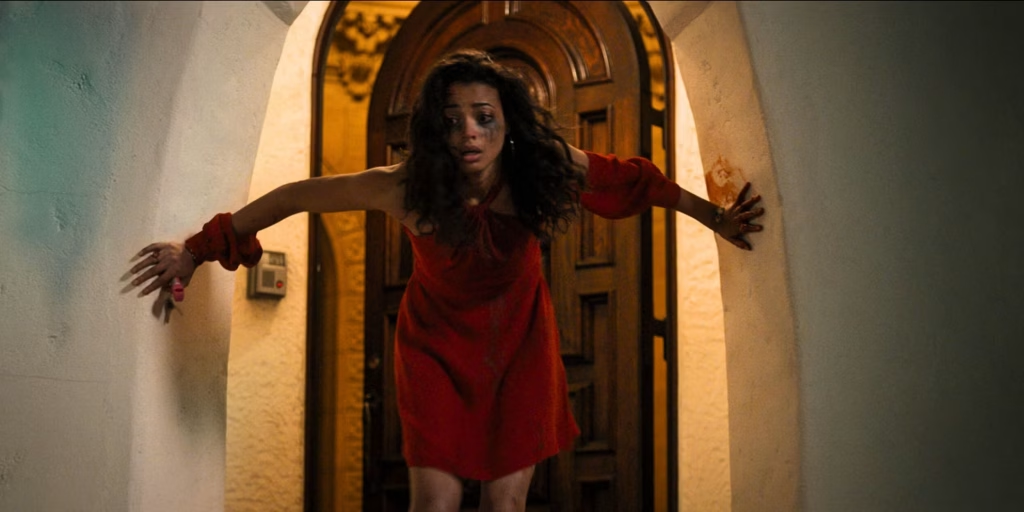
15. Soft & Quiet
Beth de Araújo’s Soft & Quiet is a tense, real-time thriller that’s as uncomfortable as it is masterful. The film follows a small gathering of white supremacist women that spirals into escalating violence, all captured in a single, continuous take. The minimalism of the production—focused on real-time events and personal interactions—creates an intimacy that makes the violence feel disturbingly immediate. It’s a film that forces viewers to sit with their unease rather than offering easy catharsis.
Image Source: Bing Image. License: All Creative Commons
More than just a story about literal horror, the movie engages with cultural and social fears, exploring how ideology can manifest in everyday settings and turn mundane interactions terrifying. Its impact lies in its unflinching commitment to realism and tension, proving that horror doesn’t always need monsters—it can come from human cruelty and groupthink.
Image Source: Bing Image. License: All Creative Commons
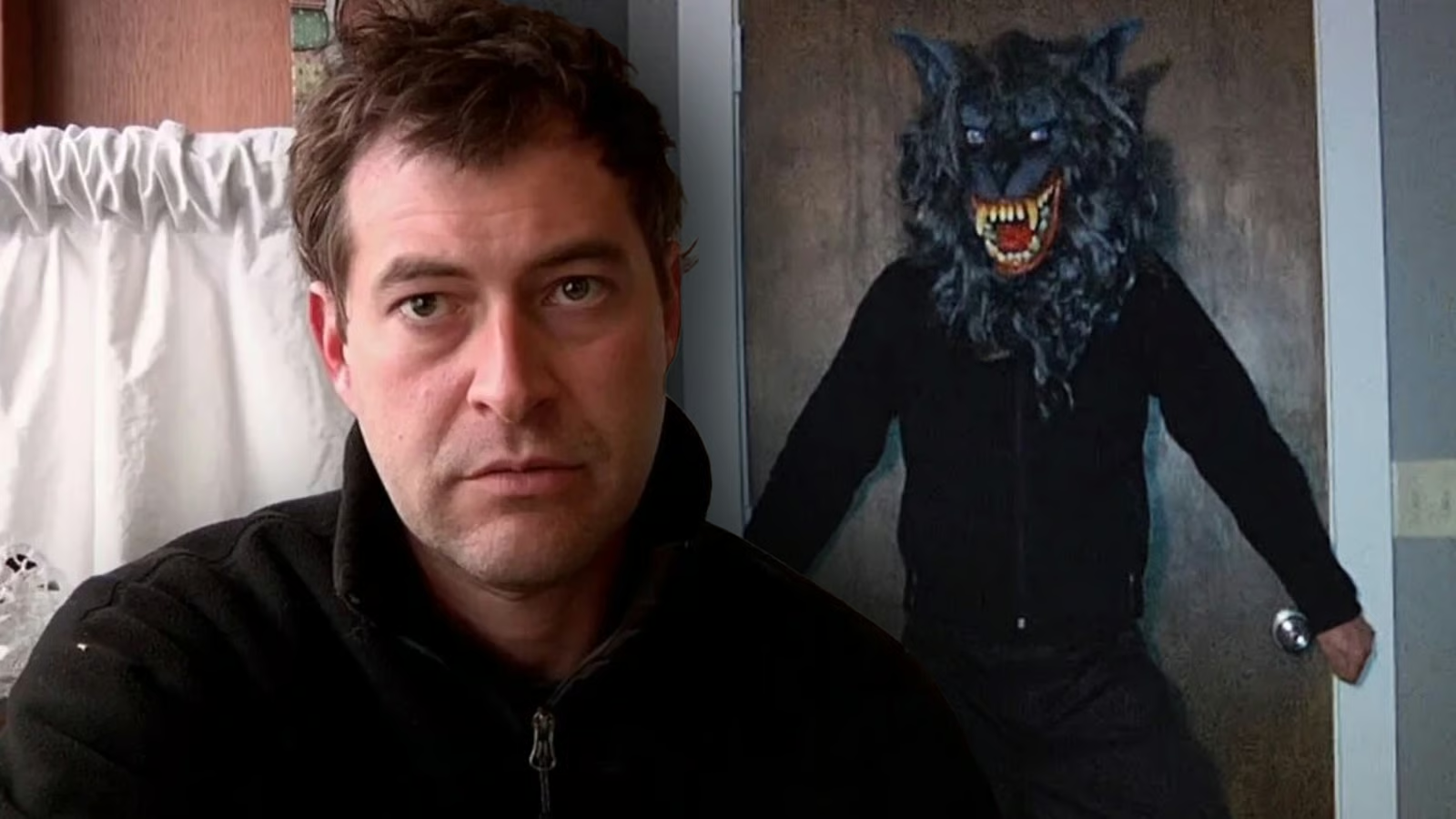
14. Creep 2
Mark Duplass returns in Creep 2 as the socially awkward, deeply unsettling serial killer from the first film, and this time his character wrestles with existential ennui and loneliness. The sequel expands the psychological tension, pairing Duplass’s charm and creepiness with Desiree Akhavan’s equally fearless presence. Their interaction builds suspense that’s as much about uncomfortable social dynamics as it is about danger.
Image Source: Bing Image. License: All Creative Commons
The brilliance of the film lies in its exploration of loneliness, obsession, and human connection in the context of horror. With long takes and restrained pacing, the tension grows organically, making each moment feel like a slow, escalating nightmare. It’s proof that horror can thrive in the quiet spaces between words, and that a truly compelling villain can be just a human being with disturbingly relatable desires.
Image Source: Bing Image. License: All Creative Commons
13. Creep
The original Creep introduced audiences to the found-footage horror format executed with meticulous precision. Patrick Brice’s character unknowingly invites himself into the home of Duplass’s unsettling Craigslist client, and what follows is a study in unease. The low-budget aesthetic enhances the realism, making every awkward interaction, misplaced gesture, and long, silent moment feel laden with dread.
Image Source: Bing Image. License: All Creative Commons
It’s a film that thrives on psychological tension rather than gore, and its slow-burning pacing allows the audience to feel the protagonist’s growing discomfort. The intimacy of the camera makes viewers complicit in the situation, a technique that set Creep apart from many other horror films of its time and cemented its place as a standout Blumhouse entry.
Image Source: Bing Image. License: All Creative Commons
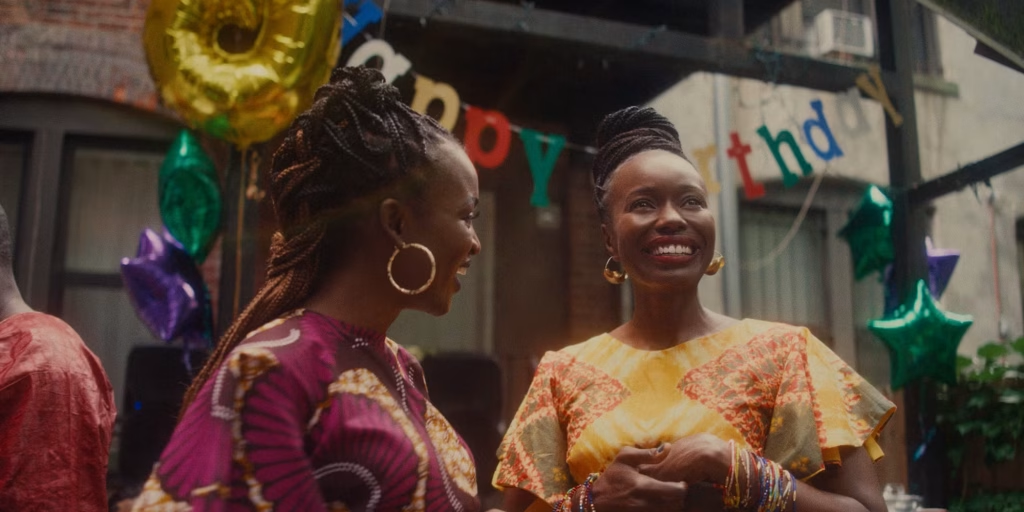
12. Nanny
Anna Diop shines in Nanny, a film that blends psychological horror with elements of West African folklore. The story follows a woman navigating displacement, cultural isolation, and the emotional toll of caregiving, while supernatural forces loom subtly in the background. Nikyatu Jusu balances the real-world anxieties of the protagonist with eerie, otherworldly events, creating a story that is both grounded and terrifyingly surreal.
Image Source: Bing Image. License: All Creative Commons
What makes the movie particularly impactful is its focus on personal and cultural stakes. The horror is deeply human at its core, exploring the cost of migration, motherhood, and identity, and wrapping these themes in a suspenseful narrative that lingers long after the credits roll. It proves that horror can be both socially resonant and deeply unsettling.
Image Source: Bing Image. License: All Creative Commons
11. M3GAN
Move over, classic killer dolls—M3GAN is here. Blumhouse, alongside James Wan and Jason Blum, delivers a film that’s equal parts campy fun and social commentary. M3GAN, a hyper-intelligent robotic companion, becomes a meme-worthy sensation thanks to her deadly antics, but the film cleverly explores issues of modern parenting, screen addiction, and our reliance on technology for companionship and emotional support.
Image Source: Bing Image. License: All Creative Commons
The movie thrives because it balances laughs, suspense, and horror in a way that appeals to a broad audience. The choreography, especially the viral dance scene, shows that Blumhouse understands how to merge spectacle with storytelling. M3GAN isn’t just a killer doll—it’s a reflection of our contemporary anxieties in an accessible, entertaining package.
Image Source: Bing Image. License: All Creative Commons
10. The Invisible Man
Leigh Whannell’s The Invisible Man reinvents a classic horror icon with a contemporary lens, turning the story into a tense psychological thriller about control, abuse, and gaslighting. Elisabeth Moss delivers a career-best performance, embodying a woman navigating fear and trauma while being hunted by someone who appears untouchable. The tension in every scene is palpable, making the audience feel every moment of paranoia and dread alongside her.
Image Source: Bing Image. License: All Creative Commons
The brilliance of the film lies in its use of absence as a threat—the unseen becomes more terrifying than anything visible, turning ordinary spaces into arenas of terror. By blending social commentary with traditional horror tropes, The Invisible Man shows that suspense and psychological depth can elevate genre storytelling to something profoundly affecting.
Image Source: Bing Image. License: All Creative Commons
9. Cam
Cam tackles horror in the digital age, exploring identity, obsession, and online duplicity. Madeline Brewer plays a camgirl whose life is upended when a perfect digital version of herself begins taking over her online presence. The story is both unnerving and topical, highlighting the eerie vulnerabilities inherent in a world dominated by screens, social media, and performative intimacy.
Image Source: Bing Image. License: All Creative Commons
Beyond the technological thrills, the film is a tense psychological character study. Brewer’s layered performance conveys panic, ingenuity, and isolation, while the horror emerges naturally from a familiar, seemingly safe environment turned threatening. It’s a modern story of selfhood, performance, and the uncanny power of digital doubles.
Image Source: Bing Image. License: All Creative Commons
8. Sweetheart
J.D. Dillard’s Sweetheart brings survival horror to an isolated tropical setting, where Kiersey Clemons must outwit a terrifying sea creature after being stranded. The film fuses elements of classic monster movies with a contemporary psychological sensibility, emphasizing tension, resourcefulness, and human vulnerability. Every night, the protagonist faces fear amplified by isolation, fatigue, and environmental hazards.
Image Source: Bing Image. License: All Creative Commons
The story’s power comes from its combination of minimalist storytelling and primal fear. Dillard uses natural settings, sound design, and Clemons’s anchored performance to create a claustrophobic, high-stakes scenario. Sweetheart reminds audiences that isolation itself can be a form of horror, even before the monsters appear.
Image Source: Bing Image. License: All Creative Commons
7. The Vigil
Keith Thomas’s The Vigil merges supernatural horror with deep cultural context, following a man tasked with watching over a deceased body overnight, only to confront malevolent forces. The movie’s strength lies in its blend of folklore, ritual, and psychological tension, providing fresh material within the familiar haunted-house framework.
Image Source: Bing Image. License: All Creative Commons
Dave Davis anchors the film with a performance that balances fear, disbelief, and moral responsibility, making viewers feel the weight of his nightly vigil. The supernatural elements are both terrifying and thematically resonant, exploring grief, guilt, and spiritual reckoning. The Vigil is proof that cultural specificity can enrich horror without sacrificing universal scares.
Image Source: Bing Image. License: All Creative Commons
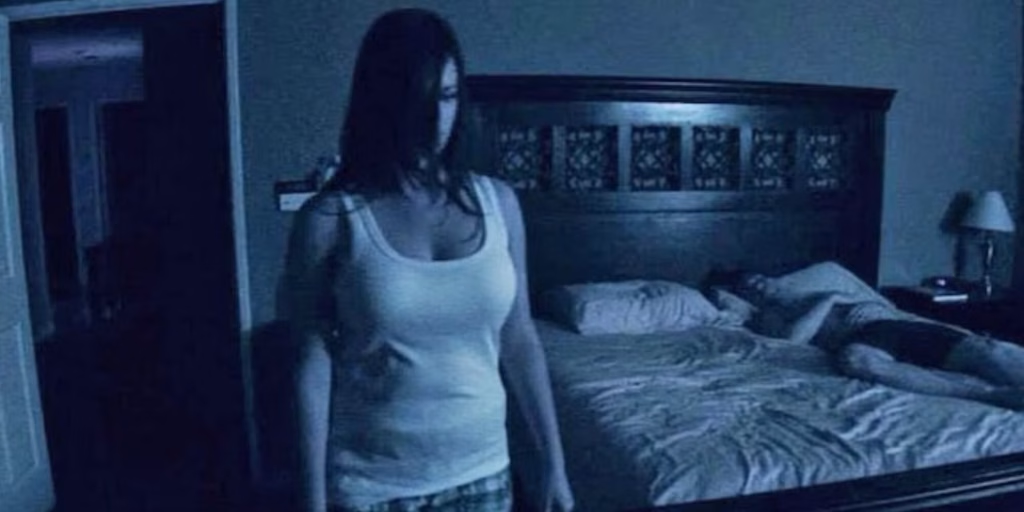
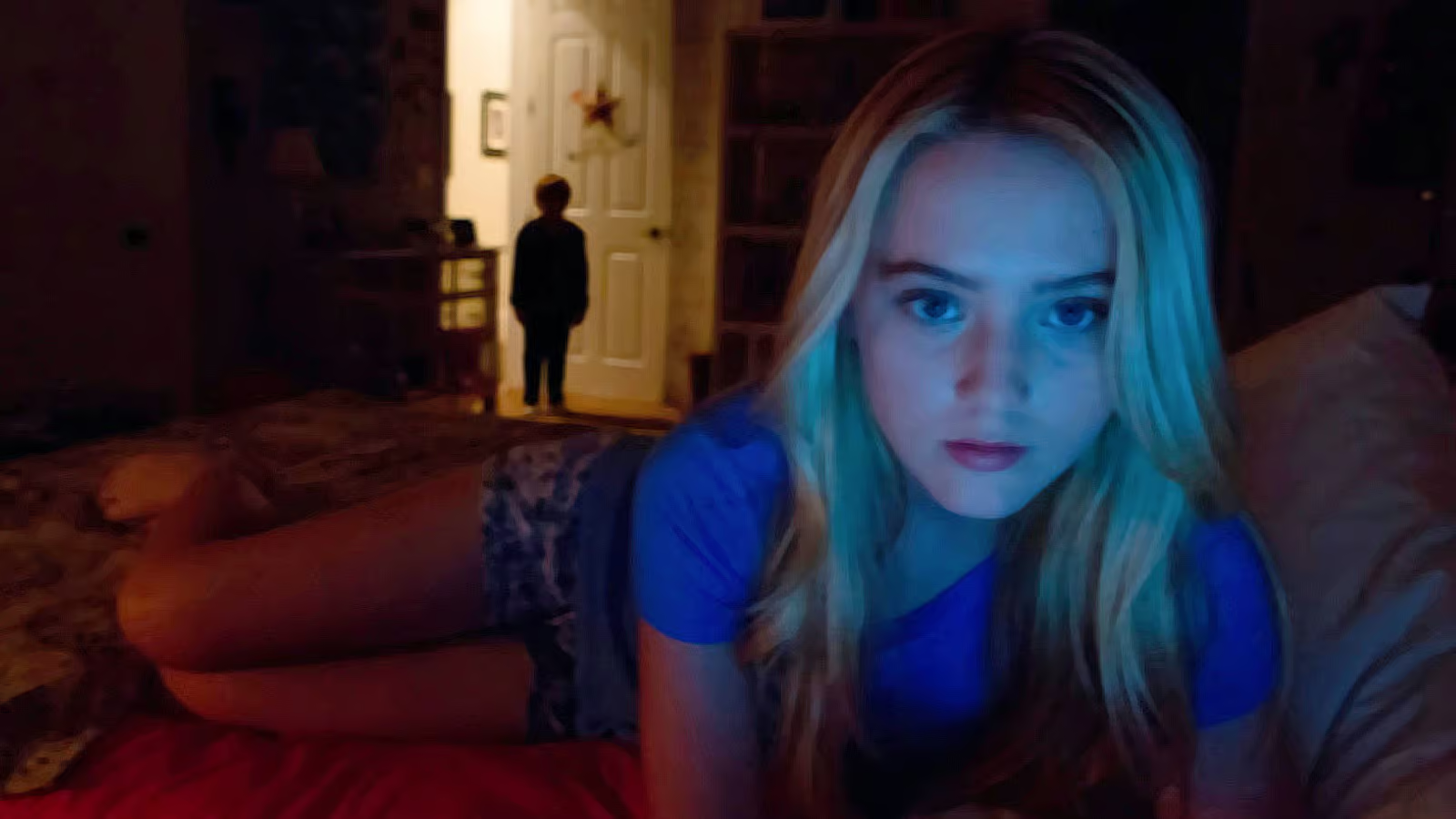
6. Paranormal Activity
Oren Peli’s Paranormal Activity transformed low-budget filmmaking into a horror powerhouse. The minimalist found-footage approach relied on subtle, creeping dread rather than blood or shock value, making every flicker, whisper, and shadow terrifying. The film became a cultural phenomenon, demonstrating that atmosphere and suspense could outweigh spectacle.
Image Source: Bing Image. License: All Creative Commons
Its legacy is undeniable: it spawned numerous sequels, inspired imitators, and turned ordinary household spaces into vessels of fear. Watching the seemingly mundane become sinister reminds audiences that horror doesn’t require grandiose monsters—sometimes, tension is enough to keep viewers up all night.
Image Source: Bing Image. License: All Creative Commons
5. Hush
Mike Flanagan’s Hush delivers a masterclass in tension, placing a deaf and mute protagonist at the center of a home-invasion scenario. Kate Siegel’s performance makes the audience acutely aware of the character’s vulnerability while also showcasing her resourcefulness. Every noise, shadow, and movement becomes heightened, turning the familiar home into a suspenseful maze.
Image Source: Bing Image. License: All Creative Commons
By removing spoken dialogue, the film intensifies viewer immersion, relying on visual storytelling, sound design, and physical performance to convey terror. Hush demonstrates that horror can be both innovative and emotionally gripping without relying on overt gore or exposition.
Image Source: Bing Image. License: All Creative Commons
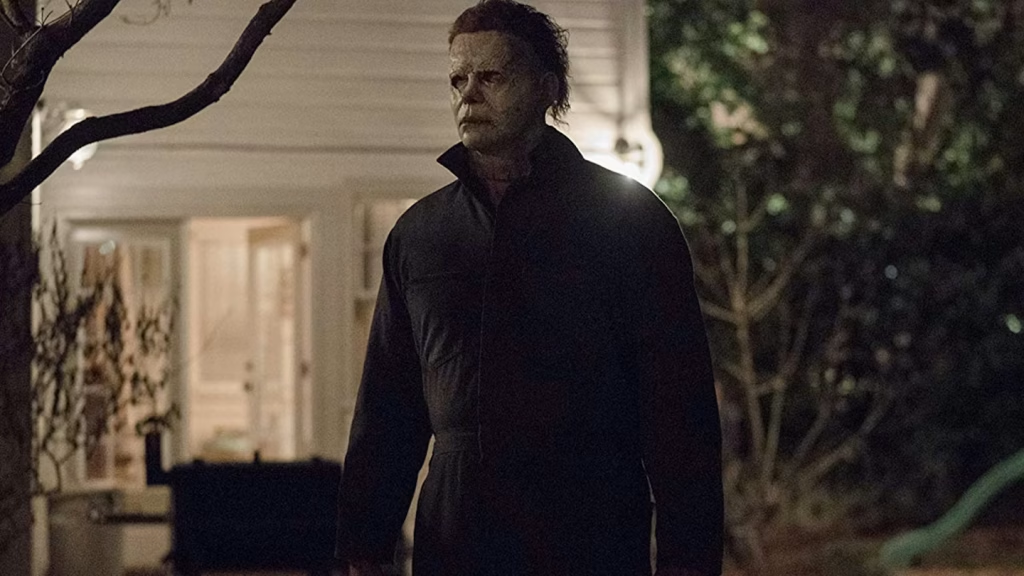
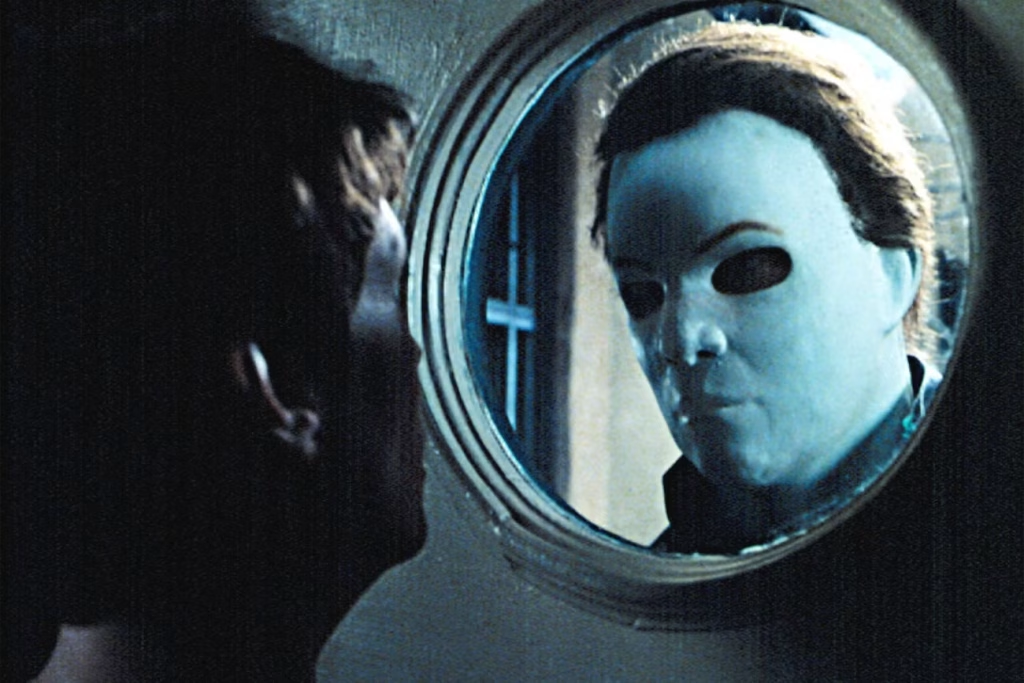
4. Halloween (2018)
David Gordon Green’s Halloween revitalizes the iconic franchise with a back-to-basics approach, bringing Jamie Lee Curtis back as Laurie Strode. The film strips away decades of convoluted sequels to focus on primal fear, survival, and the unstoppable menace of Michael Myers. Carpenter’s involvement in the score and tone ensures that this reboot feels respectful yet thrillingly contemporary.
Image Source: Bing Image. License: All Creative Commons
The movie succeeds because it balances nostalgia with tension, giving longtime fans the scares they expect while introducing suspenseful pacing and character-driven stakes. It’s a masterclass in legacy franchise filmmaking that respects the past while asserting its own relevance.
Image Source: Bing Image. License: All Creative Commons
3. Us
Jordan Peele’s Us expands his exploration of horror and social commentary, following a family confronted by terrifying doppelgängers. Lupita Nyong’o’s dual performance is extraordinary, anchoring a film that examines identity, privilege, and the darkness lurking within society itself. Peele’s visual storytelling and careful attention to symbolism make the narrative rich with interpretive depth.
Image Source: Bing Image. License: All Creative Commons
The horror in Us is as much psychological as it is visceral. Scenes of tension, dread, and the uncanny interplay between characters elevate it beyond simple jump scares. It’s a thought-provoking horror experience that rewards repeated viewing and analysis, cementing Peele’s place as one of modern horror’s most ambitious directors.
Image Source: Bing Image. License: All Creative Commons
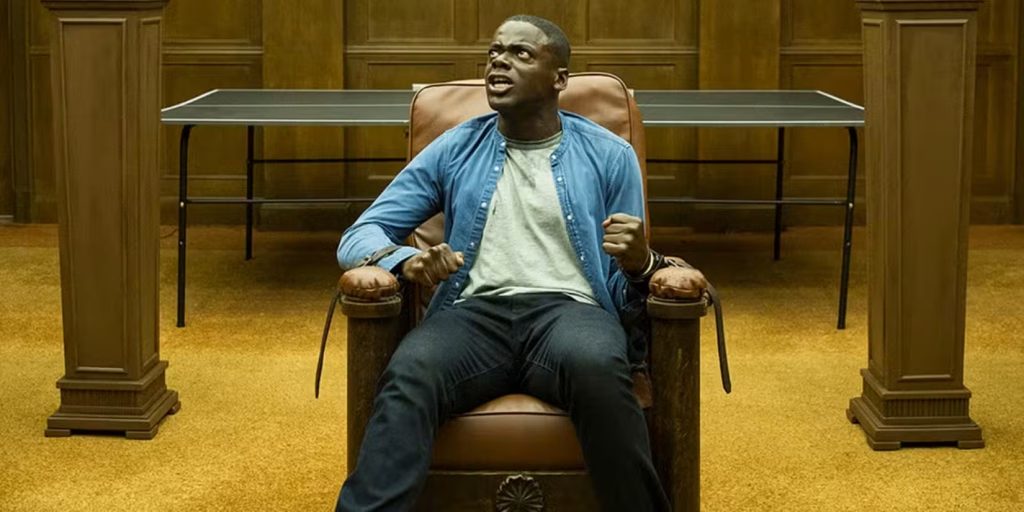
2. Get Out
Get Out is a watershed moment in horror cinema. Jordan Peele’s debut blends sharp social commentary with suspenseful storytelling, exploring racism and exploitation through the lens of a home-invasion horror scenario. Daniel Kaluuya’s performance conveys a mix of fear, intelligence, and resilience, guiding viewers through a tense narrative filled with both subtle and overt threats.
Image Source: Bing Image. License: All Creative Commons
The film’s impact extends beyond horror, influencing discussions around race, genre, and narrative innovation. By combining satire, suspense, and deeply felt characterization, Get Out became a cultural touchstone, proving that genre films can carry both entertainment value and profound societal critique.
Image Source: Bing Image. License: All Creative Commons
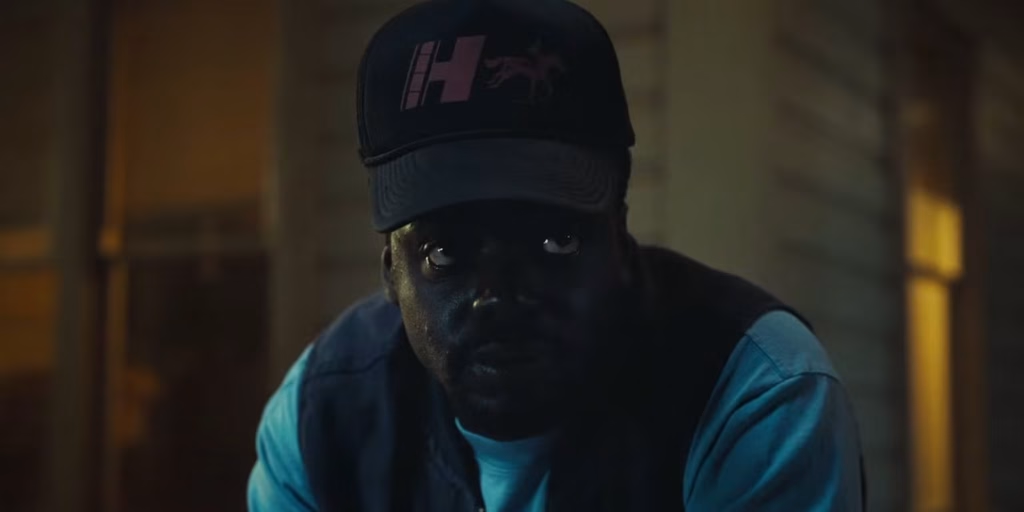
1. Nope
Jordan Peele’s Nope pushes genre boundaries, delivering a UFO-centered spectacle with wide-open cinematic landscapes. Keke Palmer and Daniel Kaluuya lead the cast with compelling performances that balance tension, awe, and human vulnerability. Peele’s command of pacing, framing, and suspense transforms what could have been a conventional thriller into a visually stunning and emotionally resonant experience.
Image Source: Bing Image. License: All Creative Commons
The film’s impact lies in its blending of spectacle and social commentary, reflecting on humanity’s obsession with spectacle, exploitation, and survival instincts. With jaw-dropping visuals, unforgettable set pieces, and moments of pure tension, Nope solidifies Peele’s status as one of the most innovative voices in contemporary horror.
Image Source: Bing Image. License: All Creative Commons
Blumhouse has redefined what modern horror can be, blending psychological depth, social relevance, and inventive scares in ways few studios can replicate. From intimate, character-driven nightmares to big-budget thrillers that command IMAX screens, these 15 films showcase the studio’s versatility and lasting influence.
Image Source: Bing Image. License: All Creative Commons
Whether you’re here for the tension, the cultural commentary, or the sheer audacity of killer dolls and invisible threats, Blumhouse continues to prove that horror can be smart, impactful, and undeniably entertaining—one terrifying story at a time.
Image Source: Bing Image. License: All Creative Commons
There is a particular, strange fun in watching the world fall to pieces, especially if you are not a part of it and just able to sit safely in your place. If it’s zombies, an asteroid hitting the earth, or mankind simply self-destructing, whatever it is, Netflix has really become the go-to place for the end-of-the-world movies. You can find any sort of disaster movie on Netflix, from those that are packed with suspense to those that really make you think.
Image Source: Bing Image. License: All Creative Commons
If you want to watch chaos happening, monsters appearing, and some barely fathomable emotional storytelling, check out my top 10 apocalyptic movies that you can immediately watch on Netflix. It’s a trip through the ones that only amaze you to the ones that you will never forget.
Image Source: Bing Image. License: All Creative Commons
10. What Happened to Monday — Seven Sisters, One Secret
The intricately imagined dystopia of What Happened to Monday, which is filled with mystery and action, is a clear winner. Noomi Rapace is the one who plays seven identical sisters in a world run by a law permitting only one child per family. Basically, every sister gets only one day of freedom, which is one day out of the week, until the disappearance of a sister. Hence, the movie becomes a clever and suspenseful thriller involving characters changing their identities, government corruption, and love among siblings. It kind of feels like a mix of Orphan Black and Children of Men and is gripping right from the first moment.
Image Source: Bing Image. License: All Creative Commons
9. Train to Busan — Zombies at 200 MPH
Train to Busan, a major zombie theme with an elaborate turn, is not just the next South Korean zombie flick but a masterclass in emotional horror. Just at the moment when the infection is going viral, a father with his daughter and some other people get on a train that will soon be their metal coffin in a very fast virus-spreading chain of events. And it is fast: these zombies go full sprint, not a slow walk. However, it is the warm heart of the story that really makes the film most memorable. Expect to cry just as much as you will be startled.
Image Source: Bing Image. License: All Creative Commons
8. I Am Mother — Humanity Reborn (Sort Of)
This sharp Australian sci-fi poses the question of the essential nature of humanity. A robot “Mother” raised a girl in an underground shelter, and she thought she was the only one left after the apocalypse- but then a severely injured man shows up and changes everything. What follows is a gripping blend of psychology, suspense, and moral dilemma. Clara Rugaard and Hilary Swank, both mamakereat roles, Rugaard is the newcomer, and Swank brings the power. Intelligent, chilling, and softly emotive.
Image Source: Bing Image. License: All Creative Commons
7. Godzilla: Planet of the Monsters — Humanity vs. Kaiju, Anime Style
This audacious anime reboot follows the story of the human race coming back to their home planet after 20,000 years, when Godzilla drove them away. The Earth is taken over by monsters, and the remaining people are desperate to get it back. The animation is extremely impressive, and the story changes the whole Godzilla theme in very interesting and futuristic ways. If you ever imagined Pacific Rim with a high-concept anime touch, then this is your time.
Image Source: Bing Image. License: All Creative Commons
6. Godzilla Minus One — The Monster With a Soul
The narrative in this post–World War II Japan-set, Oscar-winning, kaiju genre-defining film moves the loud destruction part far beyond to focus on the emotionally devastated area. The storyline revolves around a pilot with PTSD and his surroundings, people whom he wants to protect, as the plot advances with Godzilla’s return. It’s packed with love, frightening, and incredibly human; actually, it is a monster movie to empathize with. The real one is the most potent of all.
Image Source: Bing Image. License: All Creative Commons
5. Elysium — Earth in Ruins, Heaven in Orbit
Neill Blomkamp’s futuristic thriller invokes a world that’s divided, with the rich in an elevated paradise and the poor rotting below. Matt Damon plays a desperate man determined to bridge that chasm. Gritty, fast-moving, and with a healthy dose of social acumen, this is sci-fi with teeth. In its amazing visuals and political bite, Elysium hits hard and stays relevant.
Image Source: Bing Image. License: All Creative Commons
4. Edge of Tomorrow — Live, Die, Repeat, Save the World
Tom Cruise and Emily Blunt are simply brilliant in the time loop action film, which one can watch over and over again with no loss of enjoyment. Each time Tom Cruise’s soldier is killed in the fight against an alien invasion, he wakes up at the very beginning of the same, pretty grim day. The only way to escape? Each time death, learn and better fight. It is a combination of Groundhog Day and Aliens, in fact, almost perfect in terms of humor, emotional involvement, and combat at the highest level.
Image Source: Bing Image. License: All Creative Commons
3. Don’t Look Up — The End of the World, but Make It a Meme
Adam McKay’s sharp-toothed satire turns the apocalypse into a farce of the absurd kind. Leonardo DiCaprio and Jennifer Lawrence are scientists warning the world about an extinction-level comet, but their message is suffocated by politics, influencers, and denial. The film is hilarious until it isn’t, and it takes a deep dive into present media culture. As such, it is a mixture of the absurd and frighteningly real, of equal proportions.
Image Source: Bing Image. License: All Creative Commons
2. Bird Box — Fear You Can’t See
Sandra Bullock is the leading lady in this Netflix viral hit about an unseen force whose direct gaze drives people to insanity. Survivors with blindfolds travel rivers and woods, guided by sound and trust only. On the one hand, it is a very tense and emotional film, and on the other hand, a somewhat strange and touching creature feature and metaphor for parenthood and resilience-a modern survival classic.
Image Source: Bing Image. License: All Creative Commons
1. 28 Years Later — The King Returns
The team of director Danny Boyle and writer Alex Garland returns to the franchise that set the standard for post-apocalyptic movies. After the outbreak of the first film, a small community living on an isolated island is trying to rebuild the world, but the virus of rage comes knocking at their door again. 28 Years Later is powerful, scary, and, quite surprisingly, full of feeling – it works both as a coming-of-age story and a reckoning. It’s horror with intelligence and sharpness, an ideal way to bring the world to an end.
Image Source: Bing Image. License: All Creative Commons
From robot uprisings to zombie hordes, Netflix has pretty much mastered apocalyptic tales. If you like monster mayhem, emotional survival stories, or biting satire, you will find something here to satisfy that end-of-the-world craving. So, why not take a snack, turn the light off, and watch civilization’s final hours unfold, one movie at a time?