Home Blog Page 2

The Evolution of Overwatch 2 Gameplay Through Junker Queen

Junker Queen storms into Overwatch 2 exactly as you’d imagine—fierce, unapologetic, and impossible to ignore. She thrives on chaos, bringing a mix of aggression and raw intensity that immediately clicks with players who enjoy being right in the heart of the fight. But there’s more to her than just reckless energy. Beneath that brutal exterior is a layered character with a compelling backstory, a highly aggressive playstyle, and a commanding presence that can easily overwhelm opponents and turn matches in her favor.

Image Source: Bing Image. License: All Creative Commons

Who is Junker Queen?

Junker Queen, whose real name is Odessa “Dez” Stone, is a tank hero boasting 425 base health and an unmistakably bold personality. Voiced by Leah De Niese, the Australian character leads the brutal, no-nonsense Junkers faction. Ever since her debut, she’s made a strong impression—shaking up both the game’s lore and its competitive meta.

Her Origins: From Exile to Queen

Junker Queen’s story is rooted in survival, grit, and a relentless drive to prove herself. Cast out of Junkertown as a child by the ruling Junker King, Mason Howl, Dez was forced to fend for herself in the unforgiving Australian Outback. Over the next 13 years, she carved out a reputation as a fierce warrior, taking on dangerous foes like feral omnics and the feared Five Metal Demons.

Her rise to power came during the Reckoning, Junkertown’s brutal arena where only the strongest survive. Through sheer strength and determination, she battled her way to the top, eventually overthrowing Mason Howl and claiming the throne for herself. In a poetic twist, she exiled him just as he once did to her. Since then, her rule has been harsh and uncompromising—no one is spared her wrath, not even troublemakers like Junkrat and Roadhog, who were driven out for their repeated misdeeds, though they’re always lurking, waiting for another chance.

Weapons & Abilities: Brutal and Tactical

Junker Queen’s kit is designed for brutal, close-quarters fighting. Here’s what she does on the battlefield:

  • Scattergun: A pump shotgun that packs a powerful punch at close range, delivering up to 80 damage per shot.
  • Jagged Blade: A tossable knife that poisons enemies and can be recalled, dragging targets towards her, even through walls.
  • Carnage: Swings her axe in a broad arc, dealing damage-over-time damage to all enemies she hits.
  • Commanding Shout: Calls out a rallying cry that increases her health by 200 and provides nearby allies with an additional 100 HP, as well as a 30% speed increase.
  • Rampage (Ultimate): Charges forth, wounding all enemies she moves through and applying anti-heal, which makes them unable to be healed for a short time.
  • Adrenaline Rush (Passive): Restores Junker Queen for some of the damage applied via wounds, allowing her to remain in combat longer.

How to Play Her: Aggressive, Calculated Chaos

Players must be able to go in-your-face, brawler style to truly excel as Junker Queen. One of her best combos is:

  • Throw Jagged Blade to catch an enemy hooking in.
  • Follow up with Carnage as they’re pulled in.
  • Recall the blade for bonus damage and disarray.
  • Conclude with Scattergun shots, interspersed with Quick Melee between shots to get the most out of wound uptime and healing.

Clever Jagged Blade wall-sprinting can catch enemies off-guard, while Commanding Shout should be reserved for climactic moments—either to start a game-altering push or aid your team through a clutch defense.

Style and Skins

Junker Queen brings a lot of punk-rock style to battle. Her skin set includes:

  • Legendary: Circuit Breaker, Wastelander
  • Epic: Punker Queen, Beast Hunter
  • And other rare radioactive-themed skins

Her emotes, kill poses, and voice lines—particularly the fan favorite “Your queen says charge!”—allow players to completely get into her bigger-than-life personality.

Recent Balance Updates

Junker Queen has been refined with thoughtful adjustments since her release. One change in particular: Jagged Blade can no longer be deflected or sent back by friendly skills, solidifying her reputation as a persistent intervener. These adjustments, added in Halloween Terror 2022, have balanced her role and cemented her position in the shifting tank meta.

Where She Stands in the Meta

Junker Queen has established herself as a solid niche among Overwatch 2 tank picks. Her capacity to take a beating, buff allies, and close off healing makes her an excellent choice, particularly for players who enjoy taking point. She is best suited for compositions that emphasize high-speed, coordinated encounters and performs well with aggressive DPS and support heroes who share her speed.

Whether it’s her quick-witted charm, her ruthless skillset, or her unhinged lore, Junker Queen is one of Overwatch 2’s most interesting heroes. She’s not merely another tank—she’s an icon of pure power, vengeance, and tenacity. And for those players who prefer to dictate the battle, she’s the queen you’ll want commanding your team into combat.

How the Rampage LMG Became a Top Weapon in Apex Legends

0

If you’ve spent any time in the Outlands, you already know the Rampage LMG isn’t just another heavy weapon—it’s a presence. Since it arrived in Apex Legends, this powerhouse has stood out as a go-to choice for players who want serious firepower with a unique edge. In this piece, we’ll break down what makes the Rampage so effective, how it has evolved, and why it continues to leave a mark on the battlefield.

Image Source: Bing Image. License: All Creative Commons

What Makes the Rampage Unique: Revved Up and Thermite-Powered

The Rampage doesn’t just fire like a typical LMG—it builds momentum. Its standout feature, the Revved Up mechanic, lets you charge the weapon using a Thermite Grenade. After about four seconds, the gun gains a significant boost, increasing its fire rate by roughly 30% for up to 90 seconds. That boost doesn’t last forever, though—the more you hold down the trigger, the faster it burns out, so timing and control really matter.

What makes it even more dangerous is how it interacts with the environment. When fully charged, the Rampage can tear through doors in just two shots—or even one if they’re already weakened. That makes it incredibly effective for pushing into tight spaces and catching enemies off guard.

How It’s Changed Over the Seasons

Since its release in August 2021, the Rampage has come a long way. It initially began as regular ground loot, but after running rampant in matches on every mode, it was shifted into the care package pool, becoming a rare (but much-coveted) find.

Damage stats have been rather inconsistent—beginning at 26 damage per shot, followed by increases to 28, and most recently ranging from 29 to 30. Headshot damage is as serious as 38. Charge time for the Revved Up has also changed, beginning as long as 147 seconds, then being reduced to a more level 60, and now 90 seconds.

Other adjustments have served to tighten up the way the Rampage handles in your hands. Hipfire spread has been tweaked to be less effective close up, but powerful mid-range. Reload speed and animation have also been smoothed out, and the weapon automatically reloads when you build up your rev—a minor but appreciated nicety. Compatibility with the Gun Shield Generator provides yet another utility.

Rampage Stats and Attachments

Let’s discuss numbers. The Rampage packs a punch. On mobile, it deals 26 base body damage and 39 on headshots. On console and PC, those have increased somewhat with body shots at about 29 to 30, and headshots remaining at about 38. Leg shots will do less damage—but really, you ought to be aiming higher.

When attachments are concerned, the Rampage is versatile. It can be fitted with barrel stabilizers, extended heavy mags, and regular stocks. In terms of optics, anything between a simple 1x HCOG and a 2x-4x Variable AOG would do nicely, depending on your playing style. With its slower rate of fire, accuracy comes into play, so stabilizing attachments are important.

How to Use the Rampage Like a Pro

The Rampage isn’t an average spray-and-pray LMG. Its lower fire rate is more suited to patient, deliberate engagements. It shines medium and long range, where you can whittle away at enemy crews before your squad charges in. It’s less suited for close combat, so combine it with a shotgun or SMG to remain flexible.

If you’re new to the Rampage or just rusty, head to the Practice Range. Learn the feel of the recoil and timing, and practice tracking targets. Always carry a few Thermite Grenades so you can rev up when needed—running out mid-fight is never fun.

Rampage and Rampart: A Perfect Pairing

Rampart mains, rejoice—the Rampage was practically made for you. Her Modded Loader passive gives the gun a 15 percent boost in magazine size and a 25 percent reduction in reload time. That means more bullets flying and less time spent reloading. When it’s pulled from the care package, it comes with 220 rounds and, for Rampart, a boosted mag size of 46 (compared to the usual 40).

Skins and Customization Choices

Well, of course, it wouldn’t be Apex Legends without a little flair. The Rampage enjoys a respectable skin lineup—one Eternal, two Legendary, three Epic, two Rare, and one Common. If you like to make a statement or go low-key, there’s something for each type of player.

Why the Rampage Still Matters

The Rampage LMG has found its niche in Apex Legends through its changing design and considerate mechanics. It responds to clever, precise play and a little tactical ingenuity—naturally, there’s also something very satisfying about charging it up with a Thermite and mangling a door.

If it’s been a while since you last used it, perhaps it’s time to get back at it. Fill it up, light it up, and teach the Outlands what this heavy hitter’s capable of.

Metaphor: ReFantazio Is Promising, But Still Missing Its Own Identity

0

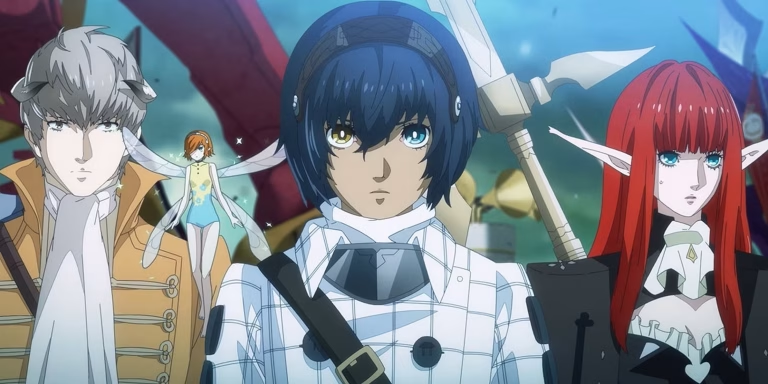
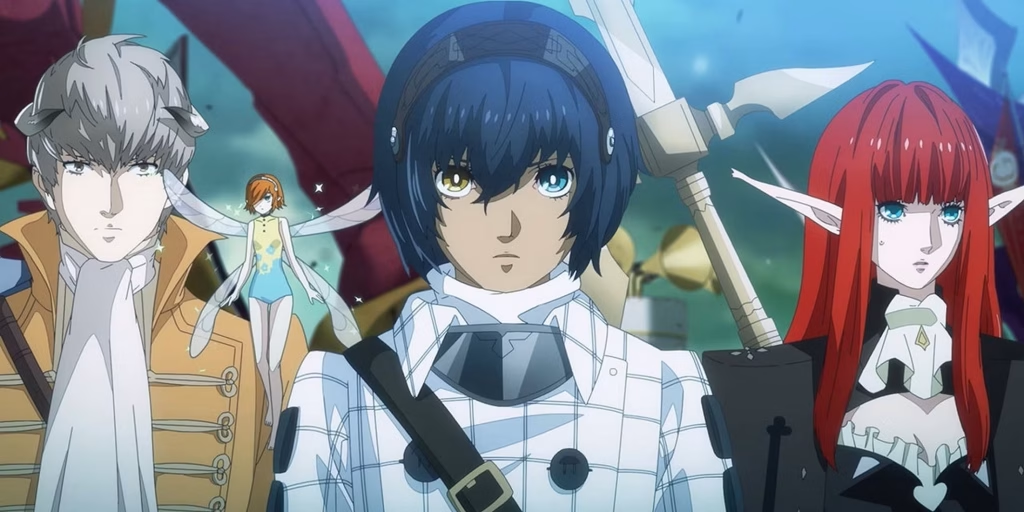
When Metaphor: ReFantazio launched, it carried enormous expectations on its shoulders. Marketed as a spiritual successor to the beloved Persona series, it instantly caught the attention of longtime fans—especially those who grew up with Persona 3, Persona 4, and Persona 5. Backed by Atlus and Sega, and boasting an impressive Metacritic score in the mid-90s, it quickly became a must-play on paper.

Image Source: Bing Image. License: All Creative Commons

But once the excitement settles and players spend real time with it, the conversation becomes more nuanced. The big question starts to creep in: is this a true evolution of the formula, or just a familiar experience wearing a new coat of paint?

From the very beginning, the game feels almost too comfortable. The opening hours echo the same structure and tone that Persona fans know by heart—introducing a layered world filled with political tension, magic, and carefully staged character introductions. Even your first companion feels like they could have stepped straight out of Persona, and the music leans heavily into a subdued, almost melancholic mood.

Despite shifting to a fantasy setting, the game struggles to carve out a distinct identity early on. The environments may differ from Persona’s urban backdrop, but the storytelling beats and character archetypes often feel recycled. There’s a lingering sense of déjà vu that makes it harder to fully invest in the narrative at the start.

Where the game truly finds its footing is in combat. The introduction of a job-based system adds a welcome layer of flexibility, allowing players to experiment with different builds and strategies. Battles are smooth, fast-paced, and satisfying—easily one of the game’s strongest aspects. In fact, combat takes up a large portion of the overall experience, and thankfully, it rarely feels like a chore.

The familiar calendar system also makes a return, pushing players to carefully manage their time between story missions. Activities like side quests, character bonding, and stat-building (think courage or charisma) all compete for attention, encouraging thoughtful decision-making. It’s a loop that works well, even if it doesn’t feel particularly new.

The cast offers a mix of highlights and missed opportunities. Hulkenberg stands out as one of the more compelling characters—a fierce and loyal warrior with moments of humor and vulnerability that make her feel human. Eupha adds a contrasting innocence to the group, and her role as a summoner helps diversify gameplay. Meanwhile, Gallica avoids the usual pitfalls of “annoying mascot” companions by being consistently helpful without overstaying her welcome.

Heismay, an anthropomorphic bat, brings some emotional weight to the story with a narrative centered on grief and regret, offering one of the few moments that genuinely resonate. Supporting characters like Maria, Fabienne, and Brigitta also contribute to the world in meaningful ways, rewarding players who take the time to engage with them.

Still, many characters fall back on familiar tropes, and the writing rarely takes risks. While it’s solid, it doesn’t often surprise or challenge expectations, which makes it harder for the story to leave a lasting impression.

That brings us to one of the game’s biggest shortcomings: its narrative. While it tackles themes like politics and religion, these ideas often feel underdeveloped. The main antagonist, Louis, lacks depth, making the central conflict feel less impactful than it should. There’s a sense that the story is aiming high but doesn’t fully commit to exploring its own ideas.

Pacing also becomes an issue. It takes a long time for the story to gain momentum, and by the time it does, some players may already feel disconnected. The urgency and emotional pull that defined Persona’s storytelling just aren’t as strong here.

Visually, though, the game is undeniably impressive. From stylish menus to seamless transitions between anime cutscenes and gameplay, the presentation showcases Atlus at its best. Character designs are detailed and expressive, but the overall aesthetic leans more muted compared to Persona’s bold, modern flair.

The soundtrack follows a similar pattern. It’s well-composed and fitting for the tone, but it lacks the memorable punch and variety that made Persona’s music so iconic. Instead of energetic, genre-blending tracks, the game opts for a more restrained, somber sound.

Critics have largely praised the game, highlighting its themes and presentation. Some reviewers have applauded its willingness to explore complex ideas and reflect real-world issues. Yet, for many players, there’s a noticeable gap between critical acclaim and personal experience.

Everything about the game works—mechanically, visually, structurally—but something feels missing. That intangible spark, the emotional hook that keeps players fully invested, never quite clicks into place.

After spending dozens of hours in its world, it’s hard not to view Metaphor: ReFantazio as a game shaped more by its influences than its own identity. It borrows heavily from Persona’s formula but doesn’t quite capture what made those games special.

For players who enjoy polished systems and familiar gameplay loops, there’s still plenty to like here. But for those hoping this would be the next big leap forward for JRPGs, it may feel more like a step sideways than a step ahead.

Garfield Kart 2: All You Can Drift and the Unexpected Rivalry with Mario Kart

Garfield Kart 2: All You Can Drift has arrived with the kind of loud, chaotic energy you’d expect from a lasagna-loving icon, and it’s quickly become a talking point across gaming circles. What started as a meme with the original game has now evolved into something aiming for a bit more credibility, especially with Eden Games, the studio behind Gear. Club Unlimited—taking the lead this time around.

Image Source: Bing Image. License: All Creative Commons

At its core, the concept is straightforward: pick your favorite character from the Garfield universe and jump into a series of unpredictable races. The lineup includes eight familiar faces—Garfield, Odie, Nermal, Arlene, Jon, Liz, Squeak, and Big Dog. While longtime fans might notice the absence of some deeper cuts, each racer still carries their own charm, adding small touches of personality to every match.

Track design is where the game starts to flex some creativity. Races are divided into themed cups—Pirate, Western, and Detective—each bringing its own flavor. Pirate courses are packed with hazards like cannon fire and treasure-filled shortcuts, while Western tracks lean into dusty chaos and saloon-style set pieces. The Detective-themed maps aim for a more mysterious vibe, though some players feel they don’t fully tap into the quirky humor of the Garfield comics.

Customization adds another layer of fun. Players can tweak kart parts like wheels, bumpers, and spoilers, along with cosmetic touches such as paint jobs and character accessories. Whether you want Garfield rocking a fedora or Liz dressed for the Wild West, there’s enough here to personalize your setup. That said, some cosmetic items—particularly Garfield-themed decals—are locked behind free DLC, which has drawn a bit of criticism.

Gameplay will feel instantly familiar to anyone who’s touched a kart racer before. Drifting, boosting, and item-based chaos are all here, and the mechanics are easy to pick up. Power-ups lean heavily into Garfield-style humor: lasagna gives you a speed burst, soap bars act as slippery traps, and dog food bowls function like homing projectiles. There’s even a top-tier item clearly inspired by the dreaded “blue shell” formula. While it all works well, many players have pointed out how closely the game mirrors Mario Kart, from its controls to its overall structure—even down to its interface and driving assists.

Multiplayer is arguably the game’s strongest feature. Online races support up to eight players, while local split-screen allows four people to compete on the same screen. Crossplay is included, which is a plus, though online matchmaking feels a bit barebones. You won’t have much control over track selection, and connection issues—like players jumping around the track—can occasionally disrupt the experience. Still, when played locally, it delivers the kind of chaotic fun that makes for a great party game.

On the visual side, the game embraces a bright, cartoonish style, enhanced by a comic-book dot filter that stands out in darker environments. Everything runs smoothly, and the animations are lively, but some feel the overall design could lean harder into Garfield’s unique identity. The music is upbeat and fitting, though the lack of full voice acting—replaced by simple grunts and sound effects—leaves the characters feeling a bit less expressive than expected.

Critically, the game has received mixed reactions. Some players enjoy its polished controls and lighthearted fun, while others struggle to overlook how derivative it feels. The general takeaway is that Garfield Kart 2 is solid but doesn’t bring much new to the table. It’s entertaining in short bursts, especially for fans of the franchise, but it doesn’t quite stand out in a crowded genre.

In terms of accessibility, it’s very approachable. With an “E for Everyone” rating, it’s suitable for all ages, and the controls are easy to grasp. However, the difficulty curve can be surprisingly tough, even on lower settings, which might frustrate younger players hoping for an easier ride.

In the end, Garfield Kart 2: All You Can Drift sits at an interesting crossroads between meme legacy and genuine effort. It may not revolutionize kart racing, but it offers a fun, easygoing experience—particularly for Garfield fans or anyone looking for a casual multiplayer game. Just don’t expect it to overtake the giants of the genre anytime soon.

Dragon Ball Gekishin Squadra Changes the Game for Multiplayer Combat

Dragon Ball Gekishin Squadra made its debut in September 2025, signaling a major shift not just for the iconic anime franchise but for the MOBA genre as well. For longtime fans who grew up watching Goku and Vegeta clash in explosive battles, the idea of a Dragon Ball-inspired MOBA felt almost unreal—something that could either soar or fall flat. Instead, the game lands comfortably in between innovation and familiarity, blending fast-paced team combat with the signature flair of Dragon Ball.

Image Source: Bing Image. License: All Creative Commons

At its foundation, Gekishin Squadra follows the classic MOBA format, featuring four-on-four battles in dynamic arenas. However, it injects that structure with the high-speed chaos the franchise is known for. Matches are relatively short, typically lasting between 10 and 15 minutes, though they can extend depending on how evenly matched the teams are. The objective revolves around pushing into enemy territory, defeating powerful guardians known as Gods of Destruction, and ultimately securing the opposing Dragon Ball. Adding an extra layer of unpredictability is the Divine Draw system, which introduces random modifiers—like explosive minions or additional hiding spots—that keep each match feeling fresh.

One of the game’s standout features is the God of Destruction mechanic, which ties directly into Dragon Ball lore. These formidable entities act as gatekeepers for each team’s Dragon Shell, and taking them down is essential to breaking through defenses and claiming victory. It creates a natural escalation in every match, echoing the intense, high-stakes battles fans expect. On top of that, the game enhances its presentation with comic-style pop-ups and alert-style notifications, giving each moment a sense of urgency and energy.

The character system is another highlight. Players can choose from three main roles: Damage, Tank, and Technical. Damage-focused fighters like Goku and Piccolo specialize in aggressive offense, while Tanks such as Vegeta and Cell are built to absorb hits and control the battlefield. Meanwhile, Technical characters like Krillin and Frieza focus on utility, offering buffs, debuffs, and strategic advantages. Each fighter comes with their own abilities and can transform during matches, unlocking stronger moves and game-changing ultimates.

The roster itself feels like a celebration of the Dragon Ball universe. Alongside well-known heroes and villains, the game includes lesser-seen characters like Bojack and Baby, giving longtime fans something new to appreciate. With a growing lineup of over a dozen fighters and more on the way, players have plenty of room to experiment with team compositions. Character interactions during matches add personality as well, with familiar rivalries and mentor relationships playing out in real time.

Accessibility is another strong point. The game supports cross-platform play across mobile devices, PC, Nintendo Switch, and PlayStation consoles. By linking a Bandai Namco ID, players can carry their progress across platforms, making it easy to jump between devices. That said, certain in-game currencies remain tied to specific platforms, which is something players need to keep in mind.

On the technical side, the game is backed by a collaboration between Bandai Namco Entertainment and Google Cloud. The infrastructure is designed to support a global player base, using advanced tools to manage servers, store player data, and maintain smooth matchmaking. This ensures that matches remain responsive and stable, even with the fast-paced action the game demands. The development team also relies on data analytics to monitor gameplay trends and continuously refine the experience.

Visually, Gekishin Squadra sticks closely to the familiar Dragon Ball aesthetic. Its cel-shaded graphics bring characters and abilities to life, with flashy attacks and over-the-top effects filling the screen. While it doesn’t aim to push graphical limits, it captures the look and feel of the anime effectively. The soundtrack complements the action with recognizable themes that heighten the intensity of each battle.

The reception to the game has been generally positive. Critics have highlighted its easy-to-follow tutorials, detailed match breakdowns, and creative approach to adapting the Dragon Ball formula into a MOBA setting. While some players have pointed out issues like inconsistent match pacing or the randomness of certain mechanics, the overall consensus is that the game offers a fun and chaotic experience that still requires strategy.

Whether you’re a longtime Dragon Ball fan or a newcomer to the series, Gekishin Squadra provides an engaging way to experience multiplayer combat. It manages to stay true to its roots while exploring a new direction, showing that even after decades, the franchise still has the ability to evolve and surprise.

The Identity Struggle of Tekken 8 and Its Effect on the Genre

Tekken has never been just another name in the fighting game lineup—it’s been one of the pillars that helped define the genre. For years, it built a reputation on its darker tone, layered characters, and a gameplay style that rewarded discipline, precision, and a genuine understanding of martial arts. But with the arrival of Tekken 8, a growing number of longtime fans are starting to wonder if the series has drifted away from what once made it special.

Image Source: Bing Image. License: All Creative Commons

From the beginning, Tekken stood apart from its peers. While franchises like Street Fighter and Virtua Fighter were setting the groundwork for fighting games, Tekken carved out its own lane. It leaned less on flashy spectacle and more on grounded combat, drawing heavily from real-world martial arts and populating its roster with morally complex fighters—many of them antiheroes or outright villains. Its moody atmosphere and technical depth gave it a distinct identity that resonated with players looking for something more demanding.

The series truly hit its stride during what many consider its golden era—Tekken 2, Tekken 3, and Tekken 4. These entries sharpened the mechanics, introduced unforgettable characters, and cemented Tekken as both an arcade staple and a console success. Mastery didn’t come easy, but that was part of the appeal. Its emphasis on defensive play and the unique four-limb control system gave it a rhythm unlike anything else in the genre, fostering a deeply committed competitive community.

Like much of the fighting game genre, however, Tekken struggled during the 2000s. As arcades declined, titles like Tekken 6 and Tekken Tag Tournament 2 failed to fully capture the magic of earlier releases. The franchise seemed to lose momentum—until Tekken 7 stepped in to steady the ship. Debuting in arcades in 2015 and later on consoles in 2017, it wasn’t flawless, but it delivered where it mattered most: solid, engaging gameplay. It also sparked a global competitive resurgence, with players from unexpected regions, such as Pakistan, rising to prominence and reshaping the scene.

Still, even during Tekken 7’s resurgence, cracks began to show. Guest characters like Akuma, Geese Howard, and Negan brought attention and variety, but they also stirred debate. For many fans, these additions felt out of sync with Tekken’s grounded identity, especially when some of them proved to be overly dominant in competitive play.

By the time Tekken 8 arrived, those concerns had only grown louder. At first glance, the game impressed, but it didn’t take long for criticism to surface. One of the biggest changes—the Heat system—has pushed the game toward a far more aggressive style. Where Tekken once rewarded patience and careful spacing, it now often favors constant pressure. Techniques like the Korean Backdash, once essential for defensive play, have lost much of their importance. Matches can feel less like calculated exchanges and more like high-speed guessing games filled with relentless mix-ups.

This shift has left many defensive-minded players struggling to adapt. With characters able to chain together extended offensive sequences and sidestepping becoming less reliable due to hitbox inconsistencies, the balance between offense and defense feels noticeably skewed. For a series long praised for its strategic depth, that’s a significant change.

Beyond gameplay, the series’ identity is also evolving in ways that don’t sit well with everyone. Tekken has always had its eccentric side, but it largely stayed rooted in martial arts. Now, that line is blurrier than ever. Characters wield weapons, unleash energy blasts, and perform attacks that feel more at home in fantasy fighters than in Tekken’s traditionally grounded world. For some fans, it feels like the franchise is losing touch with its original vision.

Character design has become another point of contention. New additions meant to broaden representation have sparked mixed reactions, with some players criticizing them as overly stylized or disconnected from the series’ core aesthetic. Debates around design choices and cultural representation have added another layer to the growing list of concerns.

Unsurprisingly, the community has been vocal. As Tekken 8 moves forward, frustrations continue to build. Updates have been slow to address key issues, and some players are stepping away from competitive modes altogether. Reports of dwindling participation in smaller local scenes suggest that the impact is being felt beyond just online discussions.

All of these points point to a larger issue: what happens to 3D fighting games if Tekken loses its footing? With other major franchises in the space largely inactive, Tekken stands as the genre’s most prominent representative. If it continues to move away from its defining traits in pursuit of broader appeal, it could have ripple effects that go beyond a single series.

At its best, Tekken has always walked a fine line between honoring its roots and embracing change. Right now, it’s at a turning point. The direction it chooses won’t just shape its own future—it could influence the fate of 3D fighting games as a whole. For longtime fans, the hope is simple: that Tekken can reconnect with what made it stand out in the first place and prove that its legacy still has room to grow.

Monster Hunter Wilds: A Bold Evolution That’s Dividing the Community

0

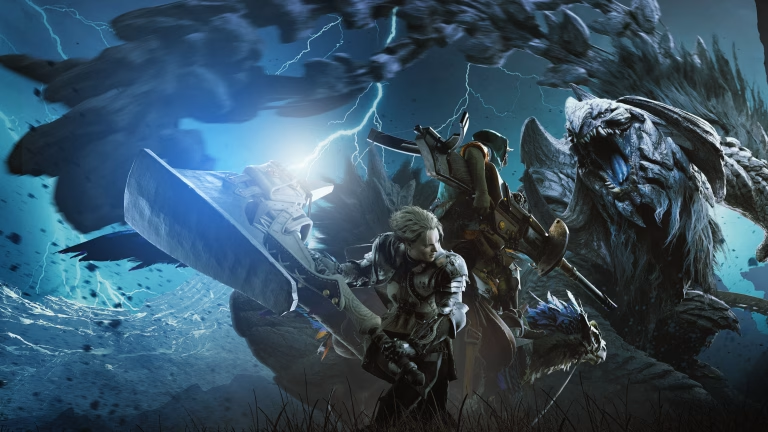
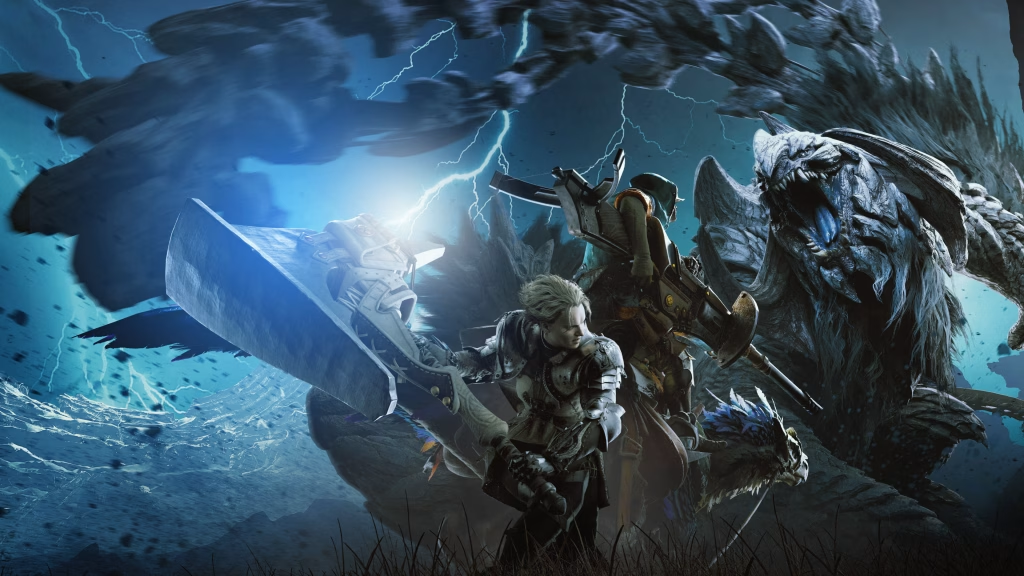
Monster Hunter Wilds has arrived with explosive energy, hitting the franchise like a full-force Rathalos strike. For years, Monster Hunter has built its reputation on demanding gameplay—rewarding players who take the time to prepare, learn, and endure punishing encounters. With Wilds, Capcom is clearly aiming for something broader, opening the experience to more players. The result is a game that’s as impressive as it is divisive.

Image Source: Bing Image. License: All Creative Commons

At its core, Wilds embraces simplification. The goal is clear: get players into the action quickly. Gone are many of the fiddly systems that once defined the series—no more grinding endlessly for basic tools or needing outside guides just to understand crafting. It’s a more immediate, pick-up-and-play version of Monster Hunter, walking a fine line between being welcoming and being overly simplified.

One of the biggest changes comes in the form of the Seikret mount. While previous companions like the Palamute were helpful, the Seikret takes things much further. It’s not just transportation—it’s a multi-purpose support system. You can switch weapons while riding, automatically travel to objectives, and even perform maintenance like healing or sharpening mid-hunt. This drastically changes the pacing. Instead of carefully managing downtime and positioning, players can move fluidly from one encounter to the next with minimal interruption.

The gear system has also been reworked. Armor now mainly determines your defense, while offensive abilities are tied to weapons. This separation makes it easier to experiment with different playstyles, letting you switch weapons without rebuilding your entire loadout. While this flexibility is appealing, it also removes some of the strategic layering that longtime players enjoyed when optimizing builds.

Then there’s Focus Mode, a new targeting system that lets you aim directly at monster weak points using a reticle. It’s not quite a traditional lock-on system, but it allows for more precise attacks and unlocks powerful follow-ups when enemies are wounded. Some players enjoy the added cinematic feel, while others feel it lacks the reliability of a proper lock-on. Combined with the removal of mechanics like Wirebugs and the addition of tools like the Hook Slinger, it’s clear the game is trying to establish its own identity.

All of these updates are designed with accessibility in mind—and for new players, they work. The interface is easier to navigate, the onboarding process is smoother, and the game world feels more alive than ever. The open zones are expansive and interconnected, filled with dynamic weather and wildlife that behave more like part of an ecosystem than simple targets.

However, this accessibility comes with trade-offs. One of the defining features of older Monster Hunter titles—the thrill of tracking a monster—has been reduced. With auto-navigation and fully revealed maps, players rarely need to search for their prey. Instead of carefully following clues through the environment, you can simply select a target and head straight to it. The hunt feels less like a pursuit and more like a guided experience.

Difficulty has also shifted. Compared to earlier entries, Wilds is noticeably more forgiving. Equipment can remain effective for longer stretches without upgrades, companions are stronger, and resources like healing items are easier to come by. The Seikret adds another layer of safety, letting players recover or reposition without much risk. Even environmental dangers and status effects feel toned down, resulting in faster, less punishing hunts.

For veteran players, this shift is hard to ignore. The traditional gameplay loop—prepare, struggle, adapt, and finally overcome—has long been the heart of the series. When those challenges are reduced, so too is the sense of accomplishment. Without the need to carefully plan, upgrade, or fully engage with the environment, hunts can start to feel less meaningful.

This has led to a clear divide within the community. New players and more casual fans appreciate the smoother experience. It’s easier to jump in, team up with friends, and enjoy the spectacle without hitting frustrating roadblocks. On the other side, longtime fans worry that the series is losing its identity, becoming more about action and convenience than strategy and mastery.

That tension defines Monster Hunter Wilds. On one hand, it’s a technical showcase—beautiful, fluid, and filled with life. On the other hand, it raises questions about what Monster Hunter is meant to be. By prioritizing accessibility, the game risks moving away from the challenge-driven experience that built its reputation.

Still, it’s not without its strengths. The game excels at bringing people together, encouraging cooperative play and exploration. Its streamlined systems lower the barrier to entry, allowing more players to experience the thrill of hunting—albeit in a different form.

Where the series goes from here remains uncertain. Can it strike a balance between its demanding roots and its more approachable direction? Or will it continue leaning toward a broader audience at the expense of depth? For now, Monster Hunter Wilds stands as both an evolution and a point of contention—a game that’s redefining the hunt while leaving fans to decide what that truly means.

How Vampire Hunter D’s World Could Redefine Tabletop Roleplaying

The Lasting Appeal of Vampire Hunter D

Few franchises manage to feel both classic and forward-thinking at the same time, but Vampire Hunter D pulls it off effortlessly. First introduced through Hideyuki Kikuchi’s 1983 novel and brought to life visually by Yoshitaka Amano, the series has expanded into more than 50 novels, along with anime, manga, and other adaptations. At its core is D, a mysterious dhampir—half human, half vampire—who roams a devastated future Earth filled with monsters, secrets, and lingering remnants of a lost age.

Image Source: Bing Image. License: All Creative Commons

What truly defines this world isn’t just its brooding protagonist, but the setting itself. Imagine a distant future where crumbling gothic castles stand beside remnants of advanced technology, where mutated creatures roam beneath crimson skies, and where beauty and terror coexist in every shadowy corner. It’s a haunting blend of elegance and decay, and it invites endless storytelling possibilities.

Why This World Fits Perfectly into Tabletop RPGs

It doesn’t take much imagination to see how naturally this universe could translate into tabletop roleplaying. The setting is a fusion of genres—gothic horror, post-apocalyptic sci-fi, and even elements of western frontier storytelling. One moment could involve a dramatic duel with a vampire noble in a candlelit hall, while the next throws players into encounters with rogue AI or journeys across irradiated wastelands on mechanical steeds.

This variety isn’t just aesthetic—it opens the door to countless types of adventures. Players could track down monsters using both ancient weapons and futuristic tech, navigate tense village politics, or explore ruins that combine medieval traps with advanced security systems. The world’s structure—isolated settlements, the enigmatic Capital, powerful Nobility, and wandering Hunters—naturally creates story hooks at every turn.

Life in the Year 12,090 A.D.

Set far in the future, humanity in Vampire Hunter D is barely holding on. The Frontier consists of scattered villages, each struggling to survive amid constant threats from monsters and the environment. Travel between these settlements is risky, making Hunters essential figures—both protectors and mercenaries.

The Capital stands in stark contrast: a gleaming yet deteriorating metropolis powered by ancient systems no one fully understands. It represents both the height of past achievements and the fragility of what remains.

Beyond these lie the remnants of the Nobility—vast castles, underground laboratories, and forgotten strongholds. These locations are rich with hidden knowledge and powerful artifacts, but they’re also incredibly dangerous, often guarded by loyal servants or deadly mechanisms.

Overlaying everything is the legacy of the Earth’s restoration. After the catastrophic war of 1999, the Nobility attempted to rebuild the planet using a mix of science and supernatural power. While they succeeded in many ways, the world still bears the scars of that imperfect recovery.

Factions That Shape the Frontier

This isn’t a static world—it’s driven by competing groups, each with its own motivations. Hunters are both admired and feared, taking on dangerous jobs for pay while often operating outside the law. Frontier communities rely on cooperation and practicality, valuing roles like healers, leaders, and craftsmen just as much as fighters.

The Capital’s government, though still functioning, has lost much of its influence, maintaining control primarily through its knowledge and resources. Meanwhile, the remaining Nobility continue to wield immense power, their personalities ranging from reclusive intellectuals to ruthless tyrants.

Adding to the chaos are outlaws and bandits, many of whom exploit advanced technology or align themselves with darker forces to survive.

Creating Characters in a Harsh World

A role-playing game set in this universe wouldn’t limit players to a single archetype. While Hunters are the obvious choice, there’s room for a wide variety of characters—wandering outsiders, skilled villagers, scholars, or even individuals tied to the Nobility.

Players could take on roles such as loyal servants bound by dark pacts, or unique beings like mutants, cyborgs, or dhampirs. Each background brings its own strengths, challenges, and narrative opportunities, especially in a world where identity often determines survival.

Game Systems That Reflect the Setting

Mechanically, a flexible system would suit this kind of world—something that balances action, risk, and narrative weight. Actions could be resolved through dice pools influenced by attributes, skills, and equipment, allowing for both straightforward tasks and complex challenges.

What makes this approach compelling is the cost of pushing your limits. Overexertion might lead to injury, exhaustion, or even moral corruption. Special abilities could grant powerful advantages, but never without consequences, reinforcing the theme that power always comes at a price.

The Temptation of the Nobility

One of the most interesting gameplay ideas would revolve around the influence of the Nobility. Characters could gain supernatural abilities by embracing forbidden powers—drinking vampire blood, forming dangerous alliances, or using cursed relics.

But every step down this path brings consequences. Increased strength might come with new vulnerabilities, such as dependence on blood or susceptibility to sunlight. Go too far, and a character risks losing their humanity entirely, becoming the very kind of creature they once fought.

Survival Through Gear and Resourcefulness

In such a dangerous world, equipment matters. Weapons range from traditional blades to advanced firearms, often requiring specific materials to combat certain enemies. Armor offers protection but can limit mobility, forcing players to make strategic choices.

Tools—whether medical kits, survival gear, or technological devices—can be just as crucial as weapons. Meanwhile, ancient technology offers immense potential, but often comes with unpredictable risks. Currency exists, but reputation and relationships are equally valuable. A trusted Hunter might earn better opportunities, while someone with a poor reputation could struggle to find work or allies.

Facing the World’s Horrors

The threats in this setting are diverse and unpredictable. Vampire Nobles stand at the top, each with unique abilities and personalities. Beneath them are a wide range of creatures—werebeasts, artificial monsters, spirits, and mutants—each presenting different challenges.

This variety ensures that no two encounters feel the same, encouraging players to think strategically rather than relying on brute force.

Storytelling in the Endless Night

The structure of adventures could draw directly from the series itself. Hunt’s focus on tracking and defeating specific threats, while mysteries revolve around uncovering hidden truths. Journeys emphasize survival and exploration, and defensive scenarios challenge players to protect vulnerable communities. Each location—from isolated villages to ancient ruins—adds its own flavor, offering new dangers and rewards.

Themes That Define the Experience

At its heart, Vampire Hunter D is about contrasts: light and darkness, progress and decay, hope and despair. It’s a world where beauty exists alongside ruin, and where even victories carry a sense of melancholy. Capturing this tone would be essential in any adaptation, using atmosphere, storytelling, and immersion to bring the setting to life.

Tools for Game Masters

A well-designed RPG would provide plenty of resources for storytelling. This could include tools for creating vampire antagonists, designing unique locations, and developing complex political dynamics. Additional systems might cover ancient technology, faction relationships, and modular adventure sites, making it easier for game masters to build engaging campaigns.

Why It Hasn’t Happened Yet

Despite how perfect the fit seems, a Vampire Hunter D tabletop RPG doesn’t currently exist. The biggest obstacle is licensing—rights to the series are spread across multiple parties, making agreements difficult.

There’s also the issue of market size. While the franchise has a loyal fanbase, it remains somewhat niche, which can make publishers hesitant to invest in a large-scale project. Still, with the right team and vision, it’s far from impossible. Like any great quest in D’s world, bringing this idea to life would be challenging—but incredibly rewarding.

Alkahest and the Return of Physics-Driven Combat in Fantasy RPGs

0

Now and then, a game appears that makes RPG fans pause and think, “Could this finally be it?” Alkahest is shaping up to be exactly that kind of release. Developed by Push On and published by HypeTrain Digital, it’s not just the flashy trailers or chaotic goblin encounters turning heads—it’s the feeling that this game is picking up where cult favorites like Dark Messiah of Might & Magic left off, bringing that style into a modern context.

Image Source: Bing Image. License: All Creative Commons

Set in the fractured kingdom of Kadanor, the game casts you as the overlooked youngest son of a minor noble. You’re not a legendary savior or prophesied hero—just someone trying to carve out a place in a world that barely notices you. The story leans into that grounded perspective, focusing on your climb from obscurity as you investigate goblin raids, navigate tensions between rival noble houses, and slowly build your reputation. Rather than handing you power from the start, the game emphasizes earning it through grit and persistence.

Kadanor itself plays a major role in shaping the experience. From decaying fortresses to dense woodland paths and lively settlements, each area is designed to feel reactive and believable. The developers have emphasized creating semi-open-world spaces packed with secrets, encouraging players to explore and experiment rather than simply follow a set path.

Combat, however, is where Alkahest truly stands out. Instead of relying on repetitive inputs or fixed patterns, the game focuses on physics-based, directional combat where every move carries weight. Success depends on timing, positioning, and awareness of your surroundings. You’re encouraged to think creatively—whether that means knocking enemies off ledges, dropping environmental hazards on them, or combining objects for unexpected effects. It’s less about memorizing combos and more about reacting in the moment.

The trailers have fueled much of the excitement. One standout sequence shows the protagonist improvising through a chaotic fight—blocking arrows with a shield, using environmental momentum to reposition, and seamlessly transitioning between attacks. These moments look almost too polished, sparking debate online about whether what’s shown is true gameplay or carefully staged footage. While the developers have admitted that some scenes were enhanced for presentation, they insist the core systems are just as fluid and interactive as they appear.

Another feature helping the game stand apart is its approach to alchemy. Instead of traditional spellcasting, players experiment with ingredients and recipes to create a wide range of effects. You can craft explosives, apply poisons, manipulate enemies indirectly, or even risk using unstable mixtures on yourself. This system ties directly into the game’s emphasis on experimentation, offering multiple ways to approach combat and exploration.

The design philosophy clearly draws from influential titles like Dishonored and Kingdom Come: Deliverance. Much like those games, Alkahest encourages players to adapt, improvise, and approach situations from different angles—whether through direct combat, stealth, or clever use of the environment.

The anticipation surrounding the game is already substantial. With hundreds of thousands of wishlists on platforms like Steam, it has quickly become one of the most talked-about upcoming RPGs. That level of attention is especially impressive for a new intellectual property that still has plenty left to reveal.

Initially planned for PC, Alkahest is now also heading to PlayStation 5 and Xbox Series X|S, expanding its reach to a much broader audience. This move, combined with the support of HypeTrain Digital, signals a strong level of confidence behind the project and its ambitions.

Of course, excitement comes with skepticism. Players are watching closely, wondering if the final product can truly match the promise of its trailers and the legacy of its inspirations. Still, even cautious fans seem to agree on one thing: if the gameplay feels as good as it looks, Alkahest could finally deliver the kind of physics-driven fantasy RPG experience that’s been missing for years.

For now, it stands as one of the most intriguing titles on the horizon—not just because of its mechanics, but because of what it represents. In a landscape often driven by familiar formulas, Alkahest is aiming to revive a more experimental, systems-driven approach to fantasy RPGs—one built on creativity, consequence, and a bit of unpredictable chaos.

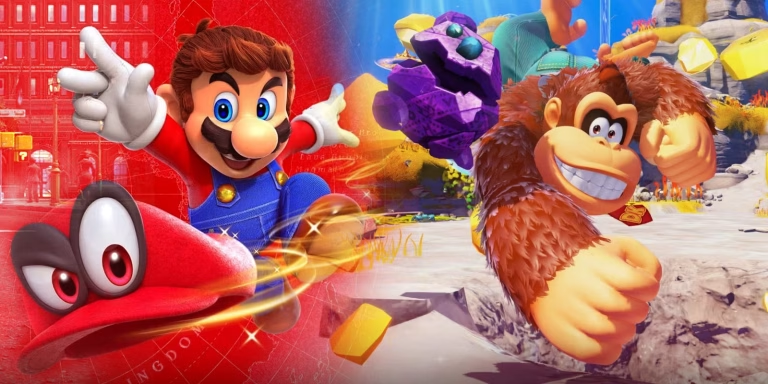
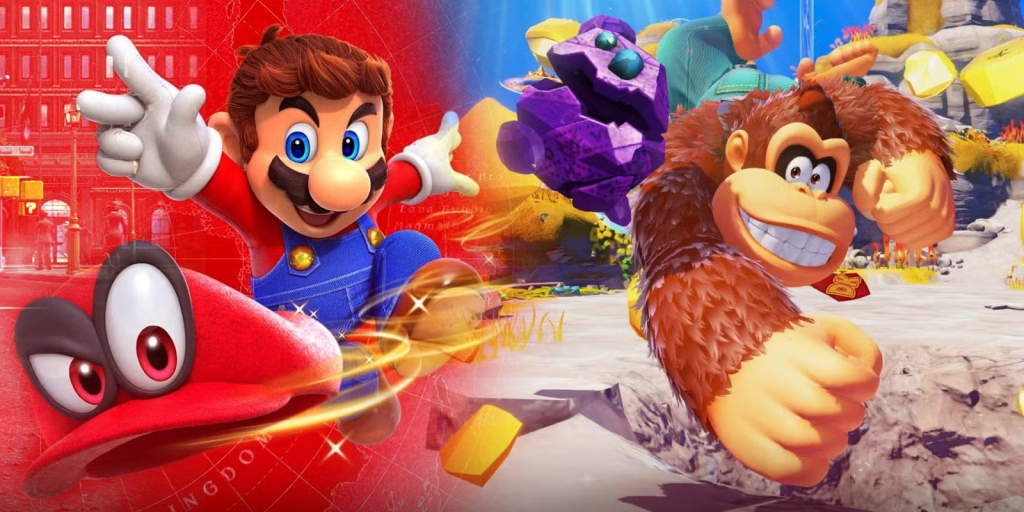
How Mario and Donkey Kong’s Evolution Helped Build Nintendo’s Lasting Legacy

Donkey Kong first made his mark in 1981, crashing into arcades as a barrel-throwing villain in a game that would go on to define Nintendo’s early success. Created by Shigeru Miyamoto, the character stood out immediately—not just as an obstacle, but as a figure with personality and humor. Players controlled Jumpman—later known as Mario—as he climbed platforms and dodged hazards to rescue Pauline. At the time, the game’s multi-level structure and storytelling elements felt fresh, setting a new benchmark for what arcade titles could be.

Image Source: Bing Image. License: All Creative Commons

Even in his role as the antagonist, Donkey Kong brought a sense of charm that hinted at something more. Early follow-ups like Donkey Kong Jr. and Donkey Kong 3 began experimenting with that idea, most notably by reversing roles and putting Mario in a less heroic light. These early shifts suggested that characters in games didn’t have to stay fixed—they could evolve, adapt, and surprise players.

That evolution took a major leap forward in 1994 with Donkey Kong Country on the Super Nintendo Entertainment System. Developed by Rare, the game reimagined Donkey Kong as a heroic lead rather than a villain. With pre-rendered 3D visuals that pushed the hardware to its limits, the title felt like a generational leap. It also introduced fan favorites like Diddy Kong and the imposing King K. Rool, while building a rich jungle world that felt alive and immersive. The game’s success didn’t just revive the franchise—it cemented Donkey Kong as one of Nintendo’s core icons.

As the years went on, the series branched out in unexpected ways. Donkey Kong 64 brought the character into fully 3D environments, while titles like Donkey Konga and Donkey Kong Jungle Beat leaned into experimental gameplay, from rhythm mechanics to motion controls. At the same time, Donkey Kong became a regular presence in crossover hits like Mario Kart and Super Smash Bros., helping him reach audiences far beyond his own franchise.

During this period, the Kong family expanded into a colorful ensemble. Characters like Dixie Kong, Funky Kong, Cranky Kong, and Tiny Kong added personality and variety, reflecting Nintendo’s growing focus on interconnected worlds and shared universes.

In more recent years, Donkey Kong has returned to his platforming roots with titles like Donkey Kong Country Returns and Donkey Kong Country: Tropical Freeze. These games struck a balance between nostalgia and modern design, earning praise for their difficulty, polish, and creativity. Meanwhile, his continued appearances in multiplayer staples like Mario Party and Mario Kart have kept him firmly in the spotlight.

Donkey Kong’s influence goes well beyond gameplay. His adventures helped shape platforming as a genre, introduced memorable music and characters, and contributed to Nintendo’s reputation for innovation. That legacy continues today, with appearances in merchandise, television, and film—including a standout role in The Super Mario Bros. Movie, which introduced him to a new generation.

Mario himself has undergone a similar transformation. Once a supporting figure in Donkey Kong’s debut, he grew into the face of Nintendo’s global identity. That journey reached a new milestone with The Super Mario Bros. Movie, which brought the Mushroom Kingdom to theaters with a mix of nostalgia and modern storytelling. The film stayed true to the spirit of the games while opening the door to something bigger—potentially even a shared cinematic universe.

Visually, the movie impressed fans with its attention to detail and countless references. While some critics felt it leaned heavily on familiarity, audiences embraced it wholeheartedly. Performances like Jack Black’s take on Bowser stood out, and the film’s massive box office success proved that Nintendo’s characters can thrive far beyond gaming.

That expansion into real-world experiences is perhaps best seen at Super Nintendo World. Located within Universal Studios Hollywood, the attraction allows fans to step directly into the Mushroom Kingdom. From hitting question blocks to competing in interactive challenges, visitors can engage with the world of Mario in a completely new way. Attractions like the Mario Kart ride and themed dining experiences blur the line between games and reality, creating something that feels both nostalgic and cutting-edge.

What makes Donkey Kong and Mario so enduring is their ability to change with the times. Over decades, they’ve grown from simple pixelated figures into fully realized cultural icons. Their journeys mirror the evolution of gaming itself—from arcades to home consoles, from 2D sprites to cinematic worlds, and now to immersive, real-life environments.

As Nintendo continues to experiment—whether through remakes, films, or interactive attractions—the legacy of Donkey Kong and Mario remains at the heart of it all. Their staying power is a reminder that great characters, backed by creativity and innovation, can transcend generations and mediums while still capturing the joy of play.