Home Blog Page 188

Matt Damon: From Drama Nerd to Hollywood Star

0
Image Source: Bing Image. License: All Creative Commons

Matt Damon’s career is a rare example of longevity mixed with constant reinvention. Over the years, he has moved effortlessly between genres, refusing to be boxed into a single category. He has been an Oscar-winning screenwriter, a gripping dramatic lead, a convincing action hero, and even a surprisingly sharp comedic presence. Few actors manage to balance artistic credibility with box office appeal as consistently as he has. His rise from a theater-loving kid in Massachusetts to a global star feels both improbable and well-earned.

Image Source: Bing Image. License: All Creative Commons

Growing up in Cambridge was not always easy for Damon. His parents’ divorce shaped much of his early emotional world and left him feeling slightly adrift. He has often described himself as shy and unsure of where he fits in socially. Acting became a refuge where he could channel that uncertainty into something creative. That early sense of being an outsider would later give depth to many of his most memorable performances.

Image Source: Bing Image. License: All Creative Commons

One of the most important events of his childhood was meeting Ben Affleck. Their friendship began simply, built on shared interests like baseball, role-playing games, and endless movie nights. What started as a casual bond soon developed into a creative partnership. They encouraged each other to audition, write, and dream bigger than their surroundings. That connection would eventually change both of their lives.

Image Source: Bing Image. License: All Creative Commons

As teenagers, Damon and Affleck treated storytelling like a shared mission. They spent hours drafting scripts and imagining careers that felt almost out of reach. Instead of competing, they pushed each other to improve and take risks. Acting stopped being a solitary passion and became a collaborative effort. Their mutual belief in each other laid a foundation that would support them through early struggles.

Image Source: Bing Image. License: All Creative Commons

The project that transformed them from hopeful actors into industry players was Good Will Hunting. What began as a short academic exercise grew into a fully realized screenplay with heart and intelligence. They poured their personal experiences into the script, especially themes of loyalty and self-doubt. When the film was finally produced, it struck a powerful chord with audiences and critics alike. Its success catapulted both men into international recognition almost overnight.

Image Source: Bing Image. License: All Creative Commons

Winning the Academy Award for Best Original Screenplay was a defining moment for Damon. It proved that he was not just a performer but a serious writer with something meaningful to say. Sharing that stage with Affleck cemented their story as one of Hollywood’s most inspiring friendships. The film’s emotional core, strengthened by Robin Williams’ unforgettable performance, resonated deeply. Damon suddenly found himself viewed as one of the brightest new talents in the industry.

Image Source: Bing Image. License: All Creative Commons

Even before that breakthrough, he had quietly been building a solid resume. In films like School Ties, he demonstrated a capacity for portraying complex young men under pressure. He was willing to explore uncomfortable emotional territory rather than chase easy likability. Those early roles hinted at a seriousness that would define much of his career. Directors began to notice his commitment and subtle intensity.

Image Source: Bing Image. License: All Creative Commons

Courage Under Fire revealed just how far he would go for authenticity. Damon dramatically lost weight to portray a troubled soldier, committing fully to the character’s physical and emotional state. The transformation was startling and showed a level of discipline uncommon for someone so early in his career. It signaled that he was not afraid to sacrifice comfort for truth. That dedication earned him respect throughout Hollywood.

Image Source: Bing Image. License: All Creative Commons

Working with seasoned filmmakers further sharpened his craft. In The Rainmaker, he carried the story with a quiet confidence that belied his age. Sharing scenes with established actors only strengthened his resolve to rise to their level. He avoided being overshadowed by bringing sincerity to every line. It became clear that his Oscar win was not a fluke.

Image Source: Bing Image. License: All Creative Commons

Then came a turning point that redefined his public image. The Bourne Identity introduced audiences to a leaner, tougher version of Damon. As Jason Bourne, he embodied intelligence, vulnerability, and physical precision all at once. He trained extensively in combat and insisted on performing many of his own stunts. The result was an action hero who felt grounded and believable.

Image Source: Bing Image. License: All Creative Commons

The Bourne series reshaped modern spy films. Instead of relying solely on gadgets and spectacle, the movies focused on realism and character psychology. Damon’s portrayal emphasized confusion and moral conflict as much as physical skill. Audiences responded enthusiastically to this more human approach. The franchise’s massive global earnings confirmed his bankable star power.

Image Source: Bing Image. License: All Creative Commons

Despite his action success, Damon never abandoned character-driven stories. He returned to ensemble pieces like Ocean’s Eleven with effortless charm. His comedic timing added lightness to a film filled with charismatic personalities. In The Departed, he shifted gears completely, playing a morally compromised police officer with icy restraint. Each role showcased a different shade of his talent.

Image Source: Bing Image. License: All Creative Commons

One of his most celebrated later performances came in The Martian. As astronaut Mark Watney, he balanced humor and desperation with remarkable ease. The film relied heavily on his ability to carry scenes alone, often speaking directly to the camera. His optimism in the face of isolation made the story surprisingly uplifting. The role earned him major awards, attention, and reaffirmed his versatility.

Image Source: Bing Image. License: All Creative Commons

The success of The Martian also highlighted his global appeal. Audiences connected with the character’s ingenuity and resilience. Damon’s grounded performance kept the high-concept story emotionally accessible. It demonstrated that he could anchor massive productions without losing authenticity. Few actors manage that balance so smoothly.

Image Source: Bing Image. License: All Creative Commons

Throughout these years, his partnership with Affleck continued to evolve. They reunited for creative ventures that extended beyond acting. Producing projects together allowed them to champion new voices in the industry. Their collaboration on Air brought them back onscreen with the comfort of long familiarity. Watching them interact feels like witnessing decades of shared history.

Image Source: Bing Image. License: All Creative Commons

Their friendship remains one of Hollywood’s most enduring stories. Rather than drifting apart as fame grew, they adapted to each new phase of their careers. They have spoken openly about holding each other accountable and offering honest feedback. That trust has strengthened their creative decisions. It stands as proof that collaboration can thrive even under intense public scrutiny.

Image Source: Bing Image. License: All Creative Commons

In Oppenheimer, Damon embraced yet another challenge. Portraying Leslie Groves required authority without arrogance. He delivered a performance that was firm, pragmatic, and layered with subtle tension. Acting alongside a powerhouse ensemble, he held his ground with quiet confidence. The role showed that he continues to seek complexity rather than comfort.

Image Source: Bing Image. License: All Creative Commons

Working with visionary directors has been a recurring theme in his career. He appears drawn to filmmakers who value depth and detail. This willingness to align himself with ambitious projects keeps his work fresh. He avoids stagnation by stepping into unfamiliar territory. That curiosity sustains his longevity.

Image Source: Bing Image. License: All Creative Commons

Offscreen, Damon’s life appears remarkably grounded. He married Luciana Bozán Barroso and has consistently prioritized family. Raising four daughters has given him a perspective far removed from Hollywood’s noise. He often speaks about protecting their privacy. That commitment to normalcy sets him apart from many of his peers.

Image Source: Bing Image. License: All Creative Commons

His sense of humor also keeps him relatable. The long-running playful feud with Jimmy Kimmel reveals a willingness to laugh at himself. He participates in the joke rather than guarding his image too carefully. That self-awareness softens the aura of stardom. Audiences appreciate celebrities who do not take themselves too seriously.
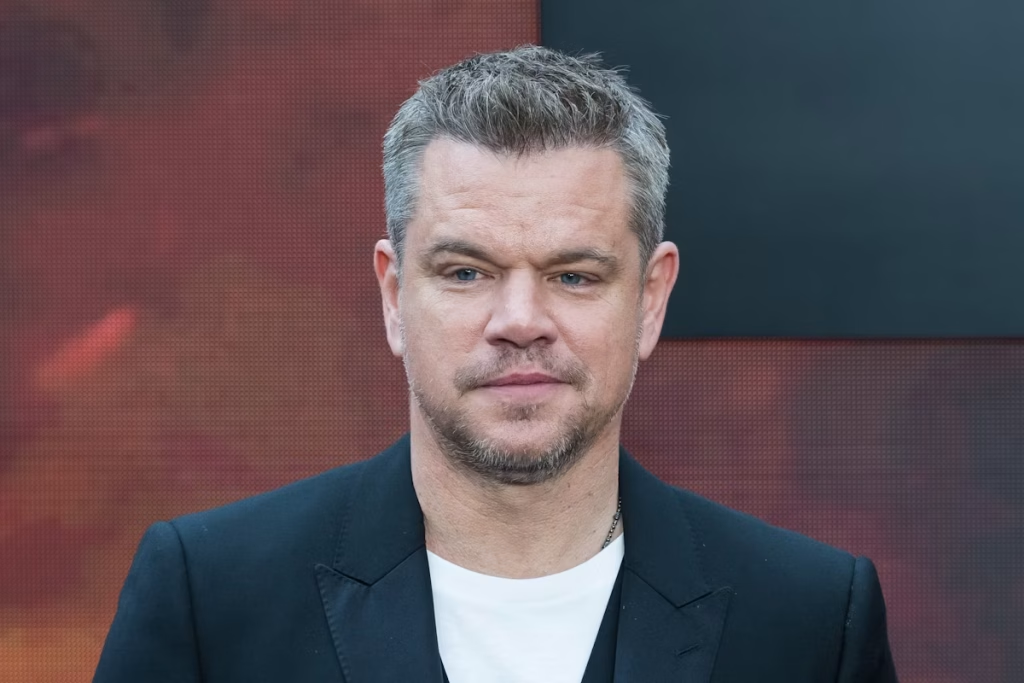
Image Source: Bing Image. License: All Creative Commons

Balancing fame and privacy is no small feat. Damon has managed to avoid many of the pitfalls that derail public figures. He chooses his appearances thoughtfully and keeps his inner circle tight. This measured approach allows him to maintain focus on his craft. It also reinforces his reputation as a professional first and foremost.

Image Source: Bing Image. License: All Creative Commons

Looking back, his path seems defined by smart choices. He alternates between blockbusters and intimate dramas with strategic precision. Each role feels like part of a larger narrative rather than a random gamble. He respects the audience while still challenging them. That balance has kept his career vibrant for decades.

Image Source: Bing Image. License: All Creative Commons

His evolution from writer to actor to producer shows an expanding creative vision. He understands storytelling from multiple angles. This holistic perspective influences the projects he selects. It also gives him greater control over the stories he wants to tell. Few performers navigate so many aspects of filmmaking successfully.
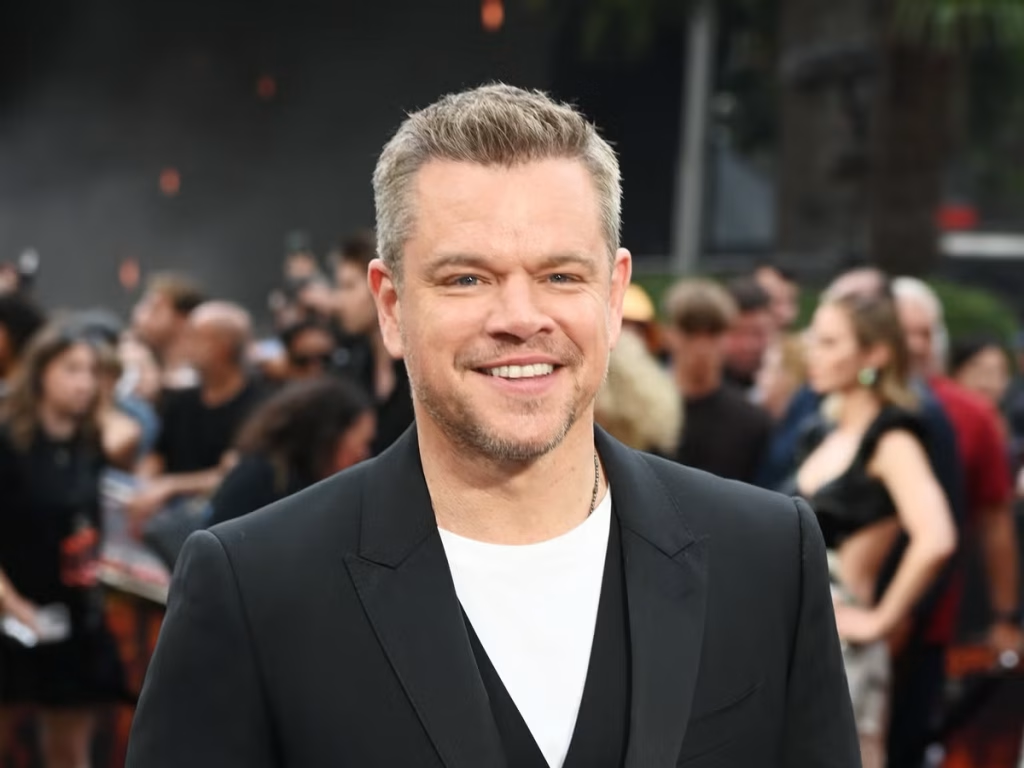
Image Source: Bing Image. License: All Creative Commons

At the core of his journey lies perseverance. Early auditions and minor roles required patience and resilience. He faced rejection long before accolades arrived. Instead of retreating, he used setbacks as motivation. That persistence ultimately shaped his legacy.

Image Source: Bing Image. License: All Creative Commons

Friendship has been another driving force. His bond with Affleck provided emotional support and creative inspiration. They celebrated triumphs and weathered disappointments together. That shared history grounds his public persona in something genuine. It reminds audiences that success is rarely a solo endeavor.

Image Source: Bing Image. License: All Creative Commons

Risk-taking also defines his story. From extreme physical transformations to emotionally raw characters, he rarely plays it safe. He embraces roles that demand vulnerability as much as strength. That courage keeps his performances unpredictable. It ensures that viewers remain invested.

Image Source: Bing Image. License: All Creative Commons

As Hollywood continues to change, Damon adapts with it. Streaming platforms, shifting box office trends, and evolving audience tastes have not diminished his relevance. He navigates new landscapes without abandoning his core principles. Experience has made him selective but not complacent. That adaptability secures his place in modern cinema.

Image Source: Bing Image. License: All Creative Commons

Younger actors often cite him as an influence. His blend of intelligence and approachability feels attainable yet aspirational. He demonstrates that craft matters as much as charisma. By valuing substance over spectacle, he sets a steady example. His impact reaches beyond the screen.

Image Source: Bing Image. License: All Creative Commons

Ultimately, Matt Damon’s story is about growth. He began as a self-conscious teenager searching for belonging. Through talent, hard work, and meaningful collaboration, he built an extraordinary career. He continues to explore new dimensions of storytelling with curiosity and discipline. His journey stands as a reminder that authenticity and effort can create a legacy that endures.

Stars Without Faith: 13 Celebrities Who’ve Openly Discussed Their Beliefs

0
Image Source: Bing Image. License: All Creative Commons

For more than a generation, Hollywood has been a stage not just for films but also for cultural conversations—including discussions about religion, spirituality, and life without faith. In recent years, an increasing number of actors, writers, and performers have openly shared their atheism, turning what was once a whispered or controversial topic into mainstream dialogue. Some are direct, some use humor, and others take a deeply personal approach—but all have helped bring nonbelief into public conversation. Here are 13 of the most influential atheists in Hollywood and beyond.

Image Source: Bing Image. License: All Creative Commons

13. Jack Black

Comedy icon Jack Black might be most famous for jamming out in School of Rock or voicing Po in Kung Fu Panda, but he’s also been open about being an atheist. Although raised as Jewish and celebrating a Bar Mitzvah, he went on to reject religious practice. Black has conceded that bringing up his children in Jewish customs is “a little hypocritical” because he doesn’t believe, yet his candor—blended with humor—has made him one of Hollywood’s most refreshingly candid voices on religion.

Image Source: Bing Image. License: All Creative Commons

12. Julianne Moore

Since the death of her mother, Julianne Moore’s cynicism about religion only grown stronger. The Boogie Nights actress has stated that she thinks people, not supernatural forces, make life meaningful and establish order on the planet. Her sentiments are in line with the theme of many celebrity atheists: disbelieving that religion must provide morality or purpose. 

Image Source: Bing Image. License: All Creative Commons

11. Keira Knightley

In her signature sarcasm, Keira Knightley has mocked religious forgiveness. Joking that belief would allow her “to get away with anything” by merely seeking forgiveness, the Pirates of the Caribbean actress makes her atheism sound crisp and fun.

Image Source: Bing Image. License: All Creative Commons

10. Ian McKellen

Sir Ian McKellen has never been coy when it comes to religion. The Lord of the Rings and X-Men superstar has spoken simply, “Heaven doesn’t exist.” Though he gets why people find solace in faith, he refers to it as unnecessary. His honesty stands out amidst an industry in which many prefer to remain ambiguous.

Image Source: Bing Image. License: All Creative Commons

9. Brad Pitt

Brad Pitt’s spiritual perspective has evolved over the years. Raised in a conservative Christian home, the star of Fight Club today identifies as more agnostic, occasionally an atheist. For Pitt, honesty is the policy: he doesn’t see proof of an afterlife, and he’s happy to admit he just doesn’t know.

Image Source: Bing Image. License: All Creative Commons

8. Seth MacFarlane

Family Guy and The Orville creator Seth MacFarlane is one of pop culture’s most vocal atheist voices. His animated programs frequently satirize religion, and in interviews, he’s candidly spoken about his lack of faith. Satire for MacFarlane is how atheism enters the day-to-day cultural discourse.

Image Source: Bing Image. License: All Creative Commons

7. Hugh Laurie

As the fantastic but pessimistic Dr. House, Hugh Laurie brought skepticism to life—offscreen, he’s just the same. An adamant atheist, Laurie has even emceed atheist conventions and employed humor to mock religious concepts. Dry wit makes him a natural skeptic of dogma.

Image Source: Bing Image. License: All Creative Commons

6. Helen Mirren

Dame Helen Mirren has a subtle approach: she connects with Christian culture but does not think God exists. Morality and compassion for her come from mankind, not divine decrees. The Oscar-winning star’s attitude appeals to many who see ethical significance without religion.

Image Source: Bing Image. License: All Creative Commons

5. Javier Bardem

Famous for his performances being so intense, Javier Bardem approaches atheism in a light-hearted manner. The star of No Country for Old Men previously joked, “I don’t believe in God, I believe in Al Pacino.” His sense of humor makes his attitude accessible instead of sermonic.

Image Source: Bing Image. License: All Creative Commons

4. Emma Thompson

Emma Thompson ties atheism to her feminism, condemning organized religion as traditionally oppressive of women. Although she holds dear individual spirituality, she has no use for dogma, describing herself as a clear-eyed atheist. Her blend of empathy and criticism lends her voice gravitas above Hollywood.

Image Source: Bing Image. License: All Creative Commons

3. Ricky Gervais

Few public figures thrust atheism into the limelight so aggressively as Ricky Gervais. The creator of The Office and a comedian has made much of his comedy about challenging religion. Whether trading opinions with late-night talk show hosts or sending pointed one-liners on Twitter, Gervais has made atheism humorous, palatable, and highly visible.

Image Source: Bing Image. License: All Creative Commons

2. Daniel Radcliffe

Harry Potter himself came of age in the spotlight, and Daniel Radcliffe has not been afraid to refer to himself as an atheist. Occasionally, he puts it in terms of agnostic, occasionally “militant atheist”—particularly when religion intrudes on politics and law. His candor has made him a sympathetic figure for younger readers who grapple with doubt.

Image Source: Bing Image. License: All Creative Commons

1. Changing the Conversation

Collectively, these celebrities demonstrate just how far the cultural dialogue has come. Talking about atheism was dangerous once; now, it can ignite genuine controversy—or even adoration. Whether it’s Radcliffe’s activism, Gervais’s humor, or Thompson’s feminism, their voices demonstrate that nonbelief is not a marginal viewpoint, but part of mainstream cultural existence.

Image Source: Bing Image. License: All Creative Commons

In a world where religious storytelling still prevails, these vocal atheists are making room for doubt, for reason, and for laughter. Whether you find yourself in agreement or not, they’ve made one thing certain: atheism has a legitimate, undeniable niche in Hollywood and beyond.

10 Iconic On-Screen Transformations That Defined Characters

0
Image Source: Bing Image. License: All Creative Commons

Hollywood has always been fascinated with reinvention, and few things capture attention like an actor radically transforming their body for a role. Whether it’s a superhero bulking up seemingly overnight or an actor becoming almost unrecognizable, these changes go far beyond vanity—they’re testaments to discipline, dedication, and courage. Such transformations often require intense training, strict diets, and a willingness to take risks for the sake of the character. Here are 10 of the most dramatic and memorable physical transformations in film history.

Image Source: Bing Image. License: All Creative Commons

10. Will Smith — Ali

Will Smith didn’t just play Muhammad Ali; he became him. To capture the boxing legend’s power and grace, Smith bulked up, trained like a real fighter, and studied Ali’s every move until he could float and sting with precision. It was more than a physical shift; it was total immersion into a larger-than-life figure, and it forever changed how seriously people took Smith as an actor.

Image Source: Bing Image. License: All Creative Commons

9. Rooney Mara — The Girl with the Dragon Tattoo

Rooney Mara’s metamorphosis into the mysterious Lisbeth Salander was unsettling. Her girl-next-door persona was gone; in its stead was a lean, pierced, near-ghostly hacker with an attitude as sharp as her keyboard wizardry. Mara went on a diet, took on a totally new physique, and immersed herself in Salander’s troubled mind, so much so that fans hardly recognized her.

Image Source: Bing Image. License: All Creative Commons

8. Michael B. Jordan — Creed

When Michael B. Jordan entered the ring as Adonis Creed, he didn’t merely look the part; he embodied it. His grueling boxing training and nasty workouts chiseled him into a honed athlete deserving of the Rocky franchise. The transformation was so perfect that numerous people thought he could have been turned pro.

Image Source: Bing Image. License: All Creative Commons

7. Hilary Swank — Million Dollar Baby

Hilary Swank’s training for Million Dollar Baby was as grueling as it was motivational. She added serious muscle, worked out every day like a real boxer, and pushed herself to the limit to capture the grit and tenacity of her role. The work paid dividends in gold—literally, with Swank winning the Oscar and demonstrating that authenticity can be a knockout blow.

Image Source: Bing Image. License: All Creative Commons

6. Michael Fassbender — Hunger

Michael Fassbender’s dedication to Hunger is still the most unsettling display of commitment. Portraying Irish hunger striker Bobby Sands, Fassbender lost a shocking amount of weight and became a gaunt, ghostly apparition. The real-life physical breakdown on screen was so raw and authentic, it stood as a testament to his character’s endurance and unbending resolve.

Image Source: Bing Image. License: All Creative Commons

5. Chadwick Boseman — Black Panther

Chadwick Boseman’s becoming King T’Challa was one of pure power and elegance. He trained with purpose and precision, building a physique that balanced power and poise. Boseman personified a new type of superhero, one whose very presence was as authoritative in silence as it was in combat. His commitment redefined what a superhero could embody.

Image Source: Bing Image. License: All Creative Commons

4. Jared Leto — Dallas Buyers Club

Jared Leto’s foray into the character of Rayon was not just transformative; it was transcendent. He dropped pounds, changed his body language, and completely bought into the life and vulnerability of his character. Remaining in character even off-set, Leto blurred the boundaries between performance and reality. The result was haunting, empathetic, and Oscar-deserving.

Image Source: Bing Image. License: All Creative Commons

3. Joaquin Phoenix — Joker

Few performances are more unnerving than Joaquin Phoenix’s for Joker. Losing more than 50 pounds, he molded himself into a gaunt, spasming representation of desperation. His body, affect, every twitch, every facial contortion, reflected the mental breakdown of Arthur Fleck. The role won Phoenix an Oscar and solidified his position as Hollywood’s most daring actor. 

Image Source: Bing Image. License: All Creative Commons

2. Jake Gyllenhaal — Southpaw and Nightcrawler

Jake Gyllenhaal is an extremist. To play Southpaw, he bulked up like a monster, doing grueling boxing routines and coming out with a cut, fighter’s physique. Then, all but at once, he went in the opposite direction for Nightcrawler, losing weight until he appeared gaunt-eyed and famished. How he manages to change in opposite directions with such dedication is little short of miraculous.

Image Source: Bing Image. License: All Creative Commons

1. Christian Bale — The Machinist, Batman Begins, American Hustle, Vice

Christian Bale is the king of body changes. He famously lost 62 pounds to play The Machinist, then bulked up to a superhero physique for Batman Begins just a few months later. He later gained more than 40 pounds for American Hustle and again for Vice. Bale’s commitment to physical transformation approaches madness, and even he acknowledges that it’s been a toll. “If I keep doing what I’ve done, I’ll probably die,” he once said. “So I’d rather not die.”

Image Source: Bing Image. License: All Creative Commons

The Cost Behind the Transformation

Extreme makeovers are fraught with dangerous risks, metabolic problems, pain, and even psychological tension. Behind each provocative before-and-after picture is an army of trainers, physicians, and nutritionists laboring to keep these actors well enough to complete the task. Real transformation, they aver, isn’t vanity, it’s survival, perfection, and endurance.

Image Source: Bing Image. License: All Creative Commons

And, naturally, these physical accomplishments reverberate far beyond Tinseltown. Fans worship them, cosplay them, and occasionally even attempt (and fail) to replicate their regimens. But let’s be real, most of us wouldn’t survive a day in their training regimens. So, the next time you spot an impossibly cut superhero or a perilously thin antihero, keep in mind: behind that physique is a tale of sacrifice, fixation, and a dash of cinematic madness.

10 Must-Watch Cartoons With No Skippable Moments

0
Image Source: Bing Image. License: All Creative Commons

Few things frustrate viewers more than filler episodes that stall momentum, recycle ideas, or exist solely to stretch a season. That’s why it’s so refreshing to discover an animated series that truly values its audience’s time. These are the shows where every episode matters, every scene serves a purpose, and skipping even one chapter feels like missing something essential. Here are ten animated series that showcase the satisfaction of tight, purposeful storytelling.

Image Source: Bing Image. License: All Creative Commons

10. Gargoyles (1994–1997)

Gargoyles is probably one of the biggest surprises within Disney’s arsenal. What, at face value, should be a fluff after-school cartoon was, in reality, an impressively rich, emotionally layered Shakespearean mythological drama based on timeless tragedy. It respected its audience with trust that viewers would invest in complex character dynamics and storylines, each carrying real consequences over periods of time.

Image Source: Bing Image. License: All Creative Commons

The first two seasons of Gargoyles are exceptionally well-written, cohesive, and focused. Every episode adds depth to the world, the main characters, or the story as a whole; there are no “monster of the week” episodes that don’t contribute to the storyline. Even well after the fact, fans and creator Greg Weisman alike regard the third season as outside the canon of Gargoyles’ storytelling excellence.

Image Source: Bing Image. License: All Creative Commons

While it never managed to attain the level of fame it truly deserved, Gargoyles still manages to be felt today and is endlessly enjoyable to revisit. It represents the high point of intelligent serialized animation.

Image Source: Bing Image. License: All Creative Commons

9. Scavengers Reign (2023)

Scavengers Reign feels like a beautifully strange gift that arrived and disappeared too quickly. Adapted from a 2016 short film, the series was cut short after one season, but what it delivered was astonishingly focused.

Image Source: Bing Image. License: All Creative Commons

Every episode contributes directly to the survival stories of its characters and the bizarre, haunting ecosystem they’re trapped in. The show moves at a thoughtful pace, but nothing is wasted; every creature, silence, and interaction deepens the experience. It’s less about spectacle and more about immersion.

Image Source: Bing Image. License: All Creative Commons

Even with its short run, Scavengers Reign stands out as one of the most confident sci-fi animated series in years. It’s proof that a single season can still feel complete if the storytelling is disciplined.

Image Source: Bing Image. License: All Creative Commons

8. Death Note (2006–2007)

In a genre often criticized for padding and filler arcs, Death Note is refreshingly ruthless. From the moment Light Yagami picks up the notebook, the series locks into a psychological duel that never loosens its grip.

Image Source: Bing Image. License: All Creative Commons

Every episode escalates the tension between Light and L, with even quiet scenes packed with strategic maneuvering or character insight. There’s no room for side quests or meaningless detours; everything feeds the central conflict.

Image Source: Bing Image. License: All Creative Commons

That laser-focused approach is why Death Note is often recommended as a gateway anime. It’s lean, intense, and endlessly gripping from start to finish.

Image Source: Bing Image. License: All Creative Commons

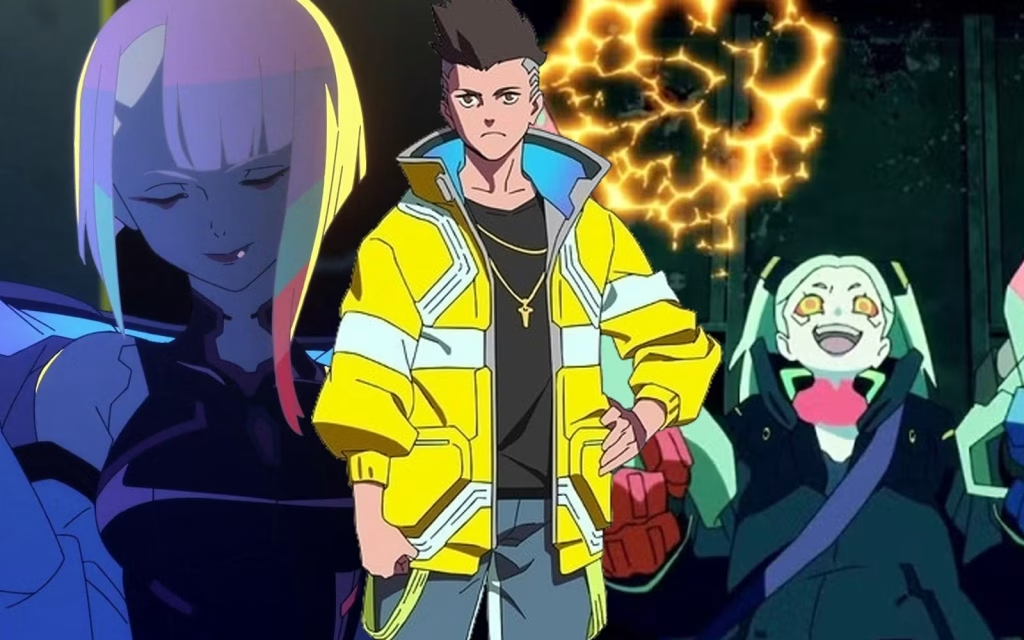
7. Cyberpunk: Edgerunners (2022)

Cyberpunk: Edgerunners didn’t just redeem the Cyberpunk 2077 brand; it redefined it. Designed as a complete ten-episode story from the start, the series wastes no time and pulls no punches.

Image Source: Bing Image. License: All Creative Commons

Every episode pushes David’s tragic arc forward, combining neon-soaked visuals with brutal emotional turns. There’s no filler, no downtime, just escalating stakes and devastating consequences. The show hits so hard partly because it knows exactly when to end.

Image Source: Bing Image. License: All Creative Commons

Short, explosive, and unforgettable, Edgerunners proves that tight planning can make even a brief series feel monumental.

Image Source: Bing Image. License: All Creative Commons

6. The Legend of Vox Machina (2022– )

Based on Critical Role’s legendary D&D campaign, The Legend of Vox Machina thrives on momentum. Because it adapts a real tabletop story, each episode naturally builds on the last, with no room for meaningless filler.

Image Source: Bing Image. License: All Creative Commons

Character arcs, party dynamics, and major plot threads are constantly evolving. Even episodes dominated by combat serve a purpose—revealing personality clashes, emotional wounds, or future consequences.

Image Source: Bing Image. License: All Creative Commons

It’s rare to see a fantasy series this committed to forward motion, and that dedication makes Vox Machina incredibly bingeable.

Image Source: Bing Image. License: All Creative Commons

5. Blue Eye Samurai (2023– )

Blue Eye Samurai is both brutal and beautiful, blending cinematic action with deeply personal storytelling. Inspired by samurai epics and Western revenge films, the series never slows its pace or dilutes its themes.

Image Source: Bing Image. License: All Creative Commons

Each episode adds vital context to Mizu’s past or sharpens her relentless drive forward. Even moments that seem quieter are carefully placed, enriching the emotional weight of what follows.

Image Source: Bing Image. License: All Creative Commons

With no wasted scenes and a striking visual identity, Blue Eye Samurai feels meticulously crafted from start to finish.

Image Source: Bing Image. License: All Creative Commons

4. Attack on Titan (2013–2023)

Spanning multiple seasons and nearly a decade, Attack on Titan somehow manages to stay astonishingly lean. There are no true filler episodes—every installment contributes to the evolving mystery, expanding mythology, or devastating character arcs.

Image Source: Bing Image. License: All Creative Commons

Even slower episodes are packed with tension and meaning, often setting up revelations that pay off much later. The series trusts viewers to stay engaged and rewards that patience consistently.

Image Source: Bing Image. License: All Creative Commons

Its commitment to narrative density is a huge reason why Attack on Titan is regarded as a modern classic.

Image Source: Bing Image. License: All Creative Commons

3. Neon Genesis Evangelion (1995–1996)

Neon Genesis Evangelion is infamous for being challenging, introspective, and emotionally intense, but it’s never aimless. While some episodes feel deceptively quiet or abstract, each one serves Hideaki Anno’s broader psychological vision.

Image Source: Bing Image. License: All Creative Commons

What might seem like detours are actually deep dives into trauma, identity, and existential dread. The show’s pacing is intentional, and every moment contributes to its unforgettable climax.

Image Source: Bing Image. License: All Creative Commons

Few series reward close attention like Evangelion, and its lack of traditional filler is part of what keeps it endlessly analyzed.

Image Source: Bing Image. License: All Creative Commons

2. Arcane (2021–2024)

Arcane is a masterclass in modern animation. From its stunning visuals to its emotionally rich storytelling, the series is structured so tightly that skipping an episode would feel impossible.

Image Source: Bing Image. License: All Creative Commons

Every chapter develops its characters or advances the political and emotional conflicts at the heart of the story. Action, dialogue, and music are all used with precision, creating a show where every episode feels essential.

Image Source: Bing Image. License: All Creative Commons

Whether or not you’ve ever touched League of Legends, Arcane stands as one of the best examples of efficient, high-impact storytelling.

Image Source: Bing Image. License: All Creative Commons

1. Over the Garden Wall (2014)

At the top of the list is Over the Garden Wall, a miniseries that proves perfection doesn’t need length. Told across ten short episodes, the show delivers humor, horror, melancholy, and warmth without a single wasted moment.

Image Source: Bing Image. License: All Creative Commons

Each chapter feels purposeful, slowly unraveling the mystery of the Unknown while deepening the bond between its characters. The result is a story that feels complete, cohesive, and emotionally resonant.

Image Source: Bing Image. License: All Creative Commons

Over the Garden Wall remains one of the finest achievements in animation, a reminder that when every episode matters, magic happens.

Image Source: Bing Image. License: All Creative Commons

Filler isn’t inevitable; it’s a choice. These animated shows prove that tight pacing, thoughtful planning, and respect for the audience can turn a series into something unforgettable. Whether you’re diving in for the first time or revisiting a favorite, each of these proves one thing: when every episode counts, animation truly shines.

15 Remarkable Recovery Journeys That Inspire Hope

0
Image Source: Bing Image. License: All Creative Commons

Addiction does not discriminate. Wealth, success, and admiration cannot shield anyone from its grip, and for many celebrities and musicians, the pressures of fame can make the struggle even more intense. What makes these stories powerful is not only the hardship itself, but the courage it takes to confront it. Some journeys are marked by relapses and setbacks, while others unfold through years of determination to achieve sobriety. Not every story has a perfect or happy ending, but they all highlight a vital truth: recovery is rarely linear, and the path toward healing is often complex, deeply personal, and defined by resilience.

Image Source: Bing Image. License: All Creative Commons

15. Steven Tyler

Steven Tyler, as the electrifying frontman of hard-rockers Aerosmith, lived a life of music, excitement, and excess. He has openly discussed the extent to which drugs became an integral part of his life. He has admitted to spending enormous sums of money on heroin, cocaine, booze, and painkillers. His addiction to drugs sometimes threatened to derail his health, family life, and even the very band that made him a legend.

Image Source: Bing Image. License: All Creative Commons

Tyler’s road hasn’t been an easy one. He’s had his share of setbacks, but he continues to live with raw honesty about his journey with sobriety. Unlike other artists who have glorified the chaos of an addict’s lifestyle, Tyler opens up about having to choose his road of sobriety every single day of the week. He’s created room for his fans to open up about his truth by living with such raw honesty.

Image Source: Bing Image. License: All Creative Commons

14. Nicole Richie

Nicole Richie’s early stardom was accompanied by harsh media attention, and her heroin and alcohol addiction struggles were documented in the tabloids and in courtrooms. Arrests and public outcry forced her to realize the path her life was taking and the toll of her uncontrolled addiction.

Image Source: Bing Image. License: All Creative Commons

However, her recovery became a turning point, particularly after she had children. Richie has talked about using her own experiences as a lesson for her kids, opting to be open and honest with them rather than keeping quiet. Her redemption illustrates that accountability and positive change are possible even after the most public mistakes.

Image Source: Bing Image. License: All Creative Commons

13. Howard Hughes

Howard Hughes’ addiction was a result of physical pain and not indulgence. Following a disastrous plane crash in 1946, he was hooked on prescription pain medication to cope with the chronic pain he suffered from, eventually becoming addicted to them for the next several decades.

Image Source: Bing Image. License: All Creative Commons

Although his addiction was largely out of public sight, it still had a significant impact on his life in his later years. His story is a warning of how quickly a need for pain medication can lead to addiction, even for a man as intelligent as Hughes.

Image Source: Bing Image. License: All Creative Commons

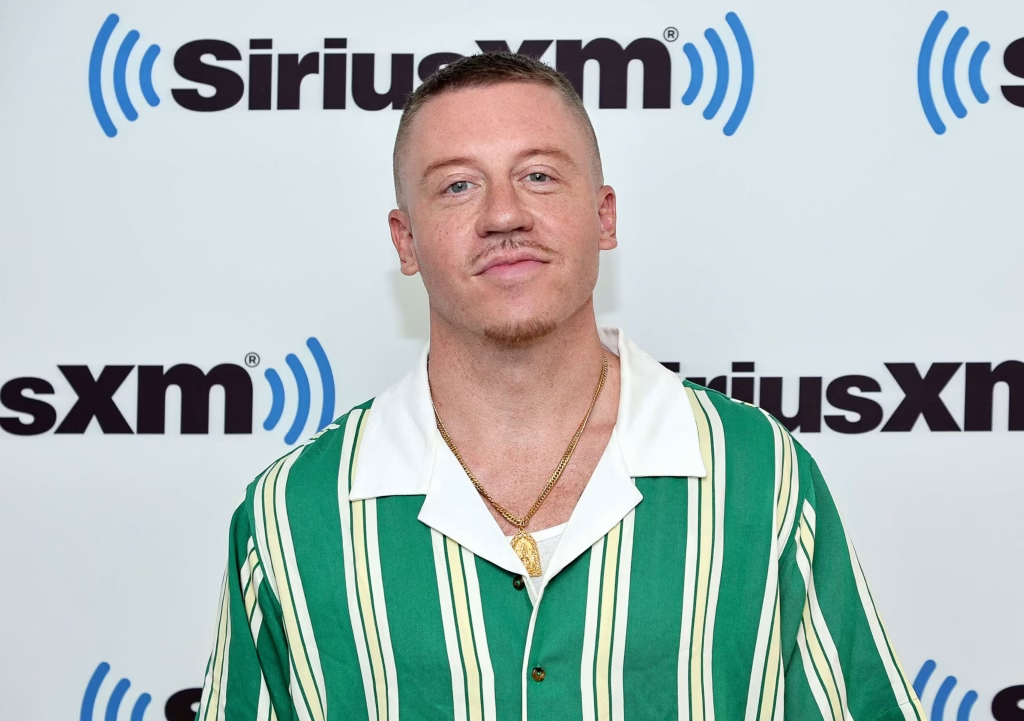
12. Macklemore

Macklemore had issues with alcohol and OxyContin addiction before his international success, calling opioids “deceptively dangerous” because of their availability. His addiction issues posed a problem not only for his career but for his most intimate relationships as well.

Image Source: Bing Image. License: All Creative Commons

Rehab was a turning point for Macklemore, providing him with the necessary structure, self-discovery, and support for long-term sobriety. Since rehab, Macklemore has been using his fame to spread awareness about addiction, turning his own struggle into a mission for the greater good.

Image Source: Bing Image. License: All Creative Commons

11. Gerard Butler

Gerard Butler’s addiction to painkillers began after a physical injury he sustained during the shooting of one of his movies. What began as a prescription gradually led to a dependence he couldn’t shake, eventually sending him to rehab in 2012.

Image Source: Bing Image. License: All Creative Commons

The ordeal led Butler to face issues he had been ignoring for a long time. By opening up about the emotional toll of rehab, he has encouraged others to embrace their vulnerabilities, even when they’re at the top of their game.

Image Source: Bing Image. License: All Creative Commons

10. Eminem

Eminem’s prescription drug addiction almost took his life. His overuse of Vicodin and Valium left him stuck in a vicious cycle of addiction that numbed both his imagination and his sense of joy.

Image Source: Bing Image. License: All Creative Commons

But sobriety brought clarity, and not without its challenges. Eminem has talked about learning to feel happiness without using, giving hope to those who think recovery is losing yourself, instead of finding yourself again.

Image Source: Bing Image. License: All Creative Commons

9. Matthew Perry

Matthew Perry’s success on Friends was matched by his increasing addiction to alcohol and prescription drugs. The demands of fame fueled his addiction, forcing him into rehab and health problems.

Image Source: Bing Image. License: All Creative Commons

Though Perry dedicated himself to helping others through addiction and recovery programs, sadly, he died in October 2023. His story highlights the need for ongoing support and the fact that addiction is a lifelong struggle.

Image Source: Bing Image. License: All Creative Commons

8. Bradley Cooper

Bradley Cooper sought recovery quite early in his life, choosing to stay away from alcohol and drugs before they took over his life completely. Recovery helped him regain his relationships and tap into the emotional side of life that he had never experienced before.

Image Source: Bing Image. License: All Creative Commons

Recovery has helped Bradley Cooper become a better son, partner, and artist, as he credits it. His example proves that recovery is not just about quitting but also about being receptive to the possibilities of connection and presence.

Image Source: Bing Image. License: All Creative Commons

7. August Alsina

August Alsina was exposed to addiction right from his childhood days, witnessing the damage it could cause. Ironically, his exposure to addiction came through prescription painkillers after a medical procedure, which he didn’t realize the danger of at first.

Image Source: Bing Image. License: All Creative Commons

Alsina had a close call with death and chose recovery, speaking out about the dangers of prescription drugs. His example has helped dispel myths about addiction and the ease with which addiction can creep in.

Image Source: Bing Image. License: All Creative Commons

6. Robert Downey Jr.

Robert Downey Jr. began his addiction at a shockingly young age, introduced to drugs by his father as a child. Years of arrests, rehab stints, and professional setbacks followed, leaving his future in Hollywood uncertain.

Image Source: Bing Image. License: All Creative Commons

His sobriety in the early 2000s is one of the greatest comeback stories in the history of entertainment. Downey’s tale is a testament that redemption is possible with the right accountability, support, and dedication.

Image Source: Bing Image. License: All Creative Commons

5. Simon Kirke

Simon Kirke struggled with addiction for decades, influenced by a family history of alcoholism and the touring musician lifestyle that bred excess. Near-death experiences and rehab stints littered a long, arduous journey.

Image Source: Bing Image. License: All Creative Commons

Today, sober for over a decade, Kirke uses his experiences to fuel advocacy and artistic pursuits related to addiction recovery. His story proves that it’s never too late to change and that recovery can actually enhance, not hinder, artistic expression.

Image Source: Bing Image. License: All Creative Commons

4. Sly Stone

Sly Stone’s revolutionary success in music was later marred by his heavy use of drugs, which affected his performances, recording sessions, and interpersonal relationships. Addiction slowly destroyed both his career and his stability.

Image Source: Bing Image. License: All Creative Commons

Instead of a clean redemption story, Stone’s is one of survival. His life is a wake-up call that talent is no shield against the effects of addiction.

Image Source: Bing Image. License: All Creative Commons

3. Bobby Torello

Bobby Torello had a respectable career as a drummer, performing with prominent artists while dealing with his own personal struggles, such as addiction. Music was both his escape and his anchor throughout his life.

Image Source: Bing Image. License: All Creative Commons

His ability to stay in the industry is a testament to his strength and commitment. Torello’s experience shows that recovery can sustain creativity instead of stifling it.

Image Source: Bing Image. License: All Creative Commons

2. Colin “Scummy” Morrison

Colin Morrison lived hard in the motocross scene, where partying and drug use were a big part of the culture. His journey to sobriety was rocky, with relapse and the hard truth that honesty was non-negotiable.

Image Source: Bing Image. License: All Creative Commons

Morrison’s willingness to share his struggles has brought him real respect in the recovery community. His experience shows that authenticity, not perfection, is often the secret to successful sobriety.

Image Source: Bing Image. License: All Creative Commons

1. Everyday Heroes in Recovery

Not all recovery tales are about stars. Many people rebuild their lives in the background through meetings, therapy, nature, faith, and friends, with no recognition or accolades. Everyday heroes struggle with the same fears, cravings, and struggles, demonstrating that recovery isn’t about fame or fortune. It’s about grit, determination, and the power of hope.

Image Source: Bing Image. License: All Creative Commons

Addiction stories aren’t about weakness; they’re about survival. Whether the journey leads to long-term sobriety or serves as a cautionary tale, each experience adds to a larger conversation about compassion, accountability, and healing. Recovery doesn’t erase the past, but it can reshape the future. And in every story, famous or not, there’s a reminder that help is possible, and change is worth fighting for.

15 Celebrities Who Spoke Honestly About Recovery and Sobriety

0
Image Source: Bing Image. License: All Creative Commons

For years, addiction in Hollywood was often kept quiet, romanticized, or softened by polished PR narratives. In recent times, however, more celebrities have chosen transparency over maintaining a flawless image. They’ve spoken candidly about sobriety, recovery, and stepping away from substances—whether after deeply difficult turning points or the simple realization that alcohol no longer had a place in their lives.

Image Source: Bing Image. License: All Creative Commons

What makes these stories resonate isn’t perfection, but honesty. These public figures remind us that choosing sobriety is not a sign of weakness but of strength, clarity, and self-awareness. By sharing their experiences, they’ve played a meaningful role in reshaping how we talk about addiction and recovery, offering hope and showing that transformation is possible at any point in life.

Image Source: Bing Image. License: All Creative Commons

15. Doechii

Doechii hasn’t shied away from talking about how partying and substance use blurred her sense of self. She’s woven those experiences directly into her music, reflecting on a time when being constantly intoxicated felt normal until it didn’t. Eventually, she reached a point where she didn’t like the person staring back at her in the mirror.

Image Source: Bing Image. License: All Creative Commons

Choosing sobriety became a turning point not just personally, but creatively. With a clearer mind, she’s spoken about reconnecting with who she really is and creating more intentional, authentic work. Her transparency resonates deeply with fans who see their own struggles reflected in her journey.

Image Source: Bing Image. License: All Creative Commons

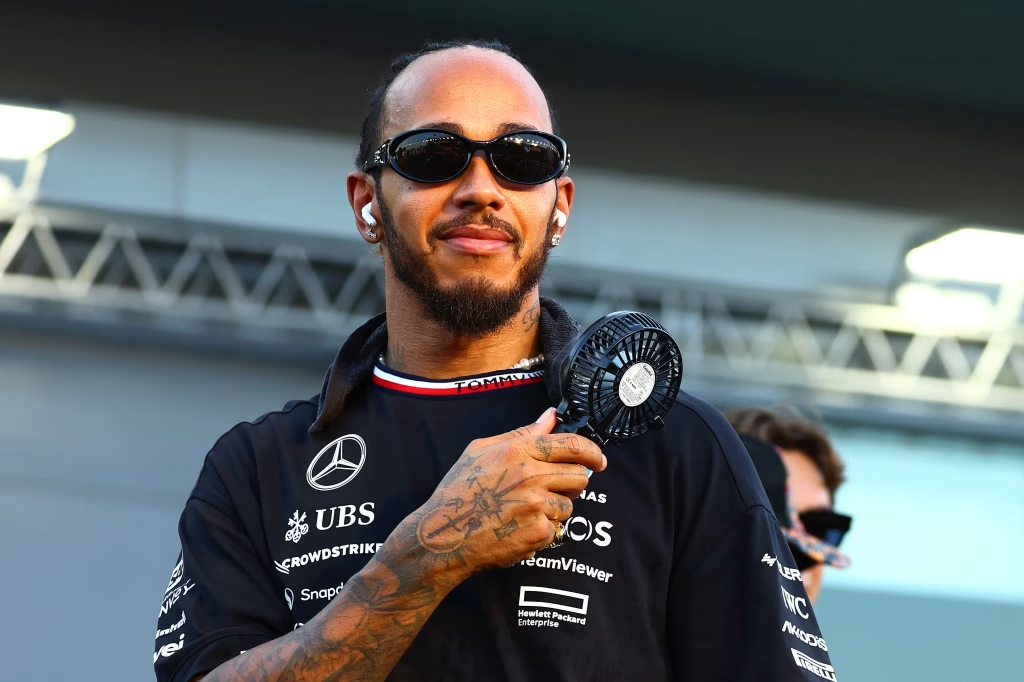
14. Lewis Hamilton

Formula One champion Lewis Hamilton embraced a sober-curious lifestyle after recognizing how even occasional drinking affected his body and performance. In a sport that demands intense focus and discipline, lingering hangovers simply weren’t sustainable.

Image Source: Bing Image. License: All Creative Commons

Since stepping away from alcohol, Hamilton has said he feels sharper, sleeps better, and maintains more consistent energy. His story highlights how sobriety isn’t only about addiction, but it can also be about optimizing mental clarity and physical health in high-pressure environments.

Image Source: Bing Image. License: All Creative Commons

13. Anne Hathaway

Anne Hathaway has described giving up alcohol as an act of self-awareness. Rather than framing it dramatically, she’s explained it simply: drinking just wasn’t working for her anymore. Once she stopped fighting that realization, life felt lighter.

Image Source: Bing Image. License: All Creative Commons

She’s been candid about how alcohol sometimes amplified negative emotions instead of easing them. By sharing that sobriety was a personal choice, not a public crisis, Hathaway has helped normalize the idea that you don’t need a headline-making reason to quit.

Image Source: Bing Image. License: All Creative Commons

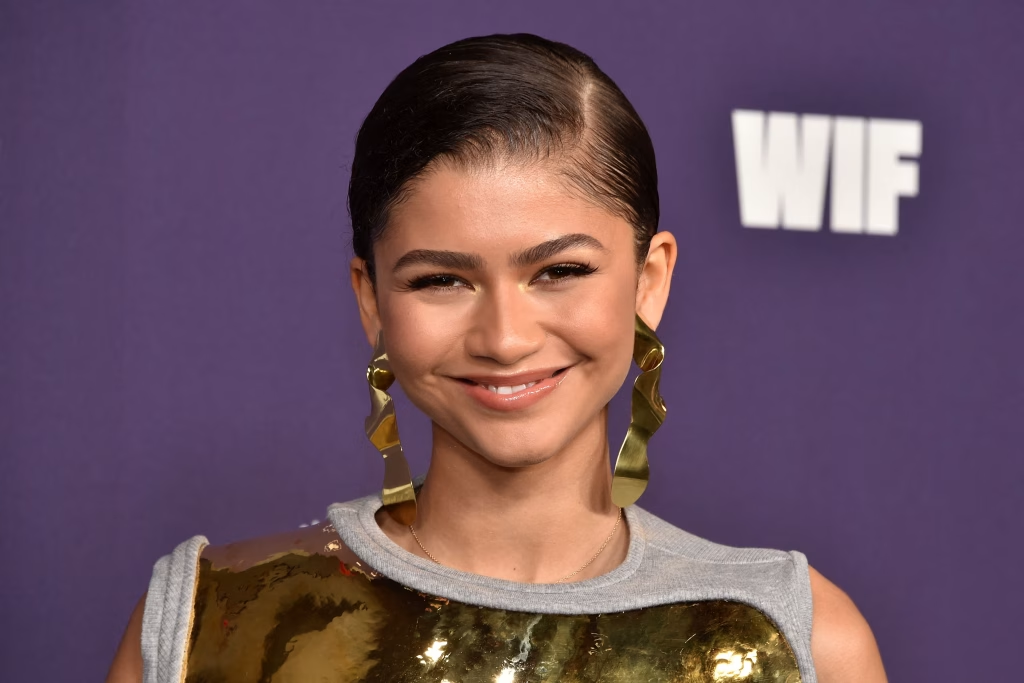
12. Zendaya

Despite starring in a show that explores addiction, Zendaya has made it clear she chooses not to drink. When she turned 21, she openly shared that reaching legal age didn’t mean she felt compelled to start.

Image Source: Bing Image. License: All Creative Commons

Her reasoning is grounded in control and clarity. In an industry filled with temptation and pressure, she prefers to stay fully present and in charge of her decisions. For young fans especially, her stance sends a powerful message: you don’t need substances to thrive or have fun.

Image Source: Bing Image. License: All Creative Commons

11. Tom Holland

Tom Holland’s sobriety began as a casual challenge, Dry January, but quickly turned into a deeper realization. He noticed how much mental space alcohol occupied in his life, even when he wasn’t drinking.

Image Source: Bing Image. License: All Creative Commons

After extending his break month after month, he found himself feeling happier and more balanced. His openness about that internal struggle makes his story relatable, particularly for people who may not identify as having a “serious problem” but recognize unhealthy patterns.

Image Source: Bing Image. License: All Creative Commons

10. Miley Cyrus

Miley Cyrus has spoken about both family history and personal reasons for choosing sobriety at different points in her life. After vocal surgery and lifestyle changes, she began prioritizing her health more intentionally.

Image Source: Bing Image. License: All Creative Commons

She’s also addressed the stigma that sober people are somehow “less fun.” Miley pushes back against that idea, showing through her personality and performances that creativity and excitement don’t depend on substances. Her journey reframes sobriety as empowerment rather than restriction.

Image Source: Bing Image. License: All Creative Commons

9. Zac Efron

Zac Efron has credited sobriety with bringing structure and balance back into his world. Letting go of alcohol allowed him to reconnect with hobbies like surfing and skateboarding, activities that ground him outside of fame.

Image Source: Bing Image. License: All Creative Commons

He’s also reflected on how living for public approval can distort your sense of self. Sobriety helped him step away from that noise and focus on what genuinely fulfills him, not what trends online.

Image Source: Bing Image. License: All Creative Commons

8. Drew Barrymore

Drew Barrymore’s relationship with substances began early in life, making her eventual decision to get sober deeply personal. Interestingly, she kept her sobriety private for years before speaking about it publicly.

Image Source: Bing Image. License: All Creative Commons

She’s described the process as breaking long-standing patterns and rebuilding confidence quietly. Her story shows that recovery doesn’t have to be performative; sometimes the most meaningful transformations happen behind the scenes.

Image Source: Bing Image. License: All Creative Commons

7. Josh Peck

Josh Peck has been open about how a 12-step program became the foundation of his adult life. After early struggles, he found stability through consistent recovery work and community support.

Image Source: Bing Image. License: All Creative Commons

He’s often credited sobriety with allowing everything else in his life, career, relationships, and fatherhood to flourish. His long-term commitment proves that recovery isn’t a temporary fix; it’s an ongoing practice that can anchor a fulfilling life.

Image Source: Bing Image. License: All Creative Commons

6. Demi Lovato

Demi Lovato’s near-fatal overdose marked a pivotal chapter in her recovery story. Since then, she’s emphasized therapy, supportive relationships, and prioritizing her health above everything else.

Image Source: Bing Image. License: All Creative Commons

Her willingness to speak openly about setbacks, healing, and growth has helped reduce stigma around relapse and mental health. Lovato’s journey reminds people that recovery isn’t linear, but it is possible.

Image Source: Bing Image. License: All Creative Commons

5. Cara Delevingne

Cara Delevingne has shared that sobriety followed a period of public struggles and personal reflection. She eventually realized that partying had become a form of escape rather than enjoyment.

Image Source: Bing Image. License: All Creative Commons

Since then, she’s focused heavily on therapy and consistent self-work. By acknowledging that healing requires ongoing effort, not just a one-time decision, she’s offered a refreshingly realistic look at recovery.

Image Source: Bing Image. License: All Creative Commons

4. Tyler, the Creator

Tyler, the Creator, has long expressed that drinking simply doesn’t appeal to him. Rather than framing sobriety as a struggle, he presents it as a conscious lifestyle choice that aligns with his creativity.

Image Source: Bing Image. License: All Creative Commons

He’s questioned the cultural glorification of intoxication, pointing out that he’s never looked at someone drunk and thought, “I want that.” His perspective has helped redefine what’s considered “cool” in music culture.

Image Source: Bing Image. License: All Creative Commons

3. Jack Harlow

As his fame grew, Jack Harlow found alcohol increasingly present in his social and professional life. Eventually, he decided he was tired of feeling sluggish and making decisions he didn’t fully stand by.

Image Source: Bing Image. License: All Creative Commons

Quitting drinking helped him feel more present and intentional. His story is especially relatable because it shows you don’t have to hit a dramatic low point to decide something isn’t working anymore.

Image Source: Bing Image. License: All Creative Commons

2. Kendrick Lamar

Kendrick Lamar has been vocal about avoiding drugs and alcohol throughout his life. Growing up surrounded by substance use influenced his decision to break that cycle.

Image Source: Bing Image. License: All Creative Commons

His music often tackles addiction and its consequences, challenging the normalization of drug culture in certain spaces. By leading through example, he’s reshaped conversations within hip-hop and beyond.

Image Source: Bing Image. License: All Creative Commons

1. Jennifer Hudson

Jennifer Hudson has consistently shared that she’s never been drawn to alcohol or drugs. Despite skepticism from some, she’s maintained that substances simply never interested her.

Image Source: Bing Image. License: All Creative Commons

Her example is powerful because it shows sobriety doesn’t always follow struggle; it can also stem from self-assurance and contentment. Hudson proves that you can build an extraordinary career while staying completely true to yourself.

Image Source: Bing Image. License: All Creative Commons

These celebrities come from different industries, backgrounds, and experiences. Some reached breaking points. Others made quiet, proactive choices. But what connects them is courage, the willingness to be honest about sobriety in a culture that often glamorizes excess. By speaking up, they’ve helped shift the narrative around addiction and recovery. Sobriety isn’t about shame. It’s about clarity, growth, and choosing a life that feels authentic. And in doing so, they’ve inspired millions to believe that change is not only possible, it’s powerful.

15 Movie Sequels That Outshined Their Originals

0
Image Source: Bing Image. License: All Creative Commons

Sequels usually come with a built-in challenge: living up to expectations. Audiences want the same magic they felt the first time, critics sharpen their comparisons, and studios aim for even bigger success. But occasionally, a sequel does more than just measure up—it exceeds the original. Across genres, from explosive action to deeply emotional animation, certain follow-ups manage to expand the story, refine the characters, and raise the stakes in ways that feel fresh and exciting. Here’s a countdown of 15 sequels that didn’t merely continue the journey—they took it to another level.

Image Source: Bing Image. License: All Creative Commons

15. A Very Brady Sequel

A Very Brady Sequel takes the wholesome, sunny Brady family of the 1970s and throws them into the cynical 1990s, creating comedy through culture clash and absurdity. Where the original film played it safe, the sequel amplifies the humor, turning the family’s relentless optimism into a brilliant satirical punchline.

Image Source: Bing Image. License: All Creative Commons

The plot involves everything from a kidnapping scheme to the Bradys navigating modern society, and it lands each joke with sharper timing than the first movie. Fans appreciate how the sequel fully embraces the weirdness of transplanting 1970s values into a jaded era, making it a cult classic and one of the funniest follow-ups of its time.

Image Source: Bing Image. License: All Creative Commons

14. Bad Boys II

Michael Bay’s Bad Boys II is unapologetically bigger, louder, and more chaotic than the original. Will Smith and Martin Lawrence return with unmatched chemistry, delivering humor and camaraderie that carry the over-the-top plot.

Image Source: Bing Image. License: All Creative Commons

The film is pure spectacle: insane car chases, explosive action sequences, and banter at its peak. While critics were skeptical, audiences couldn’t resist the adrenaline rush, and the sequel cemented its place as one of the most entertaining action-comedies of the 2000s.

Image Source: Bing Image. License: All Creative Commons

13. Magic Mike XXL

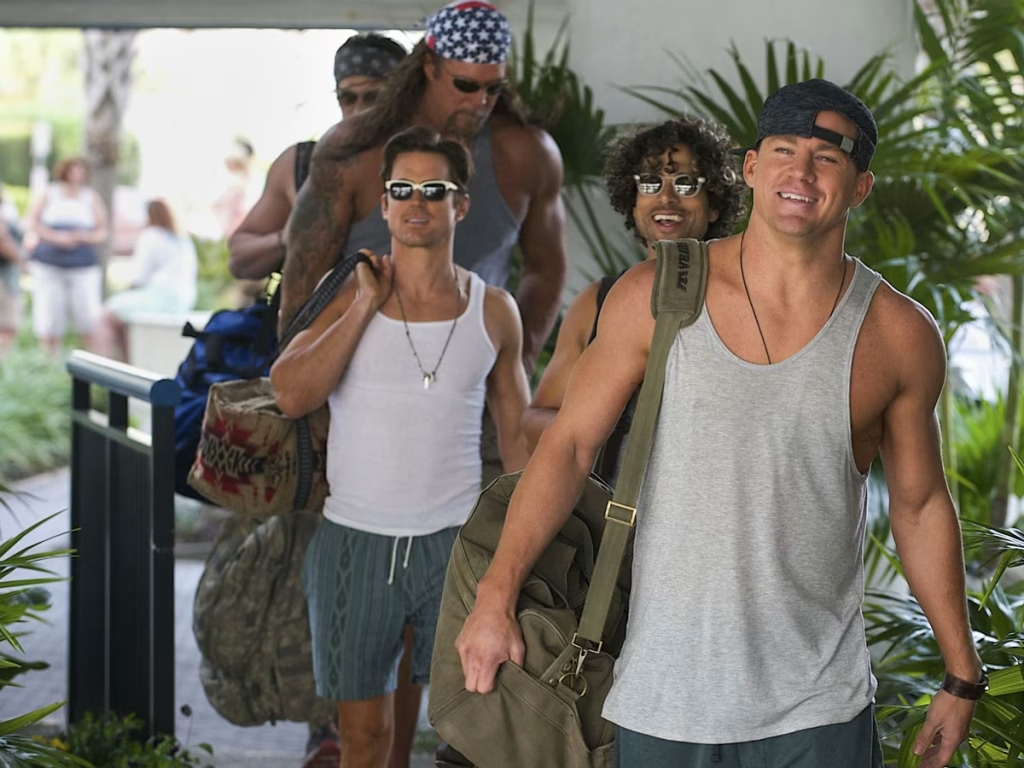
Magic Mike XXL sheds the drama-heavy tone of the first movie, turning the sequel into a vibrant celebration of friendship, dance, and self-expression. The focus shifts from cautionary tales to joy and camaraderie, giving the cast a chance to shine in a more relaxed, exuberant setting.

Image Source: Bing Image. License: All Creative Commons

Channing Tatum and the ensemble exude fun and energy, making every performance feel effortless and genuine. The film’s lighthearted tone and infectious optimism proved it could outshine the original by embracing fun without overthinking the story.

Image Source: Bing Image. License: All Creative Commons

12. Jackass Number Two

If the first Jackass movie was daring, the sequel is utterly fearless. The cast pushes stunts to new extremes, blending absurdity, danger, and comedic timing in ways only they could manage.

Image Source: Bing Image. License: All Creative Commons

From chaotic bull runs to outrageous set-pieces, Jackass Number Two amplifies the franchise’s signature recklessness. Its willingness to escalate every gag makes it not only a standout in the series but a landmark of audacious, boundary-pushing comedy sequels.

Image Source: Bing Image. License: All Creative Commons

11. Addams Family Values

Addams Family Values takes the original reboot and leans fully into dark humor, giving the eccentric clan sharper jokes and more memorable scenes. The characters feel richer, and the humor balances wit and absurdity flawlessly.

Image Source: Bing Image. License: All Creative Commons

Summer camp shenanigans, Uncle Fester’s ill-fated romance, and Wednesday and Pugsley’s mischievous adventures make the sequel more engaging than its predecessor. It’s widely regarded as one of the best dark comedies of the 1990s, showing that sequels can refine a franchise’s tone perfectly.

Image Source: Bing Image. License: All Creative Commons

10. Paddington 2

Paddington 2 is more than a family-friendly sequel; it’s a cinematic gem. The story of Paddington being wrongly imprisoned is touching, hilarious, and full of charm, elevating the stakes while keeping the whimsy alive.

Image Source: Bing Image. License: All Creative Commons

The cast, including British favorites, perfectly complements the bear’s warmth, and the film’s impeccable writing ensures it resonates with audiences of all ages. Critics and fans alike hail it as one of the rare sequels that surpass the original in every way.

Image Source: Bing Image. License: All Creative Commons

9. Rush Hour 2

Rush Hour 2 takes the buddy-cop formula to another level, expanding the action, humor, and chemistry between Jackie Chan and Chris Tucker. Exotic locations, bigger stunts, and clever dialogue make it feel fresh while staying true to the characters fans love.

Image Source: Bing Image. License: All Creative Commons

The sequel delivers laugh-out-loud moments alongside thrilling set pieces. It proves that a formulaic franchise can evolve, becoming funnier and more engaging than the film that started it all.

Image Source: Bing Image. License: All Creative Commons

8. Mad Max: Fury Road

Decades after the original films, Mad Max: Fury Road redefined the action genre. George Miller returned to the apocalyptic wasteland with breathtaking visuals, practical stunts, and a relentless pace that keeps audiences on edge from start to finish.

Image Source: Bing Image. License: All Creative Commons

Tom Hardy’s Max is compelling, but Charlize Theron’s Furiosa steals every scene, giving the film emotional weight alongside spectacle. Fury Road proves that sequels can honor legacy while raising the bar for an entire genre.

Image Source: Bing Image. License: All Creative Commons

7. Before Sunset

Nine years after Before Sunrise, Before Sunset finds Jesse and Céline reuniting in Paris, older, wiser, and grappling with the complexities of life. The film is less about romance and more about reflection, showing a deepening of character and emotional resonance.

Image Source: Bing Image. License: All Creative Commons

The dialogue sparkles with authenticity, and the chemistry is undeniable. Many consider it the strongest entry in the trilogy, a rare sequel that enriches rather than just continues the story.

Image Source: Bing Image. License: All Creative Commons

6. Terminator 2: Judgment Day

James Cameron’s Terminator 2 sets the standard for action sequels. Bigger stakes, groundbreaking effects, and an emotionally resonant story combine to make it a triumph of filmmaking.

Image Source: Bing Image. License: All Creative Commons

Linda Hamilton’s transformation into the battle-ready Sarah Connor and Arnold Schwarzenegger’s shift from villain to protector elevate the sequel above the original. T2 remains an iconic blockbuster that defines what a sequel can achieve.

Image Source: Bing Image. License: All Creative Commons

5. The Dark Knight

The Dark Knight is more than a superhero film; it’s a cultural touchstone. Building on Batman Begins, Nolan’s sequel delves deeper into moral complexity and chaotic tension.

Image Source: Bing Image. License: All Creative Commons

Heath Ledger’s Joker is legendary, and the story’s high stakes and relentless pacing ensure audiences are hooked. The Dark Knight didn’t just surpass its predecessor; it reshaped the entire superhero genre.

Image Source: Bing Image. License: All Creative Commons

4. Shrek 2

Shrek 2 expands the fairy tale universe with sharper humor, richer characters, and a perfectly executed story. From Puss in Boots to the Fairy Godmother, the sequel adds layers of fun and heart.

Image Source: Bing Image. License: All Creative Commons

The film’s pop culture references and witty writing made it a box office juggernaut. Shrek 2 demonstrates how animated sequels can deepen the story while delivering bigger laughs and broader appeal.

Image Source: Bing Image. License: All Creative Commons

3. Spider-Man 2

Spider-Man 2 combines thrilling action with emotional stakes, making Peter Parker’s struggle feel genuine and relatable. Alfred Molina’s Doc Ock brings nuance to the villain role, enhancing the story’s depth.

Image Source: Bing Image. License: All Creative Commons

The sequel refines Raimi’s approach, balancing heart, humor, and heroics flawlessly. It’s considered one of the greatest superhero films, showing how sequels can elevate both storytelling and character development.

Image Source: Bing Image. License: All Creative Commons

2. Top Gun: Maverick

Top Gun: Maverick surpasses the original nearly 40 years later, delivering breathtaking aerial stunts, updated storytelling, and iconic charisma. Tom Cruise proves his action chops are timeless, while the film’s nostalgia is balanced with fresh energy.

Image Source: Bing Image. License: All Creative Commons

Critics and audiences alike were enthralled, making it one of the most successful and beloved sequels in modern cinema. Maverick shows that even long-delayed follow-ups can exceed expectations.

Image Source: Bing Image. License: All Creative Commons

1. Toy Story 3

Toy Story 3 is a masterclass in sequel storytelling, balancing humor, adventure, and emotion. The film explores themes of growing up and letting go, resonating deeply with both children and adults.

Image Source: Bing Image. License: All Creative Commons

With impeccable animation, a flawless voice cast, and a heart-wrenching ending, Toy Story 3 doesn’t just continue the story; it elevates the entire franchise. It proves that the right sequel can become a classic in its own right.

Image Source: Bing Image. License: All Creative Commons

Sequels often live in the shadow of their originals, but when crafted with care, vision, and respect for characters, they can surpass expectations. From animated wonders to action spectacles, these 15 films remind us that the second or third installment can be a chance to innovate, deepen storytelling, and sometimes, outshine everything that came before.

Top 15 Films and Highlights from the 2025 Santa Fe Film Festival

0
Image Source: Bing Image. License: All Creative Commons

The 2025 Santa Fe International Film Festival once again transformed the City Different into a vibrant crossroads of cinema, conversation, and creativity. Filmmakers, actors, journalists, and movie lovers gathered from across the globe to celebrate stories that challenge, inspire, and entertain. From legendary careers honored on stage to daring shorts that left lasting impressions, this year’s festival proved that bold storytelling is alive and thriving. Below is a refreshed look at the standout awards, unforgettable honorees, and audience favorites that defined the week.

Image Source: Bing Image. License: All Creative Commons

15. Lifetime Achievement Award – Edward James Olmos

A highlight of the festival was the tribute to Edward James Olmos, whose decades-long career has left an undeniable mark on film and television. Known for powerful performances in Stand and Deliver, Battlestar Galactica, and Miami Vice, Olmos has consistently portrayed characters with depth, dignity, and grit. His presence alone brought a sense of history and gravitas to the celebration.

Image Source: Bing Image. License: All Creative Commons

Beyond the screen, Olmos has long been an advocate for Latino representation in Hollywood, opening doors for future generations. His Lifetime Achievement Award felt less like a formal recognition and more like a heartfelt thank-you from an industry he has helped reshape. The standing ovation he received was one of the festival’s most emotional moments.

Image Source: Bing Image. License: All Creative Commons

14. Icon Award – Amy Goodman

Journalist Amy Goodman, best known as the host of Democracy Now!, was honored with the festival’s Icon Award. For decades, she has reported stories often overlooked by mainstream outlets, amplifying marginalized voices and holding power to account. Her work has influenced not only journalism but also documentary storytelling.

Image Source: Bing Image. License: All Creative Commons

When she took the stage, Goodman delivered a passionate speech about the media’s responsibility in a rapidly changing world. She encouraged filmmakers and reporters alike to remain fearless in their pursuit of truth. Her recognition underscored how closely cinema and journalism intersect in shaping public awareness.

Image Source: Bing Image. License: All Creative Commons

13. Best Narrative Feature Jury Award – Nika and Madison (dir. Eva Thomas)

Nika and Madison captured the jury’s attention with their emotionally layered storytelling and nuanced performances. Director Eva Thomas crafted a narrative that feels both deeply personal and widely relatable, inviting viewers into the inner lives of its characters with remarkable sensitivity.

Image Source: Bing Image. License: All Creative Commons

Thomas demonstrates careful control over tone and pacing, allowing the story to unfold naturally while building emotional weight. The jury’s unanimous decision reflects the film’s resonance and artistic strength, making it a standout likely to continue earning acclaim on the festival circuit.

Image Source: Bing Image. License: All Creative Commons

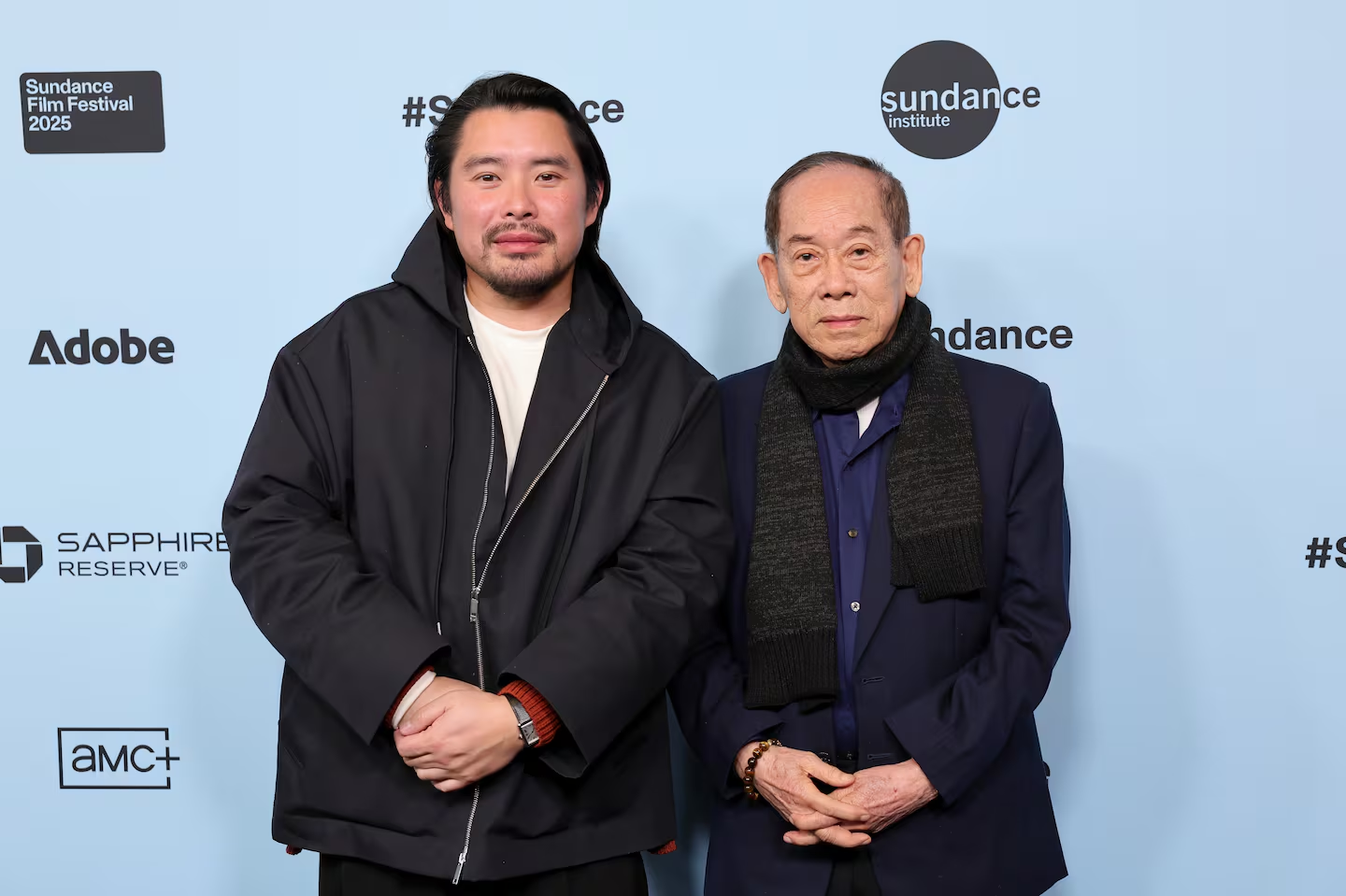
12. Best Documentary Feature Jury Award – Free Leonard Peltier (dir. Jesse Short Bull and David France)

Free Leonard Peltier examines the long and controversial imprisonment of Native American activist Leonard Peltier with clarity and urgency. Directors Jesse Short Bull and David France weave archival footage with present-day interviews to build a compelling and balanced narrative.

Image Source: Bing Image. License: All Creative Commons

The film doesn’t simplify its subject. Instead, it encourages viewers to grapple with the complexities surrounding justice, activism, and systemic inequity. The result is a documentary that feels both informative and deeply human, earning its place as the festival’s top documentary feature.

Image Source: Bing Image. License: All Creative Commons

11. Special Jury Award Documentary Feature – Steal This Story, Please! (dir. Tia Lessin and Carl Deal)

Breaking from conventional documentary form, Steal This Story, Please! stood out for its playful tone and inventive structure. Tia Lessin and Carl Deal approach serious themes with wit and creativity, proving that documentaries can be both thought-provoking and entertaining.

Image Source: Bing Image. License: All Creative Commons

Audiences clearly agreed. In addition to the Special Jury Award, the film also won Audience Choice for Best Documentary Feature. Its dual recognition speaks to its ability to connect on both intellectual and emotional levels.

Image Source: Bing Image. License: All Creative Commons

10. Special Jury Award Documentary Feature – The Stringer (dir. Bao Minh Nguyen)

The Stringer offers a gripping look at the life of a freelance journalist reporting from conflict zones. Bao Minh Nguyen places viewers directly in the chaos and uncertainty faced by reporters who risk their safety to document the truth.

Image Source: Bing Image. License: All Creative Commons

At its core, the film is about moral choices under pressure. It humanizes the people behind the headlines, showing the emotional and ethical weight they carry. The jury’s recognition highlighted the film’s intensity and its timely relevance.

Image Source: Bing Image. License: All Creative Commons

9. Academy Award Qualifying Best Narrative Short Jury Award – Nightfaces (dir. Martin Winter and Stefan Langthaler)

In a brief runtime, Nightfaces manages to create a haunting and memorable cinematic experience. Directors Martin Winter and Stefan Langthaler blend striking visuals with tightly controlled storytelling, proving that short films can leave a lasting impact.

Image Source: Bing Image. License: All Creative Commons

By earning Academy Award–qualifying status, the film now moves onto a broader stage. Its recognition at Santa Fe signals that it has both artistic merit and universal appeal.

Image Source: Bing Image. License: All Creative Commons

8. Academy Award Qualifying Best Documentary Short Jury Award – All the Empty Rooms (dir. Joshua Seftel)

Joshua Seftel’s All the Empty Rooms is intimate and quietly powerful. The documentary unfolds with patience, allowing its themes to resonate without forcing conclusions or sentimentality.

Image Source: Bing Image. License: All Creative Commons

Its Academy-qualifying win affirms the strength of its storytelling. The film’s emotional honesty and thoughtful construction ensure it will continue to connect with audiences well beyond the festival.

Image Source: Bing Image. License: All Creative Commons

7. Academy Award Qualifying Best Animated Short Jury Award – Snow Bear (dir. Aaron Blaise)

Animation lovers were captivated by Snow Bear, a visually rich and emotionally sincere short from veteran animator Aaron Blaise. The film’s artistry is evident in its textures, character expressions, and cinematic scope.

Image Source: Bing Image. License: All Creative Commons

More than just beautiful imagery, the story carries genuine emotional weight. Its Academy-qualifying recognition suggests that this animated gem will continue to enchant viewers around the world.

Image Source: Bing Image. License: All Creative Commons

6. Best Experimental Short Jury Award – Dieter (dir. Rolf Broennimann)

With Dieter, Rolf Broennimann pushes cinematic boundaries. The short plays with structure, perspective, and rhythm, inviting audiences to engage with film in unconventional ways.

Image Source: Bing Image. License: All Creative Commons

Rather than following a traditional narrative arc, the film leans into abstraction and sensory experience. Its win reinforces the festival’s commitment to championing innovation and artistic risk-taking.

Image Source: Bing Image. License: All Creative Commons

5. Best New Mexico Documentary Feature Jury Award – Dream Touch Believe (dir. Jenna Naranjo Winters)

Rooted deeply in its setting, Dream Touch Believe offers a loving portrait of New Mexico’s communities. Jenna Naranjo Winters approaches her subjects with care, highlighting resilience and creativity.

Image Source: Bing Image. License: All Creative Commons

The documentary doubles as a tribute to place. By honoring it as Best New Mexico Documentary Feature, the festival emphasized its dedication to uplifting local voices and stories.

Image Source: Bing Image. License: All Creative Commons

4. Best New Mexico Narrative Feature Jury Award – In Our Blood (dir. Pedro Kos)

Pedro Kos’ In Our Blood explores identity and belonging against the rich cultural landscape of New Mexico. The story weaves personal struggles with broader social themes, creating a layered narrative.

Image Source: Bing Image. License: All Creative Commons

The film’s recognition underscores the vitality of regional storytelling. It stands as a reminder that local stories often carry universal meaning when told with authenticity and care.

Image Source: Bing Image. License: All Creative Commons

3. Best New Mexico Short Jury Award – Legend of Fry-Roti: Rise of the Dough (dir. Sabrina Saleha)

Playful and imaginative, Legend of Fry-Roti: Rise of the Dough charmed audiences with its quirky humor and inventive spirit. Sabrina Saleha turns a culinary concept into a surprisingly heartfelt short.

Image Source: Bing Image. License: All Creative Commons

Its win that celebrates the power of creativity in small packages. Even with a short runtime, the film proves that originality and warmth can leave a big impression.

Image Source: Bing Image. License: All Creative Commons

2. Best Indigenous Short Film Jury Award – Tiger (dir. Loren Waters)

Tiger stands out for its authentic portrayal of Indigenous identity and resilience. Loren Waters approaches the subject with nuance and cultural respect, allowing the story to unfold organically.

Image Source: Bing Image. License: All Creative Commons

The award recognizes both artistic excellence and cultural significance. Films like Tiger highlight the importance of representation and the power of cinema to foster deeper understanding.

Image Source: Bing Image. License: All Creative Commons

1. Audience Choice Awards

Festivalgoers had their say as well. The President’s Cake (dir. Hasan Hadi) won Audience Choice for Best Narrative Feature, demonstrating its broad appeal and emotional impact.

Image Source: Bing Image. License: All Creative Commons

Other audience favorites included Steal This Story, Please! for documentary feature, My Kind of People for narrative short, What the River Knows for documentary short, and Forevergreen for animated short. Together, these selections reflected the diverse tastes and enthusiastic spirit of Santa Fe’s film community.

Image Source: Bing Image. License: All Creative Commons

The 2025 Santa Fe International Film Festival reaffirmed its reputation as a gathering place for daring artists and passionate audiences. By honoring legends, championing emerging voices, and celebrating stories from around the world, the festival once again showcased cinema’s remarkable ability to connect us. As the curtains closed on this year’s event, one thing was clear: the future of film is bold, inclusive, and deeply human.

15 Stars Who Had the Talent but Missed Their Big Break

0
Image Source: Bing Image. License: All Creative Commons

Hollywood is a world built on dreams, but for every actor who reaches superstardom, countless others see their early promise fade. Fame in Tinseltown is as fleeting as it is intoxicating—one breakout role can catapult a performer into the spotlight, but maintaining that momentum is a challenge few conquer. Over the years, numerous actors once hailed as “the next big thing” have seen their careers plateau or quietly recede. From franchise leads to indie favorites, the reasons vary widely: typecasting, questionable role choices, changing trends, or sheer bad luck. Here are 15 actors whose early promise hinted at lasting fame, yet gradually slipped from the public eye.

Image Source: Bing Image. License: All Creative Commons

15. Josh Hutcherson

Josh Hutcherson became a global star as Peeta Mellark in The Hunger Games, capturing the hearts of fans worldwide. His journey from child actor to blockbuster leading man suggested a trajectory toward long-term stardom.

Image Source: Bing Image. License: All Creative Commons

However, after the franchise concluded, Hutcherson struggled to find projects with similar visibility. Smaller films and supporting roles failed to maintain his early momentum, demonstrating just how quickly Hollywood can move on, even from actors beloved by audiences.

Image Source: Bing Image. License: All Creative Commons

14. Fairuza Balk

Fairuza Balk’s gothic charm made her an instant standout in films like Return to Oz and The Craft. Her unconventional style and memorable performances led many to predict she’d become a lasting Hollywood fixture.

Image Source: Bing Image. License: All Creative Commons

Yet, after her peak roles, Balk largely moved into smaller, lower-profile projects. While her performances remained compelling, her niche appeal limited mainstream opportunities, a reminder of how Hollywood often prizes novelty over long-term craft.

Image Source: Bing Image. License: All Creative Commons

13. Lori Petty

Lori Petty made waves in Point Break and A League of Their Own, with critics noting her quirky charisma and potential for stardom. She was positioned as a rising force in the early ’90s.

Image Source: Bing Image. License: All Creative Commons

Despite her talent, Petty never consistently landed the leading roles necessary to cement her status. While she has remained active in television and film, including Orange is the New Black, her fame never reached the expected heights, underscoring how timing and luck shape Hollywood careers.

Image Source: Bing Image. License: All Creative Commons

12. Jeanne Tripplehorn

Jeanne Tripplehorn rose to prominence in Basic Instinct and earned acclaim for her Emmy-nominated work in Grey Gardens. Industry insiders expected her to become a fixture in both film and television.

Image Source: Bing Image. License: All Creative Commons

Triplehorn continued to work steadily, but mostly in supporting roles rather than starring vehicles. Her career highlights how consistent work doesn’t always translate into superstardom in an industry obsessed with marquee names.

Image Source: Bing Image. License: All Creative Commons

11. Shiloh Fernandez

Shiloh Fernandez was poised for breakout success after appearances in Cold Case and Jericho. His near-casting as Edward Cullen in Twilight hinted at what could have been a major leap in his career.

Image Source: Bing Image. License: All Creative Commons

Fernandez kept pursuing high-profile roles but never secured the kind of defining project that would solidify his fame. His story reflects the competitive nature of Hollywood, where timing and opportunity are often as critical as talent.

Image Source: Bing Image. License: All Creative Commons

10. Topher Grace

Topher Grace became a household name as Eric Forman on That ’70s Show and seemed set for A-list success with roles in films like Spider-Man 3 and Interstellar. His versatility promised a long and varied career.

Image Source: Bing Image. License: All Creative Commons

Yet Grace’s post-sitcom work never elevated him to true superstardom. Despite a range of interesting projects, he never became a top-billed marquee actor, highlighting how celebrity is often as much about marketability as ability.

Image Source: Bing Image. License: All Creative Commons

9. Piper Perabo

Piper Perabo gained attention with Coyote Ugly and Cheaper by the Dozen, later leading her own show, Covert Affairs. She was considered a strong emerging talent with broad appeal.

Image Source: Bing Image. License: All Creative Commons

Over time, Perabo’s projects became smaller and lower-profile. Though she continues to work, her early buzz never translated into enduring stardom, emphasizing the fickle nature of audience attention in Hollywood.

Image Source: Bing Image. License: All Creative Commons

8. Kerri Green

Kerri Green was a child star in hits like The Goonies and Lucas, earning critical praise and public affection. Many predicted she would transition into long-term leading roles.

Image Source: Bing Image. License: All Creative Commons

Green’s career slowed through the ’90s, and she eventually stepped back from acting, focusing on screenwriting and family life. Her experience illustrates how fame is often tied to specific eras, and changing cultural contexts can diminish even talented actors’ visibility.

Image Source: Bing Image. License: All Creative Commons

7. Josh Lucas

Josh Lucas earned acclaim as a romantic lead in Sweet Home Alabama and disaster epics like Poseidon. His versatility and charm suggested he could become a major Hollywood presence.

Image Source: Bing Image. License: All Creative Commons

Despite this, Lucas never fully broke into A-list territory. His later performances, while solid, were overshadowed by bigger names, highlighting how audience attention can shift rapidly in a competitive industry.

Image Source: Bing Image. License: All Creative Commons

6. Hayden Christensen

Hayden Christensen became widely known as Anakin Skywalker in the Star Wars prequels. His performance earned him recognition and awards, seemingly cementing a promising trajectory.

Image Source: Bing Image. License: All Creative Commons

However, the role also attracted criticism, and subsequent career choices didn’t recapture the same momentum. Christensen’s story is a reminder of how even iconic roles can be double-edged swords in Hollywood.

Image Source: Bing Image. License: All Creative Commons

5. Jai Courtney

Jai Courtney appeared in high-profile projects such as Spartacus, Divergent, and Suicide Squad, signaling potential action-star status. His physical presence and versatility seemed like a ticket to long-term fame.

Image Source: Bing Image. License: All Creative Commons

Yet, despite consistent work, Courtney never became a household name. His career reflects how visibility alone isn’t always enough; audience engagement and timing are equally vital.

Image Source: Bing Image. License: All Creative Commons

4. Mischa Barton

Mischa Barton became an “it girl” thanks to The OC, earning awards and massive media attention. Fans and critics alike expected a lasting Hollywood career.

Image Source: Bing Image. License: All Creative Commons

Choosing to leave the show prematurely, Barton transitioned to reality TV and smaller projects. Her story underscores how leaving a successful franchise can quickly alter one’s career trajectory, even for highly visible actors.

Image Source: Bing Image. License: All Creative Commons

3. Sam Worthington

Sam Worthington achieved global recognition with Avatar, one of the highest-grossing films of all time. Many anticipated it would launch him into permanent superstardom.

Image Source: Bing Image. License: All Creative Commons

However, subsequent roles failed to resonate with audiences, and his career plateaued. Worthington’s experience demonstrates that even monumental success doesn’t guarantee continued prominence.

Image Source: Bing Image. License: All Creative Commons

2. Thora Birch

Thora Birch rose to fame with Hocus Pocus, Alaska, and Ghost World, earning critical acclaim and fan admiration. Her trajectory seemed destined for long-term success.

Image Source: Bing Image. License: All Creative Commons

After a string of noteworthy roles, Birch’s career slowed, with appearances in lower-profile projects like The Walking Dead. Her journey shows how fame is often tied to cultural context and timing, which can shift unexpectedly.

Image Source: Bing Image. License: All Creative Commons

1. Garrett Hedlund

Garrett Hedlund started strong in films like Troy and Tron: Legacy and had opportunities in major franchises such as The Hunger Games and Fifty Shades of Grey. Strategic choices, however, kept him from taking these roles.

Image Source: Bing Image. License: All Creative Commons

His career stalled as a result, leaving him less visible in Hollywood. Hedlund’s story is a reminder that in an industry driven by timing and decisions, even talented actors can find themselves overlooked.

Image Source: Bing Image. License: All Creative Commons

Hollywood is unpredictable: talent alone rarely guarantees lasting fame. For many actors, the “next big thing” label brings immense pressure, and even a promising start can fade if timing, role choices, or industry trends don’t align. These 15 actors show that fame is often fleeting, shaped as much by circumstance as by ability. While some reinvent themselves or find niches, others quietly continue working outside the spotlight, reminding us that stardom is both an opportunity and a gamble.

15 Standout HBO Max Films and Series to Watch This January

0
Image Source: Bing Image. License: All Creative Commons

January often feels like a slow, post-holiday recovery month—cold nights and plenty of reasons to stay inside. Luckily, HBO Max is starting 2026 strong, offering a lineup that makes curling up on the couch feel like a brilliant plan. From prestige dramas and buzzworthy A24 releases to sports, documentaries, and fan-favorite series, the platform has something for every mood. Whether you’re after awards contenders, cozy rewatchables, or surprising discoveries, January’s slate delivers it all. Here’s a closer look at 15 of the best new movies and shows coming to HBO Max this month.

Image Source: Bing Image. License: All Creative Commons

15. I’m Chevy Chase, and You’re Not

HBO Max opens the month with a revealing documentary centered on one of comedy’s most complicated figures. I’m Chevy Chase, and You’re Not traces Chase’s rise from original Saturday Night Live breakout to leading man in films like Caddyshack and Fletch, while also examining the controversies that shaped his later years.

Image Source: Bing Image. License: All Creative Commons

Featuring candid interviews and rare archival clips, the film doesn’t shy away from the friction between Chase and his collaborators. It’s part celebration, part reckoning, an honest portrait of a performer whose influence on American comedy is undeniable, even if his reputation remains divisive.

Image Source: Bing Image. License: All Creative Commons

14. If I Had Legs, I’d Kick You

A24 brings its signature blend of discomfort and dark humor with this sharp psychological dramedy. Rose Byrne stars as Linda, a mother spiraling through postpartum depression, marital tension, and the stress of a child facing mysterious health issues.

Image Source: Bing Image. License: All Creative Commons

The supporting cast, Conan O’Brien, Danielle Macdonald, Christian Slater, and A$AP Rocky, adds unexpected texture to an already layered story. It’s emotionally raw but laced with biting wit, the kind of bold storytelling A24 has made its trademark. Expect difficult themes handled with intelligence and nerve.

Image Source: Bing Image. License: All Creative Commons

13. Beat Bobby Flay, Season 40

Forty seasons in, and Bobby Flay is still defending his culinary throne. The latest installment of the Food Network favorite continues its format: talented chefs compete for the chance to challenge Flay in a head-to-head showdown.

Image Source: Bing Image. License: All Creative Commons

What keeps the show fresh is its evolving twists, new guest judges, inventive ingredients, and high-pressure creativity. It’s equal parts competition and celebration of craft, and for food lovers, it remains endlessly watchable comfort TV.

Image Source: Bing Image. License: All Creative Commons

12. 33 Photos from the Ghetto

This HBO Original documentary offers a sobering look at history through an intimate lens. It centers on rare civilian photographs taken inside the Warsaw Ghetto during the 1943 uprising, images captured by Polish firefighter Zbigniew Leszek Grzywaczewski.

Image Source: Bing Image. License: All Creative Commons

The documentary contextualizes the photographs with expert insight and historical analysis, bringing humanity to one of World War II’s most devastating chapters. It’s powerful, difficult viewing, but essential for anyone interested in personal perspectives on global tragedy.

Image Source: Bing Image. License: All Creative Commons

11. Have I Got News For You, Season 4

The long-running British panelshows returns with more sharp-tongued commentary and quick-fire satire. Each episode dissects the week’s headlines through the lens of comedians and guest panelists who never let the news take itself too seriously.

Image Source: Bing Image. License: All Creative Commons

Season four continues the tradition of blending humor with political awareness. It’s irreverent, sometimes chaotic, and consistently clever, perfect for viewers who prefer their current events served with a heavy dose of sarcasm.

Image Source: Bing Image. License: All Creative Commons

10. The Smashing Machine

Dwayne Johnson takes on one of his most demanding roles yet in this biographical drama about MMA fighter Mark Kerr. Directed by Benny Safdie, the film explores Kerr’s meteoric rise and the personal struggles that followed.

Image Source: Bing Image. License: All Creative Commons

With Emily Blunt and a cast that includes real figures from the fighting world, the film leans into emotional grit as much as physical intensity. Early awards buzz suggests this may mark a defining moment in Johnson’s dramatic career.

Image Source: Bing Image. License: All Creative Commons

9. Real Time with Bill Maher, Season 24

Bill Maher’s political talk show returns for another year of pointed monologues and heated roundtable debates. Season 24 promises the same mix of humor, provocation, and cultural commentary that has defined the series for decades.

Image Source: Bing Image. License: All Creative Commons

Whether you tune in for thoughtful analysis or spirited disagreement, the show remains a lightning rod. Love him or argue with him, Maher continues to spark conversations long after the credits roll.

Image Source: Bing Image. License: All Creative Commons

8. Mel Brooks: The 99 Year Old Man!

Comedy icon Mel Brooks gets the documentary spotlight in this two-part tribute directed by Judd Apatow and Michael Bonfiglio. The film chronicles Brooks’s journey from early television writing to legendary films like Blazing Saddles and Young Frankenstein.

Image Source: Bing Image. License: All Creative Commons

Packed with archival footage and interviews, the documentary celebrates Brooks’s fearless humor and enduring cultural impact. It’s both nostalgic and surprisingly contemporary, reminding viewers how groundbreaking his satire truly was.

Image Source: Bing Image. License: All Creative Commons

7. A Knight in the Making, Season 1

This new fantasy drama takes a more intimate approach to medieval storytelling. Rather than focusing on kingdoms and epic battles, it follows a young squire determined to earn his place as a knight.

Image Source: Bing Image. License: All Creative Commons

Character growth and personal stakes drive the narrative, supported by detailed world-building and cinematic production design. It’s a thoughtful addition to the genre, emphasizing mentorship, loyalty, and ambition over spectacle alone.

Image Source: Bing Image. License: All Creative Commons

6. A Knight of the Seven Kingdoms, Season 1

The Game of Thrones universe expands once again with this prequel based on George R.R. Martin’s “Dunk and Egg” novellas. Set roughly a century before the events of the original series, it follows Ser Duncan the Tall and his young companion, Egg.

Image Source: Bing Image. License: All Creative Commons

With shorter episode runtimes and a tighter narrative focus, the series offers a more personal look at Westeros. Expect adventure, political tension, and the rich lore that has made the franchise a global phenomenon.

Image Source: Bing Image. License: All Creative Commons

5. Industry, Season 4

The finance world grows even more ruthless in the latest season of Industry. Harper and Yasmin navigate shifting alliances and high-risk deals, while new players complicate the power structure.

Image Source: Bing Image. License: All Creative Commons

Season four digs deeper into ambition, identity, and the emotional cost of success. With sharp writing and morally complex characters, the series continues to stand out in the crowded prestige-TV landscape.

Image Source: Bing Image. License: All Creative Commons

4. The Pitt, Season 2

This Emmy-winning medical drama returns for another real-time shift inside Pittsburgh Trauma Medical Center. Each episode unfolds over a single hour of a 15-hour hospital day, creating relentless pacing.

Image Source: Bing Image. License: All Creative Commons

Season two raises the stakes with a Fourth of July setting and new additions to the medical team. The format keeps tension high, while character-driven storytelling anchors the chaos in emotional realism.

Image Source: Bing Image. License: All Creative Commons

3. Classic Films and Franchise Favorites

January also brings a wave of beloved movies to the platform. Critically acclaimed dramas like Moonlight and A Most Violent Year join blockbuster franchises including Twilight and John Wick.

Image Source: Bing Image. License: All Creative Commons

Whether you’re revisiting old favorites or discovering them for the first time, these additions broaden the month’s appeal. It’s a strong mix of prestige cinema and crowd-pleasing hits.

Image Source: Bing Image. License: All Creative Commons

2. Live Sports Streaming

HBO Max continues expanding its live sports offerings with NHL games, college basketball matchups, U.S. women’s soccer, and major wrestling events. Highlights include marquee hockey clashes and key conference basketball games.

Image Source: Bing Image. License: All Creative Commons

The service also provides analysis segments and replay options, making it easy to keep up with the action. For sports fans, it’s shaping up to be one of the busiest months of the season.

Image Source: Bing Image. License: All Creative Commons

1. Animated and Reality TV Premieres

Animation and unscripted programming round out the lineup. New seasons of fan favorites like Genndy Tartakovsky’s Primal and Totally Spies arrive alongside reality staples, including 1000-lb Sisters and Worst Cooks in America.

Image Source: Bing Image. License: All Creative Commons

The variety ensures there’s something lighter to balance the heavier dramas and documentaries. Whether you’re after adrenaline-fueled animation or chaotic kitchen mishaps, January’s slate keeps things entertaining.

Image Source: Bing Image. License: All Creative Commons

HBO Max isn’t easing into 2026; it’s charging ahead with a lineup that covers nearly every genre imaginable. From award-worthy dramas and thoughtful documentaries to fantasy epics and comfort-food reality TV, the platform is clearly aiming to satisfy a wide range of tastes. If January sets the tone for the year, subscribers have plenty to look forward to. Grab a blanket, update your watchlist, and prepare for a month packed with stories worth staying in for.