Home Blog Page 184

15 Brilliant Female Roles That Didn’t Get the Spotlight They Deserve

0
Image Source: Bing Image. License: All Creative Commons

Each year, remarkable performances can go unnoticed, overlooked by awards or mainstream attention despite their brilliance. These roles span quiet, introspective characters to intense, gripping ones that linger long after the story ends. What ties them together is the actor’s commitment, precision, and the ability to make a lasting emotional impact. Here are fifteen performances that, accolades aside, stand out for their mastery, bravery, and unforgettable depth.

Image Source: Bing Image. License: All Creative Commons

15. June Squibb in Eleanor the Great

June Squibb’s late-career renaissance feels downright miraculous. After decades of memorable supporting roles, Eleanor the Great finally takes center stage, proving that leading performances don’t have an expiration date. In her nineties, Squibb delivers work that feels effortless, grounded, and deeply human.

Image Source: Bing Image. License: All Creative Commons

She plays Eleanor not as a novelty or punchline, but as a fully realized woman confronting aging with humor, regret, and resilience. Even when the script loses its footing, Squibb remains steady, anchoring the film with quiet confidence and emotional clarity that deserved far more recognition.
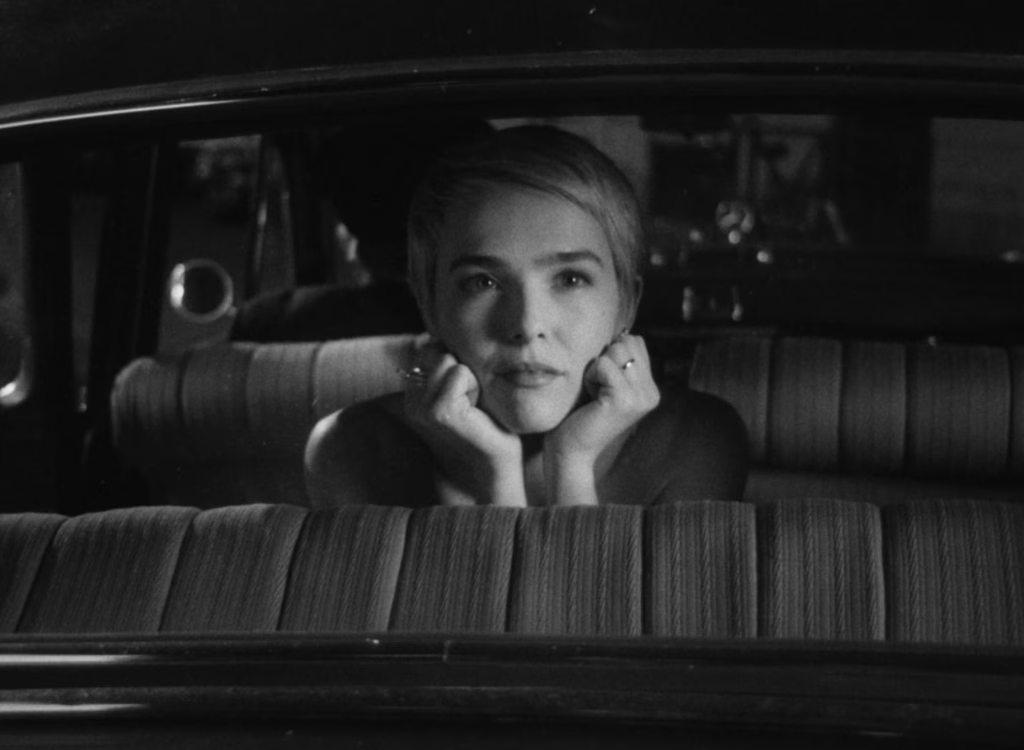
Image Source: Bing Image. License: All Creative Commons

14. Zoey Deutch in Nouvelle Vague

Zoey Deutch steps into the role of Jean Seberg with a blend of classic movie-star glow and modern sensitivity. Rather than leaning into mimicry, she captures the restless spirit beneath Seberg’s iconic image, playful one moment, fragile the next.

Image Source: Bing Image. License: All Creative Commons

Surrounded by uncanny casting that recreates an era with startling precision, Deutch still manages to stand out. Her performance adds depth to a film that may not have gained much awards traction, but remains elevated thanks to her thoughtful, textured work.

Image Source: Bing Image. License: All Creative Commons

13. Carmen Maura in Calle Málaga

Carmen Maura has nothing left to prove, yet Calle Málaga shows she’s still operating at the highest level. At 80, she brings sharp humor and emotional intelligence to a character shaped by memory, family tension, and quiet regret.

Image Source: Bing Image. License: All Creative Commons

Her performance never leans into sentimentality. Instead, Maura lets moments breathe, allowing pain and wit to coexist naturally. It’s a reminder that experience can bring a richness to acting that no amount of polish can replace.

Image Source: Bing Image. License: All Creative Commons

12. Nobuko Otowa in Onibaba

Nobuko Otowa delivers a performance that is haunting in its restraint and intensity. In Onibaba, she embodies isolation, fear, and suppressed desire with minimal dialogue, relying instead on facial expression and physical presence.

Image Source: Bing Image. License: All Creative Commons

Her character’s descent feels both horrifying and tragically understandable. Otowa gives the film its emotional backbone, proving how deeply unsettling a performance can be when it trusts stillness and psychological tension over spectacle.

Image Source: Bing Image. License: All Creative Commons

11. Kristine Kujath Thorp in Sick of Myself

Kristine Kujath Thorp commits fully to discomfort in Sick of Myself, crafting a performance that’s deliberately abrasive and impossible to ignore. Her character’s hunger for attention spirals into absurdity, yet Thorp grounds it in emotional truth.

Image Source: Bing Image. License: All Creative Commons

Balancing satire and sincerity is a risky tightrope, but she never falls off. The result is a performance that repels and fascinates in equal measure, reminding us that bravery in acting doesn’t always look pretty.

Image Source: Bing Image. License: All Creative Commons

10. Catherine Spaak in The Girl From Parma

Catherine Spaak’s performance in The Girl From Parma captures the tension between vulnerability and survival. Dora portrays a young woman forced to grow up quickly in a world that offers little protection.

Image Source: Bing Image. License: All Creative Commons

Spaak infuses the role with quiet strength and emotional awareness, never reducing Dora to victimhood. Her work anchors the film’s darker themes, making it one of the most compelling portrayals of resilience in 1960s Italian cinema.

Image Source: Bing Image. License: All Creative Commons

9. Judy Holliday in Bells Are Ringing

Judy Holliday’s talent often gets overshadowed by her bubbly screen persona, but Bells Are Ringing showcases just how skilled she really was. Her comedic timing is razor-sharp, and her musical performance is surprisingly powerful.

Image Source: Bing Image. License: All Creative Commons

Often miscast as scatterbrained, Holliday reveals layers of intelligence and warmth beneath the humor. Watching the film today feels like rediscovering a forgotten star whose work remains vibrant and genuinely funny.

Image Source: Bing Image. License: All Creative Commons

8. Hedy Lamarr in Ziegfeld Girl

Hedy Lamarr brings elegance and emotional control to Ziegfeld Girl, proving she was far more than a glamorous face. Sharing the screen with Hollywood heavyweights, she matches them beat for beat.

Image Source: Bing Image. License: All Creative Commons

Off-screen, Lamarr’s scientific contributions only deepen appreciation for her on-screen intelligence. Her performance reflects a woman navigating ambition and consequence with poise, reminding us how often her brilliance was underestimated.

Image Source: Bing Image. License: All Creative Commons

7. Jessie Buckley in Hamnet

Jessie Buckley delivers a performance built on silence, movement, and emotional undercurrents in Hamnet. As Agnes, she embodies grief and intuition with an almost elemental presence.

Image Source: Bing Image. License: All Creative Commons

The film strips away exposition, trusting Buckley to communicate everything through gesture and gaze. She rises to the challenge with astonishing control, offering one of the year’s most quietly devastating performances.

Image Source: Bing Image. License: All Creative Commons

6. Renate Reinsve in Sentimental Value

Renate Reinsve follows up her breakout success with a performance that feels loose, dangerous, and utterly confident. In Sentimental Value, she radiates unpredictability, keeping scenes alive with spontaneous energy.

Image Source: Bing Image. License: All Creative Commons

Her generosity as a scene partner enhances the entire cast, making the film feel collaborative rather than performative. It’s the kind of work that sneaks up on you, then refuses to let go.

Image Source: Bing Image. License: All Creative Commons

5. Tessa Thompson in Hedda

Tessa Thompson takes on the formidable challenge of reimagining Hedda Gabler and injects the role with sensuality and threat. She doesn’t modernize the character; she excavates her.

Image Source: Bing Image. License: All Creative Commons

Even when the film itself divides audiences, Thompson’s performance remains gripping. She makes a familiar story feel volatile again, proving her ability to command the screen with sheer presence.

Image Source: Bing Image. License: All Creative Commons

4. Amanda Seyfried in The Testament of Ann Lee

Amanda Seyfried sheds warmth and accessibility to inhabit Ann Lee with chilling conviction. She resists easy empathy, instead embracing the character’s unwavering faith and internal fire.

Image Source: Bing Image. License: All Creative Commons

The film’s unconventional structure demands restraint, and Seyfried delivers a performance that’s both controlled and commanding. It’s a reminder that risk-taking can reveal entirely new dimensions of an actor’s range.
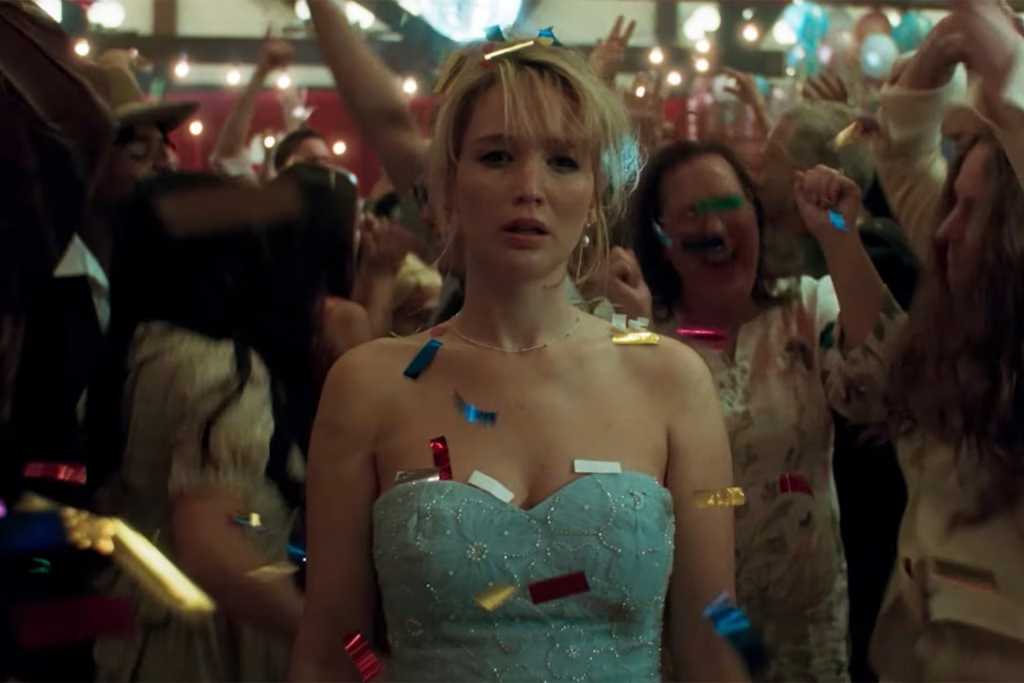
Image Source: Bing Image. License: All Creative Commons

3. Jennifer Lawrence in Die My Love

Jennifer Lawrence pushes herself into deeply uncomfortable territory in Die My Love. As a woman unraveling under post-partum psychosis, she gives a performance that’s raw, volatile, and emotionally exposed.

Image Source: Bing Image. License: All Creative Commons

The film doesn’t soften its edges, and neither does Lawrence. Even when the performance feels jagged, that roughness becomes part of its power, a bold reminder that acting isn’t about perfection.

Image Source: Bing Image. License: All Creative Commons

2. Rose Byrne in If I Had Legs I’d Kick You

Rose Byrne delivers one of the most emotionally dexterous performances of her career, blending anxiety, humor, and despair with remarkable control. Her character feels constantly on edge, yet painfully recognizable.

Image Source: Bing Image. License: All Creative Commons

Byrne commits fully to the chaos, never smoothing out the contradictions. It’s the kind of turn that redefines how audiences see an actor, proof that she deserves far more leading roles.

Image Source: Bing Image. License: All Creative Commons

1. Chase Infiniti in One Battle After Another

Chase Infiniti makes an astonishing debut that immediately signals the arrival of a major talent. Her performance feels instinctive, grounded, and electric all at once.

Image Source: Bing Image. License: All Creative Commons

Placed alongside powerhouse actors, Infiniti never fades into the background. Instead, she becomes the film’s gravitational center, marking a breakout moment that feels destined to shape the next decade of cinema.

Image Source: Bing Image. License: All Creative Commons

These performances remind us that great acting isn’t always loud, flashy, or awards-friendly. Sometimes it’s subtle, uncomfortable, or ahead of its time. Whether overlooked or celebrated, each of these actors delivered work that expanded what film acting can be, and that’s worth recognizing, no matter what the trophies say.

15 Wealthy Stars With Surprisingly Simple Lifestyles

0
Image Source: Bing Image. License: All Creative Commons

Many imagine celebrities and millionaires living amidst sprawling estates and endless shopping sprees. In reality, some of the world’s most successful figures lead far more modest lives than expected. Whether rewearing favorite outfits, adhering to careful budgets, or making thoughtful financial choices, these habits show that true wealth isn’t about indulgence—it’s about intention, discipline, and mindful preservation.

Image Source: Bing Image. License: All Creative Commons

15. Tiffany Haddish: Proudly Repeating an Iconic Dress

Tiffany Haddish gained attention not just for her comedy but for her refreshingly honest take on red-carpet fashion. Instead of unveiling a new outfit at every major event, she confidently wore the same $4,000 Alexander McQueen gown multiple times, including to the Oscars.

Image Source: Bing Image. License: All Creative Commons

Her reasoning was simple and relatable—the dress cost more than her mortgage, so she planned to actually use it. By ignoring Hollywood’s unspoken fashion rules, Haddish helped normalize outfit repetition and sparked conversations about confidence, sustainability, and common sense.

Image Source: Bing Image. License: All Creative Commons

14. Shailene Woodley: Making Beauty Products from Scratch

Shailene Woodley’s lifestyle leans heavily toward simplicity and self-sufficiency, and her beauty routine is no exception. Rather than spending on luxury skincare brands, she prefers crafting her own face oils, toothpaste, and lotions using natural ingredients.

Image Source: Bing Image. License: All Creative Commons

This habit reflects more than frugality—it’s about awareness and control. Woodley values knowing what goes into her products and reducing waste, proving that effective self-care doesn’t require expensive packaging or celebrity-endorsed labels.

Image Source: Bing Image. License: All Creative Commons

13. Dave Grohl: Saving Every Dollar Earned

Despite decades of success in the music industry, Dave Grohl approaches money with caution and humility. He’s known for depositing every paycheck straight into savings, rarely touching it once it’s there.

Image Source: Bing Image. License: All Creative Commons

That discipline comes from watching his mother struggle financially while he was growing up. Those early lessons stuck with him, shaping a mindset that values security and foresight over indulgence, even at the height of fame.

Image Source: Bing Image. License: All Creative Commons

12. Bethenny Frankel: Bargain Hunting Like a Pro

Bethenny Frankel’s wealth hasn’t dulled her love for a good deal. She openly shops clearance racks and searches online marketplaces like eBay for discounted clothes and accessories.

Image Source: Bing Image. License: All Creative Commons

For Frankel, paying full price rarely makes sense. Her approach reinforces the idea that smart shopping is about value—not income level—and that financial awareness doesn’t disappear once you reach success.

Image Source: Bing Image. License: All Creative Commons

11. Michelle Obama: Affordable Fashion with Impact

Michelle Obama has long been admired for her sense of style, but what truly stands out is her practicality. She’s been spotted shopping at Target and wearing affordable brands like H&M and J.Crew at public appearances.

Image Source: Bing Image. License: All Creative Commons

By mixing accessible fashion with high-end pieces, she redefined elegance for millions. Her choices sent a clear message: confidence and authenticity matter far more than luxury labels.

Image Source: Bing Image. License: All Creative Commons

10. Danica Patrick: Cooking Instead of Dining Out

Even with a packed travel schedule, former race car driver Danica Patrick prefers preparing her own meals. She often shops at local farmers’ markets and cooks rather than relying on expensive restaurant dining.

Image Source: Bing Image. License: All Creative Commons

This habit helps her maintain both health and financial balance. Patrick’s routine reflects a shift in how luxury is defined—prioritizing wellness, discipline, and self-sufficiency over convenience.

Image Source: Bing Image. License: All Creative Commons

9. Keira Knightley: Living Within a Set Budget

Despite her global fame, Keira Knightley limits herself to a personal yearly allowance of around $50,000. She’s spoken openly about how extreme wealth can feel isolating and disconnected from everyday life.

Image Source: Bing Image. License: All Creative Commons

By placing boundaries on her spending, Knightley avoids lifestyle inflation and stays grounded. Her choice highlights that financial freedom often comes from restraint, not excess.

Image Source: Bing Image. License: All Creative Commons

8. Zooey Deschanel: Budgeting with Precision

Zooey Deschanel takes a meticulous approach to managing her finances. Even with a high income, she tracks her spending carefully and sticks to a defined budget.

Image Source: Bing Image. License: All Creative Commons

This awareness helps her avoid unnecessary purchases and stay financially grounded. By sharing her habits publicly, Deschanel helps normalize budgeting as a proactive choice rather than a financial necessity.

Image Source: Bing Image. License: All Creative Commons

7. Jay Leno: Saving One Entire Paycheck

Jay Leno built his wealth through a simple but disciplined system. For years, he lived solely off his stand-up comedy income while saving everything he earned from television.

Image Source: Bing Image. License: All Creative Commons

That strategy allowed him to grow his fortune without inflating his lifestyle. Leno’s example shows how consistency and long-term thinking can outperform flashy spending.

Image Source: Bing Image. License: All Creative Commons

6. Jennifer Lawrence: Staying Grounded with Simple Choices

Jennifer Lawrence’s rise to fame didn’t change her everyday habits. She’s been seen shopping at thrift stores and driving a practical car instead of opting for luxury vehicles.

Image Source: Bing Image. License: All Creative Commons

Her approach reflects values shaped long before Hollywood success. Lawrence’s choices emphasize authenticity and humility, proving that financial restraint can coexist with massive success.

Image Source: Bing Image. License: All Creative Commons

5. Warren Buffett: Choosing Simplicity Over Status

Warren Buffett is famous for living in the same home he purchased decades ago and driving sensible cars. Despite his immense wealth, he has never felt the need to upgrade for appearances.

Image Source: Bing Image. License: All Creative Commons

His philosophy centers on value and long-term security. Buffett’s lifestyle serves as a reminder that wealth is most powerful when it provides peace of mind, not excess.

Image Source: Bing Image. License: All Creative Commons

4. Mark Zuckerberg and Jeff Bezos: Function Over Flash

Mark Zuckerberg has been spotted driving a modest Honda Fit, while Jeff Bezos drove a Honda Accord during Amazon’s early years. Neither felt compelled to showcase wealth through cars.

Image Source: Bing Image. License: All Creative Commons

These choices reflect a focus on practicality and long-term goals. Their stories challenge the idea that success must be displayed through luxury possessions.

Image Source: Bing Image. License: All Creative Commons

3. Lady Gaga and Clint Eastwood: Keeping It Practical

Lady Gaga’s bold stage persona contrasts with her everyday choice of a sturdy Ford truck. Clint Eastwood, meanwhile, prefers a classic GMC Typhoon over modern luxury vehicles.

Image Source: Bing Image. License: All Creative Commons

Both stars prioritize reliability and personal preference over flash. Their choices reinforce the idea that confidence—not extravagance—defines true style.

Image Source: Bing Image. License: All Creative Commons

2. Kristen Bell: Coupons and a Simple Wedding

Kristen Bell proudly embraces coupon clipping and bargain hunting for everyday purchases. She’s also known for her low-cost courthouse wedding, which totaled just $142.

Image Source: Bing Image. License: All Creative Commons

Bell’s philosophy centers on meaning over spectacle. Her openness encourages others to reject unnecessary spending and focus on what genuinely adds value to their lives.

Image Source: Bing Image. License: All Creative Commons

1. Frugal Habits Anyone Can Adopt

Celebrities may grab headlines, but frugality isn’t limited to the famous. Everyday people are saving money through habits like meal planning, buying secondhand, and automating savings.

Image Source: Bing Image. License: All Creative Commons

Small, consistent choices—canceling unused subscriptions, cooking at home, delaying impulse buys—add up over time. These habits are redefining success as intention, balance, and financial peace.

Image Source: Bing Image. License: All Creative Commons

These stories prove that frugality isn’t about deprivation—it’s about choice. Whether you’re a global superstar or an everyday earner, thoughtful spending creates freedom, stability, and peace of mind. In the end, the smartest luxury might simply be knowing you’re in control of your money.

13 Celebrity Financial Missteps and the Lessons That Followed

0
Image Source: Bing Image. License: All Creative Commons

Fame often brings hefty paychecks, but for many celebrities, wealth arrives before they’ve mastered managing it. From emerging actors to Oscar winners and chart-topping musicians, these stars learned—sometimes the hard way—that fortunes can disappear just as quickly as they’re earned when money isn’t handled wisely.

Image Source: Bing Image. License: All Creative Commons

Their stories are cautionary, surprising, and sometimes inspiring—proof that financial collapse doesn’t have to be the final act.

Image Source: Bing Image. License: All Creative Commons

13. Christy Carlson Romano

Christy Carlson Romano rose to fame as a Disney Channel favorite, but behind the scenes, her financial reality was far less magical. After her Even Stevens success, she slipped into years of careless spending, assuming the money would never stop coming.

Image Source: Bing Image. License: All Creative Commons

Romano later admitted she splurged on designer shopping sprees, expensive cars, and even paid a psychic who steadily siphoned off her savings. She has openly shared that she never learned how money worked—only that she had access to it.

Image Source: Bing Image. License: All Creative Commons

That lack of understanding eventually caught up with her, forcing a hard reset. Today, her honesty serves as a warning about the importance of financial education, especially for young stars who grow up fast in the spotlight.

Image Source: Bing Image. License: All Creative Commons

12. Francis Ford Coppola

Even cinematic legends aren’t immune to financial disaster. Francis Ford Coppola risked everything on his dream project, One From the Heart, financing it largely himself. The gamble didn’t pay off—the film earned roughly $600,000 while costing around $26 million to make.

Image Source: Bing Image. License: All Creative Commons

The fallout was brutal. Coppola filed for bankruptcy multiple times over the next decade, shouldering the consequences of betting big on artistic vision. Still, he endured, continuing to create and produce influential work. His story illustrates the delicate balance between creative ambition and financial reality in Hollywood.

Image Source: Bing Image. License: All Creative Commons

11. 50 Cent

At the height of his success, 50 Cent seemed untouchable. But in 2015, a costly lawsuit pushed the rapper and entrepreneur to file for bankruptcy, revealing $36 million in debt against less than $20 million in assets.

Image Source: Bing Image. License: All Creative Commons

Rather than seeing it asa defeat, 50 framed bankruptcy as a strategic business move—a reset button. That decision helped him pivot toward television, eventually leading to the smash success of Power. His comeback proves that financial collapse doesn’t have to be the end if you’re willing to adapt and rebuild smartly.

Image Source: Bing Image. License: All Creative Commons

10. Kim Basinger

Kim Basinger made a bold—and risky—move when she bought an entire town in Georgia for $20 million, envisioning it as a future film production hub. Unfortunately, when a key project fell apart, the dream unraveled.

Image Source: Bing Image. License: All Creative Commons

After being sued for breach of contract and ordered to pay over $8 million, Basinger filed for bankruptcy. The experience became a textbook lesson in how ambitious investments can quickly spiral out of control without careful planning. Even Hollywood royalty, it turns out, isn’t immune to financial overreach.

Image Source: Bing Image. License: All Creative Commons

9. Chris Tucker

Chris Tucker earned massive paydays from the Rush Hour franchise, including a reported $25 million for the third installment. Yet despite the income, financial mismanagement led to serious trouble with the IRS.

Image Source: Bing Image. License: All Creative Commons

By 2014, Tucker owed nearly $10 million in unpaid taxes. Although he eventually settled for a reduced amount, the ordeal took a toll on both his finances and career momentum. His story highlights how inconsistent income and lax oversight can derail even the biggest earners.

Image Source: Bing Image. License: All Creative Commons

8. Willie Nelson

Willie Nelson’s tax troubles became the stuff of legend. The IRS seized his assets across multiple states after he racked up $16 million in unpaid taxes, including property, studios, and even a golf course.

Image Source: Bing Image. License: All Creative Commons

Instead of retreating, Nelson leaned into creativity. He released The IRS Tapes: Who’ll Buy My Memories?, cutting a deal that helped chip away at his debt. Though it didn’t cover everything, he eventually settled the rest. His story stands as a uniquely artistic example of resilience under pressure.

Image Source: Bing Image. License: All Creative Commons

7. MC Hammer

MC Hammer’s rise was explosive—and so was his spending. At his peak, he was earning tens of millions annually and living just as large, complete with a sprawling custom mansion and a massive entourage.

Image Source: Bing Image. License: All Creative Commons

The math didn’t work. By 1996, Hammer declared bankruptcy with over $10 million in debt. His downfall became a cultural cautionary tale, often cited as the ultimate example of what happens when lifestyle grows faster than income.

Image Source: Bing Image. License: All Creative Commons

6. Stephen Baldwin

Stephen Baldwin’s financial troubles unfolded over several years. After filing for bankruptcy in 2009 with roughly $2 million in debt, his situation worsened when he failed to file taxes for multiple years.

Image Source: Bing Image. License: All Creative Commons

He later pleaded guilty and agreed to repay taxes, but the damage had already rippled through his personal and professional life. Baldwin’s experience underscores how ignoring financial obligations—especially taxes—can snowball into long-term consequences.

Image Source: Bing Image. License: All Creative Commons

5. Heidi Montag & Spencer Pratt

At the height of The Hills, Heidi Montag and Spencer Pratt were earning millions annually. Unfortunately, most of it disappeared just as fast. Lavish spending on designer wardrobes, luxury meals, and even crystal collections drained their accounts.

Image Source: Bing Image. License: All Creative Commons

Looking back, Spencer admitted they tried to live like A-list celebrities instead of reality TV stars. Their financial crash became a lesson in comparison culture and the dangers of spending to maintain an image rather than stability.

Image Source: Bing Image. License: All Creative Commons

4. Toni Braxton

Toni Braxton’s voice earned her fame, awards, and millions—but her bank account told a different story. She filed for bankruptcy twice, blaming unfair record deals that left her earning far less than fans assumed.

Image Source: Bing Image. License: All Creative Commons

She also acknowledged personal overspending, particularly on home décor, which added to her struggles. Despite it all, Braxton rebuilt her career, proving that financial recovery is possible even after repeated setbacks.

Image Source: Bing Image. License: All Creative Commons

3. Lindsay Lohan

Lindsay Lohan’s transition from child star to adult celebrity was rocky, and her finances reflected that turbulence. At one point, her net worth soared to an estimated $28 million before declining sharply amid legal issues and career interruptions.

Image Source: Bing Image. License: All Creative Commons

In recent years, Lohan has worked steadily toward a comeback through films and streaming projects. Her story serves as a reminder that early success doesn’t guarantee long-term security without stability and support.

Image Source: Bing Image. License: All Creative Commons

2. T-Pain

T-Pain once had $40 million at his disposal—and watched it vanish. Poor real estate decisions, reckless spending, and luxury purchases like a Bugatti left him broke within a few years.

Image Source: Bing Image. License: All Creative Commons

At his lowest, he admitted he couldn’t even afford fast food for his kids without borrowing money. By openly sharing his mistakes, T-Pain has become one of the most candid voices about financial literacy in the music industry.

Image Source: Bing Image. License: All Creative Commons

1. Nicolas Cage

Few celebrity spending stories are as infamous as Nicolas Cage’s. From dinosaur skulls and rare artifacts to multiple castles and mansions, Cage spent freely—and often impulsively.

Image Source: Bing Image. License: All Creative Commons

Eventually, the bills came due. He owed millions in back taxes and lost several properties to foreclosure. While he continued acting to recover financially, Cage’s experience remains a striking example of how limitless wealth can disappear without discipline.

Image Source: Bing Image. License: All Creative Commons

What ties these stories together isn’t just loss, but survival. Each of these celebrities faced the uncomfortable reality of financial failure and, in different ways, found a path forward. Their experiences serve as powerful reminders that money comes and goes—but awareness, discipline, and resilience can make all the difference when the spotlight fades.

15 Screen Families Whose Impact Still Resonates in Hollywood

0
Image Source: Bing Image. License: All Creative Commons

Hollywood has long been fascinated by legacies, and audiences are equally drawn to talent passed down through generations. These parent-and-child duos and trios demonstrate that stardom can truly be a family affair—though it often carries high expectations and pressure. Whether their success comes from shared artistry, a famous surname, or forging entirely separate paths, these families prove that talent—and sometimes the spotlight—can run in the blood.

Image Source: Bing Image. License: All Creative Commons

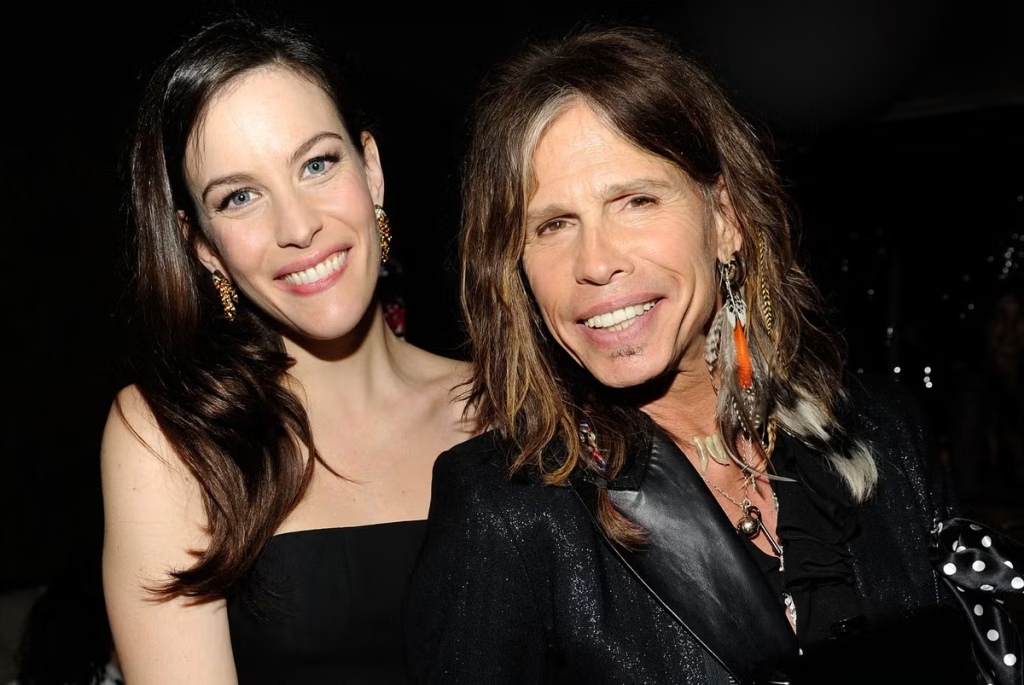
15. Liv Tyler & Steven Tyler

Liv Tyler carved out her own space in Hollywood with roles that emphasized grace and quiet strength, most famously as Arwen in The Lord of the Rings. Before acting, she worked as a model, gradually stepping into a career that felt distinctly her own despite her rock-star roots.

Image Source: Bing Image. License: All Creative Commons

Her connection to Aerosmith frontman Steven Tyler became public later than most celebrity family stories. Liv didn’t learn Steven was her biological father until she was around ten years old, after noticing how closely they resembled each other. Since then, their bond has grown strong, becoming one of Hollywood’s most fascinating and heartfelt father-daughter stories.

Image Source: Bing Image. License: All Creative Commons

14. Riley Keough & Lisa Marie Presley (and Elvis Presley)

Riley Keough was born into one of America’s most legendary families, but she never relied on nostalgia to define her career. As the daughter of Lisa Marie Presley and granddaughter of Elvis Presley, expectations followed her from the start.

Image Source: Bing Image. License: All Creative Commons

Rather than leaning into music, Riley chose acting and quickly earned respect for roles in Mad Max: Fury Road and Daisy Jones & the Six. While she’s acknowledged the weight of her family legacy, she’s also proven she can stand confidently on her own, honoring the Presley name while building something entirely personal.

Image Source: Bing Image. License: All Creative Commons

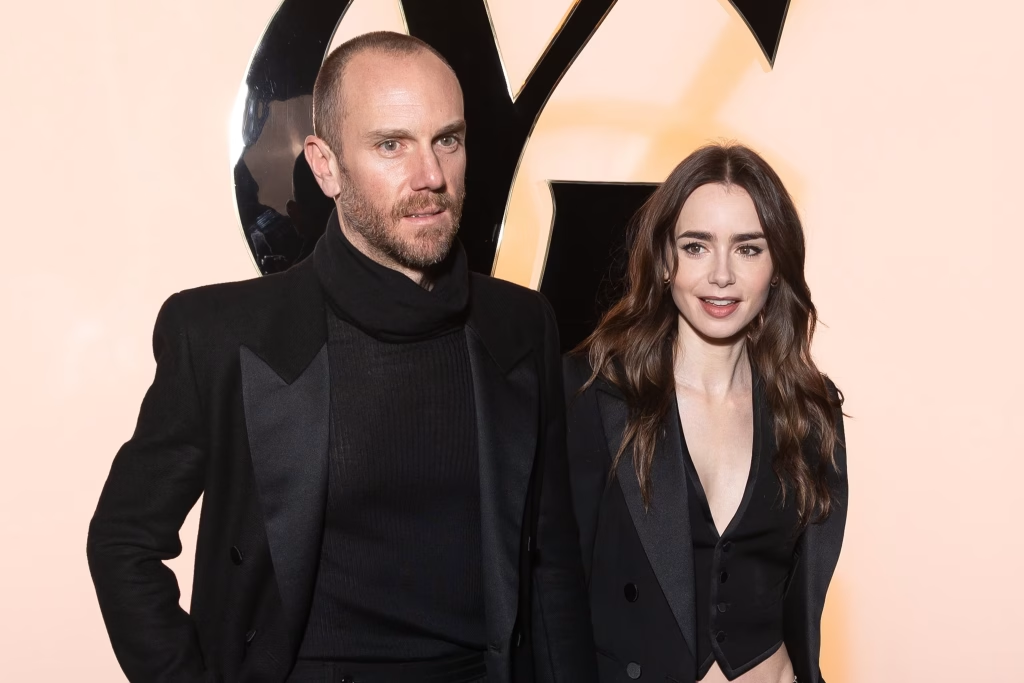
13. Lily Collins & Phil Collins

Lily Collins grew up surrounded by music royalty, thanks to her father, Genesis frontman and solo legend Phil Collins. Still, she pursued acting, eventually landing leading roles that showcased both charm and emotional range.

Image Source: Bing Image. License: All Creative Commons

Lily has been candid about the double-edged sword of her famous surname, admitting it opened doors but didn’t guarantee longevity. One of their sweetest connections came when Phil wrote “You’ll Be In My Heart” for Tarzan, a song inspired by his love for her—a rare blend of family and art.

Image Source: Bing Image. License: All Creative Commons

12. Maya Hawke, Uma Thurman & Ethan Hawke

Maya Hawke entered the spotlight carrying two instantly recognizable last names. As the daughter of Uma Thurman and Ethan Hawke, curiosity about her career came fast—and loud.

Image Source: Bing Image. License: All Creative Commons

Her breakout role on Stranger Things silenced doubts, proving she could hold her own. While she’s clearly influenced by her parents’ creative backgrounds, Maya has steadily shaped a career defined by individuality rather than inheritance.

Image Source: Bing Image. License: All Creative Commons

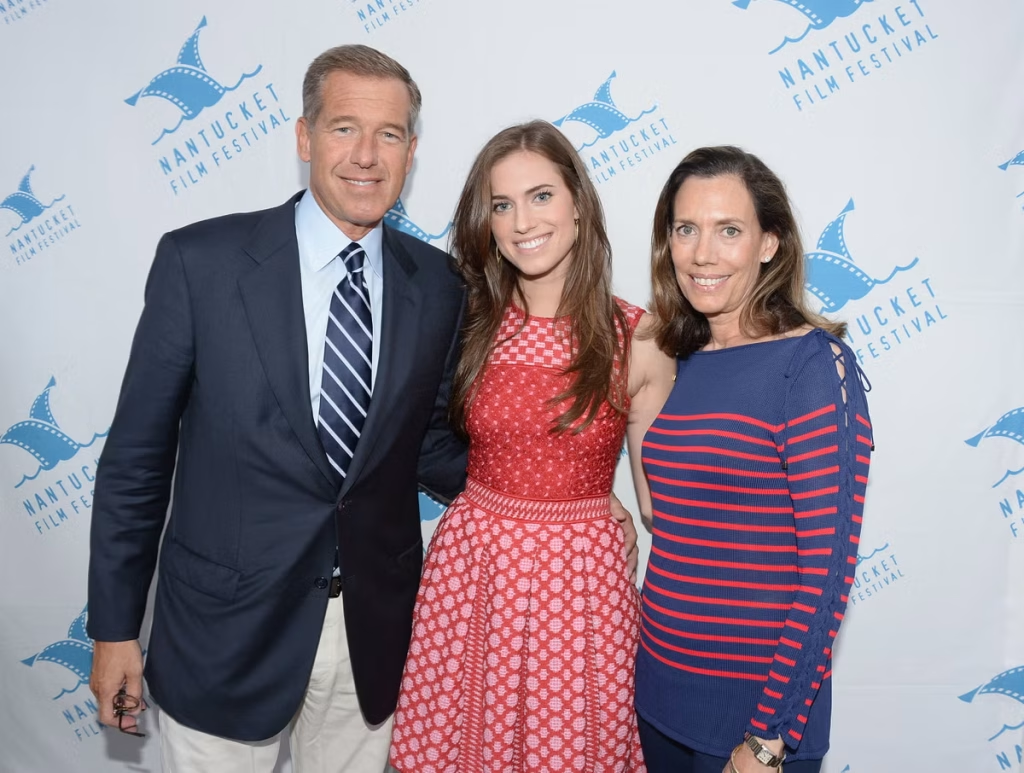
11. Allison Williams & Brian Williams

Allison Williams followed a different path than her father, longtime news anchor Brian Williams. While he became a fixture in American journalism, Allison found success in television and film.

Image Source: Bing Image. License: All Creative Commons

She’s spoken openly about navigating public scrutiny and expectations, especially when her career began gaining traction. Their story reflects how fame can look very different across industries—yet still shape family dynamics in meaningful ways.

Image Source: Bing Image. License: All Creative Commons

10. Billie Lourd, Carrie Fisher & Debbie Reynolds

Billie Lourd represents a rare three-generation Hollywood lineage. Her mother, Carrie Fisher, and grandmother, Debbie Reynold,s both left lasting marks on film history.

Image Source: Bing Image. License: All Creative Commons

Despite profound personal loss, Billie has continued acting with quiet confidence, appearing in projects like American Horror Story and Star Wars. Her career honors her family’s legacy while embracing a modern, understated approach to fame.

Image Source: Bing Image. License: All Creative Commons

9. Liza Minnelli & Judy Garland

Judy Garland was already a legend when Liza Minnelli was born, setting a daunting standard few could match. Yet Liza did exactly that, becoming an icon in her own right.

Image Source: Bing Image. License: All Creative Commons

Their relationship was layered and complex, shaped by success, pressure, and vulnerability. Together, they remain one of the most powerful examples of talent passed through generations—along with the emotional weight that often comes with it.

Image Source: Bing Image. License: All Creative Commons

8. Tracee Ellis Ross & Diana Ross

Tracee Ellis Ross grew up watching her mother, Diana Ross, redefine music and style. Instead of following her into singing, Tracee found her calling in comedy and television.

Image Source: Bing Image. License: All Creative Commons

Over time, she’s spoken lovingly about Diana’s influence—not just as a performer, but as a role model for independence and confidence. Their bond reflects a shared legacy of trailblazing success across different media.

Image Source: Bing Image. License: All Creative Commons

7. Zoë Kravitz, Lenny Kravitz & Lisa Bonet

Zoë Kravitz was raised at the intersection of music, film, and fashion. With Lenny Kravitz and Lisa Bonet as parents, creativity was simply part of daily life.

Image Source: Bing Image. License: All Creative Commons

Zoë has credited her upbringing for keeping her grounded despite fame. Her success across acting and music mirrors her parents’ versatility, making this trio one of Hollywood’s most effortlessly cool family legacies.

Image Source: Bing Image. License: All Creative Commons

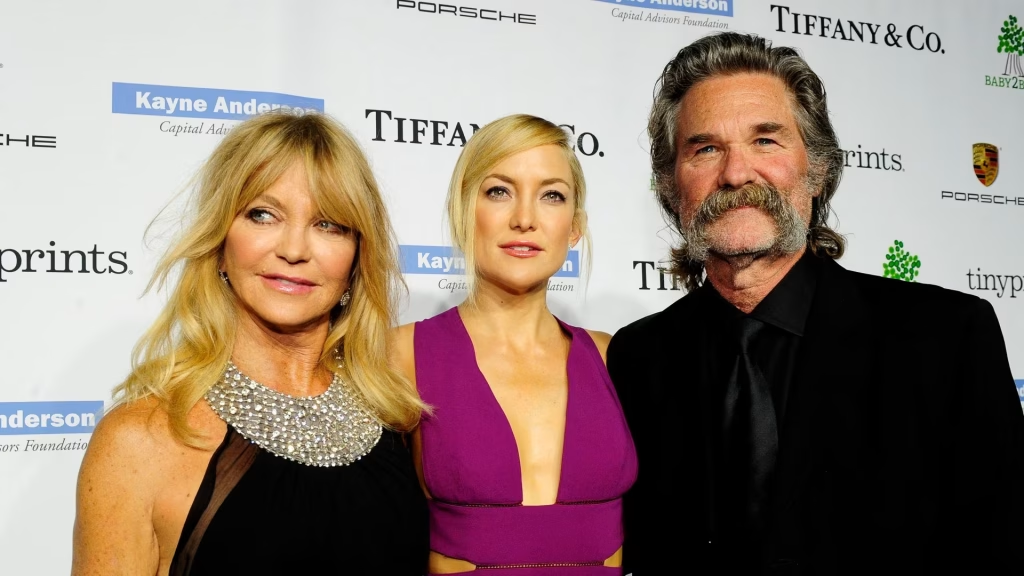
6. Kate Hudson, Goldie Hawn & Kurt Russell

Kate Hudson may share a surname with her biological father, but she’s long considered Kurt Russell her true parental figure. Raised by Goldie Hawn and Russell, Kate grew up in a deeply supportive, unconventional household.

Image Source: Bing Image. License: All Creative Commons

She’s often praised for prioritizing love and stability over Hollywood norms. Their family dynamic shows that emotional bonds—not genetics—are what truly shape a legacy.

Image Source: Bing Image. License: All Creative Commons

5. Dakota Johnson, Melanie Griffith, Don Johnson & Tippi Hedren

Dakota Johnson comes from a lineage packed with film history, spanning three generations of recognizable stars. Yet she’s navigated fame with a distinctly modern sensibility.

Image Source: Bing Image. License: All Creative Commons

Open about the realities of nepotism debates, Dakota has emphasized consistency and hard work. Her career reflects both the benefits and pressures of inheriting a Hollywood name—and surviving on her own merit.

Image Source: Bing Image. License: All Creative Commons

4. Rashida Jones, Quincy Jones & Peggy Lipton

Rashida Jones grew up surrounded by creative excellence, with music legend Quincy Jones and actress Peggy Lipton as parents. That environment shaped her curiosity and versatility.

Image Source: Bing Image. License: All Creative Commons

Rather than sticking to one lane, Rashida built a career spanning acting, writing, and producing. Her success reflects a blend of her parents’ artistic instincts and her own sharp voice.

Image Source: Bing Image. License: All Creative Commons

3. John David Washington & Denzel Washington

John David Washington took an unconventional route to acting, first pursuing professional football before transitioning into film. His father, Denzel Washington, offered guidance—but never shortcuts.

Image Source: Bing Image. License: All Creative Commons

John David has repeatedly stressed the importance of earning respect independently. Their relationship is rooted in discipline, humility, and mutual admiration rather than legacy alone.

Image Source: Bing Image. License: All Creative Commons

2. Sofia Coppola & Francis Ford Coppola, and Roman Coppola

The Coppola name is woven into film history, with multiple generations leaving their mark behind the camera. Sofia Coppola grew up immersed in storytelling, yet carved out her own signature style.

Image Source: Bing Image. License: All Creative Commons

Alongside her brother Roman and father Francis, she represents one of cinema’s most creatively influential families. Their collective legacy speaks to the power of artistic environments passed down through generations.

Image Source: Bing Image. License: All Creative Commons

1. Henry Fonda, Jane Fonda, & Peter Fonda

Few families loom as large over Hollywood history as the Fondas. Henry Fonda’s career set the foundation, while Jane and Peter expanded it in bold, transformative ways.

Image Source: Bing Image. License: All Creative Commons

Their shared achievements—including historic Oscar moments—cemented the family as a cinematic dynasty. Together, they embody the very idea of generational greatness in film.

Image Source: Bing Image. License: All Creative Commons

Hollywood legacies may begin with famous names, but they endure through talent, reinvention, and resilience. These parent-child duos and trios prove that while fame can be inherited, staying power must be earned—generation after generation.

16 Standout Performances That Make Tom Cruise a Cinematic Force

0
Image Source: Bing Image. License: All Creative Commons

Few actors have shaped modern Hollywood quite like Tom Cruise. Across four decades, he has balanced high-octane action with deeply nuanced performances, continually reinventing himself and redefining what a leading man can achieve. From sprinting across rooftops to undergoing dramatic physical transformations, and from delivering raw emotional depth to commanding blockbuster spectacles, Cruise fully immerses himself in every role. Here’s a look at 16 of his most unforgettable performances—characters that not only defined his career but cemented his legacy as a true cinematic legend.

Image Source: Bing Image. License: All Creative Commons

16. Barry Seal — American Made

Barry Seal is about as far from a polished hero as Cruise usually gets. In American Made, he plays a cocky commercial pilot who stumbles into drug smuggling and CIA operations, driven more by thrill-seeking than ideology. Cruise leans hard into Seal’s reckless charm, letting the character’s bad decisions pile up with a grin that barely masks the danger.

Image Source: Bing Image. License: All Creative Commons

What makes the performance work is Cruise’s looseness. He’s clearly having fun, using humor and swagger to keep the story buoyant even as things spiral out of control. It’s a reminder that late in his career, Cruise can still surprise audiences by playing flawed, morally flexible characters.

Image Source: Bing Image. License: All Creative Commons

15. Jack Harper Oblivion

In the slick, sci-fi world of Oblivion, Cruise plays Jack Harper, a technician stationed on a seemingly abandoned Earth. The role calls for restraint rather than bravado, and Cruise follows suit with a quietly introspective performance that matches the film’s lonely, atmospheric tone.

Image Source: Bing Image. License: All Creative Commons

As Jack starts to question his memories and purpose, Cruise makes a subtle yet effective shift in the character’s emotional center. The result is a performance that strangely roots itself in melancholy and confusion, proving he can anchor high-concept science fiction with genuine emotional depth.

Image Source: Bing Image. License: All Creative Commons

14. Vincent Collateral

Cruise’s turn as Vincent in Collateral is one of the most chilling performances of his career. Sporting gray hair and a cold stare, he plays a hired killer who forces a cab driver into an all-night odyssey through Los Angeles. It’s a complete inversion of his usual heroic image.

Image Source: Bing Image. License: All Creative Commons

Vincent is calm, precise, and unsettlingly philosophical, and Cruise plays him with icy control. The performance was widely praised for showing just how effective Cruise can be when he leans into menace instead of charm.

Image Source: Bing Image. License: All Creative Commons

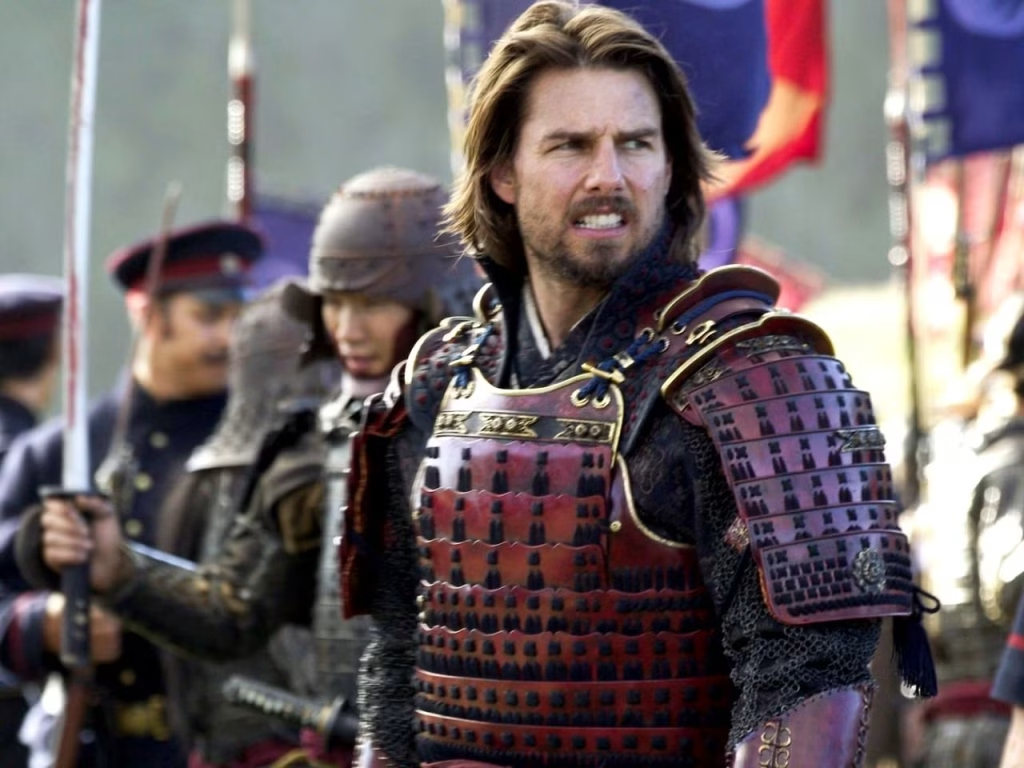
13. Nathan Algren The Last Samurai

In The Last Samurai, Cruise plays Nathan Algren, a broken American soldier who finds new purpose in Japan’s fading samurai heritage. The character requires physical stamina and emotional transformation, and Cruise gives this characterization his all.

Image Source: Bing Image. License: All Creative Commons

His performance is best utilized in the quieter scenes as he seeks to deal with guilt, honor, and identity. Anchored by a strong chemistry with co-star Ken Watanabe, Cruise helps the film transcend beyond its spectacle and become a more contemplative film.

Image Source: Bing Image. License: All Creative Commons

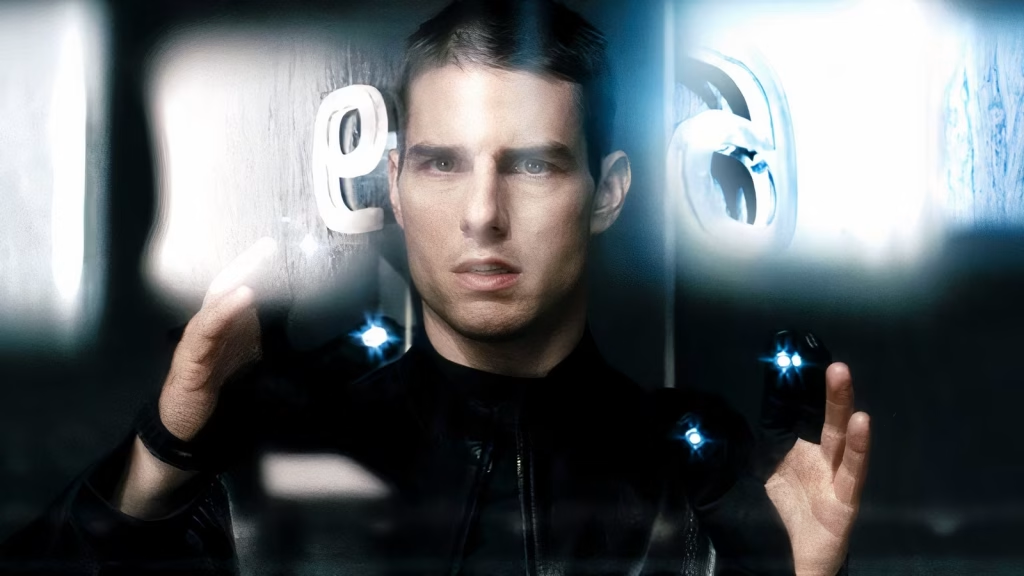
12. John Anderton Minority Report

As Chief John Anderton, Cruise leads Steven Spielberg’s futurist thriller with unyielding energy. Set in a world where crimes are predicted before they happen, the role blends action, paranoia, and emotional loss.

Image Source: Bing Image. License: All Creative Commons

Cruise balances high-speed chase sequences with grief-driven motivation, and grounds the film’s sci-fi concepts in human pain. It’s still one of his smartest blockbuster performances.

Image Source: Bing Image. License: All Creative Commons

11. Ray Ferrier War of the Worlds

In War of the Worlds, Cruise steps away from invincibility to play a deeply flawed father caught in an alien invasion. Ray Ferrier isn’t brave by instinct; he’s scared, reactive, and overwhelmed.

Image Source: Bing Image. License: All Creative Commons

That vulnerability gives the film its emotional punch. Cruise’s frantic energy and believable fear make the chaos feel personal, proving he can carry spectacle while playing ordinary, imperfect people.

Image Source: Bing Image. License: All Creative Commons

10. Les Grossman Tropic Thunder

Buried under prosthetics and profanity, Cruise’s Les Grossman is one of his most unexpected performances. As an explosive Hollywood executive, he steals scenes with pure absurdity.

Image Source: Bing Image. License: All Creative Commons

What makes the role memorable isn’t just the shock value; it’s Cruise’s total lack of vanity. By fully committing to ridiculousness, he showed audiences a fearless comedic side rarely seen before.

Image Source: Bing Image. License: All Creative Commons

9. Lestat de Lioncourt Interview with the Vampire

However, Cruise won over the doubters with his over-the-top performance as Lestat, the sensual and cruel vampire character of Anne Rice’s novel “Interview with a Vampire.” Cruise has a flair for the dramatic and makes Lestat charismatic and compelling.

Image Source: Bing Image. License: All Creative Commons

This role also served to help further redefine Cruise’s acting range, as he demonstrated the ability to thrive in the gothic fantasy genre as skillfully as the action films to which he was more obviously suited. Lestat is certainly one of his most iconic roles.

Image Source: Bing Image. License: All Creative Commons

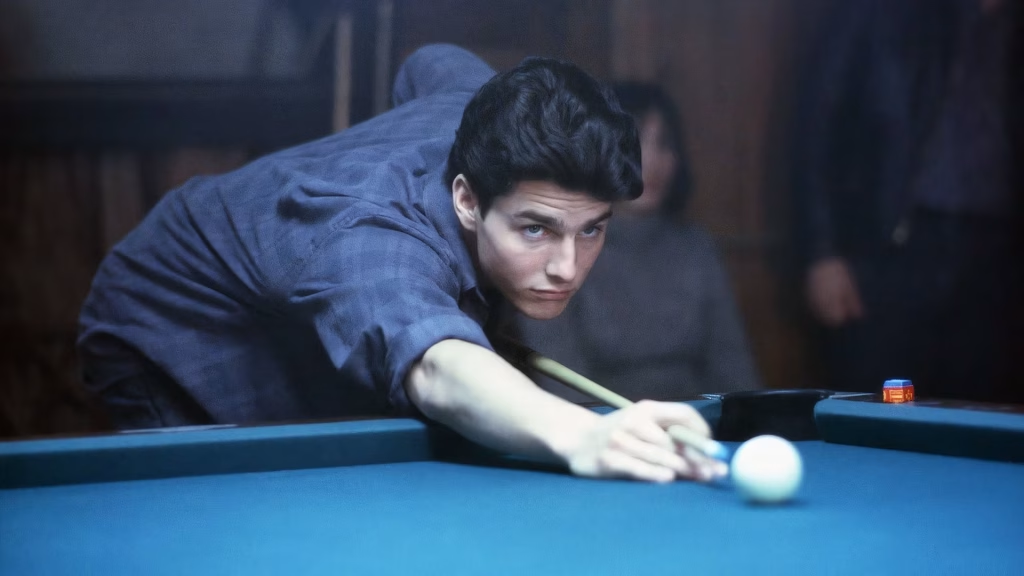
8. Vincent Lauria The Color of Money

Tom Cruise appears in Martin Scorsese’s The Color of Money as Vincent Lauria, a brash pool hustler who is full of ambition. His fresh attitude is terrifically contrasted by Paul Newman’s seasoned character.

Image Source: Bing Image. License: All Creative Commons

It was a major part for the actor and increased Cruise’s popularity by showing off his charisma and physicality, especially during the film’s exciting pool scenes. It was a key part for him in transitioning from a promising young actor to a movie star.

Image Source: Bing Image. License: All Creative Commons

7. Cole Trickle Days of Thunder

Cole Trickle symbolizes speed, ego, and intensity all rolled up into one ball. Days of Thunder finds Cruise tapping into that same starring flair that made Top Gun a success, but in the NASCAR racing arena.

Image Source: Bing Image. License: All Creative Commons

The movie lives on momentum, and Cruise delivers as big a performance as possible. It’s pure entertainment and a necessary piece in the Cruise canon of big-blockbuster films from the ’80s.

Image Source: Bing Image. License: All Creative Commons

6. Frank T.J. Mackey Magnolia

Cruise’s Frank T.J. Mackey is a loud, aggressive, and hurt individual. In his role as a guru of self-help who suffers from trauma, he gives one of his most emotional performances.

Image Source: Bing Image. License: All Creative Commons

Finally, the bravado breaks down to show the heartbreaking vulnerability underneath. Cruise received critical acclaim and an Oscar nomination to show how far he might go in terms of emotional depth.

Image Source: Bing Image. License: All Creative Commons

5. Dr. Bill Harford Eyes Wide Shut

In his final film, Kubrick cast Cruise as Dr. Bill Harford, a man in crisis as his marriage and identity fall apart. The role is understated, as is the film, which again has a dreamlike quality.

Image Source: Bing Image. License: All Creative Commons

Cruise depicts vulnerability and indecision rather than action hero assuredness. He has his most psychologically complex role, and it is far removed from public expectations.

Image Source: Bing Image. License: All Creative Commons

4. Jerry Maguire Jerry Maguire

Cruise’s role in Jerry Maguire ranks among his most endearing characters to date. The sports agent’s reclaiming of his moral center makes him simultaneously hopeful, desperate, and romantic.

Image Source: Bing Image. License: All Creative Commons

The role provided endless quotable moments, but Cruise’s sincerity makes them believable. It remains one of Cruise’s most accessible emotional roles.

Image Source: Bing Image. License: All Creative Commons

3. Pete “Maverick” Mitchell Top Gun & Top Gun: Maverick

Maverick is the role that launched Cruise into superstardom. In Top Gun, he embodied 1980s cool with swagger and confidence to spare.

Image Source: Bing Image. License: All Creative Commons

Decades later, Top Gun: Maverick added emotional weight, portraying a man reckoning with age, loss, and legacy. Together, the films showcase Cruise’s rare longevity as a movie star.

Image Source: Bing Image. License: All Creative Commons

2. Ethan Hunt — Mission: Impossible Franchise

Ethan Hunt has become synonymous with modern action cinema. Over multiple films, Cruise has transformed the franchise into a stunt-driven spectacle defined by authenticity and scale.

Image Source: Bing Image. License: All Creative Commons

What sets the role apart is Cruise’s commitment, his own stunts, and his raising the bar each time. Ethan Hunt isn’t just a character; he’s a testament to Cruise’s dedication to theatrical filmmaking.

Image Source: Bing Image. License: All Creative Commons

1. Ron Kovic Born on the Fourth of July

At the top is Cruise’s most transformative role. Ron Kovic depicts a heartbreaking transformation from patriot warrior to anti-war activist.

Image Source: Bing Image. License: All Creative Commons

Cruise eschews glamour entirely, giving a physically and emotionally taxing performance that earned him universal acclaim. It serves as proof that, beneath the stunts and glamour, there is a great actor.

Image Source: Bing Image. License: All Creative Commons

You can’t define Tom Cruise’s legacy by a genre, a franchise, an era, or any of that. You can define it by his consistency, his taking risks, and his unmatched dedication to entertaining an audience and challenging himself at the same time. These roles represent why he is not only a movie star but also a Hollywood institution, and he is doing it full speed, decades into his career.

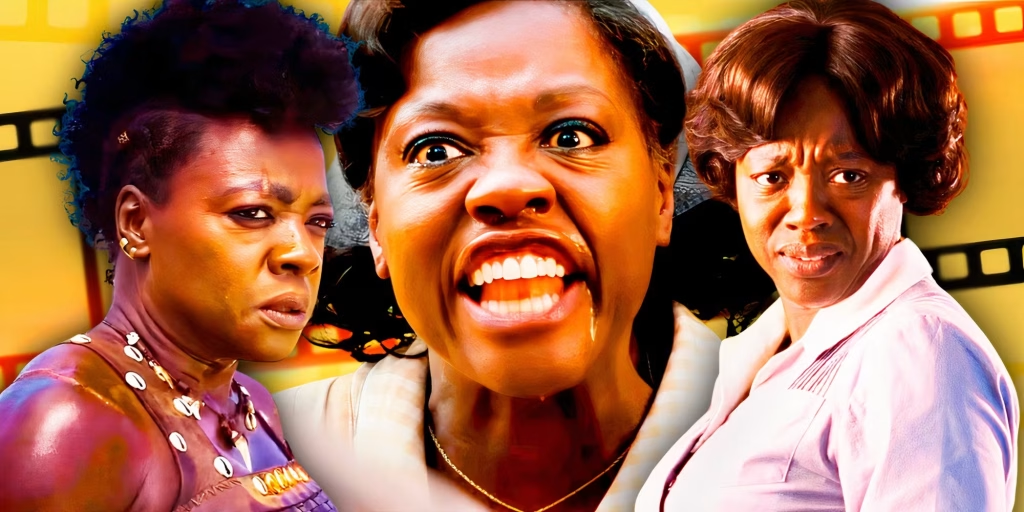
10 Moments That Prove Viola Davis Is a Force of Nature on Screen

0
Image Source: Bing Image. License: All Creative Commons

Few performers embody depth and intensity quite like Viola Davis. She doesn’t just act—she fully inhabits every character, infusing each performance with nuance, emotion, and unflinching honesty. Across film, television, and stage, Davis has built a career portraying richly layered, often heartbreaking, and unforgettable roles. Whether in a lead, supporting part, or brief cameo, her presence commands the screen and elevates every story she touches. Selecting her standout performances is no easy task, but these ten roles showcase the range, bravery, and emotional depth that have cemented Viola Davis as one of the most extraordinary actors of her generation.

Image Source: Bing Image. License: All Creative Commons

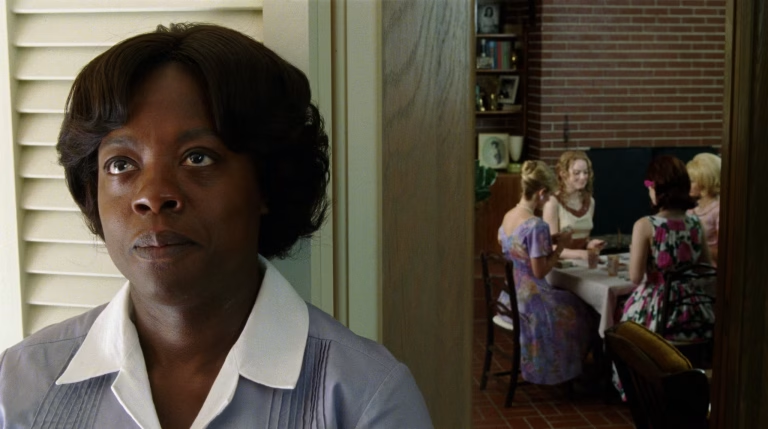
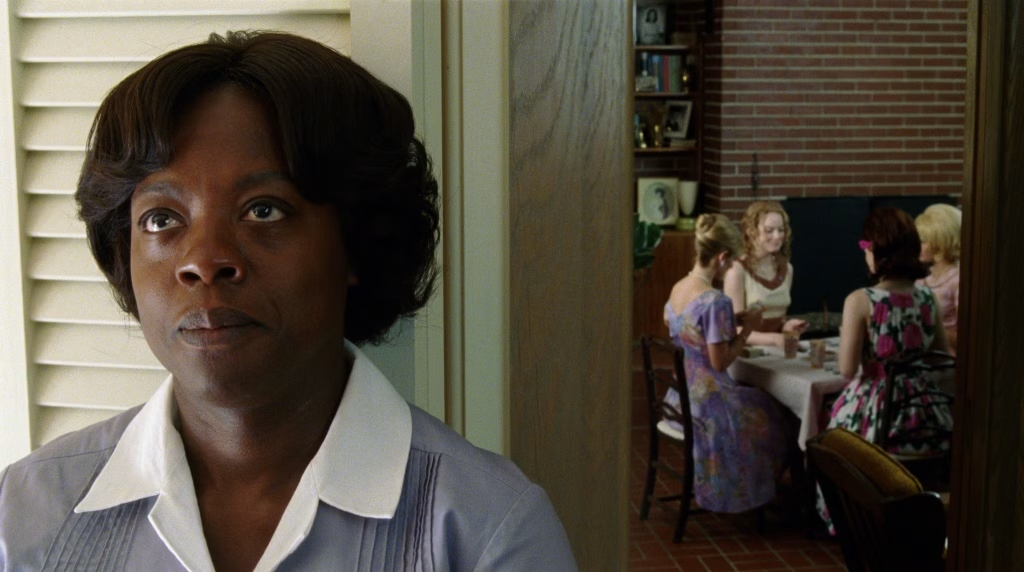
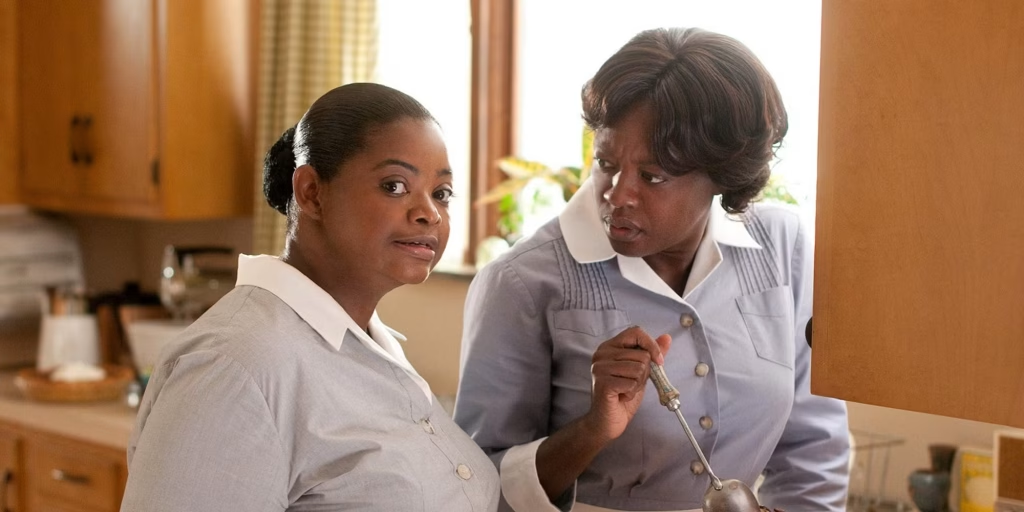
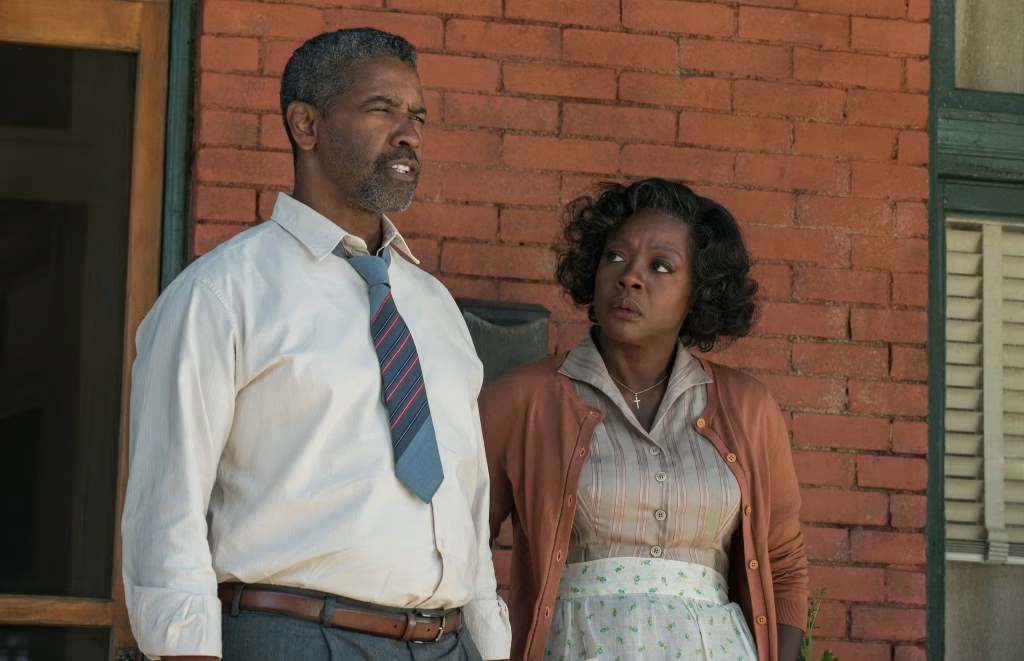
10. The Help (Aibileen Clark)

In the film, Viola Davis is Aibileen Clark, a quiet, graceful maid going about her business in 1960s Mississippi. She is at the emotional center of a story about Black women, whose voices have historically not been heard, and Viola Davis is quiet and reserved, not over-the-top dramatic.

Image Source: Bing Image. License: All Creative Commons

While there has been much criticism of the movie’s perspective, Davis’ portrayal remains touching in its grounded and true quality. She imbues the character of Aibileen with depth and purpose based on her experiences with loss, spirituality, and conviction. Even small observations, like her interactions with the children she helps raise, take on huge emotional resonance.

Image Source: Bing Image. License: All Creative Commons

This role brought Davis an Oscar nomination and more recognition for her work. Although the movie itself remains a topic of controversy, her work lives on as a testament to the amount of truth she can bring to questionable material.

Image Source: Bing Image. License: All Creative Commons

9. Doubt (Mrs. Miller)

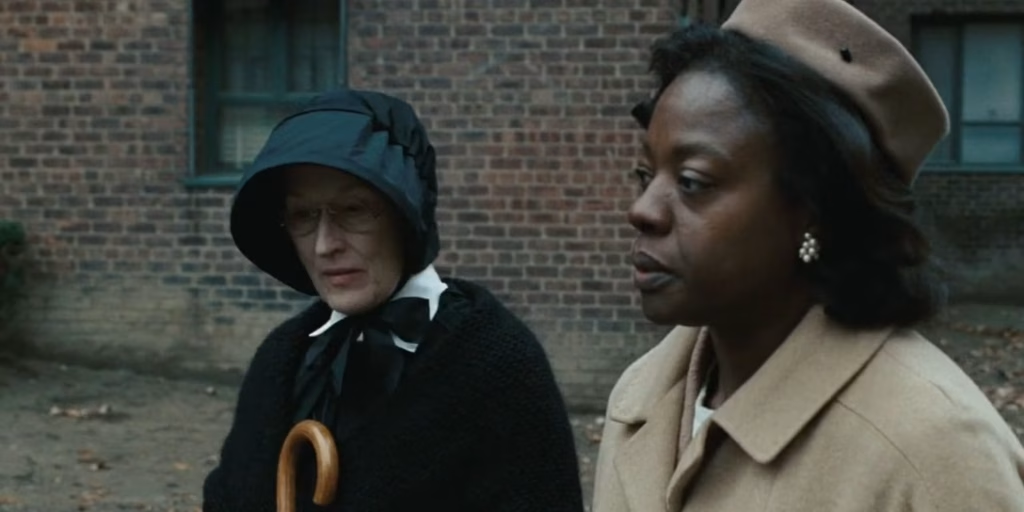
Viola Davis’s appearance in Doubt lasts only minutes, but it’s impossible to forget. Playing Mrs. Miller, the mother of a young boy caught in a moral and institutional storm, Davis enters the film like a quiet earthquake.

Image Source: Bing Image. License: All Creative Commons

Her scene opposite Meryl Streep is a masterclass in controlled emotion. Davis conveys fear, pragmatism, love, and resignation all at once, making every line feel like it carries years of survival behind it. Her performance is devastating precisely because it refuses easy answers.

Image Source: Bing Image. License: All Creative Commons

That brief role earned Davis her first Oscar nomination and instantly changed how the industry saw her. Doubt proved that screen time means nothing when the performance is this precise and emotionally overwhelming.

Image Source: Bing Image. License: All Creative Commons

8. The Suicide Squad (Amanda Waller)

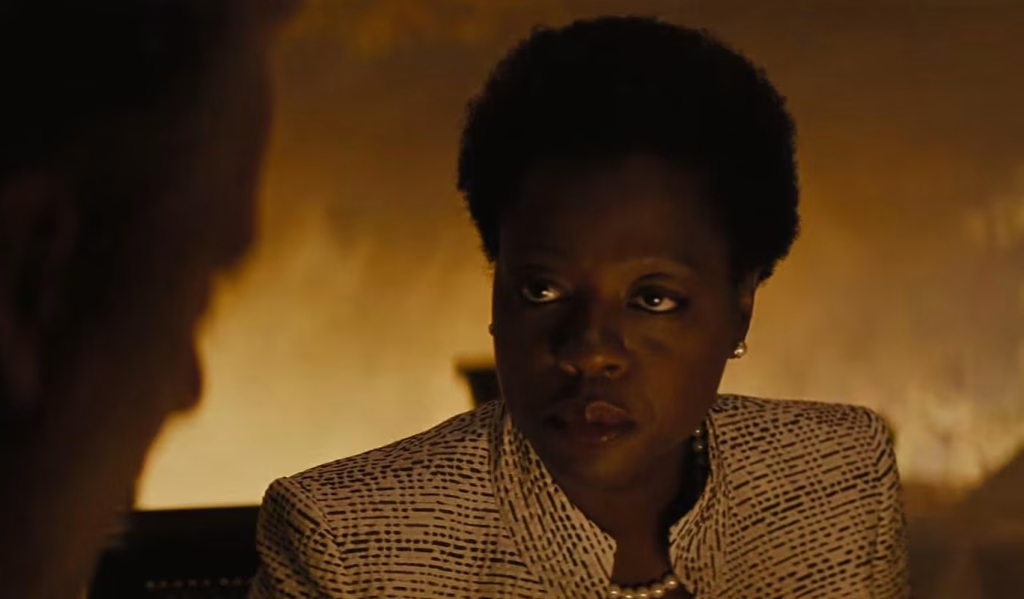
As Amanda Waller, Viola Davis brings terrifying authority to the superhero genre. In The Suicide Squad, she plays the government official pulling the strings behind the chaos, and she does so with unapologetic cruelty.

Image Source: Bing Image. License: All Creative Commons

Davis leans fully into Waller’s ruthlessness, making her both chilling and fascinating. There’s no softening the character. Waller is calculated, brutal, and utterly convinced she’s right. Davis’s commanding presence gives the film a grounded sense of danger.

Image Source: Bing Image. License: All Creative Commons

In a genre often defined by spectacle, Davis makes power feel real. Her performance elevates the film and proves that even comic-book roles benefit from serious, committed acting.

Image Source: Bing Image. License: All Creative Commons

7. Get On Up (Susie Brown)

In Get On Up, Viola Davis portrays Susie Brown, the mother of James Brown, in a role that defies sentimental expectations. Rather than playing a nurturing archetype, Davis presents Susie as complicated, damaged, and emotionally distant. Her performance adds depth to the film’s exploration of trauma and legacy.

Image Source: Bing Image. License: All Creative Commons

Davis gives Susie sharp edges and unresolved pain, suggesting how cycles of hardship shape identity across generations. Though her screen time is limited, Davis leaves a lasting impression. She turns Susie Brown into a haunting presence, reminding viewers how much impact she can have in even a handful of scenes.

Image Source: Bing Image. License: All Creative Commons

6. Prisoners (Nancy Birch)

In Denis Villeneuve’s Prisoners, Davis plays Nancy Birch, a mother whose child has gone missing. The film is intense and morally complex, and Davis brings quiet devastation to her role.

Image Source: Bing Image. License: All Creative Commons

Rather than competing with the film’s explosive performances, Davis grounds it emotionally. She plays Nancy as someone torn between hope and despair, wrestling with the choices others make in the name of justice.

Image Source: Bing Image. License: All Creative Commons

Her performance deepens the film’s emotional stakes. Davis shows how grief doesn’t always explode; it can also sit quietly, hollowing a person from the inside out.

Image Source: Bing Image. License: All Creative Commons

5. Ma Rainey’s Black Bottom (Ma Rainey)

As Ma Rainey, Viola Davis delivers a bold, uncompromising performance. She embodies the legendary blues singer with physical authority, emotional fire, and unwavering confidence.

Image Source: Bing Image. License: All Creative Commons

Davis’s Ma Rainey refuses to be diminished. She commands every room, challenges every slight, and makes no apologies for her demands. Opposite Chadwick Boseman, the tension crackles with history and unspoken pain.

Image Source: Bing Image. License: All Creative Commons

The performance earned Davis another Oscar nomination and stands as one of her most fearless roles. It’s a reminder that Davis excels when playing women who refuse to make themselves small.

Image Source: Bing Image. License: All Creative Commons

4. Fences (Rose Maxson)

In Fences, Davis revisits the role of Rose Maxson, a woman whose sacrifices and endurance define her family’s survival. Her performance is deeply rooted in emotional truth.

Image Source: Bing Image. License: All Creative Commons

Davis portrays Rose as loving but not naïve, patient but not weak. When the character finally confronts betrayal, Davis unleashes years of suppressed pain in a scene that ranks among the most powerful in modern cinema.

Image Source: Bing Image. License: All Creative Commons

Her work earned her the Academy Award for Best Supporting Actress, and deservedly so. Fences showcases Davis’s ability to turn stillness into something seismic.

Image Source: Bing Image. License: All Creative Commons

3. Air (Deloris Jordan)

In Air, Davis plays Deloris Jordan, the formidable mother of Michael Jordan. Though the role isn’t expansive, Davis makes every moment count.

Image Source: Bing Image. License: All Creative Commons

She imbues Deloris with intelligence, resolve, and quiet authority. Davis doesn’t oversell the role; she allows strength to emerge naturally through dialogue and presence.

Image Source: Bing Image. License: All Creative Commons

Her performance anchors the film emotionally. Even with limited screen time, Davis reminds audiences why she’s so often the most compelling person in the room.

Image Source: Bing Image. License: All Creative Commons

2. The Woman King (Nanisca)

Viola Davis plays one of the most physically challenging roles of her career in The Woman King, and she brings that role of General Nanisca to life in a fierce, commanding, and endearingly human role.

Image Source: Bing Image. License: All Creative Commons

Balancing the strength of an action hero and emotional vulnerability, Davis plays a warrior shaped by trauma, leadership, and loss. Her physical transformation is remarkable, but her emotional depth is what makes the role truly impactful.

Image Source: Bing Image. License: All Creative Commons

Although this performance was not noticed by award bodies, it is still rated among her best works. The Woman King demonstrates that Davis can do epics without losing emotional integrity.

Image Source: Bing Image. License: All Creative Commons

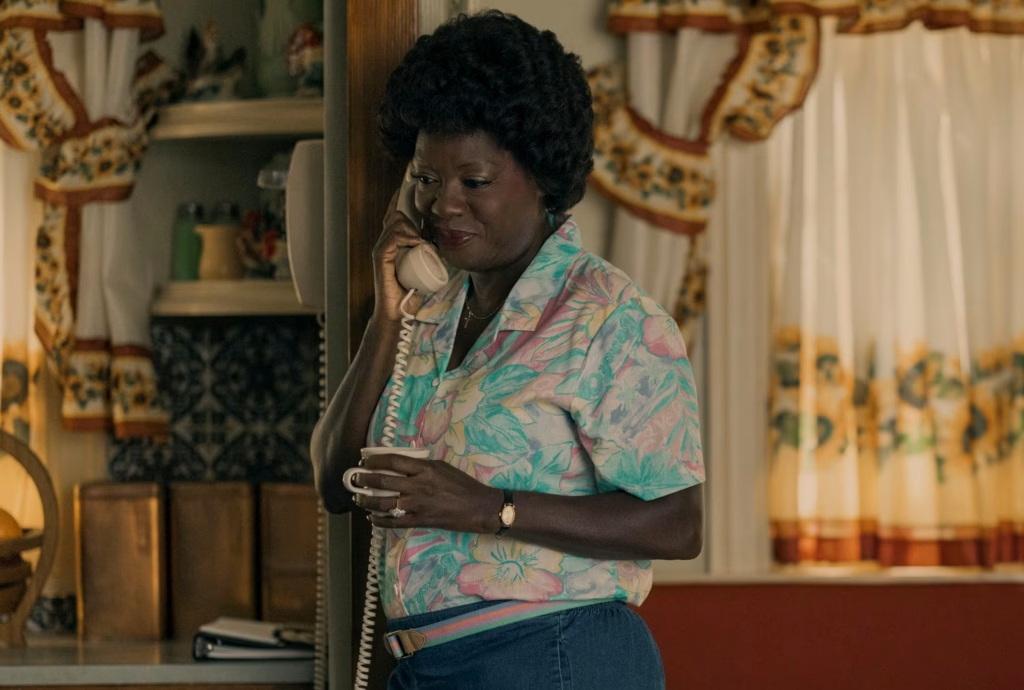
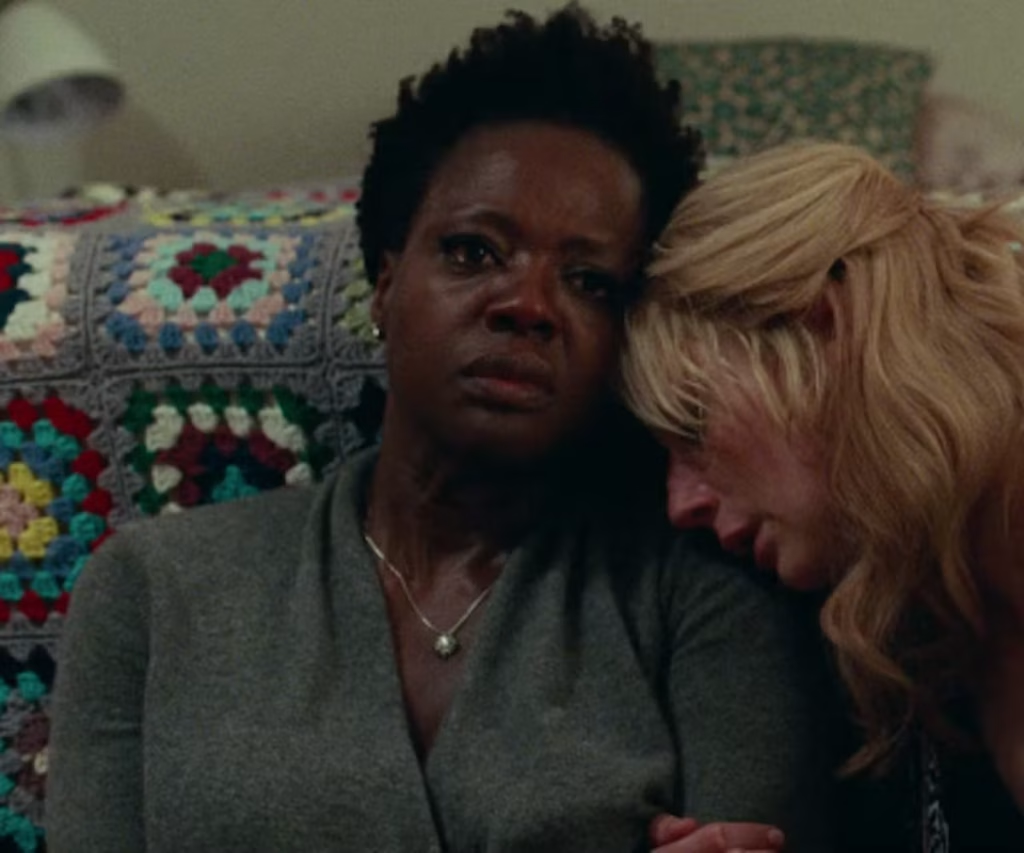
1. Widows (Veronica)

At the top of the list is Widows, whose lead female character, Veronica Rawlings, portrayed by Viola Davis, makes a phenomenal outing as a grieving, angry, and determined woman, who is a character of few words.

Image Source: Bing Image. License: All Creative Commons

Davis conveys volumes through body language, gestures, and expression, and while there is pain simmering beneath her controlled surface, each decision is fraught with consequence.

Image Source: Bing Image. License: All Creative Commons

The film shines because of Viola’s performance, and what you get is a movie that changes from a heist thriller to an emotionally powerful character role. It’s one of the best performances she has given to date, and it just reinforces the fact that Viola Davis performs on a level few actors can match.

Image Source: Bing Image. License: All Creative Commons

The path of Viola Davis’ career is rooted in bravery, precision, and heart. She dignifies each role, regardless of subject matter or screen time, and presses for more with whatever work she undertakes. It is not merely a body of work that is solid, but it is imperative. And I think, if anything, it is a lesson from history; it is clear that Viola Davis has yet to be over.

Matt Damon’s Journey from Drama Class to Stardom

0
Image Source: Bing Image. License: All Creative Commons

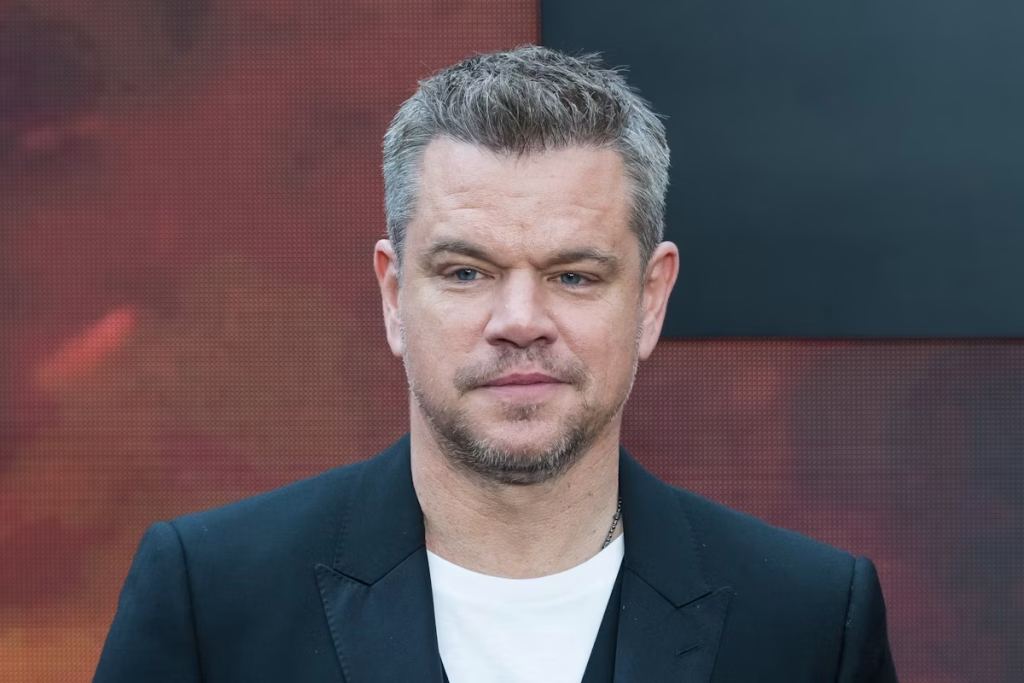
Matt Damon’s career is a masterclass in longevity and reinvention. Seamlessly navigating genres, he has resisted being typecast, excelling as an Oscar-winning screenwriter, compelling dramatic lead, convincing action hero, and unexpectedly sharp comedic talent. Few performers achieve the balance of artistic respect and box office success that Damon has maintained. His journey from a theater-obsessed kid in Massachusetts to an internationally recognized star is as impressive as it is well-earned.

Image Source: Bing Image. License: All Creative Commons

Growing up in Cambridge was not always easy for Damon. His parents’ divorce shaped much of his early emotional world and left him feeling slightly adrift. He has often described himself as shy and unsure of where he fits in socially. Acting became a refuge where he could channel that uncertainty into something creative. That early sense of being an outsider would later give depth to many of his most memorable performances.

Image Source: Bing Image. License: All Creative Commons

One of the most important events of his childhood was meeting Ben Affleck. Their friendship began simply, built on shared interests like baseball, role-playing games, and endless movie nights. What started as a casual bond soon developed into a creative partnership. They encouraged each other to audition, write, and dream bigger than their surroundings. That connection would eventually change both of their lives.

Image Source: Bing Image. License: All Creative Commons

As teenagers, Damon and Affleck treated storytelling like a shared mission. They spent hours drafting scripts and imagining careers that felt almost out of reach. Instead of competing, they pushed each other to improve and take risks. Acting stopped being a solitary passion and became a collaborative effort. Their mutual belief in each other laid a foundation that would support them through early struggles.

Image Source: Bing Image. License: All Creative Commons

The project that transformed them from hopeful actors into industry players was Good Will Hunting. What began as a short academic exercise grew into a fully realized screenplay with heart and intelligence. They poured their personal experiences into the script, especially themes of loyalty and self-doubt. When the film was finally produced, it struck a powerful chord with audiences and critics alike. Its success catapulted both men into international recognition almost overnight.

Image Source: Bing Image. License: All Creative Commons

Winning the Academy Award for Best Original Screenplay was a defining moment for Damon. It proved that he was not just a performer but a serious writer with something meaningful to say. Sharing that stage with Affleck cemented their story as one of Hollywood’s most inspiring friendships. The film’s emotional core, strengthened by Robin Williams’ unforgettable performance, resonated deeply. Damon suddenly found himself viewed as one of the brightest new talents in the industry.

Image Source: Bing Image. License: All Creative Commons

Even before that breakthrough, he had quietly been building a solid resume. In films like School Ties, he demonstrated a capacity for portraying complex young men under pressure. He was willing to explore uncomfortable emotional territory rather than chase easy likability. Those early roles hinted at a seriousness that would define much of his career. Directors began to notice his commitment and subtle intensity.

Image Source: Bing Image. License: All Creative Commons

Courage Under Fire revealed just how far he would go for authenticity. Damon dramatically lost weight to portray a troubled soldier, committing fully to the character’s physical and emotional state. The transformation was startling and showed a level of discipline uncommon for someone so early in his career. It signaled that he was not afraid to sacrifice comfort for truth. That dedication earned him respect throughout Hollywood.

Image Source: Bing Image. License: All Creative Commons

Working with seasoned filmmakers further sharpened his craft. In The Rainmaker, he carried the story with a quiet confidence that belied his age. Sharing scenes with established actors only strengthened his resolve to rise to their level. He avoided being overshadowed by bringing sincerity to every line. It became clear that his Oscar win was not a fluke.

Image Source: Bing Image. License: All Creative Commons

Then came a turning point that redefined his public image. The Bourne Identity introduced audiences to a leaner, tougher version of Damon. As Jason Bourne, he embodied intelligence, vulnerability, and physical precision all at once. He trained extensively in combat and insisted on performing many of his own stunts. The result was an action hero who felt grounded and believable.

Image Source: Bing Image. License: All Creative Commons

The Bourne series reshaped modern spy films. Instead of relying solely on gadgets and spectacle, the movies focused on realism and character psychology. Damon’s portrayal emphasized confusion and moral conflict as much as physical skill. Audiences responded enthusiastically to this more human approach. The franchise’s massive global earnings confirmed his bankable star power.

Image Source: Bing Image. License: All Creative Commons

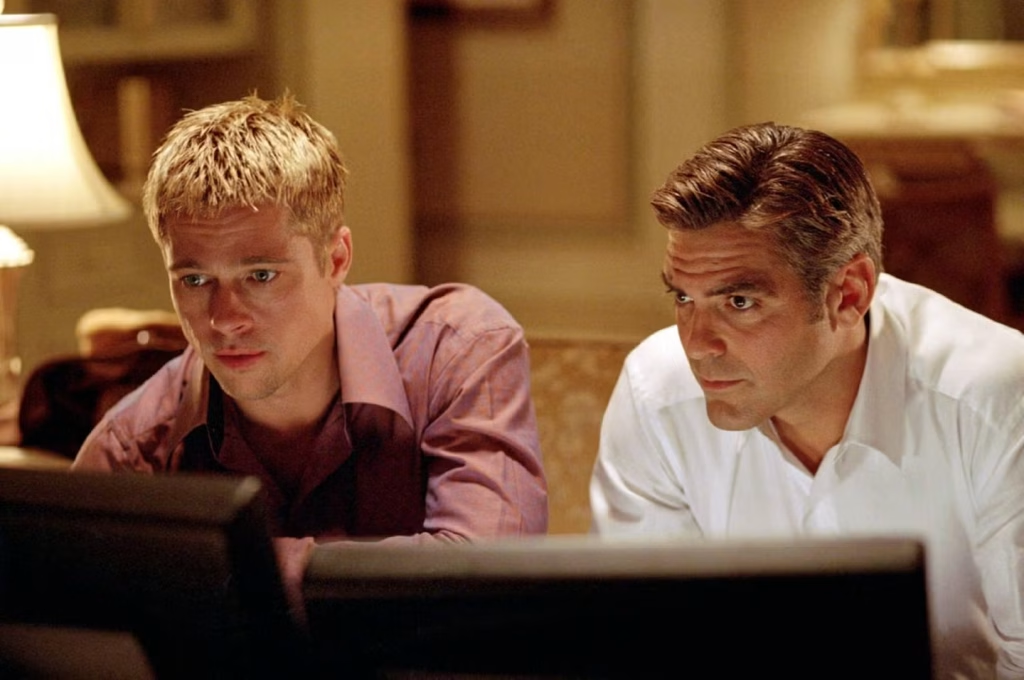
Despite his action success, Damon never abandoned character-driven stories. He returned to ensemble pieces like Ocean’s Eleven with effortless charm. His comedic timing added lightness to a film filled with charismatic personalities. In The Departed, he shifted gears completely, playing a morally compromised police officer with icy restraint. Each role showcased a different shade of his talent.

Image Source: Bing Image. License: All Creative Commons

One of his most celebrated later performances came in The Martian. As astronaut Mark Watney, he balanced humor and desperation with remarkable ease. The film relied heavily on his ability to carry scenes alone, often speaking directly to the camera. His optimism in the face of isolation made the story surprisingly uplifting. The role earned him major awards, attention, and reaffirmed his versatility.

Image Source: Bing Image. License: All Creative Commons

The success of The Martian also highlighted his global appeal. Audiences connected with the character’s ingenuity and resilience. Damon’s grounded performance kept the high-concept story emotionally accessible. It demonstrated that he could anchor massive productions without losing authenticity. Few actors manage that balance so smoothly.

Image Source: Bing Image. License: All Creative Commons

Throughout these years, his partnership with Affleck continued to evolve. They reunited for creative ventures that extended beyond acting. Producing projects together allowed them to champion new voices in the industry. Their collaboration on Air brought them back onscreen with the comfort of long familiarity. Watching them interact feels like witnessing decades of shared history.

Image Source: Bing Image. License: All Creative Commons

Their friendship remains one of Hollywood’s most enduring stories. Rather than drifting apart as fame grew, they adapted to each new phase of their careers. They have spoken openly about holding each other accountable and offering honest feedback. That trust has strengthened their creative decisions. It stands as proof that collaboration can thrive even under intense public scrutiny.

Image Source: Bing Image. License: All Creative Commons

In Oppenheimer, Damon embraced yet another challenge. Portraying Leslie Groves required authority without arrogance. He delivered a performance that was firm, pragmatic, and layered with subtle tension. Acting alongside a powerhouse ensemble, he held his ground with quiet confidence. The role showed that he continues to seek complexity rather than comfort.

Image Source: Bing Image. License: All Creative Commons

Working with visionary directors has been a recurring theme in his career. He appears drawn to filmmakers who value depth and detail. This willingness to align himself with ambitious projects keeps his work fresh. He avoids stagnation by stepping into unfamiliar territory. That curiosity sustains his longevity.

Image Source: Bing Image. License: All Creative Commons

Offscreen, Damon’s life appears remarkably grounded. He married Luciana Bozán Barroso and has consistently prioritized family. Raising four daughters has given him a perspective far removed from Hollywood’s noise. He often speaks about protecting their privacy. That commitment to normalcy sets him apart from many of his peers.

Image Source: Bing Image. License: All Creative Commons

His sense of humor also keeps him relatable. The long-running playful feud with Jimmy Kimmel reveals a willingness to laugh at himself. He participates in the joke rather than guarding his image too carefully. That self-awareness softens the aura of stardom. Audiences appreciate celebrities who do not take themselves too seriously.

Image Source: Bing Image. License: All Creative Commons

Balancing fame and privacy is no small feat. Damon has managed to avoid many of the pitfalls that derail public figures. He chooses his appearances thoughtfully and keeps his inner circle tight. This measured approach allows him to maintain focus on his craft. It also reinforces his reputation as a professional first and foremost.

Image Source: Bing Image. License: All Creative Commons

Looking back, his path seems defined by smart choices. He alternates between blockbusters and intimate dramas with strategic precision. Each role feels like part of a larger narrative rather than a random gamble. He respects the audience while still challenging them. That balance has kept his career vibrant for decades.

Image Source: Bing Image. License: All Creative Commons

His evolution from writer to actor to producer shows an expanding creative vision. He understands storytelling from multiple angles. This holistic perspective influences the projects he selects. It also gives him greater control over the stories he wants to tell. Few performers navigate so many aspects of filmmaking successfully.

Image Source: Bing Image. License: All Creative Commons

At the core of his journey lies perseverance. Early auditions and minor roles required patience and resilience. He faced rejection long before accolades arrived. Instead of retreating, he used setbacks as motivation. That persistence ultimately shaped his legacy.

Image Source: Bing Image. License: All Creative Commons

Friendship has been another driving force. His bond with Affleck provided emotional support and creative inspiration. They celebrated triumphs and weathered disappointments together. That shared history grounds his public persona in something genuine. It reminds audiences that success is rarely a solo endeavor.

Image Source: Bing Image. License: All Creative Commons

Risk-taking also defines his story. From extreme physical transformations to emotionally raw characters, he rarely plays it safe. He embraces roles that demand vulnerability as much as strength. That courage keeps his performances unpredictable. It ensures that viewers remain invested.

Image Source: Bing Image. License: All Creative Commons

As Hollywood continues to change, Damon adapts with it. Streaming platforms, shifting box office trends, and evolving audience tastes have not diminished his relevance. He navigates new landscapes without abandoning his core principles. Experience has made him selective but not complacent. That adaptability secures his place in modern cinema.

Image Source: Bing Image. License: All Creative Commons

Younger actors often cite him as an influence. His blend of intelligence and approachability feels attainable yet aspirational. He demonstrates that craft matters as much as charisma. By valuing substance over spectacle, he sets a steady example. His impact reaches beyond the screen.

Image Source: Bing Image. License: All Creative Commons

Ultimately, Matt Damon’s story is about growth. He began as a self-conscious teenager searching for belonging. Through talent, hard work, and meaningful collaboration, he built an extraordinary career. He continues to explore new dimensions of storytelling with curiosity and discipline. His journey stands as a reminder that authenticity and effort can create a legacy that endures.

10 Delightful Animated Movies to Keep the Magic of Elio Going

0
Image Source: Bing Image. License: All Creative Commons

Elio leaves viewers with a warm, lingering sense of wonder long after the credits end—a feeling of having witnessed something truly heartfelt and magical. The story explores what it means to feel small in a vast universe, to crave belonging, and to find connection in the most unexpected ways. If Elio ignited your love for cosmic adventures, tender friendships, and tales of kids navigating big emotions in even bigger worlds, here are ten animated films that promise a similarly enchanting journey.

Image Source: Bing Image. License: All Creative Commons

10. Treasure Planet

Treasure Planet takes a basic storyline about an adventure. It shoots it off into outer space by reimaging the sci-fi classic Treasure Island as a futuristic tale of solar-powered spacecraft and unknown worlds. At its core is Jim Hawkins, a restless youth in pursuit of something greater than himself.

Image Source: Bing Image. License: All Creative Commons

What makes it a great companion to Elio is its sense of imagination. The universe feels alive and expansive, full of wildly creative designs. There is a sense of discovery within it, much like the crowded, alien-filled Communiverse Elio is part of.

Image Source: Bing Image. License: All Creative Commons

Emotionally, Treasure Planet is a story of guidance, trust, and found families. The relationship between Jim and John Silver has the same level of warmth as one might find with those friends of Elio’s, proving that sometimes the most meaningful relationships come from the most unlikely of places.

Image Source: Bing Image. License: All Creative Commons

9. The Mitchells vs. the Machines

If The Mitchells vs. the Machines appears to be a quick and chaotic film about robot apocalypses on the surface, at heart, it’s actually very sweet and sentimental in its focus on family and learning to love people even when they think differently from the character.

Image Source: Bing Image. License: All Creative Commons

As is the case for Elio, it is a movie about another young creative person who feels misunderstood by the world and tries to connect in her own way. The struggle for Katie Mitchell to be seen is analogous to the struggle for Elio to be understood by those around him who love him.

Image Source: Bing Image. License: All Creative Commons

While aliens are replaced by malfunctioning AI, the emotional content is the same. Both movies use the chaos of sci-fi to remind audiences that, in the end, accepting diversity, not fearing it, can help save a relationship or the world.

Image Source: Bing Image. License: All Creative Commons

8. Jimmy Neutron: Boy Genius

Prior to Pixar launching a kid into space diplomacy, “Jimmy Neutron: Boy Genius” treated viewers to a child inventor whose curiosity literally extended to the stars. The genius of Jimmy Neutron gets him into trouble because he inadvertently calls attention to himself with aliens, with potentially world-changing consequences.

Image Source: Bing Image. License: All Creative Commons

You can see the similarity to Elio at work here, a studious and lonely teenager whose interest in space spawned a first contact story. Both share a balance of comedy, adventure, and responsibility with the importance of thee.

Image Source: Bing Image. License: All Creative Commons

Despite being softer and cartoonish in style, Jimmy Neutron has an important and familiar moral about not taking one’s loved ones for granted. It is a nostalgic choice that works well because it is significant and evocative for those who have grown up dreaming of rockets, distant stars, and galaxies.

Image Source: Bing Image. License: All Creative Commons

7. WALL-E

Few animated films capture loneliness and hope as beautifully as WALL-E. Pixar’s trash-collecting robot spends years alone on a deserted Earth before stumbling into an adventure that reconnects humanity with its purpose.

Image Source: Bing Image. License: All Creative Commons

While Elio focuses on belonging through interstellar friendships, WALL-E explores isolation and connection through silence and visual storytelling. Both films use space not just as a setting, but as a metaphor for emotional distance and longing.

Image Source: Bing Image. License: All Creative Commons

The result is deeply moving. If Elio made you reflect on where you fit in the universe, WALL-E extends that feeling, reminding viewers that even the smallest acts of care can spark enormous change.

Image Source: Bing Image. License: All Creative Commons

6. The Iron Giant

The Iron Giant tells the story of a boy who befriends a massive robot from outer space, forging a bond rooted in trust and compassion. Despite its Cold War backdrop, the film’s message feels timeless.

Image Source: Bing Image. License: All Creative Commons

Much like Elio’s friendship with an alien outsider, Hogarth’s connection with the Giant is built on empathy and understanding. Both films argue that kindness, not power, is what truly defines strength.

Image Source: Bing Image. License: All Creative Commons

Emotionally rich and quietly devastating, The Iron Giant is a story about choice and identity. It pairs perfectly with Elio for anyone drawn to stories where friendship transcends fear.

Image Source: Bing Image. License: All Creative Commons

5. Strange World

Disney’s Strange World dives into an unexplored ecosystem filled with bizarre creatures and unfamiliar terrain. At its core, though, it’s about family tension and generational disconnect.

Image Source: Bing Image. License: All Creative Commons

Like Elio, the film thrives on discovery, both external and internal. The strange landscapes echo Elio’s cosmic surroundings, while the emotional journey centers on learning to listen and adapt.

Image Source: Bing Image. License: All Creative Commons

The film’s strength lies in its willingness to portray family relationships as messy but meaningful. If Elio resonated because of its emotional honesty, Strange World offers a similar mix of spectacle and sincerity.

Image Source: Bing Image. License: All Creative Commons

4. Turning Red

Directed by Domee Shi, who also helped bring Elio to life, Turning Red explores adolescence through a wildly imaginative lens. Mei’s transformation into a giant red panda is both hilarious and painfully relatable.

Image Source: Bing Image. License: All Creative Commons

Like Elio, the film captures the awkwardness of growing up and the fear of disappointing family. Both stories focus on young protagonists learning to embrace who they are—even when it’s overwhelming.

Image Source: Bing Image. License: All Creative Commons

Bold, funny, and emotionally raw, Turning Red pairs beautifully with Elio. Together, they show Pixar at its best: telling deeply personal stories through playful, inventive worlds.

Image Source: Bing Image. License: All Creative Commons

3. Over the Moon

Over the Moon follows Fei Fei, a determined young girl who builds a rocket to meet a mythical moon goddess. Her journey is fueled by grief, curiosity, and hope.

Image Source: Bing Image. License: All Creative Commons

The emotional parallels to Elio are strong. Both characters are navigating loss and longing, looking to the stars for answers when life on Earth feels uncertain.

Image Source: Bing Image. License: All Creative Commons

Visually dazzling and emotionally tender, Over the Moon blends fantasy with space exploration in a way that feels gentle and sincere, perfect for viewers still riding Elio’s emotional wave.

Image Source: Bing Image. License: All Creative Commons

2. Lilo & Stitch

At its heart, Lilo & Stitch is about finding family in unexpected places. Lilo’s bond with Stitch, a chaotic alien experiment, mirrors Elio’s connection to beings who help him feel less alone.

Image Source: Bing Image. License: All Creative Commons

Both films center on kids who don’t quite fit in, discovering that being different can be a source of strength. Humor and heart work hand in hand, creating stories that are funny, messy, and deeply emotional.

Image Source: Bing Image. License: All Creative Commons

With its emphasis on chosen family and unconditional love, Lilo & Stitch remains one of Disney’s most touching films and a perfect match for fans of Elio’s themes.

Image Source: Bing Image. License: All Creative Commons

1. Luca

If there’s one movie that truly captures the emotional soul of Elio, it’s Luca. Set in a sunlit Italian seaside town, the film follows a sea monster boy experiencing the human world for the first time.

Image Source: Bing Image. License: All Creative Commons

Like Elio, Luca is a gentle coming-of-age story about identity, friendship, and courage. Both protagonists feel out of place, yet find freedom and belonging through connection.

Image Source: Bing Image. License: All Creative Commons

Warm, sincere, and quietly powerful, Luca leaves viewers with the same tender ache as Elio. It’s a reminder that sometimes, the bravest thing you can do is be yourself.

Image Source: Bing Image. License: All Creative Commons

Elio taps into something universal: the desire to be seen, understood, and accepted. These films carry that same emotional spark, whether through space travel, unlikely friendships, or deeply personal journeys.

11 Times Brad Pitt Proved He’s More Than Just a Movie Star

0
Image Source: Bing Image. License: All Creative Commons

Often praised for his magnetic screen presence, Brad Pitt has built a career defined by far more than charisma. Beneath the movie-star image lies a performer drawn to layered characters, emotional nuance, and creative risk, moving fluidly between blockbuster spectacles and intimate, director-driven films. Over more than three decades, he has continually challenged expectations, avoiding repetition while demonstrating remarkable range and discipline. This ranking highlights the performances that best showcase his ability to disappear into roles — from subtle, introspective turns to bold, scene-stealing transformations — underscoring why Pitt remains one of Hollywood’s most compelling and enduring talents.

Image Source: Bing Image. License: All Creative Commons

11. Moneyball (2011)

In Moneyball, Brad Pitt plays Oakland A’s general manager Billy Beane with calm authority and restless intelligence. Rather than turning Beane into a traditional sports hero, Pitt portrays him as a man constantly wrestling with failure, doubt, and the fear of being proven wrong. It’s a performance rooted in restraint, never shouting for attention.

Image Source: Bing Image. License: All Creative Commons

Pitt’s Beane feels perpetually in motion, pacing hallways, chewing sunflower seeds, and deflecting praise. That physical restlessness reflects the character’s internal tension, someone trying to outthink a system that refuses to change. His scenes with Jonah Hill’s Peter Brand crackle with dry humor and mutual respect, grounding the film’s statistics-heavy narrative.

Image Source: Bing Image. License: All Creative Commons

What elevates Moneyball is Pitt’s ability to humanize innovation. He makes spreadsheets emotional and loss feel personal. The Oscar-nominated performance stands as one of the finest examples of leadership portrayed without ego, turning a sports drama into a thoughtful character study.

Image Source: Bing Image. License: All Creative Commons

10. Ad Astra (2019)

Ad Astra strips Brad Pitt down to his emotional core. As astronaut Roy McBride, Pitt plays a man trained to suppress feeling, navigating both deep space and unresolved trauma. His performance mirrors the film’s slow, meditative pace, relying heavily on silence and interiority.

Image Source: Bing Image. License: All Creative Commons

Pitt communicates volumes through minimal expression. His measured voiceovers and controlled body language suggest a lifetime spent avoiding vulnerability. As Roy travels farther from Earth, Pitt subtly allows cracks to form, revealing grief, anger, and longing beneath the stoic exterior.

Image Source: Bing Image. License: All Creative Commons

While the film itself divided audiences, Pitt’s work was nearly universally praised. He embraces emotional exposure without theatrics, delivering one of his most psychologically layered performances, quiet, uncomfortable, and deeply reflective.

Image Source: Bing Image. License: All Creative Commons

9. The Assassination of Jesse James by the Coward Robert Ford (2007)

Brad Pitt’s Jesse James is not a romantic outlaw, but a haunted man aware of his own myth. Pitt plays the legendary figure with eerie stillness, allowing paranoia and exhaustion to seep into every moment. It’s a performance that dismantles the Western hero archetype.

Image Source: Bing Image. License: All Creative Commons

The film’s dreamlike pacing gives Pitt room to explore Jesse’s contradictions, his cruelty, charm, and constant suspicion. Working closely with director Andrew Dominik and cinematographer Roger Deakins, Pitt becomes part of the film’s atmosphere, blending into its shadows and silences.

Image Source: Bing Image. License: All Creative Commons

Initially overlooked, the performance has since gained critical reappraisal. Pitt’s Jesse James is one of his most mature roles, rewarding patience with emotional depth and haunting restraint.

Image Source: Bing Image. License: All Creative Commons

8. Once Upon a Time… in Hollywood (2019)

As Cliff Booth, Brad Pitt embodies effortless cool without ever leaning into parody. He plays the character like a relic of an older Hollywood, relaxed, capable, and quietly dangerous. Pitt’s comfort in the role makes Cliff instantly magnetic.

Image Source: Bing Image. License: All Creative Commons

The dynamic between Pitt and Leonardo DiCaprio fuels the film’s emotional core. Cliff’s loyalty to Rick Dalton feels genuine and lived-in, giving their friendship unexpected warmth. Pitt brings humor, mystery, and toughness without overplaying any of it.

Image Source: Bing Image. License: All Creative Commons

Winning his first acting Oscar, Pitt turned Cliff Booth into an instant cultural icon. The performance feels loose yet precise, showcasing how fully Pitt understands the power of understatement.

Image Source: Bing Image. License: All Creative Commons

7. Snatch (2000)

In Snatch, Brad Pitt gleefully abandons movie-star polish to play Mickey O’Neil, a bare-knuckle boxer whose accent is nearly impossible to understand. It’s a bold, comedic risk, and it pays off spectacularly.

Image Source: Bing Image. License: All Creative Commons

Pitt commits completely to the role’s physicality and unpredictability. He moves like a coiled spring, blending humor and menace with surprising authenticity. His performance constantly steals focus without disrupting the ensemble balance.

Image Source: Bing Image. License: All Creative Commons

The role proved Pitt was willing to disappear into absurdity. Snatch remains one of his most entertaining performances, cementing his reputation as an actor unafraid to look strange for the sake of character.

Image Source: Bing Image. License: All Creative Commons

6. A River Runs Through It (1992)

Brad Pitt’s portrayal of Paul Maclean introduced audiences to his poetic, physical screen presence. Under Robert Redford’s direction, Pitt embodies youthful rebellion with an undercurrent of melancholy that foreshadows tragedy.

Image Source: Bing Image. License: All Creative Commons

His fly-fishing sequences, meticulously rehearsed, became iconic, blending athletic precision with visual grace. Pitt’s confidence in movement and silence gives the character emotional weight beyond dialogue.

Image Source: Bing Image. License: All Creative Commons

Though Pitt later expressed doubts about the role, it remains a defining early performance. Paul Maclean captures the beauty and fragility of youth, marking the arrival of a major talent.

Image Source: Bing Image. License: All Creative Commons

5. Ocean’s Trilogy (2001–2007)

As Rusty Ryan, Pitt perfected cinematic cool. Playing second-in-command to George Clooney’s Danny Ocean, Pitt infused the role with laid-back intelligence and playful charm. His constant snacking became a defining character trait.

Image Source: Bing Image. License: All Creative Commons

Pitt’s chemistry with Clooney anchors the trilogy. Their relaxed back-and-forth makes the elaborate heists feel light, fun, and stylish rather than mechanical. Pitt understands ensemble rhythm, never overpowering a scene.

Image Source: Bing Image. License: All Creative Commons

Across three films, Rusty Ryan evolved into one of Pitt’s most beloved characters. The trilogy stands as a testament to how charisma, when wielded thoughtfully, can elevate genre entertainment.

Image Source: Bing Image. License: All Creative Commons

4. The Tree of Life (2011)

In Terrence Malick’s The Tree of Life, Pitt delivers a deeply introspective performance as a father torn between discipline and love. His portrayal relies heavily on posture, silence, and internal conflict.

Image Source: Bing Image. License: All Creative Commons

Pitt’s Mr. O’Brien is stern but wounded, shaped by unmet dreams and generational pressure. Rather than villainizing the character, Pitt reveals his vulnerability, allowing empathy to coexist with discomfort.

Image Source: Bing Image. License: All Creative Commons

The film’s abstract structure demands patience, but Pitt’s grounded performance gives it emotional clarity. It’s one of his most mature and emotionally revealing roles.

Image Source: Bing Image. License: All Creative Commons

3. World War Z (2013)

Brad Pitt anchors World War Z with credibility and urgency. As Gerry Lane, he avoids superhero theatrics, instead playing a determined father thrust into global catastrophe.

Image Source: Bing Image. License: All Creative Commons

Pitt’s performance keeps the spectacle grounded. His exhaustion, fear, and resolve feel authentic, even as the story stretches plausibility. His producer instincts ensured focus remained on character over chaos.

Image Source: Bing Image. License: All Creative Commons

Against the odds, World War Z became a standout in the zombie genre. Pitt’s grounded intensity made the film work when it easily could have collapsed.

Image Source: Bing Image. License: All Creative Commons

2. Thelma & Louise (1991)

Brad Pitt’s brief but unforgettable role as J.D. announced his arrival. With magnetic charm and sly danger, Pitt commands attention the moment he appears.

Image Source: Bing Image. License: All Creative Commons

His chemistry with Geena Davis is electric, balancing seduction and opportunism. Pitt’s natural confidence makes the character instantly memorable without overstaying his welcome.

Image Source: Bing Image. License: All Creative Commons

This performance launched a career. It revealed Pitt’s star quality while hinting at the depth he would continue to explore.

Image Source: Bing Image. License: All Creative Commons

1. Career-Defining Range and Underrated Brilliance

Brad Pitt’s greatness lies in range rather than repetition. While iconic films like Fight Club and Se7en often dominate discussions, it’s his quieter, riskier choices that define his legacy. He has consistently sought collaboration with visionary filmmakers, embracing discomfort and experimentation.

Image Source: Bing Image. License: All Creative Commons

Pitt isn’t afraid to be strange, subdued, or secondary if the story demands it. That fearless curiosity is what makes his career remarkable. Pitt isn’t just a movie star; he’s a performer who keeps evolving, ensuring his work remains endlessly worth revisiting.

Image Source: Bing Image. License: All Creative Commons

Brad Pitt’s best performances reveal an actor driven by curiosity rather than comfort. He’s never been content to coast on charm alone, instead pushing into unfamiliar territory again and again. That willingness to evolve is why his work continues to resonate. No matter the genre or scale, Pitt brings intelligence, humility, and presence, making every role feel intentional and every era of his career worth celebrating.

15 Fresh TV Series Set to Make Waves in 2026

0
Image Source: Bing Image. License: All Creative Commons

TV in 2026 is gearing up to deliver a seriously exciting lineup. The year is packed with long-awaited returns, the closing chapters of fan-favorite hits, and bold new spinoffs ready to expand beloved franchises. Viewers can look forward to everything from intense dramas and sharp comedies to binge-worthy reality series and large-scale adventures set in far-flung worlds. Below is a look at the premieres generating the most anticipation as 2026 approaches.

Image Source: Bing Image. License: All Creative Commons

15. The Madison (Paramount+)

Taylor Sheridan continues expanding his Western empire with The Madison, a Yellowstone spinoff that trades the familiar Dutton Ranch for the sweeping landscapes of Montana’s Madison River valley. The series centers on a wealthy New York family that uproots its entire existence in search of reinvention, only to discover that starting over in Big Sky Country comes with its own set of hard truths.

Image Source: Bing Image. License: All Creative Commons

The cast alone makes this one impossible to ignore, with Michelle Pfeiffer, Kurt Russell, Matthew Fox, and Patrick J. Adams headlining the drama. With a short first season and a second already in the can, expectations are high that The Madison won’t just echo Yellowstone, but deepen its world in unexpected, character-driven ways.

Image Source: Bing Image. License: All Creative Commons

14. Scrubs (ABC)

The iconic hospital comedy returns as Scrubs checks back into ABC, reuniting much of the original cast, including Zach Braff, Donald Faison, Sarah Chalke, Judy Reyes, and John C. McGinley. While Bill Lawrence remains involved behind the scenes, Aseem Batra steps in as showrunner, signaling a blend of old-school heart and updated sensibilities.

Image Source: Bing Image. License: All Creative Commons

Rather than leaning solely on nostalgia, the revival aims to explore how its characters have grown alongside the healthcare system itself. While some familiar faces are missing for now, the two-episode premiere promises the same surreal humor and emotional gut punches that made Scrubs a standout in the first place.

Image Source: Bing Image. License: All Creative Commons

13. The Boys: Season 5 (Prime Video)

The end is finally in sight for The Boys, as Prime Video’s subversive superhero series gears up for its fifth and final season. With tensions boiling over and Homelander more dangerous than ever, the stage is set for an explosive and likely brutal conclusion.

Image Source: Bing Image. License: All Creative Commons

Adding fuel to the fire is Jared Padalecki’s arrival, reuniting him with Supernatural co-star Jensen Ackles. Known for its unapologetic satire and shock value, The Boys looks ready to go out swinging, cementing its legacy as one of the boldest genre shows of the decade.

Image Source: Bing Image. License: All Creative Commons

12. Bridgerton: Season 4 (Netflix)

Netflix’s lavish Regency hit returns with its fourth season, this time shifting focus to Benedict Bridgerton. Played by Luke Thompson, Benedict finally steps into the romantic spotlight, joined by newcomer Yerin Ha as Sophie Baek.

Image Source: Bing Image. License: All Creative Commons

Fans can expect everything Bridgerton does best: opulent visuals, sweeping romance, and modern storytelling beneath period trappings. As one of Netflix’s most reliable franchises, the show’s ability to reinvent itself each season continues to keep anticipation high.

Image Source: Bing Image. License: All Creative Commons

11. Euphoria: Season 3 (HBO)

After years of waiting, Euphoria storms back with a bold time jump that reshapes its world entirely. Zendaya’s Rue now finds herself in Mexico and facing serious debt, while Cassie and Nate’s engagement signals new emotional chaos ahead.

Image Source: Bing Image. License: All Creative Commons

With major new cast additions like Sharon Stone and Natasha Lyonne, the series appears ready to evolve beyond its high school roots. Still visually daring and emotionally raw, Euphoria’s third season aims to redefine itself while maintaining the intensity that made it a cultural lightning rod.

Image Source: Bing Image. License: All Creative Commons

10. The ’Burbs (Peacock)

Peacock takes a swing at cult-classic territory with The ’Burbs, a TV adaptation of the 1989 horror-comedy. Keke Palmer and Jack Whitehall lead the charge, anchoring a suburban mystery packed with paranoia, absurdity, and dark humor.

Image Source: Bing Image. License: All Creative Commons

Backed by a creative team that includes Seth MacFarlane and Brian Grazer, the series promises to honor the original while leaning into episodic storytelling. With all episodes dropping at once, The ’Burbs is designed to be a binge-worthy blend of comedy and unease.

Image Source: Bing Image. License: All Creative Commons

9. Daredevil: Born Again – Season 2 (Disney+)

Marvel’s street-level hero returns as Daredevil: Born Again continues with a second season on Disney+. Charlie Cox once again dons the mask, joined by returning favorites like Vincent D’Onofrio, Jon Bernthal, and Elden Henson.

Image Source: Bing Image. License: All Creative Commons

Balancing courtroom drama with bone-crunching action, the show remains grounded even as it integrates more deeply into the larger MCU. For fans who loved the Netflix era, Season 2 promises even more moral complexity and brutal confrontations.

Image Source: Bing Image. License: All Creative Commons

8. Outlander: Season 8 (Starz)

Outlander prepares to close its epic chapter with a final season that brings Claire and Jamie Fraser’s journey to an emotional end. Years of romance, war, and time travel all converge as the story races toward its conclusion.

Image Source: Bing Image. License: All Creative Commons

Known for its sweeping visuals and devoted fanbase, the series aims to deliver closure without losing its emotional weight. This final run isn’t just an ending—it’s a celebration of one of TV’s most ambitious love stories.

Image Source: Bing Image. License: All Creative Commons

7. Monarch: Legacy of Monsters – Season 2 (Apple TV+)

Apple TV+ dives deeper into its MonsterVerse with Season 2 of Monarch: Legacy of Monsters. The series expands on humanity’s fragile coexistence with towering creatures, blending blockbuster spectacle with grounded character drama.

Image Source: Bing Image. License: All Creative Commons

With even larger set pieces and deeper world-building promised, the show continues carving out its own identity within the kaiju genre. For fans of massive monsters and layered mythology, Season 2 looks ready to raise the stakes.

Image Source: Bing Image. License: All Creative Commons

6. Survivor: Season 50 (CBS)

Few shows reach 50 seasons, and Survivor is marking the milestone in style. While the core rules remain intact, producers have teased twists and surprises designed to honor the show’s long history.

Image Source: Bing Image. License: All Creative Commons

Still fueled by social strategy and endurance, Survivor proves that its original premise remains timeless. Season 50 feels less like a victory lap and more like a reminder of why the series continues to dominate reality TV.

Image Source: Bing Image. License: All Creative Commons

5. Malcolm in the Middle: Life’s Still Unfair (Hulu)

The Wilkerson family chaos returns in Malcolm in the Middle: Life’s Still Unfair, a four-episode continuation that brings back nearly the entire original cast. Frankie Muniz reprises his role as Malcolm, now navigating adulthood and parenthood.

Image Source: Bing Image. License: All Creative Commons

Set around Hal and Lois’ 40th anniversary, the revival balances nostalgia with new generational dysfunction. It’s loud, messy, heartfelt, and exactly what longtime fans have been hoping for.

Image Source: Bing Image. License: All Creative Commons

4. The Testaments (Hulu)

Following The Handmaid’s Tale, The Testaments adapts Margaret Atwood’s chilling sequel novel. Ann Dowd returns as Aunt Lydia, whose influence only grows as Gilead’s future hangs in the balance.

Image Source: Bing Image. License: All Creative Commons

By introducing younger protagonists and shifting perspectives, the series expands the world rather than retreading old ground. With its themes feeling painfully timely, The Testaments arrives with both narrative weight and high expectations.

Image Source: Bing Image. License: All Creative Commons

3. Elle (Prime Video)

Elle rewinds the clock with a prequel to Legally Blonde, focusing on Elle Woods’ high school years. Lexi Minetree steps into the role, capturing the confidence and charm that defined the character.

Image Source: Bing Image. License: All Creative Commons

Already renewed for a second season, the series blends comedy and coming-of-age storytelling. It’s a smart attempt to honor a beloved franchise while letting a new generation discover Elle’s origin story.

Image Source: Bing Image. License: All Creative Commons

2. Star Wars: Maul – Shadow Lord (Disney+)

Darth Maul finally takes center stage in Star Wars: Maul – Shadow Lord, an animated series set after The Clone Wars. The story follows Maul’s efforts to rebuild his criminal empire alongside a new apprentice.

Image Source: Bing Image. License: All Creative Commons

With Sam Witwer returning to voice the character, the show promises rich lore and intense character exploration. Star Wars animation continues to thrive, and this entry looks poised to be one of its darkest and most compelling yet.

Image Source: Bing Image. License: All Creative Commons

1. Super Bowl LX (NBC)

Once again, the Super Bowl stands as the biggest television event of the year. Airing on NBC, Super Bowl LX promises massive viewership, a headline-making halftime show led by Bad Bunny, and commercials designed to dominate pop culture discourse.

Image Source: Bing Image. License: All Creative Commons

More than just a football game, the Super Bowl remains a shared national moment. Whether you’re watching for the action, the music, or the ads, it’s the one “premiere” that truly brings everyone together.

Image Source: Bing Image. License: All Creative Commons

With so many high-profile returns and bold new projects, 2026 is shaping up to be a banner year for television. These premieres reflect an industry that’s both honoring its past and pushing forward with ambition. Whether you’re chasing nostalgia, prestige drama, or pure spectacle, there’s no shortage of reasons to stay glued to the screen next year. The hardest part might be finding the time to watch it all.