Home Blog Page 173

Top 10 Current Medical Dramas and Documentaries

0
Image Source: Bing Image. License: All Creative Commons

Medical shows have a unique power: they entertain, educate, and provoke reflection on life, death, and everything in between. Whether scripted dramas or real-life documentaries, the best of these series go beyond procedures to explore ethics, empathy, burnout, and the human cost of care. From high-stakes ER chaos to quiet moments of moral reckoning, these ten titles have profoundly shaped how audiences perceive modern medicine and the people dedicated to practicing it.

Image Source: Bing Image. License: All Creative Commons

10. The Pitt

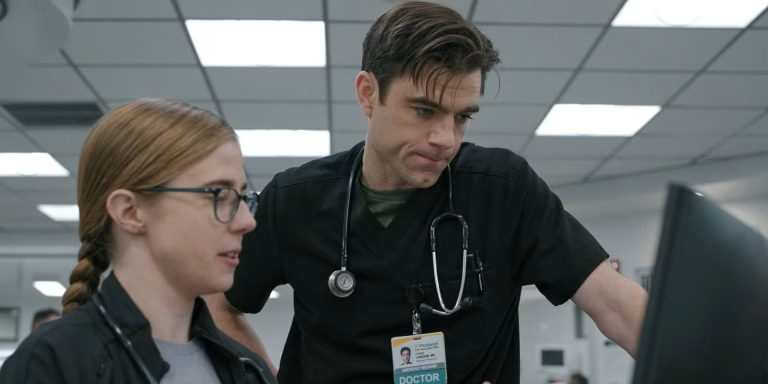
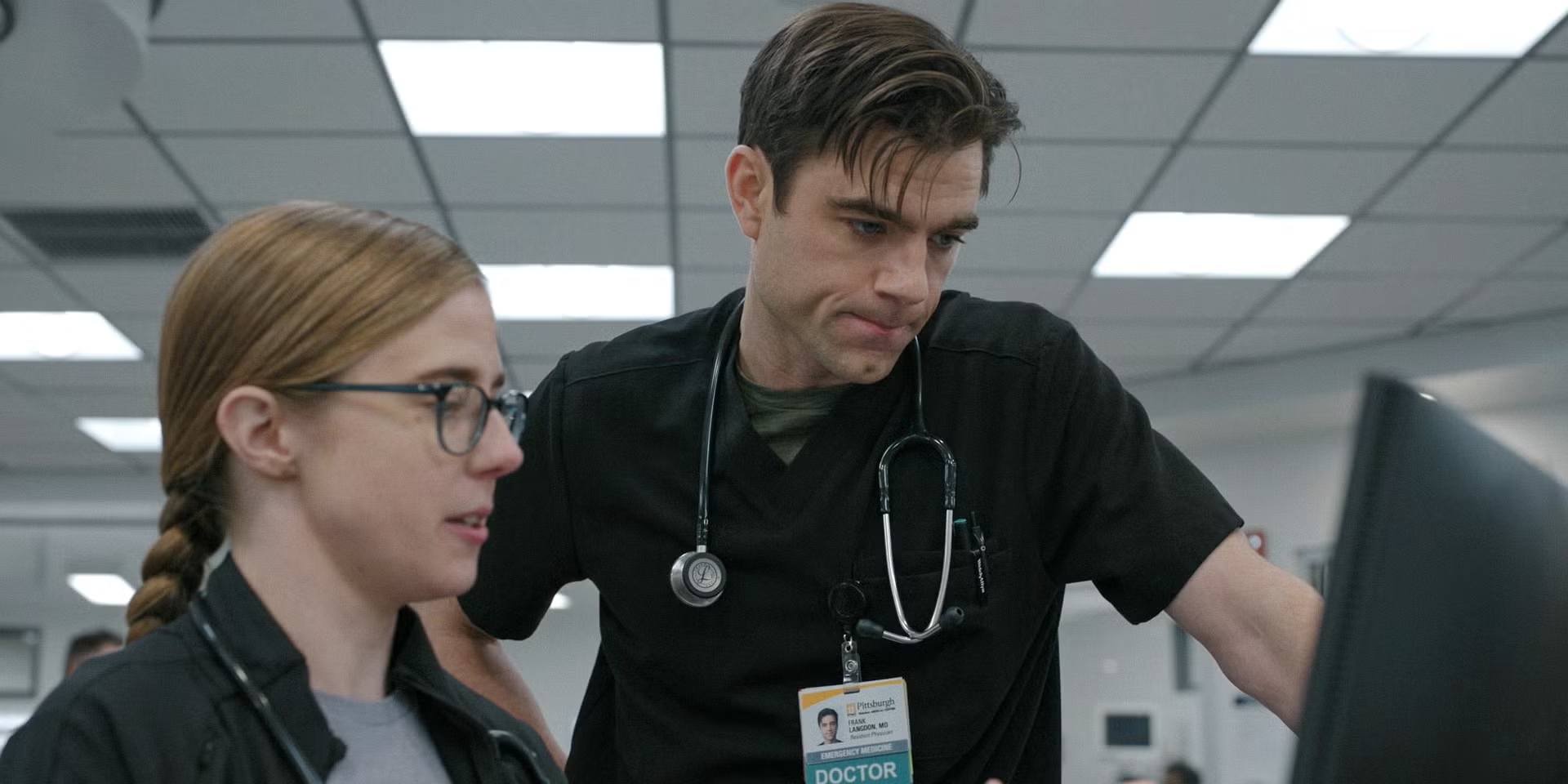
One of the newest entries in the medical drama landscape, The Pitt is already proving it’s not here to play it safe. Set squarely in Pittsburgh, this Max original fully embraces its setting, using real locations and local details to ground the story in authenticity. The city isn’t just a backdrop; it’s woven into the show’s identity, giving the hospital a gritty, lived-in feel that sets it apart from sleeker, more generic medical series.

Image Source: Bing Image. License: All Creative Commons

What truly elevates The Pitt is its dedication to realism. Conversations between attendings, residents, and med students feel strikingly true to life, capturing the shorthand, dark humor, and constant urgency of a trauma unit. The show understands how healthcare workers bond under pressure, and it lets those relationships unfold naturally rather than forcing melodrama.

Image Source: Bing Image. License: All Creative Commons

The series shines brightest when it tackles ethical gray areas. A standout storyline involves a patient with dementia whose advance directive refuses intubation, even as family members desperately push back. The emotional weight of the decision, and the lingering trauma doctors carry from COVID-era losses, adds depth and credibility. The Pitt also earns praise for its thoughtful portrayal of autism in the ER, showing growth and learning instead of blame. It’s this compassion-forward storytelling that makes the show feel honest and impactful.

Image Source: Bing Image. License: All Creative Commons

9. Best Interests

BBC’s Best Interests is a deeply emotional drama that confronts one of the hardest questions in medicine: who gets to decide when care should end? Centered on a family facing an end-of-life decision for their disabled daughter, the series refuses easy answers and leans into discomfort, grief, and moral uncertainty.

Image Source: Bing Image. License: All Creative Commons

A major strength of the show is its commitment to authentic representation. Disabled actors play key roles, including Niamh Moriarty as Marnie and Mat Fraser as her court-appointed guardian. Even with limited screen time, their presence brings gravity and perspective that many medical dramas overlook.

Image Source: Bing Image. License: All Creative Commons

Beyond the hospital, Best Interests exposes the daily battles disabled families face, from systemic neglect to public judgment. While some critics argue the story leans more heavily on the parents’ anguish than Marnie’s voice, the series still stands out for its bravery. It’s not an easy watch, but it’s a necessary one, offering an unflinching look at love, care, and dignity under impossible circumstances.

Image Source: Bing Image. License: All Creative Commons

8. The Good Doctor

The Good Doctor quickly became a global hit, following Dr. Shaun Murphy, a brilliant young surgeon on the autism spectrum, navigating both the operating room and the politics of hospital life. Its central premise alone set it apart, offering a perspective rarely seen in network medical dramas.

Image Source: Bing Image. License: All Creative Commons

The show has become especially popular among students entering healthcare fields, thanks to its focus on ethics, communication, and patient-centered care. Medical puzzles are just part of the appeal; the real draw is watching Shaun learn to advocate for himself while proving his value to skeptical colleagues.

Image Source: Bing Image. License: All Creative Commons

While not without criticism, The Good Doctor has undeniably influenced how autism is portrayed on television. By showing Shaun’s strengths alongside his challenges, the series pushes back against simplistic stereotypes and opens conversations about inclusion, accommodation, and who gets to belong in medicine.

Image Source: Bing Image. License: All Creative Commons

7. House, M.D.

Dr. Gregory House remains one of the most recognizable figures in TV medicine. House, M.D. took the structure of a detective show and applied it to diagnostics, turning rare diseases into weekly puzzles solved through sharp intellect and sharper sarcasm.

Image Source: Bing Image. License: All Creative Commons

Each episode showcases the trial-and-error nature of diagnosis, emphasizing how often doctors are wrong before they’re right. The show highlights medicine’s uncertainty, ethical shortcuts, and the consequences of obsession, even as it glorifies House’s brilliance.

Image Source: Bing Image. License: All Creative Commons

Medical professionals have long debated the show’s influence. While House’s behavior is a textbook example of what not to emulate, the series sparked widespread interest in diagnostic reasoning. Love him or hate him, House changed how TV portrayed medical genius, and that impact still lingers.

Image Source: Bing Image. License: All Creative Commons

6. Grey’s Anatomy

Few shows have shaped pop culture quite like Grey’s Anatomy. Spanning more than two decades, it blends medical drama with deeply personal storytelling, turning hospital hallways into stages for love, loss, and growth.

Image Source: Bing Image. License: All Creative Commons

The show’s influence is especially strong among women in medicine. Characters like Cristina Yang and Meredith Grey inspired a generation to see ambition, intelligence, and emotional complexity as strengths, not flaws. Grey’s also broke ground by consistently addressing social issues, including racism, mental health, and LGBTQ+ representation.

Image Source: Bing Image. License: All Creative Commons

While its medical accuracy isn’t always perfect, Grey’s Anatomy remains unmatched in emotional reach. It may stretch reality, but its impact on viewers and future healthcare workers is undeniable.

Image Source: Bing Image. License: All Creative Commons

5. The Trauma Code: Heroes on Call

This Korean medical drama injects adrenaline straight into the genre. The Trauma Code: Heroes on Call follows a bold trauma surgeon tasked with reviving a failing emergency department, pushing reluctant colleagues to adapt or fall behind.

Image Source: Bing Image. License: All Creative Commons

What sets the series apart is its tight pacing and focus on teamwork under extreme pressure. Over just eight episodes, viewers watch a fractured department transform into a cohesive unit capable of handling life-or-death situations.

Image Source: Bing Image. License: All Creative Commons

Beyond the action, the show offers insight into Korea’s healthcare system and the cultural expectations placed on medical professionals. It’s fast, emotional, and refreshingly focused on collective effort rather than lone heroes.

Image Source: Bing Image. License: All Creative Commons

4. Call the Midwife

Set in postwar London, Call the Midwife blends historical drama with deeply personal medical storytelling. Following nurses and midwives working in underserved communities, the series sheds light on women’s health issues often ignored in mainstream media.

Image Source: Bing Image. License: All Creative Commons

The show confronts difficult topics, such as maternal mortality, unsafe abortions, and poverty, with compassion and honesty. Rather than sensationalizing tragedy, it centers dignity and care, emphasizing how healthcare workers serve as anchors in their communities.

Image Source: Bing Image. License: All Creative Commons

At its heart, Call the Midwife is about connection. The relationships between caregivers and patients drive the series, making it as comforting as it is educational.

Image Source: Bing Image. License: All Creative Commons

3. Lenox Hill

Netflix’s Lenox Hill pulls back the curtain on real hospital life, following physicians at a major New York medical center. Unlike scripted dramas, the stakes here are real, and the emotions hit harder because of it.

Image Source: Bing Image. License: All Creative Commons

The series balances intense surgical moments with quieter reflections on burnout, loss, and resilience. Its coverage of the early COVID-19 pandemic is especially powerful, capturing fear, exhaustion, and courage in real time.

Image Source: Bing Image. License: All Creative Commons

By spotlighting both doctors and patients, Lenox Hill humanizes medicine without glamorizing it. It’s an essential watch for anyone curious about what hospital life actually looks like.

Image Source: Bing Image. License: All Creative Commons

2. Emergency: NYC

Emergency: NYC expands the lens even further, chronicling the entire emergency care ecosystem across New York City. Surgeons, nurses, EMTs, and support staff all share the spotlight, underscoring how many people it takes to save one life.

Image Source: Bing Image. License: All Creative Commons

The series thrives on authenticity, showing long hours, emotional strain, and moments of triumph without polish or filters. Every episode reinforces the idea that emergency medicine is both brutal and deeply meaningful.

Image Source: Bing Image. License: All Creative Commons

More than entertainment, Emergency: NYC functions as public education, revealing the human cost of a system constantly operating at its limits.

Image Source: Bing Image. License: All Creative Commons

1. Pulse

At the top of the list is Pulse, Netflix’s first English-language medical drama, and a bold one at that. Set in a Miami Level 1 trauma center during a devastating hurricane, the show immediately throws its characters and viewers into chaos.

Image Source: Bing Image. License: All Creative Commons

The story centers on Danny Simms, a resident suddenly promoted amid crisis and controversy. Leadership, trust, and ethical decision-making become central themes as resources dwindle and pressure mounts.

Image Source: Bing Image. License: All Creative Commons

What makes Pulse stand out is its balance of spectacle and substance. The characters feel real, flawed, and emotionally raw, and the show isn’t afraid to explore the systemic challenges of modern healthcare. It’s a confident, contemporary take on the genre, and a strong sign of where medical dramas are headed.

Image Source: Bing Image. License: All Creative Commons

Medical dramas and documentaries continue to evolve, reflecting changing attitudes toward healthcare, ethics, and representation. Whether fictional or real, the shows on this list resonate because they focus on people, not just procedures. If you’re looking for stories that challenge, educate, and move you, these ten titles are more than worth your time.

10 Comedic Sci-Fi Shows and Films Perfect for Resident Alien Enthusiasts

0
Image Source: Bing Image. License: All Creative Commons

If you’ve finished Resident Alien and are looking for what to watch next, you’re in luck. Alan Tudyk’s Harry—the awkward alien trying to navigate small-town life—is a mix of charm, absurdity, and surprising empathy, a combination that’s hard to replicate. Luckily, plenty of other shows capture a similar blend of sci-fi, humor, and heart, each with its own unique twist. Here are 10 series that deliver offbeat, otherworldly fun like Resident Alien, while exploring the theme of being delightfully strange in their own ways.

Image Source: Bing Image. License: All Creative Commons

10. Upload

Think afterlife, but with a digital twist. In this witty near-future satire, humans can transfer their consciousness into a virtual paradise, and the consequences are as surreal as they are laugh-out-loud funny. From Greg Daniels (The Office, Parks and Rec), Upload is incisive, clever, and full of questions about technology, class, and what it means to be human. If you enjoyed the cultural satire of Resident Alien, you’ll feel right at home here.

Image Source: Bing Image. License: All Creative Commons

9. Eureka

What if all of the neighbors in town were geniuses? That’s Eureka, a weird and wonderful show where advanced experimentation regularly gets out of control. From runaway machines to talking houses and community connections on an emotional level, the show has much humor and creativity while maintaining the “small town with big secrets” vibe.

Image Source: Bing Image. License: All Creative Commons

8. Solar Opposites

Developed by the genius behind Rick and Morty, Solar Opposites is an animated sitcom featuring a family of aliens struggling (and failing) to assimilate into American suburbia. Hilarious, chaotic, and frequently genius, Solar Opposites is like Resident Alien except with the volume turned up. Special mention for “The Wall”, a subplot involving humans being miniaturized and commanded to construct their own miniature society.

Image Source: Bing Image. License: All Creative Commons

7. People of Earth

Rather than a single alien in hiding, this show gathers a whole cast of individuals who think they’ve been abducted. Half-tender and half-laugh-out-loud funny, it explores the abductees’ idiosyncrasies as thoroughly as those of the aliens themselves. The cast of characters and deadpan humor make it an undiscovered treasure for anybody who enjoys offbeat science fiction comedy.

Image Source: Bing Image. License: All Creative Commons

6. The Orville

Seth MacFarlane’s ode to Star Trek is as much office comedy as intergalactic adventure. The Orville straddles irreverent humor and surprisingly introspective storytelling. Like Harry in Resident Alien, the crew must balance outlandish situations with profound questions regarding morality and humanity.

Image Source: Bing Image. License: All Creative Commons

5. 3rd Rock from the Sun

One is amusing, but an entire family? Comedy gold. John Lithgow and his “crew” land on Earth to observe humans and find themselves caught up in absurd antics as they try to live like us. It’s sheer slapstick and excess humor, but at its core, it has that same “aliens learning to love humanity” that Resident Alien feeds on.

Image Source: Bing Image. License: All Creative Commons

4. Futurama

This cult favorite plants delivery man Fry a thousand years in the future, amidst robots, mutants, and space-faring misfits. Amongst the biting social commentary, wacky sci-fi ideas, and surprisingly sappy storylines, Futurama brings the same blend of zaniness and heart that makes Resident Alien so irresistible.

Image Source: Bing Image. License: All Creative Commons

3. American Dad

MacFarlane hits again, this time with Roger, an extraterrestrial in hiding with the Smith family in suburbia. Roger’s myriad costume changes and anarchy-driven schemes alone are worth the ticket price. Though the show is more satire than sci-fi, it hits the same nerve in fans who enjoy watching an alien attempt to make sense of humanity.

Image Source: Bing Image. License: All Creative Commons

2. Sneaky Pete

No extraterrestrials involved—but bear with me. Giovanni Ribisi is a con man masquerading as someone else within a family that is oblivious to the fact. The tension of staying hidden in plain sight and the sparks of unexpected bonding ring Harry’s situation perfectly. Imagine it as a down-to-earth version of Resident Alien, all the tension, no UFOs.

Image Source: Bing Image. License: All Creative Commons

1. Mork & Mindy

The first alien-in-disguise sitcom. Robin Williams’ Mork was the template for so many subsequent alien comedies, including Resident Alien. Goofy, affectionate, and finally quotable, Mork & Mindy is a testament that having an outsider bumble through human traditions never grows old.

Image Source: Bing Image. License: All Creative Commons

So, if you’ve burned through Harry Vanderspeigle’s antics and need more eccentric sci-fi with a dose of heart, these shows will keep your binge streak alive. Some are weirder, some are warmer, but all of them carry that special mix of “out of this world” fun and human connection that makes Resident Alien such a gem.

15 Unforgettable Sitcom Casts and the Roles That Made Them Shine

0
Image Source: Bing Image. License: All Creative Commons

A truly outstanding sitcom is about much more than witty dialogue or clever punchlines—it’s about chemistry. That rare kind of chemistry where the characters feel like real people whose absence you’d notice the moment the episode ends. These casts didn’t just deliver laughs; they built entire worlds, moods, and dynamics that transformed television comedy. From pioneering black-and-white classics to the latest Emmy-winning ensembles, these sitcom casts represent the very best. Each earned its place by bringing scripts to life and turning memorable shows into timeless classics.

Image Source: Bing Image. License: All Creative Commons

15. Schitt’s Creek

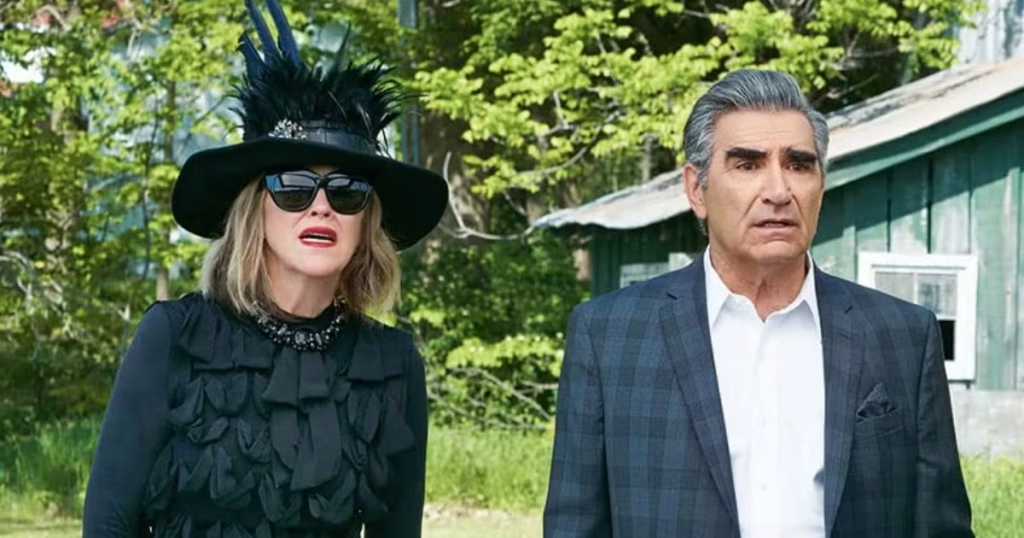
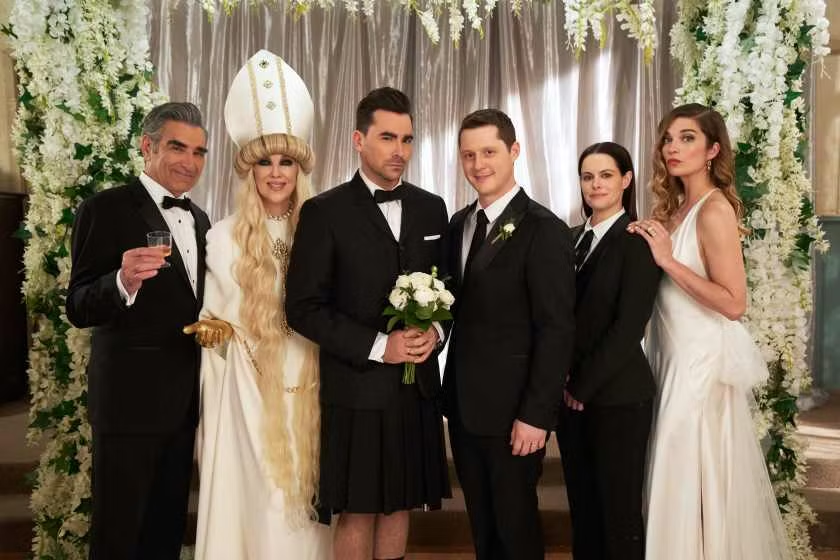
Schitt’s Creek started as a quirky fish-out-of-water comedy and grew into one of the most beloved sitcoms of its era. Catherine O’Hara and Eugene Levy bring veteran confidence to Moira and Johnny Rose, but the show truly flourishes thanks to the inspired performances of Dan Levy and Annie Murphy. Their characters evolve in ways that feel organic, heartfelt, and surprisingly moving for a half-hour comedy.

Image Source: Bing Image. License: All Creative Commons

The supporting cast deepens the charm. Chris Elliott’s offbeat Roland, Emily Hampshire’s dry and vulnerable Stevie, and Sarah Levy’s quieter presence all contribute to a tone that balances absurdity with warmth. That blend helped Schitt’s Creek make Emmy history—and cemented its reputation as a sitcom that could be genuinely kind without losing its edge.

Image Source: Bing Image. License: All Creative Commons

14. Veep

Veep thrives on ruthless energy, and Julia Louis-Dreyfus sits firmly at the center of that storm. Her portrayal of Selina Meyer is one of the sharpest comedic performances ever put on television, fueled by venomous delivery and fearless physicality. She’s surrounded by actors who match her intensity beat for beat.

Image Source: Bing Image. License: All Creative Commons

Tony Hale, Anna Chlumsky, Timothy Simons, and the ever-rotating ensemble create a workplace where incompetence is weaponized for laughs. Even bit players are given space to shine, making Veep feel like a perfectly calibrated machine of chaos. Few sitcoms have ever made politics this funny—or this brutal.

Image Source: Bing Image. License: All Creative Commons

13. The Office

The Office redefined workplace comedy by leaning into discomfort, and Steve Carell’s Michael Scott became its most unforgettable embodiment. His performance walks a razor-thin line between unbearable and sympathetic, grounding the show’s cringe-heavy humor. But the real magic comes from the ensemble around him.

Image Source: Bing Image. License: All Creative Commons

From Rainn Wilson’s unhinged Dwight to Jenna Fischer’s grounded Pam and John Krasinski’s charming Jim, every character feels distinct and lived-in. The cast’s chemistry allowed even mundane moments to land emotionally, turning a paper company into one of television’s most iconic settings.

Image Source: Bing Image. License: All Creative Commons

12. The Righteous Gemstones

The Righteous Gemstones proves that outrageous satire still needs strong performances to work. Danny McBride leads the charge, but the show’s success hinges on a cast willing to fully commit to excess. Walton Goggins steals scenes with unfiltered intensity, while Edi Patterson consistently delivers some of the sharpest comedic beats.

Image Source: Bing Image. License: All Creative Commons

John Goodman provides a steady presence amid the madness, grounding the show just enough to make its wild turns believable. The ensemble thrives because it treats absurdity seriously, creating characters who feel ridiculous but never lazy. It’s bold comedy powered by fearless performances.

Image Source: Bing Image. License: All Creative Commons

11. Friends

Friends became a global phenomenon largely because its cast clicked instantly and completely. Jennifer Aniston, Courteney Cox, Lisa Kudrow, Matt LeBlanc, Matthew Perry, and David Schwimmer each carved out a clear comedic identity, and together they formed one of television’s most recognizable groups.

Image Source: Bing Image. License: All Creative Commons

What made the ensemble special was the balance. No single character overwhelmed the others, and every actor had room to shine. Even decades later, the cast’s chemistry remains the show’s strongest asset—and the reason it still feels endlessly rewatchable.

Image Source: Bing Image. License: All Creative Commons

10. Seinfeld

Seinfeld’s brilliance lies in how perfectly its four leads bounce off one another. Jerry Seinfeld plays the straight man by design, allowing Jason Alexander, Julia Louis-Dreyfus, and Michael Richards to fully lean into their characters’ extremes. The contrast is where the comedy explodes.

Image Source: Bing Image. License: All Creative Commons

The show also boasts one of the strongest benches in sitcom history. Characters like Newman and Frank Costanza feel just as iconic as the leads. Seinfeld’s cast mastered the art of turning trivial annoyances into comedic gold, redefining what a sitcom could focus on.

Image Source: Bing Image. License: All Creative Commons

9. 30 Rock

30 Rock fires jokes at a relentless pace, and its cast keeps up effortlessly. Tina Fey’s Liz Lemon anchors the show with self-aware chaos, while Alec Baldwin’s Jack Donaghy provides one of TV’s great comedic counterweights. Tracy Morgan’s unpredictability completes the core trio.

Image Source: Bing Image. License: All Creative Commons

Beyond the leads, Jane Krakowski, Jack McBrayer, and the rest of the ensemble elevate even the most absurd material. The cast’s commitment to heightened reality makes 30 Rock feel like a live wire—smart, silly, and endlessly inventive.

Image Source: Bing Image. License: All Creative Commons

8. Parks and Recreation

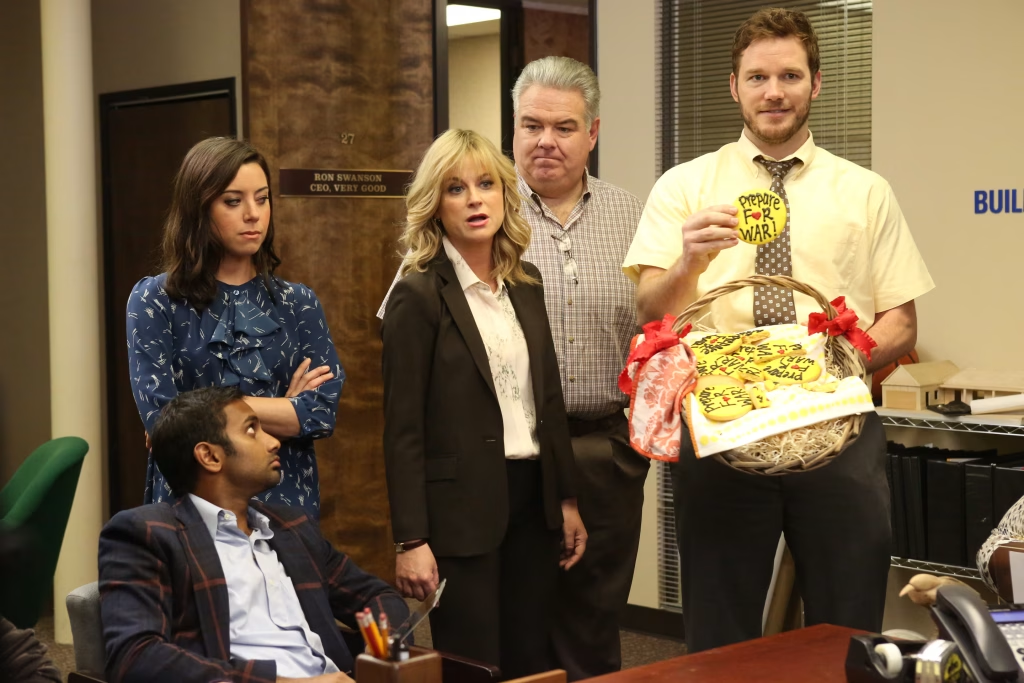
Parks and Recreation is built on optimism, and its cast embodies that spirit. Amy Poehler’s Leslie Knope radiates sincerity and enthusiasm, setting the emotional tone for the entire series. Around her is a deep ensemble packed with distinct comedic voices.

Image Source: Bing Image. License: All Creative Commons

Nick Offerman’s Ron Swanson became an icon, but every character—from Aubrey Plaza’s deadpan April to Chris Pratt’s lovable Andy—adds something essential. The cast’s warmth turns Pawnee into a place viewers genuinely care about, making the comedy hit even harder.

Image Source: Bing Image. License: All Creative Commons

7. I Love Lucy

Lucille Ball remains one of the greatest physical comedians of all time, and I Love Lucy is her ultimate showcase. Her timing, expressions, and fearless commitment to slapstick still feel fresh decades later. Desi Arnaz complements her perfectly, bringing charm and rhythm to every scene.

Image Source: Bing Image. License: All Creative Commons

William Frawley and Vivian Vance complete the quartet, creating a dynamic that feels timeless. Beyond laughs, the cast helped invent the modern sitcom format, making I Love Lucy both historically important and endlessly entertaining.

Image Source: Bing Image. License: All Creative Commons

6. Newhart

Newhart succeeds because it understands restraint. Bob Newhart’s understated delivery provides the perfect contrast to a town full of eccentrics. Rather than overpowering the material, he lets the ensemble flourish around him.

Image Source: Bing Image. License: All Creative Commons

Julia Duffy, Peter Scolari, and the famously repetitive Larry–Darryl–Darryl trio give the show its unique identity. The cast’s precision and commitment to character-driven humor make Newhart quietly brilliant and deeply influential.

Image Source: Bing Image. License: All Creative Commons

5. Cheers

Cheers thrives on the feeling of community, and its cast sells that illusion completely. Ted Danson’s Sam Malone may be the face of the show, but it’s the ensemble that keeps the bar buzzing with life.

Image Source: Bing Image. License: All Creative Commons

From Rhea Perlman’s razor-sharp Carla to Kelsey Grammer’s refined Frasier, every addition strengthened the dynamic. The cast’s adaptability through major changes is a big reason Cheers remained a top-tier sitcom for over a decade.

Image Source: Bing Image. License: All Creative Commons

4. M*A*S*H

M*A*S*H stands out by blending comedy with emotional depth, and its cast handles that balance beautifully. Alan Alda’s leadership anchors the series, but the rotating ensemble consistently rises to the challenge.

Image Source: Bing Image. License: All Creative Commons

Despite numerous cast changes, the show never loses its rhythm. Each actor brings humanity to their role, helping MAS*H tell stories that are funny, painful, and unforgettable—all at once.

Image Source: Bing Image. License: All Creative Commons

3. All in the Family

All in the Family pushed boundaries like no sitcom before it, and its cast was fearless. Carroll O’Connor’s Archie Bunker is provocative by design, but the surrounding performances ensure the show never loses its moral center.

Image Source: Bing Image. License: All Creative Commons

Jean Stapleton, Rob Reiner, and Sally Struthers bring nuance and empathy to difficult material. Together, the ensemble proved sitcoms could confront real social issues without sacrificing humor.

Image Source: Bing Image. License: All Creative Commons

2. The Golden Girls

The Golden Girls is a masterclass in ensemble comedy. Betty White, Bea Arthur, Rue McClanahan, and Estelle Getty each play to their strengths, creating characters that feel iconic yet deeply human.

Image Source: Bing Image. License: All Creative Commons

Their chemistry allows the show to tackle aging, friendship, and loss with humor and grace. Few casts have ever felt so perfectly balanced—or so genuinely affectionate—on screen.

Image Source: Bing Image. License: All Creative Commons

1. The Dick Van Dyke Show

The Dick Van Dyke Show represents sitcom perfection. Dick Van Dyke’s physical comedy pairs seamlessly with Mary Tyler Moore’s sharp intelligence, creating a dynamic that feels effortless and modern even today.

Image Source: Bing Image. License: All Creative Commons

Supported by Morey Amsterdam and Rose Marie, the cast set a standard for naturalistic comedy and ensemble balance. Their influence echoes through every sitcom that followed, making this cast the undisputed gold standard.

Image Source: Bing Image. License: All Creative Commons

Great sitcom casts don’t just deliver punchlines—they build worlds viewers want to revisit again and again. The ensembles on this list shaped comedy, launched careers, and left lasting cultural footprints. Trends change, formats evolve, but the power of perfect casting never fades. These performances remain timeless reminders that when the chemistry is right, television magic happens.

15 Foreign Films Every Movie Lover Should Know

0
Image Source: Bing Image. License: All Creative Commons

Cinema is a universal language, and foreign films have been instrumental in shaping the art of storytelling on screen. From innovative narratives to technical breakthroughs, filmmakers around the world have challenged conventions, expanded creative possibilities, and inspired generations of storytellers. Whether through the emotional intimacy of a quiet drama or the spectacle of a sweeping epic, these films transcend borders, proving that powerful storytelling resonates everywhere. Here’s a countdown of 15 iconic foreign films that changed cinema, each a milestone that continues to influence how we watch, feel, and think about movies.

Image Source: Bing Image. License: All Creative Commons

15. Hard Boiled (Hong Kong)

John Woo’s Hard Boiled redefined action cinema with its high-octane energy, balletic gunfights, and relentless pace. Every scene is choreographed like a dance of chaos, combining technical precision with raw emotion.

Image Source: Bing Image. License: All Creative Commons

The film’s iconic style, slow-motion shootouts, daring camera movements, and tension-filled standoffs set a new standard for action films worldwide. Directors from Quentin Tarantino to the Wachowskis drew inspiration from Woo’s inventive approach. Hard Boiled also helped bring Hong Kong cinema to global audiences, proving that action could be both thrilling and artistically sophisticated. It remains a benchmark for adrenaline-fueled filmmaking.

Image Source: Bing Image. License: All Creative Commons

14. Dekalog (Poland)

Krzysztof Kieslowski’s Dekalog is a ten-part exploration of modern morality, loosely based on the Ten Commandments. Each short film examines the ethical struggles of everyday people with subtlety and empathy.

Image Source: Bing Image. License: All Creative Commons

Through minimalist storytelling and deep character insight, Kieslowski crafts a philosophical journey that challenges viewers to reflect on choices, consequences, and human nature. Praised by filmmakers such as Stanley Kubrick, Dekalog set a new standard for intelligent, tightly structured storytelling in cinema.

Image Source: Bing Image. License: All Creative Commons

13. Russian Ark (Russia)

Alexander Sokurov’s Russian Ark is a breathtaking technical achievement, filmed entirely in a single, uninterrupted take. It guides viewers through the Hermitage Museum in St. Petersburg, blending 300 years of Russian history into a living tableau.

Image Source: Bing Image. License: All Creative Commons

The immersive approach combines narration, historical figures, and museum exhibits into a seamless cinematic experience. From Peter the Great to Catherine the Great, the figures come alive in a hypnotic, ghostly parade of culture. Audiences and critics alike marveled at Sokurov’s ambition, making Russian Ark a one-of-a-kind achievement in visual storytelling.

Image Source: Bing Image. License: All Creative Commons

12. Central Station (Brazil)

Walter Salles’s Central Station captures the emotional journey of a retired schoolteacher and an orphaned boy across Rio de Janeiro. The unlikely duo forms a bond that transforms both their lives, revealing the power of connection and compassion.

Image Source: Bing Image. License: All Creative Commons

Fernanda Montenegro’s nuanced performance and Vinícius de Oliveira’s authentic debut bring raw humanity to the screen. Winning the Golden Globe for Best Foreign Language Film, Central Station helped propel Brazilian cinema onto the international stage and inspired a wave of Latin American filmmakers.

Image Source: Bing Image. License: All Creative Commons

11. In the Mood for Love (Hong Kong)

Wong Kar-wai’s In the Mood for Love is a hypnotic meditation on longing and unspoken desire. Set in a cramped 1960s Hong Kong apartment complex, Tony Leung and Maggie Cheung’s characters move in near-silent synchrony, circling one another with delicate tension.

Image Source: Bing Image. License: All Creative Commons

Christopher Doyle’s cinematography and Nat King Cole’s evocative music create a lush, romantic atmosphere. Every frame is imbued with style, mood, and emotional weight. The film’s elegance and slow-burning storytelling have influenced countless directors seeking to capture the poetry of missed connections and restrained passion.

Image Source: Bing Image. License: All Creative Commons

10. Aguirre, the Wrath of God (Germany)

Werner Herzog’s Aguirre, the Wrath of God is a fever dream of obsession, following Klaus Kinski’s tyrannical conquistador in pursuit of El Dorado. Madness and greed permeate every frame, both on-screen and behind the scenes.

Image Source: Bing Image. License: All Creative Commons

Herzog and Kinski’s tumultuous collaboration amplifies the film’s sense of chaos and realism, creating unforgettable tension. The final image of Kinski alone on a raft, surrounded by monkeys, remains one of cinema’s most haunting statements. Aguirre stands as a relentless exploration of human hubris and the darker corners of ambition.

Image Source: Bing Image. License: All Creative Commons

9. Rashomon (Japan)

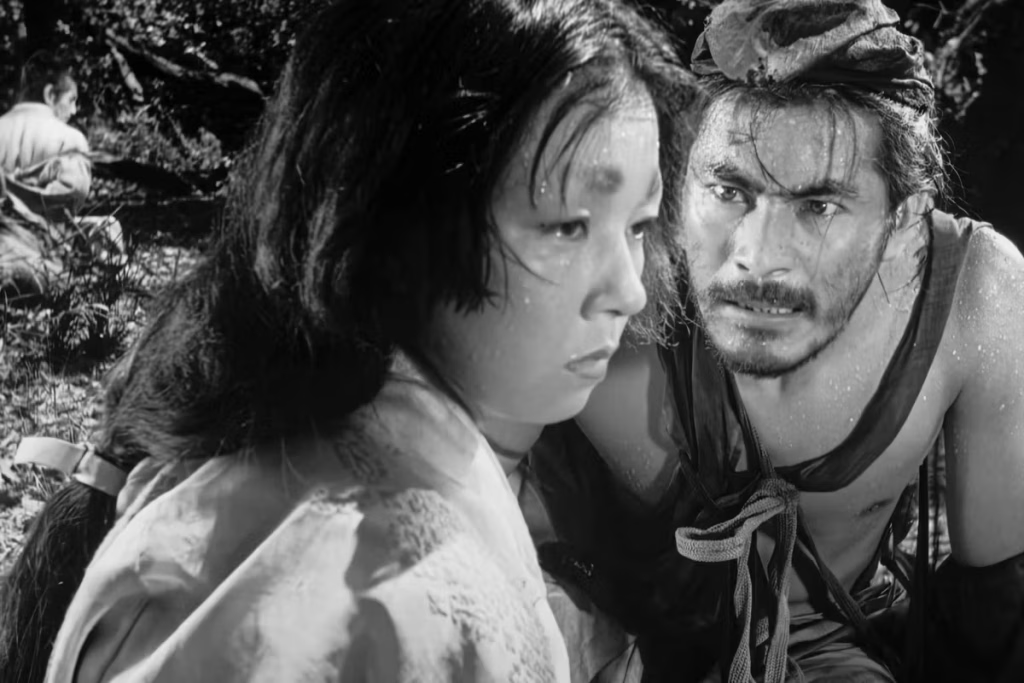
Akira Kurosawa’s Rashomon introduced the world to the concept of multiperspective storytelling. By presenting multiple conflicting accounts of the same event, the film challenged audiences to question truth and perception.

Image Source: Bing Image. License: All Creative Commons

The narrative innovation influenced filmmakers worldwide, encouraging experimentation with unreliable narrators and fractured timelines. Even decades later, Rashomon’s exploration of subjective truth continues to inspire both philosophical reflection and cinematic technique.

Image Source: Bing Image. License: All Creative Commons

8. La Dolce Vita (Italy)

Federico Fellini’s La Dolce Vita is a masterful critique of celebrity culture and modern decadence. Marcello Mastroianni’s gossip columnist drifts through Rome, observing and participating in the excesses of a society obsessed with fame.

Image Source: Bing Image. License: All Creative Commons

The creation of the paparazzi archetype and Fellini’s satirical lens influenced popular culture far beyond cinema. La Dolce Vita reflects both society’s fascination with glamour and the melancholy of human ambition, remaining a timeless cultural mirror.

Image Source: Bing Image. License: All Creative Commons

7. The Battle of Algiers (Italy/Algeria)

Gillo Pontocorvo’s The Battle of Algiers is a searing political thriller, depicting Algeria’s guerrilla uprising against French colonial forces. Its documentary-style realism riots, street fighting, and political tension feel as immediate and gripping as any blockbuster.

Image Source: Bing Image. License: All Creative Commons

The film’s technical mastery has inspired generations of directors, and even military institutions have studied it for its depiction of urban warfare. A landmark in political cinema, it remains a benchmark for both realism and narrative intensity.

Image Source: Bing Image. License: All Creative Commons

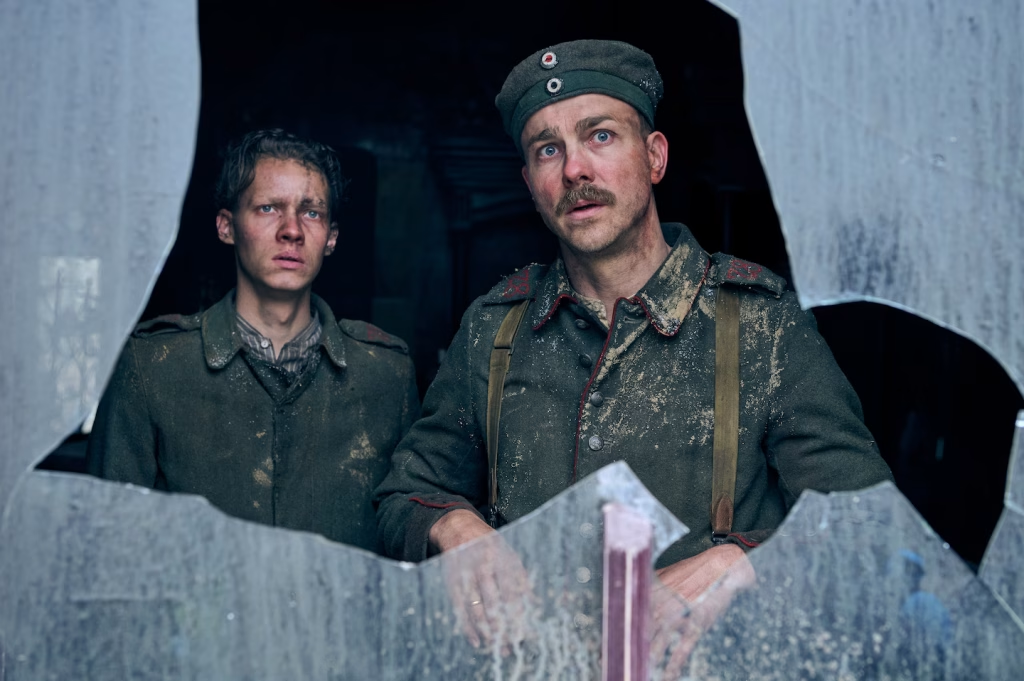
6. All Quiet on the Western Front (Germany)

Edward Berger’s All Quiet on the Western Front tells World War I from a German perspective, focusing on young soldiers’ harrowing experiences.

Image Source: Bing Image. License: All Creative Commons

By refusing to romanticize the battlefield, the film delivers a universal portrayal of human suffering and the horrors of war. Its critical acclaim underscores cinema’s ability to convey empathy and historical truth across national boundaries.

Image Source: Bing Image. License: All Creative Commons

5. Spirited Away (Japan)

Hayao Miyazaki’s Spirited Away blends Japanese folklore with universal themes of resilience, growth, and wonder. Chihiro’s journey through a magical world captivates both children and adults.

Image Source: Bing Image. License: All Creative Commons

The film’s artistry, imaginative design, and emotional depth made it a global phenomenon, culminating in an Academy Award for Best Animated Feature. Spirited Away proves that animated films can be as culturally significant and influential as live-action cinema.

Image Source: Bing Image. License: All Creative Commons

4. Parasite (South Korea)

Bong Joon-ho’s Parasite is a masterclass in genre-bending social commentary. Its narrative twists, dark humor, and visual storytelling dissect class inequality with precision and style.

Image Source: Bing Image. License: All Creative Commons

The film’s historic Best Picture Oscar win confirmed its groundbreaking status and elevated South Korean cinema to a global stage. Parasite demonstrates that foreign-language films can speak powerfully to universal human experiences.

Image Source: Bing Image. License: All Creative Commons

3. Seven Samurai (Japan)

Akira Kurosawa’s Seven Samurai is an epic tale of courage, strategy, and community, following villagers who hire samurai to defend them.

Image Source: Bing Image. License: All Creative Commons

Kurosawa’s masterful pacing, dynamic action, and character depth influenced countless remakes, from The Magnificent Seven to modern action films. Its enduring legacy proves that epic storytelling transcends culture, inspiring generations of filmmakers worldwide.

Image Source: Bing Image. License: All Creative Commons

2. Bicycle Thieves (Italy)

Vittorio De Sica’s Bicycle Thieves embodies the essence of Italian neorealism, portraying postwar poverty with heart-wrenching simplicity.

Image Source: Bing Image. License: All Creative Commons

A father and son’s desperate search for a stolen bicycle highlights universal themes of hope, struggle, and human resilience. De Sica’s use of non-professional actors and real locations made the film a blueprint for socially conscious cinema.

Image Source: Bing Image. License: All Creative Commons

1. M (Germany)

Fritz Lang’s M is a landmark psychological thriller and the first major serial-killer film. Peter Lorre’s portrayal of Hans Beckert blends terror and vulnerability, creating one of cinema’s most unforgettable villains.

Image Source: Bing Image. License: All Creative Commons

The film’s expressionist visuals and moral ambiguity reflect the tensions of pre-Nazi Germany while influencing countless thrillers and horror films. M remains a cornerstone of cinematic history, demonstrating the power of narrative, performance, and visual innovation.

Image Source: Bing Image. License: All Creative Commons

These 15 films remind us that cinema is a global language, capable of shaping storytelling, influencing generations, and transcending borders. From intimate dramas to epic spectacles, they prove that great filmmaking knows no nationality, only vision.

10 Unmissable Isekai Shows and Movies in 2026

0
Image Source: Bing Image. License: All Creative Commons

Isekai anime—where ordinary people are transported to fantastical worlds—has become one of the most dynamic genres in modern anime. Whether you’re drawn to overpowered heroes, clever plot twists, or pure escapism, isekai has grown from a niche curiosity into a full-blown cultural phenomenon. With new series debuting constantly, it can be tricky to know where to begin. Here’s a countdown of the 10 best isekai anime to watch in 2026, each offering a unique portal to adventure and excitement.

Image Source: Bing Image. License: All Creative Commons

10. Potions Will Save Me

If you’re in the mood for something light and cozy, Potions Will Save Me is a perfect pick. The protagonist can craft powerful potions out of thin air, making everyday survival in a fantasy world surprisingly easy. While the story and characters aren’t particularly deep, the series is relaxing and charming in its simplicity.

Image Source: Bing Image. License: All Creative Commons

It doesn’t reinvent the isekai wheel, but the gentle pace and magical premise make it an enjoyable, stress-free watch. Fans of low-stakes adventures will appreciate its calming vibe.

Image Source: Bing Image. License: All Creative Commons

The animation is decent, though not spectacular, and the focus is on comfort over spectacle. If you just want a short, pleasant escape, this one fits the bill.

Image Source: Bing Image. License: All Creative Commons

9. The Wrong Way To Use Healing Magic

The Wrong Way To Use Healing Magic flips the healer trope on its head. Summoned to another world by accident, Ken Usato discovers that his healing powers can be surprisingly combat-effective. Under the strict mentorship of Rose, a fearsome leader, Ken is forced to grow as both a fighter and a strategist.

Image Source: Bing Image. License: All Creative Commons

The show blends comedy with action seamlessly, with Ken’s panicked reactions and Rose’s over-the-top intimidation providing plenty of laughs. As battles intensify, it shifts into more serious territory without losing its charm.

Image Source: Bing Image. License: All Creative Commons

Although the animation isn’t flawless, the mix of humor, growth, and creative combat makes this one of the more entertaining “healer-centric” isekai series.

Image Source: Bing Image. License: All Creative Commons

8. Why Raeliana Ended Up At The Duke’s Mansion

Looking for intrigue and romance in your isekai? Why Raeliana Ended Up At The Duke’s Mansion delivers. Rinko Hanasaki wakes up as Raeliana, a doomed minor character in a novel, and must ally with the enigmatic Duke Noah Wynknight to avoid her tragic fate.

Image Source: Bing Image. License: All Creative Commons

The story is smart and suspenseful, with plenty of twists and clever problem-solving. Raeliana’s intelligence keeps the narrative engaging, while the romance and mystery add emotional stakes.

Image Source: Bing Image. License: All Creative Commons

The combination of clever writing, appealing characters, and high-stakes storytelling makes this a standout for fans of isekai with brains, not just brawn.

Image Source: Bing Image. License: All Creative Commons

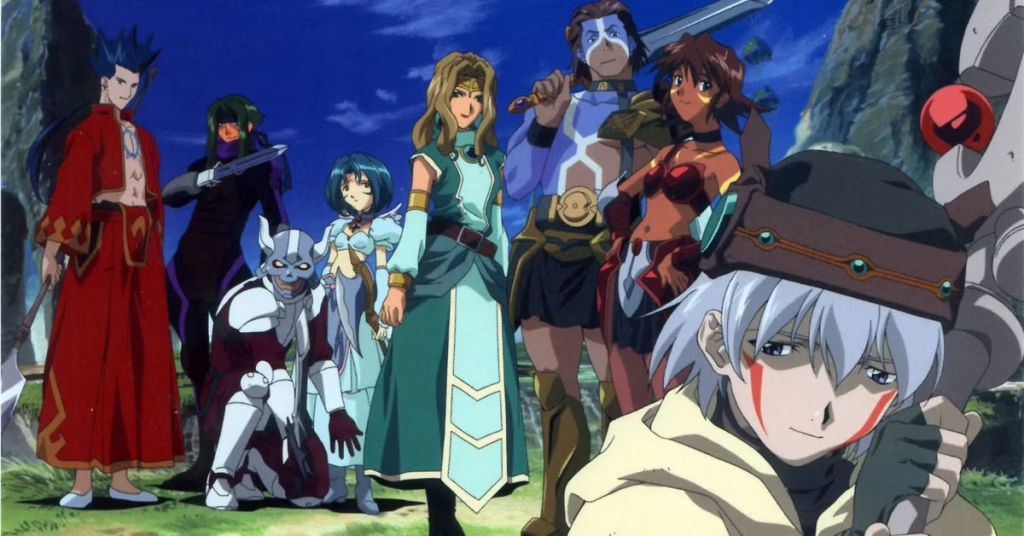
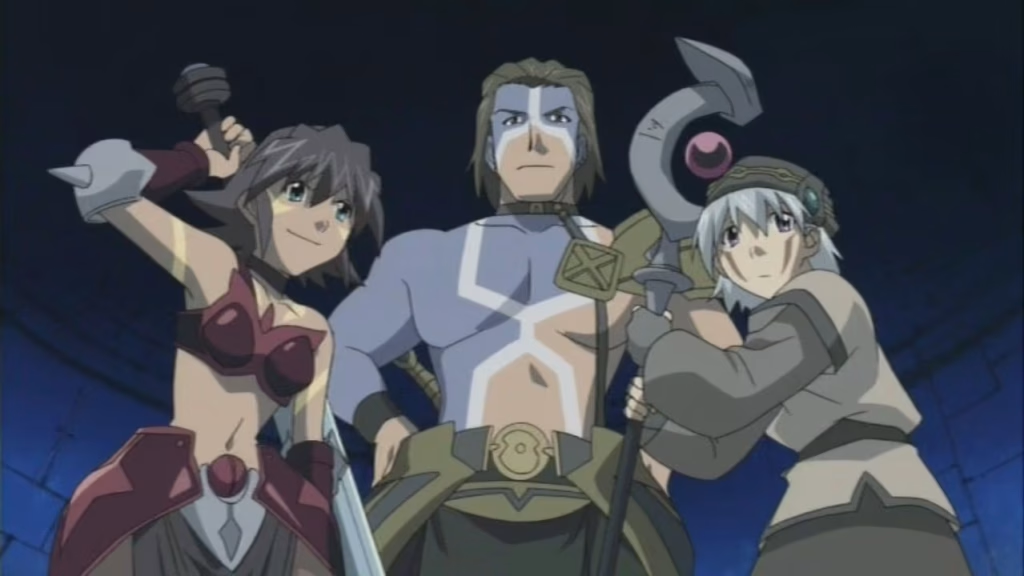
7. hack//SIGN

Before Sword Art Online popularized “trapped in a game,” hack//SIGN explored the concept in a slower, more introspective way. Tsukasa finds himself stuck in an MMO, and the series dives into identity, connection, and the philosophical implications of virtual life.

Image Source: Bing Image. License: All Creative Commons

Its pacing is deliberate, allowing viewers to reflect alongside the protagonist. The mood is mysterious and atmospheric, emphasizing character interaction over flashy battles.

Image Source: Bing Image. License: All Creative Commons

For those who enjoy thought-provoking narratives and classic anime aesthetics, hack//SIGN remains a timeless isekai worth revisiting.

Image Source: Bing Image. License: All Creative Commons

6. Campfire Cooking in Another World With My Absurd Skill

Cozy fantasy meets culinary delight in Campfire Cooking in Another World With My Absurd Skill. Summoned to another world, Tsuyoshi Mukouda avoids heroics and uses his “Online Supermarket” skill to cook up magical dishes, earning allies along the way, including the mythical wolf Fel.

Image Source: Bing Image. License: All Creative Commons

The show’s charm lies in its lighthearted, whimsical approach, emphasizing comfort and fun over conflict. Each cooking scene is a visual treat, making food feel like a true magical experience.

Image Source: Bing Image. License: All Creative Commons

With MAPPA’s crisp animation and playful tone, this series is perfect for viewers looking for a relaxing, appetite-inducing isekai adventure.

Image Source: Bing Image. License: All Creative Commons

5. Saga of Tanya the Evil

Saga of Tanya the Evil turns isekai on its head with moral ambiguity and strategic warfare. A salaryman is reincarnated as Tanya, a ruthless girl in a war-torn magical world, cursed by a mysterious god. Tanya’s cunning, manipulation, and ambition drive the story forward, creating a thrilling, dark narrative.

Image Source: Bing Image. License: All Creative Commons

The series stands out for its intense battles, psychological tension, and ideological themes. Tanya isn’t just fighting enemies; she’s challenging the gods themselves.

Image Source: Bing Image. License: All Creative Commons

It’s a bold, gripping take on the genre that combines military strategy with dark humor, making it a must-watch for fans of more mature isekai.

Image Source: Bing Image. License: All Creative Commons

4. My Next Life as a Villainess: All Routes Lead to Doom!

Villainess isekai reached peak popularity with this series. Catarina, remembering her past life, realizes she’s doomed to fail in an otome game and takes action to rewrite her fate. Using wit, charm, and careful planning, she navigates romance, social intrigue, and comical mishaps.

Image Source: Bing Image. License: All Creative Commons

The series shines through Catarina’s relentless positivity and clever solutions, which make her endlessly endearing. Even minor characters feel lively, and the stakes, though often humorous, remain engaging.

Image Source: Bing Image. License: All Creative Commons

My Next Life as a Villainess is a lighthearted, feel-good series that defined a subgenre and continues to inspire countless imitators.

Image Source: Bing Image. License: All Creative Commons

3. Tsukimichi: Moonlit Fantasy

Tsukimichi follows Makoto Misumi, summoned to a new world only to be rejected by its goddess. Undeterred, he carves his own path with RPG-like powers, unique allies, and mythological creatures.

Image Source: Bing Image. License: All Creative Commons

The series combines overpowered protagonists with inventive world-building, balancing humor, adventure, and occasional absurdity. Its second season reinforced its popularity with fans hungry for creative fantasy action.

Image Source: Bing Image. License: All Creative Commons

It’s a standout for those who enjoy unconventional heroes, playful storytelling, and vibrant, over-the-top isekai worlds.

Image Source: Bing Image. License: All Creative Commons

2. Lord of Mysteries

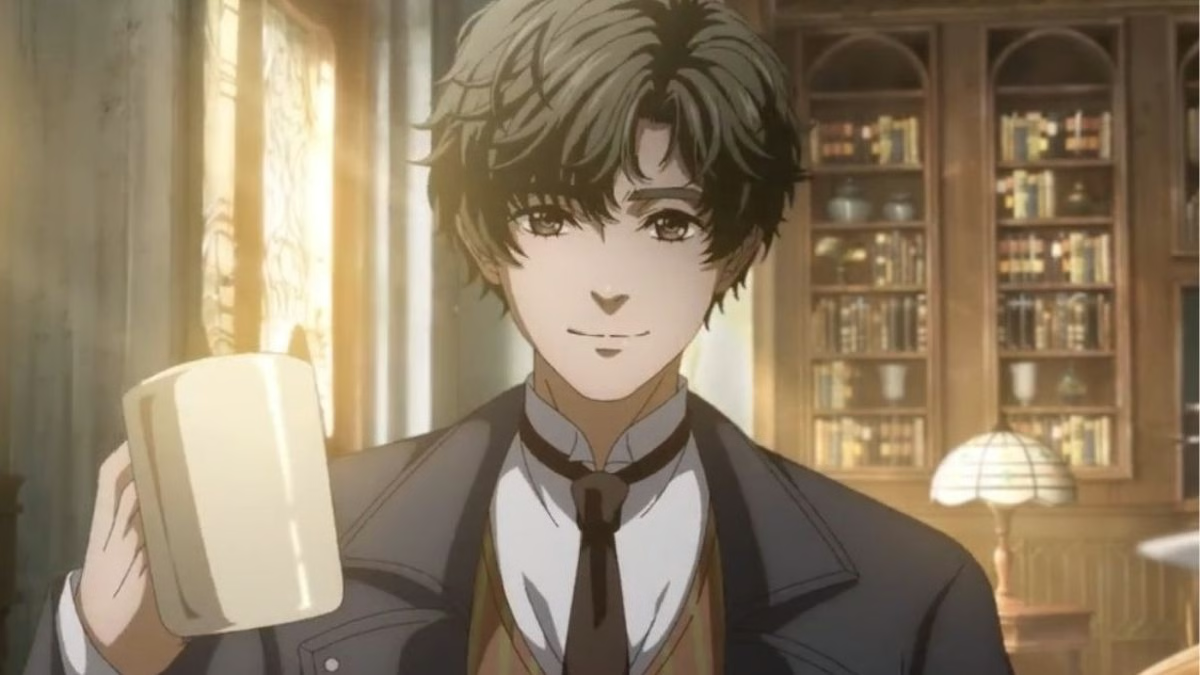
For a darker, more cerebral take, Lord of Mysteries delivers. Set in a Victorian-inspired, steampunk world, this Chinese animation follows a protagonist awakening in a universe built on a strategy game. The show blends mystery, intrigue, and atmospheric visuals for a deeply immersive experience.

Image Source: Bing Image. License: All Creative Commons

The storytelling is dense, with layers of information, conspiracies, and hidden powers. The Gothic aesthetic sets it apart from typical colorful isekai, making the world feel both realistic and fantastical.

Image Source: Bing Image. License: All Creative Commons

Though it demands attention, viewers who stick with it are rewarded with one of the most visually stunning and intellectually engaging isekai series in recent memory.

Image Source: Bing Image. License: All Creative Commons

1. Zenshu

Topping the list is Zenshu, a creative juggernaut of 2026. Natsuko Hirose, a blocked animator, is transported into the world of a failed childhood anime. Armed with the power of creativity itself, she sets out to reshape the world and bring hope to its inhabitants.

Image Source: Bing Image. License: All Creative Commons

The series is vibrant, witty, and emotionally resonant, celebrating the transformative power of art. Its animation sequences, particularly those depicting creation and imagination, are breathtaking, offering a meta-love letter to anime itself.

Image Source: Bing Image. License: All Creative Commons

If you watch one isekai this year, make it Zenshu. It’s a perfect blend of heart, spectacle, and homage that reminds viewers why the genre continues to captivate audiences worldwide.

Image Source: Bing Image. License: All Creative Commons

From cozy potion-makers to dark military geniuses, these ten series show just how diverse and exciting isekai anime has become. Whether you’re a veteran fan or just discovering alternate worlds, 2026 promises adventures you won’t want to miss.

10 Quirky and Brilliant Sports Anime to Watch Right Now

0
Image Source: Bing Image. License: All Creative Commons

Sports anime has always embraced a touch of the unhinged, and that’s precisely what makes it so compelling. While some series focus on inspirational speeches and meticulously animated matches, others toss realism aside and let chaos reign. The result is a genre where virtually anything can become competitive, emotional, and electrifying—so long as the passion and stakes are high enough.

Image Source: Bing Image. License: All Creative Commons

You might already know the heavy hitters, but beyond the mainstream lies a strange, creative playground where niche sports, fictional competitions, and outright absurd concepts thrive. These shows prove that sports anime isn’t limited by reality; it’s powered by imagination. So here’s a reverse countdown of the best, weirdest, and most entertaining sports anime worth your time. From guilty pleasures to genre-benders, each of these brings something unexpected to the court, track, pool, or battlefield.
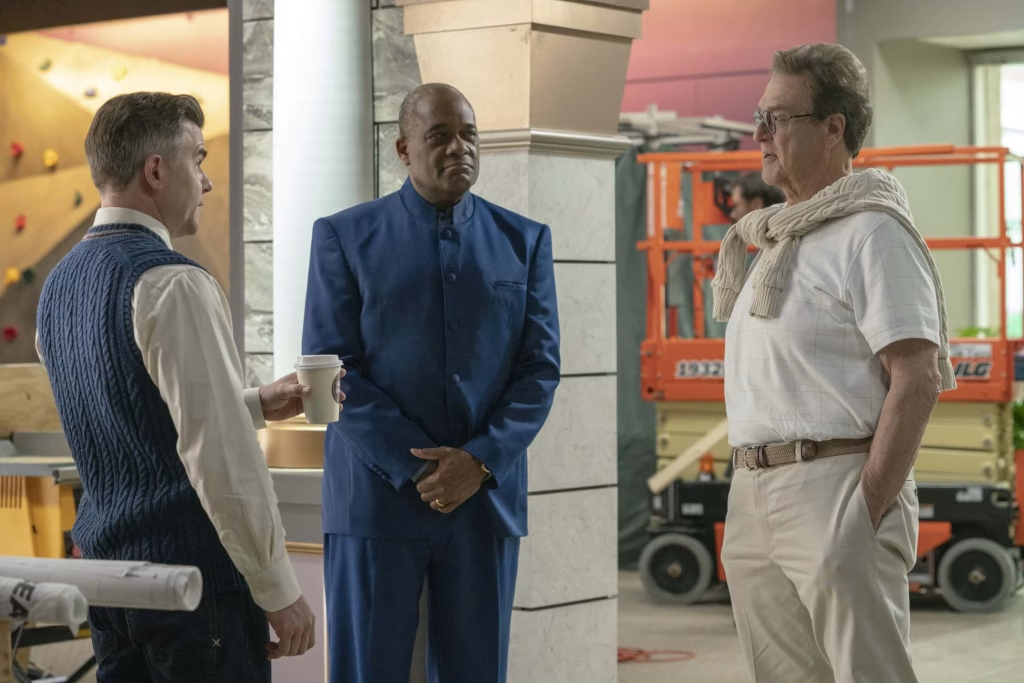
Image Source: Bing Image. License: All Creative Commons

10. Iwa Kakeru! Sport Climbing Girls

Iwa Kakeru! introduces competitive sport climbing through the eyes of a former hardcore gamer who trades controllers for climbing holds. Instead of raw athletic instinct, she relies on logic, pattern recognition, and strategy, treating each wall like a puzzle that needs solving. That angle alone makes the series stand out from more traditional sports anime.

Image Source: Bing Image. License: All Creative Commons

The climbing scenes themselves are surprisingly engaging, breaking down routes, grip choices, and body positioning in a way that actually explains the sport. There’s a genuine effort to make climbing feel tactical and intense, even when the stakes are relatively small compared to national tournaments or world championships.

Image Source: Bing Image. License: All Creative Commons

That said, the show undeniably leans into fan service, sometimes aggressively. For some viewers, this distracts from the sport and character growth, but for others, it’s just part of the package. If you’re curious about a lesser-known competitive sport and don’t mind some excess, Iwa Kakeru! is a decent entry point.

Image Source: Bing Image. License: All Creative Commons

9. Keijo!!!!!!!!

Keijo!!!!!!!! is the kind of anime premise that sounds fake until you see it animated. Set in a fictional professional sport, competitors battle on floating platforms and can only use their chests and backsides to knock opponents into the water. It’s ridiculous, unapologetic, and very aware of what it’s doing.

Image Source: Bing Image. License: All Creative Commons

What makes Keijo!!!!!!!! Work isn’t just the fanservice, it’s the commitment. The series treats its nonsense sport with the same seriousness that other anime reserve for soccer or boxing. There are special techniques, rivalries, power-ups, and dramatic commentary that elevate the absurdity into full-blown parody.

Image Source: Bing Image. License: All Creative Commons

Surprisingly, the animation quality is solid, and the matches are genuinely fun to watch. You’re not here for realism or deep philosophy, you’re here for chaos. If you want to see how far sports anime can stretch the definition of “sport,” this is as far as it goes.

Image Source: Bing Image. License: All Creative Commons

8. Re-Main

Water polo doesn’t get much representation in anime, which makes Re-Main feel refreshing right out of the gate. The series follows a talented player who loses most of his memories after a long coma, forcing him to relearn both the sport and his own identity from scratch.

Image Source: Bing Image. License: All Creative Commons

Rather than focusing purely on winning matches, Re-Main spends a lot of time exploring confidence, frustration, and the pressure of expectations. The protagonist isn’t just battling opposing teams; he’s fighting against the shadow of the person he used to be.

Image Source: Bing Image. License: All Creative Commons

While it doesn’t reinvent the sports anime formula, the emotional angle gives it weight. It’s quieter, more introspective, and sometimes awkward, but that realism makes it resonate. If you want a sports anime that prioritizes character recovery over flashy victories, Re-Main is worth the dive.

Image Source: Bing Image. License: All Creative Commons

7. Bakuten!!

Bakuten!! shines a spotlight on men’s rhythmic gymnastics, a sport rarely explored in anime or media in general. The story follows a complete beginner who becomes fascinated after witnessing a competition, eventually joining his school’s team despite having no prior experience.

Image Source: Bing Image. License: All Creative Commons

The narrative itself is fairly standard practice, setbacks, rival schools—but the execution is where the show stands out. The gymnastics performances are beautifully animated, capturing the speed, precision, and artistic flair that define the sport.

Image Source: Bing Image. License: All Creative Commons

More than anything, Bakuten!! respects its subject. It portrays rhythmic gymnastics as physically demanding and fiercely competitive, not just a flashy spectacle. Even if the characters don’t break new ground, the presentation alone makes this series feel fresh.

Image Source: Bing Image. License: All Creative Commons

6. 2.43: Seiin High School Boys Volleyball Team

There’s no escaping the comparisons to Haikyuu!!, and unfortunately, 2.43 lives in that shadow. It follows two former childhood friends with unresolved tension as they reunite on a struggling volleyball team, aiming to rebuild both trust and performance.

Image Source: Bing Image. License: All Creative Commons

The volleyball itself is competently animated, and the matches have moments of genuine intensity. However, the pacing can feel uneven, and the emotional beats don’t always land as strongly as they should.

Image Source: Bing Image. License: All Creative Commons

Still, 2.43 isn’t without merit. It focuses more on interpersonal conflict and mental blocks than explosive hype, making it a slower, more grounded watch. If you’re already invested in volleyball anime and want something lower-key, it scratches that itch.

Image Source: Bing Image. License: All Creative Commons

5. Birdie Wing

Birdie Wing takes golf, a sport often associated with calm and restraint, and turns it into a high-octane drama. Underground matches, criminal organizations, and reality-defying shots redefine what golf anime can look like.

Image Source: Bing Image. License: All Creative Commons

At the center of the story is Eve, a ruthless street golfer who competes in illegal matches to survive, and Aoi, a sheltered prodigy with perfect form. Their rivalry is intense, personal, and wildly exaggerated in the best way possible.

Image Source: Bing Image. License: All Creative Commons

The show thrives on excess. Named techniques, dramatic monologues, and impossible trajectories make every swing feel like a finishing move. Even if you’ve never cared about golf, Birdie Wing makes it exciting, ridiculous, and endlessly entertaining.

Image Source: Bing Image. License: All Creative Commons

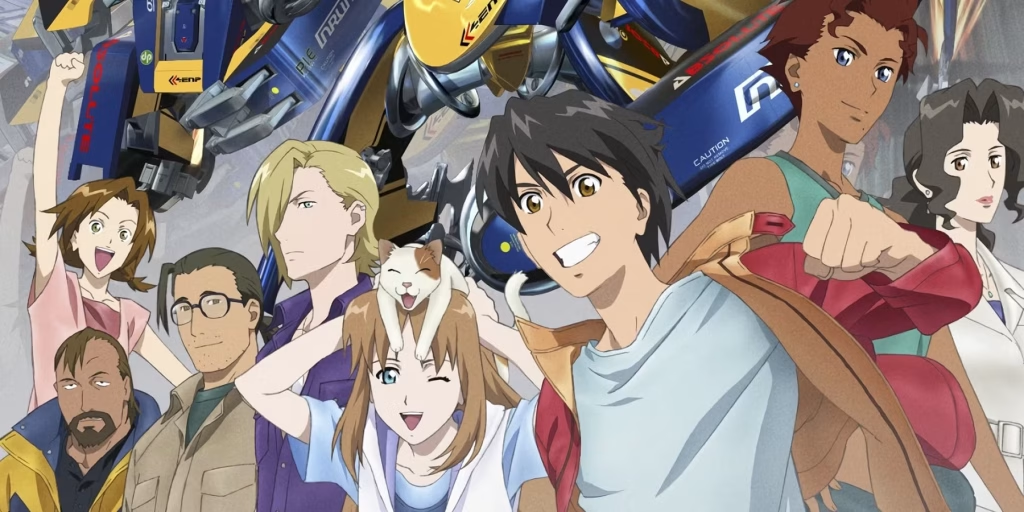
4. IGPX

On paper, IGPX looks like a mecha anime, and it is, but structurally, it’s pure sports drama. Teams of pilots race giant robots in professional leagues, dealing with rankings, sponsorships, and rival teams just like traditional athletes.

Image Source: Bing Image. License: All Creative Commons

Each race emphasizes teamwork, timing, and strategy, blending mechanical combat with the familiar rhythms of sports anime storytelling. The characters grow not just as pilots, but as competitors learning to trust one another.

Image Source: Bing Image. License: All Creative Commons

Backed by Production I.G.’s strong animation, IGPX remains visually impressive even years later. If you enjoy sports anime but want something louder, faster, and packed with sci-fi flair, this is an easy pick.

Image Source: Bing Image. License: All Creative Commons

3. Air Gear

Air Gear starts grounded enough, with rollerblading gangs battling for turf, but quickly escalates into complete insanity. High-tech skates allow characters to defy gravity, pull off impossible tricks, and turn races into full-scale battles.

Image Source: Bing Image. License: All Creative Commons

The realism disappears early, but that’s exactly the point. Air Gear embraces excess, blending street culture, supernatural elements, and intense rivalries into something uniquely chaotic.

Image Source: Bing Image. License: All Creative Commons

Between the iconic soundtrack, bold visual style, and relentless energy, the series leaves a strong impression. It’s messy, exaggerated, and unforgettable, a perfect example of sports anime abandoning restraint and thriving because of it.

Image Source: Bing Image. License: All Creative Commons

2. SK8 the Infinity

SK8 the Infinity injects skateboarding with pure anime drama. Set in Okinawa, it revolves around secret downhill races where skaters risk serious injury for pride, passion, and personal freedom.

Image Source: Bing Image. License: All Creative Commons

The relationship between Reki and Langa forms the emotional core of the show, balancing adrenaline-fueled races with heartfelt character moments. The supporting cast adds style, humor, and intensity in equal measure.

Image Source: Bing Image. License: All Creative Commons

Visually striking and emotionally charged, SK8 feels modern, expressive, and confident in its identity. Add in a flamboyant antagonist who steals every scene, and you’ve got one of the most memorable sports anime in recent years.

Image Source: Bing Image. License: All Creative Commons

1. Blue Lock

Blue Lock takes everything sports anime usually stands for and flips it on its head. After Japan’s World Cup failure, 300 strikers are locked into an experimental program where only one will emerge as the nation’s savior.

Image Source: Bing Image. License: All Creative Commons

Teamwork takes a backseat to ego, ambition, and survival. Players are encouraged to be selfish, ruthless, and obsessed with scoring because hesitation means elimination.

Image Source: Bing Image. License: All Creative Commons

The result is a tense, psychological battle disguised as a soccer anime. With its darker tone, sharp visuals, and relentless pacing, Blue Lock feels more like a survival game than a sports series, and that bold approach is exactly why it stands at the top.

Image Source: Bing Image. License: All Creative Commons

Sports anime continues to evolve because it refuses to stay predictable. Whether grounded or completely absurd, these shows prove that competition can be thrilling in any form. If you’re willing to step outside the usual courts and fields, you’ll find some of anime’s most creative storytelling waiting for you.

19 Highly Anticipated Movies That Didn’t Live Up to the Hype

0
Image Source: Bing Image. License: All Creative Commons

In cinema, hype can be a double-edged sword. A clever trailer, a star-studded cast, or a viral marketing campaign can generate enormous anticipation—but sometimes the finished film simply doesn’t live up to the promise. When expectations are sky-high, even minor flaws feel magnified, leaving audiences disappointed. Here’s a look at 19 movies that, despite heavy promotion and buzz, ultimately failed to deliver on what they promised.

Image Source: Bing Image. License: All Creative Commons

19. Drive

Drive was promoted as a sleek, neon-drenched thrill ride, with Ryan Gosling at the center as a brooding, mysterious getaway driver. Trailers suggested relentless car chases, high-stakes action, and an edge-of-your-seat adrenaline rush reminiscent of a stylish indie version of Fast and Furious. Fans expected nonstop excitement wrapped in a cool, retro aesthetic. Instead, viewers encountered a slow, meditative story that focused on character over action.

Image Source: Bing Image. License: All Creative Commons

The film emphasized mood, silence, and introspective moments rather than the non-stop thrills promised in marketing. The pacing left some audiences confused or even disappointed, particularly those who expected a full-on action spectacle. Even so, Drive eventually found its audience. Critics and cinephiles praised its artistry, the careful cinematography, and the subtle emotional beats. The film’s legacy proves that while hype can mislead, quality filmmaking can still earn appreciation, even if it’s on a delayed schedule.

Image Source: Bing Image. License: All Creative Commons

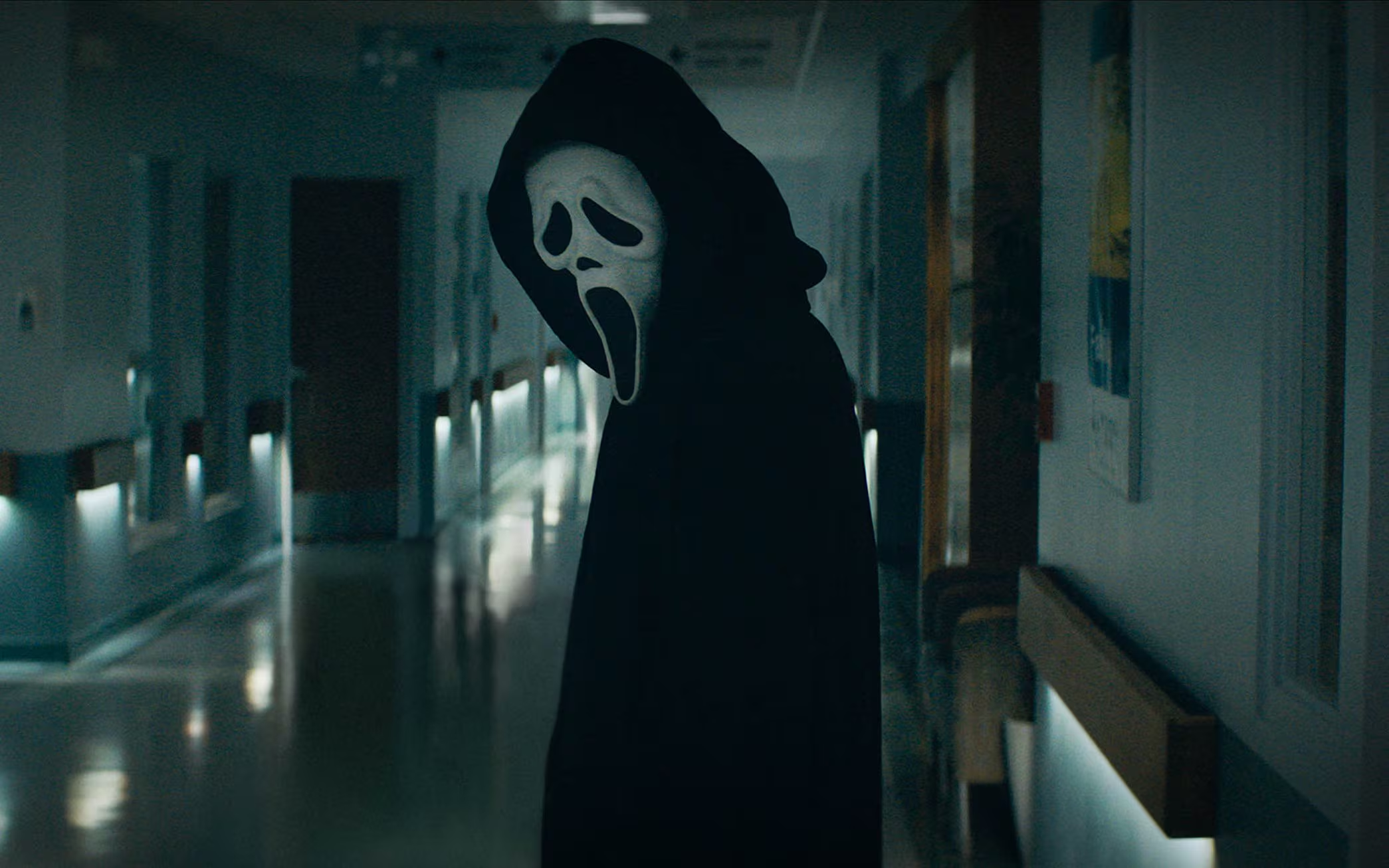
18. Scream VI

Scream VI was billed as the most intense installment in the iconic slasher franchise, with Ghostface stalking the streets of New York City for a grittier, urban spin on the formula. Fans anticipated inventive kills, heightened suspense, and a revitalized franchise that would push the series to new heights. However, the movie failed to match its marketing. Much of the supposedly New York setting was filmed in Canada, and the tension felt surprisingly flat.

Image Source: Bing Image. License: All Creative Commons

Few major characters faced meaningful peril, and the story struggled to create suspense, leaving many viewers feeling that the promised thrills were nowhere to be found. While Scream VI attempted to innovate the series, it shows that a change of location or a gimmick is no substitute for compelling storytelling. True horror relies on tension, stakes, and pacing, all of which felt uneven in this installment.

Image Source: Bing Image. License: All Creative Commons

17. Freddy vs. Jason

For horror enthusiasts, Freddy vs. Jason was a dream come true: two legendary killers finally facing off on the big screen. Years of anticipation built the expectation of a thrilling, high-stakes showdown, with fans imagining epic battles and clever, spine-tingling sequences. Unfortunately, the film was a disappointment for many. The story struggled to balance both killers, and the narrative often felt like a gimmick rather than a compelling horror experience.

Image Source: Bing Image. License: All Creative Commons

The characters were underdeveloped, and the pacing was uneven, leading some viewers to leave halfway through the film, frustrated that the crossover didn’t live up to its legendary potential. Freddy vs. Jason serves as a cautionary tale: even beloved characters and nostalgic premises can’t guarantee audience satisfaction if the story and execution aren’t strong.

Image Source: Bing Image. License: All Creative Commons

16. Wonder Woman 1984

After the breakout success of the first Wonder Woman, the sequel carried enormous expectations. Marketing promised a vibrant 1980s aesthetic, an epic showdown with Cheetah, and thrilling blockbuster action that would rival the original film. Fans expected a perfect mix of nostalgia, humor, and heroics.

Image Source: Bing Image. License: All Creative Commons

In practice, Wonder Woman 1984 fell short. The story became convoluted, the villains were underdeveloped, and the climactic battle lacked excitement. Many viewers felt that the film failed to capture the emotional resonance of its predecessor, leaving a sense of unfulfilled promise. The movie highlights a key lesson in filmmaking: sequels must deliver fresh stakes and strong storytelling. Simply leaning on nostalgia and past success is rarely enough to satisfy audiences or maintain momentum.

Image Source: Bing Image. License: All Creative Commons

15. Battle: Los Angeles

Battle: Los Angeles was promoted as an intense, realistic alien invasion thriller. Trailers emphasized relentless action, gritty military tactics, and the suspense of humanity fighting for survival against an otherworldly threat. Fans anticipated a cinematic adrenaline rush with immersive, edge-of-your-seat sequences.

Image Source: Bing Image. License: All Creative Commons

The reality, however, was a largely generic action film. The characters were flat, the action sequences uninspired, and the narrative offered little emotional engagement. Despite its ambitious premise, the movie failed to stand out in a crowded genre, leaving many viewers underwhelmed. Battle: Los Angeles serves as a clear reminder that flashy marketing and hype alone cannot make a film memorable. Substance and storytelling are key, even in high-concept action spectacles.

Image Source: Bing Image. License: All Creative Commons

14. Thor: Love and Thunder

With Taika Waititi back in the director’s chair and a star-studded cast, Thor: Love and Thunder promised a humorous, action-packed adventure full of spectacle and heart. Audiences expected a combination of laughs, epic action, and the emotional beats that made Thor: Ragnarok such a hit.

Image Source: Bing Image. License: All Creative Commons

Unfortunately, the balance between humor and story fell apart. The comedic elements often overshadowed the emotional narrative, and the absence of key characters left notable gaps in engagement. While the film was visually entertaining, it lacked the cohesion and depth fans hoped for. Thor: Love and Thunder demonstrates how tricky it can be to replicate past successes. Comedy and heroics must work in harmony, or even a visually dazzling film can feel hollow.

Image Source: Bing Image. License: All Creative Commons

13. Don’t Look Up

Don’t Look Up arrived with a buzzworthy cast and a satirical premise, promising sharp social commentary and humor aimed squarely at current global crises. Audiences expected biting satire, clever dialogue, and a film that would spark conversation and reflection. However, the film struggled to deliver on its promises.

Image Source: Bing Image. License: All Creative Commons

Much of the humor felt forced, the pacing meandered, and the social commentary often seemed heavy-handed rather than insightful. Many viewers found themselves disengaged, leaving the theater feeling that the film’s ambition outpaced its execution. Despite its intentions, Don’t Look Up is a reminder that even star-studded casts and timely premises cannot guarantee audience engagement. Execution matters as much as concept.

Image Source: Bing Image. License: All Creative Commons

12. The Huntsman: Winter’s War

With a cast that included Charlize Theron, Emily Blunt, Chris Hemsworth, and Jessica Chastain, The Huntsman: Winter’s War seemed poised to deliver a captivating fantasy epic. Marketing emphasized lavish battles, magical creatures, and a rich narrative that promised to expand the universe of its predecessor.

Image Source: Bing Image. License: All Creative Commons

Yet, the movie felt uninspired. The story lacked intrigue, the fantasy elements appeared recycled, and even the talented cast could not elevate the thin material. The magical spectacle failed to leave a lasting impression, and audiences were left wishing for more substance. The film highlights that even a star-studded ensemble and stunning visuals can’t rescue weak storytelling. Strong writing and imaginative world-building are essential, especially in fantasy epics.

Image Source: Bing Image. License: All Creative Commons

11. Leave The World Behind

Leave the World Behind was promoted as a gripping thriller with ties to the acclaimed series Mr. Robot. The marketing suggested suspense, intrigue, and a tense, shared universe connection that would engage both fans of the series and newcomers. In practice, the connection to Mr. Robot felt forced, confusing, and ultimately unnecessary.

Image Source: Bing Image. License: All Creative Commons

The story became convoluted, and the tension was diluted by overcomplicated plot points, leaving audiences frustrated and unsatisfied. This film serves as a lesson in how overcomplicated narratives and forced franchise connections can backfire. Simplicity and clarity often create stronger engagement than convoluted ambition.

Image Source: Bing Image. License: All Creative Commons

10. Frozen 2

Frozen 2 had the monumental task of following Disney’s breakout hit, promising magical adventures, new songs, and character growth. Fans of all ages anticipated a continuation that would recapture the charm and heart of the original. Unfortunately, the sequel stumbled.

Image Source: Bing Image. License: All Creative Commons

Its plot was confusing, the music less memorable, and many felt that the emotional depth and charm of the first film were missing. While visually stunning, the movie didn’t fully satisfy long-time fans. Frozen 2 is a reminder that nostalgia and beloved characters can only go so far. To succeed, sequels must offer both a coherent story and fresh emotional stakes.

Image Source: Bing Image. License: All Creative Commons

9. The Artist

The Artist generated excitement as a black-and-white silent film paying homage to early cinema. Marketing promised a charming, innovative experience for audiences curious about this unusual format.

Image Source: Bing Image. License: All Creative Commons

Some viewers, however, were unprepared for the silent narrative, leading to confusion, disengagement, and even walkouts. While the film was celebrated critically, many mainstream viewers felt alienated by its unconventional style. The Artist highlights that hype can sometimes backfire if the audience isn’t ready for experimental storytelling, even when the film is groundbreaking.

Image Source: Bing Image. License: All Creative Commons

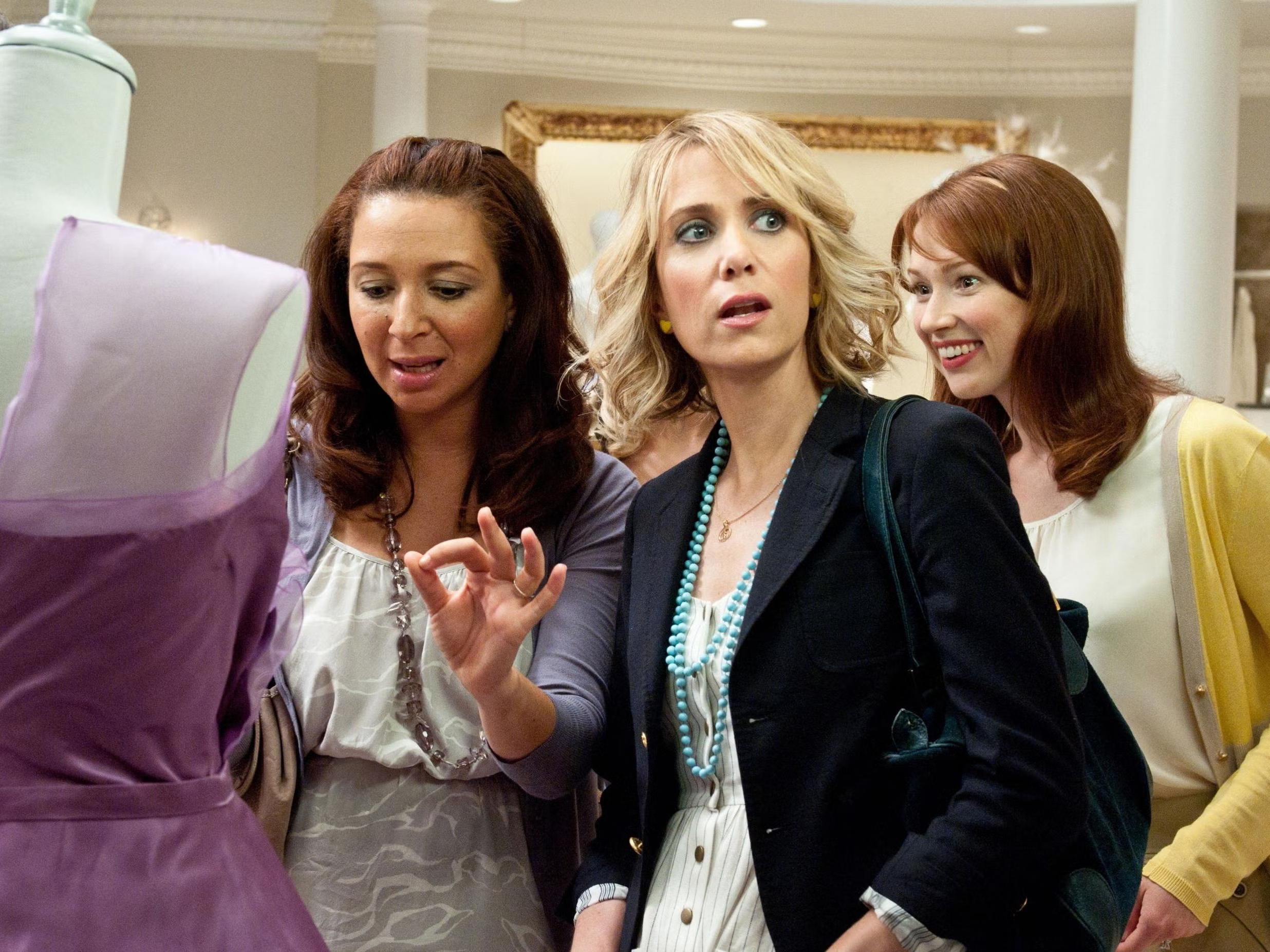
8. Bridesmaids

Bridesmaids arrived with immense buzz as a comedy that would break new ground in the genre. Trailers promised outrageous humor, bold performances, and scenes that would live on in pop culture, including the infamous bathroom gag. Yet, humor is subjective, and some viewers found the film underwhelming.

Image Source: Bing Image. License: All Creative Commons

Jokes that were heavily advertised fell flat for certain audiences, demonstrating that even well-marketed comedies can disappoint when expectations are sky-high. Bridesmaids illustrates the double-edged nature of hype: the more you promise laughs, the higher the risk of disappointment if they don’t land.

Image Source: Bing Image. License: All Creative Commons

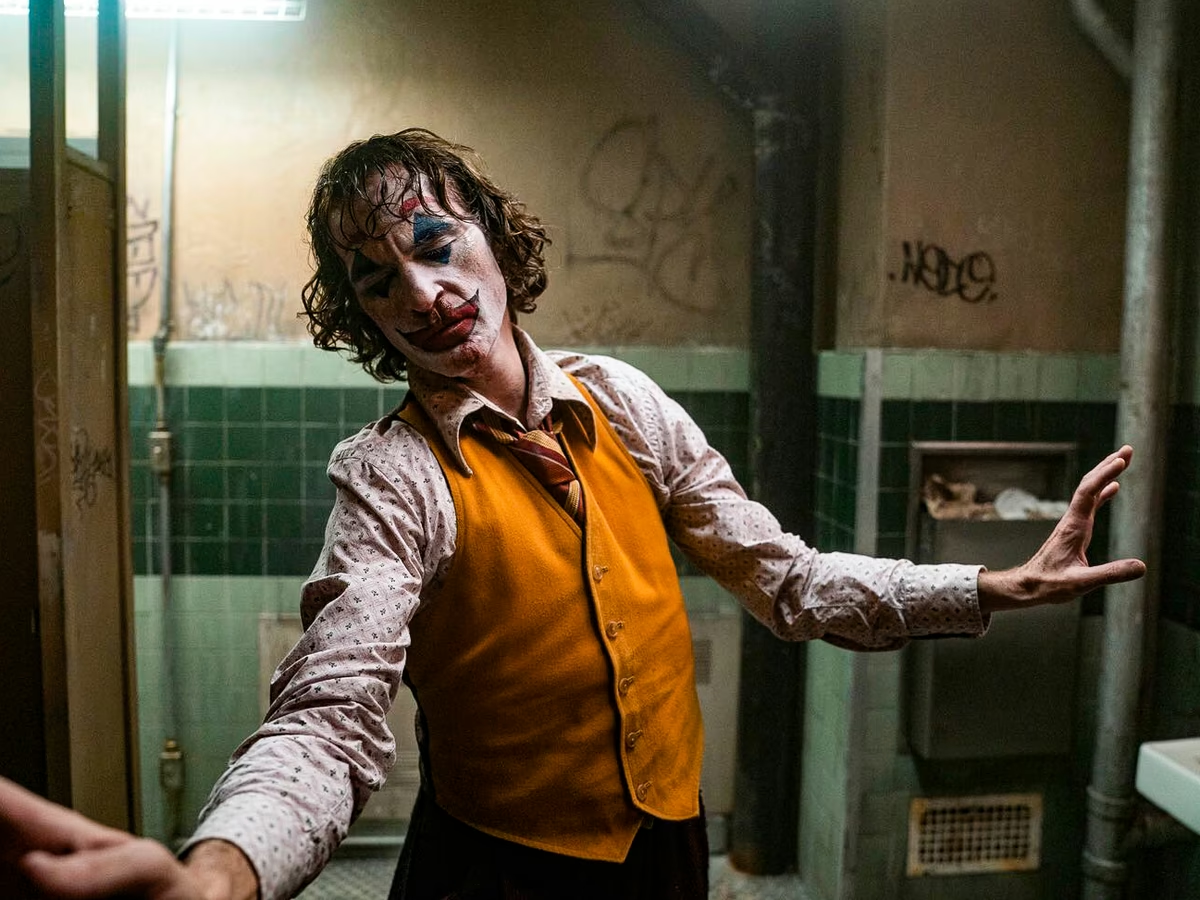
7. Joker

Joker was promoted as a daring, dark reinvention of an iconic character, with Joaquin Phoenix delivering a performance many expected would redefine the modern villain. Marketing leaned heavily into a gritty, mature tone reminiscent of classic psychological thrillers.

Image Source: Bing Image. License: All Creative Commons

While the film received critical acclaim, many casual viewers found it slow, repetitive, or overly derivative of other films. The messaging and moral ambiguity were polarizing, resulting in a split between critics and mainstream audiences. Joker demonstrates that even a celebrated performance and provocative concept can feel overhyped if it doesn’t resonate with a wide audience.

Image Source: Bing Image. License: All Creative Commons

6. Birds of Prey

Birds of Prey was positioned as DC’s bold comeback after the mixed reception of Suicide Squad. Marketing highlighted a fun, female-driven story, a vibrant visual style, and a quirky, playful energy with Margot Robbie at the helm.

Image Source: Bing Image. License: All Creative Commons

However, critics and fans noted that the story was thin, the villain underdeveloped, and character arcs lacked emotional resonance. The flashy style of the marketing could not make up for the story’s weaknesses, leaving some viewers disappointed. The film underscores that visual flair and star power cannot fully replace coherent storytelling and strong character development.

Image Source: Bing Image. License: All Creative Commons

5. Suicide Squad

Suicide Squad’s marketing campaign was intense, featuring highly stylized trailers, a top-tier cast, and a killer soundtrack. Expectations were enormous, with fans anticipating an irreverent, action-packed, character-driven adventure. The final product, however, was disjointed.

Image Source: Bing Image. License: All Creative Commons

Studio interference led to uneven pacing, a fractured narrative, and a film that often felt more like a music video than a coherent story. Audience disappointment was swift and widespread. Suicide Squad is a prime example of how even massive hype cannot guarantee satisfaction if the creative vision is compromised.

Image Source: Bing Image. License: All Creative Commons

4. Barbie

Barbie’s marketing promised a clever, self-aware take on the iconic toy, blending humor, nostalgia, and social commentary. Buzz was everywhere, from billboards to viral campaigns, making the film one of the most anticipated releases of its season. Despite its hype, the movie left some audiences feeling underwhelmed.

Image Source: Bing Image. License: All Creative Commons

Older viewers found the story lacking in substance, and some critics argued that the commentary didn’t land universally. While it resonated with younger audiences, the film didn’t fully satisfy broader expectations. Barbie demonstrates that even brilliant marketing cannot replace storytelling depth and emotional resonance.

Image Source: Bing Image. License: All Creative Commons

3. Mean Girls (2024)

The 2024 musical adaptation of Mean Girls aimed to modernize a beloved classic for a new generation. With anticipation fueled by the Broadway success and the original film’s cult following, expectations were sky-high. Unfortunately, the remake faltered.

Image Source: Bing Image. License: All Creative Commons

Musical numbers felt weak, the story updates seemed forced, and cultural references often missed the mark. Audiences felt that the charm and wit of the original had been diluted, leaving a sense of disappointment. Mean Girls illustrates the risks of remaking classics: nostalgia can draw interest, but without meaningful innovation or execution, the legacy of the original can suffer.

Image Source: Bing Image. License: All Creative Commons

2. Saltburn

Saltburn arrived with hype for its provocative, shocking premise and the star power of Rosamund Pike and Barry Keoghan. Marketing suggested a thrilling, unforgettable cinematic experience.

Image Source: Bing Image. License: All Creative Commons

The film, however, relied too heavily on shock value, with little substance to back it up. The narrative meandered, and the moments designed to surprise often fell flat, leaving viewers confused or unimpressed. Saltburn shows that sensationalism alone can’t sustain a film; audiences ultimately crave story, depth, and engagement.

Image Source: Bing Image. License: All Creative Commons

1. Madame Web

Madame Web was hyped as a mysterious, thrilling addition to the Spider-Man universe, with promises of action, intrigue, and exciting ties to the larger franchise. Instead, the film struggled to deliver a compelling narrative or memorable characters.

Image Source: Bing Image. License: All Creative Commons

Many viewers found it boring or uninspired, leaving theaters frustrated and disappointed. Madame Web is a stark reminder that even high-concept properties with franchise connections cannot succeed without substance, strong storytelling, and engaging characters.

Image Source: Bing Image. License: All Creative Commons

Hype can spark anticipation and fill theaters on opening weekend, but it is no substitute for quality storytelling. These 19 films highlight how easily expectations can clash with reality, leaving audiences frustrated or disappointed. Star power, viral marketing, and flashy trailers can only carry a film so far. At the end of the day, viewers crave substance, emotion, and engaging narratives—the elements that truly make a movie worth remembering.

10 Animated Series Where Every Episode Is Essential

0
Image Source: Bing Image. License: All Creative Commons

One of the biggest frustrations in animation—especially long-running series—is filler. Episodes that stall the plot, repeat ideas, or exist solely to pad a season can make even the best shows feel bloated. But occasionally, a series comes along that respects your time. These are the animated shows where every episode matters, every scene earns its place, and skipping even one feels like a mistake. From cult classics to modern masterpieces, here are ten animated series that prove tight, purposeful storytelling still thrives.
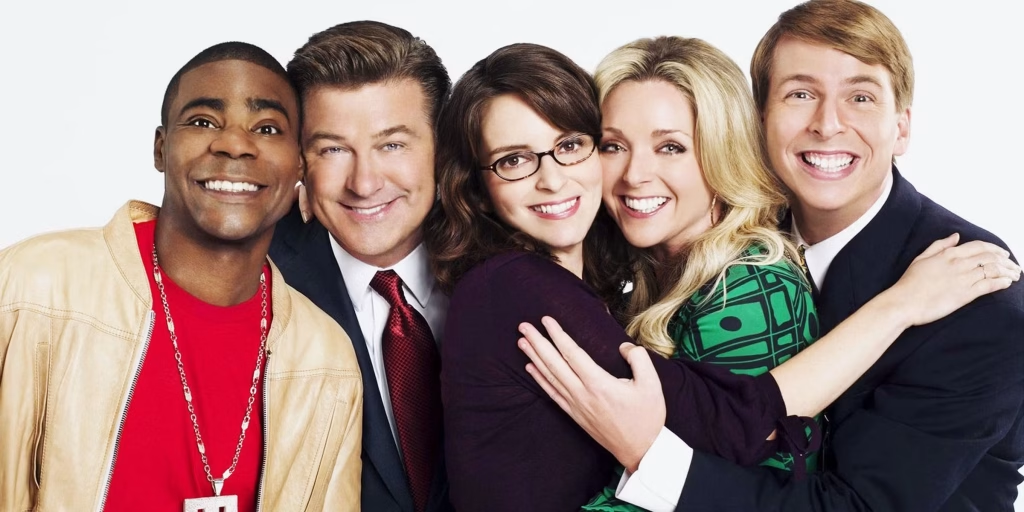
Image Source: Bing Image. License: All Creative Commons

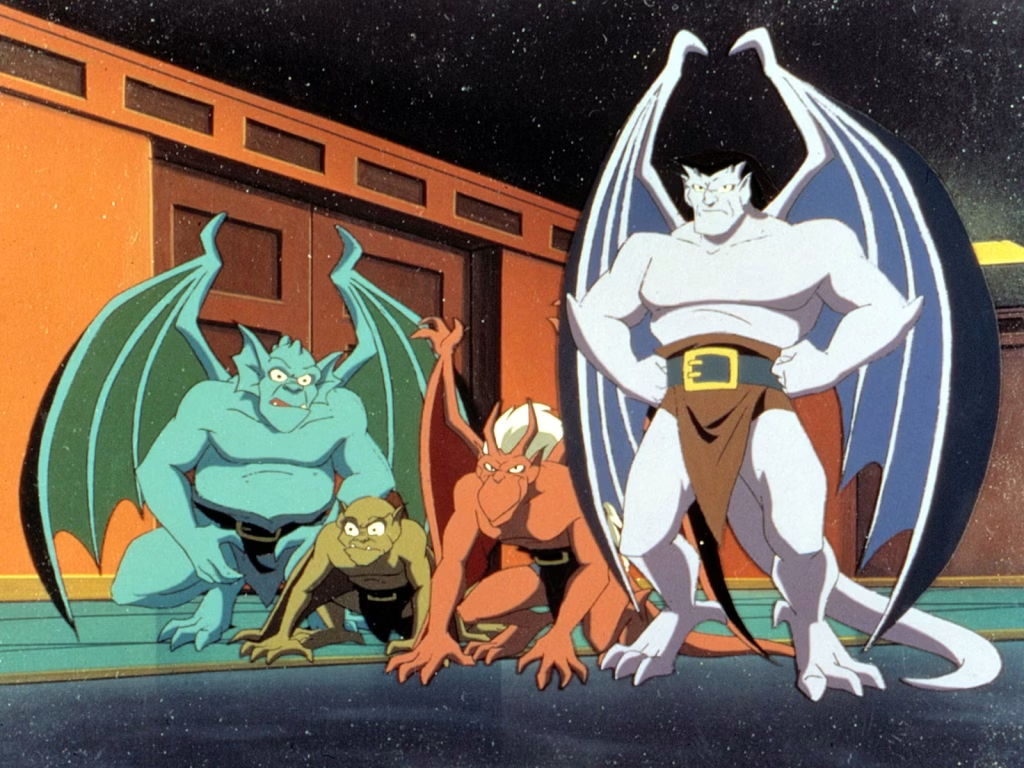
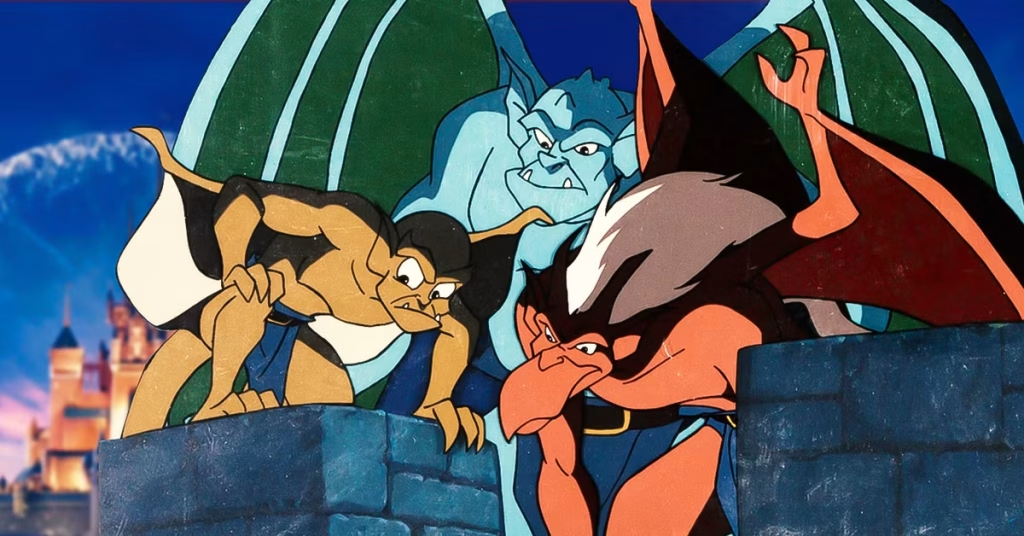
10. Gargoyles (1994–1997)

Gargoyles is one of Disney’s most unexpected triumphs. On the surface, it looks like a standard after-school cartoon, but beneath that lies a dense, emotionally mature story influenced by Shakespeare, mythology, and classic tragedy. It treated its audience with respect, trusting viewers to follow complex relationships and long-term consequences.

Image Source: Bing Image. License: All Creative Commons

The first two seasons are remarkably focused. Each episode either expands the lore, develops the core cast, or pushes the overarching narrative forward. There are no “monster of the week” distractions that don’t matter later. Even years after its release, fans and creator Greg Weisman agree that the third season exists outside the show’s true canon, keeping Gargoyles’ reputation for efficiency intact.

Image Source: Bing Image. License: All Creative Commons

Though it never reached the mainstream popularity it deserved, Gargoyles remains deeply influential and endlessly rewatchable. It’s a benchmark for serious, serialized animation.

Image Source: Bing Image. License: All Creative Commons

9. Scavengers Reign (2023)

Scavengers Reign feels like a beautifully strange gift that arrived and disappeared too quickly. Adapted from a 2016 short film, the series was cut short after one season, but what it delivered was astonishingly focused.

Image Source: Bing Image. License: All Creative Commons

Every episode contributes directly to the survival stories of its characters and the bizarre, haunting ecosystem they’re trapped in. The show moves at a thoughtful pace, but nothing is wasted; every creature, silence, and interaction deepens the experience. It’s less about spectacle and more about immersion.

Image Source: Bing Image. License: All Creative Commons

Even with its short run, Scavengers Reign stands out as one of the most confident sci-fi animated series in years. It’s proof that a single season can still feel complete if the storytelling is disciplined.

Image Source: Bing Image. License: All Creative Commons

8. Death Note (2006–2007)

In a genre often criticized for padding and filler arcs, Death Note is refreshingly ruthless. From the moment Light Yagami picks up the notebook, the series locks into a psychological duel that never loosens its grip.

Image Source: Bing Image. License: All Creative Commons

Every episode escalates the tension between Light and L, with even quiet scenes packed with strategic maneuvering or character insight. There’s no room for side quests or meaningless detours; everything feeds the central conflict.

Image Source: Bing Image. License: All Creative Commons

That laser-focused approach is why Death Note is often recommended as a gateway anime. It’s lean, intense, and endlessly gripping from start to finish.

Image Source: Bing Image. License: All Creative Commons

7. Cyberpunk: Edgerunners (2022)

Cyberpunk: Edgerunners didn’t just redeem the Cyberpunk 2077 brand; it redefined it. Designed as a complete ten-episode story from the start, the series wastes no time and pulls no punches.

Image Source: Bing Image. License: All Creative Commons

Every episode pushes David’s tragic arc forward, combining neon-soaked visuals with brutal emotional turns. There’s no filler, no downtime, just escalating stakes and devastating consequences. The show hits so hard partly because it knows exactly when to end.

Image Source: Bing Image. License: All Creative Commons

Short, explosive, and unforgettable, Edgerunners proves that tight planning can make even a brief series feel monumental.

Image Source: Bing Image. License: All Creative Commons

6. The Legend of Vox Machina (2022– )

Based on Critical Role’s legendary D&D campaign, The Legend of Vox Machina thrives on momentum. Because it adapts a real tabletop story, each episode naturally builds on the last, with no room for meaningless filler.

Image Source: Bing Image. License: All Creative Commons

Character arcs, party dynamics, and major plot threads are constantly evolving. Even episodes dominated by combat serve a purpose—revealing personality clashes, emotional wounds, or future consequences.

Image Source: Bing Image. License: All Creative Commons

It’s rare to see a fantasy series this committed to forward motion, and that dedication makes Vox Machina incredibly bingeable.

Image Source: Bing Image. License: All Creative Commons

5. Blue Eye Samurai (2023– )

Blue Eye Samurai is both brutal and beautiful, blending cinematic action with deeply personal storytelling. Inspired by samurai epics and Western revenge films, the series never slows its pace or dilutes its themes.

Image Source: Bing Image. License: All Creative Commons

Each episode adds vital context to Mizu’s past or sharpens her relentless drive forward. Even moments that seem quieter are carefully placed, enriching the emotional weight of what follows.

Image Source: Bing Image. License: All Creative Commons

With no wasted scenes and a striking visual identity, Blue Eye Samurai feels meticulously crafted from start to finish.

Image Source: Bing Image. License: All Creative Commons

4. Attack on Titan (2013–2023)

Spanning multiple seasons and nearly a decade, Attack on Titan somehow manages to stay astonishingly lean. There are no true filler episodes—every installment contributes to the evolving mystery, expanding mythology, or devastating character arcs.

Image Source: Bing Image. License: All Creative Commons

Even slower episodes are packed with tension and meaning, often setting up revelations that pay off much later. The series trusts viewers to stay engaged and rewards that patience consistently.

Image Source: Bing Image. License: All Creative Commons

Its commitment to narrative density is a huge reason why Attack on Titan is regarded as a modern classic.

Image Source: Bing Image. License: All Creative Commons

3. Neon Genesis Evangelion (1995–1996)

Neon Genesis Evangelion is infamous for being challenging, introspective, and emotionally intense, but it’s never aimless. While some episodes feel deceptively quiet or abstract, each one serves Hideaki Anno’s broader psychological vision.

Image Source: Bing Image. License: All Creative Commons

What might seem like detours are actually deep dives into trauma, identity, and existential dread. The show’s pacing is intentional, and every moment contributes to its unforgettable climax.

Image Source: Bing Image. License: All Creative Commons

Few series reward close attention like Evangelion, and its lack of traditional filler is part of what keeps it endlessly analyzed.

Image Source: Bing Image. License: All Creative Commons

2. Arcane (2021–2024)

Arcane is a masterclass in modern animation. From its stunning visuals to its emotionally rich storytelling, the series is structured so tightly that skipping an episode would feel impossible.

Image Source: Bing Image. License: All Creative Commons

Every chapter develops its characters or advances the political and emotional conflicts at the heart of the story. Action, dialogue, and music are all used with precision, creating a show where every episode feels essential.

Image Source: Bing Image. License: All Creative Commons

Whether or not you’ve ever touched League of Legends, Arcane stands as one of the best examples of efficient, high-impact storytelling.

Image Source: Bing Image. License: All Creative Commons

1. Over the Garden Wall (2014)

At the top of the list is Over the Garden Wall, a miniseries that proves perfection doesn’t need length. Told across ten short episodes, the show delivers humor, horror, melancholy, and warmth without a single wasted moment.

Image Source: Bing Image. License: All Creative Commons

Each chapter feels purposeful, slowly unraveling the mystery of the Unknown while deepening the bond between its characters. The result is a story that feels complete, cohesive, and emotionally resonant.

Image Source: Bing Image. License: All Creative Commons

Over the Garden Wall remains one of the finest achievements in animation, a reminder that when every episode matters, magic happens.

Image Source: Bing Image. License: All Creative Commons

Filler isn’t inevitable; it’s a choice. These animated shows prove that tight pacing, thoughtful planning, and respect for the audience can turn a series into something unforgettable. Whether you’re diving in for the first time or revisiting a favorite, each of these proves one thing: when every episode counts, animation truly shines.

10 Faces to Watch in the I Know What You Did Last Summer Sequel

0
Image Source: Bing Image. License: All Creative Commons

The long-awaited sequel to I Know What You Did Last Summer doesn’t just trade on nostalgia—it introduces a new generation of terror with a carefully curated cast. Blending franchise veterans with rising stars and surprising newcomers, the film reinvigorates the classic slasher formula while respecting its roots. From returning survivors to modern influencers and complex outsiders, it’s these performances that make the sequel truly unmissable. Here’s a countdown of the 10 stars who bring Southport back to life—and back into danger.

Image Source: Bing Image. License: All Creative Commons

10. Billy Campbell

Billy Campbell adds weight and credibility to the sequel thanks to a career that spans decades. Early television fans remember him from Dynasty and Once and Again, the latter earning him a Golden Globe nomination for his emotionally grounded performance as Rick Sammler. Over the years, Campbell has become known for playing authoritative, layered figures who feel believable even in heightened drama.

Image Source: Bing Image. License: All Creative Commons

In the new film, Campbell portrays Southport’s chief of police, a man deeply embedded in the town’s political and social structure. He’s also the father of Teddy, one of the young adults whose impulsive choices trigger the story’s deadly chain reaction. Campbell’s performance grounds the chaos, adding tension through quiet authority and moral conflict.

Image Source: Bing Image. License: All Creative Commons

Though famously private off-screen, Campbell has shared that he met his wife during Once and Again and is now a father. Alongside this sequel, he’s set to appear in the thriller Trust, continuing his run of intense, character-driven work.

Image Source: Bing Image. License: All Creative Commons

9. Gabbriette Bechtel

While I Know What You Did Last Summer marks Gabbriette Bechtel’s feature film debut, she arrives with plenty of cultural clout. As the frontwoman of punk band Nasty Cherry, she’s already carved out a distinctive identity in music, fashion, and pop culture, collaborating with Charli XCX and fronting campaigns for major brands.

Image Source: Bing Image. License: All Creative Commons

In the sequel, Bechtel plays a wannabe influencer who hosts a true-crime podcast centered on murder, an idea that feels perfectly tuned to the modern horror landscape. Her character injects humor, irony, and Gen Z energy into the film, poking fun at obsession culture while still becoming part of the terror.

Image Source: Bing Image. License: All Creative Commons

Her personal life has also drawn attention, particularly her engagement to Matty Healy of The 1975. With her striking presence and fearless attitude, Bechtel stands out as one of the sequel’s boldest casting choices.

Image Source: Bing Image. License: All Creative Commons

8. Austin Nichols

Austin Nichols brings familiarity to genre fans with credits ranging from One Tree Hill to The Walking Dead. His career has moved fluidly between heartfelt drama and high-stakes storytelling, making him a natural fit for a franchise built on emotional tension.

Image Source: Bing Image. License: All Creative Commons

In the sequel, Nichols plays a supporting character closely tied to the younger group, helping connect Southport’s past with its present. His role subtly reinforces the idea that this town never truly escaped its history, no matter how much time has passed.

Image Source: Bing Image. License: All Creative Commons

Outside the film, Nichols has stayed busy with upcoming projects like Netflix’s The Six Triple Eight. Known for keeping his performances grounded, he adds a steady presence to an increasingly volatile ensemble.

Image Source: Bing Image. License: All Creative Commons

7. Freddie Prinze Jr.

Few returns hit harder than Freddie Prinze Jr.’s Ray Bronson. One of the original survivors from the 1997 film, Ray helped define the era’s teen horror boom, alongside Prinze Jr.’s other iconic roles in She’s All That and Scooby-Doo.

Image Source: Bing Image. License: All Creative Commons

Decades later, Ray is no longer the carefree fisherman audiences remember. Now a bar owner and Julie’s ex-husband, he’s shaped by unresolved trauma and a deep distrust of Southport’s desire to move on. Prinze Jr. gives Ray a haunted, worn-down edge, making his role essential rather than nostalgic window dressing.

Image Source: Bing Image. License: All Creative Commons

Married to longtime partner Sarah Michelle Gellar, Prinze Jr. has spoken openly about how Ray’s psychological scars influence his decisions in the sequel, culminating in one of the film’s most surprising turns.

Image Source: Bing Image. License: All Creative Commons

6. Jennifer Love Hewitt

Jennifer Love Hewitt’s return as Julie James is the emotional backbone of the sequel. As the franchise’s original final girl, Hewitt became a horror icon in the late ’90s before expanding her career through Party of Five, Criminal Minds, The Client List, and 9-1-1.

Image Source: Bing Image. License: All Creative Commons

This time around, Julie is a college professor specializing in trauma and PTSD, a fitting evolution for someone who survived unimaginable violence. Hewitt plays Julie with quiet strength and lingering vulnerability, showing how survival doesn’t erase pain.

Image Source: Bing Image. License: All Creative Commons

Now married with three children, Hewitt has described her return as stepping back into Julie’s skin with a new perspective, calling herself the “ghost of ’90s past.” For longtime fans, her presence alone makes the sequel essential viewing.

Image Source: Bing Image. License: All Creative Commons

5. Tyriq Withers

Tyriq Withers brings raw intensity to Teddy, a character whose impulsive decision on Reaper’s Road ignites the film’s central tragedy. A former Florida State wide receiver, Withers transitioned into acting with roles in Atlanta, Tell Me Lies, and The Game.

Image Source: Bing Image. License: All Creative Commons

Teddy’s journey is defined by guilt, addiction, and the crushing expectations placed on him as the police chief’s son. Withers plays him with emotional honesty, making Teddy both frustrating and deeply human.

Image Source: Bing Image. License: All Creative Commons

With multiple projects ahead—including Goat and Houston- Withers is clearly on the rise, and this role may be his breakout moment.

Image Source: Bing Image. License: All Creative Commons

4. Jonah Hauer-King

Jonah Hauer-King rose to global recognition as Prince Eric in Disney’s live-action The Little Mermaid, but his work here proves he’s more than a romantic lead. Educated at Cambridge, Hauer-King brings intelligence and restraint to every role.

Image Source: Bing Image. License: All Creative Commons

He plays Milo, Ava’s boyfriend and a key part of the friend group whose loyalty is constantly tested. Milo’s emotional conflict adds tension beneath the slasher elements, reminding viewers that fear isn’t always external.

Image Source: Bing Image. License: All Creative Commons

With upcoming projects like The Threesome, Hauer-King continues to show an impressive range across genres.

Image Source: Bing Image. License: All Creative Commons

3. Sarah Pidgeon

Sarah Pidgeon delivers one of the film’s most layered performances as Stevie, the group’s estranged former friend. Known for The Wilds and Tiny Beautiful Things, Pidgeon’s theater background shines through in her emotionally precise work.

Image Source: Bing Image. License: All Creative Commons

Stevie is shaped by family scandal, betrayal, and resentment, making her both vulnerable and dangerous. Her alliance with Ray and thirst for justice push the film into darker territory.

Image Source: Bing Image. License: All Creative Commons

Recently earning a Tony nomination for Stereophonic, Pidgeon proves she’s as compelling on screen as she is on stage.

Image Source: Bing Image. License: All Creative Commons

2. Chase Sui Wonders

Chase Sui Wonders anchors the sequel as Ava, the story’s emotional core. A Harvard alum, Wonders has steadily built her career through projects like Betty, Generation, and her breakout role in Bodies Bodies Bodies.

Image Source: Bing Image. License: All Creative Commons

Ava’s guilt and determination fuel the narrative as she digs deeper into the truth behind Southport’s newest nightmare.

Image Source: Bing Image. License: All Creative Commons

Wonders balances empathy and resolve, making Ava feel like a worthy successor to the franchise’s original survivors. Her performance confirms she’s one of horror’s most exciting modern leads.

Image Source: Bing Image. License: All Creative Commons

1. Madelyn Cline

At the top of the list is Madelyn Cline, whose star power and emotional range make her the sequel’s standout. Best known for Outer Banks and Glass Onion, Cline brings charisma and surprising depth to Danica, the reigning Croaker Queen. What starts as a spoiled socialite arc slowly transforms into something far more affecting.

Image Source: Bing Image. License: All Creative Commons

Danica’s growth and her interactions with legacy characters add heart to the horror, making her one of the film’s most memorable figures. With this role, Cline cements herself as a leading force in the next era of genre storytelling.

Image Source: Bing Image. License: All Creative Commons

By blending familiar faces with fresh talent, I Know What You Did Last Summer successfully reinvents itself for a new generation. Each cast member contributes something essential, whether it’s nostalgia, emotional depth, or modern edge, proving that some secrets refuse to stay buried, no matter how much time has passed.

15 Movies That Explore Family Bonds and Life-Changing Journeys

0
Image Source: Bing Image. License: All Creative Commons

Family, memory, and personal transformation are among the most powerful themes in cinema. From animated classics to intimate dramas, filmmakers have explored the bonds that shape us, the memories that linger, and the moments that change us forever. These movies remind us of empathy, resilience, and the enduring beauty of human connection. Here’s a countdown of 15 emotionally resonant films about family, memory, and transformation that leave a lasting impression.

Image Source: Bing Image. License: All Creative Commons

15. The Iron Giant

The Iron Giant is a timeless animated story about friendship, empathy, and moral choice. Set during the Cold War, young Hogarth Hughes discovers a giant robot from outer space, forging a bond that becomes central to the film’s heart. The Giant’s journey is one of self-discovery; choosing compassion over violence teaches viewers that our actions define us more than our origins.

Image Source: Bing Image. License: All Creative Commons

Hogarth’s guidance allows the robot to navigate emotions and make ethical decisions, demonstrating the power of mentorship and understanding. The film has been praised for its emotional depth and enduring message, establishing it as a classic example of how animated movies can explore profound themes with sincerity and warmth.

Image Source: Bing Image. License: All Creative Commons

14. Lilo & Stitch

Lilo & Stitch is a colorful, heartfelt tale of family, belonging, and empathy. Orphaned Lilo and her older sister Nani struggle to keep their small family intact in the face of loss and adversity. When Stitch, a mischievous alien, enters their lives, he brings chaos but also a chance for healing.

Image Source: Bing Image. License: All Creative Commons

Through the Hawaiian concept of ‘ohana,’ the film highlights that family is not limited to blood relations. Lilo’s compassion helps Stitch adapt and grow, reinforcing the idea that love and understanding can create bonds where none existed before. With its playful tone and emotional resonance, Lilo & Stitch remains a beloved story that reminds audiences that families come in many shapes and forms, and that empathy can transform lives.

Image Source: Bing Image. License: All Creative Commons

13. Kubo and the Two Strings

Kubo and the Two Strings is a visually stunning exploration of courage, family, and forgiveness. Kubo, a young boy with magical origami powers, embarks on a journey to uncover his family’s past while confronting painful truths. The animation draws heavily on Japanese folklore, yet the emotions are universal grief, love, and resilience, which are at the core of Kubo’s story.

Image Source: Bing Image. License: All Creative Commons

His relationships with his mother and loyal companions reveal the importance of empathy and emotional growth. Critics have celebrated the film for both its artistry and depth, making it a modern classic that masterfully balances spectacle with intimate storytelling.

Image Source: Bing Image. License: All Creative Commons

12. Up

Pixar’s Up is a masterclass in combining adventure with emotional storytelling. Carl Fredricksen, a widower, ties thousands of balloons to his house to fulfill a lifelong dream, only to form a surprising bond with young Russell along the way. The opening montage, depicting Carl’s life with Ellie, is one of animation’s most moving sequences, capturing love, loss, and the passage of time in a few silent minutes.

Image Source: Bing Image. License: All Creative Commons

The film shows that while the past shapes us, embracing new relationships allows growth and healing. Up balances humor, heart, and visual spectacle, reminding viewers that even in the face of loss, life can offer unexpected joy and connection.

Image Source: Bing Image. License: All Creative Commons

11. The Incredibles

The Incredibles uses the superhero genre to explore family dynamics and emotional growth. The Parr family must hide their powers but ultimately learns to work together, emphasizing teamwork, trust, and mutual support. Each character’s powers reflect their personal struggles, illustrating how understanding and valuing differences strengthen relationships.

Image Source: Bing Image. License: All Creative Commons

Family loyalty, empathy, and cooperation become central to both their personal and heroic journeys. Balancing action and heartfelt storytelling, The Incredibles demonstrates that love, understanding, and communication are some of the most powerful superpowers of all.

Image Source: Bing Image. License: All Creative Commons

10. Coco

Coco is a vibrant tribute to memory, family, and cultural heritage. Miguel’s journey into the Land of the Dead reveals long-forgotten family stories, reconciling him with ancestors and understanding his place within his lineage. The film’s music, particularly “Remember Me,” underscores the emotional resonance of honoring those who came before.

Image Source: Bing Image. License: All Creative Commons

It’s a celebration of remembrance, healing, and intergenerational connection. Coco combines emotional depth, cultural specificity, and breathtaking visuals, establishing itself as a modern classic that reminds audiences of the power of family bonds and shared history.

Image Source: Bing Image. License: All Creative Commons

9. Aftersun

Aftersun offers an intimate and poignant look at a father-daughter relationship. Set during a holiday in Turkey, Sophie and her father, Calum, navigate moments of connection and distance shaped by their time apart. The film’s structure, blending memory and perspective, allows viewers to experience the layers of nostalgia, longing, and unspoken emotion.

Image Source: Bing Image. License: All Creative Commons

Subtle visual cues and sound design amplify the reflective, bittersweet atmosphere. Critically acclaimed, particularly for Paul Mescal’s nuanced performance, Aftersun lingers long after the credits, prompting reflection on memory, family, and the fleeting nature of time.

Image Source: Bing Image. License: All Creative Commons

8. Stories We Tell

Sarah Polley’s documentary Stories We Tell explores family secrets and the malleability of memory. Through interviews, archival footage, and reenactments, Polley uncovers hidden truths about her mother and the stories that shape family identity. By blending fact and subjective perception, the film highlights how our understanding of the past is influenced by perspective and interpretation.

Image Source: Bing Image. License: All Creative Commons

Its narrative experimentation mirrors the complexity of family and memory itself. The result is an emotionally honest and innovative film that invites audiences to consider how narratives of love, loss, and identity are constructed and shared.

Image Source: Bing Image. License: All Creative Commons

7. Shuggie Bain

Shuggie Bain, adapted from Douglas Stuart’s novel, tells a heart-wrenching story of loyalty and resilience. Set in 1980s Glasgow, young Shuggie navigates poverty, addiction, and familial instability while remaining devoted to his troubled mother.

Image Source: Bing Image. License: All Creative Commons

The film’s depiction of hardship against a backdrop of political and social challenges heightens its emotional impact. Shuggie’s unwavering love is both heartbreaking and inspiring. Shuggie Bain offers a raw exploration of family, perseverance, and the complexities of love amidst adversity, leaving a lasting emotional impression.

Image Source: Bing Image. License: All Creative Commons

6. The Duke of Burgundy

The Duke of Burgundy is a visually rich exploration of love, intimacy, and transformation within a complex relationship. Cynthia and Evelyn navigate a relationship that blurs performance and authenticity, revealing the vulnerability behind emotional roles.

Image Source: Bing Image. License: All Creative Commons

Butterflies serve as a recurring symbol, representing change, growth, and the cyclical nature of love. The film’s artful visuals enhance its contemplative, intimate storytelling. Critics praise it for originality and emotional resonance, making it a standout in modern arthouse cinema.

Image Source: Bing Image. License: All Creative Commons

5. A Matter of Life and Death

Powell and Pressburger’s A Matter of Life and Death blends romance, fantasy, and humanism. RAF pilot Peter Carter fights for his right to live after surviving a crash, with love as his guiding force. The Technicolor visuals and imaginative set pieces heighten the narrative’s emotional stakes, particularly in the Other World courtroom scenes.

Image Source: Bing Image. License: All Creative Commons

The film balances humor, emotion, and surreal beauty. It remains influential as a story about love’s transformative power and the delicate boundary between life, death, and human connection.

Image Source: Bing Image. License: All Creative Commons

4. Cemetery of Splendour

Apichatpong Weerasethakul’s Cemetery of Splendour is a meditative, magical-realist exploration of memory, empathy, and healing. Jen, a disabled woman, interacts with sleeping soldiers in a mysterious hospital, blending the mundane with the fantastical.

Image Source: Bing Image. License: All Creative Commons

Its deliberate pacing, sound design, and environmental details create a dreamlike atmosphere that encourages reflection. The film examines the interplay between consciousness, memory, and human connection. Cemetery of Splendour is a transformative cinematic experience that lingers in the mind long after viewing.

Image Source: Bing Image. License: All Creative Commons

3. Me and You and Everyone We Know

Miranda July’s debut film is a quirky, tender exploration of loneliness, connection, and emotional growth. Christine, a performance artist, and Richard, a divorced shoe salesman, navigate fleeting relationships and moments of intimacy.

Image Source: Bing Image. License: All Creative Commons

The film balances humor with genuine emotion, showing how human connection can emerge from unlikely circumstances. July’s direction draws naturalistic performances from her ensemble cast, enhancing the story’s authenticity. It’s a celebration of openness, empathy, and the ways communities and relationships help shape our lives.

Image Source: Bing Image. License: All Creative Commons

2. The Godfather I & II

Coppola’s The Godfather saga is a monumental exploration of family, power, and legacy. The Corleone family navigates loyalty, betrayal, and the intergenerational consequences of ambition.

Image Source: Bing Image. License: All Creative Commons

Through intricate storytelling and richly developed characters, the films examine both the bonds and burdens of family. They also redefine cinematic portrayals of moral complexity and loyalty. The series remains a benchmark for epic family dramas and continues to influence filmmakers across genres.

Image Source: Bing Image. License: All Creative Commons

1. Everything Everywhere All at Once

Everything Everywhere All at Once is a genre-defying meditation on family, identity, and emotional reconciliation. Evelyn’s journey through the multiverse allows her to confront strained relationships with her daughter and husband while exploring her own sense of self.

Image Source: Bing Image. License: All Creative Commons

The film combines absurd humor, high-stakes action, and profound emotional depth, making its themes of love, acceptance, and growth resonate deeply. Celebrated for originality and emotional impact, it stands as a modern masterpiece about connection, empathy, and the transformative power of family.

Image Source: Bing Image. License: All Creative Commons

These 15 films demonstrate the incredible ways cinema can capture the nuances of family, memory, and transformation. They remind us that love, empathy, and understanding are universal experiences, and that the best movies make us feel, reflect, and grow alongside their characters.