Home Blog Page 168

15 Beautiful LGBTQ+ Anime and Cartoons You Shouldn’t Miss

0
Image Source: Bing Image. License: All Creative Commons

LGBTQ+ representation in animation has come a long way, evolving from quiet hints and coded subtext into open, authentic storytelling. Today, many series embrace queer identities with confidence, weaving them seamlessly into narratives filled with adventure, connection, love, and personal growth. The anime and animated shows featured below stand out for how they acknowledge, celebrate, and thoughtfully portray LGBTQ+ experiences. Whether through clear representation or gentle affirmation, each of these stories has resonated with audiences and left a meaningful impact on viewers.

Image Source: Bing Image. License: All Creative Commons

15. Dead End: Paranormal Park

Dead End: Paranormal Park is a trailblazer in terms of LGBTQ+ representation in Western animation. The show takes place in a haunted theme park where demons and mayhem reign. The story revolves around Barney and Norma as they navigate supernatural dangers and typical teenage problems. The blend of horror, comedy, and truth makes the show both entertaining and very personal.
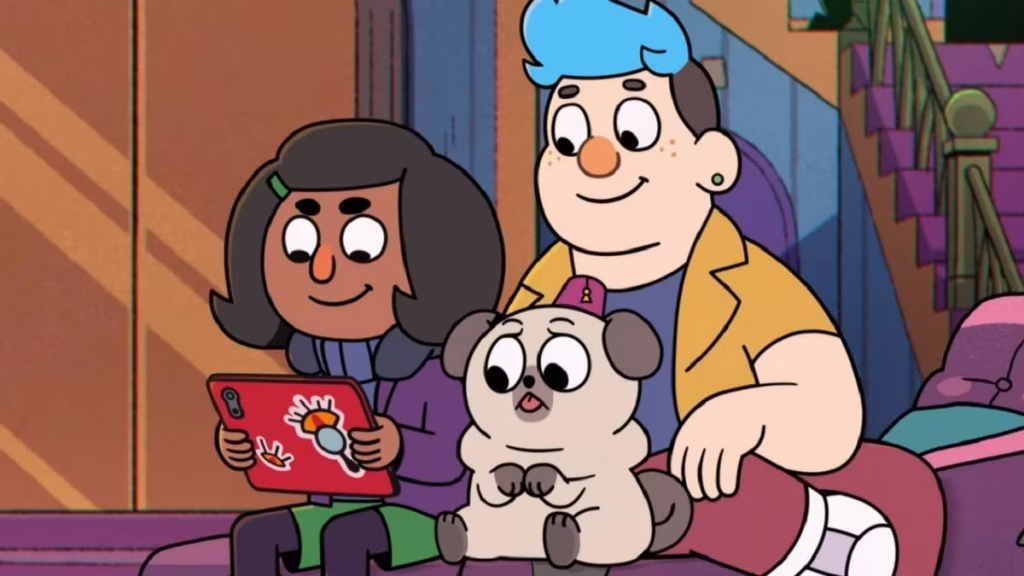
Image Source: Bing Image. License: All Creative Commons

Barney’s trans, gay, and Jewish identity is explicitly stated and not hinted at. The series takes representation for granted and focuses on letting characters like Norma and Badyah simply be. Dead End is special because it allows marginalized kids to be heroes in a world that is strange, scary, and magical, just like life.
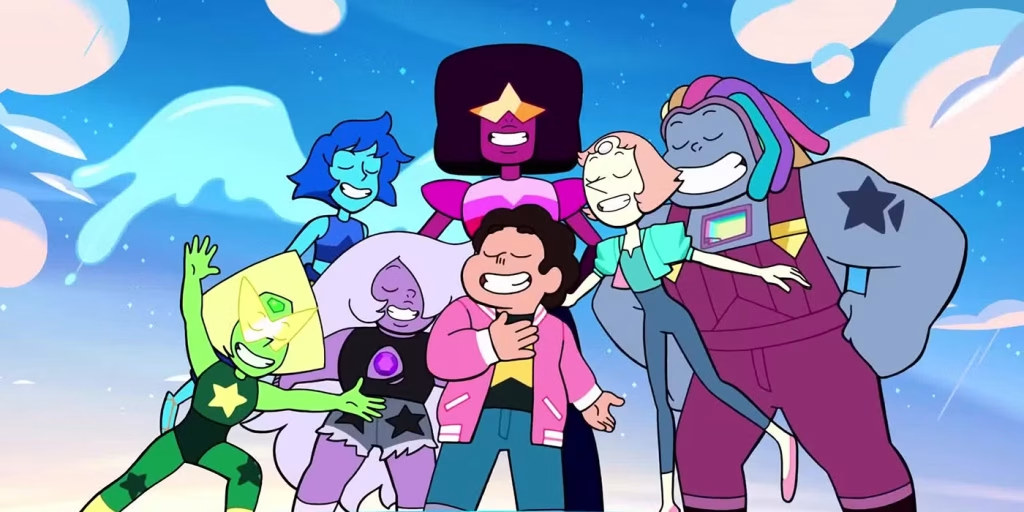
Image Source: Bing Image. License: All Creative Commons

14. Steven Universe

Steven Universe brought a new face to children’s animation with its storytelling complexity and deep inclusivity. The show explores the world of Steven and the Crystal Gems in a way that examines love, identity, trauma, and healing that goes far beyond the colorful surface level.

Image Source: Bing Image. License: All Creative Commons


The LGBTQ+ aspects of the show are seamlessly woven throughout the narrative, from same-gender relationships to non-traditional family structures. Steven Universe not only shattered barriers but obliterated them, proving that animation for all ages could be deeply queer and extremely influential.
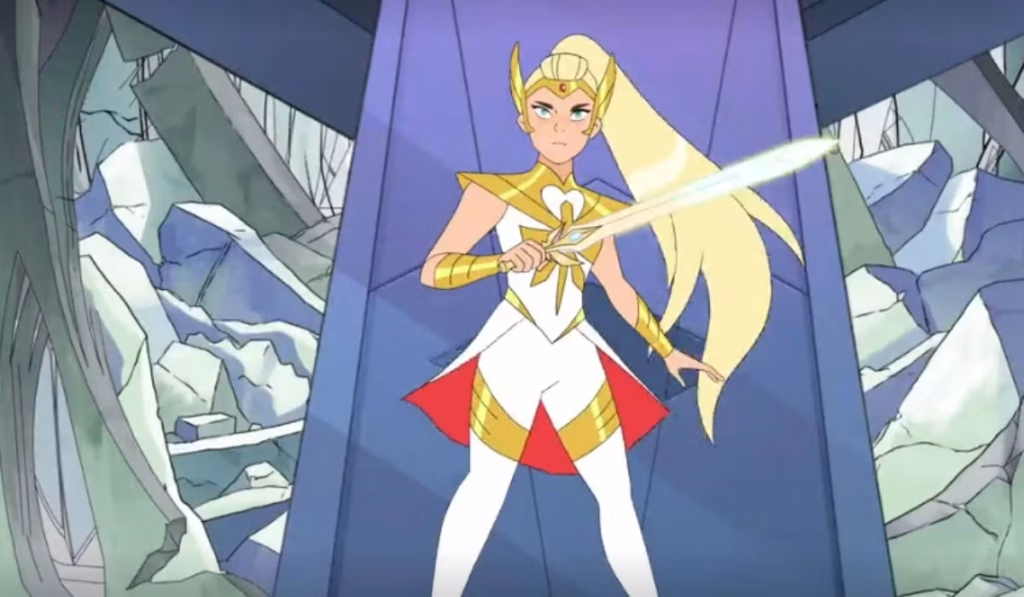
Image Source: Bing Image. License: All Creative Commons

13. She-Ra and the Princesses of Power

She-Ra and the Princesses of Power is a reinvention of a classic franchise with a modern and inclusive twist. At its heart is Adora’s transformation from a soldier to a heroine, with a supporting cast of princesses and warriors who are fighting against oppression.
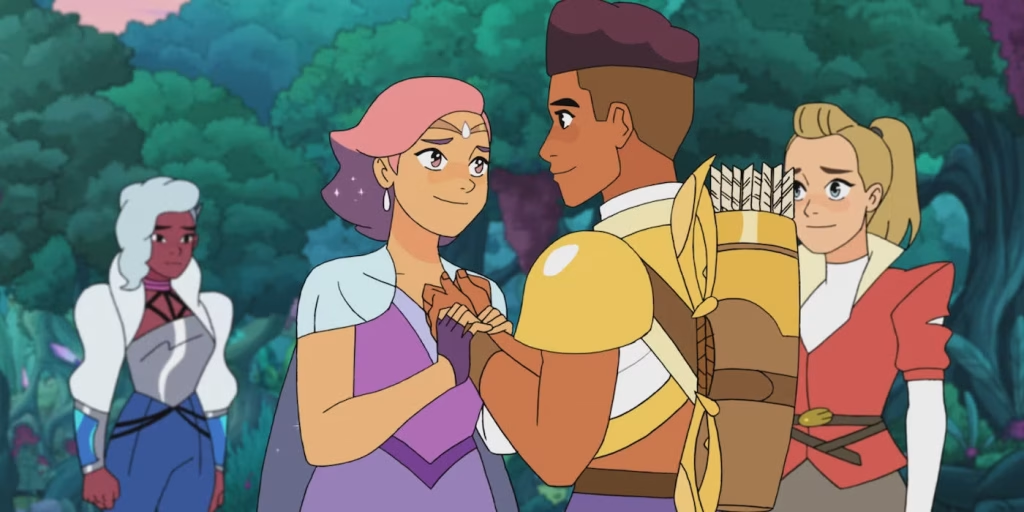
Image Source: Bing Image. License: All Creative Commons

The series’ dedication to diversity is unparalleled, with queer couples, non-binary characters, and a broad spectrum of body types and identities. Its emotional resonance and character-driven narrative made She-Ra a groundbreaking series for LGBTQ+ animation.

Image Source: Bing Image. License: All Creative Commons

12. This Monster Wants to Eat Me

This Monster Wants to Eat Me is a Girls Love horror series that defies conventions. The series revolves around Hinako, a girl with depression, and Shiori, a mermaid monster who insists that she will devour her someday.

Image Source: Bing Image. License: All Creative Commons

At its core is a narrative about survival, connection, and finding reasons to live. Its queer undertones are impossible to ignore, and its willingness to delve into dark emotions makes it a refreshing entry in a genre that is often risk-averse.

Image Source: Bing Image. License: All Creative Commons

11. Sasaki and Miyano

Sasaki and Miyano is a sweet Boys Love series that focuses on emotional truth rather than plot development. A friendship based on shared interests blossoms into something more as the series progresses.

Image Source: Bing Image. License: All Creative Commons

The series’s sweetness is what makes it so effective, conveying the awkwardness and thrill of developing feelings for someone else. Its success has shown that BL anime doesn’t necessarily need to be dramatic to be interesting; it just needs to be true.

Image Source: Bing Image. License: All Creative Commons

10. Bloom Into You

Bloom Into You is a contemplative exploration of queer identity and emotional ambiguity. Yuu’s confusion about her feelings for Touko is the emotional foundation of the series.

Image Source: Bing Image. License: All Creative Commons

Instead of focusing on romance, the series takes its time exploring identity, desire, and vulnerability. Its deliberate pacing and emotional authenticity have made it one of the most popular Girls Love anime of all time.

Image Source: Bing Image. License: All Creative Commons

9. Moyashimon

Moyashimon might be an unexpected inclusion, but its portrayal of a transgender character was a subtle landmark in its own right. This show combines humor with science and character development in a way that is both entertaining and educational, as it takes place at an agricultural university.

Image Source: Bing Image. License: All Creative Commons

Kei’s trans status is handled with care and sensitivity, particularly in the context of when the anime was released. It’s a good reminder that positive representation doesn’t have to be loud to be effective.

Image Source: Bing Image. License: All Creative Commons

8. Revolutionary Girl Utena

Revolutionary Girl Utena is a complex, layered, and endlessly fascinating show that is well worth the analysis it receives. It takes apart and rebuilds the concepts of gender, power, and control in a way that is both beautiful and disturbing, using surreal duels and fairy tale imagery.

Image Source: Bing Image. License: All Creative Commons

At its core is the relationship between Utena and Anthy, which subverts every traditional concept of rescue and romance. Utena’s impact on the representation of queerness in anime cannot be overstated.

Image Source: Bing Image. License: All Creative Commons

7. Flip Flappers

Flip Flappers is a visually explosive anime that is emotion-driven rather than logic-driven. The relationship between Cocona and Papika propels the story, which demands emotional resonance that can sometimes be interpreted as extremely intimate.

Image Source: Bing Image. License: All Creative Commons

Although the anime series never comes out and says who its characters are, the themes of acceptance, fluid identity, and unconditional love are extremely queer-friendly. Flip Flappers is a series that operates in the gray areas and finds strength in them.

Image Source: Bing Image. License: All Creative Commons

6. Given (and the Given Movies)

Given pushed the boundaries of the Boys Love genre with its gritty depiction of grief, love, and emotional healing. The anime series revolves around music and the way relationships develop in the wake of grief.

Image Source: Bing Image. License: All Creative Commons

The movie sequels delve deeper into the side characters, providing complex portrayals of queer relationships at different points in their development. Given is a very heavy anime series, but it is also an extremely validating one, proving that queer stories can be painful and healing at the same time.

Image Source: Bing Image. License: All Creative Commons

5. Princess Jellyfish

Princess Jellyfish is a touching tale of outsiders coming together. The series centers around a group of socially awkward women whose lives are turned upside down by Kuranosuke, a confident and flamboyant cross-dresser.

Image Source: Bing Image. License: All Creative Commons

The series pushes back against beauty standards, gender roles, and women’s expectations. The series’s humor and charm have allowed it to remain a queer-friendly favorite years after its initial release.

Image Source: Bing Image. License: All Creative Commons

4. Tiger & Bunny

Tiger & Bunny offers a superhero setting that is fueled by capitalism and media. One of the most interesting characters in the series is Fire Emblem, a flamboyant and openly trans superhero who subverts initial expectations.
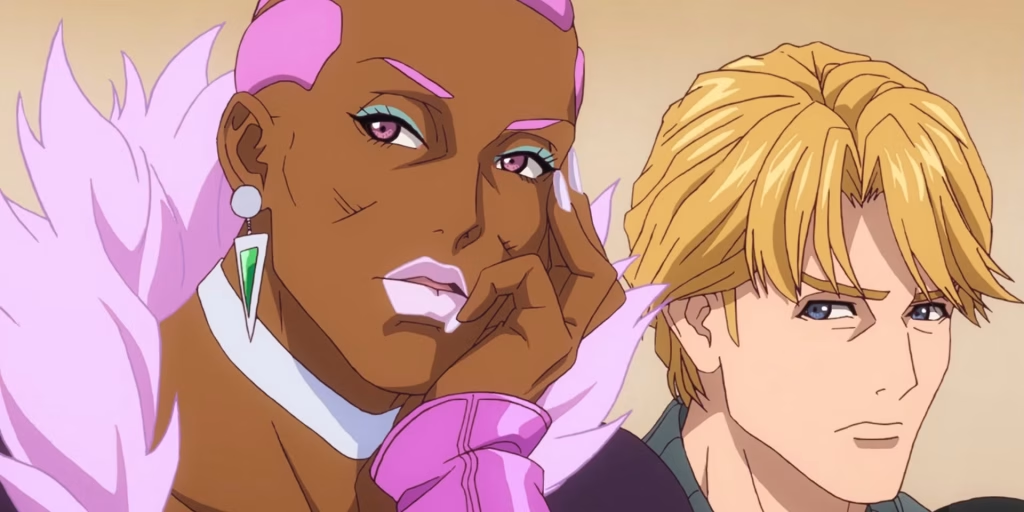
Image Source: Bing Image. License: All Creative Commons

As the series develops, Fire Emblem is given depth and respect, making it one of the most positive trans characters in anime. Tiger & Bunny shows that representation can grow and change over time.

Image Source: Bing Image. License: All Creative Commons

3. Dear Brother

Dear Brother is a highly emotional shojo anime series that deals with jealousy, obsession, and same-gender love straightforwardly. The series is set in an elite girls’ school and deals with relationships that are complicated, painful, and very human.

Image Source: Bing Image. License: All Creative Commons

Dear Brother is one of the few yuri-adjacent anime series that does not idealize suffering. The series’s honesty and emotional impact make it one of the boldest and most adult queer anime of its time.
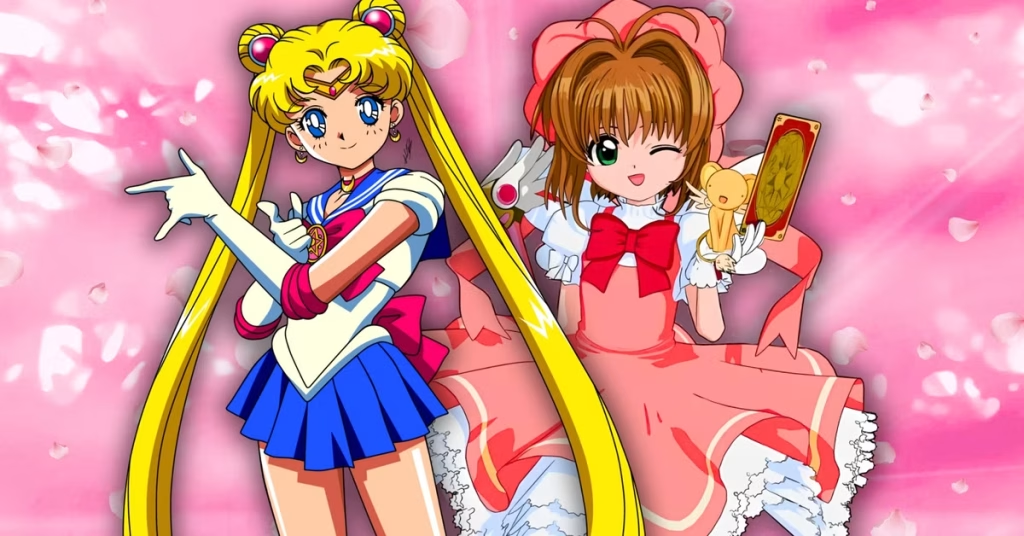
Image Source: Bing Image. License: All Creative Commons

2. Sailor Moon & Cardcaptor Sakura

Sailor Moon and Cardcaptor Sakura paved the way for LGBTQ+ representation in mainstream anime. Characters such as Sailor Uranus and Sailor Neptune brought same-gender love to children at a time when it was a rare occurrence in anime and other media.
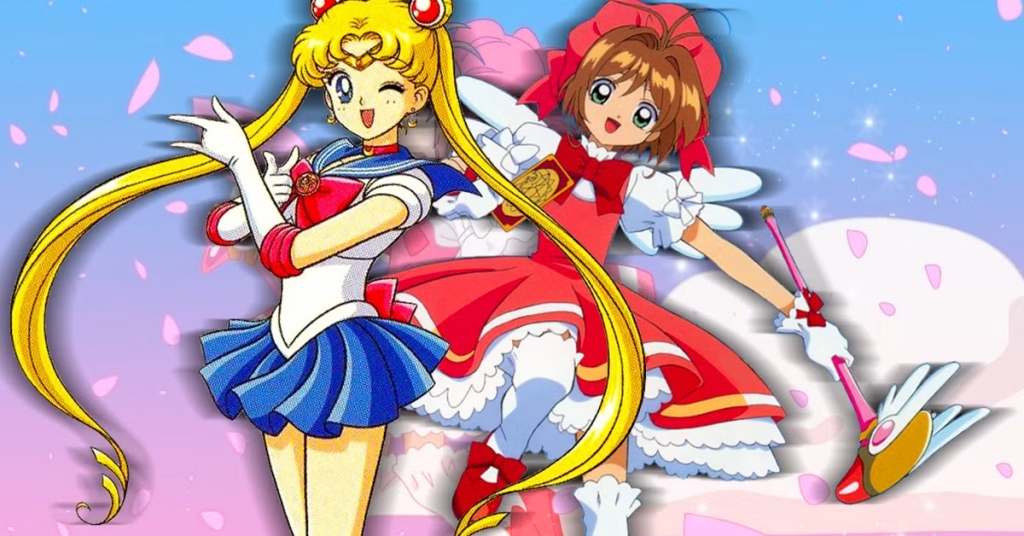
Image Source: Bing Image. License: All Creative Commons

Although often censored abroad, their influence cannot be overstated. These shows showed that queer characters could be included in magical worlds intended for children, and that these stories were important.

Image Source: Bing Image. License: All Creative Commons

1. Queer-Coded Icons in Anime

Motoko Kusanagi and Hange Zoë are characters who occupy the realm between text and subtext. Although they have never been explicitly queer, their disregard for gender and their expected roles has been a huge appeal to the queer community.
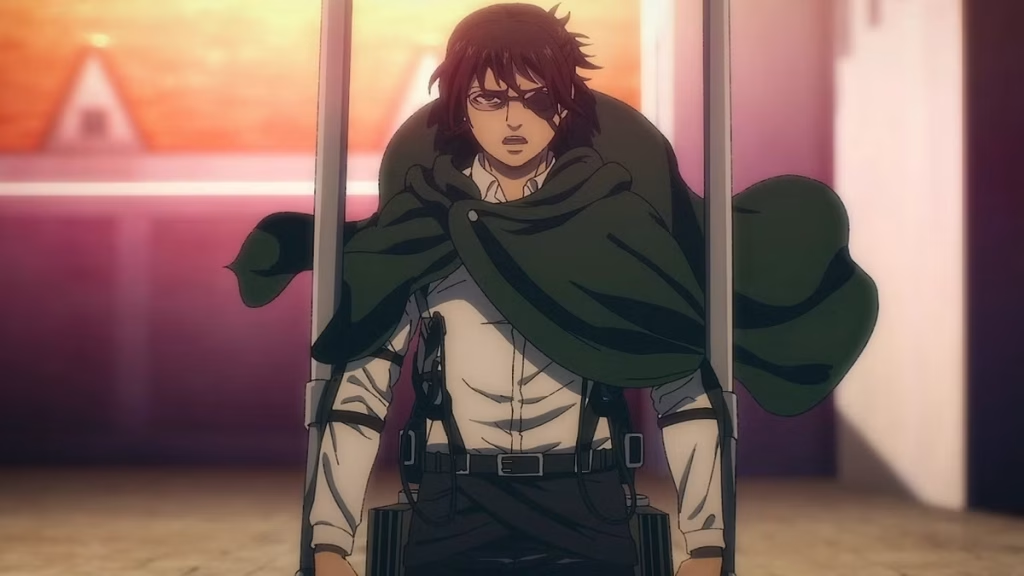
Image Source: Bing Image. License: All Creative Commons

Queer coding can be a complex issue, but it has been instrumental in providing representation for fans when it was least expected. These characters serve as a reminder that the queer presence in anime has always been there, even when it had to be hidden in plain sight.

Image Source: Bing Image. License: All Creative Commons

The representation of the LGBTQ+ community in anime and animation is not just about representation; it is about authenticity, empowerment, and emotional resonance. These shows are a testament to the fact that queer stories can be hilarious, terrifying, touching, and life-changing. As the medium continues to grow and evolve, these shows are a milestone on the journey, a reminder that everyone should be able to see themselves as the hero of the story.

15 Peaceful Iyashikei Series for Ultimate Relaxation

0
Image Source: Bing Image. License: All Creative Commons

Iyashikei anime are designed to heal. Rather than relying on high drama or intense conflict, they invite viewers into gentle worlds filled with quiet moments, unhurried pacing, and characters who discover beauty in life’s smallest details. These series offer space to breathe, reflect, and feel a sense of calm understanding. Whether centered on creativity, nature, food, or personal growth, the shows below provide comfort and solace when life feels overwhelming. Here are some of the best iyashikei anime that deliver genuine peace and emotional warmth.

Image Source: Bing Image. License: All Creative Commons

15. Do It Yourself!!

Do It Yourself!! is a light-hearted slice-of-life anime that centers around a group of high school girls who learn to appreciate the process of making things together. The anime is not about making things perfect but about embracing trial and error, curiosity, and the joy of learning through doing. The overriding message of the anime is simple: it is okay to be messy if you are trying.

Image Source: Bing Image. License: All Creative Commons

Serufu, the lovable but clumsy heroine, is the personification of this message. The soft visuals and pastel colors of the anime are also a big part of this, making each episode feel like a fun afternoon project with friends.

Image Source: Bing Image. License: All Creative Commons

14. Poco’s Udon World

Poco’s Udon World centers on Souta, a grown man who finds himself back in his peaceful hometown due to his father’s passing. It is in this setting that he meets Poco, an enigmatic kid with a strong tie to the family udon business. His connection with Poco eventually develops into something akin to a family tie.

Image Source: Bing Image. License: All Creative Commons

The anime is a subtle reflection of the pain of loss, the duty to move forward, and the struggle between the past and the future. The series reminds the audience that the process of healing is not always a dramatic one but can be achieved through care and companionship.

Image Source: Bing Image. License: All Creative Commons

13. Barakamon

Barakamon revolves around the story of Seishu Handa, a skilled but temperamental calligrapher who is banished to a rural island as a result of a public tantrum. He is then exposed to the open spaces and free-spirited people of the island, who cause him to reassess his attitude towards his art.

Image Source: Bing Image. License: All Creative Commons

The people of the island, particularly the lively Naru, help to break down Seishu’s shell. Barakamon depicts how community, nature, and human interaction can bring about creativity and growth.

Image Source: Bing Image. License: All Creative Commons

12. Non Non Biyori

Non Non Biyori is a show that lets you experience the tranquility of the countryside, where school life unfolds at its own pace. With very few students in each grade, the show is all about small moments rather than dramatic ones.

Image Source: Bing Image. License: All Creative Commons

The beauty of Non Non Biyori lies in its small details, such as the walk home from school, the change of seasons, and the conversations. The show is like a warm memory that you didn’t know you were missing.

Image Source: Bing Image. License: All Creative Commons

11. Flying Witch

Flying Witch combines the mundane with the supernatural in the most soothing manner. Makoto, a young witch in training, relocates to the countryside to further her education while living a relatively normal life with non-magical relatives.

Image Source: Bing Image. License: All Creative Commons

The magic in this series is subtle and soothing, seamlessly integrated into everyday life. With its slow-burning tempo, gentle animation, and subtle humor, Flying Witch is like taking a leisurely walk through a world where magic is quietly lurking in the background.

Image Source: Bing Image. License: All Creative Commons

10. Let’s Make a Mug, Too

Let’s Make a Mug, Too follows the journey of Himeno, a girl who finds her mother’s hidden legacy in the world of ceramics. After relocating to her mother’s hometown, she embarks on a journey to learn about ceramics and what it means to be creative for herself.

Image Source: Bing Image. License: All Creative Commons

The series approaches art-making as a means of emotional expression and self-discovery. By depicting the process of friendship and learning by doing, it shows how art-making can be a way for people to work through grief and find a sense of belonging.

Image Source: Bing Image. License: All Creative Commons

9. Wakakozake

Wakakozake is a brief anime series that revolves around the simple pleasure of enjoying good food. Wakako is an office lady who spends her nights trying out different restaurants and enjoying food that is accompanied by the right drink.

Image Source: Bing Image. License: All Creative Commons

Each episode is like a moment of quiet contemplation in the middle of a busy day. This series promotes mindfulness, self-love, and the joy of appreciating the small things in life, which makes it the perfect comfort watch for those who want something soothing.

Image Source: Bing Image. License: All Creative Commons

8. Natsume’s Book of Friends

Natsume’s Book of Friends is a series about a boy who has the ability to see spirits and inherits a book that holds the names of the spirits. Instead of using his gift for leverage, Natsume decides to use it for kindness and helps the spirits find peace by returning their names to the book.

Image Source: Bing Image. License: All Creative Commons

The series is a great example of how supernatural themes can be combined with very human emotions. Exploring loneliness, kindness, and acceptance, it provides a reminder that sometimes empathy can be a healing experience for ourselves and others.

Image Source: Bing Image. License: All Creative Commons

7. MUSHI-SHI

MUSHI-SHI is a highly beautiful series that revolves around Ginkgo, a traveling researcher of mushi, or mysterious life forms. Every episode is a self-contained story that features folklore and philosophical ideas.

Image Source: Bing Image. License: All Creative Commons

The series features a muted color palette, sound, and tempo that make it a meditative series. MUSHI-SHI is not a series that provides easy solutions but promotes the acceptance of nature’s balance and the uncertainties of life.

Image Source: Bing Image. License: All Creative Commons

6. March Comes in Like a Lion

March Comes in Like a Lion is a series that delves into the mind of Rei Kiriyama, a young shogi master struggling with depression and loneliness. The series depicts the struggles of mental health issues with honesty and care.

Image Source: Bing Image. License: All Creative Commons

The redeeming factor for the series is the warmth of human relationships, especially between Rei and the Kawamoto sisters. The series provides hope without providing a quick fix, making it an extremely comforting and realistic series.

Image Source: Bing Image. License: All Creative Commons

5. Frieren: Beyond Journey’s End

Frieren: Beyond Journey’s End occurs after the adventure has ended. As an elf, Frieren has a long lifespan. This means she must learn to deal with the loss of her human friends and the feelings she has previously decided to suppress. 

Image Source: Bing Image. License: All Creative Commons

This series is a very quiet, thoughtful, and deeply moving series. It explores grief, time, and the meaning of connection through memories and new adventures, offering a gentle yet profound emotional experience. 

Image Source: Bing Image. License: All Creative Commons

4. Skip and Loafer

Skip and Loafer is based on Mitsumi, a girl from a small town who has to adjust to the city and school in Tokyo. Mitsumi’s real character and awkwardness make her extremely relatable and lovable.

Image Source: Bing Image. License: All Creative Commons

The series is based on coming of age, friendship, and self-doubt. The positivity in this series is extremely real and not imposed, making it a very therapeutic watch for anyone who has ever had to adjust to change or new surroundings.

Image Source: Bing Image. License: All Creative Commons

3. ARIA The ANIMATION

ARIA The ANIMATION takes place in Neo Venezia, a stunningly realized vision of Venice. The series follows Akari and her gondolier friends as they discover the city while learning to appreciate its history and inhabitants.

Image Source: Bing Image. License: All Creative Commons

The series exudes tranquility, with soothing storytelling and stunning scenery. It promotes mindfulness, appreciation, and awe, solidifying its place as one of the purest forms of iyashikei anime.

Image Source: Bing Image. License: All Creative Commons

2. Laid-Back Camp

Laid-Back Camp distills the happiness of getting away with friends into nature. Focusing on camping trips, meals, and quiet talk, the series is an ode to slowing down.

Image Source: Bing Image. License: All Creative Commons

The calming soundtrack and beautiful scenery ensure that each episode is a mini-vacation in itself. Even those who don’t camp will find themselves relaxed by its welcoming atmosphere.

Image Source: Bing Image. License: All Creative Commons

1. Haibane Renmei

Haibane Renmei is a very introspective series that takes place in a mysterious town where winged creatures live. The series follows Rakka on her emotional journey as she tries to come to terms with her guilt, rebirth, and acceptance of herself.

Image Source: Bing Image. License: All Creative Commons

The series’s somber art style and symbolism will leave you in a reflective state of mind long after the series has ended. Haibane Renmei is one of the most healing anime series that has ever been created, and it heals through understanding.

Image Source: Bing Image. License: All Creative Commons

The Iyashikei anime series teaches us that healing is not always about making big gestures. Sometimes, healing happens through sharing meals, having gentle conversations, expressing creativity, and taking moments of quiet. These anime series are a haven where you can rest your mind and find yourself again. They are always softly waiting in a world that can sometimes be too loud.

The 15 Darkest Anime Antagonists, Ranked by Evilness

0
Image Source: Bing Image. License: All Creative Commons

Anime villains come in many forms, from master manipulators and tragic fallen heroes to unrepentant monsters who thrive on the suffering of others. But true evil isn’t defined solely by body count or raw power. It lies in intention, cruelty, and the lasting scars a character leaves on both the story and the audience. The villains on this list stand apart not just for their actions, but for how deeply they unsettle us, shatter lives, and linger in our thoughts long after the screen fades to black. Here are the most evil anime villains of all time, ranked.

Image Source: Bing Image. License: All Creative Commons

15. Makishima Shogo (Psycho-Pass)

Makishima Shogo is frightening not because he is loud or physically violent but because of the calm way he welcomes chaos. He is intrigued by the darker side of humanity and views society as an experiment rather than a cause to be defended. With his polished manners and intellectual demeanor, Makishima is more of a philosopher than a criminal, one who thinks that morality itself is flawed.

Image Source: Bing Image. License: All Creative Commons

Makishima does not personally commit every atrocity but instead uses others to do his bidding, watching as society breaks down under pressure. His deeds, such as encouraging people to commit mass violence, are meant to reveal the weaknesses of the Sibyl System. It is the way in which Makishima presents his philosophy that is frightening, as he forces the characters and the audience to think about justice, freedom, and responsibility.

Image Source: Bing Image. License: All Creative Commons

14. Hisoka Morow (Hunter x Hunter) 

Hisoka Morow is the embodiment of chaos in its purest form. He does not have any grandiose plan for the world or any tragic past that fuels his cruelty; he is simply a man who lives for the thrill of the moment and the rush of battle. His light-hearted nature and clown-like appearance conceal a very sadistic personality that views battle and death as entertainment.

Image Source: Bing Image. License: All Creative Commons

Hisoka’s fixation on potential causes him to toy with and mentally torture others, urging them to become stronger solely for the purpose of having them kill later on when he can truly appreciate the experience. His lack of loyalty to anyone or anything makes him a very unpredictable character, and whether he is a friend or a foe is solely based on what will give him the most entertainment at the time.

Image Source: Bing Image. License: All Creative Commons

13. Char Aznable (Mobile Suit Gundam)

Char Aznable is one of the most intriguing and complex villains in anime. Driven by a hatred of the Zabi family for wiping out his bloodline, Char uses various aliases and operates in the background to change the course of history. His intellect and fighting prowess make him a formidable force.

Image Source: Bing Image. License: All Creative Commons

Char transcends the typical villain because of the way his personal grudge escalates into ideological fanaticism. He is not afraid to kill countless innocent people to push the human race to the next level of evolution. While not strictly evil, his willingness to burn the world to the ground for his ideals makes him one of the darkest characters in anime.

Image Source: Bing Image. License: All Creative Commons

12. Ryo Asuka / Satan (Devilman Crybaby)

Ryo Asuka starts as a trusted ally, playing the role of Akira’s protector while nudging him towards becoming Devilman. However, this smooth exterior hides Satan himself, who is working towards the destruction of humanity through manipulation, fear, and misinformation. Ryo’s deeds trigger paranoia and cause humans to turn against each other.

Image Source: Bing Image. License: All Creative Commons

His final betrayal, which allows the world to descend into destruction, turns the whole narrative into a tragedy of love, loss, and cruel fate. Ryo’s villainy is not only destructive but also existential, as it poses disturbing questions about free will, empathy, and whether humanity was ever destined to survive.

Image Source: Bing Image. License: All Creative Commons

11. All For One (My Hero Academia)

All For One is the representation of corruption in a society founded on heroism. He has the power of quirk stealing and sharing, and he uses this power to treat people like objects to be gathered and disposed of as he wishes. He works slowly, building society in the background and placing himself beyond reach.

Image Source: Bing Image. License: All Creative Commons

His reach goes beyond his deeds through the nurturing of Shigaraki and the destruction of Hero Society, piece by piece; he corrupts the future itself. All For One is not about justice or change; it is about control. The evil in All For One is in his complete removal of agency from others for his own purposes.

Image Source: Bing Image. License: All Creative Commons

10. Junko Enoshima (Danganronpa)

Junko Enoshima is a character who feeds on despair, believing it to be the most genuine form of human emotion. Her killing games are not only a way for her to entertain herself but also to witness the destruction of hope firsthand. Her beauty and intellect make her a master manipulator.

Image Source: Bing Image. License: All Creative Commons

It is the personal nature of Junko’s cruelty that makes her stand out. She will betray friends, kill loved ones, and cause emotional pain with calculated precision. To Junko, pain is not a tool to achieve an end but the end itself, making her one of the saddest villains in anime history.

Image Source: Bing Image. License: All Creative Commons

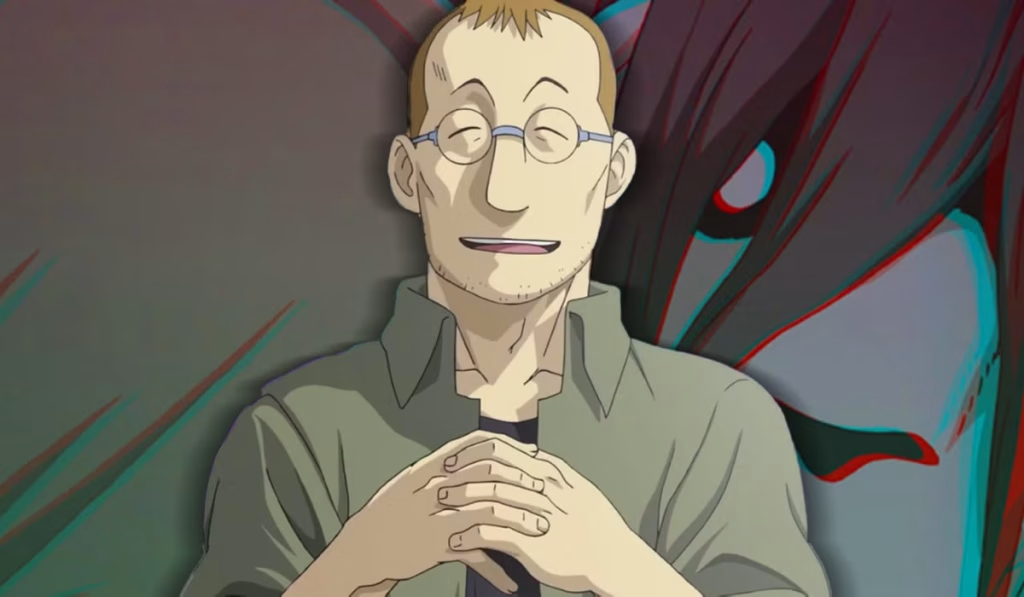
9. Shou Tucker (Fullmetal Alchemist: Brotherhood)

Shou Tucker’s evil is chilling because it is so believable. Unlike dictators or warlords, Tucker is an everyman who allows his ambition and terror drive him to do things that are simply unacceptable. He cloaks his cruelty in the guise of intellectualism and necessity.

Image Source: Bing Image. License: All Creative Commons

The transmutation of his daughter, Nina, and his dog into a chimera is one of the most chilling moments in anime history. Tucker’s matter-of-fact statement that sometimes sacrifices must be made in the name of progress is all too familiar in real-life instances of scientific or moral atrocities.

Image Source: Bing Image. License: All Creative Commons

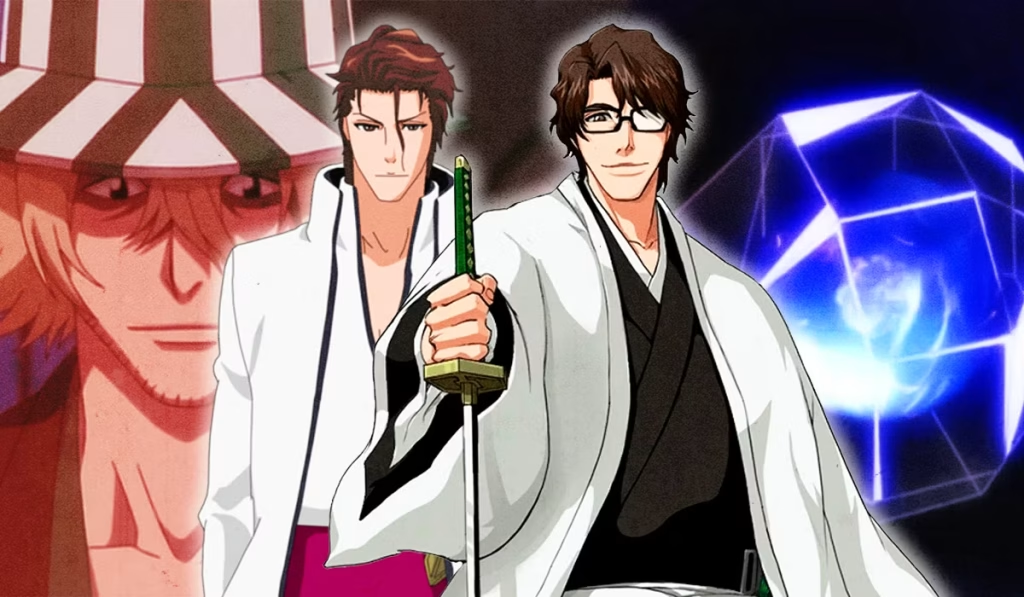
8. Sosuke Aizen (Bleach)

Sosuke Aizen is a master manipulator who spends years earning trust before shattering it. His gentle demeanor and composed leadership hide an overwhelming ambition to transcend the limits of gods themselves. When his true nature is revealed, it reshapes everything the audience thought they knew.

Image Source: Bing Image. License: All Creative Commons

With the power of complete hypnosis, Aizen controls perception itself, turning allies into pawns and enemies into fools. His calm arrogance and near-invincibility make him terrifying, not just for his power, but for how effortlessly he dismantles loyalty, order, and hope.

Image Source: Bing Image. License: All Creative Commons

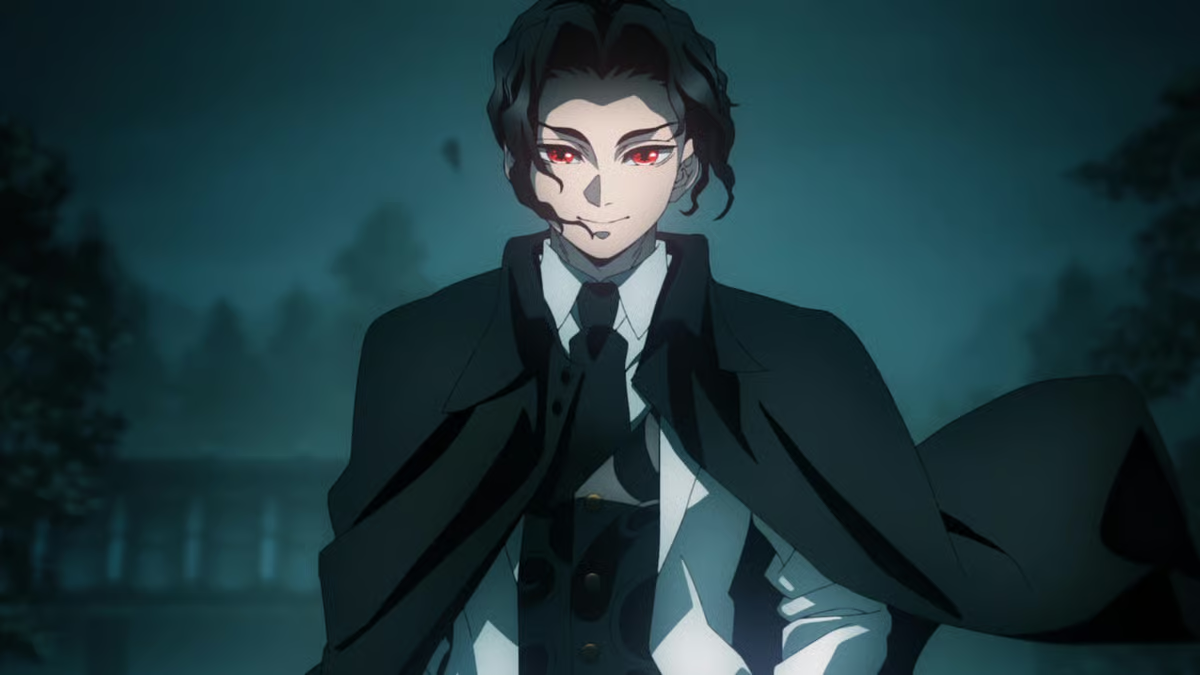
7. Muzan Kibutsuji (Demon Slayer)

Muzan Kibutsuji is the embodiment of fear, the source of all demons, and a figure who inspires fear even among his own followers. His immortality and ability to change his body make him impossible to fight, and he has been ruling from the shadows for centuries.

Image Source: Bing Image. License: All Creative Commons

The reason why Muzan is so cruel is that he has no sense of loyalty. He gets rid of his subordinates, punishes them, and kills them without any second thoughts. His presence is toxic to the world around him, and his legacy is defined by pain, fear, and loss.

Image Source: Bing Image. License: All Creative Commons

6. Madara Uchiha (Naruto)

Madara Uchiha was born in a world that knows only war. His early losses hardened his belief that true peace can’t exist without control, leading him to pursue the Eye of the Moon Plan. In his mind, illusion is kinder than reality.

Image Source: Bing Image. License: All Creative Commons

Madara’s tragedy lies in how his noble desire for peace becomes twisted into tyranny. He manipulates nations, resurrects ancient powers, and sacrifices countless lives. Though his intentions are rooted in pain, his actions prove that enforced peace is just another form of violence.

Image Source: Bing Image. License: All Creative Commons

5. Light Yagami (Death Note)

Light Yagami starts as a genius high school student fed up with crime, but the moment he gains limitless power, he becomes consumed by it. With the Death Note in his possession, he decides to become judge, jury, and executioner, as he believes only he has the right to control the world.

Image Source: Bing Image. License: All Creative Commons

As Light spirals out of control, he uses everyone from friends to family to enemies to further his own agenda, leaving a path of dead bodies in his wake. His character arc from idealist to dictator is both fascinating and chilling, as it challenges the viewer to distinguish between justice and evil.

Image Source: Bing Image. License: All Creative Commons

4. Johan Liebert (Monster)

Johan Liebert is frightening because he doesn’t require any kind of supernatural ability to ruin people’s lives. His intelligence, charisma, and emotional depth make it easy for him to manipulate others into committing heinous acts on his behalf. Sometimes, he doesn’t even have to do anything himself.

Image Source: Bing Image. License: All Creative Commons

Influenced by the kind of traumatic childhood experiences that could easily make him a monster, Johan is the epitome of psychological horror in its most believable form. He symbolizes the fact that sometimes, evil doesn’t have to declare itself; it can smile, blend in, and destroy everything around it.

Image Source: Bing Image. License: All Creative Commons

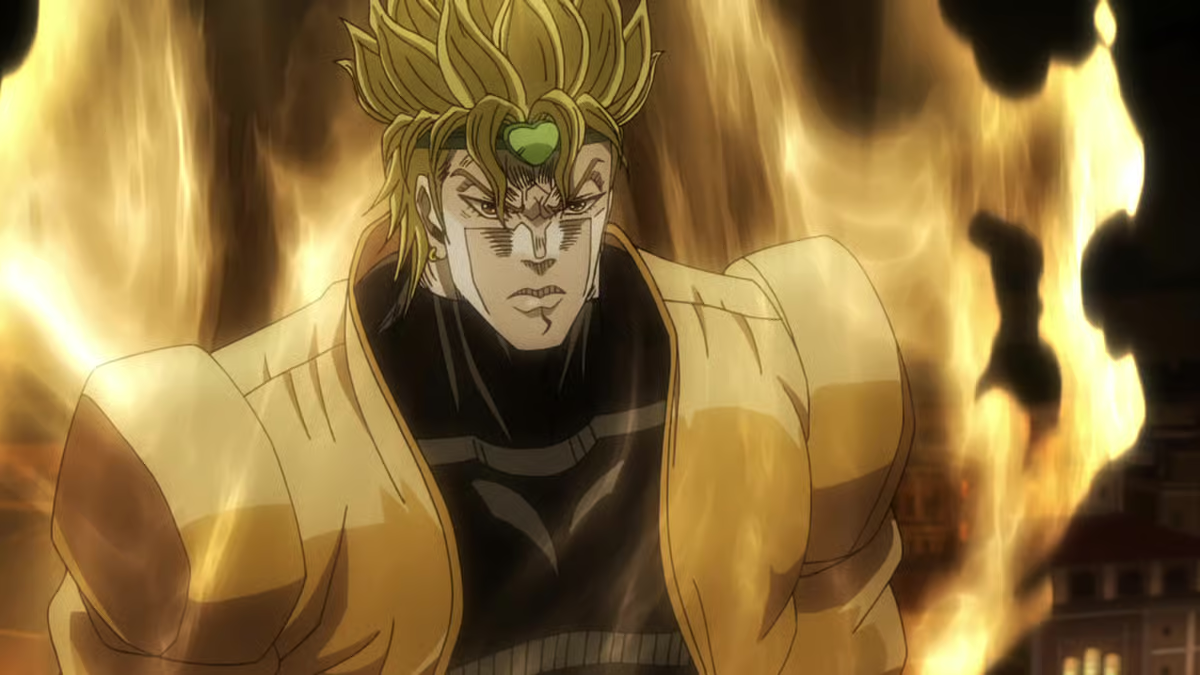
3. Dio Brando (JoJo’s Bizarre Adventure)

Dio Brando is a character with villainous qualities of ego and cruelty from the very beginning. He asserts his superiority through humiliation, betrayal, and violence, even before he attains any supernatural abilities. His metamorphosis into a vampire only adds to what he already possesses.

Image Source: Bing Image. License: All Creative Commons

The influence of Dio Brando is seen across generations, haunting the Joestar family with his charisma and overbearing power. His flamboyant personality and complete lack of empathy make him a character that is impossible to forget, cementing his position as one of the greatest anime villains of all time.

Image Source: Bing Image. License: All Creative Commons

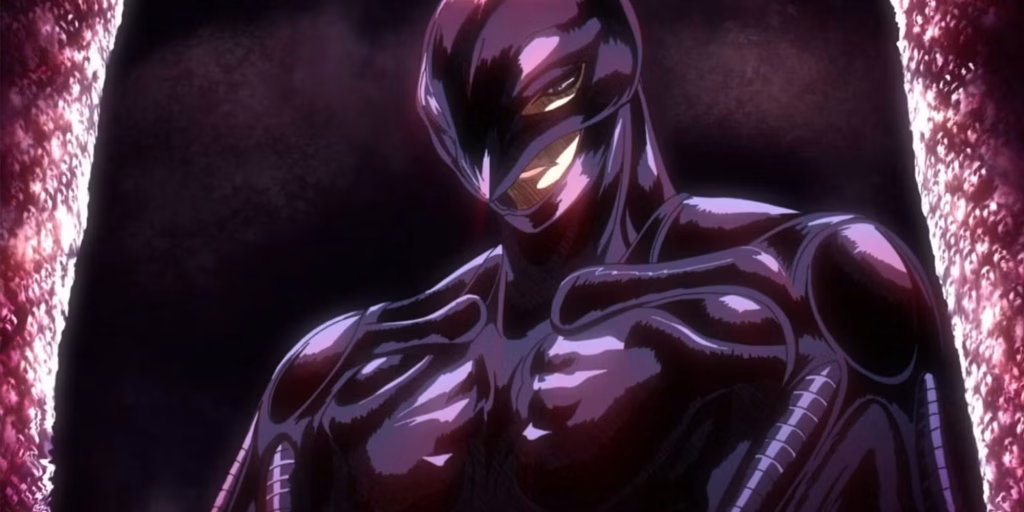
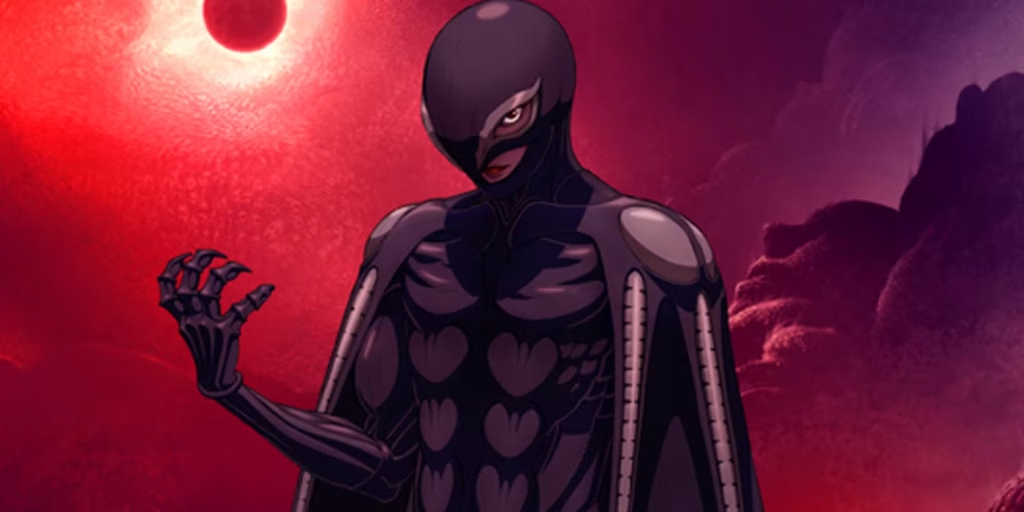
2. Griffith / Femto (Berserk)

Griffith’s transformation from hero to villain is one of the most heartbreaking in anime history. He was once a well-liked leader and idealist, but his ambition got the better of him, culminating in the most tragic betrayal of all in the Eclipse event.

Image Source: Bing Image. License: All Creative Commons

In sacrificing his most loyal friends in order to become a god, Griffith performs an act of cruelty that changes the entire series. His deliberate choice to give up love and friendship in favor of power is a wound that never heals, making his villainy personal and unforgettable.

Image Source: Bing Image. License: All Creative Commons

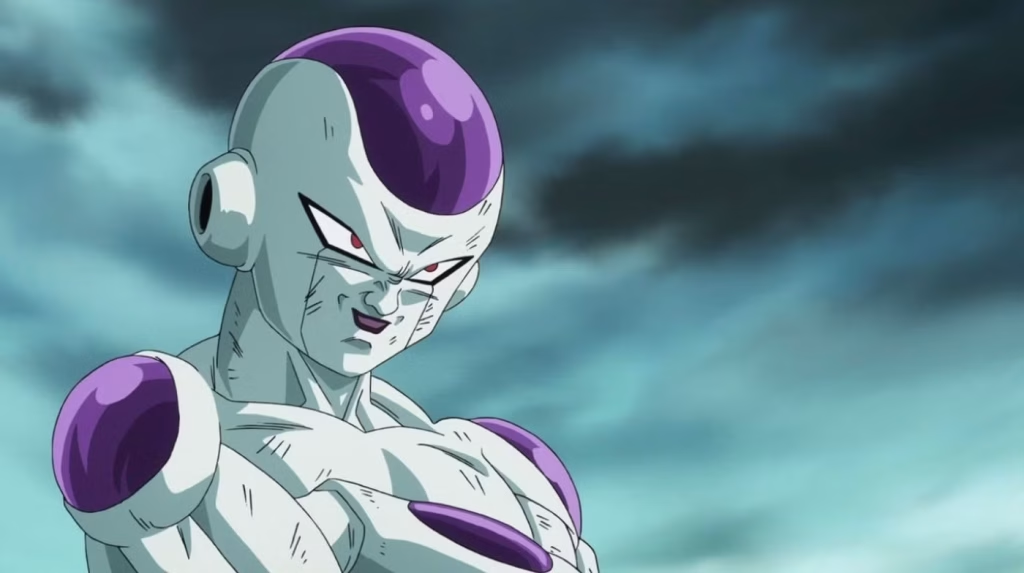
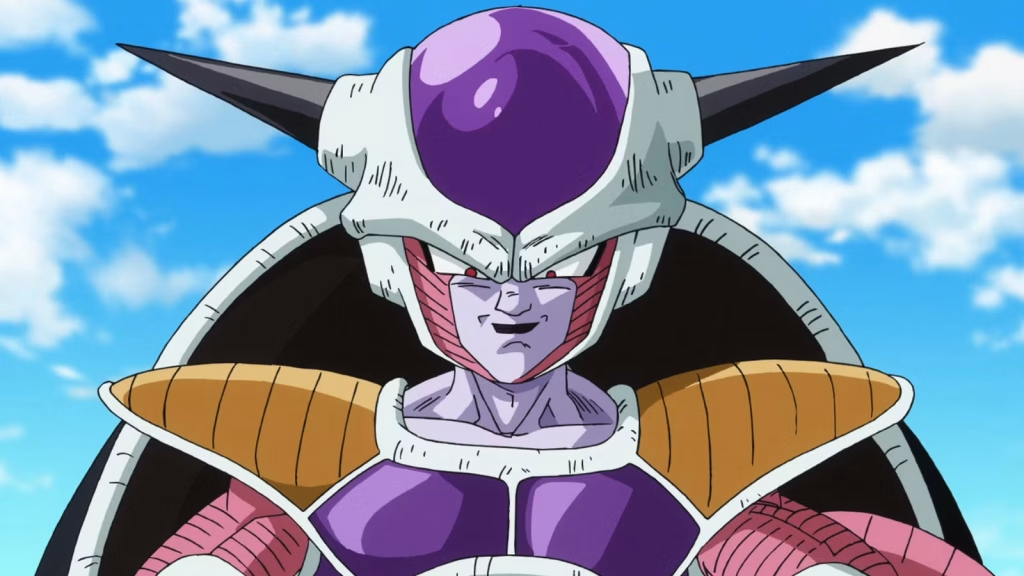
1. Frieza (Dragon Ball Z)

Frieza is the definition of merciless power. As a galactic tyrant, he conquers, enslaves, and exterminates entire races without hesitation. The destruction of Planet Vegeta alone secures his place among anime’s most ruthless villains.

Image Source: Bing Image. License: All Creative Commons

What makes Frieza especially chilling is his enjoyment of suffering. His polite tone contrasts sharply with his sadism, making every act of cruelty feel deliberate and cruelly playful. Decades later, Frieza remains the benchmark by which anime villains are judged.

Image Source: Bing Image. License: All Creative Commons

Anime villains endure because they reflect humanity’s darkest impulses: greed, obsession, despair, and the hunger for control. Whether driven by ideology, trauma, or sheer cruelty, the villains on this list leave lasting marks on their worlds and on us as viewers. They challenge heroes, break societies, and force difficult moral questions that linger long after the story ends. And that’s exactly why we can’t stop talking about them.

15 Misjudged Movies: Cult Classics and Oscar Overreactions

0
Image Source: Bing Image. License: All Creative Commons

Film criticism can be a tricky business. Sometimes reviewers and audiences see eye to eye, while other times they’re worlds apart. Over the years, numerous films have been dismissed at the box office or trashed by critics, only to find devoted fanbases and enduring cultural impact later. Conversely, some movies that were showered with accolades and praise have gradually fallen out of favor. From overlooked cult classics to overhyped Oscar winners, here are 15 films where critical opinion didn’t tell the whole story, and how time reshaped their reputations.

Image Source: Bing Image. License: All Creative Commons

15. Empire Records

When Empire Records debuted in 1995, critics largely dismissed it as a lightweight teen comedy, criticizing its chaotic plot and exaggerated characters. Rotten Tomatoes reflects that sentiment, with the film holding a mere 29% approval rating. On paper, it looked like another forgettable mid-90s release.

Image Source: Bing Image. License: All Creative Commons

Yet audiences discovered something different. The film’s quirky humor, memorable soundtrack, and charmingly chaotic portrayal of a single day in a record store struck a chord with young viewers. Fans embraced the offbeat energy, and over time, Empire Records became a beloved cult classic. Today, events like “Rex Manning Day” keep the film alive for new generations, proving that critical scorn doesn’t always match fan devotion.

Image Source: Bing Image. License: All Creative Commons

14. Gigi

Gigi, the 1958 musical, was once hailed as a masterpiece. Winning nine Oscars, including Best Picture, the film was praised for its lavish production, dazzling choreography, and catchy songs. For decades, it was considered a high point of Hollywood’s golden age of musicals.

Image Source: Bing Image. License: All Creative Commons

However, modern audiences and critics have revisited Gigi with a more critical eye. The story’s dated gender roles and romanticized depiction of a young girl being groomed for society have made it uncomfortable for contemporary viewers. Gigi’s journey from celebrated classic to a film with a controversial reputation shows how cultural shifts can completely alter perception.

Image Source: Bing Image. License: All Creative Commons

13. Venom

Venom opened to critical ridicule, earning just 30% on Rotten Tomatoes. Reviewers panned its uneven tone, strange narrative choices, and chaotic pacing. Many assumed it would be forgotten as another failed superhero experiment.

Image Source: Bing Image. License: All Creative Commons

Instead, Venom became a massive hit at the box office, grossing over $850 million worldwide. Audiences loved Tom Hardy’s unhinged performance and the film’s unapologetic embrace of comic-book weirdness. Its commercial success led to a sequel, and Venom has since cemented itself as a fan-favorite antihero. Sometimes, audience excitement outweighs critical opinion entirely.

Image Source: Bing Image. License: All Creative Commons

12. Wet Hot American Summer

Upon its release, Wet Hot American Summer baffled critics. Its absurdist humor, parody of summer camp clichés, and deliberately over-the-top performances earned a lukewarm 37% on Rotten Tomatoes. Many reviewers weren’t sure what to make of its strange tone.

Image Source: Bing Image. License: All Creative Commons

Over time, however, the film found a devoted following. Its satirical humor, ensemble cast, and willingness to go completely off the rails resonated with audiences. The movie inspired a prequel series on Netflix, cementing its place as a beloved cult comedy. Wet Hot American Summer proves that sometimes, being ahead of your time means critics miss the joke.

Image Source: Bing Image. License: All Creative Commons

11. Manhattan

Woody Allen’s Manhattan was lauded at release, with a 94% Rotten Tomatoes rating and praise for its cinematography, script, and wit. The film was widely regarded as one of Allen’s finest works and a sophisticated look at New York life and relationships.

Image Source: Bing Image. License: All Creative Commons

Yet, in the decades since, the film has become controversial. The story’s central relationship—between a middle-aged man and a teenage girl has sparked discussions about morality and consent. Manhattan’s case highlights how evolving societal norms can dramatically shift the way a classic film is perceived.

Image Source: Bing Image. License: All Creative Commons

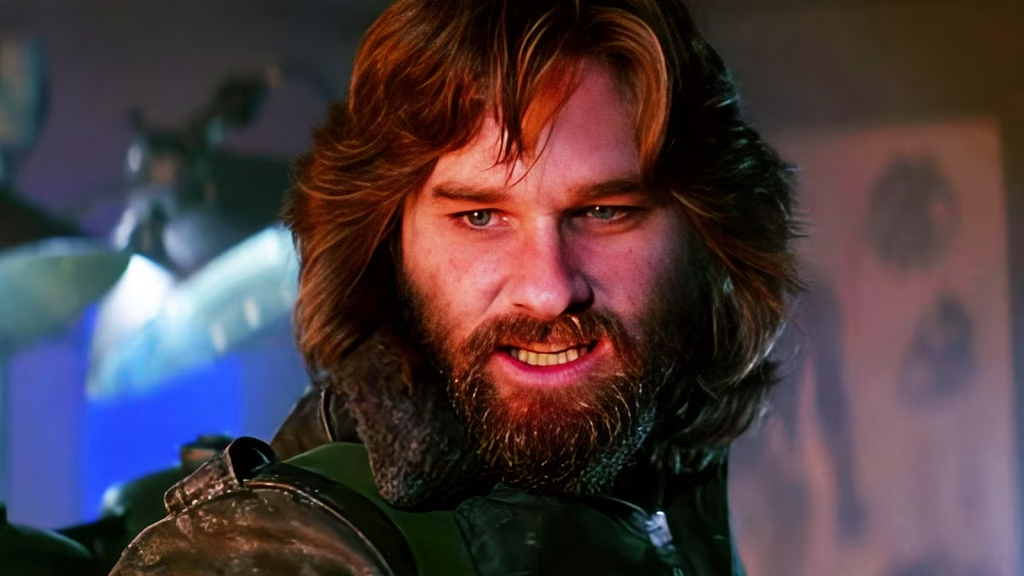
10. The Thing

John Carpenter’s The Thing was initially criticized for its extreme gore and bleak tone. In 1982, audiences were more drawn to lighter, friendlier sci-fi fare, and the film flopped at the box office despite a $15 million budget. Critics dismissed its nihilistic take on alien horror, overshadowed by hits like E.T.

Image Source: Bing Image. License: All Creative Commons

Yet The Thing has aged into a masterpiece of horror cinema. Its groundbreaking practical effects, nerve-wracking suspense, and ambiguous ending have earned it legendary status. Today, it’s studied, celebrated, and cited as an influence on countless horror and sci-fi projects, proving that initial criticism doesn’t always dictate legacy.

Image Source: Bing Image. License: All Creative Commons

9. Garden State

Garden State premiered to critical praise, with an 86% Rotten Tomatoes rating and accolades for its indie charm, emotional storytelling, and Zach Braff’s sensitive direction. At the time, it captured the hearts of a generation seeking quirky, heartfelt cinema.

Image Source: Bing Image. License: All Creative Commons

However, retrospective views have been less kind. Critics and audiences have pointed out the film’s twee sensibilities, clichéd tropes, and the problematic “manic pixie dream girl” characterization. Its legacy shows how generational perspectives can reshape how we view once-beloved films.

Image Source: Bing Image. License: All Creative Commons

8. Crash

Crash took home the Best Picture Oscar in 2006, earning 74% on Rotten Tomatoes and widespread critical acclaim for its interconnected tales of race, class, and tension in Los Angeles. Initially, it seemed like a socially significant and ambitious cinematic achievement.

Image Source: Bing Image. License: All Creative Commons

Over time, opinions shifted sharply. Many now view Crash as overly simplistic and heavy-handed, especially compared to its Oscar rival, Brokeback Mountain. The film’s decline in reputation is a reminder that even celebrated award-winners can become reassessed when the cultural lens changes.

Image Source: Bing Image. License: All Creative Commons

7. Hocus Pocus

The 1993 Halloween comedy Hocus Pocus received a chilly 39% on Rotten Tomatoes, with critics calling it silly and forgettable. Its campy humor didn’t initially resonate with mainstream reviewers.

Image Source: Bing Image. License: All Creative Commons

Despite this, audiences embraced its charm, Bette Midler’s larger-than-life performance, and the film’s seasonal fun. Hocus Pocus has since become a beloved Halloween tradition, proving that fan enthusiasm can keep a movie alive long after critics dismiss it.

Image Source: Bing Image. License: All Creative Commons

6. Forrest Gump

Forrest Gump was both a critical and commercial sensation, winning six Oscars and earning 71% on Rotten Tomatoes. Tom Hanks’ portrayal of the title character and the film’s heartfelt story made it an instant classic.

Image Source: Bing Image. License: All Creative Commons

Yet in recent years, Forrest Gump has faced scrutiny. Critics and viewers have questioned its simplistic historical lens and sentimental storytelling, arguing that it oversimplifies complex events. Its decline in critical regard shows that even the most adored films can become targets of reassessment.

Image Source: Bing Image. License: All Creative Commons

5. Love Actually

Love Actually divided critics at release, scoring 64% on Rotten Tomatoes. While some loved its ensemble storytelling and romantic charm, others found it cloying and overstuffed.

Image Source: Bing Image. License: All Creative Commons

Regardless, audiences quickly embraced it as a holiday staple. Its interconnected stories and ensemble cast continue to spark discussion and debate about which romantic arcs succeed and which falter. Love Actually proves that polarizing films can still win hearts over time.

Image Source: Bing Image. License: All Creative Commons

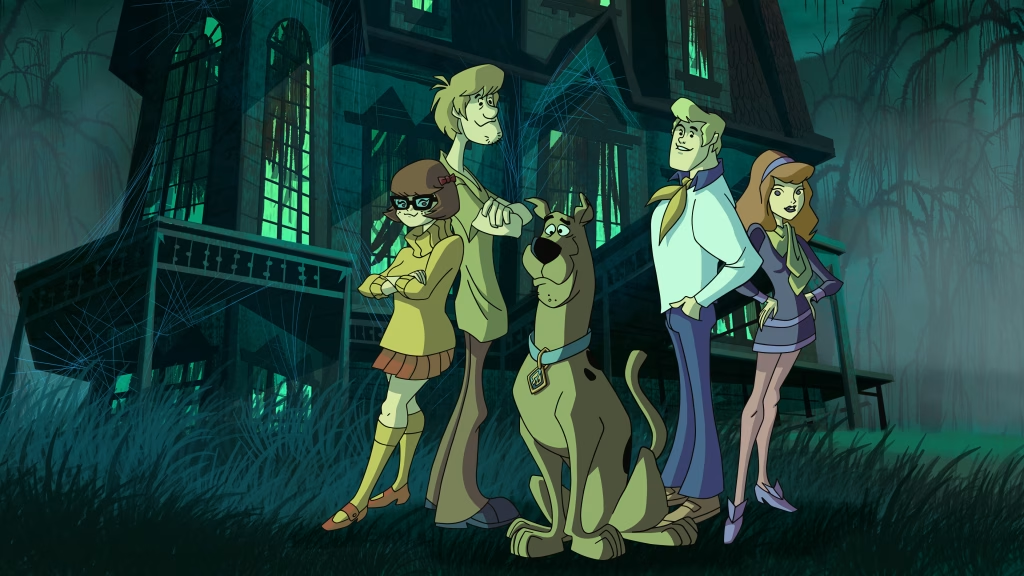
4. Scooby-Doo

Scooby-Doo, the live-action adaptation, received poor critical reception, earning only 32% on Rotten Tomatoes. Critics called its humor forced and its plot thin, largely ignoring its nostalgic appeal.

Image Source: Bing Image. License: All Creative Commons

For fans, however, Scooby-Doo delivered fun and familiarity. Its campy tone, playful performances, and homage to the beloved cartoon have made it a nostalgic hit, passed down to new generations. It’s a reminder that entertainment value can outshine critical opinion.

Image Source: Bing Image. License: All Creative Commons

3. American Beauty

American Beauty earned critical acclaim upon release, winning five Oscars and achieving an 87% Rotten Tomatoes score. It was praised for its commentary on suburban life, middle-class ennui, and existential dissatisfaction.

Image Source: Bing Image. License: All Creative Commons

However, its reception has cooled over time. Many now view its characters and themes as dated, and some see its social commentary as shallow. American Beauty highlights that even lauded films can face reassessment as cultural tastes evolve.

Image Source: Bing Image. License: All Creative Commons

2. Jennifer’s Body

Jennifer’s Body was initially dismissed by critics, scoring only 45% on Rotten Tomatoes. Many reviewers viewed it as a failed horror-comedy, unable to balance scares with dark humor.

Image Source: Bing Image. License: All Creative Commons

Years later, the film has been reclaimed as a feminist cult favorite. Its subversive take on gender dynamics and horror tropes, coupled with Megan Fox’s performance, has earned it a devoted following. Jennifer’s Body demonstrates that some movies need time before their brilliance is recognized.

Image Source: Bing Image. License: All Creative Commons

1. National Treasure

National Treasure was largely dismissed by critics, who criticized its implausible plot and adventurous antics, giving it only 46% on Rotten Tomatoes. Early reviews suggested it was a forgettable summer film.

Image Source: Bing Image. License: All Creative Commons

Audiences, however, embraced Nicolas Cage’s earnest charm, the puzzle-filled plot, and the family-friendly adventure. Its popularity led to a sequel and ongoing fan enthusiasm, proving that sometimes, fun and entertainment matter more than critical approval.

Image Source: Bing Image. License: All Creative Commons

These 15 films show just how unpredictable the relationship between critics and audiences can be. Some movies are ahead of their time, finding love and appreciation long after release, while others gradually fall out of favor despite early acclaim. Whether cult classics, misunderstood comedies, or Oscar-winning dramas, these films remind us that personal taste, cultural shifts, and enduring fandom often have the last word in shaping a movie’s legacy.

Top 15 Paramount+ Shows and Movies Early 2026

0
Image Source: Bing Image. License: All Creative Commons

Streaming services are more than just a way to pass the time—they’ve become the ultimate destination for both blockbuster hits and hidden gems. Paramount+ in early 2026 offers a wide array of shows and movies that cater to every taste, from iconic classics to fresh originals and binge-worthy series. Whether you’re hunting for nostalgia, edge-of-your-seat action, or heartfelt romance, this lineup has it all. Here’s a look at 15 of the biggest, most talked-about titles currently streaming on Paramount+.

Image Source: Bing Image. License: All Creative Commons

15. The Godfather Trilogy

The Godfather trilogy isn’t just a highlight on Paramount+, it’s a cornerstone of cinematic history. Francis Ford Coppola’s masterful direction brings Mario Puzo’s novel to life, chronicling the rise and fall of the Corleone family with unmatched depth and style. Crime, family loyalty, and tragedy intertwine in a saga that has shaped decades of filmmaking.

Image Source: Bing Image. License: All Creative Commons

The three films The Godfather, The Godfather Part II, and The Godfather Coda: The Death of Michael Corleone feature unforgettable performances from Al Pacino, Marlon Brando, Robert De Niro, and Diane Keaton. Together, they’ve earned nine Oscars and 28 nominations. Whether revisiting the saga or discovering it for the first time, Paramount+ makes it easy to experience this legendary story in full.

Image Source: Bing Image. License: All Creative Commons

14. Old Guy

Old Guy delivers pulse-pounding action with Christoph Waltz as Danny Dolinski, an aging hitman forced to mentor a young protégé played by Cooper Hoffman. Together, they navigate a deadly web of betrayal, aided by Danny’s friend Anata, played by Lucy Liu, as they take on dangerous foes.

Image Source: Bing Image. License: All Creative Commons

Simon West’s direction blends old-school action with modern sensibilities, infusing humor, tension, and just enough heart to elevate the story. With a strong supporting cast including Ryan McParland and Ann Akinjirin, Old Guy is a thrilling ride that balances nostalgia and innovation for fans of smart action cinema.

Image Source: Bing Image. License: All Creative Commons

13. Dreaming Whilst Black Season 2

Season two of Dreaming Whilst Black picks up with Kwabena, a determined Black British filmmaker, as he tackles a radical historical drama while confronting the compromises of the entertainment industry. Adjani Salmon returns as the creator and star, continuing a story full of ambition, humor, and social commentary.

Image Source: Bing Image. License: All Creative Commons

The show explores the tension between artistic integrity and industry expectations, highlighting systemic barriers while maintaining sharp wit. Supporting cast members Dani Moseley, Demmy Ladipo, and Rachel Adedeji bring nuance and authenticity, making this series a standout in contemporary British television.

Image Source: Bing Image. License: All Creative Commons

12. School Spirits Season 3

School Spirits returns for a chilling third season with Peyton List reprising her role as Maddie Nears, navigating the challenges of returning to the land of the living while dealing with ghostly responsibilities. Season three deepens the supernatural drama, adding twists that raise the stakes for both the living and the dead.

Image Source: Bing Image. License: All Creative Commons

Kristian Ventura, Jennifer Tilly, Ari Dalbert, and Erika Swayze enrich the ensemble, creating a mix of suspense, humor, and teen drama. The series’s unique blend of mystery and supernatural elements has cemented it as a fan favorite, making each new episode an event to look forward to.

Image Source: Bing Image. License: All Creative Commons

11. Star Trek: Starfleet Academy

Set in the 32nd century, Star Trek: Starfleet Academy introduces a new generation of cadets training to become the Federation’s future leaders. Relationships, rivalries, and personal growth are explored against the backdrop of a galaxy recovering from the catastrophic Burn.

Image Source: Bing Image. License: All Creative Commons

Holly Hunter stars as the Academy’s Chancellor, alongside a diverse cast including Sandro Rosta, Karim Diané, Kerrice Brooks, George Hawkins, and Bella Shepard. With appearances by Oded Fehr, Mary Wiseman, Gina Yashere, and Paul Giamatti, the series expands the Star Trek universe, offering fresh stories while honoring the franchise’s legacy.

Image Source: Bing Image. License: All Creative Commons

10. Survivor 50

Paramount+ celebrates the landmark 50th season of Survivor, featuring a mix of returning favorites and fan-favorite legends. Hosted by Jeff Probst, the season promises epic alliances, shocking blindsides, and strategic gameplay that keeps fans glued to the screen.

Image Source: Bing Image. License: All Creative Commons

With a three-hour premiere and weekly episodes, the season honors the show’s history while introducing a new generation to the drama. Streaming past seasons and curated moments adds context, reminding viewers why Survivor remains a cultural touchstone decades into its run.

Image Source: Bing Image. License: All Creative Commons

9. CIA (CBS Original Series)

CIA brings a high-stakes spin to espionage storytelling, following FBI agent Bill Goodman (Nick Gehlfuss) and CIA operative Colin Glass (Tom Ellis) as they tackle global threats and unravel intricate conspiracies. The series emphasizes the moral ambiguity of intelligence work in a turbulent world.

Image Source: Bing Image. License: All Creative Commons

Necar Zadegan and Natalee Linez round out a talented cast, delivering performances that balance suspense with character depth. With fast-paced plots and complex storylines, CIA adds a fresh and compelling angle to Paramount+’s growing lineup of procedural dramas.

Image Source: Bing Image. License: All Creative Commons

8. Can You Keep a Secret?

This British comedy series delivers laughs and chaos as Debbie Fendon (Dawn French) fakes her husband’s death for insurance, forcing her family into a web of deception. William (Mark Heap) hides in the loft while Harold (Craig Roberts) and his wife, Neha (Mandip Gill), scramble to manage the fallout.

Image Source: Bing Image. License: All Creative Commons

Across six sharp and witty episodes, the series blends family hijinks with clever twists. French’s performance anchors the show, giving it charm and heart that elevate it beyond a standard comedy, making it a must-watch for fans of clever, character-driven humor.

Image Source: Bing Image. License: All Creative Commons

7. Coldwater

Coldwater follows John (Andrew Lincoln), a stay-at-home dad who moves his family to rural Scotland after a personal crisis, only to uncover unsettling secrets about his new neighbor Tommy (Ewan Bremner). The tension grows as trust and motives are questioned.

Image Source: Bing Image. License: All Creative Commons

With Indira Varma and Eve Myles contributing layered performances, the series delves into themes of identity, isolation, and the darkness lurking beneath the surface of small-town life. Coldwater’s psychological depth makes it a gripping choice for fans of suspenseful drama.

Image Source: Bing Image. License: All Creative Commons

6. Handsome Devil: Charming Killer

This true crime docuseries explores the story of Wade Wilson, whose mugshot went viral, earning him the nickname “Deadpool Killer.” The series examines society’s fascination with notorious figures and the consequences of digital fame.

Image Source: Bing Image. License: All Creative Commons

Through interviews, bodycam footage, and firsthand accounts, the series provides a chilling look at celebrity culture intersecting with criminal behavior. It’s a compelling watch for anyone drawn to the dark corners of viral notoriety and human psychology.

Image Source: Bing Image. License: All Creative Commons

5. Wild Boys: Strangers in Town

Wild Boys: Strangers in Town chronicles two brothers who emerge from the forests of British Columbia after living off the grid, sparking a media frenzy and public curiosity. The docuseries investigates the limits of belief, identity, and storytelling.

Image Source: Bing Image. License: All Creative Commons

With its exploration of human nature and community reaction, the two-part series captures intrigue and mystery at every turn. It’s perfect for fans of real-life enigmas and thought-provoking documentary storytelling.

Image Source: Bing Image. License: All Creative Commons

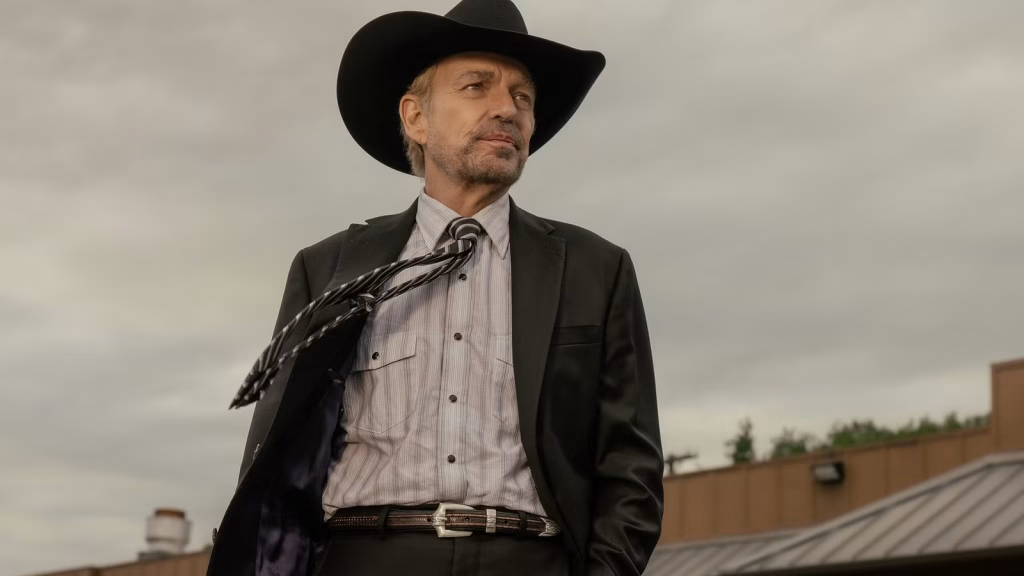
4. Landman Season 2

The second season of Landman returns viewers to West Texas’s cutthroat oil world. Billy Bob Thornton reprises his role as Tommy Norris, navigating power struggles and personal betrayal while secrets and danger escalate around him.

Image Source: Bing Image. License: All Creative Commons

Joining Thornton are Demi Moore, Andy Garcia, Ali Larter, and Sam Elliott, creating a layered and intense ensemble. The series continues to be praised for its gripping storytelling, making it one of Paramount+’s standout dramatic offerings.

Image Source: Bing Image. License: All Creative Commons

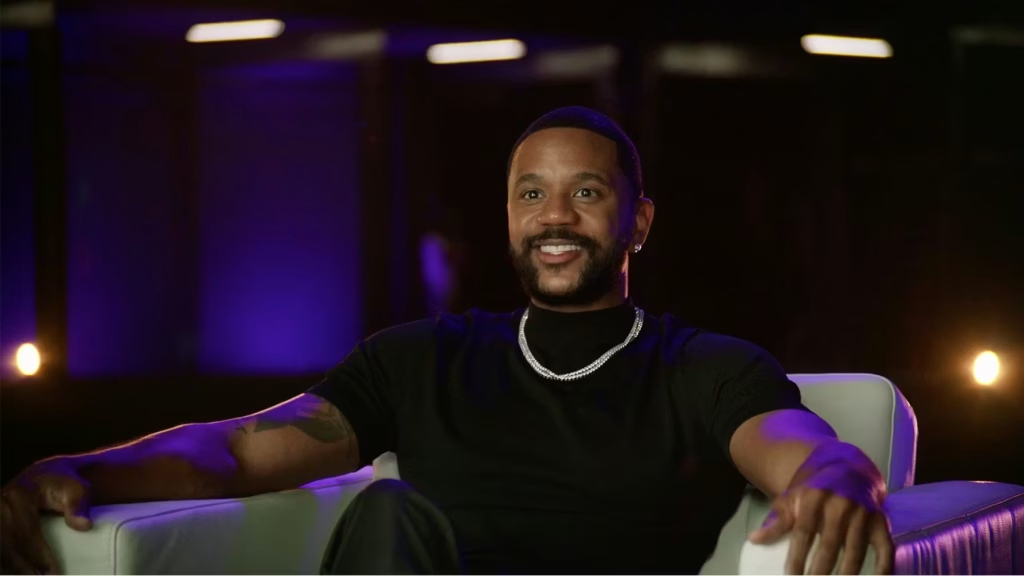
3. Canada Shore

Canada Shore takes the global Shore phenomenon to British Columbia, following ten singles living together as they navigate romance, friendship, and chaos. The show balances outrageous fun with heartfelt moments, keeping viewers invested.

Image Source: Bing Image. License: All Creative Commons

Weekly episodes showcase the cast’s charisma and the unpredictability of communal living. With its Canadian twist, the series offers a fresh take on the beloved reality formula while staying true to the drama and excitement fans expect.

Image Source: Bing Image. License: All Creative Commons

2. Black Voices Collection

In honor of Black History Month, Paramount+’s Black Voices Collection highlights films and series created by and starring Black artists. From Queen & Slim to Us, Dreamgirls to Marshall, the curated lineup celebrates Black talent and stories that resonate across genres.

Image Source: Bing Image. License: All Creative Commons

The collection is perfect for both new viewers and longtime fans, offering biopics, musicals, romance, and socially relevant narratives. Paramount+ makes it easy to explore a wide range of powerful stories that champion representation and history.

Image Source: Bing Image. License: All Creative Commons

1. Peak Romance Collection

With Valentine’s Day approaching, the Peak Romance Collection offers a treasure trove of love stories, from classics like Roman Holiday and Breakfast at Tiffany’s to teen favorites like Grease and Pretty in Pink. The collection spans first loves, mature romance, and epic heartbreaks.

Image Source: Bing Image. License: All Creative Commons

Titles such as Titanic, Runaway Bride, and Bridget Jones’s Diary ensure there’s something for every romantic mood. This curated selection makes Paramount+ the ultimate streaming destination for anyone ready to celebrate love in all its forms.

Image Source: Bing Image. License: All Creative Commons

Paramount+’s early 2026 lineup proves that streaming can offer both nostalgia and fresh discoveries. From blockbuster sagas and iconic classics to original dramas, thrillers, and comedies, there’s something for everyone to enjoy. Whether you’re catching up on fan favorites or diving into new stories, these 15 picks showcase the variety, creativity, and excitement Paramount+ has to offer.

10 TV Series Where Humor Meets the Paranormal

0
Image Source: Bing Image. License: All Creative Commons

It’s not easy to compile a list of the worst film endings—those that leave you completely unaffected. You might connect with the characters, get invested in the story, and then suddenly the credits roll. The experience can be jarring, leaving you wondering what the filmmakers were even trying to convey. Sometimes an ending strays so far from the main storyline or clashes so drastically with the rest of the film that it feels like a disaster. Here’s a countdown of the ten worst movie endings that not only ruined the films but also earned their place in cinematic infamy.

Image Source: Bing Image. License: All Creative Commons

10. The Bondsman

The Bondsman on Prime Video is the latest to join the ranks, but it’s already making a name for itself due to its awesomely campy presentation. Hub Halloran is played by Kevin Bacon, and he’s a bounty hunter who meets his demise before coming back as a demon hunter for Satan himself. Showrunner Erik Oleson (Daredevil fame) goes all in on B-movie chic here, delivering demon fights, splatter kills, and a motley crew of lovable misfits you just can’t help but root for. Amidst all the destruction, the humor keeps everything pegged to Earth—making it an ideal choice for horror fans with a wink.

Image Source: Bing Image. License: All Creative Commons

9. What We Do in the Shadows

Adapted from Taika Waititi and Jemaine Clement’s cult-classic movie, FX’s What We Do in the Shadows is a mockumentary series about a team of Staten Island vampires (and an energy vampire) struggling to fit into the contemporary world. Sharp dialogue and deadpan delivery transform ordinary issues—such as roommate conflict or city council debates—into supernatural farce. Its blend of offbeat characters and innovative world-building has made it a contemporary classic of the genre.

Image Source: Bing Image. License: All Creative Commons

8. Wizards of Waverly Place

Disney Channel struck gold with Wizards of Waverly Place, a lighthearted sitcom about the Russo siblings juggling school, family, and wizard training. The magical mishaps combined with relatable family comedy made it fun for both kids and parents. Add Selena Gomez’s charisma to the mix, and you’ve got a show that still has fans feeling nostalgic today.

Image Source: Bing Image. License: All Creative Commons

7. Sabrina the Teenage Witch

Years before Riverdale darkened up Archie Comics, Sabrina the Teenage Witch was blending magic and giggles on Friday evenings. Melissa Joan Hart played Sabrina, a teenager navigating her powers alongside high school. From her wisecracking cat Salem to constant spells that went awry, the series was the ideal combination of charm, slapstick, and 9’90sromance.

Image Source: Bing Image. License: All Creative Commons

6. The Vampire Diaries

Yes, The Vampire Diaries is largely remembered for its melodramatic romance and supernatural soap operatics—but it did not hesitate to satirize itself. The show added loads of quick-witted one-liners, meta-jokes, and snarky references to vampire tropes, providing it with enough humor to offset all the angst and gore. 

Image Source: Bing Image. License: All Creative Commons

5. Charmed

The Halliwell sisters glamorized witchcraft and made it endearing in Charmed. Although the series was filled with demons and supernatural battles, its true magic was the combination of clever words and down-to-earth sibling relations. Between destroying evil and fighting over romance, the sisters ensured that laughter was never out of reach.

Image Source: Bing Image. License: All Creative Commons

4. The Munsters

During the 1960s, The Munsters turned the family sitcom model upside down. Rather than the all-American suburban clan, audiences were treated to Frankenstein’s monster, a vampire mother, and their monster cousins attempting to lead a “normal” existence. The humor derived from their complete obliviousness to the fact that they appeared bizarre to everyone else. Wholesome, offbeat, and still amusing today, it’s a real TV classic.

Image Source: Bing Image. License: All Creative Commons

3. Bewitched

With a flick of her nose, Samantha Stephens could make mundane mayhem into magical chaos. Bewitched stayed the playful fun of blending fantasy with middle-class reality, with Samantha seeking to conceal her abilities from her husband and prying neighbors. The show’s witty satire and lighthearted tone made it one of the most popular supernatural comedies of the 60s, and its legacy continues to be seen in TV shows today.

Image Source: Bing Image. License: All Creative Commons

2. Tales from the Crypt

This HBO hit pushed horror anthology storytelling into dark humor. Presented by the maniacal Crypt Keeper, every episode featured a chilling story full of sick jokes and a healthy dose of puns. The campy atmosphere and over-the-top self-awareness made it as laughable as it was terrifying, securing it a cult following within the genre.

Image Source: Bing Image. License: All Creative Commons

1. The Addams Family

No list of supernatural comedies is complete without The Addams Family. From its origins in the 1960s sitcom to contemporary reboots, the Addams family is the standard against which all other creepy, kooky, in so many words, families are measured. Their grotesque shenanigans are humorous, sure, but what truly makes them endure is the heart in the center of the family. Gomez and Morticia’s love, Wednesday and Pugsley’s bizarre sibling relationship, and Uncle Fester’s antics all demonstrate that even the most bizarre families are held together by love.

Image Source: Bing Image. License: All Creative Commons

With campy gore, lighthearted magic, or good ol’ fashioned sitcom charm, these supernatural sitcoms prove that the best way to handle monsters, witches, and ghosts at times is to simply laugh at them.

10 Actors Who Evolved Their Careers After Breakout Roles

0
Image Source: Bing Image. License: All Creative Commons


In Hollywood, leaving behind a character that defines your career doesn’t mean leaving the spotlight. For some, it becomes the launching pad for even greater success. Here are ten celebrities whose iconic roles not only elevated their careers but also served as stepping stones to long-lasting and prosperous journeys in the industry.

Image Source: Bing Image. License: All Creative Commons

10. Jack Quaid (From The Hunger Games to The Boys and Beyond)

In​‍​‌‍​‍‌​‍​‌‍​‍‌ a quick flash, Jack Quaid’s first Hollywood moment was gone – as Marvel, a very brief and unnoticed tribute in The Hunger Games, he made the shortest appearance. However, Quaid didn’t vanish; he gradually carved out his own path in the industry. As Hughie Campbell in The Boys on Amazon, he made a big splash and showed that he was able to be the main character of a series. After that, he was the voice of a main character in Star Trek: Lower Decks, he got involved with the Scream series in a slasher role, and he even had a small part in Oppenheimer. Quite impressive for a guy who started his career with a very brief role in Panem, isn’t ​‍​‌‍​‍‌​‍​‌‍​‍‌it?

Image Source: Bing Image. License: All Creative Commons

9. Josh Hutcherson (From Peeta Mellark to Five Nights at Freddy’s)

Josh Hutcherson was already performing before The Hunger Games, but portraying Peeta catapulted him to global superstardom. Following the franchise, his career went stagnant until he changed course with Hulu’s Future Man, where he demonstrated his comedic abilities. His return to form came in Five Nights at Freddy’s, which became a box office phenomenon. Hutcherson indicated that he’s more than a YA heartthrob—he’s a leading man.

Image Source: Bing Image. License: All Creative Commons

8. Amandla Stenberg (From Rue to Cultural Power)

Amandla Stenberg, then just 12 years old, won audiences over playing Rue in The Hunger Games. Since then, they have built a career characterized by fearless decisions and activism. With The Hate U Give, Bodies Bodies Bodies, and a cameo in Spider-Man: Across the Spider-Verse, Stenberg has combined art with activism, using their platform to make statements about gender, race, and identity. They’ve evolved from child star to one of Hollywood’s most influential young voices.

Image Source: Bing Image. License: All Creative Commons

7. Liam Hemsworth (From Gale to The Witcher)

Liam Hemsworth’s Gale was overshadowed too often by Katniss’s love triangle—or by his brother Chris’s Marvel star. But Liam has been quietly establishing a solid career with movies such as Independence Day: Resurgence and Isn’t It Romantic. Now, he is poised to take on one of Netflix’s largest roles: Geralt of Rivia in The Witcher. Replacing Henry Cavill will be no easy task, but if he succeeds, it will reshape his career.

Image Source: Bing Image. License: All Creative Commons

6. Elizabeth Banks (From Effie Trinket to Director Extraordinaire)

Elizabeth Banks was unforgettable as the over-the-top Effie Trinket, but her actual glow-up was off-screen. With Pitch Perfect 2, she joined a short list of women to helm a film that grossed close to $300 million. She’s since directed Charlie’s Angels and cult favorite Cocaine Bear, while producing a consistent pipeline of projects through her company Brownstone Productions. Banks is now one of the most successful actor-turned-directors in the business.

Image Source: Bing Image. License: All Creative Commons

5. Matthew Lewis (From Neville Longbottom to Leading Man)

Few glow-ups were more apparent than Matthew Lewis’s. No longer the gangly Neville Longbottom, he surprised fans by maturing into a bona fide leading man—so much so that “Longbottoming” was a meme. But aside from the makeover, Lewis has established a steady acting career in Me Before You, Ripper Street, Happy Valley, and All Creatures Great and Small. He even ventured into sports as a host for The Official Leeds United Podcast.

Image Source: Bing Image. License: All Creative Commons

4. Emma Watson (From Hermione to Global Icon)

Emma Watson transitioned from Hogwarts’ brightest witch to a screen and off-screen powerhouse. She appeared in Perks of Being a Wallflower, Beauty and the Beast, and Little Women, all while graduating from Brown University. Watson has also left her imprint as a UN Goodwill Ambassador and HeForShe creator. With tens of millions of fans worldwide, she’s an equal measure activist and thought leader as well as an actress.

Image Source: Bing Image. License: All Creative Commons

3. Daniel Radcliffe (From Harry Potter to Indie Darling and Theater Star)

After playing Harry Potter for a decade, Daniel Radcliffe could’ve coasted—but instead, he went in a completely different direction. He embraced quirky, ambitious projects like Swiss Army Man, Guns Akimbo, and the series Miracle Workers. On stage, he’s found equal success, with a Tony win for Merrily We Roll Along adding to his growing reputation as a serious performer. Radcliffe’s post-Potter career is proof of fearless reinvention.

Image Source: Bing Image. License: All Creative Commons

2. Jennifer Lawrence (From Katniss Everdeen to Oscar Winner and Producer)

Jennifer Lawrence didn’t merely surf The Hunger Games tsunami—she rode it into a pool of prestige as one of the greatest actors of her generation. Still playing Katniss, she won an Oscar for Silver Linings Playbook, followed it with American Hustle, Joy, and her portrayal of Mystique in X-Men. Lawrence even became the highest-paid actress on Forbes’ list. Following a brief hiatus, she’s returned with movies such as Don’t Look Up and No Hard Feelings, producing her own projects in the meantime.

Image Source: Bing Image. License: All Creative Commons

1. Robert Pattinson (From Cedric Diggory to Batman)

Robert Pattinson’s glow-up is perhaps the most dramatic. Having died valiantly in Harry Potter and the Goblet of Fire, he then became the poster boy for Twilight. Instead of getting typecast, he redirected himself to indie fare such as The Lighthouse and Good Time, earning him widespread critical acclaim. He came back to blockbuster status with Tenet and The Batman, and he’s not letting up—he just collaborated with Bong Joon Ho and is currently starring in Christopher Nolan’s The Odyssey. From a teen vampire to a Caped Crusader, Pattinson has been transformed into one of Tinseltown’s most diverse leading men.

10 Science Fiction Movies Where Women Command the Spotlight

0
Image Source: Bing Image. License: All Creative Commons

One​‍​‌‍​‍‌​‍​‌‍​‍‌ of the places where science fiction has been the most is in the unrestrained creativity of the concept, the technology, the story, or the powers of the heroes. In the past few decades, the genre was mostly associated with cold male scientists and space explorers. However, women have been the main characters lately, and they have been receiving the same attention, for their brains and brawn, in the movies. These heroines are not the side characters or the love interests; they are the ones who bring the story, encounter the impossible, and change the definition of a sci-fi protagonist. We are listing here our top 10 best sci-fi films featuring women in leading roles, from which you can gather a range of traits from the characters, such as bravery, smarts, or just being great on the big ​‍​‌‍​‍‌​‍​‌‍​‍‌screen.

Mindy Kaling is Mrs. Who, Levi Miller is Calvin O’Keefe, Oprah Winfrey is Mrs. Which, Zach Galifianakis is the Happy Medium, Storm Reid is Meg Murry, Deric McCabe is Charles Wallace Murry and Reese Witherspoon is Mrs. Whatsit in Disney’s A WRINKLE IN TIME.

10. A Wrinkle in Time (2018)

Storm Reid sparkles as Meg Murry in this Technicolor adaptation of Madeleine L’Engle’s classic novel. Meg’s journey through time and space to save her dad is at once an internal journey of growing up and a visually magnificent adventure. Notably, the film places a young Black girl in the middle of a high-budget sci-fi adventure rarity and a welcome perspective in the genre. She brings heart, vulnerability, and bravery to Meg, so the struggle and victory are utterly relatable to audiences of all ages.

Image Source: Bing Image. License: All Creative Commons

9. Underwater (2020)

Kristen Stewart trades vampires for deep-sea horrors in this tense survival thriller. As Norah, a robotic engineer stranded after a catastrophic collapse at the drilling station, Stewart puts in a performance full of fear, determination, and grit. The claustrophobic atmosphere and relentless underwater menace keep audiences on edge, but it’s Stewart’s remarkably naturalistic and emotionally layered portrayal that anchors the film, proving that the best monsters are sometimes the ones lurking within as well as around us.

Image Source: Bing Image. License: All Creative Commons

8. Ex Machina (2015)

Alicia Vikander as Ava, a sentient android, is both haunting and mesmerizing. In Alex Garland’s cerebral sci-fi debut, Ava’s mix of innocence, intelligence, and subtle manipulation blurs the line between human and machine. The subtlety in Vikander’s acting enables the viewer to question morality, autonomy, and what it really means to be alive. Her quietly compelling presence at the center makes the film’s exploration of AI, consciousness, and control unforgettable.

Image Source: Bing Image. License: All Creative Commons

7. Contact (1997)

Jodie Foster’s Dr. Ellie Arroway is an incarnation of curiosity and determination. Arroway is a brilliant astronomer tasked with decoding a message originating from extraterrestrial life. She is met with skepticism, bureaucracy, and personal doubts. Yet Foster brings every challenge to life with great depth and conviction. Scientific wonder mixed with emotional resonance sets the film apart, and her determination cements Arroway as a timeless role model for anyone wanting to break barriers in STEM or beyond.

Image Source: Bing Image. License: All Creative Commons

6. Gravity (2013)

Sandra Bullock’s portrayal of Dr. Ryan Stone is a master class in resilience under extreme conditions. After a disastrous accident leaves her adrift in space, Stone must fight both the void of the cosmos and her own fear to survive. Bullock’s performance captures vulnerability and pure grit, taking the audience with her on each terrifying twist and every breathtaking moment. The groundbreaking visuals of this film amplify the story, making the struggle feel immediate, intense, and very human.

Image Source: Bing Image. License: All Creative Commons

5. Alita: Battle Angel (2019)

Rosa Salazar embodies Alita, a cyborg uncovering her past and facing her destiny in a visually dazzling cyberpunk world. With a balance of vulnerability, curiosity, and combat prowess, Salazar turns Alita into more than a CGI hero-she’s a fully fleshed-out character with heart and fight. The combination of turbo-charged action and emotional drama in this film makes Alita rank high among female-led sci-fi epics that are both thrilling and heartfelt.

Image Source: Bing Image. License: All Creative Commons

4. The Hunger Games (2012)

Jennifer Lawrence’s Katniss Everdeen is an iconic representation of rebellion and bravery. Volunteering to protect her sister, she becomes the spark that ignites a revolution in a dystopian world. Lawrence brings depth and relatability to Katniss, grounding the action with emotional truth. Beyond the spectacle, her character’s intelligence, moral courage, and resilience have managed to inspire audiences and solidify her as one of modern cinema’s most iconic female heroes.

Image Source: Bing Image. License: All Creative Commons

3. Mad Max: Fury Road (2015)

Imperator Furiosa, played by Charlize Theron, elevates what could have been a supporting character to the lead focus of the film. It is both thrilling and deeply humane to see Furiosa’s mission to free enslaved women in a desolate, tyrannical desert landscape. Theron fuses unabashed physicality with emotional depth to make Furiosa a warrior and symbol of resistance. Due to the film’s relentless action, visual shots through a kaleidoscope, and feminist undertones, it starts to take on importance in modern science fiction.

Image Source: Bing Image. License: All Creative Commons

2. Terminator 2: Judgment Day (1991)

One of cinema’s most iconic transformations is taken on by Linda Hamilton’s Sarah Connor. Vulnerable waitress, hardened warrior, protective mother, Sarah is a force of nature, and Hamilton delivers her with intensity, precision, and depth. Her portrayal set a new standard for female action heroes, showing that women could carry both physical and emotional weight in sci-fi narratives while inspiring countless future protagonists.

Image Source: Bing Image. License: All Creative Commons

1. Alien (1979) & Aliens (1986)

Sigourney Weaver’s Ellen Ripley is the ultimate heroine of science fiction. In Alien, she transformed from crew member to sole survivor against an unstoppable alien menace, rewriting what it means to be brave under fire. James Cameron’s Aliens further cemented her status as Ripley became a protector, strategist, and unstoppable force. Her jumpsuit with a rotated gender-neutral monogram became an icon of practical heroism, and Weaver’s performances cemented that women could anchor science fiction action without losing one thread of immediacy, intelligence, or relatability.

Image Source: Bing Image. License: All Creative Commons

From interstellar voyages to dystopian revolutions, these films showcase the power, ingenuity, and resilience of women at the core of science fiction narratives. They aren’t just part of the story; they drive it, inspire us, and remind us that the future of sci-fi is as diverse, bold, and brilliant as the women leading the way.

15 Films That Bombed but Became Cult Classics

0
Image Source: Bing Image. License: All Creative Commons

Hollywood is full of surprises, and sometimes even the most ambitious films fail to find their audience, at least at first. While box office numbers can measure initial success, they don’t always capture a movie’s lasting impact. Some films, despite disappointing theatrical runs, go on to become beloved cult classics, inspiring fans, influencing filmmakers, and earning reputations that far outshine their original reception. From thought-provoking dramas to genre-defining sci-fi and irreverent comedies, these 15 films prove that true cinematic magic isn’t always reflected in ticket sales.

Image Source: Bing Image. License: All Creative Commons

15. The Assassination of Jesse James by the Coward Robert Ford (2007)

Brad Pitt and Casey Affleck shine in this slow-burning Western that explores the complicated mythos of Jesse James and the man who killed him. Director Andrew Dominik’s poetic approach, coupled with Roger Deakins’ moody cinematography, transforms the story into a meditation on fame, betrayal, and legend. The film’s deliberate pace and intricate character work demanded patience from audiences, but it rewarded those willing to immerse themselves.

Image Source: Bing Image. License: All Creative Commons

Despite critical acclaim, the film struggled commercially. Its lengthy title and introspective storytelling left mainstream viewers behind, earning just $4 million against a $30 million budget. Over time, however, it has been rediscovered as a cinematic masterpiece, with Brad Pitt calling it his favorite work. Today, it’s celebrated for its atmospheric visuals and nuanced performances, a quiet triumph in the Western genre.

Image Source: Bing Image. License: All Creative Commons

14. Doctor Sleep (2019)

As a sequel to both Stephen King’s novel and Stanley Kubrick’s cinematic masterpiece, The Shining, Doctor Sleep had enormous expectations. Mike Flanagan’s adaptation balances psychological horror with supernatural thrills, following an adult Danny Torrance navigating trauma and new dangers. Ewan McGregor’s performance brings depth and vulnerability, anchoring the story’s heavier themes with emotional resonance.

Image Source: Bing Image. License: All Creative Commons

However, the film faltered at the box office, likely due to its long runtime and the heavy shadow cast by Kubrick’s classic. Critics praised its performances, direction, and world-building, but audiences were hesitant. Over time, it has gained a loyal following among horror fans, earning recognition for its thoughtful exploration of legacy, trauma, and courage.

Image Source: Bing Image. License: All Creative Commons

13. Blade Runner 2049 (2017)

Denis Villeneuve’s visually stunning follow-up to Ridley Scott’s sci-fi classic reimagines a dystopian future with existential questions at its core. Ryan Gosling and Harrison Ford navigate a world of replicants and identity crises, while Roger Deakins’ cinematography earned widespread acclaim and an Oscar. The film’s meditative pace, haunting imagery, and philosophical undertones elevated it into something more than a standard blockbuster sequel.

Image Source: Bing Image. License: All Creative Commons

Yet, with a budget of $150 million, the film failed to perform commercially, leaving Warner Bros. facing significant losses. Despite this, Blade Runner 2049 has flourished in the home video era and streaming, earning reverence for its ambition, artistry, and thoughtful expansion of the original universe.

Image Source: Bing Image. License: All Creative Commons

12. The Iron Giant (1999)

Brad Bird’s animated feature tells the story of a boy forming an unlikely friendship with a giant robot, blending heart, nostalgia, and moral philosophy. Its themes of fear, friendship, and sacrifice resonated with critics and industry insiders, while its hand-drawn animation offered a refreshing alternative to the rising CGI dominance.

Image Source: Bing Image. License: All Creative Commons

Financially, the film was a flop. Poor marketing and a rushed production schedule prevented it from connecting with audiences, and Warner Bros. suffered disappointing returns. Yet over the years, The Iron Giant has become an animation classic, admired for its storytelling, character development, and emotional depth, influencing countless creators in the field.

Image Source: Bing Image. License: All Creative Commons

11. Ad Astra (2019)

James Gray’s contemplative space epic starring Brad Pitt explores isolation, ambition, and the human psyche amid stunning interstellar visuals. The film is as much an introspective journey as a sci-fi adventure, combining cosmic wonder with intimate emotional beats that highlight Pitt’s restrained performance.

Image Source: Bing Image. License: All Creative Commons

Despite positive reviews, the film’s meditative tone alienated some mainstream viewers. With a production budget of $90 million and modest box office returns, the financial numbers underwhelmed. Still, Ad Astra has earned admiration for its philosophical depth, visual storytelling, and thoughtful approach to science fiction, cementing its place in the genre’s modern canon.

Image Source: Bing Image. License: All Creative Commons

10. Fight Club (1999)

David Fincher’s adaptation of Chuck Palahniuk’s novel challenged societal norms, exploring consumerism, identity, and rebellion. Brad Pitt and Edward Norton’s performances brought visceral energy to the film, and its dark humor and twist ending captured the zeitgeist of the late ’90s.

Image Source: Bing Image. License: All Creative Commons

Despite solid reviews, audiences were initially lukewarm, and the film underperformed at the box office. However, through home video and repeated viewings, Fight Club became a cultural touchstone. Its quotable lines, subversive themes, and bold storytelling have ensured its lasting legacy as one of cinema’s definitive cult classics.

Image Source: Bing Image. License: All Creative Commons

9. Children of Men (2006)

Alfonso Cuarón’s dystopian vision of a world plagued by infertility captivated critics with its technical mastery, long-take cinematography, and unflinching depiction of societal collapse. Clive Owen delivers a compelling performance as a man tasked with protecting the first pregnant woman in decades, blending personal stakes with epic societal commentary.

Image Source: Bing Image. License: All Creative Commons

While lauded critically, the film failed to achieve financial success, earning $76 million against a similar budget. Over time, however, it has been reassessed as a modern sci-fi classic, influencing everything from cinematography to world-building in future films and cementing Cuarón’s status as a visionary director.

Image Source: Bing Image. License: All Creative Commons

8. Dredd 3D (2012)

Karl Urban’s performance as the titular lawman brought the gritty, comic-accurate world of Judge Dredd to life. The film was praised for its kinetic action, visual style, and respect for its source material, keeping the helmet firmly on and the attitude firmly intact.

Image Source: Bing Image. License: All Creative Commons

Unfortunately, the film underperformed at the box office, preventing a potential sequel from moving forward. Yet fans embraced it for its faithfulness and action-packed storytelling, and Dredd 3D remains a cult favorite, often cited as a benchmark for comic-book adaptations done right.

Image Source: Bing Image. License: All Creative Commons

7. The Thing (1982)

John Carpenter’s tense sci-fi horror about paranoia, alien invasion, and isolation initially left audiences cold. Its grotesque effects and bleak tone clashed with mainstream expectations, particularly against the summer’s feel-good releases like E.T.

Image Source: Bing Image. License: All Creative Commons

With only modest box office returns, the film struggled in theaters. Yet its meticulous craftsmanship and groundbreaking effects earned it a devoted fanbase on home video. Today, The Thing is hailed as a horror classic, influencing countless filmmakers and redefining the genre.

Image Source: Bing Image. License: All Creative Commons

6. The Big Lebowski (1998)

The Coen Brothers’ eccentric comedy about “The Dude” and a bizarre kidnapping plot initially baffled audiences and critics alike. Its humor, oddball characters, and unconventional narrative didn’t translate to box office success, leaving the film with underwhelming returns.

Image Source: Bing Image. License: All Creative Commons

Time, however, has been kind. The Big Lebowski has grown into a cult phenomenon, inspiring festivals, fan clubs, and endless quotable lines. Its enduring popularity proves that some films simply need patience to find their audience.

Image Source: Bing Image. License: All Creative Commons

5. Office Space (1999)

Mike Judge’s satire of corporate life and office drudgery resonated deeply with critics but failed to attract large audiences in theaters. Its humor about cubicles, TPS reports, and mundane work life didn’t immediately click.

Image Source: Bing Image. License: All Creative Commons

Over time, the film has become iconic, thanks to repeated airings on cable and widespread sharing of its humor online. Office Space is now a touchstone for workplace comedy and a beloved cultural reference for anyone who’s ever hated their 9-to-5.

Image Source: Bing Image. License: All Creative Commons

4. The Shawshank Redemption (1994)

Tim Robbins and Morgan Freeman shine in this adaptation of Stephen King’s novella, exploring hope, friendship, and perseverance in the bleakest circumstances. Despite glowing reviews, the film initially flopped, earning just $16 million against strong competition like Pulp Fiction.

Image Source: Bing Image. License: All Creative Commons

Its revival came through VHS rentals and television broadcasts, where audiences slowly embraced it as a moving, profound story. Today, Shawshank Redemption is widely regarded as one of the greatest films ever made, a testament to the enduring power of storytelling.

Image Source: Bing Image. License: All Creative Commons

3. Kingdom of Heaven (2005)

Ridley Scott’s epic tale of the Crusades, starring Orlando Bloom, was criticized for a bloated narrative and a muddled theatrical cut. Its $130 million budget didn’t yield the expected returns, and the film struggled to connect with mainstream audiences.

Image Source: Bing Image. License: All Creative Commons

The director’s cut, however, transformed the film into a gripping historical drama, earning respect for its depth and coherent storytelling. Kingdom of Heaven exemplifies how time and context can radically change a film’s reception.

Image Source: Bing Image. License: All Creative Commons

2. Babylon (2022)

Damien Chazelle’s ambitious ode to Hollywood’s golden age dazzled with grand production design and star power from Brad Pitt and Margot Robbie. However, its sprawling narrative and divisive tone caused audiences to hesitate, leaving the film underperforming at the box office.

Image Source: Bing Image. License: All Creative Commons

Over time, critics and cinephiles have begun to reassess Babylon, praising its audacity, creativity, and fearless storytelling. It serves as a reminder that some films are best appreciated with patience and perspective.

Image Source: Bing Image. License: All Creative Commons

1. Furiosa: A Mad Max Saga (2024)

George Miller’s prequel explores Furiosa’s origins, combining breathtaking action with rich world-building. Critics hailed the film as a visual spectacle and a character-driven story, but its massive $163 million budget meant that even a strong opening weekend couldn’t secure commercial success.

Image Source: Bing Image. License: All Creative Commons

Despite the financial disappointment, fans and critics are already elevating Furiosa as a future classic. Its combination of daring action, compelling characters, and cinematic ambition ensures that it will be celebrated long after its initial release, reinforcing the idea that true impact isn’t measured by box office receipts alone.

Image Source: Bing Image. License: All Creative Commons

Sometimes, the most fascinating films are the ones that stumble at first. These 15 movies show that a box office flop doesn’t define a film’s legacy. With time, patience, and devoted audiences, even the biggest failures can become beloved classics, inspiring future filmmakers and proving that art often triumphs over numbers.
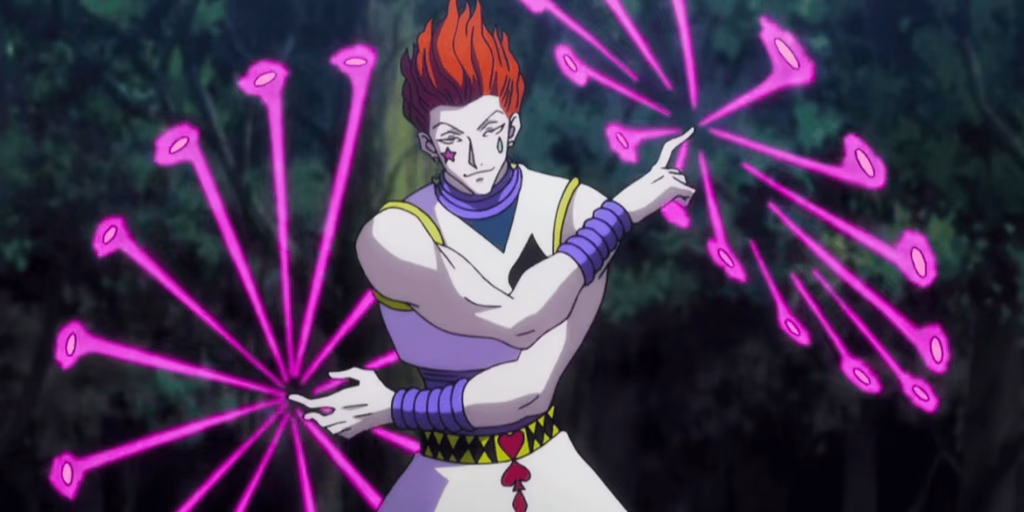
14 Television Moments That Left Fans Scratching Their Heads

0
Image Source: Bing Image. License: All Creative Commons

Nothing is more frustrating than pouring hours into a binge-worthy show, only to have it abruptly end without resolution. We’re left with unfinished plots, unanswered questions, and a permanent spot on our “most infuriating TV moments” list. Here’s a countdown of 14 TV cliffhangers that will likely never get the closure they deserve—starting at number 14 to keep the suspense alive.

Image Source: Bing Image. License: All Creative Commons

14. The Mick

This show lived for chaos, so it only makes sense that its finale was complete madness. Sabrina is electrocuted at the end. And then nothing happens. The screen goes dark, the show is canceled, and fans are left screaming at their televisions.

Image Source: Bing Image. License: All Creative Commons

13. The Royals

Just when a royal takedown seemed imminent, Willow unexpectedly picks Robert at the altar rather than outing him. The series ended immediately after, leaving audiences hanging as to whether justice or scandal ever befell the crown.

Image Source: Bing Image. License: All Creative Commons

12. Stargate Universe

Sci-fi tragedy at its best. The crew’s mission is halted, Eli is left behind to rescue everyone, and the show cuts to black. Fans never knew if the risk paid off, and they’re still bitter about it.

Image Source: Bing Image. License: All Creative Commons

11. Derry Girls

The grand cliffhanger question: Did Erin and James end up together? The finale didn’t reveal it, and the fandom might never stop wondering.

Image Source: Bing Image. License: All Creative Commons

10. My So-Called Life

Angela’s love triangle was legendary teen TV, but it ended mid-swoon. After finding out Brian wrote the heartfelt love letter, would she finally have chosen him over Jordan? Guess we’ll never know.

Image Source: Bing Image. License: All Creative Commons

9. My Babysitter’s a Vampire

The finale dropped explosions, missing characters, and a whole lot of “what just happened?” before cutting to black. Closure? Nowhere in sight.

Image Source: Bing Image. License: All Creative Commons

8. A League of Their Own

As Carson is caught kissing Greta—by her husband, no less—the show is shut down. With the double cancellation, the aftermath of that life-altering moment will never be known.

Image Source: Bing Image. License: All Creative Commons

7. Girl From Nowhere

Nanno is stabbed, Yuri is plotting, and the series ends there. Was Nanno alive? What kind of chaos would Yuri bring? Both are forever left unanswered.

Image Source: Bing Image. License: All Creative Commons

6. 1899

Netflix staged a huge plot twist—Maura emerges from a simulation and awakens in outer space. It was designed to kick off the next stage, and then came the cancellation anvil. Viewers were left with jaws agape and no solutions. 

Image Source: Bing Image. License: All Creative Commons

5. Moesha

A two-pronged whammy of hanging storylines: Myles is kidnapped, and somebody’s pregnant. Then, suddenly, the show is gone. Decades later, those questions still hurt.

Image Source: Bing Image. License: All Creative Commons

4. iCarly (Reboot)

Yes, the revival treated us to some fan service, but it ended before answering one of the largest questions: what’s going on with Carly and Spencer’s mom? We might never know.

Image Source: Bing Image. License: All Creative Commons

3. Kindred

Characters of the show were separated into different time periods due to the divergence of the TV series from Octavia Butler’s novel. Kevin was left in the old times, Olivia in the current one. And after that, it simply stopped. There was no ending, no tying up of loose ends, just letdown.

Image Source: Bing Image. License: All Creative Commons

2. Santa Clarita Diet

This horror-comedy ended with a zombie spider crawling into Joel’s brain and Sheila biting him to save him. The wildest cliffhanger of all time, and we’ll never know what came next.

Image Source: Bing Image. License: All Creative Commons

1. Julie and the Phantoms

Netflix dropped the mic and walked away. The boys didn’t cross over, Caleb possessed Nick, and fans never got the long-awaited Juke kiss. To this day, the fandom is still campaigning for answers.

Image Source: Bing Image. License: All Creative Commons

And that was the list – 14 TV shows that captivated us, and then pulled the floor from under us. If you continue to harbor a grudge against any of them, you are definitely not the only one. We will just keep rewatching and fantasizing about the endings we didn’t get until a fantastic revival, which saves the day, arrives.