Home Blog Page 156

Top 15 LGBTQ+ Anime Characters and Shows

0
Image Source: Bing Image. License: All Creative Commons

Anime has been delving into LGBTQ+ themes for far longer than many people might realize, whether it be through overt storytelling, symbolism, or metaphor. From characters who bucked conventional gender norms to historic same-gender pairings, and even shows that reached a queer audience long before the genre became more mainstream, these anime have left their mark. Below are 15 LGBTQ+ anime characters and series that helped shape the queer landscape of animation.

Image Source: Bing Image. License: All Creative Commons

15. Motoko Kusanagi (Ghost in the Shell)

Major Motoko Kusanagi was grappling with the concept of identity well before it became a popular topic of discussion. As a cybernetic entity, her understanding of her body, gender, and self is beyond the norm, and this makes her a very relatable character to the queer community.

Image Source: Bing Image. License: All Creative Commons

Her gender is fluid, her relationships are complex, and her narrative is always questioning what it means to be human or to be oneself in a world where technology has created its own reality. While some of Motoko’s queerness is obvious, some of it is left to interpretation, and all of it is thought-provoking. Motoko’s influence is not limited to anime but has had an impact on Western sci-fi and queer speculative fiction.

Image Source: Bing Image. License: All Creative Commons

14. Sailor Neptune & Sailor Uranus (Sailor Moon)

Few anime pairings have made a lasting impact like Sailor Neptune and Sailor Uranus. They were fashionable, confident, and passionately in love with each other. They introduced many fans to the concept of same-gender relationships, whether the censors liked it or not.

Image Source: Bing Image. License: All Creative Commons

In Japan, their relationship was depicted as openly in love, while in Western versions, they attempted to make them cousins, which only served to underscore the strength of their relationship. Regardless of the changes, their relationship was still evident. Their inclusion in a mainstream magical girl anime was historic, and they remain icons in the LGBTQ+ anime community.

Image Source: Bing Image. License: All Creative Commons

13. Utena Tenjou (Revolutionary Girl Utena)

Utena Tenjou isn’t interested in becoming a princess; she wants to be a prince. That simple rejection of gender expectations powers one of anime’s most surreal and deeply queer series.

Image Source: Bing Image. License: All Creative Commons

Revolutionary Girl Utena is drenched in symbolism, from roses and duels to power dynamics and desire. At its core is Utena’s relationship with Anthy, a romance that’s as tender as it is unsettling. Utena helped redefine what yuri and queer storytelling could look like, influencing countless creators and viewers along the way.

Image Source: Bing Image. License: All Creative Commons

12. Haruhi Fujioka (Ouran High School Host Club)

Haruhi Fujioka’s gender indifference made her quietly revolutionary. She doesn’t define herself by labels, doesn’t correct people who misgender her, and doesn’t see gender as central to her identity at all.

Image Source: Bing Image. License: All Creative Commons

That calm confidence has made Haruhi a favorite among non-binary, gender-fluid, and pan-romantic fans. While the series often plays with queerness for humor, Haruhi herself is always treated with sincerity. Years later, she remains a touchstone for conversations about evolving queer representation in shoujo anime.

Image Source: Bing Image. License: All Creative Commons

11. Ryouji “Ranka” Fujioka (Ouran High School Host Club)

Ranka Fujioka stands out as one of anime’s rare queer parents. A flamboyant drag performer who deeply loves and supports Haruhi, Ranka is treated with affection by the main cast—even if some outdated language hasn’t aged well.

Image Source: Bing Image. License: All Creative Commons

While terms used in the series are now recognized as harmful, Ranka’s characterization was progressive for its time. Their queerness is never the punchline, and their love for Haruhi is unwavering. Many fans now view Ranka as a transfeminine or non-binary figure, imagining how the character could be handled with more care in a modern adaptation.

Image Source: Bing Image. License: All Creative Commons

10. Sayaka Miki (Puella Magi Madoka Magica)

Sayaka Miki’s story is one of devotion, heartbreak, and self-destruction, elements that resonated deeply with queer viewers. Her intense emotions, especially toward Kyoko, have made her a lasting queer-coded icon.

Image Source: Bing Image. License: All Creative Commons

Her arc captures the pain of unreturned love and the cost of sacrificing yourself for others. Even without explicit confirmation, Sayaka’s struggles mirror many real-life queer experiences. She remains one of the most emotionally impactful characters in the magical girl genre.

Image Source: Bing Image. License: All Creative Commons

9. Grell Sutcliff (Black Butler)

Grell Sutcliff is impossible to ignore. Loud, dramatic, stylish, and openly identifying as a woman, she broke ground for trans visibility in anime, even while embodying problematic tropes.

Image Source: Bing Image. License: All Creative Commons

As a villain, Grell fits into the “evil queer” archetype, which has sparked ongoing debate. Still, her confidence, fashion, and refusal to apologize for who she is have earned her a devoted following. Grell represents both progress and imperfection, a reminder of how far representation has come, and how far it still has to go.

Image Source: Bing Image. License: All Creative Commons

8. Yoruichi Shihōin & Suì-Fēng (Bleach)

Bleach never confirms it outright, but the emotional intensity between Yoruichi and Suì-Fēng speaks volumes. Their shared past, unresolved feelings, and charged reunions drip with subtext.

Image Source: Bing Image. License: All Creative Commons

Yoruichi’s confidence contrasts beautifully with Suì-Fēng’s rigid devotion, creating a dynamic that fans have embraced for years. Their relationship is one of shonen anime’s most beloved wlw ships. Sometimes, subtext is enough, and this pairing proves it.
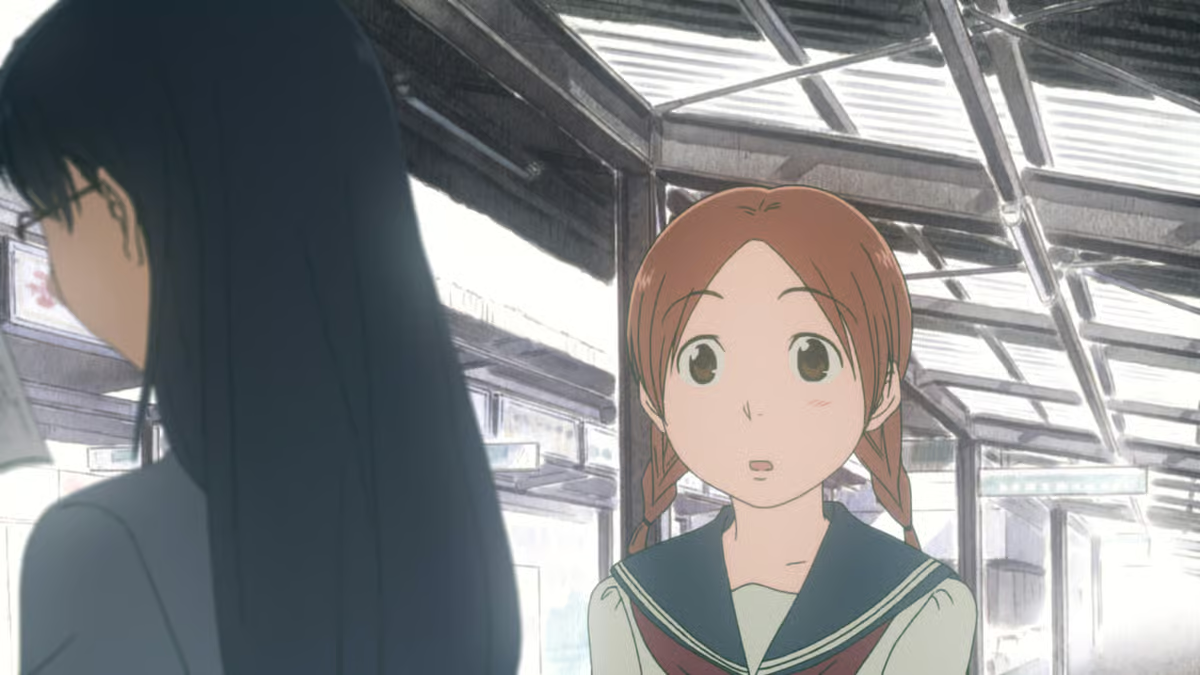
Image Source: Bing Image. License: All Creative Commons

7. Sweet Blue Flowers (Aoi Hana)

Quiet, tender, and deeply human, Sweet Blue Flowers tells a coming-of-age story about two girls rediscovering their feelings for each other.

Image Source: Bing Image. License: All Creative Commons

Rather than relying on melodrama, the series focuses on small moments, glances, conversations, and uncertainty. It treats lesbian love as normal, gentle, and sincere. It’s often recommended as essential viewing for anyone seeking authentic yuri storytelling.

Image Source: Bing Image. License: All Creative Commons

6. Blue Reflection: Second Light

This yuri-forward JRPG doesn’t hide what it is. Blue Reflection: Second Light centers emotional intimacy, vulnerability, and romantic bonds between girls without sensationalizing them.

Image Source: Bing Image. License: All Creative Commons

Relationships grow through shared trauma and support, making the connections feel earned and heartfelt. There’s no shock value, just warmth and honesty. It’s a standout example of queer storytelling done with care in gaming and anime-adjacent media.

Image Source: Bing Image. License: All Creative Commons

5. Adachi and Shimamura

This slow-burn romance captures the awkward, uncertain process of falling in love with your best friend. It’s tender, introspective, and painfully relatable.

Image Source: Bing Image. License: All Creative Commons

The series focuses on emotional honesty rather than grand gestures, letting feelings evolve naturally. For many fans, that realism is what makes it special. It’s a quiet but powerful addition to modern yuri anime.

Image Source: Bing Image. License: All Creative Commons

4. Canaan

Canaan blends high-octane action with an intense emotional bond between its female leads. Amid gunfights and espionage, the connection between Canaan and Maria grounds the story.

Image Source: Bing Image. License: All Creative Commons

Their relationship isn’t sidelined; it’s essential. The show dares to center women-loving-women dynamics in a genre that rarely does. Stylish and unapologetic, Canaan remains a standout.

Image Source: Bing Image. License: All Creative Commons

3. Sakura Trick

Playful, sweet, and openly affectionate, Sakura Trick embraces the joy of discovering queer feelings. While heavy on fan service, it’s also sincere in its celebration of young love.

Image Source: Bing Image. License: All Creative Commons

The series focuses on two friends navigating what it means to want more and not knowing what to do with that realization. It’s a beloved classic for fans who enjoy lighthearted yuri with heart.

Image Source: Bing Image. License: All Creative Commons

2. Jakotsu (Inuyasha)

Jakotsu made waves as a flamboyant, gender-nonconforming villain in a mainstream shonen anime. Confident and openly flirtatious, he challenged norms in early-2000s television.

Image Source: Bing Image. License: All Creative Commons

Though his role as a villain raises questions about trope usage, his unapologetic queerness left a strong impression on fans. Jakotsu remains one of Inuyasha’s most memorable characters, and a reminder of queer presence even in unexpected places.

Image Source: Bing Image. License: All Creative Commons

1. Kaworu Nagisa (Neon Genesis Evangelion)

Kaworu Nagisa’s brief appearance reshaped queer coding in anime forever. His gentle affection toward Shinji, including an explicit declaration of love, was groundbreaking.

Image Source: Bing Image. License: All Creative Commons

In just one episode, Kaworu embodied tenderness, understanding, and tragic inevitability. His impact far outweighs his screen time. Decades later, he remains a symbol of queer longing, connection, and emotional honesty.
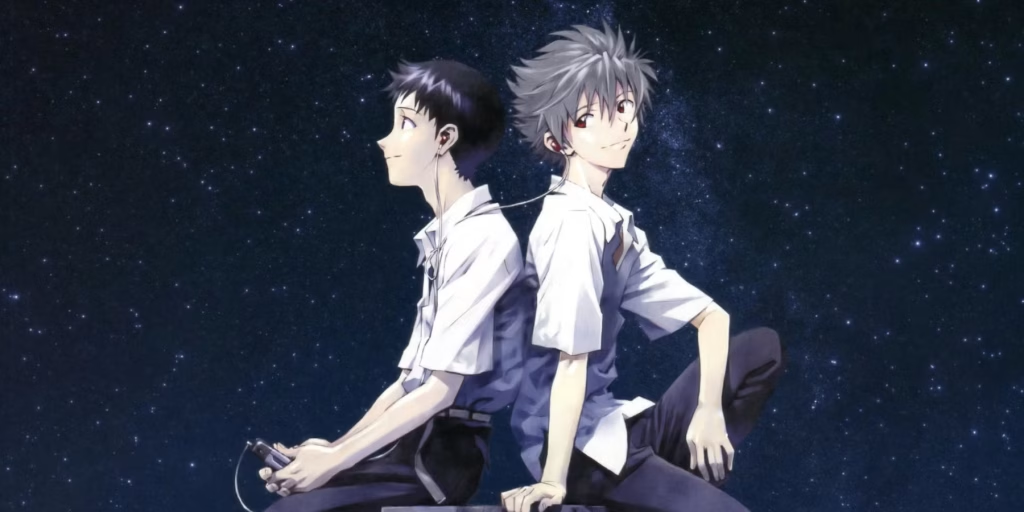
Image Source: Bing Image. License: All Creative Commons

Queer representation in anime hasn’t always been perfect, but it’s always been present. From explicit romances to layered subtext and metaphor, these characters and series helped LGBTQ+ fans see themselves reflected on screen. They opened doors, sparked conversations, and proved that anime has always been a space for stories that challenge norms and celebrate identity.

15 Intense Performances That Explore the Human Side of Alcoholism on Screen

0
Image Source: Bing Image. License: All Creative Commons

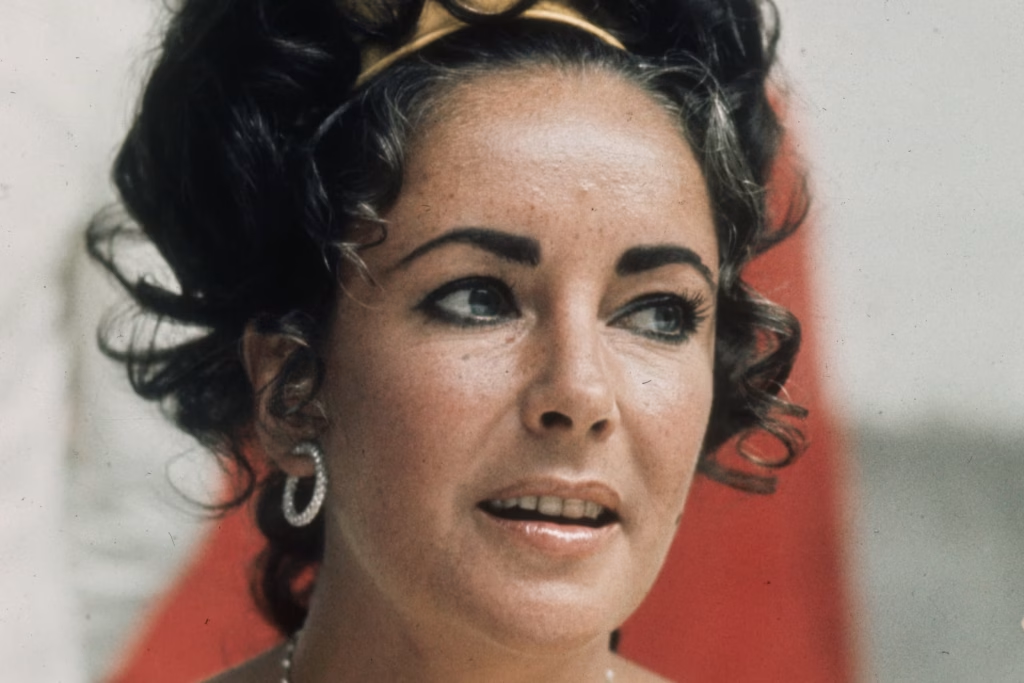
15. Elizabeth Taylor: A Hollywood Icon Who Faced Addiction Head-On

Elizabeth Taylor’s battles with alcoholism and prescription drug dependence became some of the most infamous struggles in Hollywood history. At her lowest points, she was reportedly too intoxicated to deliver her lines during entire days of filming, with both her career and personal life teetering on the edge.

Image Source: Bing Image. License: All Creative Commons

In 1983, Taylor made a bold and historic decision by checking herself into the Betty Ford Center, becoming the first major celebrity to do so. Her choice helped normalize seeking treatment and encouraged others to step forward without fear of public shame.

Image Source: Bing Image. License: All Creative Commons

Personal writings from her time in rehab paint a harrowing picture—racing heartbeats, crushing fatigue, and the brutal reality of withdrawal. Though her health declined later in life and contributed to her passing at 79, Taylor’s openness transformed conversations around addiction and left behind a lasting legacy of resilience and advocacy.

Image Source: Bing Image. License: All Creative Commons

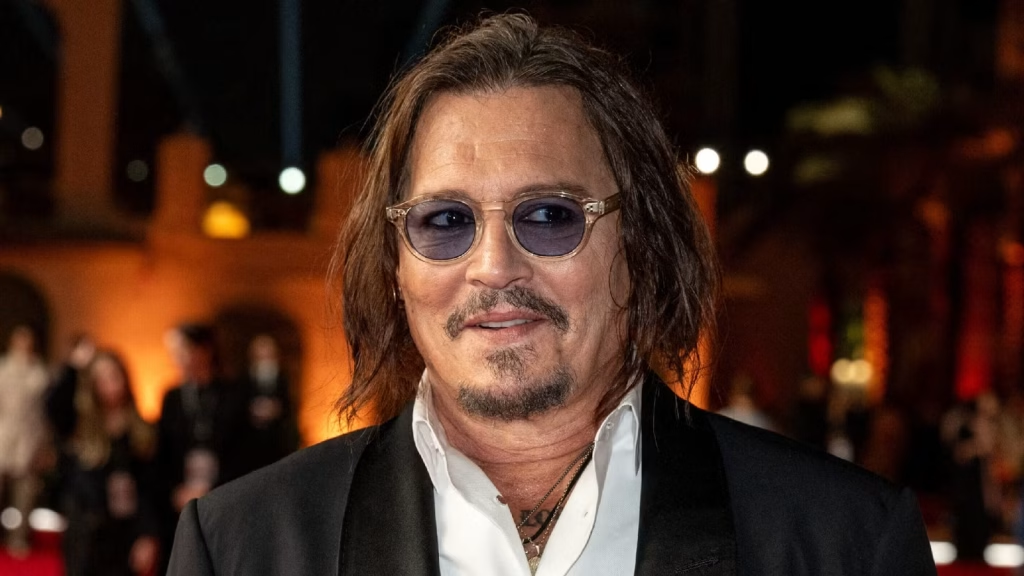
14. Johnny Depp: When Addiction Took Everything

Johnny Depp’s struggle with alcohol intensified during the aftermath of his divorce from Amber Heard. He has spoken openly about starting his mornings with vodka, writing through tears, and spending tens of thousands of dollars each month on wine alone.

Image Source: Bing Image. License: All Creative Commons

The excess eventually spiraled into emotional turmoil and financial chaos, forcing Depp to confront the roots of his self-destructive habits. Stepping away from alcohol, he turned to music and writing as healthier forms of expression.

Image Source: Bing Image. License: All Creative Commons

His brutally honest reflections serve as a reminder that fame, wealth, and success offer no immunity from addiction—and that recovery often begins with painful self-awareness.

Image Source: Bing Image. License: All Creative Commons

13. Michael Phelps: Beneath the Gold Medal

Despite being the most decorated Olympian in history, Michael Phelps found himself battling alcohol abuse following his second DUI arrest. Initially unsure whether drinking was truly his problem, Phelps later recognized how closely it was tied to untreated depression and emotional burnout.

Image Source: Bing Image. License: All Creative Commons

By speaking publicly about his struggles, he helped shatter myths surrounding athletes and addiction. His willingness to seek treatment and prioritize mental health has inspired countless others to acknowledge their own challenges and pursue recovery.

Image Source: Bing Image. License: All Creative Commons

12. Tim McGraw: Breaking Free From “Liquid Courage.”

For years, Tim McGraw relied on alcohol to calm his nerves before performances—a habit deeply influenced by the binge-drinking culture of his Louisiana roots. Over time, what began as confidence-boosting behavior grew into something far more destructive.

Image Source: Bing Image. License: All Creative Commons

Recognizing the toll it was taking on his family and career, McGraw chose sobriety just before a major tour, calling it one of the hardest decisions he’s ever made. By confronting emotional wounds and dismantling the excuses behind his drinking, he rebuilt his life from a place of honesty and vulnerability.

Image Source: Bing Image. License: All Creative Commons

11. Kat Von D: Choosing Sobriety—and Sharing It

Kat Von D has turned her sobriety into a public message of hope, marking each year alcohol-free with her followers online. She’s described her former lifestyle as an “addiction to chaos,” one that was glamorized within creative circles.

Image Source: Bing Image. License: All Creative Commons

Art became her anchor during recovery, helping her regain clarity and stability. By openly discussing both her destructive past and her joy in sobriety, Von D has become a source of encouragement for those navigating recovery themselves.

Image Source: Bing Image. License: All Creative Commons

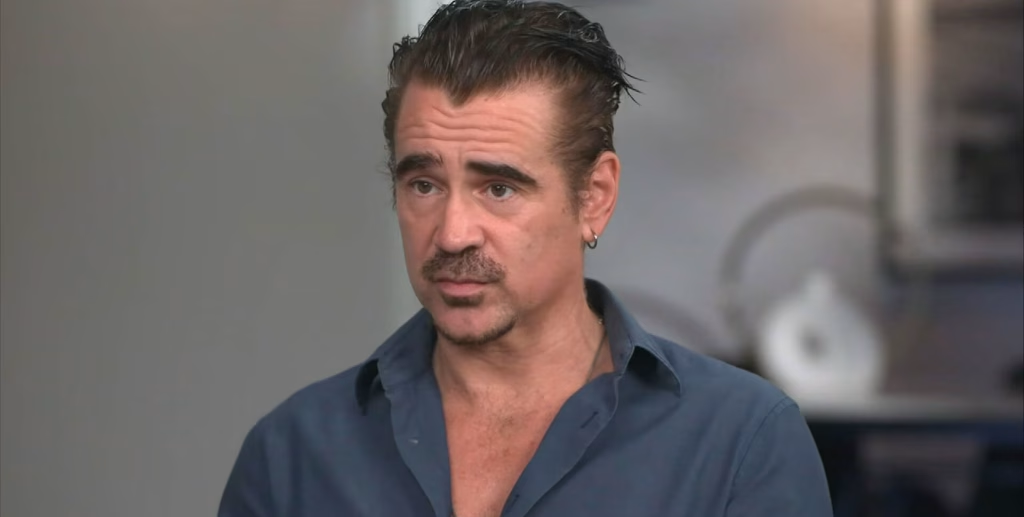
10. Colin Farrell: Recovery Without Illusions

Colin Farrell has referred to his addiction as a familiar story—messy, painful, and deeply human. After finishing Miami Vice, he found himself emotionally adrift, prompting another return to rehab in hopes of repairing relationships and regaining control.

Image Source: Bing Image. License: All Creative Commons

Farrell emphasizes that recovery isn’t a one-time victory but an ongoing commitment. He’s particularly vocal about dismantling the stigma surrounding addiction, especially in cultures that equate masculinity with emotional suppression.

Image Source: Bing Image. License: All Creative Commons

9. Zac Efron: Fame Came First—Addiction Followed

Zac Efron’s rapid rise to stardom brought intense pressure, and alcohol soon became a coping mechanism. Working on party-heavy films like Neighbors blurred boundaries, leading to repeated rehab visits within a short span of time.

Image Source: Bing Image. License: All Creative Commons

Efron has described addiction as a lifelong challenge, one he continues to manage through therapy and Alcoholics Anonymous. His willingness to discuss embarrassment, setbacks, and growth offers reassurance to others trying to recover under constant scrutiny.

Image Source: Bing Image. License: All Creative Commons

8. Edie Falco: Turning Personal Pain Into Powerful Art

Edie Falco’s own history with addiction deeply informed her performance as Nurse Jackie. With more than 25 years of sobriety, she found the role both affirming and emotionally difficult—especially when her character relapsed.

Image Source: Bing Image. License: All Creative Commons

Falco has praised the show for portraying addiction honestly, without neat resolutions or glamorization. Her work demonstrates how lived experience can elevate storytelling and foster deeper understanding.

Image Source: Bing Image. License: All Creative Commons

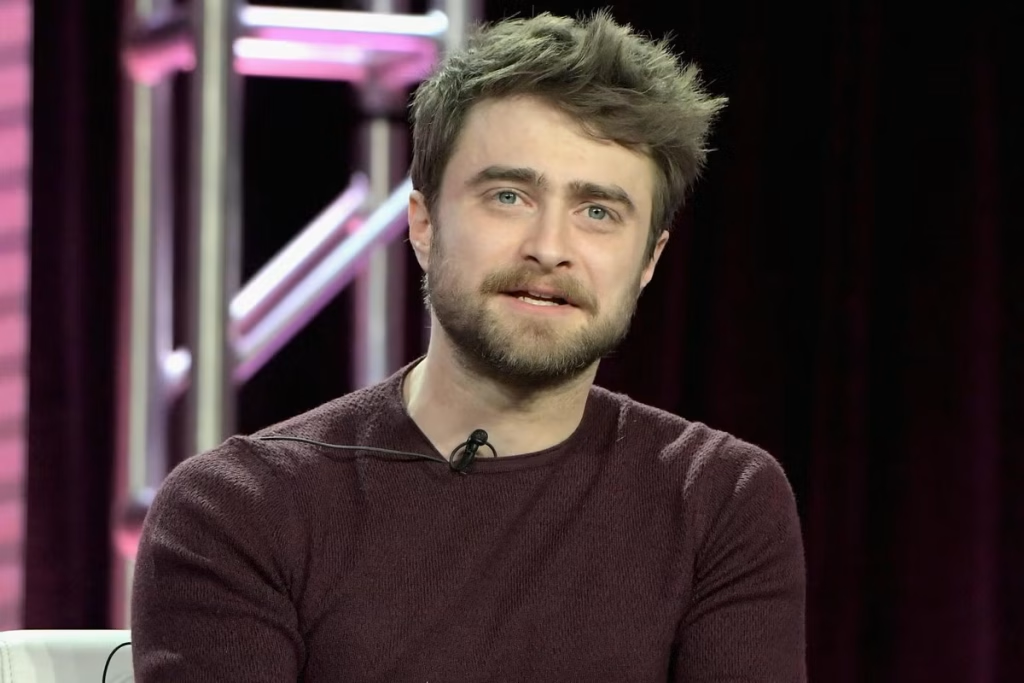
7. Daniel Radcliffe: Escaping Fame Through Alcohol

After becoming world-famous as a teenager, Daniel Radcliffe used alcohol to cope with constant public attention. He has described himself as having an inherently addictive personality and admitted to drinking daily during that period.

Image Source: Bing Image. License: All Creative Commons

Support from close friends helped him find healthier ways to manage pressure and seek help. By speaking candidly about his struggles, Radcliffe challenges the myth that success shields people from inner turmoil.

Image Source: Bing Image. License: All Creative Commons

6. Ben Affleck: Recovery as a Lifelong Practice

Ben Affleck has never hidden the fact that sobriety is an ongoing journey for him. After multiple rehab stays, including a 40-day inpatient program followed by outpatient care, he’s emphasized that addiction requires constant vigilance.

Image Source: Bing Image. License: All Creative Commons

Affleck hopes his transparency encourages others to seek treatment without shame. His story reflects persistence, accountability, and the courage it takes to keep starting again.

Image Source: Bing Image. License: All Creative Commons

5. The Outrun: From Memoir to Screen

Amy Liptrot’s memoir about recovering from alcoholism while returning to Scotland’s Orkney Islands was later adapted into a film starring Saoirse Ronan. Watching her life reimagined on screen felt surreal—like confronting a distorted reflection of herself.

Image Source: Bing Image. License: All Creative Commons

Liptrot remained involved in the adaptation process, helping preserve the emotional truth while maintaining personal distance. The film stands as a quiet, moving exploration of healing through place, solitude, and connection.

Image Source: Bing Image. License: All Creative Commons

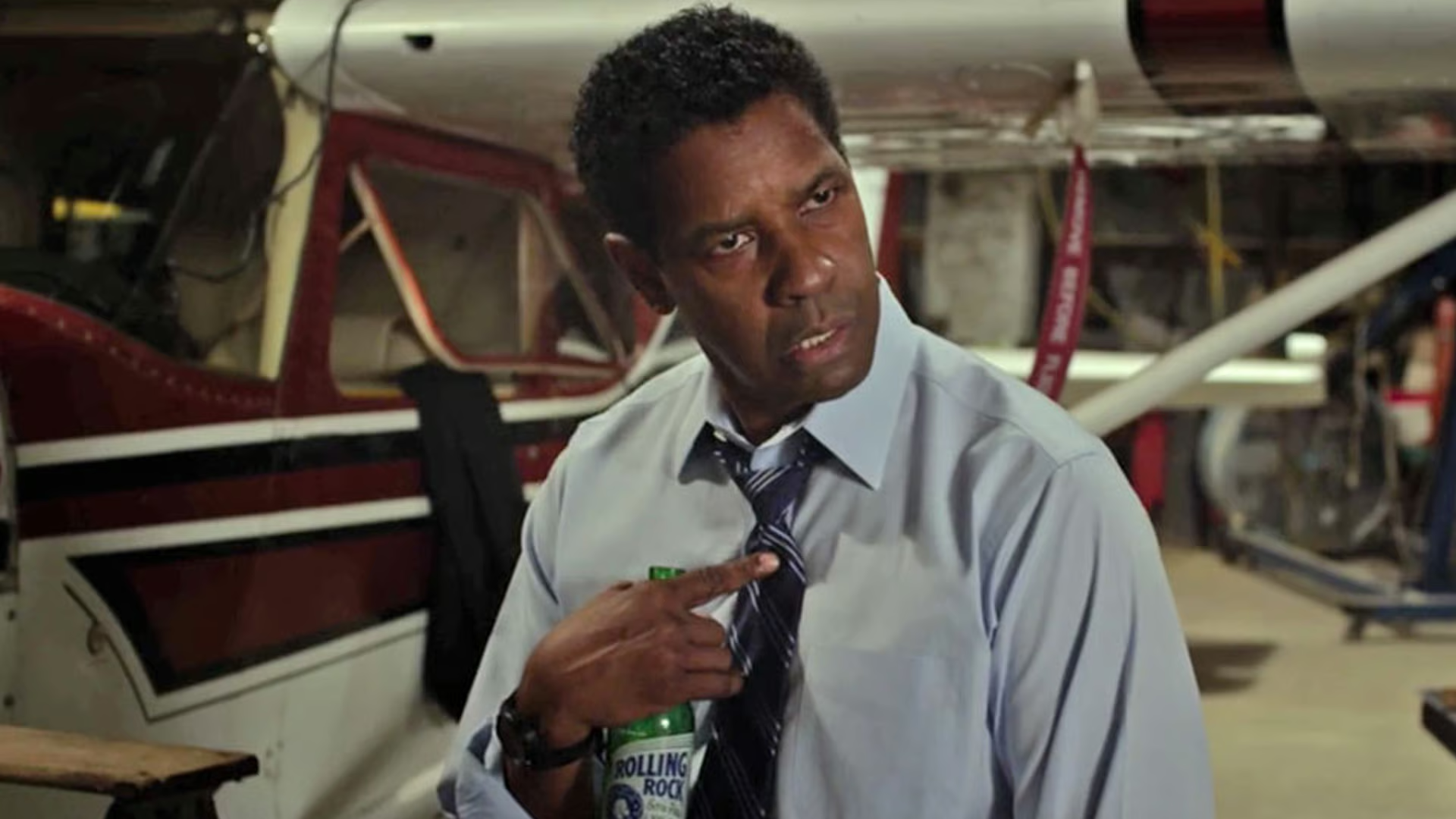
4. Flight (2012): A Stark Portrait of Functional Addiction

Denzel Washington’s portrayal of pilot Whip Whitaker offers one of cinema’s most honest depictions of “functional” alcoholism. Though outwardly competent, Whitaker’s addiction slowly unravels his life until catastrophe forces him to face the truth.

Image Source: Bing Image. License: All Creative Commons

The film avoids sensationalism, instead focusing on denial, consequences, and accountability. It remains one of the rare movies that captures addiction’s complexity without romanticizing it.

Image Source: Bing Image. License: All Creative Commons

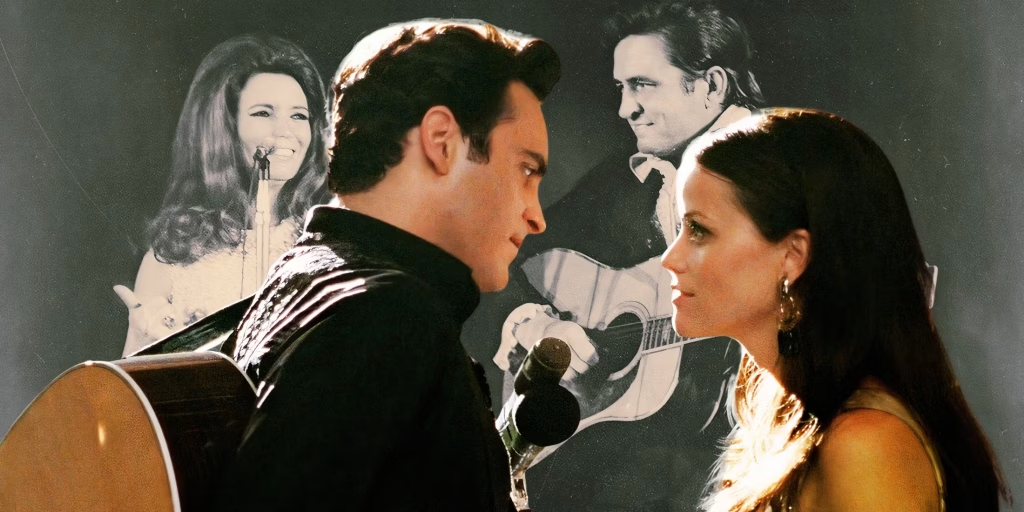
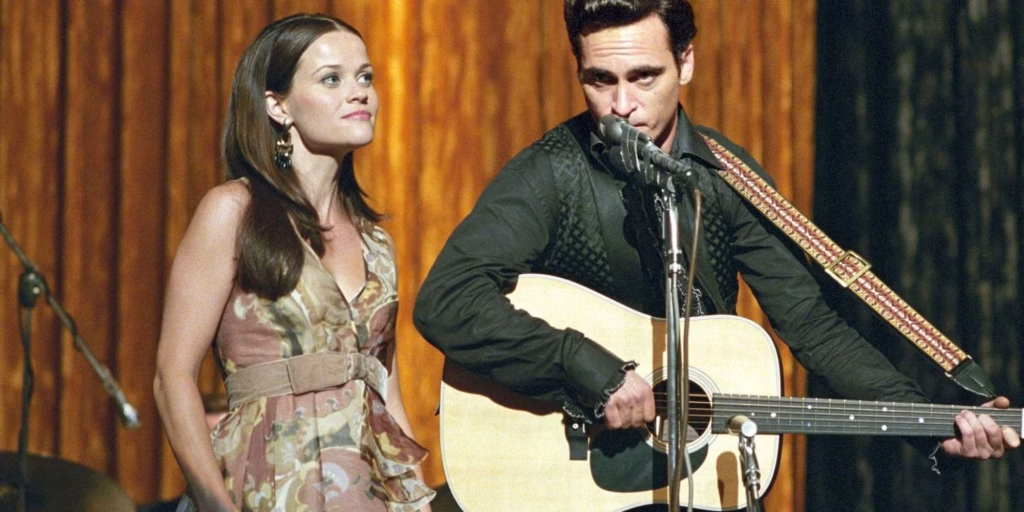
3. Walk the Line (2005): Johnny Cash’s Demons

Walk the Line traces Johnny Cash’s rise to fame alongside his destructive dependence on alcohol and pills. The film presents addiction as both fuel and threat—deeply intertwined with creativity yet capable of destroying everything it touches.

Image Source: Bing Image. License: All Creative Commons

By refusing to soften Cash’s struggles, the movie resonates with audiences who recognize the chaos of substance abuse in their own lives.

Image Source: Bing Image. License: All Creative Commons

2. The Marvelous Mrs. Maisel: Letting Go of the Crutch

Early seasons of The Marvelous Mrs. Maisel show Midge using alcohol as emotional armor during her stand-up routines. Over time, she realizes her confidence and talent don’t actually depend on drinking.

Image Source: Bing Image. License: All Creative Commons

The show’s subtle shift away from alcohol reflects personal growth rather than dramatic intervention, offering a relatable portrayal of outgrowing unhealthy coping mechanisms.

Image Source: Bing Image. License: All Creative Commons

1. How Hollywood Really Portrays Drinking

On screen, alcohol is an illusion. Actors rarely consume real liquor during filming—iced tea, juices, and non-alcoholic substitutes stand in for spirits and wine. Fake ice cubes ensure visual consistency, while performers rely on acting techniques to convey intoxication authentically.

Image Source: Bing Image. License: All Creative Commons

Actors are often coached to play the attempt to seem sober rather than exaggerated drunkenness, creating more realistic scenes. While movies can sometimes glamorize drinking, behind the camera, the focus ison safety, professionalism, and telling these stories responsibly.

15 Thrilling Train Movies That Won’t Let You Look Away

0
Image Source: Bing Image. License: All Creative Commons

Filmmakers have long been drawn to trains as storytelling devices. Trains push a story forward, often catching characters off guard, confining multiple characters in tight spaces to heighten tension, and turning time itself into a source of pressure. From the silent era to today’s genre-blending films, train-centered movies continue to deliver some of cinema’s most gripping and memorable stories. Below is a list of 15 remarkable train movies that use the rails to create suspense, drama, and unforgettable storytelling.

Image Source: Bing Image. License: All Creative Commons

15. The Great Train Robbery (1903)

Everything starts here. The Great Train Robbery didn’t just popularize train-centered storytelling; it helped define how movies create suspense. This silent short may be over a hundred years old, but its energy is still impressive. By cutting back and forth between criminals robbing a train and a posse racing to stop them, the film introduced audiences to parallel editing in a way that felt thrilling and new.

Image Source: Bing Image. License: All Creative Commons

That technique became a cornerstone of action and thriller filmmaking. Watching it today feels like spotting the first sparks of modern cinema. Despite its simplicity, the film proves that tension doesn’t need dialogue, just smart pacing, movement, and purpose. Its influence stretches far beyond its runtime. Nearly every intense train sequence since owes something to this pioneering classic.

Image Source: Bing Image. License: All Creative Commons

14. Double Indemnity (1944)

When it comes to noir, Double Indemnity sits near the top of the mountain. Billy Wilder’s razor-sharp thriller uses a train as the key setting for a murder disguised as an accident. Barbara Stanwyck and Fred MacMurray bring a dangerous chemistry to a plot where greed and guilt ride side by side.

Image Source: Bing Image. License: All Creative Commons

The train sequence isn’t decorative; it’s essential. The enclosed environment magnifies every glance and hesitation, turning the journey into a pressure cooker of moral decay. The train’s unstoppable movement mirrors the characters’ slide toward ruin. Few films use setting so deliberately. The result is one of noir’s most iconic and suspenseful moments.

Image Source: Bing Image. License: All Creative Commons

13. Train to Busan (2016)

Few modern films have used a train as effectively, or as brutally, as Train to Busan. This South Korean hit drops a zombie outbreak onto a high-speed train, instantly turning every carriage into a survival test.

Image Source: Bing Image. License: All Creative Commons

What makes the film stand out is how creatively it uses the train’s structure. Each car presents new dangers, emotional beats, and moral choices. Beneath the relentless action is a sharp look at class, selfishness, and sacrifice. It’s thrilling, heartbreaking, and smart, proof that genre films can deliver both adrenaline and substance.

Image Source: Bing Image. License: All Creative Commons

12. Murder on the Orient Express (1974)

Elegant, icy, and meticulously constructed, Murder on the Orient Express turns a luxury train into a snowbound crime scene. With nowhere to escape, every passenger becomes a suspect, and Hercule Poirot must untangle a web of secrets.

Image Source: Bing Image. License: All Creative Commons

The isolation of the train fuels the suspense. Interviews, flashbacks, and subtle clues keep the mystery tight while the lavish production design adds a layer of old-world glamour. This adaptation helped define ensemble mystery filmmaking and cemented the train as the ultimate locked-room setting.

Image Source: Bing Image. License: All Creative Commons

11. The Darjeeling Limited (2007)

Wes Anderson’s The Darjeeling Limited takes a gentler approach to train storytelling. The film follows three brothers crossing India by rail, using the journey as a way to explore grief, family tension, and healing.

Image Source: Bing Image. License: All Creative Commons

The train acts as a floating emotional space, part refuge, part confrontation zone. Anderson’s visual precision and offbeat humor balance moments of genuine vulnerability. It’s not about danger or speed, but about what happens when people can’t outrun their past even while moving forward.

Image Source: Bing Image. License: All Creative Commons

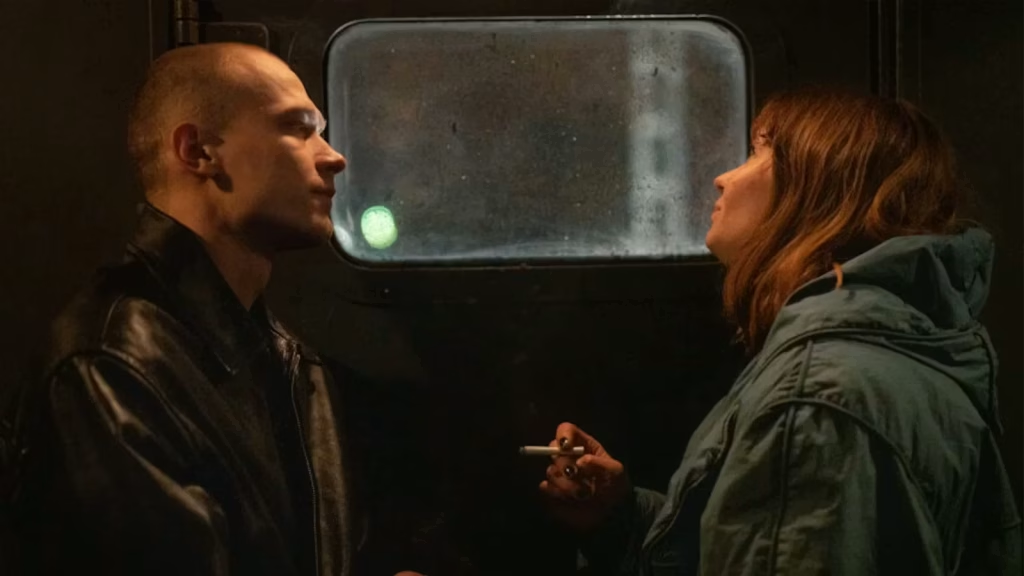
10. Compartment No. 6 (2021)

Quiet and deeply human, Compartment No. 6 proves that intimacy can be just as gripping as action. The film centers on two strangers sharing a sleeper car on a long journey north, forced into an awkward closeness that slowly softens.

Image Source: Bing Image. License: All Creative Commons

The train’s rhythm reflects their emotional shifts, while the bleak landscapes outside contrast with the warmth forming inside the compartment. Nothing feels rushed or overstated. It’s a reminder that sometimes the most powerful train stories happen in whispers, not explosions.

Image Source: Bing Image. License: All Creative Commons

9. Trans-Europ-Express (1966)

This French New Wave oddity turns the train into a playground for ideas. Trans-Europ-Express follows filmmakers discussing a crime story while traveling, only for that story to begin unfolding alongside them.

Image Source: Bing Image. License: All Creative Commons

The result is playful, confusing, and endlessly fascinating. The film constantly questions what’s real, what’s imagined, and who’s in control of the narrative. It’s not for everyone, but for adventurous viewers, it’s a reminder of how trains can carry stories in unexpected directions.

Image Source: Bing Image. License: All Creative Commons

8. Before Sunrise (1995)

One of cinema’s most beloved romances begins with a train ride. Before Sunrise introduces two strangers who meet by chance and decide to spend a night talking, walking, and connecting.

Image Source: Bing Image. License: All Creative Commons

The train is brief but crucial; it’s the spark that makes everything possible. That single decision sets off a story built entirely on conversation and emotional honesty. It’s proof that a journey doesn’t need danger to matter sometimes; it just needs the right people on board.

Image Source: Bing Image. License: All Creative Commons

7. The Taking of Pelham One Two Three (1974)

This gritty subway thriller turns New York’s transit system into a battlefield. When hijackers seize a train and demand a ransom, a weary transit cop becomes the city’s best hope.

Image Source: Bing Image. License: All Creative Commons

The film thrives on precision editing and sharp dialogue, cutting between criminals, officials, and trapped passengers. Every delay feels lethal. While it’s been remade, the original remains unmatched, lean, tense, and relentlessly efficient.

Image Source: Bing Image. License: All Creative Commons

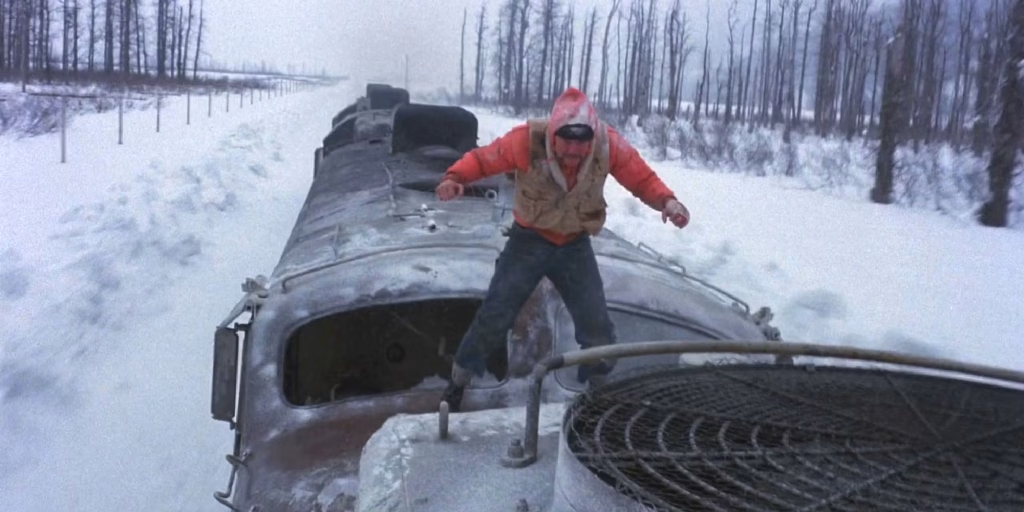
6. Runaway Train (1985)

Few films capture pure momentum like Runaway Train. Two escaped prisoners find themselves aboard a locomotive with no brakes, barreling through an unforgiving landscape.

Image Source: Bing Image. License: All Creative Commons

The action is intense, but the film’s real strength lies in its themes of fate, freedom, and self-destruction. Jon Voight and Eric Roberts deliver raw, desperate performances. It’s a survival thriller that feels philosophical without losing its edge.

Image Source: Bing Image. License: All Creative Commons

5. Snowpiercer (2013)

In Snowpiercer, the train becomes the world. Bong Joon-ho imagines humanity’s last survivors locked into a rigid class system aboard a constantly moving engine.

Image Source: Bing Image. License: All Creative Commons

Each train car represents a different layer of society, turning the forward march into a revolution. The action is brutal, inventive, and tightly choreographed. More than a spectacle, the film is a sharp allegory about power, inequality, and survival.

Image Source: Bing Image. License: All Creative Commons

4. Strangers on a Train (1951)

Hitchcock turns a casual meeting into a nightmare in Strangers on a Train. A conversation about “exchanging murders” becomes horrifyingly real, setting fate into motion.

Image Source: Bing Image. License: All Creative Commons

The train represents inevitability. Once the idea is planted, there’s no stopping it. Hitchcock’s cross-cutting and visual precision build unbearable tension. It’s one of cinema’s great psychological thrillers, powered by chance and consequence.

Image Source: Bing Image. License: All Creative Commons

3. Twentieth Century (1934)

Fast-talking and ferociously funny, Twentieth Century transforms a train into a battleground for romance and ego. John Barrymore and Carole Lombard clash nonstop as former collaborators hurtle toward New York.

Image Source: Bing Image. License: All Creative Commons

The train’s nonstop movement matches the film’s breakneck pace. Every compartment becomes a stage for verbal sparring. It’s a reminder that comedy can be just as suspenseful as drama, especially when love is on the line.

Image Source: Bing Image. License: All Creative Commons

2. The Lady Vanishes (1938)

Another Hitchcock triumph, The Lady Vanishes blends mystery, humor, and paranoia. When a woman disappears mid-journey, one passenger’s insistence on finding her meets constant resistance.

Image Source: Bing Image. License: All Creative Commons

The train’s enclosed setting amplifies doubt and suspicion, while Hitchcock keeps the audience guessing through clever misdirection. It remains one of the finest examples of train-based mystery storytelling.

Image Source: Bing Image. License: All Creative Commons

1. The General (1926)

At the top of the list is Buster Keaton’s The General, a silent-era miracle of comedy and action. Set during the Civil War, the film revolves around a stolen locomotive and Keaton’s relentless pursuit.

Image Source: Bing Image. License: All Creative Commons

The stunts are astonishing, the timing flawless, and the suspense real. Keaton blends humor and danger so seamlessly that every chase feels exhilarating. Nearly a century later, The General still defines what a great train movie can be: funny, thrilling, and timeless.

Image Source: Bing Image. License: All Creative Commons

Whether they’re racing toward disaster, carrying strangers into connection, or serving as pressure cookers for crime and chaos, trains have given filmmakers a perfect storytelling engine. These films prove that once a story is set on the rails, all it needs is the right direction and the courage to keep moving forward.

15 Essential Sci-Fi Movies and TV Shows

0
Image Source: Bing Image. License: All Creative Commons

Let’s be honest, science fiction has never been better than it is today. With an endless array of options available through streaming services like Netflix, Apple TV+, and more, it is an ideal time to delve into strange new worlds, ponder reality, and observe humanity facing its future. Whether you are an avid fan of science fiction or just looking to get your feet wet, these 15 must-see science fiction movies and shows are absolute must-watches. We’ve listed them from 15 down to 1 to keep it exciting.

Image Source: Bing Image. License: All Creative Commons

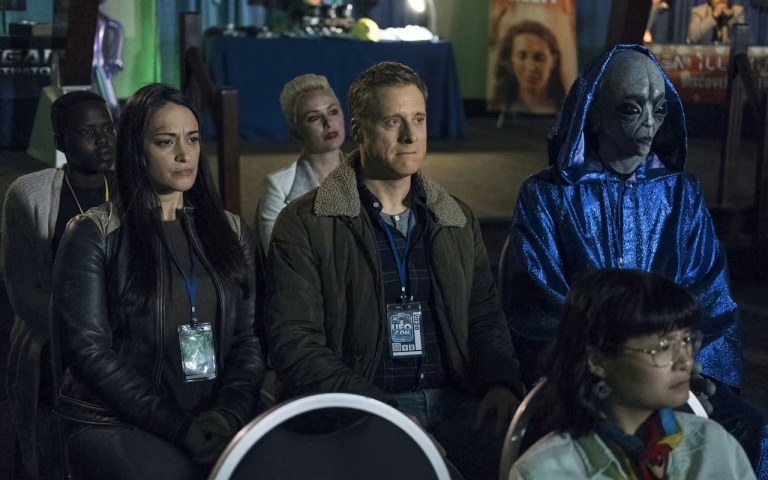
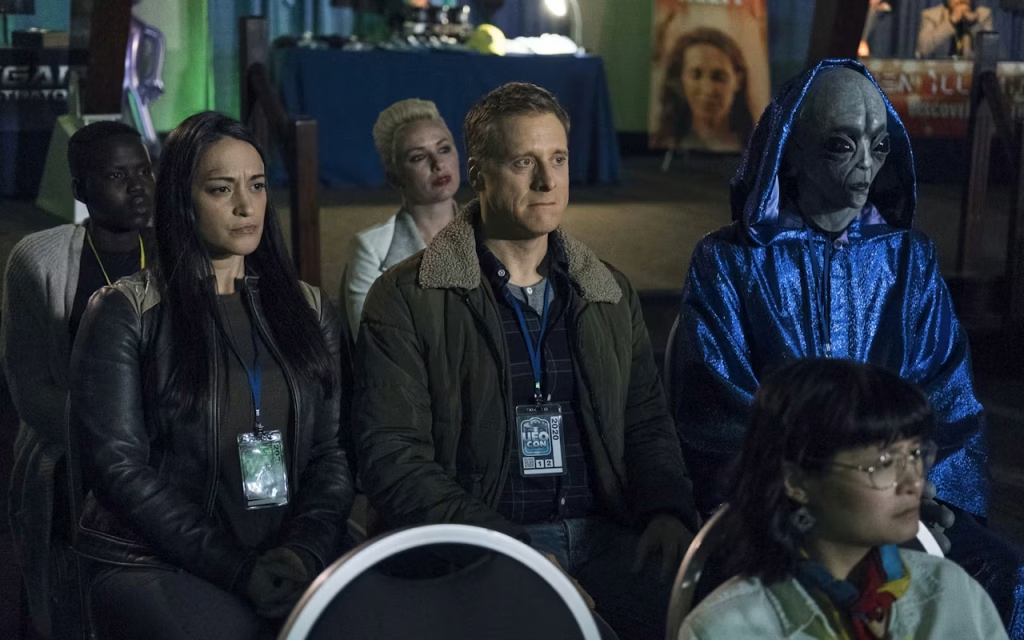
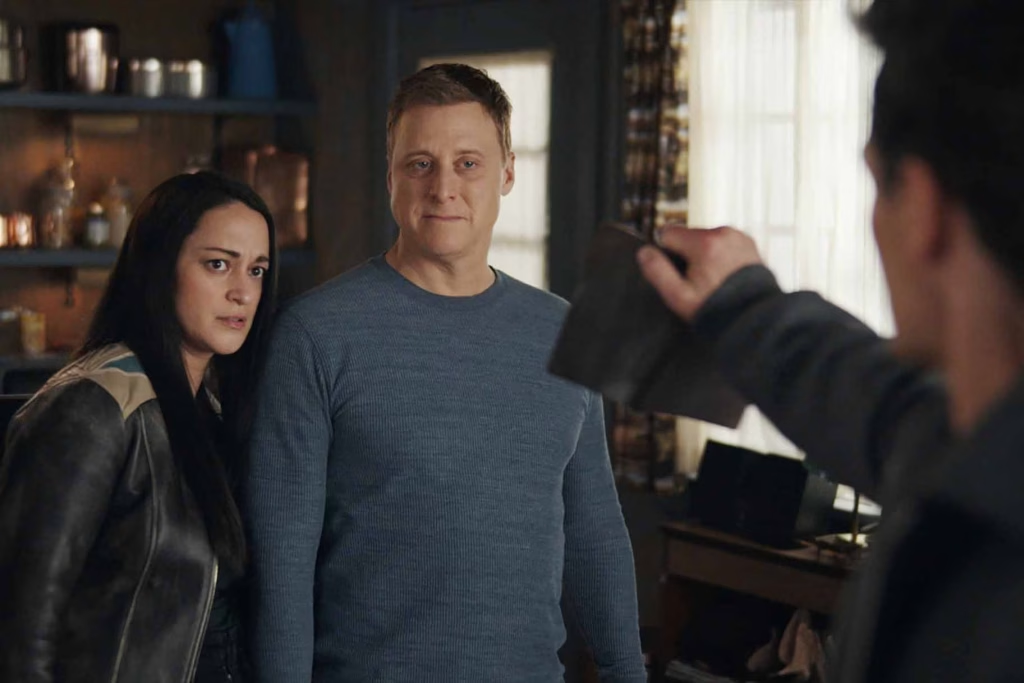
15. Resident Alien

Who would’ve thought aliens could be so endearingly quirky? Alan Tudyk steals the show as an intergalactic assassin who’s stranded on Earth, disguising himself as a small-town doctor. What was intended to be a mission of extermination quickly becomes a surprisingly funny and touching exploration of what it means to be human. Smart, funny, and full of quirky charm, it’s the kind of sci-fi comedy that sneaks up on you and sticks.

Image Source: Bing Image. License: All Creative Commons

14. The Wild Robot

Imagine Cast Away meets AI, but with animation. The Wild Robot is a story that revolves around an evolving AI named Roz that lands on a deserted island and has to learn how to survive with the help of the island’s wildlife. The movie is a heartwarming adventure that teaches lessons on empathy, growth, and purpose, making it a film that can be enjoyed by all.

Image Source: Bing Image. License: All Creative Commons

13. Alice in Borderland

Wake up in a deserted Tokyo. Survive by winning deadly games. That is the concept of this fast-paced Japanese show based on the popular manga. What you get is a high-stakes mix of survival thriller, sci-fi mystery, and psychological drama that will leave you guessing until the last round.

Image Source: Bing Image. License: All Creative Commons

12. See

In this Apple TV+ saga, the power of sight has been lost to humanity, and vision is the greatest taboo. Jason Momoa plays Baba Voss, a formidable guardian of his children, who were born with vision in a world that is terrified of it. The series brings stunning action, dense world-building, and an evocative tale of family and survival.

Image Source: Bing Image. License: All Creative Commons

11. The Umbrella Academy

A dysfunctional superhero family, time-traveling, apocalypse-stopping? Count us in. The Umbrella Academy is as crazy, funny, and emotional as it is heart and comic-book-mad, all of which are served with killer soundtracks. Weird and witty sci-fi fans, rejoice.

Image Source: Bing Image. License: All Creative Commons

10. Foundation

Isaac Asimov’s beloved epic at last receives the sweeping treatment it merits on Apple TV+. Foundation is a grand space epic about the development and decline of civilizations and the battle to maintain knowledge amidst collapse. It’s breathtaking, intelligent, and as ambitious as science fiction comes.

Image Source: Bing Image. License: All Creative Commons

9. Silo

Inspired by Hugh Howey’s Wool books, Silo isolates the audience in a massive underground silo in which what lies “outside” could be the greatest deception of all. Rebecca Ferguson stars in this slow-burning thriller of paranoia, lies, and uprising. It’s claustrophobic science fiction at its finest.

Image Source: Bing Image. License: All Creative Commons

8. Black Mirror

Technology, but horror-fied. Each episode of Black Mirror is a bleak little universe, contemplating how our technology, social media addiction, and fascination with AI can kill us. It’s incisive, eerie, and uncomfortably plausible.

Image Source: Bing Image. License: All Creative Commons

7. The Creator

What if humans conclude AI has moved too far? The Creator tracks down a soldier (John David Washington) who has been ordered to obliterate sophisticated AI until he meets a childlike robot who may be the key to peace. It’s an action-packed, emotional exploration of empathy and the thin line between man and machine.

Image Source: Bing Image. License: All Creative Commons

6. 3 Body Problem

From the makers of Game of Thrones comes Netflix’s most ambitious sci-fi series so far. Based on Liu Cixin’s novel, The 3 Body Problem is a group of scientists who discover a chilling extraterrestrial threat that might destroy reality itself. It’s cerebral, gritty, and downright riveting.

Image Source: Bing Image. License: All Creative Commons

5. Ghost in the Shell

The crown jewel of cyberpunk anime, Ghost in the Shell, is a must-watch for anyone interested in technology, consciousness, and identity. Major Motoko Kusanagi’s hunt for a mysterious hacker raises big questions about what it means to be human, all wrapped in stunning, hand-drawn visuals that still hold up today.
Image Source: Bing Image. License: All Creative Commons

4. Stranger Things

Half ’80s nostalgia, half sci-fi horror, Stranger Things is a phenomenon for a reason. When a kid goes missing in small-town Indiana, his friends stumble upon a government cover-up and a portal to a frightening alternate dimension. It’s adorable, creepy, and rewatchable ad infinitum.

Image Source: Bing Image. License: All Creative Commons

3. Ex Machina

A lean, intelligent thriller that poses the question: if a robot can think and feel, is it then not a machine? Domhnall Gleeson, Alicia Vikander, and Oscar Isaac give powerhouse performances in this haunting tale of manipulation, creation, and control. It’s minimalist sci-fi with maximum effect.

Image Source: Bing Image. License: All Creative Commons

2. Interstellar

Christopher Nolan’s Interstellar moves us from withering farmland to outer galaxies in the quest for the next human home. It’s a cinematic trip across space and time anchored by Matthew McConaughey’s performance. The visuals are stunning, and the narrative touches on love, loss, and survival in the way only Nolan can manage.

Image Source: Bing Image. License: All Creative Commons

1. Her

Number one is Her, the least noisy, most human sci-fi movie on this list. Joaquin Phoenix stars as Theodore, a solitary writer who is smitten with his AI operating system, voiced by Scarlett Johansson. The result is an intimate study of connection, isolation, and what love appears to be in a world of computers. It’s bittersweet, melancholic, and unforgettable.

Image Source: Bing Image. License: All Creative Commons

Whether you’re after something profound, pulse-pounding, or just beautifully weird, these sci-fi stories prove the genre is as alive as ever. So grab your snacks, dim the lights, and get ready to question everything in your own reflection in the screen.

10 Times Legendary Actors Reinvented Themselves on TV

0
Image Source: Bing Image. License: All Creative Commons

Let’s face it—when you see your favorite Hollywood star on your TV screen, you normally expect something out of the ordinary. However, there are many instances when even the most successful actors’ TV performances remain low-key. Perhaps the show was short-lived, or maybe you were too busy re-watching their blockbuster films. Whatever the reason, their performances remain low-key and deserve more attention. Let’s take a look at ten of the most popular actors whose TV performances remain low-key but should not be missed.

Image Source: Bing Image. License: All Creative Commons

10. Glenn Close in Damages

Glenn Close is essentially Hollywood royalty, but her television work is somewhat overlooked because of her film work. Glenn Close starred in the TV drama series Damages, playing the role of Patty Hewes, a highly skilled and cunning lawyer who walks the line between hero and villain. While Damages may not be a mainstream ratings success, Glenn Close’s performance was so good that she won back-to-back Emmys for her role.

Image Source: Bing Image. License: All Creative Commons

9. Robin Williams in The Crazy Ones

Robin Williams’ initial claim to fame was on the television show Mork & Mindy, which eventually paved the way to becoming a legend in films. In his later years, Williams starred in a television series titled The Crazy Ones, which featured him as a quirky advertising executive alongside Sarah Michelle Gellar. Although it was not a huge ratings success, Williams’ signature blend of humor and emotion made it a touching performance from his later years.

Image Source: Bing Image. License: All Creative Commons

8. Johnny Depp in Life’s Too Short

Johnny Depp does not often do little things, but his appearance in Ricky Gervais’ Life’s Too Short is comedic gold. Adopting an over-the-top, ultra-serious version of himself, Depp sends up his own image while cringeingly bantering with Warwick Davis. It’s ridiculous, meta, and sees the normally somber star in a more lighthearted light.

Image Source: Bing Image. License: All Creative Commons

7. Ian McKellen in Vicious

Sir Ian McKellen will always be Gandalf and Magneto, but in Vicious, he is a revelation in a quite different mode. Partnered with Derek Jacobi, he plays half of a snappy, long-term couple whose acerbic wit covers true affection. The program only ran for two seasons, but McKellen’s combination of edgy comedy and sensitivity made it special.

Image Source: Bing Image. License: All Creative Commons

6. Gary Oldman in Slow Horses

Gary Oldman has portrayed everything from Dracula to Winston Churchill, but his Slow Horses character could be one of his best. Playing Jackson Lamb, the disheveled but genius MI5 outcast boss, Oldman applies sarcasm over sharp wit. The series began as a cult favorite but has expanded gradually—largely due to Oldman’s masterclass turn.

Image Source: Bing Image. License: All Creative Commons

5. Donald Sutherland in Trust

Donald Sutherland has had decades of iconic roles, yet his performance as J. Paul Getty in Trust (2018) is underappreciated and chilling. Cold, manipulative, and boundless in his calculating, Sutherland both fascinates and repels the viewer with his performance as Getty. It’s a reminder of why Sutherland is still one of the greatest actors of his generation.

Image Source: Bing Image. License: All Creative Commons

4. Patrick Stewart in Extras

Patrick Stewart typically emanates gravitas as Captain Picard or Professor X—but in Ricky Gervais’ Extras, he happily turns it around. Portraying an exaggerated version of himself, Stewart offers a laugh-out-loud-bad screenplay for a film filled with involuntary nudity, all presented with straight-faced seriousness. It’s Stewart at his most humorous and surprising.

Image Source: Bing Image. License: All Creative Commons

3. Matt LeBlanc in Episodes

Matt LeBlanc will forever be Joey to Friends enthusiasts, but Episodes provided him with a new spin. Portraying a self-parodic version of himself, he dove headfirst into his own persona with biting self-deprecation. The payoff? A Golden Globe-winning turn that showed LeBlanc had a whole lot more range than folks credited him with.

Image Source: Bing Image. License: All Creative Commons

2. Bette Davis in The Dark Secret of Harvest Home

Bette Davis was already a legend by the late ’70s, but in this chilling miniseries, she gave one of her most unsettling performances. As Widow Fortunate, she depicted the head of an evil village with equal parts charm and sinister intent. It’s a reminder that Davis never hesitated to play risky, unsettling characters—even late in her career.

Image Source: Bing Image. License: All Creative Commons

1. Amy Adams in The Office

Before her Oscar-nominated movie career took off, Amy Adams had a brief stint on The Office as Katy, the enthusiastic handbag saleswoman who romances Jim. She popped up for only two episodes, but her warmth and comedic sense made her memorable—and provided an early glimpse of the star she’d soon become. Every so often, even a bit role can seem iconic in retrospect.

Image Source: Bing Image. License: All Creative Commons

Major stars don’t always receive their due when they venture into TV, but these performances demonstrate how much talent can be camouflaged in underappreciated roles. If you didn’t catch them the first time, they’re well worth revisiting.

Leading 15 Queer Women in Hollywood

0
Image Source: Bing Image. License: All Creative Commons

Hollywood is always eager to feature a compelling story of redemption, but the most important transformation has been the increased representation of queer women, specifically lesbian and multi-gender-attracted actors. These actresses have been making an impact in film and television for a long time, at times through subtle undertones and at other times through unapologetic authenticity.

Image Source: Bing Image. License: All Creative Commons

The subtext has eventually turned into an authentic representation, and we can now see ourselves in these portrayals. Keeping that in mind, here is a countdown of 15 amazing actresses who have made an impact in film and television through their talent, presence, and groundbreaking roles.

Image Source: Bing Image. License: All Creative Commons

15. Cynthia Nixon

Cynthia Nixon has done it all, from owning the stage on Broadway to becoming a household face on screens that showcase the beauty of New York City’s backdrop. With a Tony, Grammy, and Emmy award to her name, her body of work on Broadway alone makes her a household name among lesbian performers, second only to Cherry Jones. In recent years, she has played a variety of queer roles in films such as Ratched, And Just Like That…, Warm Springs, in which she portrayed Eleanor Roosevelt, among other roles. Nixon’s activism for lesbian, gay, bisexual, transgender, and queer individuals has made her a powerful voice for lesbian visibility.

Image Source: Bing Image. License: All Creative Commons

14. Raven-Symoné

A familiar face in popular culture since she was a kid, Raven-Symoné has been part of nearly 400 live-action shows throughout her career. While she is best known for her starring roles in That’s So Raven and Raven’s Home, her body of work goes far beyond those Disney Channel shows. While growing up in the public eye, she has been open about her journey and her identity. She has also been part of Black-ish, playing a gay role, which has helped to further expand the representation of the queer community. She is still an inspiration to young gay fans who see themselves reflected in her own journey.

Image Source: Bing Image. License: All Creative Commons

13. Kate McKinnon

Kate McKinnon made history as Saturday Night Live’s first out lesbian cast member-and she’s been a comedy force ever since. From Ghostbusters to Barbie and her uncanny impressions on SNL, she brings queer energy and comedic brilliance to everything she touches. Her career began on The Big Gay Sketch Show, and she’s often spoken about how fictional icon Dana Scully helped her recognize her own identity. A full-circle moment if ever there was one.

Image Source: Bing Image. License: All Creative Commons

12. Sarah Paulson

Where there’s Ryan Murphy, there’s likely scene-stealer Sarah Paulson. From unforgettable roles in American Horror Story to Ratched to Carol and many more, Paulson’s range knows no bounds. She’s a multi-award winner, a queer icon, and her long-term relationship with Holland Taylor is adored by fans. In the past decade and a half, Paulson’s career has soared, making her one of the most respected actors in the industry.

Image Source: Bing Image. License: All Creative Commons

11.​‍​‌‍​‍‌​‍​‌‍​‍‌​‍​‌‍​‍‌​‍​‌‍​‍‌ Lily Tomlin

As one of the few laugh factories to be a trailblazer, Lily Tomlin has been the pleasure-giver to the crowd for many years. She is like a one-in-a-million whose likeness you’ve never seen stunt, which is to say that her characters in Grace and Frankie, Murphy Brown, and The West Wing are so different, and then to think she is the voice of Ms. Frizzle too! In the queer movie Grandma and Tea with Mussolini, Tomlin is a queer character. Tomlin’s artistic collaboration, and also the love story of her and Jane Wagner, which hardly anybody knows, but it’s one of the loveliest of the Hollywood queer ones, has made a great number of people ​‍​‌‍​‍‌​‍​‌‍​‍‌happy.

Image Source: Bing Image. License: All Creative Commons

10. Queen Latifah

Queen Latifah conquered music, film, and then television with ease. She has played queer characters in Bessie and Set It Off; her influence as a performer and producer stretches across almost 50 projects. But as a trailblazer for queer women of color, Latifah’s legacy reaches far beyond her on-screen roles.

Image Source: Bing Image. License: All Creative Commons

9. Aubrey Plaza

Known for her trademark deadpan humor and unpredictable energy, Aubrey Plaza has become a queer fan favorite. She’s played queer characters in Happiest Season and Addicted to Fresno, and her openness about being attracted to people of multiple genders has only deepened her connection with LGBTQ+ audiences. Her resume, from Parks and Rec to The White Lotus, is as eclectic as it is impressive.

Image Source: Bing Image. License: All Creative Commons

8. Jodie Foster

With a career that started in the late ’60s, Jodie Foster is one of Hollywood’s most decorated performers. From Taxi Driver to The Silence of the Lambs, the list of her iconic roles goes on and on. She has also portrayed queer characters in Nyad and Hotel New Hampshire. Her Golden Globes coming-out speech became a defining moment in Hollywood’s queer history.

Image Source: Bing Image. License: All Creative Commons

7.​‍​‌‍​‍‌​‍​‌‍​‍‌ Wanda Sykes

One of the few bright lights of American comedy has been the witty and acerbic Wanda Sykes. Along with the sharp comedy in her stand-up, spiritual work in sitcoms, and voices in animated films, Wanda has managed to keep a stable of fans loyal over several decades. Sykes has an excellent sense of humor and is filled with happiness in all of her characters, be it Velma, Q-Force, or Broad City, where she is playing a queer role. Her advocacy as an outspoken advocate has been a significant factor in the increase in the number of LGBTQ+ comedians and performers across the industry.

Image Source: Bing Image. License: All Creative Commons

6. Gillian Anderson

Gillian Anderson has been adored by queer people for a long time. When she is on The X-Files, she is dealing with mysteries about aliens, but what is really fascinating is the fact that Gillian Anderson transforms herself into complex women for The Fall and The First Lady. She made a public announcement that she used to have relationships with women, and her off-screen life, along with her on-screen characters, has now become the source of inspiration for people to see more of themselves through her.

Image Source: Bing Image. License: All Creative Commons

5. Stephanie Beatriz

By portraying a multi-gender–attracted character on Brooklyn Nine-Nine and voicing Mirabel in Encanto, Stephanie Beatriz has given queer community a loud and clear voice in the mainstream entertainment world. On the subject of identity and representation, Stephanie is a very vocal person, and if you look at her work in In the Heights and Hazbin Hotel, you can tell she is not only one facet of a multifaceted artist, but she is also very talented.

Image Source: Bing Image. License: All Creative Commons

4. Keke Palmer

Keke Palmer was the kind of infant actor who was getting major parts, and she is still going on the same route to this day by extending her variety of roles. Some of Keke’s queer roles can be found in Pimp, and Nope, and if you like sci-fi, then you might have heard that the doctor with the queer kink in The Second Best Hospital in the Galaxy is Palmer’s voice. Palmer has been very candid about her personal life, and her fans’ unwavering support is mainly because she continues to live her life with her characteristic, unique style, which inspires people to be their most authentic ​‍​‌‍​‍‌​‍​‌‍​‍‌selves.

Image Source: Bing Image. License: All Creative Commons

3. Bella Thorne

The youngest performer on this list, Bella Thorne, has built a multifaceted career that runs the gamut from Disney hits to indie films to music. She’s played queer roles in The Duff and Midnight Sun, and her openness about loving people of different genders has resonated deeply with her fanbase.

Image Source: Bing Image. License: All Creative Commons

2. Jane Lynch

From Glee to The L Word to Only Murders in the Building, Jane Lynch has one of those instantly recognizable faces-and voices-on TV. Quick-witted and possessed of impeccable comedic timing, she’s delivered hundreds of memorable characters over the years. Lynch’s unapologetic authenticity and decades of screen presence make her one of the most influential lesbian actors working today.

Image Source: Bing Image. License: All Creative Commons

1. Lily Tomlin (Again, because she’s earned it)

The great Lily Tomlin is the rare performer who truly deserves double recognition. Having spent over 50 years in the business, she has paved the way for legions of queer women in entertainment. Her work, from 9 to 5 to Grace and Frankie, is iconic, joyful, and deeply influential. Her legacy is one of extraordinary profundity, and it continues to grow.

Image Source: Bing Image. License: All Creative Commons

These women aren’t just prolific performers; they’re trailblazers. They’ve shattered barriers, expanded representation, and helped generations of queer viewers see themselves in stories that matter. Their work proves that representation isn’t just important-it’s transformative. And thanks to them, the future of LGBTQ+ visibility in film and television has never been brighter.

Top 10 Netflix Originals to Binge Now

0
Image Source: Bing Image. License: All Creative Commons

Come on, let’s be real—Netflix has basically become a place to go for high-adrenaline movies that have a lot of flashy visuals and action happening everywhere you look. These stories move so quickly that you don’t even have a moment to catch your breath, and with new content dropping every week, it’s incredibly easy to spend hours scrolling without even realizing it.

Image Source: Bing Image. License: All Creative Commons

That’s where I come in, friends. I’ve done the hard work for you (yes, that means I’ve spent hours scrolling through explosions—sorry, not sorry) to bring you a list of the best Netflix original movies that you can currently stream when you’re feeling bored out of your mind. There’s everything from heists and shootouts to immortal warriors and a kaiju monster—something for every type of action fan out there.

Image Source: Bing Image. License: All Creative Commons

10. Wingwomen

Let’s start off with an underrated gem. While Wingwomen isn’t as in the spotlight as some of the other titles on Netflix, that in itself is part of its appeal. It’s fun, it’s energetic, and it shows that you don’t need a big blockbuster budget to make something slick and fun. It’s that little action gem that surprises you in a good way.

Image Source: Bing Image. License: All Creative Commons

9. Triple Frontier

In Triple Frontier, five former Special Forces operatives come together for one last job in the depths of the South American jungle. The job quickly goes awry. The film boasts a talented ensemble cast that includes Ben Affleck, Oscar Isaac, Pedro Pascal, Charlie Hunnam, and Garrett Hedlund. The action starts as a tense heist film and quickly devolves into a gritty survival tale as the job goes out of control. Greed and loyalty are put to the test as the moral line becomes blurred in an instant.

Image Source: Bing Image. License: All Creative Commons

8. Gunpowder Milkshake

Imagine John Wick with neon lights, excessive flair, and an all-female powerhouse cast. Karen Gillan plays a hitwoman who has to guard a kid and must join forces with her estranged mom (Lena Headey) and a team of assassin-librarians played by Carla Gugino, Michelle Yeoh, and Angela Bassett. It’s unapologetically fun, stylish, and a mess.

Image Source: Bing Image. License: All Creative Commons

7. The Harder They Fall

This is not your average Western. The Harder They Fall reimagines actual people from the Old West, with Jonathan Majors, Idris Elba, Regina King, and LaKeith Stanfield heading an amazing ensemble. Full of swagger, vengeance, and a phenomenal soundtrack, it’s as new as it is filmmaking—a Western for the modern crowd.

Image Source: Bing Image. License: All Creative Commons

6. The Old Guard & The Old Guard 2

Charlize Theron fronts a team of immortal fighters who’ve been secretly guiding history for centuries. The original movie serves up gritty, affecting action, and the follow-up ups the ante with fresh characters and even larger battles. Collectively, they’re a demonstration that Netflix has learned how to develop a franchise that is worth watching.

Image Source: Bing Image. License: All Creative Commons

5. Extraction & Extraction 2

Chris Hemsworth abandons Thor’s hammer for assault weapons as Tyler Rake, a mercenary with nothing to lose. The first one is a relentless rescue operation in Dhaka, while the second one takes it up another notch with crazy stunts, one-take combat scenes, and Idris Elba entering the fray. If you’re looking for plain adrenaline, this is it.

Image Source: Bing Image. License: All Creative Commons

4. The Gray Man

Ryan Gosling plays Sierra Six, a CIA hitman pursued by sadistic nemesis Chris Evans, who steals every scene with scene-stealing fervor. This slick action, globe-hopping espionage, and loaded cast (Ana de Armas, Billy Bob Thornton) make it worth watching. Bonus: a sequel is already in production.

Image Source: Bing Image. License: All Creative Commons

3. Da 5 Bloods

Spike Lee blends history, adventure, and raw emotion in this story of Vietnam veterans who return to the jungle to find their fallen leader—and a hidden fortune. Poignant, thrilling, and deeply human, it’s a film that lingers long after the credits roll. Chadwick Boseman’s appearance adds even more weight, making it unforgettable.

Image Source: Bing Image. License: All Creative Commons

2. Godzilla Minus One

Godzilla has never been better. This Oscar-winning film brings us back to post–World War II Japan, where a shell-shocked pilot is forced to confront the fury of Godzilla. Epic and emotional at the same time, it’s a monster flick with a heart. Bonus: you can watch it in black-and-white for added gravitas.

Image Source: Bing Image. License: All Creative Commons

1. RRR

If you’ve heard the hype, believe it. RRR is a three-hour Telugu-language epic that feels like the most entertaining rollercoaster you’ll ever ride. It follows two revolutionaries who form an unbreakable bond while fighting British colonial rule. Expect breathtaking action, heartfelt drama, and the kind of spectacle you’ll want to rewatch immediately.

Image Source: Bing Image. License: All Creative Commons

Not in the mood for holiday high-stakes action? Netflix has a crazy holiday universe of its own. From A Christmas Prince to The Princess Switch and so forth, these interconnected holiday films are teeming with Easter eggs, cameos, and brilliantly sloppy continuity. It’s disorganized, it’s absurd, and sincerely, that’s precisely why the fans adore it.

Step Into Ancient Rome: 15 Dramas That Recreate History

0
Image Source: Bing Image. License: All Creative Commons

Ancient Rome has never stopped fascinating storytellers. Its emperors, warriors, schemers, and social upheavals continue to inspire films and television series that mix spectacle with human drama. From epic battles and palace intrigue to personal rebellions, Roman history offers endless material for compelling storytelling. This list highlights 15 iconic films and series that vividly bring the world of Rome to life. From legendary gladiators to cunning political masterminds and cultural heirs of the empire, these stories immerse viewers in worlds shaped by power, ambition, and legacy.

Image Source: Bing Image. License: All Creative Commons

15. Gladiator

Few films have shaped modern perceptions of Ancient Rome as profoundly as Gladiator. Ridley Scott’s 2000 epic turned Russell Crowe’s Maximus into a cultural icon, reigniting interest in Roman history through thunderous battles, sweeping visuals, and raw emotional stakes. Its opening sequence alone set a new benchmark for historical action cinema.

Image Source: Bing Image. License: All Creative Commons

While historians often point out its many inaccuracies—from battlefield tactics to character timelines—Gladiator succeeds where it matters most: atmosphere. The film defined the visual language of Roman epics for decades to come, influencing games, television, and countless imitators, and ensuring Rome’s cinematic legacy remained larger than life.

Image Source: Bing Image. License: All Creative Commons

14. Domina

Domina reframes Roman history by placing Livia Drusilla at the center of power, offering a rare female-driven perspective on the rise of Augustus and the birth of the Roman Empire. Rather than focusing on conquest alone, the series dives into strategy, survival, and influence behind palace walls.

Image Source: Bing Image. License: All Creative Commons

Led by Kasia Smutniak, the show highlights how women navigated a brutally restrictive society, wielding intellect and political savvy when open authority was denied. Its attention to detail and emotional depth make Domina one of the most refreshing modern interpretations of Roman-era storytelling.

Image Source: Bing Image. License: All Creative Commons

13. The Young Pope

Though set in the modern Vatican, The Young Pope draws heavily on Rome’s ancient legacy of power, ritual, and authority. Jude Law’s enigmatic pontiff becomes a vessel for exploring faith, control, and identity within one of the world’s oldest institutions.

Image Source: Bing Image. License: All Creative Commons

Paolo Sorrentino’s signature style—rich dialogue, striking visuals, and philosophical pacing—turns the Vatican into a living monument to Rome’s enduring influence. The series proves that Roman drama didn’t end with emperors; it simply evolved.

Image Source: Bing Image. License: All Creative Commons

12. I Medici – Masters of Florence

While rooted in Renaissance Florence, ItheMedici captures the continuation of Roman ideals through power, wealth, and legacy. The series chronicles the rise of the Medici family as they shape politics, art, and commerce in a world still echoing Rome’s dominance.

Image Source: Bing Image. License: All Creative Commons

Lavish production design and measured dialogue ground the show in historical realism, while its focus on ambition and betrayal feels timeless. It’s a reminder that Rome’s influence didn’t vanish—it transformed into new forms of empire.

Image Source: Bing Image. License: All Creative Commons

11. M – Il figlio del secolo

This bold series traces Benito Mussolini’s rise and examines how Roman imagery and imperial nostalgia were weaponized in modern Italy. Set between World War I and the early Fascist years, it exposes how ancient symbols were repurposed for authoritarian ambition.

Image Source: Bing Image. License: All Creative Commons

Through sharp dialogue and unsettling realism, the show immerses viewers in a volatile political climate. It’s not just a historical drama—it’s a study of how Rome’s legacy can be distorted for dangerous ends.

Image Source: Bing Image. License: All Creative Commons

10. L’amica geniale (My Brilliant Friend)

At first glance, L’amica geniale feels far removed from Roman epics, but its exploration of social class, gender roles, and survival reflects struggles rooted deep in Italy’s past. Set in postwar Naples, it follows two women growing up in a rigid, male-dominated society.

Image Source: Bing Image. License: All Creative Commons

The series uses intimate storytelling to show how ancient hierarchies persist in modern life. Its emotional realism and cultural authenticity make it a powerful continuation of Italy’s long historical narrative.

Image Source: Bing Image. License: All Creative Commons

9. Il commissario Montalbano

Set in Sicily, Il commissario Montalbano blends crime-solving with cultural observation, showcasing a region shaped by centuries of Roman, Greek, and Mediterranean influence. The landscape itself feels ancient, layered with history beneath every investigation.

Image Source: Bing Image. License: All Creative Commons

The show’s linguistic richness and character-driven storytelling have made it a staple of Italian television. It proves that Roman legacy lives not just in ruins, but in daily life, customs, and moral dilemmas.

Image Source: Bing Image. License: All Creative Commons

8. Suburra

Suburra drags Rome’s ancient thirst for power into the modern underworld. Gangs, politicians, and church figures clash in a city where corruption feels eternal, and authority is always contested.

Image Source: Bing Image. License: All Creative Commons

Its raw dialogue and relentless pace echo the brutality of Rome’s past, suggesting that the empire never truly fell—it simply changed costumes. Few modern series capture Rome’s darker heartbeat as effectively.

Image Source: Bing Image. License: All Creative Commons

7. Romanzo criminale

Based on real events, Romanzo criminale chronicles the rise of a criminal syndicate that ruled Rome’s streets for decades. The series paints the city as a battlefield, echoing the power struggles of its imperial ancestors.

Image Source: Bing Image. License: All Creative Commons

Gritty and unromanticized, the show explores loyalty, ambition, and inevitable collapse. Rome’s history of conquest and control feels ever-present beneath the modern chaos.

Image Source: Bing Image. License: All Creative Commons

6. Gomorra

Though set in Naples, Gomorra reflects Rome’s enduring legacy of empire through domination and fear. The series strips organized crime of glamour, presenting power as brutal, transactional, and merciless.

Image Source: Bing Image. License: All Creative Commons

Its use of dialect and unfiltered violence creates a sense of authenticity that feels almost historical in weight. Like ancient Rome, survival comes at a steep moral cost.

Image Source: Bing Image. License: All Creative Commons

5. Don Matteo

Don Matteo offers a gentler, more human take on Italian life shaped by centuries of Roman and Catholic tradition. Set in small towns steeped in history, the series blends crime-solving with moral reflection.

Image Source: Bing Image. License: All Creative Commons

Its accessible tone and warmth make it an inviting entry point into Italian culture. Beneath the lightness, the show reflects values that trace back to Rome’s legal and social foundations.

Image Source: Bing Image. License: All Creative Commons

4. Che Dio ci aiuti

Set largely within convent walls, Che Dio ci aiuti explores compassion, justice, and redemption—ideas deeply rooted in Rome’s philosophical and religious evolution. Sister Angela’s guidance reflects a moral authority older than any empire.

Image Source: Bing Image. License: All Creative Commons

Balancing humor with heartfelt storytelling, the series highlights how Roman-influenced institutions still shape lives today. It’s proof that history can be felt even in quiet, personal stories.

Image Source: Bing Image. License: All Creative Commons

3. Skam Italia

Skam Italia captures the voices of modern youth living among the remnants of ancient civilization. Rome’s past looms silently as teenagers confront identity, belonging, and societal expectations.

Image Source: Bing Image. License: All Creative Commons

The show’s realism and emotional honesty reveal how history influences even the youngest generations. Rome may be ancient, but its cultural weight remains present.

Image Source: Bing Image. License: All Creative Commons

2. Call My Agent – Italia

This fast-paced comedy set in Rome’s entertainment industry showcases modern ambition in a city built on centuries of performance and power. The agents’ daily chaos mirrors Rome’s long history of negotiation and spectacle.

Image Source: Bing Image. License: All Creative Commons

Clever dialogue and celebrity cameos keep the series light, while the setting grounds it firmly in a city where drama has always thrived.

Image Source: Bing Image. License: All Creative Commons

1. La legge di Lidia Poët

Inspired by Italy’s first female lawyer, La legge di Lidia Poët brings legal and social battles to the forefront of late 19th-century Italy. Set in Turin, the series reflects Rome’s long struggle between tradition and progress.

Image Source: Bing Image. License: All Creative Commons

With refined language and strong performances, the show highlights how ancient systems were challenged from within. It’s a fitting conclusion to a list about Rome’s enduring influence on power, law, and resistance.

Image Source: Bing Image. License: All Creative Commons

From gladiators and emperors to modern power brokers and legal pioneers, Rome’s legacy continues to shape some of the most compelling stories ever told. These films and series prove that Ancient Rome isn’t just history—it’s a living influence woven into politics, culture, and human ambition. Whether through epic spectacle or intimate drama, these stories bring the past roaring back to life, reminding us that Rome’s shadow still stretches far beyond its fallen walls.

10 Celebrities Who Completely Reinvented Their Look With Bold Hair Changes

0
Image Source: Bing Image. License: All Creative Commons

In the worlds of film, television, and music, few things announce a new chapter quite like a dramatic change in hairstyle—perhaps rivaled only by the debut of a wax figure. A bold haircut, striking color, or unexpected style can instantly reshape how audiences perceive a star. Sometimes it’s done to fully inhabit a role; other times it reflects a personal reset. Either way, the impact can be unforgettable. From unforgettable wigs to daring dye jobs that become part of a celebrity’s identity, these transformations go far beyond simple grooming choices—they’re bold statements, and occasionally even mini cultural moments. Here are 10 celebrity hair makeovers so striking that fans had to look twice and wonder if it was really the same person.

Image Source: Bing Image. License: All Creative Commons

10. Christina Hendricks: Blonde Roots to Sizzling Red Icon

Although one would recognize her as the seductive Joan Holloway in Mad Men, before that, redheaded actress Christina Hendricks had naturally blond hair. Yet after she dyed it red, it seemed as though everything fell into place. Not long after Mad Men, Hendricks tried to regain her blond look, but to no avail. She realized that audience members couldn’t distinguish her from her iconic red hair. This reaction led Hendricks to revert to being naturally redheaded once again. This is an example that just goes to show how an actress’s identity is intertwined with her hair.

Image Source: Bing Image. License: All Creative Commons

9. Emma Stone: Every Shade Under the Sun

Emma Stone could be Hollywood’s greatest hair chameleon. Although blond by nature, she initially gained notice as a brunette in her early parts, then went flaming red and became an overnight sensation with Easy A. Since then, she has successfully sported platinum blonde (The Amazing Spider-Man), jet black (Poor Things), and everything in between. Stone has confessed to always feeling most comfortable as a redhead, but her adventurous spirit in trying new colors has rendered her locks as adaptable and iconic as her acting.

Image Source: Bing Image. License: All Creative Commons

8. Amy Adams: A Career Change in a Bottle of Red Dye

Amy Adams’ career tale is one where hair color quite literally changed her path. Formerly a strawberry blonde, Adams colored her hair red for a Dr. Vegas audition—and before long, Hollywood was perceiving her differently. Rather than being stuck in the stereotype of “the bubbly blonde,” she started getting richer, more nuanced parts. Adams has publicly attributed her red locks to rebranding her career, illustrating the strength of one makeover in a culture fixated on appearance.

Image Source: Bing Image. License: All Creative Commons

7. Nicole Kidman: Curls Lost to Conformity

Nicole Kidman’s natural look is a free-range halo of red curls—something audiences only catch a glimpse of these days. During the transition to Hollywood superstardom, she straightened and bleached her hair to become a more traditional “Aussie beach girl.” Years later, Kidman admitted she wishes she had been kinder to her curls, admitting she wishes she hadn’t covered them up. Now and then, she shares a peek at her natural ringlets, reminding us of the curly-haired, bold star she once was.

Image Source: Bing Image. License: All Creative Commons

6. Ariana Grande: Red Damage and the Creation of the Ponytail

Ariana Grande’s now-famous high ponytail originated as damage control. For playing Cat Valentine on Victorious, she went to bleach and color her hair bright red almost every week, which made it drastically damaged. To keep what was left intact, she relied on extensions and later developed the sleek ponytail style that has become her signature look. Grande has in recent years spoken about her own experiences of hair damage, but has since embraced wigs and, now and again, flaunted her natural curls, reminding everyone that even pop stars have bad hair days.

Image Source: Bing Image. License: All Creative Commons

5. Lady Gaga: Wigs as Armor and Art

If anyone deserves the wig crown, it’s Lady Gaga. From bubblegum pink to platinum futuristic bobs, her wigs are as much a component of her artistic persona as her music. Gaga has explained that when she wasn’t feeling strong enough to be herself, she constructed a persona with her wigs—and it became armor of sorts. By being so upfront about using wigs, Gaga helped to normalize them as weapons of empowerment, rather than something to conceal.

Image Source: Bing Image. License: All Creative Commons

4. Jennifer Lopez: Reinvention, One Wig at a Time

Jennifer Lopez has mastered the art of keeping fans on their toes, and her hairstyle changes are a major aspect of her reinventions. She’s sported everything from flowing curls to sleek ponytails and towering updos—many done with wigs or extensions. Lopez has mentioned using wigs as a means of shielding her natural hair from heat and styling damage, particularly during performances. Her frequent changes demonstrate that within the world of entertainment, hair is simply another method of remaining up-to-date and trendy.

Image Source: Bing Image. License: All Creative Commons

3. Viola Davis: Prioritizing Authenticity

Perhaps the most empowering hair moment on television occurred when Viola Davis, as Annalise Keating on How to Get Away with Murder, took off her wig on camera. It was her idea, and she’s said that it was about loving the woman that she is, not only as an actress but as a female. Off-camera, she has frequently worn her natural hair to red carpets, making a powerful statement regarding being true to oneself and how one looks, in an industry that has not always appreciated natural looks.

Image Source: Bing Image. License: All Creative Commons

2. Keira Knightley: From Hair Loss to Wig Empowerment

Decades of hair dyeing to prepare for various film roles finally got to Keira Knightley, resulting in visible thinning. Rather than freak out, she accepted wigs as an option and then made them part of her fashion statement. Knightley has been open about the experience, using her celebrity platform to combat the stigma of hair loss. For her, wigs are not merely convenient—they’re a means to regain confidence and mastery of her appearance.

Image Source: Bing Image. License: All Creative Commons

1. Shakira: Black Curls to Blonde Waves

Shakira’s hair transformation from jet-black curls to golden beach waves is iconic. She had her dark natural hair early in her career, but when she went blonde, her international persona changed. Fans have long presumed it was a clever business decision to make herself more accessible to everyone, but Shakira has claimed it was just a personal preference—she wanted to change. Though she occasionally jests about going back to her dark roots, her blonde waves are one of her most signature hallmarks.

Image Source: Bing Image. License: All Creative Commons

From bold dye jobs to the adoption of wigs or natural textures, these changes cut deeper than skin-deep style. They’ve made careers, defied beauty standards, and encouraged millions to try on new looks themselves. On stage or screen, hair isn’t hair—it’s identity, reinvention, and sometimes, a silent revolution.

Born Into Wealth: 18 Stars Who Hit Hollywood Already Privileged

0
Image Source: Bing Image. License: All Creative Commons

Not every celebrity’s rise to fame started from scratch. While talent, hard work, and timing matter, some stars had an early advantage: wealth and connections. From Hollywood royalty to music icons, these celebrities grew up with resources that opened doors and gave them a head start in industries where breaking in is notoriously tough. This list highlights 18 famous faces who were already financially privileged before their big breaks, showing how family background can shape opportunity—and sometimes even destiny.

Image Source: Bing Image. License: All Creative Commons

18. Paul Giamatti

Paul Giamatti didn’t just rely on his talent to make it in Hollywood—he grew up with a level of privilege most actors can only dream of. His father, A. Bartlett Giamatti, served as Yale’s president and later as Major League Baseball commissioner, providing a household steeped in connections and opportunity.

Image Source: Bing Image. License: All Creative Commons

This kind of environment meant Giamatti had access to elite schools, influential social circles, and a safety net that smoothed his path into acting. His story shows how wealth and networks can open doors in a career often defined by struggle.

Image Source: Bing Image. License: All Creative Commons

17. Chevy Chase

Chevy Chase grew up in a world of old-school privilege. His father was a successful magazine editor, his mother’s adoptive father owned the Crane Company, and his father later married into the Folgers Coffee family.

Image Source: Bing Image. License: All Creative Commons

This wealth gave Chase early access to influential social circles, allowing him to pursue comedy and television without the financial pressures most entertainers face. Privilege in his case was both monetary and social.

Image Source: Bing Image. License: All Creative Commons

16. Darren Criss

Darren Criss’s family made its mark in banking—his father founded EastWest Bank and later chaired the Chase Manhattan Trust Company of California. Growing up in San Francisco’s elite social scene gave Criss both financial security and cultural exposure.

Image Source: Bing Image. License: All Creative Commons

This foundation allowed him to pursue music and acting freely, eventually leading to his breakout role on Glee. His story illustrates how resources can amplify natural talent.

Image Source: Bing Image. License: All Creative Commons

15. Carly Simon

Carly Simon was born into publishing royalty; her father founded Simon & Schuster. Her upbringing offered her cultural exposure and the freedom to explore music without worrying about money.

Image Source: Bing Image. License: All Creative Commons

Simon’s family connections gave her a head start in the music industry, making it easier to develop her style and voice. Privilege didn’t replace talent—it amplified it.

Image Source: Bing Image. License: All Creative Commons

14. Edward Norton

Edward Norton’s grandfather, James Rouse, was a real estate visionary who developed Columbia, Maryland, among other projects. Norton grew up surrounded by creativity and opportunity.

Image Source: Bing Image. License: All Creative Commons

This background allowed Norton to pursue acting roles he was passionate about rather than just taking work for financial survival. Privilege shaped both his career options and worldview.

Image Source: Bing Image. License: All Creative Commons

13. Salma Hayek

Salma Hayek’s father was a wealthy oil executive in Mexico, giving her a childhood marked by freedom and opportunity. Hayek even famously had three tigers purchased for her as a child. This financial security allowed her to choose acting roles she wanted, rather than taking whatever came her way. Her career reflects both talent and the doors that wealth can open.

Image Source: Bing Image. License: All Creative Commons

12. Riley Keough

Riley Keough inherited fame—and fortune—as Elvis Presley’s granddaughter. With her family estate carefully managed, she entered Hollywood with a financial cushion most actors never see. Keough could navigate her early career without the pressure of supporting herself, benefiting from both her family name and the wealth that came with it.

Image Source: Bing Image. License: All Creative Commons

11. Benedict Cumberbatch

Benedict Cumberbatch hails from a family whose fortune, while controversial in origin, afforded him significant opportunities. His ancestors owned a sugar plantation and were involved in the slave trade, leaving a long-standing legacy of wealth.

Image Source: Bing Image. License: All Creative Commons

Cumberbatch acknowledges this privilege while carving his own path, proving that while family wealth can open doors, talent is still needed to walk through them.

Image Source: Bing Image. License: All Creative Commons

10. Rashida Jones

Rashida Jones grew up immersed in entertainment, the daughter of music legend Quincy Jones and actress Peggy Lipton. Exposure to industry circles early on gave her an invaluable head start.

Image Source: Bing Image. License: All Creative Commons

Her upbringing allowed her to explore acting, writing, and producing without the typical financial pressures, giving her freedom to build a versatile career.

Image Source: Bing Image. License: All Creative Commons

9. Anderson Cooper

Anderson Cooper is a Vanderbilt by birth, descending from one of America’s wealthiest families. His upbringing provided elite education and connections, paving the way for his media career.

Image Source: Bing Image. License: All Creative Commons

While Cooper has made his own name as a journalist, his story illustrates how financial security and social standing can influence opportunities in any field.

Image Source: Bing Image. License: All Creative Commons

8. Olivia Wilde

Olivia Wilde’s parents were journalists and documentary filmmakers, offering her a childhood filled with creativity and famous connections. Celebrities like Steven Spielberg visited her home, giving her early exposure to influential networks.

Image Source: Bing Image. License: All Creative Commons

This privilege allowed Wilde to navigate her career strategically, picking roles that aligned with her interests rather than taking opportunities out of necessity.

Image Source: Bing Image. License: All Creative Commons

7. Nick Kroll

Nick Kroll’s father founded Kroll, Inc., a billion-dollar investigations firm. Growing up with financial security allowed Kroll to explore comedy and writing without the stress that often limits creative experimentation.

Image Source: Bing Image. License: All Creative Commons

This freedom helped him develop a unique comedic voice, showing how wealth can fuel risk-taking in the arts.

Image Source: Bing Image. License: All Creative Commons

6. Julia Louis-Dreyfus

Born into the Louis-Dreyfus fortune, Julia Louis-Dreyfus had access to elite education and a safety net that let her focus on comedy. Her background helped her pursue roles that highlighted her talent rather than simply paying bills. Privilege didn’t guarantee success, but it provided her the freedom to refine her craft and ultimately dominate sitcom television.

Image Source: Bing Image. License: All Creative Commons

5. Taylor Swift

Taylor Swift’s father invested in her music career early, buying a stake in Big Machine Records while she recorded her debut album. This kind of support accelerated her path to pop stardom. Financial backing allowed Swift to focus on songwriting and building her brand, giving her an edge that many emerging musicians can’t afford.

Image Source: Bing Image. License: All Creative Commons

4. Kate and Rooney Mara

The Mara sisters are heirs to NFL dynasties, with family wealth helping smooth their path into acting. Their connections in sports and entertainment created opportunities unavailable to most newcomers. Their story shows how legacy and privilege can cross industries, opening doors in both Hollywood and beyond.

Image Source: Bing Image. License: All Creative Commons

3. Lady Gaga

Lady Gaga’s parents held executive positions in telecommunications, providing her with elite schooling and an environment that nurtured her artistic talent. Her financial security allowed Gaga to experiment and reinvent herself in music and fashion, turning creative freedom into global superstardom.

Image Source: Bing Image. License: All Creative Commons

2. Adam Levine

Adam Levine grew up in a wealthy family, attending Brentwood School in Los Angeles, where he met future Maroon 5 bandmates. His upbringing allowed him to form his band and pursue music without financial pressure. Access to elite networks and resources helped shape Levine’s path, highlighting how privilege can influence pop culture careers.

Image Source: Bing Image. License: All Creative Commons

1. Ariana Grande

Ariana Grande’s parents were corporate leaders who helped her land early performance opportunities, from cruise ship gigs to singing the National Anthem.

Image Source: Bing Image. License: All Creative Commons

Their support gave Grande the freedom to focus on building her voice and brand, showing that family resources can provide both opportunity and confidence in pursuing an entertainment career.

Image Source: Bing Image. License: All Creative Commons

Being born into wealth doesn’t guarantee fame, and these stars still had to prove their talent to succeed. But their early advantages—from elite schooling to influential networks—gave them a safety net many aspiring entertainers can only imagine. Looking at their journeys reminds us that success is often a mix of skill, timing, and opportunity—and sometimes, the foundation of privilege plays a bigger role than we realize.