Home Blog Page 14

Hollywood Box Office Failures That Resulted in Major Financial Losses

0
Image Source: Bing Image. License: All Creative Commons

There’s something oddly fascinating about a major Hollywood flop. Maybe it’s the sheer scale of the failure, the curiosity of how so much money and talent can result in such a misfire, or even the spectacle of watching a high-profile project collapse under pressure. But not all box office disasters are the same. Some are so significant that they leave a lasting mark on the industry—affecting careers, shaking studios financially, and in a few cases, eventually finding new life as cult favorites after their initial downfall.

Image Source: Bing Image. License: All Creative Commons

And due to Hollywood’s legendary accounting gimmicks, a few of these so-called “flops” actually earned money but still ended up listed as losses on the books. Welcome to the bizarre universe of Hollywood bookkeeping. Below are 10 of the worst box office bombs that rocked the industry and left an impact well beyond opening weekends.

Image Source: Bing Image. License: All Creative Commons

10. The BFG (2016)

On paper, this was a recipe for success: Steven Spielberg at the helm of a favorite Roald Dahl story, with Disney behind him, and yet, with a strong74% on Rotten Tomatoes and Spielberg’s star power above the title, The BFG ended up as a box office giant-sized flop. With production and marketing expenses running up to approximately $250–280 million, it managed to lose more than $100 million. The issue? Tough competition (Finding Dory was overwhelming), poor buzz, and poor performance in major markets such as China. It’s a soft movie with a nice heart—but a hard truth that even legends can get it wrong.

Image Source: Bing Image. License: All Creative Commons

9. The Adventures of Baron Munchausen (1988)

Long before cameras began rolling, this Terry Gilliam fantasy was running over budget. By the time the last shot wrapped, production had doubled the cost, and anarchy ruled. The studio, freshly reorganized and less than enthusiastic about the movie, afforded it a minuscule release—barely more than 100 prints nationwide. Not surprisingly, the film flopped. Still, despite its disastrous box office, Baron Munchausen was well-received by critics and garnered four Oscar nominations, eventually becoming a cult classic. Evidence that sometimes the greatest obstacle isn’t so much the audience—it’s the individuals with the checkbooks.

Image Source: Bing Image. License: All Creative Commons

8. Blade Runner 2049 (2017)

A sequel to a sci-fi classic? Starring Harrison Ford and Ryan Gosling? Directed by Denis Villeneuve? Sounds like a slam dunk. But Blade Runner 2049 needed to cross $400 million to break even—and it came up short by a country mile. Visually stunning and critically adored, the movie just didn’t connect with the broader audience. It turns out, philosophical cyber-noir with a three-hour running time isn’t exactly popcorn flick material, no matter how pretty it looks.

Image Source: Bing Image. License: All Creative Commons

7. The Golden Compass (2007)

Designed as the opening salvo in a big-budget fantasy franchise, The Golden Compass was to be Harry Potter II. Instead, it fell flat domestically after a solid performance abroad. Franchise pressure, studio expectations, and a mediocre domestic box office led to the sequels being put on hold indefinitely. Despite having a star like Nicole Kidman, the movie couldn’t avoid the shadow of more massive, better-timed fantasy franchises. Years on, the tale received another lease on life through HBO’s His Dark Materials—but the damage was irreversible.

Image Source: Bing Image. License: All Creative Commons

6. Catwoman (2004)

Hot on the heels of her Oscar victory, Halle Berry had a go at acting out DC’s feline antihero—and landed in box office history for all the wrong reasons. Catwoman was panned across the board: subpar plot, confusing direction, and a tone that swung from camp to cringe. It tanked both critically and commercially, and Berry’s in-person acceptance of a Razzie—armed with her Oscar in hand—became iconic. The movie remains an object lesson on how not to do a superhero film.

Image Source: Bing Image. License: All Creative Commons

5. John Carter (2012)

This one’s infamous for all the wrong reasons. Disney invested an estimated $350 million to bring Edgar Rice Burroughs’ pulp sci-fi novel to the big screen, only to see it tank at the box office. It lost about $225 million and prompted Disney to promptly write down $200 million in losses, cancel sequels in development, and grant its studio chief an exit. The problem wasn’t the movie itself—it was the confusing marketing that didn’t make John Carter understandable or interesting to audiences. A classic example of “wrong movie, wrong moment, worse marketing.”

Image Source: Bing Image. License: All Creative Commons

4. Heaven’s Gate (1980)

Few failures have gone down in infamy like this one. Director Michael Cimino, newly minted Oscar winner from The Deer Hunter, was given a blank check—and he spent it. Glitzy sets, innumerable takes, and a manic search for perfection transformed a humble western into a $44 million flop (more than $160 million today). The movie grossed only $3.5 million and contributed to United Artists’ downfall. Studios then put the reins on auteurs, changing forever how Hollywood approved “passion projects.”

Image Source: Bing Image. License: All Creative Commons

3. Men in Black (1997) – The Phantom “Flop.”

Here’s where Hollywood’s creative accounting truly excels. Men in Black raked in almost $600 million globally—but technically, it never made a profit. Screenwriter Ed Solomon joked that the studio’s accounting was more sci-fi than the movie itself. Why? Studios tend to fill flicks with in-house fees for distribution, marketing, and overhead, guaranteeing that—on paper—there isn’t a profit to share with actors, writers, or creators who negotiated “points” on the backend. Legal? Yes. Shady? Absolutely.

Image Source: Bing Image. License: All Creative Commons

2. The “Profitable Flops” Club

It isn’t just Men in Black. Forrest Gump, Return of the Jedi, and even Harry Potter and the Order of the Phoenix have all been branded box office failures on studio ledgers—even though they earned hundreds of millions, sometimes billions. Author Winston Groom (who penned Forrest Gump) received a mere fragment of the cash he was offered. Lucasfilm has notoriously asserted that Return of the Jedi never dipped into the black. These aren’t failures per se—but they’ve demonstrated how manipulative Hollywood’s accounting can be.

Image Source: Bing Image. License: All Creative Commons

1. Heaven’s Gate (1980) — The Flop That Changed the Game

Yes, it’s back—and deservedly so. Heaven’s Gate wasn’t merely a fiasco; it was a turning point. Following this implosion, studios became much less likely to make wild gambles on untested concepts or grant directors unlimited creative latitude. Rather, the business shifted toward more secure gambles: sequels, remakes, and franchises with pre-existing audiences. In a way, this single film contributed to the franchise-saturated world of today. One huge misstep, and Hollywood vowed never to make that type of gamble again.

Image Source: Bing Image. License: All Creative Commons

Hollywood may adore a comeback tale, but it’s fixated on its flops. These bombs—either real flops or creatively cooked books—altered the production, marketing, and financing of movies. Ultimately, Hollywood failure is not always a function of quality. Sometimes it’s timing, ego, bad promotion, or being simply too big for the system to swallow.

The Stage and Screen Works Reframing America’s Founding Era

0
Image Source: Bing Image. License: All Creative Commons

Stories about the American Revolution and the early days of the United States have been told in many ways—through sweeping films, gripping miniseries, and even bold, modern musicals. Each retelling brings a different perspective, blending historical fact with creative interpretation to make the past feel alive. Below is a refreshed and expanded take on some of the most notable productions that explore this pivotal era, ranked for their impact, storytelling, and cultural significance.

Image Source: Bing Image. License: All Creative Commons

11. Hamilton (2015)

Hamilton completely changed the way audiences engage with history. Created by Lin-Manuel Miranda, the musical fuses hip-hop, R&B, and classic Broadway styles to tell the story of Alexander Hamilton. What makes it stand out is its casting—actors of color portray America’s Founding Fathers, reshaping who gets to represent history on stage. The fast-paced lyrics tackle themes like immigration, ambition, and legacy, making centuries-old events feel immediate and relevant. While widely praised for its creativity and educational value, the show has also sparked debate for glossing over darker aspects of history, including slavery. Still, Hamilton has had an undeniable cultural impact, inspiring new generations to engage with history in fresh and meaningful ways.

Image Source: Bing Image. License: All Creative Commons

10. John Adams (2008)

HBO’s John Adams offers a deeply human look at one of America’s most influential yet often overlooked leaders. Paul Giamatti delivers a powerful performance as John Adams, capturing his stubbornness, integrity, and passion. The series is grounded in historical accuracy, drawing heavily from real letters and documents. From courtroom drama during the Boston Massacre to the personal struggles of leadership, it shows how messy and demanding the fight for independence truly was. Its critical success, including multiple awards, cements it as one of the most respected historical dramas ever produced.

Image Source: Bing Image. License: All Creative Commons

9. Sons of Liberty (2015)

This History Channel miniseries brings the rebellious energy of the Revolution to life by focusing on figures like Samuel Adams and Paul Revere. Rather than sticking strictly to the facts, the show leans into drama and action, portraying the revolutionaries as bold, defiant young men pushing back against authority. While historians have pointed out inaccuracies, the series succeeds in making the era feel exciting and accessible.

Image Source: Bing Image. License: All Creative Commons

8. TURN: Washington’s Spies (2014)

Set in British-occupied Long Island, TURN: Washington’s Spies dives into the secret world of espionage during the Revolution. It centers on the Culper Ring, a network of spies working under George Washington. The show stands out for its focus on ordinary individuals who risked everything for the cause. It also explores moral gray areas, showing that loyalty and betrayal were rarely simple. With its suspenseful storytelling, TURN adds a fresh angle to Revolutionary War narratives.

Image Source: Bing Image. License: All Creative Commons

7. The Patriot (2000)

Starring Mel Gibson, The Patriot is a dramatic, action-packed portrayal of the war in South Carolina. The film follows a reluctant hero drawn into battle after personal tragedy. Though visually impressive and emotionally charged, the movie has been criticized for historical inaccuracies and exaggerated portrayals of British forces. Even so, it remains a popular entry point for audiences interested in the Revolution.

Image Source: Bing Image. License: All Creative Commons

6. 1776 (1972)

This musical retelling of the Continental Congress debates brings humor and tension to the process of declaring independence. Figures like Benjamin Franklin and Thomas Jefferson come to life through song. One of its strongest elements is its willingness to address the issue of slavery, particularly in the powerful number “Molasses to Rum.” While it takes liberties with timelines, it effectively highlights the political struggles behind America’s founding.

Image Source: Bing Image. License: All Creative Commons

5. The Adams Chronicles (1976)

This expansive PBS series traces multiple generations of the Adams family, offering a rare long-term view of American history. Drawing from letters and diaries, it presents its subjects as both public figures and private individuals. The result is a deeply engaging blend of political history and family drama, showing how personal lives intersect with national events.

Image Source: Bing Image. License: All Creative Commons

4. John Adams (2008)

Revisiting John Adams, the series also emphasizes the emotional depth of Adams’s relationship with Abigail Adams. Their partnership stands out as one of the most compelling aspects of the story. Rather than glorifying the past, it presents the founding era as complicated and often harsh, making it particularly valuable for viewers seeking a more realistic perspective.

Image Source: Bing Image. License: All Creative Commons

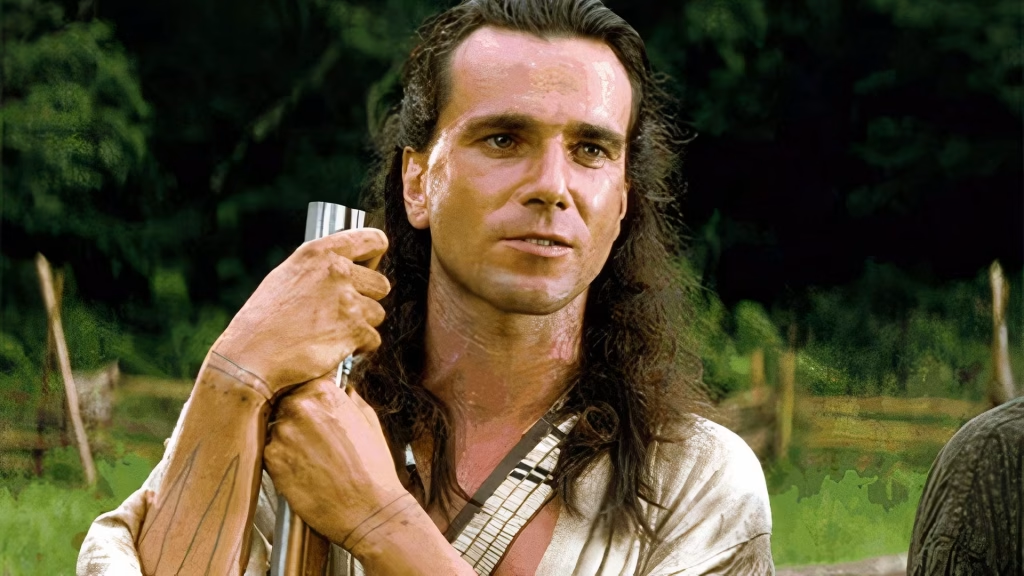
3. The Last of the Mohicans (1992)

Set during the French and Indian War, this film stars Daniel Day-Lewis as Hawkeye, a frontiersman caught between cultures and conflicts. Known for its stunning visuals and emotional storytelling, the film explores themes of survival, loyalty, and love against a harsh and beautiful wilderness backdrop.

Image Source: Bing Image. License: All Creative Commons

2. Liberty’s Kids (2002)

Designed for younger audiences, this animated series follows fictional reporters working alongside Benjamin Franklin. It covers major events like the Boston Tea Party in an engaging and accessible way. The show strikes a balance between education and entertainment, making it a great introduction to history.

Image Source: Bing Image. License: All Creative Commons

1. Drums Along the Mohawk (1939)

One of the earliest films to depict the Revolutionary period, this classic stars Henry Fonda as a settler trying to build a life in a dangerous frontier. The story highlights the struggles faced by ordinary people—raids, uncertainty, and survival—offering a grounded perspective on the era. Its attention to detail and emotional storytelling have helped it endure as a foundational historical film.

Image Source: Bing Image. License: All Creative Commons

From traditional war dramas to groundbreaking musicals like Hamilton, these films and series show just how many ways history can be told. Some prioritize accuracy, others lean into drama, and a few completely reinvent the narrative, but all of them contribute to keeping the story of America’s founding alive. Together, they remind us that history isn’t just about dates and events—it’s about people, perspectives, and the stories we choose to tell.

The Most Terrifying Human Villains in Stephen King Film Adaptations

0
Image Source: Bing Image. License: All Creative Commons

When it comes to horror, Stephen King has long shown that the most disturbing threats aren’t always supernatural. While his stories often feature haunted places and iconic monsters, it’s the human antagonists—driven by cruelty, obsession, and a thirst for control—that tend to linger in the mind long after the credits roll. These characters feel unsettling precisely because they could exist in real life, which makes their impact even stronger. This look at the most chilling human villains from film adaptations of King’s work explores the figures who turn everyday reality into something far more frightening.

Image Source: Bing Image. License: All Creative Commons

10. Wilfred James – 1922

In 1922, Thomas Jane’s Wilfred James is the type of villain who seems disturbingly normal. A greed-blinded farmer, he talks himself into believing that murdering his wife, Arlett, is the only means to hold onto his land and financial security. Worse, he manipulates his own son into assisting him. Seeing him deteriorate into paranoia and guilt is unsettling because it’s so realistic—evidence that sometimes the worst evil is found in ordinary men.

Image Source: Bing Image. License: All Creative Commons

9. Raymond Andrew Joubert (The Moonlight Man) – Gerald’s Game

Initially, the Moonlight Man appears to be a hallucination tormented in Jessie’s brain as she tries to free herself from handcuffs. But then the agonizing reality sinks in—he exists. A grave plunderer and serial murderer, Raymond Joubert transforms a psychological horror into real terror. The only thing that makes him one of King’s most horrifying human monsters is that Jessie’s tormentor is not only in her head but is also stalking her in the flesh.

Image Source: Bing Image. License: All Creative Commons

8. Ace Merrill – Stand by Me

Kiefer Sutherland’s Ace Merrill is the personification of a small-town bully turned predator. Switchblade and sneer at the ready, Ace intimidates anyone who crosses his path. He’s not a supernatural menace—merely a violent, irresponsible teenager whose attitude of casual cruelty seems all too real. Ace reminds us that sometimes the everyday bullies are worse than any ghost or demon.

Image Source: Bing Image. License: All Creative Commons

7. Warden Samuel Norton – The Shawshank Redemption

No villain is as deceitful as Warden Norton. Disguised as sanctimonious hypocrisy, he operates Shawshank Prison as his own private fiefdom, extracting profit from prisoners while feigning righteousness. His absence of conscience and blatant misuse of authority make him one of King’s most vile villains. Norton’s evil is icy, calculated, and all too real.

Image Source: Bing Image. License: All Creative Commons

6. Mrs. Carmody – The Mist

When fear takes over, people look for someone to follow—and in The Mist, Mrs. Carmody is the worst possible leader. A religious zealot, she twists desperation into fanaticism, convincing others that blood sacrifice is the only answer. Watching her turn frightened survivors into a murderous mob is terrifying precisely because it shows how quickly extremism can take root in chaos.

Image Source: Bing Image. License: All Creative Commons

5. Margaret White – Carrie

If high school was frightening to you, Carrie’s life at home was worse—courtesy of her mother, Margaret White. Fanatically religious and emotionally abusive, Margaret bullies her teenage daughter mercilessly. Her savagery is not supernatural but parental control twisted into torture. Piper Laurie’s bone-chilling act renders Margaret one of the most frightening “real-world” monsters in King’s world.

Image Source: Bing Image. License: All Creative Commons

4. Isaac Chroner – Children of the Corn

A kid preacher with a God syndrome, Isaac Chrone, brainwashes the children of Gatlin into slaughtering every adult in town. His lack of faith and inability to care make him one of King’s most disturbing antagonists. Seeing Isaac lead a cult of children who take his every word for gospel is a reminder that fanaticism is as frightening as any monster in the corn.

Image Source: Bing Image. License: All Creative Commons

3. William “Wild Bill” Wharton – The Green Mile

Wild Bill Wharton isn’t only violent—he’s personified chaos. From the moment he arrives on death row, he takes great pleasure in tormenting all those around him, from guards to prisoners. His offenses are heinous, but what makes him so memorable is the fact that he has no remorse whatsoever. The eventual twist that he killed the two girls John Coffey was accused of killing solidifies him as one of King’s saddest creations.

Image Source: Bing Image. License: All Creative Commons

2. Rose the Hat – Doctor Sleep

Engaging on the surface, monstrous at heart—Rose the Hat is the charismatic head of the True Knot, a cult that sustains itself on the trauma of psychic children. Rebecca Ferguson’s acting combines warmth, charm, and sadistic brutality in equal proportions. Rose is frightening not only for what she does, but for the way she does it with such calm and happiness.

Image Source: Bing Image. License: All Creative Commons

1. Annie Wilkes – Misery

When it comes to King’s human villains, Annie Wilkes stands supreme. What starts as an ardent fan protecting her beloved author quickly devolves into a horror of captivity, manipulation, and brutality. Kathy Bates’ Oscar-winning performance cemented Annie’s place in cult status—particularly in the now-famous “hobbling” scene. She’s scary because she’s unstable, delusional, and believes that cruelty is love. Annie is evidence that sometimes the most terrifying monsters are the ones who say they’re doing it for you.

Image Source: Bing Image. License: All Creative Commons

Stephen King’s supernatural monsters might have the spotlight, but his human monsters strike closer to home. They are greedy, fanatic, obsessive, and cruel—things that seem all too recognizable. Obsessive fanatics, corrupt wardens—these remind us that sometimes the greatest monsters don’t hide in the darkness. Sometimes they sit directly in front of us.

Television Series That Shaped the Evolution of the Medium

0
Image Source: Bing Image. License: All Creative Commons

Television has long moved beyond simple entertainment—it has become a space where culture is shaped, questioned, and redefined. Through TV, audiences spark debates in group chats, engage with important social issues, and sometimes even shift their perspectives on the world. With new shows arriving every week, only a few manage to stay part of the conversation. This look back highlights ten television series that didn’t just challenge expectations but helped reshape them entirely. Through bold storytelling, cultural impact, and groundbreaking representation, these shows set new standards and expanded what television could be.

Image Source: Bing Image. License: All Creative Commons

10. Echo

In a world awash with superheroes, Echo is different. Focusing on Maya Lopez, a deaf, Indigenous woman played by Alaqua Cox—who is also deaf and Native American—this Marvel series is a big deal. Not only is it the first Marvel show fronted by a disabled actress, but it’s also a testament to the fact that representation isn’t just strong—it’s necessary. Maya’s journey combines action with personal and cultural richness, showing that superhero narratives can be about real people, too.

Image Source: Bing Image. License: All Creative Commons

9. Little Bird

This powerful Canadian drama sheds light on a little-known bit of history: the Sixties Scoop, when Indigenous children were taken from their families and sent to white households. In Bezhig Little Bird’s quest to find her roots, the series doesn’t merely recount one woman’s life—it faces a nation’s past. Truthful, heartbreaking, and restorative, Little Bird is a masterclass in how television can teach while bringing us to tears.

Image Source: Bing Image. License: All Creative Commons

8. Dark Winds

Crime dramas are a dime a dozen, but Dark Winds offers something unique. Set in the 1970s Southwest, the show is about Navajo police officers solving crimes that are bound up in local mythology and culture. Featuring an ensemble cast and crew largely comprised of Navajos, Dark Winds provides authenticity as well as suspense. It’s not just a show about mysteries—it’s also a cultural immersion packaged in compelling storytelling.

Image Source: Bing Image. License: All Creative Commons

7. Spirit Rangers

Children’s television is seldom burdened with this level of cultural significance. Spirit Rangers, developed by Karissa Valencia of the Chumash Nation, introduces three Native brothers who defend their national park by shifting into animal spirits. Its Indigenous cast, writers’ room, and creative staff make it a Netflix animation first—and it’s enjoyably entertaining. Outside of its fantasy framework, it educates children about nature, community, and cultural pride without ever condescending to them.

Image Source: Bing Image. License: All Creative Commons

6. Reservation Dogs

If you’re looking for raw, uncensored, and truly real storytelling, search no more. Reservation Dogs, written by Sterlin Harjo and Taika Waititi, is the first show featuring a completely Indigenous writers’ room, cast, and crew. Through four teens living life in rural Oklahoma, it’s half comedy, half coming-of-age drama. The show explodes stereotypes and delivers an honest, vibrant glimpse into contemporary Native life—without ever sacrificing its humor or heart.

Image Source: Bing Image. License: All Creative Commons

5. Pose

Few series have spoken as loudly as Pose. In the kaleidoscopic ball culture of ’80s and ’90s New York, the show boasted the biggest-ever cast of trans performers in a scripted series and centered the trans women of color in its narrative. Through Blanca and Pray Tell, among others, Pose infused primetime with joy, struggle, resilience, and raw authenticity. Its influence continues to be felt—both within the entertainment industry and beyond.

Image Source: Bing Image. License: All Creative Commons

4. Roots

Roots not only broke the record when it was first aired in 1977, but it also forced the United States to confront its past. It was based on the book of the same name by Alex Haley and told the story of the journey of Kunta Kinte, an African who was forcibly taken to America and enslaved. It was a phenomenon of the culture, and the audience numbered in the millions who watched it for eight consecutive nights. It ignited a national discourse about race and history. People did not have the idea of watching a series one after another (binge-watching), but Roots was proof that television could be both gripping and impactful.

Image Source: Bing Image. License: All Creative Commons

3. Steven Universe

Don’t be misled by the Cartoon Network moniker—Steven Universe is among the most progressive and emotionally astute shows ever produced. The brainchild of Rebecca Sugar, the network’s first nonbinary creator, the show addressed topics such as love, gender identity, trauma, and forgiveness through the eyes of an adorable boy and his magical alien protectors. It was revolutionary, particularly for children who saw themselves represented on television for the first time.

Image Source: Bing Image. License: All Creative Commons

2. Heartstopper

Thanks to its genuine, heart-warming depiction of teen queer love, Heartstopper showed you don’t have to suffer to convey a strong LGBTQ+ message. Adapted from Alice Oseman’s graphic novels, the series follows Charlie and Nick as their friendship turns into romance. It is sweet, happy, and pleasantly free from drama. Above all, it provides queer young people with an opportunity to realize that their narratives deserve love, happiness, and exposure—just like anybody else’s.

Image Source: Bing Image. License: All Creative Commons

1. The Wire

You’ve probably heard the hype—and it’s all true. The Wire didn’t just raise the bar for television drama; it redefined what TV could do. Set in Baltimore, the series unpacked the tangled web of institutions—police, schools, politics, media—and showed how they intersect, fail, and sometimes, survive. Praised for its depth, realism, and moral complexity, The Wire is more than a show—it’s a sociological study disguised as fiction. No wonder it’s regularly referred to as the greatest series of the 21st century.

Image Source: Bing Image. License: All Creative Commons

These aren’t programs—they’re cultural milestones. They cracked open doors, sparked conversations, and established that television can be more than mere something-to-view—it can be something to feel, something to learn from, and something to carry with you well after the credits have rolled.

Critically Acclaimed Originals on Apple TV+ Worth Watching

0
Image Source: Bing Image. License: All Creative Commons

Apple TV+ has quickly grown from a newcomer in streaming into one of the most respected platforms in the industry by focusing on quality over quantity, prioritizing strong storytelling, compelling performances, and award-winning productions instead of an overwhelming content library. Rather than endless scrolling, viewers can jump straight into carefully curated originals that have earned widespread critical acclaim, making it easier to find shows that truly stand out and hold your attention.

Image Source: Bing Image. License: All Creative Commons

10. Dope Thief

Need a crime narrative that’s gritty and darkly comedic? Dope Thief is an ideal choice. Based on Paul Howard’s novels, it’s about two Philly buddies who pose as DEA agents to steal from drug dealers—before their con turns into something much more deadly. The series is built around Brian Tyree Henry and Wagner Moura’s charged chemistry, and with Ridley Scott helming the pilot, the tone is cool and sleek. Henry even received an Emmy nomination for his work, making this limited series a must-watch.

Image Source: Bing Image. License: All Creative Commons

9. Bad Sisters

Sharon Horgan serves up another winner with Bad Sisters, a pitch-black comedy that’s equal parts family drama and murder mystery. The Garvey sisters continue dealing with the consequences of their deceased brother-in-law’s suspicious “accident” in the show’s second season. It’s biting, it’s hilarious, and it’s intensely human, with Horgan herself receiving Emmy notice for her central performance. It’s evidence that no one portrays imperfect, engrossing women better than she does.

Image Source: Bing Image. License: All Creative Commons

8. Disclaimer

Oscar winner Alfonso Cuarón’s much-awaited return to the small screen doesn’t disappoint. Disclaimer features Cate Blanchett as a reporter whose life spirals out of control upon being sent a novel that appears to know her deepest secrets. With a top-tier cast—Kevin Kline, Sacha Baron Cohen, and Kodi Smit-McPhee—the series is both a psychological thriller and a pitch-black drama. Blanchett’s performance earned her an Emmy nomination, while the visual aesthetic attracted critical acclaim.

Image Source: Bing Image. License: All Creative Commons

7. Presumed Innocent

In this taut legal drama, Jake Gyllenhaal plays a prosecutor accused of murdering a colleague with whom he was romantically involved. Produced by David E. Kelley and J.J. Abrams, Presumed Innocent digs into love, betrayal, and ambition with intensity. The ensemble—Gyllenhaal, Ruth Negga, Bill Camp, and Peter Sarsgaard—earned multiple Emmy nods, making this one of Apple’s most acclaimed limited series.

Image Source: Bing Image. License: All Creative Commons

6. Slow Horses

Gary Oldman has never been finer than in this role as foul-mouthed but exceptional head of MI5’s reject department, Jackson Lamb. Slow Horses is a wickedly humorous spy thriller that combines real-world espionage with sharp-tongued humor. The series has been singled out across the board—acting, writing, directing, even Best Drama Series—making it one of the wittiest spy shows on television.

Image Source: Bing Image. License: All Creative Commons

5. Shrinking

Comedy and tragedy don’t mix well, but Shrinking manages to make it work. Jason Segel stars as Jimmy, a therapist who’s still trying to pick up the pieces from a recent loss and throws professional ethics out the window, and begins sharing with his patients the unvarnished truth. Harrison Ford steals the show as his curmudgeonly mentor, a part that at last garnered him his first Emmy nomination. Written by Ted Lasso’s Bill Lawrence and Brett Goldstein, the show has both broad laughs and surprise emotional jolts.

Image Source: Bing Image. License: All Creative Commons

4. The Studio

Satire in Hollywood doesn’t get wittier—or more hilarious—than The Studio. Developed by Seth Rogen and Evan Goldberg, the show tracks Rogen’s Matt Remick, a fresh face as a studio boss, through the mayhem of filmmaking. The supporting cast features Kathryn Hahn, Catherine O’Hara, and Ike Barinholtz, with cameo appearances never to be forgotten from Martin Scorsese and Ron Howard (both Emmy-nominated). The series shattered records with 23 Emmy nominations in its first season, creating a messy, sentimental love letter to the world of cinema.

Image Source: Bing Image. License: All Creative Commons

 3. Severance

If you can watch only one Apple TV+ drama, watch Severance. The Adam Scott-led series imagines a world where workers divide their private and work memories—something that unravels into a harrowing mystery. With top performances by Britt Lower, John Turturro, and Patricia Arquette, along with acutely sharp writing and direction, Severance swept the Emmy competition with 27 nominations. It’s gripping, intelligent, and cannot be forgotten.

Image Source: Bing Image. License: All Creative Commons

2. Mythic Quest & Side Quest

A delight for both gamers and comedy buffs, Mythic Quest is situated within a game studio and blends biting humor with genuine heart, addressing office surrealities along with actual emotional notes. The full season reunites the original cast while spinoff Side Quest delves into how the game affects players, fans, and workers. Both demonstrate Apple TV+’s willingness to take stylistic and narrative risks.

Image Source: Bing Image. License: All Creative Commons

1. Masters of the Air

At the top is the epic WWII drama Masters of the Air. From producers Steven Spielberg and Tom Hanks, it follows the perilous missions of the 100th Bomb Group, or the “Bloody Hundredth.” With a phenomenal cast—Austin Butler, Barry Keoghan, Ncuti Gatwa—and breathtaking production values, it’s the sort of grand, cinematic series that would seem to be made for the big screen. Emotional, immersive, and spectacular, it’s a shining example of Apple TV+ at its very best.

Image Source: Bing Image. License: All Creative Commons

Apple TV+ isn’t just holding its own in the streaming wars—it’s shaping what prestige TV looks like in this era. Whether you’re into crime thrillers, sharp comedies, or sweeping historical epics, these shows prove that bold storytelling and top-tier performances will always win.

How Disney Reimagined Princess Narratives Across Generations

0
Image Source: Bing Image. License: All Creative Commons

Disney princesses have come a long way since the studio’s early days. What began as stories centered on beauty, romance, and rescue has gradually evolved into narratives about independence, leadership, and identity. Today’s heroines reflect broader cultural shifts, embracing diversity, complexity, and empowerment. Below is a reimagined look at some of Disney’s most iconic princesses—ranked from the earliest, most traditional portrayals to the most modern and progressive.

Image Source: Bing Image. License: All Creative Commons

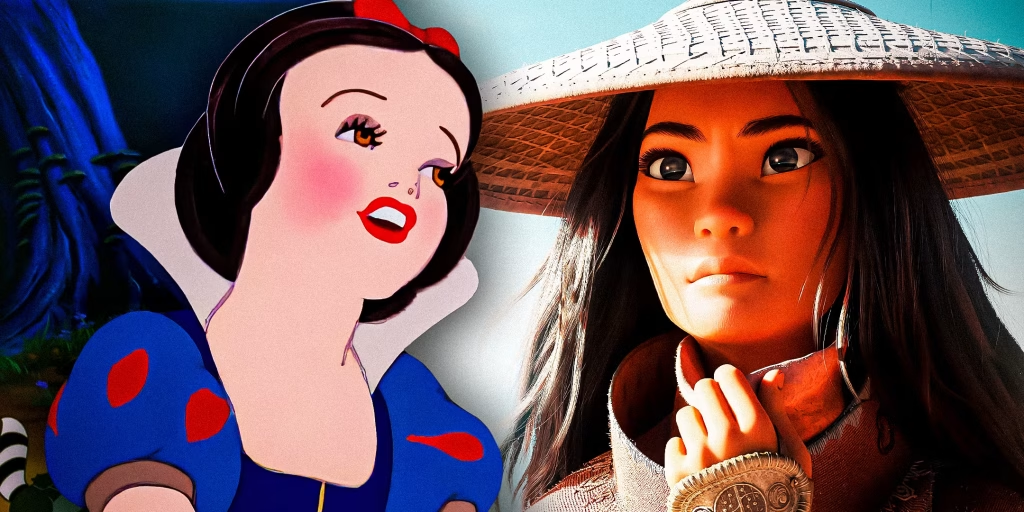
12. Raya (Raya and the Last Dragon, 2021)

Raya represents a new era of Disney storytelling. As a skilled warrior from a Southeast Asian-inspired world, her mission is not about love but about healing a divided land. Her strength lies in her resilience, leadership, and willingness to trust again after betrayal. What truly sets Raya apart is the absence of romance in her journey. Instead, the story focuses on rebuilding trust—especially through her tense but meaningful relationship with Namaari. This emphasis on friendship and unity highlights a powerful message: personal growth and connection don’t have to revolve around romantic fulfillment. Raya’s story resonates with modern audiences seeking more grounded and independent female heroes.

Image Source: Bing Image. License: All Creative Commons

11. Elsa & Anna (Frozen, 2013 & Frozen 2, 2019)

Elsa and Anna have become defining figures in Disney’s modern lineup. Elsa, as queen, struggles with her powers and responsibilities, ultimately embracing her identity without a romantic partner. Her story challenges the idea that love stories must define a woman’s journey. Anna’s evolution is equally compelling. She matures from an impulsive romantic into a capable and selfless leader. While her relationship with Kristoff remains present, it never overshadows her independence. At the heart of both films is sisterhood—a bond that proves stronger than any romance. Together, Elsa and Anna have reshaped expectations of what a Disney heroine can be.

Image Source: Bing Image. License: All Creative Commons

10. Moana (Moana, 2016)

Moana’s story is rooted in courage, exploration, and responsibility. Driven by her duty to her people, she sets sail on a dangerous journey to restore balance to her world. Romance plays no role in her story, allowing her growth and leadership to take center stage. The film’s respectful portrayal of Polynesian culture adds depth and authenticity, while Moana herself stands as a symbol of bravery and curiosity. Her journey encourages audiences to embrace their heritage and pursue their purpose, making her one of Disney’s most inspiring modern protagonists.

Image Source: Bing Image. License: All Creative Commons

9. Rapunzel (Tangled, 2010)

Rapunzel bridges the gap between classic and contemporary Disney heroines. While her story includes romance, it is her curiosity and determination that drive the narrative. She doesn’t simply wait to be rescued; she actively shapes her own destiny. Her dynamic with Flynn Rider is built on partnership rather than dependency, reflecting a healthier, more balanced relationship. Rapunzel’s story emphasizes self-discovery and independence, signaling a shift toward more active and empowered female leads.

Image Source: Bing Image. License: All Creative Commons

8. Tiana (The Princess and the Frog, 2009)

Tiana stands out for her ambition and work ethic. Unlike many princesses before her, her primary goal is not love but achieving her dream of owning a restaurant. Her journey highlights perseverance, discipline, and the value of hard work. Though her romance with Prince Naveen is important, it never overshadows her personal aspirations. The film’s vibrant depiction of New Orleans culture enriches her story, even as discussions continue about her limited time in human form. Tiana remains a milestone for representation and a role model for determination.

Image Source: Bing Image. License: All Creative Commons

7. Mulan (Mulan, 1998)

Mulan breaks boundaries by stepping into a role traditionally reserved for men. Disguising herself as a soldier, she risks everything to protect her family and honor her values. Her courage and selflessness redefine what it means to be heroic. Romance takes a backseat to her personal journey, allowing her achievements to stand on their own. Mulan’s story continues to inspire audiences to challenge expectations and pursue their own path, regardless of societal norms.

Image Source: Bing Image. License: All Creative Commons

6. Pocahontas (Pocahontas, 1995)

Pocahontas is portrayed as thoughtful, independent, and deeply connected to nature. She navigates cultural tensions with wisdom and empathy, advocating for peace and understanding. While her relationship with John Smith plays a role, her story is equally about bridging divides and protecting her land. Though the film has faced criticism for historical inaccuracies, Pocahontas remains an important figure in Disney’s attempt to explore more mature and complex themes.

Image Source: Bing Image. License: All Creative Commons

5. Belle (Beauty and the Beast, 1991)

Belle is often remembered for her intelligence and love of learning. She refuses to conform to the expectations of her small town and values inner qualities over appearances. Her relationship with the Beast explores themes of compassion and transformation, though it has sparked debate over power dynamics. Still, Belle’s independence and curiosity marked a shift toward more layered female characters in Disney films.

Image Source: Bing Image. License: All Creative Commons

4. Ariel (The Little Mermaid, 1989)

Ariel is adventurous and headstrong, driven by a desire to explore the world beyond her own. Her curiosity and determination make her an engaging protagonist, even as her story leans heavily on romance. Her decision to sacrifice her voice for love has been widely critiqued, yet her boldness helped pave the way for more active heroines. Ariel represents a transitional moment in Disney’s evolution.

Image Source: Bing Image. License: All Creative Commons

3. Jasmine (Aladdin, 1992)

Jasmine challenges the expectations placed upon her as royalty. She refuses to be treated as a prize and seeks freedom to make her own choices. While her story is often intertwined with Aladdin’s, she stands out for her assertiveness and refusal to accept limitations. Jasmine’s character highlights both progress and the need for more balanced storytelling.

Image Source: Bing Image. License: All Creative Commons

2. Cinderella (Cinderella, 1950)

Cinderella embodies the classic fairy tale heroine—kind, patient, and enduring in the face of hardship. However, her story relies heavily on external rescue rather than personal agency. Her narrative reinforces traditional ideals of femininity, yet her enduring appeal speaks to the timeless nature of hope and resilience. Cinderella remains a cornerstone of Disney’s early identity.

Image Source: Bing Image. License: All Creative Commons

1. Snow White (Snow White and the Seven Dwarfs, 1937)

Snow White represents the original Disney princess archetype. Gentle and nurturing, she relies on others for protection and ultimately awaits rescue. Her story reflects the values of its time, emphasizing beauty, innocence, and domesticity. While modern audiences may critique her lack of independence, her legacy is undeniable; she set the foundation for all the princesses who followed.

Image Source: Bing Image. License: All Creative Commons

From Snow White’s quiet innocence to Raya’s fierce independence, Disney princesses mirror the changing expectations of society. Over time, these characters have grown more diverse, self-reliant, and representative of real-world experiences. This evolution not only enriches storytelling but also gives audiences—especially young viewers—stronger, more relatable role models. As Disney continues to innovate, the future of its heroines looks more empowering than ever.

Casting Decisions in Film and Television That Drew Significant Criticism

0
Image Source: Bing Image. License: All Creative Commons

In Hollywood, casting choices can do more than spark debate—they can shape a film’s success or failure and ignite strong reactions from audiences. Here’s a reverse countdown of ten casting decisions that continue to be widely remembered and discussed.

Image Source: Bing Image. License: All Creative Commons

10. Jonah Hauer-King in The Little Mermaid (2023)

Casting Jonah opposite Halle Bailey wasn’t a matter of lack of talent—it was the jarring mismatch of chemistry and age that made their scenes cringeworthy to watch. As one fan aptly put it, their love felt “cringe.” Evidence that even the best actor can falter if the match just isn’t meant to be.

Image Source: Bing Image. License: All Creative Commons

9. Harry Styles in My Policeman (and beyond)

Pop stardom does not translate to acting talent—regardless of how many times Hollywood believes it does. Styles’ performance in My Policeman had viewers wondering: why continue casting the heartthrob instead of more veteran actors? At times, charisma just isn’t enough.

Image Source: Bing Image. License: All Creative Commons

8. Saoirse Ronan as Jo March in Little Women

Ronan is undoubtedly talented, but for some die-hard fans of the classic novel, her compact, elegant presence didn’t match their pre-conceived image of the gangly, tomboyish Jo. It’s a reminder: staying true to a role isn’t solely about performing—it’s about inhabiting it, as well.

Image Source: Bing Image. License: All Creative Commons

7. Tom Cruise’s Lestat (Interview with the Vampire) and Jack Reacher

Cruise is charisma incarnate—but both Reacher and Lestat point out where star power eclipses character integrity. His Lestat was too slick for its own good; Reacher lovers still contend that the genuine article needed to be larger, grittier. When casting veers too far from the original material, fans pay attention.

Image Source: Bing Image. License: All Creative Commons

6. Keanu Reeves as John Constantine

Reeves is hip—and popular—but his stint as Constantine bypassed the character’s signature attributes: the snarky humor, the British accent, and that gritty, hard-boiled attitude. Occasionally, even iconic performers can’t cover up a divergence from the character you know and love.

Image Source: Bing Image. License: All Creative Commons

5. Crowe, Bonham Carter, and Baron Cohen in Les Misérables

Musicals demand singing chops—and this trio didn’t always hit the right notes. Crowe’s pitchy crooning and the Thenardiers’ rocky accents and delivery (one fan claimed Crowe “managed to ruin an otherwise chef’s kiss movie”) remind us: casting a name doesn’t guarantee the performance.

Image Source: Bing Image. License: All Creative Commons

4. Emma Watson in Beauty and the Beast

Watson added charm, but vocally? Far from Broadway caliber. Way too blatant auto-tune left theater enthusiasts rubbing their heads in puzzlement. Star casting should not take precedence over real singing talent—particularly in a musical.

Image Source: Bing Image. License: All Creative Commons

3. Whitewashing Calamities

Consider Scarlett Johansson in Ghost in the Shell, Emma Stone in Aloha, Ben Affleck in Argo—all of them casting decisions made for star power over representation.

Image Source: Bing Image. License: All Creative Commons

2. Mickey Rooney as Mr. Yunioshi (Breakfast at Tiffany’s)

Rooney’s caricature is, to the core, offensive: yellow-face, buck teeth, and mock accent that should never have been allowed to see the light of day. Declares it a black mark on cinema, one we’re still grappling with today. A painful reminder of how far we still have to go.

Image Source: Bing Image. License: All Creative Commons

1. Laurence Olivier as Othello

In disgustingly bad taste, Olivier wore blackface to portray the Moor of Venice. This is not only miscasting—it represents Hollywood’s sordid past and its long, difficult journey toward actual representation. Declares it the worst example of whitewashing in history, and for good reason.

Image Source: Bing Image. License: All Creative Commons

Why It Matters

These missteps are more than embarrassing—they’re often avoidable. According to UCLA’s Entertainment and Media Research Initiative, films with diverse and authentic casting consistently outperform those that don’t. Hits like Black Panther, Coco, and Crazy Rich Asians prove that representation isn’t just ethical—it’s smart business.

Image Source: Bing Image. License: All Creative Commons

Hollywood is still playing catch-up, though. Example: Snow White remake, that problematic piece of work, is now criticized not only for casting, but for dismissing wider community issues. As Boston University’s Jonathan Foltz observes, studios sometimes attempt to please everyone—and end up pleasing no one. So here’s the lesson: decent casting isn’t all about talent—it’s about respect, honesty, and knowing when to pay attention to the audience. Because when you cast well, the outcome isn’t simply watchable—it’s unforgettable.

Notable Film and Television Adaptations of Sherlock Holmes

0
Image Source: Bing Image. License: All Creative Commons

For more than a century, the sharp mind and unmistakable personality of Sherlock Holmes have continued to captivate audiences on screen. From the foggy streets of Victorian London to modern-day reinterpretations, filmmakers have repeatedly reimagined the legendary detective in new styles, settings, and even unexpected forms. Each version brings something different—whether in tone, performance, or creative approach—making it difficult to pin down a single definitive portrayal. This selection looks at ten of the most memorable Sherlock Holmes films and series, celebrated by both audiences and critics, as well as reflected in their critical reception.

Image Source: Bing Image. License: All Creative Commons

10. Enola Holmes 2 (2022)

Sherlock may be the household name, but in Enola Holmes 2, it’s his little sister Enola who commands the spotlight. Millie Bobby Brown brings fire and wit to the role, proving there’s room in the Holmes universe for more than one brilliant mind. Henry Cavill gives a grounded performance as Sherlock, but it’s Enola’s fresh take on detective work that shines. As Rotten Tomatoes put it, this sequel nails it—clever, fun, and delightfully unpredictable.

Image Source: Bing Image. License: All Creative Commons

9. Mr. Holmes (2015)

What happens when the sharpest mind in the world begins to forget? Ian McKellen gives a moving and contemplative performance as an older Holmes with memory loss and unresolved mysteries. It’s not so much about cracking crimes as it is about accepting time, regret, and identity. A quiet, introspective movie that presents a more human side of Sherlock has never really been explored.

Image Source: Bing Image. License: All Creative Commons

8. Elementary (2012–2019)

Ditch foggy London—this Holmes relocates to New York. In Elementary, Jonny Lee Miller reimagines Sherlock as a recovering genius with demons, and Lucy Liu carves out new territory in Joan Watson. Their chemistry is dense and deep, mixing crime-solving with actual emotional complexity. With nearly perfect critics’ approval, this show deserves its place by taking huge risks that pay huge dividends.

Image Source: Bing Image. License: All Creative Commons

7. Sherlock Holmes (2009)

Guy Ritchie’s stylish retread made Holmes an action hero in his own right. Robert Downey Jr. stars as a tough, unhinged Holmes, while Jude Law supplies cool aplomb as Watson. With high-octane action and quick-witted banter, this movie revitalized the character for a whole new generation. It’s not your granddaddy’s Sherlock—but that’s kind of the idea.

Image Source: Bing Image. License: All Creative Commons

6. The Great Mouse Detective (1986)

Basil of Baker Street is small, but his detective abilities are gargantuan. This Disney treasure substitutes mice for humans in a delightfully clever reworking of the Holmes tradition. It’s fun, suspenseful, and brimming with emotion—an overlooked installment that gets the spirit of Sherlock in a surprisingly accurate manner.

Image Source: Bing Image. License: All Creative Commons

5. The Woman in Green (1945)

Basil Rathbone became the Holmes for many generations, and The Woman in Green stands tall in his extended stint. With a flawless Rotten Tomatoes rating, this movie sees Holmes investigating a string of horrific killings with Moriarty in the background. It’s an old-school classic, suspenseful, and cool without an effort—must-watch for those who love vintage whodunits.

Image Source: Bing Image. License: All Creative Commons

4. Sherlock Holmes: A Game of Shadows (2011)

Downey Jr./Law bromance reappears in this sequel, which raises the ante with an international showdown against Moriarty. Though it doesn’t quite top the original, the energy and chemistry are undeniable. It’s Holmes in all-out blockbuster mode—smart, zany, and fun as the devil.

Image Source: Bing Image. License: All Creative Commons

3. Sherlock (2010–2017)

Benedict Cumberbatch and Martin Freeman re-introduced Holmes to the 21st century with a cool, angular reworking that caused a worldwide sensation. The BBC drama is full of contemporary spin, stunning imagery, and emotionally charged narrative. Intelligent, fashionable, and quite profound, Sherlock is one of the most influential adaptations ever created.

Image Source: Bing Image. License: All Creative Commons

2. A Study in Scarlet (1933)

One of the very first sound-era reinterpretations, A Study in Scarlet boasts Reginald Owen as Holmes in a performance that would influence decades to come. It’s a black-and-white relic with unexpectedly contemporary sensibilities, and it serves to demonstrate that Holmes was cinematic gold even during his era.

Image Source: Bing Image. License: All Creative Commons

1. Sherlock Holmes (1922)

John Barrymore’s silent performance might not have words, but it has plenty to say. It was this film that established Holmes as a Hollywood icon and the template for all subsequent versions. Flashy as some of the modern adaptations become, it is a seminal work of Holmesiana, and its influence cannot be denied.

Image Source: Bing Image. License: All Creative Commons

From silent movies to streaming sensations, Sherlock Holmes just keeps getting smarter—and fans keep coming back. Whether he’s cracking cases with a pipe in his mouth or texting witnesses on an iPhone, Holmes is a timeless icon of intelligence and wonder. With every new generation comes a new spin on the myth. So no matter if you like your detective old-school, offbeat, or cartoonized, the game is always afoot.

Superhero Films That Failed to Meet Audience Expectations

0
Image Source: Bing Image. License: All Creative Commons

Superhero films often soar at the box office, sometimes reaching record-breaking heights that match the larger-than-life characters they bring to the screen. But not every caped crusader lands on their feet. For every franchise that dominates theaters, there are others that fall short—sometimes spectacularly. These films may aim high, but when they miss the mark, the impact is hard to ignore. Here’s a reverse look at some of the most notable superhero movie misfires that stumbled at the box office—get ready for a rocky ride.

Image Source: Bing Image. License: All Creative Commons

10. Suicide Squad (2016)

This was a project that had everything: a brilliant cast, great visuals, and the DC universe’s best villains. Yet, instead of the stylish chaos we were promised, we got a cumbersome wreck. It was criticized for being confusing, poorly written, and unevenly directed. As eye-catching as Harley’s attire but half as fun, this one was more like a punishment for the community than filmgoing.

Image Source: Bing Image. License: All Creative Commons

9. Green Lantern (2011)

Before Ryan Reynolds shattered the fourth wall as Deadpool, he slipped on a glowing green suit and wished the best. Spoiler: Not so much. Submerged in CGI and devoid of soul, Green Lantern did manage to squander both its budget and its source material. A cosmic disappointment that even Reynolds regularly mocks himself for.

Image Source: Bing Image. License: All Creative Commons

8. Batman & Robin (1997)

Ah, the bat-nipples one. Joel Schumacher’s neon-lit interpretation of the Dark Knight is infamous—for the wrong reasons. Ice jokes, silly gadgets, and an utterly over-the-top Mr. Freeze made fans wonder what was going on. Campy to the very end, this installment is more guilty fun than an actual Batman movie.

Image Source: Bing Image. License: All Creative Commons

7. Jonah Hex (2010)

A vengeful cowboy with a malfunctioning face and a grudge—what could go wrong? Everything. Even with Josh Brolin’s dedication, this western-superhero mashup didn’t have a focus, flair, or any sort of coherent narrative. A forgettable ride of comic book limbo.

Image Source: Bing Image. License: All Creative Commons

6. Fantastic Four (2015)

The reboot nobody wanted… and somehow even worse than expected. Despite the solid cast, Fantastic Four turned Marvel’s beloved team into a gloomy, joyless slog. Gone was the fun and family dynamic; in its place, a slow-moving origin story that forgot to be fantastic.

Image Source: Bing Image. License: All Creative Commons

5. Catwoman (2004)

Halle Berry in a leather catsuit couldn’t rescue this disaster. Loosely connected (at best) to the DC character, Catwoman deviated so far from the source material that it seemed to be an off-brand franchise unto itself. Critics referred to it as laughable—and not in a good way. It’s iconic, but only in a cautionary sense.

Image Source: Bing Image. License: All Creative Commons

4. Son of the Mask (2005)

Keep the zany personality of Jim Carrey’s original The Mask, take away Jim Carrey, and turn the mayhem up to 11. What you have is a sequel no one wanted, with annoying humor and cartoon excess. One critic termed it “painfully unfunny,” and that says it all.

Image Source: Bing Image. License: All Creative Commons

3. Madame Web (2024)

Part of Sony’s continued bid to turn straw into gold with Spider-Man supporting characters, Madame Web strove for intrigue but fell into the category of mediocre. Reviews labeled it as predictable and disappointing, though it had a promising lead. It attempted to branch out the Spider-Verse but ended up getting itself entangled in its web.

Image Source: Bing Image. License: All Creative Commons

2. Zoom (2006)

Picture The Incredibles, but without the humor, the heart, or the energy. That’s Zoom, which is a Tim Allen family movie that fails in every department. Bland jokes, lackluster action, and complete charmlessness make it more super-boring than superhero.

Image Source: Bing Image. License: All Creative Commons

1. Max Steel (2016)

At the top—or bottom—of the pile sits Max Steel, a movie that somehow turns an action-packed toy line into one of the dullest superhero films ever made. With no compelling characters, story, or even decent action scenes, it’s a crash course in how not to make a franchise. A 0% score on Rotten Tomatoes says it all.

Image Source: Bing Image. License: All Creative Commons

The superhero franchise has brought us some of the cinema’s finest moments—but such movies are reminders that capes, powers, and budgets cannot always ensure success. Yet even at failure, they’ve left an indelible mark (or scar) on fans across the world. And who knows? Perhaps someday, even Max Steel will have its cult following. (Okay, probably not.)

Civil War Films and the Historical Inaccuracies They Portray

0
Image Source: Bing Image. License: All Creative Commons

America’s fascination with the Civil War has never really faded. For decades, Hollywood has returned to this chapter of history, bringing its battlefields, families, and deep divisions back to the screen again and again. Some films romanticize the era, while others challenge those narratives—but all of them help shape how we understand that turbulent time. On screen, the Civil War is about more than soldiers and strategy; it’s tied to memory, myth, and difficult truths that still resonate today. Here’s a look at ten of the most notable Civil War films, along with the impact—and controversy—they’ve left behind.

Image Source: Bing Image. License: All Creative Commons

10. Lincoln (2012)

Spielberg’s Lincoln substitutes cannonballs with political maneuvering. Daniel Day-Lewis fully inhabits the 16th president, struggling tooth and nail to get the 13th Amendment passed before the war is lost. It’s a film about words, negotiation, and compromise, not battle—and it’s gripping. Day-Lewis took home an Oscar, and the film demonstrated you can craft a Civil War drama without one solitary charge across the warfield.

Image Source: Bing Image. License: All Creative Commons

9. Gods and Generals (2003)

At close to four hours, Gods and Generals is not a movie for the viewer of convenience. As a Gettysburg prequel, it focuses on the rise and fall of Stonewall Jackson. Stephen Lang delivers a compelling performance, and the film is fanatically concerned with historical detail. Critics were ambivalent, but history enthusiasts tend to appreciate its accuracy and sincerity.

Image Source: Bing Image. License: All Creative Commons

8. Cold Mountain (2003)

Instead of a grand strategy, Cold Mountain is a movie about everyday lives shattered by the war. It tells the story of a Confederate deserter’s perilous, long journey back to his love and the hardships of the woman who waits for him. Focusing on the rural poor in the South, it creates a closer, less often seen picture of how the war affected people removed from the battlefields.

Image Source: Bing Image. License: All Creative Commons

7. Gettysburg (1993)

More than four hours long, Gettysburg is a marathon—albeit a gratifying one. Based on Michael Shaara’s The Killer Angels, it painstakingly re-creates the war’s most brutal fight. From the uniforms to the strategy to the sideburns, no detail goes unattended. Jeff Daniels, Martin Sheen, and Tom Berenger head an enormous cast, and the film’s gravity as a favorite among Civil War buffs. 

Image Source: Bing Image. License: All Creative Commons

6. Glory (1989)

Few war movies contain as much heart as Glory. Denzel Washington, Morgan Freeman, and Matthew Broderick recount the story of the 54th Massachusetts Infantry, the first all-Black Union regiment. It’s unflinching in its portrayal of racism against these men, yet it also gives great respect to their heroism and sacrifice. Washington was awarded an Oscar for his scorching performance, and the film is still one of the strongest depictions of Black soldiers on film.

Image Source: Bing Image. License: All Creative Commons

5. The Outlaw Josey Wales (1976)

Clint Eastwood’s tough Western enters guerrilla combat in the frontier zones. When Union troops kill his family, Josey Wales turns outlaw with a vendetta. It’s bloody, unsentimental, and morally ambiguous—a world away from neatly drawn battle lines and chivalrous generals. The movie illustrates how Westerns tended to redefine the Civil War in terms of individual frontiersmen, not armies.

Image Source: Bing Image. License: All Creative Commons

4. The Good, the Bad, and the Ugly (1966)

It may be remembered as a spaghetti Western, but Sergio Leone’s classic is also a winking critique of the Civil War’s senselessness and brutality. The war is more than background—it determines the destiny of the three antiheroes as they track buried treasure. With its unblinking depiction of agony and corruption, the film will not make either side innocent.

Image Source: Bing Image. License: All Creative Commons

3. The Horse Soldiers (1959)

John Wayne stars in this rousing, traditional war adventure loosely based on Grierson’s Raid. Less interested in reality and more in entertainment, it serves up romance, action, and patriotic swagger. It is thin on realism, but it represents the mid-20th-century desire for Civil War material that combines heroics with Hollywood spectacle.

Image Source: Bing Image. License: All Creative Commons

2. The Red Badge of Courage (1951)

This retelling of Stephen Crane’s novel is one of mind games, of what occurs inside the head of a scared soldier. It’s the story of a Union young recruit who runs from battle, then grapples with shame and the need to redeem himself. It’s a thinking person’s film—a more psychological examination than an action flick—making it one of the most original interpretations of the Civil War.

Image Source: Bing Image. License: All Creative Commons

1. Gone with the Wind (1939)

Its most celebrated Civil War film of all time is also its most controversial. Gone with the Wind is dazzling in its romance, grand cinematography, and legendary performances, but impossible to dismiss are its nostalgia for the Old South and racist caricatures. Unquestionable is its impact on American cinema, but so too is its contribution to disseminating pernicious myths about slavery and the Confederacy.

Image Source: Bing Image. License: All Creative Commons

The Civil War on film isn’t only about the past—it’s about Americans’ conception of themselves. Each generation reimagines the war in its own image, whether as glorious sacrifice, tragic delusion, or unutterable chaos. These movies tell us as much about the era in which they were created as they do about the 1860s. And so long as America grapples with identity and race and power, Hollywood will continue to return to those fields of battle—attempting once more to narrate the story of a country at war within itself.