Home Blog Page 138

10 Blockbusters That Lost Millions: Hollywood’s Costliest Flops

0
Image Source: Bing Image. License: All Creative Commons

It​‍​‌‍​‍‌​‍​‌‍​‍‌ is somewhat amusing in a peculiar way to watch a major Hollywood disaster, isn’t it? Perhaps it is the scale of the fiasco, maybe it is the curiosity of how an enormous amount of money and talent could result in such a spectacular failure, or maybe we just like to see a star’s meltdown offstage. Nevertheless, not all movies that fail at the box office are alike. Some failures are so massive that they indelibly change the industry; thus, the ramifications of the careers, the studio’s losses, and, in a few cases, after some time, they become cult films, getting ​‍​‌‍​‍‌​‍​‌‍​‍‌ruined.

Image Source: Bing Image. License: All Creative Commons

And due to Hollywood’s legendary accounting gimmicks, a few of these so-called “flops” actually earned money but still ended up listed as losses on the books. Welcome to the bizarre universe of Hollywood bookkeeping. Below are 10 of the worst box office bombs that rocked the industry and left an impact well beyond opening weekends.

Image Source: Bing Image. License: All Creative Commons

10. The BFG (2016)

On paper, this was a recipe for success: Steven Spielberg at the helm of a favorite Roald Dahl story, with Disney behind him, and yet, with a strong74% on Rotten Tomatoes and Spielberg’s star power above the title, The BFG ended up as a box office giant-sized flop. With production and marketing expenses running up to approximately $250–280 million, it managed to lose more than $100 million. The issue? Tough competition (Finding Dory was overwhelming), poor buzz, and poor performance in major markets such as China. It’s a soft movie with a nice heart—but a hard truth that even legends can get it wrong.

Image Source: Bing Image. License: All Creative Commons

9. The Adventures of Baron Munchausen (1988)

Long before cameras began rolling, this Terry Gilliam fantasy was running over budget. By the time the last shot wrapped, production had doubled the cost, and anarchy ruled. The studio, freshly reorganized and less than enthusiastic about the movie, afforded it a minuscule release—barely more than 100 prints nationwide. Not surprisingly, the film flopped. Still, despite its disastrous box office, Baron Munchausen was well-received by critics and garnered four Oscar nominations, eventually becoming a cult classic. Evidence that sometimes the greatest obstacle isn’t so much the audience—it’s the individuals with the checkbooks.

Image Source: Bing Image. License: All Creative Commons

8. Blade Runner 2049 (2017)

A sequel to a sci-fi classic? Starring Harrison Ford and Ryan Gosling? Directed by Denis Villeneuve? Sounds like a slam dunk. But Blade Runner 2049 needed to cross $400 million to break even—and it came up short by a country mile. Visually stunning and critically adored, the movie just didn’t connect with the broader audience. It turns out, philosophical cyber-noir with a three-hour running time isn’t exactly popcorn flick material, no matter how pretty it looks.

Image Source: Bing Image. License: All Creative Commons

7. The Golden Compass (2007)

Designed as the opening salvo in a big-budget fantasy franchise, The Golden Compass was to be Harry Potter II. Instead, it fell flat domestically after a solid performance abroad. Franchise pressure, studio expectations, and a mediocre domestic box office led to the sequels being put on hold indefinitely. Despite having a star like Nicole Kidman, the movie couldn’t avoid the shadow of more massive, better-timed fantasy franchises. Years on, the tale received another lease on life through HBO’s His Dark Materials—but the damage was irreversible.

Image Source: Bing Image. License: All Creative Commons

6. Catwoman (2004)

Hot on the heels of her Oscar victory, Halle Berry had a go at acting out DC’s feline antihero—and landed in box office history for all the wrong reasons. Catwoman was panned across the board: subpar plot, confusing direction, and a tone that swung from camp to cringe. It tanked both critically and commercially, and Berry’s in-person acceptance of a Razzie—armed with her Oscar in hand—became iconic. The movie remains an object lesson on how not to do a superhero film.

Image Source: Bing Image. License: All Creative Commons

5. John Carter (2012)

This one’s infamous for all the wrong reasons. Disney invested an estimated $350 million to bring Edgar Rice Burroughs’ pulp sci-fi novel to the big screen, only to see it tank at the box office. It lost about $225 million and prompted Disney to promptly write down $200 million in losses, cancel sequels in development, and grant its studio chief an exit. The problem wasn’t the movie itself—it was the confusing marketing that didn’t make John Carter understandable or interesting to audiences. A classic example of “wrong movie, wrong moment, worse marketing.”

Image Source: Bing Image. License: All Creative Commons

4. Heaven’s Gate (1980)

Few failures have gone down in infamy like this one. Director Michael Cimino, newly minted Oscar winner from The Deer Hunter, was given a blank check—and he spent it. Glitzy sets, innumerable takes, and a manic search for perfection transformed a humble western into a $44 million flop (more than $160 million today). The movie grossed only $3.5 million and contributed to United Artists’ downfall. Studios then put the reins on auteurs, changing forever how Hollywood approved “passion projects.”

Image Source: Bing Image. License: All Creative Commons

3. Men in Black (1997) – The Phantom “Flop.”

Here’s where Hollywood’s creative accounting truly excels. Men in Black raked in almost $600 million globally—but technically, it never made a profit. Screenwriter Ed Solomon joked that the studio’s accounting was more sci-fi than the movie itself. Why? Studios tend to fill flicks with in-house fees for distribution, marketing, and overhead, guaranteeing that—on paper—there isn’t a profit to share with actors, writers, or creators who negotiated “points” on the backend. Legal? Yes. Shady? Absolutely.

Image Source: Bing Image. License: All Creative Commons

2. The “Profitable Flops” Club

It isn’t just Men in Black. Forrest Gump, Return of the Jedi, and even Harry Potter and the Order of the Phoenix have all been branded box office failures on studio ledgers—even though they earned hundreds of millions, sometimes billions. Author Winston Groom (who penned Forrest Gump) received a mere fragment of the cash he was offered. Lucasfilm has notoriously asserted that Return of the Jedi never dipped into the black. These aren’t failures per se—but they’ve demonstrated how manipulative Hollywood’s accounting can be.

Image Source: Bing Image. License: All Creative Commons

1. Heaven’s Gate (1980) — The Flop That Changed the Game

Yes, it’s back—and deservedly so. Heaven’s Gate wasn’t merely a fiasco; it was a turning point. Following this implosion, studios became much less likely to make wild gambles on untested concepts or grant directors unlimited creative latitude. Rather, the business shifted toward more secure gambles: sequels, remakes, and franchises with pre-existing audiences. In a way, this single film contributed to the franchise-saturated world of today. One huge misstep, and Hollywood vowed never to make that type of gamble again.

Image Source: Bing Image. License: All Creative Commons

Hollywood may adore a comeback tale, but it’s fixated on its flops. These bombs—either real flops or creatively cooked books—altered the production, marketing, and financing of movies. Ultimately, Hollywood failure is not always a function of quality. Sometimes it’s timing, ego, bad promotion, or being simply too big for the system to swallow.

10 Celebrities Who Show You Don’t Need a Relationship to Shine

0
Image Source: Bing Image. License: All Creative Commons

Hollywood has long celebrated the wedding spectacle, but today, single celebrities are rewriting the narrative. These icons, creators, and public figures show that you don’t need to be married to live fully, build a family, or leave a lasting legacy. Whether longtime singles or single parents, they demonstrate to the world that being single isn’t just a temporary state—it’s a valid, fulfilling lifestyle choice. Here’s a look at 10 of the most influential unmarried celebrities who have reshaped how we view single life.

Image Source: Bing Image. License: All Creative Commons

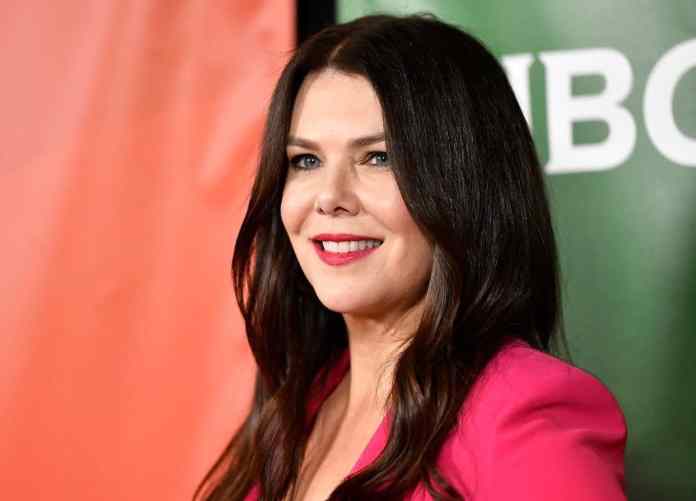
10. Lauren Graham

Lauren Graham, widely known for her rapid performances in Gilmore Girls and Parenthood, and adored by all, has never once refused to walk the walk of fame. She was in a relationship with actor Peter Krause for ten years, but didn’t want to have a relationship without a wedding. Graham considers respect and love over Father’s Day, indirectly making it clear that love does not necessarily require a contract.

Image Source: Bing Image. License: All Creative Commons

9. Mindy Kaling

Mindy Kaling never played by the rules, both on and off camera. As a single mom of two kids, she avoided discussing details about the father of her kids and flat-out said she is more than adequate at standing on her own. Her independence and drive turn the family on its head.

Image Source: Bing Image. License: All Creative Commons

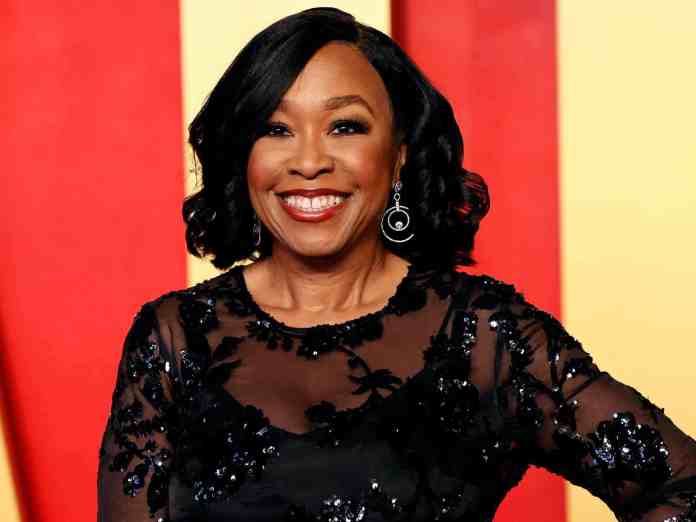
8. Shonda Rhimes

The originator of Shondaland (Grey’s Anatomy, Scandal) was absolutely explicit from the beginning: children, yes; marriage, no. Through adoption and a surrogate, she constructed the family she desired on her own terms. The journey is an excellent reminder that relationships and parenting do not necessarily come in a package.

Image Source: Bing Image. License: All Creative Commons

7. Hugh Grant

The romantic comedy heartthrob never really showed his characters getting married. He has been in relationships for a long time and has fathered children with different partners; however, Hugh Grant has often referred to marriage as “an unsuccessful experiment.” To him, family and love are not necessarily dependent on the established norms.

Image Source: Bing Image. License: All Creative Commons

6. Ricky Gervais

Ricky Gervais, the comedian, has been with Jane Fallon, thewriterer for nearly 40 years, but they have never been married. Gervais joked that their “pretend marriage” was longer than most of the real ones and that he sees marriage as an unnecessary institution. This is typical Gervais, defiant yet sincere.

Image Source: Bing Image. License: All Creative Commons

5. Diane Keaton

Diane Keaton never got married, but in her 50s, she adopted two children and started her own family. The chameleon-like and unique personality, Keaton, always stated that she was happy that she never married. Her story shows that happiness can come from different things, and sometimes it is the family, friends, and pets who represent it.

Image Source: Bing Image. License: All Creative Commons

4. Oprah Winfrey

Oprah and Stedman Graham were a couple for a long time, but they never tied the knot. For Oprah, the marriage would have been the cause of their relationship’s downfall, and it is respect and independence that make their bond last.

Image Source: Bing Image. License: All Creative Commons

3. Charlize Theron

Instead of keeping it a secret, Charlize Theron was always upfront about how much she despised marriage. She went on to become a single mother and has openly talked about how perfectly fine she feels being by herself. Theron is going against the grain of the traditional views regarding women being incomplete without a partner.

Image Source: Bing Image. License: All Creative Commons

2. Leonardo DiCaprio

One of Hollywood’s most famous bachelors, DiCaprio has been in comparable famous relationships but has never seriously committed to marriage. He admitted that he prefers to let things unfold naturally instead of trying to force a plan. It is the ultimate live-for-the-moment approach.

Image Source: Bing Image. License: All Creative Commons

1. Winona Ryder

Winona Ryder, the ex-half of the 90s classic “it couple” with Johnny Depp, has never been married. She used to say that if she were ever married, it wouldn’t last, that she had a few divorces, and that her own view was darkened by her parents’ long, loving marriage. Ryder’s viewpoint is all about being the person you really are and not going along with the society that has its own timetable.

Image Source: Bing Image. License: All Creative Commons

While​‍​‌‍​‍‌​‍​‌‍​‍‌ these stars are reshaping the narrative surrounding their lives, a few non-famous individuals are also doing the same. Ordinary single people are likewise discovering the new status and the “single positivity” revolution. According to writer Bella DePaulo, quite a large number of single adults not only would be able to handle their single lives but also flourish in them. There isn’t a single way of being able to find happiness as a single person. These stars are the witnesses that it doesn’t matter whether you are a single parent, in a long-term but unmarried relationship, or simply doing great with your own company; singledom is just living life in another way, but still fully, truly, and ​‍​‌‍​‍‌​‍​‌‍​‍‌happily.

15 Must-See Sci-Fi TV Shows That Take You Beyond the Stars

0
Image Source: Bing Image. License: All Creative Commons

What if you could leap into another dimension, travel back in time, or simply escape the monotony of everyday life? Sci-fi is the genre that does exactly that—transporting you to worlds where the rules are completely different. It embraces wild concepts, suspenseful mysteries, and bold storytelling that challenge everything we think we know about reality. From space adventures and dystopian futures to animated dreamscapes and time-traveling detectives, there’s a sci-fi show for every kind of imagination. Here are 15 of the best sci-fi series you can stream right now—each one a portal into a strange, unforgettable world unlike your own.

Image Source: Bing Image. License: All Creative Commons

1. 3 Body Problem

When scientists start dying off in strange ways, and the laws of physics begin to break down, there’s no doubt that something is seriously going on. Based on Liu Cixin’s award-winning novel The Three-Body Problem, this sprawling Netflix show combines brainy sci-fi with high-stakes drama. Featuring an all-star cast that includes Benedict Wong, Jess Hong, and Jovan Adepo, the series tracks a team of unlikely allies—and one tough-as-nails detective—banded together in an attempt to prevent an existential threat to humanity itself.

Image Source: Bing Image. License: All Creative Commons

2. The Umbrella Academy

Superhero dysfunction has never been so much fun. Based on the comic by Gerard Way and Gabriel Bá, this fashionable series follows a dysfunctional family of super-powered siblings as they reunite after their adoptive father’s death under mysterious circumstances. Complete with time travel, apocalypses, and family tension, each episode of The Umbrella Academy is a heart, humor, and chaos delivery system.

Image Source: Bing Image. License: All Creative Commons

3. Bodies

Crime drama collides with time-travel mystery in Bodies, a suspenseful series in which four detectives from four time periods all find the same body in the same place. As they dig in, a deeper cover-up is revealed, connecting their timelines in surprising ways. Adapted from Si Spencer’s graphic novel, this genre-bending series is half detective tale, half sci-fi puzzle box.

Image Source: Bing Image. License: All Creative Commons

4. Stranger Things

A nostalgic ode to ’80s pop culture with a paranormal spin, Stranger Things is an instant sci-fi classic. The show follows a group of small-town children battling supernatural evil—telekinetic girls and secret government facilities, all the way to the monstrous kingdom of the Upside Down. With its blend of nostalgia, suspense, and character development, the show is one of Netflix’s most popular shows. The last season debuts on November 26.

Image Source: Bing Image. License: All Creative Commons

5. Black Mirror

Every episode of Black Mirror is an independent look into a dark future—the kind where technology develops quicker than ethics. Creator Charlie Brooker provides scathing commentary on surveillance, social media, artificial intelligence, and much more, and this anthology series is both intellectually stimulating and deeply uncomfortable. If you’re a fan of edgy speculative fiction, this one’s a must-watch.

Image Source: Bing Image. License: All Creative Commons

6. Maniac

Emma Stone and Jonah Hill star in this hallucinatory, genre-bending miniseries about two strangers who sign up for a strange drug trial. Rather than curing their wounds, the trial deposits them in a dreamlike sequence of parallel worlds—from noir-inspired detective stories to fantasy sagas. Visually striking and emotionally charged, Maniac is a head trip that’s as surprising as it is affectionate. 

Image Source: Bing Image. License: All Creative Commons

7. Dark

One of the greatest sci-fi shows ever produced, Dark is a German-language thriller that opens on a missing child and unfolds as a multigenerational epic of time travel, paradox, and existential horror. With its layered story and eerie atmosphere, this slow-burning mystery pays off for close viewers with some of the best sci-fi storytelling in years. 

Image Source: Bing Image. License: All Creative Commons

8. Alice in Borderland

Awakening in a hauntingly deserted Tokyo, gamer Arisu is compelled into life-or-death survival games with other imprisoned players. This Japanese series combines psychological tension with high-octane action and complex character development. As Arisu and fellow survivor Usagi try to find answers, they reveal a twisted universe that’s as exciting as it is heartbreaking.

Image Source: Bing Image. License: All Creative Commons

9. Lost in Space

In this polished re-imagining of the 1960s original, the Robinson family crash-lands on a remote planet during an attempt to colonize the cosmos in 2046. Every episode contains a balance of survival against the elements, sci-fi awe, and emotional family drama. With cinematic production values and an emotional heart, Lost in Space provides classic adventure and contemporary storytelling.

Image Source: Bing Image. License: All Creative Commons

10. Love, Death & Robots

This animated anthology show is a feast of tones, styles, and ideas. From photorealistic horror to whimsical satire, the short stories include everything from love, death, and—yes—robots. Curated by Tim Miller and executive produced by David Fincher, this Emmy-winning series is great for quick, mind-bending sci-fi fixes.

Image Source: Bing Image. License: All Creative Commons

11. Welcome to Eden

What begins as an opulent party on a far-flung island quickly descends into something far more sinister in Welcome to Eden. This Spanish thriller about a cohort of influencers drawn to an ultra-exclusive bash, which fast becomes a sci-fi nightmare of cults, spying, and undercover motives, is a chic, habit-forming ride with turns every five seconds.

Image Source: Bing Image. License: All Creative Commons

12. Supergirl

For fans of their sci-fi on the more optimistic and sentimental side, Supergirl fits the bill. Tracking the path of Kara Zor-El—Superman’s cousin—in a quest to balance life as a journalist and a superhero, this show weaves intergalactic danger with down-to-earth emotional exploration. It’s an optimistic interpretation of the genre, with empowering ideals and action-packed stories to boot.

Image Source: Bing Image. License: All Creative Commons

13. The Rain

When a lethal virus is unleashed by rain, Scandinavia is devastated. Two children explore a desolate, contaminated world for safety, meeting other survivors and learning what happened in the outbreak. The Rain is a chilling, post-apocalyptic thriller in which each raindrop is potentially fatal, and sunshine is as elusive as hope.

Image Source: Bing Image. License: All Creative Commons

14. Resident Alien

Alan Tudyk adds humor and emotion to this quirky science fiction comedy. He stars as the alien who has come to Earth to destroy it, crash-lands in a tiny Colorado town, and assumes the identity of the town doctor. As he stumbles his way through human existence, he begins to question his mission. Resident Alien is sharp-tongued, hilarious, and unexpectedly moving—science fiction with a twist.

Image Source: Bing Image. License: All Creative Commons

15. Lost

The pilot that started a million fan theories, Lost begins with an airplane crash and already descends into a rich world of mystery, mythology, and science fiction. With smoke monsters, time travel, and mysterious island mysteries, the show had viewers hooked for six seasons and is still the benchmark for sci-fi TV. Love it or loathe it, Lost changed television.

Image Source: Bing Image. License: All Creative Commons

Whatever your mood is, philosophical navel-gazing, action-packed thrills, or heart-tugging drama—there’s something in today’s sci-fi for you. These 15 series are just a sampling of the genre’s limitless imagination—and all you’ll need to investigate them is a comfortable seat and a good Wi-Fi connection.

10 Times Casting Choices Sparked Heated Debates in Film

0
Image Source: Bing Image. License: All Creative Commons

Let’s face it—casting can make or break a movie. Though often invisible behind the scenes, it’s one of the most crucial elements determining whether a film becomes legendary or fades into obscurity. Sometimes Hollywood nails it perfectly, creating iconic performances that define careers. Other times, casting misses are so baffling that you wonder if anyone actually read the script. And then there are the tantalizing “what-if” moments—the alternate universes where your favorite characters were played by completely different actors. Ready to dive into Hollywood’s biggest casting disasters and most fascinating near-misses? Let’s take a closer look.

Image Source: Bing Image. License: All Creative Commons

10. John Wayne as Genghis Khan — A Legendary Misfire

The list of the worst casting is incomplete if we do not mention The Conqueror (1956), where John Wayne, quite surprisingly, the most stereotypical American cowboy, played the role of Mongolian ruler Genghis Khan. In the movie, Wayne, in a very unconvincing way, ay tries to make the audience accept the ludicrous proposition of him being the great Genghis Khan using poor makeup and a jibberish accent. The movie could be labeled as an instruction on the various ways of failure. People regarded it as wildly inappropriate, even during the time it was released. It’s the most spectacular instance of the arrogance of Hollywood, the evidence that even star power is not enough to save a ridiculed decision from a tone-deaf director.

Image Source: Bing Image. License: All Creative Commons

9. Zoe Saldaña as Nina Simone — When Representation Misses the Mark

One has to be aware of the responsibility of the real-life characters’ fame when taking the relationship of such characters. When the role of jazz icon Nina Simone was given to Zoe Saldaña, the backlash did not take long to follow. They said that the deep skin of the artist and her distinct features were inseparably linked to her identity and message, and that the production of dark makeup and prosthetics for Saldaña was very inappropriate. Saldaña herself, in the end, also admitted her regret, saying that the role would have been better suited to a black woman who could have naturally embodied Simone’s legacy. The debate led to the important topics of casting fidelity and LGBTQ representation in the sector of acting.

Image Source: Bing Image. License: All Creative Commons

8. Miss Saigon and the Yellowface Backlash

One can find the same type of dispute in theater history as in film ones, and as for Miss Saigon, it is surely one of the most prominent. When Miss Saigon had its first performance on Broadway in 1990, the dark news came that Jonathan Pryce, a Welsh actor, was playing the half-Vietnamese Engineer, which was a decision that angered the Asian American performers a lot. B.D.Wong, a fellow actor, wrote the essay that was full of energy and passion. In it, he expressed his view about the harm that this example might bring to the struggle for the visibility of Asian actors. The disturbances prompted the industry to take a look at its historical roots of exclusion, though not really equal rights were quite far away.

Image Source: Bing Image. License: All Creative Commons

7. Keanu Reeves as Jonathan Harker — The Accent That Haunts

Among the positive credits of Keanu Reeves, one has to put the least lovable one; to be exact, his role in Bram Stoker’s Dracula (1992) is famous only because of the mistakes made. Reeves seemed to be out of his depth, with a borderline laughable attempt at a British accent behind the talent of Hopkins and Oldman. The criticism was that the work didn’t flow naturally, and it was not believable; thus, it was a mistake in pointing to the actor who faltered due to their role. Luckily, later on, Reeves was able to regain his lost honor through characters that matched his quiet strength and effortless charm.

Image Source: Bing Image. License: All Creative Commons

6. Emma Watson as Belle — The Beauty That Fell Flat

When Disney revealed Emma Watson as the new Belle for its live-action Beauty and the Beast, fans were amazed—initially. However, the end product was disappointing to a large number of people. The reason was that Watson’s performance lacked the fire and love of the cartoon character, and the flawed singing (because of heavy auto-tuning) was also blamed. The original singing by Paige O’Hara had the enchantment and the heart—things that hadn’t fully been transferred in the remake. There are times when things are perfect on paper, yet they don’t come out right on the screen.

Image Source: Bing Image. License: All Creative Commons

5. Tom Holland as Nathan Drake — A Missed Treasure

The Uncharted movie had huge expectations, but it seems that Tom Holland was not the right actor to play treasure hunter Nathan Drake, since his interpretation of the character never resonated with the audience. The gaming community found the acting too smooth and lacked the witty humor and dangerous side of the character. Even though Holland is charming, his character was closest to a Spider-Man in a leather jacket than a roguish adventurer. That is the thing with video game characters: turning them into movies is not as easy as you ​‍​‌‍​‍‌​‍​‌‍​‍‌think.

Image Source: Bing Image. License: All Creative Commons

4.​‍​‌‍​‍‌​‍​‌‍​‍‌ Topher Grace as Venom — The Softest Symbiote

After the release of Spider-Man 3, fans were left with a question: What was the reason behind the casting of Topher Grace as Venom? Comic book fans know that Venom is a giant, scary, and brutal character; however, Grace’s skinny and joking version looked more like a rival of the petty kind than a real threat. It is true that the friendly banter between Eddie Brock and J. Jonah Jameson, in which the character is involved, made the movie a little funnier, but the idea of the villain being just a simple joke didn’t convince anyone. The symbiote was definitely a character that deserved to be brought to life in a wilder and scarier way.

Image Source: Bing Image. License: All Creative Commons

3. Johnny Depp as Tonto — Identity and Appropriation Collide

When Disney announced that Johnny Depp would be playing Tonto in The Lone Ranger (2013), the controversy was practically written in advance. Depp’s loose explanations of the Native origin of his heritage and his quirky way of acting did not sit well with many. Those who were critical of the film accused Disney of caring more about the loudness of the name rather than cultural correctness, which is what the film’s poor box office performance is also indicating. This case can be used as a representative example showing that the question of real portrayal is not simply a matter of visibility; it is a matter of respect.

Image Source: Bing Image. License: All Creative Commons

2. Hollywood’s Biggest “What-Ifs” — The Roles That Almost Were

Think of the scenarios when things had turned differently. Matthew McConaughey was on the verge of playing Jack in Titanic, Tom Selleck was about to be cast as Indiana Jones, and Will Smith said no to The Matrix. Even the character of Wolverine was to be played by Dougray Scott before the arrival of Hugh Jackman. Every single one of our almost-castings has the power to drastically alter the path of film history. The temporary absence in the casting list serves as a reminder of the delicate nature of movie magic—just one choice and the entire heritage changes.

Image Source: Bing Image. License: All Creative Commons

1. The Ongoing Fight for Representation and Equity

At the very heart of the issue, casting is not solely about the best of the talents—it is about giving a chance. The controversies around Hollywood’s casting of different ethnicities and the portrayal of these characters in the movies are still very much alive. Specifically, stories with Black protagonists have been going through a double jeopardy of lack of financial support and exposure despite the fact that they have been successful. Every casting decision made adds up to a larger cultural narrative: who gets seen, who gets heard, and who gets left out. Although there is progress, it is still a struggle, and the fight is far from over.

Image Source: Bing Image. License: All Creative Commons

Casting is, essentially, the core of every great narrative. When done right, it elevates the work and makes it legendary. When mishandled, it leaves you in Hollywood’s hall of shame. To sum up, the casting history of Hollywood, its victories as well as failures, is ultimately a reminder to us about the extent of the power that a single role can ​‍​‌‍​‍‌​‍​‌‍​‍‌wield.

10 Drastically Reworked TV Pilots You Won’t Believe Were Changed

0
10 Most Controversial TV Finales

TV pilots are like first dates—awkward, experimental, and rarely a perfect preview of what’s to come. Some shows fumble at the start, only to reinvent themselves so thoroughly that the original pilot feels unrecognizable. Others tweak their core elements over a few seasons and emerge stronger than ever. Here are ten of the most dramatic TV transformations in history—some legendary, some infamous—but all fascinating examples of how a second chance can completely change a show’s trajectory.

Image Source: Bing Image. License: All Creative Commons

10. Game of Thrones – The Fated Pilot That Almost Killed a Fantasy Epic

Before it became a cultural juggernaut, Game of Thrones rarely made it to air. The original pilot was a disaster: miscast roles (Tamzin Merchant as Daenerys, for one), confusing storytelling, and an uneven tone. HBO scrapped most of it, recast key parts, and reshot nearly the entire episode. The overhaul saved the series and launched one of the most talked-about shows in modern TV. Sometimes, starting over makes all the difference.

Image Source: Bing Image. License: All Creative Commons

9. The Big Bang Theory – From Cringe to Comedy Gold

The Big Bang Theory you recognize and the Big Bang Theory that might have been? Two decidedly distinct programs. The unaired pilot had no Penny, only a character by the name of Katie, who introduced a darker, rougher edge. Sheldon was fairly normal, too. The chemistry was just off. When the creators replaced Katie with effervescent Penny and doubled down on Sheldon’s eccentricities, they hit sitcom lightning and sustained it for 12 seasons.

Image Source: Bing Image. License: All Creative Commons

8. The Office (US) – From Copycat to Classic

The pilot of The Office (US) was a close shot-for-shot retread of the British original, with that very same dark tone. American audiences weren’t having it. By episode two, the writers readjusted taming Michael Scott, relaxing the humor, and striking a warmer rhythm. That delicate realignment transformed the series into a comedy landmark in its own very American style.

Image Source: Bing Image. License: All Creative Commons

7. Bob’s Burgers – Gender Flip and Visual Makeover

Early Bob’s Burgers sounded and looked a bit off. In the first pilot, Tina was indeed a teenage boy named Daniel. But the writers were concerned that Daniel and Gene sounded too alike, so Daniel became Tina, and the show gained an immediate new dynamic. The design also changed, with character designs refined into the sweeter appearance that fans recognize now. The adjustments made a weirdly quirky pitch into a long-running animated classic.

Image Source: Bing Image. License: All Creative Commons

6. Married. With Children – Bye Steve, Hello Jefferson

When David Garrison (Steve Rhodes) departed Married. With Children, it might have killed the show. Instead, Ted McGinley’s Jefferson D’Arcy provided an added jolt as Marcy’s smooth-talking, narcissistic husband. The chemistry changed, but for the better. Jefferson was a fan favorite and kept the show’s irreverent spirit going strong for years.

Image Source: Bing Image. License: All Creative Commons

5. Three’s Company – Furley Arrives, and the Laughs Won’t Stop

When the Ropers departed Three’s Company for their spin-off, viewers feared the soul of the show would leave with them. Enter Don Knotts as Ralph Furley, dramatic, funny, and just what the show needed. His hammy landlord antics breathed new life into the sitcom and had viewers laughing for four additional seasons.

Image Source: Bing Image. License: All Creative Commons

4. Cheers – New Faces, Same Magic

Cheers is evidence that even wholesale cast changes don’t have to torpedo a show. When Shelley Long (Diane) left, Kirstie Alley (Rebecca) replaced her with a more modern, more acerbic attitude in Sam’s life. Following the passing of Nicholas Colasanto (Coach), Woody Harrelson arrived as the innocent but endearing Woody and won over audiences. The shakeups not only kept Cheers afloat, but they also strengthened it.

Image Source: Bing Image. License: All Creative Commons

3. Roseanne – The Ever-Changing Becky

Roseanne made a casting headache into a continuing joke. When Lecy Goranson departed, Sarah Chalke replaced her as Becky Conner, only to have Goranson come back later. The change was so jarring that the show’s writers made fun of it on the air. Although Chalke did find her bearings, many viewers still missed Goranson’s sassy, down-to-earth interpretation. The to-and-fro became part of the show’s offbeat legacy.

Image Source: Bing Image. License: All Creative Commons

2. The Fresh Prince of Bel-Air – Two Aunt Vivs, Two Eras

Janet Hubert Whitten’s Aunt Viv was hot-headed, classy, and intimidating, but after off-set tensions, she was recast with Daphne Maxwell Reid. While the new Aunt Viv introduced a gentler, more laid-back vibe, viewers were split. Nevertheless, the show remained successful, and some of its most unforgettable moments happened post-transition. Same Aunt Vivs, different Fresh Prince magic.

Image Source: Bing Image. License: All Creative Commons

1. Monk – Sharona to Natalie

When Bitty Schram departed Monk, her feisty character, Sharona Monk’s no-nonsense assistant, was replaced by Traylor Howard’s gentle, nurturing Natalie. The change muted the show’s tone: less tension, more warmth. Although some fans were sad to see Sharona’s sass go, Natalie’s nurturing presence added depth to the series and sustained it through to the end.

Image Source: Bing Image. License: All Creative Commons

TV history is chock-full of daring do-overs, some emerging from chaos, others from artistic expansion. From canceled pilots to recast legends, these overhauls demonstrate that change isn’t necessarily anathema. Sometimes it’s the special sauce that makes a wobbly beginning into a classic gem. So next time a pilot doesn’t quite click, don’t condemn too quickly. TV magic is often a second attempt at getting it right.

15 Overlooked Movies That Deserve a Spot on Every Film Buff’s Watchlist

0
Image Source: Bing Image. License: All Creative Commons

We all know the thrill: stumbling upon a hidden film gem that makes you think, “How is this not more popular?” It might be a box office flop that was far better than audiences realized, a lost classic, or a movie that slipped through the cracks due to poor marketing or bad timing. Sleeper films are a cinephile’s treasure. These 15 underrated movies are the perfect pick-me-up if you want to step off the blockbuster treadmill and add some truly remarkable—and often overlooked—films to your must-watch list.

Image Source: Bing Image. License: All Creative Commons

15. Crooklyn (1994)

Spike Lee enthusiasts will know this one, but everyone else typically doesn’t. Crooklyn is a semi-autobiographical coming-of-age slice-of-life of a Black middle-class Brooklyn family in the 1970s. It captures the energy of youth, the affection of siblings, and the agony of loss, all mixed with Lee’s signature humor and heart. It’s both comforting and heartbreaking, typically simultaneously.

Image Source: Bing Image. License: All Creative Commons

14. The Iron Giant (1999)

Half Cold War fable, half sentimental coming-of-age tale, Brad Bird’s The Iron Giant was a box office failure but was later embraced by its supporters. An animated classic based on a boy who befriends a colossal alien robot, it’s a balancing act of warmth, wonder, and melancholy. Today, it’s rightly one of the best of its kind.

Image Source: Bing Image. License: All Creative Commons

13. Devil in a Blue Dress (1995)

Denzel Washington as a detective in post-war L.A.? Yes indeed. This hip noir finds him cracking a case that’s all politics, race, and corruption. While it didn’t catch on at the box office, the film has since been celebrated for its sharp, efficient storytelling and Washington’s suave, charismatic lead performance.

Image Source: Bing Image. License: All Creative Commons

12. Wait Until Dark (1967)

Audrey Hepburn is perhaps best known for Breakfast at Tiffany’s, but what she does in this is something different. Playing a blind woman who has to deal with violent intruders, Hepburn gives one of her most tense performances. The tension is expertly built, and it’s proof that Hepburn’s talents lie far beyond glitzy rom-coms.

Image Source: Bing Image. License: All Creative Commons

11. Ghost Dog: The Way of the Samurai (1999)

Only Jim Jarmusch could conceive of a film about a mob-employed hitman who adheres to samurai codes. Forest Whitaker is compelling as the title character, bringing stillness and depth to an unorthodox, poetic crime drama. Half gangster film, half meditative essay, Ghost Dog has since become a cult favorite.

Image Source: Bing Image. License: All Creative Commons

10. Paper Moon (1973)

A black-and-white road comedy from the Great Depression, this features a con man and a profane little girl who might be his daughter. Real-life siblings Ryan and Tatum O’Neal shine on screen, with Tatum winning an Oscar for her performance. It’s clever, beautiful to watch, and loaded with charm.

Image Source: Bing Image. License: All Creative Commons

9. Pig (2021)

Nicolas Cage as a truffle pig tracker chasing his stolen pig in a setup for a joke, but Pig is no joke. It’s a gentle-spoken, deeply moving drama of grief, remembrance, and finding meaning. Cage’s understated, moving performance was a reminder that he’s also one of today’s most fascinating actors.

Image Source: Bing Image. License: All Creative Commons

8. The Long Goodbye (1973)

Robert Altman brought a twist to the traditional detective story with Elliott Gould’s chain-smoking, wisecracking Philip Marlowe. It’s noir-ish, half-satire, and totally original. Offbeat, slyly funny, and visually inventive, it’s one of Altman’s more stylish attempts, and one of Gould’s best performances.

Image Source: Bing Image. License: All Creative Commons

7. Drácula (1931, Spanish version)

Filmed at night on the same sets as Bela Lugosi’s Dracula, the Spanish-language version is, in many ways, the superior film, longer, moodier, and technically more ambitious. Featuring Latino actors in roles that avoided stereotypes, it pushed boundaries at the time but was largely forgotten for decades. Today, it’s a revelation.

Image Source: Bing Image. License: All Creative Commons

6. Rachel Getting Married (2007)

Anne Hathaway lost the rom-com persona with this untrammeled performance of a recovering addict returning home for her sister’s wedding. Handheld camerawork makes it documentary-intimate, and family dynamics are painfully real. Hathaway, Rosemarie DeWitt, and Debra Winger all deliver career-best performances.

Image Source: Bing Image. License: All Creative Commons

5. Planet of the Vampires (1965)

This Italian sci-fi horror movie reads like pulp, but is aesthetically stunning and eerily influential. Space explorers who go on an alien world fall prey to an evil entity in a story clearly ripped from Alien. From its gothic production style to its creepy atmosphere, it’s a must-watch for science fiction horror fans.

Image Source: Bing Image. License: All Creative Commons

4. Crooklyn (1994)

Yes, it’s on here again, because it truly is that underrated. Spike Lee’s retro, bittersweet tribute to his Brooklyn boyhood deserves twice the love. If you haven’t seen it yet, move it to the top of your queue.

Image Source: Bing Image. License: All Creative Commons

3. Something Good – Negro Kiss (1898)

Not a scene, but a work of sublime cinema history. This short clip of two Black actors kissing is one of the earliest known films to depict Black love positively, a dramatic turnabout from the racist caricatures of its time. Rediscovered over a hundred years later, it’s as lively as it is innovative.

Image Source: Bing Image. License: All Creative Commons

2. Lost in America (1985)

Albert Brooks skewers the American Dream with this wicked satire of a couple who give up everything to attain freedom on the open road. Hilarious and nasty, it’s a reminder that Brooks was one of the sharpest comedic voices of his generation, and still woefully underappreciated.

Image Source: Bing Image. License: All Creative Commons

1. Within Our Gates (1920)

Oscar Micheaux directed this silent film, which is the oldest known feature that was directed by a Black filmmaker. Brawling racism, violence, and injustice head-on, it was so incendiary for its time that it was banned in most places. Found decades later, it remains a cornerstone of American film history.

Image Source: Bing Image. License: All Creative Commons

The next time you’re endlessly scrolling, skip the usual blockbusters and give one of these overlooked treasures a chance. From forgotten noirs to groundbreaking indies, these films prove that sometimes the best stories are the ones hiding in the shadows.

10 Underrated Comedy Series Cut Short Before Their Time

0
Image Source: Bing Image. License: All Creative Commons

Honestly, it’s hard to imagine a more frustrating heartbreak than falling in love with a new comedy, only to have it vanish after a single season. Sometimes the ratings didn’t reflect the show’s brilliance, budgets spiraled out of control, or timing just wasn’t right—but whatever the reason, some of the best comedy series were gone before we were ready to say goodbye. Let’s revisit these 10 brilliant comedies that left us far too soon—grab your popcorn (and maybe a tissue) as we remember the laughs they gave us, even if only for one fleeting season.

Image Source: Bing Image. License: All Creative Commons

10. The Witchfinder (2022)

This English Civil War period satire had it all to become a British cult favorite. Tim Key portrayed the arrogant, bumbling witchfinder Gideon Banniste, who was saddled with taking Daisy May Cooper’s Thomasine Gooch to trial. The Gibbons Brothers (Alan Partridge alums) brought whip-smart repartee and heaps of historical silliness. The BBC canceled it after only six episodes, giving us only our imaginations to picture the next misadventures Bannister might have botched.

Image Source: Bing Image. License: All Creative Commons

9. Pivoting (2022)

Eliza Coupe, Ginnifer Goodwin, and Maggie Q played three friends dealing with loss by totally reinventing their lives. Part heartwarming and part hilarious, Pivoting paired sloppy feelings with biting humor. Each of the women’s paths, from professional mayhem to independence, was genuine and welcome. Fox cancelled it after ten episodes, but its audience still holds dear its take on seizing life by the tail.

Image Source: Bing Image. License: All Creative Commons

8. How to Die Alone (2024)

Natasha Rothwell wrote and starred in this darkly comedic jewel about Mel, an isolated airport clerk shaken into self-awareness after a close brush with death. With raw candor and savage wit, the series covered what it is to be left behind in life. Critics admired it, viewers resonated with it, but HBO cancelled it before it had a chance to gain a wider audience. It’s one of those shows that was both funny and intensely authentic.

Image Source: Bing Image. License: All Creative Commons

7. The Grinder (2015–2016)

What’s it like when a TV lawyer decides he can practice actual law? That’s the absurd setup for The Grinder, with Rob Lowe as a retired star of legal dramas who storms into his family’s firm, assisted by Fred Savage as his frustrated brother. Witty, self-aware, and well-cast, the series built up a strong following right away. Too bad Fox cancelled it after only one season—robbing us of more Dean Sanderson courtroom “expertise.

Image Source: Bing Image. License: All Creative Commons

6. jPod (2008)

Years before Silicon Valley, this Canadian show hit the wacky side of computer culture. Adapted from Douglas Coupland’s book, jPod chronicled a band of eccentric programmers attempting to work the system while evading corporate idiocy. Its offbeat humor and eccentric appeal were in advance of their time, yet poor ratings doomed it. Now, it’s a cult classic as a quirky workplace sitcom.

Image Source: Bing Image. License: All Creative Commons

5. Reboot (2022)

Hollywood’s fixation on reviving classic hits got roasted in Hulu’s Reboot, a clever, meta sitcom about a 2000s TV show cast that gets made to come back together. Keegan-Michael Key, Judy Greer, Johnny Knoxville, and Paul Reiser made up an A-list cast, addressing anything from past grudges to aging careers. The series was hilarious, witty, and delightfully unique. Unfortunately, Hulu canceled it after just one season, making Reboot one of the most disappointing victims of contemporary TV.

Image Source: Bing Image. License: All Creative Commons

4. Undeclared (2001–2002)

Imagine Freaks and Geeks in college. Developed by Judd Apatow, Undeclared chronicled a freshman dorm of lovable misfits finding themselves after high school. Headed by Jay Baruchel and featuring appearances from future comedy stars, it captured the awkward, hilarious, and sometimes excruciating realities of early adulthood. Critics adored it, but Fox axed it after 17 episodes—securing its legacy as another genial Apatow show that flew too soon.

Image Source: Bing Image. License: All Creative Commons

3. High Fidelity (2020)

Zoë Kravitz starred in this clever retread of Nick Hornby’s novel, taking on the role of a record store owner examining love, loss, and music. Sharp dialogue, a hip soundtrack, and Kravitz’s charisma combined to create the ideal balance of wit and sensitivity in High Fidelity. It was too much for Hulu, which cancelled it after strong reviews and low ratings. It’s the evidence that even the hippest energy can’t always weather the war of streaming.

Image Source: Bing Image. License: All Creative Commons

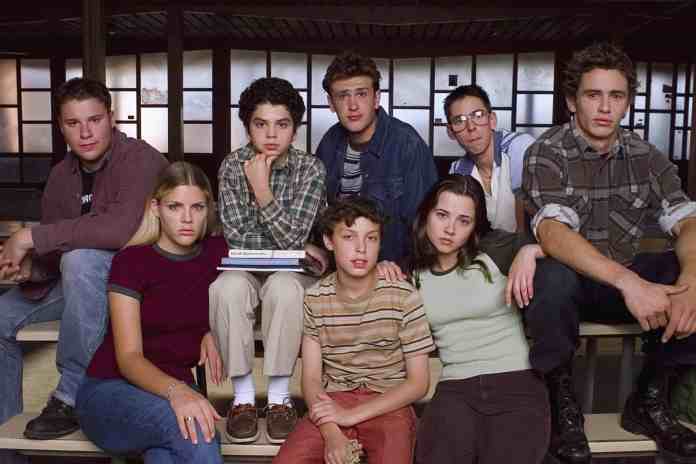
2. Freaks and Geeks (1999)

The crown jewel of prematurely axed comedies premiered in 1,980, Michigan, Freaks and Geeks captured the agony and humor of high school with unvarnished reality. Its cast of James Franco, Linda Cardellini, and Seth Rogen went on to superstardom, but NBC botched scheduling and yanked it after only 15 episodes. It’s decades later, and it ranks among the all-time greats, existing as a cult classic with a growing legion of fans.

Image Source: Bing Image. License: All Creative Commons

1. Police Squad! (1982)

Before The Naked Gun movies were Police Squad!, a six-episode explosion of slapstick genius from the masters of Airplane!. Leslie Nielsen played deadpan detective Frank Drebin, amidst sight gags, puns, and parody so fast-paced that many audiences were left in the dust. Axed for being “too intelligent for television,” it is now a legend. Occasionally, comedy burns most intensely when it burns most rapidly.

Image Source: Bing Image. License: All Creative Commons

Honorable Mentions: The Land of Lost Laughs

TV history is strewn with comedies cut short too soon: Firefly, My So-Called Life, Buffalo Bill, and even Mr. Show. A few were given second chances (Futurama, Veronica Mars), and some are cult classics. At the very least, these one-season comedies show that short-run comedy can be remembered for a long time.

15 Heartfelt Films and Series That Capture Love Honestly

0
Image Source: Bing Image. License: All Creative Commons

Love on screen is often polished, idealized, or neatly packaged, but occasionally a movie or TV show dares to depict relationships as they truly are: messy, awkward, painful, tender, confusing, and deeply human. The following films and series stand out for portraying love—romantic, familial, platonic, and partnership—with honesty rather than fantasy. These are stories unafraid to confront discomfort, and because of that courage, they feel profoundly real and relatable.

Image Source: Bing Image. License: All Creative Commons

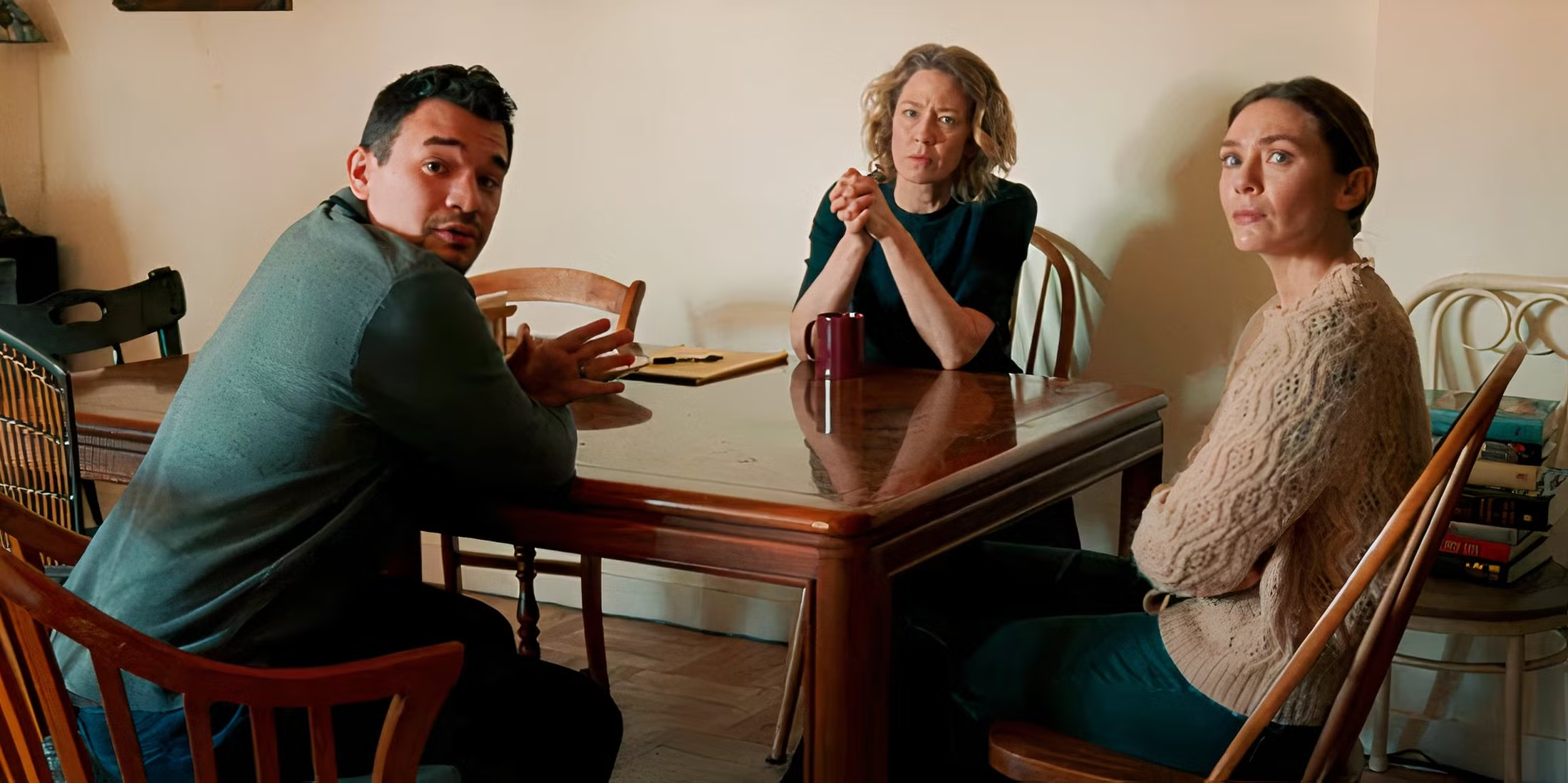
15. His Three Daughters

His Three Daughters captures the emotional chaos that surfaces when family members are forced back into the same space during a moment of crisis. Three sisters, Katie, Christina, and Rachel, reunite in their father’s apartment as he approaches the end of his life, and old resentments immediately resurface.

Image Source: Bing Image. License: All Creative Commons

Each woman arrives carrying her own emotional armor: Katie’s need for control, Christina’s rigid sense of order, and Rachel’s lingering feeling that she doesn’t fully belong. Their conversations are uncomfortable, sharp, and often unresolved, mirroring the way real families communicate under stress. Rather than building toward a dramatic catharsis, the film lingers in quiet moments, glances, pauses, and half-finished thoughts that feel painfully familiar.

Image Source: Bing Image. License: All Creative Commons

What makes the film so affecting is its honesty. Healing doesn’t come easily, and not everything is fixed by the end. Instead, His Three Daughters reminds us that love within families is complicated, imperfect, and often expressed through conflict.

Image Source: Bing Image. License: All Creative Commons

14. Nobody Wants This

Nobody Wants This refreshes the romantic comedy by grounding it firmly in reality. Kristen Bell plays Joanne, who finds herself in a relationship with Noah, a rabbi whose faith and family introduce real-world complications into their romance.

Image Source: Bing Image. License: All Creative Commons

Rather than relying on grand gestures, the series focuses on communication, compromise, and self-awareness. Joanne and Noah don’t magically solve their problems; they talk, stumble, and reassess what they’re willing to give up or hold onto. The show acknowledges how cultural differences can strain even the most genuine connections. Its charm lies in its realism. Love here isn’t effortless or idealized; it’s work, negotiation, and growth, and that honesty makes the story resonate.

Image Source: Bing Image. License: All Creative Commons

13. Couples Therapy

Couples Therapy strips away the theatrics of reality television and replaces them with raw emotional truth. Following real couples in sessions with Dr. Orna Guralnik, the series offers a rare glimpse into what relationship repair actually looks like.

Image Source: Bing Image. License: All Creative Commons

Season three broadens the scope by including a polycule, but the heart of the show remains unchanged: unresolved resentment, emotional wounds, and the slow, sometimes frustrating process of learning how to communicate. There are no miracle breakthroughs, just incremental progress and painful realizations. What makes the series so compelling is its refusal to simplify. Love here is work, vulnerability is uncomfortable, and healing happens one conversation at a time.

Image Source: Bing Image. License: All Creative Commons

12. Past Lives

Past Lives is a quiet meditation on love, timing, and the lives we don’t end up living. Nora and Hae Sung reconnect years after their childhood friendship was cut short, and what unfolds is filled with longing and emotional restraint rather than melodrama.

Image Source: Bing Image. License: All Creative Commons

The film treats all relationships with care, including Nora’s marriage to Arthur, which is portrayed with tenderness and mutual respect. There are no villains, just people trying to understand their feelings without betraying their commitments. Rather than offering closure, Past Lives embraces ambiguity. It understands that some connections exist to shape us, not to last forever.

Image Source: Bing Image. License: All Creative Commons

11. Beef

On the surface, Beef is about a road rage incident spiraling out of control. Beneath that chaos, however, is a deeply uncomfortable exploration of marriage, resentment, and emotional repression.

Image Source: Bing Image. License: All Creative Commons

Amy and George’s relationship is strained, messy, and brutally honest. The show allows its characters to be selfish, cruel, and painfully human, showing how unspoken pain can rot relationships from the inside out. Beef doesn’t offer redemption through perfection; it suggests healing comes from accountability, self-awareness, and the willingness to confront uncomfortable truths.

Image Source: Bing Image. License: All Creative Commons

10. The Bear

While The Bear is set in the pressure cooker of a restaurant kitchen, its emotional core lies in relationships between coworkers, siblings, and oneself. Carmen’s attempt to run his late brother’s restaurant forces him to confront grief, control issues, and inherited trauma.

Image Source: Bing Image. License: All Creative Commons

The series excels at portraying how dysfunction is passed down and how difficult it is to unlearn harmful patterns. Trust is fragile, communication is messy, and progress is rarely linear. At its heart, The Bear is about rebuilding, not just a business, but connections fractured by loss and pride.

Image Source: Bing Image. License: All Creative Commons

9. Shrinking

Shrinking centers on grief and the reckless choices that often follow it. Jimmy, a therapist mourning his wife, blurs professional boundaries while trying, and often failing, to reconnect with his daughter and friends.

Image Source: Bing Image. License: All Creative Commons

The show embraces emotional messiness. Relationships fracture, heal, and fracture again, reflecting how grief doesn’t move in straight lines. Even the therapists are flawed, lost, and in need of support themselves. By blending humor with vulnerability, Shrinking presents healing as imperfect but possible.

Image Source: Bing Image. License: All Creative Commons

8. Somebody Somewhere

Somebody Somewhere quietly celebrates friendship as a form of love just as powerful as romance. Sam finds emotional refuge in her bond with Joel, a friendship built on acceptance rather than expectation.

Image Source: Bing Image. License: All Creative Commons

Their connection thrives on honesty, humor, and shared loneliness. The series challenges the idea that romantic relationships are the ultimate emotional goal, showing instead how platonic love can be deeply sustaining. It’s a gentle reminder that sometimes the most meaningful relationships are the ones that simply allow us to be ourselves.

Image Source: Bing Image. License: All Creative Commons

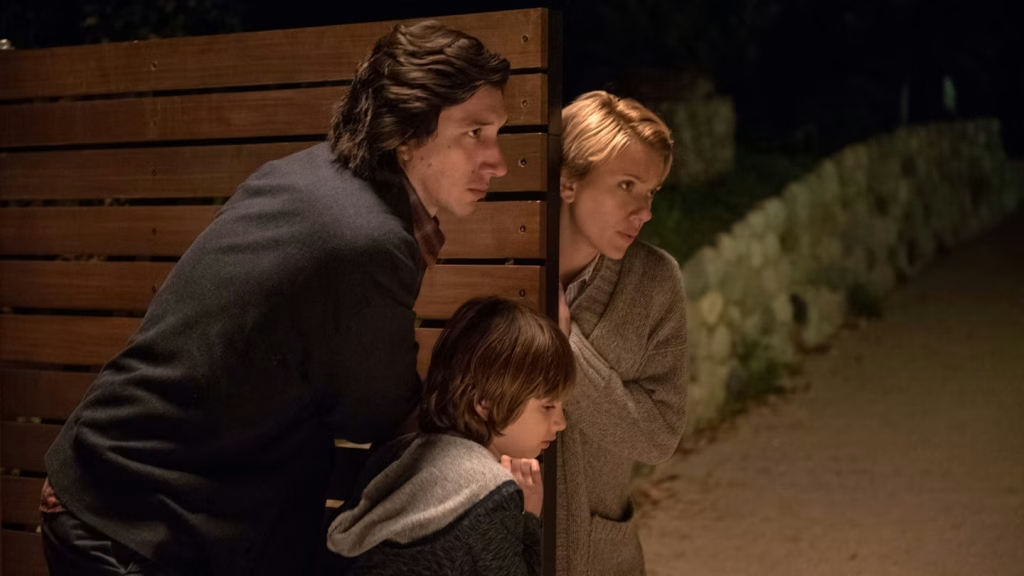
7. Marriage Story

Marriage Story pulls no punches in its portrayal of divorce. Charlie and Nicole’s separation is painful, not because of cruelty, but because of unresolved hurt and miscommunication. The film captures the exhausting logistics of co-parenting alongside the emotional devastation of letting go.

Image Source: Bing Image. License: All Creative Commons

Both characters are deeply flawed, yet sympathetic, making the breakdown of their marriage feel tragically believable. Rather than assigning blame, Marriage Story explores how love can evolve, even when it no longer looks the way it once did.

Image Source: Bing Image. License: All Creative Commons

6. Blue Valentine

Blue Valentine traces a relationship from its hopeful beginnings to its heartbreaking end. By intercutting moments of early romance with scenes of emotional erosion, the film reveals how love can fade without a single defining moment.

Image Source: Bing Image. License: All Creative Commons

Michelle Williams and Ryan Gosling bring raw vulnerability to their roles, making every argument and quiet disappointment feel earned. The film refuses to soften its message or offer comfort. It’s an unflinching portrait of what happens when love alone isn’t enough.

Image Source: Bing Image. License: All Creative Commons

5. Like Crazy

Like Crazy examines long-distance love with brutal honesty. Separated by immigration laws, Anna and Jacob struggle to maintain intimacy across continents. The film shows how distance creates temptation, resentment, and emotional drift.

Image Source: Bing Image. License: All Creative Commons

Love persists, but it changes, often in painful ways neither partner anticipates. Its power lies in its uncertainty. Like Crazy understands that sometimes relationships don’t fail dramatically; they simply wear down.

Image Source: Bing Image. License: All Creative Commons

4. (500) Days of Summer

(500) Days of Summer dismantles the romantic fantasy by showing how expectations can sabotage love. Told out of order, the film mirrors how we replay relationships in our minds, highlighting the good while ignoring warning signs.

Image Source: Bing Image. License: All Creative Commons

Tom’s idealized view of Summer ultimately blinds him to who she really is. The film gently but firmly critiques the idea that love should follow a predetermined script. It’s a story about learning, growing, and accepting reality even when it hurts.

Image Source: Bing Image. License: All Creative Commons

3. Eternal Sunshine of the Spotless Mind

Despite its sci-fi premise, Eternal Sunshine of the Spotless Mind is one of the most emotionally grounded love stories ever made. Joel and Clementine attempt to erase each other from their memories, only to rediscover why they mattered in the first place.

Image Source: Bing Image. License: All Creative Commons

The film captures the chaos, tenderness, and regret embedded in relationships. It suggests that pain is inseparable from love, and perhaps worth enduring. Its message lingers: even flawed connections leave lasting imprints.

Image Source: Bing Image. License: All Creative Commons

2. The Before Trilogy

The Before trilogy follows Jesse and Céline across nearly two decades, chronicling how love evolves. Each installment reflects a different stage of infatuation, reconnection, and long-term partnership.

Image Source: Bing Image. License: All Creative Commons

The dialogue feels spontaneous and intimate, grounded in everyday concerns rather than cinematic fantasy. The films understand that love is shaped by choices, compromises, and persistence. Few stories capture romantic realism as completely as this trilogy.

Image Source: Bing Image. License: All Creative Commons

1. Call Me By Your Name

Call Me By Your Name is a tender exploration of first love and emotional awakening. Elio’s relationship with Oliver unfolds slowly, charged with longing, discovery, and inevitable heartbreak.

Image Source: Bing Image. License: All Creative Commons

What elevates the film is its emotional universality. Though rooted in a specific time and place, it captures feelings that nearly everyone recognizes: the intensity of loving deeply for the first time and the pain of letting go. It’s a love story that shapes us forever, even when it doesn’t last.

Image Source: Bing Image. License: All Creative Commons

These films and series resonate because they don’t promise perfection. Instead, they reflect love as it’s actually lived, complicated, fragile, transformative, and deeply human. Whether romantic, familial, or platonic, these stories remind us that connection is rarely easy, but always worth exploring.

14 Notable Actor Replacements That Shocked Movie Sets

0
Image Source: Bing Image. License: All Creative Commons

Movie productions are delicate ecosystems, and even the most talented or famous actors can be unexpectedly replaced when on-set chemistry falters, creative visions clash, or unforeseen circumstances arise. These behind-the-scenes shakeups can alter careers—and occasionally, the course of cinema history itself. Here are fourteen notable cases where actors were recast mid-production, along with the stories of what happened next.

Image Source: Bing Image. License: All Creative Commons

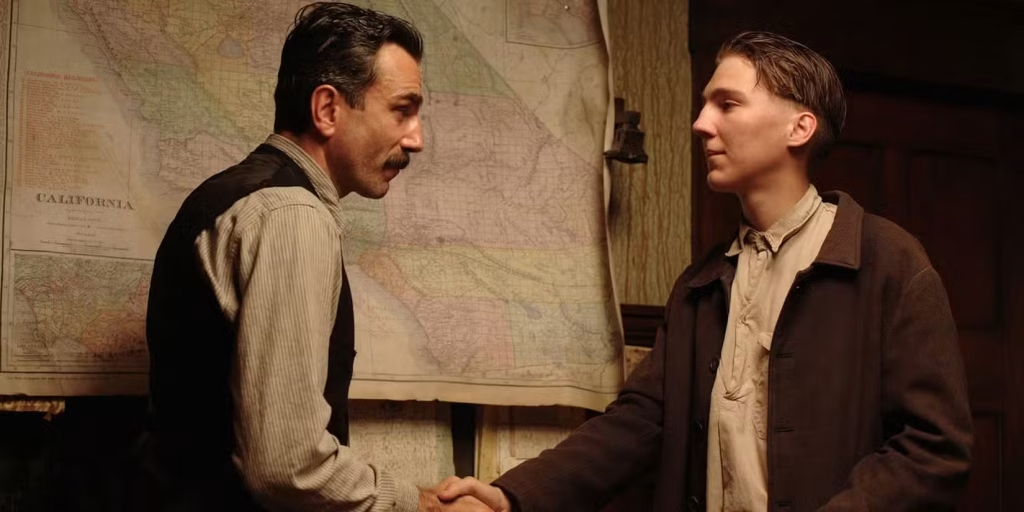
14. Kel O’Neill — There Will Be Blood

Kel O’Neill was originally cast as preacher Eli Sunday in Paul Thomas Anderson’s There Will Be Blood, opposite Daniel Day-Lewis. After several weeks of filming, however, it became clear something wasn’t clicking.

Image Source: Bing Image. License: All Creative Commons

O’Neill later said he sensed the disconnect early on. Anderson decided to replace him with Paul Dano, who was already in the film as Eli’s brother. The script was reworked so Dano played identical twins, resulting in one of the film’s most unforgettable performances. O’Neill ultimately stepped away from acting and found success directing documentaries.

Image Source: Bing Image. License: All Creative Commons

13. Colin Firth — Paddington

Colin Firth had fully recorded his dialogue as the voice of Paddington Bear, but once the animation came together, the filmmakers felt his voice sounded too grown-up for the character.

Image Source: Bing Image. License: All Creative Commons

Firth himself acknowledged the decision with grace, noting that the bear simply wasn’t meant to sound like him. Ben Whishaw was brought in to re-record the role, and his lighter tone helped turn Paddington into a modern family-film icon.

Image Source: Bing Image. License: All Creative Commons

12. James Remar — Aliens

James Remar spent nearly a month filming Aliens as Corporal Hicks before being dismissed. Officially, the explanation was “creative differences,” but Remar later admitted his firing followed a drug-related arrest during production.

Image Source: Bing Image. License: All Creative Commons

Reports also described disruptive on-set behavior, including accidentally firing a prop weapon into a neighboring soundstage. Michael Biehn stepped into the role, delivering a performance that became central to the franchise.

Image Source: Bing Image. License: All Creative Commons

11. Holly Hunter — Chicken Little

In early development, Chicken Little featured a female protagonist voiced by Holly Hunter. After recording her lines, Disney executives decided to rework the character into a boy, believing it would attract a wider audience.

Image Source: Bing Image. License: All Creative Commons

Hunter was replaced by Zach Braff, and the story was reshaped entirely. While the decision reflected industry thinking at the time, later successes of female-led animated films suggest how much perspectives have shifted.

Image Source: Bing Image. License: All Creative Commons

10. Connor Ratliff — Band of Brothers

Connor Ratliff lost his small role in Band of Brothers just one day before filming began. He was told executive producer Tom Hanks felt he had “dead eyes.”

Image Source: Bing Image. License: All Creative Commons

Years later, Ratliff transformed the experience into the podcast Dead Eyes, exploring rejection in Hollywood. Hanks eventually appeared on the show, owning the decision and offering clarity. What began as a painful dismissal became a thoughtful conversation about art and subjectivity.

Image Source: Bing Image. License: All Creative Commons

9. Dennis Hopper — The Truman Show

Dennis Hopper was originally cast as Christof, the creator of Truman’s artificial world, but struggled early on with memorization and performance consistency.

Image Source: Bing Image. License: All Creative Commons

After reviewing early footage, director Peter Weir and producer Scott Rudin decided to recast the role. Ed Harris stepped in and delivered a quietly haunting performance that earned him an Oscar nomination.

Image Source: Bing Image. License: All Creative Commons

8. Judy Garland — Valley of the Dolls

Judy Garland’s casting in Valley of the Dolls ended disastrously. Conflicts with director Mark Robson, combined with substance abuse struggles, made filming increasingly difficult.

Image Source: Bing Image. License: All Creative Commons

Accounts from co-stars describe a tense environment that worsened Garland’s condition. She was ultimately fired, replaced by Susan Hayward, and reportedly left with her costumes in protest. The episode remains one of Hollywood’s saddest behind-the-scenes stories.

Image Source: Bing Image. License: All Creative Commons

7. Eric Stoltz — Back to the Future

Eric Stoltz played Marty McFly for several weeks, but his intense, method-driven performance clashed with the film’s comedic tone.

Image Source: Bing Image. License: All Creative Commons

The filmmakers quietly continued shooting while arranging to replace him with Michael J. Fox, their original choice. Fox’s arrival reshaped the movie’s energy—and helped turn it into a timeless classic.

Image Source: Bing Image. License: All Creative Commons

6. Harvey Keitel — Apocalypse Now

Harvey Keitel was initially cast as Captain Willard but was let go shortly after production began in the Philippines. Director Francis Ford Coppola felt Keitel wasn’t connecting with the role under the harsh conditions.

Image Source: Bing Image. License: All Creative Commons

Martin Sheen took over, delivering a performance that became legendary. Though the decision was painful, it proved pivotal to the film’s final impact.

Image Source: Bing Image. License: All Creative Commons

5. Lori Petty — Demolition Man

Lori Petty was cast opposite Sylvester Stallone but exited the film after only a few days. Both sides cited creative differences, though Petty later described a personality clash between herself and Stallone.

Image Source: Bing Image. License: All Creative Commons

Sandra Bullock replaced her, launching one of the actress’s earliest breakout roles. The change became a classic example of how chemistry can redefine a movie.

Image Source: Bing Image. License: All Creative Commons

4. Jean-Claude Van Damme — Predator

Jean-Claude Van Damme was initially hired to play the Predator creature, but the role proved impractical. The restrictive suit and stilt-based design made movement nearly impossible.

Image Source: Bing Image. License: All Creative Commons

The production ultimately redesigned the alien and recast the role with Kevin Peter Hall, whose height and presence helped create one of cinema’s most iconic monsters.

Image Source: Bing Image. License: All Creative Commons

3. Lee Coleman — Friday the 13th Part VIII

Lee Coleman was cast as Sean Robertson but was dismissed after about a week. Creative concerns and an injury he sustained during off-hours complicated matters.

Image Source: Bing Image. License: All Creative Commons

Scott Reeves replaced him, and the production moved on quickly. Though minor, the recasting highlighted how unforgiving tight shooting schedules can be.

Image Source: Bing Image. License: All Creative Commons

2. The Voice Cast of The Good Dinosaur

Pixar’s The Good Dinosaur underwent a massive creative reset. Original director Bob Peterson was replaced, and much of the voice cast was let go as the story was reimagined.

Image Source: Bing Image. License: All Creative Commons

Several major roles were recast, with Frances McDormand being the lone actor to remain. The overhaul demonstrated how dramatically animated films can change, even deep into production.

Image Source: Bing Image. License: All Creative Commons

1. Samantha Morton — Her

Samantha Morton originally voiced Samantha, the AI companion in Her, and even performed scenes on set. During post-production, however, Spike Jonze realized the character needed a different emotional texture.

Image Source: Bing Image. License: All Creative Commons

Scarlett Johansson re-recorded the role, infusing it with warmth and immediacy. Though difficult, the change helped define the film’s emotional core and became one of Johansson’s most acclaimed performances.

Image Source: Bing Image. License: All Creative Commons

Being fired from a film doesn’t always reflect a lack of talent; often, it’s about timing, tone, or creative alignment. In several of these cases, the shakeups led to iconic performances and unforgettable movies. Behind every polished final cut lies a story of risk, revision, and sometimes, reinvention.

15 Iconic Debut Films That Changed the Way We Watch Movies

0
Image Source: Bing Image. License: All Creative Commons

A debut film is always a leap of faith, but for some directors, that first step doesn’t just announce a new voice—it shakes the very foundations of the industry. These filmmakers arrived with bold perspectives, limited resources, and stories that demanded to be told. The following fifteen directorial debuts didn’t merely launch careers; they challenged conventions, inspired audiences, and rewrote what both viewers and studios believed was possible in cinema.

Image Source: Bing Image. License: All Creative Commons

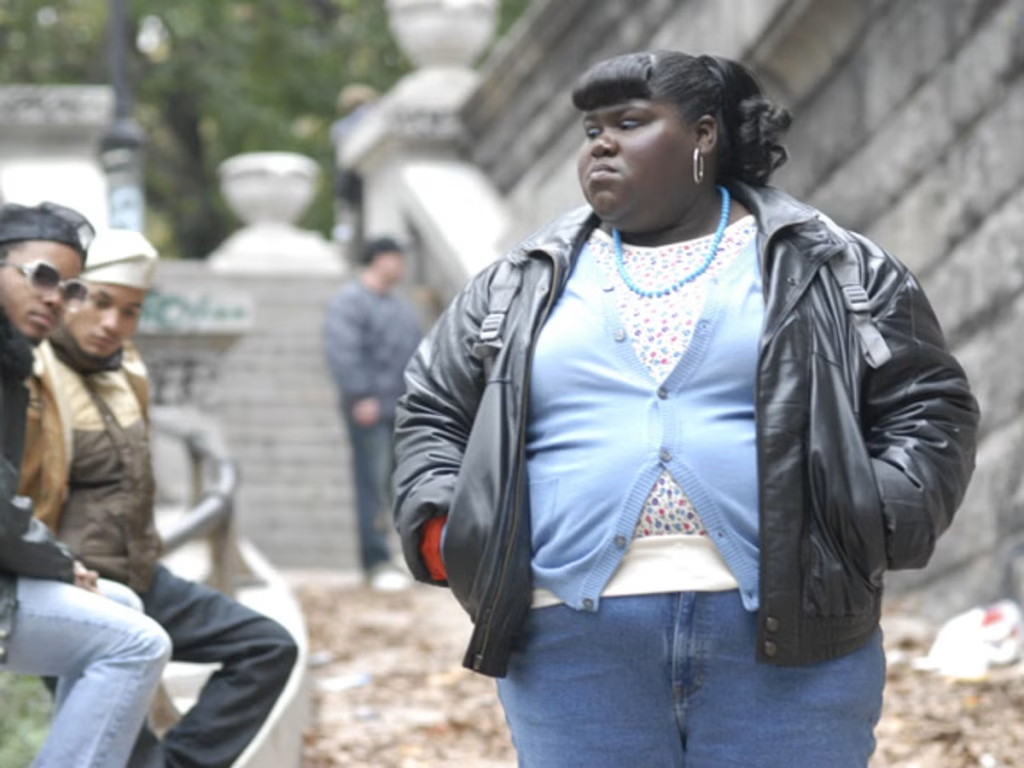
15. Lee Daniels — Precious

Lee Daniels announced himself with Precious, a fearless and emotionally bruising portrait of survival in modern Harlem. Drawing on his background as a producer, Daniels leaned into performance over polish, giving the film an immediacy that’s impossible to ignore.

Image Source: Bing Image. License: All Creative Commons

Powered by a breakout turn from Gabourey Sidibe and a devastating, Oscar-winning performance by Mo’Nique, the film confronted abuse, poverty, and self-worth without softening its edges. Its impact rippled beyond awards recognition, helping expand space in mainstream cinema for stories centered on marginalized voices.

Image Source: Bing Image. License: All Creative Commons

14. Steve McQueen — 12 Years a Slave

Steve McQueen’s transition from visual artist to filmmaker arrived with astonishing authority. 12 Years a Slave rejected sentimentality in favor of restraint, letting long takes and silence communicate the brutality of American slavery.

Image Source: Bing Image. License: All Creative Commons

Despite modest resources for a period epic, McQueen extracted staggering performances and crafted imagery that lingered long after the credits rolled. The film’s Best Picture win confirmed that confronting history head-on could resonate deeply with audiences worldwide.

Image Source: Bing Image. License: All Creative Commons

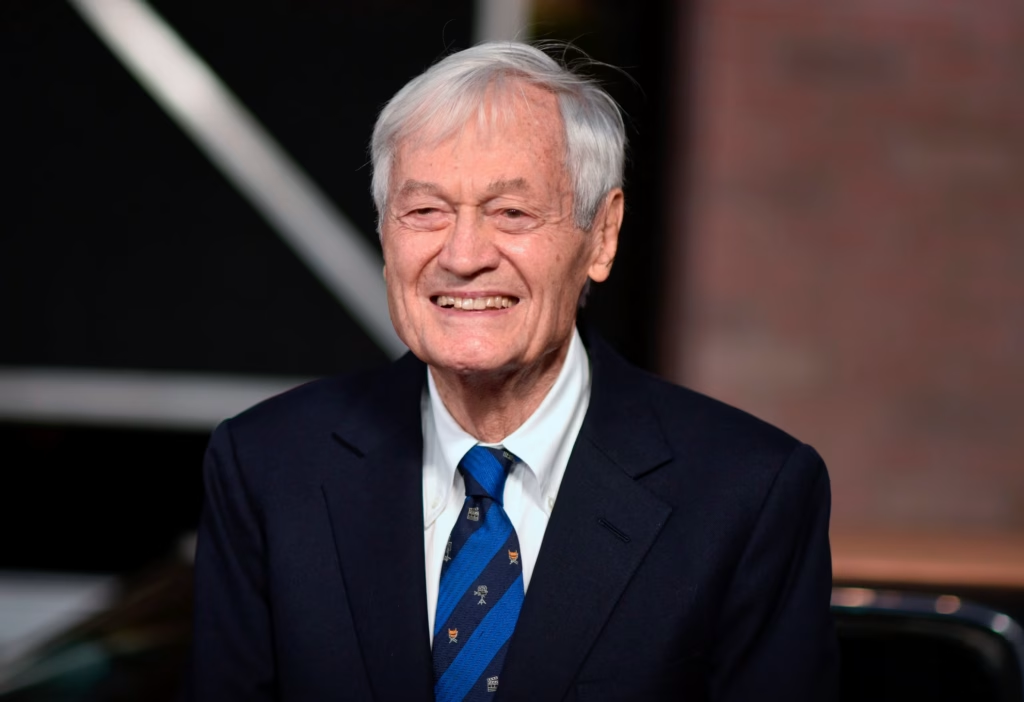
13. Roger Corman — Monster from the Ocean Floor

Roger Corman began exactly where he would continue: working fast, cheaply, and creatively. His debut creature feature may have been modest, but it showcased his uncanny ability to stretch resources to their limit.

Image Source: Bing Image. License: All Creative Commons

More importantly, it launched a career dedicated to nurturing new talent. Corman became an unofficial film school, proving that discipline, efficiency, and imagination could build an empire without studio excess.

Image Source: Bing Image. License: All Creative Commons

12. Julie Dash — Daughters of the Dust

Julie Dash’s debut was unlike anything American cinema had seen. Daughters of the Dust unfolded as a visual poem, chronicling the lives and traditions of the Gullah Geechee community with reverence and grace.

Image Source: Bing Image. License: All Creative Commons

Shot independently and structured non-traditionally, the film challenged narrative norms and aesthetic expectations. Its influence has only grown over time, shaping the visual language of contemporary Black filmmakers and artists.

Image Source: Bing Image. License: All Creative Commons

11. James Wan — Saw

James Wan turned constraint into an advantage. Shot quickly and cheaply, Saw relied on tension, pacing, and structure rather than spectacle. Its unsettling premise and sharp twist electrified audiences.

Image Source: Bing Image. License: All Creative Commons

The film’s massive success redefined modern horror economics and launched a franchise juggernaut. Wan’s debut proved that clever design and strong storytelling can outperform big budgets every time.

Image Source: Bing Image. License: All Creative Commons

10. Darren Aronofsky — Pi

Pi arrived like a fever dream. Darren Aronofsky’s stark, black-and-white debut plunged viewers into obsession, paranoia, and mathematical mysticism, all crafted on a shoestring budget.

Image Source: Bing Image. License: All Creative Commons

The film’s experimental visuals and relentless intensity announced Aronofsky as a director unafraid of discomfort or ambiguity. It set the tone for a career built on emotional extremity and formal risk.

Image Source: Bing Image. License: All Creative Commons

9. Richard Linklater — Slacker

Richard Linklater’s Slacker had no conventional plot, and that was the point. Meandering through conversations and chance encounters, the film captured a generation’s drifting anxieties with disarming honesty.

Image Source: Bing Image. License: All Creative Commons

Its loose structure and low-budget ethos helped define 1990s indie cinema. Linklater proved that observation could be just as compelling as action.

Image Source: Bing Image. License: All Creative Commons

8. Robert Rodríguez — El Mariachi

Few debut stories are as legendary as El Mariachi. Shot for the cost of a used car, Robert Rodriguez’s action film showcased relentless ingenuity, from creative camera tricks to guerrilla locations.

Image Source: Bing Image. License: All Creative Commons

The film’s success shattered assumptions about what independent filmmakers could achieve. Rodriguez didn’t wait for permission; he made his own door and kicked it open.

Image Source: Bing Image. License: All Creative Commons

7. Kevin Smith — Clerks

Kevin Smith’s Clerks felt like eavesdropping on real life. Filmed after hours in a convenience store, the movie thrived on sharp dialogue, awkward silences, and deeply relatable frustrations.

Image Source: Bing Image. License: All Creative Commons

Its Sundance success transformed Smith into an indie icon and proved that voice mattered more than gloss. Sometimes, all you need is something honest to say.

Image Source: Bing Image. License: All Creative Commons

6. The Coen Brothers — Blood Simple

With Blood Simple, the Coen brothers arrived fully formed. Their debut blended noir, dark comedy, and meticulous visual storytelling into something both familiar and strange.

Image Source: Bing Image. License: All Creative Commons

The film’s precision and tonal confidence signaled the arrival of two filmmakers obsessed with structure and subversion. Their fingerprints would soon be everywhere.

Image Source: Bing Image. License: All Creative Commons

5. Jordan Peele — Get Out

Jordan Peele’s pivot from comedy to horror caught many off guard, but Get Out landed like a thunderclap. Using genre as a Trojan horse, Peele dissected race, privilege, and performance in America.

Image Source: Bing Image. License: All Creative Commons

The film’s cultural impact extended far beyond box office success, reshaping expectations for socially conscious genre cinema. Peele’s debut didn’t just scare, it challenged.

Image Source: Bing Image. License: All Creative Commons

4. John Singleton — Boyz n the Hood

John Singleton was barely out of college when he made Boyz n the Hood, yet the film carried the weight of lived experience. His depiction of South Central Los Angeles balanced violence with tenderness and hope.

Image Source: Bing Image. License: All Creative Commons

Singleton’s historic Oscar nomination marked a turning point, proving that authenticity could thrive in mainstream cinema without compromise.

Image Source: Bing Image. License: All Creative Commons

3. Ava DuVernay — Selma

Ava DuVernay brought urgency and humanity to Selma, focusing not just on history but on the people living it. Her direction emphasized emotion, struggle, and moral courage.

Image Source: Bing Image. License: All Creative Commons

The film affirmed DuVernay as a powerful voice in American cinema and opened doors for future filmmakers to blend activism with artistry.

Image Source: Bing Image. License: All Creative Commons

2. Spike Lee — She’s Gotta Have It

Spike Lee burst onto the scene with swagger, humor, and defiance. She’s Gotta Have It was raw, stylish, and unapologetically Black, reshaping how stories about urban life were told.

Image Source: Bing Image. License: All Creative Commons

Lee’s debut wasn’t just a calling card; it was a declaration of independence from cinematic convention.

Image Source: Bing Image. License: All Creative Commons

1. Orson Welles — Citizen Kane

Few debuts come close to Citizen Kane. At 25, Orson Welles rewrote the grammar of cinema, experimenting with structure, perspective, and visual depth in ways that still feel modern.

Image Source: Bing Image. License: All Creative Commons

The film’s innovations reshaped storytelling itself. Decades later, it remains a benchmark for ambition and artistic fearlessness.

Image Source: Bing Image. License: All Creative Commons

These debut films remind us that revolution often starts small—with a first idea, a borrowed camera, or a story that refuses to stay quiet. Whether made for thousands or millions, each of these works reshaped cinema by daring to be different from the very beginning.