Home Blog Page 124

15 Moments When Celebrities Passed on Huge Film Projects

0
Image Source: Bing Image. License: All Creative Commons

Hollywood is full of “what if” moments—roles that could have transformed careers, launched franchises, or even changed the way we remember certain films. Actors turn down parts for all sorts of reasons: scheduling conflicts, creative differences, or simply following their instincts—and those decisions can ripple through cinematic history. From superhero blockbusters to beloved franchises, these instances show that even the biggest stars sometimes say no. Here, we count down 15 major roles that actors either passed on or walked away from, exploring why they made those choices and how it affected the films—and sometimes their own careers. Some of these decisions are jaw-dropping in hindsight, while others make perfect sense once you hear the full story.

Image Source: Bing Image. License: All Creative Commons

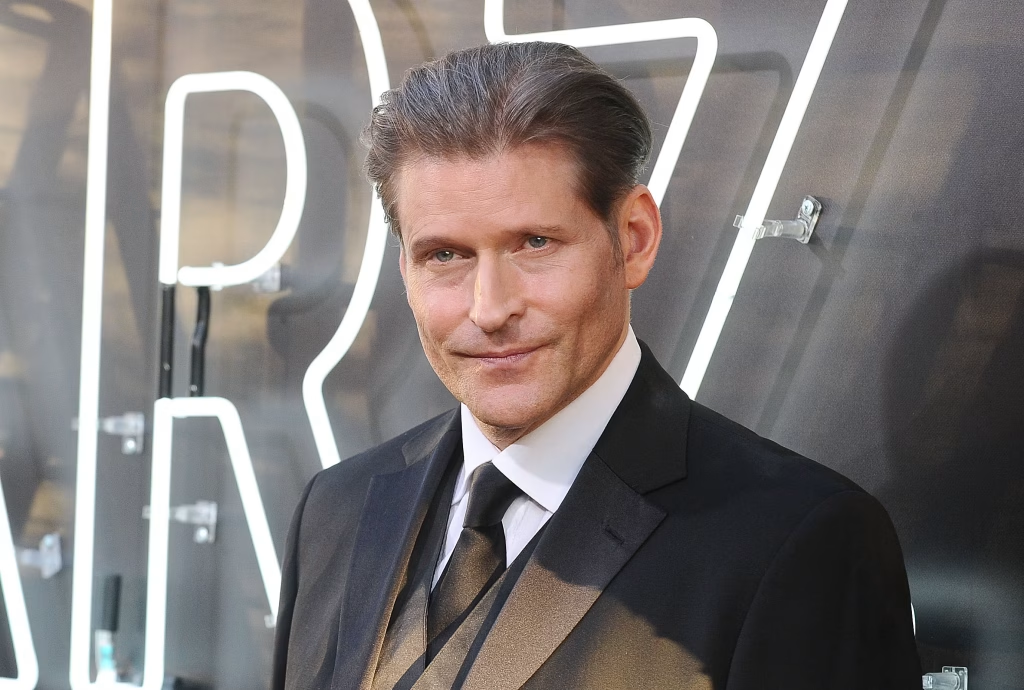
15. Crispin Glover Left Back to the Future Part II

Crispin Glover’s portrayal of George McFly in the original Back to the Future is unforgettable, but he opted out of the sequel due to creative and financial disputes. Glover disagreed with changes to the storyline, especially the altered ending showing the McFlys as wealthy, and felt undervalued after his pay was cut significantly compared to his co-stars.

Image Source: Bing Image. License: All Creative Commons

The filmmakers famously used old footage and hired Jeffrey Weissman to stand in for Glover, even applying prosthetics to recreate his appearance. The result was awkward and controversial, sparking legal disputes over likeness rights. Fans immediately noticed the absence, and the incident remains a cautionary tale about the challenges of working in major franchises.

Image Source: Bing Image. License: All Creative Commons

14. Megan Fox Left Transformers

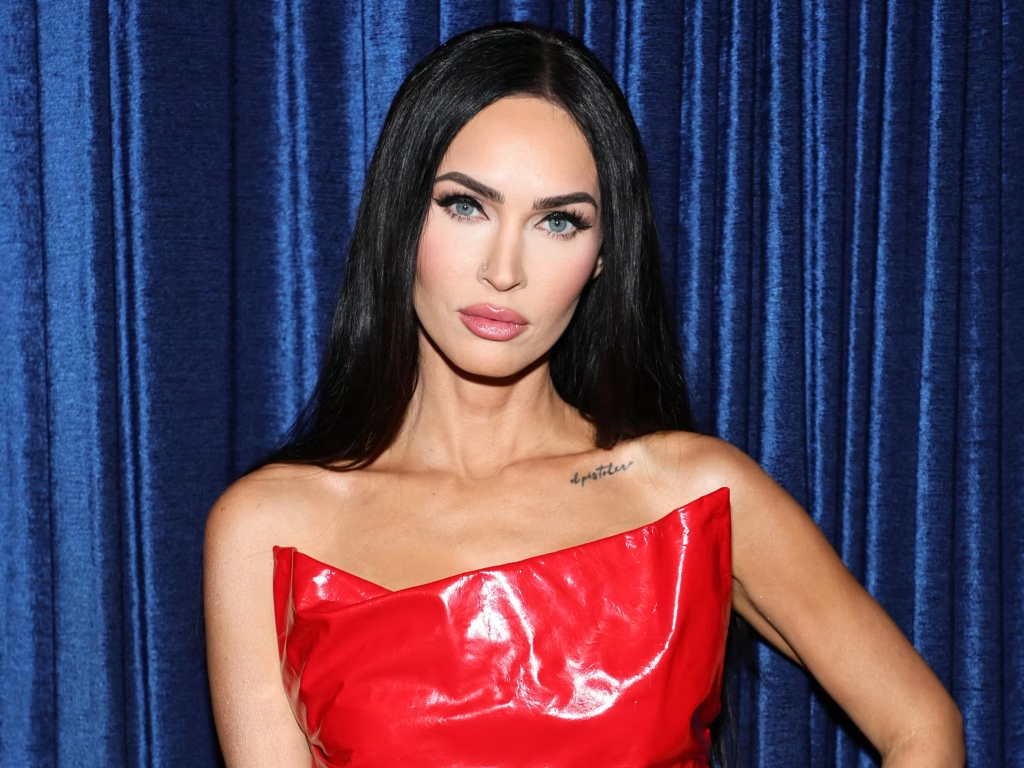
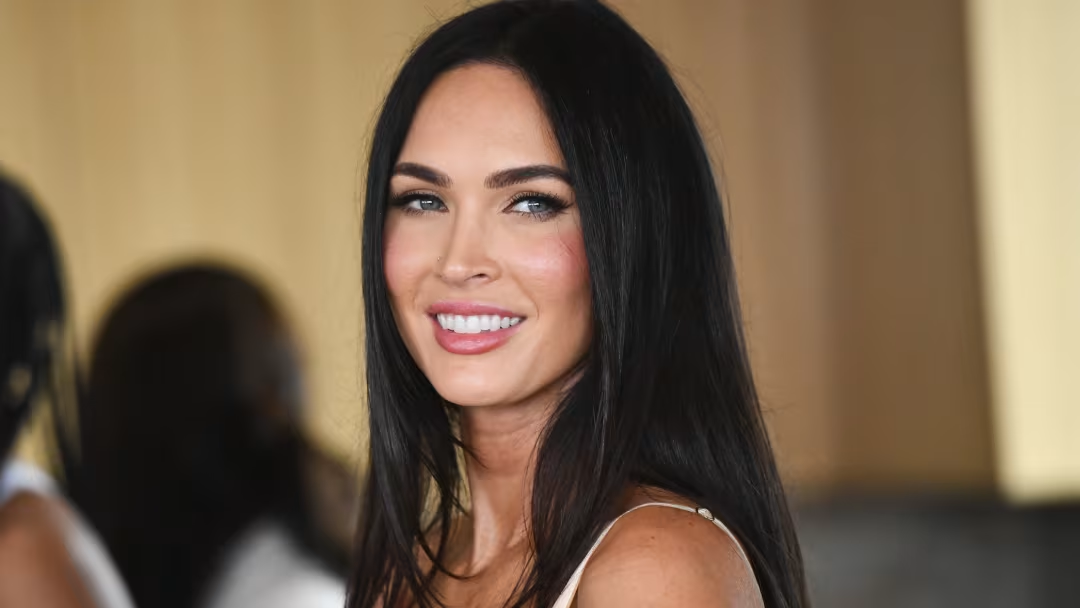
Megan Fox’s breakout role as Mikaela Banes in the first two Transformers films made her a household name, but her relationship with director Michael Bay soured. Fox publicly described Bay as difficult to work with, which led to her high-profile firing and replacement by Rosie Huntington-Whiteley for the third film.

Image Source: Bing Image. License: All Creative Commons

Her departure highlighted the tensions actors face when speaking out about working conditions on big-budget productions. While the franchise carried on, many fans noted the chemistry shift, and Fox’s absence became a talking point for both media and viewers alike.

Image Source: Bing Image. License: All Creative Commons

13. Robert Duvall Left The Godfather: Part III

Robert Duvall’s Tom Hagen was a crucial figure in the first two Godfather films, but he declined to return for the third installment due to a salary dispute. Duvall later explained that the pay structure didn’t sit right with him, and he would have returned under different circumstances.

Image Source: Bing Image. License: All Creative Commons

As a result, the filmmakers wrote Tom Hagen out of the story, introducing George Hamilton’s B.J. Harrison instead. Critics and fans alike noted the absence of Duvall’s character, which some argue contributed to the film’s mixed reception, showing just how critical a single actor can be to a franchise’s continuity.

Image Source: Bing Image. License: All Creative Commons

12. Neve Campbell Left Scream VI

Neve Campbell has been synonymous with the Scream franchise as Sidney Prescott, but she opted out of Scream VI, citing offers that didn’t reflect her contribution to the series. The decision forced the filmmakers to shift focus toward newer characters while keeping the possibility of her return open.

Image Source: Bing Image. License: All Creative Commons

Campbell’s temporary departure demonstrated the weight a lead actor carries in a long-running franchise. Fans were quick to note the shift in tone, and her absence became a reminder of how essential top-tier talent is to horror classics.

Image Source: Bing Image. License: All Creative Commons

11. Edward Norton Left The Incredible Hulk

Edward Norton brought a complex, brooding version of Bruce Banner to The Incredible Hulk, but his vision clashed with Marvel Studios’ plans for the character. Norton reportedly wanted a darker, more intricate storyline, while Marvel preferred a more straightforward, franchise-friendly approach.
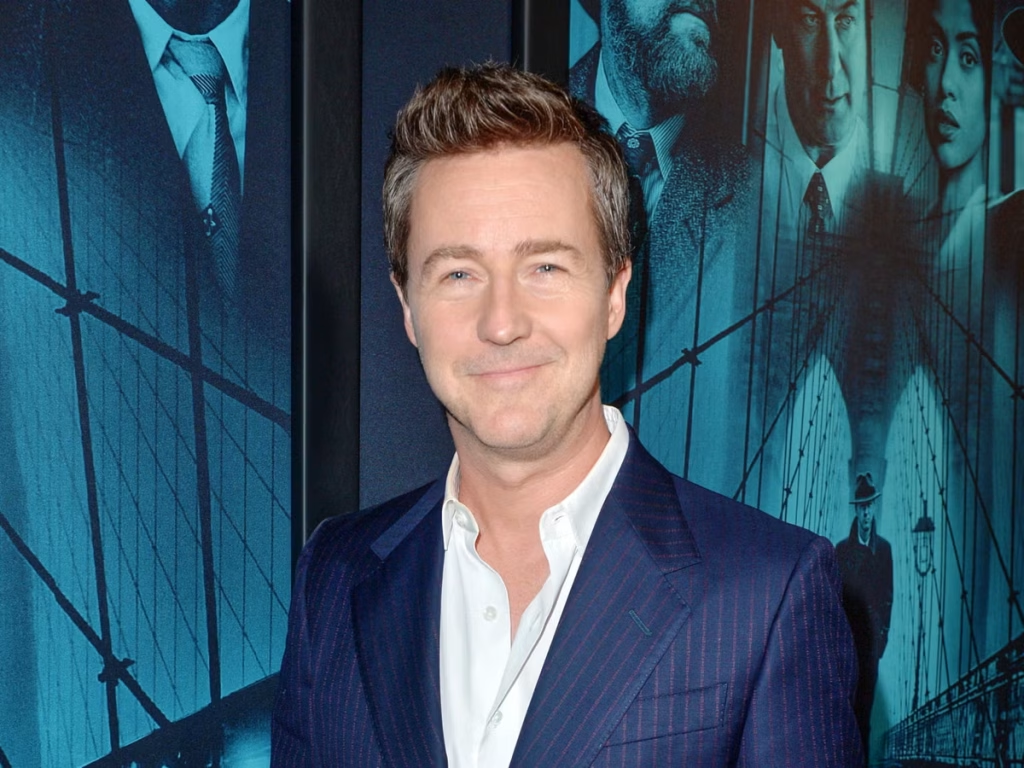
Image Source: Bing Image. License: All Creative Commons

As a result, Norton stepped away, and Mark Ruffalo assumed the role, starting with The Avengers. Ruffalo’s Banner became a fan favorite, but Norton’s departure remains a notable moment in MCU history, illustrating how creative differences can shape even major blockbuster franchises.

Image Source: Bing Image. License: All Creative Commons

10. Keanu Reeves Turned Down Captain Marvel

Keanu Reeves is a beloved action star who has been considered for numerous Marvel roles over the years. He was offered the part of Yon-Rogg in Captain Marvel, but scheduling conflicts with John Wick: Chapter 3 — Parabellum prevented him from taking it.

Image Source: Bing Image. License: All Creative Commons

Jude Law ultimately stepped into the role, and the film was a massive success. Still, fans speculate about how Reeves’ unique presence might have changed the dynamic, and Marvel continues to keep him on their radar for future projects.

Image Source: Bing Image. License: All Creative Commons

9. Gal Gadot Turned Down Barbie

Before Margot Robbie was cast as Barbie, Gal Gadot was considered the ideal fit, described as radiating the perfect combination of charm, beauty, and warmth. However, scheduling conflicts prevented Gadot from accepting the role.

Image Source: Bing Image. License: All Creative Commons

Robbie took on the part, and the movie became a huge hit, but fans and insiders alike still wonder how Gadot might have influenced the film’s tone and style. The near-casting remains one of Hollywood’s most intriguing “what could have been” scenarios.

Image Source: Bing Image. License: All Creative Commons

8. Michael Douglas Turned Down Frozen

Michael Douglas revealed he had passed on a role in Disney’s Frozen, though he couldn’t recall which character he was offered. In hindsight, the film’s staggering success makes this one of those surprising near-misses in Hollywood history.

Image Source: Bing Image. License: All Creative Commons

Frozen became a cultural phenomenon, grossing over $1.4 billion worldwide. Douglas’ decision serves as a reminder that even experienced actors occasionally miss out on career-defining projects, no matter how much they later reflect on them.

Image Source: Bing Image. License: All Creative Commons

7. Orlando Bloom Turned Down Pirates of the Caribbean: On Stranger Tides

Orlando Bloom, a key player in the first three Pirates of the Caribbean films, chose to step away for the fourth installment to pursue other projects alongside co-star Keira Knightley.

Image Source: Bing Image. License: All Creative Commons

The film was still a box office hit, but fans missed the familiar dynamic between Will Turner and Elizabeth Swann. Bloom eventually returned for the fifth movie, showing that actors and franchises can find their way back to one another when timing aligns.

Image Source: Bing Image. License: All Creative Commons

6. Ryan Gosling Turned Down Beauty and the Beast

Ryan Gosling was offered the role of the Beast in Disney’s live-action Beauty and the Beast, but chose to star in La La Land instead. Meanwhile, Emma Watson passed on La La Land to play Belle, illustrating the high-stakes juggling act actors face when multiple major projects overlap.

Image Source: Bing Image. License: All Creative Commons

Dan Stevens ultimately played the Beast, and the movie became one of Disney’s most successful live-action adaptations. Gosling’s choice underscores the difficult trade-offs actors make between blockbuster potential and critically acclaimed projects.
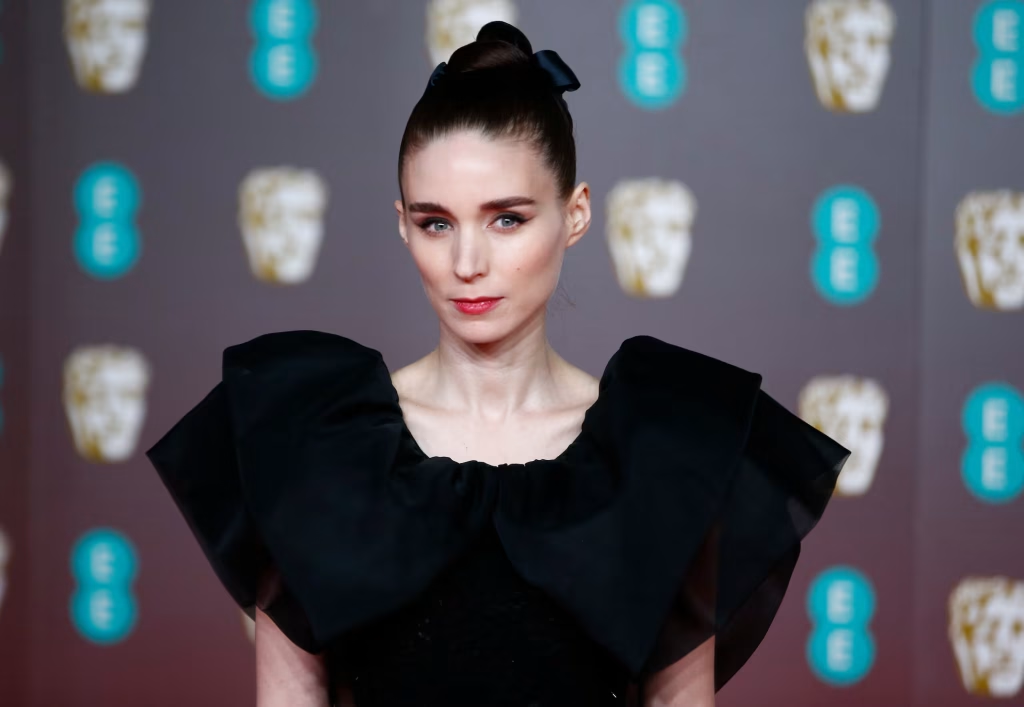
Image Source: Bing Image. License: All Creative Commons

5. Rooney Mara Turned Down Rogue One: A Star Wars Story

Rooney Mara was in talks to play Jyn Erso in Rogue One, but scheduling conflicts prevented her from auditioning. The role went to Felicity Jones, who delivered a standout performance and anchored the film’s emotional core.
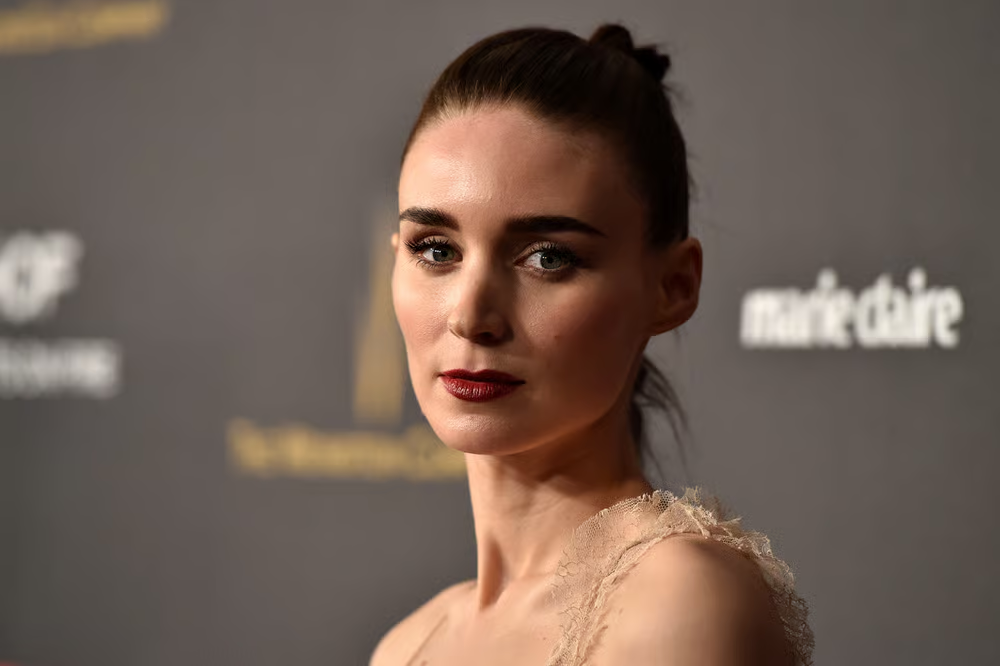
Image Source: Bing Image. License: All Creative Commons

Mara’s decision shows how timing can dramatically influence franchise casting. Even a single actor’s availability can alter a film’s trajectory and ultimately shape audience perception of a character.

Image Source: Bing Image. License: All Creative Commons

4. Jessica Chastain Turned Down Iron Man 3

Jessica Chastain was approached for the role of Maya Hansen in Iron Man 3, but had to decline due to scheduling conflicts. She clarified that press coverage of the potential casting happened prematurely, creating speculation that didn’t match reality.

Image Source: Bing Image. License: All Creative Commons

Rebecca Hall eventually took on the role, and the film became a major box office success. Chastain’s near-casting remains a curious footnote in the MCU’s history of star-studded almost-casts.

Image Source: Bing Image. License: All Creative Commons

3. Denzel Washington Turned Down Furious 7

Denzel Washington was reportedly offered the role of Mr. Nobody in Furious 7, which eventually went to Kurt Russell. Washington passed on the part, reportedly because he didn’t resonate with the franchise’s high-octane, over-the-top style.

Image Source: Bing Image. License: All Creative Commons

The film was a massive success, and Russell became a fan favorite. Washington’s decision reminds us that even legendary actors are selective, shaping both their careers and the films they touch or don’t touch.

Image Source: Bing Image. License: All Creative Commons

2. Claire Danes Turned Down Titanic

Claire Danes was considered for the lead role of Rose in Titanic, a part that ultimately went to Kate Winslet. Having just worked with Leonardo DiCaprio on Romeo + Juliet, Danes felt she couldn’t immediately repeat another epic romance with him.

Image Source: Bing Image. License: All Creative Commons

Titanic went on to become a global phenomenon, grossing over $2 billion and cementing Winslet and DiCaprio as cinematic icons. Danes has no regrets, but her decision remains one of Hollywood’s most famous “what if” moments.

Image Source: Bing Image. License: All Creative Commons

1. Matt Damon Turned Down The Dark Knight

Matt Damon was offered the role of Harvey Dent/Two-Face in The Dark Knight but declined, missing out on what became one of the most acclaimed superhero films of all time. Aaron Eckhart stepped into the role and delivered a performance that helped define the film’s dramatic core.

Image Source: Bing Image. License: All Creative Commons

Damon has joked about the decision as a financial misstep, referencing other blockbusters he passed on. His choice illustrates that even the biggest stars can miss out on legendary roles, reshaping both their careers and the films themselves.
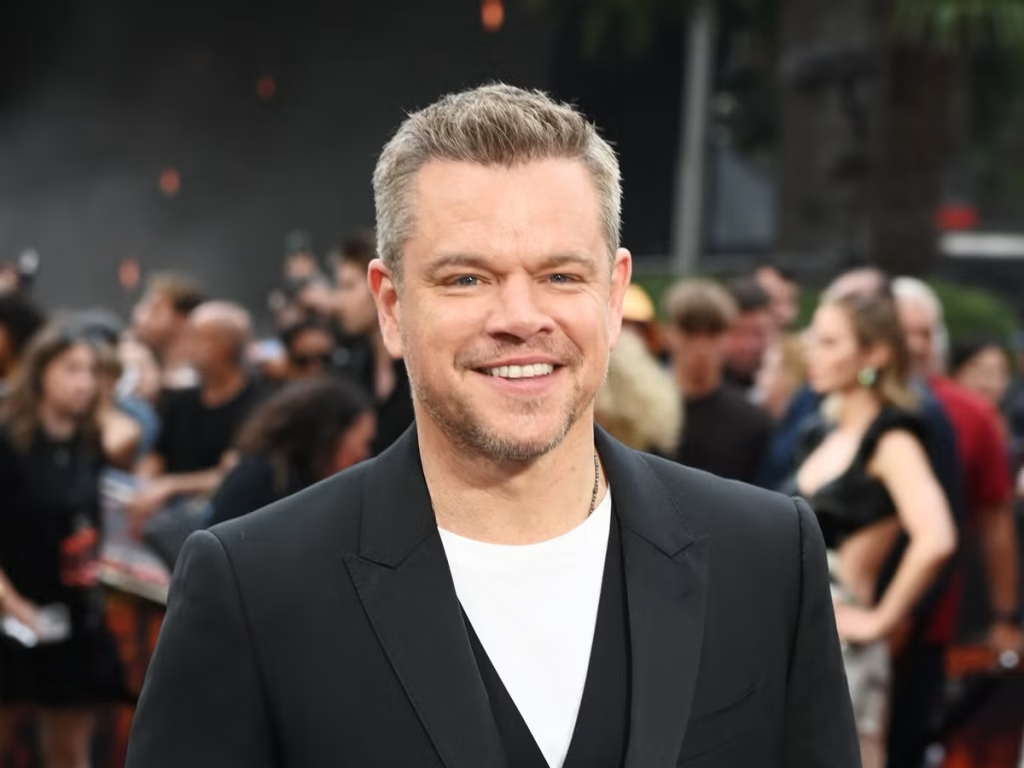
Image Source: Bing Image. License: All Creative Commons

From blockbuster hits to critically acclaimed masterpieces, these casting near-misses show how much impact a single actor can have. Sometimes the decision is a practical conflict or creative differences, but other times it changes the entire cultural conversation around a film. Whether you love the choices actors made or wonder about the “what ifs,” one thing is clear: saying no can be just as powerful as saying yes. Hollywood history is full of fascinating stories, and these 15 roles are perfect examples of how the right or wrong decision can change everything.

10 Celebrities With Eyes That Leave a Lasting Impression

0
Image Source: Bing Image. License: All Creative Commons

There’s something undeniably captivating about certain eyes—those that linger in your memory long after the screen fades or the red carpet clears. Whether it’s a rare color, a striking shape, or a gaze that seems to look right through you, celebrity eyes often hold a magnetic allure. They inspire makeup trends, fan art, and endless online fascination, proving that beauty is in the details. In Hollywood and beyond, some eyes become iconic, serving as signature traits that define a star’s persona. From subtle shifts in hue to dramatic contrasts, celebrity eyes tell stories of genetics, style, and a touch of Hollywood magic. Here, we count down 10 of the most mesmerizing celebrity eyes, exploring the colors, shapes, and rarities that make them unforgettable—and uncovering the fascinating stories behind these iconic looks that have influenced beauty culture worldwide.

Image Source: Bing Image. License: All Creative Commons

10. Celebrities with Heterochromia: Double the Drama

Heterochromia, the condition where someone has two different colored eyes or even a split-tone iris, is a rare natural phenomenon that instantly draws attention. Celebrities with this trait have captivated audiences not only for their talent but also for their striking gaze. The asymmetry of color adds depth, intrigue, and a sense of otherworldliness to their appearance.

Image Source: Bing Image. License: All Creative Commons

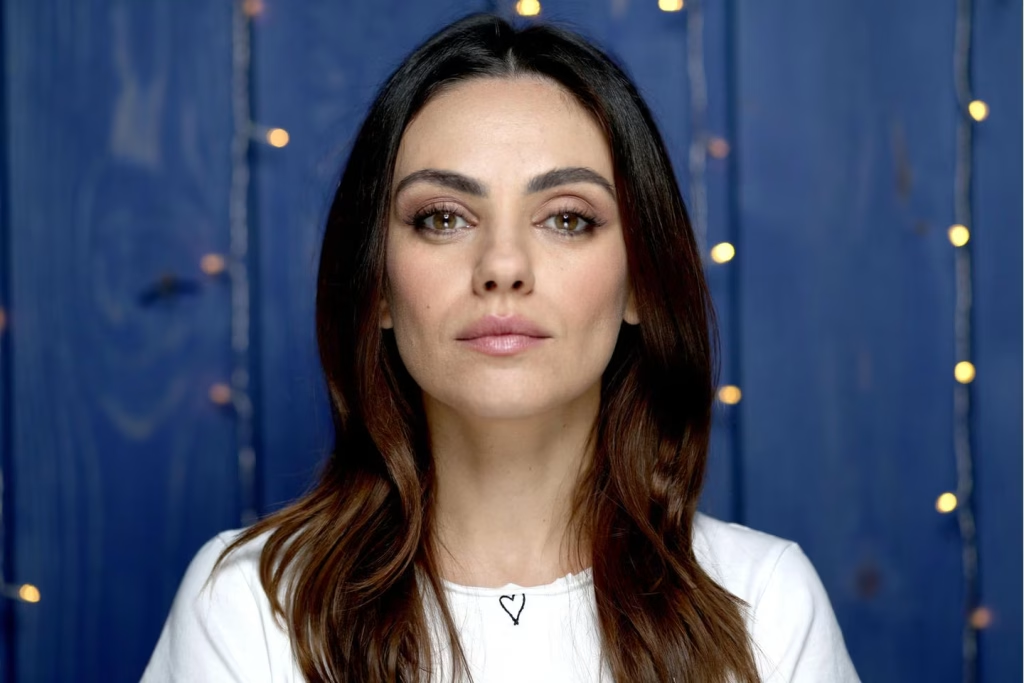
Mila Kunis is one of the most famous examples, with one green eye and one brown. Her heterochromia has become a defining feature, adding a subtle yet unforgettable element to her overall allure. Kate Bosworth also turns heads with one blue eye and one that’s a mix of blue and hazel, giving her a look that feels uniquely hers.

Image Source: Bing Image. License: All Creative Commons

Beyond aesthetics, heterochromia highlights how natural variation can enhance individual beauty. These rare eye differences remind us that sometimes, the quirks that set someone apart become their signature appeal. In Hollywood, where every detail counts, having eyes like these is nothing short of a superpower.

Image Source: Bing Image. License: All Creative Commons

9. Celebrities Who Transform with Colored Contacts

Not all mesmerizing eyes are inherited; sometimes they’re the product of a little Hollywood ingenuity. Colored contact lenses allow celebrities to shift their appearance for roles, fashion shoots, or personal style experiments. This flexibility gives stars the ability to reinvent themselves with a single glance.

Image Source: Bing Image. License: All Creative Commons

Paris Hilton, for example, is often seen with bright blue eyes thanks to contacts, though her natural color is brown. Similarly, icons like Kylie Jenner, Kim Kardashian, and Nicki Minaj have used contacts to experiment with everything from icy hues to dramatic, jewel-toned shades. Even performers like Angelina Jolie and Lady Gaga have embraced the trend for film and stage impact.

Image Source: Bing Image. License: All Creative Commons

Colored contacts aren’t just a beauty accessory; they’re storytelling tools. They allow celebrities to align their eyes with a particular mood, persona, or role, proving that even the simplest detail can make a powerful visual statement. The right gaze, after all, can leave a lasting impression.

Image Source: Bing Image. License: All Creative Commons

8. Celebrities with Gray Eyes: Subtle and Striking

Gray eyes are among the rarest and most intriguing in the world. Their subtle, shifting tones, sometimes silver, sometimes icy blue, give the wearer a mysterious and compelling presence. In film and fashion, this understated rarity often translates into a mesmerizing intensity.

Image Source: Bing Image. License: All Creative Commons

Ian Somerhalder’s steel-gray eyes, for instance, have become a defining element of his on-screen allure, conveying depth and intensity without uttering a word. Aishwarya Rai’s gray-green eyes shift with the light, adding to her international appeal and enigmatic charm. These subtle color variations often draw viewers in, evoking a quiet yet undeniable magnetism.

Image Source: Bing Image. License: All Creative Commons

Gray eyes exemplify the adage that less can be more. Rare yet understated, they command attention without shouting, proving that beauty sometimes lies in gentle nuance rather than overt spectacle. Their power is quiet, but unforgettable.

Image Source: Bing Image. License: All Creative Commons

7. Celebrities with Violet or Unusual Blue Eyes: The Legendary Look

Few colors spark as much fascination as violet or strikingly rare shades of blue. These eye hues are instantly captivating, often evoking a sense of fantasy and cinematic magic. Such colors are not just admired, they inspire entire lines of colored contacts for fans hoping to recreate the effect.

Image Source: Bing Image. License: All Creative Commons

Elizabeth Taylor’s famously violet-tinted eyes remain iconic, often cited as one of Hollywood’s most mesmerizing features. Jared Leto’s icy blue eyes also command attention, glowing under stage lights and accentuating his distinctive persona. Sydney Sweeney’s pale, almost translucent blue eyes have become part of her signature charm, striking in their uniqueness.

Image Source: Bing Image. License: All Creative Commons

These rare hues remind us that eye color is more than aesthetic; it’s a form of expression. When paired with charisma and style, these eyes can define a celebrity’s image and elevate their presence in both film and fashion, leaving an impression that’s hard to forget.

Image Source: Bing Image. License: All Creative Commons

6. Celebrities with Green or Green-Gray Eyes: The Industry’s Envy

Green eyes are among the rarest on the planet, present in less than 2% of the population. This scarcity makes them intensely captivating and highly coveted in the realm of celebrity. Their shifting tones from emerald to olive or gray add a layer of intrigue.

Image Source: Bing Image. License: All Creative Commons

Angelina Jolie’s piercing green gaze is instantly recognizable, exuding both intensity and mystery. Emma Stone’s eyes shift depending on the light, ranging from soft green to warm hazel, adding depth to her expressions. Rihanna’s green-gray-hazel eyes have even become a trending topic among fans and media alike.

Image Source: Bing Image. License: All Creative Commons

Green eyes often inspire creativity in fashion and makeup, fueling tutorials and fan tributes. Their rarity reminds us that small differences can make a huge impact, helping to define a star’s visual identity and lasting appeal.

Image Source: Bing Image. License: All Creative Commons

5. Celebrities with Amber Eyes: Golden and Rare

Amber eyes are a true natural phenomenon, glowing like liquid gold. Often called “wolf eyes,” this rare shade is found in only about 5% of people, giving its wearer an instantly magnetic presence. Amber eyes are warm, radiant, and difficult to ignore.

Image Source: Bing Image. License: All Creative Commons

Supermodel Tyra Banks is a prime example, with her golden eyes contributing to her iconic “smize” and camera-commanding presence. Jennifer Lopez and Darren Criss also possess this captivating hue, which seems to shimmer under natural light. Amber eyes are distinct from hazel; they are solid, luminous, and exude a wild, enigmatic energy.

Image Source: Bing Image. License: All Creative Commons

The appeal of amber eyes lies not only in their rarity but also in their perceived depth and intensity. They seem to glow with life, adding a signature element to the person behind them. In a world of countless faces, these eyes are unforgettable.

Image Source: Bing Image. License: All Creative Commons

4. Celebrities with Almond-Shaped Eyes: Timeless Elegance

Almond-shaped eyes are a classic of beauty, celebrated for their symmetry, versatility, and elegance. Stars like Angelina Jolie, Mila Kunis, Zendaya, and Megan Fox have helped popularize this shape as a hallmark of cinematic allure. Their almond eyes serve as canvases for makeup trends and fashion statements alike.

Image Source: Bing Image. License: All Creative Commons

This eye shape has inspired viral trends like “siren eyes” and “fox eyes,” which emphasize a lifted, elongated aesthetic. Makeup artists and enthusiasts often use eyeliner, shadow, and even subtle cosmetic procedures to mimic this iconic look. Almond eyes are especially adaptable, enhancing both dramatic and natural styles.

Image Source: Bing Image. License: All Creative Commons

Beyond aesthetics, almond-shaped eyes convey a sense of poise and sophistication. Their popularity in Hollywood has cemented them as a standard of visual appeal, influencing everything from beauty campaigns to social media tutorials.

Image Source: Bing Image. License: All Creative Commons

3. Celebrities Whose Eye Color Remains a Mystery

Some stars keep fans guessing with chameleon-like eyes that seem to change color depending on lighting, styling, or camera angles. This element of mystery adds intrigue, making their gaze endlessly fascinating and widely discussed online.

Image Source: Bing Image. License: All Creative Commons

Angelina Jolie, for example, has sparked debates about whether her eyes are blue, green, or even brown, depending on the setting. Megan Fox’s eyes have been described as everything from blue to gray, making them a source of ongoing fascination. This ambiguity enhances their allure, turning their gaze into a conversation piece.

Image Source: Bing Image. License: All Creative Commons

When a celebrity’s eye color is unpredictable, it becomes part of their mystique. Fans and media alike are drawn to the uncertainty, proving that even something as small as eye hue can play a big role in shaping a public persona.

Image Source: Bing Image. License: All Creative Commons

Some celebrity eyes don’t just mesmerize, they set trends. Features like almond shapes, lifted outer corners, or rare colors often spark viral makeup tutorials and fashion experiments. These iconic looks influence fans and beauty enthusiasts worldwide.

Image Source: Bing Image. License: All Creative Commons

Trends like “siren eyes” take cues from the elongated, lifted shape of almond eyes, while stars like Bella Hadid, Kendall Jenner, and Ariana Grande drive speculation about natural versus surgically enhanced looks. Regardless of the method, these eyes ignite creativity in beauty communities, inspiring countless reinterpretations.

Image Source: Bing Image. License: All Creative Commons

By blending genetics, artistry, and personal style, these celebrities shape beauty standards in real time. Their eyes serve as both inspiration and aspiration, demonstrating the transformative power of a gaze.

Image Source: Bing Image. License: All Creative Commons

1. Rare Eyes and Their Role in Celebrity Legacy

Ultimately, rare and captivating eyes do more than enhance a photo; they become an integral part of a celebrity’s identity. Psychologists note that humans are instinctively drawn to unique traits, which helps explain why eye colors like amber, gray, and heterochromia are so compelling.

Image Source: Bing Image. License: All Creative Commons

From Penélope Cruz’s soulful gaze to Megan Fox’s feline allure and Tyra Banks’ golden glow, these eyes have shaped careers, inspired trends, and contributed to each star’s legend. Their rarity underscores a timeless truth: beauty is about individuality as much as symmetry or hue.

Image Source: Bing Image. License: All Creative Commons

Next time you find yourself captivated by a celebrity’s eyes, remember that you’re witnessing a combination of nature, personal style, and Hollywood craftsmanship. Every glance tells a story, and every gaze leaves a lasting impression. In a world of countless faces, the eyes that stand out are the ones that linger in memory forever.

Image Source: Bing Image. License: All Creative Commons

If you want, I can also turn this into an SEO-friendly listicle with bolded names, short punchy intros for each celebrity, and links to makeup trends perfect for web publishing. That would make it even more engaging for readers.

15 Celebrity Pairs Where Height Makes a Statement

0
Image Source: Bing Image. License: All Creative Commons

While celebrity relationships may make headlines because of their glamour and glamour status, it is undeniable that there are some relationships that make people take notice because of physical differences, especially when it comes to height. People are endlessly fascinated by couples where one partner is way taller than the other, whether it is the female or the male partner. From the red carpet to the basketball court, these 15 celebrity couples show that love is not about symmetry. While these celebrity couples may be known for their differences in height, it is undeniable that it is their chemistry and confidence that make them shine.

Image Source: Bing Image. License: All Creative Commons

15. Zendaya and Tom Holland

Zendaya and Tom Holland are not only admired for their performances but also for their adorable interaction with one another. While Zendaya stands at 5’10” and Tom stands at 5’8″, their height difference is not something that their fans consider an issue, especially when Zendaya chooses to wear high heels on the red carpet, making their height difference look adorable.

Image Source: Bing Image. License: All Creative Commons

More importantly, the couple’s relationship shows that confidence and respect are key. Tom does not let their height difference get in the way of their chemistry, and together, they show the world that when you’re in love, height is just a number.

Image Source: Bing Image. License: All Creative Commons

14. Nicole Kidman and Keith Urban

Nicole Kidman and Keith Urban are an exemplary case of how a small but visible difference in height is still apparent. Nicole is 5’11” tall, while her husband is slightly shorter at 5’10”. On the red carpet, Nicole’s towering stature, especially with her heels on, is still noticeable but in an elegant way.

Image Source: Bing Image. License: All Creative Commons

Their enduring marriage is something that is looked up to because of its underpinning of respect and true partnership. Nicole’s height is clearly not an issue, and she and her husband are celebrating the idea that a man doesn’t need to be taller than his partner.

Image Source: Bing Image. License: All Creative Commons

13. RuPaul and Georges LeBar

RuPaul and Georges LeBar make a striking duo, even among other tall celebrity couples. RuPaul stands 6’4”, while Georges is 6’8”, giving them a commanding presence wherever they appear. Fans are drawn to their bold style and confident embrace of their height difference.

Image Source: Bing Image. License: All Creative Commons

Their relationship is celebrated not just for the visual impact but for the authenticity and creativity they bring to every public appearance. Together, they defy conventional expectations of celebrity couples, making them as fascinating offstage as they are on it.

Image Source: Bing Image. License: All Creative Commons

12. Lisa Bonet and Jason Momoa

Lisa Bonet and Jason Momoa are an iconic pair with a dramatic height contrast. Jason, at 6’4”, towers over Lisa, who stands 5’2”, creating a visually striking difference that fans can’t help but notice. Their appearances together, from movie premieres to casual outings, often highlight the gap endearingly.

Image Source: Bing Image. License: All Creative Commons

Despite the contrast, their relationship has been admired for warmth, authenticity, and deep mutual respect. Jason’s protective, affectionate nature complements Lisa’s graceful presence, making them one of Hollywood’s most adored couples. Their height difference has become an emblem of their unique charm.

Image Source: Bing Image. License: All Creative Commons

11. Joe Jonas and Sophie Turner

Joe Jonas and Sophie Turner showcase a subtle but noticeable height gap. Sophie stands 5’9” compared to Joe’s 5’7”, and fans often notice the difference on red carpets, especially when Sophie wears heels. Their playful interactions in public reflect a comfortable, confident partnership.

Image Source: Bing Image. License: All Creative Commons

The couple embraces their differences rather than hiding them, showing fans that love isn’t about conforming to traditional norms. Their dynamic is a mix of fun, support, and genuine connection, proving that height is never a barrier to romance.

Image Source: Bing Image. License: All Creative Commons

10. Pharrell Williams and Helen Lasichanh

Pharrell Williams and Helen Lasichanh are a stylish couple whose two-inch height difference adds to their distinctive presence. Helen, at 5’11”, subtly stands above Pharrell’s 5’9”, creating an elegant visual contrast that complements their fashion-forward appearances.

Image Source: Bing Image. License: All Creative Commons

Their relationship is admired for its creativity, individuality, and flair. Together, they challenge the conventional ideas of height and style in celebrity couples, embracing both their differences and their shared sense of self-expression.

Image Source: Bing Image. License: All Creative Commons

9. Tina Fey and Jeff Richmond

Tina Fey and Jeff Richmond have a playful and enduring partnership, with Tina standing at 5’5” and Jeff at 5’2”. Their height difference is often a topic of fan conversation, but it only adds to their charm. The couple’s humor and authenticity shine through in every appearance.

Image Source: Bing Image. License: All Creative Commons

Their dynamic emphasizes mutual respect and genuine connection. Fans appreciate how they embrace the gap with confidence, showing that love isn’t measured in inches but in laughter, partnership, and shared life experiences.

Image Source: Bing Image. License: All Creative Commons

8. Jada Pinkett Smith and Will Smith

Jada Pinkett Smith and Will Smith’s relationship features one of the more noticeable height differences, with Will towering at 6’4” compared to Jada’s 5’0”. Their striking contrast often draws attention at public events, but their bond goes far beyond appearances.

Image Source: Bing Image. License: All Creative Commons

Despite challenges and public scrutiny over the years, the couple has maintained a strong, loving partnership. Will’s imposing height and Jada’s powerful presence combine to create a dynamic that continues to inspire and captivate fans worldwide.

Image Source: Bing Image. License: All Creative Commons

7. Sacha Baron Cohen and Isla Fisher

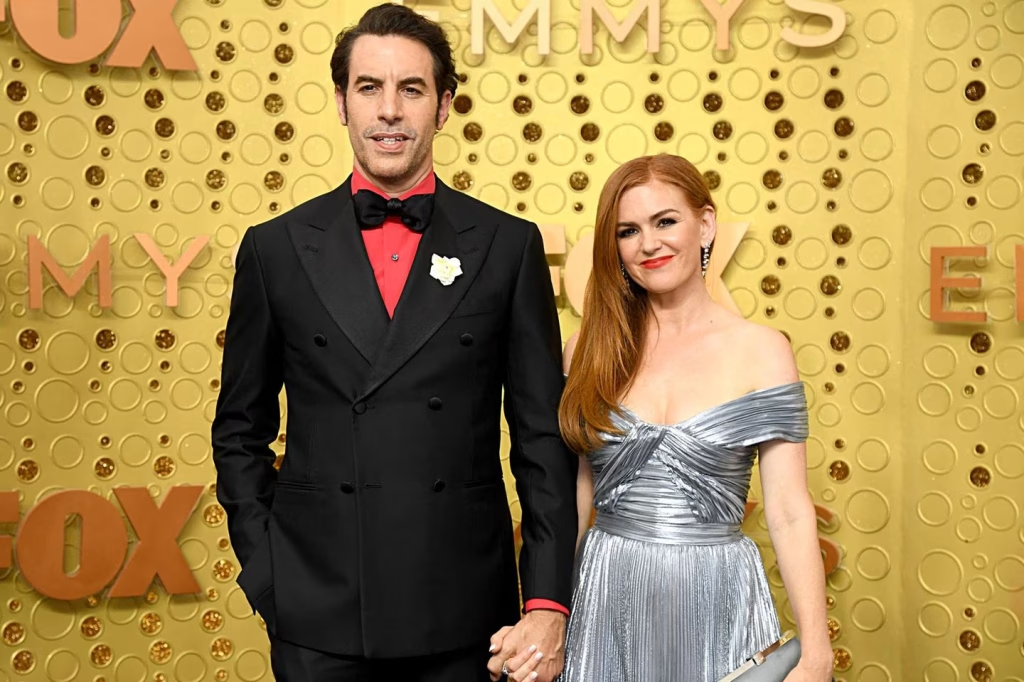
Sacha Baron Cohen and Isla Fisher are a duo where the height gap is impossible to ignore. Standing 6’3” to Isla’s 5’3”, the couple often turns heads at events, especially when Isla pairs heels with her naturally petite stature.

Image Source: Bing Image. License: All Creative Commons

Their relationship radiates humor, creativity, and mutual admiration. Fans love seeing them embrace their differences, demonstrating that height can enhance the uniqueness of a partnership rather than detract from it.

Image Source: Bing Image. License: All Creative Commons

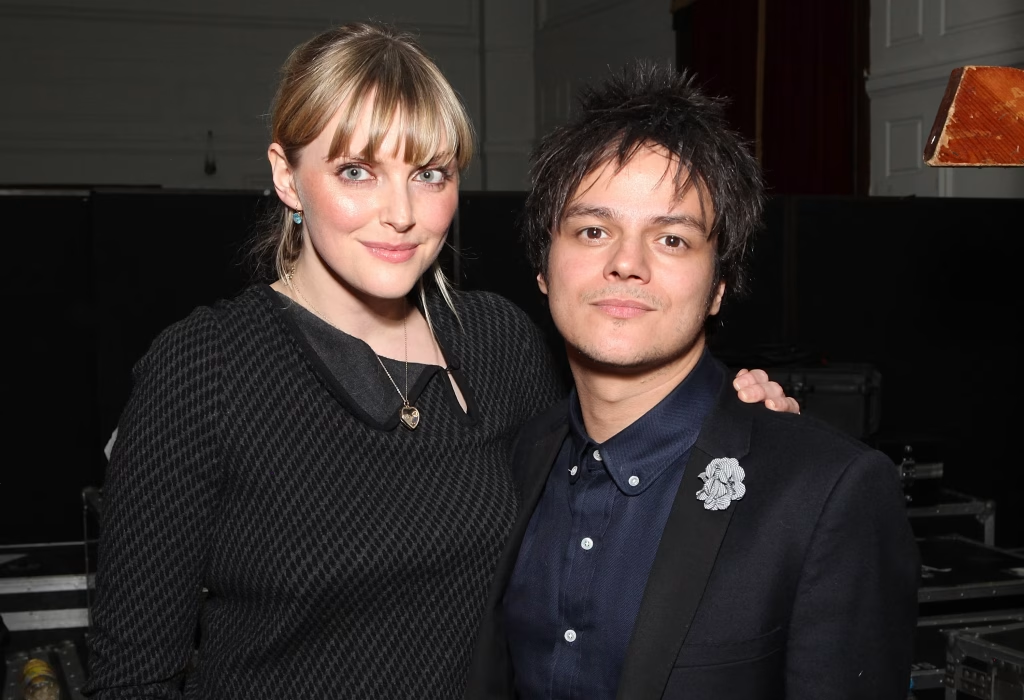
6. Sophie Dahl and Jamie Cullum

Sophie Dahl and Jamie Cullum showcase a couple where the woman is taller than the man. Sophie’s statuesque height stands out against Jamie’s smaller frame, and their appearances together have been noted for the elegant contrast they create.

Image Source: Bing Image. License: All Creative Commons

Their partnership thrives on creativity and mutual respect, proving that differences in stature do not define a couple’s connection. Fans admire their authenticity and the way they celebrate each other’s individuality.

Image Source: Bing Image. License: All Creative Commons

5. Benji Madden and Cameron Diaz

Benji Madden and Cameron Diaz are a couple with a noticeable but embraced height difference. Cameron’s 5’9” stature contrasts with Benji’s 5’6”, and fans enjoy seeing the pair together at public events where their chemistry shines.

Image Source: Bing Image. License: All Creative Commons

Their relationship reflects warmth, mutual support, and genuine affection. By embracing their physical differences, they have become an example of how confidence and love go hand in hand.

Image Source: Bing Image. License: All Creative Commons

4. Kevin Hart and Eniko Parrish

Kevin Hart and Eniko Parrish show that height doesn’t define a couple’s dynamic. Eniko, at 5’8”, is taller than Kevin, who stands at 5’4”. Fans love how the pair uses humor and style to highlight the difference rather than shy away from it.

Image Source: Bing Image. License: All Creative Commons

Their relationship is admired for its playfulness and balance. Kevin’s comedic talent pairs perfectly with Eniko’s elegance, creating a couple whose charm lies in both personality and partnership.

Image Source: Bing Image. License: All Creative Commons

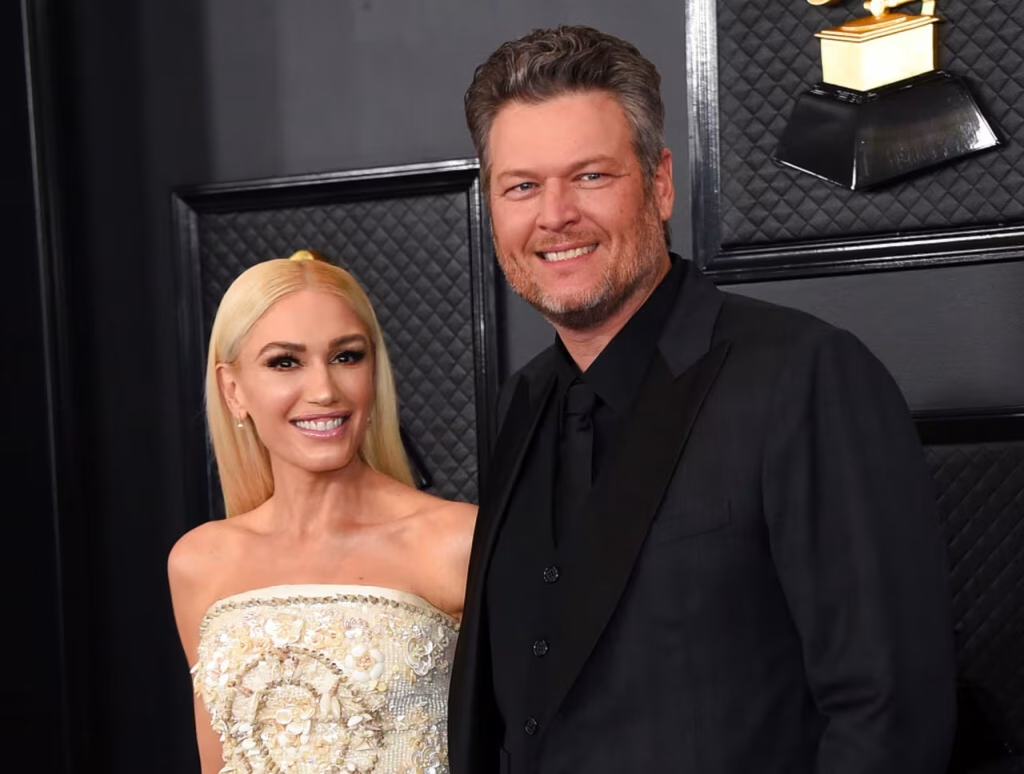
3. Gwen Stefani and Blake Shelton

Gwen Stefani and Blake Shelton demonstrate a striking height contrast, with Blake standing 6’5” and Gwen standing 5’6”. Whether at award shows or music events, the difference adds a unique visual element to their public appearances.

Image Source: Bing Image. License: All Creative Commons

Their relationship is celebrated for creativity, mutual respect, and authenticity. Fans appreciate the way their height gap enhances rather than overshadows the connection between the pop star and country singer.

Image Source: Bing Image. License: All Creative Commons

2. Ben Affleck and Jennifer Lopez

Ben Affleck and Jennifer Lopez are a high-profile couple with a noticeable height difference. Ben, at 6’4”, towers over Jennifer’s 5’5”, making their public appearances particularly striking.

Image Source: Bing Image. License: All Creative Commons

Despite the difference, their relationship is defined by love, support, and shared experiences. Fans admire their confidence and the way they embrace both their individual strengths and their connection as a couple.

Image Source: Bing Image. License: All Creative Commons

1. Adrienne Williams and Chris Bosh

Adrienne Williams and Chris Bosh have one of the most extreme height gaps among celebrities. Chris, at 6’11”, stands nearly seven feet tall when compared to Adrienne’s 5’0”, creating an unforgettable pairing in every public appearance.

Image Source: Bing Image. License: All Creative Commons

Their relationship is admired for warmth, support, and authenticity. Chris’s athletic career and Adrienne’s elegance combine to make them an inspiring couple, proving that love thrives regardless of height differences.

Image Source: Bing Image. License: All Creative Commons

From subtle differences to dramatic contrasts, these celebrity couples show that height is just a small part of a larger picture. What fans truly admire is the confidence, connection, and chemistry that make these relationships shine. Whether tall, short, or somewhere in between, love proves there’s no single formula for a perfect match.

15 Movie Sequels That Surpassed Their Predecessors

0
Image Source: Bing Image. License: All Creative Commons

Sequels always come with high expectations: fans want more of what they loved, critics are ready to judge, and filmmakers hope for bigger box office returns. Yet occasionally, a sequel does more than just meet expectations—it exceeds them. Whether it’s a thrilling action spectacle or a heartwarming animated adventure, some follow-ups don’t just continue the story—they improve on it. Here are 15 sequels that managed to outshine the originals.

Image Source: Bing Image. License: All Creative Commons

15. A Very Brady Sequel

A Very Brady Sequel features the optimistic and idealistic Brady family of the 1970s in a new and humorous way. The film puts the Brady family in the skeptical and fast-paced world of the 1990s. The sequel has more humor than the original. The optimism of the Brady family serves as a vehicle for sharp and satirical humor.

Image Source: Bing Image. License: All Creative Commons

The plot of the movie starts with a kidnapping scheme and goes through the Brady family getting used to the new world. The humor in the sequel has a tighter and faster pacing than in the original. The film has been a fan favorite because of its full embrace of the fun of the Brady values of the 1970s in a skeptical world of the 1990s.

Image Source: Bing Image. License: All Creative Commons

14. Bad Boys II

Michael Bay’s Bad Boys II is an over-the-top film that takes everything from the first film and turns it up to eleven—bigger, louder, and more chaotic than ever. Will Smith and Martin Lawrence reprise their roles with the trademark chemistry that brings the outlandish story down to earth.

Image Source: Bing Image. License: All Creative Commons

The film is an unapologetic spectacle with its fair share of jaw-dropping car chases, explosive action, and non-stop banter that critics may have rolled their eyes at, but the audience could not get enough of the adrenaline-fueled ride. The sequel cements its place firmly in the pantheon of the most exhilarating and entertaining action-comedy films of the 2000s.

Image Source: Bing Image. License: All Creative Commons

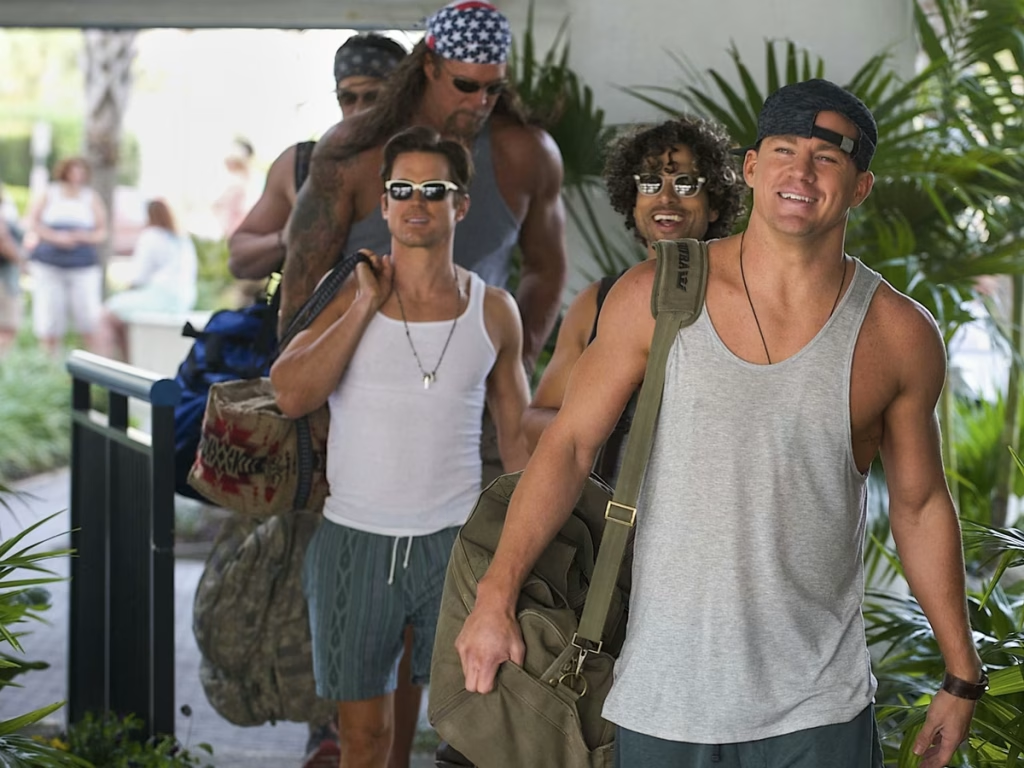
13. Magic Mike XXL

Magic Mike XXL sheds the drama-heavy tone of the first movie, turning the sequel into a vibrant celebration of friendship, dance, and self-expression. The focus shifts from cautionary tales to joy and camaraderie, giving the cast a chance to shine in a more relaxed, exuberant setting.

Image Source: Bing Image. License: All Creative Commons

Channing Tatum and the ensemble exude fun and energy, making every performance feel effortless and genuine. The film’s lighthearted tone and infectious optimism proved it could outshine the original by embracing fun without overthinking the story.

Image Source: Bing Image. License: All Creative Commons

12. Jackass Number Two

If the first Jackass movie was daring, the sequel is utterly fearless. The cast pushes stunts to new extremes, blending absurdity, danger, and comedic timing in ways only they could manage.

Image Source: Bing Image. License: All Creative Commons

From chaotic bull runs to outrageous set-pieces, Jackass Number Two amplifies the franchise’s signature recklessness. Its willingness to escalate every gag makes it not only a standout in the series but a landmark of audacious, boundary-pushing comedy sequels.

Image Source: Bing Image. License: All Creative Commons

11. Addams Family Values

Addams Family Values takes the original reboot and leans fully into dark humor, giving the eccentric clan sharper jokes and more memorable scenes. The characters feel richer, and the humor balances wit and absurdity flawlessly.

Image Source: Bing Image. License: All Creative Commons

Summer camp shenanigans, Uncle Fester’s ill-fated romance, and Wednesday and Pugsley’s mischievous adventures make the sequel more engaging than its predecessor. It’s widely regarded as one of the best dark comedies of the 1990s, showing that sequels can refine a franchise’s tone perfectly.

Image Source: Bing Image. License: All Creative Commons

10. Paddington 2

Paddington 2 is more than a family-friendly sequel; it’s a cinematic gem. The story of Paddington being wrongly imprisoned is touching, hilarious, and full of charm, elevating the stakes while keeping the whimsy alive.

Image Source: Bing Image. License: All Creative Commons

The cast, including British favorites, perfectly complements the bear’s warmth, and the film’s impeccable writing ensures it resonates with audiences of all ages. Critics and fans alike hail it as one of the rare sequels that surpass the original in every way.

Image Source: Bing Image. License: All Creative Commons

9. Rush Hour 2

Rush Hour 2 takes the buddy-cop formula to another level, expanding the action, humor, and chemistry between Jackie Chan and Chris Tucker. Exotic locations, bigger stunts, and clever dialogue make it feel fresh while staying true to the characters fans love.

Image Source: Bing Image. License: All Creative Commons

The sequel delivers laugh-out-loud moments alongside thrilling set pieces. It proves that a formulaic franchise can evolve, becoming funnier and more engaging than the film that started it all.

Image Source: Bing Image. License: All Creative Commons

8. Mad Max: Fury Road

Decades after the original films, Mad Max: Fury Road redefined the action genre. George Miller returned to the apocalyptic wasteland with breathtaking visuals, practical stunts, and a relentless pace that keeps audiences on edge from start to finish.

Image Source: Bing Image. License: All Creative Commons

Tom Hardy’s Max is compelling, but Charlize Theron’s Furiosa steals every scene, giving the film emotional weight alongside spectacle. Fury Road proves that sequels can honor legacy while raising the bar for an entire genre.

Image Source: Bing Image. License: All Creative Commons

7. Before Sunset

Nine years after Before Sunrise, Before Sunset finds Jesse and Céline reuniting in Paris, older, wiser, and grappling with the complexities of life. The film is less about romance and more about reflection, showing a deepening of character and emotional resonance.

Image Source: Bing Image. License: All Creative Commons

The dialogue sparkles with authenticity, and the chemistry is undeniable. Many consider it the strongest entry in the trilogy, a rare sequel that enriches rather than just continues the story.

Image Source: Bing Image. License: All Creative Commons

6. Terminator 2: Judgment Day

James Cameron’s Terminator 2 sets the standard for action sequels. Bigger stakes, groundbreaking effects, and an emotionally resonant story combine to make it a triumph of filmmaking.

Image Source: Bing Image. License: All Creative Commons

Linda Hamilton’s transformation into the battle-ready Sarah Connor and Arnold Schwarzenegger’s shift from villain to protector elevate the sequel above the original. T2 remains an iconic blockbuster that defines what a sequel can achieve.

Image Source: Bing Image. License: All Creative Commons

5. The Dark Knight

The Dark Knight is more than a superhero film; it’s a cultural touchstone. Building on Batman Begins, Nolan’s sequel delves deeper into moral complexity and chaotic tension.

Image Source: Bing Image. License: All Creative Commons

Heath Ledger’s Joker is legendary, and the story’s high stakes and relentless pacing ensure audiences are hooked. The Dark Knight didn’t just surpass its predecessor; it reshaped the entire superhero genre.

Image Source: Bing Image. License: All Creative Commons

4. Shrek 2

Shrek 2 expands the fairy tale universe with sharper humor, richer characters, and a perfectly executed story. From Puss in Boots to the Fairy Godmother, the sequel adds layers of fun and heart.

Image Source: Bing Image. License: All Creative Commons

The film’s pop culture references and witty writing made it a box office juggernaut. Shrek 2 demonstrates how animated sequels can deepen the story while delivering bigger laughs and broader appeal.

Image Source: Bing Image. License: All Creative Commons

3. Spider-Man 2

Spider-Man 2 combines thrilling action with emotional stakes, making Peter Parker’s struggle feel genuine and relatable. Alfred Molina’s Doc Ock brings nuance to the villain role, enhancing the story’s depth.

Image Source: Bing Image. License: All Creative Commons

The sequel refines Raimi’s approach, balancing heart, humor, and heroics flawlessly. It’s considered one of the greatest superhero films, showing how sequels can elevate both storytelling and character development.

Image Source: Bing Image. License: All Creative Commons

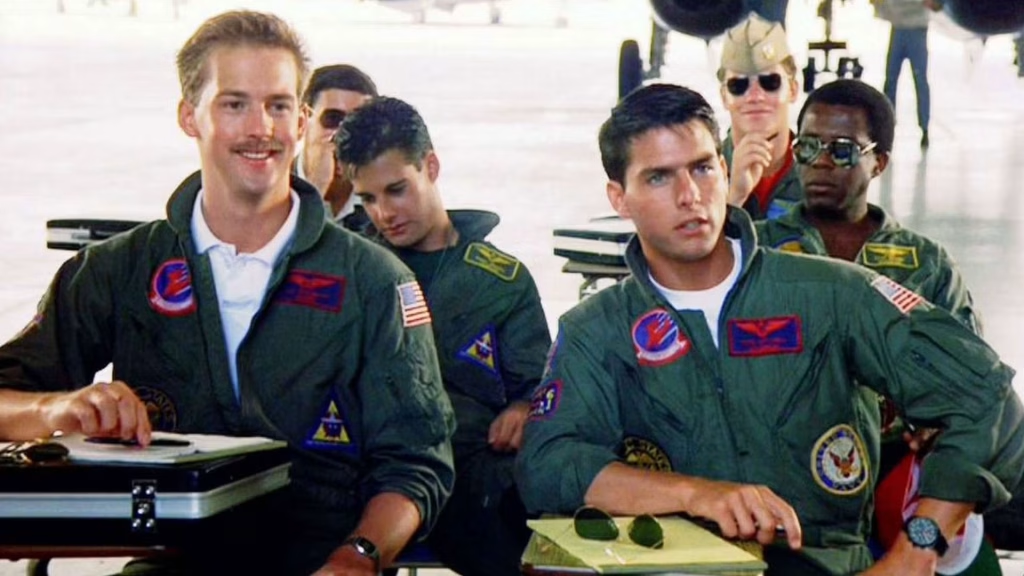
2. Top Gun: Maverick

Top Gun: Maverick surpasses the original nearly 40 years later, delivering breathtaking aerial stunts, updated storytelling, and iconic charisma. Tom Cruise proves his action chops are timeless, while the film’s nostalgia is balanced with fresh energy.

Image Source: Bing Image. License: All Creative Commons

Critics and audiences alike were enthralled, making it one of the most successful and beloved sequels in modern cinema. Maverick shows that even long-delayed follow-ups can exceed expectations.

Image Source: Bing Image. License: All Creative Commons

1. Toy Story 3

Toy Story 3 is a masterclass in sequel storytelling, balancing humor, adventure, and emotion. The film explores themes of growing up and letting go, resonating deeply with both children and adults.

Image Source: Bing Image. License: All Creative Commons

With impeccable animation, a flawless voice cast, and a heart-wrenching ending, Toy Story 3 doesn’t just continue the story; it elevates the entire franchise. It proves that the right sequel can become a classic in its own right.

Image Source: Bing Image. License: All Creative Commons

Sequels often live in the shadow of their originals, but when crafted with care, vision, and respect for characters, they can surpass expectations. From animated wonders to action spectacles, these 15 films remind us that the second or third installment can be a chance to innovate, deepen storytelling, and sometimes, outshine everything that came before.

15 Most Influential Batman Films and Roles

0
Image Source: Bing Image. License: All Creative Commons

Batman has been on the big screen for over half a century, and each new incarnation has left its mark on the Dark Knight mythos. From campy 1960s adventures to brooding modern thrillers, these films and performances have shaped how audiences view Gotham’s vigilante. Some are celebrated for their artistic boldness, others are infamous for their over-the-top choices, but all have influenced the legacy of the Caped Crusader in unique ways.

Image Source: Bing Image. License: All Creative Commons

15. Batman & Robin (1997)

Joel Schumacher’s Batman & Robin is often remembered as the franchise’s most notorious misstep. George Clooney donned the cape in a neon-splashed, pun-heavy Gotham, where over-the-top visuals and ice-themed villains stole the spotlight from the hero himself. The movie’s campy approach, complete with Bat-nipples and comically cheesy dialogue, made it a cultural punchline for years.

Image Source: Bing Image. License: All Creative Commons

Yet beneath the surface, Batman & Robin showcased a playful experimentation with superhero tropes. Schumacher’s nods to Batman: The Animated Series and his queer subtext have since earned the film a reappraisal among fans and scholars. Despite its flaws, it pushed the boundaries of how Batman could be presented, influencing later, more self-aware adaptations like The Lego Batman Movie and Batman: White Knight.

Image Source: Bing Image. License: All Creative Commons

14. Batman Forever (1995)

Before the chaos of Batman & Robin, Schumacher’s Batman Forever brought a vibrant, kinetic energy to Gotham. Val Kilmer’s Bruce Wayne was brooding yet vulnerable, and the film embraced a colorful, almost carnival-like aesthetic. Jim Carrey’s Riddler and Tommy Lee Jones’ Two-Face were larger than life, while Nicole Kidman’s Chase Meridian added glamour, and Chris O’Donnell’s Robin brought youthful rebellion.

Image Source: Bing Image. License: All Creative Commons

The film’s soundtrack, featuring hits like Seal’s “Kiss From a Rose,” added to its pop-culture impact. By blending psychological drama with a heightened sense of spectacle, Batman Forever set the stage for Schumacher’s more extreme sequel. Its bold choices encouraged the franchise to explore both the serious and the ridiculous sides of Batman’s world.

Image Source: Bing Image. License: All Creative Commons

13. Batman: Mask of the Phantasm (1993)

Batman: Mask of the Phantasm elevated animated superhero storytelling. Drawing on the noir sensibilities of Batman: The Animated Series, it combined a murder mystery with a tragic love story, delivering an emotionally resonant narrative. Kevin Conroy’s voice performance perfectly captured Batman’s duality: the vigilant hero and the vulnerable man beneath the mask.

Image Source: Bing Image. License: All Creative Commons

Although it didn’t make waves at the box office, the film became a cult classic. Its artful Gotham design, haunting score, and mature themes set a standard for animated superhero films and influenced later live-action projects that sought to balance emotional depth with action-packed spectacle.

Image Source: Bing Image. License: All Creative Commons

12. Batman: The Movie (1966)

Adam West’s Batman is synonymous with pure, campy joy. The 1966 feature took the tone of the TV series to the big screen with colorful villains, absurd gadgets, and tongue-in-cheek humor. Every scene, from shark repellent to over-the-top bomb diffusion, celebrated the whimsy of Silver Age comics.

Image Source: Bing Image. License: All Creative Commons

The film’s charm lies in its refusal to take itself seriously. It has inspired countless parodies, homages, and modern reimaginings, proving that sometimes Batman works best when he’s playful, cheeky, and unabashedly fun.

Image Source: Bing Image. License: All Creative Commons

11. Batman v Superman: Dawn of Justice (2016)

Ben Affleck’s grizzled Batman brought a darker, more world-weary tone to the DCEU. Batman v Superman explored a conflict between two icons, with Affleck’s version of Gotham’s protector grappling with grief, rage, and moral ambiguity. The film’s visual intensity and CGI-heavy action polarized audiences, sparking heated debates about tone and style.

Image Source: Bing Image. License: All Creative Commons

Despite criticism, the movie’s influence on the DCEU is undeniable. It established a Batman capable of holding his own against godlike foes and set the stage for future team-ups. Affleck’s interpretation reinforced that Batman could be both physically intimidating and emotionally complex.

Image Source: Bing Image. License: All Creative Commons

10. Batman Begins (2005)

Christopher Nolan’s Batman Begins revitalized the franchise with a grounded, psychological approach. Christian Bale’s Bruce Wayne became a fully realized hero, defined by fear, trauma, and relentless discipline. Liam Neeson’s Ra’s al Ghul and Cillian Murphy’s Scarecrow added cerebral tension, while Michael Caine’s Alfred provided emotional grounding and warmth.

Image Source: Bing Image. License: All Creative Commons

The film’s gritty realism laid the foundation for the Dark Knight trilogy and inspired a wave of serious, character-driven superhero films. It demonstrated that comic book adaptations could explore profound themes while still delivering spectacular action.

Image Source: Bing Image. License: All Creative Commons

9. The Lego Batman Movie (2017)

Will Arnett’s gravelly-voiced Batman brought meta-humor and self-awareness to the franchise. The Lego Batman Movie poked fun at the Dark Knight while simultaneously celebrating his many iterations, from the campy to the grimdark. Easter eggs, references, and a stacked ensemble kept fans engaged on multiple levels.

Image Source: Bing Image. License: All Creative Commons

Beyond humor, the film highlighted Batman’s emotional core. By blending comedy, heart, and action, it proved the character could be both entertaining and meaningful, even when composed entirely of plastic bricks.

Image Source: Bing Image. License: All Creative Commons

8. Batman: Caped Crusader (2024)

Bruce Timm’s latest animated take, Batman: Caped Crusader, reimagines Gotham in a 1940s noir style. The series combines dark, stylish visuals with complex storytelling, offering fresh interpretations of classic villains. Frederik Wiedmann’s sweeping orchestral score enhances the drama, evoking the feel of a cinematic experience.

Image Source: Bing Image. License: All Creative Commons

The show’s sophisticated approach has resonated with fans of all ages, demonstrating Batman’s enduring adaptability. By balancing noir, action, and emotional depth, it reinforces the Dark Knight’s status as a character capable of evolving with every generation.

Image Source: Bing Image. License: All Creative Commons

7. Batman: The Animated Series (1992–1995)

Few portrayals have been as influential as Kevin Conroy’s Batman and Mark Hamill’s Joker. The series’s art deco aesthetic, mature storytelling, and unforgettable music redefined superhero animation. It introduced Harley Quinn and explored the psychology of Gotham’s villains in ways previously unseen on television.

Image Source: Bing Image. License: All Creative Commons

Its impact is still visible in the Arkham video games, the DCAU, and countless other adaptations. The series proved that animated Batman stories could be complex, stylish, and emotionally resonant, leaving a blueprint for every subsequent iteration.

Image Source: Bing Image. License: All Creative Commons

6. Batman Returns (1992)

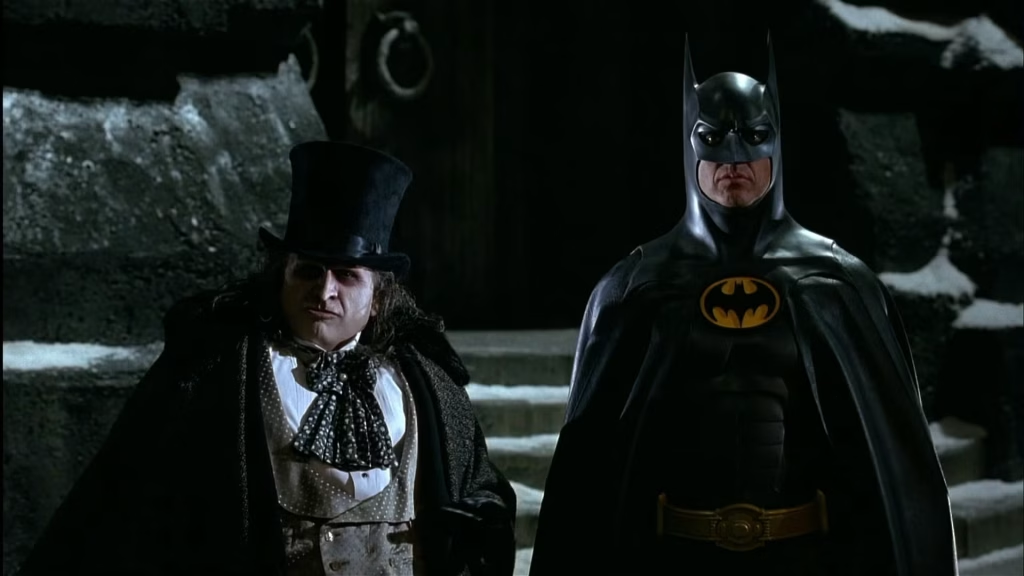
Tim Burton’s sequel pushed Gotham into gothic territory. Michael Keaton’s haunted Batman faced off against Michelle Pfeiffer’s seductive, morally complex Catwoman and Danny DeVito’s grotesque Penguin. The film’s themes of outsider identity, trauma, and duality set it apart from standard superhero fare.

Image Source: Bing Image. License: All Creative Commons

Although controversial at release, Batman Returns has become a cult classic. Its visual flair, storytelling ambition, and unforgettable characters have influenced subsequent films, games, and series that aim to explore the darker side of Gotham.

Image Source: Bing Image. License: All Creative Commons

5. Batman (1989)

Tim Burton’s original Batman redefined the superhero genre. Michael Keaton’s introspective Bruce Wayne and Jack Nicholson’s chaotic Joker created an iconic clash of hero and villain. Gotham’s gothic design and Danny Elfman’s haunting score transformed comic book adaptations into cinematic events.

Image Source: Bing Image. License: All Creative Commons

The film’s success proved audiences craved darker, more nuanced heroes. It set a template for future Batman stories and modern superhero films, balancing spectacle, tone, and character depth.

Image Source: Bing Image. License: All Creative Commons

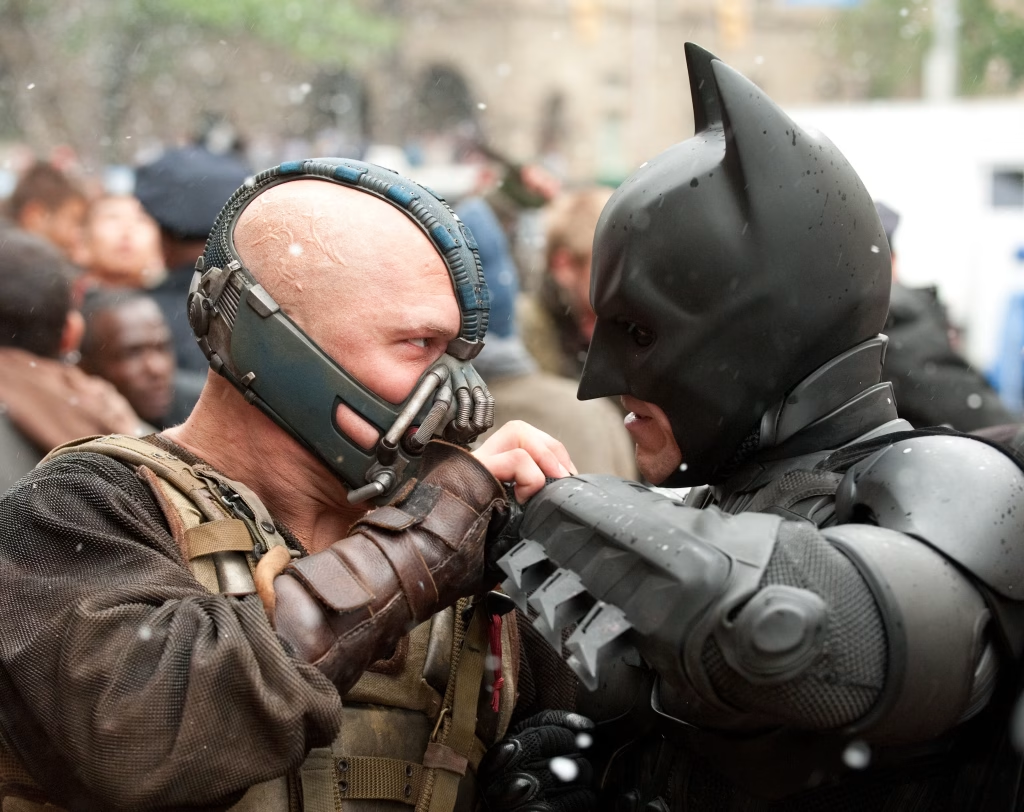
4. The Dark Knight Rises (2012)

Christian Bale’s final outing brought Nolan’s trilogy to an epic conclusion. The film explored legacy, sacrifice, and the toll of heroism, with Tom Hardy’s Bane challenging Batman both physically and philosophically. Anne Hathaway’s Selina Kyle added depth, while Michael Caine’s Alfred delivered some of the trilogy’s most poignant moments.

Image Source: Bing Image. License: All Creative Commons

Though divisive for some, the movie cemented the trilogy’s influence on superhero storytelling. Its grandeur and operatic scope inspired future franchises to aim for similarly ambitious, emotionally weighty finales.

Image Source: Bing Image. License: All Creative Commons

3. The Dark Knight (2008)

Heath Ledger’s Joker transformed superhero cinema. Nolan’s second installment combined intense crime thriller elements with blockbuster spectacle. Batman faced his most challenging moral and physical tests as Gotham descended into chaos, raising the stakes for every character.

Image Source: Bing Image. License: All Creative Commons

The film’s critical and commercial success reshaped Hollywood’s approach to comic book adaptations. Its darker, realistic tone inspired countless ambitious superhero films and proved that these stories could resonate as serious cinema.

Image Source: Bing Image. License: All Creative Commons

2. Batman Returns (1992) [Alternate Spot if Already Counted]

If already included, this spot represents Burton’s uncompromising vision: gothic style, social commentary, and morally complex villains. Pfeiffer and DeVito delivered performances that remain benchmarks for superhero antagonists.

Image Source: Bing Image. License: All Creative Commons

The film’s legacy lies in its audacious storytelling and visual design. Its willingness to tackle social themes while delivering superhero spectacle keeps it relevant and influential decades later.

Image Source: Bing Image. License: All Creative Commons

1. The Batman (2022)

Robert Pattinson’s portrayal in Matt Reeves’ The Batman is a noir-infused detective story. Pattinson’s Bruce Wayne is obsessive, reclusive, and psychologically complex. The film immerses viewers in a rain-soaked Gotham, where corruption, crime, and moral ambiguity define the city.

Image Source: Bing Image. License: All Creative Commons

Critics and fans praised the ensemble cast, including Zoe Kravitz’s Catwoman, Paul Dano’s Riddler, and Colin Farrell’s Penguin. The movie’s rich narrative, atmospheric visuals, and thematic depth show that Batman can still be reinvented for modern audiences while honoring his roots.

Image Source: Bing Image. License: All Creative Commons

From campy fun to dark psychological thrillers, Batman’s cinematic journey reflects the versatility of the character and the creativity of the storytellers behind him. These fifteen films and performances have shaped how audiences perceive Gotham’s protector, inspiring new interpretations, games, and stories. Whether celebrated or infamous, each one has left a mark, proving that the Dark Knight’s influence will endure for generations.

15 Stars Who Turned Hollywood Setbacks into Legendary Returns

0
Image Source: Bing Image. License: All Creative Commons

The Hollywood blacklist remains one of the darkest chapters in the industry’s history. During the Red Scare, countless careers were destroyed—not for actions, but for suspected affiliations or for refusing to cooperate with authorities. Actors, writers, directors, and musicians were suddenly barred from work. For many, the challenges didn’t end there; some faced prison, while others had to compromise just to survive. Yet despite these hardships, many of these individuals forged legacies that outlasted the era that tried to silence them. Here are 15 Hollywood legends who were blacklisted—and the remarkable ways they fought back.

Image Source: Bing Image. License: All Creative Commons

15. Lee Grant

Lee Grant’s career was in ascension when it suddenly halted. After being nominated for an Oscar for her first film, she was blacklisted during the Red Scare because of her husband’s reputation as a Communist. When called to testify in front of HUAC, Grant refused to reveal any names, knowing it would damage her career.

Image Source: Bing Image. License: All Creative Commons

For over a decade, Grant was unable to work in film and television, but she did not fade away; instead, she concentrated on the stage and eventually returned to film with a vengeance. Grant would go on to win an Oscar and become a pioneering female director, demonstrating that integrity and determination can conquer even the most adversity-filled situations.

Image Source: Bing Image. License: All Creative Commons

14. Lloyd Bridges

Lloyd Bridges, a familiar figure in films such as Sea Hunt and Airplane!, who was loved for his roles in those films, hit a roadblock in his career in the 1950s. Merely confessing that he had been a part of a group that had Communist ties was enough to stop his work for a time.

Image Source: Bing Image. License: All Creative Commons

Although he was ultimately cleared to return to work, his situation is indicative of just how much fear gripped America as a whole. Even minor connections were enough to cause alarm, as evidenced by how easily a man’s reputation could be tarnished.

Image Source: Bing Image. License: All Creative Commons

13. Dashiell Hammett

The legendary crime writer behind The Maltese Falcon, Dashiell Hammett, was openly affiliated with the Communist Party. When questioned, he invoked the Fifth Amendment and refused to answer inquiries about his political ties.

Image Source: Bing Image. License: All Creative Commons

His refusal led to a contempt charge and time in prison. Beyond that, the blacklist severely limited his ability to work in Hollywood and publish freely. Hammett’s ordeal shows how writers, not just performers, were targeted when their ideas were deemed threatening.

Image Source: Bing Image. License: All Creative Commons

12. Artie Shaw

Clarinet virtuoso and bandleader Artie Shaw attended Communist meetings, later claiming his interest was rooted in social justice rather than party loyalty. That distinction mattered little in the charged atmosphere of the time.

Image Source: Bing Image. License: All Creative Commons

His career suffered as suspicion followed him. The damage extended beyond lost opportunities; it cast doubt over his public image. Shaw’s experience underscores how even curiosity or peripheral involvement could trigger long-lasting consequences.

Image Source: Bing Image. License: All Creative Commons

11. Uta Hagen

Acclaimed stage actress Uta Hagen became entangled in the blacklist largely because of her association with Paul Robeson. Though she was not a major film star, the shadow of suspicion narrowed her opportunities in television and cinema.

Image Source: Bing Image. License: All Creative Commons

Hagen turned her focus to theater and teaching, where she built a formidable legacy as an acting instructor. While Hollywood doors closed, she reshaped the craft from the stage, proving that artistic influence can survive institutional rejection.

Image Source: Bing Image. License: All Creative Commons

10. Judy Holliday

Oscar-winning actress Judy Holliday, celebrated for Born Yesterday, found herself blacklisted from radio and television at the height of her fame. Her comedic brilliance was suddenly overshadowed by political suspicion.

Image Source: Bing Image. License: All Creative Commons

Though she continued performing on Broadway, her screen career never fully regained its earlier momentum. Holliday’s story reflects how abruptly the blacklist could halt even the brightest rising stars.

Image Source: Bing Image. License: All Creative Commons

9. Burl Ives

Folk singer and actor Burl Ives was scrutinized for his involvement in labor organizations. He denied Communist affiliation and ultimately cooperated with HUAC, which helped him return to mainstream work.

Image Source: Bing Image. License: All Creative Commons

However, that cooperation strained relationships within the folk community. Some peers saw his testimony as a betrayal. Ives’ story reveals the impossible moral choices many artists faced—protect your livelihood, or protect your community.

Image Source: Bing Image. License: All Creative Commons

8. John Garfield

John Garfield, known for intense performances in films such as The Postman Always Rings Twice, refused to name names when questioned by HUAC. His stance effectively ended his film career.

Image Source: Bing Image. License: All Creative Commons

The stress of the ordeal weighed heavily on him, and he died young, his health reportedly affected by the strain. Garfield’s experience stands as one of the era’s most tragic examples of personal and professional devastation.

Image Source: Bing Image. License: All Creative Commons

7. Dorothy Parker

Writer and critic Dorothy Parker, famed for her razor-sharp wit, was monitored by the FBI for years. Her activism and contributions to left-leaning publications drew government attention.

Image Source: Bing Image. License: All Creative Commons

The scrutiny limited her Hollywood opportunities and cast a shadow over her later career. Parker’s case demonstrates that the blacklist extended beyond actors—it targeted thinkers and writers whose words challenged authority.

Image Source: Bing Image. License: All Creative Commons

6. Leonard Bernstein

Composer and conductor Leonard Bernstein was never formally blacklisted, but suspicions about his political sympathies placed him under scrutiny. In an atmosphere of paranoia, even indirect associations could threaten a career.

Image Source: Bing Image. License: All Creative Commons

Despite this, Bernstein continued composing, conducting, and teaching, becoming one of America’s most influential musical figures. His resilience highlights how some artists managed to thrive despite the climate of fear.

Image Source: Bing Image. License: All Creative Commons

5. Gypsy Rose Lee

Burlesque icon Gypsy Rose Lee attended meetings connected to leftist causes, which brought her to HUAC’s attention. Even limited involvement could lead to professional consequences.

Image Source: Bing Image. License: All Creative Commons

Her work in film and television slowed, though she remained a cultural presence. Lee’s story illustrates how widely the net was cast during the Red Scare, ensnaring performers from every corner of show business.

Image Source: Bing Image. License: All Creative Commons

4. Pete Seeger

Folk legend Pete Seeger openly acknowledged his Communist ties but refused to implicate others. His refusal led to a contempt conviction, later overturned, and years of limited mainstream exposure.

Image Source: Bing Image. License: All Creative Commons

Though barred from major media platforms, Seeger continued performing at grassroots events and remained a powerful voice for social change. His music endured, carried by communities rather than corporations.

Image Source: Bing Image. License: All Creative Commons

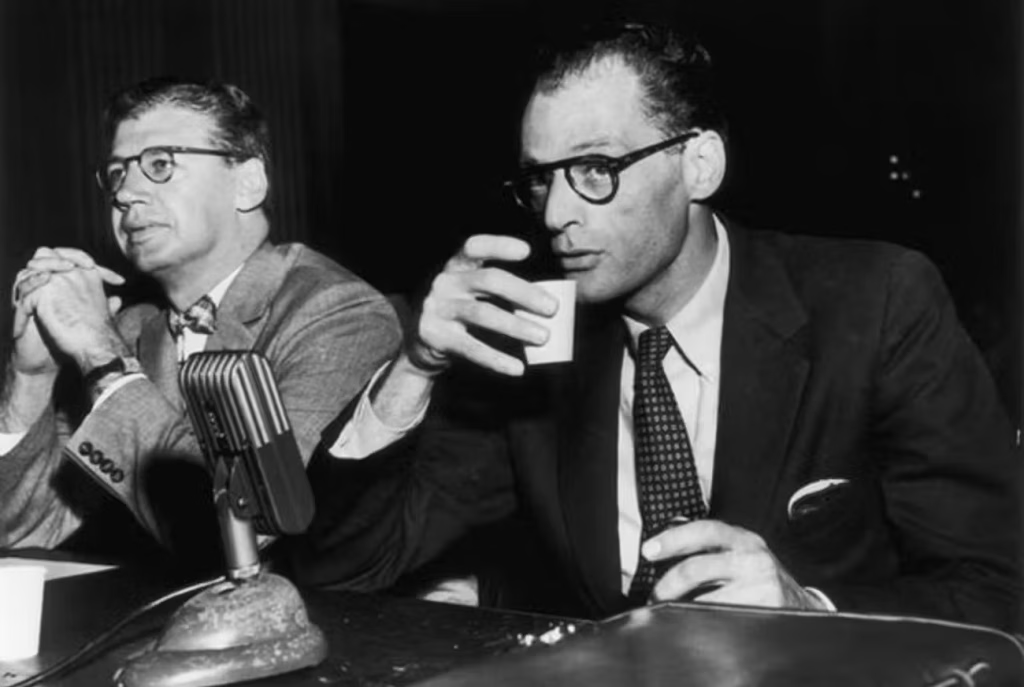
3. Arthur Miller

Playwright Arthur Miller refused to name suspected Communists when summoned before HUAC. His resistance mirrored the themes of conscience and moral courage in his plays.

Image Source: Bing Image. License: All Creative Commons

Though blacklisted, Miller continued writing, producing works that directly addressed hysteria and injustice. His art became a form of protest, cementing his place as a towering figure in American literature.

Image Source: Bing Image. License: All Creative Commons

2. Langston Hughes

Poet Langston Hughes was linked to Communist-affiliated groups, and his work occasionally appeared in leftist publications. This association brought scrutiny during the Red Scare.

Image Source: Bing Image. License: All Creative Commons

Despite pressure, Hughes continued exploring themes of racial inequality, hope, and resilience in his writing. His voice endured, transcending the political moment that sought to limit it.

Image Source: Bing Image. License: All Creative Commons

1. Lena Horne

Singer and actress Lena Horne was labeled a Communist sympathizer due to her civil rights activism and connection to Paul Robeson. The blacklist curtailed her film and television opportunities for years.

Image Source: Bing Image. License: All Creative Commons

Yet Horne refused to retreat. She continued performing and speaking out, becoming a symbol of both artistic excellence and social justice. Her career reflects courage under pressure—and a refusal to let fear define her legacy.

Image Source: Bing Image. License: All Creative Commons

The Hollywood blacklist left deep scars on the entertainment industry. Careers were interrupted, friendships fractured, and lives altered by suspicion and political panic. But history has a long memory, and it tends to remember courage.

Image Source: Bing Image. License: All Creative Commons

These artists remind us that creative voices cannot be permanently silenced. Whether through quiet endurance or open defiance, they fought back in the ways they could. Their stories endure not only as warnings about fear-driven persecution but as testaments to resilience in the face of it.

10 Times Henry Cavill Completely Transformed for a Role

0
Image Source: Bing Image. License: All Creative Commons

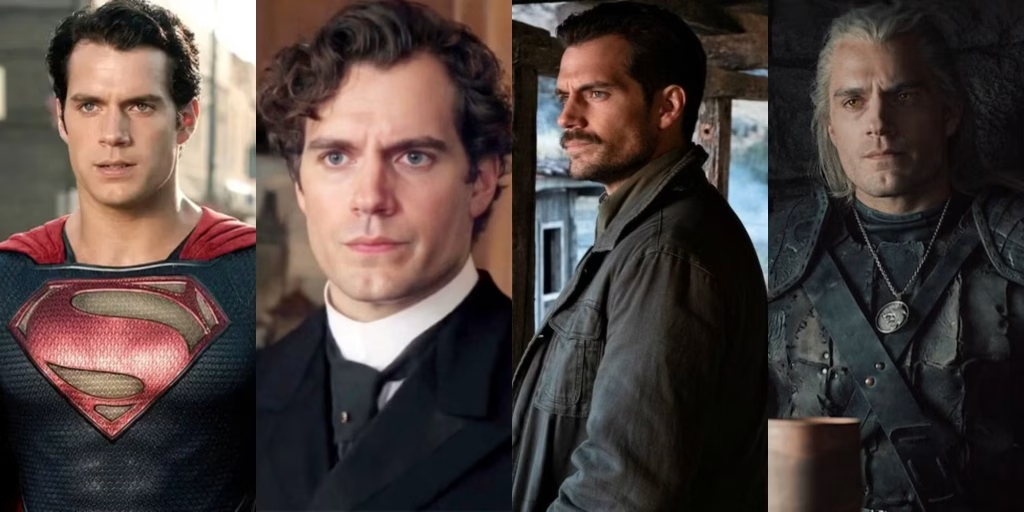
Henry Cavill’s appeal goes far beyond his superhero image. While many first know him as Superman, his career shows an actor unafraid to explore new genres and challenges. He’s played villains, fantasy heroes, spies, and more—each role distinctly different from the last. What sets Cavill apart is the dedication he brings to every character, whether through intense physical preparation, vocal work, emotional depth, or dramatic physical transformations. Here are ten of his most striking on-screen makeovers that showcase his versatility and talent.

Image Source: Bing Image. License: All Creative Commons

10. August Walker in Mission: Impossible – Fallout

Henry Cavill’s role as CIA Agent August Walker in Mission Impossible – Fallout was a dramatic departure from the heroic characters that fans were familiar with. Agent Walker is ruthless, physically imposing, and morally ambiguous, far removed from the noble characters that Cavill was previously known for. From the very start of the film, it is evident that he is not there to win any fans.

Image Source: Bing Image. License: All Creative Commons

Cavill had to prepare physically for the role, which involved gaining weight, performing intense hand-to-hand combat scenes, and delivering that now-famous “arm reload” moment that quickly went viral around the world. His fight scenes, especially those with Tom Cruise, were raw, brutal, and showed fans that there is a tougher, more relentless side of Henry Cavill as an actor.

Image Source: Bing Image. License: All Creative Commons

Both fans and critics were pleased with Cavill’s departure from typecasting, showing that he is capable of convincingly playing an evil antagonist beyond the role of an All-American hero. It further cemented his reputation as an action hero and proved to Tinseltown that he is capable of delivering when allowed to take on more complex, darker roles.

Image Source: Bing Image. License: All Creative Commons

9. Geralt of Rivia in The Witcher

Henry Cavill’s portrayal of Geralt of Rivia demonstrated a different type of transformation, one that was fueled by his passion and commitment. Being a huge fan of both the book and video game series, he actively pursued the part and dove headfirst into the world of Geralt. This enthusiasm was evident in every scene.

Image Source: Bing Image. License: All Creative Commons

He went through an arduous physical regimen for sword fighting and performed his own stunts. He gave his character a unique voice as well, using his gravelly voice to bring a sense of authority and distinctiveness to the character. He added a layer of emotional depth to the character as well, revealing the inner turmoil and compassion of Geralt.

Image Source: Bing Image. License: All Creative Commons

The fantasy hero was both formidable and accessible. The audience was able to relate to the authenticity of his performance, and the show became a world phenomenon. Henry Cavill’s commitment not only helped elevate the show but also cemented the character of Geralt of Rivia as an iconic character in modern fantasy television.

Image Source: Bing Image. License: All Creative Commons

8. Superman in Man of Steel and the DC Extended Universe

Taking on Superman is a daunting task, but Cavill approached it with seriousness and respect for the character’s legacy. In Man of Steel, he presented a version of Clark Kent that wrestled with identity, isolation, and the burden of power. This wasn’t just a symbol of hope—it was a man searching for belonging.

Image Source: Bing Image. License: All Creative Commons

His physical preparation was intense, involving months of disciplined training to embody the iconic superhero physique. Yet the performance wasn’t only about appearance. Cavill infused vulnerability into a character often portrayed as emotionally untouchable.

Image Source: Bing Image. License: All Creative Commons

Through subsequent appearances in Batman v Superman and Justice League, he continued to shape a more conflicted, modern Superman. For many fans, his interpretation defined a generation of superhero storytelling and cemented his place in comic-book cinema history.

Image Source: Bing Image. License: All Creative Commons

7. Napoleon Solo in The Man from U.N.C.L.E.

As Napoleon Solo, Cavill traded brooding intensity for smooth charm. The stylish spy thriller allowed him to lean into wit, elegance, and a touch of playful arrogance. It was a refreshing departure from the weightier roles he had taken on previously.

Image Source: Bing Image. License: All Creative Commons

Solo is confident, fashionable, and quick with a clever remark. Cavill handled the character’s humor effortlessly, proving he has strong comedic instincts. His on-screen dynamic with Armie Hammer added to the film’s retro appeal.

Image Source: Bing Image. License: All Creative Commons

While the movie developed a cult following over time, many viewers singled out Cavill’s performance as a highlight. The role showed that he could carry a lighter, more charismatic lead just as effectively as a dramatic one.

Image Source: Bing Image. License: All Creative Commons

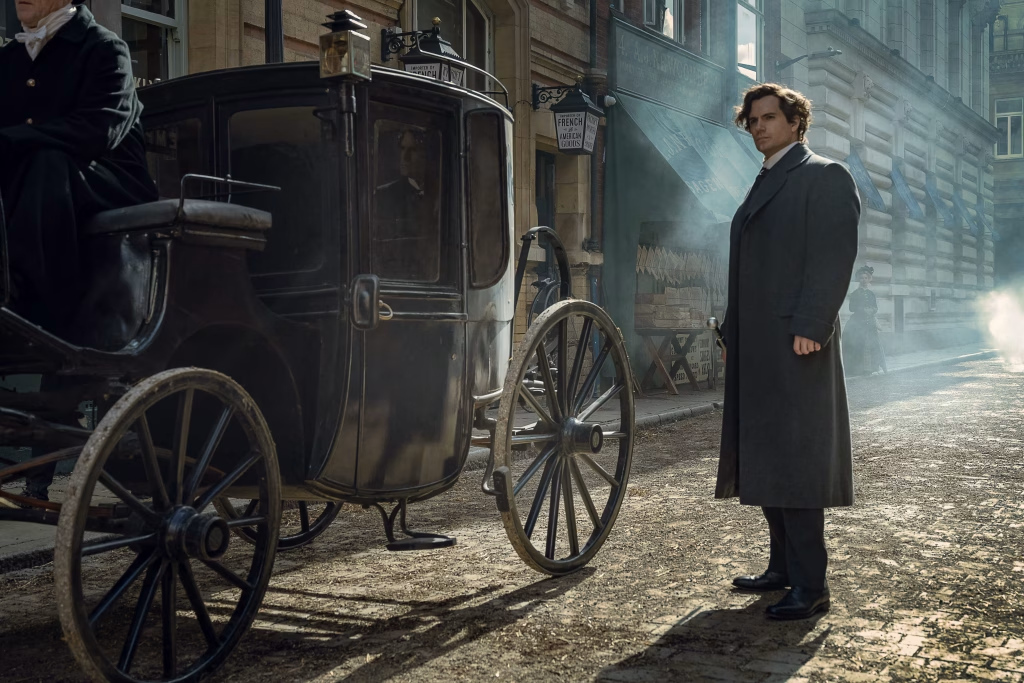
6. Sherlock Holmes in Enola Holmes

Playing Sherlock Holmes might seem intimidating, given how many actors have tackled the role. Cavill chose a more understated approach, portraying a thoughtful and emotionally aware version of the legendary detective. Instead of dominating the story, he supported it.

Image Source: Bing Image. License: All Creative Commons

His Holmes is analytical and observant, yet noticeably warmer than traditional interpretations. The dynamic between Sherlock and his younger sister Enola added a fresh layer to the character, emphasizing mentorship and family bonds.

Image Source: Bing Image. License: All Creative Commons

Audiences appreciated this gentler reinvention. Cavill managed to honor the classic traits of Sherlock while adapting him for a new generation, proving once again that subtle shifts can make a familiar role feel new.

Image Source: Bing Image. License: All Creative Commons

5. Charles Brandon in The Tudors

Before blockbuster fame, Cavill gained recognition in the historical drama The Tudors. As Charles Brandon, he portrayed a nobleman navigating loyalty, ambition, and political tension in King Henry VIII’s court. The series gave him space to explore layered character development.

Image Source: Bing Image. License: All Creative Commons

Brandon wasn’t a simple hero or villain. Over time, Cavill depicted his growth, flaws, and shifting allegiances with increasing depth. The role required both romantic charm and dramatic intensity.

Image Source: Bing Image. License: All Creative Commons

This performance helped establish Cavill as a serious actor capable of handling period drama. It expanded his international fan base and laid crucial groundwork for the major opportunities that followed.

Image Source: Bing Image. License: All Creative Commons

4. Melot in Tristan & Isolde

In Tristan & Isolde, Cavill played Melot, a character torn between friendship and personal conflict. Though not the central figure, Melot adds emotional complexity to the romantic tragedy.

Image Source: Bing Image. License: All Creative Commons

Cavill approached the role with restraint, portraying loyalty mixed with underlying tension. The historical setting required a classical tone, and he adapted well to the dramatic atmosphere.

Image Source: Bing Image. License: All Creative Commons

Even early in his career, it was clear he could hold his own in emotionally driven stories. The role hinted at the versatility that would later define his career.

Image Source: Bing Image. License: All Creative Commons

3. Humphrey in Stardust

In the fantasy adventure Stardust, Cavill stepped into a lighter, almost whimsical space as Humphrey. The character’s pompous energy and comedic edge stood in contrast to Cavill’s more serious roles. He embraced the exaggerated personality, showing he wasn’t afraid to poke fun at himself.

Image Source: Bing Image. License: All Creative Commons

The performance added levity to the story’s magical setting and showcased his adaptability. Though in a supporting role, it demonstrated that Cavill could comfortably shift into playful territory. That willingness to experiment would become an important part of his career evolution.

Image Source: Bing Image. License: All Creative Commons

2. Thomas Aprea in Laguna

Cavill’s film debut in Laguna marked the beginning of his professional journey. As Thomas Aprea, he portrayed a young man with sincerity and understated vulnerability. Even in a smaller production, his commitment was evident.

Image Source: Bing Image. License: All Creative Commons

He delivered a grounded performance that hinted at his potential, proving that he approached every role with care. Looking back, the film serves as a reminder that major careers often begin quietly. Laguna gave Cavill valuable early experience and set the stage for everything that followed.

Image Source: Bing Image. License: All Creative Commons

1. His Smile and Physical Evolution

Beyond individual roles, Cavill’s overall image transformation has also drawn attention. Over the years, his appearance, particularly his polished, camera-ready smile, has noticeably evolved.

Image Source: Bing Image. License: All Creative Commons

Combined with intense physical training for action roles, this evolution enhanced his on-screen presence. His dedication to fitness and grooming became part of his brand as a modern leading man. While talent remains the foundation of his success, his physical transformation reflects the level of care he brings to his craft.

Image Source: Bing Image. License: All Creative Commons

The blend of discipline, charisma, and adaptability has helped shape him into one of Hollywood’s most recognizable stars. Henry Cavill’s career is far more diverse than a single cape or sword might suggest. From villains to detectives, fantasy warriors to historical figures, he has repeatedly stepped outside expectations and embraced change.

Image Source: Bing Image. License: All Creative Commons

What stands out most is his willingness to commit fully physically, emotionally, and creatively to every character he plays. That dedication to transformation continues to define his journey, making him not just a star but an actor constantly evolving.

TV Moments of Loss: 15 Character Deaths That Shattered Audiences

0
Image Source: Bing Image. License: All Creative Commons

Some TV character deaths hit harder than others. They may shock us in the moment, but their impact lingers long after the credits roll. It can feel almost personal, like saying goodbye to someone we truly knew. Sometimes it’s the selfless sacrifice, other times the sheer surprise, or the way it reminds us of life’s fragility. Whatever the reason, these are 15 TV character deaths that viewers still can’t shake.

Image Source: Bing Image. License: All Creative Commons

15. Joel Miller — The Last of Us

Joel Miller was more than just a man who had managed to survive in a world that had been destroyed. He had become the heart of The Last of Us. As his relationship with Ellie developed, we saw a man who had been closed off and hardened finally open up again. This made him a believable character and a man that the audience had come to care about.

Image Source: Bing Image. License: All Creative Commons

The death of Joel was a shock in its cruelty. There was no heroic goodbye for him. There was no sense of resolution. It was just cruel finality. It left viewers stunned and in a state of anger as they had to come to terms with his death in the same way that Ellie had. The absence of Joel was not just a new direction for the plot. It was a new emotional direction for the entire series, and how we could connect with it.

Image Source: Bing Image. License: All Creative Commons

14. Glenn Rhee — The Walking Dead

Glenn Rhee was a beacon of hope from the get-go in The Walking Dead. He was a character who, despite the chaos that was surrounding him, managed to remain kind, clever, and loyal. He was a character that was impossible not to support, and even more impossible not to fall in love with.

Image Source: Bing Image. License: All Creative Commons

It was not the fact that Glenn’s death occurred that made his death so hard to take, but the brutal nature of that death. It was brutal, unapologetic, and completely shocking. It was not just that Glenn died, but that death was something that seemed to take away the moral compass of the show, something that changed the nature of The Walking Dead in a way that was impossible to ignore.

Image Source: Bing Image. License: All Creative Commons

13. Ashtray — Euphoria

Ashtray stood out as a tragic contradiction: a child forced into adulthood far too soon. Quiet, deadly, and fiercely loyal to Fezco, he became one of Euphoria’s most compelling characters despite his limited screen time.

Image Source: Bing Image. License: All Creative Commons

His final moments were chaotic and devastating, ending in a way that felt both sudden and tragically inevitable. Ashtray’s death underscored the show’s harsh message, that innocence doesn’t survive long in a world built on violence, and fans were left heartbroken by how little chance he ever had.

Image Source: Bing Image. License: All Creative Commons

12. Sean Devlin — Derry Girls

Derry Girls is known for its humor, which made Sean Devlin’s death hit even harder. The show rarely leaned into tragedy, so when it did, it felt startlingly real.

Image Source: Bing Image. License: All Creative Commons

Handled with restraint and respect, Sean’s passing served as a sobering reminder of the political tensions surrounding the characters’ lives. It grounded the comedy in reality and left a quiet emotional scar that lingered through the rest of the series.

Image Source: Bing Image. License: All Creative Commons

11. Lady — Game of Thrones

Lady’s death was one of the earliest warnings that Game of Thrones would not play fair. As Sansa Stark’s gentle direwolf, Lady, symbolized innocence and safety, the show was quick to strip away.

Image Source: Bing Image. License: All Creative Commons

Her execution felt cruel and undeserved, making it all the more painful to watch. For many fans, it was the moment they realized no character, human or otherwise, was safe in this world.

Image Source: Bing Image. License: All Creative Commons

10. Sarah Lynn — BoJack Horseman

Sarah Lynn’s life was a tragedy long before it ended. Once a child star, she spiraled under fame, addiction, and neglect, with BoJack Horseman chronicling her pain in devastating detail.

Image Source: Bing Image. License: All Creative Commons

Her death wasn’t played for shock; it was slow, uncomfortable, and haunting. The aftermath forced viewers to confront the consequences of selfishness and systemic failure, making her loss one of the most emotionally exhausting moments in animated television.

Image Source: Bing Image. License: All Creative Commons

9. Boo — Fleabag

Boo’s presence looms over Fleabag even though she’s already gone when the show begins. Through flashbacks, viewers slowly piece together who she was and why her absence hurts so deeply.

Image Source: Bing Image. License: All Creative Commons

The truth behind Boo’s death is quietly devastating, rooted in guilt and misunderstanding. Her loss shapes Fleabag’s grief, humor, and self-destruction, making Boo one of the most emotionally significant off-screen deaths in TV history.

Image Source: Bing Image. License: All Creative Commons

8. Wallace — The Wire

Wallace represented vulnerability in a world that punished it. Young, kind-hearted, and overwhelmed by guilt, he struggled to survive in Baltimore’s unforgiving streets.

Image Source: Bing Image. License: All Creative Commons

His death was chilling because of its inevitability. Killed by people he trusted, Wallace’s loss became a defining moment for The Wire, perfectly capturing the show’s brutal honesty about systemic violence and lost innocence.

Image Source: Bing Image. License: All Creative Commons

7. Mona Simpson — The Simpsons

Mona Simpson brought unexpected emotional depth to The Simpsons. Her strained relationship with Homer revealed a side of him rarely seen: vulnerable, abandoned, and desperate for connection.

Image Source: Bing Image. License: All Creative Commons

Her death episode balanced humor with genuine sorrow, culminating in one of the show’s most touching endings. Mona’s passing reminded audiences that even long-running comedies can deliver moments of real emotional weight.

Image Source: Bing Image. License: All Creative Commons

6. Hodor — Game of Thrones

Hodor’s death was one of Game of Thrones’ most powerful twists. A character known almost entirely for kindness and loyalty was revealed to have lived a life shaped by tragedy from the very start.

Image Source: Bing Image. License: All Creative Commons

His final act, holding the door, was both heroic and horrifying, revealing that his entire existence had been leading to this moment. Fans mourned Hodor not just for his death, but for the life he never truly got to live.

Image Source: Bing Image. License: All Creative Commons

5. Bobby Singer — Supernatural

Bobby Singer was more than a hunter; he was family. Acting as a surrogate father to Sam and Dean, Bobby provided stability, tough love, and moral grounding throughout Supernatural.

Image Source: Bing Image. License: All Creative Commons

His death felt deeply unfair, stripping the brothers of their emotional anchor. Even after he was gone, Bobby’s influence lingered, and fans continued to feel his absence for the rest of the series.

Image Source: Bing Image. License: All Creative Commons

4. Marvin Eriksen Sr. — How I Met Your Mother

Marvin Eriksen Sr.’s death blindsided viewers just as it blindsided Marshall. What began as a lighthearted episode suddenly turned into one of the most raw portrayals of grief in sitcom history.

Image Source: Bing Image. License: All Creative Commons

The show handled the moment with honesty and restraint, allowing silence and emotion to do the heavy lifting. For many fans, it was painfully relatable and impossible to forget.

Image Source: Bing Image. License: All Creative Commons

3. Seymour — Futurama

Few TV moments have traumatized audiences like Seymour’s story in Futurama. Fry’s dog, waiting endlessly for his owner’s return, became a universal symbol of loyalty and loss.

Image Source: Bing Image. License: All Creative Commons

The episode’s final montage shattered viewers, proving that animation could be just as emotionally devastating as live-action drama. Seymour’s story remains one of the saddest narratives ever told on television.

Image Source: Bing Image. License: All Creative Commons

2. Ben Sullivan — Scrubs

Ben Sullivan’s death stands as one of Scrubs’ most masterfully executed emotional twists. Brendan Fraser’s warmth made Ben instantly lovable, especially through his bond with Dr. Cox.

Image Source: Bing Image. License: All Creative Commons

The reveal of his death recontextualized the entire episode, delivering an emotional gut punch that fans still talk about years later. It perfectly showcased Scrubs’ ability to balance humor with profound sadness.

Image Source: Bing Image. License: All Creative Commons

1. Tara Maclay — Buffy the Vampire Slayer

Tara Maclay’s death was sudden, shocking, and deeply upsetting. As a source of gentleness and stability, she represented safety in a show built on chaos.

Image Source: Bing Image. License: All Creative Commons

Her loss shattered both the characters and the audience, triggering one of the darkest arcs in Buffy’s history. Tara’s death remains one of television’s most controversial and emotionally impactful moments, symbolizing how deeply fans connect to characters who feel real.

Image Source: Bing Image. License: All Creative Commons

Great TV deaths hurt because they mean something. They aren’t just plot devices, they’re emotional landmarks that define characters, reshape stories, and stay with viewers long after the screen fades to black. These losses remind us why television can be so powerful: when it’s done right, fictional grief feels real, and sometimes, heartbreak is exactly what makes a story unforgettable.
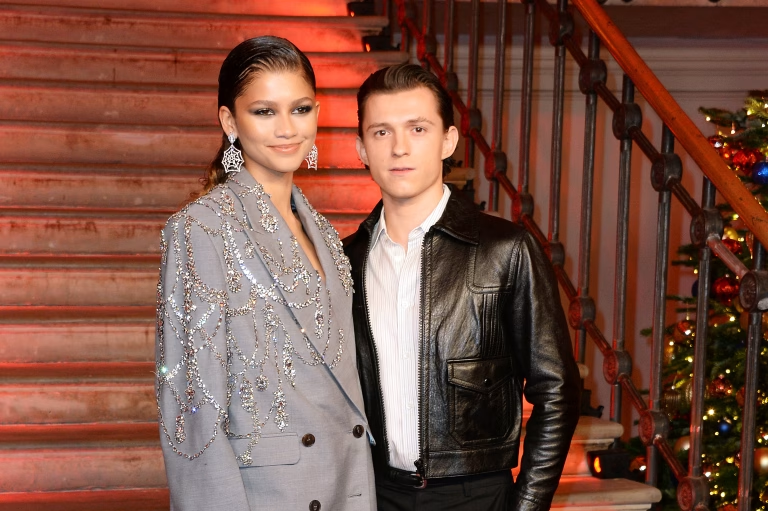
15 Unforgettable De Niro Performances, Ranked in Order

0
Image Source: Bing Image. License: All Creative Commons

Few film careers rival the sheer impact of Robert De Niro’s. Over decades, he has become the gold standard for total immersion in a role, transforming not just his appearance but his emotional and psychological essence. Whether portraying a dangerous figure, a calculating mind, a weary soul, or someone teetering on the edge of sanity, De Niro never takes shortcuts. He continually pushes himself and redefines what it means to act in American cinema.

Image Source: Bing Image. License: All Creative Commons

The list is not just a list of De Niro’s most famous films. It is a list of his performances that showcase his true character. It is a list of performances where De Niro disappears into his character so completely that you almost forget you are watching an actor act. Sometimes De Niro’s performances are found in his raw intensity. Other times, his performances are found in his restraint. From impressive to unparalleled, De Niro’s performances are a testament to his range and his enduring influence.

Image Source: Bing Image. License: All Creative Commons

15. Awakenings (1990)

In “Awakenings,” Robert De Niro gives perhaps his most sensitive and emotionally moving performance as a man who has been stuck in a vegetative state for decades. With an experimental drug, he comes back to full life and has a second chance at life. He finds out that life is full of little pleasures and that he has made a connection with a gentle doctor played by Robin Williams.

Image Source: Bing Image. License: All Creative Commons

The reason why De Niro’s performance in this film is so moving is because of its subtlety. He shows us his character’s transformation through body language. There is no grandstanding in this performance. There is no overacting. De Niro shows us his character’s return to his vegetative state without any overacting. This performance is full of compassion and tenderness and goes a long way in showing us that De Niro’s greatest strength as an actor is his capacity for tenderness.

Image Source: Bing Image. License: All Creative Commons

14. A Bronx Tale (1993)

In A Bronx Tale, Robert De Niro portrays one of the most down-to-earth roles of his entire career, that of Lorenzo, a working father trying to prevent his son from being drawn into organized crime. Unlike many of the other characters, Lorenzo is someone who stands by what he believes in. He is not motivated by ego or by intimidation; he is simply motivated by what he believes is right or wrong.

Image Source: Bing Image. License: All Creative Commons

What makes De Niro’s performance so remarkable is that it is so simple. He does not feel the need to use grandiose monologues or dramatic moments to get his point across. He simply talks and acts with conviction and leads by example. There is something very natural about De Niro’s portrayal of Lorenzo that makes him feel like a real person. By the time the film is over, it is Lorenzo’s integrity, and not that of crime, that is remembered most, thanks to De Niro.

Image Source: Bing Image. License: All Creative Commons

13. Jackie Brown (1997)

In Quentin Tarantino’s Jackie Brown, De Niro plays Louis Gara, a recently released ex-con whose laid-back demeanor masks dangerous unpredictability. It’s a subdued performance by De Niro’s standards, but one that fits perfectly within the film’s relaxed, tension-filled rhythm.

Image Source: Bing Image. License: All Creative Commons

De Niro gives Louis a sleepy detachment that becomes increasingly unsettling. His quiet presence makes his sudden violence more shocking, and his chemistry with the ensemble cast adds texture to the story. It’s a reminder that De Niro doesn’t need fireworks to leave an impression; sometimes, silence is more effective.

Image Source: Bing Image. License: All Creative Commons

12. The Untouchables (1987)

As Al Capone in The Untouchables, De Niro embraces operatic villainy with gusto. Though his screen time is limited, every appearance is unforgettable. He portrays Capone as both a charming public figure and a ruthless tyrant behind closed doors.

Image Source: Bing Image. License: All Creative Commons

De Niro’s theatrical choices could have veered into caricature, but instead they elevate the film’s heightened tone. His Capone feels dangerous because he enjoys his power, and De Niro clearly enjoys playing him. It’s a larger-than-life performance that perfectly suits the film’s pulp sensibilities.

Image Source: Bing Image. License: All Creative Commons

11. Midnight Run (1988)

Midnight Run allowed De Niro to prove something many doubted at the time, that he could be genuinely funny. As Jack Walsh, a cynical bounty hunter dragged into an unexpected partnership, De Niro blends sarcasm, frustration, and reluctant warmth.

Image Source: Bing Image. License: All Creative Commons

His chemistry with Charles Grodin is the engine of the film. De Niro plays off Grodin’s neurotic energy with impeccable timing, finding humor in irritation rather than exaggeration. The result is one of the most satisfying performances of his career and a defining entry in action-comedy cinema.

Image Source: Bing Image. License: All Creative Commons

10. Mean Streets (1973)

Johnny Boy in Mean Streets is chaos incarnate, and De Niro plays him like a ticking bomb. Reckless, loud, and constantly on edge, Johnny feels like a man daring the world to destroy him.

Image Source: Bing Image. License: All Creative Commons

De Niro’s performance is raw and electrifying, immediately drawing attention whenever he enters a scene. His work here laid the groundwork for a career defined by volatility and intensity, and it cemented his creative partnership with Martin Scorsese from the very start.

Image Source: Bing Image. License: All Creative Commons

9. The Deer Hunter (1978)

In The Deer Hunter, De Niro portrays Mike Vronsky, a man whose sense of responsibility becomes both his strength and his undoing. The film’s slow-burning structure allows De Niro to build the character gradually, making his eventual trauma hit harder.

Image Source: Bing Image. License: All Creative Commons

His performance is marked by quiet resolve rather than overt emotion. When the film reaches its most harrowing moments, De Niro’s stillness speaks volumes. It’s one of the most emotionally exhausting performances of his career, and one that lingers long after the final scene.

Image Source: Bing Image. License: All Creative Commons

8. Heat (1995)

As master thief Neil McCauley in Heat, De Niro delivers a performance built on discipline and isolation. McCauley lives by a strict code, refusing emotional attachments even when they tempt him.

Image Source: Bing Image. License: All Creative Commons

De Niro’s restraint is what makes the role so compelling. Beneath the calm exterior is a man deeply aware of the cost of his choices. His legendary diner scene with Al Pacino isn’t about dominance; it’s about recognition, and De Niro plays it with quiet, devastating clarity.

Image Source: Bing Image. License: All Creative Commons

7. The Irishman (2019)

The Irishman finds De Niro reflecting on the kind of men he once played. Frank Sheeran adopts a muted, almost passive presence, letting regret slowly seep into every moment.

Image Source: Bing Image. License: All Creative Commons

This is a performance defined by accumulation. De Niro allows time to do the work, and by the film’s final act, Frank’s loneliness feels suffocating. It’s one of De Niro’s most mature performances, using minimalism to devastating effect.

Image Source: Bing Image. License: All Creative Commons

6. Killers of the Flower Moon (2023)

In Killers of the Flower Moon, De Niro is chilling as William Hale, a man whose friendly demeanor conceals extraordinary cruelty. He weaponizes warmth, making his manipulations all the more horrifying.

Image Source: Bing Image. License: All Creative Commons

De Niro’s performance is deeply unsettling because it feels plausible. He doesn’t rely on volume or violence, just control. It’s a masterclass in psychological villainy and one of the strongest performances of his later career.

Image Source: Bing Image. License: All Creative Commons

5. Goodfellas (1990)

Jimmy Conway in Goodfellas is charm-laced with danger, and De Niro plays him like a man constantly measuring risk. He never explodes; he calculates.

Image Source: Bing Image. License: All Creative Commons

That calm is what makes Jimmy terrifying. De Niro’s control creates an ever-present sense of threat, reminding viewers that violence doesn’t always announce itself. It’s a performance built on precision, confidence, and quiet menace.

Image Source: Bing Image. License: All Creative Commons

4. The Godfather: Part II (1974)

De Niro’s young Vito Corleone is a masterclass in reinvention. Rather than imitate Marlon Brando, De Niro builds a new foundation, one rooted in patience, intelligence, and resolve.

Image Source: Bing Image. License: All Creative Commons

Speaking largely in Italian, he communicates power through posture and presence. The performance earned De Niro his first Oscar and remains one of the finest supporting roles in film history.

Image Source: Bing Image. License: All Creative Commons

3. Taxi Driver (1976)

Travis Bickle is disturbing, tragic, and unforgettable. De Niro immerses himself fully, transforming alienation into something volatile and frightening.

Image Source: Bing Image. License: All Creative Commons

Every glance and muttered line reveals a man unraveling. De Niro makes Travis impossible to ignore, creating one of cinema’s most complex and controversial characters.

Image Source: Bing Image. License: All Creative Commons

2. Raging Bull (1980)

Jake LaMotta is rage given human form, and De Niro attacks the role with terrifying commitment. His physical transformation is famous, but it’s the emotional exposure that defines the performance.

Image Source: Bing Image. License: All Creative Commons

LaMotta’s jealousy and self-hatred consume him, and De Niro never flinches. It’s an exhausting, brutal portrayal, and one of the greatest acting achievements ever captured on film.

Image Source: Bing Image. License: All Creative Commons

1. The King of Comedy (1983)

At the top sits Rupert Pupkin, a character so uncomfortable and painfully real that audiences weren’t ready for him in 1983. De Niro plays Rupert as delusional, hopeful, and quietly terrifying.

Image Source: Bing Image. License: All Creative Commons

What makes the performance extraordinary is its restraint. De Niro never winks at the audience. He fully believes Rupert’s fantasy, and that belief makes the film eerily prophetic. It’s a daring, brilliant performance that feels more relevant now than ever.

Image Source: Bing Image. License: All Creative Commons

Robert De Niro’s greatest performances aren’t just memorable, they’re transformative. He reshaped American acting by committing fully, whether that meant gaining weight, learning languages, or exposing uncomfortable truths. These roles aren’t just highlights of his career; they’re landmarks in cinema itself. Few actors have left such a lasting imprint, and fewer still have taken as many risks along the way.

16 Times Famous Actors Wished They’d Said No

0
Image Source: Bing Image. License: All Creative Commons

Hollywood has given us countless memorable performances, but not every role has turned out as intended—for the actors or the audience. Miscasting, cultural missteps, or creative misfires can make certain roles regretful in hindsight. Over the years, many actors have reflected on their careers and wished they could redo particular performances. The stories of these 16 stars serve as a reminder of the importance of thoughtful casting, accountability, and cultural awareness in the entertainment industry.

Image Source: Bing Image. License: All Creative Commons

16. Halle Berry – Considering a Trans Man Role

The actress Halle Berry was criticized when she was rumored to be playing the role of a trans man in an upcoming film. Many in the trans community and their supporters felt the role should be played by a trans actor, which is why Halle Berry stepped down from the film and apologized.

Image Source: Bing Image. License: All Creative Commons

The actress understands the significance of the representation and the fact that she should not have been in the film. Halle Berry’s move is a highlight in the long discussion in Hollywood about who gets to represent the stories of marginalized communities.

Image Source: Bing Image. License: All Creative Commons

15. Ed Skrein – Hellboy Whitewashing Controversy

The actor, Ed Skrein, was originally set to play the role of Major Ben Daimio in the Hellboy reboot, a character who is Japanese American in the comics. However, the casting of the actor in the role was criticized for whitewashing, and the actor himself has since decided to step down from the role, saying that the role should be played by an actor of the character’s heritage.

Image Source: Bing Image. License: All Creative Commons

The decision by the actor to step down from the role has been praised, and it is an important case of an actor being aware of the power he has and the importance of using it for the greater good. The controversy has also brought to the forefront the whitewashing problem that Hollywood is facing.

Image Source: Bing Image. License: All Creative Commons

14. Jimmy Kimmel – Blackface Sketches

Jimmy Kimmel’s past comedy sketches included blackface, which resurfaced and drew significant backlash. Kimmel publicly apologized, acknowledging that the performances were offensive and inappropriate.

Image Source: Bing Image. License: All Creative Commons

The incident reignited discussions about the legacy of blackface in American comedy. His apology was part of a broader reckoning in entertainment, highlighting the responsibility of comedians to avoid perpetuating harmful stereotypes.

Image Source: Bing Image. License: All Creative Commons

13. Julianne Moore – Playing a Lesbian in The Kids Are All Right

Julianne Moore starred as a lesbian mother in The Kids Are All Right, a performance that earned critical acclaim. However, she later expressed uncertainty about taking similar roles in the future, reflecting on the importance of LGBTQ actors portraying LGBTQ characters.

Image Source: Bing Image. License: All Creative Commons

Her comments demonstrate Hollywood’s growing awareness of authentic representation. The conversation around this continues, balancing the opportunity for talented actors with the need for lived experience in storytelling.

Image Source: Bing Image. License: All Creative Commons

12. Alison Brie – Voicing Diane Nguyen in BoJack Horseman

Alison Brie voiced Diane Nguyen, a Vietnamese American character, on BoJack Horseman. Years later, she admitted regret, recognizing that the role should have been cast with an actor of Vietnamese descent.

Image Source: Bing Image. License: All Creative Commons

Her acknowledgment came amid a wider push in the animation industry for authentic representation. Brie’s reflection emphasizes that inclusion matters not just on screen but behind the microphone as well.

Image Source: Bing Image. License: All Creative Commons

11. Kristen Bell – Voicing Molly in Central Park

Kristen Bell originally voiced Molly, a biracial character in Central Park. Following criticism, she stepped down, stating that the character should be voiced by someone who shares her racial background.

Image Source: Bing Image. License: All Creative Commons

The role was recast with Emmy Raver-Lampman, a Black actress, and the move was widely praised. Bell’s decision reflected the growing expectation that characters of color should be voiced by actors of color, promoting both authenticity and equity.

Image Source: Bing Image. License: All Creative Commons

10. Jenny Slate – Voicing Missy in Big Mouth

Jenny Slate was initially the voice of Missy, a biracial character. Over time, however, Jenny Slate realized that her involvement in the show was part of the problem of a lack of authentic Black voices in animation. This was a positive step towards a better approach to storytelling.

Image Source: Bing Image. License: All Creative Commons

The character was recast with Ayo Edebiri after Jenny Slate stepped down. The decision was well-received as a step in the right direction. Jenny Slate’s decision was a good example of actors recognizing their mistakes and helping to create a better and more thoughtful approach.

Image Source: Bing Image. License: All Creative Commons

9. Anne Hathaway – The Witches and Disability Representation

Anne Hathaway starred as the Grand High Witch in the 2020 adaptation of The Witches. Critics argued that the character’s physical differences reinforced negative stereotypes about limb differences.

Image Source: Bing Image. License: All Creative Commons

Hathaway issued a public apology, expressing regret and committing to do better in the future. The controversy sparked broader discussions about disability representation in Hollywood and the need for more thoughtful portrayals.

Image Source: Bing Image. License: All Creative Commons

8. Hank Azaria – Voicing Apu on The Simpsons

Hank Azaria voiced Apu Nahasapeemapetilon for decades, but the character became controversial for perpetuating South Asian stereotypes. Azaria eventually stepped down and apologized publicly for his portrayal.

Image Source: Bing Image. License: All Creative Commons

He recognized that his performance contributed to harmful representation, prompting The Simpsons to commit to casting actors of color for characters of color. The Apu controversy remains a key moment in conversations about diversity and inclusion in animation.

Image Source: Bing Image. License: All Creative Commons

7. Jimmy Fallon – Blackface on SNL

Jimmy Fallon was accused of a sketch aired on SNL, in which he played Chris Rock in blackface. The video was shared again after several years and caused a lot of controversy and discussion about racial sensitivity in comedy.

Image Source: Bing Image. License: All Creative Commons

Jimmy Fallon apologized for his actions in a public statement and admitted that his actions were wrong and offensive. The controversy caused a lot of discussion in the industry about content created using racial stereotypes.

Image Source: Bing Image. License: All Creative Commons

6. Rooney Mara – Playing Tiger Lily in Pan

The movie Pan starred Rooney Mara as Tiger Lily, but this did not sit well with many people, especially considering the whitewashing of the Native American role. Rooney Mara played Tiger Lily, but many people felt that an Indigenous person should have played the part.

Image Source: Bing Image. License: All Creative Commons

However, Rooney Mara admitted that an Indigenous person should have played the part, indicating that many people were right in their criticism of the movie. It is important to note that Rooney Mara’s statement served as an important reminder of the need for authenticity in movie production.

Image Source: Bing Image. License: All Creative Commons

5. Zoe Saldana – Portraying Nina Simone

Zoe Saldana received criticism for her portrayal of Nina Simone in the biopic. She was criticized for her use of dark makeup to portray the singer. It was argued that an actress of dark complexion should have played the role of Nina Simone.

Image Source: Bing Image. License: All Creative Commons

Zoe Saldana had apologized for her role in the movie, saying that she should never have taken up the role. She had said that she had apologized to the family of Nina Simone for playing the role of the singer.

Image Source: Bing Image. License: All Creative Commons

4. Scarlett Johansson – Trans Role in Rub and Tug

Actress Scarlett Johansson was initially given the part of playing a trans man in the upcoming film Rub and Tug. This caused an immediate backlash because many people felt that the part should be played by a trans actor.

Image Source: Bing Image. License: All Creative Commons

In an attempt to rectify the problem and calm the backlash, Johansson announced that she was withdrawing from the part. This was a turning point in Hollywood and helped shape the way in which they handle similar roles in the future.

Image Source: Bing Image. License: All Creative Commons

3. Jake Gyllenhaal – Prince of Persia Whitewashing

Jake Gyllenhaal was also given the role of the Persian hero in the film Prince of Persia: The Sands of Time. However, the film received a lot of criticism on the basis of whitewashing. Many felt that the role should have been played by an actor of Middle Eastern descent to respect the character’s culture.
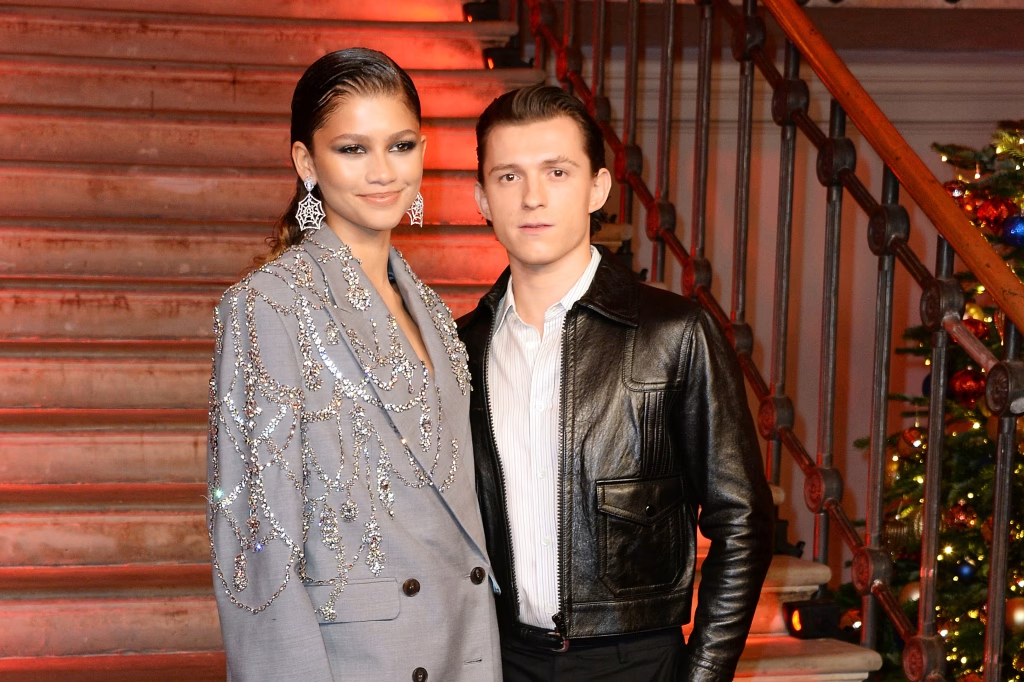
Image Source: Bing Image. License: All Creative Commons

However, Gyllenhaal would go on to admit that he should not have taken the role, citing the importance of cultural representation in film casting. The film has since been used to illustrate the whitewashing issues that Hollywood continues to grapple with in its productions.

Image Source: Bing Image. License: All Creative Commons

2. Gwyneth Paltrow – Fat Suit in Shallow Hal

Gwyneth Paltrow wore a fat suit during her role in Shallow Hal, which is now criticized for fat-shaming and body image insensitivity. The body image and comedy of the movie do not stand the test of time, encouraging discussions about body image and comedy.

Image Source: Bing Image. License: All Creative Commons

Paltrow confessed that she was embarrassed by her role, which she now regrets. It is evident that body image and body diversity values of Hollywood have come a long way, encouraging sensitivity.

Image Source: Bing Image. License: All Creative Commons

1. Emma Stone – Playing Allison Ng in Aloha

Emma Stone was given the role of Allison Ng, a character who was half Asian and half Hawaiian, in the movie Aloha. This decision was met with instant backlash since Stone did not identify with the character’s ethnicity, leading to an important discussion on race in Hollywood.

Image Source: Bing Image. License: All Creative Commons

Emma Stone has since apologized for taking up the role, stating that she should not have done that and that she has learned a lot from the backlash. This situation has led to an important discussion on the need for accurate representation in Hollywood, especially when it comes to mixed-race or Asian roles.

Image Source: Bing Image. License: All Creative Commons

Hollywood is evolving, and so are the conversations around representation and authenticity. These actors’ reflections show that even mistakes can lead to growth—both for performers and the industry. By acknowledging past missteps, they’re helping pave the way for more inclusive, respectful, and thoughtful storytelling on screen.