Home Blog Page 119

15 Apple TV+ Shows That Redefined TV

0
Image Source: Bing Image. License: All Creative Commons

Since its launch, Apple TV+ has quietly reshaped the streaming landscape, delivering a mix of thought-provoking dramas, innovative sci-fi, and boundary-pushing comedies. From prestige adaptations to original hits, the platform has shown that streaming isn’t just about quantity; it’s about quality. These 15 shows have not only captivated audiences but also pushed the boundaries of storytelling, solidifying Apple TV+ as a force in modern television.

Image Source: Bing Image. License: All Creative Commons

15. Dark Matter

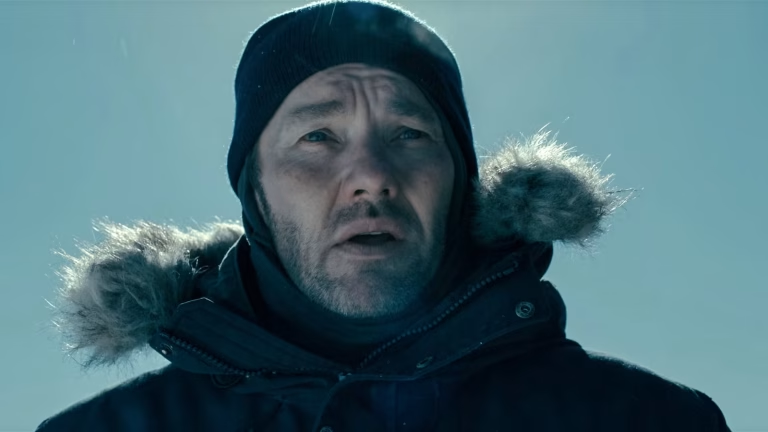
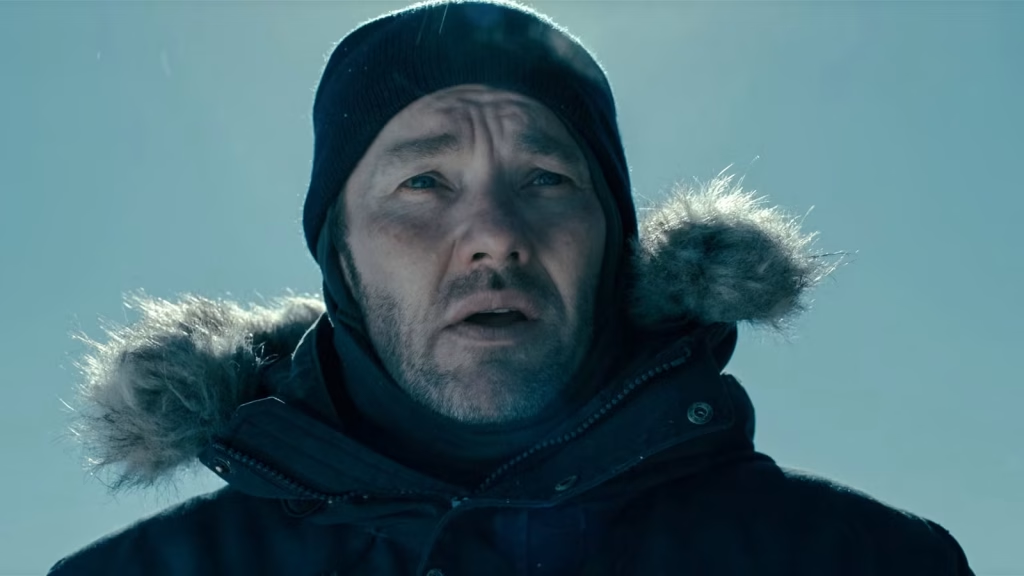
Dark Matter dives headfirst into the multiverse with a story that feels both intimate and mind-bending. Joel Edgerton stars as Jason Dessen, a physics professor whose quiet life is thrown into chaos when he’s abducted into an alternate reality, encountering another version of himself. The series explores the profound question: what if your greatest adversary was literally yourself?

Image Source: Bing Image. License: All Creative Commons

Edgerton’s dual performance as both the ordinary husband and the morally ambiguous doppelgänger anchors the show, balancing emotional depth with high-concept sci-fi. Jennifer Connelly and Alice Braga provide additional layers to the story, adding heart to a narrative that juggles domestic stakes and quantum chaos. Critics praised the series for tackling identity, ambition, and the consequences of choice, and its Emmy nod for Outstanding Title Design highlights its visual inventiveness.

Image Source: Bing Image. License: All Creative Commons

14. Presumed Innocent

Presumed Innocent revitalizes the legal thriller for modern audiences, following Jake Gyllenhaal as Rusty Sabich, a deputy prosecutor caught in a murder investigation that turns alarmingly personal. Based on Scott Turow’s bestselling novel, the series delivers a tightly wound narrative of obsession, betrayal, and moral ambiguity.

Image Source: Bing Image. License: All Creative Commons

Gyllenhaal’s performance is complemented by Ruth Negga, Bill Camp, and Peter Sarsgaard, whose complex portrayals deepen the tension and intrigue. With four Emmy nominations, including Outstanding Lead Actor, the show proves that courtroom dramas can feel urgent, suspenseful, and completely relevant in the streaming era.

Image Source: Bing Image. License: All Creative Commons

13. Masters of the Air

For fans of large-scale historical dramas, Masters of the Air offers a gripping look at World War II from the perspective of the Hundredth Bombardment Group. Produced by Tom Hanks, Steven Spielberg, and Gary Goetzman, the nine-episode series combines breathtaking aerial combat with the psychological toll of war.

Image Source: Bing Image. License: All Creative Commons

Austin Butler, Callum Turner, and Barry Keoghan bring humanity to the airmen’s struggles, exploring camaraderie, loss, and heroism. Recognized with Emmy nominations for sound design and its main title theme, the series underscores Apple TV+’s ability to merge spectacle with emotional storytelling, standing proudly alongside the best war dramas ever made.

Image Source: Bing Image. License: All Creative Commons

12. Physical

Set in 1980s San Diego, Physical follows Sheila Rubin (Rose Byrne) as she transforms from a repressed housewife into a rising aerobics star. The show is a darkly comic exploration of ambition, self-image, and the relentless pursuit of reinvention amid the fitness craze of the era.

Image Source: Bing Image. License: All Creative Commons

Byrne’s performance captures Sheila’s inner turmoil, her fraught relationships, and the messy realities of empowerment. With Emmy nods for cinematography and choreography, Physical combines nostalgia, grit, and humor to offer a compelling, female-driven narrative that resonates far beyond the world of exercise videos.

Image Source: Bing Image. License: All Creative Commons

11. Silo

Silo, adapted from Hugh Howey’s Wool trilogy, immerses viewers in a post-apocalyptic underground world housing the last 10,000 humans. The tightly controlled environment and rigid social order hide secrets that engineer Juliette (Rebecca Ferguson) must uncover, putting herself and the community at risk.

Image Source: Bing Image. License: All Creative Commons

The series is a slow-burning thriller, balancing suspense with philosophical questions about truth and control. Rashida Jones, David Oyelowo, and Tim Robbins enhance the narrative, creating a rich ensemble that brings complexity to a claustrophobic, meticulously crafted dystopia. Emmy nods for production design and music reflect the show’s technical and narrative excellence.

Image Source: Bing Image. License: All Creative Commons

10. Palm Royale

Palm Royale is a campy, sun-drenched comedy set in 1969 Palm Beach, chronicling Kristen Wiig’s Maxine Simmons as she schemes her way into the elite Palm Royale club. The series celebrates outsiders, asking how far one will go to belong in a world obsessed with wealth and status.

Image Source: Bing Image. License: All Creative Commons

With lavish period costumes, stunning sets, and an ensemble including Carol Burnett, Allison Janney, and Laura Dern, the show balances sharp social satire with heartfelt storytelling. Eleven Emmy nominations underscore its appeal, making it one of Apple TV+’s standout comedies for style, wit, and sheer fun.
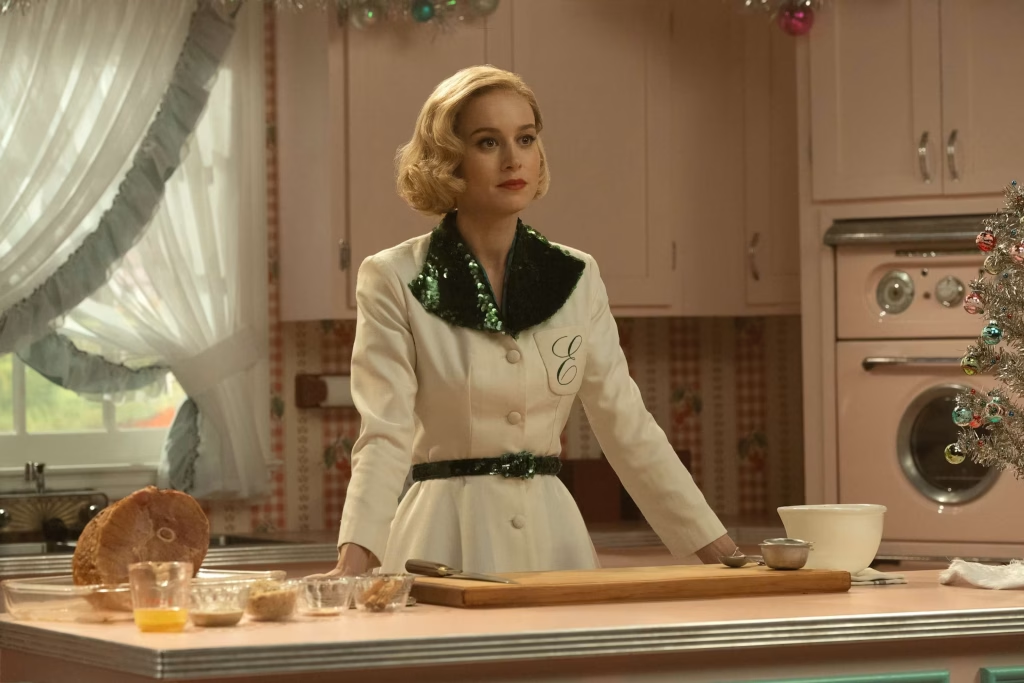
Image Source: Bing Image. License: All Creative Commons

9. Lessons in Chemistry

Lessons in Chemistry tells the story of Elizabeth Zott (Brie Larson), a 1950s chemist forced out of her lab by a patriarchal society, who reinvents herself as the host of a TV cooking show. Beyond recipes, Elizabeth teaches lessons about resilience, ambition, and challenging societal norms.

Image Source: Bing Image. License: All Creative Commons

Larson’s performance is both fierce and vulnerable, supported by Lewis Pullman and Aja Naomi King, who bring depth to her journey. The series’s 10 Emmy nominations, including Outstanding Limited Series, reflect its blend of romance, social commentary, and empowerment, establishing it as a cultural touchstone.

Image Source: Bing Image. License: All Creative Commons

8. Shrinking

Shrinking blends grief, therapy, and comedy as Jason Segel’s therapist Mark decides to abandon professional boundaries, telling clients exactly what he thinks. The result is chaos, humor, and unexpectedly profound insights into human relationships.

Image Source: Bing Image. License: All Creative Commons

Harrison Ford, Jessica Williams, and Michael Urie complete the ensemble, balancing heart and wit across messy, real-life scenarios. With seven Emmy nominations, including Outstanding Comedy Series, Shrinking has been lauded for its candid portrayal of mental health, relationships, and personal growth.

Image Source: Bing Image. License: All Creative Commons

7. Slow Horses

Slow Horses reinvents the spy genre with a team of MI5 misfits relegated to the Slough House department. Gary Oldman stars as Jackson Lamb, a jaded, cynical agent whose leadership inspires loyalty amid personal failures and office politics.

Image Source: Bing Image. License: All Creative Commons

The series’s dark humor, sharp writing, and richly drawn characters, including Jack Lowden and Kristin Scott Thomas, elevate it above typical espionage fare. Emmy nominations for acting, writing, and directing highlight the show’s critical acclaim, cementing it as a must-watch for spy drama enthusiasts.

Image Source: Bing Image. License: All Creative Commons

6. The Studio

The Studio offers a satirical look at Hollywood, following Seth Rogen as Matt Remick, the new head of Continental Studios, navigating power struggles, casting chaos, and corporate absurdities. The series is a love letter and a roast to the movie industry, packed with insider jokes and celebrity cameos.

Image Source: Bing Image. License: All Creative Commons

Guest appearances from Martin Scorsese, Ron Howard, and Bryan Cranston add layers of meta-commentary, while Kathryn Hahn and Catherine O’Hara shine as part of Matt’s executive team. With 23 Emmy nominations, most for a freshman comedy, The Studio proves that satire can be smart, stylish, and hilarious all at once.

Image Source: Bing Image. License: All Creative Commons

5. For All Mankind

For All Mankind reimagines the space race, exploring an alternate history where the Soviets beat the U.S. to the moon. The series tracks NASA astronauts and their families as ambition, rivalry, and technological innovation push humanity to its limits.
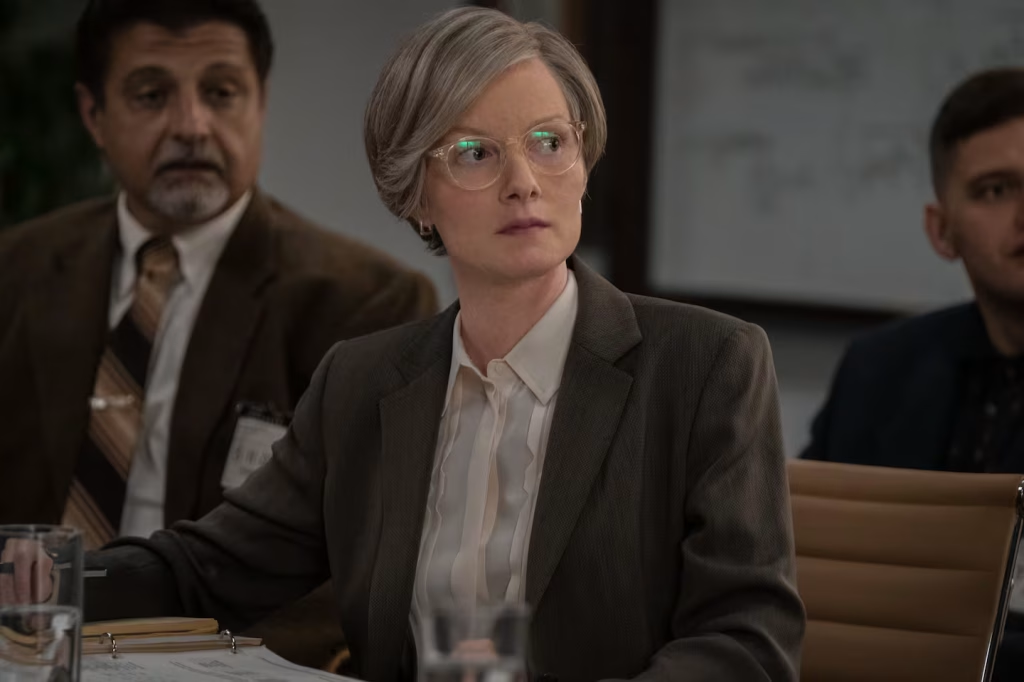
Image Source: Bing Image. License: All Creative Commons

The show excels at blending epic historical storytelling with intimate human drama. Characters like Ed Baldwin and Margo navigate personal sacrifice alongside professional triumph, making the alternate history feel both grand and deeply relatable. Critical praise highlights the series’ depth, scope, and moral complexity.

Image Source: Bing Image. License: All Creative Commons

4. Pachinko

Pachinko spans generations, tracing a Korean family’s trials across Korea, Japan, and America. The multilingual, cinematic series explores themes of identity, diaspora, love, and survival against a backdrop of historical upheaval.

Image Source: Bing Image. License: All Creative Commons

Standout performances from Youn Yuh-Jung, Kim Min-ha, and Lee Min-ho bring authenticity to this sweeping epic. Emmy nominations for production design and cinematography reflect its visual and emotional power, cementing Pachinko as one of Apple TV+’s most ambitious and resonant dramas.

Image Source: Bing Image. License: All Creative Commons

3. The Morning Show

The Morning Show catapulted Apple TV+ into the spotlight, starring Jennifer Aniston and Reese Witherspoon as morning news anchors navigating corporate scandals and the fallout of MeToo. The series blends high-stakes drama with sharp social commentary.

Image Source: Bing Image. License: All Creative Commons

The ensemble, including Billy Crudup, Jon Hamm, and Greta Lee, delivers layered performances that keep audiences engaged. With a record-breaking 16 Emmy nominations in its third season, the show has become a cultural touchstone for contemporary drama and ensemble storytelling.

Image Source: Bing Image. License: All Creative Commons

2. Severance

Severance is a sci-fi thriller exploring the ultimate work-life balance nightmare. Adam Scott stars as Mark Scout, whose consciousness is surgically split between work and home, creating two entirely separate lives that collide in unexpected ways.

Image Source: Bing Image. License: All Creative Commons

The show’s clinical, Kubrickian aesthetic amplifies the eerie atmosphere, while themes of corporate control, memory, and identity resonate deeply. Emmy recognition, including Outstanding Drama Series and multiple acting nods, reflects the show’s blend of existential horror, satire, and human drama, making it an instant phenomenon.

Image Source: Bing Image. License: All Creative Commons

1. Ted Lasso

Ted Lasso turned a simple sports-comedy premise into a global sensation. Jason Sudeikis stars as an American football coach navigating English soccer, winning hearts with optimism, humor, and an unwavering belief in people.

Image Source: Bing Image. License: All Creative Commons

The ensemble, including Hannah Waddingham, Brett Goldstein, and Juno Temple, brings depth and warmth to every episode. Multiple Emmy wins have cemented Ted Lasso as Apple TV+’s crown jewel, proving that kindness, humor, and heart can change the way we think about comedy on television.
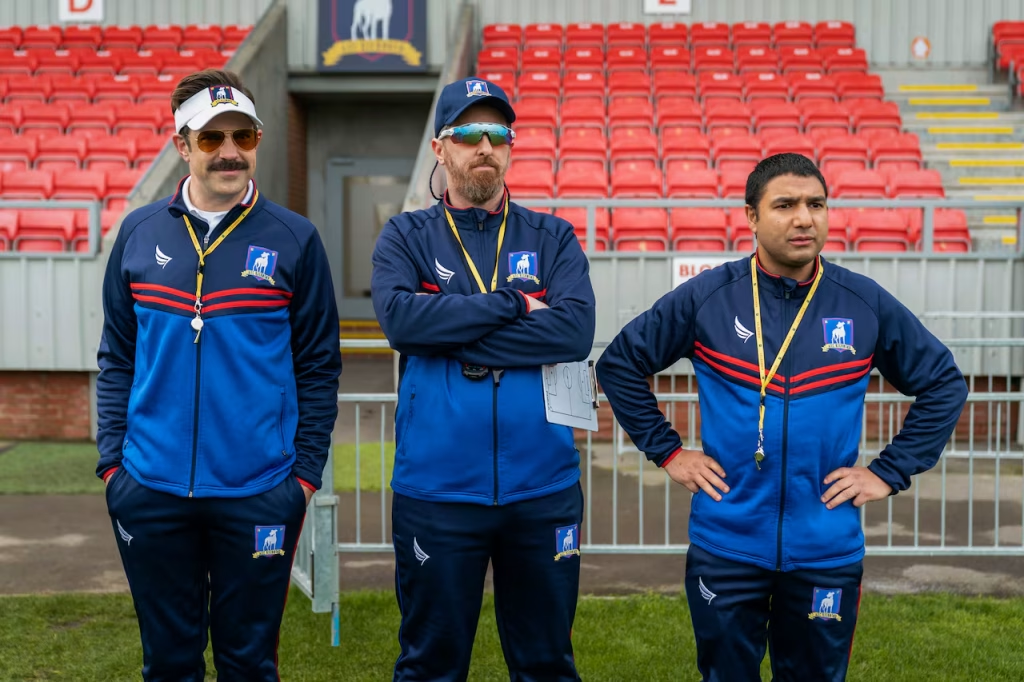
Image Source: Bing Image. License: All Creative Commons

Apple TV+ has proven that a streaming platform can combine quality, ambition, and creativity to shape modern television. From mind-bending sci-fi to heartwarming comedies and epic historical dramas, these 15 shows demonstrate how original storytelling can push boundaries, spark conversation, and redefine the small screen for years to come.

15 Celebrity Couples Who Turn Heads with Their Height Differences

0
Image Source: Bing Image. License: All Creative Commons

Celebrity relationships often capture attention for their glamour, but some couples stand out even more because of physical contrasts—particularly height differences. Fans are endlessly intrigued when one partner towers over the other, regardless of gender. From red carpets to basketball courts, these 15 celebrity couples prove that love isn’t about symmetry. While their height gaps are noticeable, it’s their chemistry, confidence, and connection that truly make them shine.

Image Source: Bing Image. License: All Creative Commons

15. Zendaya and Tom Holland

Zendaya and Tom Holland are celebrated not just for their performances but also for their sweet, playful chemistry. Standing at 5’10” and 5’8″ respectively, their height difference is hardly ever an issue for fans. On the red carpet, Zendaya often wears heels, turning the gap into an endearing part of their dynamic that only adds to their charm.

Image Source: Bing Image. License: All Creative Commons

More importantly, the couple’s relationship shows that confidence and respect are key. Tom does not let their height difference get in the way of their chemistry, and together, they show the world that when you’re in love, height is just a number.

Image Source: Bing Image. License: All Creative Commons

14. Nicole Kidman and Keith Urban

Nicole Kidman and Keith Urban are an exemplary case of how a small but visible difference in height is still apparent. Nicole is 5’11” tall, while her husband is slightly shorter at 5’10”. On the red carpet, Nicole’s towering stature, especially with her heels on, is still noticeable but in an elegant way.

Image Source: Bing Image. License: All Creative Commons

Their enduring marriage is something that is looked up to because of its underpinning of respect and true partnership. Nicole’s height is clearly not an issue, and she and her husband are celebrating the idea that a man doesn’t need to be taller than his partner.

Image Source: Bing Image. License: All Creative Commons

13. RuPaul and Georges LeBar

RuPaul and Georges LeBar make a striking duo, even among other tall celebrity couples. RuPaul stands 6’4”, while Georges is 6’8”, giving them a commanding presence wherever they appear. Fans are drawn to their bold style and confident embrace of their height difference.

Image Source: Bing Image. License: All Creative Commons

Their relationship is celebrated not just for the visual impact but for the authenticity and creativity they bring to every public appearance. Together, they defy conventional expectations of celebrity couples, making them as fascinating offstage as they are on it.

Image Source: Bing Image. License: All Creative Commons

12. Lisa Bonet and Jason Momoa

Lisa Bonet and Jason Momoa are an iconic pair with a dramatic height contrast. Jason, at 6’4”, towers over Lisa, who stands 5’2”, creating a visually striking difference that fans can’t help but notice. Their appearances together, from movie premieres to casual outings, often highlight the gap endearingly.

Image Source: Bing Image. License: All Creative Commons

Despite the contrast, their relationship has been admired for warmth, authenticity, and deep mutual respect. Jason’s protective, affectionate nature complements Lisa’s graceful presence, making them one of Hollywood’s most adored couples. Their height difference has become an emblem of their unique charm.

Image Source: Bing Image. License: All Creative Commons

11. Joe Jonas and Sophie Turner

Joe Jonas and Sophie Turner showcase a subtle but noticeable height gap. Sophie stands 5’9” compared to Joe’s 5’7”, and fans often notice the difference on red carpets, especially when Sophie wears heels. Their playful interactions in public reflect a comfortable, confident partnership.

Image Source: Bing Image. License: All Creative Commons

The couple embraces their differences rather than hiding them, showing fans that love isn’t about conforming to traditional norms. Their dynamic is a mix of fun, support, and genuine connection, proving that height is never a barrier to romance.

Image Source: Bing Image. License: All Creative Commons

10. Pharrell Williams and Helen Lasichanh

Pharrell Williams and Helen Lasichanh are a stylish couple whose two-inch height difference adds to their distinctive presence. Helen, at 5’11”, subtly stands above Pharrell’s 5’9”, creating an elegant visual contrast that complements their fashion-forward appearances.

Image Source: Bing Image. License: All Creative Commons

Their relationship is admired for its creativity, individuality, and flair. Together, they challenge the conventional ideas of height and style in celebrity couples, embracing both their differences and their shared sense of self-expression.

Image Source: Bing Image. License: All Creative Commons

9. Tina Fey and Jeff Richmond

Tina Fey and Jeff Richmond have a playful and enduring partnership, with Tina standing at 5’5” and Jeff at 5’2”. Their height difference is often a topic of fan conversation, but it only adds to their charm. The couple’s humor and authenticity shine through in every appearance.

Image Source: Bing Image. License: All Creative Commons

Their dynamic emphasizes mutual respect and genuine connection. Fans appreciate how they embrace the gap with confidence, showing that love isn’t measured in inches but in laughter, partnership, and shared life experiences.

Image Source: Bing Image. License: All Creative Commons

8. Jada Pinkett Smith and Will Smith

Jada Pinkett Smith and Will Smith’s relationship features one of the more noticeable height differences, with Will towering at 6’4” compared to Jada’s 5’0”. Their striking contrast often draws attention at public events, but their bond goes far beyond appearances.

Image Source: Bing Image. License: All Creative Commons

Despite challenges and public scrutiny over the years, the couple has maintained a strong, loving partnership. Will’s imposing height and Jada’s powerful presence combine to create a dynamic that continues to inspire and captivate fans worldwide.

Image Source: Bing Image. License: All Creative Commons

7. Sacha Baron Cohen and Isla Fisher

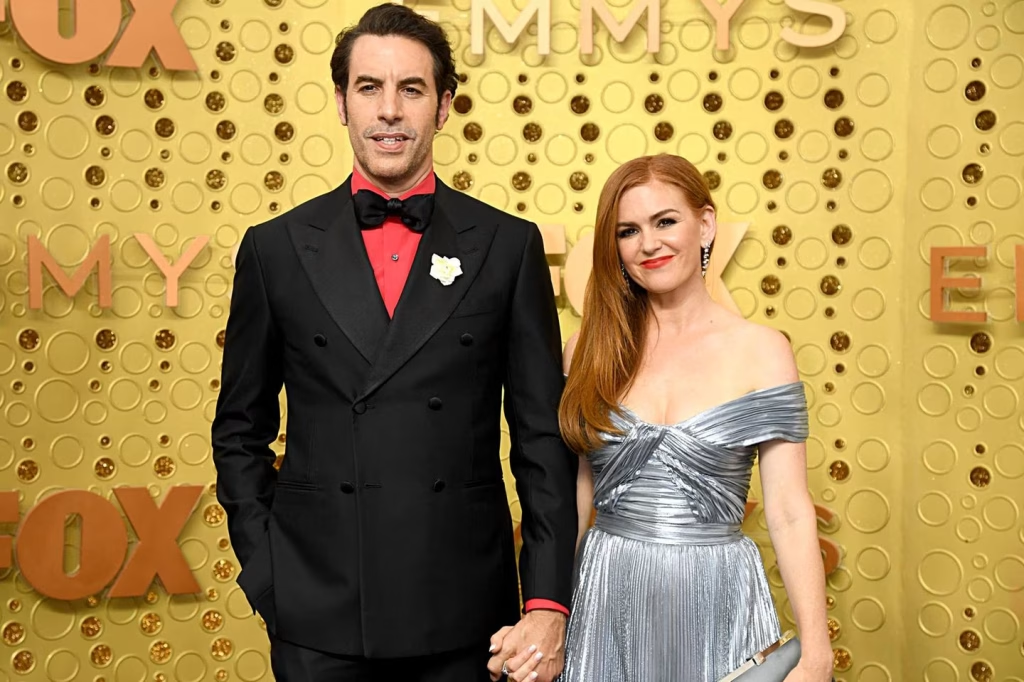
Sacha Baron Cohen and Isla Fisher are a duo where the height gap is impossible to ignore. Standing 6’3” to Isla’s 5’3”, the couple often turns heads at events, especially when Isla pairs heels with her naturally petite stature.

Image Source: Bing Image. License: All Creative Commons

Their relationship radiates humor, creativity, and mutual admiration. Fans love seeing them embrace their differences, demonstrating that height can enhance the uniqueness of a partnership rather than detract from it.

Image Source: Bing Image. License: All Creative Commons

6. Sophie Dahl and Jamie Cullum

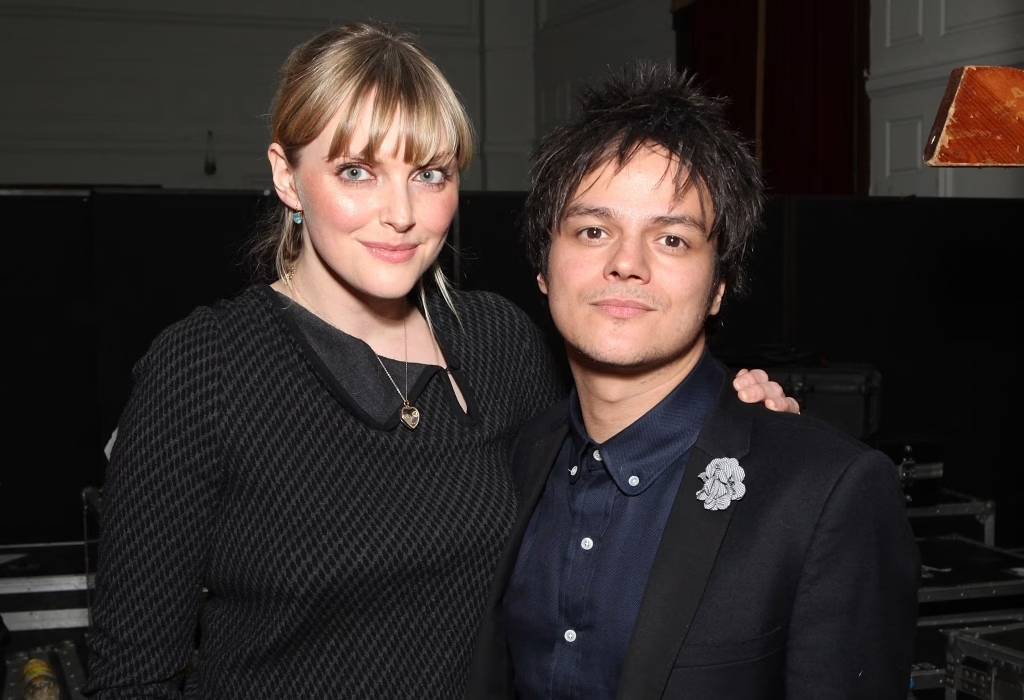
Sophie Dahl and Jamie Cullum showcase a couple where the woman is taller than the man. Sophie’s statuesque height stands out against Jamie’s smaller frame, and their appearances together have been noted for the elegant contrast they create.

Image Source: Bing Image. License: All Creative Commons

Their partnership thrives on creativity and mutual respect, proving that differences in stature do not define a couple’s connection. Fans admire their authenticity and the way they celebrate each other’s individuality.

Image Source: Bing Image. License: All Creative Commons

5. Benji Madden and Cameron Diaz

Benji Madden and Cameron Diaz are a couple with a noticeable but embraced height difference. Cameron’s 5’9” stature contrasts with Benji’s 5’6”, and fans enjoy seeing the pair together at public events where their chemistry shines.

Image Source: Bing Image. License: All Creative Commons

Their relationship reflects warmth, mutual support, and genuine affection. By embracing their physical differences, they have become an example of how confidence and love go hand in hand.

Image Source: Bing Image. License: All Creative Commons

4. Kevin Hart and Eniko Parrish

Kevin Hart and Eniko Parrish show that height doesn’t define a couple’s dynamic. Eniko, at 5’8”, is taller than Kevin, who stands at 5’4”. Fans love how the pair uses humor and style to highlight the difference rather than shy away from it.

Image Source: Bing Image. License: All Creative Commons

Their relationship is admired for its playfulness and balance. Kevin’s comedic talent pairs perfectly with Eniko’s elegance, creating a couple whose charm lies in both personality and partnership.

Image Source: Bing Image. License: All Creative Commons

3. Gwen Stefani and Blake Shelton

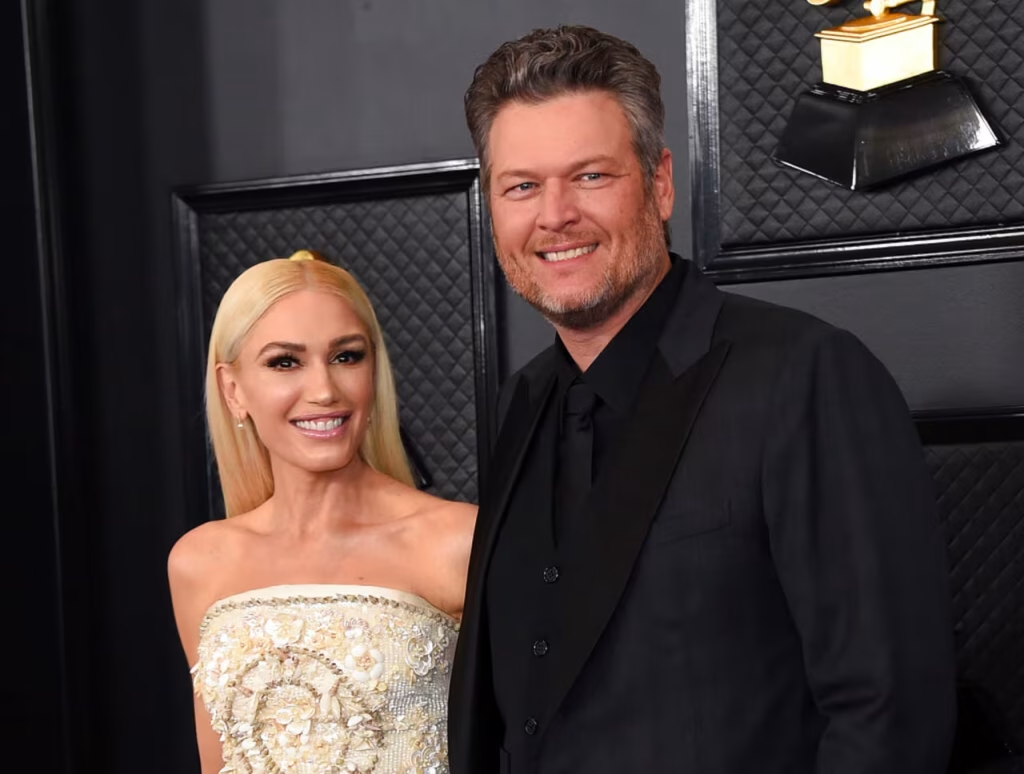
Gwen Stefani and Blake Shelton demonstrate a striking height contrast, with Blake standing 6’5” and Gwen standing 5’6”. Whether at award shows or music events, the difference adds a unique visual element to their public appearances.

Image Source: Bing Image. License: All Creative Commons

Their relationship is celebrated for creativity, mutual respect, and authenticity. Fans appreciate the way their height gap enhances rather than overshadows the connection between the pop star and country singer.

Image Source: Bing Image. License: All Creative Commons

2. Ben Affleck and Jennifer Lopez

Ben Affleck and Jennifer Lopez are a high-profile couple with a noticeable height difference. Ben, at 6’4”, towers over Jennifer’s 5’5”, making their public appearances particularly striking.

Image Source: Bing Image. License: All Creative Commons

Despite the difference, their relationship is defined by love, support, and shared experiences. Fans admire their confidence and the way they embrace both their individual strengths and their connection as a couple.

Image Source: Bing Image. License: All Creative Commons

1. Adrienne Williams and Chris Bosh

Adrienne Williams and Chris Bosh have one of the most extreme height gaps among celebrities. Chris, at 6’11”, stands nearly seven feet tall when compared to Adrienne’s 5’0”, creating an unforgettable pairing in every public appearance.

Image Source: Bing Image. License: All Creative Commons

Their relationship is admired for warmth, support, and authenticity. Chris’s athletic career and Adrienne’s elegance combine to make them an inspiring couple, proving that love thrives regardless of height differences.

Image Source: Bing Image. License: All Creative Commons

From subtle differences to dramatic contrasts, these celebrity couples show that height is just a small part of a larger picture. What fans truly admire is the confidence, connection, and chemistry that make these relationships shine. Whether tall, short, or somewhere in between, love proves there’s no single formula for a perfect match.

15 Movie Sequels That Surpassed Their Originals in Every Way

0
Image Source: Bing Image. License: All Creative Commons

A Very Brady Sequel reimagines the cheerful and idealistic Brady family of the 1970s with a fresh, humorous twist. Placing them in the fast-paced, skeptical world of the 1990s, the film amps up the comedy compared to the original. The Bradys’ signature optimism becomes a clever vehicle for sharp, satirical humor that pokes fun at the changing times.

Image Source: Bing Image. License: All Creative Commons

15. A Very Brady Sequel

A Very Brady Sequel features the optimistic and idealistic Brady family of the 1970s in a new and humorous way. The film puts the Brady family in the skeptical and fast-paced world of the 1990s. The sequel has more humor than the original. The optimism of the Brady family serves as a vehicle for sharp and satirical humor.

Image Source: Bing Image. License: All Creative Commons

The plot of the movie starts with a kidnapping scheme and goes through the Brady family getting used to the new world. The humor in the sequel has a tighter and faster pacing than in the original. The film has been a fan favorite because of its full embrace of the fun of the Brady values of the 1970s in a skeptical world of the 1990s.

Image Source: Bing Image. License: All Creative Commons

14. Bad Boys II

Michael Bay’s Bad Boys II is an over-the-top film that takes everything from the first film and turns it up to eleven—bigger, louder, and more chaotic than ever. Will Smith and Martin Lawrence reprise their roles with the trademark chemistry that brings the outlandish story down to earth.

Image Source: Bing Image. License: All Creative Commons

The film is an unapologetic spectacle with its fair share of jaw-dropping car chases, explosive action, and non-stop banter that critics may have rolled their eyes at, but the audience could not get enough of the adrenaline-fueled ride. The sequel cements its place firmly in the pantheon of the most exhilarating and entertaining action-comedy films of the 2000s.

Image Source: Bing Image. License: All Creative Commons

13. Magic Mike XXL

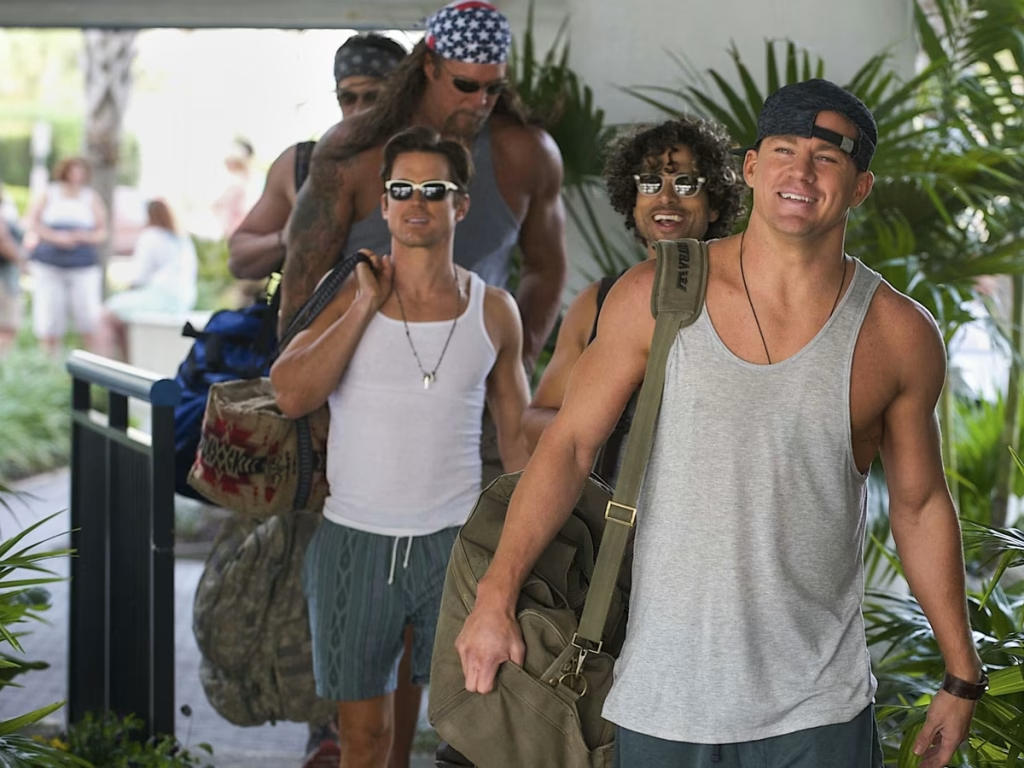
Magic Mike XXL sheds the drama-heavy tone of the first movie, turning the sequel into a vibrant celebration of friendship, dance, and self-expression. The focus shifts from cautionary tales to joy and camaraderie, giving the cast a chance to shine in a more relaxed, exuberant setting.

Image Source: Bing Image. License: All Creative Commons

Channing Tatum and the ensemble exude fun and energy, making every performance feel effortless and genuine. The film’s lighthearted tone and infectious optimism proved it could outshine the original by embracing fun without overthinking the story.

Image Source: Bing Image. License: All Creative Commons

12. Jackass Number Two

If the first Jackass movie was daring, the sequel is utterly fearless. The cast pushes stunts to new extremes, blending absurdity, danger, and comedic timing in ways only they could manage.

Image Source: Bing Image. License: All Creative Commons

From chaotic bull runs to outrageous set-pieces, Jackass Number Two amplifies the franchise’s signature recklessness. Its willingness to escalate every gag makes it not only a standout in the series but a landmark of audacious, boundary-pushing comedy sequels.

Image Source: Bing Image. License: All Creative Commons

11. Addams Family Values

Addams Family Values takes the original reboot and leans fully into dark humor, giving the eccentric clan sharper jokes and more memorable scenes. The characters feel richer, and the humor balances wit and absurdity flawlessly.

Image Source: Bing Image. License: All Creative Commons

Summer camp shenanigans, Uncle Fester’s ill-fated romance, and Wednesday and Pugsley’s mischievous adventures make the sequel more engaging than its predecessor. It’s widely regarded as one of the best dark comedies of the 1990s, showing that sequels can refine a franchise’s tone perfectly.

Image Source: Bing Image. License: All Creative Commons

10. Paddington 2

Paddington 2 is more than a family-friendly sequel; it’s a cinematic gem. The story of Paddington being wrongly imprisoned is touching, hilarious, and full of charm, elevating the stakes while keeping the whimsy alive.

Image Source: Bing Image. License: All Creative Commons

The cast, including British favorites, perfectly complements the bear’s warmth, and the film’s impeccable writing ensures it resonates with audiences of all ages. Critics and fans alike hail it as one of the rare sequels that surpass the original in every way.

Image Source: Bing Image. License: All Creative Commons

9. Rush Hour 2

Rush Hour 2 takes the buddy-cop formula to another level, expanding the action, humor, and chemistry between Jackie Chan and Chris Tucker. Exotic locations, bigger stunts, and clever dialogue make it feel fresh while staying true to the characters fans love.

Image Source: Bing Image. License: All Creative Commons

The sequel delivers laugh-out-loud moments alongside thrilling set pieces. It proves that a formulaic franchise can evolve, becoming funnier and more engaging than the film that started it all.

Image Source: Bing Image. License: All Creative Commons

8. Mad Max: Fury Road

Decades after the original films, Mad Max: Fury Road redefined the action genre. George Miller returned to the apocalyptic wasteland with breathtaking visuals, practical stunts, and a relentless pace that keeps audiences on edge from start to finish.

Image Source: Bing Image. License: All Creative Commons

Tom Hardy’s Max is compelling, but Charlize Theron’s Furiosa steals every scene, giving the film emotional weight alongside spectacle. Fury Road proves that sequels can honor legacy while raising the bar for an entire genre.

Image Source: Bing Image. License: All Creative Commons

7. Before Sunset

Nine years after Before Sunrise, Before Sunset finds Jesse and Céline reuniting in Paris, older, wiser, and grappling with the complexities of life. The film is less about romance and more about reflection, showing a deepening of character and emotional resonance.

Image Source: Bing Image. License: All Creative Commons

The dialogue sparkles with authenticity, and the chemistry is undeniable. Many consider it the strongest entry in the trilogy, a rare sequel that enriches rather than just continues the story.

Image Source: Bing Image. License: All Creative Commons

6. Terminator 2: Judgment Day

James Cameron’s Terminator 2 sets the standard for action sequels. Bigger stakes, groundbreaking effects, and an emotionally resonant story combine to make it a triumph of filmmaking.

Image Source: Bing Image. License: All Creative Commons

Linda Hamilton’s transformation into the battle-ready Sarah Connor and Arnold Schwarzenegger’s shift from villain to protector elevate the sequel above the original. T2 remains an iconic blockbuster that defines what a sequel can achieve.

Image Source: Bing Image. License: All Creative Commons

5. The Dark Knight

The Dark Knight is more than a superhero film; it’s a cultural touchstone. Building on Batman Begins, Nolan’s sequel delves deeper into moral complexity and chaotic tension.

Image Source: Bing Image. License: All Creative Commons

Heath Ledger’s Joker is legendary, and the story’s high stakes and relentless pacing ensure audiences are hooked. The Dark Knight didn’t just surpass its predecessor; it reshaped the entire superhero genre.

Image Source: Bing Image. License: All Creative Commons

4. Shrek 2

Shrek 2 expands the fairy tale universe with sharper humor, richer characters, and a perfectly executed story. From Puss in Boots to the Fairy Godmother, the sequel adds layers of fun and heart.

Image Source: Bing Image. License: All Creative Commons

The film’s pop culture references and witty writing made it a box office juggernaut. Shrek 2 demonstrates how animated sequels can deepen the story while delivering bigger laughs and broader appeal.

Image Source: Bing Image. License: All Creative Commons

3. Spider-Man 2

Spider-Man 2 combines thrilling action with emotional stakes, making Peter Parker’s struggle feel genuine and relatable. Alfred Molina’s Doc Ock brings nuance to the villain role, enhancing the story’s depth.

Image Source: Bing Image. License: All Creative Commons

The sequel refines Raimi’s approach, balancing heart, humor, and heroics flawlessly. It’s considered one of the greatest superhero films, showing how sequels can elevate both storytelling and character development.

Image Source: Bing Image. License: All Creative Commons

2. Top Gun: Maverick

Top Gun: Maverick surpasses the original nearly 40 years later, delivering breathtaking aerial stunts, updated storytelling, and iconic charisma. Tom Cruise proves his action chops are timeless, while the film’s nostalgia is balanced with fresh energy.

Image Source: Bing Image. License: All Creative Commons

Critics and audiences alike were enthralled, making it one of the most successful and beloved sequels in modern cinema. Maverick shows that even long-delayed follow-ups can exceed expectations.

Image Source: Bing Image. License: All Creative Commons

1. Toy Story 3

Toy Story 3 is a masterclass in sequel storytelling, balancing humor, adventure, and emotion. The film explores themes of growing up and letting go, resonating deeply with both children and adults.

Image Source: Bing Image. License: All Creative Commons

With impeccable animation, a flawless voice cast, and a heart-wrenching ending, Toy Story 3 doesn’t just continue the story; it elevates the entire franchise. It proves that the right sequel can become a classic in its own right.

Image Source: Bing Image. License: All Creative Commons

Sequels often live in the shadow of their originals, but when crafted with care, vision, and respect for characters, they can surpass expectations. From animated wonders to action spectacles, these 15 films remind us that the second or third installment can be a chance to innovate, deepen storytelling, and sometimes, outshine everything that came before.

15 Famous Faces Who Quit Hollywood and Found Unexpected New Paths

0
Image Source: Bing Image. License: All Creative Commons

Hollywood can be dazzling, but it can also be overwhelming—and for some actors, the spotlight simply isn’t worth the price. Many have stepped away from fame, pursuing quieter, more grounded careers that let them live life on their own terms. From former child stars to acclaimed award winners, these 15 individuals traded red carpets and movie sets for classrooms, offices, shops, and hands-on crafts. Here’s a look at where they are now and how they discovered fulfillment beyond Hollywood.

Image Source: Bing Image. License: All Creative Commons

15. Susan Olsen (Cindy Brady, The Brady Bunch) – Paste-Up Layout Artist

Susan Olsen will forever be remembered as Cindy, the youngest Brady daughter, complete with pigtails and her signature lisp. After The Brady Bunch, however, she chose not to linger in the nostalgia circuit. Instead, she pursued a more grounded creative path, working as a paste-up layout artist at a silkscreen T-shirt shop.

Image Source: Bing Image. License: All Creative Commons

For Olsen, this work was more than just a paycheck; it was a way to build a life separate from her iconic childhood role. She would occasionally explain her past to curious customers, but otherwise embraced normalcy. Olsen’s journey is a reminder that even the most recognizable faces sometimes crave ordinary work that allows them to grow beyond the spotlight.

Image Source: Bing Image. License: All Creative Commons

14. Mark Ibold (Sonic Youth) – Bartender

Mark Ibold rocked the stage with the legendary alternative band Sonic Youth, yet off-tour, he preferred a quieter life behind the bar at Great Jones Cafe in New York City. Patrons often had no clue they were being served by a rock star.

Image Source: Bing Image. License: All Creative Commons

When fans learned of his musical history, reactions ranged from amazement to delight. Ibold’s story shows that fame doesn’t always define your day-to-day life; sometimes, a simple, people-centered job is the perfect balance to a high-profile career.

Image Source: Bing Image. License: All Creative Commons

13. Ilan Mitchell-Smith (Weird Science) – Medieval Literature Professor

Ilan Mitchell-Smith captured hearts in Weird Science, but he eventually traded teen movies for academic pursuits. He became a professor of medieval literature, diving deep into the texts and history that had always fascinated him.

Image Source: Bing Image. License: All Creative Commons

Students were often surprised to learn their scholarly guide had once starred in a cult classic film. Mitchell-Smith embraced this second act wholeheartedly, proving that storytelling can thrive both on-screen and in the classroom.

Image Source: Bing Image. License: All Creative Commons

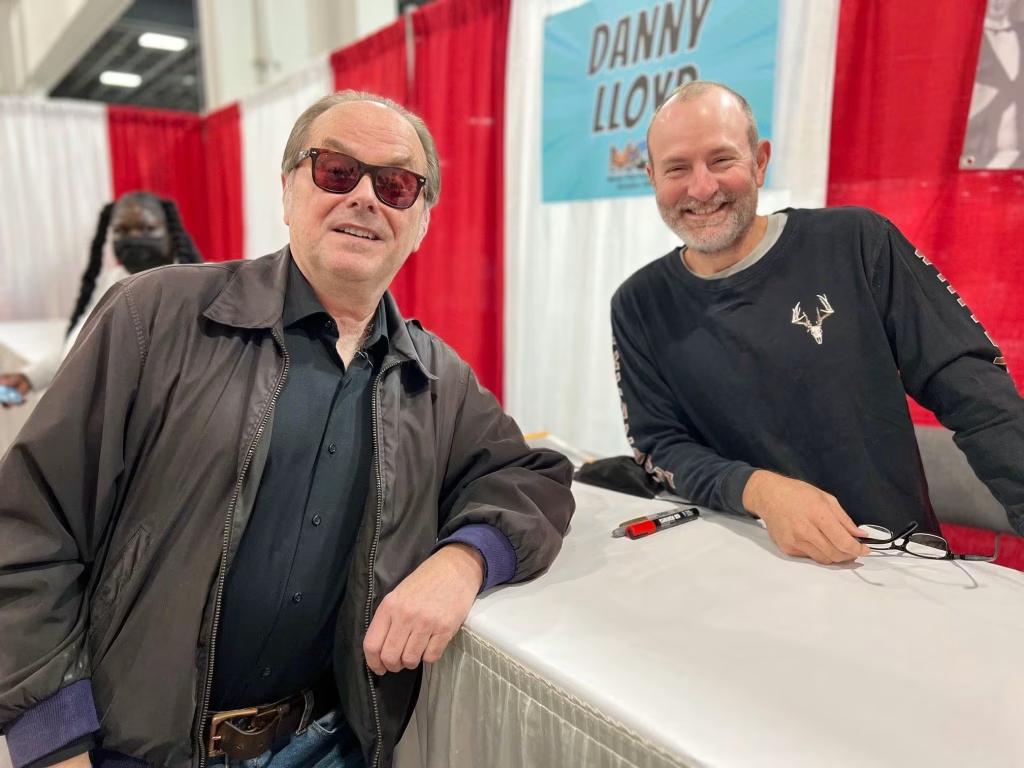
12. Danny Lloyd (The Shining) – Biology Professor

Danny Lloyd terrified audiences as the young psychic in The Shining, but he left acting behind entirely, eventually becoming a biology professor at a community college.

Image Source: Bing Image. License: All Creative Commons

Unlike many child stars, Lloyd preferred privacy over public nostalgia. Students respected his quiet demeanor and dedication to teaching, highlighting how stepping away from Hollywood can create space for meaningful, impactful work in everyday life.

Image Source: Bing Image. License: All Creative Commons

11. Lalaine Vergara-Paras (Lizzie McGuire) – Budtender

Lalaine Vergara-Paras, once Disney Channel’s Miranda, surprised fans when she started working as a budtender in North Hollywood. She greeted customers with warmth and humor, a far cry from her on-screen persona.

Image Source: Bing Image. License: All Creative Commons

Her transition illustrates that fame isn’t everything. By finding satisfaction in a grounded job, Vergara-Paras shows that authenticity and connection can be as rewarding as lights, camera, and action.

Image Source: Bing Image. License: All Creative Commons

10. Dylan Sprouse (The Suite Life of Zack & Cody) – Café Worker

Dylan Sprouse stepped away from Disney fame to work at Mud Cafe in New York City, enjoying life behind the counter and away from the media glare.

Image Source: Bing Image. License: All Creative Commons

This period gave him the chance to meet people from all walks of life and experience everyday work in a meaningful way. Sprouse demonstrates that even childhood stars benefit from a period of normalcy.

Image Source: Bing Image. License: All Creative Commons

9. Jade Cole (America’s Next Top Model) – Restaurant Host

Jade Cole, known for her sharp-edged persona on America’s Next Top Model, reinvented herself as a restaurant host in Los Angeles. Her warmth and humor surprised guests who remembered her TV persona.

Image Source: Bing Image. License: All Creative Commons

This reinvention proves reality TV fame doesn’t define you. Cole embraced her new career with grace, showing how personal growth and kindness can shine in unexpected spaces.

Image Source: Bing Image. License: All Creative Commons

8. Chris Gethard (Comedian/Actor) – Volunteer EMS

Comedian Chris Gethard is well-known for his eccentric humor, but he also dedicates much of his time as a volunteer EMS worker. His commitment to service runs parallel to his entertainment career.

Image Source: Bing Image. License: All Creative Commons

Gethard has spoken openly about the grounding effect of helping others. His dual life demonstrates that fame and community service can coexist, and that giving back can be as fulfilling as standing on a stage.

Image Source: Bing Image. License: All Creative Commons

7. Peter Weller (RoboCop) – Art History Professor

Peter Weller, forever remembered as RoboCop, now educates students as a professor of art history. In the classroom, he brings the same intensity and focus that fans loved on-screen.

Image Source: Bing Image. License: All Creative Commons

Weller’s approach allows students to satisfy curiosity about his acting career before diving fully into academics. His journey highlights the possibility of transformation, even from the most iconic roles.

Image Source: Bing Image. License: All Creative Commons

6. Jenette Goldstein (Aliens, Terminator 2) – Lingerie Store Owner

Known for her action-packed roles, Jenette Goldstein now empowers women as the owner of Jenette Bras, a lingerie store catering to plus-sized customers in Los Angeles.

Image Source: Bing Image. License: All Creative Commons

Goldstein’s transition underscores how purpose and passion can redefine success. She channels the same energy that made her a sci-fi icon into building a business that celebrates inclusivity.

Image Source: Bing Image. License: All Creative Commons

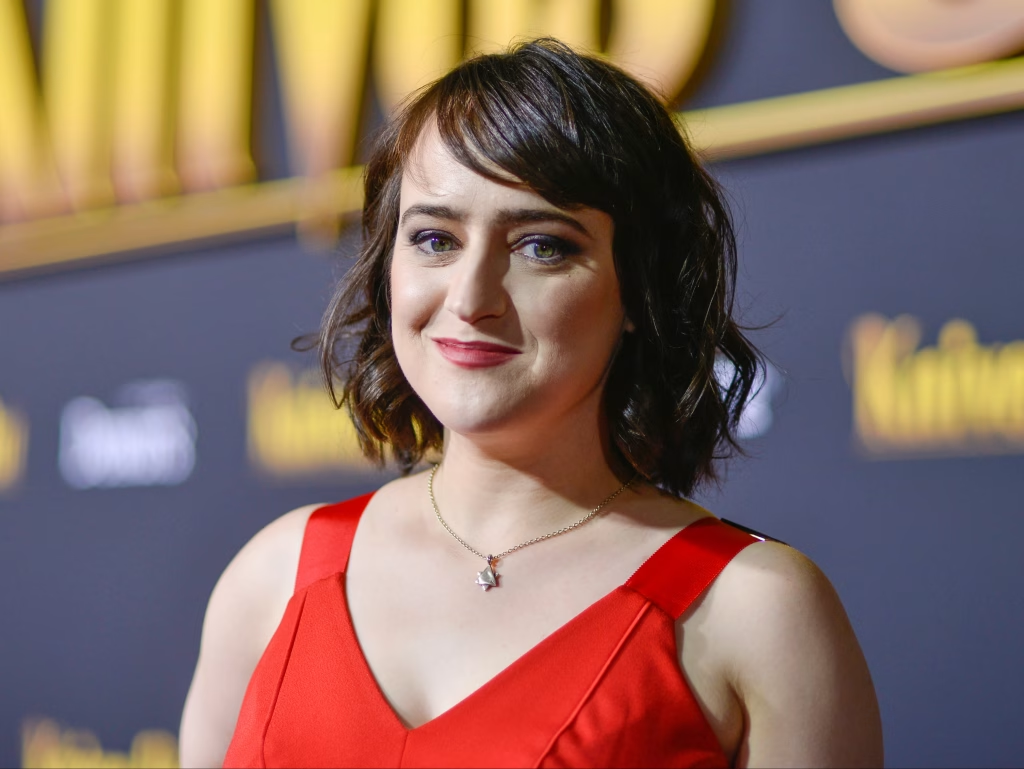
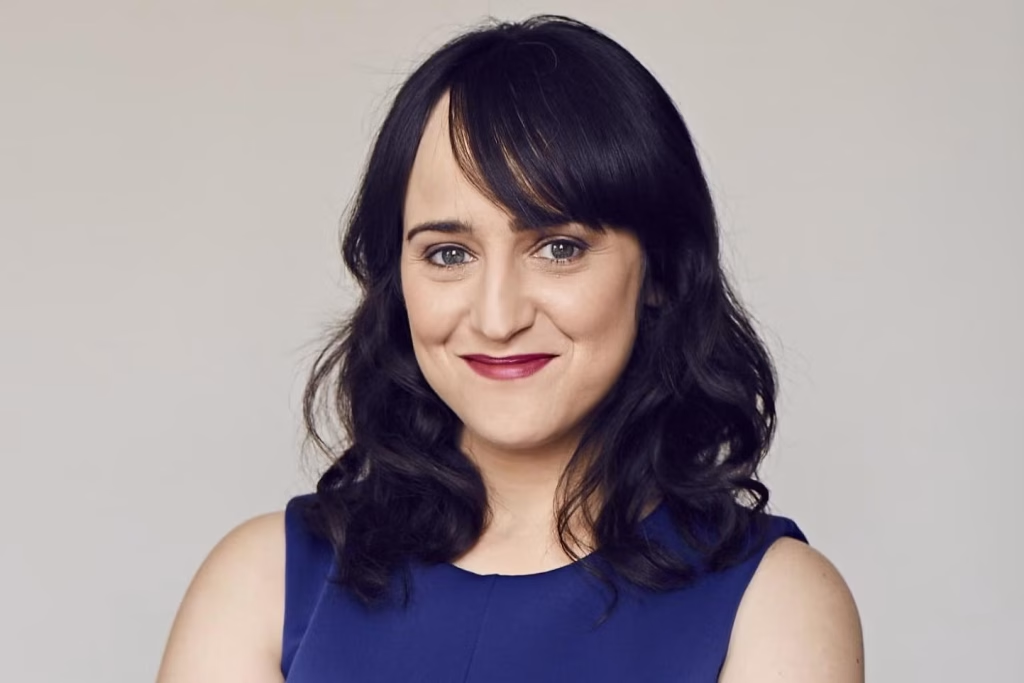
5. Mara Wilson (Matilda) – Writer and Playwright

Mara Wilson, the clever child star of Matilda, stepped away from acting to pursue writing and playwriting. Her works tackle fame, mental health, and identity, resonating with a new audience.

Image Source: Bing Image. License: All Creative Commons

By choosing the page over the stage, Wilson found creative freedom and privacy. Her career shift proves that storytelling is a lifelong craft, not confined to film or television.

Image Source: Bing Image. License: All Creative Commons

4. Frankie Muniz (Malcolm in the Middle) – Musician and Race Car Driver

Frankie Muniz took a detour from acting to explore his love of racing and music. The former sitcom star now drives professionally and plays drums in a reggae band.

Image Source: Bing Image. License: All Creative Commons

Muniz’s unconventional journey demonstrates that curiosity and passion can take you far beyond the scripted life of Hollywood, leading to adventures both literal and artistic.

Image Source: Bing Image. License: All Creative Commons

3. Kal Penn (Harold & Kumar) – White House Staffer/Professor

Kal Penn left comedy for public service, working in the Obama administration while also teaching at a university. He has applied his Hollywood-honed communication skills to politics and education.

Image Source: Bing Image. License: All Creative Commons

His story illustrates how entertainers can pivot to meaningful societal contributions, proving that influence isn’t limited to the screen.

Image Source: Bing Image. License: All Creative Commons

2. Daniel Day-Lewis – Shoemaker

Daniel Day-Lewis, one of Hollywood’s most acclaimed actors, retired from acting to focus on the art of shoemaking in Italy.

Image Source: Bing Image. License: All Creative Commons

For Day-Lewis, the craft offered mindfulness and a hands-on creative outlet. His choice shows that even the most decorated actors sometimes seek fulfillment outside the glitz and glamour of the industry.

Image Source: Bing Image. License: All Creative Commons

1. Gwyneth Paltrow – Goop Founder/Entrepreneur

Gwyneth Paltrow transitioned from Oscar-winning actress to founder of Goop, a wellness and lifestyle brand that has sparked worldwide attention.

Image Source: Bing Image. License: All Creative Commons

Paltrow’s career reinvention illustrates the power of entrepreneurship and the evolving nature of fame. By creating her own path, she’s demonstrated that personal vision can be as impactful as Hollywood stardom.

Image Source: Bing Image. License: All Creative Commons

Hollywood offers fame, but it doesn’t always guarantee happiness. These 15 stars prove that walking away from the spotlight can lead to fulfilling, grounded, and sometimes surprising careers. Whether it’s teaching, crafting, running a business, or volunteering, their paths show that life beyond Hollywood can be just as rich, if not richer, than life in front of the camera.

15 Movies That Were Either Underrated or Overhyped by the Oscars

0
Image Source: Bing Image. License: All Creative Commons

Film criticism can be a tricky terrain. At times, critics and audiences align perfectly; other times, they couldn’t be more different. Many films that were dismissed at release—either panned by critics or ignored at the box office—later gained devoted fanbases and lasting cultural influence. On the flip side, some films that were lauded with awards and praise have faded from favor over time. From overlooked cult classics to overhyped Oscar winners, here are 15 movies where initial opinions didn’t capture their true impact, and how history ultimately reshaped their reputations.

Image Source: Bing Image. License: All Creative Commons

15. Empire Records

When Empire Records debuted in 1995, critics largely dismissed it as a lightweight teen comedy, criticizing its chaotic plot and exaggerated characters. Rotten Tomatoes reflects that sentiment, with the film holding a mere 29% approval rating. On paper, it looked like another forgettable mid-90s release.

Image Source: Bing Image. License: All Creative Commons

Yet audiences discovered something different. The film’s quirky humor, memorable soundtrack, and charmingly chaotic portrayal of a single day in a record store struck a chord with young viewers. Fans embraced the offbeat energy, and over time, Empire Records became a beloved cult classic. Today, events like “Rex Manning Day” keep the film alive for new generations, proving that critical scorn doesn’t always match fan devotion.

Image Source: Bing Image. License: All Creative Commons

14. Gigi

Gigi, the 1958 musical, was once hailed as a masterpiece. Winning nine Oscars, including Best Picture, the film was praised for its lavish production, dazzling choreography, and catchy songs. For decades, it was considered a high point of Hollywood’s golden age of musicals.

Image Source: Bing Image. License: All Creative Commons

However, modern audiences and critics have revisited Gigi with a more critical eye. The story’s dated gender roles and romanticized depiction of a young girl being groomed for society have made it uncomfortable for contemporary viewers. Gigi’s journey from celebrated classic to a film with a controversial reputation shows how cultural shifts can completely alter perception.

Image Source: Bing Image. License: All Creative Commons

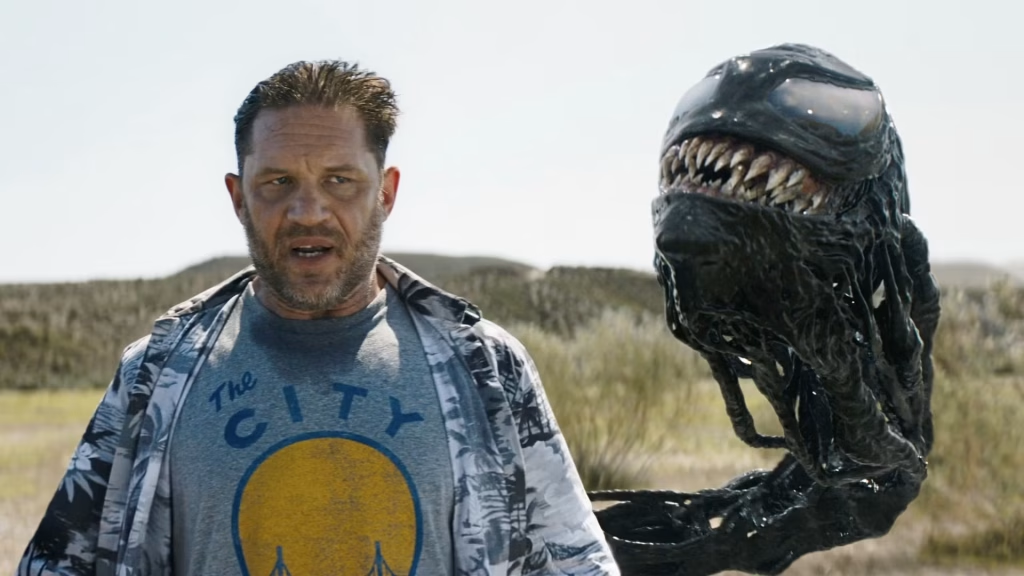
13. Venom

Venom opened to critical ridicule, earning just 30% on Rotten Tomatoes. Reviewers panned its uneven tone, strange narrative choices, and chaotic pacing. Many assumed it would be forgotten as another failed superhero experiment.

Image Source: Bing Image. License: All Creative Commons

Instead, Venom became a massive hit at the box office, grossing over $850 million worldwide. Audiences loved Tom Hardy’s unhinged performance and the film’s unapologetic embrace of comic-book weirdness. Its commercial success led to a sequel, and Venom has since cemented itself as a fan-favorite antihero. Sometimes, audience excitement outweighs critical opinion entirely.

Image Source: Bing Image. License: All Creative Commons

12. Wet Hot American Summer

Upon its release, Wet Hot American Summer baffled critics. Its absurdist humor, parody of summer camp clichés, and deliberately over-the-top performances earned a lukewarm 37% on Rotten Tomatoes. Many reviewers weren’t sure what to make of its strange tone.

Image Source: Bing Image. License: All Creative Commons

Over time, however, the film found a devoted following. Its satirical humor, ensemble cast, and willingness to go completely off the rails resonated with audiences. The movie inspired a prequel series on Netflix, cementing its place as a beloved cult comedy. Wet Hot American Summer proves that sometimes, being ahead of your time means critics miss the joke.

Image Source: Bing Image. License: All Creative Commons

11. Manhattan

Woody Allen’s Manhattan was lauded at release, with a 94% Rotten Tomatoes rating and praise for its cinematography, script, and wit. The film was widely regarded as one of Allen’s finest works and a sophisticated look at New York life and relationships.

Image Source: Bing Image. License: All Creative Commons

Yet, in the decades since, the film has become controversial. The story’s central relationship—between a middle-aged man and a teenage girl has sparked discussions about morality and consent. Manhattan’s case highlights how evolving societal norms can dramatically shift the way a classic film is perceived.

Image Source: Bing Image. License: All Creative Commons

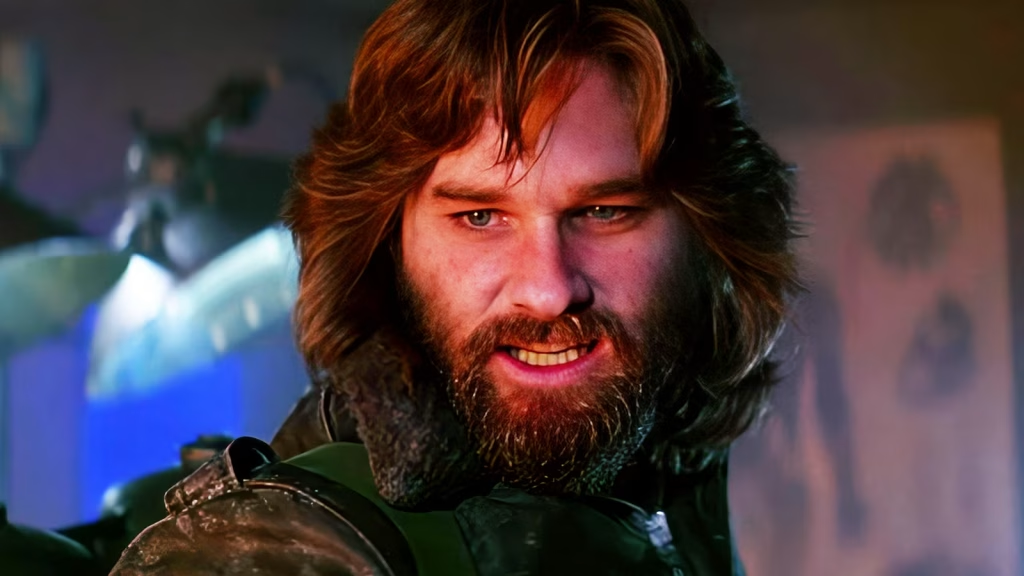
10. The Thing

John Carpenter’s The Thing was initially criticized for its extreme gore and bleak tone. In 1982, audiences were more drawn to lighter, friendlier sci-fi fare, and the film flopped at the box office despite a $15 million budget. Critics dismissed its nihilistic take on alien horror, overshadowed by hits like E.T.

Image Source: Bing Image. License: All Creative Commons

Yet The Thing has aged into a masterpiece of horror cinema. Its groundbreaking practical effects, nerve-wracking suspense, and ambiguous ending have earned it legendary status. Today, it’s studied, celebrated, and cited as an influence on countless horror and sci-fi projects, proving that initial criticism doesn’t always dictate legacy.

Image Source: Bing Image. License: All Creative Commons

9. Garden State

Garden State premiered to critical praise, with an 86% Rotten Tomatoes rating and accolades for its indie charm, emotional storytelling, and Zach Braff’s sensitive direction. At the time, it captured the hearts of a generation seeking quirky, heartfelt cinema.

Image Source: Bing Image. License: All Creative Commons

However, retrospective views have been less kind. Critics and audiences have pointed out the film’s twee sensibilities, clichéd tropes, and the problematic “manic pixie dream girl” characterization. Its legacy shows how generational perspectives can reshape how we view once-beloved films.

Image Source: Bing Image. License: All Creative Commons

8. Crash

Crash took home the Best Picture Oscar in 2006, earning 74% on Rotten Tomatoes and widespread critical acclaim for its interconnected tales of race, class, and tension in Los Angeles. Initially, it seemed like a socially significant and ambitious cinematic achievement.

Image Source: Bing Image. License: All Creative Commons

Over time, opinions shifted sharply. Many now view Crash as overly simplistic and heavy-handed, especially compared to its Oscar rival, Brokeback Mountain. The film’s decline in reputation is a reminder that even celebrated award-winners can become reassessed when the cultural lens changes.

Image Source: Bing Image. License: All Creative Commons

7. Hocus Pocus

The 1993 Halloween comedy Hocus Pocus received a chilly 39% on Rotten Tomatoes, with critics calling it silly and forgettable. Its campy humor didn’t initially resonate with mainstream reviewers.

Image Source: Bing Image. License: All Creative Commons

Despite this, audiences embraced its charm, Bette Midler’s larger-than-life performance, and the film’s seasonal fun. Hocus Pocus has since become a beloved Halloween tradition, proving that fan enthusiasm can keep a movie alive long after critics dismiss it.

Image Source: Bing Image. License: All Creative Commons

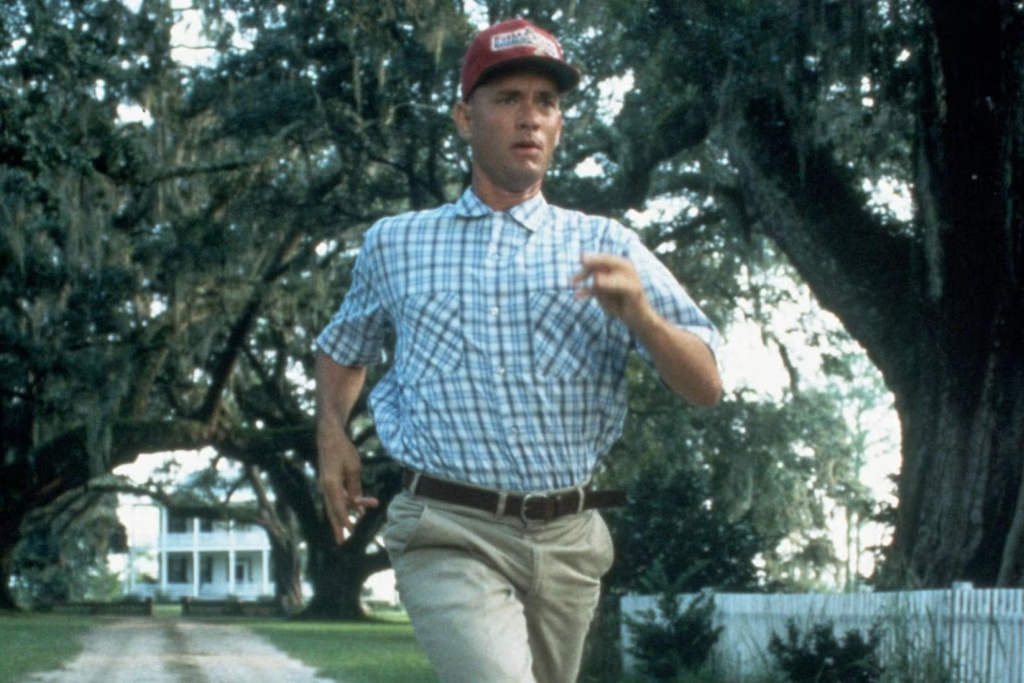
6. Forrest Gump

Forrest Gump was both a critical and commercial sensation, winning six Oscars and earning 71% on Rotten Tomatoes. Tom Hanks’ portrayal of the title character and the film’s heartfelt story made it an instant classic.

Image Source: Bing Image. License: All Creative Commons

Yet in recent years, Forrest Gump has faced scrutiny. Critics and viewers have questioned its simplistic historical lens and sentimental storytelling, arguing that it oversimplifies complex events. Its decline in critical regard shows that even the most adored films can become targets of reassessment.

Image Source: Bing Image. License: All Creative Commons

5. Love Actually

Love Actually divided critics at release, scoring 64% on Rotten Tomatoes. While some loved its ensemble storytelling and romantic charm, others found it cloying and overstuffed.

Image Source: Bing Image. License: All Creative Commons

Regardless, audiences quickly embraced it as a holiday staple. Its interconnected stories and ensemble cast continue to spark discussion and debate about which romantic arcs succeed and which falter. Love Actually proves that polarizing films can still win hearts over time.

Image Source: Bing Image. License: All Creative Commons

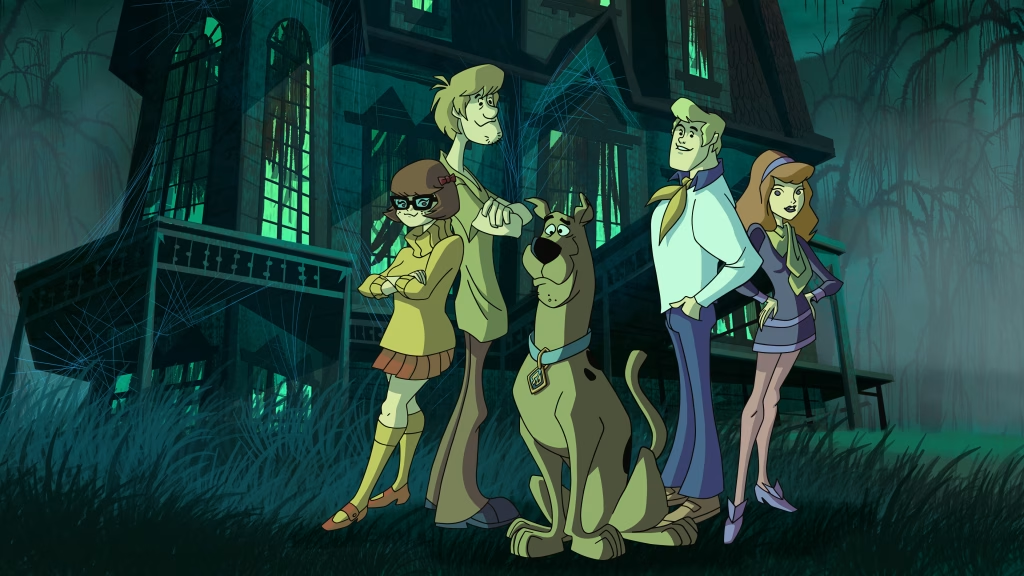
4. Scooby-Doo

Scooby-Doo, the live-action adaptation, received poor critical reception, earning only 32% on Rotten Tomatoes. Critics called its humor forced and its plot thin, largely ignoring its nostalgic appeal.

Image Source: Bing Image. License: All Creative Commons

For fans, however, Scooby-Doo delivered fun and familiarity. Its campy tone, playful performances, and homage to the beloved cartoon have made it a nostalgic hit, passed down to new generations. It’s a reminder that entertainment value can outshine critical opinion.

Image Source: Bing Image. License: All Creative Commons

3. American Beauty

American Beauty earned critical acclaim upon release, winning five Oscars and achieving an 87% Rotten Tomatoes score. It was praised for its commentary on suburban life, middle-class ennui, and existential dissatisfaction.

Image Source: Bing Image. License: All Creative Commons

However, its reception has cooled over time. Many now view its characters and themes as dated, and some see its social commentary as shallow. American Beauty highlights that even lauded films can face reassessment as cultural tastes evolve.

Image Source: Bing Image. License: All Creative Commons

2. Jennifer’s Body

Jennifer’s Body was initially dismissed by critics, scoring only 45% on Rotten Tomatoes. Many reviewers viewed it as a failed horror-comedy, unable to balance scares with dark humor.

Image Source: Bing Image. License: All Creative Commons

Years later, the film has been reclaimed as a feminist cult favorite. Its subversive take on gender dynamics and horror tropes, coupled with Megan Fox’s performance, has earned it a devoted following. Jennifer’s Body demonstrates that some movies need time before their brilliance is recognized.

Image Source: Bing Image. License: All Creative Commons

1. National Treasure

National Treasure was largely dismissed by critics, who criticized its implausible plot and adventurous antics, giving it only 46% on Rotten Tomatoes. Early reviews suggested it was a forgettable summer film.

Image Source: Bing Image. License: All Creative Commons

Audiences, however, embraced Nicolas Cage’s earnest charm, the puzzle-filled plot, and the family-friendly adventure. Its popularity led to a sequel and ongoing fan enthusiasm, proving that sometimes, fun and entertainment matter more than critical approval.

Image Source: Bing Image. License: All Creative Commons

These 15 films show just how unpredictable the relationship between critics and audiences can be. Some movies are ahead of their time, finding love and appreciation long after release, while others gradually fall out of favor despite early acclaim. Whether cult classics, misunderstood comedies, or Oscar-winning dramas, these films remind us that personal taste, cultural shifts, and enduring fandom often have the last word in shaping a movie’s legacy.

15 Paramount+ Originals and Classics You Should Be Watching in 2026

0
Image Source: Bing Image. License: All Creative Commons

Streaming platforms have evolved beyond simple entertainment—they’re now the go-to destination for everything from blockbuster hits to hidden gems. Paramount+ in early 2026 delivers a diverse mix of shows and movies, catering to every taste, from timeless classics to exciting originals and binge-worthy series. Whether you’re seeking nostalgia, pulse-pounding action, or heartfelt romance, this lineup has something for everyone. Here’s a look at 15 of the most popular and talked-about titles currently streaming on Paramount+.

Image Source: Bing Image. License: All Creative Commons

15. The Godfather Trilogy

The Godfather trilogy isn’t just a standout on Paramount+—it’s a pillar of cinematic history. Under Francis Ford Coppola’s masterful direction, Mario Puzo’s novel comes alive, tracing the Corleone family’s rise and fall with unmatched depth and style. Blending crime, loyalty, and tragedy, this saga has influenced generations of filmmakers and remains a touchstone of American cinema.

Image Source: Bing Image. License: All Creative Commons

The three films The Godfather, The Godfather Part II, and The Godfather Coda: The Death of Michael Corleone feature unforgettable performances from Al Pacino, Marlon Brando, Robert De Niro, and Diane Keaton. Together, they’ve earned nine Oscars and 28 nominations. Whether revisiting the saga or discovering it for the first time, Paramount+ makes it easy to experience this legendary story in full.

Image Source: Bing Image. License: All Creative Commons

14. Old Guy

Old Guy delivers pulse-pounding action with Christoph Waltz as Danny Dolinski, an aging hitman forced to mentor a young protégé played by Cooper Hoffman. Together, they navigate a deadly web of betrayal, aided by Danny’s friend Anata, played by Lucy Liu, as they take on dangerous foes.

Image Source: Bing Image. License: All Creative Commons

Simon West’s direction blends old-school action with modern sensibilities, infusing humor, tension, and just enough heart to elevate the story. With a strong supporting cast including Ryan McParland and Ann Akinjirin, Old Guy is a thrilling ride that balances nostalgia and innovation for fans of smart action cinema.

Image Source: Bing Image. License: All Creative Commons

13. Dreaming Whilst Black Season 2

Season two of Dreaming Whilst Black picks up with Kwabena, a determined Black British filmmaker, as he tackles a radical historical drama while confronting the compromises of the entertainment industry. Adjani Salmon returns as the creator and star, continuing a story full of ambition, humor, and social commentary.

Image Source: Bing Image. License: All Creative Commons

The show explores the tension between artistic integrity and industry expectations, highlighting systemic barriers while maintaining sharp wit. Supporting cast members Dani Moseley, Demmy Ladipo, and Rachel Adedeji bring nuance and authenticity, making this series a standout in contemporary British television.

Image Source: Bing Image. License: All Creative Commons

12. School Spirits Season 3

School Spirits returns for a chilling third season with Peyton List reprising her role as Maddie Nears, navigating the challenges of returning to the land of the living while dealing with ghostly responsibilities. Season three deepens the supernatural drama, adding twists that raise the stakes for both the living and the dead.

Image Source: Bing Image. License: All Creative Commons

Kristian Ventura, Jennifer Tilly, Ari Dalbert, and Erika Swayze enrich the ensemble, creating a mix of suspense, humor, and teen drama. The series’s unique blend of mystery and supernatural elements has cemented it as a fan favorite, making each new episode an event to look forward to.

Image Source: Bing Image. License: All Creative Commons

11. Star Trek: Starfleet Academy

Set in the 32nd century, Star Trek: Starfleet Academy introduces a new generation of cadets training to become the Federation’s future leaders. Relationships, rivalries, and personal growth are explored against the backdrop of a galaxy recovering from the catastrophic Burn.

Image Source: Bing Image. License: All Creative Commons

Holly Hunter stars as the Academy’s Chancellor, alongside a diverse cast including Sandro Rosta, Karim Diané, Kerrice Brooks, George Hawkins, and Bella Shepard. With appearances by Oded Fehr, Mary Wiseman, Gina Yashere, and Paul Giamatti, the series expands the Star Trek universe, offering fresh stories while honoring the franchise’s legacy.

Image Source: Bing Image. License: All Creative Commons

10. Survivor 50

Paramount+ celebrates the landmark 50th season of Survivor, featuring a mix of returning favorites and fan-favorite legends. Hosted by Jeff Probst, the season promises epic alliances, shocking blindsides, and strategic gameplay that keeps fans glued to the screen.

Image Source: Bing Image. License: All Creative Commons

With a three-hour premiere and weekly episodes, the season honors the show’s history while introducing a new generation to the drama. Streaming past seasons and curated moments adds context, reminding viewers why Survivor remains a cultural touchstone decades into its run.

Image Source: Bing Image. License: All Creative Commons

9. CIA (CBS Original Series)

CIA brings a high-stakes spin to espionage storytelling, following FBI agent Bill Goodman (Nick Gehlfuss) and CIA operative Colin Glass (Tom Ellis) as they tackle global threats and unravel intricate conspiracies. The series emphasizes the moral ambiguity of intelligence work in a turbulent world.

Image Source: Bing Image. License: All Creative Commons

Necar Zadegan and Natalee Linez round out a talented cast, delivering performances that balance suspense with character depth. With fast-paced plots and complex storylines, CIA adds a fresh and compelling angle to Paramount+’s growing lineup of procedural dramas.

Image Source: Bing Image. License: All Creative Commons

8. Can You Keep a Secret?

This British comedy series delivers laughs and chaos as Debbie Fendon (Dawn French) fakes her husband’s death for insurance, forcing her family into a web of deception. William (Mark Heap) hides in the loft while Harold (Craig Roberts) and his wife, Neha (Mandip Gill), scramble to manage the fallout.

Image Source: Bing Image. License: All Creative Commons

Across six sharp and witty episodes, the series blends family hijinks with clever twists. French’s performance anchors the show, giving it charm and heart that elevate it beyond a standard comedy, making it a must-watch for fans of clever, character-driven humor.

Image Source: Bing Image. License: All Creative Commons

7. Coldwater

Coldwater follows John (Andrew Lincoln), a stay-at-home dad who moves his family to rural Scotland after a personal crisis, only to uncover unsettling secrets about his new neighbor Tommy (Ewan Bremner). The tension grows as trust and motives are questioned.

Image Source: Bing Image. License: All Creative Commons

With Indira Varma and Eve Myles contributing layered performances, the series delves into themes of identity, isolation, and the darkness lurking beneath the surface of small-town life. Coldwater’s psychological depth makes it a gripping choice for fans of suspenseful drama.

Image Source: Bing Image. License: All Creative Commons

6. Handsome Devil: Charming Killer

This true crime docuseries explores the story of Wade Wilson, whose mugshot went viral, earning him the nickname “Deadpool Killer.” The series examines society’s fascination with notorious figures and the consequences of digital fame.

Image Source: Bing Image. License: All Creative Commons

Through interviews, bodycam footage, and firsthand accounts, the series provides a chilling look at celebrity culture intersecting with criminal behavior. It’s a compelling watch for anyone drawn to the dark corners of viral notoriety and human psychology.

Image Source: Bing Image. License: All Creative Commons

5. Wild Boys: Strangers in Town

Wild Boys: Strangers in Town chronicles two brothers who emerge from the forests of British Columbia after living off the grid, sparking a media frenzy and public curiosity. The docuseries investigates the limits of belief, identity, and storytelling.

Image Source: Bing Image. License: All Creative Commons

With its exploration of human nature and community reaction, the two-part series captures intrigue and mystery at every turn. It’s perfect for fans of real-life enigmas and thought-provoking documentary storytelling.

Image Source: Bing Image. License: All Creative Commons

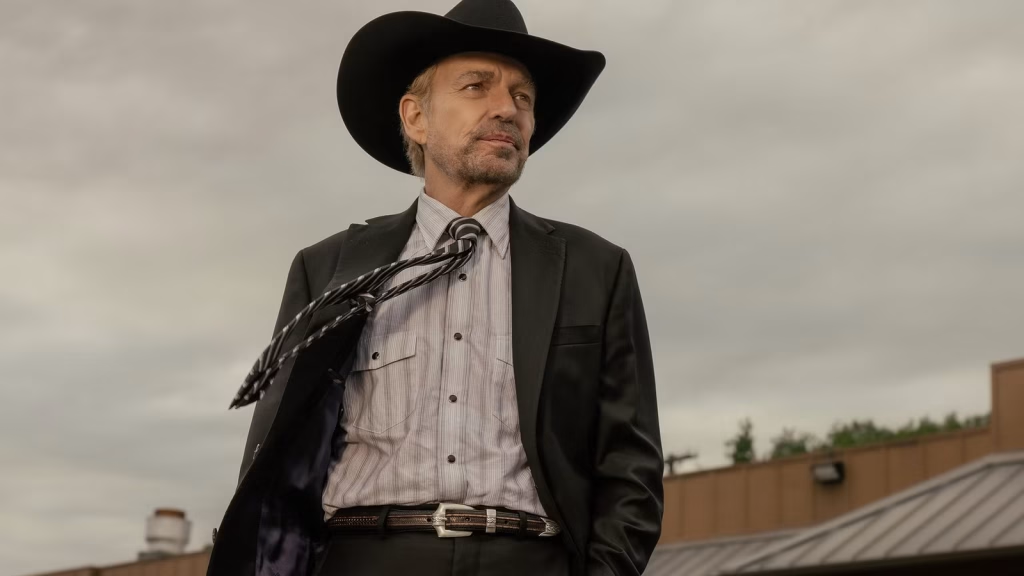
4. Landman Season 2

The second season of Landman returns viewers to West Texas’s cutthroat oil world. Billy Bob Thornton reprises his role as Tommy Norris, navigating power struggles and personal betrayal while secrets and danger escalate around him.

Image Source: Bing Image. License: All Creative Commons

Joining Thornton are Demi Moore, Andy Garcia, Ali Larter, and Sam Elliott, creating a layered and intense ensemble. The series continues to be praised for its gripping storytelling, making it one of Paramount+’s standout dramatic offerings.

Image Source: Bing Image. License: All Creative Commons

3. Canada Shore

Canada Shore takes the global Shore phenomenon to British Columbia, following ten singles living together as they navigate romance, friendship, and chaos. The show balances outrageous fun with heartfelt moments, keeping viewers invested.

Image Source: Bing Image. License: All Creative Commons

Weekly episodes showcase the cast’s charisma and the unpredictability of communal living. With its Canadian twist, the series offers a fresh take on the beloved reality formula while staying true to the drama and excitement fans expect.

Image Source: Bing Image. License: All Creative Commons

2. Black Voices Collection

In honor of Black History Month, Paramount+’s Black Voices Collection highlights films and series created by and starring Black artists. From Queen & Slim to Us, Dreamgirls to Marshall, the curated lineup celebrates Black talent and stories that resonate across genres.

Image Source: Bing Image. License: All Creative Commons

The collection is perfect for both new viewers and longtime fans, offering biopics, musicals, romance, and socially relevant narratives. Paramount+ makes it easy to explore a wide range of powerful stories that champion representation and history.

Image Source: Bing Image. License: All Creative Commons

1. Peak Romance Collection

With Valentine’s Day approaching, the Peak Romance Collection offers a treasure trove of love stories, from classics like Roman Holiday and Breakfast at Tiffany’s to teen favorites like Grease and Pretty in Pink. The collection spans first loves, mature romance, and epic heartbreaks.

Image Source: Bing Image. License: All Creative Commons

Titles such as Titanic, Runaway Bride, and Bridget Jones’s Diary ensure there’s something for every romantic mood. This curated selection makes Paramount+ the ultimate streaming destination for anyone ready to celebrate love in all its forms.

Image Source: Bing Image. License: All Creative Commons

Paramount+’s early 2026 lineup proves that streaming can offer both nostalgia and fresh discoveries. From blockbuster sagas and iconic classics to original dramas, thrillers, and comedies, there’s something for everyone to enjoy. Whether you’re catching up on fan favorites or diving into new stories, these 15 picks showcase the variety, creativity, and excitement Paramount+ has to offer.

15 Hollywood Comebacks That Proved Blacklisting Couldn’t Keep Stars Down

0
Image Source: Bing Image. License: All Creative Commons

The Hollywood blacklist represents one of the darkest chapters in the industry’s history. During the Red Scare, countless careers were destroyed—not necessarily for any wrongdoing, but because of suspected affiliations or refusal to cooperate with authorities. Actors, writers, directors, and musicians suddenly found themselves blacklisted, facing prison, financial hardship, or the need to compromise just to survive. Yet many of these individuals rose above the persecution, leaving legacies that outshone the very era that tried to silence them. Here are 15 Hollywood legends who were blacklisted and the remarkable ways they fought back.

Image Source: Bing Image. License: All Creative Commons

15. Lee Grant

Lee Grant’s career was in ascension when it suddenly halted. After being nominated for an Oscar for her first film, she was blacklisted during the Red Scare because of her husband’s reputation as a Communist. When called to testify in front of HUAC, Grant refused to reveal any names, knowing it would damage her career.

Image Source: Bing Image. License: All Creative Commons

For over a decade, Grant was unable to work in film and television, but she did not fade away; instead, she concentrated on the stage and eventually returned to film with a vengeance. Grant would go on to win an Oscar and become a pioneering female director, demonstrating that integrity and determination can conquer even the most adversity-filled situations.

Image Source: Bing Image. License: All Creative Commons

14. Lloyd Bridges

Lloyd Bridges, a familiar figure in films such as Sea Hunt and Airplane!, who was loved for his roles in those films, hit a roadblock in his career in the 1950s. Merely confessing that he had been a part of a group that had Communist ties was enough to stop his work for a time.

Image Source: Bing Image. License: All Creative Commons

Although he was ultimately cleared to return to work, his situation is indicative of just how much fear gripped America as a whole. Even minor connections were enough to cause alarm, as evidenced by how easily a man’s reputation could be tarnished.

Image Source: Bing Image. License: All Creative Commons

13. Dashiell Hammett

The legendary crime writer behind The Maltese Falcon, Dashiell Hammett, was openly affiliated with the Communist Party. When questioned, he invoked the Fifth Amendment and refused to answer inquiries about his political ties.

Image Source: Bing Image. License: All Creative Commons

His refusal led to a contempt charge and time in prison. Beyond that, the blacklist severely limited his ability to work in Hollywood and publish freely. Hammett’s ordeal shows how writers, not just performers, were targeted when their ideas were deemed threatening.

Image Source: Bing Image. License: All Creative Commons

12. Artie Shaw

Clarinet virtuoso and bandleader Artie Shaw attended Communist meetings, later claiming his interest was rooted in social justice rather than party loyalty. That distinction mattered little in the charged atmosphere of the time.

Image Source: Bing Image. License: All Creative Commons

His career suffered as suspicion followed him. The damage extended beyond lost opportunities; it cast doubt over his public image. Shaw’s experience underscores how even curiosity or peripheral involvement could trigger long-lasting consequences.

Image Source: Bing Image. License: All Creative Commons

11. Uta Hagen

Acclaimed stage actress Uta Hagen became entangled in the blacklist largely because of her association with Paul Robeson. Though she was not a major film star, the shadow of suspicion narrowed her opportunities in television and cinema.

Image Source: Bing Image. License: All Creative Commons

Hagen turned her focus to theater and teaching, where she built a formidable legacy as an acting instructor. While Hollywood doors closed, she reshaped the craft from the stage, proving that artistic influence can survive institutional rejection.

Image Source: Bing Image. License: All Creative Commons

10. Judy Holliday

Oscar-winning actress Judy Holliday, celebrated for Born Yesterday, found herself blacklisted from radio and television at the height of her fame. Her comedic brilliance was suddenly overshadowed by political suspicion.

Image Source: Bing Image. License: All Creative Commons

Though she continued performing on Broadway, her screen career never fully regained its earlier momentum. Holliday’s story reflects how abruptly the blacklist could halt even the brightest rising stars.

Image Source: Bing Image. License: All Creative Commons

9. Burl Ives

Folk singer and actor Burl Ives was scrutinized for his involvement in labor organizations. He denied Communist affiliation and ultimately cooperated with HUAC, which helped him return to mainstream work.

Image Source: Bing Image. License: All Creative Commons

However, that cooperation strained relationships within the folk community. Some peers saw his testimony as betrayal. Ives’ story reveals the impossible moral choices many artists faced—protect your livelihood, or protect your community.

Image Source: Bing Image. License: All Creative Commons

8. John Garfield

John Garfield, known for intense performances in films such as The Postman Always Rings Twice, refused to name names when questioned by HUAC. His stance effectively ended his film career.

Image Source: Bing Image. License: All Creative Commons

The stress of the ordeal weighed heavily on him, and he died young, his health reportedly affected by the strain. Garfield’s experience stands as one of the era’s most tragic examples of personal and professional devastation.

Image Source: Bing Image. License: All Creative Commons

7. Dorothy Parker

Writer and critic Dorothy Parker, famed for her razor-sharp wit, was monitored by the FBI for years. Her activism and contributions to left-leaning publications drew government attention.

Image Source: Bing Image. License: All Creative Commons

The scrutiny limited her Hollywood opportunities and cast a shadow over her later career. Parker’s case demonstrates that the blacklist extended beyond actors—it targeted thinkers and writers whose words challenged authority.

Image Source: Bing Image. License: All Creative Commons

6. Leonard Bernstein

Composer and conductor Leonard Bernstein was never formally blacklisted, but suspicions about his political sympathies placed him under scrutiny. In an atmosphere of paranoia, even indirect associations could threaten a career.

Image Source: Bing Image. License: All Creative Commons

Despite this, Bernstein continued composing, conducting, and teaching, becoming one of America’s most influential musical figures. His resilience highlights how some artists managed to thrive despite the climate of fear.

Image Source: Bing Image. License: All Creative Commons

5. Gypsy Rose Lee

Burlesque icon Gypsy Rose Lee attended meetings connected to leftist causes, which brought her to HUAC’s attention. Even limited involvement could lead to professional consequences.

Image Source: Bing Image. License: All Creative Commons

Her work in film and television slowed, though she remained a cultural presence. Lee’s story illustrates how widely the net was cast during the Red Scare, ensnaring performers from every corner of show business.

Image Source: Bing Image. License: All Creative Commons

4. Pete Seeger

Folk legend Pete Seeger openly acknowledged his Communist ties but refused to implicate others. His refusal led to a contempt conviction, later overturned, and years of limited mainstream exposure.

Image Source: Bing Image. License: All Creative Commons

Though barred from major media platforms, Seeger continued performing at grassroots events and remained a powerful voice for social change. His music endured, carried by communities rather than corporations.

Image Source: Bing Image. License: All Creative Commons

3. Arthur Miller

Playwright Arthur Miller refused to name suspected Communists when summoned before HUAC. His resistance mirrored the themes of conscience and moral courage in his plays.

Image Source: Bing Image. License: All Creative Commons

Though blacklisted, Miller continued writing, producing works that directly addressed hysteria and injustice. His art became a form of protest, cementing his place as a towering figure in American literature.

Image Source: Bing Image. License: All Creative Commons

2. Langston Hughes

Poet Langston Hughes was linked to Communist-affiliated groups, and his work occasionally appeared in leftist publications. This association brought scrutiny during the Red Scare.

Image Source: Bing Image. License: All Creative Commons

Despite pressure, Hughes continued exploring themes of racial inequality, hope, and resilience in his writing. His voice endured, transcending the political moment that sought to limit it.

Image Source: Bing Image. License: All Creative Commons

1. Lena Horne

Singer and actress Lena Horne was labeled a Communist sympathizer due to her civil rights activism and connection to Paul Robeson. The blacklist curtailed her film and television opportunities for years.

Image Source: Bing Image. License: All Creative Commons

Yet Horne refused to retreat. She continued performing and speaking out, becoming a symbol of both artistic excellence and social justice. Her career reflects courage under pressure—and a refusal to let fear define her legacy.

Image Source: Bing Image. License: All Creative Commons

The Hollywood blacklist left deep scars on the entertainment industry. Careers were interrupted, friendships fractured, and lives altered by suspicion and political panic. But history has a long memory, and it tends to remember courage.

Image Source: Bing Image. License: All Creative Commons

These artists remind us that creative voices cannot be permanently silenced. Whether through quiet endurance or open defiance, they fought back in the ways they could. Their stories endure not only as warnings about fear-driven persecution but as testaments to resilience in the face of it.

16 Performances Actors Would Love to Erase from Their Filmography

0
Image Source: Bing Image. License: All Creative Commons

Hollywood has given audiences countless memorable performances, but not every role works out as intended—for actors or viewers. Miscasting, cultural insensitivity, or poorly executed scripts can turn a promising role into a source of regret. Over the years, many actors have reflected on their careers and wished they could undo certain choices. The experiences of these 16 performers serve as a reminder of the importance of thoughtful casting, accountability, and awareness in filmmaking.

Image Source: Bing Image. License: All Creative Commons

16. Halle Berry – Considering a Trans Man Role

Actress Halle Berry faced backlash when reports emerged that she would portray a trans man in an upcoming film. Many in the trans community and their allies argued that the role should go to a trans actor. In response, Berry stepped away from the project and issued an apology.

Image Source: Bing Image. License: All Creative Commons

The actress understands the significance of the representation and the fact that she should not have been in the film. Halle Berry’s move is a highlight in the long discussion in Hollywood about who gets to represent the stories of marginalized communities.

Image Source: Bing Image. License: All Creative Commons

15. Ed Skrein – Hellboy Whitewashing Controversy

The actor, Ed Skrein, was originally set to play the role of Major Ben Daimio in the Hellboy reboot, a character who is Japanese American in the comics. However, the casting of the actor in the role was criticized for whitewashing, and the actor himself has since decided to step down from the role, saying that the role should be played by an actor of the character’s heritage.

Image Source: Bing Image. License: All Creative Commons

The decision by the actor to step down from the role has been praised, and it is an important case of an actor being aware of the power he has and the importance of using it for the greater good. The controversy has also brought to the forefront the whitewashing problem that Hollywood is facing.

Image Source: Bing Image. License: All Creative Commons

14. Jimmy Kimmel – Blackface Sketches

Jimmy Kimmel’s past comedy sketches included blackface, which resurfaced and drew significant backlash. Kimmel publicly apologized, acknowledging that the performances were offensive and inappropriate.

Image Source: Bing Image. License: All Creative Commons

The incident reignited discussions about the legacy of blackface in American comedy. His apology was part of a broader reckoning in entertainment, highlighting the responsibility of comedians to avoid perpetuating harmful stereotypes.

Image Source: Bing Image. License: All Creative Commons

13. Julianne Moore – Playing a Lesbian in The Kids Are All Right

Julianne Moore starred as a lesbian mother in The Kids Are All Right, a performance that earned critical acclaim. However, she later expressed uncertainty about taking similar roles in the future, reflecting on the importance of LGBTQ actors portraying LGBTQ characters.

Image Source: Bing Image. License: All Creative Commons

Her comments demonstrate Hollywood’s growing awareness of authentic representation. The conversation around this continues, balancing the opportunity for talented actors with the need for lived experience in storytelling.

Image Source: Bing Image. License: All Creative Commons

12. Alison Brie – Voicing Diane Nguyen in BoJack Horseman

Alison Brie voiced Diane Nguyen, a Vietnamese American character, on BoJack Horseman. Years later, she admitted regret, recognizing that the role should have been cast with an actor of Vietnamese descent.

Image Source: Bing Image. License: All Creative Commons

Her acknowledgment came amid a wider push in the animation industry for authentic representation. Brie’s reflection emphasizes that inclusion matters not just on screen but behind the microphone as well.

Image Source: Bing Image. License: All Creative Commons

11. Kristen Bell – Voicing Molly in Central Park

Kristen Bell originally voiced Molly, a biracial character in Central Park. Following criticism, she stepped down, stating that the character should be voiced by someone who shares her racial background.

Image Source: Bing Image. License: All Creative Commons

The role was recast with Emmy Raver-Lampman, a Black actress, and the move was widely praised. Bell’s decision reflected the growing expectation that characters of color should be voiced by actors of color, promoting both authenticity and equity.

Image Source: Bing Image. License: All Creative Commons

10. Jenny Slate – Voicing Missy in Big Mouth

Jenny Slate was initially the voice of Missy, a biracial character. Over time, however, Jenny Slate realized that her involvement in the show was part of the problem of a lack of authentic Black voices in animation. This was a positive step towards a better approach to storytelling.

Image Source: Bing Image. License: All Creative Commons

The character was recast with Ayo Edebiri after Jenny Slate stepped down. The decision was well-received as a step in the right direction. Jenny Slate’s decision was a good example of actors recognizing their mistakes and helping to create a better and more thoughtful approach.

Image Source: Bing Image. License: All Creative Commons

9. Anne Hathaway – The Witches and Disability Representation

Anne Hathaway starred as the Grand High Witch in the 2020 adaptation of The Witches. Critics argued that the character’s physical differences reinforced negative stereotypes about limb differences.

Image Source: Bing Image. License: All Creative Commons

Hathaway issued a public apology, expressing regret and committing to do better in the future. The controversy sparked broader discussions about disability representation in Hollywood and the need for more thoughtful portrayals.

Image Source: Bing Image. License: All Creative Commons

8. Hank Azaria – Voicing Apu on The Simpsons

Hank Azaria voiced Apu Nahasapeemapetilon for decades, but the character became controversial for perpetuating South Asian stereotypes. Azaria eventually stepped down and apologized publicly for his portrayal.

Image Source: Bing Image. License: All Creative Commons

He recognized that his performance contributed to harmful representation, prompting The Simpsons to commit to casting actors of color for characters of color. The Apu controversy remains a key moment in conversations about diversity and inclusion in animation.

Image Source: Bing Image. License: All Creative Commons

7. Jimmy Fallon – Blackface on SNL

Jimmy Fallon was accused of a sketch aired on SNL, in which he played Chris Rock in blackface. The video was shared again after several years and caused a lot of controversy and discussion about racial sensitivity in comedy.

Image Source: Bing Image. License: All Creative Commons

Jimmy Fallon apologized for his actions in a public statement and admitted that his actions were wrong and offensive. The controversy caused a lot of discussion in the industry about content created using racial stereotypes.

Image Source: Bing Image. License: All Creative Commons

6. Rooney Mara – Playing Tiger Lily in Pan

The movie Pan starred Rooney Mara as Tiger Lily, but this did not sit well with many people, especially considering the whitewashing of the Native American role. Rooney Mara played Tiger Lily, but many people felt that an Indigenous person should have played the part.

Image Source: Bing Image. License: All Creative Commons

However, Rooney Mara admitted that an Indigenous person should have played the part, indicating that many people were right in their criticism of the movie. It is important to note that Rooney Mara’s statement served as an important reminder of the need for authenticity in movie production.

Image Source: Bing Image. License: All Creative Commons

5. Zoe Saldana – Portraying Nina Simone

Zoe Saldana received criticism for her portrayal of Nina Simone in the biopic. She was criticized for her use of dark makeup to portray the singer. It was argued that an actress of dark complexion should have played the role of Nina Simone.

Image Source: Bing Image. License: All Creative Commons

Zoe Saldana had apologized for her role in the movie, saying that she should never have taken up the role. She had said that she had apologized to the family of Nina Simone for playing the role of the singer.

Image Source: Bing Image. License: All Creative Commons

4. Scarlett Johansson – Trans Role in Rub and Tug

Actress Scarlett Johansson was initially given the part of playing a trans man in the upcoming film Rub and Tug. This caused an immediate backlash because many people felt that the part should be played by a trans actor.

Image Source: Bing Image. License: All Creative Commons

In an attempt to rectify the problem and calm the backlash, Johansson announced that she was withdrawing from the part. This was a turning point in Hollywood and helped shape the way in which they handle similar roles in the future.

Image Source: Bing Image. License: All Creative Commons

3. Jake Gyllenhaal – Prince of Persia Whitewashing

Jake Gyllenhaal was also given the role of the Persian hero in the film Prince of Persia: The Sands of Time. However, the film received a lot of criticism on the basis of whitewashing. Many felt that the role should have been played by an actor of Middle Eastern descent to respect the character’s culture.

Image Source: Bing Image. License: All Creative Commons

However, Gyllenhaal would go on to admit that he should not have taken the role, citing the importance of cultural representation in film casting. The film has since been used to illustrate the whitewashing issues that Hollywood continues to grapple with in its productions.

Image Source: Bing Image. License: All Creative Commons

2. Gwyneth Paltrow – Fat Suit in Shallow Hal

Gwyneth Paltrow wore a fat suit during her role in Shallow Hal, which is now criticized for fat-shaming and body image insensitivity. The body image and comedy of the movie do not stand the test of time, encouraging discussions about body image and comedy.

Image Source: Bing Image. License: All Creative Commons

Paltrow confessed that she was embarrassed by her role, which she now regrets. It is evident that body image and body diversity values of Hollywood have come a long way, encouraging sensitivity.

Image Source: Bing Image. License: All Creative Commons

1. Emma Stone – Playing Allison Ng in Aloha

Emma Stone was given the role of Allison Ng, a character who was half Asian and half Hawaiian, in the movie Aloha. This decision was met with instant backlash since Stone did not identify with the character’s ethnicity, leading to an important discussion on race in Hollywood.

Image Source: Bing Image. License: All Creative Commons

Emma Stone has since apologized for taking up the role, stating that she should not have done that and that she has learned a lot from the backlash. This situation has led to an important discussion on the need for accurate representation in Hollywood, especially when it comes to mixed-race or Asian roles.

Image Source: Bing Image. License: All Creative Commons

Hollywood is evolving, and so are the conversations around representation and authenticity. These actors’ reflections show that even mistakes can lead to growth—both for performers and the industry. By acknowledging past missteps, they’re helping pave the way for more inclusive, respectful, and thoughtful storytelling on screen.

15 Spine-Chilling Blumhouse Movies That Every Horror Lover Should See

0
Image Source: Bing Image. License: All Creative Commons

Blumhouse Productions has carved out a unique space in the horror world, showing that the most effective scares don’t need a massive budget. By focusing on low-cost films and unconventional concepts, Blumhouse delivers movies that go beyond simple jump scares. Whether building a creeping sense of dread or delivering outright terror, their films create experiences that linger, leaving audiences both unsettled and talking long after the credits roll.

Image Source: Bing Image. License: All Creative Commons

From subtle, creeping dread to all-out blockbuster scares, Blumhouse Productions proves it’s as clever as it is terrifying. In this reverse countdown, we highlight 15 Blumhouse horror films that made the biggest impact—whether by pushing creative boundaries, influencing pop culture, or lingering in audiences’ minds long after the credits have rolled.

Image Source: Bing Image. License: All Creative Commons

15. Soft & Quiet

Beth de Araújo’s Soft & Quiet is a gripping, real-time thriller that keeps the audience on the edge of their seats from start to finish. The film is based on a small gathering of white supremacist women that soon turns violent, all shot in one real-time take. The film achieves an intense intimacy by focusing on real-time interactions and personal dynamics, making the audience feel the brutality that is unfolding before them in an uncomfortably immediate manner.

Image Source: Bing Image. License: All Creative Commons

But beneath the surface-level frights, the movie explores cultural and social fears, illustrating just how easily harmful ideologies can infiltrate and make mundane interactions seem downright terrifying. The strength of the movie lies in its unyielding commitment to realism and building tension, proving that horror movies don’t always have to involve monsters—sometimes, the scariest thing in the world is human cruelty and the weight of groupthink.

Image Source: Bing Image. License: All Creative Commons

14. Creep 2

Mark Duplass returns in Creep 2 as the awkward and chilling serial killer from the first movie, this time struggling with loneliness and existential boredom. The sequel ratchets up the psychological suspense, combining Duplass’s unnerving charm with the fearless acting of Desiree Akhavan. The tension between the two leads to suspense that is fueled as much by awkward, uncomfortable social interactions as by actual danger.

Image Source: Bing Image. License: All Creative Commons

The movie excels in its exploration of loneliness, obsession, and human connection in the context of horror. The long takes and deliberate pacing of the movie ensure that the tension escalates to the point where even the quietest moments become a nightmare. The movie proves that horror movies do not always need shocks and monsters as their subject matter, and that sometimes the most terrifying villain is the human one.

Image Source: Bing Image. License: All Creative Commons

13. Creep

The original Creep introduced viewers to the found footage horror genre, which was handled with painstaking care. Patrick Brice’s character unwittingly offers himself to the home of Duplass’s creepy Craigslist customer, and the resulting film is a masterclass in building tension. The DIY look of the film adds to the realism, so that every awkward moment, misplaced touch, and silent second is pregnant with foreboding.

Image Source: Bing Image. License: All Creative Commons

It’s a film that thrives on psychological tension rather than gore, and its slow-burning pacing allows the audience to feel the protagonist’s growing discomfort. The intimacy of the camera makes viewers complicit in the situation, a technique that set Creep apart from many other horror films of its time and cemented its place as a standout Blumhouse entry.

Image Source: Bing Image. License: All Creative Commons

12. Nanny

Anna Diop is excellent in Nanny, a movie that combines psychological horror with some West African folklore traditions. The movie revolves around a woman who is dealing with displacement, cultural alienation, and the psychological effects of being a caregiver, with some supernatural elements present in the background. Nikyatu Jusu has managed to combine the real-world fears of the protagonist with some otherworldly elements to create something that is both realistic and nightmarishly surreal.

Image Source: Bing Image. License: All Creative Commons

What makes the movie particularly impactful is its focus on personal and cultural stakes. The horror is deeply human at its core, exploring the cost of migration, motherhood, and identity, and wrapping these themes in a suspenseful narrative that lingers long after the credits roll. It proves that horror can be both socially resonant and deeply unsettling.

Image Source: Bing Image. License: All Creative Commons

11. M3GAN

Say hello to the new breed of killer dolls, because M3GAN is in town. Blumhouse, in partnership with James Wan and Jason Blum, brings to the table a movie that is both campy fun and social commentary. M3GAN, a hyper-intelligent robot companion, becomes a meme-worthy phenomenon because of her murderous ways, but the movie smartly tackles themes of modern parenting, screen addiction, and our dependence on technology for companionship.

Image Source: Bing Image. License: All Creative Commons

The movie thrives because it balances laughs, suspense, and horror in a way that appeals to a broad audience. The choreography, especially the viral dance scene, shows that Blumhouse understands how to merge spectacle with storytelling. M3GAN isn’t just a killer doll—it’s a reflection of our contemporary anxieties in an accessible, entertaining package.

Image Source: Bing Image. License: All Creative Commons

10. The Invisible Man

The Invisible Man, a re-imagining of a classic horror monster by Leigh Whannell, brings a modern perspective to the tale, making it a gripping psychological thriller about control, abuse, and gaslighting. Elisabeth Moss performs a lifetime as a woman living in fear and terror of being stalked by an invincible hunter. The tension in each scene is palpable, putting the viewer right there with her.

Image Source: Bing Image. License: All Creative Commons

The brilliance of the film lies in its use of absence as a threat—the unseen becomes more terrifying than anything visible, turning ordinary spaces into arenas of terror. By blending social commentary with traditional horror tropes, The Invisible Man shows that suspense and psychological depth can elevate genre storytelling to something profoundly affecting.

Image Source: Bing Image. License: All Creative Commons

9. Cam

Cam examines the horror of the digital age, delving into themes of identity, obsession, and deception on the internet. Madeline Brewer stars as a camgirl whose world is turned upside down by the emergence of a flawless virtual alter ego that starts to take over her cyber life. It’s a chilling and very relevant tale.

Image Source: Bing Image. License: All Creative Commons

Beyond the technological thrills, the film is a tense psychological character study. Brewer’s layered performance conveys panic, ingenuity, and isolation, while the horror emerges naturally from a familiar, seemingly safe environment turned threatening. It’s a modern story of selfhood, performance, and the uncanny power of digital doubles.

Image Source: Bing Image. License: All Creative Commons

8. Sweetheart

J.D. Dillard’s Sweetheart is a survival horror movie that takes place in a tropical environment, where Kiersey Clemons must use her wits to survive against a monstrous sea creature after being stranded. The movie combines elements of traditional monster films with a modern psychological twist, focusing on suspense, resourcefulness, and human vulnerability. Each night, the protagonist must confront fear in a situation that is exacerbated by isolation, exhaustion, and the environment.

Image Source: Bing Image. License: All Creative Commons

The strength of the story is in its blend of minimalist narrative and pure fear. Dillard employs the use of natural settings, sound, and Clemons’s grounded performance to craft a sense of claustrophobia and danger. Sweetheart is a reminder that fear can be a product of isolation, even before the monsters show up.

Image Source: Bing Image. License: All Creative Commons

7. The Vigil

The Vigil, by Keith Thomas, combines supernatural horror elements with a rich cultural background, as it tells the story of a man who is asked to watch a dead body overnight, only to find himself facing evil spirits. The film’s success is to be found in the combination of folklore, rituals, and psychological elements, which offer a new take on the haunted house genre.

Image Source: Bing Image. License: All Creative Commons

Dave Davis anchors the film with a performance that combines fear, incredulity, and moral accountability, making the audience feel the weight of his nightly watch. The supernatural elements are both frightening and resonant on a thematic level, exploring grief, guilt, and spiritual atonement. The Vigil is a reminder that cultural specificity can add depth to horror without diminishing frights.

Image Source: Bing Image. License: All Creative Commons

6. Paranormal Activity

Paranormal Activity, directed by Oren Peli, was the catalyst that turned low-budget film production into a horror juggernaut. The low-budget film utilized a minimalist style of filmmaking that relied on subtle, creeping dread instead of blood and gore, making every flicker of light, whisper, and shadow terrifying. The film was a phenomenon that showed that atmosphere and suspense could be more potent than spectacle.

Image Source: Bing Image. License: All Creative Commons

Its legacy is undeniable: it spawned numerous sequels, inspired imitators, and turned ordinary household spaces into vessels of fear. Watching the seemingly mundane become sinister reminds audiences that horror doesn’t require grandiose monsters—sometimes, tension is enough to keep viewers up all night.

Image Source: Bing Image. License: All Creative Commons

5. Hush

In Mike Flanagan’s Hush, there is a masterful display of tension as a deaf and mute woman finds herself in a home invasion situation. Kate Siegel’s acting ensures that the viewer is well aware of the deaf and mute woman’s vulnerability as well as her resourcefulness. Each sound, shadow, and movement becomes magnified, making the home a suspenseful maze.

Image Source: Bing Image. License: All Creative Commons

In this way, the removal of dialogue serves to heighten the viewer’s immersion in the film, and the movie shows that horror can be both innovative and emotionally engaging without having to resort to gore or exposition.

Image Source: Bing Image. License: All Creative Commons

4. Halloween (2018)

David Gordon Green’s Halloween is a reboot of the classic franchise that takes a back-to-basics approach, and Jamie Lee Curtis returns to the role of Laurie Strode. The movie eschews the complex sequels that have cluttered the series for decades in favor of a primal fear of survival and the unstoppable Michael Myers. Carpenter’s role in the score and tone of the movie ensures that the reboot is respectful and excitingly modern.

Image Source: Bing Image. License: All Creative Commons

The movie succeeds because it balances nostalgia with tension, giving longtime fans the scares they expect while introducing suspenseful pacing and character-driven stakes. It’s a masterclass in legacy franchise filmmaking that respects the past while asserting its own relevance.

Image Source: Bing Image. License: All Creative Commons

3. Us

Jordan Peele’s Us is an extension of his work in the horror genre and social commentary, as he tackles a family that is attacked by their doppelgängers. Lupita Nyong’o’s performance as the lead character and her doppelgänger is phenomenal and the backbone of a movie that delves into the aspects of identity, privilege, and the darkness that exists within society.

Image Source: Bing Image. License: All Creative Commons

The horror in Us is as much psychological as it is visceral. The moments of tension, dread, and the uncanny relationship between characters make it more than just a film of jump scares. It is a horror experience that is thought-provoking and rewards multiple viewings, solidifying Peele’s position as one of the most ambitious horror directors of the modern era.

Image Source: Bing Image. License: All Creative Commons

2. Get Out

Get Out is a landmark film in the horror genre. Jordan Peele’s directorial debut is a perfect amalgamation of social commentary and horror storytelling, where he uses the home invasion horror trope to explore the themes of racism and exploitation. The performance by Daniel Kaluuya is a perfect blend of fear, intelligence, and resourcefulness that helps the audience navigate through the horror story.

Image Source: Bing Image. License: All Creative Commons

The influence of the film is not limited to the horror genre but has also affected the discourse on issues of race, genre, and narrative. Get Out, through its combination of satire, suspense, and character-driven storytelling, has become a landmark film that shows genre films can be both entertaining and thought-provoking.

Image Source: Bing Image. License: All Creative Commons

1. Nope

Jordan Peele’s Nope breaks genre conventions, offering a UFO-themed spectacle that opens up vast cinematic spaces. Keke Palmer and Daniel Kaluuya star in the film with engaging performances that straddle tension, wonder, and human vulnerability. Peele’s mastery of pacing, composition, and suspense turns a potentially generic thriller into a visually spectacular and emotionally rich experience.

Image Source: Bing Image. License: All Creative Commons

The relevance of the film is in its ability to combine spectacle and social commentary, reflecting on the human obsession with spectacle, exploitation, and survival instincts. With its jaw-dropping visuals, unforgettable set pieces, and tense moments, Nope cements Peele’s reputation as one of the most innovative voices in modern horror.

Image Source: Bing Image. License: All Creative Commons

What Blumhouse has done is redefine the possibilities of horror in the modern era, combining psychological complexity, relevance, and innovative frights in a way that very few production companies can match. Whether it’s intimate, character-driven frights or big-budget frights that demand IMAX screens, these 15 films represent the diversity of Blumhouse.

Image Source: Bing Image. License: All Creative Commons

Whether you’re here for the tension, the cultural commentary, or the sheer audacity of killer dolls and invisible threats, Blumhouse continues to prove that horror can be smart, impactful, and undeniably entertaining—one terrifying story at a time.

15 Hollywood Casting Blunders That Backfired

0
Image Source: Bing Image. License: All Creative Commons

Hollywood is full of blockbuster hits and iconic performances, but sometimes even the biggest stars or most anticipated films stumble due to one crucial misstep: casting. Whether it’s a mismatch of talent, appearance, or vibe, the wrong choice can overshadow a film’s potential and leave audiences scratching their heads. From adaptations gone awry to ill-suited leads, these 15 casting decisions remain infamous in movie history.

Image Source: Bing Image. License: All Creative Commons

15. Justin Chatwin as Goku in Dragonball Evolution

When Dragonball Evolution hit theaters, fans of the original anime were horrified by the choice to cast Justin Chatwin as Goku. The character, deeply rooted in Japanese culture and beloved for his distinctive look and boundless energy, felt completely misrepresented. Chatwin, a Canadian actor, lacked the physical presence and essence that Goku demanded, sparking immediate backlash.

Image Source: Bing Image. License: All Creative Commons

The movie itself became a cautionary tale for Hollywood’s handling of anime adaptations. Critics slammed the film as bland, with Chatwin’s performance often cited as unconvincing and flat. Box office numbers reflected the disappointment, and the film is now remembered as one of the most poorly executed anime adaptations, with the casting at the center of the criticism.

Image Source: Bing Image. License: All Creative Commons

14. Maria Bello Replacing Rachel Weisz in The Mummy: Tomb of the Dragon Emperor

The original chemistry between Brendan Fraser and Rachel Weisz was central to the success of the Mummy franchise. When Maria Bello replaced Weisz as Evelyn, audiences felt an immediate disconnect. Even the film acknowledged the recasting humorously, with Bello’s character joking that she “wasn’t the same woman,” but the damage was already done.

Image Source: Bing Image. License: All Creative Commons

Fans struggled to embrace the new Evelyn, feeling that the character’s warmth and charm had been lost. Many argued that the franchise might have been better off writing the character out entirely or giving her a proper introduction. The recasting contributed to the film’s uneven reception and remains a notorious misstep in a once-beloved series.

Image Source: Bing Image. License: All Creative Commons

13. Mark Wahlberg in The Happening and The Truth About Charlie

Mark Wahlberg’s casting in The Happening as a hapless science teacher left many baffled. Known primarily for action roles, Wahlberg struggled to convincingly portray a mild-mannered academic, and his awkward delivery quickly became a source of ridicule. Memes circulated widely, cementing the role as one of the oddest in his career.

Image Source: Bing Image. License: All Creative Commons

His miscasting wasn’t limited to this film. In The Truth About Charlie, Wahlberg attempted to fill the shoes of Cary Grant in a remake of Charade, but his performance lacked the suave sophistication of the original. Both films suffered critically, with audiences often pinpointing casting choices as a major factor in their failures.

Image Source: Bing Image. License: All Creative Commons

12. Cameron Diaz in Gangs of New York

Martin Scorsese’s Gangs of New York boasts powerhouse performances from Daniel Day-Lewis and Leonardo DiCaprio, yet Cameron Diaz’s portrayal of Jenny Everdeane left viewers underwhelmed. Critics noted her performance felt flat and struggled to match the intensity of her co-stars, creating an uneven dynamic within the film’s ensemble.

Image Source: Bing Image. License: All Creative Commons

Diaz’s chemistry with DiCaprio failed to spark, and her presence in the gritty, period setting often felt out of place. Despite the film’s critical acclaim, her casting remains a curious decision and is frequently cited as a puzzling misstep in an otherwise stellar production.

Image Source: Bing Image. License: All Creative Commons

11. Emma Stone as Allison Ng in Aloha

Emma Stone’s casting as Allison Ng, described as half-Hawaiian and half-Asian, reignited debates over whitewashing in Hollywood. Fans were quick to criticize the decision, highlighting the importance of authentic representation for roles rooted in specific cultural identities.

Image Source: Bing Image. License: All Creative Commons

The controversy overshadowed the film’s release, and while Stone acknowledged the backlash, the casting remains a cautionary example of Hollywood’s ongoing struggles with diversity. Aloha is remembered less for its story and more for the controversy surrounding its lead.

Image Source: Bing Image. License: All Creative Commons

10. Jared Leto as The Joker in Suicide Squad and as Morbius

Jared Leto’s take on The Joker in Suicide Squad promised a fresh, unpredictable spin, but it ended up dividing audiences. His heavily tattooed, over-the-top version lacked the menace and charisma that defined previous portrayals by Heath Ledger and Jack Nicholson, leaving fans disappointed.

Image Source: Bing Image. License: All Creative Commons

Leto’s miscasting continued with Morbius, where his performance became the subject of internet ridicule. Both roles illustrate the pitfalls of mismatched character interpretation, turning Leto into a figure synonymous with polarizing casting decisions rather than celebrated performances.

Image Source: Bing Image. License: All Creative Commons

9. Tom Cruise as Jack Reacher

Jack Reacher, a towering figure in Lee Child’s novels, is described as 6’5” and imposing. Casting the 5’7” Tom Cruise in the role immediately drew skepticism from fans, who found the physical mismatch hard to ignore.

Image Source: Bing Image. License: All Creative Commons

While Cruise brought his usual intensity, the disparity between the character’s description and Cruise’s physique remained a point of contention. The films performed reasonably at the box office, but the casting debate lingered, eventually leading to a more faithful streaming adaptation with a taller actor.

Image Source: Bing Image. License: All Creative Commons

8. Denise Richards as Dr. Christmas Jones in The World Is Not Enough

Denise Richards’ role as Dr. Christmas Jones, a nuclear physicist, strained credibility from the start. Known primarily for her beauty, Richards struggled to convincingly portray a world-class scientist, turning the character into an instant punchline.

Image Source: Bing Image. License: All Creative Commons

Critics and audiences alike questioned the believability of her casting, with Jones becoming emblematic of Hollywood’s tendency to prioritize star appeal over authenticity. The role has endured in pop culture as a symbol of implausible casting decisions.

Image Source: Bing Image. License: All Creative Commons

7. George Clooney as Batman in Batman & Robin

George Clooney’s turn as Batman in Batman & Robin is infamous for all the wrong reasons. Despite his charm, Clooney’s performance failed to convey the dark, brooding nature expected of the Caped Crusader, contributing to a film criticized for its campy tone and lack of cohesion.

Image Source: Bing Image. License: All Creative Commons

Clooney himself has joked about his role, admitting it harmed the franchise temporarily. Fans and critics remember the casting as a stark example of star power outweighing suitability for a character.

Image Source: Bing Image. License: All Creative Commons

6. Scarlett Johansson as Major Motoko Kusanagi in Ghost in the Shell

The live-action adaptation of Ghost in the Shell faced intense scrutiny when Scarlett Johansson, a white actress, was cast as the Japanese character Major Motoko Kusanagi. Fans criticized the decision as another instance of Hollywood whitewashing, sparking widespread debate about representation.

Image Source: Bing Image. License: All Creative Commons

The controversy overshadowed the film’s release, and despite Johansson’s star power, Ghost in the Shell underperformed at the box office. The casting serves as a reminder of the importance of cultural authenticity in adaptations.

Image Source: Bing Image. License: All Creative Commons

5. Russell Crowe as Javert in Les Misérables

Russell Crowe’s portrayal of Javert in Les Misérables left many viewers underwhelmed. While Crowe is a skilled actor, his singing lacked the emotional depth and vocal strength required for the iconic role, making it difficult to immerse in the character’s intensity.

Image Source: Bing Image. License: All Creative Commons

This isn’t an isolated issue; Hollywood has a history of miscasting actors in musical adaptations, as seen with Pierce Brosnan in Mamma Mia or Gerard Butler in Phantom of the Opera. Even accomplished stars can falter when the role demands specialized skills.

Image Source: Bing Image. License: All Creative Commons

4. Jessie Eisenberg as Lex Luthor in Batman v Superman

Jessie Eisenberg’s portrayal of Lex Luthor polarized fans. His twitchy, neurotic take on the calculating villain diverged sharply from the traditional menacing persona, leaving some audiences perplexed.

Image Source: Bing Image. License: All Creative Commons

While some viewers appreciated the fresh interpretation, many longed for a more classic, intimidating portrayal. Eisenberg’s casting remains a hotly debated choice among comic book enthusiasts, emblematic of the risks in reinventing iconic characters.

Image Source: Bing Image. License: All Creative Commons

3. Kevin Costner in Robin Hood: Prince of Thieves

Kevin Costner’s all-American portrayal of Robin Hood in Prince of Thieves is memorable for one glaring issue: his accent. Playing the legendary English outlaw with an unmistakably American voice created a jarring disconnect for audiences.

Image Source: Bing Image. License: All Creative Commons

Despite the film’s box office success, Costner’s casting is often cited as an example of Hollywood’s tendency to “Americanize” classic characters, sometimes at the expense of authenticity. The misstep remains a point of humor and criticism in film discussions.

Image Source: Bing Image. License: All Creative Commons

2. John Wayne as Genghis Khan in The Conqueror

Few casting choices are as baffling as John Wayne playing Genghis Khan. The Western icon, known for cowboy roles, was miscast as the Mongol warlord, creating a performance that was both implausible and widely mocked.

Image Source: Bing Image. License: All Creative Commons

The film was a critical and commercial failure, and Wayne’s performance became a symbol of Hollywood’s disregard for cultural and historical accuracy. The Conqueror remains infamous as a cautionary tale in casting history.

Image Source: Bing Image. License: All Creative Commons

1. Lucille Ball in Mame

Lucille Ball, a beloved comedy legend, struggled to embody Mame in the film adaptation of the Broadway hit. Despite her enthusiasm, her performance failed to meet the vocal and energy demands of the role, leaving critics and audiences unimpressed.

Image Source: Bing Image. License: All Creative Commons

The film flopped, and Ball’s career suffered a notable setback. Even her co-star Bea Arthur lamented that the Broadway originator, Angela Lansbury, would have been a far superior choice. Mame stands as a prime example of how a single miscast can derail an entire production.

Image Source: Bing Image. License: All Creative Commons

Hollywood is full of brilliant performances and unforgettable roles, but these 15 casting choices show how one misstep can overshadow an entire film. Whether due to misjudged star power, physical mismatch, or cultural insensitivity, these decisions remain a reminder that the right actor for the right role can make or break a movie.