Home Blog Page 117

15 Movies That Bombed Big but Became Beloved Cult Hits

0
Image Source: Bing Image. License: All Creative Commons

Hollywood is full of surprises, and even the most ambitious films don’t always connect with audiences right away. Box office numbers may reflect immediate success, but they rarely capture a movie’s lasting influence. Some films, despite underwhelming theatrical runs, later earn devoted followings, inspire filmmakers, and achieve cult classic status that far surpasses their original reception. From thought-provoking dramas and genre-defining sci-fi to irreverent comedies, these 15 movies prove that true cinematic magic isn’t always measured in ticket sales—it’s in the lasting impact they leave on fans and culture.

Image Source: Bing Image. License: All Creative Commons

15. The Assassination of Jesse James by the Coward Robert Ford (2007)

Brad Pitt and Casey Affleck shine in this slow-burning Western that explores the complicated mythos of Jesse James and the man who killed him. Director Andrew Dominik’s poetic approach, coupled with Roger Deakins’ moody cinematography, transforms the story into a meditation on fame, betrayal, and legend. The film’s deliberate pace and intricate character work demanded patience from audiences, but it rewarded those willing to immerse themselves.

Image Source: Bing Image. License: All Creative Commons

Despite critical acclaim, the film struggled commercially. Its lengthy title and introspective storytelling left mainstream viewers behind, earning just $4 million against a $30 million budget. Over time, however, it has been rediscovered as a cinematic masterpiece, with Brad Pitt calling it his favorite work. Today, it’s celebrated for its atmospheric visuals and nuanced performances, a quiet triumph in the Western genre.

Image Source: Bing Image. License: All Creative Commons

14. Doctor Sleep (2019)

As a sequel to both Stephen King’s novel and Stanley Kubrick’s cinematic masterpiece, The Shining, Doctor Sleep had enormous expectations. Mike Flanagan’s adaptation balances psychological horror with supernatural thrills, following an adult Danny Torrance navigating trauma and new dangers. Ewan McGregor’s performance brings depth and vulnerability, anchoring the story’s heavier themes with emotional resonance.

Image Source: Bing Image. License: All Creative Commons

However, the film faltered at the box office, likely due to its long runtime and the heavy shadow cast by Kubrick’s classic. Critics praised its performances, direction, and world-building, but audiences were hesitant. Over time, it has gained a loyal following among horror fans, earning recognition for its thoughtful exploration of legacy, trauma, and courage.

Image Source: Bing Image. License: All Creative Commons

13. Blade Runner 2049 (2017)

Denis Villeneuve’s visually stunning follow-up to Ridley Scott’s sci-fi classic reimagines a dystopian future with existential questions at its core. Ryan Gosling and Harrison Ford navigate a world of replicants and identity crises, while Roger Deakins’ cinematography earned widespread acclaim and an Oscar. The film’s meditative pace, haunting imagery, and philosophical undertones elevated it into something more than a standard blockbuster sequel.

Image Source: Bing Image. License: All Creative Commons

Yet, with a budget of $150 million, the film failed to perform commercially, leaving Warner Bros. facing significant losses. Despite this, Blade Runner 2049 has flourished in the home video era and streaming, earning reverence for its ambition, artistry, and thoughtful expansion of the original universe.

Image Source: Bing Image. License: All Creative Commons

12. The Iron Giant (1999)

Brad Bird’s animated feature tells the story of a boy forming an unlikely friendship with a giant robot, blending heart, nostalgia, and moral philosophy. Its themes of fear, friendship, and sacrifice resonated with critics and industry insiders, while its hand-drawn animation offered a refreshing alternative to the rising CGI dominance.

Image Source: Bing Image. License: All Creative Commons

Financially, the film was a flop. Poor marketing and a rushed production schedule prevented it from connecting with audiences, and Warner Bros. suffered disappointing returns. Yet over the years, The Iron Giant has become an animation classic, admired for its storytelling, character development, and emotional depth, influencing countless creators in the field.

Image Source: Bing Image. License: All Creative Commons

11. Ad Astra (2019)

James Gray’s contemplative space epic starring Brad Pitt explores isolation, ambition, and the human psyche amid stunning interstellar visuals. The film is as much an introspective journey as a sci-fi adventure, combining cosmic wonder with intimate emotional beats that highlight Pitt’s restrained performance.

Image Source: Bing Image. License: All Creative Commons

Despite positive reviews, the film’s meditative tone alienated some mainstream viewers. With a production budget of $90 million and modest box office returns, the financial numbers underwhelmed. Still, Ad Astra has earned admiration for its philosophical depth, visual storytelling, and thoughtful approach to science fiction, cementing its place in the genre’s modern canon.

Image Source: Bing Image. License: All Creative Commons

10. Fight Club (1999)

David Fincher’s adaptation of Chuck Palahniuk’s novel challenged societal norms, exploring consumerism, identity, and rebellion. Brad Pitt and Edward Norton’s performances brought visceral energy to the film, and its dark humor and twist ending captured the zeitgeist of the late ’90s.

Image Source: Bing Image. License: All Creative Commons

Despite solid reviews, audiences were initially lukewarm, and the film underperformed at the box office. However, through home video and repeated viewings, Fight Club became a cultural touchstone. Its quotable lines, subversive themes, and bold storytelling have ensured its lasting legacy as one of cinema’s definitive cult classics.
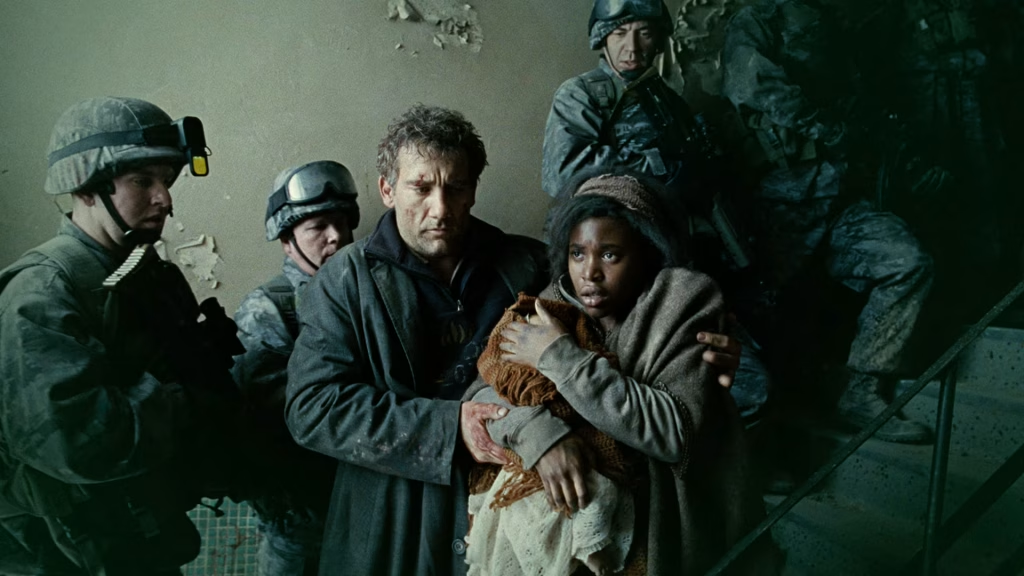
Image Source: Bing Image. License: All Creative Commons

9. Children of Men (2006)

Alfonso Cuarón’s dystopian vision of a world plagued by infertility captivated critics with its technical mastery, long-take cinematography, and unflinching depiction of societal collapse. Clive Owen delivers a compelling performance as a man tasked with protecting the first pregnant woman in decades, blending personal stakes with epic societal commentary.

Image Source: Bing Image. License: All Creative Commons

While lauded critically, the film failed to achieve financial success, earning $76 million against a similar budget. Over time, however, it has been reassessed as a modern sci-fi classic, influencing everything from cinematography to world-building in future films and cementing Cuarón’s status as a visionary director.

Image Source: Bing Image. License: All Creative Commons

8. Dredd 3D (2012)

Karl Urban’s performance as the titular lawman brought the gritty, comic-accurate world of Judge Dredd to life. The film was praised for its kinetic action, visual style, and respect for its source material, keeping the helmet firmly on and the attitude firmly intact.

Image Source: Bing Image. License: All Creative Commons

Unfortunately, the film underperformed at the box office, preventing a potential sequel from moving forward. Yet fans embraced it for its faithfulness and action-packed storytelling, and Dredd 3D remains a cult favorite, often cited as a benchmark for comic-book adaptations done right.

Image Source: Bing Image. License: All Creative Commons

7. The Thing (1982)

John Carpenter’s tense sci-fi horror about paranoia, alien invasion, and isolation initially left audiences cold. Its grotesque effects and bleak tone clashed with mainstream expectations, particularly against the summer’s feel-good releases like E.T.

Image Source: Bing Image. License: All Creative Commons

With only modest box office returns, the film struggled in theaters. Yet its meticulous craftsmanship and groundbreaking effects earned it a devoted fanbase on home video. Today, The Thing is hailed as a horror classic, influencing countless filmmakers and redefining the genre.

Image Source: Bing Image. License: All Creative Commons

6. The Big Lebowski (1998)

The Coen Brothers’ eccentric comedy about “The Dude” and a bizarre kidnapping plot initially baffled audiences and critics alike. Its humor, oddball characters, and unconventional narrative didn’t translate to box office success, leaving the film with underwhelming returns.

Image Source: Bing Image. License: All Creative Commons

Time, however, has been kind. The Big Lebowski has grown into a cult phenomenon, inspiring festivals, fan clubs, and endless quotable lines. Its enduring popularity proves that some films simply need patience to find their audience.

Image Source: Bing Image. License: All Creative Commons

5. Office Space (1999)

Mike Judge’s satire of corporate life and office drudgery resonated deeply with critics but failed to attract large audiences in theaters. Its humor about cubicles, TPS reports, and mundane work life didn’t immediately click.

Image Source: Bing Image. License: All Creative Commons

Over time, the film has become iconic, thanks to repeated airings on cable and widespread sharing of its humor online. Office Space is now a touchstone for workplace comedy and a beloved cultural reference for anyone who’s ever hated their 9-to-5.

Image Source: Bing Image. License: All Creative Commons

4. The Shawshank Redemption (1994)

Tim Robbins and Morgan Freeman shine in this adaptation of Stephen King’s novella, exploring hope, friendship, and perseverance in the bleakest circumstances. Despite glowing reviews, the film initially flopped, earning just $16 million against strong competition like Pulp Fiction.

Image Source: Bing Image. License: All Creative Commons

Its revival came through VHS rentals and television broadcasts, where audiences slowly embraced it as a moving, profound story. Today, Shawshank Redemption is widely regarded as one of the greatest films ever made, a testament to the enduring power of storytelling.

Image Source: Bing Image. License: All Creative Commons

3. Kingdom of Heaven (2005)

Ridley Scott’s epic tale of the Crusades, starring Orlando Bloom, was criticized for a bloated narrative and a muddled theatrical cut. Its $130 million budget didn’t yield the expected returns, and the film struggled to connect with mainstream audiences.

Image Source: Bing Image. License: All Creative Commons

The director’s cut, however, transformed the film into a gripping historical drama, earning respect for its depth and coherent storytelling. Kingdom of Heaven exemplifies how time and context can radically change a film’s reception.

Image Source: Bing Image. License: All Creative Commons

2. Babylon (2022)

Damien Chazelle’s ambitious ode to Hollywood’s golden age dazzled with grand production design and star power from Brad Pitt and Margot Robbie. However, its sprawling narrative and divisive tone caused audiences to hesitate, leaving the film underperforming at the box office.

Image Source: Bing Image. License: All Creative Commons

Over time, critics and cinephiles have begun to reassess Babylon, praising its audacity, creativity, and fearless storytelling. It serves as a reminder that some films are best appreciated with patience and perspective.

Image Source: Bing Image. License: All Creative Commons

1. Furiosa: A Mad Max Saga (2024)

George Miller’s prequel explores Furiosa’s origins, combining breathtaking action with rich world-building. Critics hailed the film as a visual spectacle and a character-driven story, but its massive $163 million budget meant that even a strong opening weekend couldn’t secure commercial success.

Image Source: Bing Image. License: All Creative Commons

Despite the financial disappointment, fans and critics are already elevating Furiosa as a future classic. Its combination of daring action, compelling characters, and cinematic ambition ensures that it will be celebrated long after its initial release, reinforcing the idea that true impact isn’t measured by box office receipts alone.
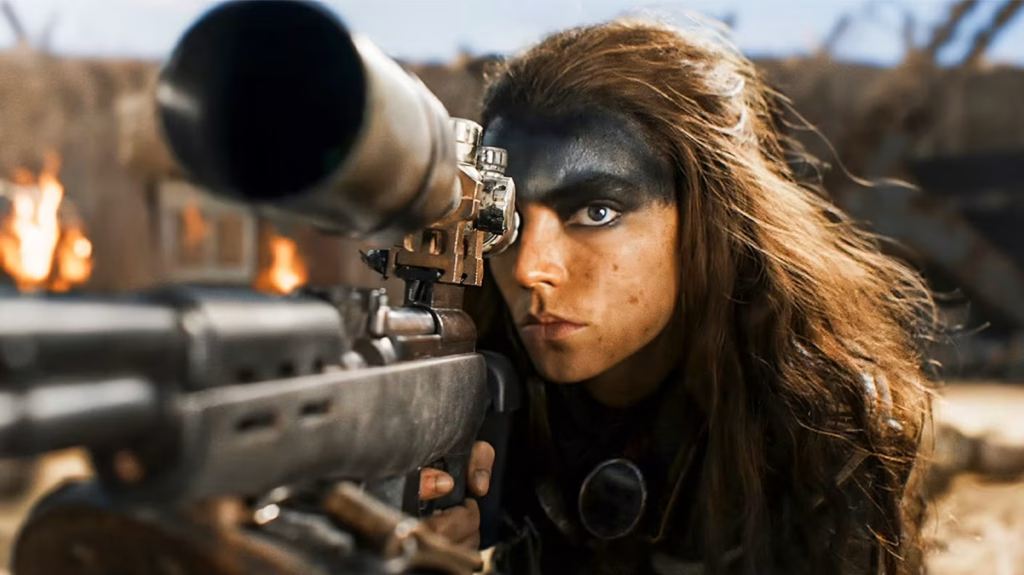
Image Source: Bing Image. License: All Creative Commons

Sometimes, the most fascinating films are the ones that stumble at first. These 15 movies show that a box office flop doesn’t define a film’s legacy. With time, patience, and devoted audiences, even the biggest failures can become beloved classics, inspiring future filmmakers and proving that art often triumphs over numbers.

14 Iconic Emma Stone Characters You Can’t Forget

0
Image Source: Bing Image. License: All Creative Commons

Emma Stone has established herself as one of Hollywood’s most versatile and magnetic actresses, effortlessly blending humor, heart, and a fearless willingness to take risks. From her breakout roles in teen comedies to transformative performances in period dramas and surreal fantasies, she has shown an extraordinary ability to tackle any genre the screen demands. Her seamless transitions between comedy, drama, and musical storytelling make her one of the most compelling performers of her generation. Here’s a closer look at the 14 roles that have come to define her remarkable career.

Image Source: Bing Image. License: All Creative Commons

14. Zombieland: Double Tap (2019)

Returning as Wichita, Emma Stone reprised her role in Zombieland: Double Tap, offering fans a nostalgic trip back to the original while adding new layers to her character. Stone navigates the sequel with her signature wit, keeping Wichita sharp, resourceful, and endlessly entertaining amidst the chaos of the zombie apocalypse.

Image Source: Bing Image. License: All Creative Commons

Even though the film didn’t quite capture the same lightning-in-a-bottle energy as the first, Stone’s comedic timing and chemistry with co-stars Woody Harrelson, Jesse Eisenberg, and Abigail Breslin ensured the sequel still had heart. Her ability to blend action and humor made Wichita’s return feel both natural and worthwhile, cementing Stone’s status as a reliable scene-stealer.

Image Source: Bing Image. License: All Creative Commons

13. The Amazing Spider-Man (2012)

As Gwen Stacy, Stone brought a bright and grounded energy to the Spider-Man franchise. Her portrayal struck the perfect balance between charm and intelligence, giving Gwen depth beyond the usual love-interest role.

Image Source: Bing Image. License: All Creative Commons

Her onscreen chemistry with Andrew Garfield was undeniable, making their romantic arc feel genuine and emotionally resonant. Stone’s Gwen Stacy was resourceful, smart, and independent, qualities that helped elevate the film and left a lasting impression on superhero cinema.

Image Source: Bing Image. License: All Creative Commons

12. The House Bunny (2008)

In The House Bunny, Stone played Natalie, the awkward sorority girl whose transformation drives the film’s heartwarming story. Even amidst Anna Faris’s comedic spotlight, Stone’s performance brought sincerity and humor, providing a balance to the zany antics.

Image Source: Bing Image. License: All Creative Commons

Stone’s ability to convey vulnerability and growth made Natalie’s journey both relatable and endearing. The film might be a forgotten gem of late-2000s comedy, but Stone’s charm shines, foreshadowing the incredible range she would bring to more complex roles in the years to come.

Image Source: Bing Image. License: All Creative Commons

11. Cruella (2021)

Stone’s take on Disney’s iconic villain in Cruella was electrifying. She embraced the punk-inspired, over-the-top aesthetic of the film while infusing Cruella with sharp humor, charisma, and just the right amount of menace.

Image Source: Bing Image. License: All Creative Commons

The film’s theatrical style allowed Stone to fully explore the character’s wit and cunning. Her interplay with Emma Thompson added layers of tension and comedy, proving that Stone can dominate even the most stylized and larger-than-life cinematic landscapes.

Image Source: Bing Image. License: All Creative Commons

10. Zombieland (2009)

Stone first introduced Wichita in Zombieland, where her sharp comedic timing and cool demeanor stood out in a film crowded with quirky characters. She brought strength, wit, and a sense of leadership to the ensemble cast.

Image Source: Bing Image. License: All Creative Commons

Her chemistry with Woody Harrelson, Jesse Eisenberg, and Abigail Breslin helped define the film’s irreverent tone. Stone’s performance made Wichita more than a survivor; she became the heart of the story, cementing her breakout status in Hollywood.

Image Source: Bing Image. License: All Creative Commons

9. Birdman (2014)

In Birdman, Stone portrayed Sam, the complex and troubled daughter of Michael Keaton’s character. The film’s continuous-shot style demanded precision and subtlety, and Stone delivered a performance full of emotional depth.

Image Source: Bing Image. License: All Creative Commons

Her portrayal of Sam’s struggles with family, addiction, and personal identity was both raw and compelling. Stone’s scenes brought authenticity to a high-concept film, earning her first Academy Award nomination and cementing her reputation as a serious dramatic actress.

Image Source: Bing Image. License: All Creative Commons

8. Superbad (2007)

Stone’s screen debut as Jules in Superbad might have been brief, but her charm and comedic flair left a lasting impression. She brought a sense of warmth and relatability to her high school crush role.

Image Source: Bing Image. License: All Creative Commons

Even in a supporting part, Stone showcased an ability to hold her own among a cast of standout comedic performers. This early glimpse of her talent hinted at the star she would soon become, blending humor with an effortless onscreen presence.

Image Source: Bing Image. License: All Creative Commons

7. Crazy, Stupid, Love (2011)

Stone shone as Hannah, delivering a blend of wit, sincerity, and charm that made her pairing with Ryan Gosling unforgettable. The chemistry between them was magnetic, elevating the film above typical rom-com fare.

Image Source: Bing Image. License: All Creative Commons

Her comedic timing and emotional vulnerability allowed her to navigate both funny and tender moments seamlessly. From goofiness to heartfelt romance, Stone demonstrated why she was quickly becoming one of Hollywood’s leading ladies.

Image Source: Bing Image. License: All Creative Commons

6. The Curse (2023)

In the TV series The Curse, Stone explored morally complex territory as Whitney, a character navigating tension, ambiguity, and discomfort. Her performance was daring, revealing her readiness to take risks outside the film medium.

Image Source: Bing Image. License: All Creative Commons

Stone’s nuanced approach allowed the audience to constantly reassess Whitney’s intentions, balancing empathy and frustration. The series confirmed her versatility, showing she could tackle unconventional, psychologically layered roles with confidence.

Image Source: Bing Image. License: All Creative Commons

5. Easy A (2010)

Easy A was Stone’s breakout leading role, where she brought Olive Penderghast to life with sharp humor and relatability. Her witty commentary and vulnerability struck a chord with audiences, launching her into stardom.

Image Source: Bing Image. License: All Creative Commons

Stone’s performance turned what could have been a standard teen comedy into a showcase of her charisma and timing. The film’s enduring popularity is a testament to her ability to combine comedy with authenticity, creating a character audiences still remember fondly.

Image Source: Bing Image. License: All Creative Commons

4. The Favourite (2018)

Stone’s Abigail Masham in The Favourite was ambitious, cunning, and darkly humorous. She navigated the twisted court politics of Queen Anne’s reign with subtlety, delivering a multi-layered performance that balanced comedy and drama.

Image Source: Bing Image. License: All Creative Commons

Her interplay with Olivia Colman and Rachel Weisz was electric, creating a tense and unpredictable dynamic. Stone’s willingness to embrace the eccentricities of the script proved her ability to thrive under visionary direction and complex storytelling.

Image Source: Bing Image. License: All Creative Commons

3. La La Land (2016)

As Mia in La La Land, Stone captured the dreamy hope, vulnerability, and heartbreak of a struggling actress in Los Angeles. Her musical and dramatic skills were on full display, blending classical Hollywood charm with modern sensibilities.

Image Source: Bing Image. License: All Creative Commons

Stone’s chemistry with Ryan Gosling created iconic dance numbers and unforgettable emotional beats. Winning her first Academy Award for the role, Stone proved she could carry a film with emotional resonance, charm, and star power.

Image Source: Bing Image. License: All Creative Commons

2. Poor Things (2023)

In Poor Things, Stone’s performance as Bella Baxter demanded total transformation, capturing the character’s journey from childlike innocence to liberated, complex adulthood. She fully embraced the film’s surreal, steampunk-infused world.

Image Source: Bing Image. License: All Creative Commons

Her dedication to physicality, voice work, and emotional depth made Bella both hilarious and deeply human. Stone’s collaboration with Yorgos Lanthimos elevated the role, earning her critical acclaim and solidifying her as one of the most daring actresses of her generation.

Image Source: Bing Image. License: All Creative Commons

1. Poor Things (2023) – Reinforcing Brilliance

Yes, it’s worth highlighting again. Stone’s portrayal of Bella Baxter showcases a fearless commitment to her craft, blending comedy, drama, and sheer physicality in a way few actors attempt.

Image Source: Bing Image. License: All Creative Commons

Her performance resonates on multiple levels, proving her ability to make extraordinary, bizarre material feel authentic and emotionally powerful. Poor Things is a masterclass in acting and a defining moment in her career.

Image Source: Bing Image. License: All Creative Commons

Emma Stone has built a career defined by versatility, charm, and an unshakable willingness to take risks. From high school comedies to surreal period pieces, her performances continue to captivate and surprise. As she expands her horizons, one thing is clear: Emma Stone isn’t just a star, she’s a force of nature.

15 MCU Supporting Characters Who Stole the Spotlight

0
Image Source: Bing Image. License: All Creative Commons

While superheroes often dominate the spotlight in the Marvel Cinematic Universe, some of the most memorable moments come from the supporting cast. From quick-witted allies to unexpectedly hilarious side characters, these figures often steal scenes and bring depth, humor, and heart to the MCU. Here’s a ranking of 15 supporting characters who left an indelible mark on the franchise.

Image Source: Bing Image. License: All Creative Commons

15. Coach Wilson

Coach Wilson may only appear in a few scenes across the Spider-Man films, but his deadpan humor and perfectly timed lines make him unforgettable. As Midtown School’s gym teacher, he’s hilariously out of his depth amidst Peter Parker’s superhero chaos, making his subtle reactions all the more entertaining.

Image Source: Bing Image. License: All Creative Commons

Whether it’s nervously taking a selfie in Venice or awkwardly running Captain America’s workout videos, Coach Wilson is a grounded, relatable presence. He reminds viewers that even in a world full of gods, aliens, and superhumans, there are ordinary people just trying to get through the day, and that ordinary charm can be unforgettable.

Image Source: Bing Image. License: All Creative Commons

14. Darryl Jacobson

Darryl, Thor’s hapless roommate in the Team Thor shorts, is the quintessential everyman thrust into absurdity. Sharing an apartment with a literal god, his dry reactions and understated comedy highlight the ridiculousness of living with Thor.

Image Source: Bing Image. License: All Creative Commons

From struggling to split rent to navigating Mjolnir in the living room, Darryl’s grounded perspective adds charm and relatability. Fans loved his slice-of-life humor, showing that sometimes the best comedy in the MCU comes from the normal people trying to survive the chaos.

Image Source: Bing Image. License: All Creative Commons

13. M’Baku

M’Baku, the imposing leader of the Jabari tribe in Black Panther, balances strength, humor, and loyalty in a way few supporting characters do. His commanding presence and biting wit make every scene he’s in memorable.

Image Source: Bing Image. License: All Creative Commons

He’s more than just a rival to T’Challa—M’Baku evolves into a steadfast ally during Wakanda’s darkest moments. His blend of intimidation and comedic timing, combined with a strong moral code, makes him a fan favorite and one of the MCU’s most layered supporting characters.

Image Source: Bing Image. License: All Creative Commons

12. Michelle Jones-Watson (MJ)

MJ, portrayed by Zendaya, redefines the love interest in the Spider-Man films. With sharp intelligence, dry humor, and unapologetic authenticity, she challenges Peter Parker while remaining a vital part of his world.

Image Source: Bing Image. License: All Creative Commons

Her witty commentary and fearless attitude bring both humor and heart to the franchise. MJ’s evolution from outsider to equal partner in the adventure shows that supporting characters can have as much agency and charisma as the heroes themselves.

Image Source: Bing Image. License: All Creative Commons

11. Peggy Carter

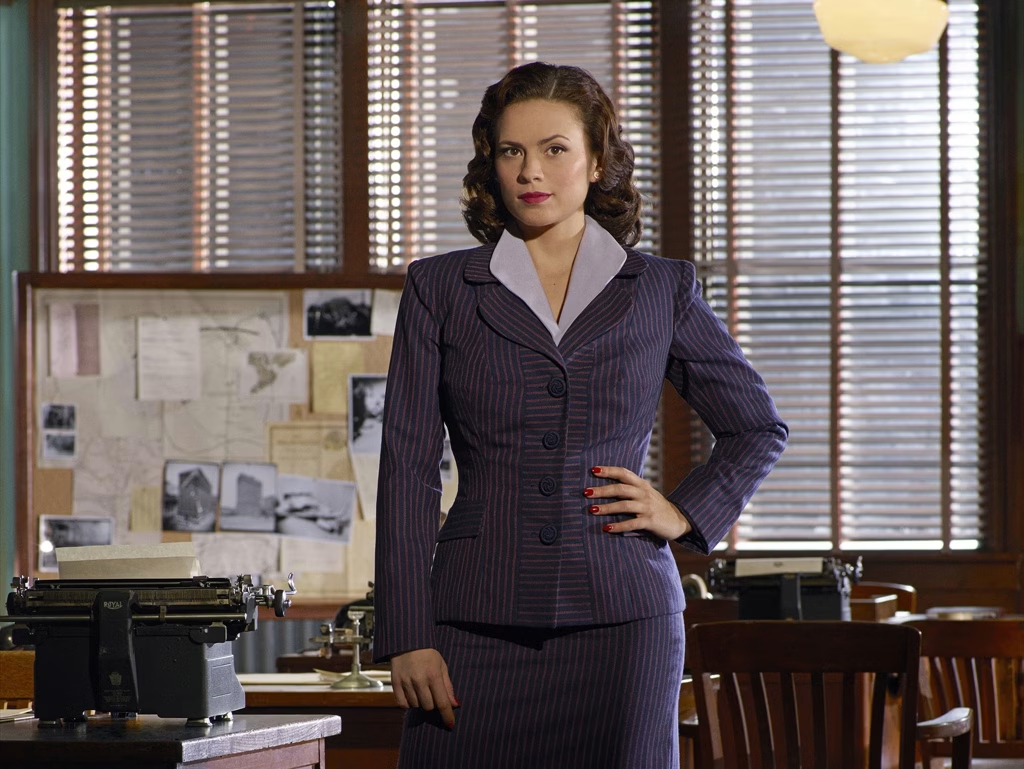
Peggy Carter is much more than Steve Rogers’ love interest—she’s a courageous, intelligent spy and natural leader. Her appearances in Captain America: The First Avenger and beyond demonstrate a heroine who takes action and shapes the world around her.

Image Source: Bing Image. License: All Creative Commons

Her wit, bravery, and unwavering sense of justice have led to spin-offs, alternate realities, and fan adoration. Peggy’s impact goes far beyond her supporting role, proving that a well-written secondary character can become iconic in her own right.

Image Source: Bing Image. License: All Creative Commons

10. Luis

Luis, Scott Lang’s fast-talking friend in the Ant-Man films, is comedic brilliance in motion. His storytelling style turns exposition into laugh-out-loud moments, while his loyalty and energy make him the emotional heart of the crew.

Image Source: Bing Image. License: All Creative Commons

Whether planning a heist or recounting events in his unique way, Luis brings a distinct personality to the MCU. Fans continue to celebrate him as a standout, proving that supporting characters can sometimes outshine even the superheroes.

Image Source: Bing Image. License: All Creative Commons

9. Shuri

Shuri, T’Challa’s younger sister and tech prodigy, immediately captures the audience with her intelligence, humor, and confident personality. She’s the creative force behind Wakanda’s futuristic technology and a key player in the story’s emotional arcs.

Image Source: Bing Image. License: All Creative Commons

Her playful sibling rivalry and fearless problem-solving add dimension to her character. Shuri’s charm, wit, and brilliance make her an inspirational figure and a reminder that supporting roles can have immense influence on the plot.

Image Source: Bing Image. License: All Creative Commons

8. Korg

Korg, the soft-spoken rock warrior introduced in Thor: Ragnarok, is a master of understated humor. Voiced by Taika Waititi, his calm, gentle personality contrasts hilariously with his massive, rocky appearance.

Image Source: Bing Image. License: All Creative Commons

Korg’s friendship with Thor and Miek provides comic relief while grounding the cosmic chaos. His popularity proves that even side characters with quiet, subtle humor can become fan favorites in the MCU.

Image Source: Bing Image. License: All Creative Commons

7. Yelena Belova

Yelena Belova bursts onto the scene in Black Widow, instantly rivaling Natasha Romanoff with her dry humor, sharp sarcasm, and emotional depth. She’s a fully realized character who adds a fresh perspective to the superhero world.

Image Source: Bing Image. License: All Creative Commons

Her journey from assassin to ally is full of humor, heart, and sibling rivalry. With appearances in Hawkeye and other projects, Yelena has cemented her place as one of the most engaging and beloved supporting characters in the MCU.

Image Source: Bing Image. License: All Creative Commons

6. Phil Coulson

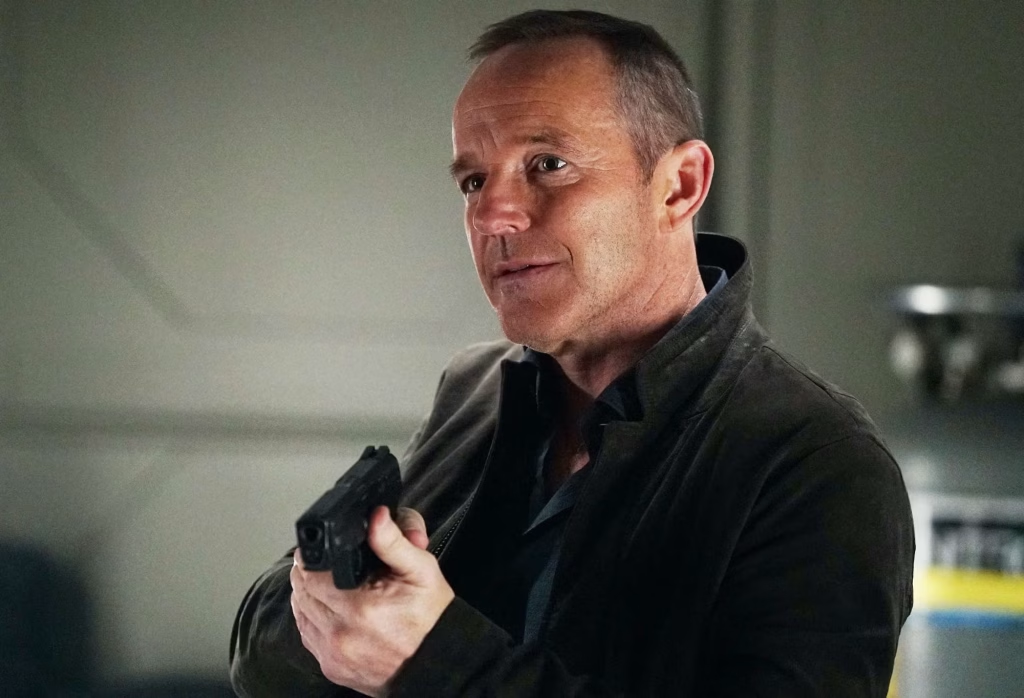
Phil Coulson may not have superpowers, but he’s the emotional glue that held the early MCU together. His dry wit, calm demeanor, and unwavering dedication make him a relatable anchor in a world of extraordinary heroes.

Image Source: Bing Image. License: All Creative Commons

Coulson’s death in The Avengers had a profound narrative impact, while his return in Agents of SHIELD expanded his legacy. Fans admire him as proof that heroism isn’t just about powers—it’s about heart, loyalty, and humanity.

Image Source: Bing Image. License: All Creative Commons

5. Darcy Lewis

Darcy Lewis, played by Kat Dennings, is the voice of the audience in the MCU. From her first appearance in Thor, she’s clever, sarcastic, and unafraid to speak truth to the superheroes around her.

Image Source: Bing Image. License: All Creative Commons

Her wit and courage make her stand out in a universe dominated by gods and geniuses. Darcy’s return in WandaVision reinforced that well-written supporting characters can have lasting appeal, balancing humor, intelligence, and relatability.

Image Source: Bing Image. License: All Creative Commons

4. Trevor Slattery

Trevor Slattery, introduced as the fake Mandarin in Iron Man 3, went from comic relief to an unexpectedly memorable character in Shang-Chi. His clueless charm and comedic timing provide levity in tense moments.

Image Source: Bing Image. License: All Creative Commons

Trevor’s evolution from failed actor to scene-stealer demonstrates Marvel’s ability to redeem and expand quirky characters. Fans love him for both his humor and his surprising utility in guiding the heroes, proving that no role is too small to shine.

Image Source: Bing Image. License: All Creative Commons

3. Valkyrie

Valkyrie storms into Thor: Ragnarok as a formidable, no-nonsense warrior with a sharp edge and a complicated past. Her toughness and independence immediately make her a standout in any scene.

Image Source: Bing Image. License: All Creative Commons

Beyond her fighting skills, Valkyrie’s depth emerges through her resilience and leadership. She challenges stereotypes, showing that female supporting characters can be strong, flawed, and compelling without needing to be the main focus.

Image Source: Bing Image. License: All Creative Commons

2. Loki

Loki is the ultimate scene-stealer, evolving from villain to anti-hero to fan favorite. Tom Hiddleston brings wit, charm, and emotional depth to the God of Mischief, creating a character that fans can’t ignore.

Image Source: Bing Image. License: All Creative Commons

His motivations, struggles with identity, and mischievous antics make him endlessly fascinating. Loki’s relationships with Thor, the Avengers, and his own solo adventures demonstrate how a supporting character can become central to the MCU’s storytelling.

Image Source: Bing Image. License: All Creative Commons

1. Wong

Wong, Doctor Strange’s stoic, loyal ally, has quietly become one of the MCU’s most entertaining supporting characters. His deadpan humor, commitment to duty, and clever quips bring levity to even the most intense scenes.

Image Source: Bing Image. License: All Creative Commons

Whether laying down the law in Kamar-Taj or joining the battle against multiversal threats, Wong’s presence is both grounding and hilarious. His growing role in the MCU proves that supporting characters can be just as unforgettable as the heroes themselves.

Image Source: Bing Image. License: All Creative Commons

From comedic sidekicks to wise advisors, these supporting characters enrich the Marvel Cinematic Universe in ways the heroes alone never could. They bring humor, heart, and humanity to a world of gods, geniuses, and super-soldiers, reminding us that sometimes the real stars aren’t wearing capes.

15 Tragic Moments That Forever Altered Hollywood’s Landscape

0
Image Source: Bing Image. License: All Creative Commons

Hollywood has always been fascinated by its stars, but when those stars die unexpectedly, the impact can reverberate for decades. From legal battles over estates to the rise of digital recreations, celebrity deaths have influenced contracts, technology, and even the way stories are told on screen. This list highlights 15 cases where the loss of iconic figures not only stunned fans but also left lasting ripples throughout the industry. Blending tragedy, controversy, innovation, and enduring legacy, these stories show that even in death, a star can reshape Hollywood and change the rules of the game.

Image Source: Bing Image. License: All Creative Commons

15. Tupac Shakur

Tupac Shakur’s 1996 death left a gaping hole in music, but it also sparked years of legal drama. With no will, his $200,000 estate went to his mother, Afeni Shakur, who turned it into a $40 million legacy by the time of her own death.

Image Source: Bing Image. License: All Creative Commons

Legal disputes continued long after, with lawsuits from his father and later his sister over mismanagement. Meanwhile, Tupac’s influence lives on through posthumous albums, hologram performances, and enduring cultural relevance, proving some stars never truly fade.

Image Source: Bing Image. License: All Creative Commons

14. Kurt Cobain

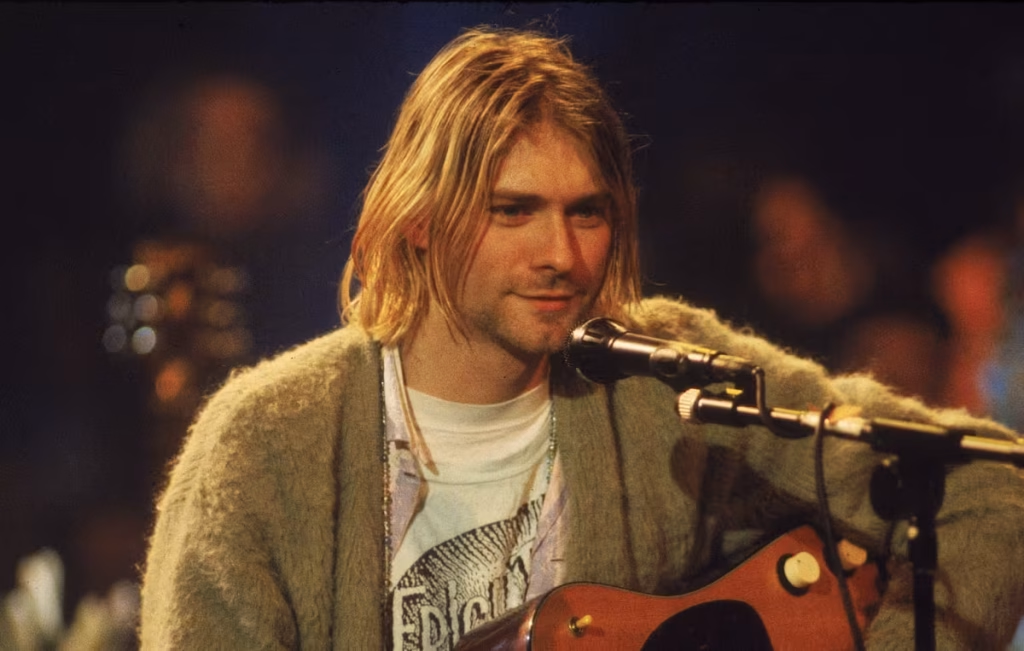
Kurt Cobain’s suicide in 1994 stunned the world, leaving his estate tangled in legal issues. With no will, his publishing rights went to his wife, Courtney Love, while their daughter Frances Bean faced challenges in managing the family’s legacy.

Image Source: Bing Image. License: All Creative Commons

Cobain’s mythos has only grown with time. Between his music, the ongoing drama over his estate, and the stories of what could have been, his influence on grunge and youth culture remains indelible.

Image Source: Bing Image. License: All Creative Commons

13. James Dean

James Dean’s 1955 death in a car crash cemented his status as a Hollywood legend, but nearly 70 years later, technology is bringing him back. Using AI, Dean is set to appear in new films like Back to Eden, creating a photorealistic digital avatar.

Image Source: Bing Image. License: All Creative Commons

This resurrection has sparked debates over ethics and legacy. While some see it as a chance to honor Dean’s iconic presence, others worry about the exploitation of deceased performers, forcing Hollywood to confront the future of acting and digital immortality.

Image Source: Bing Image. License: All Creative Commons

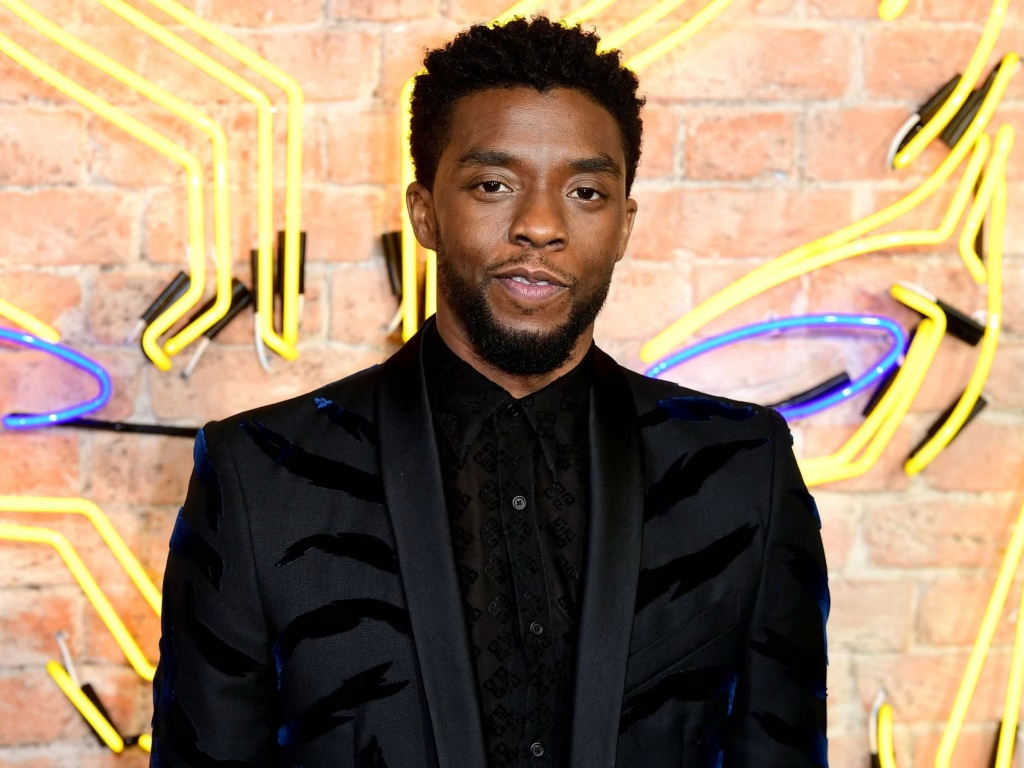
12. Chadwick Boseman

Chadwick Boseman’s death in 2020 shocked fans and the industry alike. He privately battled colon cancer while delivering unforgettable performances, including T’Challa in Black Panther. Without a will, his $3.5 million estate became a legal puzzle for his widow and parents.

Image Source: Bing Image. License: All Creative Commons

Beyond the paperwork, Boseman’s legacy is monumental. Posthumous nominations, including an Oscar for Ma Rainey’s Black Bottom, cemented his place as a hero on and off screen, inspiring generations of Black actors and fans.

Image Source: Bing Image. License: All Creative Commons

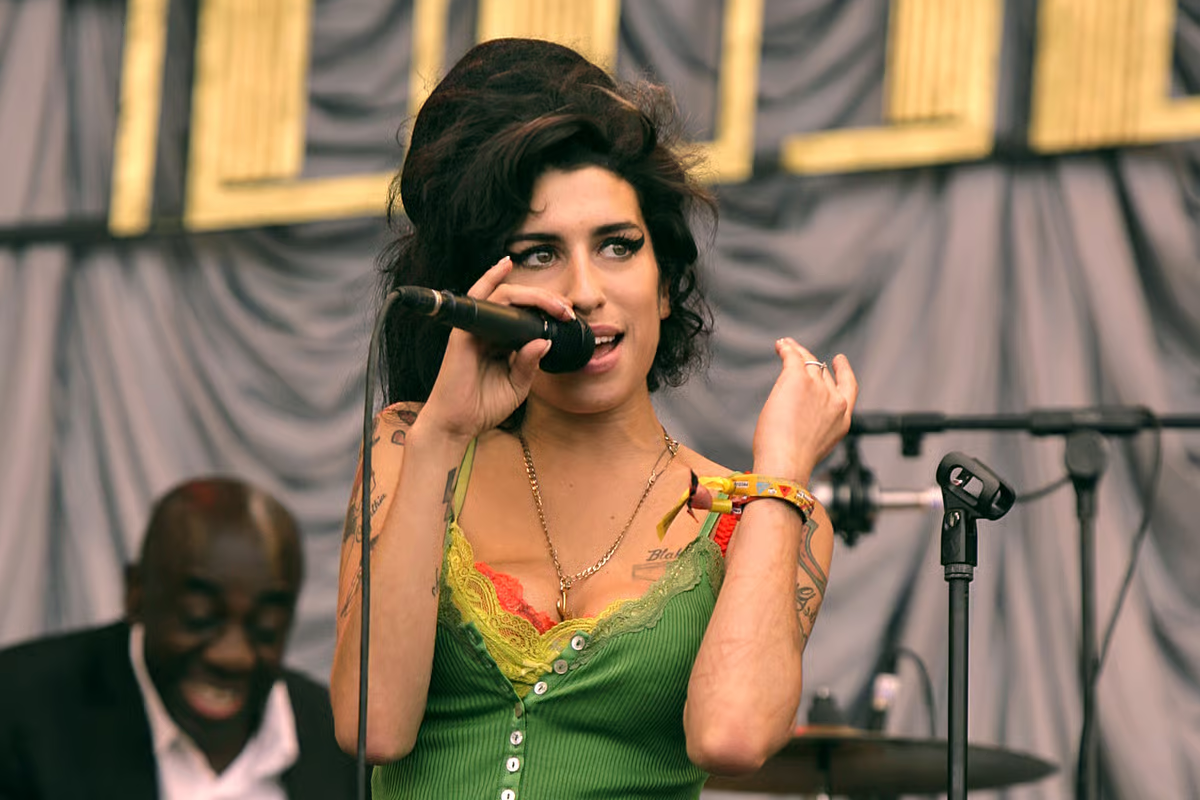
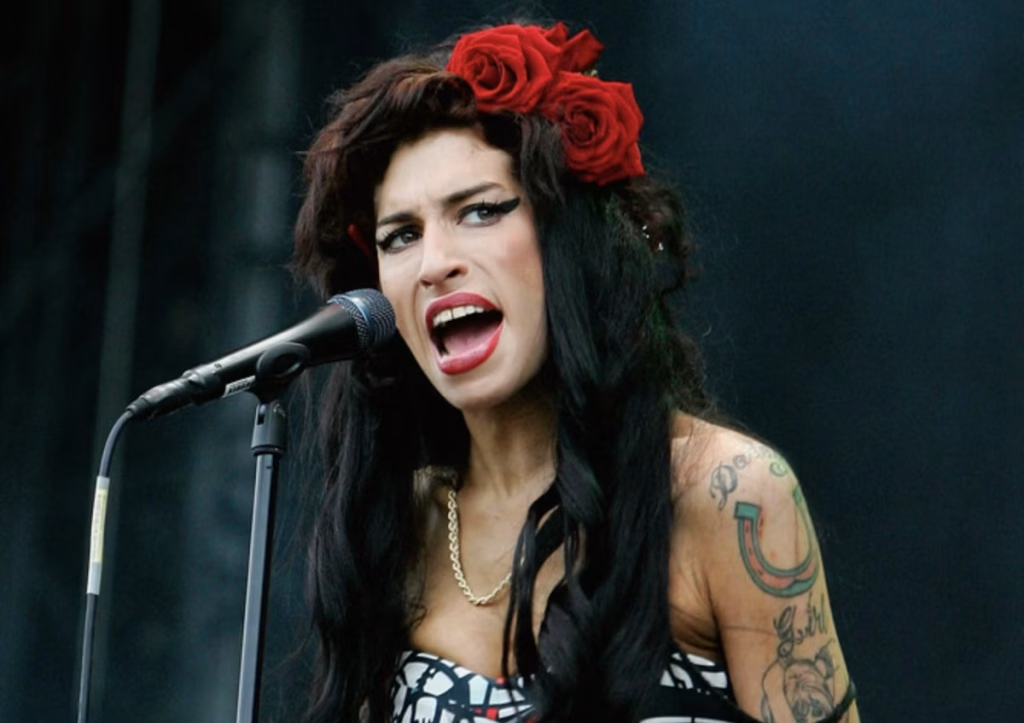
11. Amy Winehouse

Amy Winehouse’s 2011 death at 27 ended a brilliant but turbulent career. Her $4.66 million estate went to her parents, though disputes, including claims from her ex-husband, continued years later.

Image Source: Bing Image. License: All Creative Commons

Winehouse’s voice and style remain iconic. Her story is both a celebration of talent and a cautionary tale about planning for the unexpected, illustrating the complexities of legacy in the music world.

Image Source: Bing Image. License: All Creative Commons

10. Heath Ledger

Heath Ledger died in 2008 at the height of his career. While he had a will, it hadn’t been updated, leaving his $16.3 million estate to his parents and siblings instead of his daughter or her mother.

Image Source: Bing Image. License: All Creative Commons

Ledger’s posthumous Oscar-winning performance as the Joker highlighted the bittersweet reality that a star’s greatest work can sometimes come after their death. His legacy underscores the importance of legal foresight for artists.

Image Source: Bing Image. License: All Creative Commons

9. Prince

Prince’s 2016 death left a $156 million estate and no will, triggering six years of legal wrangling with more than 45 people claiming to be heirs. Lawsuits and financial disputes dominated headlines for years.

Image Source: Bing Image. License: All Creative Commons

Despite the chaos, Prince’s music and influence remain untouchable. His story serves as a lesson on the importance of planning, even for the most brilliant and creative individuals.

Image Source: Bing Image. License: All Creative Commons

8. Aretha Franklin

Aretha Franklin, the Queen of Soul, died in 2018 without a will, leaving $80 million in assets and numerous family members, plus the IRS, involved in disputes.

Image Source: Bing Image. License: All Creative Commons

The lengthy probate process underscored the pitfalls of neglecting estate planning, but Franklin’s voice, artistry, and cultural impact continue to shine, proving that talent transcends legal complications.

Image Source: Bing Image. License: All Creative Commons

7. Bob Marley

Bob Marley’s 1981 death without a will triggered decades of legal battles among family members, bandmates, and others, surrounding his $11.5 million estate.

Image Source: Bing Image. License: All Creative Commons

The disputes often overshadowed Marley’s legacy, but his music and message of unity have grown stronger over time. His estate saga highlights how legal ambiguity can complicate a star’s enduring influence.

Image Source: Bing Image. License: All Creative Commons

6. Jimi Hendrix

Jimi Hendrix passed away in 1970 with an estate of just $20,000, which eventually ballooned to $175 million amid decades of family and royalty disputes.

Image Source: Bing Image. License: All Creative Commons

Hendrix’s musical influence remains unparalleled, but the estate battles show that even legends can leave complicated legacies behind. His story serves as a lesson for artists and their families alike.

Image Source: Bing Image. License: All Creative Commons

5. Carrie Fisher

Carrie Fisher’s 2016 death stunned fans of Star Wars. Using CGI, filmmakers brought her back to complete The Rise of Skywalker, sparking debates about the ethics of digital resurrection.

Image Source: Bing Image. License: All Creative Commons

Her daughter, Billie Lourd, helped ensure her mother’s legacy was respected. Fisher’s story demonstrates how technology is transforming the way Hollywood handles posthumous performances.

Image Source: Bing Image. License: All Creative Commons

4. Robin Williams

Robin Williams left instructions to control his image after death, including a 25-year limitation on the use of his likeness. Yet, after restrictions expire, his image could still be used by estates or studios.

Image Source: Bing Image. License: All Creative Commons

Williams’ case highlights both the possibilities and limitations of legal protections for celebrity legacies, raising broader questions as AI and CGI make digital resurrection increasingly common.

Image Source: Bing Image. License: All Creative Commons

3. Tony Todd

Tony Todd, known for his horror icon roles, scripted a poignant farewell for Final Destinations: Bloodlines (2025), aware of his limited time.

Image Source: Bing Image. License: All Creative Commons

His carefully crafted final performance illustrates how actors can shape their legacies even in death, showing the emotional weight and power of art to connect with audiences beyond life.

Image Source: Bing Image. License: All Creative Commons

2. Johnny Wactor

Johnny Wactor’s death during a 2024 robbery threatened to halt the film Ciao, Mama. His brother, Lance, stepped in to help complete his lines, ensuring the movie’s release.

Image Source: Bing Image. License: All Creative Commons

This collaboration between family and industry highlights the deep personal connections that shape a star’s final work, allowing fans to say goodbye while honoring the artist’s memory.

Image Source: Bing Image. License: All Creative Commons

1. The Rise of AI and Digital Immortality

Hollywood is entering a new era where AI allows deceased actors to “return” to the screen. From James Dean to Carrie Fisher and Paul Walker, technology offers digital immortality.

Image Source: Bing Image. License: All Creative Commons

But this innovation comes with legal and ethical challenges. Questions about rights, consent, and the potential displacement of living actors blur the line between tribute and exploitation, making the future of legacy in Hollywood both fascinating and uncertain.

Image Source: Bing Image. License: All Creative Commons

The deaths of these stars have reverberated far beyond the initial shock. From legal battles and family disputes to digital resurrection and AI-generated performances, each loss reshaped Hollywood’s approach to legacy, intellectual property, and the ethics of storytelling. Their lives, and the ways the industry has responded to their deaths, remind us that in Hollywood, even in death, some stars never truly fade.

15 Influential Black LGBTQ+ Voices Transforming Film, TV, and Music

0
Image Source: Bing Image. License: All Creative Commons

Black LGBTQ+ visionaries have profoundly shaped entertainment, art, and activism, using their talents to fight for visibility, challenge cultural norms, and inspire generations to embrace their full identities. From the Harlem Renaissance to today’s streaming platforms, their impact spans music, film, literature, and social justice, leaving a lasting imprint on culture. These 15 trailblazers haven’t just broken barriers—they’ve created spaces where none existed, proving that culture thrives when marginalized voices are empowered. Their courage and creativity remind us that progress often comes from those daring to live authentically despite adversity. Here’s a countdown honoring their remarkable contributions, from 15 to 1.

Image Source: Bing Image. License: All Creative Commons

15. Willow Smith

Willow Smith is a multitalented musician, actor, and advocate whose artistry defies categorization. Known for hits like “Whip My Hair” and “Meet Me at Our Spot,” she has become a Gen Z icon for self-expression, exploring polyamory, queer identity, and fluidity in her work and public life.

Image Source: Bing Image. License: All Creative Commons

Willow’s influence extends beyond music. She uses her platform to spark conversations about love, identity, and mental health, creating space for young queer audiences to see themselves reflected in art. Her career embodies courage, creativity, and authenticity.

Image Source: Bing Image. License: All Creative Commons

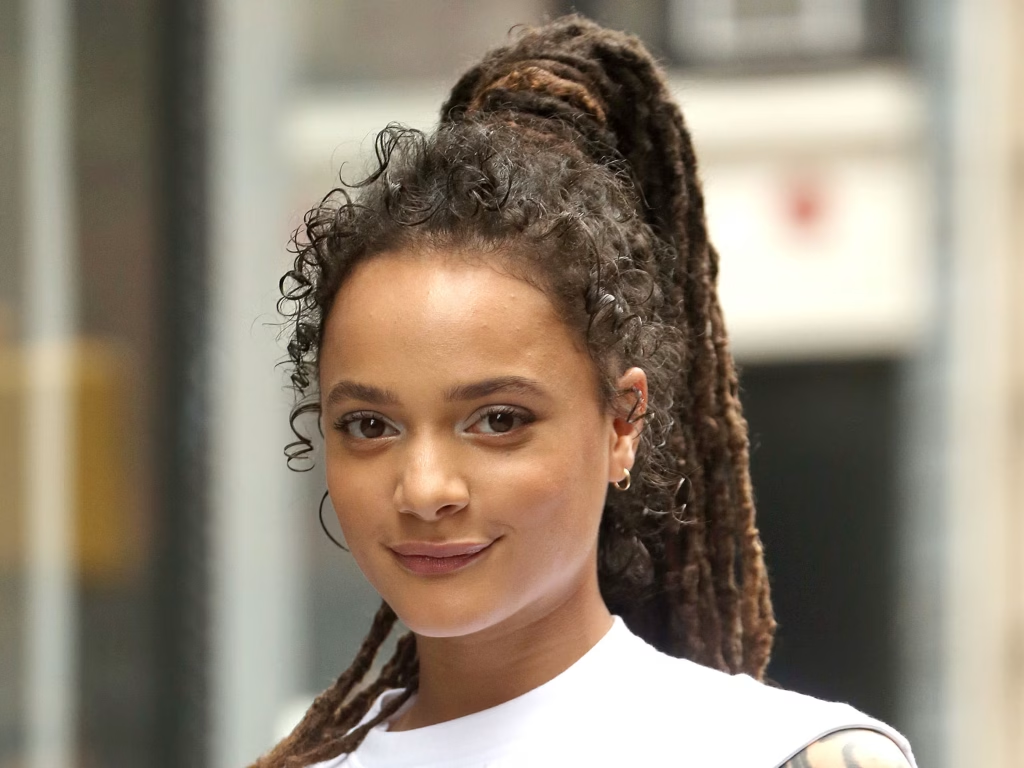
14. Sasha Lane

Sasha Lane quickly emerged as a standout talent with her debut in American Honey. She has since carved a niche in queer cinema, starring in films like Hearts Beat Loud and The Miseducation of Cameron Post, bringing authentic queer representation to the screen.

Image Source: Bing Image. License: All Creative Commons

Lane’s openness about her identity and commitment to choosing meaningful roles make her an inspiring figure for Black queer women in Hollywood. She demonstrates that visibility and authenticity can coexist with artistic excellence.

Image Source: Bing Image. License: All Creative Commons

13. Kiersey Clemons

Kiersey Clemons gained recognition with Dope and has since taken on a variety of indie and mainstream roles. Her candidness about her queer identity, along with her performances in uplifting stories, has made her a role model for queer youth.

Image Source: Bing Image. License: All Creative Commons

Clemons’ growing presence in Hollywood reflects the power of representation. By living openly and embracing diverse roles, she is helping redefine what it means to be a Black queer woman on screen.

Image Source: Bing Image. License: All Creative Commons

12. Tessa Thompson

Tessa Thompson is a trailblazing actor known for Creed, Men in Black: International, and as Valkyrie, the MCU’s first openly LGBTQ+ superhero. She consistently champions intersectional representation, speaking openly about her Afro-Latina heritage and queerness.

Image Source: Bing Image. License: All Creative Commons

Thompson’s roles and advocacy create visibility where it’s long overdue. Her career proves that mainstream blockbusters can both entertain and advance conversations about inclusivity and identity.

Image Source: Bing Image. License: All Creative Commons

11. Lena Waithe

Lena Waithe is a writer, producer, and actor who has made history with projects like Master of None, The Chi, and Queen & Slim. Her Emmy-winning episode of Master of None, drawn from her personal coming-out experience, became a cultural milestone.

Image Source: Bing Image. License: All Creative Commons

Waithe’s work centers Black queer stories, amplifying voices often marginalized in Hollywood. Her career exemplifies how authenticity and storytelling can reshape the industry from the inside out.

Image Source: Bing Image. License: All Creative Commons

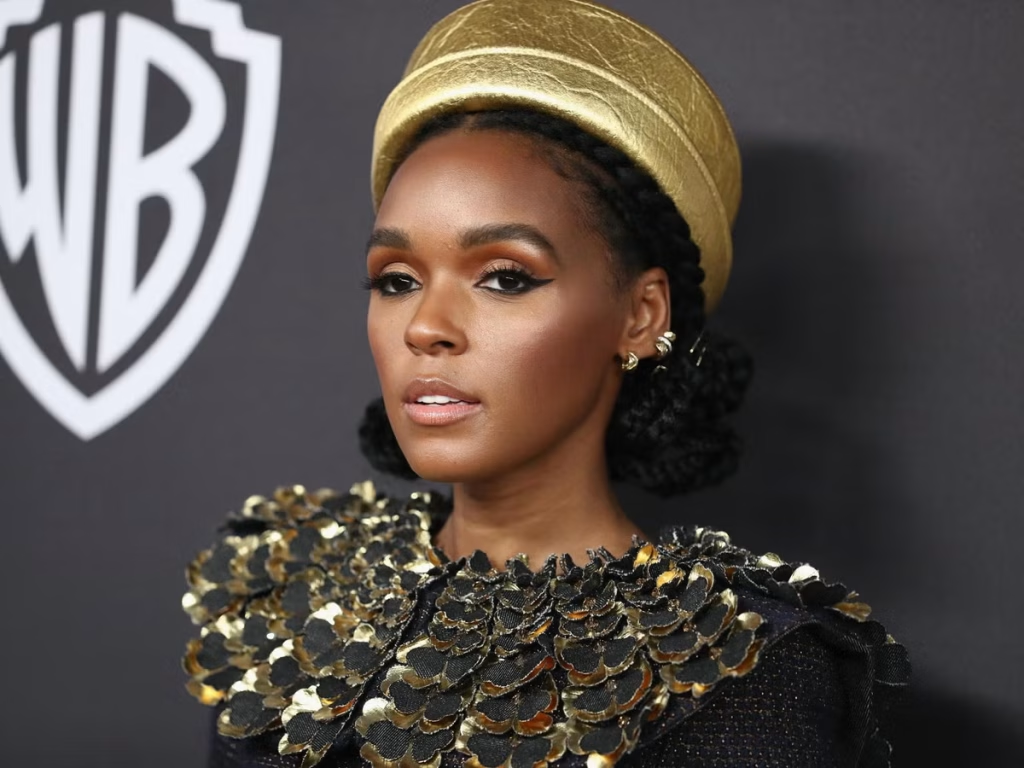
10. Janelle Monáe

Janelle Monáe is a singer, actor, and Afrofuturist whose work pushes boundaries in both music and activism. Albums like Dirty Computer and writings like The Memory Library celebrate queer liberation and Black futurism, establishing Monáe as a global icon.

Image Source: Bing Image. License: All Creative Commons

Monáe’s public embrace of their nonbinary identity adds visibility for queer people worldwide. Through creativity and advocacy, they have expanded the possibilities for expression, style, and art in mainstream culture.

Image Source: Bing Image. License: All Creative Commons

9. Janet Mock

Janet Mock is an author, director, and producer whose memoirs, Redefining Realness and Surpassing Certainty, have become foundational texts in queer literature. Her work on the Emmy-winning series Pose opened doors for trans talent in television.

Image Source: Bing Image. License: All Creative Commons

Mock’s influence extends from page to screen, creating space for trans and queer narratives while mentoring the next generation of artists. Her leadership demonstrates the transformative power of storytelling.

Image Source: Bing Image. License: All Creative Commons

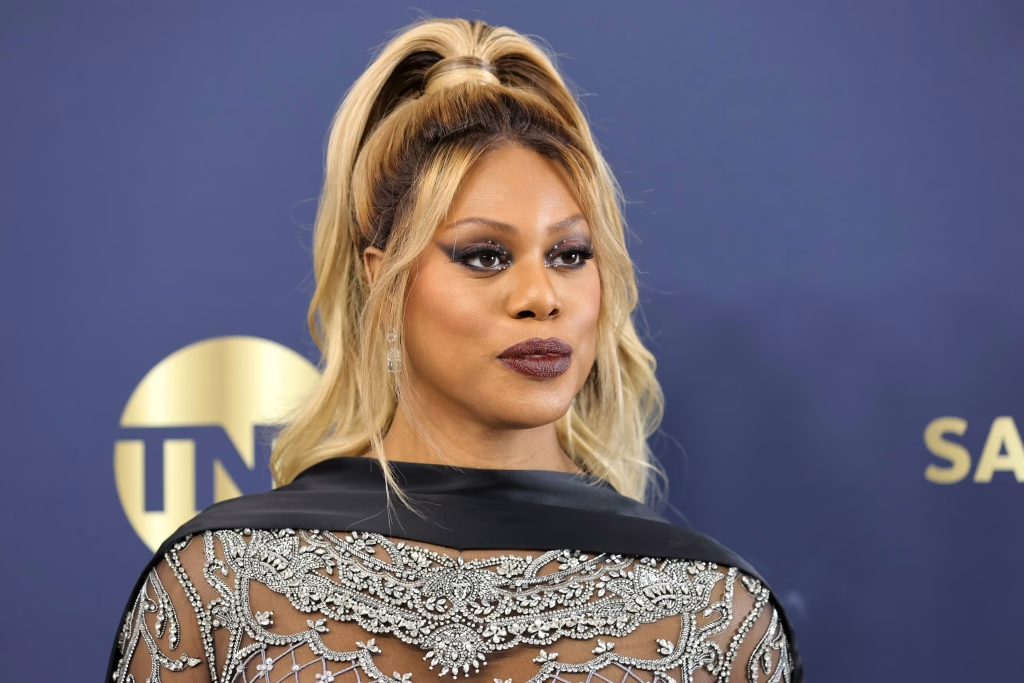
8. Laverne Cox

Laverne Cox became the first transgender person nominated for a Primetime Emmy in an acting category for her role as Sophia Burset on Orange Is the New Black. She also won a Daytime Emmy as an executive producer, breaking barriers behind the camera.

Image Source: Bing Image. License: All Creative Commons

Cox uses her platform to advance trans rights and visibility, becoming a beacon of hope and representation. Her work highlights the importance of advocacy alongside artistry in reshaping culture.

Image Source: Bing Image. License: All Creative Commons

7. Lorraine Hansberry

Lorraine Hansberry was the first Black playwright to win the New York Critics’ Circle Award for A Raisin in the Sun. Though she didn’t publicly identify as a lesbian during her lifetime, her diaries reveal a fiercely queer and politically engaged mind.

Image Source: Bing Image. License: All Creative Commons

Hansberry’s writing and activism challenged both racial and gender norms. Her work paved the way for future Black and queer artists to tell their own stories with honesty and courage.

Image Source: Bing Image. License: All Creative Commons

6. Audre Lorde

Audre Lorde described herself as a “Black, lesbian, feminist, mother, poet, warrior.” Her poetry and essays, including Coal, The Black Unicorn, and Zami: A New Spelling of My Name, continue to empower marginalized communities.

Image Source: Bing Image. License: All Creative Commons

Lorde’s fearless exploration of race, gender, and her legacy as a literary and cultural force. She showed how words can inspire activism, self-acceptance, and societal change.

Image Source: Bing Image. License: All Creative Commons

5. Bayard Rustin

Bayard Rustin was a key adviser to Martin Luther King Jr. and the chief organizer of the 1963 March on Washington. Openly gay, Rustin faced discrimination but remained a guiding force in the civil rights movement.

Image Source: Bing Image. License: All Creative Commons

Rustin’s contributions were often overlooked due to homophobia, yet his work reshaped history. He exemplifies how courage, intelligence, and advocacy can change the world, even in the face of systemic barriers.

Image Source: Bing Image. License: All Creative Commons

4. Marsha P. Johnson

Marsha P. Johnson was a transgender activist and performer central to the Stonewall uprising. Alongside Sylvia Rivera, she co-founded STAR (Street Transgender Action Revolutionaries), supporting homeless queer youth and workers.

Image Source: Bing Image. License: All Creative Commons

Johnson’s activism continues to inspire trans rights movements. Her courage, leadership, and compassion have made her a lasting icon for queer liberation and justice.

Image Source: Bing Image. License: All Creative Commons

3. James Baldwin

James Baldwin’s essays and novels, including Notes of a Native Son and Giovanni’s Room, explored race and identity with eloquence and insight. He challenged both Black and LGBTQ+ communities to confront prejudice and embrace intersectionality.

Image Source: Bing Image. License: All Creative Commons

Baldwin’s voice resonated far beyond literature. Through lectures, essays, and interviews, he educated and inspired generations, leaving a blueprint for advocacy through art and intellect.

Image Source: Bing Image. License: All Creative Commons

2. Gladys Bentley

During the Harlem Renaissance, Gladys Bentley was a groundbreaking blues singer who defied gender norms by performing in tuxedos and top hats. Openly lesbian, she became one of the era’s most celebrated entertainers. Bentley’s boldness challenged societal expectations, serving as a model for queer performers and helping carve out visibility for Black LGBTQ+ artists in the early 20th century.

Image Source: Bing Image. License: All Creative Commons

1. Miss Major Griffin-Gracy

Miss Major Griffin-Gracy has spent decades advocating for Black transgender women, especially those incarcerated. Her leadership with the Transgender Gender-Variant community and tireless activism have made her a living legend.

Image Source: Bing Image. License: All Creative Commons

Known affectionately as “Mama,” Miss Major continues to mentor, protect, and inspire. Her lifetime of work exemplifies courage, resilience, and the power of giving back to one’s community, cementing her as a foundational figure in LGBTQ+ activism.

Image Source: Bing Image. License: All Creative Commons

From historic pioneers to modern-day visionaries, these Black LGBTQ+ trailblazers have shaped entertainment, art, and activism alike. Their creativity, courage, and advocacy have expanded representation, opened doors, and inspired generations to live boldly. Their stories remind us that visibility matters, and the fight for equality is ongoing, but the path forward is brighter because of them.

14 Powerful Women Transforming Hollywood from Behind the Scenes

0
Image Source: Bing Image. License: All Creative Commons

Hollywood may shine with its on-screen stars, but much of the magic happens behind the camera—and women are leading the charge. From composers and costume designers to producers and showrunners, these creative forces transform scripts into unforgettable films and shows. Their contributions may not always be in the spotlight, but they resonate in every frame, every score, and every story audiences adore. These 14 trailblazing women have not only mastered their crafts—they’ve redefined what it means to wield influence in Tinseltown. From helming blockbuster productions to steering major studios, their work is shaping Hollywood today while inspiring the next generation of creators.

Image Source: Bing Image. License: All Creative Commons

14. Laura Karpman

Laura Karpman’s music has elevated some of Hollywood’s biggest projects, from Marvel films to Netflix rom-coms like Set It Up. She’s a five-time Emmy and Grammy winner and a tireless advocate for women in the industry, co-founding the Alliance for Women Film Composers. In 2014, she became the first female governor of the music branch of the Academy of Motion Picture Arts and Sciences.

Image Source: Bing Image. License: All Creative Commons

Karpman’s influence goes beyond notes and orchestras. She mentors emerging talent, champions inclusion, and proves that behind every powerful score is a visionary shaping the emotional heartbeat of a story.

Image Source: Bing Image. License: All Creative Commons

13. Kristen Anderson-Lopez

Few composers have had the cultural impact of Kristen Anderson-Lopez. The force behind Frozen’s “Let It Go,” Coco, and WandaVision, she’s a two-time Oscar and Grammy winner who has defined the soundtrack of modern family entertainment. Working alongside her husband, Robert Lopez, she’s created songs that stay in fans’ minds long after the credits roll.

Image Source: Bing Image. License: All Creative Commons

Kristen’s work shows the power of storytelling through music. Every note is crafted to convey emotion, and her songs have become part of countless childhood memories, proving that behind every anthem is a genius shaping the magic.

Image Source: Bing Image. License: All Creative Commons

12. Hildur Guðnadóttir

Icelandic composer Hildur Guðnadóttir has transformed Hollywood with her haunting, unforgettable scores for Joker and Tár. Winner of multiple Grammys, Golden Globes, an Emmy, and an Oscar, she’s a master of using music to elevate the emotional impact of every scene.

Image Source: Bing Image. License: All Creative Commons

Her compositions aren’t just background; they define the films themselves. Hildur’s innovative approach has set a new standard for cinematic scoring, proving that a single voice can reshape the way audiences experience storytelling.

Image Source: Bing Image. License: All Creative Commons

11. Elaine Goldsmith-Thomas

Elaine Goldsmith-Thomas is a powerhouse producer and the driving force behind Jennifer Lopez’s hit projects, from Maid in Manhattan to Good Trouble. She’s also an author, with her debut novel Climbing in Heels slated for adaptation into a TV series.

Image Source: Bing Image. License: All Creative Commons

Goldsmith-Thomas demonstrates versatility in both mediums, blending creativity and business savvy. Her career proves that producing, writing, and developing stories requires both vision and tenacity, and she has both in abundance.

Image Source: Bing Image. License: All Creative Commons

10. Liz Garbus

Documentary fans owe much to Liz Garbus, whose work includes What Happened, Miss Simone?, Nothing Left Unsaid: Gloria Vanderbilt & Anderson Cooper, and the Prince Harry and Meghan Markle Netflix series. Garbus excels at turning real-life stories into gripping cinematic experiences.

Image Source: Bing Image. License: All Creative Commons

Her commitment to exploring complex lives and social issues has made her a legend in documentary filmmaking. Garbus shows that storytelling behind the scenes is as compelling and influential as anything on the screen.

Image Source: Bing Image. License: All Creative Commons

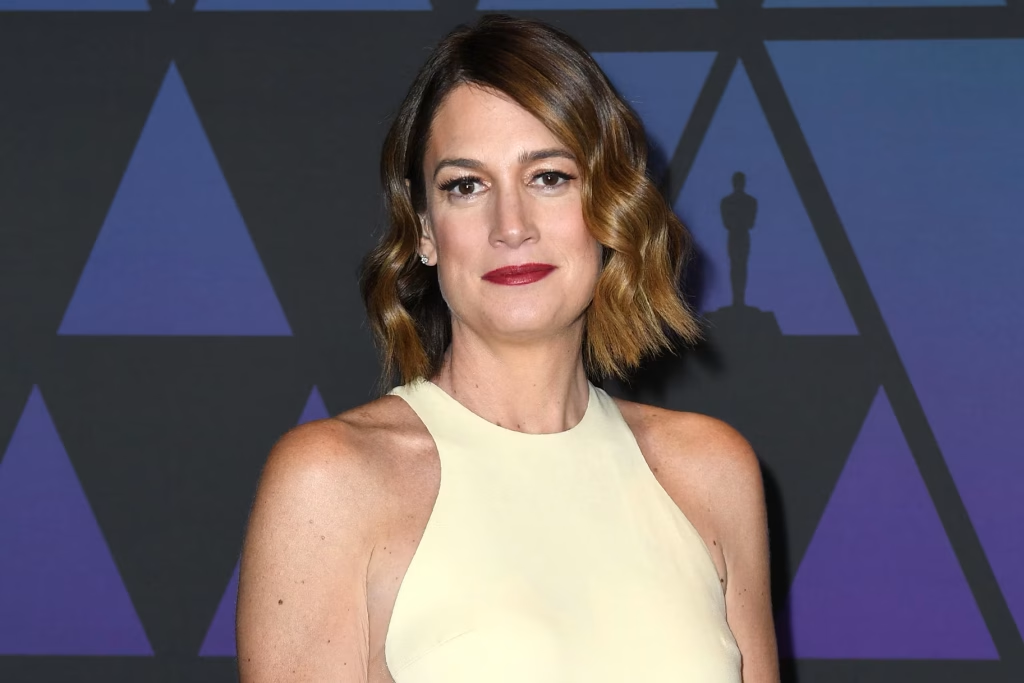
9. Gillian Flynn

Gillian Flynn transformed dark literary storytelling into a television and film phenomenon. From writing the novel Gone Girl to adapting it for the big screen and penning Sharp Objects, her works are known for their gripping suspense and unexpected twists.

Image Source: Bing Image. License: All Creative Commons

Flynn’s influence extends beyond the page. Her ability to translate psychological intensity into visual media has reshaped modern thrillers, proving that writers behind the scenes can command as much attention as stars in front of the camera.

Image Source: Bing Image. License: All Creative Commons

8. Ava DuVernay

Ava DuVernay has shattered barriers as a filmmaker and director. She was the first Black woman to win Best Director at Sundance for Middle of Nowhere and the first to be nominated for a Golden Globe for Best Director for Selma. Her work continues to inspire and redefine the scope of Black women in Hollywood.

Image Source: Bing Image. License: All Creative Commons

DuVernay’s films and initiatives highlight social issues while pushing creative boundaries. Her career is a blueprint for empowerment, showing that vision, courage, and storytelling excellence can reshape an industry.

Image Source: Bing Image. License: All Creative Commons

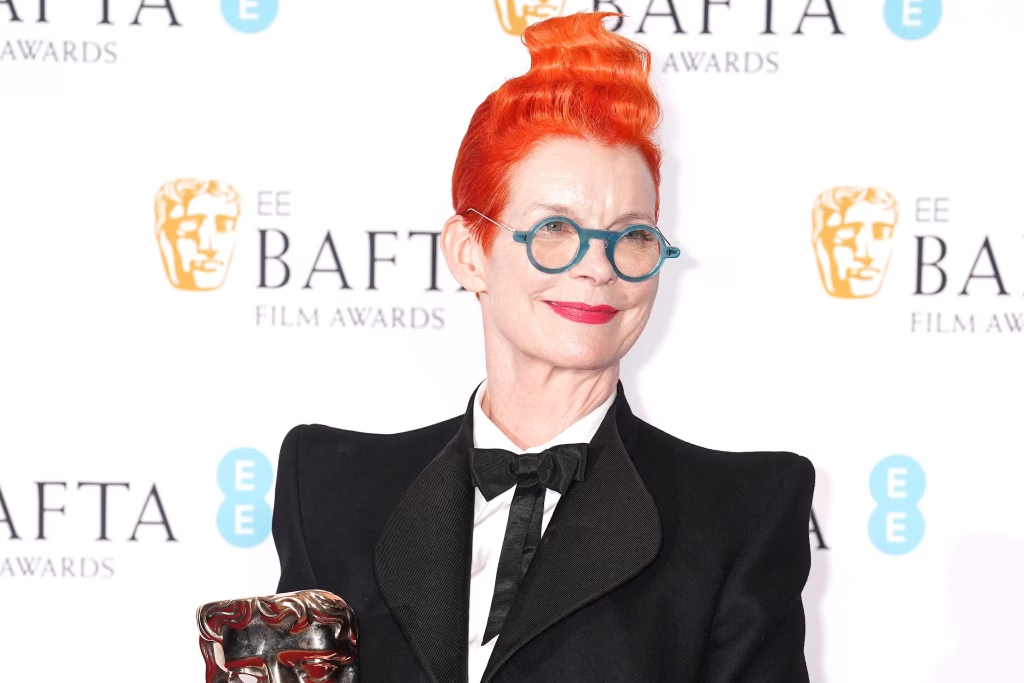
7. Sandy Powell

Sandy Powell’s influence on costume design is legendary. With three Oscars and three BAFTAs, she’s crafted the looks for films like The Wolf of Wall Street and Gangs of New York. In 2025, she was honored as a Commander of the Order of the British Empire (CBE).

Image Source: Bing Image. License: All Creative Commons

Powell blends historical accuracy with daring creativity. Her designs aren’t just visually stunning—they define characters and elevate storytelling, proving that costume design can be both art and narrative force.

Image Source: Bing Image. License: All Creative Commons

6. Pinar Toprak

Pinar Toprak made history by scoring Captain Marvel, the first woman to compose for a major superhero film and a billion-dollar box office hit. Her journey from self-funded audition tapes to blockbuster composer inspires aspiring musicians everywhere.

Image Source: Bing Image. License: All Creative Commons

Toprak shows that breaking barriers takes talent, persistence, and vision. Her work proves that women can dominate genres historically dominated by men while leaving an unforgettable mark on Hollywood soundscapes.

Image Source: Bing Image. License: All Creative Commons

5. Rachel Portman

British composer Rachel Portman was the first woman to win an Oscar for Best Original Score with Emma in 1996. She’s scored over 100 films, including The Cider House Rules and Chocolat, and was awarded an OBE in 2010.

Image Source: Bing Image. License: All Creative Commons

Portman’s music blends emotion and narrative, enhancing films with subtlety and elegance. Her career demonstrates that composition is not just background work; it’s an integral storytelling device that can define cinematic history.

Image Source: Bing Image. License: All Creative Commons

4. Bela Bajaria

As Netflix’s Chief Content Officer, Bela Bajaria shapes the global viewing habits of millions. Under her leadership, the streaming platform garnered 103 Emmy nominations in 2023 alone. Her decisions dictate what stories reach the world.

Image Source: Bing Image. License: All Creative Commons

Bajaria’s influence goes beyond numbers. Her taste and intuition impact pop culture, proving that behind every hit show is a visionary shaping not just entertainment, but global trends.
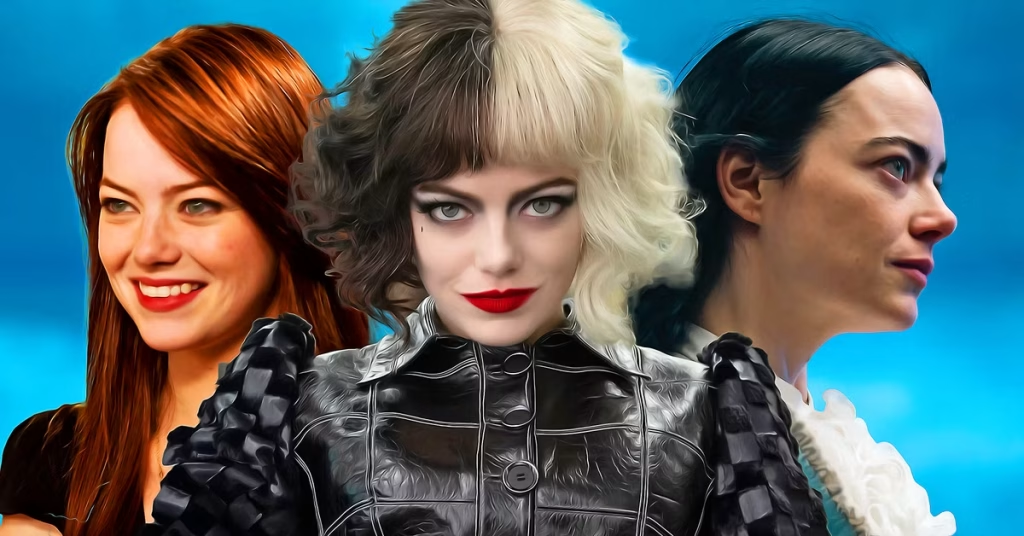
Image Source: Bing Image. License: All Creative Commons

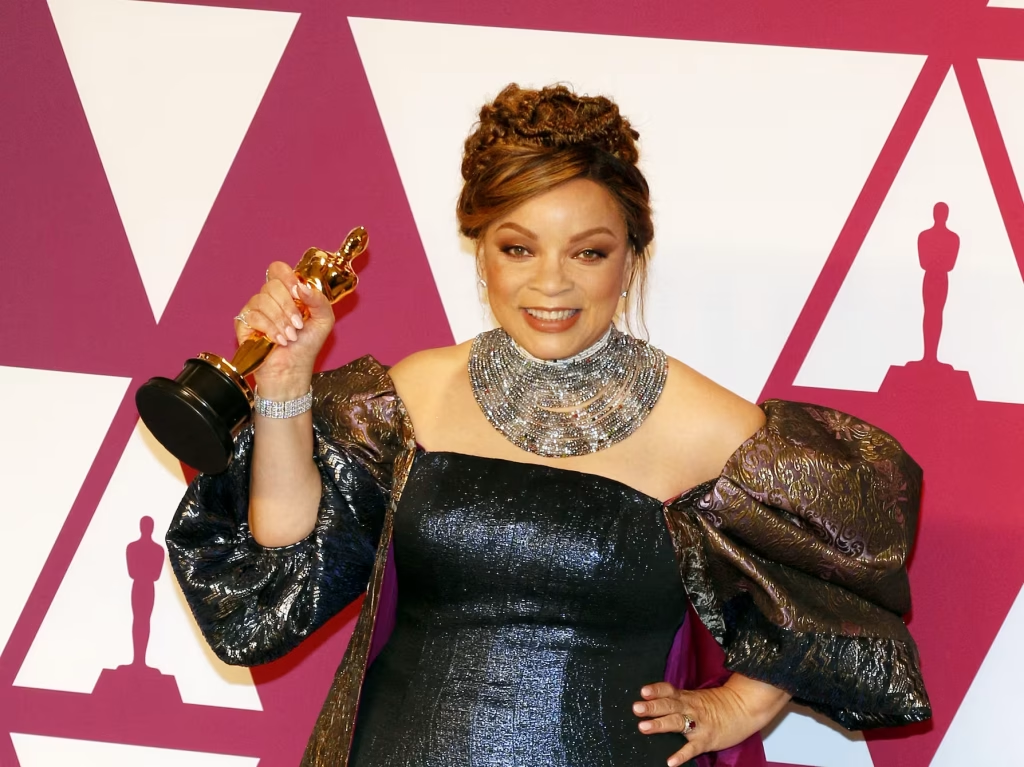
3. Ruth E. Carter

Ruth E. Carter is the costume designer behind cultural phenomena like Black Panther and Malcolm X. She’s the first Black woman to win the Oscar for Best Costume Design, and the first to win multiple Oscars in any category.

Image Source: Bing Image. License: All Creative Commons

Carter’s work blends cultural history, authenticity, and creativity. Every design tells a story, proving that fashion in film can educate, inspire, and define cinematic worlds.

Image Source: Bing Image. License: All Creative Commons

2. Kathleen Kennedy

Kathleen Kennedy has produced some of the most beloved films of all time, including Jurassic Park, E.T., and Back to the Future. Since 2012, she’s served as President of Lucasfilm, overseeing the Star Wars franchise and guiding it into a new era.

Image Source: Bing Image. License: All Creative Commons

Her influence is unparalleled. Kennedy demonstrates that producing requires vision, strategy, and an unerring ability to balance creativity with business, a true blueprint for Hollywood power players.

Image Source: Bing Image. License: All Creative Commons

1. Shonda Rhimes

Shonda Rhimes is the ultimate showrunner, the queen of TV drama whose Shondaland empire includes Grey’s Anatomy, Scandal, How to Get Away with Murder, and Bridgerton. Her storytelling captivates millions and redefines what television can be.

Image Source: Bing Image. License: All Creative Commons

Rhimes’ work goes beyond entertainment; it inspires, challenges norms, and gives voice to stories that might otherwise go untold. She’s the most influential woman behind the scenes, a true legend whose impact will be felt for generations.

Image Source: Bing Image. License: All Creative Commons

Hollywood may spotlight the actors, but the women behind the scenes are the ones shaping the stories we love. From music and costumes to production and showrunning, these trailblazers prove that influence isn’t measured by screen time. Their vision, creativity, and perseverance are the real magic powering Tinseltown.

15 Stars Who Completely Changed Their Names for Fame

0
Image Source: Bing Image. License: All Creative Commons

A great stage name can make all the difference. Across Hollywood and the music industry, a memorable, carefully chosen name can define a career, craft a public persona, and even shape a legacy. Behind the glitz, countless stars have swapped their birth names for something that better reflects the image they want to project or helps them stand out in a crowded field. Whether it’s honoring family, embracing a nickname, or simply making a name easier to remember or pronounce, these 15 celebrities demonstrate just how powerful a name can be. From film and TV to music, here’s a countdown of the most surprising and transformative celebrity name changes, ranked from 15 to 1.

Image Source: Bing Image. License: All Creative Commons

15. Lily James (Born Lily Chloe Ninette Thomson)

When Lily James burst onto the acting scene, she chose to honor her late father, James Thomson, by adopting his first name as her last. It was a personal tribute, a way to carry him with her into the spotlight, and now “Lily James” is synonymous with elegance, charm, and period-drama royalty.

Image Source: Bing Image. License: All Creative Commons

Her name change shows how thoughtful choices can tie personal history to public image. Every red carpet appearance and film premiere reminds fans not only of her talent but of the heart behind her name.

Image Source: Bing Image. License: All Creative Commons

14. Elton John (Born Reginald Kenneth Dwight)

Reginald Dwight may have been his birth name, but it lacked the sparkle of a pop icon. When he became Elton John, it was like stepping into a new identity, a bold, larger-than-life persona that fit his music perfectly. He legally made the change in 1972 and even added “Hercules” to his full name for flair.

Image Source: Bing Image. License: All Creative Commons

The transformation wasn’t just cosmetic. Elton has explained that leaving behind Reginald helped him move past unhappy memories and embrace the flamboyant, creative life that would define his career. It’s a perfect example of how a new name can spark reinvention.

Image Source: Bing Image. License: All Creative Commons

13. Winona Ryder (Born Wynona Laura Horowitz)

Winona Ryder found her stage surname through a serendipitous moment: she was inspired by a Mitch Ryder album while working on her first film. “Ryder” just clicked, giving her a name that rolled off the tongue and matched her on-screen charisma.

Image Source: Bing Image. License: All Creative Commons

This small tweak became iconic, allowing her to stand out in a sea of young Hollywood talent. Today, the name Winona Ryder evokes cult classics, award-winning performances, and a distinctive presence that her birth name might not have captured.

Image Source: Bing Image. License: All Creative Commons

12. Marilyn Monroe (Born Norma Jeane Mortenson/Baker)

Before the world knew her as Marilyn Monroe, she was Norma Jeane. The transformation was orchestrated by a studio exec, and though she didn’t legally adopt “Marilyn” until 1956, the name change marked her transition from ordinary young woman to Hollywood legend.

Image Source: Bing Image. License: All Creative Commons

Monroe’s new identity perfectly matched her glamorous persona. By keeping her mother’s maiden name, she created a combination that has endured as a symbol of beauty, star power, and timeless cinematic allure.

Image Source: Bing Image. License: All Creative Commons

11. Whoopi Goldberg (Born Caryn Elaine Johnson)

Caryn Johnson became Whoopi Goldberg, a name that instantly sparks recognition. “Whoopi” comes from the whoopee cushion, reflecting her playful sense of humor, while “Goldberg” honors her mother’s maiden name. The result is a moniker that’s uniquely hers, memorable, and culturally resonant.

Image Source: Bing Image. License: All Creative Commons

Goldberg has shared that her stage name is a connection to both heritage and personality. It captures the essence of her work, bold, fearless, and unapologetically fun, making it a perfect match for one of Hollywood’s most distinctive voices.

Image Source: Bing Image. License: All Creative Commons

10. Demi Moore (Born Demetria Gene Guynes)

Demetria Guynes transformed into Demi Moore, a name that’s sleek, easy to remember, and instantly iconic. Moore chose to retain her first husband’s surname, but it was her first name, shortened and polished, that gave her the Hollywood edge.

Image Source: Bing Image. License: All Creative Commons

The name helped propel her into the spotlight, aligning perfectly with her rising stardom in the 1980s and ‘90s. It’s a reminder of how small adjustments can create a big impact on a career trajectory.

Image Source: Bing Image. License: All Creative Commons

9. Tom Cruise (Born Thomas Cruise Mapother IV)

Tom Cruise simplified his birth name by dropping the cumbersome “Mapother IV.” Using his middle name as a surname made him more approachable, easier to remember, and certainly more marketable as a leading man.

Image Source: Bing Image. License: All Creative Commons

This subtle change was one of the first steps in building the blockbuster persona we know today. Cruise’s name is now synonymous with action, adventure, and undeniable Hollywood magnetism.

Image Source: Bing Image. License: All Creative Commons

8. Michael Keaton (Born Michael Douglas)

Michael Keaton couldn’t very well be Michael Douglas; the name was already taken by another actor. By adopting “Keaton,” he carved out his own identity, one that would become linked to Batman, Beetlejuice, and countless unforgettable performances.

Image Source: Bing Image. License: All Creative Commons

The name change shows that necessity can spark creativity. A simple switch gave him a distinctive, lasting brand in a competitive industry.

Image Source: Bing Image. License: All Creative Commons

7. Bruno Mars (Born Peter Gene Hernandez)

Peter Hernandez became Bruno Mars thanks to a childhood nickname from his father and a cosmic flourish added later. “Bruno” stuck because of a wrestling resemblance, while “Mars” gave him that otherworldly, star-ready appeal.

Image Source: Bing Image. License: All Creative Commons

The new name matched his musical talent perfectly. Today, Bruno Mars is synonymous with smooth vocals, chart-topping hits, and showmanship, proving that a name can be as catchy as the music itself.

Image Source: Bing Image. License: All Creative Commons

6. Miley Cyrus (Born Destiny Hope Cyrus)

Destiny Hope Cyrus transformed into Miley Ray Cyrus, inspired by her childhood nickname “Smiley.” The name change marked her evolution from Disney starlet to global pop sensation, signaling a new era in her career.

Image Source: Bing Image. License: All Creative Commons

By adopting Miley, she embraced a persona that could evolve and grow with her ambitions. The switch helped her shed the constraints of her birth name while keeping a link to her personal history.

Image Source: Bing Image. License: All Creative Commons

5. Katy Perry (Born Katheryn Elizabeth Hudson)

Katheryn Hudson became Katy Perry to avoid confusion with the already-famous Kate Hudson. Perry is her mother’s maiden name, and the combination created a pop-friendly, unforgettable stage name.

Image Source: Bing Image. License: All Creative Commons

The decision to reinvent herself allowed her to stand out in the crowded music industry. Katy Perry is now an icon, proving that a name can be both practical and powerful.

Image Source: Bing Image. License: All Creative Commons

4. Nicki Minaj (Born Onika Tanya Maraj)

Nicki Minaj’s name was assigned during her first production deal, and although she initially resisted it, the moniker stuck. It now represents a larger-than-life persona in music and fashion, instantly recognizable worldwide.

Image Source: Bing Image. License: All Creative Commons

Despite the initial hesitation, Nicki’s stage name became inseparable from her identity. It’s a reminder that sometimes an imposed change can evolve into a defining brand.

Image Source: Bing Image. License: All Creative Commons

3. Vin Diesel (Born Mark Sinclair)

Mark Sinclair reinvented himself as Vin Diesel, a name born from his mother’s maiden name and a nickname that captured his energy. The new identity suited his action-packed film career perfectly.

Image Source: Bing Image. License: All Creative Commons

Diesel’s name exudes strength, speed, and intensity, reflecting the persona that audiences associate with the Fast & Furious franchise. It’s a textbook example of a stage name matching the image it represents.

Image Source: Bing Image. License: All Creative Commons

2. Emma Stone (Born Emily Stone)

Emily Stone became Emma Stone because the actors’ union already had an Emily Stone registered. Though she would have preferred to keep her birth name, the change allowed her to build a distinct, memorable identity in Hollywood.

Image Source: Bing Image. License: All Creative Commons

The slight tweak helped her stand out while keeping a sense of authenticity. Today, Emma Stone is synonymous with versatility, charm, and award-winning talent.

Image Source: Bing Image. License: All Creative Commons

1. Rihanna (Born Robyn Rihanna Fenty)

Robyn Fenty became Rihanna, a name that perfectly captures her global star power. While family and close friends still call her Robyn, the world knows her by the name that helped her dominate music, fashion, and culture.

Image Source: Bing Image. License: All Creative Commons

The choice of Rihanna underscores how a name can define a persona while leaving room for private identity. It’s the perfect example of a transformation that’s practical, personal, and undeniably iconic.

Image Source: Bing Image. License: All Creative Commons

From heartfelt tributes to practical reinventions, these celebrity name changes are more than trivia; they’re stories of ambition, identity, and self-expression. Sometimes it’s a tribute, sometimes it’s a strategy, and sometimes it’s pure magic, but every name reflects a choice to embrace the spotlight in a way that feels uniquely theirs.

16 Hollywood Couples Who Prove Love Isn’t About Height

0

Celebrity relationships often draw attention for their glitz and glamour, but sometimes it’s the physical contrasts that truly catch people’s eyes. Height differences, in particular, have a way of intriguing fans. Whether it’s a woman standing taller than her partner or a man towering over his spouse, these couples prove that love doesn’t measure itself by inches. From red carpet appearances to public outings at major events, these 16 pairs challenge traditional ideas of what a “matched” couple looks like. While their height gaps might be the first thing people notice, it’s their chemistry, confidence, and genuine connection that truly make them stand out.

Image Source: Bing Image. License: All Creative Commons

16. Elle Fanning and Gus Wenner

Elle Fanning has been turning heads alongside her boyfriend Gus Wenner, particularly for their notable height contrast. Standing at 5’9”, Elle visibly towers over Gus, a magazine executive, whenever they make public appearances. Their viral moment at the Golden Globes sparked an online buzz, with fans surprised to learn Elle’s true height and drawing comparisons to her sister Dakota.

Image Source: Bing Image. License: All Creative Commons

The couple officially went public on Instagram in 2024, making Valentine’s Day unforgettable. From Knicks games to the Met Gala, their public outings highlight not just the height difference but a genuine comfort and mutual admiration. Fans love seeing Gus confidently embrace the gap, and Elle and Gus have become an inspiring example of couples challenging traditional expectations.

Image Source: Bing Image. License: All Creative Commons

15. Zendaya and Tom Holland

Zendaya and Tom Holland are admired not just for their acting talent but also for their playful, loving relationship. Zendaya stands 5’10” while Tom measures 5’8”, creating a subtle but noticeable difference that has become part of their charm. Fans often comment on how Zendaya’s heels enhance the height gap, adding an extra touch to their red carpet moments.

Image Source: Bing Image. License: All Creative Commons

Beyond appearances, their dynamic showcases a relationship built on confidence and mutual respect. Tom has never let the difference affect their chemistry, and together they break the mold of what a “balanced” Hollywood couple looks like. Fans continue to celebrate them for showing that height is only a number when it comes to love.

Image Source: Bing Image. License: All Creative Commons

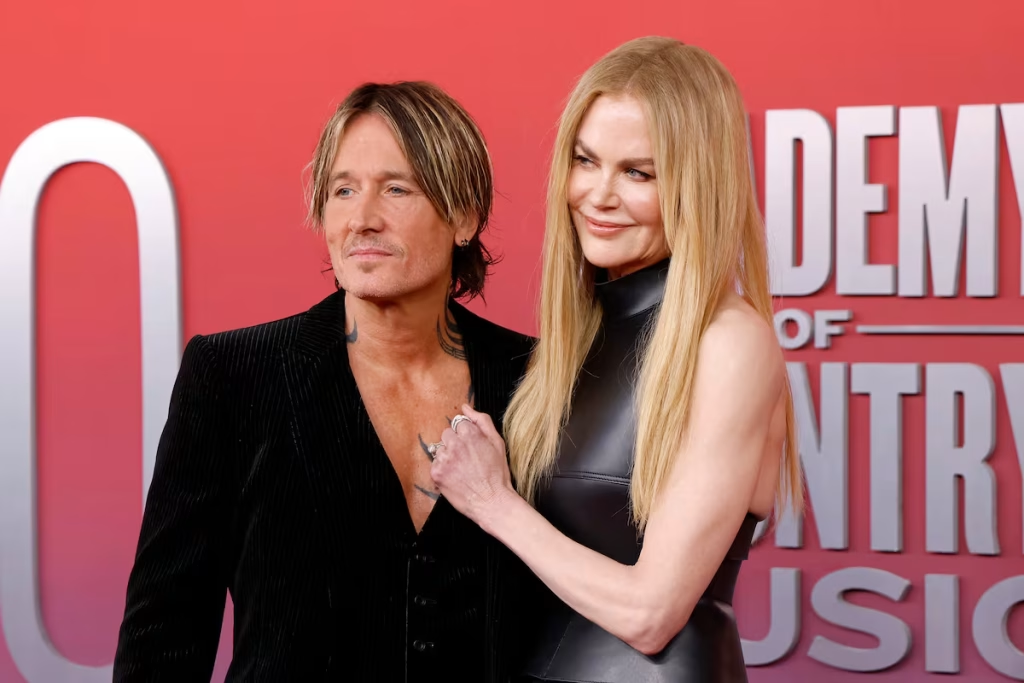
14. Nicole Kidman and Keith Urban

Nicole Kidman and Keith Urban are a prime example of a couple whose height difference is subtle but memorable. Nicole, standing at 5’11”, is just slightly taller than Keith, who is 5’10”. Their elegant presence at award shows and events often emphasizes Nicole’s statuesque figure, particularly when she dons heels.

Image Source: Bing Image. License: All Creative Commons

Their long-standing marriage is admired for its mutual respect and genuine partnership. Nicole’s height has never been an issue, and the couple consistently challenges the idea that men must always tower over their partners. Their story is a testament to confidence, individuality, and enduring love.

Image Source: Bing Image. License: All Creative Commons

13. RuPaul and Georges LeBar

RuPaul and Georges LeBar make a striking duo, even among other tall celebrity couples. RuPaul stands 6’4”, while Georges is 6’8”, giving them a commanding presence wherever they appear. Fans are drawn to their bold style and confident embrace of their height difference.

Image Source: Bing Image. License: All Creative Commons

Their relationship is celebrated not just for the visual impact but for the authenticity and creativity they bring to every public appearance. Together, they defy conventional expectations of celebrity couples, making them as fascinating offstage as they are on it.

Image Source: Bing Image. License: All Creative Commons

12. Lisa Bonet and Jason Momoa

Lisa Bonet and Jason Momoa are an iconic pair with a dramatic height contrast. Jason, at 6’4”, towers over Lisa, who stands 5’2”, creating a visually striking difference that fans can’t help but notice. Their appearances together, from movie premieres to casual outings, often highlight the gap endearingly.

Image Source: Bing Image. License: All Creative Commons

Despite the contrast, their relationship has been admired for warmth, authenticity, and deep mutual respect. Jason’s protective, affectionate nature complements Lisa’s graceful presence, making them one of Hollywood’s most adored couples. Their height difference has become an emblem of their unique charm.

Image Source: Bing Image. License: All Creative Commons

11. Joe Jonas and Sophie Turner

Joe Jonas and Sophie Turner showcase a subtle but noticeable height gap. Sophie stands 5’9” compared to Joe’s 5’7”, and fans often notice the difference on red carpets, especially when Sophie wears heels. Their playful interactions in public reflect a comfortable, confident partnership.

Image Source: Bing Image. License: All Creative Commons

The couple embraces their differences rather than hiding them, showing fans that love isn’t about conforming to traditional norms. Their dynamic is a mix of fun, support, and genuine connection, proving that height is never a barrier to romance.

Image Source: Bing Image. License: All Creative Commons

10. Pharrell Williams and Helen Lasichanh

Pharrell Williams and Helen Lasichanh are a stylish couple whose two-inch height difference adds to their distinctive presence. Helen, at 5’11”, subtly stands above Pharrell’s 5’9”, creating an elegant visual contrast that complements their fashion-forward appearances.

Image Source: Bing Image. License: All Creative Commons

Their relationship is admired for its creativity, individuality, and flair. Together, they challenge the conventional ideas of height and style in celebrity couples, embracing both their differences and their shared sense of self-expression.

Image Source: Bing Image. License: All Creative Commons

9. Tina Fey and Jeff Richmond

Tina Fey and Jeff Richmond have a playful and enduring partnership, with Tina standing at 5’5” and Jeff at 5’2”. Their height difference is often a topic of fan conversation, but it only adds to their charm. The couple’s humor and authenticity shine through in every appearance.

Image Source: Bing Image. License: All Creative Commons

Their dynamic emphasizes mutual respect and genuine connection. Fans appreciate how they embrace the gap with confidence, showing that love isn’t measured in inches but in laughter, partnership, and shared life experiences.

Image Source: Bing Image. License: All Creative Commons

8. Jada Pinkett Smith and Will Smith

Jada Pinkett Smith and Will Smith’s relationship features one of the more noticeable height differences, with Will towering at 6’4” compared to Jada’s 5’0”. Their striking contrast often draws attention at public events, but their bond goes far beyond appearances.

Image Source: Bing Image. License: All Creative Commons

Despite challenges and public scrutiny over the years, the couple has maintained a strong, loving partnership. Will’s imposing height and Jada’s powerful presence combine to create a dynamic that continues to inspire and captivate fans worldwide.

Image Source: Bing Image. License: All Creative Commons

7. Sacha Baron Cohen and Isla Fisher

Sacha Baron Cohen and Isla Fisher are a duo where the height gap is impossible to ignore. Standing 6’3” to Isla’s 5’3”, the couple often turns heads at events, especially when Isla pairs heels with her naturally petite stature.

Image Source: Bing Image. License: All Creative Commons

Their relationship radiates humor, creativity, and mutual admiration. Fans love seeing them embrace their differences, demonstrating that height can enhance the uniqueness of a partnership rather than detract from it.

Image Source: Bing Image. License: All Creative Commons

6. Sophie Dahl and Jamie Cullum

Sophie Dahl and Jamie Cullum showcase a couple where the woman is taller than the man. Sophie’s statuesque height stands out against Jamie’s smaller frame, and their appearances together have been noted for the elegant contrast they create.

Image Source: Bing Image. License: All Creative Commons

Their partnership thrives on creativity and mutual respect, proving that differences in stature do not define a couple’s connection. Fans admire their authenticity and the way they celebrate each other’s individuality.

Image Source: Bing Image. License: All Creative Commons

5. Benji Madden and Cameron Diaz

Benji Madden and Cameron Diaz are a couple with a noticeable but embraced height difference. Cameron’s 5’9” stature contrasts with Benji’s 5’6”, and fans enjoy seeing the pair together at public events where their chemistry shines.

Image Source: Bing Image. License: All Creative Commons

Their relationship reflects warmth, mutual support, and genuine affection. By embracing their physical differences, they have become an example of how confidence and love go hand in hand.

Image Source: Bing Image. License: All Creative Commons

4. Kevin Hart and Eniko Parrish

Kevin Hart and Eniko Parrish show that height doesn’t define a couple’s dynamic. Eniko, at 5’8”, is taller than Kevin, who stands at 5’4”. Fans love how the pair uses humor and style to highlight the difference rather than shy away from it.

Image Source: Bing Image. License: All Creative Commons

Their relationship is admired for its playfulness and balance. Kevin’s comedic talent pairs perfectly with Eniko’s elegance, creating a couple whose charm lies in both personality and partnership.

Image Source: Bing Image. License: All Creative Commons

3. Gwen Stefani and Blake Shelton

Gwen Stefani and Blake Shelton demonstrate a striking height contrast, with Blake standing 6’5” and Gwen standing 5’6”. Whether at award shows or music events, the difference adds a unique visual element to their public appearances.

Image Source: Bing Image. License: All Creative Commons

Their relationship is celebrated for creativity, mutual respect, and authenticity. Fans appreciate the way their height gap enhances rather than overshadows the connection between the pop star and country singer.

Image Source: Bing Image. License: All Creative Commons

2. Ben Affleck and Jennifer Lopez

Ben Affleck and Jennifer Lopez are a high-profile couple with a noticeable height difference. Ben, at 6’4”, towers over Jennifer’s 5’5”, making their public appearances particularly striking.

Image Source: Bing Image. License: All Creative Commons

Despite the difference, their relationship is defined by love, support, and shared experiences. Fans admire their confidence and the way they embrace both their individual strengths and their connection as a couple.

Image Source: Bing Image. License: All Creative Commons

1. Adrienne Williams and Chris Bosh

Adrienne Williams and Chris Bosh have one of the most extreme height gaps among celebrities. Chris, at 6’11”, stands nearly seven feet tall when compared to Adrienne’s 5’0”, creating an unforgettable pairing in every public appearance.

Image Source: Bing Image. License: All Creative Commons

Their relationship is admired for warmth, support, and authenticity. Chris’s athletic career and Adrienne’s elegance combine to make them an inspiring couple, proving that love thrives regardless of height differences.

Image Source: Bing Image. License: All Creative Commons

From subtle differences to dramatic contrasts, these celebrity couples show that height is just a small part of a larger picture. What fans truly admire is the confidence, connection, and chemistry that make these relationships shine. Whether tall, short, or somewhere in between, love proves there’s no single formula for a perfect match.

15 Beautiful Movies and Shows That Capture Love in Its Truest Form

0
Image Source: Bing Image. License: All Creative Commons

Love on screen is often portrayed as perfect and effortless, wrapped in glossy romance and tidy endings. Yet some films and television series take a different path, choosing to show relationships as they truly are—messy, awkward, painful, tender, confusing, and deeply human. The titles on this list stand out because they explore love in its many forms, whether romantic, familial, platonic, or rooted in long-term partnership, with refreshing honesty instead of fantasy. Rather than avoiding uncomfortable truths, these stories lean into them, capturing the vulnerability, misunderstandings, and quiet moments that define real relationships. Because of that authenticity, they resonate deeply, offering viewers something far more meaningful than a picture-perfect love story.

Image Source: Bing Image. License: All Creative Commons

15. His Three Daughters

His Three Daughters captures the emotional chaos that surfaces when family members are forced back into the same space during a moment of crisis. Three sisters, Katie, Christina, and Rachel, reunite in their father’s apartment as he approaches the end of his life, and old resentments immediately resurface.

Image Source: Bing Image. License: All Creative Commons

Each woman arrives carrying her own emotional armor: Katie’s need for control, Christina’s rigid sense of order, and Rachel’s lingering feeling that she doesn’t fully belong. Their conversations are uncomfortable, sharp, and often unresolved, mirroring the way real families communicate under stress. Rather than building toward a dramatic catharsis, the film lingers in quiet moments, glances, pauses, and half-finished thoughts that feel painfully familiar.

Image Source: Bing Image. License: All Creative Commons

What makes the film so affecting is its honesty. Healing doesn’t come easily, and not everything is fixed by the end. Instead, His Three Daughters reminds us that love within families is complicated, imperfect, and often expressed through conflict.

Image Source: Bing Image. License: All Creative Commons

14. Nobody Wants This

Nobody Wants This refreshes the romantic comedy by grounding it firmly in reality. Kristen Bell plays Joanne, who finds herself in a relationship with Noah, a rabbi whose faith and family introduce real-world complications into their romance.

Image Source: Bing Image. License: All Creative Commons

Rather than relying on grand gestures, the series focuses on communication, compromise, and self-awareness. Joanne and Noah don’t magically solve their problems; they talk, stumble, and reassess what they’re willing to give up or hold onto. The show acknowledges how cultural differences can strain even the most genuine connections. Its charm lies in its realism. Love here isn’t effortless or idealized; it’s work, negotiation, and growth, and that honesty makes the story resonate.

Image Source: Bing Image. License: All Creative Commons

13. Couples Therapy

Couples Therapy strips away the theatrics of reality television and replaces them with raw emotional truth. Following real couples in sessions with Dr. Orna Guralnik, the series offers a rare glimpse into what relationship repair actually looks like.

Image Source: Bing Image. License: All Creative Commons

Season three broadens the scope by including a polycule, but the heart of the show remains unchanged: unresolved resentment, emotional wounds, and the slow, sometimes frustrating process of learning how to communicate. There are no miracle breakthroughs, just incremental progress and painful realizations. What makes the series so compelling is its refusal to simplify. Love here is work, vulnerability is uncomfortable, and healing happens one conversation at a time.

Image Source: Bing Image. License: All Creative Commons

12. Past Lives

Past Lives is a quiet meditation on love, timing, and the lives we don’t end up living. Nora and Hae Sung reconnect years after their childhood friendship was cut short, and what unfolds is filled with longing and emotional restraint rather than melodrama.

Image Source: Bing Image. License: All Creative Commons

The film treats all relationships with care, including Nora’s marriage to Arthur, which is portrayed with tenderness and mutual respect. There are no villains, just people trying to understand their feelings without betraying their commitments. Rather than offering closure, Past Lives embraces ambiguity. It understands that some connections exist to shape us, not to last forever.

Image Source: Bing Image. License: All Creative Commons

11. Beef

On the surface, Beef is about a road rage incident spiraling out of control. Beneath that chaos, however, is a deeply uncomfortable exploration of marriage, resentment, and emotional repression.

Image Source: Bing Image. License: All Creative Commons

Amy and George’s relationship is strained, messy, and brutally honest. The show allows its characters to be selfish, cruel, and painfully human, showing how unspoken pain can rot relationships from the inside out. Beef doesn’t offer redemption through perfection; it suggests healing comes from accountability, self-awareness, and the willingness to confront uncomfortable truths.

Image Source: Bing Image. License: All Creative Commons

10. The Bear

While The Bear is set in the pressure cooker of a restaurant kitchen, its emotional core lies in relationships between coworkers, siblings, and oneself. Carmen’s attempt to run his late brother’s restaurant forces him to confront grief, control issues, and inherited trauma.

Image Source: Bing Image. License: All Creative Commons

The series excels at portraying how dysfunction is passed down and how difficult it is to unlearn harmful patterns. Trust is fragile, communication is messy, and progress is rarely linear. At its heart, The Bear is about rebuilding, not just a business, but connections fractured by loss and pride.

Image Source: Bing Image. License: All Creative Commons

9. Shrinking

Shrinking centers on grief and the reckless choices that often follow it. Jimmy, a therapist mourning his wife, blurs professional boundaries while trying, and often failing, to reconnect with his daughter and friends.

Image Source: Bing Image. License: All Creative Commons

The show embraces emotional messiness. Relationships fracture, heal, and fracture again, reflecting how grief doesn’t move in straight lines. Even the therapists are flawed, lost, and in need of support themselves. By blending humor with vulnerability, Shrinking presents healing as imperfect but possible.

Image Source: Bing Image. License: All Creative Commons

8. Somebody Somewhere

Somebody Somewhere quietly celebrates friendship as a form of love just as powerful as romance. Sam finds emotional refuge in her bond with Joel, a friendship built on acceptance rather than expectation.

Image Source: Bing Image. License: All Creative Commons

Their connection thrives on honesty, humor, and shared loneliness. The series challenges the idea that romantic relationships are the ultimate emotional goal, showing instead how platonic love can be deeply sustaining. It’s a gentle reminder that sometimes the most meaningful relationships are the ones that simply allow us to be ourselves.

Image Source: Bing Image. License: All Creative Commons

7. Marriage Story

Marriage Story pulls no punches in its portrayal of divorce. Charlie and Nicole’s separation is painful, not because of cruelty, but because of unresolved hurt and miscommunication. The film captures the exhausting logistics of co-parenting alongside the emotional devastation of letting go.

Image Source: Bing Image. License: All Creative Commons

Both characters are deeply flawed, yet sympathetic, making the breakdown of their marriage feel tragically believable. Rather than assigning blame, Marriage Story explores how love can evolve, even when it no longer looks the way it once did.

Image Source: Bing Image. License: All Creative Commons

6. Blue Valentine

Blue Valentine traces a relationship from its hopeful beginnings to its heartbreaking end. By intercutting moments of early romance with scenes of emotional erosion, the film reveals how love can fade without a single defining moment.

Image Source: Bing Image. License: All Creative Commons

Michelle Williams and Ryan Gosling bring raw vulnerability to their roles, making every argument and quiet disappointment feel earned. The film refuses to soften its message or offer comfort. It’s an unflinching portrait of what happens when love alone isn’t enough.

Image Source: Bing Image. License: All Creative Commons

5. Like Crazy

Like Crazy examines long-distance love with brutal honesty. Separated by immigration laws, Anna and Jacob struggle to maintain intimacy across continents. The film shows how distance creates temptation, resentment, and emotional drift.

Image Source: Bing Image. License: All Creative Commons

Love persists, but it changes, often in painful ways neither partner anticipates. Its power lies in its uncertainty. Like Crazy understands that sometimes relationships don’t fail dramatically; they simply wear down.

Image Source: Bing Image. License: All Creative Commons

4. (500) Days of Summer

(500) Days of Summer dismantles the romantic fantasy by showing how expectations can sabotage love. Told out of order, the film mirrors how we replay relationships in our minds, highlighting the good while ignoring warning signs.

Image Source: Bing Image. License: All Creative Commons

Tom’s idealized view of Summer ultimately blinds him to who she really is. The film gently but firmly critiques the idea that love should follow a predetermined script. It’s a story about learning, growing, and accepting reality even when it hurts.

Image Source: Bing Image. License: All Creative Commons

3. Eternal Sunshine of the Spotless Mind

Despite its sci-fi premise, Eternal Sunshine of the Spotless Mind is one of the most emotionally grounded love stories ever made. Joel and Clementine attempt to erase each other from their memories, only to rediscover why they mattered in the first place.

Image Source: Bing Image. License: All Creative Commons

The film captures the chaos, tenderness, and regret embedded in relationships. It suggests that pain is inseparable from love, and perhaps worth enduring. Its message lingers: even flawed connections leave lasting imprints.

Image Source: Bing Image. License: All Creative Commons

2. The Before Trilogy

The Before trilogy follows Jesse and Céline across nearly two decades, chronicling how love evolves. Each installment reflects a different stage of infatuation, reconnection, and long-term partnership.

Image Source: Bing Image. License: All Creative Commons

The dialogue feels spontaneous and intimate, grounded in everyday concerns rather than cinematic fantasy. The films understand that love is shaped by choices, compromises, and persistence. Few stories capture romantic realism as completely as this trilogy.

Image Source: Bing Image. License: All Creative Commons

1. Call Me By Your Name

Call Me By Your Name is a tender exploration of first love and emotional awakening. Elio’s relationship with Oliver unfolds slowly, charged with longing, discovery, and inevitable heartbreak.

Image Source: Bing Image. License: All Creative Commons

What elevates the film is its emotional universality. Though rooted in a specific time and place, it captures feelings that nearly everyone recognizes: the intensity of loving deeply for the first time and the pain of letting go. It’s a love story that shapes us forever, even when it doesn’t last.

Image Source: Bing Image. License: All Creative Commons

These films and series resonate because they don’t promise perfection. Instead, they reflect love as it’s actually lived, complicated, fragile, transformative, and deeply human. Whether romantic, familial, or platonic, these stories remind us that connection is rarely easy, but always worth exploring.

14 Shocking Actor Replacements That Happened Behind the Scenes

0
Image Source: Bing Image. License: All Creative Commons

Film productions often operate like finely tuned machines where timing, collaboration, and creative harmony all need to align, but even the most carefully planned projects can experience unexpected setbacks. Disagreements over creative direction, scheduling conflicts, health concerns, or simply a lack of on-screen chemistry can lead to sudden casting changes that ripple through an entire production. When an actor leaves a role after filming has already begun, it can disrupt schedules, reshape performances, and sometimes even change the tone of the finished film. The following fourteen stories highlight memorable moments when actors were replaced mid-production—situations that, whether controversial or necessary, reveal just how unpredictable the filmmaking process can be and how a single casting decision can alter the course of a movie’s history.

Image Source: Bing Image. License: All Creative Commons

14. Kel O’Neill — There Will Be Blood

Kel O’Neill was originally cast as preacher Eli Sunday in Paul Thomas Anderson’s There Will Be Blood, opposite Daniel Day-Lewis. After several weeks of filming, however, it became clear something wasn’t clicking.

Image Source: Bing Image. License: All Creative Commons

O’Neill later said he sensed the disconnect early on. Anderson decided to replace him with Paul Dano, who was already in the film as Eli’s brother. The script was reworked so Dano played identical twins, resulting in one of the film’s most unforgettable performances. O’Neill ultimately stepped away from acting and found success directing documentaries.

Image Source: Bing Image. License: All Creative Commons

13. Colin Firth — Paddington

Colin Firth had fully recorded his dialogue as the voice of Paddington Bear, but once the animation came together, the filmmakers felt his voice sounded too grown-up for the character.

Image Source: Bing Image. License: All Creative Commons

Firth himself acknowledged the decision with grace, noting that the bear simply wasn’t meant to sound like him. Ben Whishaw was brought in to re-record the role, and his lighter tone helped turn Paddington into a modern family-film icon.

Image Source: Bing Image. License: All Creative Commons

12. James Remar — Aliens

James Remar spent nearly a month filming Aliens as Corporal Hicks before being dismissed. Officially, the explanation was “creative differences,” but Remar later admitted his firing followed a drug-related arrest during production.

Image Source: Bing Image. License: All Creative Commons

Reports also described disruptive on-set behavior, including accidentally firing a prop weapon into a neighboring soundstage. Michael Biehn stepped into the role, delivering a performance that became central to the franchise.

Image Source: Bing Image. License: All Creative Commons

11. Holly Hunter — Chicken Little

In early development, Chicken Little featured a female protagonist voiced by Holly Hunter. After recording her lines, Disney executives decided to rework the character into a boy, believing it would attract a wider audience.

Image Source: Bing Image. License: All Creative Commons

Hunter was replaced by Zach Braff, and the story was reshaped entirely. While the decision reflected industry thinking at the time, later successes of female-led animated films suggest how much perspectives have shifted.

Image Source: Bing Image. License: All Creative Commons

10. Connor Ratliff — Band of Brothers

Connor Ratliff lost his small role in Band of Brothers just one day before filming began. He was told executive producer Tom Hanks felt he had “dead eyes.”

Image Source: Bing Image. License: All Creative Commons

Years later, Ratliff transformed the experience into the podcast Dead Eyes, exploring rejection in Hollywood. Hanks eventually appeared on the show, owning the decision and offering clarity. What began as a painful dismissal became a thoughtful conversation about art and subjectivity.

Image Source: Bing Image. License: All Creative Commons

9. Dennis Hopper — The Truman Show

Dennis Hopper was originally cast as Christof, the creator of Truman’s artificial world, but struggled early on with memorization and performance consistency.

Image Source: Bing Image. License: All Creative Commons

After reviewing early footage, director Peter Weir and producer Scott Rudin decided to recast the role. Ed Harris stepped in and delivered a quietly haunting performance that earned him an Oscar nomination.

Image Source: Bing Image. License: All Creative Commons

8. Judy Garland — Valley of the Dolls

Judy Garland’s casting in Valley of the Dolls ended disastrously. Conflicts with director Mark Robson, combined with substance abuse struggles, made filming increasingly difficult.

Image Source: Bing Image. License: All Creative Commons

Accounts from co-stars describe a tense environment that worsened Garland’s condition. She was ultimately fired, replaced by Susan Hayward, and reportedly left with her costumes in protest. The episode remains one of Hollywood’s saddest behind-the-scenes stories.

Image Source: Bing Image. License: All Creative Commons

7. Eric Stoltz — Back to the Future

Eric Stoltz played Marty McFly for several weeks, but his intense, method-driven performance clashed with the film’s comedic tone.

Image Source: Bing Image. License: All Creative Commons

The filmmakers quietly continued shooting while arranging to replace him with Michael J. Fox, their original choice. Fox’s arrival reshaped the movie’s energy—and helped turn it into a timeless classic.

Image Source: Bing Image. License: All Creative Commons

6. Harvey Keitel — Apocalypse Now

Harvey Keitel was initially cast as Captain Willard but was let go shortly after production began in the Philippines. Director Francis Ford Coppola felt Keitel wasn’t connecting with the role under the harsh conditions.

Image Source: Bing Image. License: All Creative Commons

Martin Sheen took over, delivering a performance that became legendary. Though the decision was painful, it proved pivotal to the film’s final impact.

Image Source: Bing Image. License: All Creative Commons

5. Lori Petty — Demolition Man

Lori Petty was cast opposite Sylvester Stallone but exited the film after only a few days. Both sides cited creative differences, though Petty later described a personality clash between herself and Stallone.

Image Source: Bing Image. License: All Creative Commons

Sandra Bullock replaced her, launching one of the actress’s earliest breakout roles. The change became a classic example of how chemistry can redefine a movie.

Image Source: Bing Image. License: All Creative Commons

4. Jean-Claude Van Damme — Predator

Jean-Claude Van Damme was initially hired to play the Predator creature, but the role proved impractical. The restrictive suit and stilt-based design made movement nearly impossible.

Image Source: Bing Image. License: All Creative Commons

The production ultimately redesigned the alien and recast the role with Kevin Peter Hall, whose height and presence helped create one of cinema’s most iconic monsters.

Image Source: Bing Image. License: All Creative Commons

3. Lee Coleman — Friday the 13th Part VIII

Lee Coleman was cast as Sean Robertson but was dismissed after about a week. Creative concerns and an injury he sustained during off-hours complicated matters.

Image Source: Bing Image. License: All Creative Commons

Scott Reeves replaced him, and the production moved on quickly. Though minor, the recasting highlighted how unforgiving tight shooting schedules can be.

Image Source: Bing Image. License: All Creative Commons

2. The Voice Cast of The Good Dinosaur

Pixar’s The Good Dinosaur underwent a massive creative reset. Original director Bob Peterson was replaced, and much of the voice cast was let go as the story was reimagined.

Image Source: Bing Image. License: All Creative Commons

Several major roles were recast, with Frances McDormand being the lone actor to remain. The overhaul demonstrated how dramatically animated films can change, even deep into production.

Image Source: Bing Image. License: All Creative Commons

1. Samantha Morton — Her

Samantha Morton originally voiced Samantha, the AI companion in Her, and even performed scenes on set. During post-production, however, Spike Jonze realized the character needed a different emotional texture.

Image Source: Bing Image. License: All Creative Commons

Scarlett Johansson re-recorded the role, infusing it with warmth and immediacy. Though difficult, the change helped define the film’s emotional core and became one of Johansson’s most acclaimed performances.

Image Source: Bing Image. License: All Creative Commons

Being fired from a film doesn’t always reflect a lack of talent; often, it’s about timing, tone, or creative alignment. In several of these cases, the shakeups led to iconic performances and unforgettable movies. Behind every polished final cut lies a story of risk, revision, and sometimes, reinvention.