Home Blog Page 1012

10 Best Celebrity Cameos on Screen

0
Image Source: Bing Image. License: All Creative Commons

Let’s face it—few things spark pure joy like a surprise celebrity cameo. Whether it’s a blink-and-you-miss-it gag or a scene-stealing meta moment, these pop-ins have a magical way of hijacking our attention. They can break the fourth wall, deliver a perfect punchline, or simply make us grin like we’re in on a secret. From blockbuster films to guest-filled music videos, these cameos are the ultimate fan indulgence. Here, our countdown of 10 unforgettable ones—starting at number ten and moving up to the cameo king of kings.

Image Source: Bing Image. License: All Creative Commons

10. Chris Evans in Free Guy

You’re witnessing a frantic boss fight in an alternate reality and—wait, hold on—is there Captain America? Yes. A cameo by Chris Evans for a blink-and-smirk moment when RyanReynolds’s Guy whips out Cap’s shield. It’s quick, it’s surprising, and it’s the sort of joke that has you reaching instantly to rewind. 

Image Source: Bing Image. License: All Creative Commons

9. Stan Lee in Spider-Man: Into the Spider-Verse

Stan Lee’s cameo binge is the stuff of legend, but this one is particularly near and dear to the heart. In death, his appearances as a kind, wise comic book shop owner dispensing advice to Miles Morales read as a goodbye hug to the fanbase. Brief, poignant, and warmly affecting.

Image Source: Bing Image. License: All Creative Commons

8. Brad Pitt in Deadpool 2

Brad Pitt as… The Vanisher? For the entire length of one thrilling second? Deadpool 2’s most ridiculous joke may also be its wittiest cameo. It’s the very definition of “wait, what just happened?”

Image Source: Bing Image. License: All Creative Commons

7. Daniel Craig in Star Wars: The Force Awakens

Stormtrooper-attired James Bond? Yes, it’s true. Daniel Craig made a non-credited cameo as the bumbling trooper who gets Jedi-mind-tricked by Rey. Blink and you’ll miss it—but when you see, you can’t help but unhear his voice.

Image Source: Bing Image. License: All Creative Commons

6. Leonard Nimoy in The Bangles’ “Going Down to Liverpool” & Bruno Mars’ “The Lazy Song”

The man who was Spock also had a gift for deadpan comedy. In the ’80s, Nimoy played a stone-faced chauffeur in The Bangles’ music video. Decades later, he popped up again in Bruno Mars’ “The Lazy Song,” wandering around as a hilariously grumpy neighbor.

Image Source: Bing Image. License: All Creative Commons

5. Madonna’s “Bitch, I’m Madonna” Cameo Party

When Madonna invites friends, it’s not a party—it’s a spectacle. The music video for “Bitch, I’m Madonna” crams in Beyoncé, Kanye West, Miley Cyrus, Chris Rock, Alexander Wang, and more. It’s chaotic, indulgent, and a total s-who of pop culture.

Image Source: Bing Image. License: All Creative Commons

4. Bill Murray in Zombieland

Underdressed and sporting a flight helmet as a zombie to merely prank people? That is Bill Murray. His cameo in Zombieland is absurd, defusing, and topped off with one of the greatest, most pathetic bloopers in movie comedy.

Image Source: Bing Image. License: All Creative Commons

3. Michael Jackson in Men in Black II

Only Michael Jackson could have shown up, singing “Agent M,” and somehow feel as though born to exist in the Men in Black franchise. It’s short, peculiar, and unforgettable.

Image Source: Bing Image. License: All Creative Commons

2. Beastie Boys’ “Make Some Noise” Celebrity Chaos

This music video is basically an excuse for every famous friend the Beastie Boys ever had to show up and cause trouble. Seth Rogen, Elijah Wood, Will Ferrell, Jack Black, Orlando Bloom, Steve Buscemi, and about a dozen more pop in for the rowdiest cameo fest you’ll ever see.

Image Source: Bing Image. License: All Creative Commons

1. Alfred Hitchcock’s Cameo Tradition

Well before Marvel brought cameos into its own as an art form, Hitchcock perfected it. He slipped himself into nearly every film of his—occasionally taking a dog for a walk, occasionally sitting on a bus—turning “spot the director” into a game for his audience. Sheer cinema magic.

Image Source: Bing Image. License: All Creative Commons

From superheroes to sci-fi legends to music video madness, these cameos are evidence of one thing: the shortest appearances leave the biggest smiles. They’re short, clever, and the surprise is that sometimes the greatest surprises are the ones you’re least expecting.

10 Handguns That Excel for Both Home Defense and Everyday Carry

0
Image Source: Bing Image. License: All Creative Commons

Selecting a proper handgun for home protection and concealed carry is not a matter of choosing the one that “looks cool.” It’s more about finding a balance of technical features, reliability, and comfort in your hand. The shelves are filled with models, but only a few keep surfacing as the best due to their consistent performance, versatility, and simplicity.

Image Source: Bing Image. License: All Creative Commons

Here’s a countdown of ten handguns—from solid classics to modern workhorses—that struck the sweet spot between tactical capability and everyday practicality.

Image Source: Bing Image. License: All Creative Commons

10. Smith & Wesson J-Frame

An ageless revolver that’s worked its way into the world of defensive handguns. Small and snag-free owing to its enclosed hammer, it rides smoothly in a pocket or inside-the-waistband holster. Chambered in .357 Magnum for serious oomph, it’s also found in softer-recoiling .22 LR and .22 WMR variants. The double-action-only trigger isn’t light, but it’s more than sufficient at close range.

Image Source: Bing Image. License: All Creative Commons

9. Stoeger STR-9

An affordable semi-auto that doesn’t have a cheap feel. The STR-9 series ranges from sub-compact to full size, with 10 to 20 round capacities. Solid ergonomics, clean sights, and a nice trigger make it a contender in the value field. Various bundles include added features such as enhanced sights and additional magazines.

Image Source: Bing Image. License: All Creative Commons

8. Ruger MAX-9

This subcompact, optics-capable 9mm fills the gap between deep concealment and shootability. Its 3.2-inch barrel, sub-one-inch width, and 18.4-ounce weight make it simple to wear all day.

Image Source: Bing Image. License: All Creative Commons

Fiber optic sights are included, and both 10- and 12-round magazines are in the box. The MAX-9 is dependable, accurate, and easy to learn for beginners.

Image Source: Bing Image. License: All Creative Commons

7. Springfield Hellcat

Arguably one of the most ubiquitous micro-compacts today, the Hellcat synergizes great reliability with considerate features. It comes equipped with U-notch rear and tritium front sights, an Adaptive Grip texture, and capacities of 11 or 13 rounds. The RDP model includes a compensator to manage muzzle rise, and the Pro model expands capacity to 17 rounds.

Image Source: Bing Image. License: All Creative Commons

6. Glock G43 / G43X

Slim, durable, and entirely reliable. The G43 is an ultra-slim six-round carry gun, and the G43X extends the grip to 10 rounds and improves control. MOS models are red-dot capable. Both models are simple to conceal, precise, and relied upon by concealed carriers everywhere.

Image Source: Bing Image. License: All Creative Commons

5. Smith & Wesson M&P9 Shield EZ

Designed specifically for shooters who have difficulty with gritty slides, the Shield EZ delivers. Its smooth-racking slide, mild recoil, and full-length grip on a thin frame make it extremely shootable. Firing 30 Super Carry with a 10-round magazine capacity, it also has a grip safety for further reassurance. 

Image Source: Bing Image. License: All Creative Commons

4. Walther PPS M2

A skinny, comfortable 9mm single-stack. With a 6, 7, or 8-round magazine capacity, the PPS M2 is a snap to hide, yet has surprisingly good accuracy due to Walther’s grip and trigger being ergonomic and sharp. The good sights and slim profile make it an ideal choice for unobtrusive carry.

Image Source: Bing Image. License: All Creative Commons

3. Mossberg MC2c / MC2sc

Mossberg’s subcompact and compact 9mm pistols hit all the right notes: lightweight, high capacity, decent ergonomics, and easy to maintain. The MC2c holds 16 rounds, the MC2sc holds 14, and both are available with or without manual safeties. Field-stripping is rapid and secure, and they’ve withstood rigorous testing.

Image Source: Bing Image. License: All Creative Commons

2. Ruger SP101

A rugged revolver that’s designed to endure. Its stainless-steel frame, triple-locking cylinder, and caliber choices—.357 Magnum, .38 Special, and .327 Federal—make it capable and durable. The rubber grip moderates recoil, and the .327 model’s six-round capacity is a pleasant surprise for revolver enthusiasts.

Image Source: Bing Image. License: All Creative Commons

1. Smith & Wesson Bodyguard 2.0

At number one is this revised .380 Auto with its ultimate concealment goal in mind. Thin as a mere 0.88 inches and light at less than 10 ounces, it still provides the 10- or 12-round capacity. Improvements are made to the grip, improved slide serrations, trigger crispness, and a tritium front sight for low-light conditions. Used with quality defensive ammunition such as Speer Gold Dot, it’s a considerable little guardian.

Image Source: Bing Image. License: All Creative Commons

Key Considerations for Choosing Your Handgun

  • Caliber: 9mm reigns supreme for its blend of stopping power, capacity, and manageable recoil, but smaller calibers can be a better choice for recoil-prone shooters.
  • Capacity vs. Comfort: Double-stacks carry more bullets but can be wider; single-stacks are narrower and simpler to conceal.
  • Ergonomics: Texture and design of the grip, as well as features such as swappable backstraps, can significantly influence comfort and control.
  • Safety Features: Choose between manual safeties, grip safeties, and internal safeties according to your comfort and training level.
  • Reliability: The gun needs to cycle perfectly with your defensive ammo of choice—plain and simple.
Image Source: Bing Image. License: All Creative Commons

Nothing takes the place of hands-on experience. Make your way to a range, try out various models, and go through them both with practice loads and defensive loads. A pistol that fits well, shoots true, and gives you confidence is worth many times more than the newest shiny release.

10 Feel-Good Rom-Coms to Stream Now

0
Image Source: Bing Image. License: All Creative Commons

There are times when you do not care about plot twists, dark dramas, or emotionally exhausting epics—you just want a rom-com. Something as comfortable as snuggling up with your favorite blanket and eating a bowl of pasta. Romantic comedies are like movie comfort food, complete with all the comforting beats: meet-cutes, clever quips, and the promise that love will prevail in the end. Yes, the rom-com heyday of big budgets is behind us, but streaming services are full of gems just waiting to save you from a boring night or solitary Sunday.

Image Source: Bing Image. License: All Creative Commons

Below is my countdown of 10 rom-coms to watch—a mix of classics, current favorites, and underrated gems that forgo narrative in favor of simply listing them from 10 down to the one that wears the crown of comfort.

Image Source: Bing Image. License: All Creative Commons

10. Plus One

If you’re a fan of a good wedding film, Plus One is a light, airy pleasure. Two old pals decide to be each other’s plus-one for a summer full of weddings, and—you guessed it—things become complicated in the most adorable way. Jack Quaid and Maya Erskine are natural and hilarious together, making this a true feel-good “catching up with friends” experience that you can’t help but cheer for.

Image Source: Bing Image. License: All Creative Commons

9. Crazy, Stupid, Love

Ryan Gosling, Emma Stone, Steve Carell, and Julianne Moore in one film is enough. Throw in witty dialogue, interconnected love stories, and that Dirty Dancing lift scene, and you’ve got a rom-com that’s both sweet and smart. It’s a film that brings you laughter, swooning, and perhaps faith in redemption arcs.

Image Source: Bing Image. License: All Creative Commons

8. Warm Bodies

Romance with zombies? It somehow clicks. Warm Bodies turns the tables by presenting the tale from the zombie’s point of view, with Nicholas Hoult as a zombie romantic lead, whom you end up rooting for. Funny, eerily sentimental, and demonstrating love can be a lifesaver—during the apocalypse.

Image Source: Bing Image. License: All Creative Commons

7. Two Weeks Notice

Sandra Bullock and Hugh Grant doing their thing—that is all you need to know. She is an ethical lawyer, he is a wealthy mess, and their professional relationship unravels into something that neither of them anticipated. It is workplace romance at its best: warm, witty, and infinitely rewatchable.

Image Source: Bing Image. License: All Creative Commons

6. Chalet Girl

Not all rom-coms have to reinvent the wheel—occasionally, you just want snow, snogging, and a fish-out-of-water romance. Chalet Girl delivers all three. Felicity Jones is lovely as Kim, a novice snowboarder who gets swept up in an alpine romance with Ed Westwick. Extra points for Bill Nighy being his typical scene-stealing self.

Image Source: Bing Image. License: All Creative Commons

5. My Big Fat Greek Wedding

Few movies get family mayhem and love better than this one. Nia Vardalos plays Toula, whose romance puts her boisterous, outspoken Greek-American family into a spin. It’s funny, warm, and impossible to watch without smiling.

Image Source: Bing Image. License: All Creative Commons

4. The Edge of Seventeen

More coming-of-age than pure romance, but its genial, stilted heart earns it a spot here. Hailee Steinfeld is perfect as Nadine, a teen dealing with friendship angst, isolation, and first love. Woody Harrelson, her no-bullies teacher, is laughs gold.

Image Source: Bing Image. License: All Creative Commons

3. Crazy Rich Asians

A shiny new fairy tale with gorgeous imagery and family drama galore. Constance Wu and Henry Golding’s chemist and the decadent Singapore backdrop are essentially supporting characters in an anthem. It’s an old-fashioned rom-com and a milestone of multicultural cinema.

Image Source: Bing Image. License: All Creative Commons

2. Reality Bites

The ’90s version ofWhatat am I doing with my life?” Winona Ryder, Ethan Hawke, and Ben Stiller star in this story of post-grad uncertainty and ill-fated love triangles, set to an iconic soundtrack. If you’ve ever been young, poor, and trying to get it all together, it’ll resonate.

Image Source: Bing Image. License: All Creative Commons

1. Muriel’s Wedding

Witty, cringe-worthy, and surprisingly heart-wrenching, Muriel’s Wedding is not your typical rom-com—and that’s what makes it special. Toni Collette is absolute perfection as Muriel, an outsider with aspirations for the ultimate wedding and learning to love herself in the process. With ABBA playing in the background, it’s half and half happiness and sadness, making it the perfect comfort watch.

Image Source: Bing Image. License: All Creative Commons

No matter whether you’re in the mood for slow-burning banter, crazy family shenanigans, or an oddball love affair, these ten movies bring the goods exactly as advertised: laughter, heart, and a guaranteed happy ending.

10 Most Stunning Film Color Palettes

0
Image Source: Bing Image. License: All Creative Commons

Films are not merely stories—they’re seen things, and color is one of a director’s most potent tools. Color can create mood, predict turns, and incinerate a scene into your brain. It can create pastel dreamscapes or neon nightmares. Here are 10 movies that illustrate the idea that color is not just for show—it’s hiding in plain sight as storytelling.

Image Source: Bing Image. License: All Creative Commons

10. The Matrix – Green Code, Green World

When The Matrix opened, it revolutionized action films forever—but it revolutionized thinking about color in science fiction. Within the Matrix, everything glows with a sickly green light, as if you’re seeing through a computer monitor. It’s a quick decision that immediately conveys, this isn’t reality—and once you’ve picked up on it, you can’t unsee it.

Image Source: Bing Image. License: All Creative Commons

9. Joker – A Color Palette That Evolves with the Character

Joker begins in a world of drab greens and washed-out grays, mirroring Arthur Fleck’s empty, downtrodden life. As he transforms into the Joker, the colors erupt into deep reds, purples, and that unmistakable green hair. You’re not just watching his descent—you’re feeling it through every shift in tone.

Image Source: Bing Image. License: All Creative Commons

8. Blade Runner 2049 – Neon and Nothingness

Roger Deakins’ photography transforms Blade Runner 2049 into a mood board for the future: a combination of desolate grays, ghostly blues, and radioactive oranges. The city’s bright neon is contrasted with the stripped wastelands, highlighting the isolation and identity themes of the film. It’s science fiction, but one that has an emotional undertow.

Image Source: Bing Image. License: All Creative Commons

7. Midsommar – Terror in Broad Daylight

Most horror lurks in the darkness, but Ari Aster’s Midsommar turns up the brightness to near-tormenting levels. The Swedish location of the film is bathed in sunny blue skies, flower crowns, and pastel colors so bright they’re almost nauseating, and that makes the horror even more disturbing. It’s stunning, it’s dreamlike, and it’s morally wrong.

Image Source: Bing Image. License: All Creative Commons

6. Toy Story 3 – Color as Emotional Cue

Pixar has a talent for employing color to direct feelings, and Toy Story 3 is no exception. The scenes set in daycare push toward institutional yellows and greens, making it prison-like. By the time we hit the incinerator scene, the screen burns with reds and oranges—reducing a kids’ film to a visual punch in the gut.

Image Source: Bing Image. License: All Creative Commons

5. Moonlight – Three Lives, Three Palettes

Barry Jenkins frames Moonlight into three chapters, each with its unique colors. Childhood is shrouded in golden warmth. Adolescence cools into dull blues and greens. Adulthood descends into dark, saturated blues and darkness. It’s an aesthetic journey that matches the emotional one.

Image Source: Bing Image. License: All Creative Commons

4. Her – The Future Is Blush-Toned

Spike Jonze’s Her envisions a world of soft and intimate, not cold and metallic. Its reds, pinks, and oranges are warm and inviting—while also heightening the isolation that lies at the core of the film. It’s melancholy and romantic simultaneously.

Image Source: Bing Image. License: All Creative Commons

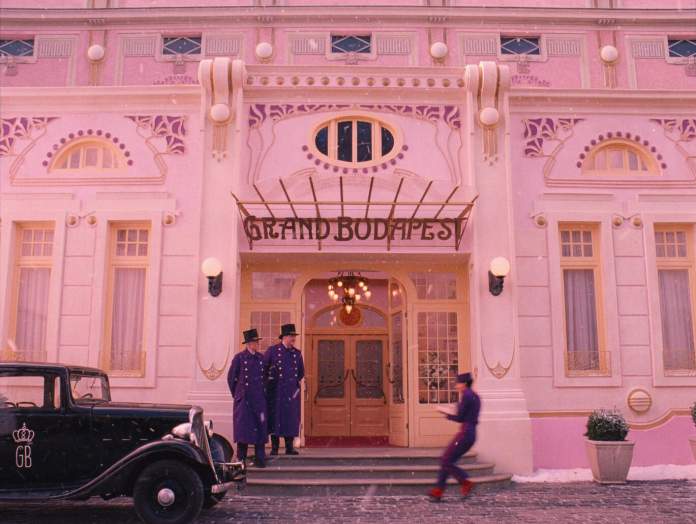
3. The Grand Budapest Hotel – Pastels with a Dark Side

Wes Anderson’s trademark symmetry gets paired with a candy-colored palette in The Grand Budapest Hotel. The pink facade of the hotel pops against an array of pastel costumes and sets. But look closer, and you’ll see villains cloaked in dark, brooding shades—a visual cue that danger lurks beneath the whimsy.

Image Source: Bing Image. License: All Creative Commons

2. La La Land – Primary Colors, Big Emotions

La La Land shows its inspirations proudly, stealing Old Hollywood’s bright blues, reds, and yellows. The vibrant colors imbue every dance sequence with an amplified, almost otherworldly quality, making the romance feel like a musical fantasy even when reality sets in.

Image Source: Bing Image. License: All Creative Commons

1. Barry Lyndon – Cinematic Paintings

Kubrick’s Barry Lyndon appears to have walked out of a museum. Candlelit rooms, powdered pastel colors, and carefully composited shots ape the look of 18th-century art. It is more than merely pretty—it’s evocative, drawing you into the period with a near-unsettling realism.

Image Source: Bing Image. License: All Creative Commons

Color in movies isn’t something you notice with your eyes—it’s something your feelings react to. These filmmakers employed it not as scenery, but as a necessary character in the narrative. The next time you see a film, try to observe the colors—you may detect a story within the story.

The B-58 Hustler: The Fastest Bomber That Never Fought

0
Image Source: Bing Image. License: All Creative Commons

The Convair B-58 Hustler is one of those unusual planes that succeeds both as a marvel of engineering and as a warning about the dangers of military planning. Sleek, very fast, and unlike anything else to be seen in the air, it set records left and right—but never became a mainstay of America’s nuclear deterrent.

Image Source: Bing Image. License: All Creative Commons

Conceived in the Cold War tensions of the 1950s, the Hustler was the U.S. Air Force’s high-tech answer to an evolving Soviet threat. It was the first operational bomber in the world to maintain Mach 2 speeds, an achievement that thrilled military planners and aeronautical engineers alike. Convair’s design was radical: a sharp delta wing, a narrow “wasp-waist” fuselage, and a cutting-edge honeycomb skin to handle the heat of supersonic flight.

Image Source: Bing Image. License: All Creative Commons

Four high-thrust General Electric J79-GE-5A afterburning turbojets, each with 15,000 pounds of thrust, propelled it to a maximum speed of 1,319 mph. Inertial navigation and bombing equipment provided incredible accuracy for the period, and its 19,450-pound payload made it capable of dispensing both nuclear bombs and defensive fire from a 20mm tail-mounted cannon.

Image Source: Bing Image. License: All Creative Commons

In 1960, when it entered service, the B-58 was astonishing. It set 19 world records, picking up distinguished aviation awards in the process. In 1962, the “Cowtown Hustler” flew round-trip from Los Angeles to New York in record-setting time, taking home the Bendix and Mackay Trophies.

Image Source: Bing Image. License: All Creative Commons

Another plane, “Greased Lightning,” flew from Tokyo to London in just over eight hours—averaging more than 1,080 mph. These achievements demonstrated that the Hustler was just as fast and effective as advertised.

Image Source: Bing Image. License: All Creative Commons

But pace alone could not sustain it in competition. The advent of advanced Soviet surface-to-air missiles soon revealed the B-58’s weak point—its dependence on high-speed, high-altitude penetration. As an aviation writer and former Italian Air Force officer, David Cenciotti has observed that, with SAMs on the scene, speed was no longer a guarantee of survival.

Image Source: Bing Image. License: All Creative Commons

Its high accident rate, plus its high maintenance and operating costs, made the math impossible to make work. The Air Force discovered it could operate six wings of B-52s for the cost of two wings of Hustlers—a budgetary fact that doomed the program.

Image Source: Bing Image. License: All Creative Commons

Others in the Pentagon fantasized about reworking the Hustler for even more ambitious missions. One proposal would have made it an airborne launcher for a Minuteman ICBM, in effect a supersonic “flying missile silo.”

Image Source: Bing Image. License: All Creative Commons

But the 68,000-pound weight of the missile was well outside the B-58’s design envelope, and suggested modifications—increased fuselage length, strengthened wings, and eliminating the tail gun—were too drastic to be feasible. Another idea discussed was launching satellites from the bomber, but once more, payload constraints mothballed the concept.

Image Source: Bing Image. License: All Creative Commons

Although it never entered combat, the B-58 made a niche for itself in aviation history. Only 116 were manufactured, and only eight remain today, on display in museums. The record-breaking “Cowtown Hustler” is on display at the National Museum of the U.S. Air Force. The first still-extant TB-58A trainer is located at Grissom Air Museum, and the last-ever Hustler produced is at the Pima Air & Space Museum.

Image Source: Bing Image. License: All Creative Commons

The B-58 Hustler was an icon of Cold War hubris and the relentless rhythm of aerospace development. It wasn’t an enduring workhorse, but a dazzling, brief experiment—a bomber that incinerated the horizon, scorched the globe with its velocity, and then faded away quietly. Its legacy isn’t in battle distinctions, but in the wonder it continues to evoke in those who examine its brief, dazzling career.

More related images you may be interested in:

Image Source: Bing Image. License: All Creative Commons

10 Top Picks for the Next Aquaman

0
Image Source: Bing Image. License: All Creative Commons

The tides are changing in the DC Universe. Now that Jason Momoa has officially left the role, the search for Atlantis’ new monarch is underway. Aquaman’s gone from a comic book footnote to a billion-dollar box office behemoth, and as the DCU embarks on its reboot era, one giant question remains: who’s ready to wield the trident and rule the seven seas? Here’s a peek at 10 thesps who might take on the part—and make a big splash.

Image Source: Bing Image. License: All Creative Commons

10. Sam Claflin

Best known for The Hunger Games: Catching Fire, Snow White & The Huntsman, and Enola Holmes, Sam Claflin has the charm, range, and action chops to reinvent Aquaman as a more grounded, relatable hero. While not the most obvious choice, his mix of warmth and edge could give the character a fresh dynamic.

Image Source: Bing Image. License: All Creative Commons

9. Will Poulter

Straight from his stint as Adam Warlock in Guardians of the Galaxy Vol. 3, Poulter has the comic book background, bulk, and unique appearance to bring a more comic-true Arthur Curry. And James Gunn tends to introduce known actors to new films—Poulter’s already been mentioned.

Image Source: Bing Image. License: All Creative Commons

8. Alexander Ludwig

From Vikings to The Hunger Games, Ludwig has demonstrated that he can do both heavy action and authoritative leadership. His physicality, fight training, and natural ruggedness make him a strong candidate for a more war-hardened, warrior-king iteration of Aquaman.

Image Source: Bing Image. License: All Creative Commons

7. Liam Hemsworth

With franchise credentials under his belt from The Hunger Games and soon to come as Geralt in The Witcher, Liam Hemsworth has star wattage and rough-around-the-edges charm. The prospect of one Hemsworth dominating the seas and another commanding Asgard essentially promotes itself.

Image Source: Bing Image. License: All Creative Commons

6. Dev Patel

Dev Patel’s work in The Green Knight, Lion, and Slumdog Millionaire has demonstrated his capacity to balance gravitas with vulnerability. Playing Aquaman, he might be able to bring emotional complexity and a more considerate interpretation, leaving the character open to new narrative options.

Image Source: Bing Image. License: All Creative Commons

5. Joe Alwyn

Best known for The Favourite and Mary Queen of Scots, Alwyn might make a great, traditional Aquaman. His subtle sense of style would be the ideal foil to Momoa’s king-rockstar, depicting Arthur Curry as a reliable, quietly authoritative ruler.

Image Source: Bing Image. License: All Creative Commons

4. Alex Aiono

Though still a young talent, Alex Aiono (Pretty Little Liars: Original Sin, Finding ‘Ohana) might infuse youthful vigor and long-term potential in the role. Aged 27, he has space to develop into a character, making Aquaman a career-defining chapter.

Image Source: Bing Image. License: All Creative Commons

3. Jensen Ackles

Loved by genre audiences for Supernatural and more currently The Boys, Jensen Ackles has the action credibility, charisma, and unmistakable voice to bring a fresh take on Aquaman. He’s been fancasted as other DC heroes for years, but this role might finally put him in the spotlight he deserves.

Image Source: Bing Image. License: All Creative Commons

2. Austin Butler

Austin Butler has already established his star power in Elvis and soon will be seen in Dune: Part Two. He’s young, versatile, and able to dominate the screen—a package that can make Aquaman relevant for the next several years.

Image Source: Bing Image. License: All Creative Commons

1. Alexander Skarsgård

Of The Northman, The Legend of Tarzan, and Godzilla vs. Kong, Skarsgård possesses the build, action background, and weight to capture both warrior and statesman aspects of Aquaman. He might effortlessly make the character his own with a brooding yet nuanced performance.

Image Source: Bing Image. License: All Creative Commons

Special Spotlight: Alan Ritchson

Before Jason Momoa’s reinterpretation, it was Alan Ritchson who originally portrayed Aquaman in Smallville as an attitude-filled eco-warrior. Now, following his Reacher breakout, Ritchson’s build, assertiveness, and on-screen presence place him in a strong position to take back the title.

Image Source: Bing Image. License: All Creative Commons

Having him return wouldn’t be nostalgia—it would be an astute method of merging the character’s past with the future of the DCU. In an era of multiverse storytelling, Ritchson could provide a familiar yet fresh Aquaman—one that is mythic and real-world-feeling at the same time.

Image Source: Bing Image. License: All Creative Commons

Whoever does take the throne in Atlantis, the job is a big one (and big fins) to fill. The ideal actor will require more than brawn—they will require the presence, depth, and charisma to bring one of DC’s most high-profile characters into the next chapter.

Speed Kings: Top 10 Fighter Jets of 2025

0
Image Source: Bing Image. License: All Creative Commons

With fighter jets, speed is not a bragging point—it can be the difference between life and death in battle. It’s a tactical advantage, an engineering challenge, and a matter of pride for pilots and designers. And yet, in a world where stealth and sensors can be more important than pure thrust, which planes still reign supreme in terms of raw velocity? Let’s count down the fastest fighter jets in service right now, beginning at number ten.

Image Source: Bing Image. License: All Creative Commons

10. McDonnell Douglas F-4 Phantom II

A Cold War legend, the F-4 Phantom II continues to serve with Turkish, Greek, and Iranian air forces. With its twin General Electric J79 engines, it could make Mach 2.23 at 40,000 feet. Its design wasn’t precisely streamlined, which earned it the quip, “A brick can fly if you put a big enough engine on it.” Early models didn’t even come equipped with a built-in gun—missiles were supposed to render dogfighting obsolete—until combat experience demonstrated otherwise, and a gun pod was added.

Image Source: Bing Image. License: All Creative Commons

9. Lockheed Martin F-22 Raptor

The F-22 is the sole stealth aircraft in this roster and the first true fifth-generation fighter. With a top speed of 2.25 Mach at 40,000 feet, it’s also a supercruiser—able to sustain speeds over Mach 1.8 without afterburners. That translates to more range, less fuel consumption, and no external stores to drag it down. Though highly capable, fewer than 200 were produced, and only the U.S. Air Force operates them.

Image Source: Bing Image. License: All Creative Commons

8. IAI Kfir

Israel’s IAI Kfir is a hot-rodded version of the Mirage 5 with an American General Electric J79-J1E turbojet. It flies at up to about Mach 2.3 at 36,000 feet. Aging airframes might not reach that number these days, but their combination of agility and speed has kept them in service in Colombia and among private military contractors for training and aggressor missions.

Image Source: Bing Image. License: All Creative Commons

7. Mikoyan MiG-29 Fulcrum

The MiG-29 was designed as a smaller, more maneuverable partner to the Su-27 and as an answer to the F-16. With a Mach 2.3 top speed, it’s renowned for its handling—aided by its twin engines and short airframe. Its drawback? Short range, and it can’t go supersonic with outside fuel tanks. As pilots like to say, when it comes to a dogfight, it’s as much about the driver as the vehicle itself.

Image Source: Bing Image. License: All Creative Commons

6. Grumman F-14 Tomcat

The Navy’s iconic F-14 Tomcat, which had variable-sweep wings, could reach Mach 2.3 at 40,000 feet. With the mighty AWG-9 radar and AIM-54 Phoenix missiles, it could lock onto aircraft as far away as 90 miles. Pilots remember that a lightly loaded, clean F-14 could fly even faster than its official rating indicated—though its carrier deck-dominating days are behind it.

Image Source: Bing Image. License: All Creative Commons

5. Mikoyan-Gurevich MiG-23 Flogger

Another swing-wing design, the MiG-23 was constructed as a high-speed interceptor. Priced to fly at Mach 2.35, it had advanced radar and long-range targeting available for its era. Less agile than more contemporary designs, its short runway launch capability provided it with Cold War strategic flexibility.

Image Source: Bing Image. License: All Creative Commons

4. Sukhoi Su-27 Flanker

One of the finest Soviet combatants, the Su-27 has a top speed of Mach 2.35. It was designed for power and payload as well as speed, and its airframe has led to an entire family of variants, such as the Su-30, Su-34, and Su-35.

Image Source: Bing Image. License: All Creative Commons

More than 1,200 Flankers remain in service around the globe; it is one of the most ubiquitous fighter designs in use.

Image Source: Bing Image. License: All Creative Commons

3. McDonnell Douglas F-15 Eagle

Designed to replace the MiG-25, the F-15 was the fastest mass-produced fighter to date, reaching Mach 2.5. It also has a perfect combat record—more than 100 kills with no air-to-air loss. The new F-15EX can theoretically hit Mach 2.9, although that speed hasn’t been tried in public. 

Image Source: Bing Image. License: All Creative Commons

2. Mikoyan MiG-31 Foxhound

A direct follow-up to the MiG-25, the MiG-31 has a top speed of Mach 2.83 at high altitude, though speed limits keep it at around Mach 1.5 to avoid destruction. It’s not only fast—its sophisticated radar, long-range missiles, and hypersonic weapon capacity make it one of the most lethal interceptors in the skies.

Image Source: Bing Image. License: All Creative Commons

1. Mikoyan-Gurevich MiG-25 Foxbat

Even still, the speed record holder for any fighter ever produced, the MiG-25 can reach Mach 2.83—and higher in short-term bursts—at more than 70,000 feet.

Image Source: Bing Image. License: All Creative Commons

The product of late ’60s development to intercept high-speed bombers and reconnaissance planes, it prompted the creation of the F-15 by the U.S. Its very high speed, however, sacrificed maneuverability, but for pure velocity, nothing else has come close.

Image Source: Bing Image. License: All Creative Commons

Why Aren’t Fighters Getting Faster?

Almost all of the world’s fastest jets were created during the Cold War. Current fighters only break Mach 1.2 in real combat because contemporary air warfare favors stealth, sophisticated sensors, and long-range missiles over pure speed.

Image Source: Bing Image. License: All Creative Commons

Interceptor missions do continue to gain from high speeds, but after some point, speed confers little benefit while burning fuel and stressing airframes. Even sixth-generation concepts will have a top speed between Mach 2.2 and Mach 2.5. In other words, they don’t build speed demons like they used to—by choice.

10 Political TV Shows That Redefined Power

0
Image Source: Bing Image. License: All Creative Commons

Let’s be real—political television shows aren’t all about backroom deals, election-time slime, or presidents giving their finest “for the people” speeches. They’re like carnival mirrors: reflecting, distorting, and sometimes outright mocking the way we perceive power, leadership, and who ends up with the corner office—or the throne. Whether you’re drawn to ruthless strategists, flying speeches, or hapless commanders who should never be left alone with a podium, these shows have stamped their name on pop culture’s definition of politics. And in more than a few instances, they may have caused actual leaders to reconsider their line of succession. Here’s our top 10 list of game-changing political dramas that redefined our thinking about power, gender, and legacy.

Image Source: Bing Image. License: All Creative Commons

10. Boss

Kelsey Grammer’s Tom Kane is the Chicago mayor you’d avoid at all costs. Boss plunges into the gritty underbelly of city politics, with Kane clinging to power while concealing his dementia. Mentorship? Forget it—succession here is about survival, and the old guard never goes down without a fight.

Image Source: Bing Image. License: All Creative Commons

9. The Newsroom

Aaron Sorkin’s drama is less concerned with politics as policy and more concerned with politics as dialogue. Will McAvoy and his newsroom staff attempt to pierce the din, reporting on everything from the Tea Party to bin Laden’s death. In the process, it uncovers how the media doesn’t merely report on political power struggles—but helps create them.

Image Source: Bing Image. License: All Creative Commons

8. 24

Jack Bauer might have the longest days in television history, but the true tension lies in the politics of fallout. Presidents take impossible decisions, campaigns disintegrate overnight, and coups simmer in the shadows. The real-time format allows you to experience every agonizing minute of leadership under siege.

Image Source: Bing Image. License: All Creative Commons

7. The Good Wife

Alicia Florrick’s arc from scandal-shut-up wife to courtroom force to be reckoned with is among television’s richest. Against the rich backdrop of Illinois politics and her husband’s troubled return to power, it’s also notable for placing a woman’s ascension to power at its core—a rarity in succession stories.

Image Source: Bing Image. License: All Creative Commons

6. Parks and Recreation

For cynics who assume politics is only corruption and cynicism, Leslie Knope provides a counterbalance fueled by waffles and unyielding optimism. Parks and Rec loves local government, illustrating how empathy and diversity can be the driving factors in leadership—and power doesn’t necessarily have to be achieved via blood sport.

Image Source: Bing Image. License: All Creative Commons

5. Veep

Selina Meyer could be the last one you’d want in charge, but seeing her attempt to rise through the political ranks is unstoppable. This scathing satire targets ambition and ineptness in equal proportions, and in the process turns the typical male-oriented succession tale on its head by making a female character the focal point of the mayhem.

Image Source: Bing Image. License: All Creative Commons

4. The Crown

The Crown presents an intimate portrait of the British royal family, integrating royal family soap with political drama from Churchill to Thatcher. It’s also an exploration of succession where tradition, gender, and legacy intersect—and the result is that even systems well over a century old can’t avoid human complexity.

Image Source: Bing Image. License: All Creative Commons

3. House of Cards

Frank Underwood doesn’t merely break the fourth wall—he crushes it underfoot. The show is a painting of Washington at its most cynical, where ascension is achieved by setting the ladder on fire behind you. Its portrayal of succession is terrifying: power without morals rapidly curdles into tyranny.

Image Source: Bing Image. License: All Creative Commons

2. Succession

When the media kingdom of the Roy family falters, the knives are out. Betrayals, changing sides, and emotional warfare render this Shakespearean family drama uncomfortably real. Although it focuses primarily on male characters, it’s generated debate about how fragile—and frequently self-destructive—transitions of leadership can be.

Image Source: Bing Image. License: All Creative Commons

1. The West Wing

Since 1999, The West Wing has been the gold standard of idealistic depictions of government. President Josiah Bartlet’s administration led audiences to believe in smart, compassionate leadership—and influenced a generation of political dramas. It redefined how TV conceives of succession, proving that ambition and integrity need not be the extremes of a spectrum.

Image Source: Bing Image. License: All Creative Commons

From hopeful visions to dark cautionary tales, these 10 shows prove the real fascination with politics isn’t just about who’s in charge—it’s about how they got there, who’s waiting in the wings, and what that says about the future of leadership.

B-21 Raider: America’s Next Stealth Bomber Revolution

0
Image Source: Bing Image. License: All Creative Commons

The rollout of the B-21 Raider was not just a symbolic unveiling—it marked a new chapter in American airpower. As the first new U.S. bomber in three decades, its formal unveiling at Northrop Grumman’s Palmdale plant was an unambiguous message from the Pentagon: modernize the nuclear triad and enhance conventional strike capacity to remain ahead of fast-changing global threats, notably from Russia and other advanced competitors.

Image Source: Bing Image. License: All Creative Commons

From its initial design phase, the B-21 was constructed on three fundamental principles: survivability, adaptability, and technological flexibility. In contrast to the B-2 Spirit that preceded it, the Raider was designed from scratch to excel in heavily defended airspace.

Image Source: Bing Image. License: All Creative Commons

Its flying-wing shape might appear familiar, yet the advances are considerable: high-aspect-ratio outer wings to provide improved high-altitude lift, a streamlined W-shaped trailing edge, and engine inlets blended far back into the airframe to reduce its radar and heat signature. Even the windscreen is optimized, providing pilots with enhanced vision during aerial refueling and streamlining maintenance for ground crews.

Image Source: Bing Image. License: All Creative Commons

Internally, the B-21 mission systems reflect a bias toward mature but advanced technology. Designed alongside major industry partners such as Pratt & Whitney, BAE Systems, and Collins Aerospace, the bomber combines mature radar and electronic warfare suites to minimize risk and stay on course with development.

Image Source: Bing Image. License: All Creative Commons

It can deliver nuclear weapons and conventional munitions and will be the backbone of the Air Force bomber fleet, complemented by modernized B-52s. An open-systems design provides the ability to quickly modify it with new functionality to address emerging threats.

Image Source: Bing Image. License: All Creative Commons

Tactically, the B-21 is built for deep penetration missions, capable of spending time in contested airspace and striking high-priority targets with accuracy. Its longer range allows it to strike directly from U.S. bases, rather than forward-deployed positions that are at risk of being struck by a missile attack.

Image Source: Bing Image. License: All Creative Commons

Still, this operating model places significant stress on the Air Force’s tanker fleet—a challenge that is exacerbated by the aged KC-135 tankers and the ongoing struggles with the KC-46 program. Supporting 100 B-21s will demand additional tankers and higher-speed refueling capabilities, especially for the long-range Pacific missions, as Gen. Randall Reed of U.S. Transportation Command pointed out.

Image Source: Bing Image. License: All Creative Commons

Astoundingly, the program has progressed with a discipline rarely observed in major defense programs. At least six bombers are on the assembly line, and flight testing is already underway at Edwards Air Force Base.

Image Source: Bing Image. License: All Creative Commons

Northrop Grumman’s approach—performing extensive ground testing and employing a specialized flying testbed to work out software and integration problems early on—has limited flight-test modifications to a minimum. As described by Northrop Grumman Aeronautics Systems President Tom Jones, Raider has required only one software adjustment during the first year of flight testing, an anomaly in contemporary weapons development.

Image Source: Bing Image. License: All Creative Commons

Keeping the fleet serviceable over decades of flight has also been a matter of priority since day one. The Air Force is testing Environmental Protection Shelters at Ellsworth Air Force Base to protect bombers against harsh weather, increase their lifespan, and allow flightline maintenance for more rapid turnaround times.

Image Source: Bing Image. License: All Creative Commons

And yet, the B-21 is not completely immune to the familiar pitfalls of U.S. defense procurement. Official cost estimates are kept under wraps, but estimates project the program’s overall price tag at more than $203 billion over three decades.

Image Source: Bing Image. License: All Creative Commons

Unit costs have risen from $550 million in 2010 dollars to almost $700 million in 2022 dollars, and historical precedent indicates that long-term ownership expenses would readily double that amount. Critics, such as the Stimson Center, caution that excessively rosy cost projections, unrealistic promises, and political momentum frequently sustain defective or over-budget projects for far longer than they should exist.

Image Source: Bing Image. License: All Creative Commons

This bomber’s development is also only one aspect of a much larger modernization drive. The Air Force is also developing the Next Generation Air Dominance fighter, Sentinel ICBM, and a stealthy next-generation tanker, while the Navy is working on new frigates and submarines.

Image Source: Bing Image. License: All Creative Commons

A number of these projects are already behind schedule or over budget, contributing to fears that Pentagon spending could be as much as $1.5 trillion per year in the next decade. Unless there is strict fiscal responsibility, the U.S. runs the risk of creating a force that is technologically superior but economically unsustainable.

Image Source: Bing Image. License: All Creative Commons

The B-21 Raider is the epitome of American aerospace engineering—stealthy, flexible, and designed to counter the most daunting strategic challenges of the 21st century. But whether it lives up to its potential will rest not solely on its technology, but on prudent budgeting, intelligent procurement, and an honest vision for the future of U.S. airpower.

10 Totally Avoidable On-Screen Deaths

0
Image Source: Bing Image. License: All Creative Commons

Let’s face it—few moments fire up fans faster than a sudden, gut-punching character death. Whether it’s your favorite lead taking a final bow or a sidekick getting cut down in their prime, on-screen losses can stick with you for years. But now and then, you’re left yelling at the screen, “That didn’t have to happen!” Here’s a countdown of 10 unforgettable TV and movie deaths that seemed, in retrospect, way too preventable—ranging from “ugh, that hurt” to “seriously, what were they thinking?”

Image Source: Bing Image. License: All Creative Commons

10. Charlie – Lost

Charlie’s on Lost is the show’s most poignant moment: trapping himself in a sinking radio room to alert Desmond to the approaching “rescue” boat. The catch? He never really needed to lock the door in the first place—he could’ve simply closed it behind him. That minor inconsistency makes his heroic death all the more tragic… and infuriating.

Image Source: Bing Image. License: All Creative Commons

9. Oberyn Martell – Game of Thrones

Oberyn had The Mountain beaten on the ground. All he needed to do was put him out of his misery. Instead, he began showboating, demanding a confession, and left himself wide open. The outcome? One of the worst deaths in the series, and one that might’ve been prevented if he’d only kept his wits about him.

Image Source: Bing Image. License: All Creative Commons

8. Beth – The Walking Dead

Beth’s ending is a textbook “why did this even happen?” moment. After having endured captivity in a hospital, she’s seconds from being freed when she impetuously stabs her captor for a throwaway remark—and gets shot. Fans widely felt that her death contributed nothing to the story and was there solely for shock value.

Image Source: Bing Image. License: All Creative Commons

7. Rickon Stark – Game of Thrones

The Battle of the Bastards provided us with one of TV’s most infuriating sequences: Rickon running in a straight line as Ramsay shoots arrows at him. Everyone watching was yelling at him to zig-zag. But no—straight into the danger zone he went, making himself the perfect target.

Image Source: Bing Image. License: All Creative Commons

6. Bob – Stranger Things

Bob Newby won us over with his cleverness and bravery—until the point that he wasn’t. He manages to get everybody out of Hawkins Lab, then takes a triumph huff… and is mauled by Demo-dogs. For as intelligent a character as he was supposed to be, his hesitation seemed outrageously out of place.

Image Source: Bing Image. License: All Creative Commons

5. Wonder Girl – Titans

Wonder Woman’s death was confusing. She gets electrocuted rescuing a collapsing electrical tower, but the crowd is given adequate time to get to safety. Instead, they charge headlong into danger, compelling her to make a sacrifice that didn’t ring true to what was happening.

Image Source: Bing Image. License: All Creative Commons

4. Brian – Family Guy

When Family Guy offed Brian in a random car accident, fans were shocked—and then annoyed when the show undid it by having Stewie time travel and rescue him. The whole plot was like emotional whiplash with no payoff. 

Image Source: Bing Image. License: All Creative Commons

3. Theon Greyjoy – Game of Thrones

Theon’s ultimate confrontation with the Night King was supposed to be his redemption, but it’s done in seconds. Bran, aware that Arya is only seconds away from neutralizing the threat, still allows Theon to ride to certain death. It felt to many viewers that the timing diminished the emotional impact of his sacrifice.

Image Source: Bing Image. License: All Creative Commons

2. Mike Ehrmantraut – Breaking Bad

Mike’s measured, calculating demeanor made him a favorite among fans, so his demise—killed by Walt in a rage—was infuriating. The kicker: Walt realizes shortly afterward that he could have achieved the information he sought without killing Mike altogether. Pure ego, pure wastage.

Image Source: Bing Image. License: All Creative Commons

1. Robin – The Boys

Robin’s death in The Boys’ pilot episode is as abrupt as it is irrational—wiped out in mid-discussion when A-Train comes crashing through her. Okay, nobody’s expecting to be hit with a speedster, but as some fans kiddingly said, perhaps don’t engage in intimate heart-to-hearts in the middle of the street.

Image Source: Bing Image. License: All Creative Commons

So why do these moments linger? Fans on the Choice of Games forum suggest it comes down to two things: emotional investment and the illusion of choice. If you’ve grown attached to a character, their death hits hard—but if it feels like it’s there just for shock value or could have been easily avoided, it can leave viewers annoyed instead of moved.

Image Source: Bing Image. License: All Creative Commons

Writers enjoy keeping viewers in suspense, but sometimes it’s like they’re shattering our hearts simply because they can. Whether it’s a sacrificial act turned awry or a demise that defies elementary reasoning, these scenes serve to beget one thing: in television shows and films, no one is ever safe—and viewers will never tire of arguing the “what ifs.”