


Big movie roles can look like golden tickets: huge budgets, major studios, and built-in fan bases. But for some actors, those same opportunities turn into career headaches, creative regrets, or personal conflicts. Whether it was a troubled production, a critical disaster, or a role that simply didn’t age well, these performances became lessons learned the hard way. Here are 17 major movie roles that actors have openly regretted, ranked from awkward missteps to full-blown cinematic remorse.

17. Ryan Reynolds – Green Lantern
Before he found his perfect superhero fit, Ryan Reynolds took a swing at playing Hal Jordan in Green Lantern. On paper, it seemed like a slam dunk: a beloved DC hero, a massive budget, and franchise potential. Instead, the 2011 release became infamous for its overreliance on CGI, uneven tone, and lackluster storytelling.

Reynolds has since turned the experience into comedy material, frequently poking fun at the film, especially while promoting Deadpool and its sequels. He’s admitted that revisiting Green Lantern was painful, joking that it landed him in “actor jail” until Deadpool revived his superhero credibility. If nothing else, the misfire helped shape his self-aware comeback.

16. Dakota Johnson – Madame Web
Sony hoped Madame Web would expand its Spider-Verse universe. Instead, it was met with harsh reviews and audience backlash almost immediately. Dakota Johnson, who led the film, quickly became associated with one of the genre’s most ridiculed recent entries.

Johnson later described the experience as a tough lesson in how drastically projects can change during production. She explained that what she initially signed onto didn’t resemble the finished product. While she handled the fallout with dry humor, she made it clear she doesn’t see herself returning to that kind of superhero territory anytime soon.

15. Kate Winslet – Titanic
It’s hard to imagine regretting one of the highest-grossing films ever made, but Kate Winslet has been candid about cringing at her own performance in Titanic. As Rose, she became part of cinematic history, but she’s never been fully comfortable watching herself on screen.

Winslet has openly criticized her American accent and certain acting choices, admitting she wishes she could redo moments with the skills she’s developed since. While audiences still see her performance as iconic and emotionally resonant, Winslet views it as a snapshot of a young actor still learning her craft. For her, the film is both a triumph and a reminder of how far she’s come.

14. Eddie Redmayne – The Danish Girl
Eddie Redmayne earned an Oscar nomination for portraying Lili Elbe, one of the first known recipients of gender-affirming surgery. At the time, the performance was widely praised. In hindsight, however, Redmayne has expressed regret about taking on the role.

He has acknowledged that casting a cisgender actor as a trans woman contributed to a broader industry issue of representation. While he maintains he approached the role with respect and care, he’s said he wouldn’t accept the part today. The shift reflects evolving conversations in Hollywood about authenticity and who gets the opportunity to tell certain stories.

13. Daniel Radcliffe – Harry Potter and the Half-Blood Prince
Daniel Radcliffe grew up playing the Boy Who Lived, but he’s been surprisingly critical of his performance in Harry Potter and the Half-Blood Prince. Despite the franchise’s global dominance, he’s described his acting in the sixth installment as flat and complacent.

Radcliffe has said he feels he became too comfortable in the role by that point, and that it shows on screen. Interestingly, he considers Harry Potter and the Order of the Phoenix his strongest performance in the series. His honesty about his own work highlights how even massive success doesn’t silence self-criticism.

12. Christopher Plummer – The Sound of Music
While audiences cherish The Sound of Music as a timeless classic, Christopher Plummer often described his experience playing Captain von Trapp as frustratingly sentimental. He felt the character risked becoming overly saccharine.

Plummer once joked about the film’s “gooey” tone, saying he had to work hard to inject subtle humor into his performance. Despite his misgivings, his stern-yet-softened captain remains beloved. It’s a case where the actor’s opinion and public perception couldn’t be more different.

11. Harrison Ford – Blade Runner
Today, Blade Runner is considered a science fiction landmark. But Harrison Ford didn’t initially connect with the material or the multiple versions of the film that circulated over the years.

He has spoken about feeling frustrated with the narration and the ambiguity of Rick Deckard’s role in the story. Ford found the production challenging and the storytelling confusing at times. Ironically, he later returned for Blade Runner 2049, suggesting that even complicated relationships with a film can evolve.
10. Sally Field – The Amazing Spider-Man
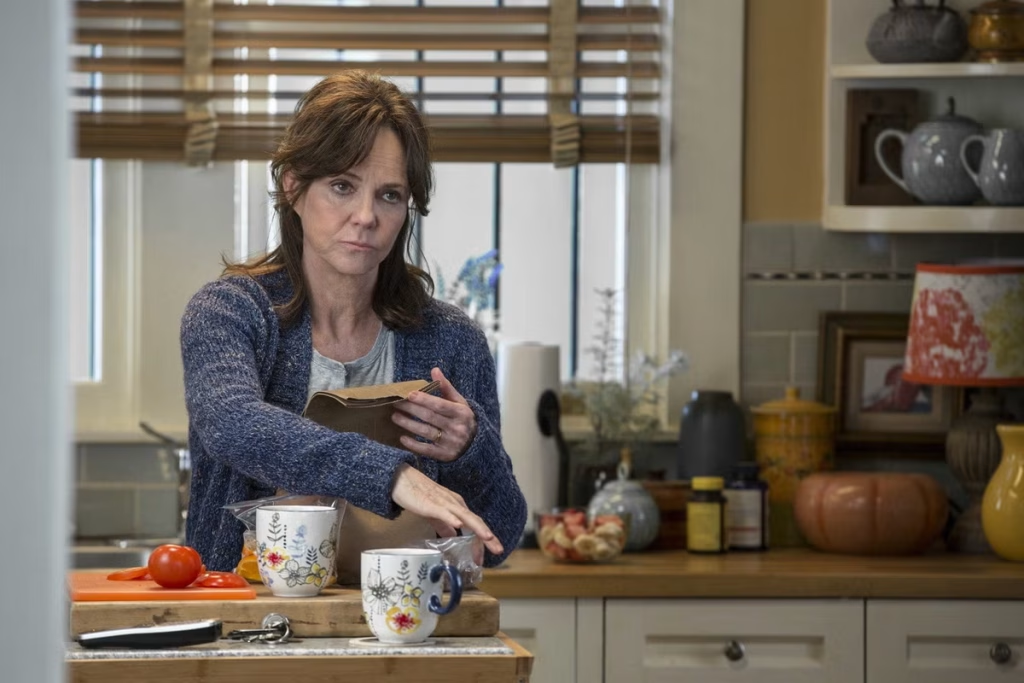
Sally Field stepped into the role of Aunt May in The Amazing Spider-Man, but she’s admitted the part didn’t offer much creative fulfillment. As a two-time Oscar winner, she struggled with the limitations of the script.

Field has said it’s difficult to craft a fully realized character in a massive superhero production with limited screen time. While she brought warmth to Peter Parker’s guardian, she clearly felt boxed in by the constraints of blockbuster filmmaking.

9. Zac Efron – High School Musical
High School Musical turned Zac Efron into a teen idol almost overnight. But fame came with a side effect: being permanently associated with squeaky-clean Disney stardom.

Efron has admitted that looking back at his early performances makes him cringe. He’s spent years deliberately choosing darker, more mature roles to distance himself from Troy Bolton. Though he appreciates the opportunity the franchise gave him, he’s been candid about wanting to move beyond that image.

8. Matt Damon – The Bourne Ultimatum
While The Bourne Ultimatum was commercially successful, Matt Damon has spoken about the chaotic development process. He famously criticized an early draft of the script, calling it deeply flawed.

Damon later clarified that his frustration was more about studio decisions than individual collaborators. Even though the film performed well, the experience left him wary. It’s proof that box office success doesn’t always equal creative satisfaction.

7. Channing Tatum – G.I. Joe: The Rise of Cobra
Channing Tatum has admitted he never wanted to star in G.I. Joe: The Rise of Cobra in the first place. Due to contractual obligations, he felt pressured into accepting the role.

He later revealed he disliked both the script and the experience. When the sequel was greenlit, he requested that his character be written out early. For Tatum, it was a job he endured rather than embraced.

6. Jessica Alba – Fantastic Four: Rise of the Silver Surfer
Jessica Alba’s time as Sue Storm in the Fantastic Four sequel was deeply discouraging. She’s spoken about feeling undermined during filming, particularly regarding how emotional scenes were handled.

Alba recalled being told to make her crying look “prettier,” a note that made her question the authenticity of her work. The experience was so disheartening that she briefly considered leaving acting altogether. It remains one of the clearest examples of how on-set dynamics can shape an actor’s feelings about a project.

5. Stanley Tucci – The Lovely Bones
Stanley Tucci delivered a haunting performance as a serial killer in The Lovely Bones, but the role came at an emotional cost. He has said inhabiting such a dark character was draining.

Tucci even attempted to step away from the part before filming began. Although the performance was widely praised, he’s admitted he wouldn’t choose to revisit such material. Sometimes, critical acclaim isn’t enough to outweigh personal discomfort.

4. Timothée Chalamet – A Rainy Day in New York
Timothée Chalamet appeared in Woody Allen’s A Rainy Day in New York early in his career. As public scrutiny surrounding Allen intensified, Chalamet publicly distanced himself from the film.

He donated his salary to charity and expressed regret over participating. The situation highlighted how shifting cultural conversations can reshape how actors feel about past collaborations.

3. George Clooney – Batman & Robin
Few superhero movies are mocked as relentlessly as Batman & Robin. George Clooney has long taken responsibility for the film’s reception, joking that he “killed” the franchise.
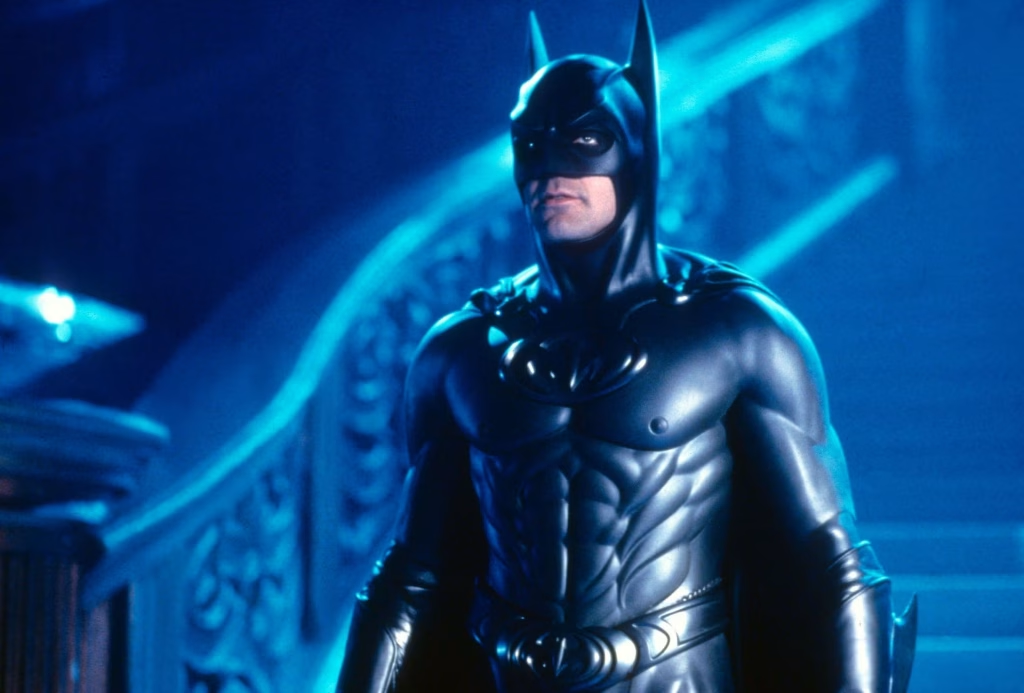
He’s openly admitted that he misjudged the project and wouldn’t let his family watch it. Clooney’s willingness to poke fun at himself has softened the blow, but it remains one of Hollywood’s most famous casting regrets.

2. Viola Davis – The Help
Viola Davis earned an Academy Award nomination for The Help, yet she has since voiced deep reservations about the film’s perspective. She’s expressed concern that the story centered on white characters rather than the Black maids whose lives it portrayed.

Davis has emphasized the importance of authentic storytelling and representation. Her regret isn’t about the performance itself, but about the broader narrative framework. It’s a powerful reminder that awards don’t erase complicated feelings.

1. Sylvester Stallone – Judge Dredd
Sylvester Stallone has been blunt about his disappointment with Judge Dredd. The comic adaptation had potential to be gritty and bold, but the final product leaned in a direction he didn’t believe worked.

He later described the film as mishandled and a missed opportunity. For an actor known for iconic action roles, Judge Dredd stands out as the one he wishes he could redo or erase.

Even the biggest stars don’t always get it right. Whether the regret stems from creative dissatisfaction, cultural reflection, or behind-the-scenes turmoil, these roles prove that Hollywood success is never guaranteed. Sometimes a misstep becomes a punchline, sometimes it sparks important conversations, and occasionally, it becomes the very thing that pushes an actor toward a better chapter.