

If you’ve ever hovered over an arcade cabinet, argued about who the strongest fighter is, or felt the thrill of landing a perfectly timed Hadouken, then you already understand—Street Fighter is more than just a video game. It’s a cultural force. When it first appeared in 1987, the idea was straightforward: step into the role of Ryu, take on challengers like Sagat, and prove your skill. What began as a simple fighting tournament quickly grew into something much bigger, with layered stories, rivalries, and a global stage.
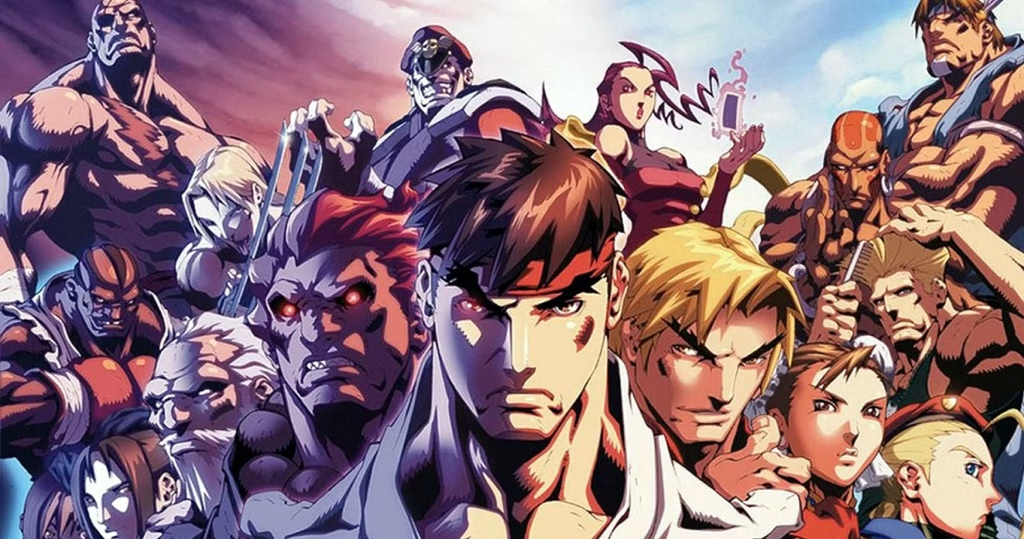
The journey from a single arcade machine to worldwide recognition didn’t happen overnight. While the original laid the groundwork, it was Street Fighter II that truly changed everything. Arcades became battlegrounds where players spent hours mastering combos, studying movesets, and finding their main fighter among an expanding roster.
That roster played a huge role in the series’ staying power. Characters like Ken Masters, Chun-Li, M. Bison, and Guile weren’t just fun to play—they had motivations and personalities that stuck with fans. Ryu’s constant drive to improve, Chun-Li’s pursuit of justice, and Guile’s personal vendetta gave the series emotional weight. It wasn’t long before these characters expanded beyond games, appearing in shows, films, and merchandise, helping cement the franchise’s place in pop culture by the ‘90s.
Even after decades, the series hasn’t lost its momentum. It continues to evolve in ways that keep fans engaged. Platforms like VeVe let players interact with their favorite fighters in augmented reality, while online communities keep competition alive through shared strategies and rivalries. The newest installment, Street Fighter 6, shows how willing the series is to experiment. Alongside new mechanics and characters, it introduces crossover fighters like Mai Shiranui and Terry Bogard from Fatal Fury—a surprising move that still feels natural within the game’s world.
That willingness to innovate is clearly working. Within just six months of release, Street Fighter 6 moved close to 2.5 million copies worldwide, becoming a standout success for Capcom during that time.
The franchise’s reach goes beyond gaming, too. A new live-action film set in 1993 is on the way, aiming to bring the iconic fighters to life on the big screen while staying faithful to their original look and feel. Early footage revealed at a major gaming event gave fans a glimpse of familiar faces like Ryu, Ken, Chun-Li, Guile, and the imposing M. Bison.
What makes Street Fighter endure isn’t just nostalgia—it’s its ability to adapt while staying true to what makes it fun. Whether you’re battling online, collecting digital versions of your favorite fighters, or waiting for the next big release, one thing hasn’t changed: the series still knows how to keep the fight alive.