


Batman has been on the big screen for over half a century, and each new incarnation has left its mark on the Dark Knight mythos. From campy 1960s adventures to brooding modern thrillers, these films and performances have shaped how audiences view Gotham’s vigilante. Some are celebrated for their artistic boldness, others are infamous for their over-the-top choices, but all have influenced the legacy of the Caped Crusader in unique ways.

15. Batman & Robin (1997)
Joel Schumacher’s Batman & Robin is often remembered as the franchise’s most notorious misstep. George Clooney donned the cape in a neon-splashed, pun-heavy Gotham, where over-the-top visuals and ice-themed villains stole the spotlight from the hero himself. The movie’s campy approach, complete with Bat-nipples and comically cheesy dialogue, made it a cultural punchline for years.

Yet beneath the surface, Batman & Robin showcased a playful experimentation with superhero tropes. Schumacher’s nods to Batman: The Animated Series and his queer subtext have since earned the film a reappraisal among fans and scholars. Despite its flaws, it pushed the boundaries of how Batman could be presented, influencing later, more self-aware adaptations like The Lego Batman Movie and Batman: White Knight.

14. Batman Forever (1995)
Before the chaos of Batman & Robin, Schumacher’s Batman Forever brought a vibrant, kinetic energy to Gotham. Val Kilmer’s Bruce Wayne was brooding yet vulnerable, and the film embraced a colorful, almost carnival-like aesthetic. Jim Carrey’s Riddler and Tommy Lee Jones’ Two-Face were larger than life, while Nicole Kidman’s Chase Meridian added glamour, and Chris O’Donnell’s Robin brought youthful rebellion.

The film’s soundtrack, featuring hits like Seal’s “Kiss From a Rose,” added to its pop-culture impact. By blending psychological drama with a heightened sense of spectacle, Batman Forever set the stage for Schumacher’s more extreme sequel. Its bold choices encouraged the franchise to explore both the serious and the ridiculous sides of Batman’s world.

13. Batman: Mask of the Phantasm (1993)
Batman: Mask of the Phantasm elevated animated superhero storytelling. Drawing on the noir sensibilities of Batman: The Animated Series, it combined a murder mystery with a tragic love story, delivering an emotionally resonant narrative. Kevin Conroy’s voice performance perfectly captured Batman’s duality: the vigilant hero and the vulnerable man beneath the mask.

Although it didn’t make waves at the box office, the film became a cult classic. Its artful Gotham design, haunting score, and mature themes set a standard for animated superhero films and influenced later live-action projects that sought to balance emotional depth with action-packed spectacle.

12. Batman: The Movie (1966)
Adam West’s Batman is synonymous with pure, campy joy. The 1966 feature took the tone of the TV series to the big screen with colorful villains, absurd gadgets, and tongue-in-cheek humor. Every scene, from shark repellent to over-the-top bomb diffusion, celebrated the whimsy of Silver Age comics.

The film’s charm lies in its refusal to take itself seriously. It has inspired countless parodies, homages, and modern reimaginings, proving that sometimes Batman works best when he’s playful, cheeky, and unabashedly fun.

11. Batman v Superman: Dawn of Justice (2016)
Ben Affleck’s grizzled Batman brought a darker, more world-weary tone to the DCEU. Batman v Superman explored a conflict between two icons, with Affleck’s version of Gotham’s protector grappling with grief, rage, and moral ambiguity. The film’s visual intensity and CGI-heavy action polarized audiences, sparking heated debates about tone and style.

Despite criticism, the movie’s influence on the DCEU is undeniable. It established a Batman capable of holding his own against godlike foes and set the stage for future team-ups. Affleck’s interpretation reinforced that Batman could be both physically intimidating and emotionally complex.

10. Batman Begins (2005)
Christopher Nolan’s Batman Begins revitalized the franchise with a grounded, psychological approach. Christian Bale’s Bruce Wayne became a fully realized hero, defined by fear, trauma, and relentless discipline. Liam Neeson’s Ra’s al Ghul and Cillian Murphy’s Scarecrow added cerebral tension, while Michael Caine’s Alfred provided emotional grounding and warmth.

The film’s gritty realism laid the foundation for the Dark Knight trilogy and inspired a wave of serious, character-driven superhero films. It demonstrated that comic book adaptations could explore profound themes while still delivering spectacular action.

9. The Lego Batman Movie (2017)
Will Arnett’s gravelly-voiced Batman brought meta-humor and self-awareness to the franchise. The Lego Batman Movie poked fun at the Dark Knight while simultaneously celebrating his many iterations, from the campy to the grimdark. Easter eggs, references, and a stacked ensemble kept fans engaged on multiple levels.

Beyond humor, the film highlighted Batman’s emotional core. By blending comedy, heart, and action, it proved the character could be both entertaining and meaningful, even when composed entirely of plastic bricks.

8. Batman: Caped Crusader (2024)
Bruce Timm’s latest animated take, Batman: Caped Crusader, reimagines Gotham in a 1940s noir style. The series combines dark, stylish visuals with complex storytelling, offering fresh interpretations of classic villains. Frederik Wiedmann’s sweeping orchestral score enhances the drama, evoking the feel of a cinematic experience.

The show’s sophisticated approach has resonated with fans of all ages, demonstrating Batman’s enduring adaptability. By balancing noir, action, and emotional depth, it reinforces the Dark Knight’s status as a character capable of evolving with every generation.

7. Batman: The Animated Series (1992–1995)
Few portrayals have been as influential as Kevin Conroy’s Batman and Mark Hamill’s Joker. The series’s art deco aesthetic, mature storytelling, and unforgettable music redefined superhero animation. It introduced Harley Quinn and explored the psychology of Gotham’s villains in ways previously unseen on television.

Its impact is still visible in the Arkham video games, the DCAU, and countless other adaptations. The series proved that animated Batman stories could be complex, stylish, and emotionally resonant, leaving a blueprint for every subsequent iteration.

6. Batman Returns (1992)
Tim Burton’s sequel pushed Gotham into gothic territory. Michael Keaton’s haunted Batman faced off against Michelle Pfeiffer’s seductive, morally complex Catwoman and Danny DeVito’s grotesque Penguin. The film’s themes of outsider identity, trauma, and duality set it apart from standard superhero fare.
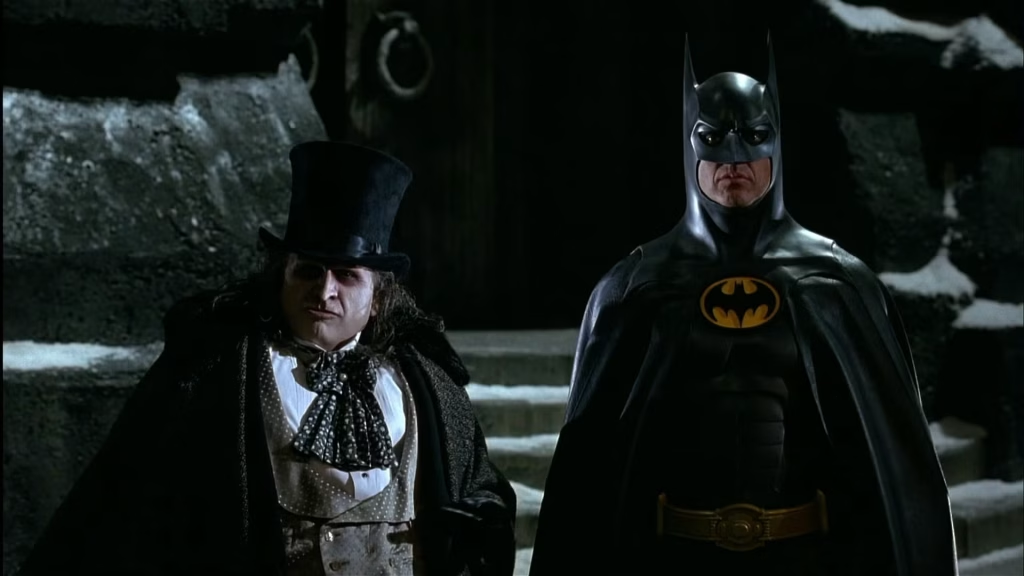
Although controversial at release, Batman Returns has become a cult classic. Its visual flair, storytelling ambition, and unforgettable characters have influenced subsequent films, games, and series that aim to explore the darker side of Gotham.

5. Batman (1989)
Tim Burton’s original Batman redefined the superhero genre. Michael Keaton’s introspective Bruce Wayne and Jack Nicholson’s chaotic Joker created an iconic clash of hero and villain. Gotham’s gothic design and Danny Elfman’s haunting score transformed comic book adaptations into cinematic events.

The film’s success proved audiences craved darker, more nuanced heroes. It set a template for future Batman stories and modern superhero films, balancing spectacle, tone, and character depth.
4. The Dark Knight Rises (2012)
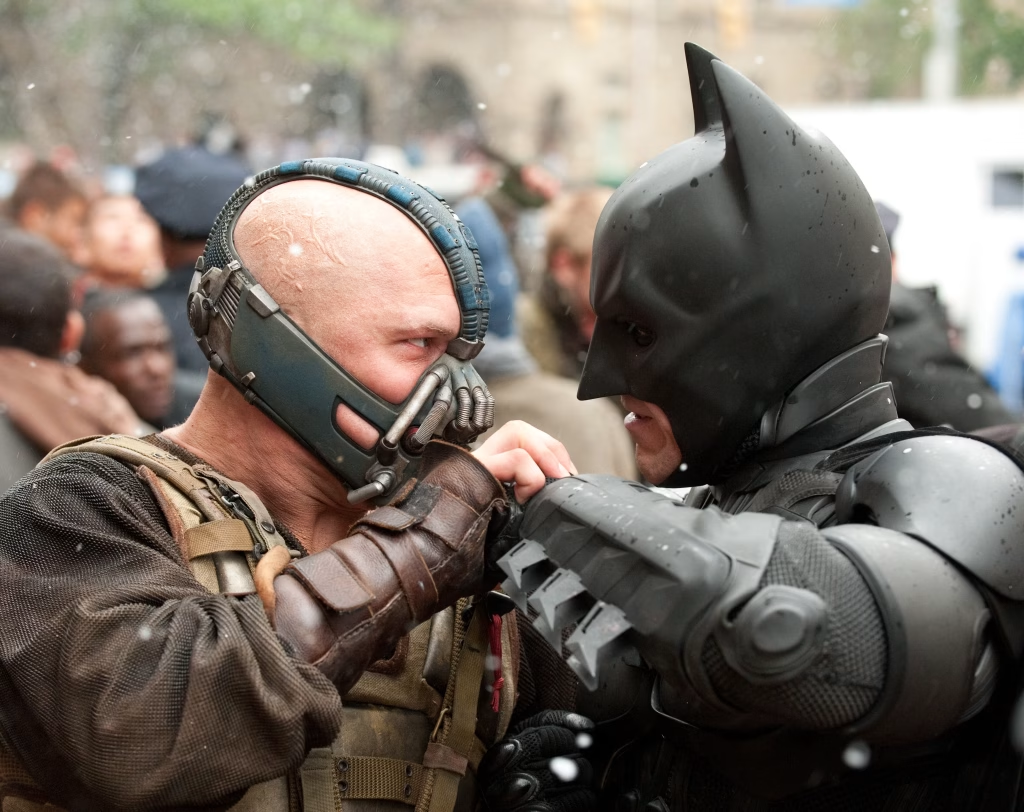
Christian Bale’s final outing brought Nolan’s trilogy to an epic conclusion. The film explored legacy, sacrifice, and the toll of heroism, with Tom Hardy’s Bane challenging Batman both physically and philosophically. Anne Hathaway’s Selina Kyle added depth, while Michael Caine’s Alfred delivered some of the trilogy’s most poignant moments.

Though divisive for some, the movie cemented the trilogy’s influence on superhero storytelling. Its grandeur and operatic scope inspired future franchises to aim for similarly ambitious, emotionally weighty finales.

3. The Dark Knight (2008)
Heath Ledger’s Joker transformed superhero cinema. Nolan’s second installment combined intense crime thriller elements with blockbuster spectacle. Batman faced his most challenging moral and physical tests as Gotham descended into chaos, raising the stakes for every character.

The film’s critical and commercial success reshaped Hollywood’s approach to comic book adaptations. Its darker, realistic tone inspired countless ambitious superhero films and proved that these stories could resonate as serious cinema.

2. Batman Returns (1992) [Alternate Spot if Already Counted]
If already included, this spot represents Burton’s uncompromising vision: gothic style, social commentary, and morally complex villains. Pfeiffer and DeVito delivered performances that remain benchmarks for superhero antagonists.

The film’s legacy lies in its audacious storytelling and visual design. Its willingness to tackle social themes while delivering superhero spectacle keeps it relevant and influential decades later.

1. The Batman (2022)
Robert Pattinson’s portrayal in Matt Reeves’ The Batman is a noir-infused detective story. Pattinson’s Bruce Wayne is obsessive, reclusive, and psychologically complex. The film immerses viewers in a rain-soaked Gotham, where corruption, crime, and moral ambiguity define the city.

Critics and fans praised the ensemble cast, including Zoe Kravitz’s Catwoman, Paul Dano’s Riddler, and Colin Farrell’s Penguin. The movie’s rich narrative, atmospheric visuals, and thematic depth show that Batman can still be reinvented for modern audiences while honoring his roots.

From campy fun to dark psychological thrillers, Batman’s cinematic journey reflects the versatility of the character and the creativity of the storytellers behind him. These fifteen films and performances have shaped how audiences perceive Gotham’s protector, inspiring new interpretations, games, and stories. Whether celebrated or infamous, each one has left a mark, proving that the Dark Knight’s influence will endure for generations.