


TV shows often become more than just entertainment; they turn into worlds we invest in, with characters who feel like family. When a lead actor leaves, it can shake the foundation of a series and leave fans reeling. Some departures are planned and graceful, while others catch viewers off guard, reshaping the story in ways that are hard to forget. From iconic heroes to fan-favorite rebels, here are twelve lead exits that left a lasting mark on television history.

12. Stuart Martin – Miss Scarlet and the Duke
When a show is literally named after its main characters, you assume both leads will stick around. Fans of Miss Scarlet and the Duke were shocked when Stuart Martin, who played the charismatic and gruff Inspector Wellington, abruptly left after Season 4. His departure was reportedly due to scheduling conflicts, leaving him free to pursue other projects.

Instead of recasting the Duke, the showrunners chose to shift the narrative entirely toward Eliza Scarlet, even renaming the series Miss Scarlet for Season 5. This decision left viewers feeling as if a major promise had been broken. The chemistry between Scarlet and the Duke had been the core of the series, and fans felt that removing one half of the duo undermined everything they had invested in.

Social media backlash was swift and vocal. Viewers didn’t hesitate to voice their disappointment, arguing that it wasn’t their fault for caring about the dynamic between the leads. The sudden change remains a controversial moment in modern TV history, a reminder of how fragile fan loyalty can be when central relationships vanish overnight.

11. Graham Wardle – Heartland
For fourteen seasons, Graham Wardle’s Ty Borden was the heart of Heartland, capturing the journey from troubled teen to devoted husband and father. His portrayal resonated deeply with viewers, making his departure all the more emotional. Wardle’s decision was driven by a need to prioritize his mental health and personal growth, acknowledging that the role, though rewarding, had started to blur the lines between character and self.

He explained that playing Ty had become a form of validation that was gradually substituting for his own sense of self-worth. Leaving was not easy, but it was a necessary step to reclaim his identity outside of the show. Wardle’s honesty about his reasons resonated with fans, highlighting the toll long-term roles can take on an actor’s personal life.

The show handled his exit with sensitivity, giving Ty a heroic and moving farewell. This approach allowed other characters, like his on-screen wife Amy, to grow through loss, while preserving the integrity of Ty’s legacy. Fans mourned the loss, but many respected the authenticity behind Wardle’s choice.

10. Patrick J. Adams – Suits
Patrick J. Adams brought Mike Ross to life for seven seasons, becoming a central figure in Suits’ blend of drama and wit. By Season 7, Adams felt that Mike’s arc had reached its natural conclusion, particularly after the character’s prison release and return to the firm. The relentless pace of TV production and the pull of family life also influenced his decision to step back.

Adams wanted to spend more time with his wife, Troian Bellisario, and focus on projects outside the series. Though he left the show as a regular, he returned for recurring appearances in the final season and has shown openness to reprising the role in potential spinoffs. His departure, coupled with Meghan Markle’s, forced the show to adapt and reframe its final storylines.

Fans experienced a bittersweet mix of admiration and sorrow. While the exit marked the end of a familiar chapter, it also opened space for the series to evolve, proving that sometimes a lead’s departure can inspire creative reinvention rather than mere loss.

9. Meghan Markle – Suits
Meghan Markle’s Rachel Zane was a fan favorite, known for her intelligence, ambition, and charm. Her exit after Season 7 was less about creative burnout and more about a life-altering opportunity. Markle was preparing for her transition into royal life, focusing on causes and responsibilities that extended far beyond Hollywood.

The impact of her departure on Suits was immediate. Writers had to pivot quickly, reshaping storylines to account for the absence of one of the show’s most beloved characters. Fans felt the shift acutely, mourning both Rachel and the dynamic she had brought to the firm.

Markle’s exit transcended the series itself, becoming a pop culture event. It served as a reminder that actors’ personal lives and ambitions often shape their careers in ways audiences cannot control, even when those choices reverberate through entire shows.
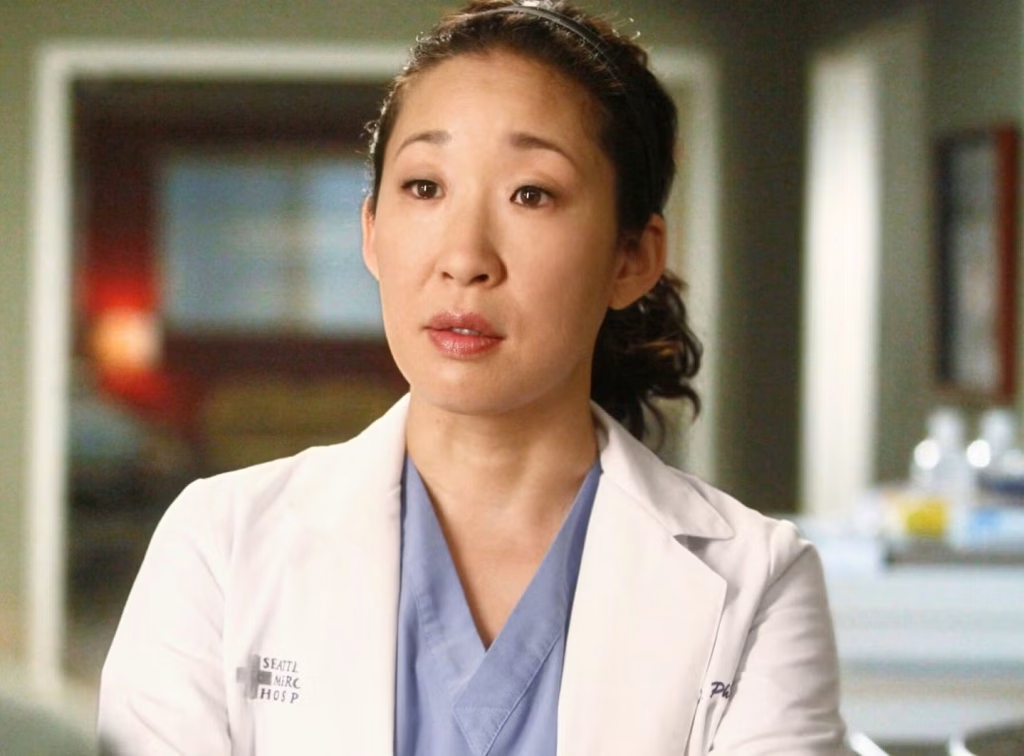
8. Sandra Oh – Grey’s Anatomy
Sandra Oh’s Cristina Yang was a force of nature on Grey’s Anatomy, a character defined by brilliance, ambition, and unflinching honesty. After ten seasons, Oh recognized it was time to move on, feeling creatively fulfilled and ready to explore new horizons. Her departure wasn’t about dissatisfaction but about personal growth and the natural conclusion of her character’s journey.

Cristina’s exit represented a seismic shift for the series. Her absence left a noticeable void in the show’s chemistry, as her relationships with Meredith and other characters had formed the backbone of many seasons. Fans felt the loss deeply, understanding that Cristina had become irreplaceable.

Oh’s decision also highlighted the importance of actors knowing when to leave a role behind. Her departure reinforced the idea that stepping away at the right time can honor both the character and the performer, leaving a legacy that endures beyond the screen.

7. Nina Dobrev – The Vampire Diaries
Nina Dobrev had always planned a finite tenure on The Vampire Diaries, intending to depart after six seasons. As Elena Gilbert, she had been the emotional core of the series, and her journey was central to the show’s narrative arc. Leaving was bittersweet, but Dobrev was ready to embrace new challenges and opportunities beyond Mystic Falls.

Her exit forced the show to pivot, shifting focus to secondary characters and alternate storylines. While the series continued successfully, fans couldn’t help but feel the absence of the original lead whose presence had defined the show’s early seasons.

Dobrev’s decision underscores the delicate balance actors must navigate between career growth and audience expectations. By leaving on her own terms, she ensured her departure remained a part of the narrative, rather than a disruptive loss.

6. Steve Carell – The Office
Michael Scott’s departure from The Office after seven seasons was monumental. Carell’s comedic brilliance and endearing awkwardness had made him the heart of the series. When the time felt right, he chose to step away, giving other characters space to evolve and the series room to explore new dynamics.

The farewell episodes were emotionally rich, blending humor and sentimentality. Carell’s on-screen goodbye mirrored the off-screen bonds formed over years of collaboration, resonating with both cast and viewers alike.

While the series continued, it was never quite the same without Michael’s presence. Carell’s departure serves as a reminder of how central lead actors can become to a show’s identity and the emotional impact of their absence.

5. Emmy Rossum – Shameless
Fiona Gallagher was the glue that held Shameless together, and Emmy Rossum’s portrayal carried the show through eight seasons. Her decision to leave was motivated by a desire to pursue other projects and explore the freedom that comes with life outside a long-running role.

Rossum reflected fondly on her time with the series, appreciating the deep connections formed on set and the creative challenges she embraced. Her exit forced the show to recalibrate, exploring new dynamics while honoring Fiona’s legacy.

Fans felt the loss keenly, recognizing how pivotal Rossum had been to the tone, humor, and heart of the show. Fiona’s absence left a tangible void, highlighting the lasting impact a lead actor can have on a series.

4. Anna Faris – Mom
Anna Faris’s Christy Plunkett was central to Mom’s balance of humor and heart. After seven seasons, Faris decided to step away, initially to explore other projects but later citing the need for a personal sabbatical to spend more time with her son.

Her exit surprised fans and the production team alike, requiring a reshuffling of the show’s dynamics. The chemistry between Faris and Allison Janney had been a key element of the series’ appeal, making her absence immediately noticeable.

Faris’s departure highlights the importance of personal fulfillment in an actor’s career. While the show continued, the episodes without Christy felt different, emphasizing how deeply an actor can shape a series’ identity.
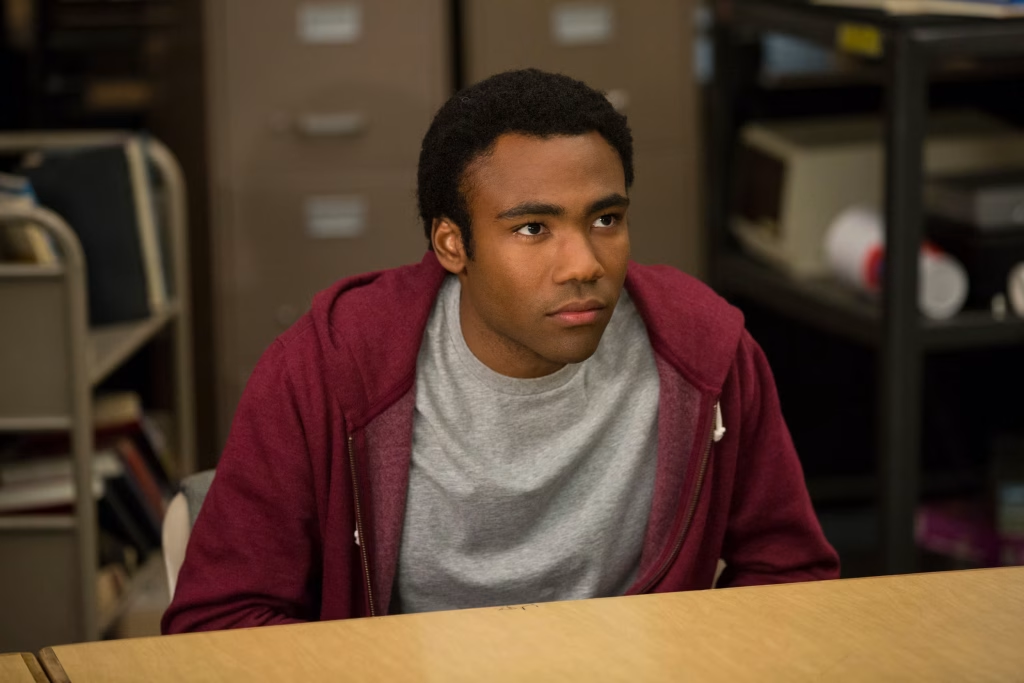
3. Donald Glover – Community
Donald Glover’s Troy Barnes was a cornerstone of Community’s quirky, heartfelt comedy. His departure during Season 5 was sudden for fans, who had grown attached to his energy, humor, and presence. Glover admitted that he needed space to focus on his own growth, both personally and creatively.
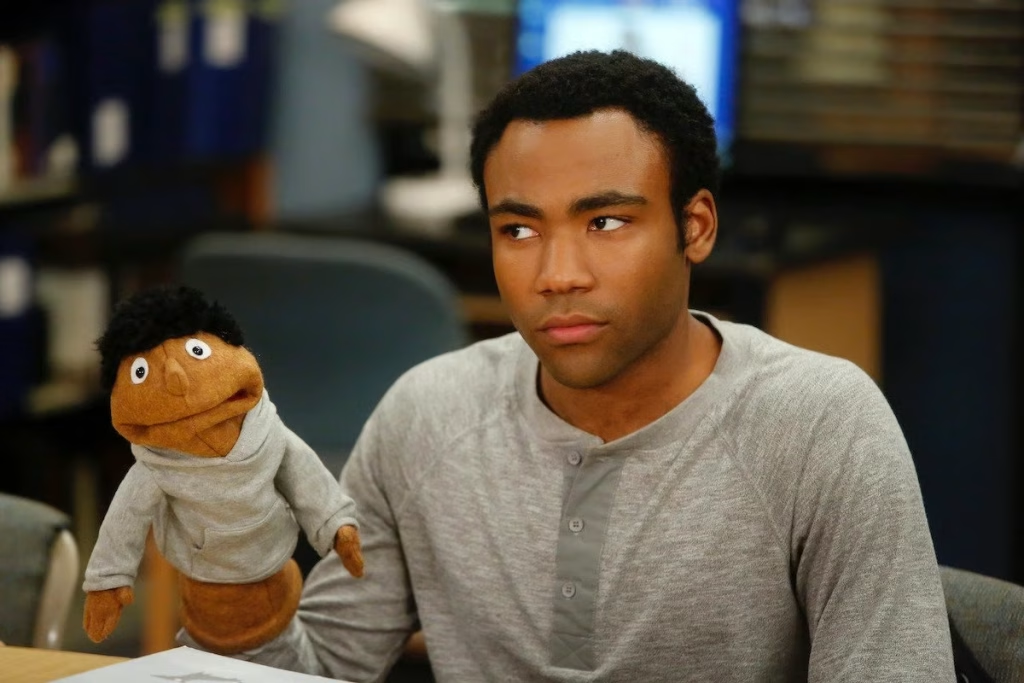
He candidly shared that his heart wasn’t in the show anymore, and that pursuing other projects—including his music career—was necessary for his development. This honesty resonated with viewers, reflecting the tension actors face between professional demands and personal fulfillment.

The show carried on, but Troy’s absence was deeply felt. Glover’s exit reminds us that even in ensemble casts, a lead actor can be integral to a show’s identity, and losing them leaves a gap that’s hard to fill.

2. America Ferrera – Superstore
America Ferrera’s Amy Sosa was the heart of Superstore, grounding the show with humor, empathy, and relatability. She had planned to exit at the end of Season 5, giving the series a natural transition, but the pandemic delayed her departure. Ferrera ultimately left at the start of the final season, returning briefly for the series finale to provide closure.

Her exit was handled with thoughtfulness, honoring the journey of Amy while allowing the show to conclude meaningfully. Fans appreciated the nod to her legacy, which helped the finale feel satisfying and complete.

Ferrera’s decision reflects the complexities of long-running series during unpredictable circumstances. Even with her absence, her impact on Superstore remained undeniable, cementing Amy as a defining presence.

1. Mischa Barton – The O.C.
Mischa Barton’s Marissa Cooper was the tragic center of The O.C., and her exit remains one of TV’s most unforgettable. Her departure, marked by the character’s death, was both a creative and personal choice, signaling a new direction for the series.

Barton cited both narrative logic and behind-the-scenes friction as factors in her decision. The pressures of the set, combined with her own sensitivity, contributed to a choice that ultimately defined her time on the show.

Marissa’s death shocked fans and created one of the most debated lead exits in television history. Barton’s decision exemplifies how an actor’s departure can resonate beyond the screen, leaving a lasting imprint on the cultural memory of a series.

Lead actor exits are never easy, for the performers or the fans. Whether driven by personal growth, creative fulfillment, or life-changing opportunities, these departures remind us of the fragile yet powerful bond between a show and its audience. They leave us with unforgettable characters, bittersweet memories, and a reminder that even the most beloved roles are finite. Television history is filled with exits that still sting, and that’s part of what makes these series unforgettable.