

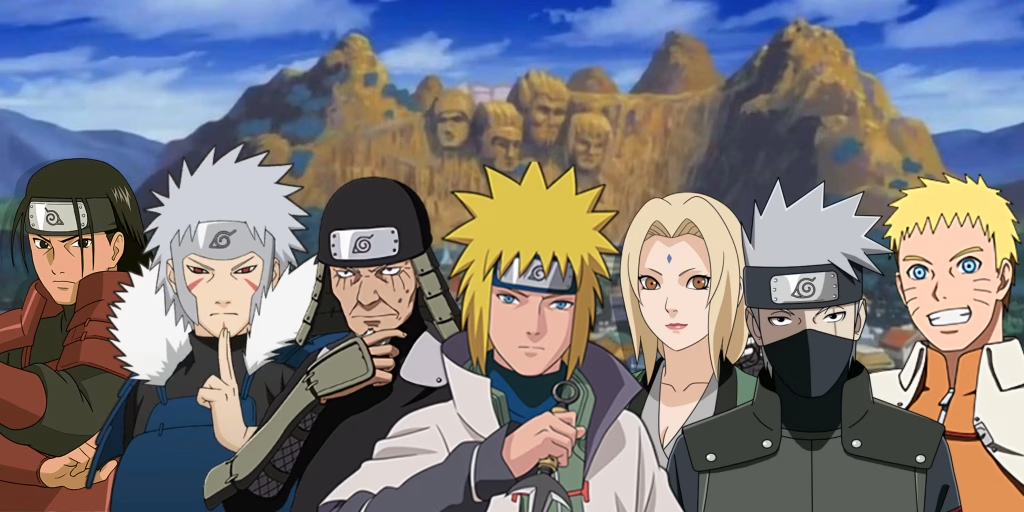
The role of Hokage in Naruto is more than a title—it’s a responsibility that embodies leadership, strength, and vision. Across generations, Konoha’s leaders have shaped the village, each bringing their own unique abilities, philosophies, and personalities to the office. From the founding legends to the modern heroes, the Hokage have faced wars, betrayals, and impossible challenges, leaving legacies that resonate far beyond their time. Here’s a detailed look at all eight Hokage and the impact they’ve had on the Leaf Village and the shinobi world.

8. Shikamaru Nara
Shikamaru Nara took on the mantle of Eighth Hokage during a turbulent era when Naruto and Hinata were incapacitated by Kawaki. Known for his brilliant intellect and strategic foresight, Shikamaru has always been the trusted advisor behind the Seventh Hokage, making his promotion a natural, if reluctant, progression. Unlike the flashier Hokage before him, Shikamaru’s strength lies in his shadow manipulation techniques and, more importantly, his tactical genius. He has famously outsmarted deadly opponents like Hidan, proving that brains can often surpass raw power in the ninja world. Calm, thoughtful, and responsible, Shikamaru approaches leadership with minimal fuss—preferring to anticipate problems before they arise. His iconic phrase, “What a drag. I wish I were a cloud,” perfectly captures his laid-back but effective approach. His tenure reminds us that leadership isn’t about brute force, but about strategy, patience, and perspective.

7. Tsunade
Tsunade, the Fifth Hokage, is a powerhouse both in combat and in leadership. A granddaughter of Hashirama Senju and one of the Legendary Sannin, she brought immense strength and prestige to the office. Her return after Hiruzen’s death marked a turning point for Konoha, combining healing innovation with battlefield dominance. Renowned for her unmatched medical ninjutsu, Tsunade can heal devastating injuries, including her own, at incredible speed. Her physical strength is legendary, capable of reshaping landscapes and defeating formidable foes. But it’s her compassion and determination that truly define her leadership. She rebuilt the village after the catastrophe and guided the next generation of ninja. Tsunade’s philosophy—that personal pain and loss are sources of strength shaped her leadership and inspired countless shinobi. Her reign proves that true power combines skill, heart, and the ability to rise above personal trauma.

6. Kakashi Hatake
Kakashi Hatake, the Sixth Hokage, is admired for his versatility, wisdom, and calm demeanor. Known as the Copy Ninja, his mastery of the Sharingan allows him to replicate thousands of jutsu, giving him unrivaled adaptability in battle. Kakashi’s combat abilities are legendary: he was the only non-Uchiha to summon a perfect Susanoo, and his Anbu background sharpened his tactical skills. As Hokage, he focused on diplomacy, technological advancement, and maintaining peace. His approach was less about imposing power and more about strategic leadership, balancing the village’s defense with global relations. Kakashi’s legacy lies in his adaptability, intelligence, and the sense of calm he brought to a post-war Konoha. His tenure laid the groundwork for Naruto’s eventual ascension while proving that leadership doesn’t always need to be flashy to be effective.

5. Minato Namikaze
Minato Namikaze, the Fourth Hokage, earned the nickname “Yellow Flash of the Leaf” thanks to his incredible speed and precision. His mastery of the Flying Raijin Jutsu made him one of the most formidable shinobi in history. Minato’s brilliance extended beyond battle; his strategic foresight allowed him to avert crises and influence entire nations. He famously sacrificed his life to save Konoha from the Nine-Tails attack, sealing the beast within his newborn son, Naruto. Minato’s legacy is one of courage, intelligence, and selflessness, embodying the ideal of the Hokage who protects the village at all costs. Though his time as Hokage was brief, his impact resonates throughout the series and shapes the generations that follow.

4. Tobirama Senju
Tobirama Senju, the Second Hokage, was a visionary and innovator. Responsible for creating foundational ninja techniques like the Shadow Clone Jutsu, Flying Thunder God, and the Anbu Black Ops, his influence still shapes Konoha’s operations today. A tactical genius, Tobirama emphasized structure, discipline, and the greater good of the village. His controversial policies toward the Uchiha Clan have been widely debated, yet his contributions to Konoha’s stability and security are undeniable. Tobirama’s reign exemplifies the difficult balance between pragmatism and morality in leadership, highlighting how a Hokage must sometimes make harsh decisions for the village’s survival.
3. Hiruzen Sarutobi
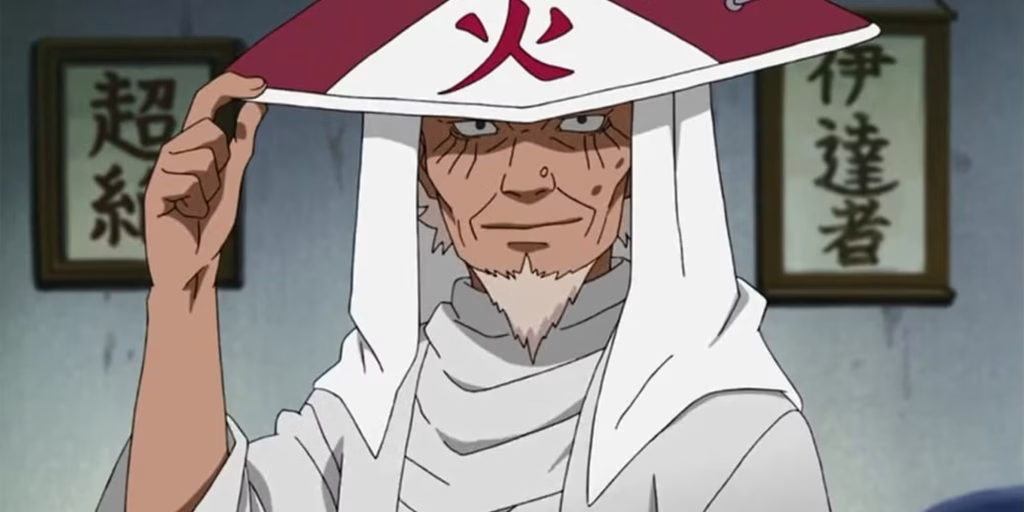
Hiruzen Sarutobi, the Third Hokage, earned the title “God of Shinobi” through decades of service, mastery of all five chakra natures, and unparalleled mentorship. He trained legendary ninja, including Jiraiya, Tsunade, and Orochimaru, leaving a lasting mark on the village. Even in his seventies, Hiruzen remained a formidable combatant, nearly defeating Orochimaru in battle. His leadership combined wisdom, adaptability, and devotion to the Will of Fire—the philosophy that the village’s well-being outweighs individual interests. Hiruzen’s tenure spanned peace and conflict, triumph and failure, making him a symbol of the enduring complexity and humanity of Hokage leadership.

2. Hashirama Senju
Hashirama Senju, the First Hokage, founded Konoha and set the standard for all Hokage to follow. His Wood Style, Sage Mode, and extraordinary chakra reserves made him nearly invincible. He even influenced Madara Uchiha’s power, highlighting his legendary status. Hashirama’s leadership was defined by vision and unity. He sought peace among the ninja clans and inspired the creation of the Kage system in other villages. His rivalry with Madara not only shaped Konoha’s history but also laid the foundation for its ideals of cooperation, justice, and hope. Hashirama’s legacy is enduring, a perfect blend of strength, diplomacy, and the will to change the world through compassion.

1. Naruto Uzumaki
Naruto Uzumaki, the Seventh Hokage, embodies the series’ core themes: perseverance, hope, and the power of determination. Rising from an ostracized orphan to the village’s strongest protector, Naruto combines his own skills with Kurama’s chakra, Sage Mode, and even the powers of the Sage of Six Paths. During the Fourth Great Ninja War, Naruto’s presence turned the tide of battle, using Tailed-Beast bombs and an unmatched strategy to protect the ninja world. His ability to inspire, negotiate peace, and lead with empathy defines his legacy. Naruto’s reign proves that true strength comes not just from skill, but from heart, courage, and the unwavering desire to protect those you love. He stands as a beacon for the village, a living symbol of the Will of Fire, and a Hokage whose influence will echo for generations.

From the founding vision of Hashirama to the tactical brilliance of Shikamaru, each Hokage has left an indelible mark on Konoha. Some led with power, others with strategy, and some with compassion, but all shaped the village in profound ways. Together, they illustrate that leadership comes in many forms through strength, wisdom, and heart, and that the legacy of a Hokage is not just about the battles fought, but the lives touched and the hope instilled for the future.