


Gender-bender anime has always carved out a unique space in the medium, blending comedy, fantasy, and sometimes surprisingly deep explorations of identity. Whether played for laughs, drama, or pure chaos, these stories challenge characters to navigate life from an entirely different perspective—often leading to memorable and unpredictable moments. Here’s a refreshed and slightly expanded look at some notable anime (and anime-adjacent titles) that explore this concept in different ways.

10. Ayakashi Triangle
This action-comedy throws viewers straight into a supernatural world filled with mischievous spirits known as Ayakashi. The story follows Matsuri, a ninja tasked with protecting his childhood friend Suzu from these creatures. Things take a bizarre turn when a powerful cat-like spirit transforms him into a girl. From that point on, the show leans heavily into comedic misunderstandings and fan service. Matsuri adjusts surprisingly quickly, and most of the humor comes from awkward situations tied to the transformation. While the series had a rough production run with delays that affected its flow, it still offers light entertainment for viewers who enjoy chaotic humor and don’t mind a lack of deeper themes.

9. Back Street Girls: Gokudols
Few series push the concept as far as this one. The story follows three yakuza members who, after failing their boss, are forced into gender reassignment and rebranded as a female idol group. The result is an outrageous mix of crime drama and idol satire. The humor is intentionally crude and over-the-top, often relying on shock value. At its best, the show cleverly compares the ruthless entertainment industry to organized crime. However, its limited animation and repetitive jokes can be hit-or-miss. It’s the kind of series you either find hilariously absurd or completely off-putting—there’s rarely a middle ground.

8. One Piece (gender-bender moments)
While not centered on gender transformation, One Piece includes some unforgettable moments thanks to Emporio Ivankov and the Horm-Horm Fruit. This ability allows characters to alter their physical traits, including gender, almost instantly. The series treats these changes with a mix of humor and freedom of expression, especially through Ivankov’s larger-than-life personality. Later arcs, like Punk Hazard, also feature body-swapping scenarios that highlight character quirks in hilarious ways. Though it doesn’t deeply analyze identity, One Piece embraces individuality and self-expression in a fun, memorable way.

7. Heaven’s Lost Property (select episodes)
This supernatural harem comedy occasionally dives into gender-bending territory. In a couple of episodes, the main character, Tomoki, gains the ability to switch genders, becoming “Tomoko.” Predictably, he uses this power for questionable reasons, leading to a series of comedic and embarrassing situations. The humor is very much rooted in classic anime tropes—over-the-top reactions, slapstick, and plenty of fan service. It’s not subtle, but for fans of the genre, it delivers exactly what they’d expect.

6. KonoSuba: God’s Blessing on This Wonderful World! (special episode)
KonoSuba thrives on parody, and its take on gender-swapping is no exception. In one episode, Kazuma ends up switching bodies with Princess Iris due to magic. This setup leads to chaotic and hilarious interactions. Iris gets a taste of adventure outside palace life, while Kazuma predictably tries to exploit the situation for his own amusement. The show keeps everything light and comedic, never taking the concept too seriously, which works perfectly for its tone.

5. Sailor Moon Sailor Stars
The final arc of Sailor Moon introduces the Sailor Starlights, a trio of characters who live as male idols but transform into female warriors when fighting. This dual identity adds an interesting layer to the series, playing with ideas of transformation and presentation. While the Starlights didn’t resonate as strongly as earlier characters, their concept was ahead of its time and added a unique twist to the magical girl genre.

4. She Professed Herself Pupil of the Wise Man
This isekai story follows a gamer who wakes up inside his favorite game—only to discover he now inhabits the body of a young girl version of his character. Interestingly, the series doesn’t dwell much on the gender shift. Instead, it focuses on exploration, adventure, and the protagonist’s overpowered abilities. While it may not deeply explore identity, it offers a relaxed and easygoing watch for fans of fantasy worlds and game-like settings.

3. When I Woke Up, I Became a Bagel Girl
Unlike many entries on this list, this series leans more into drama than comedy. It follows Bong Gi, who suddenly wakes up as a woman and must deal with the emotional and social consequences. The story explores identity, relationships, and self-perception more seriously. While it starts light, it gradually becomes more intense and character-driven. Not everyone enjoys the protagonist’s personality, but the show stands out for attempting a deeper look at gender transformation.

2. Kämpfer
Kämpfer mixes magical girl battles with gender-bending chaos. The main character, Natsuru, transforms into a female fighter and is thrown into battles against others like him. The series doesn’t aim for depth—it’s more about fun, awkward situations, and light action. While it may not leave a lasting impression, it’s entertaining enough for viewers who want something easy and playful.

1. Sket Dance (body-swap arc)
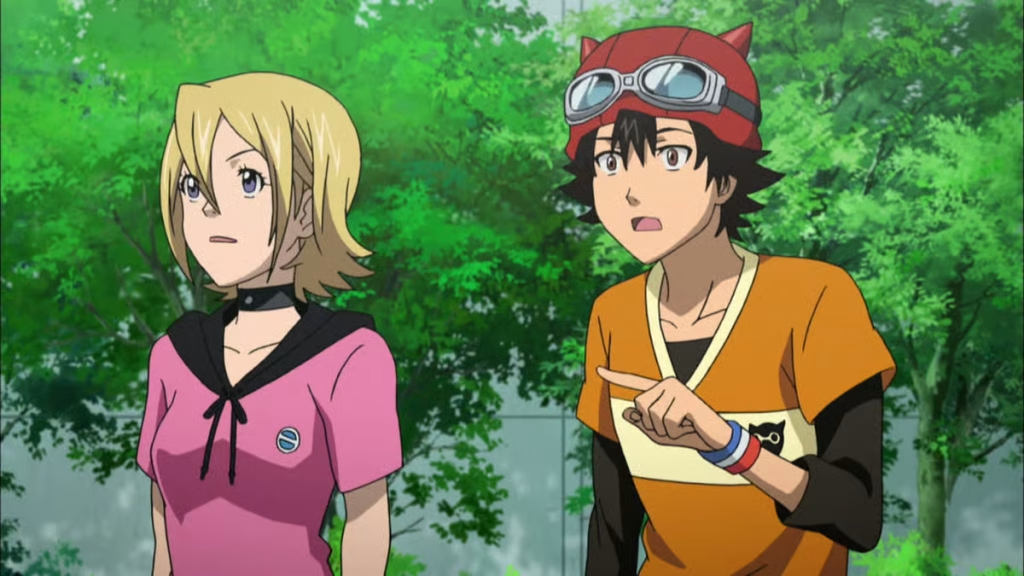
Among all these titles, Sket Dance arguably makes the most meaningful use of its gender-bending concept. In a multi-episode arc, two main characters swap bodies during a school trip, leading to both comedic and emotional moments. What sets it apart is how the situation impacts character relationships. Instead of being just a gag, the body swap helps deepen understanding between the characters and even hints at romantic development. It’s a great example of how this trope can be used for storytelling, not just humor.
Gender-bender stories in anime can range from pure comedy to thoughtful character studies. Some series use the concept for laughs, while others explore identity and perspective in more meaningful ways. Whether you’re in it for the humor, the drama, or a bit of both, these titles show just how flexible and creative the trope can be.