

Monster Hunter Wilds has arrived with explosive energy, hitting the franchise like a full-force Rathalos strike. For years, Monster Hunter has built its reputation on demanding gameplay—rewarding players who take the time to prepare, learn, and endure punishing encounters. With Wilds, Capcom is clearly aiming for something broader, opening the experience to more players. The result is a game that’s as impressive as it is divisive.
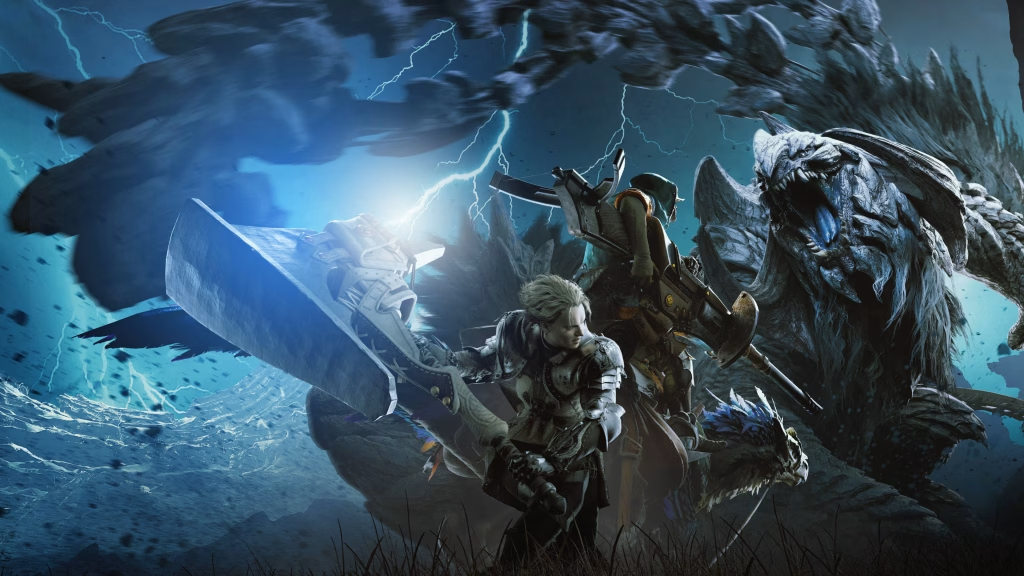
At its core, Wilds embraces simplification. The goal is clear: get players into the action quickly. Gone are many of the fiddly systems that once defined the series—no more grinding endlessly for basic tools or needing outside guides just to understand crafting. It’s a more immediate, pick-up-and-play version of Monster Hunter, walking a fine line between being welcoming and being overly simplified.
One of the biggest changes comes in the form of the Seikret mount. While previous companions like the Palamute were helpful, the Seikret takes things much further. It’s not just transportation—it’s a multi-purpose support system. You can switch weapons while riding, automatically travel to objectives, and even perform maintenance like healing or sharpening mid-hunt. This drastically changes the pacing. Instead of carefully managing downtime and positioning, players can move fluidly from one encounter to the next with minimal interruption.
The gear system has also been reworked. Armor now mainly determines your defense, while offensive abilities are tied to weapons. This separation makes it easier to experiment with different playstyles, letting you switch weapons without rebuilding your entire loadout. While this flexibility is appealing, it also removes some of the strategic layering that longtime players enjoyed when optimizing builds.
Then there’s Focus Mode, a new targeting system that lets you aim directly at monster weak points using a reticle. It’s not quite a traditional lock-on system, but it allows for more precise attacks and unlocks powerful follow-ups when enemies are wounded. Some players enjoy the added cinematic feel, while others feel it lacks the reliability of a proper lock-on. Combined with the removal of mechanics like Wirebugs and the addition of tools like the Hook Slinger, it’s clear the game is trying to establish its own identity.
All of these updates are designed with accessibility in mind—and for new players, they work. The interface is easier to navigate, the onboarding process is smoother, and the game world feels more alive than ever. The open zones are expansive and interconnected, filled with dynamic weather and wildlife that behave more like part of an ecosystem than simple targets.
However, this accessibility comes with trade-offs. One of the defining features of older Monster Hunter titles—the thrill of tracking a monster—has been reduced. With auto-navigation and fully revealed maps, players rarely need to search for their prey. Instead of carefully following clues through the environment, you can simply select a target and head straight to it. The hunt feels less like a pursuit and more like a guided experience.
Difficulty has also shifted. Compared to earlier entries, Wilds is noticeably more forgiving. Equipment can remain effective for longer stretches without upgrades, companions are stronger, and resources like healing items are easier to come by. The Seikret adds another layer of safety, letting players recover or reposition without much risk. Even environmental dangers and status effects feel toned down, resulting in faster, less punishing hunts.
For veteran players, this shift is hard to ignore. The traditional gameplay loop—prepare, struggle, adapt, and finally overcome—has long been the heart of the series. When those challenges are reduced, so too is the sense of accomplishment. Without the need to carefully plan, upgrade, or fully engage with the environment, hunts can start to feel less meaningful.
This has led to a clear divide within the community. New players and more casual fans appreciate the smoother experience. It’s easier to jump in, team up with friends, and enjoy the spectacle without hitting frustrating roadblocks. On the other side, longtime fans worry that the series is losing its identity, becoming more about action and convenience than strategy and mastery.
That tension defines Monster Hunter Wilds. On one hand, it’s a technical showcase—beautiful, fluid, and filled with life. On the other hand, it raises questions about what Monster Hunter is meant to be. By prioritizing accessibility, the game risks moving away from the challenge-driven experience that built its reputation.
Still, it’s not without its strengths. The game excels at bringing people together, encouraging cooperative play and exploration. Its streamlined systems lower the barrier to entry, allowing more players to experience the thrill of hunting—albeit in a different form.
Where the series goes from here remains uncertain. Can it strike a balance between its demanding roots and its more approachable direction? Or will it continue leaning toward a broader audience at the expense of depth? For now, Monster Hunter Wilds stands as both an evolution and a point of contention—a game that’s redefining the hunt while leaving fans to decide what that truly means.