

When Metaphor: ReFantazio launched, it carried enormous expectations on its shoulders. Marketed as a spiritual successor to the beloved Persona series, it instantly caught the attention of longtime fans—especially those who grew up with Persona 3, Persona 4, and Persona 5. Backed by Atlus and Sega, and boasting an impressive Metacritic score in the mid-90s, it quickly became a must-play on paper.
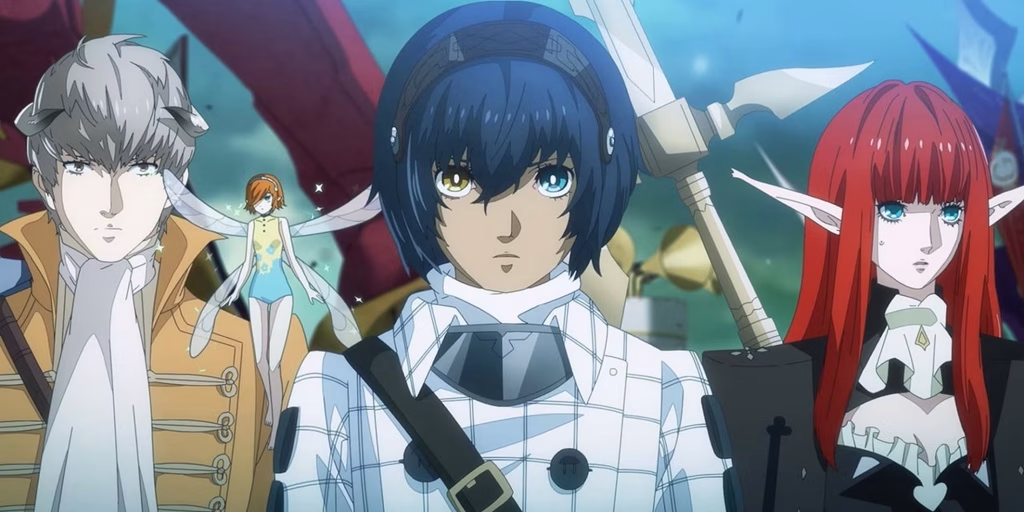
But once the excitement settles and players spend real time with it, the conversation becomes more nuanced. The big question starts to creep in: is this a true evolution of the formula, or just a familiar experience wearing a new coat of paint?
From the very beginning, the game feels almost too comfortable. The opening hours echo the same structure and tone that Persona fans know by heart—introducing a layered world filled with political tension, magic, and carefully staged character introductions. Even your first companion feels like they could have stepped straight out of Persona, and the music leans heavily into a subdued, almost melancholic mood.
Despite shifting to a fantasy setting, the game struggles to carve out a distinct identity early on. The environments may differ from Persona’s urban backdrop, but the storytelling beats and character archetypes often feel recycled. There’s a lingering sense of déjà vu that makes it harder to fully invest in the narrative at the start.
Where the game truly finds its footing is in combat. The introduction of a job-based system adds a welcome layer of flexibility, allowing players to experiment with different builds and strategies. Battles are smooth, fast-paced, and satisfying—easily one of the game’s strongest aspects. In fact, combat takes up a large portion of the overall experience, and thankfully, it rarely feels like a chore.
The familiar calendar system also makes a return, pushing players to carefully manage their time between story missions. Activities like side quests, character bonding, and stat-building (think courage or charisma) all compete for attention, encouraging thoughtful decision-making. It’s a loop that works well, even if it doesn’t feel particularly new.
The cast offers a mix of highlights and missed opportunities. Hulkenberg stands out as one of the more compelling characters—a fierce and loyal warrior with moments of humor and vulnerability that make her feel human. Eupha adds a contrasting innocence to the group, and her role as a summoner helps diversify gameplay. Meanwhile, Gallica avoids the usual pitfalls of “annoying mascot” companions by being consistently helpful without overstaying her welcome.
Heismay, an anthropomorphic bat, brings some emotional weight to the story with a narrative centered on grief and regret, offering one of the few moments that genuinely resonate. Supporting characters like Maria, Fabienne, and Brigitta also contribute to the world in meaningful ways, rewarding players who take the time to engage with them.
Still, many characters fall back on familiar tropes, and the writing rarely takes risks. While it’s solid, it doesn’t often surprise or challenge expectations, which makes it harder for the story to leave a lasting impression.
That brings us to one of the game’s biggest shortcomings: its narrative. While it tackles themes like politics and religion, these ideas often feel underdeveloped. The main antagonist, Louis, lacks depth, making the central conflict feel less impactful than it should. There’s a sense that the story is aiming high but doesn’t fully commit to exploring its own ideas.
Pacing also becomes an issue. It takes a long time for the story to gain momentum, and by the time it does, some players may already feel disconnected. The urgency and emotional pull that defined Persona’s storytelling just aren’t as strong here.
Visually, though, the game is undeniably impressive. From stylish menus to seamless transitions between anime cutscenes and gameplay, the presentation showcases Atlus at its best. Character designs are detailed and expressive, but the overall aesthetic leans more muted compared to Persona’s bold, modern flair.
The soundtrack follows a similar pattern. It’s well-composed and fitting for the tone, but it lacks the memorable punch and variety that made Persona’s music so iconic. Instead of energetic, genre-blending tracks, the game opts for a more restrained, somber sound.
Critics have largely praised the game, highlighting its themes and presentation. Some reviewers have applauded its willingness to explore complex ideas and reflect real-world issues. Yet, for many players, there’s a noticeable gap between critical acclaim and personal experience.
Everything about the game works—mechanically, visually, structurally—but something feels missing. That intangible spark, the emotional hook that keeps players fully invested, never quite clicks into place.
After spending dozens of hours in its world, it’s hard not to view Metaphor: ReFantazio as a game shaped more by its influences than its own identity. It borrows heavily from Persona’s formula but doesn’t quite capture what made those games special.
For players who enjoy polished systems and familiar gameplay loops, there’s still plenty to like here. But for those hoping this would be the next big leap forward for JRPGs, it may feel more like a step sideways than a step ahead.