


Marvel fans have been eagerly awaiting Ironheart, the Disney+ series that finally gives Riri Williams her moment at the center of the Marvel Cinematic Universe. Introduced in Black Panther: Wakanda Forever, Riri now steps fully into her own story, signaling a shift toward a more thoughtful, grounded kind of heroism.
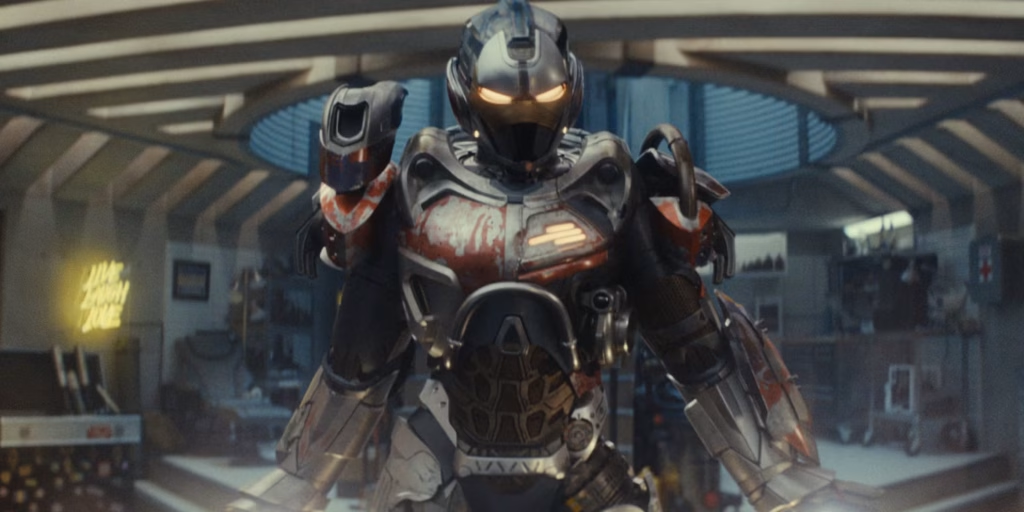
Set after the events of Wakanda Forever, the series feels like a natural continuation rather than a standalone spin-off. It expands the MCU’s scope by focusing less on legacy heroes and more on what the next generation brings to the table—new ideas, new struggles, and new definitions of power.

Riri Williams, played by Dominique Thorne, is immediately compelling because she doesn’t fit the traditional superhero mold. She’s young, brilliant, stubborn, and still figuring herself out. Her intelligence is undeniable, but her emotional journey is just as important as her technological achievements.

Growing up in Chicago, Riri’s life has been shaped by loss, particularly from gun violence. These experiences aren’t just background details—they inform everything she does. Her need to build and invent comes from a desire to protect, to prevent future pain, and to impose order on a world that often feels cruel and unpredictable.

Unlike many origin stories, Ironheart doesn’t rely heavily on flashbacks to explain who Riri is. Instead, it places viewers alongside her in the present moment, letting her past surface naturally through conversations, choices, and consequences.

One of the first major hurdles Riri faces is her expulsion from MIT. Losing access to institutional support forces her to confront how much of her success depended on resources she no longer has. It’s a sobering reminder that talent alone doesn’t guarantee opportunity.
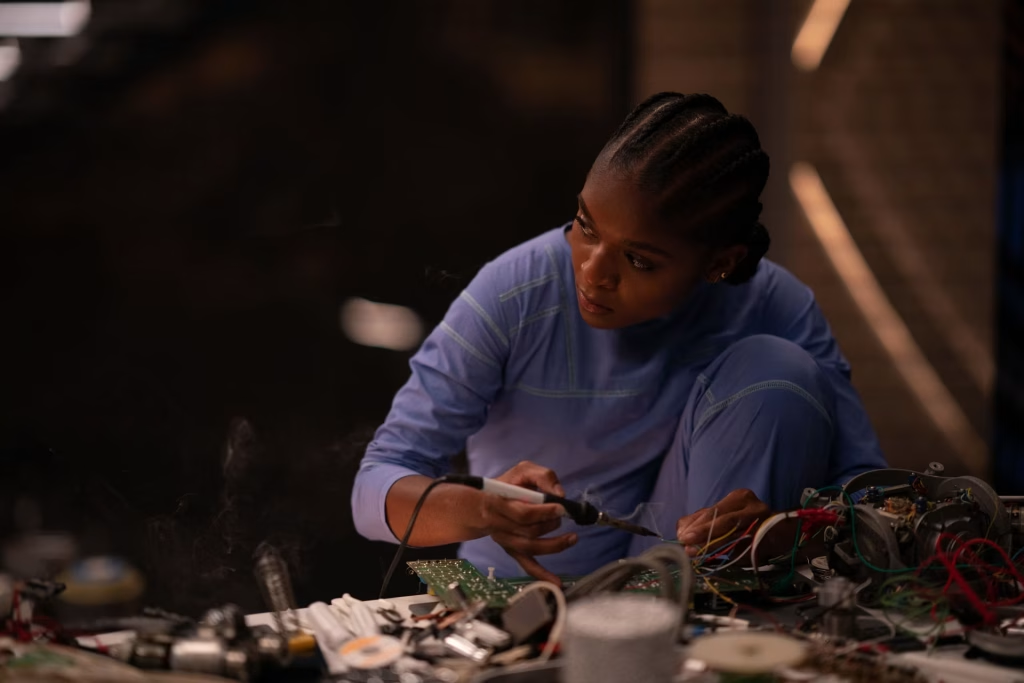
Without funding or protection, Riri is pushed into uncomfortable territory. She has to hustle, compromise, and sometimes take risks that feel morally questionable just to keep her work alive. The show doesn’t glamorize this struggle—it lets it feel messy and stressful.

Riri’s ambition is a defining trait, but Ironheart treats it with nuance. She isn’t chasing fame or validation; she’s chasing possibility. At the same time, the series questions whether ambition without restraint can become dangerous.
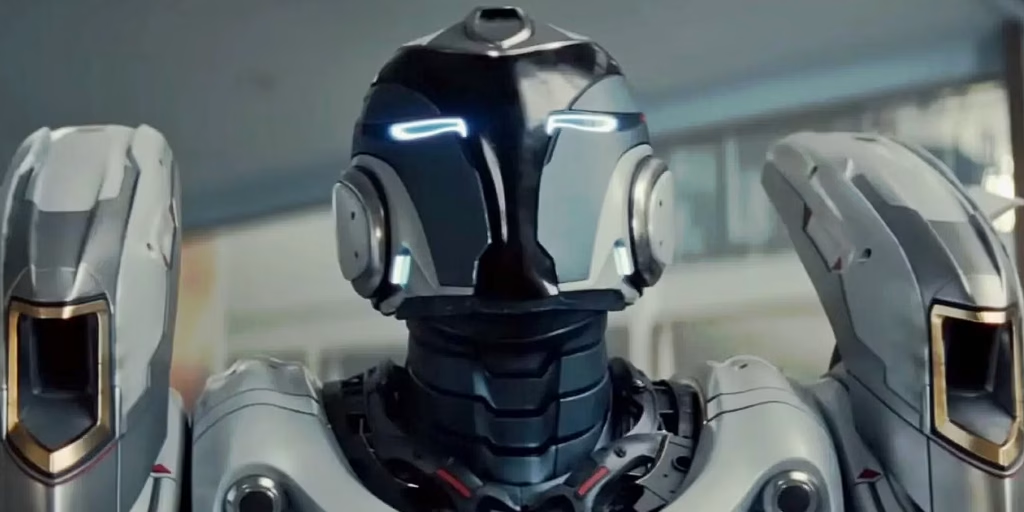
Throughout the story, Riri is repeatedly asked to justify her inventions. Why build weapons? Why push technology so far? These questions follow her everywhere, highlighting the scrutiny she faces as a young Black woman operating in spaces that rarely make room for her.

Her answers aren’t always neat or satisfying. Sometimes she deflects with sarcasm, other times she responds with raw honesty. This inconsistency makes her feel real—someone still learning how to articulate her purpose.

A major turning point in the series comes with the introduction of Parker Robbins, also known as The Hood. Played by Anthony Ramos, he represents a completely different kind of power—one rooted in magic rather than machinery.

The clash between Riri and The Hood sets up one of the show’s most intriguing themes: science versus sorcery. Riri believes in logic, data, and engineering, while Robbins operates in a world defined by mystery and ancient forces.

Rather than choosing one side, Ironheart explores what happens when these two philosophies collide. Riri is forced to admit that technology alone may not be enough to face every threat.

This realization pushes her into unfamiliar territory. Blending magic with engineering challenges everything she knows, but it also opens the door to new forms of creativity and problem-solving.

One of the most emotionally complex storylines revolves around N.A.T.A.L.I.E., Riri’s artificial intelligence modeled after her deceased best friend. The AI is a stunning technical achievement, but it also raises deeply uncomfortable questions.

By recreating Natalie in digital form, Riri blurs the line between remembrance and resurrection. The AI provides comfort, companionship, and guidance, but it also risks trapping Riri in her grief.

The emotional weight of this choice becomes especially clear when Riri’s mother encounters N.A.T.A.L.I.E. Seeing a version of someone she lost evokes both warmth and unease, forcing the family to confront what it means to let go.

The show wisely doesn’t rush past these ethical concerns. Instead, it leans into them, suggesting that technological progress without emotional responsibility can cause as much harm as good.
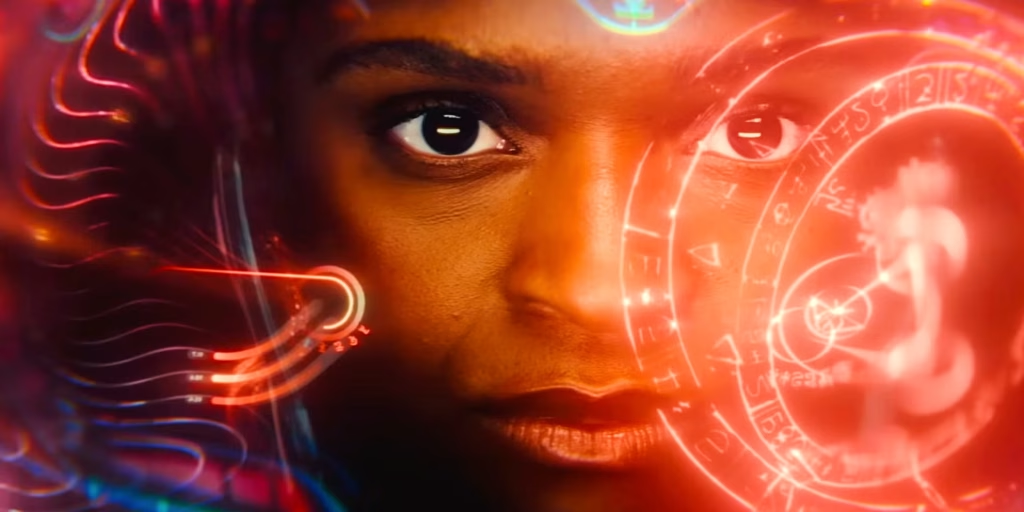
The inclusion of a tech ethicist character reinforces this idea. Their presence signals that Ironheart wants to engage with real-world debates about innovation, accountability, and moral boundaries.

Beyond Riri herself, the supporting cast adds depth and texture to the story. Lyric Ross delivers a powerful performance as both Natalie and N.A.T.A.L.I.E., capturing the humanity that makes the AI so emotionally charged.

Alden Ehrenreich plays a mentor figure who understands the cost of brilliance. His guidance isn’t about control—it’s about survival, restraint, and learning when to step back.

Characters played by Regan Aliyah, Manny Montana, Matthew Elam, and Anji White help ground the story in everyday reality. Their relationships with Riri remind viewers that heroism doesn’t exist in isolation.

Behind the scenes, Ironheart benefits from strong creative leadership. Head writer Chinaka Hodge brings emotional clarity and cultural specificity, ensuring Riri’s story feels authentic rather than generic.

Executive producers Kevin Feige and Ryan Coogler help maintain continuity with the larger MCU while allowing the series to carve out its own identity. The result is a show that feels both connected and refreshingly personal.

One of the most striking aspects of Ironheart is its focus on representation. Riri’s struggle isn’t just about villains—it’s about navigating a world that demands proof of her worth at every turn.

The series highlights how differently innovation is judged depending on who’s doing the inventing. Riri’s creations are scrutinized in ways her predecessors rarely experienced, adding cultural weight to her journey.
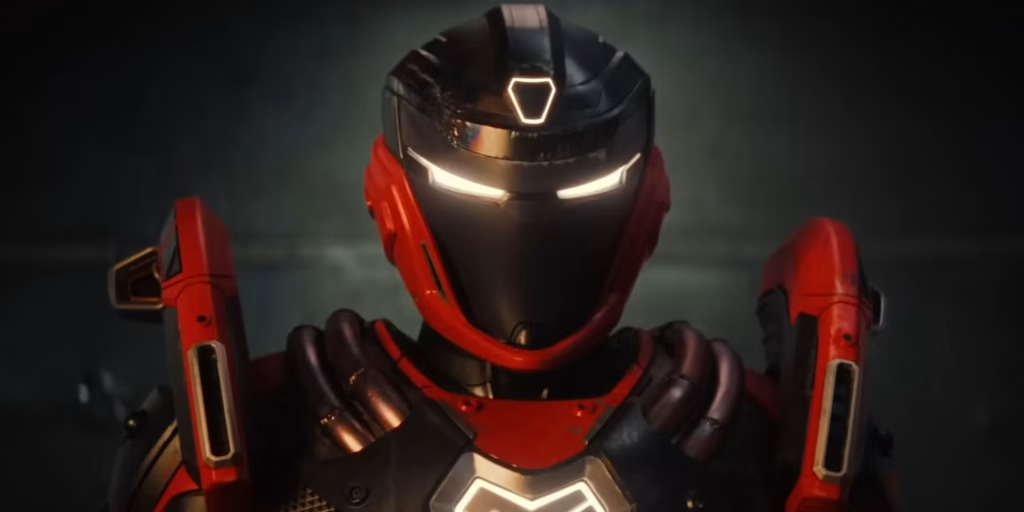
Early reactions to the show suggest that this approach is resonating with audiences. Fans and critics alike have praised its willingness to tackle heavy themes without losing sight of entertainment.

The timing of Ironheart also feels significant. In an era dominated by conversations about AI, surveillance, and responsible technology, the show’s questions feel urgently relevant.

Production delays may have slowed its release, but they’ve arguably strengthened its impact. The world has caught up to the issues Ironheart is exploring.

By the end of the season, Riri Williams stands as something more than a successor to Iron Man. She represents a new kind of hero—one defined by empathy, accountability, and innovation, shaped by lived experience.

With its blend of advanced technology, mystical forces, and deeply human storytelling, Ironheart sets the stage for a bold future in the MCU. Riri’s story is just beginning, but it already feels like one of Marvel’s most meaningful evolutions yet.