

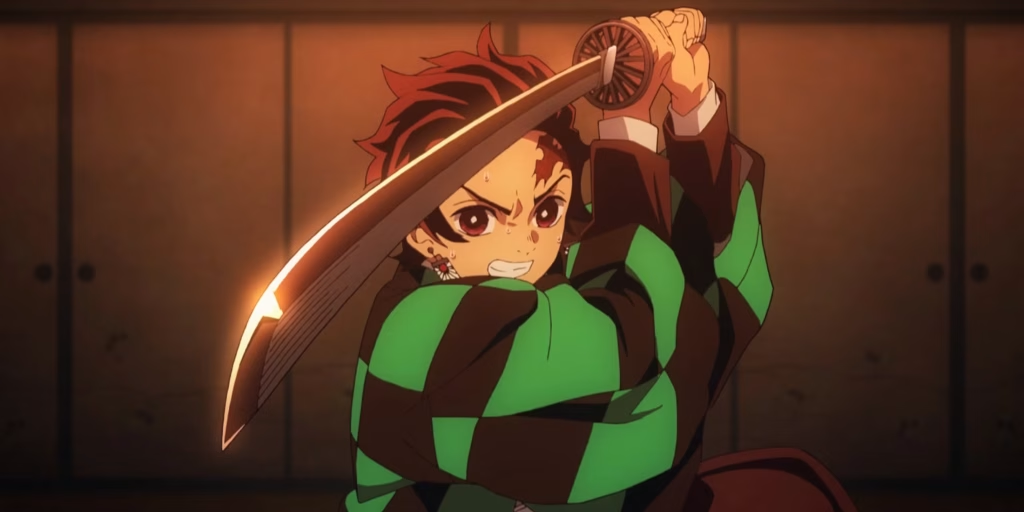
In Demon Slayer, the colors of Nichirin blades aren’t just for style; they’re a reflection of the wielder’s personality, fighting style, and sometimes even their destiny. Each blade tells a story, symbolizing strength, emotion, and the deadly Breathing Techniques mastered by the Demon Slayer Corps. From legendary swords to uniquely patterned weapons, these blades are as much characters as the warriors who wield them. Here’s a ranking of the 15 most striking Nichirin blade colors and what they reveal about their owners.

15. Crimson Nichirin Blade (Yoriichi Tsugikuni)
Yoriichi Tsugikuni, the original Sun Breathing master, wields the iconic crimson Nichirin blade, a sword that embodies both purity and immense power. This legendary blade isn’t just visually stunning; it symbolizes the life-giving, demon-destroying force of the sun itself.

The crimson color is deeply tied to Sun Breathing, the progenitor of all Breathing Styles. It can stop demon regeneration, making it one of the deadliest weapons in the series. Beyond its combat abilities, the blade carries the weight of Yoriichi’s tragic journey, representing the hope and light he brings in the face of overwhelming darkness.

14. Light Purple/Crimson Blade (Kokushibo)
Kokushibo, once Yoriichi’s brother Michikatsu Tsugikuni, wields a blade that is both light purple and crimson, a terrifying extension of his Moon Breathing and demon form. The sword is fused to his body, creating a grotesque yet powerful weapon.

The blade’s hues symbolize blood, death, and the corruption of ambition. It’s a constant reminder of the danger of obsession and what happens when a warrior succumbs to darkness. Kokushibo’s sword is as monstrous as he is, making him one of the most feared figures in Demon Slayer.

13. Amber Dual Blades (Tengen Uzui)
Tengen Uzui’s flamboyant personality is perfectly matched by his dual amber Nichirin blades. These chained cleavers swing in dazzling patterns, turning combat into a rhythmic, explosive performance.

Amber represents energy, vibrancy, and spectacle. Tengen’s Sound Breathing style is all about theatrical offense, and the paired blades amplify his showmanship. They’re deadly, flashy, and entirely his own—a reflection of the flamboyant Hashira himself.

12. Lavender Blade (Shinobu Kocho & Obanai Iguro)
Lavender blades convey elegance and precision. Shinobu Kocho wields a needle-like sword for injecting poison rather than slashing, embodying the delicate, lethal nature of Insect Breathing.

Obanai Iguro’s lavender blade, on the other hand, is flexible and serpentine, complementing Serpent Breathing. Both weapons showcase how color and design can reflect subtlety, finesse, and specialized combat styles, proving that strength can be as much about precision as power.

11. Indigo-Gray Dual Blades (Inosuke Hashibira)
Inosuke Hashibira’s jagged indigo-gray blades mirror his untamed, wild fighting style. The self-forged swords are serrated intentionally, enhancing his Beast Breathing’s chaotic and feral approach.

The indigo-gray shade symbolizes ferocity, independence, and a refusal to conform. Inosuke’s blades are a physical extension of his raw energy and unpredictable combat style, perfectly matching the untamed spirit of the boar-headed warrior.

10. Gray Blade (Gyomei Himejima)
Gyomei Himejima, the Stone Hashira, wields a massive gray axe-and-flail weapon that emphasizes endurance and stability. The color gray reflects his steadfastness, compassion, and unshakable sense of duty.

Stone Breathing is about strength and reliability, and Gyomei’s weapon symbolizes the Corps’ immovable pillar. Despite his intimidating size and power, his gray blade also represents the gentle, protective side of his character.

9. Pink/Dark Pink Blade (Mitsuri Kanroji & Kanao Tsuyuri)
Pink blades represent love, emotion, and subtle strength. Mitsuri Kanroji’s whip-like dark pink sword dances with grace, embodying the passion and flexibility of Love Breathing.

Kanao Tsuyuri’s lighter pink blade channels calm focus and gentle strength, reflecting her Flower Breathing techniques. Both colors show how emotion and personality influence combat, turning vulnerability into a weapon as deadly as any blade.

8. White Blade (Muichiro Tokito)
Muichiro Tokito’s white Nichirin blade mirrors the elusive, ephemeral nature of Mist Breathing. White symbolizes both purity and death, capturing Muichiro’s calm, detached, yet lethal persona.

The blade emphasizes evasion and precision. Its subtle coloration reflects Muichiro’s quiet focus and prodigious talent, proving that a true warrior doesn’t need flashy color to dominate in battle.

7. Green Blade (Sanemi Shinazugawa)
Sanemi Shinazugawa’s green blade embodies the chaos and unpredictability of Wind Breathing. Its jagged, vibrant hue mirrors his violent, defiant, and fiercely independent personality.

Green represents freedom, nature, and relentless aggression. The blade is a visual symbol of Sanemi’s whirlwind fighting style and his willingness to risk everything to protect humanity.

6. Yellow Blade (Zenitsu Agatsuma, Kaigaku, Jigoro Kuwajima)
Yellow blades are synonymous with speed and lightning power. Zenitsu Agatsuma’s sword, marked with a lightning pattern, mirrors his Thunder Breathing style and explosive potential.

Despite Zenitsu’s anxious personality, the yellow blade signifies courage and latent power. In battle, it transforms him into an unstoppable force, striking like lightning before enemies can react.

5. Blue Blade (Giyu Tomioka, Sakonji Urokodaki)
Blue Nichirin blades represent calmness, adaptability, and flowing power. Giyu Tomioka wields his deep blue sword with the precision of Water Breathing, embodying composure and resilience.

The blue blade reflects Giyu’s inner calm and versatility, enabling him to remain unshaken in combat. Its visual appeal reinforces the connection between a warrior’s personality and the style of their weapon.

4. Red Blade (Kyojuro Rengoku, Tanjiro Kamado – temporary)
Red blades signify fiery passion and the will to protect. Kyojuro Rengoku’s Flame Breathing sword is bold, radiant, and inspiring, a symbol of hope on the battlefield.

Tanjiro Kamado’s temporary red blade signals awakening power and raw intensity. Red blades can prevent demon regeneration, making them among the most feared weapons in the series, symbolizing determination and unbreakable spirit.
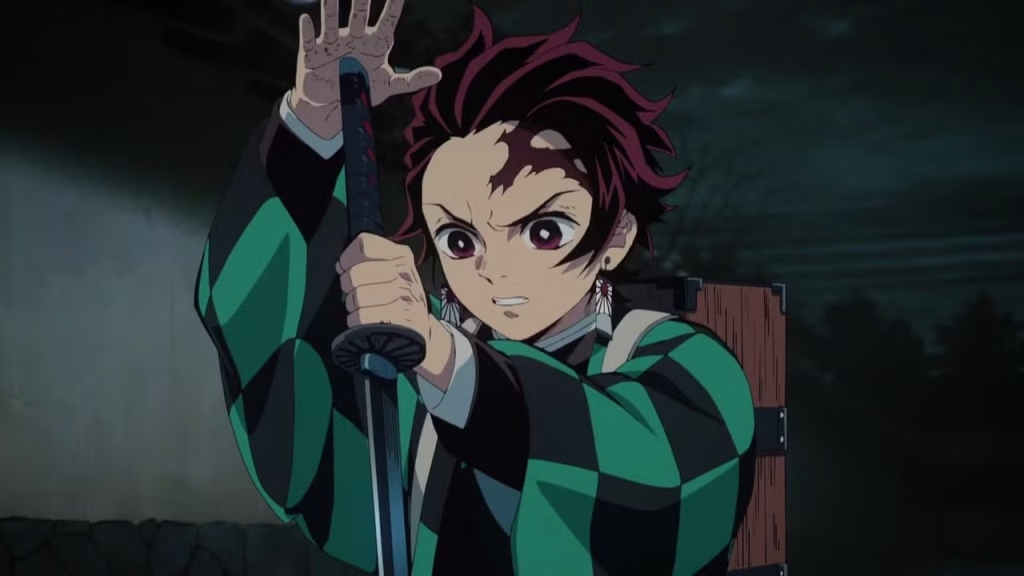
3. Black Blade (Tanjiro Kamado, Yoriichi Tsugikuni – initial)
Black Nichirin blades are rare and mysterious, often linked to untapped potential. Tanjiro’s first sword turns black, sparking superstition while also symbolizing adaptability and versatility.

Yoriichi Tsugikuni also wielded a black blade before it became crimson. The black blade is a visual metaphor for growth, the unknown, and the potential for greatness in the face of overwhelming odds.

2. Unique/Patterned Blades (Zenitsu, others)
Some Nichirin blades feature patterns instead of solid colors, reflecting the user’s style and personality. Zenitsu’s lightning-patterned sword is one such example, adding individuality to function.

Patterns extend beyond aesthetics; they amplify the symbolism of Breathing Styles. Each uniquely crafted weapon highlights the creativity of the Corps, making these swords as expressive as they are deadly.
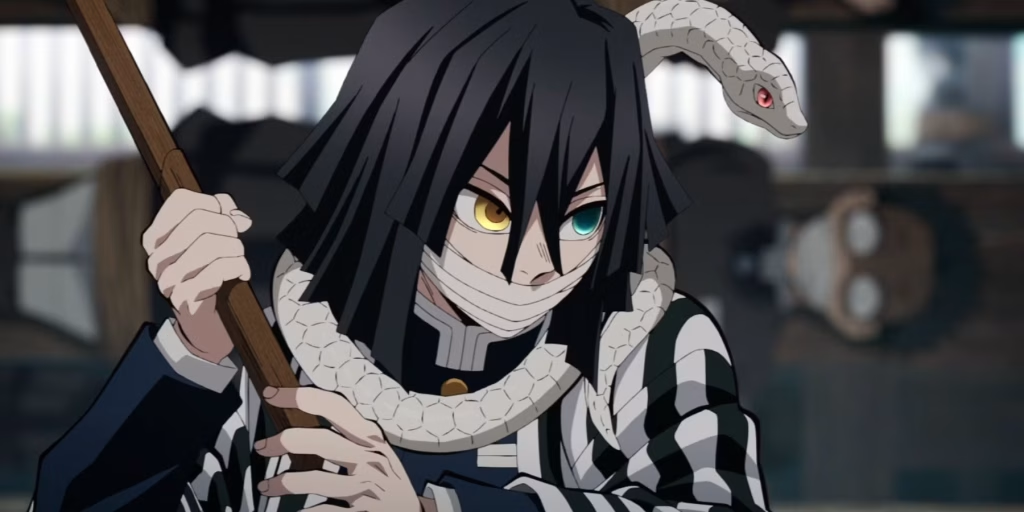
1. Other Notable Variants (Serpent, Flower, Sound, etc.)
The Demon Slayer Corps includes numerous unique blade types, each tailored to the user’s Breathing Style. Serpent, Flower, and Sound Breathing all come with specialized weapons reflecting their wielders’ personalities and fighting strategies.

From whip-like flexibility to chain-connected cleavers, these blades are functional works of art. Their diversity is a testament to the rich world-building of Demon Slayer, where each sword tells a story, and every color reflects the soul of its wielder.
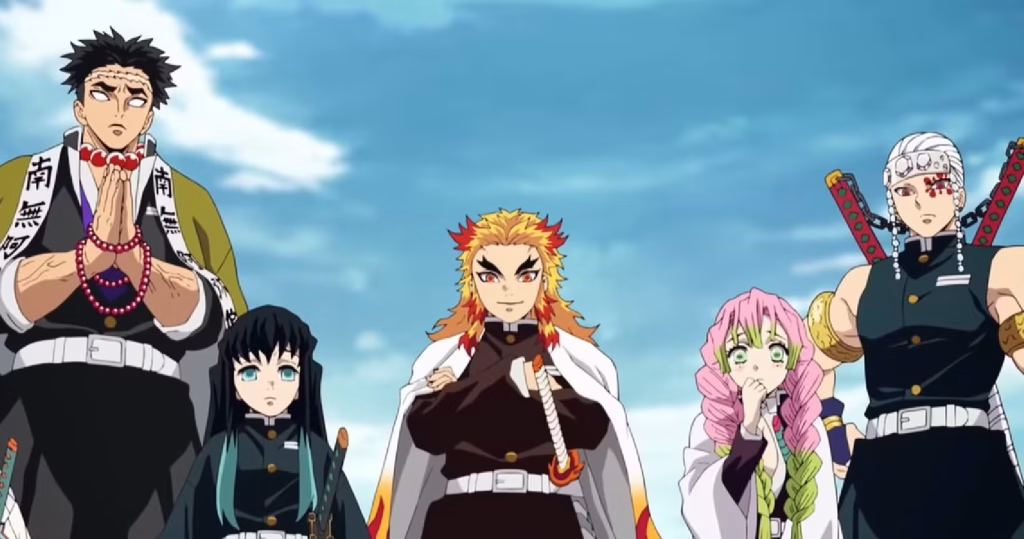
Nichirin blades are more than weapons; they’re a window into the heart of every Demon Slayer. From legendary crimson swords to uniquely patterned creations, the colors, designs, and symbolism of these blades deepen our understanding of the characters and make Demon Slayer’s battles as meaningful as they are thrilling.