


There’s something endlessly thrilling about a great heist movie. Whether it’s the careful planning, the razor-thin margin for error, or the inevitable moment when everything goes wrong, these films tap into our love for clever schemes and high-stakes drama. At their best, heist movies are puzzles in motion, equal parts suspense, style, and character study. From silent, sweat-inducing robberies to flashy, star-studded capers, the genre has evolved for decades while keeping its core appeal intact. These 15 films didn’t just perfect the art of the cinematic robbery; they helped define it.

15. Rififi
Few films have shaped the heist genre as profoundly as Rififi. Released in 1955 and directed by Jules Dassin, this French crime classic follows a crew of hardened criminals attempting a daring jewel robbery in Paris. The setup is straightforward, but the execution is anything but, focusing on professionalism, trust, and the cost of criminal life.

Its legendary centerpiece, a nearly silent, half-hour-long burglary, remains one of the most suspenseful sequences ever put on film. Every creak, breath, and movement feels like a potential catastrophe, and that meticulous realism became the blueprint for countless films that followed.

14. Dog Day Afternoon
Dog Day Afternoon takes the idea of a clean heist and tears it to shreds. Inspired by a real 1972 bank robbery, the film stars Al Pacino as Sonny, whose poorly planned crime explodes into a public standoff involving hostages, police, and the media.

What makes the film unforgettable isn’t slick execution but emotional chaos. Pacino’s performance captures desperation, vulnerability, and volatility, turning the movie into a raw portrait of panic, identity, and a society watching tragedy unfold in real time.

13. The Asphalt Jungle
John Huston’s The Asphalt Jungle is one of the earliest films to treat criminals as complex, tragic figures rather than simple villains. The story follows a carefully assembled crew plotting a jewel heist that seems perfect, until human weakness inevitably intervenes.

The film’s influence is everywhere, from its ensemble structure to its moral fatalism. Greed, mistrust, and bad luck slowly corrode the plan, reinforcing the genre’s enduring lesson: the robbery is never the most dangerous part; the aftermath is.

12. Thief
Michael Mann’s Thief feels like a bridge between classic noir and modern crime cinema. James Caan stars as Frank, a master safecracker obsessed with precision and control, who wants one final job before escaping the criminal world for good.

The film is drenched in neon, rain, and electronic music, creating a hypnotic mood that mirrors Frank’s inner conflict. Mann’s fascination with professionalism and obsession would later reach its peak in Heat, but it all begins here.

11. Widows
Widows reinvents the heist formula by grounding it firmly in grief, politics, and power. After their criminal husbands die during a botched robbery, four women decide to finish the job themselves, driven by survival rather than greed.
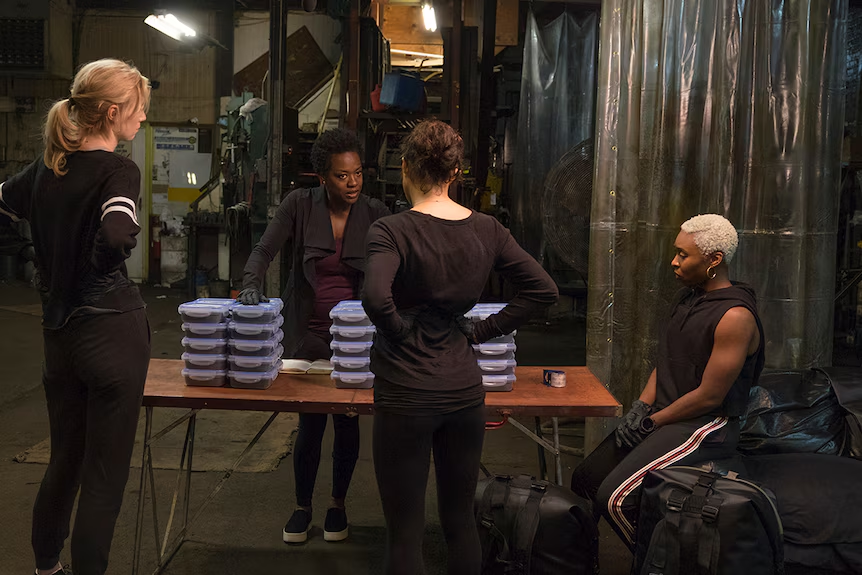
Steve McQueen blends genre thrills with social commentary, while Viola Davis anchors the film with a performance full of quiet rage and resolve. It’s a heist movie with emotional weight—and one that proves the genre still has room to evolve.

10. The Taking of Pelham One Two Three
Set deep in 1970s New York, The Taking of Pelham One Two Three trades bank vaults for subway tunnels. A group of criminals hijacks a train, holding passengers hostage while demanding a ransom from the city.

The tension comes from sharp dialogue and a ticking clock, especially the verbal sparring between Robert Shaw’s icy mastermind and Walter Matthau’s weary transit cop. It’s lean, clever, and endlessly rewatchable.

9. Le Cercle Rouge
Jean-Pierre Melville’s Le Cercle Rouge is cool to the bone. The film brings together a small group of men bound by fate and professionalism, planning a jewel robbery with monk-like precision.

Silence plays as big a role as dialogue, especially during the heist itself, which unfolds like a ritual. Melville’s influence on filmmakers from Michael Mann to John Woo is unmistakable, and this film is his genre masterpiece.

8. A Fish Called Wanda
Not all heists are serious business. A Fish Called Wanda turns double-crossing thieves into a playground for sharp wit and outrageous comedy, centered on a diamond robbery that collapses into chaos.

Kevin Kline’s Oscar-winning performance is unhinged brilliance, while Jamie Lee Curtis and John Cleese keep the comedy grounded. It’s proof that the genre can thrive just as easily on laughter as on tension.

7. The Thomas Crown Affair
Style is the real prize in The Thomas Crown Affair. Steve McQueen plays a wealthy thrill-seeker who pulls off a bank robbery simply because he can, drawing the attention of Faye Dunaway’s sharp insurance investigator.

The film’s elegance, tension, and playful cat-and-mouse structure elevated the heist into something glamorous. Its legacy lived on through a slick 1999 remake, but the original remains timelessly cool.

6. The Pink Panther
The Pink Panther may be more caper than crime thriller, but its influence is undeniable. Peter Sellers’ Inspector Clouseau is a walking disaster, stumbling his way through a case involving a legendary diamond.

Between Sellers’ physical comedy and Henry Mancini’s iconic score, the film became a cultural phenomenon. It turned the heist movie into a playground for slapstick without losing the intrigue of the chase.

5. Set It Off
Set It Off injects urgency and social realism into the genre. The following four women, pushed into crime by economic hardship and systemic injustice, the film balances high-stakes robberies with deeply personal motivations.

The performances, especially from Queen Latifah and Jada Pinkett Smith, give the story emotional gravity. It’s a heist movie fueled not by greed, but by survival, rage, and loyalty.

4. Inception
Christopher Nolan transformed the heist film into a cerebral blockbuster with Inception. Instead of stealing money, the crew steals ideas, navigating layered dream worlds governed by unstable rules.

Despite its complexity, the film never loses momentum. Between the visual spectacle and emotional undercurrent, Inception proved that big-budget heist movies could challenge audiences intellectually and emotionally.

3. The Killing
Stanley Kubrick’s The Killing is a razor-tight crime film that helped redefine narrative structure. Its racetrack heist is shown from multiple perspectives, each revealing new information and mounting tension.

The fractured timeline was revolutionary at the time and deeply influential. Nearly every modern ensemble heist owes something to Kubrick’s cold, methodical approach.

2. Ocean’s Eleven (and sequels)
Few films made crime look cooler than Ocean’s Eleven. Steven Soderbergh’s slick remake turned a casino robbery into a star-powered spectacle, driven by chemistry, humor, and impeccable style.

The film revived the genre for the 21st century, spawning sequels and spin-offs that proved audiences still crave clever schemes and charming thieves. It’s comfort food with a master plan.
1. Tarantino’s Heist Legacy: Jackie Brown, Pulp Fiction, and Beyond
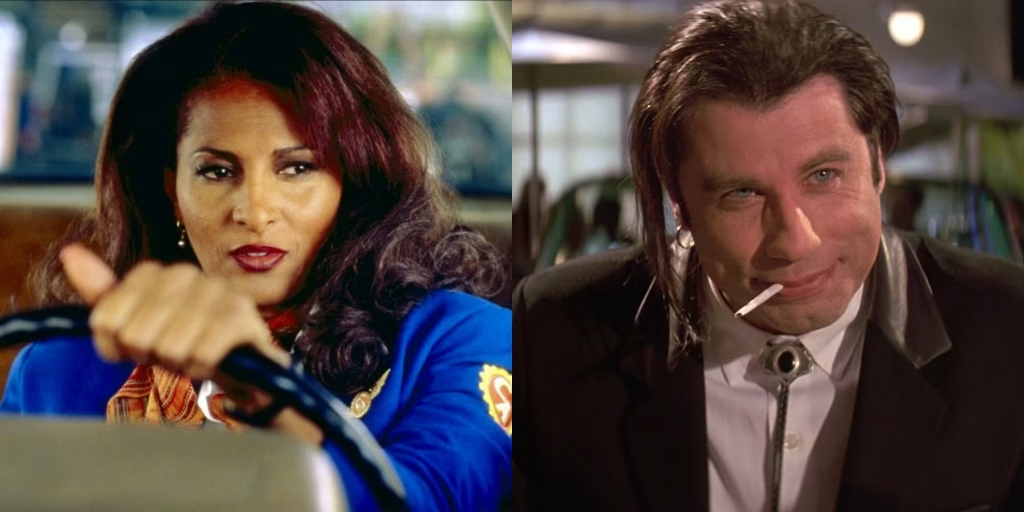
Quentin Tarantino never made a traditional heist film, but he reshaped crime cinema entirely. His stories focus less on the robbery itself and more on the people orbiting it, their conversations, betrayals, and moral blind spots.

Jackie Brown stands as his purest heist-adjacent work, blending classic genre influences with character-driven storytelling. Tarantino’s impact on the genre is immeasurable, reminding filmmakers that style, dialogue, and risk-taking matter just as much as the plan.

Heist films endure because they tap into something universal: the thrill of outsmarting the system and the danger of watching it all collapse. Whether quiet and methodical or flashy and explosive, the best entries in the genre balance precision with personality. These films didn’t just steal diamonds, cash, or secrets; they stole our attention, rewrote the rules, and left fingerprints on cinema that will never fade.