


Film and television would not look the way they do today without the brilliance, persistence, and imagination of Black women. In front of and behind the camera, they have challenged stereotypes, expanded storytelling, and carved out space in an industry that has not always made room for them. This list celebrates fifteen influential figures whose work continues to shape Hollywood and beyond. From visionary directors to powerhouse performers and groundbreaking creators, each has left a lasting imprint on the culture.

15. Raamla Mohamed
Raamla Mohamed has quickly become one of television’s most compelling creative voices. As the creator and executive producer of Reasonable Doubt, she helped bring to life a layered, complex Black female lead, something still far too rare in mainstream legal dramas. Her storytelling centers ambition, vulnerability, and moral gray areas without flattening her characters into clichés.

Mohamed’s path has required both resilience and self-determination. In an industry where Black women are often expected to build their own doors instead of being invited in, she has done exactly that while holding the door open for others. Her recognition at the Essence Black Women in Hollywood Awards, where she was honored by Issa Rae, signals a growing respect for the power of Black women behind the scenes.

14. Teyana Taylor
Teyana Taylor refuses to be limited to one lane. Known first for her music career, she has evolved into a commanding screen presence, delivering a critically acclaimed performance in A Thousand and One that showcased her emotional depth and dramatic range.

Beyond acting, Taylor has reshaped the visual language of music videos through her direction, centering bold, unapologetic Black aesthetics. Her creative fearlessness, both on camera and behind it, demonstrates how versatility can become a form of influence. She represents a generation of artists redefining what it means to be multi-hyphenate in Hollywood.
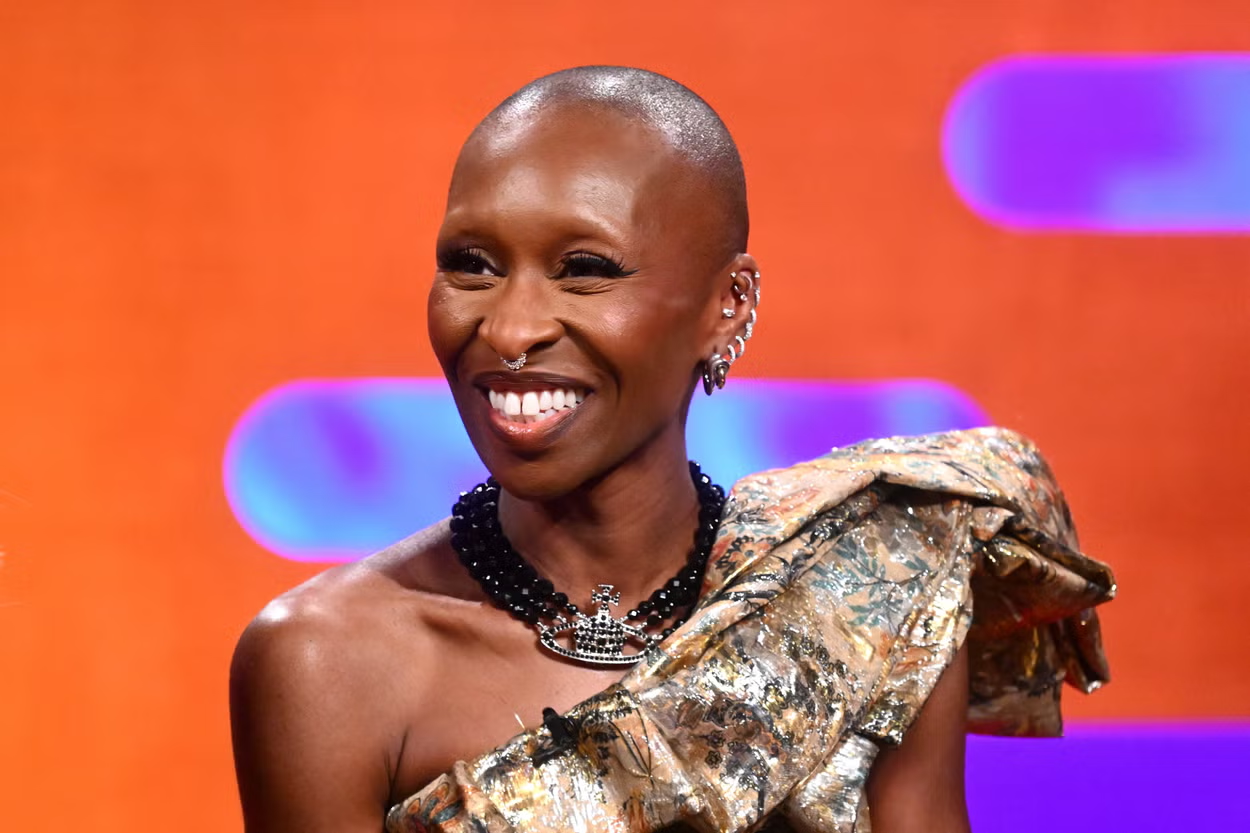
13. Cynthia Erivo
Cynthia Erivo’s career is the definition of excellence across mediums. With an Emmy, Grammy, and Tony Award already under her belt and multiple Oscar nominations, she has proven her range from Broadway stages to major film productions.

Her performances are marked by intensity and emotional precision, whether portraying historical figures or stepping into iconic roles like Elphaba in Wicked. Erivo embodies discipline and daring artistry, inspiring countless young performers to aim higher and demand more from the industry.

12. Mara Brock Akil
Few television creators have chronicled Black womanhood as consistently and thoughtfully as Mara Brock Akil. Her groundbreaking sitcom, Girlfriends, offered audiences witty, layered portrayals of professional Black women navigating friendship, careers, and love.

With hundreds of episodes across multiple hit shows, Brock Akil has built a legacy rooted in authenticity. Beyond writing and producing, she actively mentors emerging voices, ensuring that the pipeline for Black storytellers remains strong and vibrant.

11. Ava DuVernay
Ava DuVernay has transformed modern filmmaking by confronting injustice with clarity and artistry. Her historical drama Selma and the powerful miniseries When They See Us sparked national conversations about race, power, and systemic inequality.

Through her distribution company ARRAY, DuVernay has championed underrepresented filmmakers worldwide. Her influence extends far beyond her own projects; she is reshaping who gets to tell stories and whose stories are deemed worthy of being told.

10. Julie Dash
Julie Dash made cinematic history with Daughters of the Dust, becoming the first Black woman to have a full-length feature receive nationwide theatrical distribution in the United States. The film’s lyrical portrayal of Gullah culture redefined visual storytelling in American cinema.

Dash’s dedication to preserving Black history through art has influenced generations of filmmakers. Her poetic imagery and emphasis on ancestral memory paved the way for more expansive, culturally rooted narratives.

9. Kasi Lemmons
Kasi Lemmons burst onto the scene with Eve’s Bayou, a haunting exploration of family secrets told through the eyes of a young Black girl. The film challenged Hollywood’s narrow depictions of Black life and earned widespread critical acclaim.

Lemmons continues to craft emotionally rich stories that resist easy categorization. By centering interiority and nuance, she expanded what kinds of narratives Black filmmakers could successfully bring to the screen.

8. Cheryl Dunye
With The Watermelon Woman, Cheryl Dunye became the first Black lesbian to direct a feature film. The movie cleverly blends fiction and documentary-style storytelling while exploring race, sexuality, and Hollywood history.

Dunye’s boldness opened doors for intersectional representation long before it was widely embraced. Her work continues to inspire filmmakers committed to telling stories that challenge both cultural and cinematic norms.

7. Leslie Harris
Leslie Harris made a lasting impact with Just Another Girl on the I.R.T., which offered a refreshingly honest look at Black teenage girlhood. The protagonist’s ambition and vulnerability felt groundbreaking at the time.

By addressing topics like teen pregnancy without moralizing or sensationalism, Harris created space for more authentic coming-of-age stories. Her film remains a key reference point for narratives centered on young Black women.

6. Kathleen Collins
Kathleen Collins was a pioneer whose film Losing Ground explored the intellectual and emotional life of a Black woman academic. At a time when such characters were virtually nonexistent on screen, Collins insisted on complexity.

Her work, rediscovered and celebrated decades later, underscores how ahead of her time she was. Collins’ refusal to simplify her protagonist marked a turning point in the representation of Black women as fully realized individuals.

5. Euzhan Palcy
Euzhan Palcy brought global political urgency to cinema with A Dry White Season, which confronted apartheid head-on. Earlier, Sugar Cane Alley earned international recognition and critical praise.

Her films blend activism with deeply human storytelling. Paley’s courage in tackling systemic injustice expanded the possibilities for politically engaged filmmaking by Black women.

4. Marla Gibbs
Marla Gibbs became a household name through her iconic roles on The Jeffersons and 227. Her sharp comedic timing and commanding presence made her a standout in both ensemble and leading roles.

Off-screen, Gibbs invested in her community by producing projects and nurturing new talent. Her longevity and advocacy have cemented her status as a pillar of Black television history.

3. Taraji P. Henson
Taraji P. Henson’s breakout in Hustle & Flow introduced audiences to her powerful screen presence, but it was her unforgettable role as Cookie Lyon on Empire that solidified her star power.

In addition to acting, Henson is a vocal advocate for mental health awareness within the Black community. Her career reflects both artistic range and a commitment to using visibility for meaningful impact.

2. Jeffrey Wright
Jeffrey Wright has built a career defined by depth and versatility, with standout roles in Basquiat, Westworld, and American Fiction. His performances are often subtle yet profoundly affecting.

Wright has also been outspoken about the need for equitable funding and opportunities in the industry. His advocacy and artistry together represent a model of sustained, meaningful influence.

1. Garrett Morris
Garrett Morris broke barriers as the first Black cast member of Saturday Night Live, forever changing the landscape of sketch comedy. His presence on the show helped pave the way for generations of Black comedians.

Over the decades, Morris continued to shine in series like Martin and 2 Broke Girls. His enduring career is a testament to resilience, talent, and the importance of visibility in shaping entertainment history.

These artists and visionaries have expanded what’s possible in film and television. Through courage, creativity, and persistence, they have challenged barriers and redefined representation. Their work not only entertains but also transforms the cultural landscape and ensures that future generations inherit a more inclusive, dynamic industry.