


Hollywood is full of surprises, and sometimes even the most ambitious films fail to find their audience, at least at first. While box office numbers can measure initial success, they don’t always capture a movie’s lasting impact. Some films, despite disappointing theatrical runs, go on to become beloved cult classics, inspiring fans, influencing filmmakers, and earning reputations that far outshine their original reception. From thought-provoking dramas to genre-defining sci-fi and irreverent comedies, these 15 films prove that true cinematic magic isn’t always reflected in ticket sales.

15. The Assassination of Jesse James by the Coward Robert Ford (2007)
Brad Pitt and Casey Affleck shine in this slow-burning Western that explores the complicated mythos of Jesse James and the man who killed him. Director Andrew Dominik’s poetic approach, coupled with Roger Deakins’ moody cinematography, transforms the story into a meditation on fame, betrayal, and legend. The film’s deliberate pace and intricate character work demanded patience from audiences, but it rewarded those willing to immerse themselves.

Despite critical acclaim, the film struggled commercially. Its lengthy title and introspective storytelling left mainstream viewers behind, earning just $4 million against a $30 million budget. Over time, however, it has been rediscovered as a cinematic masterpiece, with Brad Pitt calling it his favorite work. Today, it’s celebrated for its atmospheric visuals and nuanced performances, a quiet triumph in the Western genre.

14. Doctor Sleep (2019)
As a sequel to both Stephen King’s novel and Stanley Kubrick’s cinematic masterpiece, The Shining, Doctor Sleep had enormous expectations. Mike Flanagan’s adaptation balances psychological horror with supernatural thrills, following an adult Danny Torrance navigating trauma and new dangers. Ewan McGregor’s performance brings depth and vulnerability, anchoring the story’s heavier themes with emotional resonance.

However, the film faltered at the box office, likely due to its long runtime and the heavy shadow cast by Kubrick’s classic. Critics praised its performances, direction, and world-building, but audiences were hesitant. Over time, it has gained a loyal following among horror fans, earning recognition for its thoughtful exploration of legacy, trauma, and courage.

13. Blade Runner 2049 (2017)
Denis Villeneuve’s visually stunning follow-up to Ridley Scott’s sci-fi classic reimagines a dystopian future with existential questions at its core. Ryan Gosling and Harrison Ford navigate a world of replicants and identity crises, while Roger Deakins’ cinematography earned widespread acclaim and an Oscar. The film’s meditative pace, haunting imagery, and philosophical undertones elevated it into something more than a standard blockbuster sequel.

Yet, with a budget of $150 million, the film failed to perform commercially, leaving Warner Bros. facing significant losses. Despite this, Blade Runner 2049 has flourished in the home video era and streaming, earning reverence for its ambition, artistry, and thoughtful expansion of the original universe.

12. The Iron Giant (1999)
Brad Bird’s animated feature tells the story of a boy forming an unlikely friendship with a giant robot, blending heart, nostalgia, and moral philosophy. Its themes of fear, friendship, and sacrifice resonated with critics and industry insiders, while its hand-drawn animation offered a refreshing alternative to the rising CGI dominance.

Financially, the film was a flop. Poor marketing and a rushed production schedule prevented it from connecting with audiences, and Warner Bros. suffered disappointing returns. Yet over the years, The Iron Giant has become an animation classic, admired for its storytelling, character development, and emotional depth, influencing countless creators in the field.

11. Ad Astra (2019)
James Gray’s contemplative space epic starring Brad Pitt explores isolation, ambition, and the human psyche amid stunning interstellar visuals. The film is as much an introspective journey as a sci-fi adventure, combining cosmic wonder with intimate emotional beats that highlight Pitt’s restrained performance.

Despite positive reviews, the film’s meditative tone alienated some mainstream viewers. With a production budget of $90 million and modest box office returns, the financial numbers underwhelmed. Still, Ad Astra has earned admiration for its philosophical depth, visual storytelling, and thoughtful approach to science fiction, cementing its place in the genre’s modern canon.

10. Fight Club (1999)
David Fincher’s adaptation of Chuck Palahniuk’s novel challenged societal norms, exploring consumerism, identity, and rebellion. Brad Pitt and Edward Norton’s performances brought visceral energy to the film, and its dark humor and twist ending captured the zeitgeist of the late ’90s.

Despite solid reviews, audiences were initially lukewarm, and the film underperformed at the box office. However, through home video and repeated viewings, Fight Club became a cultural touchstone. Its quotable lines, subversive themes, and bold storytelling have ensured its lasting legacy as one of cinema’s definitive cult classics.
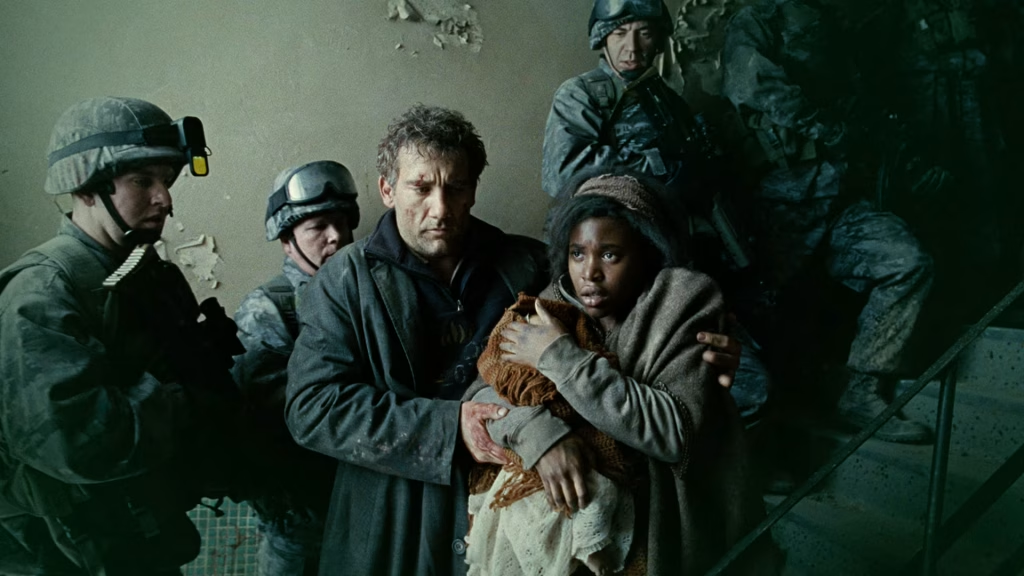
9. Children of Men (2006)
Alfonso Cuarón’s dystopian vision of a world plagued by infertility captivated critics with its technical mastery, long-take cinematography, and unflinching depiction of societal collapse. Clive Owen delivers a compelling performance as a man tasked with protecting the first pregnant woman in decades, blending personal stakes with epic societal commentary.

While lauded critically, the film failed to achieve financial success, earning $76 million against a similar budget. Over time, however, it has been reassessed as a modern sci-fi classic, influencing everything from cinematography to world-building in future films and cementing Cuarón’s status as a visionary director.

8. Dredd 3D (2012)
Karl Urban’s performance as the titular lawman brought the gritty, comic-accurate world of Judge Dredd to life. The film was praised for its kinetic action, visual style, and respect for its source material, keeping the helmet firmly on and the attitude firmly intact.

Unfortunately, the film underperformed at the box office, preventing a potential sequel from moving forward. Yet fans embraced it for its faithfulness and action-packed storytelling, and Dredd 3D remains a cult favorite, often cited as a benchmark for comic-book adaptations done right.

7. The Thing (1982)
John Carpenter’s tense sci-fi horror about paranoia, alien invasion, and isolation initially left audiences cold. Its grotesque effects and bleak tone clashed with mainstream expectations, particularly against the summer’s feel-good releases like E.T.

With only modest box office returns, the film struggled in theaters. Yet its meticulous craftsmanship and groundbreaking effects earned it a devoted fanbase on home video. Today, The Thing is hailed as a horror classic, influencing countless filmmakers and redefining the genre.

6. The Big Lebowski (1998)
The Coen Brothers’ eccentric comedy about “The Dude” and a bizarre kidnapping plot initially baffled audiences and critics alike. Its humor, oddball characters, and unconventional narrative didn’t translate to box office success, leaving the film with underwhelming returns.

Time, however, has been kind. The Big Lebowski has grown into a cult phenomenon, inspiring festivals, fan clubs, and endless quotable lines. Its enduring popularity proves that some films simply need patience to find their audience.

5. Office Space (1999)
Mike Judge’s satire of corporate life and office drudgery resonated deeply with critics but failed to attract large audiences in theaters. Its humor about cubicles, TPS reports, and mundane work life didn’t immediately click.

Over time, the film has become iconic, thanks to repeated airings on cable and widespread sharing of its humor online. Office Space is now a touchstone for workplace comedy and a beloved cultural reference for anyone who’s ever hated their 9-to-5.

4. The Shawshank Redemption (1994)
Tim Robbins and Morgan Freeman shine in this adaptation of Stephen King’s novella, exploring hope, friendship, and perseverance in the bleakest circumstances. Despite glowing reviews, the film initially flopped, earning just $16 million against strong competition like Pulp Fiction.

Its revival came through VHS rentals and television broadcasts, where audiences slowly embraced it as a moving, profound story. Today, Shawshank Redemption is widely regarded as one of the greatest films ever made, a testament to the enduring power of storytelling.

3. Kingdom of Heaven (2005)
Ridley Scott’s epic tale of the Crusades, starring Orlando Bloom, was criticized for a bloated narrative and a muddled theatrical cut. Its $130 million budget didn’t yield the expected returns, and the film struggled to connect with mainstream audiences.

The director’s cut, however, transformed the film into a gripping historical drama, earning respect for its depth and coherent storytelling. Kingdom of Heaven exemplifies how time and context can radically change a film’s reception.

2. Babylon (2022)
Damien Chazelle’s ambitious ode to Hollywood’s golden age dazzled with grand production design and star power from Brad Pitt and Margot Robbie. However, its sprawling narrative and divisive tone caused audiences to hesitate, leaving the film underperforming at the box office.

Over time, critics and cinephiles have begun to reassess Babylon, praising its audacity, creativity, and fearless storytelling. It serves as a reminder that some films are best appreciated with patience and perspective.

1. Furiosa: A Mad Max Saga (2024)
George Miller’s prequel explores Furiosa’s origins, combining breathtaking action with rich world-building. Critics hailed the film as a visual spectacle and a character-driven story, but its massive $163 million budget meant that even a strong opening weekend couldn’t secure commercial success.

Despite the financial disappointment, fans and critics are already elevating Furiosa as a future classic. Its combination of daring action, compelling characters, and cinematic ambition ensures that it will be celebrated long after its initial release, reinforcing the idea that true impact isn’t measured by box office receipts alone.

Sometimes, the most fascinating films are the ones that stumble at first. These 15 movies show that a box office flop doesn’t define a film’s legacy. With time, patience, and devoted audiences, even the biggest failures can become beloved classics, inspiring future filmmakers and proving that art often triumphs over numbers.