


Film criticism can be a tricky business. Sometimes reviewers and audiences see eye to eye, while other times they’re worlds apart. Over the years, numerous films have been dismissed at the box office or trashed by critics, only to find devoted fanbases and enduring cultural impact later. Conversely, some movies that were showered with accolades and praise have gradually fallen out of favor. From overlooked cult classics to overhyped Oscar winners, here are 15 films where critical opinion didn’t tell the whole story, and how time reshaped their reputations.

15. Empire Records
When Empire Records debuted in 1995, critics largely dismissed it as a lightweight teen comedy, criticizing its chaotic plot and exaggerated characters. Rotten Tomatoes reflects that sentiment, with the film holding a mere 29% approval rating. On paper, it looked like another forgettable mid-90s release.

Yet audiences discovered something different. The film’s quirky humor, memorable soundtrack, and charmingly chaotic portrayal of a single day in a record store struck a chord with young viewers. Fans embraced the offbeat energy, and over time, Empire Records became a beloved cult classic. Today, events like “Rex Manning Day” keep the film alive for new generations, proving that critical scorn doesn’t always match fan devotion.

14. Gigi
Gigi, the 1958 musical, was once hailed as a masterpiece. Winning nine Oscars, including Best Picture, the film was praised for its lavish production, dazzling choreography, and catchy songs. For decades, it was considered a high point of Hollywood’s golden age of musicals.

However, modern audiences and critics have revisited Gigi with a more critical eye. The story’s dated gender roles and romanticized depiction of a young girl being groomed for society have made it uncomfortable for contemporary viewers. Gigi’s journey from celebrated classic to a film with a controversial reputation shows how cultural shifts can completely alter perception.

13. Venom
Venom opened to critical ridicule, earning just 30% on Rotten Tomatoes. Reviewers panned its uneven tone, strange narrative choices, and chaotic pacing. Many assumed it would be forgotten as another failed superhero experiment.

Instead, Venom became a massive hit at the box office, grossing over $850 million worldwide. Audiences loved Tom Hardy’s unhinged performance and the film’s unapologetic embrace of comic-book weirdness. Its commercial success led to a sequel, and Venom has since cemented itself as a fan-favorite antihero. Sometimes, audience excitement outweighs critical opinion entirely.

12. Wet Hot American Summer
Upon its release, Wet Hot American Summer baffled critics. Its absurdist humor, parody of summer camp clichés, and deliberately over-the-top performances earned a lukewarm 37% on Rotten Tomatoes. Many reviewers weren’t sure what to make of its strange tone.

Over time, however, the film found a devoted following. Its satirical humor, ensemble cast, and willingness to go completely off the rails resonated with audiences. The movie inspired a prequel series on Netflix, cementing its place as a beloved cult comedy. Wet Hot American Summer proves that sometimes, being ahead of your time means critics miss the joke.

11. Manhattan
Woody Allen’s Manhattan was lauded at release, with a 94% Rotten Tomatoes rating and praise for its cinematography, script, and wit. The film was widely regarded as one of Allen’s finest works and a sophisticated look at New York life and relationships.

Yet, in the decades since, the film has become controversial. The story’s central relationship—between a middle-aged man and a teenage girl has sparked discussions about morality and consent. Manhattan’s case highlights how evolving societal norms can dramatically shift the way a classic film is perceived.

10. The Thing
John Carpenter’s The Thing was initially criticized for its extreme gore and bleak tone. In 1982, audiences were more drawn to lighter, friendlier sci-fi fare, and the film flopped at the box office despite a $15 million budget. Critics dismissed its nihilistic take on alien horror, overshadowed by hits like E.T.

Yet The Thing has aged into a masterpiece of horror cinema. Its groundbreaking practical effects, nerve-wracking suspense, and ambiguous ending have earned it legendary status. Today, it’s studied, celebrated, and cited as an influence on countless horror and sci-fi projects, proving that initial criticism doesn’t always dictate legacy.

9. Garden State
Garden State premiered to critical praise, with an 86% Rotten Tomatoes rating and accolades for its indie charm, emotional storytelling, and Zach Braff’s sensitive direction. At the time, it captured the hearts of a generation seeking quirky, heartfelt cinema.

However, retrospective views have been less kind. Critics and audiences have pointed out the film’s twee sensibilities, clichéd tropes, and the problematic “manic pixie dream girl” characterization. Its legacy shows how generational perspectives can reshape how we view once-beloved films.

8. Crash
Crash took home the Best Picture Oscar in 2006, earning 74% on Rotten Tomatoes and widespread critical acclaim for its interconnected tales of race, class, and tension in Los Angeles. Initially, it seemed like a socially significant and ambitious cinematic achievement.

Over time, opinions shifted sharply. Many now view Crash as overly simplistic and heavy-handed, especially compared to its Oscar rival, Brokeback Mountain. The film’s decline in reputation is a reminder that even celebrated award-winners can become reassessed when the cultural lens changes.

7. Hocus Pocus
The 1993 Halloween comedy Hocus Pocus received a chilly 39% on Rotten Tomatoes, with critics calling it silly and forgettable. Its campy humor didn’t initially resonate with mainstream reviewers.

Despite this, audiences embraced its charm, Bette Midler’s larger-than-life performance, and the film’s seasonal fun. Hocus Pocus has since become a beloved Halloween tradition, proving that fan enthusiasm can keep a movie alive long after critics dismiss it.

6. Forrest Gump
Forrest Gump was both a critical and commercial sensation, winning six Oscars and earning 71% on Rotten Tomatoes. Tom Hanks’ portrayal of the title character and the film’s heartfelt story made it an instant classic.
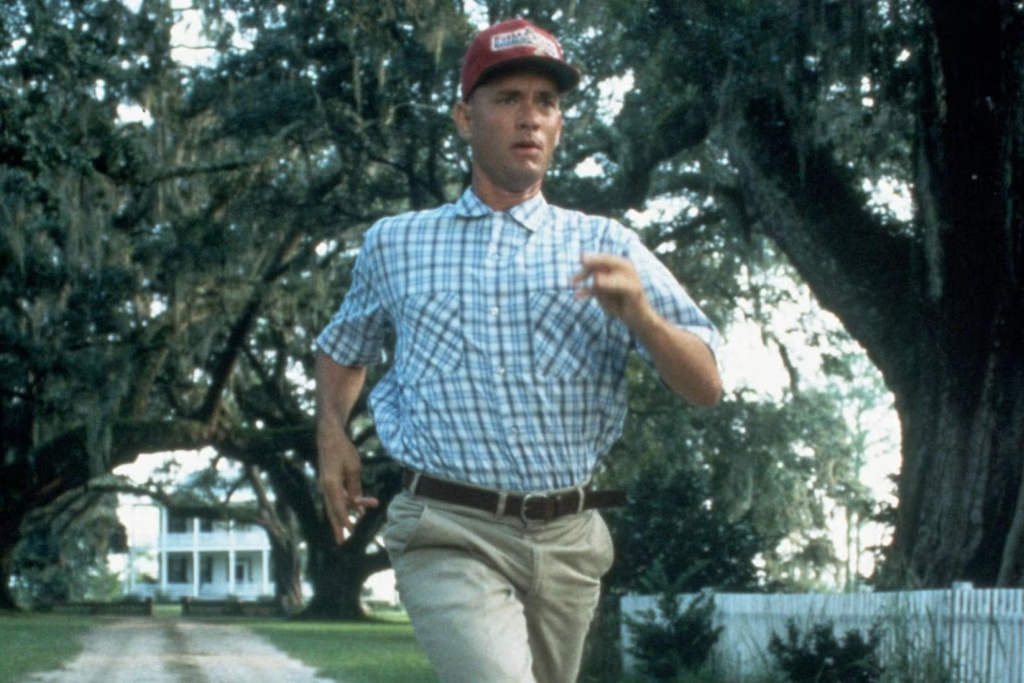
Yet in recent years, Forrest Gump has faced scrutiny. Critics and viewers have questioned its simplistic historical lens and sentimental storytelling, arguing that it oversimplifies complex events. Its decline in critical regard shows that even the most adored films can become targets of reassessment.

5. Love Actually
Love Actually divided critics at release, scoring 64% on Rotten Tomatoes. While some loved its ensemble storytelling and romantic charm, others found it cloying and overstuffed.

Regardless, audiences quickly embraced it as a holiday staple. Its interconnected stories and ensemble cast continue to spark discussion and debate about which romantic arcs succeed and which falter. Love Actually proves that polarizing films can still win hearts over time.
4. Scooby-Doo
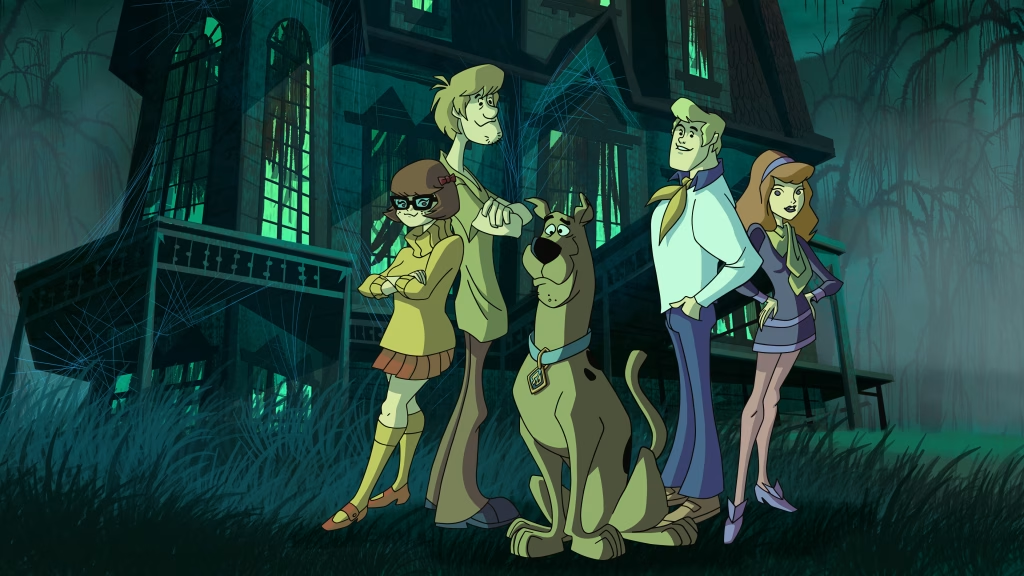
Scooby-Doo, the live-action adaptation, received poor critical reception, earning only 32% on Rotten Tomatoes. Critics called its humor forced and its plot thin, largely ignoring its nostalgic appeal.

For fans, however, Scooby-Doo delivered fun and familiarity. Its campy tone, playful performances, and homage to the beloved cartoon have made it a nostalgic hit, passed down to new generations. It’s a reminder that entertainment value can outshine critical opinion.

3. American Beauty
American Beauty earned critical acclaim upon release, winning five Oscars and achieving an 87% Rotten Tomatoes score. It was praised for its commentary on suburban life, middle-class ennui, and existential dissatisfaction.

However, its reception has cooled over time. Many now view its characters and themes as dated, and some see its social commentary as shallow. American Beauty highlights that even lauded films can face reassessment as cultural tastes evolve.

2. Jennifer’s Body
Jennifer’s Body was initially dismissed by critics, scoring only 45% on Rotten Tomatoes. Many reviewers viewed it as a failed horror-comedy, unable to balance scares with dark humor.

Years later, the film has been reclaimed as a feminist cult favorite. Its subversive take on gender dynamics and horror tropes, coupled with Megan Fox’s performance, has earned it a devoted following. Jennifer’s Body demonstrates that some movies need time before their brilliance is recognized.

1. National Treasure
National Treasure was largely dismissed by critics, who criticized its implausible plot and adventurous antics, giving it only 46% on Rotten Tomatoes. Early reviews suggested it was a forgettable summer film.

Audiences, however, embraced Nicolas Cage’s earnest charm, the puzzle-filled plot, and the family-friendly adventure. Its popularity led to a sequel and ongoing fan enthusiasm, proving that sometimes, fun and entertainment matter more than critical approval.

These 15 films show just how unpredictable the relationship between critics and audiences can be. Some movies are ahead of their time, finding love and appreciation long after release, while others gradually fall out of favor despite early acclaim. Whether cult classics, misunderstood comedies, or Oscar-winning dramas, these films remind us that personal taste, cultural shifts, and enduring fandom often have the last word in shaping a movie’s legacy.