

Every year, a handful of performances slip through the cracks, not because they aren’t great, but because they don’t fit the usual awards-season narratives. These roles range from quiet, character-driven work to bold, unsettling turns that challenge audiences rather than flatter them. What they all share is commitment, precision, and the kind of screen presence that lingers long after the movie ends. Here are fifteen performances that stood out for their artistry, risk-taking, and emotional impact, even if the trophies didn’t always follow.

15. June Squibb in Eleanor the Great
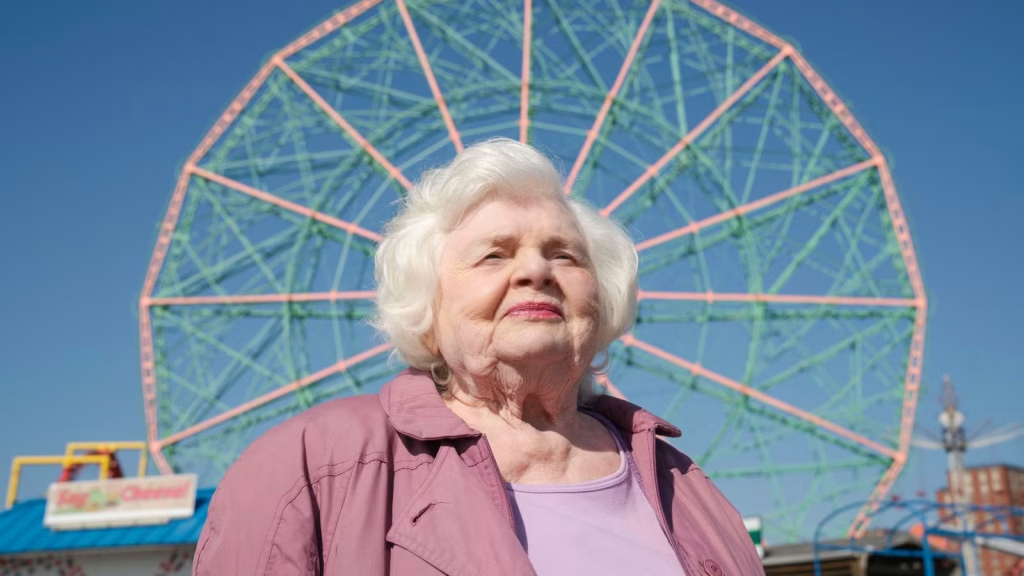
June Squibb’s late-career renaissance feels downright miraculous. After decades of memorable supporting roles, Eleanor the Great finally takes center stage, proving that leading performances don’t have an expiration date. In her nineties, Squibb delivers work that feels effortless, grounded, and deeply human.
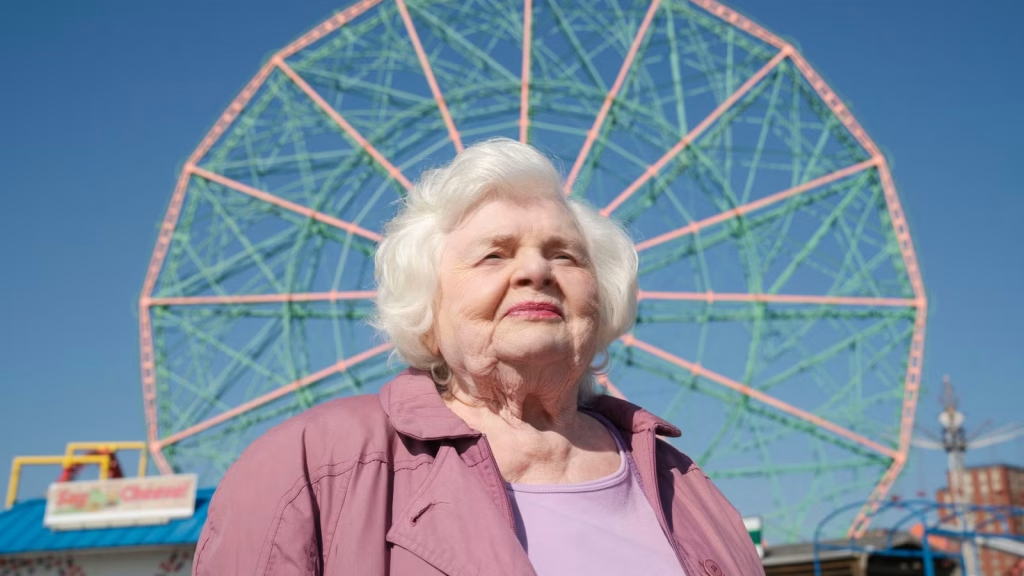
She plays Eleanor not as a novelty or punchline, but as a fully realized woman confronting aging with humor, regret, and resilience. Even when the script loses its footing, Squibb remains steady, anchoring the film with quiet confidence and emotional clarity that deserved far more recognition.
14. Zoey Deutch in Nouvelle Vague
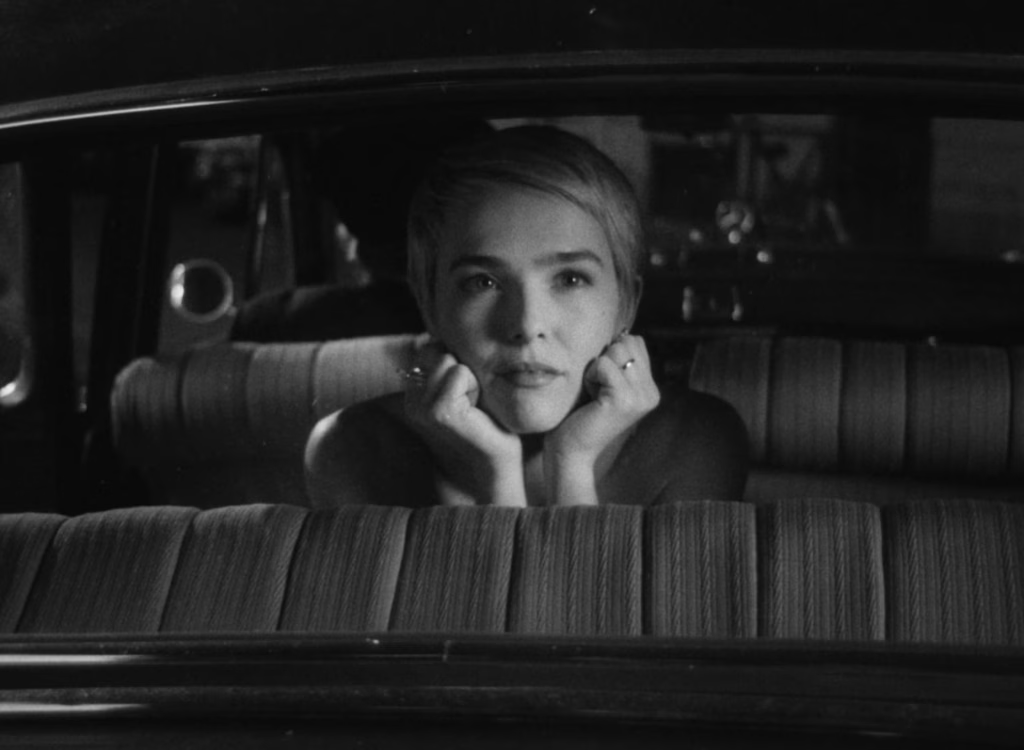
Zoey Deutch steps into the role of Jean Seberg with a blend of classic movie-star glow and modern sensitivity. Rather than leaning into mimicry, she captures the restless spirit beneath Seberg’s iconic image, playful one moment, fragile the next.

Surrounded by uncanny casting that recreates an era with startling precision, Deutch still manages to stand out. Her performance adds depth to a film that may not have gained much awards traction, but remains elevated thanks to her thoughtful, textured work.

13. Carmen Maura in Calle Málaga
Carmen Maura has nothing left to prove, yet Calle Málaga shows she’s still operating at the highest level. At 80, she brings sharp humor and emotional intelligence to a character shaped by memory, family tension, and quiet regret.

Her performance never leans into sentimentality. Instead, Maura lets moments breathe, allowing pain and wit to coexist naturally. It’s a reminder that experience can bring a richness to acting that no amount of polish can replace.

12. Nobuko Otowa in Onibaba
Nobuko Otowa delivers a performance that is haunting in its restraint and intensity. In Onibaba, she embodies isolation, fear, and suppressed desire with minimal dialogue, relying instead on facial expression and physical presence.

Her character’s descent feels both horrifying and tragically understandable. Otowa gives the film its emotional backbone, proving how deeply unsettling a performance can be when it trusts stillness and psychological tension over spectacle.

11. Kristine Kujath Thorp in Sick of Myself
Kristine Kujath Thorp commits fully to discomfort in Sick of Myself, crafting a performance that’s deliberately abrasive and impossible to ignore. Her character’s hunger for attention spirals into absurdity, yet Thorp grounds it in emotional truth.

Balancing satire and sincerity is a risky tightrope, but she never falls off. The result is a performance that repels and fascinates in equal measure, reminding us that bravery in acting doesn’t always look pretty.

10. Catherine Spaak in The Girl From Parma
Catherine Spaak’s performance in The Girl From Parma captures the tension between vulnerability and survival. Dora, she portrays a young woman forced to grow up quickly in a world that offers little protection.

Spaak infuses the role with quiet strength and emotional awareness, never reducing Dora to victimhood. Her work anchors the film’s darker themes, making it one of the most compelling portrayals of resilience in 1960s Italian cinema.

9. Judy Holliday in Bells Are Ringing
Judy Holliday’s talent often gets overshadowed by her bubbly screen persona, but Bells Are Ringing showcases just how skilled she really was. Her comedic timing is razor-sharp, and her musical performance is surprisingly powerful.

Often miscast as scatterbrained, Holliday reveals layers of intelligence and warmth beneath the humor. Watching the film today feels like rediscovering a forgotten star whose work remains vibrant and genuinely funny.

8. Hedy Lamarr in Ziegfeld Girl
Hedy Lamarr brings elegance and emotional control to Ziegfeld Girl, proving she was far more than a glamorous face. Sharing the screen with Hollywood heavyweights, she matches them beat for beat.

Off-screen, Lamarr’s scientific contributions only deepen appreciation for her on-screen intelligence. Her performance reflects a woman navigating ambition and consequence with poise, reminding us how often her brilliance was underestimated.

7. Jessie Buckley in Hamnet
Jessie Buckley delivers a performance built on silence, movement, and emotional undercurrents in Hamnet. As Agnes, she embodies grief and intuition with an almost elemental presence.

The film strips away exposition, trusting Buckley to communicate everything through gesture and gaze. She rises to the challenge with astonishing control, offering one of the year’s most quietly devastating performances.

6. Renate Reinsve in Sentimental Value
Renate Reinsve follows up her breakout success with a performance that feels loose, dangerous, and utterly confident. In Sentimental Value, she radiates unpredictability, keeping scenes alive with spontaneous energy.

Her generosity as a scene partner enhances the entire cast, making the film feel collaborative rather than performative. It’s the kind of work that sneaks up on you, then refuses to let go.

5. Tessa Thompson in Hedda
Tessa Thompson takes on the formidable challenge of reimagining Hedda Gabler and injects the role with sensuality and threat. She doesn’t modernize the character; she excavates her.

Even when the film itself divides audiences, Thompson’s performance remains gripping. She makes a familiar story feel volatile again, proving her ability to command the screen with sheer presence.

4. Amanda Seyfried in The Testament of Ann Lee
Amanda Seyfried sheds warmth and accessibility to inhabit Ann Lee with chilling conviction. She resists easy empathy, instead embracing the character’s unwavering faith and internal fire.

The film’s unconventional structure demands restraint, and Seyfried delivers a performance that’s both controlled and commanding. It’s a reminder that risk-taking can reveal entirely new dimensions of an actor’s range.
3. Jennifer Lawrence in Die My Love
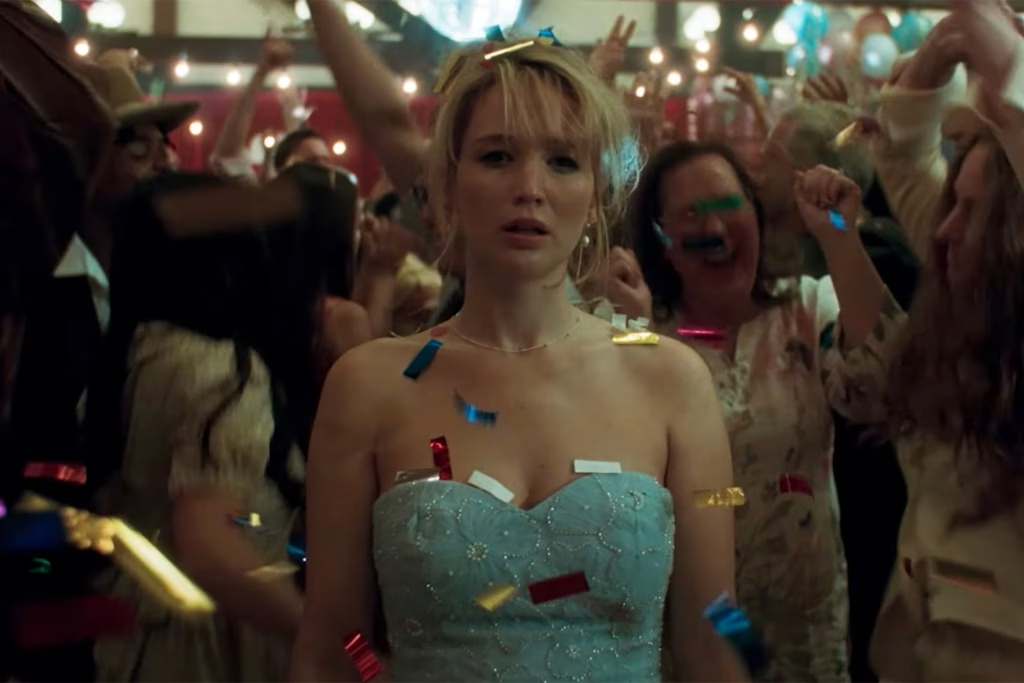
Jennifer Lawrence pushes herself into deeply uncomfortable territory in Die My Love. As a woman unraveling under post-partum psychosis, she gives a performance that’s raw, volatile, and emotionally exposed.

The film doesn’t soften its edges, and neither does Lawrence. Even when the performance feels jagged, that roughness becomes part of its power, a bold reminder that acting isn’t about perfection.

2. Rose Byrne in If I Had Legs I’d Kick You
Rose Byrne delivers one of the most emotionally dexterous performances of her career, blending anxiety, humor, and despair with remarkable control. Her character feels constantly on edge, yet painfully recognizable.

Byrne commits fully to the chaos, never smoothing out the contradictions. It’s the kind of turn that redefines how audiences see an actor, proof that she deserves far more leading roles.

1. Chase Infiniti in One Battle After Another
Chase Infiniti makes an astonishing debut that immediately signals the arrival of a major talent. Her performance feels instinctive, grounded, and electric all at once.

Placed alongside powerhouse actors, Infiniti never fades into the background. Instead, she becomes the film’s gravitational center, marking a breakout moment that feels destined to shape the next decade of cinema.

These performances remind us that great acting isn’t always loud, flashy, or awards-friendly. Sometimes it’s subtle, uncomfortable, or ahead of its time. Whether overlooked or celebrated, each of these actors delivered work that expanded what film acting can be, and that’s worth recognizing, no matter what the trophies say.