


Horror has always been a powerful way to explore fear, but some of the genre’s most unsettling stories aren’t about monsters or jump scares—they’re about trauma. These films use supernatural and psychological horror to examine grief, abuse, loss, and the long shadows they leave behind. The result is a kind of terror that lingers, forcing audiences to confront emotional wounds that feel uncomfortably real.

16. The Wailing
If you want a horror movie that quietly crawls into your mind and refuses to leave, The Wailing delivers. This South Korean standout blends folklore, possession, and supernatural terror with the slow collapse of a rural town that is set by unexplained deaths.

At the center is an awkward, overwhelmed police officer whose attempt to investigate a string of brutal incidents pulls him into something far darker than he can comprehend. As fear spreads, certainty erodes, and grief takes hold, the line between the natural and the otherworldly completely dissolves.

What truly sets The Wailing apart is how it captures the way trauma spreads—infecting individuals, families, and entire communities. Its deliberate pacing and gut-punch twists have earned it a lasting reputation as one of the most unsettling horror films of the modern era.
15. Noroi: The Curse
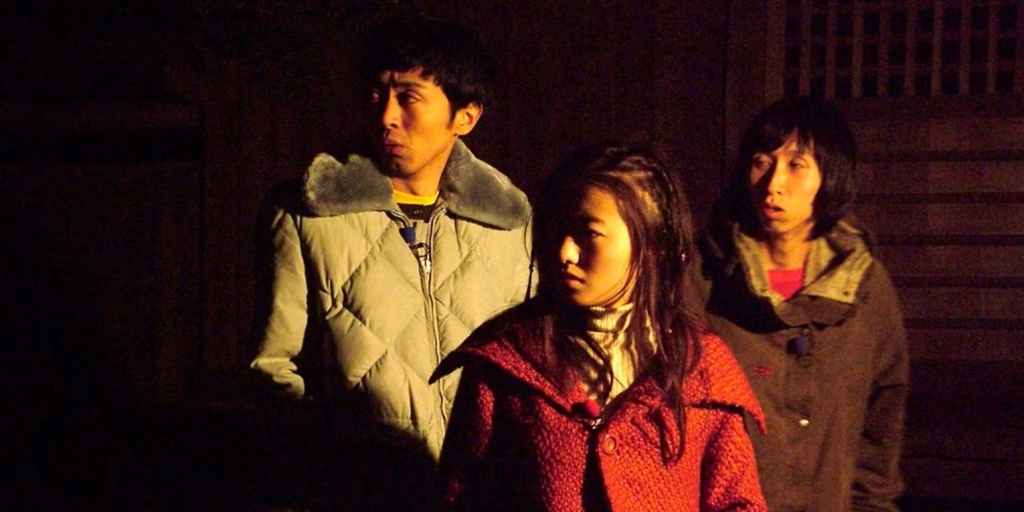
Fans of found-footage horror should consider Noroi: The Curse essential viewing. This Japanese mockumentary uses realism as its sharpest weapon, constructing a chilling investigation into an ancient supernatural force.

The story unfolds through fragmented media—interviews, broadcasts, home recordings—as a paranormal researcher pieces together a disturbing pattern of possession and ritual. That patchwork structure makes the horror feel alarmingly plausible.

Rather than relying on shock tactics, Noroi excels at cultivating unease. The sense that something is deeply wrong—and unavoidable—lingers long after the film ends, earning it cult status among horror devotees.
14. Audition
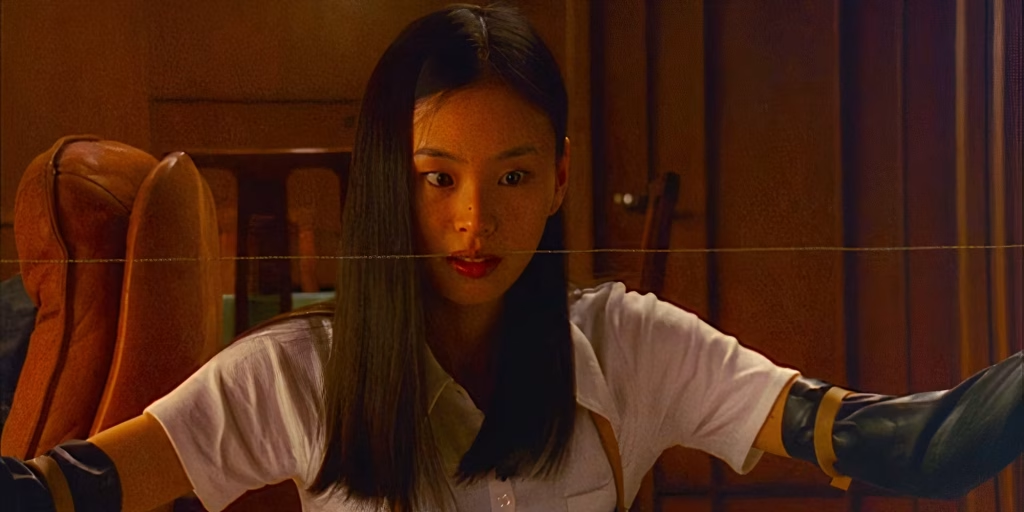
Few films embody the phrase “slow burn” quite like Audition. What begins as a subdued drama about loneliness and romance gradually transforms into an emotional and psychological nightmare.

Director Takashi Miike intentionally disarms the viewer, setting expectations before shattering them in the film’s infamous final act. The violence isn’t just shocking—it feels like an eruption of long-suppressed pain.

The trauma depicted cuts both ways, impacting characters and audience alike. Audition remains a landmark of extreme horror, influencing filmmakers while continuing to test viewers’ emotional endurance.

13. Titane
Julia Ducournau’s Titane twists body horror into something deeply personal and strangely tender. The film follows Alexia, a woman marked by both physical injury and emotional disconnection, as she undergoes a radical transformation.

Beneath the shocking imagery and surreal narrative lies a story about identity, alienation, and the need to be seen. Trauma here reshapes the body itself, becoming inseparable from selfhood.

Uncomfortable, darkly funny, and unexpectedly moving, Titane challenges conventional horror while proving how powerful the genre can be when emotion drives the terror.

12. The Others
While haunted house films are plentiful, The Others distinguishes itself through mood, restraint, and psychological depth. Nicole Kidman’s Grace lives in near darkness with her children, convinced unseen forces have invaded their home.

As the story unfolds, it becomes clear that grief and denial are the true specters haunting the mansion. The film’s iconic twist forces a reevaluation of everything that came before, revealing trauma buried beneath fear.

Elegant and eerie, The Others relies on atmosphere rather than spectacle, crafting a chilling experience that lingers quietly.

11. Gerald’s Game
In Gerald’s Game, a secluded retreat becomes a nightmare of isolation and memory. After a tragic accident leaves Jessie physically trapped, she must survive not only the present danger but also the emotional scars she has long suppressed.

The horror comes from both the body and the mind, as hallucinations and buried trauma resurface. Each revelation tightens the tension, and escaping seems impossible.

Mike Flanagan’s adaptation turns a minimal setting into a deeply intense study of survival, reckoning, and resilience.
10. Carnival of Souls
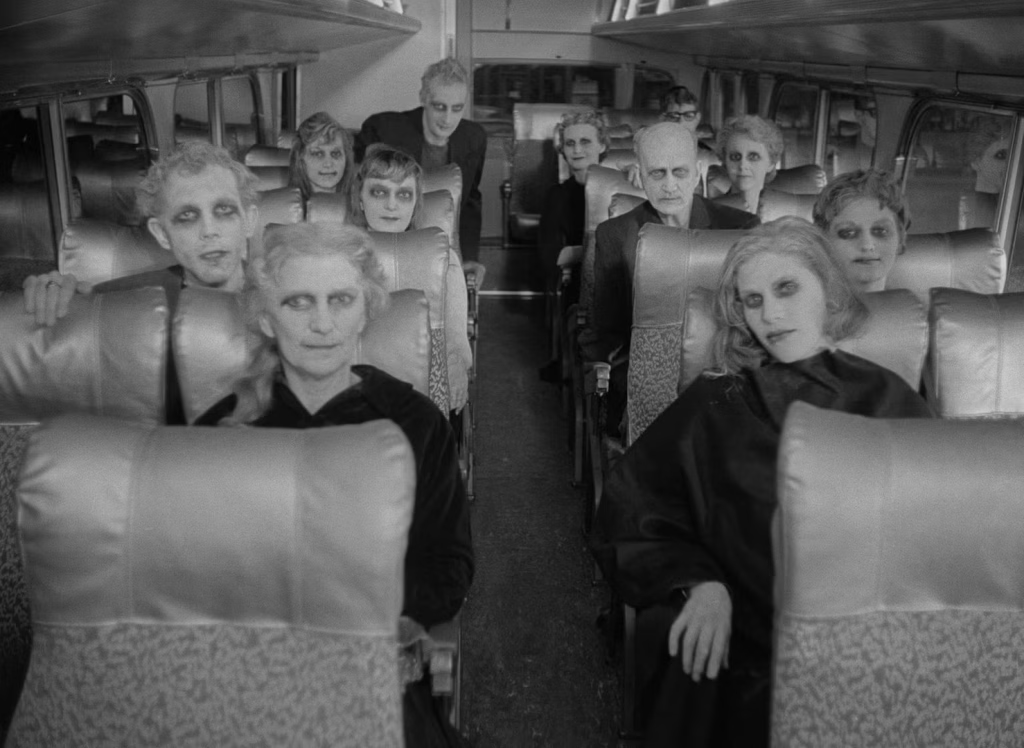
A classic that still resonates, Carnival of Souls follows a woman haunted by strange visions after surviving a car crash. Shot in stark black-and-white, the film feels like a waking nightmare.

Its unsettling imagery reflects the emotional aftermath of trauma—disconnection, alienation, and a sense of not belonging in the world anymore. The ghosts may be symbolic, but the dread feels real. Decades later, the film remains a cornerstone of psychological horror, proving that atmosphere and emotion outlast special effects.

9. Mother!
Darren Aronofsky’s Mother! is an anxiety attack rendered on film. Jennifer Lawrence plays a woman whose home becomes a battleground as strangers invade her space, autonomy, and sanity.

The film works simultaneously as an allegory and a personal horror, depicting trauma through relentless violation and chaos. The audience experiences the story almost entirely through her perspective, amplifying the sense of helplessness. Divisive and confrontational, Mother! refuses comfort, forcing viewers to sit with its emotional brutality.

8. Antichrist
Lars von Trier’s Antichrist confronts grief with unflinching intensity. After the loss of their child, a couple retreats to the woods, hoping isolation will heal them. Instead, their pain manifests violently.

Nature becomes hostile, reflecting guilt, despair, and psychological collapse. The film’s disturbing imagery serves as an externalization of internal torment. Notorious for its extremity, Antichrist remains a harrowing exploration of what happens when trauma is left to fester.

7. Saint Maud
Saint Maud explores faith, trauma, and obsession through the eyes of a deeply troubled caregiver. Maud’s devotion to her dying patient gradually transforms into something terrifyingly unhinged.

Her past trauma fuels her need for purpose, blurring the line between spiritual transcendence and psychological breakdown. The horror is subtle, building through isolation and belief. With haunting visuals and an unforgettable lead performance, Saint Maud proves how quietly devastating horror can be.

6. Possum
Possum is a grim descent into repressed memory and childhood abuse. The story follows a broken man returning to his past, haunted by both a grotesque puppet and the trauma it represents. The film’s oppressive atmosphere mirrors the weight of unresolved pain. Silence, decay, and nightmare imagery combine to create something deeply uncomfortable. Bleak and uncompromising, Possum is horror at its most psychologically invasive.

5. The Night House
On the surface, The Night House is a ghost story—but at its core, it’s about grief and depression. After her husband’s death, Beth begins uncovering unsettling truths about the home he left behind.

As reality fractures, the house becomes a symbol of everything she’s trying to avoid confronting. Shadows conceal more than supernatural threats—they hide emotional devastation. Rebecca Hall’s performance anchors the film, elevating it into one of the most emotionally resonant horror films in recent years.

4. Lake Mungo
Presented as a documentary, Lake Mungo explores grief through quiet devastation rather than loud scares. After a teenage girl’s drowning, her family begins noticing subtle signs that she may not be gone.

The film’s realism makes its emotional weight hit harder, grounding the supernatural in very real pain and unresolved questions. More melancholy than terrifying, Lake Mungo lingers because it understands that loss rarely comes with closure.

3. Twin Peaks: Fire Walk with Me
This prequel dives directly into Laura Palmer’s suffering, stripping away mystery to expose raw trauma. David Lynch presents her pain through surreal horror and fractured reality. Supernatural elements function as metaphors for abuse, fear, and dissociation, placing viewers inside Laura’s emotional world. Once misunderstood, the film is now recognized as a devastating portrait of survival, with Sheryl Lee delivering a career-defining performance.

2. Hereditary
Hereditary weaponizes grief. As a family fractures after tragedy, inherited trauma takes shape in horrifying ways. The film’s slow escalation, paired with shocking moments of violence, creates a suffocating atmosphere. Toni Collette’s portrayal of unraveling despair is unforgettable. Now considered a modern horror landmark, Hereditary helped usher in a new era of emotionally driven terror.

1. The Babadook
Few films embody trauma as effectively as The Babadook. Following a mother and son trapped in unresolved grief, the film turns sorrow into a literal monster. The Babadook itself represents pain that’s ignored rather than processed—growing stronger the longer it’s denied. Both terrifying and deeply empathetic, the film demonstrates how horror can be cathartic, offering understanding through fear.

What makes these films so haunting isn’t just their imagery or shocks—it’s their honesty. By turning trauma into horror, they give shape to experiences that are often hard to articulate, let alone face. Long after the credits roll, these stories stay with us, proving that the most frightening monsters are often the ones we carry inside ourselves.