

Let’s be honest: genre storytelling has always revolved around outsiders finding their strength. For decades, however, Black LGBTQIA+ voices were largely absent from those narratives. That’s changing—dramatically. Across superhero series, sci-fi sagas, and high-end genre TV, Black queer characters are stepping out of the background and into roles as leaders, lovers, warriors, and cultural icons. Here’s a refreshed countdown of ten groundbreaking characters and performances that have advanced representation, making genre media feel more authentic, inclusive, and vibrant than ever.

10. Amanita Caplan (Sense8)
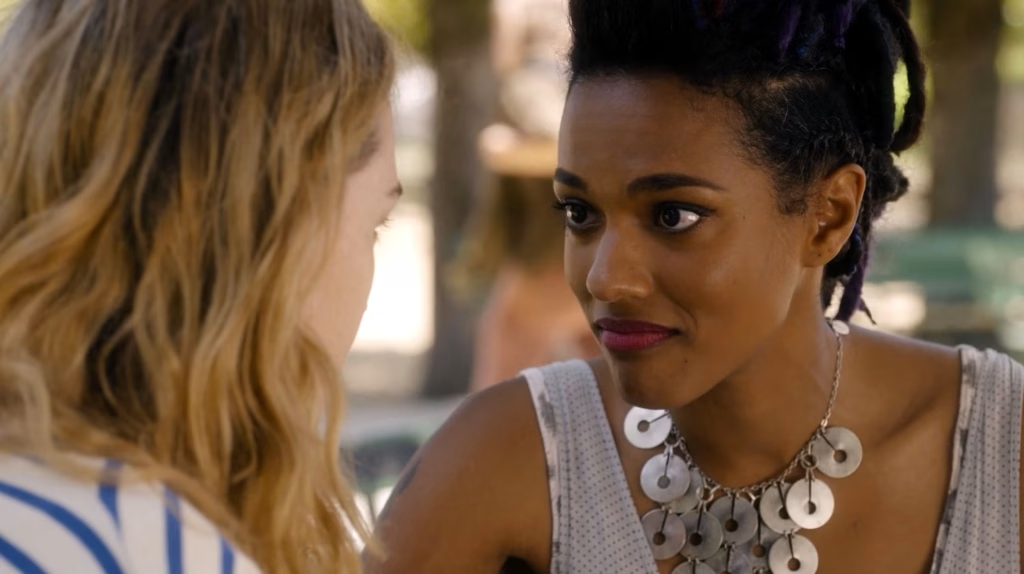
Amanita “Neets” Caplan, brought to life by Freema Agyeman, is the definition of unwavering love. A queer, biracial Black woman raised by three Black fathers, Amanita stands firm in who she is and who she loves. She’s outspoken, protective, and emotionally grounded, acting as both shield and anchor for Nomi and the rest of the Sensate cluster. What makes Amanita special isn’t just her identity; it’s that the story lets her grow, find joy, and ultimately win, without punishment or tragedy attached.

9. Tabitha Galavan (Gotham)
Tabitha Galavan made villainy look stylish, dangerous, and deeply human. Openly queer and unapologetically lethal, Tabitha’s arc on Gotham gave her room to be ambitious, conflicted, and emotionally vulnerable. Her relationships, romantic and otherwise, added depth to what could’ve been a one-note antagonist. Even with a brutal ending, Tabitha remains one of the most striking Black queer women ever to appear in a DC series.

8. Kaldur’ahm / Aqualad (Young Justice)
Kaldur’ahm quietly redefined leadership in animated superhero storytelling. Calm, disciplined, and fiercely capable, he grows from team member to Aquaman himself. When the series later confirmed Kaldur as queer, it felt organic rather than performative. His relationship is treated with the same respect as any other, reinforcing that Black queer heroes don’t need to shrink themselves to fit into epic narratives; they belong at the center.

7. Kelly Olsen (Supergirl)
Kelly Olsen entered the Arrowverse with warmth, intelligence, and emotional depth. Played by Azie Tesfai, Kelly is a Black lesbian who balances compassion and courage, eventually stepping into the role of Guardian. Her background as a social worker gives her heroism a grounded edge, rooted in care and community. While the show could have explored her more fully, Kelly’s presence still marked meaningful progress for queer representation in mainstream superhero TV.

6. Curtis Holt / Mister Terrific (Arrow)
Curtis Holt deserved the spotlight long before the scripts allowed it. A certified genius and openly gay Black man, Curtis brought heart and humor to Arrow, along with cutting-edge tech and big ideas. Though often sidelined as comic relief, his existence alone challenged norms in superhero storytelling. Curtis showed that brilliance, queerness, and heroism can coexist without explanation.

5. Anissa Pierce / Thunder (Black Lightning)
Anissa Pierce made television history simply by existing. As a Black lesbian superhero with seismic powers, she shattered expectations from the moment she stepped on screen. Portrayed by Nafessa Williams, Anissa is political, passionate, and deeply rooted in family and community. Her relationships are treated with care and realism, making her not just a superhero but a fully realized person whose queerness is celebrated rather than hidden.

4. Ryan Wilder / Batwoman (Batwoman)
Ryan Wilder didn’t inherit heroism; she claimed it. Javicia Leslie’s Batwoman is Black, queer, and shaped by systemic injustice, including incarceration and loss. Her version of the Bat isn’t about privilege or legacy; it’s about protection and accountability. Ryan’s story reframes who gets to be a symbol, proving that Gotham’s hero doesn’t need to fit an old mold to be powerful.

3. Will Reeves / Hooded Justice (Watchmen)
Watchmen delivered one of the most radical retcons in superhero history by revealing Hooded Justice as Will Reeves, a Black gay man. His story confronts racism, homophobia, and generational trauma head-on, tying superhero mythology directly to real American history. Through Jovan Adepo and Louis Gossett Jr.’s performances, Will becomes a symbol of survival, resistance, and truth, one that forever changes the genre.

2. Pray Tell (Pose)
Pray Tell may not wear a cape, but he is undeniably heroic. Billy Porter’s electrifying performance turned Pray into the emotional backbone of Pose. As a ballroom emcee and mentor, he protects, challenges, and uplifts his community while facing illness, loss, and injustice. Pray Tell’s voice, rage, humor, and love helped carry Black queer culture into the mainstream, earning Porter historic recognition in the process.

1. Chiron (Moonlight)
Chiron’s story is quiet, devastating, and revolutionary. Through Ashton Sanders and Trevante Rhodes, Moonlight captures the interior life of a Black gay man learning how to survive, love, and exist in a world that offers him little safety. There are no superpowers here, just humanity. And that’s exactly why Chiron’s journey stands as one of the most powerful acts of representation in modern cinema.

Together, these characters didn’t just expand the genre; they reshaped it. By allowing Black LGBTQIA+ heroes to exist fully, love openly, and lead boldly, these stories made room for countless others to follow. Representation isn’t just about being seen, but it’s about being remembered, and these icons made sure of both.