


Superhero cinema has come a long way since the first caped crusaders hit the screen. From the early, earnest adaptations of Superman to the sprawling ensemble epics of today, these films reflect changing storytelling styles, cultural attitudes, and audience expectations. Some films leaned into camp and spectacle, others explored dark psychological themes, and a few redefined the genre entirely. The following list highlights fifteen standout superhero films, each leaving a lasting mark on the landscape of comic book cinema.

15. Superman II: The Donner Cut
Superman II: The Donner Cut restores Richard Donner’s original vision for the sequel, offering a version that is more emotionally grounded than the theatrical release. Christopher Reeve’s Superman faces perhaps his greatest challenge: losing his powers and confronting his identity. The film’s villains—General Zod, Ursa, and Non—escape the Phantom Zone, threatening Earth with a sense of immediacy and danger. Terrance Stamp’s portrayal of Zod is iconic, his presence commanding attention and setting the template for future supervillains. While the time-travel ending remains divisive, the cut’s improved pacing and dramatic weight make it essential viewing for fans of classic superhero storytelling.

14. Batman Returns
Tim Burton’s Batman Returns takes Gotham to darker, more gothic places than the original film. Released in 1992, it blends noir, comedy, and tragedy into a visually striking package. Michelle Pfeiffer’s Catwoman is seductive and unpredictable, while Danny DeVito’s Penguin balances grotesque humor with pathos. Michael Keaton reprises his role as a brooding Batman, grounding the eccentricity of the city with his intensity. Though Burton’s emphasis on style sometimes overshadows the plot, the film’s unique aesthetic, inventive set design, and memorable characters have secured its lasting reputation.

13. Joker
Todd Phillips’ Joker is a psychological deep dive into Gotham’s most infamous villain. Joaquin Phoenix embodies Arthur Fleck with haunting intensity, capturing his descent from marginalized figure to anarchic symbol. The film examines mental health, social neglect, and the radicalization of disenfranchised individuals. Its bleak tone and cinematic artistry, including the now-iconic staircase dance, challenge traditional superhero narratives, proving that comic book stories can carry profound social commentary.

12. Shazam!
Shazam! injects levity and warmth into the DC universe. Directed by David F. Sandberg, it follows teenager Billy Batson, who transforms into a superhero (Zachary Levi) with a childlike sense of wonder and responsibility. The film balances humor, family dynamics, and coming-of-age themes, making it a standout among darker superhero fare. Its Easter eggs and emotional moments ensure that it resonates with both longtime comic fans and new audiences, demonstrating that heroism can be fun and heartfelt.

11. Batman Begins
Christopher Nolan’s Batman Begins rebooted the franchise with realism and depth. Christian Bale’s Bruce Wayne transitions from a traumatized orphan to Gotham’s vigilante, grounded in rigorous training, moral questioning, and psychological complexity. The film introduced nuanced villains like Ra’s al Ghul and Scarecrow, while key sequences such as the burning of Wayne Manor establish high stakes and emotional resonance. Batman Begins laid the foundation for the Dark Knight trilogy, reshaping expectations for superhero storytelling.
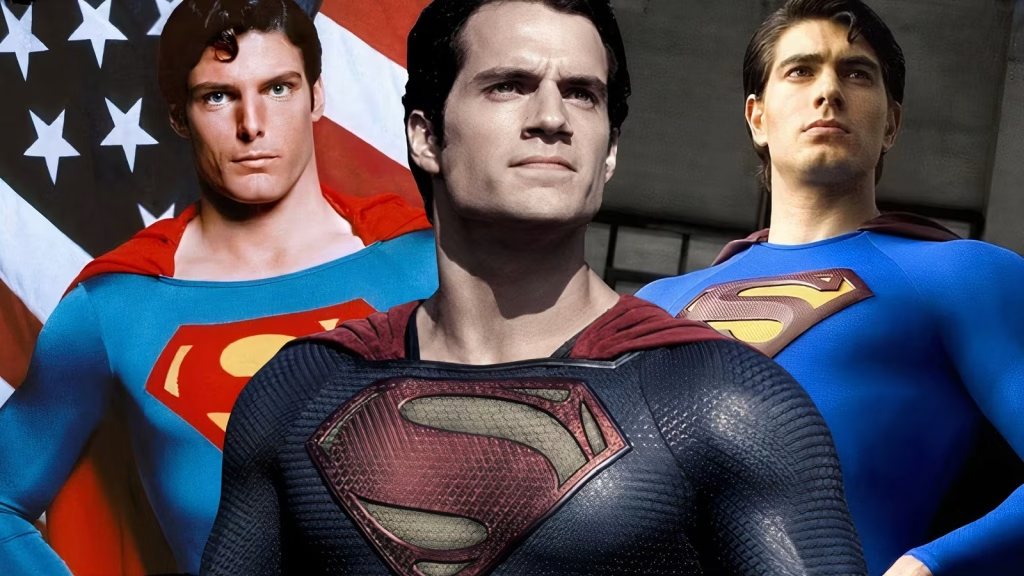
10. Superman: The Movie
Richard Donner’s Superman: The Movie defined the superhero origin story for a generation. Christopher Reeve’s earnest performance captures Clark Kent’s humanity alongside his extraordinary abilities. From Krypton to Metropolis, the film establishes the emotional core of Superman’s character. Iconic moments—saving Lois Lane, facing Lex Luthor, and grappling with grief—set a standard for heroic storytelling. Its influence resonates in every superhero origin tale that followed.

9. Man of Steel
Zack Snyder’s Man of Steel reimagined Superman for a modern audience, emphasizing scale, spectacle, and psychological depth. Henry Cavill’s portrayal combines vulnerability with physicality, while the conflict with General Zod raises the stakes both personally and globally. Though divisive upon release, the film’s visual style and thematic focus on identity, duty, and morality have earned it a dedicated following within the DC Extended Universe.

8. V for Vendetta
V for Vendetta blends dystopian political drama with superhero mythos. Natalie Portman plays Evie, an ordinary citizen drawn into a revolutionary plot led by the enigmatic V (Hugo Weaving). Set in a fascist UK, the film explores themes of resistance, freedom, and individual agency. Its striking visuals, memorable speeches, and focus on moral courage elevate it beyond a standard comic book adaptation, making it a politically resonant and enduring story.

7. Watchmen: Director’s Cut
Zack Snyder’s Watchmen: Director’s Cut faithfully adapts Alan Moore’s graphic novel, presenting a morally complex world where superheroes have shaped history. The film is a layered narrative, combining mystery, philosophical reflection, and visually faithful panels. Characters like Rorschach (Jackie Earle Haley) and Doctor Manhattan (Billy Crudup) explore power, corruption, and accountability, challenging traditional superhero archetypes. Its soundtrack and haunting imagery further cement its status as a genre-defying work.

6. The Suicide Squad (James Gunn)
James Gunn’s The Suicide Squad reinvents Task Force X, turning a band of expendable villains into a surprisingly engaging and entertaining ensemble. Idris Elba, Margot Robbie, and Sylvester Stallone headline a cast full of personality and unexpected depth. The film balances irreverent humor, stylized violence, and surprisingly emotional character arcs, proving that even offbeat properties can resonate with audiences.

5. Batman (1989)
Tim Burton’s original Batman demonstrated that comic book films could be dark, stylish, and serious. Michael Keaton brought brooding intensity, while Jack Nicholson’s Joker became instantly iconic. Gotham’s gothic architecture, Danny Elfman’s score, and the sleek Batmobile helped define the visual language for future superhero movies. The film’s commercial and critical success paved the way for the modern era of blockbuster comic book adaptations.

4. Aquaman
James Wan’s Aquaman brought epic scale and mythological depth to the DC universe. Jason Momoa’s portrayal of Arthur Curry combined charm, physicality, and charisma, redefining a character often seen as secondary. The film explores Arthur’s dual heritage, complex family dynamics, and destiny as ruler of Atlantis. Its underwater visuals, engaging action sequences, and world-building contributed to a successful blockbuster that expanded the scope of superhero cinema.
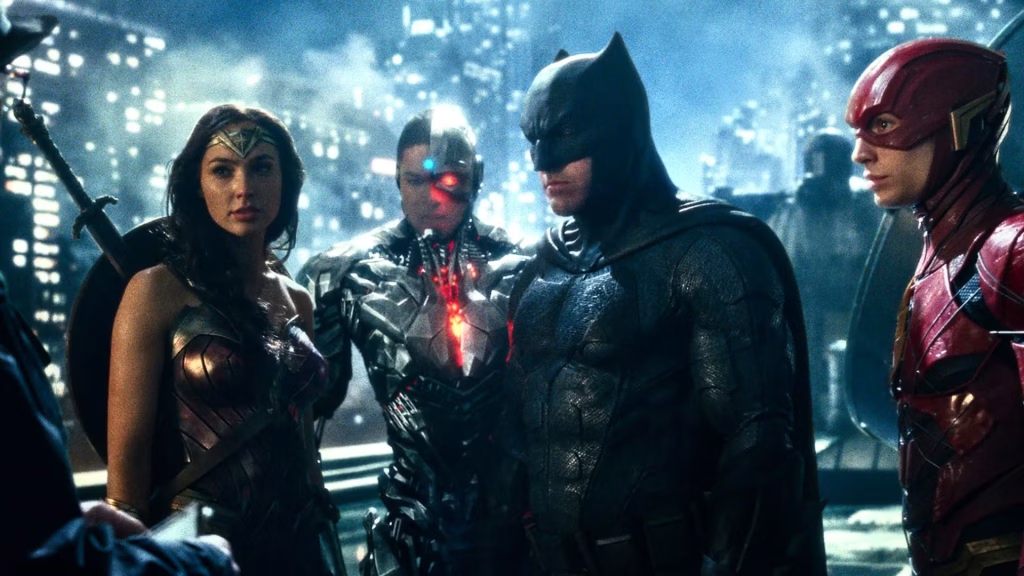
3. Zack Snyder’s Justice League
Zack Snyder’s Justice League restored the original vision for DC’s ensemble film. Expanding to four hours, the cut deepens character arcs and strengthens storytelling, particularly for Cyborg, who emerges as the emotional center. The chapter-based structure, improved visual effects, and expanded villain arcs, including Darkseid, make this version definitive. It demonstrates how creative control can dramatically enhance a superhero epic.

2. The Dark Knight
Christopher Nolan’s The Dark Knight is widely regarded as one of the greatest superhero films ever. Heath Ledger’s Joker is chaotic, brilliant, and unforgettable, pushing Batman to confront the fragility of order and morality. The film balances philosophical depth with thrilling action, supported by Hans Zimmer’s iconic score. Harvey Dent’s tragic arc and Gotham’s escalating tension make it a film that resonates far beyond the genre.

1. Wonder Woman
Patty Jenkins’ Wonder Woman redefined female-led superhero cinema. Gal Gadot’s Diana Prince embodies compassion, strength, and courage, bringing a mythical hero to life with nuance and heart. The film balances Themyscira’s world-building with World War I’s battlefield stakes, highlighting themes of truth, equality, and heroism. Its cultural impact paved the way for more inclusive storytelling and inspired a new generation of fans.

From classic portrayals of Superman and Batman to modern reimaginings and bold experimental adaptations, these fifteen films showcase the diversity and evolution of superhero cinema. They prove that the genre can entertain, inspire, and even challenge audiences, blending action with artistry, myth with humanity. Whether exploring moral complexity, cultural identity, or epic spectacle, these movies continue to shape what superhero storytelling can achieve on the big screen.