


Racism has long cast a shadow over the worlds of entertainment, academia, and public life. Yet throughout history, many individuals have not only survived these challenges but have risen to inspire change. From Hollywood stars and Broadway performers to activists and leaders, these stories demonstrate resilience, courage, and the transformative power of embracing one’s identity. Here are 15 remarkable people who overcame discrimination and prejudice to make their mark.

15. Quannah Chasinghorse – Indigenous Supermodel and Environmental Advocate
Quannah Chasinghorse has become a global symbol of Indigenous pride. Born Hän Gwich’in and Sicangu-Oglala Lakota and partly raised on Navajo Nation territory, she uses her platform in fashion to honor her heritage. Her appearance at the Met Gala, where she wore jewelry designed by Navajo artists, was not just a statement of style but a bold declaration of cultural representation.

Growing up, Quannah often struggled with Western beauty standards that made her feel invisible. Over time, she embraced her Indigenous features and now encourages others to find strength in their cultural identity. Beyond modeling, her activism includes environmental advocacy, using her voice to address climate change and the preservation of Indigenous lands.

14. Taika Waititi – Māori Filmmaker Breaking Stereotypes
Taika Waititi rose from independent New Zealand cinema to Hollywood acclaim, winning an Oscar for Jojo Rabbit. As a Māori filmmaker, writer, and actor, he brings humor, heart, and cultural insight to his work, challenging stereotypes about Indigenous people. His dedication to celebrating Indigenous voices on the world stage has inspired countless young artists.

Waititi’s influence extends beyond filmmaking. Through his stories, he emphasizes cultural pride and authenticity, proving that Indigenous perspectives belong in mainstream media. His success has opened doors for other Indigenous creators while showing audiences worldwide the value of diverse narratives.

13. Mandy Gonzalez – Defending Heritage on Broadway
Broadway star Mandy Gonzalez faced early pressure to change her last name, told that “Gonzalez” was too ethnic for stage success. She refused, honoring her abuela and her family’s heritage, and in doing so, made a powerful statement against erasure in entertainment.

Gonzalez’s decision reverberated beyond her personal career—it became a beacon for others navigating similar pressures. By proudly keeping her name, she affirmed the importance of visibility and representation for Latino performers in theater and beyond.

12. Benjamin Bratt – Celebrating Quechua Roots in Hollywood
Actor Benjamin Bratt has consistently embraced his Quechua heritage, inspired by his mother’s activism during the Alcatraz Occupation. Bratt’s cultural pride informs both his career and philanthropic work, from supporting Indigenous organizations to raising awareness of Native issues.

Hollywood has often pressured actors to assimilate, but Bratt has shown that cultural identity can coexist with professional success. His advocacy demonstrates how representation on and off-screen strengthens communities and inspires future generations.

11. Tiffany Haddish – Finding Joy Amid Childhood Racism
Comedian Tiffany Haddish faced racial bullying as a child, being called names and excluded by peers. A loyal friend, Amber, stood by her during these moments, providing a sense of belonging and trust.

Haddish learned to use humor as a tool for resilience, transforming pain into laughter and connection. Her rise in entertainment reflects the power of self-love, perseverance, and the importance of supportive relationships in overcoming racism.

10. Jeannie Mai – Navigating Asian Identity
Growing up Vietnamese-American, Jeannie Mai experienced cultural exclusion and bullying at school, from mockery of her English to racial slurs aimed at her family. Yet her household instilled pride in her heritage, teaching her to embrace her identity despite societal pressures.

Mai’s journey shows that cultural pride is a form of resistance. Her success as a television host and advocate for Asian representation proves the importance of visibility and diverse voices in mainstream media.

9. Misty Copeland – Breaking Ballet Barriers
Misty Copeland faced systemic racism in the ballet world, with her talent often doubted because she was Black. Even when she was technically the lead, she had to fight to prove her ability to the predominantly white institution.

Her success as the first Black principal dancer at American Ballet Theatre transformed the field, inspiring young dancers of color to see themselves on the world’s stages. Copeland’s career underscores the importance of representation and dismantling long-standing biases.

8. Reshma Saujani – Embracing Identity Through Advocacy
As a child, Reshma Saujani endured taunts about her Indian heritage, wishing her name were less ethnic. These experiences fueled her later mission to champion diversity in technology through the founding of Girls Who Code.

Saujani’s story highlights how confronting prejudice can motivate systemic change. By transforming personal adversity into activism, she empowers young girls of color to pursue careers in STEM, breaking barriers her generation faced.

7. Audra McDonald – Lessons From Childhood Racism
Audra McDonald’s first-grade exclusion from a school play because of her race left a lasting impression. Being told she could only play Chewbacca, not Princess Leia, sparked feelings of inadequacy and highlighted early racial bias.

McDonald turned this experience into fuel for her career, becoming a six-time Tony Award-winning performer. She uses her platform to advocate for equity and inclusion, demonstrating how childhood obstacles can shape leaders who challenge systemic discrimination.

6. Jason Momoa – Championing Native Hawaiian Culture
Jason Momoa embraces his Native Hawaiian heritage in both personal and professional life. Beyond film roles, he advocates for Indigenous rights, environmental protection, and cultural preservation, from protests on Mauna Kea to eco-friendly initiatives.

His public identity merges celebrity with activism, showing that honoring heritage can coexist with mainstream fame. Momoa inspires audiences to celebrate culture while standing up for social and environmental justice.

5. Paula Sutton – Overcoming Racism in London
Growing up in less diverse areas of London, Paula Sutton encountered racial slurs and exclusion. Her parents taught her resilience and the importance of self-respect, guiding her through early encounters with prejudice.

By maintaining confidence and focusing on achievement, Sutton thrived despite discrimination. Her story demonstrates how family support and personal perseverance can help individuals navigate systemic racism with dignity.

4. Mandy Carr (Gonzalez) – Standing by One’s Name
Mandy Carr faced pressure to adopt a more “acceptable” stage name but chose instead to honor her family heritage. Her decision became a statement against cultural erasure and a model for others in the entertainment industry.

By refusing to conform, she underscored the importance of authenticity. Carr’s experience shows that holding onto identity can inspire broader representation in media and society.

3. Secretary Deb Haaland – Leading Through Heritage
Secretary Deb Haaland experienced isolation as one of the few Native children in her school. Her family’s history of boarding school trauma instilled a sense of responsibility to pave the way for future Native leaders.

Haaland’s journey to becoming the first Native U.S. Cabinet Secretary exemplifies resilience and leadership rooted in heritage. Her story inspires Indigenous youth to pursue change while honoring ancestral sacrifices.

2. Dwayne “The Rock” Johnson – Embracing Samoan Culture
Dwayne Johnson incorporates Samoan heritage into his public persona, from performing traditional war dances to celebrating familial rituals in his roles. His identity informs his career, providing strength and authenticity.

By celebrating culture on a global stage, Johnson empowers others to embrace their roots. His journey shows that tradition and mainstream success are not mutually exclusive.

1. Dr. Timnit Gebru – Challenging Academic Bias
Immigrant scholar Dr. Timnit Gebru faced skepticism from teachers who doubted her abilities. Her perseverance led her to Stanford and a groundbreaking career in AI ethics.
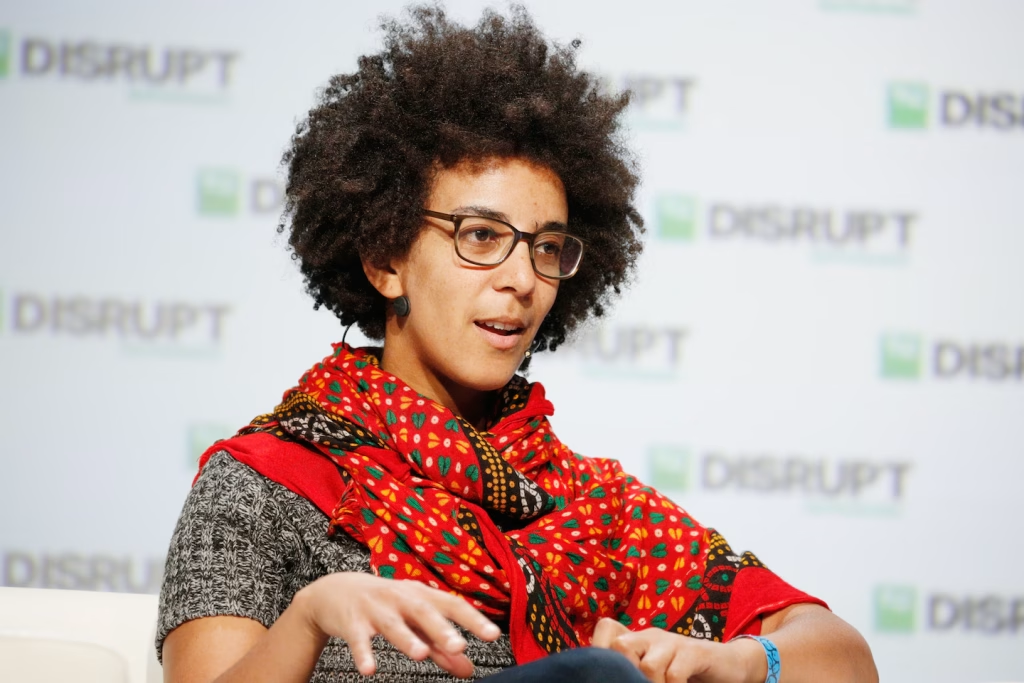
Gebru’s advocacy for diversity in technology is fueled by personal experiences of bias, demonstrating how overcoming systemic barriers can create platforms for change. Her story is a testament to resilience, intellect, and social impact.

These 15 stories reveal that adversity can spark courage, advocacy, and transformation. Each person listed here not only overcame the racism they faced but also turned their experiences into inspiration for others. Their journeys remind us that progress is possible and that celebrating identity and culture can create lasting change in entertainment, academia, and beyond.