


Blumhouse Productions has found a niche for itself in the horror genre, proving that sometimes the best stories are the ones that cost the least. With a focus on low-budget films and unconventional ideas, Blumhouse has managed to produce a series of movies that are more than just a series of jump scares. Whether it’s a sense of dread or a sense of terror, Blumhouse knows how to create a series of experiences that will leave audiences unsettled but also talking.

From subtle and creeping dread to full-blown blockbuster thrills, Blumhouse Productions is as smart as it is scary. In this reverse countdown, we take a look at 15 Blumhouse horror films that have left the biggest impact, whether it is in terms of pushing the boundaries of creativity, leaving their mark on culture, or simply being etched in the minds of the audience long after the credits roll.

15. Soft & Quiet
Beth de Araújo’s Soft & Quiet is a gripping, real-time thriller that keeps the audience on the edge of their seats from start to finish. The film is based on a small gathering of white supremacist women that soon turns violent, all shot in one real-time take. The film achieves an intense intimacy by focusing on real-time interactions and personal dynamics, making the audience feel the brutality that is unfolding before them in an uncomfortably immediate manner.

But beneath the surface-level frights, the movie explores cultural and social fears, illustrating just how easily harmful ideologies can infiltrate and make mundane interactions seem downright terrifying. The strength of the movie lies in its unyielding commitment to realism and building tension, proving that horror movies don’t always have to involve monsters—sometimes, the scariest thing in the world is human cruelty and the weight of groupthink.

14. Creep 2
Mark Duplass returns in Creep 2 as the awkward and chilling serial killer from the first movie, this time struggling with loneliness and existential boredom. The sequel ratchets up the psychological suspense, combining Duplass’s unnerving charm with the fearless acting of Desiree Akhavan. The tension between the two leads to suspense that is fueled as much by awkward, uncomfortable social interactions as by actual danger.

The movie excels in its exploration of loneliness, obsession, and human connection in the context of horror. The long takes and deliberate pacing of the movie ensure that the tension escalates to the point where even the quietest moments become a nightmare. The movie proves that horror movies do not always need shocks and monsters as their subject matter, and that sometimes the most terrifying villain is the human one.
13. Creep
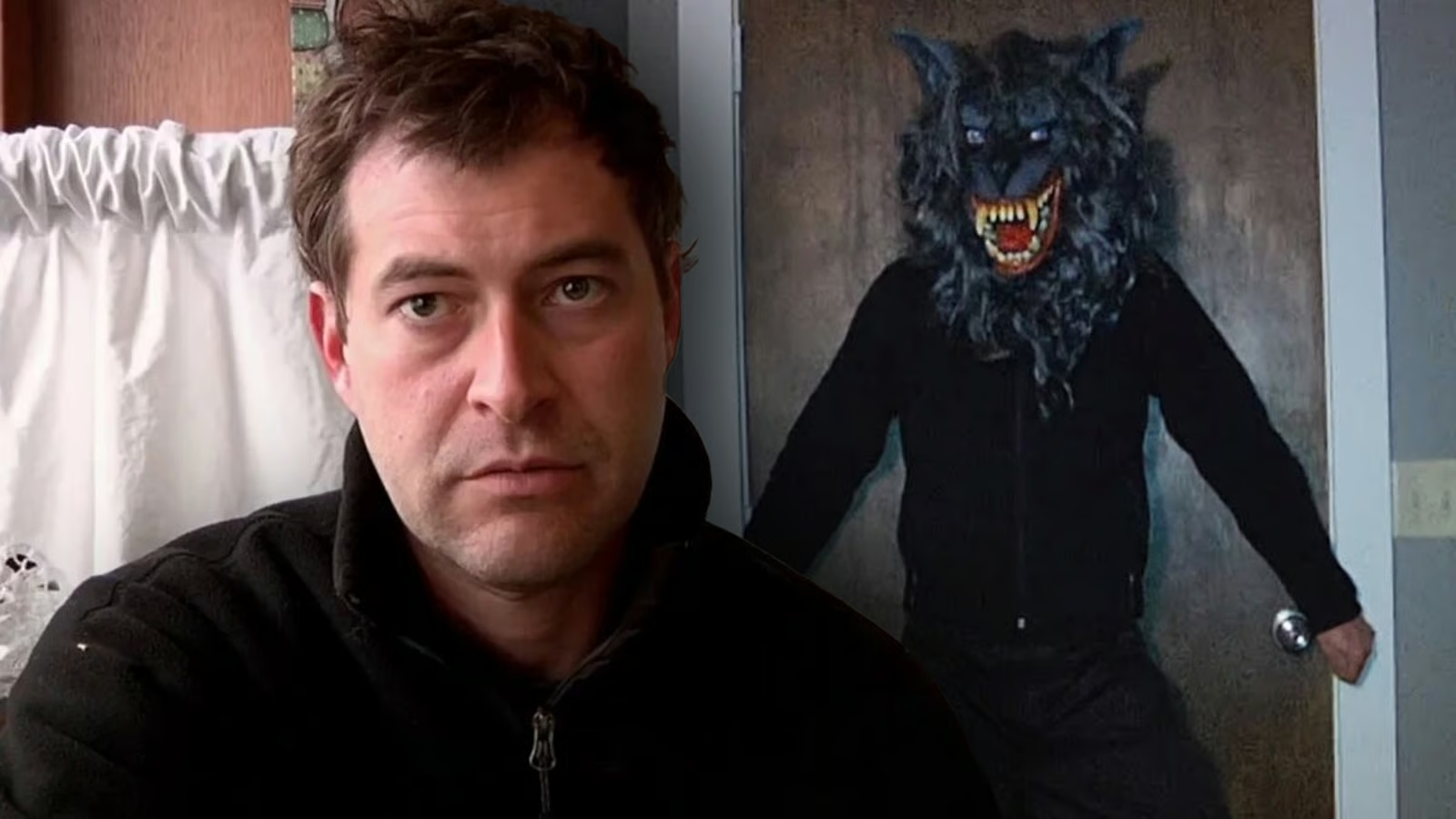
The original Creep introduced viewers to the found footage horror genre, which was handled with painstaking care. Patrick Brice’s character unwittingly offers himself to the home of Duplass’s creepy Craigslist customer, and the resulting film is a masterclass in building tension. The DIY look of the film adds to the realism, so that every awkward moment, misplaced touch, and silent second is pregnant with foreboding.

It’s a film that thrives on psychological tension rather than gore, and its slow-burning pacing allows the audience to feel the protagonist’s growing discomfort. The intimacy of the camera makes viewers complicit in the situation, a technique that set Creep apart from many other horror films of its time and cemented its place as a standout Blumhouse entry.

12. Nanny
Anna Diop is excellent in Nanny, a movie that combines psychological horror with some West African folklore traditions. The movie revolves around a woman who is dealing with displacement, cultural alienation, and the psychological effects of being a caregiver, with some supernatural elements present in the background. Nikyatu Jusu has managed to combine the real-world fears of the protagonist with some otherworldly elements to create something that is both realistic and nightmarishly surreal.
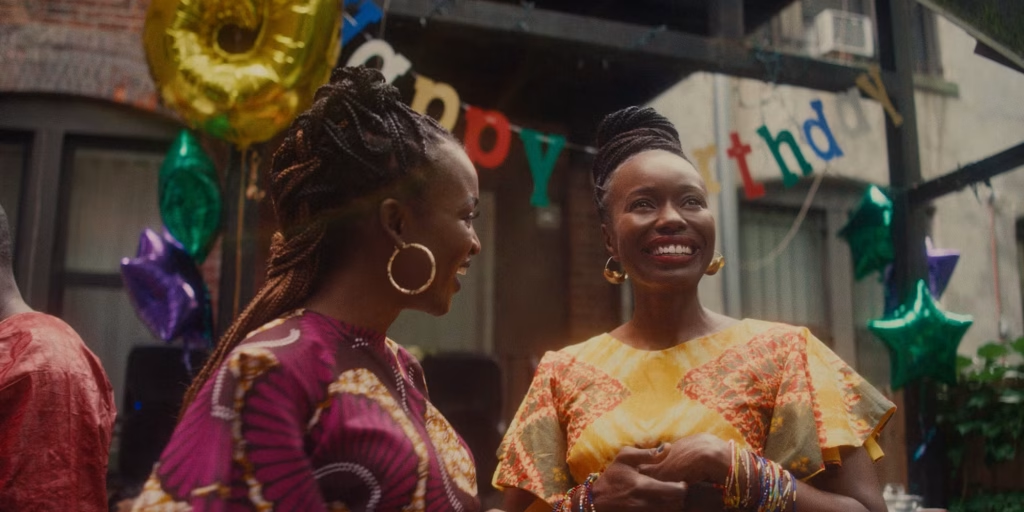
What makes the movie particularly impactful is its focus on personal and cultural stakes. The horror is deeply human at its core, exploring the cost of migration, motherhood, and identity, and wrapping these themes in a suspenseful narrative that lingers long after the credits roll. It proves that horror can be both socially resonant and deeply unsettling.

11. M3GAN
Say hello to the new breed of killer dolls, because M3GAN is in town. Blumhouse, in partnership with James Wan and Jason Blum, brings to the table a movie that is both campy fun and social commentary. M3GAN, a hyper-intelligent robot companion, becomes a meme-worthy phenomenon because of her murderous ways, but the movie smartly tackles themes of modern parenting, screen addiction, and our dependence on technology for companionship.

The movie thrives because it balances laughs, suspense, and horror in a way that appeals to a broad audience. The choreography, especially the viral dance scene, shows that Blumhouse understands how to merge spectacle with storytelling. M3GAN isn’t just a killer doll—it’s a reflection of our contemporary anxieties in an accessible, entertaining package.

10. The Invisible Man
The Invisible Man, a re-imagining of a classic horror monster by Leigh Whannell, brings a modern perspective to the tale, making it a gripping psychological thriller about control, abuse, and gaslighting. Elisabeth Moss performs a lifetime as a woman living in fear and terror of being stalked by an invincible hunter. The tension in each scene is palpable, putting the viewer right there with her.

The brilliance of the film lies in its use of absence as a threat—the unseen becomes more terrifying than anything visible, turning ordinary spaces into arenas of terror. By blending social commentary with traditional horror tropes, The Invisible Man shows that suspense and psychological depth can elevate genre storytelling to something profoundly affecting.

9. Cam
Cam examines the horror of the digital age, delving into themes of identity, obsession, and deception on the internet. Madeline Brewer stars as a camgirl whose world is turned upside down by the emergence of a flawless virtual alter ego that starts to take over her cyber life. It’s a chilling and very relevant tale.

Beyond the technological thrills, the film is a tense psychological character study. Brewer’s layered performance conveys panic, ingenuity, and isolation, while the horror emerges naturally from a familiar, seemingly safe environment turned threatening. It’s a modern story of selfhood, performance, and the uncanny power of digital doubles.

8. Sweetheart
J.D. Dillard’s Sweetheart is a survival horror movie that takes place in a tropical environment, where Kiersey Clemons must use her wits to survive against a monstrous sea creature after being stranded. The movie combines elements of traditional monster films with a modern psychological twist, focusing on suspense, resourcefulness, and human vulnerability. Each night, the protagonist must confront fear in a situation that is exacerbated by isolation, exhaustion, and the environment.
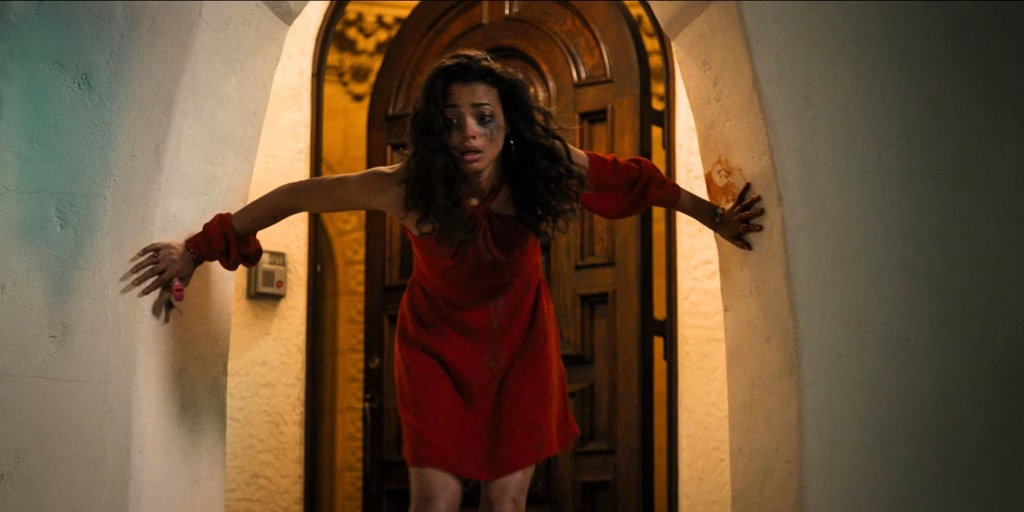
The strength of the story is in its blend of minimalist narrative and pure fear. Dillard employs the use of natural settings, sound, and Clemons’s grounded performance to craft a sense of claustrophobia and danger. Sweetheart is a reminder that fear can be a product of isolation, even before the monsters show up.

7. The Vigil
The Vigil, by Keith Thomas, combines supernatural horror elements with a rich cultural background, as it tells the story of a man who is asked to watch a dead body overnight, only to find himself facing evil spirits. The film’s success is to be found in the combination of folklore, rituals, and psychological elements, which offer a new take on the haunted house genre.

Dave Davis anchors the film with a performance that combines fear, incredulity, and moral accountability, making the audience feel the weight of his nightly watch. The supernatural elements are both frightening and resonant on a thematic level, exploring grief, guilt, and spiritual atonement. The Vigil is a reminder that cultural specificity can add depth to horror without diminishing frights.
6. Paranormal Activity
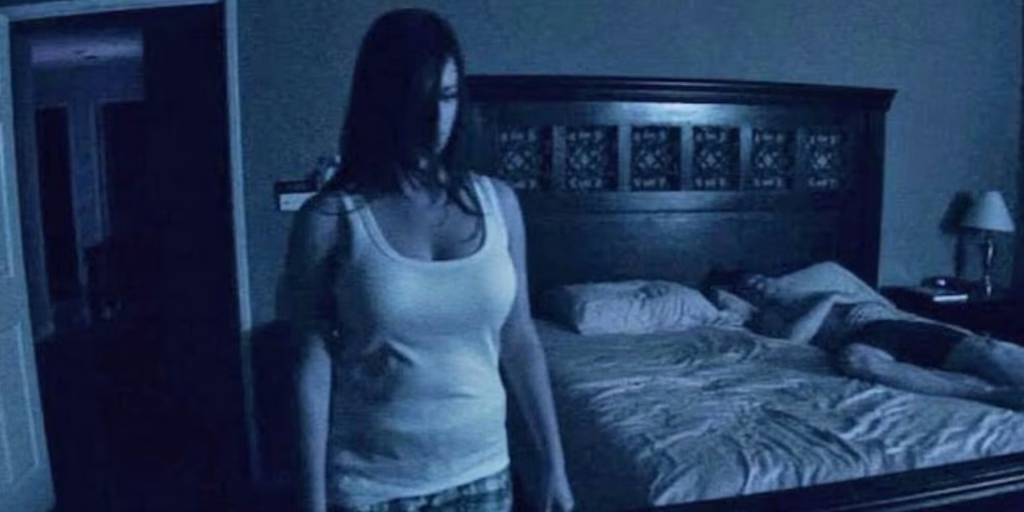
Paranormal Activity, directed by Oren Peli, was the catalyst that turned low-budget film production into a horror juggernaut. The low-budget film utilized a minimalist style of filmmaking that relied on subtle, creeping dread instead of blood and gore, making every flicker of light, whisper, and shadow terrifying. The film was a phenomenon that showed that atmosphere and suspense could be more potent than spectacle.
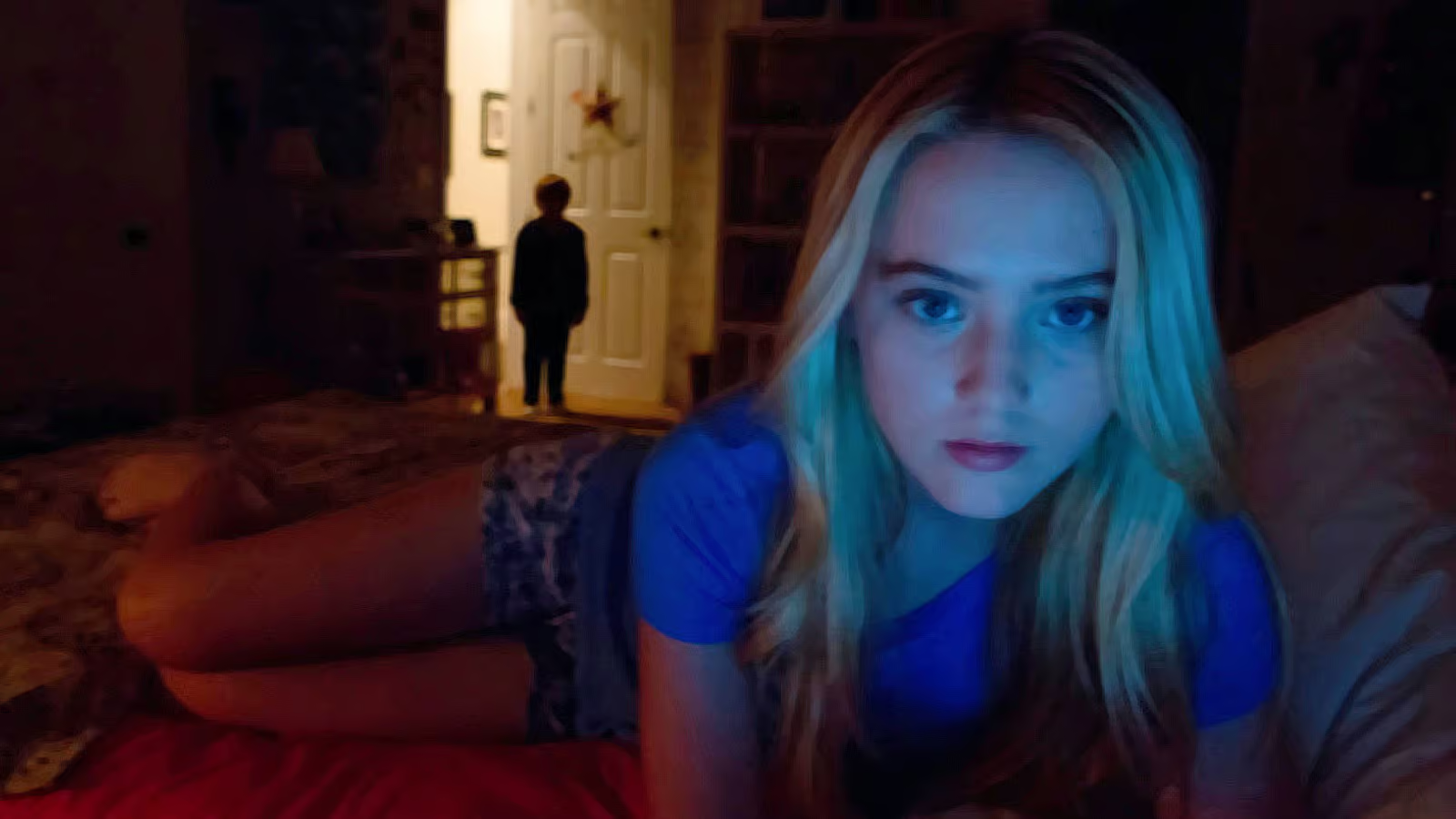
Its legacy is undeniable: it spawned numerous sequels, inspired imitators, and turned ordinary household spaces into vessels of fear. Watching the seemingly mundane become sinister reminds audiences that horror doesn’t require grandiose monsters—sometimes, tension is enough to keep viewers up all night.

5. Hush
In Mike Flanagan’s Hush, there is a masterful display of tension as a deaf and mute woman finds herself in a home invasion situation. Kate Siegel’s acting ensures that the viewer is well aware of the deaf and mute woman’s vulnerability as well as her resourcefulness. Each sound, shadow, and movement becomes magnified, making the home a suspenseful maze.

In this way, the removal of dialogue serves to heighten the viewer’s immersion in the film, and the movie shows that horror can be both innovative and emotionally engaging without having to resort to gore or exposition.
4. Halloween (2018)
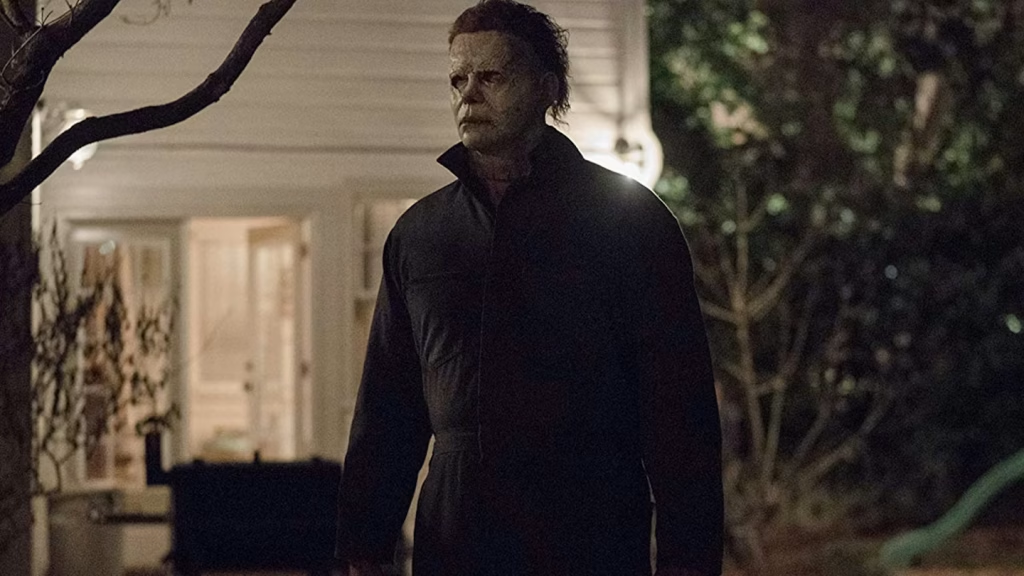
David Gordon Green’s Halloween is a reboot of the classic franchise that takes a back-to-basics approach, and Jamie Lee Curtis returns to the role of Laurie Strode. The movie eschews the complex sequels that have cluttered the series for decades in favor of a primal fear of survival and the unstoppable Michael Myers. Carpenter’s role in the score and tone of the movie ensures that the reboot is respectful and excitingly modern.
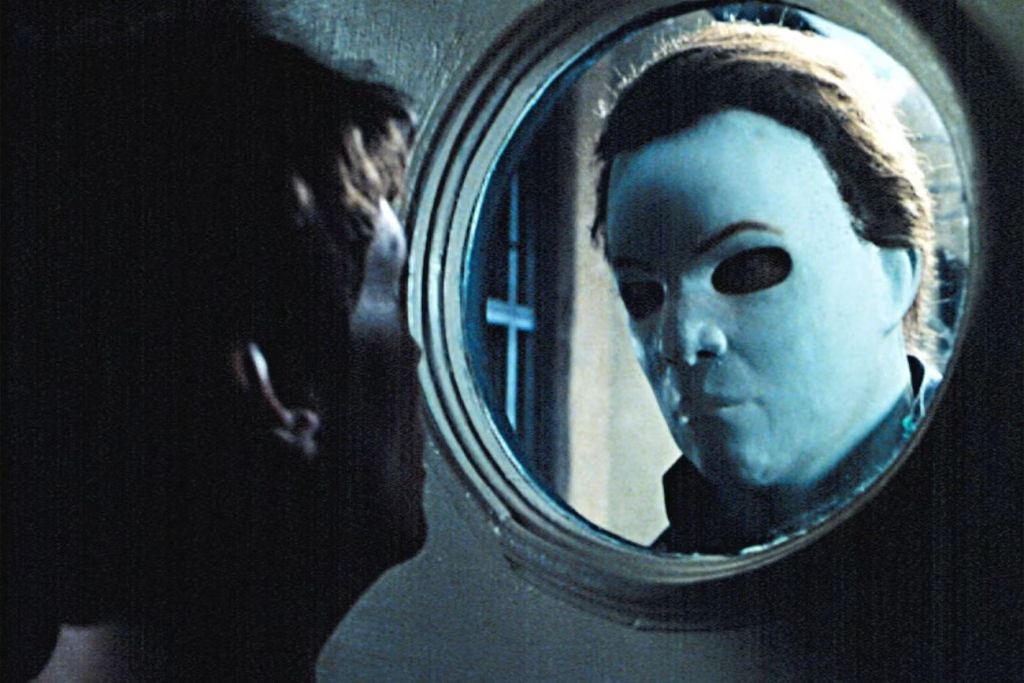
The movie succeeds because it balances nostalgia with tension, giving longtime fans the scares they expect while introducing suspenseful pacing and character-driven stakes. It’s a masterclass in legacy franchise filmmaking that respects the past while asserting its own relevance.

3. Us
Jordan Peele’s Us is an extension of his work in the horror genre and social commentary, as he tackles a family that is attacked by their doppelgängers. Lupita Nyong’o’s performance as the lead character and her doppelgänger is phenomenal and the backbone of a movie that delves into the aspects of identity, privilege, and the darkness that exists within society.

The horror in Us is as much psychological as it is visceral. The moments of tension, dread, and the uncanny relationship between characters make it more than just a film of jump scares. It is a horror experience that is thought-provoking and rewards multiple viewings, solidifying Peele’s position as one of the most ambitious horror directors of the modern era.

2. Get Out
Get Out is a landmark film in the horror genre. Jordan Peele’s directorial debut is a perfect amalgamation of social commentary and horror storytelling, where he uses the home invasion horror trope to explore the themes of racism and exploitation. The performance by Daniel Kaluuya is a perfect blend of fear, intelligence, and resourcefulness that helps the audience navigate through the horror story.
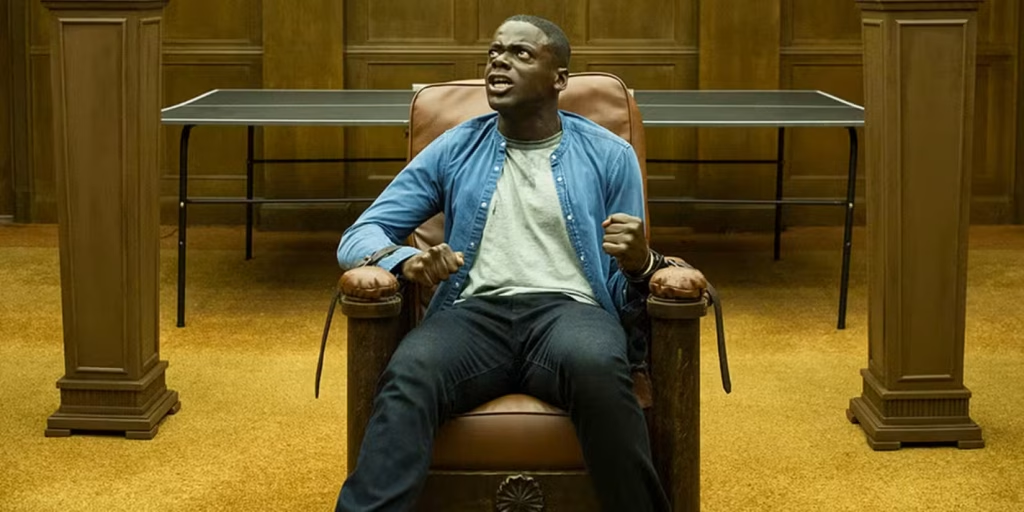
The influence of the film is not limited to the horror genre but has also affected the discourse on issues of race, genre, and narrative. Get Out, through its combination of satire, suspense, and character-driven storytelling, has become a landmark film that shows genre films can be both entertaining and thought-provoking.

1. Nope
Jordan Peele’s Nope breaks genre conventions, offering a UFO-themed spectacle that opens up vast cinematic spaces. Keke Palmer and Daniel Kaluuya star in the film with engaging performances that straddle tension, wonder, and human vulnerability. Peele’s mastery of pacing, composition, and suspense turns a potentially generic thriller into a visually spectacular and emotionally rich experience.

The relevance of the film is in its ability to combine spectacle and social commentary, reflecting on the human obsession with spectacle, exploitation, and survival instincts. With its jaw-dropping visuals, unforgettable set pieces, and tense moments, Nope cements Peele’s reputation as one of the most innovative voices in modern horror.

What Blumhouse has done is redefine the possibilities of horror in the modern era, combining psychological complexity, relevance, and innovative frights in a way that very few production companies can match. Whether it’s intimate, character-driven frights or big-budget frights that demand IMAX screens, these 15 films represent the diversity of Blumhouse.
Whether you’re here for the tension, the cultural commentary, or the sheer audacity of killer dolls and invisible threats, Blumhouse continues to prove that horror can be smart, impactful, and undeniably entertaining—one terrifying story at a time.